← All Of It with Alison Stewart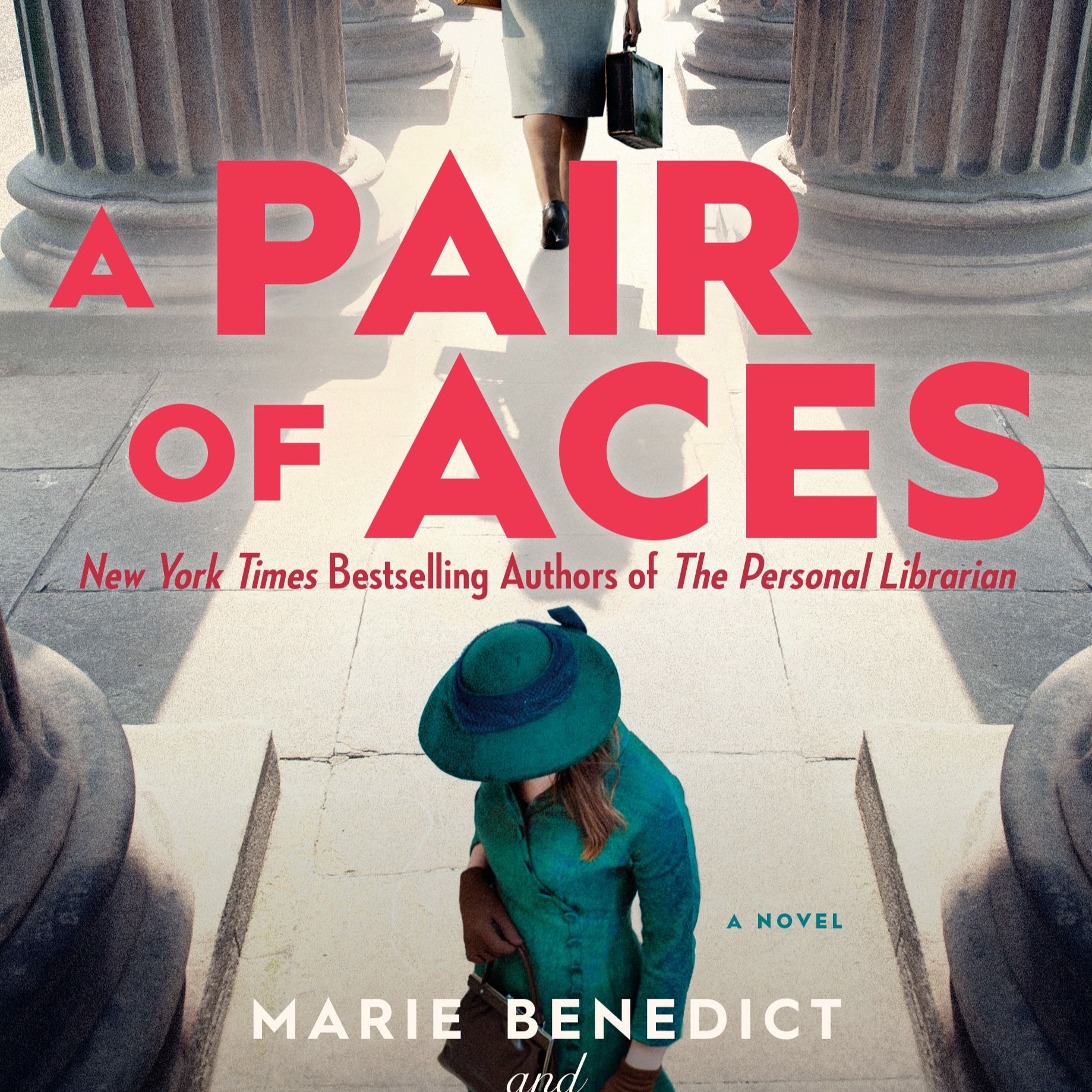
Loading summary
Transcript49 lines
- [00:00]
A
WNYC Studios is supported by Progressive Insurance. Did you ever think about switching insurance companies to see if you could save some cash? Progressive makes it easy to see if you could save when you bundle your home and auto policies. Try it@progressive.com Progressive Casualty Insurance Company and affiliates. Potential savings will vary. Not available in all states. All of it is supported by Memorial Sloan Kettering Cancer center in a small groundbreaking clinical trial where 100% of participants with a specific type of rectal cancer saw their tumors disappear using immunotherapy alone. Researchers at MSK are now studying this approach in cancers of the stomach, liver and more. And a majority of tumors are disappearing. For MSK Giving day, all gifts will be tripled. Learn more@msk.org all of it.
- [00:58]
B
This is All OF it on wnyc. I'm Alison Stewart. When it comes to New York City's major organized crime families, you have to include Charles Lucky Luciano in a new novel. Two women set out to bring his empire to an end. That's the premise of a new historical fiction novel called A Pair of aces. Set in 1930s New York, the story unfolds in a world of illegal gambling, loan sharking, drug trafficking, tax evasion and prostitution. At its center are Podly Polly Adler, a successful high end brothel owner who caters to the rich and powerful, and Eunice Carter, the first black assistant district attorney for the state of New York. Neither woman expects their paths to cross, but after Luciano threatens the lives of Polly's workers, she agrees to help Eunice build a case to take him down. A Pair of Aces is out now. Joining us to talk about the novel arts authors Marie Benedict and Victoria Christopher Murray, the same duo behind the Personal Librarian, about JP Morgan's personal librarian who passed as white to succeed, and the First Ladies, about the friendship between first lady Eleanor Roosevelt and civil rights activist Mary McLeod Bethune. Marie and Victoria, welcome to all of it.
- [02:11]
C
Thank you for having us. Allison, good to see you.
- [02:14]
B
It is good to see you as well, Marie. A Pair of Aces is your third collaboration on historical novels, mostly about women who have done something remarkable. How did you come up with the idea? Who had the idea first?
- [02:28]
D
Well, Victoria likes to describe me as our treasure hunter. There's nothing I love more than to be down in the rabbit hole of research. And we had talked about looking for an unlikely duo, you know, two people on sort of opposite sides of the world coming together to effectuate great change. And so I consulted this really long list of incredible historical women that I keep at the ready, women I'VE over time writing a bunch of the other books that I've written. And Eunice Carter had been on that list. I was a litigator in New York City for over a decade, and I had come across her. And then as I kind of switched from being a lawyer to being a writer, I wasn't, like, excited to revisit all the stuff that went with being a lawyer. So she kind of got, I wouldn't want to say lost in the shuffle, but kind of. I wasn't revisiting her, but as we were thinking about this theme, I took another look at Eunice and I knew she was amazing. I knew, I mean, as a woman myself many decades ago who had been a lawyer, there weren't a lot of other female lawyers. And to be a black female lawyer, I mean, that was just unfathomable and amazing. And so the more I dug, the more I looked, the more it became clear that, you know, she had done really incredible things. But as Victoria likes to say, she didn't do it alone. That's when Polly Adler came into the mix, you know, really trying to find someone who would be the other half of that unlikely duo. Someone who could be a stand in for all the women on the other side of the law. Who helps Polly? And who better than the most famous madam of her age?
- [04:13]
B
This is the 1930s, Victoria. Eunice needs Polly to help build a case against Lucky Luciano. Polly doesn't trust Eunice at first. Eunice isn't a bit judgmental of Polly. What does each woman admire or perhaps misunderstand about the other?
- [04:30]
C
I think there's a lot of misunderstanding in the beginning. I think Eunice is a bit judgmental, not in a negative way, but she's against organized prostitution, and Polly is part of organized prostitution. And then Polly doesn't understand Eunice. She's this unicorn that she's never seen before. A black woman in law enforcement. She doesn't understand it. So in the beginning, they don't understand each other, but they come together, understanding that they have a common goal and that they don't have to be friends to work together. Here they can. They can do this together.
- [05:07]
B
It's interesting. The book takes on real life people. Marie, Eunice, Polly, Thomas Dewey, Lucky Luciano. So you have the facts of who these people are, but you also have to kind of create their characters.
- [05:19]
D
Where.
- [05:19]
B
Where did you go to find details about their lives or did you use your imagination?
- [05:25]
D
I would say, you know, it's a little different for each woman, for, you know, obviously original source Material is our favorite, if you can find it. And, you know, court transcripts and court records were available for the case that eventually these two women helped create in our story. But I would say to actually capture kind of the voice and some of the finer details of the women. For Polly Adler, she wrote an autobiography. And when you find an autobiography, when you're writing these kind of books, you are so excited because it's the woman's story in her own voice. You have to approach it with a grain of salt because they're, you know, casting their own spin on. On their life events. But you could hear Polly's voice and you could get sort of nuances and details that wouldn't have been available otherwise for Eunice. And maybe Victoria can talk to this more.
- [06:12]
A
We.
- [06:13]
D
We were so fortunate that Eunice's grandson, who's a very well known author, him himself, Stephen Carter and a Yale law professor, wrote an incredible biography of her which also contained family details. Right. Things that in their own way, were kind of source material different from a traditional biography. I don't know. Anything you want to add to that?
- [06:34]
B
Yeah. Victoria, tell us about Eunice Carter.
- [06:36]
C
Yeah. So the thing that was so interesting about Eunice Carter was, as Marie said, her grandson's biography. And it was an interesting biography because usually biographies are just the facts about the person. But this is someone who knew the person. Person intimately. Yeah, he knew his grandmother. So it was a combination of a biography that you're normally used to, but he always slid his voice and his experiences in there as well. And while reading that, you really got a good. I got a really good picture of who she was, where she came from with her parents, where she was in the present time, and even what happened in her life after, and how he viewed her as a very special, staunch, very correct woman. And I built her voice, Marie. And I built her voice from that.
- [07:32]
B
Okay, I have to ask. You said Marie, and I built her voice. Marie said, victoria, and I built this. How did you do it? How did you write the novel? Did each of you take the character? Did you pass it off to each other? Marie, I'll have you start. How do you write a novel together?
- [07:47]
D
Yeah, I mean, kind of all the things that you said. Right. You know, I'm the treasure hunter. But once we kind of settle on the two women, you know, in conjunction with our publisher, we work together on the outline, we then we do some deeper research into each of the characters and the time period. You know, a lot of the fiction really comes in, in the areas where you don't know the answers to something. You know, you might know that the two. Two people. A certain court event happened on a particular day, but you might not know exactly what transpired. And that's kind of the f. Filling in. But, you know, once we kind of do all that, lay out the chapters, then we each take one of the characters. To start. I took Polly, Victoria took Eunice, and kind of followed along the trail that we had set together for the story, and then kind of wove them. Wove them together after that. But taking the chapters back and forth, editing them together, writing them together.
- [08:45]
B
What's challenging about that? You each have your own group or its own territory, but then you have to put them all together so it makes sense.
- [08:52]
C
Yes. But, you know, it's interesting because I wouldn't say we have our own territory. Each one of us writes the first draft because. Or else we would be sitting there together writing word for word, though I know people who do that. Each one of us writes the first draft, and then from there, Alison, we just continue working together on every page. So Marie will say something to me like, I. I don't like the way Eleanor is speaking to Mary McLeod Bethune here or. Or something like that. And then I'll push. It's been. It's so much fun because a collaboration. I don't think any two people can write together. I think you really have to. I often say that Marie is my writing soulmate because we have the same goals, we have the same aspirations for our characters. It's not about us. So we write together. We write together to give the best story for the women that we've unfolded.
- [09:54]
D
Yeah. And one of the things I'd add to that is we write fiction. Right. So they are certainly inspired by these historical women and the events that they were involved in, but they are characters that we have created inspired by them. So that gives us some lack attitude when we're kind of working back and forth and discussing the arcs of their stories and the events that they're involved in.
- [10:18]
B
Set in 1930s New York, a historical fiction novel follows two women on opposite sides of the law, a prosecutor and a madame, who form an unlikely partnership to take down a notorious mob boss. Authors Marie Benedict and Victoria Christopher Murray join us to talk about their new book, A Pair of Aces. Victoria, Eunice's husband.
- [10:39]
C
Yes.
- [10:41]
B
Oh, I had a hard time with him. He tries to get her to step down from her role, to take care of their home, which she wants to. To take care of their son, which she wants to what does she see as her role as an assistant district attorney? And what does she see as her role as a black woman in this role?
- [11:03]
C
Yeah, Isn't it interesting? Not much has changed. Right. But I feel, I think, I'm so glad you asked the question that way. What does she see as her role as a black woman? Because I think she saw herself as someone who was going to be a first. And what she did, she was going to be paving the way for women behind her. And she had learned a lot of that from her mother, who was a first in many ways as well. And so she was very aware that her role as a black woman who was educated in the 1930s, you know, we're only talking 60 years after emancipation, she understood that she was paving the way and that it was going to be very important for her what she did and her results, what she would achieve. But just like women today, she had to balance it all. She had to balance being a wife, balance being a mother, taking care of their home, taking care of their son. But she had to balance her husband's ego. Because I also think that during that time there was more ribbing, that was the word that we used of men with wives who were working outside of the home. And so some of it was Lyle's belief that he should be the breadwinner and taking care. But some of it was, I think he was a bit embarrassed that his wife was getting her name in the newspaper instead of he having his name in the newspaper.
- [12:36]
B
Molly. I mean, excuse me, Marie. Polly was a Jewish immigrant. Hers is a very American story. I read, I finished the book over the weekend listening to about America's 250th birthday. And she wrote once that she wanted to be the best goddamn madam in
- [12:52]
D
the U.S. yeah, she did.
- [12:55]
B
Why she chose that role of life
- [13:00]
D
in that category, I, I wouldn't say she chose it. I, I would say, you know, in many ways, Polly's story is an immigrant tale. You know, she was a Russian Jewish immigrant at a time when many, many Jewish immigrants from Russia were fleeing because of the pogroms and the anti Semitism. She herself wanted to stay because she had won a scholarship that would really lift her out of her family's poverty in the situation. But her father forced her to immigrate to America at the. When she spoke no English and she was alone. And she ended up, you know, ping ponging between people she didn't really know. Family, family, friends. And eventually worked in a factory and the, the foreman raped her. And when that became known the family she was living threw her out onto the streets and. And spread the word about what happened. And in a depression era, that made it extremely difficult for her to get a job. So she was really forced into the streets. But that's where Polly's brilliance and intellect and determination and ambition came into play, because she was not going to allow herself to be a victim in the only sphere left to her right. So if. If the streets was where she was kind of going to be forced to be, she was going to create. She was going to be at the higher echelon. She was going to be a madam, and she was going to run a house that was like anything else, both in terms of its glitz and glamour and its, you know, clientele, but also in terms of its protection and security for its girls. You know, she had been on the streets herself and she knew what it was like. And she. These were kind of her chosen family, these girls, never, never forgetting the exploitative nature of what they were doing. But, so, yeah, it was. I wouldn't say it was something she chose, but once she found herself there, by goodness, she was. She was going to be the best at what. What was left for her. And she was, I mean, I think, the most famous bantam of her age.
- [15:04]
B
I do want to take a moment that the National Weather Service wants me, says that a flash flood warning remains in effect until 1:30 this afternoon for Brooklyn, Queens and Nassau counties. Thunderstorms may bring 1.5 to 2 inches of rain and flash flooding is ongoing or expected to begin shortly. A reminder to you, if you're behind the wheel and you encounter a flooded road, turn around. Do not try to drive through it. We'll have more in our newscast. I just wanted to get that special update to.
- [15:36]
C
Yes, definitely.
- [15:37]
B
We're talking about the book A Pair of Aces, author Marie Benedict and Victoria Christopher Murray. They're joining us to discuss the new book. There's mob boss Lucky Luciano. He's the main antagonist of the book. What are the details that the special prosecutor against Lucky had to get right for this story? Marie, do you want to take it?
- [16:01]
D
Sure, Yeah. I mean, they were trying to build an evidentiary chain that really had never been successful before. You know, Thomas Dewey, who eventually became the governor of New York, he was appointed to be the special prosecutor in charge of bringing down the mob, which really had a grip on the city in so many different areas. And, you know, he. Time was of the essence. You know, he had a mandate, he had to get going.
- [16:27]
C
And.
- [16:28]
D
And he, you Know, up until this point in time, the only successful prosecutions against the mob had been for tax evasion. And they were trying to get something meatier and heftier. And so he had been trying, really, any racket they were involved in, from bootlegging to gambling. He really, Thomas Dewey, really didn't want to pursue a case against prostitution. He kind of considered it beneath his mandate. That was like a woman's crime. You know, let's go with something else, which, you know, speaks volumes unto itself. But they needed to find testimony and documentation from people on the other side, people on information from people who were actually engaging in these activities, which was so dangerous for those witnesses because they were basically turning on the mob. And. And that's really the genesis of this partnership between Polly and Eunice is understanding the. The breadth of the evidentiary chain that Polly would have to. Polly, Eunice would have to create to successfully build this really unprecedented case. They would have had to know kind of bit by bit, how this extensive operation was running, how to get information, whether it was testimony or documentation. And to do that, she needed somebody on the inside who could help guide her and point her in the direction of where that information would lie.
- [17:45]
B
We don't want to give away too much, Victoria, but what is lurking in the shadows for both Eunice and Polly?
- [17:52]
C
A whole bunch of danger. As we were writing the story, Marie kept saying to me, the mob is at the door. And that was the way we wrote it. People say they love the pacing of this book because the mob was at the door. The danger was anytime they. First of all, Eunice was already in danger. We didn't even cover all the threats and everything that the team received from the mob trying to go after them to get them to pull the case. And they went after Eunice even more because she was the only woman who was on the prosecution team. So that was the first thing. And then every time Polly and Eunice met, that was like putting a target on their backs, especially how they chose to meet. And I don't want to give it away too much, because they had to meet to exchange information. They weren't friends. They couldn't sit across the street from each other in a diner during the new New York in 1932 and how segregated New York was. But they wouldn't have wanted to do that anyway. They couldn't be seen together. So they had to come up with very creative ways and stay as much ahead of the mob as they could. They were lurking in the shadows. They never knew where somebody was going to pop up. They never knew who was watching them. Eunice had several encounters, Polly had several encounters. And that's what that was the biggest threat for all of them in this novel and at that time.
- [19:26]
B
Marie, what adjectives would you use to describe Polly?
- [19:30]
D
Oh, geez. I would say moxie is the number one. It's very eras appropriate. But I think she's in many ways the embodiment of moxie.
- [19:40]
C
Right.
- [19:40]
D
I mean, the way in which she, you know, sees this little sphere of power that she had and really created her own definition of feminine power, I would say brilliant. She was really.
- [19:52]
B
Victoria, what do you, what would you describe Eunice? What adjectives?
- [19:57]
C
I would use brilliant as well, but fearless. Fearless to just decide to work on this case even with everything that was being thrown at her.
- [20:08]
B
You'll have to find out what happens with Eunice and Polly and Lucky Luciano in the book A Pair of Aces. I have been speaking with Marie Benedict and Victoria Christopher Murray, thank you so much for joining us.
- [20:22]
C
Thank you so much for having us.
- [20:24]
D
This is Modelo Especial, a full flavored golden lager. Crisp and refreshing from start to finish,
- [20:30]
B
brewed with time, effort and determination to
- [20:33]
D
get the balance right.
- [20:34]
C
Modelo Especial, the model for everyday beer. Drink responsibly.
- [20:38]
D
Beer reported by Crown and Port Chicago, Illinois.