← All Of It with Alison Stewart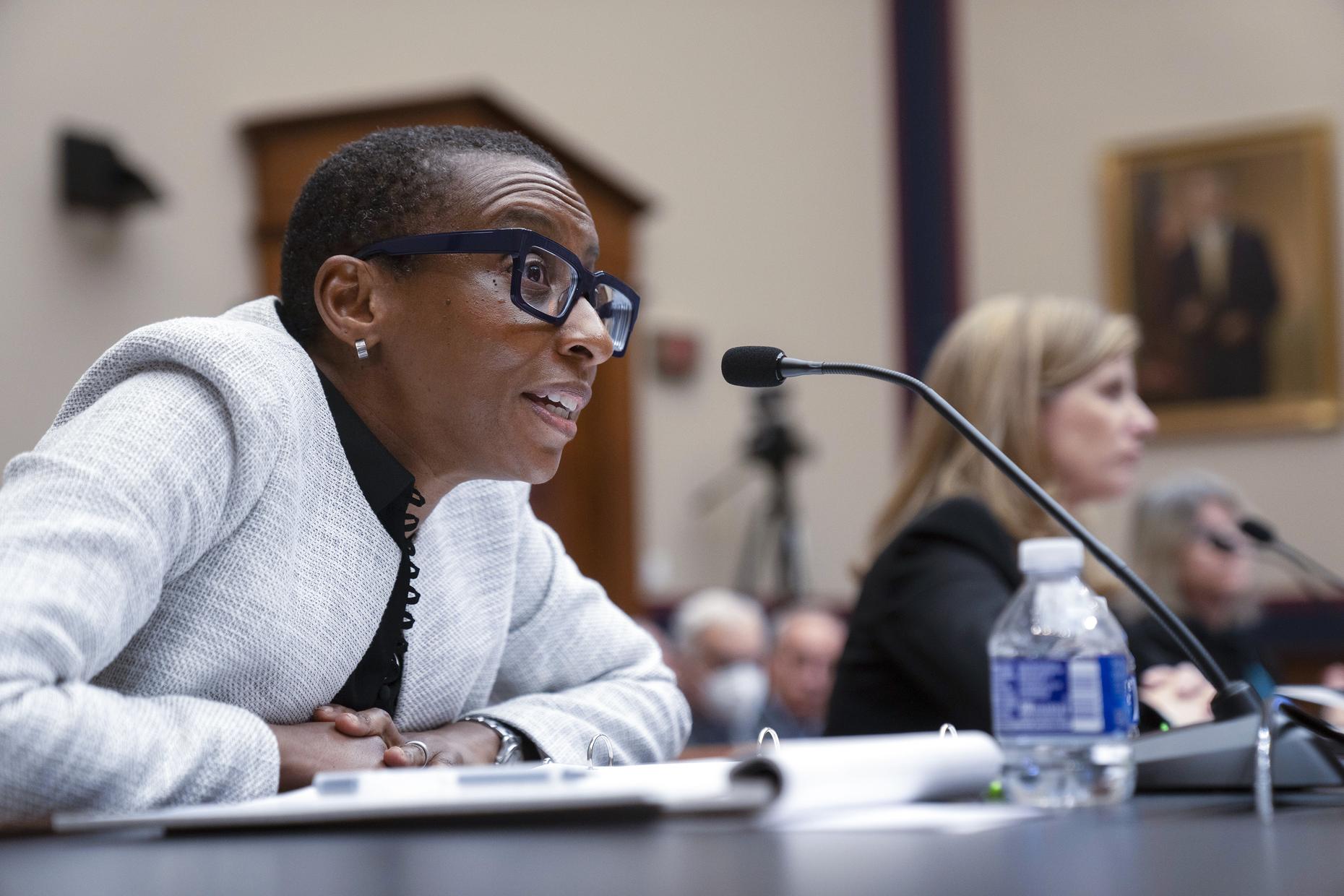
All Of It with Alison Stewart
Understanding the Resignation of Claudine Gay
00:51:41
This week, embattled Harvard president Claudine Gay resigned from her post at the university.
Loading summary
Transcript102 lines
- [00:04]
Alison Stewart
Listener Support WNYC Studios.
- [00:16]
Host/Interviewer (likely Alison Stewart or a producer)
This is all of it. I'm Alison Stewart live from the WNYC studios in soho. Thank you for sharing part of your day with us. I'm really grateful you're here. On today's show, we'll talk about how Goodreads is being derailed by users ability to review any book they want, even if they haven't read it. And we'll talk about relationships with large age gaps and we'll take your calls. That's the plan. So let's get this started with the resignation of Harvard President Claudine Gay. On September 5, 2023, the first day of classes, Dr. Claud, the new president of Harvard, the nation's oldest institution of higher learning, released this video on the university's YouTube channel.
- [01:07]
Claudine Gay
Welcome and welcome back to Harvard. The beginning of each academic year thrills with possibility. What can we accomplish? What will we accomplish as individuals and as a community? How can we? How will we meet? The moment for me, one of the most inspiring aspects of being part of our university is knowing that the gap between can and will is narrower. Here at Harvard, we dare to reach. Encouraged by colleagues and by classmates emboldened by a history of extraordinary achievement, we dare to change. Knowing that leadership and impact demand innovation. Since my election as president, I've learned more about the aspirations that exist throughout our community. Aspirations that not only fulfill our mission, but also expand, enrich and celebrate it. At events and meetings, in chance encounters and over ice cream, I've gotten to know some of you and to understand what motivates your contributions to the university and your drive to change the world. Though our pursuits are vast and varied, we all share something important and essential. A boundless and probing curiosity. I begin my first academic year as president in awe of your ambition, your optimism, your fearlessness and your talent. And with enormous gratitude for the warm welcome you've given me. I wish you well in the months to come, and I look forward to everything we will accomplish together once again. Welcome and see you soon.
- [02:57]
Host/Interviewer (likely Alison Stewart or a producer)
Almost four months later, she resigned. What happened in between is a serious cultural story at the intersection of global politics, free speech, education, conservative activism, race, class, money, generational differences, media, and I'm sure you can add something else. Today we're going to talk about what happened, how it happened, what it means, and maybe most importantly, why the resignation of a college president at a university out of reach for 99% of Americans matters. Facts, Verse Analysis after joining me now from wbur, Boston's excellent public radio station is education reporter Max Larkin, who has been covering this story. Max, thanks for making time today.
- [03:37]
Max Larkin
Thanks for having me.
- [03:38]
Host/Interviewer (likely Alison Stewart or a producer)
So let's roll Back to that. September 5, 2023. 23, the first day of academic classes at Harvard. If you had asked the average student or faculty member there about this new president, Claudine Gay, what would you hear?
- [03:53]
Max Larkin
Yeah, I think what we'd hear is. Feels different. It is an institution that on the one hand, for most of its 400 year history, served the white and wealthy. And yet in recent years, it has increasingly grown diverse, thanks in part to race conscious admissions, the practice that was before the Supreme Court last year. And I think to have a woman of color, the daughter of Haitian immigrants, presiding over it, was just conspicuously different. You don't have a deep relationship to the president of the University as an 18 year old, probably, but it's just, you know, it was a striking departure from, you know, 30, 29 prior presidents, almost all of whom were white men.
- [04:45]
Host/Interviewer (likely Alison Stewart or a producer)
Yeah, she was only the second woman. Dr. Gay had a long career at Harvard before taking this position. What was her reputation as an academic? What did she concentrate in? She was a dean there for a while. She had positions of power.
- [04:59]
Max Larkin
She did, yeah. So she's by training, a political scientist who looks at sort of voting patterns, particularly along racial lines in American elections. But I think she was very much on the administrator track, kind of training for the top job she eventually got. And so she served as dean of Social Sciences and then dean of the Faculty of Arts and Sciences, which is one of the top jobs at the university. And I think generally she was thought of as frankly, sort of a company woman doing what the university needed, whether it be trimming programs, but also pushing for diversity, equity and inclusion type measures. So it was sort of a balanced career prior to being named president.
- [05:46]
Host/Interviewer (likely Alison Stewart or a producer)
This is a little bit of an abstract question. Generally speaking, as someone who covers education in 2023, how would you describe the job of a college president at a competitive academic institution?
- [05:59]
Max Larkin
Yeah, it's really interesting. So on some level, these are like little countries, Allison. You know, they're, they're like micro states. So it's, it's, you know, you're, you're overseeing the general direction of the institution. So, you know, she might have wanted to look into quantum computing or like liaisons, business and kind of setting direction in that way. But the other big part of the job is just fundraising, you know, going around and, you know, kind of stirring up philanthropy, you know, saying, you know, your gift would go a long way if you, if, you know, we might be able to do this. And I think that was part of what became a problem, is that as she became a more and more sort of toxic headline name, obviously that fundraising stuff becomes a bit harder.
- [06:43]
Host/Interviewer (likely Alison Stewart or a producer)
So let's get to the timeline. You're going to help us out with the timeline. One month and two days after Harvard School year started, on October 7th, Hamas attacked Israel. Israel immediately responded on campus. Students became activated. So I went to look at the Harvard Crimson from October 10, 2023, and here was the headline. Harvard Student groups face intense backlash for statement calling Israel, quote, entirely responsible for Hamas attack. The piece goes on to say, quote, authored by the Harvard Undergraduate Palestine Solidarity Committee and originally co signed by 33 other Harvard student organizations Saturday, the statement came under fire from federal lawmakers, university professors and other students, two of whom are from our area, Bronx. From the Bronx, Richie Torres, a Democrat, and representing upstate New York, Republican Elise Stefanik, Harvard class of 2006, the fourth ranking House Republican. How did President Gay initially respond to, to the activism on campus?
- [07:44]
Max Larkin
Well, I think there are two parts to her response. The first is that that statement that you mentioned, the pro Palestine statement blaming Israel and sort of holding them responsible for the attack, came like hours after it began. And a little bit, it took a little while, some hours more for Gay to respond. And then when she did respond, initially people thought she didn't explicitly forcefully condemn Hamas. So she releases basically three statements over the course of several days just after the attack, reaffirming that she, you know, condemns terrorism and violence and then stressing that she also has to protect academic freedom. So you got the sense that she was kind of trying to triangulate and I don't think was anticipating that. A student statement, which is unusual, got basically international attention.
- [08:44]
Host/Interviewer (likely Alison Stewart or a producer)
Yeah. Let's listen to a statement from President Gay on October 13th. As you said, some people were not. They did not appreciate her initial reaction and did not feel it was strong enough. So she released this. Here's about a minute 30.
- [09:00]
Claudine Gay
This is a moment of intense pain and grief for a great many people in our community and around the world. I feel that pain and grief myself. As members of a university community, we have a choice. We can fan the flames of division and hatred that are roiling the world, or we can try to be a force for something different and better. People have asked me where we stand. So let me be clear. Our university rejects terrorism. That includes the barbaric atrocities perpetrated by Hamas. Our university rejects hate. Hate of Jews, hate of Muslims, hate of any group of people based on their faith, their national origin, or any aspect of their identity. Our university rejects the harassment of or intimidation of individuals based on their beliefs. And our university embraces a commitment to free expression. That commitment extends even to views that many of us find objectionable, even outrageous. We do not punish or sanction people for expressing such views, but that is a far cry for endorsing them. It's in the exercise of our freedom to speak that we reveal our characters and we reveal the character of our institution.
- [10:34]
Host/Interviewer (likely Alison Stewart or a producer)
That was President Claudine Gay from October 13, 2023. My guest, by the way, is WBUR's education reporter, Max Larkin. We're talking about the resignation of Claudine Gay as the president of Harvard. So, Max, what were the first signs that President Gay's leadership was being called into question not just on campus, but also off campus?
- [11:01]
Max Larkin
Quite different.
- [11:02]
Host/Interviewer (likely Alison Stewart or a producer)
Yep, go for it.
- [11:03]
Eric Deggans
You.
- [11:03]
Max Larkin
I'm here.
- [11:04]
Host/Interviewer (likely Alison Stewart or a producer)
Yeah, you're there. Okay, go for it.
- [11:06]
Max Larkin
I think the two situations are quite different. Basically, it's like on campus there there were grumblings about her response. But off campus, pretty soon after that statement came out, you had major donors saying, I won't give a cent. I'll to this institution going forward. I'll withdraw from boards. And then you had a number of open letters circulating saying she had had basically stood by while they alleged rise in anti Semitism continued unchecked. And then pretty soon after that, you had pro Palestinian or pro free speech people saying, you know, we are Muslim and Arab students in particular are being harassed and doxed. They're losing work. Why aren't you standing up to protect them? There had been a task force on anti Semitism, so there was a sense that basically she couldn't please anyone. Everyone was frustrated on campus and seemingly furious off campus.
- [12:05]
Host/Interviewer (likely Alison Stewart or a producer)
On December 5, three college presidents, President Gay from Harvard, the University of Pennsylvania's President Liz McGill, and MIT's President Sally Kornbluth testified before the House Committee on Education and the Workforce. They were called to testify. The event lasted about five hours and 20 minutes. And at the very end, right around the five hour and five minute mark, representative Stefanik, we mentioned earlier, asked each president the same question. We're going to play her exchange with Dr. Gay. The first voice you'll hear is Elise Stefanik. And then Dr. Gay and Dr. Gay at Harvard. Does calling for the genocide of Jews violate Harvard's rules of bullying and harassment? Yes or no?
- [12:48]
Claudine Gay
It can be depending on the context.
- [12:51]
Host/Interviewer (likely Alison Stewart or a producer)
What's the context?
- [12:52]
Claudine Gay
Targeted as an individual. Targeted as at an individual it's targeted.
- [12:57]
Host/Interviewer (likely Alison Stewart or a producer)
At Jewish students, Jewish individuals. Do you understand your testimony is dehumanizing them? Do you understand that dehumanization is part of antisemitism? I will ask you one more time. Does calling for the genocide of Jews violate Harvard's rules of bullying and harassment? Yes or no?
- [13:19]
Claudine Gay
Anti Semitic rhetoric. And is it anti Semitic rhetoric? Anti Semitic rhetoric when it crosses into conduct that amounts to bullying, harassment, intimidation, that is actionable conduct, and we do take action.
- [13:35]
Host/Interviewer (likely Alison Stewart or a producer)
So the answer is yes, that calling for the genocide of Jews violates Harvard code of conduct?
- [13:41]
Claudine Gay
Correct? Again, it depends on the context.
- [13:46]
Host/Interviewer (likely Alison Stewart or a producer)
It does not depend on the context. The answer is yes, and this is why you should resign. These are unacceptable answers across the board. What happened next, Max?
- [13:58]
Max Larkin
Yeah, that was not a good day. Claudine Gay pretty promptly apologized. Liz McGill also there, the president of UPENN resigned. And so for about a week after that apology and after that statement, we didn't know what would happen. And then Harvard, Harvard's top governing board, the, the so called Harvard Corporation, released a statement on the 12th, I think saying she apologized. It was a awkward exchange and. But we want to stand by her. So we went kind of into the break thinking she had kept her job, she had weathered the storm.
- [14:41]
Host/Interviewer (likely Alison Stewart or a producer)
And then there were allegations of plagiarism began to surface. Once the allegations of plagiarism began to surface, and this happened when the kids were, the students were in reading period and exams, getting ready to leave on December 20, what was she accused of doing? How did the university respond?
- [15:06]
Max Larkin
Yeah, so apparently those accusations first surfaced in October, so probably after the attack. And they basically outline borrowed phrases, right? Which, strictly speaking, do completely fall under the definition of plagiarism that Harvard uses. But as it was scrutinized by the top governing board, they said, this is bad. She is going to ask for corrections and for quotation marks and citations to be carried over and, and edited into her past work. But that we don't believe that this amounts to a kind of serious violation of research misconduct. But those accusations continued to mount and indeed another story was published just the day before she resigned that they were finding more and more in, in some 18. Seven of 18 published articles.
- [16:08]
Host/Interviewer (likely Alison Stewart or a producer)
I think she resigned on January 2, 2024. From your reporting, from what you feel comfortable sharing with us, Was this a voluntary resignation? Was it a. Was she volun told to resign?
- [16:27]
Max Larkin
It might have been a volunteering. I mean, I think she published in an op ed last night in the New York Times, and it, you know, she's One of the lines memorably was, I've been called the N word more times than I can count basically since this all began. And so I think there was a real sense of, you know, exasperation and pain, you know, just feeling extremely vulnerable. And a bunch of things happened privately, I'm sure emails and calls that were painful. And so I think there was an authentic will in gay to just get this over with. But, you know, there are also many people affiliated with the university who said she'd become a distraction and it was, it was time to move on.
- [17:16]
Host/Interviewer (likely Alison Stewart or a producer)
Yeah. You've been kind enough to share some of your reporting with us. We have three pieces of audio where you got people's responses to what has been going on. The first person we're going to hear from is Davaryan Baldwin. Who is this?
- [17:30]
Max Larkin
Yeah, Baldwin is a. He's a sort of a scholar of, of cities, of policy and of higher education at Trinity College. He lives in Massachusetts. And he, he says, we really want to understand those plagiarism charges in particular based on where they come from. And it was conservative outlets who were already very much displeased with and targeting gay and. Yeah, just kind of gave a context.
- [17:55]
Host/Interviewer (likely Alison Stewart or a producer)
Let's take a listen.
- [17:56]
Max Larkin
What is this really about? They want to use to say, look it, she was an affirmative action DEI higher, she was underqualified.
- [18:03]
Alison Stewart
She shouldn't have been there anyway, like a lot of black people, a lot of women.
- [18:06]
Max Larkin
And therefore this plagiarism is an indicator of, you know, politics over merit.
- [18:13]
Host/Interviewer (likely Alison Stewart or a producer)
The next person we're gonna hear from another word. Oh, yeah, go ahead.
- [18:15]
Max Larkin
Oh, sorry. Yeah. I guess it is just important that to note that conservative activist Christopher Ruffo sort of said this is what he was trying to do.
- [18:25]
Host/Interviewer (likely Alison Stewart or a producer)
Yes, we're going to talk about that with Eric Deggans in just a moment. The next piece of tape we have is from Jaime Sanchez, a postdoctoral fellow at Harvard. Can you set this up for us?
- [18:37]
Max Larkin
Yeah. Sanchez is at the Society of Fellows, so he's well launched in his academic career. But as I said before, for him it meant something that this daughter of Haitian immigrants was leading this sort of white bread institution and that there was a feeling on campus and now that's gone.
- [18:59]
Host/Interviewer (likely Alison Stewart or a producer)
Let's hear from Jaime Sanchez.
- [19:01]
Alison Stewart
There was a lot of hope and inspiration derived from just her being there. Right. She represented a lot of people's aspirations. So to see where, you know, we are now, and her kind of abrupt resignation is startling.
- [19:17]
Host/Interviewer (likely Alison Stewart or a producer)
And finally, you spoke to a junior at Harvard named Noah, Noah Cassis.
- [19:23]
Max Larkin
That's right.
- [19:24]
Host/Interviewer (likely Alison Stewart or a producer)
Tell us a little bit about your conversation with Noah before we hear his sound bite.
- [19:29]
Max Larkin
Yeah. Cassis, I think, spoke for many students where he was like, it was embarrassing, I guess, to be a Harvard student these past few months. One was asked about the school a lot and not, hey, you go to such a great famous school, but rather, what the hell is going on there. And he had a word, sort of advice. Basically, this war is, is awful. Its toll is awful. He's Jewish, but on the political left, and he said, you know, as there's protest, it will be painful, but he hopes that the people who succeed Gay, including Interim President Alan Garber, don't, don't shut that down.
- [20:11]
Host/Interviewer (likely Alison Stewart or a producer)
Let's hear from Noah Cassis.
- [20:13]
Max Larkin
And so I think that Jews are going to feel hurt and Palestinians are going to feel hurt.
- [20:18]
Alison Stewart
And that doesn't mean that it's the.
- [20:20]
Max Larkin
University president's responsibility to silence speech just to keep people from being hurt.
- [20:26]
Host/Interviewer (likely Alison Stewart or a producer)
Max, as you've been reporting this story, what is something that you haven't seen reported or some context that you haven't heard that you think is really important? As we continue this conversation.
- [20:38]
Eric Deggans
I think.
- [20:38]
Max Larkin
What we're seeing is basically universities struggling to be all things to all people. They are increasingly international institutions. They're fundraising institutions. They are supposed to be moral leaders, but they're also supposed to promote free speech. And I think that was sort of the fundamental dilemma that we were seeing over the last few painful months that, you know, there are Israeli students on Harvard's campus. There are also Palestinian students on Harvard's campus. And as a result, images from October 7 or from the ensuing bombing campaign are really, really authentically painful. And so I think you have to understand that this is all ultimately about a war, and one that many Americans, not just young people, feel conflicted and sort of in pain about.
- [21:33]
Host/Interviewer (likely Alison Stewart or a producer)
Max Larkin is WBUR's education reporter. He has been covering the resignation of Harvard President Claudine Gay. Max, thank you so much for sharing your reporting with us.
- [21:46]
Max Larkin
Happy to be here.
- [21:56]
Host/Interviewer (likely Alison Stewart or a producer)
This is all of it on wnyc. I'm Alison Stewart. Claudine Gay's resignation from the position of president of Harvard is notable for many reasons. First, she was the first black president of the country's oldest and richest university, if not one of the most prestigious. And she is only the second woman in its nearly 400 year history, and she held that position for 186 days. Among those calling for Gay to step down were some people with a political agenda and some activist alumni angered by her performance in navigating campus reactions to the Israel Hamas war. Then there were the plagiarism allegations, which surfaced anonymously and were amplified by a conservative media outlet, the Washington Free Beacon, that if you went to the website this morning, first thing this morning, the entire homepage was devoted to Gay's resignation. 13 stories. According to reporting from the Associated Press, reviews by Harvard found multiple shortcomings in Gay's academic citations, including several instances of quote, duplicative language. The university did conclude the errors were not considered intentional or reckless and didn't rise to misspelling conduct, end quote. Still, Gay's abilities were being called into question. Leading the way was Bill Ackman, a Harvard grad and a billionaire hedge funder with a million followers on X, the site formerly known as Twitter. And according to the Guardian, Ackman has tweeted about Gay, Harvard or both more than 100 times in the past month. And on Tuesday, he posted a 4,000 word essay on X explaining his position and why he thinks diversity and inclusion efforts need to go. Gay also had her say with an op ed in yesterday's New York Times titled what Happened at Harvard is Bigger Than Me. She wrote, the campaign against me was about more than one university and one leader. This was merely a single skirmish in a broader war to unravel public faith and pillars of American society. Campaigns of this kind often start with attacks on education and expertise because these are the tools that best equip communities to see through propaganda. But such campaigns don't end there. Trusted institutions of all types, from public health agencies, agencies to news organizations, will continue to fall victim to coordinated attempts to undermine their legitimacy and ruin their leader's credibility. Joining us now is NPR TV critic and media analyst Eric Deggans. He's also the author of the book Race How Media Wield Dangerous Words to Divide a Nation. Eric Deggans has been watching this all play out, and he joins me now. Eric, thank you for making time today.
- [24:22]
Alison Stewart
Sure. Thanks for having me.
- [24:23]
Host/Interviewer (likely Alison Stewart or a producer)
Listeners, we'd like to get you in on this conversation. What was your reaction when you heard that Claudine Gay had stepped down as the president of Harvard? How do you feel about the role alumni play in education today? Is this a simple story of a person who failed at her job or something more, or both? 2124-3396-9221-2433 wnyc. That is our number where you can join us on air. You can also text to us at this number, 2124-3396-9221-2433-WNYC. Our social media is available as well. We'd also be happy to hear from college students. We'd like to hear from you. What are you looking for? Presidents? What do you think about the role of alumni in your university? And what was your reaction to Claudine Gay's resignation? So I'm going to pose a couple of those questions to you. First, Eric, what was your reaction when you first heard that Claudine Gay had stepped down as president of Harvard?
- [25:18]
Alison Stewart
Well, I thought it was a little unfortunate because there is such a haze of anger and controversy and politicization that has infused this whole process and it's made it very difficult to sort out what are the fair criticisms of her history. What are the fair criticisms of these, the fair versions of these allegations of plagiarism. And, and, and what is motivated by people who, you know, are seeking, we're seeking to have her unseated for reasons that were different than, you know, these serious allegations about her past scholarship. And as a media analyst, one of the things that I found really disappointing was that there wasn't a lot of detailed examination of what exactly these plagiarism allegations are, other than in media outlets that have a clear ideological agenda. So, you know, why isn't the Associated Press telling us in depth what are these allegations? And you know, why didn't Gay herself tell us in detail what these allegations were? Why didn't the Harvard leadership tell us why when they first heard about them, they thought they were okay? And, and, and, and now, you know, what do they think of these new allegations? There's been, so, there's been a lack, I think, of reporting and detail about those ideas in particular. And so people are filling in the vacuum of those that, that lack of knowledge with their own assumptions about what's happening. And so you have a lot of sort of wild accusations and conclusions being presented about DEI programs and about affirmative action hires and about the state of higher education, when what we probably should be talking about is this specific person and their specific issues and whether or not the criticisms of that specific person are fair or not.
- [27:48]
Host/Interviewer (likely Alison Stewart or a producer)
We're starting to get some calls in and some texts in. One says, I feel like Claudine Gay got punished for being a successful black woman. It's representative of when they put Martha Stewart in prison, but at least she kind of did something. Someone else texted, I hope you'll discuss the GOP led coordinated effort to oust her. As if Stefanik's questioning wasn't Absurd enough, clearly in search of a soundbite. Their whole plot was outlined in an op ed today. It makes my blood boil that our representatives are wasting time on this. Private universities don't report to Congress. Let's talk about some of the players here, the media players here. Christopher Ruffo, who started a lot of the conversation around critical race theory. How would you describe Christopher Ruffo?
- [28:32]
Alison Stewart
ERIC well, he seems to be someone who's an activist who has figured out how to manipulate media coverage in order to direct incisive coverage towards issues where he wants to have an impact. And one thing that I've seen that he's done and that other activists who've followed his lead in Florida, where I live, is that they may take frustration that people have with an institution, the frustration that people had with local schools in the wake of the pandemic, or the frustration that people have with higher education, given how much it costs and given still the need to have a degree in higher education to attain a certain standard of living in America. They take all those frustrations, but they channel them into anger about issues that aren't necessarily germane to those things that people are angry about because they're channeling that anger to achieve certain political goals. And Rufo, for example, sort of highlighted the hysteria about critical race theory and whether or not that was being taught in schools at the elementary school level or the high school level, which it really isn't, and using that as an excuse to pass a lot of rules that would make it harder to talk honestly about slavery or the civil rights struggle for people of color in America and these kinds of things. So he's been very effective. And I think the question that people always have in situations like this is whether there'll be a chilling effect once Gay is gone. Will Harvard have the courage to hire another black woman to lead the institution, even if they can find someone who would take the job, and even if they can find someone who didn't have the problems in their background, in their academic, their past academic work, that maybe Dr. Gay did. And does an activist like Rufo wind up winning in a way, because they have pushed Harvard to not consider hiring a person of color or a woman to fill that job? That's always the question when you're in these situations. What's sort of the political motivations behind the actual protests that are happening? And that's, you know, that's media's job to sort through that stuff and try to, you know, tell people what's going on in a way that they can actually understand everything that's happening. And again, I feel like people are making, you know, I'm not sure it's entirely fair to say that, you know, Dr. Gay was completely forced out of her job because she was a black woman. Certainly that was an element of the reason why some people didn't believe that she was an effective leader. But there were also serious questions about her scholarship that, frankly, the people who were defending her didn't necessarily articulate all that well in the press. And so what are people to make of this when they, when they come to the media and they expect us to actually say, well, why did the Harvard Corporation decide that these issues in her past were okay? You know, it's not enough to just say that they said, well, this wasn't a problem. Well, why didn't they say it wasn't a problem? And how might that apply to future instances or future discoveries? It's hard to people, it's hard for people to understand the situation because it hasn't been adequately explained.
- [32:25]
Host/Interviewer (likely Alison Stewart or a producer)
I want to share a tweet that Christopher Rufo tweeted, and I'm. Let us give it to you because you're the media analyst. And I think this is, he's talking about his media strategy. He said, we launched, he tweeted, we launched the Claudine Gay plagiarism story from the right. The next step is to smuggle it into the media apparatus to the left, legitimizing the narrative to center left actors who have the power to topple her, then squeeze.
- [32:54]
Alison Stewart
Yeah. So, I mean, again, you know, as I said, you know, this is someone who's an activist who has a very concerted media strategy. And that's something that reporters have to be aware of when they're engaging with him and his ideas. That doesn't necessarily mean that his criticisms are totally invalidated. What it means is that the, the media outlet has to try to figure out whether those claims are fair. And, and, and, and unfortunately, the emotion of the moment overwhelms those efforts. And so, and, and not only did we have sort of people who were emotional about her symbolism as a black woman leading Harvard, but we also had people who were emotional about what they felt that she did or didn't do regarding antisemitism on Harvard's campus or what she did or didn't do about, you know, people about Islamophobia on, on, on Harvard's campus. And so you had all these emotional reactions to. And it's media's job to try and cut through all of that and report on what she had done and questions about her leadership in a fair way. And it's really hard to do that when you have activists employing sophisticated media strategies like the one you just read.
- [34:16]
Host/Interviewer (likely Alison Stewart or a producer)
My guest is Eric Deggans, NPR's TV critic and media analyst, author of Race How Media Wield Dangerous Words to Divide a Nation. We're talking about the resignation of Claudine gag. We have a lot of phone calls lined up. We're going to get to our callers after a quick break. This is all of it. This is all of it on WNYC. I'm Alison Stewart. My guest is Eric Deggans, NPR's media analyst. He's also the author of Race How Media Wield Dangerous Words to Divide a Nation. We're discussing the resignation of Claudine Gay, former president of Harvard University. So Eric, I've got so many calls. I'm gonna roll calls. I'm just gonna roll through, let people say what they need to say. If you hear something that you wanna comment on, just give me a wave. Okay?
- [35:11]
Alison Stewart
Okay.
- [35:12]
Host/Interviewer (likely Alison Stewart or a producer)
Let's start with line three. Who is Marcia from Brooklyn? Marcia, thank you so much for calling in.
- [35:23]
Eric Deggans
Hi, I'm on speaker phone and I'm on a new phone so I hope that I can get it off speaker.
- [35:28]
Host/Interviewer (likely Alison Stewart or a producer)
Without you sound okay.
- [35:30]
Eric Deggans
Okay. So first of all, I'm a middle class fluffy Jewish woman from Brooklyn. Secondly, for many years I was voted the Zionist professional of the year in the 80s. Thirdly, I grew up in a very anti Semitic.
- [35:46]
Host/Interviewer (likely Alison Stewart or a producer)
Marcia, we lost you. So we're going to pot you down and see if we can figure out. Oh, the calls are out. Oh, the phone box has come down. All right, let me go to some texts. This was a chance for right wing politicians to attack elites using the horrible war as their justification. Another text says gay is a victim of politics in many layers. Why did Harvard send her to Congress hearing in the first place? What was the true purpose? Let's see what else texts we have here from. Somebody has tweeted to us. Why did she. Can you explain why these three presidents sat before Congress? It wasn't a requirement. Haven't seen anything about this in the articles on the subject. Doesn't Congress have bigger issues on its place? This is minimum number 2157 on Congress's to do list. Any room to discuss the appalling op ed from B. Stevens. Bret Stephens on this. Any of those you want to take, Eric? Any of those?
- [36:45]
Alison Stewart
Well, I didn't read. I saw that Stevens had written that column from the New York Times. I didn't read it. I guess what I would say about this is that again, what activists often are trying to do is get emotional responses to sort of overwhelm the attempts to have real discussions about what is actually going on here. I mean, the House is controlled by Republicans. So they created this hearing and if the presidents hadn't shown up, they would have looked like they were ducking, you know, discussing the issue. And you know, it's obvious that there is a real issue in how do you allow people who are on all sides of what's happening in this war, this freedom, to express their beliefs, but also do so safely and do so in a way that people, students and staff and everyone feel safe on campus, regardless of whether they're Jewish or Muslim or whatever. And you know, I, I, as I watched that, I felt Stefanik was asking a question that required a lawyerly answer because these are presidents who are going to have to adjudicate whether people have actually violated these codes of conduct. So they can't just blanketly say, well, if you say X, you're out of the school. Because, because that would, that might sort of commit them to a legal position. I also felt the presidents weren't prepared. They went into this, it seemed as if they, they went into this hearing not understanding that they would be facing hostile questioning and that they would be facing hostile questioning from lawmakers who were attempting to delegitimize their leadership. They didn't seem particularly well prepared. But all of that said in this particular instance with Dr. Gay, I think we had several questions that we needed to see answered that really were overwhelmed by the emotion of the moment. Was this plagiarism which she was accused of, if it was, was it bad enough to cost her her job or was there some other way to sanction her if she should have lost her job? Was this the story of one person who made a bunch of mistakes and shouldn't have been hired in the job? Or was this an indictment again of diversity and equity and inclusion practices? And is it possible to celebrate, to separate the real issues that are at the heart of this from all the emotion of the moment? And unfortunately, you know, what activists are trying to do is short circuit that process and get people to react in emotion and make these knee jerk responses rather than trying to find a way to sort of cut through the nonsense and use data and use information and facts to actually make decisions. And that's what upsets me the most about this situation, is that people are drawing all these Conclusions based on what they want to believe politically rather than just looking at the facts of the situation and going through those questions as I outlined them.
- [39:50]
Host/Interviewer (likely Alison Stewart or a producer)
I think we've got our phone box back. Let's try Irene in Brooklyn. Irene, thank you for calling in.
- [39:59]
Eric Deggans
Hi, yeah, I wanted to just say in relation to what you were just talking about, I think that Gay was really entangled in a larger sort of bad faith campaign to redefine criticism of Israel as intrinsically anti Semitic. I'm speaking as a professor myself who has seen this happening on my campus and throughout campuses across the country. And I'm disappointed that your segment. I've heard this quote over and over and over again, this section of the congressional hearing on many, many news stories, which completely leaves out a really, really important context where Stefanik actually defines what she means by calling for genocide. And what she's actually referring to is she has single handedly or her movement has decided that chants like from the river to the sea or basically anything that criticizes Israel constitutes an intrinsic call for genocide against the Jews. And so Gay's response and the president's, their engagement with that has to be seen in that context that it was a completely bad faith definition of what she meant by calling for genocide. So that is a really important part of the hearing that really should be included in any story on this, on this issue.
- [41:37]
Host/Interviewer (likely Alison Stewart or a producer)
Yeah, that was sort of part of my point of that was five hours worth of testimony. And it's just that minute, I, maybe I wasn't clear enough about saying that, but. So, Irene, thank you for pointing that out. Let's talk to Fatima calling in from Manhattan. Hi, Fatima, thank you for calling in.
- [41:51]
Eric Deggans
Hi, thanks for having me. I love your show. I'm calling in as someone who believes in diversity, who's a black alum of Harvard University who focuses on issues of race and racism. And I'm very disgusted by the treatment of Claudine Gay. You know, I see it all as a pretext. You know, I signed onto the petition of black alums that were in support of her. And whether or not her testimony was good or bad, I think that one minute clip was terrible. And I think she got terrible advice from Wilmer Hale, which was the law firm that advised some of the presidents. And as a lawyer, I also looked at it and said, okay, they're thinking about litigation exposure, but this is not the moment. They needed political advice in that moment. And I also know it could be answered in the context of where you can have schools that kick out someone who's A rapist, but then they get sued by the rapist. But what I'll say is this. I saw it as a pretext by people like Bill Ackman, who I see as a white supremacist and a bully. And I see it as a right wing takedown of Claudine Gay as a Trojan horse for racism and an anti diversity poison pill. And what I mean by that is I don't believe that the people that were coming for her really care about whether or not there's safety on campuses across America. They don't care about, you know, whether there's anti Semitism in, in the way that they try to pretend that they care about it. And if they care about people being safe, then they wouldn't have endangered, you know, Claudine Gay because, you know, she, like she said in her New York Times op ed, she's been called the N word, she's received death threats. Then you have Chris Ruffo who then tweets scalped after she announces her resignation. So to me, I'm thoroughly disgusted whether or not there was legitimacy in plagiarism claims or. Or not. To me, what this is really about is wanting to upend opportunities for people of color and to have diversity on campus. And as a black alum of Harvard University, I am thoroughly disgusted by people like Bill Ackman, who's a white supremacist.
- [43:57]
Host/Interviewer (likely Alison Stewart or a producer)
Fadiman, thank you for calling.
- [43:58]
Alison Stewart
You know, I would say, you know, that that's a perfectly valid and sensible sort of reading of the situation. But, but at the heart of this is some very serious allegations about how she, how Dr. Gay conducted her research and some of her published work. And that stuff can't just be shrugged off by saying, by the politics of all the people who are criticizing her. And that's the unfortunate sort of situation that Dr. Gay found herself in, is that she didn't have great answers for people who look back and said it looked like you cribbed a bunch of language from a bunch of other academics in your work. And again, the people who were defending her in Harvard leadership couldn't specifically say this is why we thought this was minor. And at some point you have to be able to answer those questions. Otherwise you're asking to make the same sort of leaps of logic that the conservatives are asking to make, but you're trying to do it in a different direction. And that's not necessarily a great thing either.
- [45:11]
Host/Interviewer (likely Alison Stewart or a producer)
We got a tweet from someone text actually says, as an academic whose work has been plagiarized I find it appalling. The seriousness of plagiarism is so little discussed. It is absolute worst conduct one can commit the academy. When someone cherry picks your hard won ideas or language, it violates one the most. Let's, you know. But I want to talk about something I heard in Fatima's voice and I've read online of other graduates from competitive universities. A lot of pain in Claudia stepping down and a lot of pain in the suggestion by people like Bill Ackman she wasn't good enough. And you know, story and story again about people who go to these universities and have someone say you got in because you're black, because you're Latino, because you're X, Y and Z. And I just, I wanted to say that out loud that there is a sense of pain for some people in this.
- [46:06]
Alison Stewart
Of course there is. And, and you know, I'm African American. I'm somebody who's achieved some things in my life and I've had people tell me that those achievements came because of my skin color. And I resent that. And, and so that's the painful part of this. And again, it's sort of like just because one person turned out to have problems in their past, that does not mean that the idea that there's value in diversity in leadership and that there's value in diversity in, in, in higher education, that that is somehow wrong. That's not true. And, but, but the thing is, you know, you can't let that turn into a, a defense of someone where you just shrug off every criticism of what they've done, even if it's a valid criticism. And again, that's the problem that we're, that we're stuck in. You know, it requires data to sort of look and say, you know, what do we, what does diversity in leadership produce in higher education? And just because one person may have fallen short, that doesn't mean that the concept itself is bankrupt. And I think that's frankly where we are right now. There may be questions about what Dr. Day has done, but I don't think that invalidates the idea that it's important to have diversity in leadership and that that brings benefits to institutions. I think it's a function of logic. All you have to do is ask what mechanism do you use to get your best minds on the front lines of every problem? It's by removing these arbitrary prejudices about gender and race that keep people from leadership positions. That's simply logic. Now you can question whether or not Dr. Gay and how she came to power Whether that was valid, I don't know enough to even ask intelligent questions about that. You can ask questions about that, but that doesn't change the fact that it is obvious that diversity, when it brings qualified people to leadership, is a benefit. And unfortunately, we're seeing people muddy those waters as well.
- [48:24]
Host/Interviewer (likely Alison Stewart or a producer)
Let's talk to Jennifer from Wilton, Connecticut, who's been holding for a bit. Hi, Jennifer, thanks for calling in.
- [48:30]
Eric Deggans
Well, thank you. And thank you for the complexity and nuance of this conversation. And I heard Eric Dickens, who I have so much admiration for, make a comment to one of the previous callers. Just it speaks to kind of what I want to say. So I'm an alumni, alumni of Harvard. I'm very, I've been very involved for almost 30 years helping them with alumni admissions down in this area of Connecticut where I live. I am Jewish. I happen to be a fairly liberal Democrat. You were talking about pain. Like this has been an incredibly painful time to be someone in the area that I occupy. And I just want to sort of explain just a drive home for all your listeners. It's complex, the nuance of this situation. This is not right versus left. This is not all about racism. And I condemn probably the vitriolic random letters and things that were sent.
- [49:30]
Max Larkin
To.
- [49:30]
Eric Deggans
President Gay's way are, you know, apprehensive, you know, awful. But what we've been going through here is just this up and down of the initial response was heartbreaking. After October 7th, then new statements came out. There was hope. She met with Hillel. There was hope. And we wanted to go along, you know, with her. And then after the congressional hearing, you know, whether you think it was a setup job or not, the three presidents, you know, the advice they got, their presentations, you know, there were many people, including Lawrence Tribe, very upset with it. He, of course, didn't sign on a letter supporting her resignation. So I supported the corporation at first. But then, so you take out the issues about October 7th and protests and free speech on campus, and you come to the issue of plagiarism. And not for nothing, and Eric Dagen spoke to this, but, you know, Eric Goldberg had a really interesting article in the Atlantic, and he was, in fact, on an advisory board. He was a Jennifer advisor at one of the Houses.
- [50:35]
Host/Interviewer (likely Alison Stewart or a producer)
I can only give you about for about 30 more seconds.
- [50:39]
Eric Deggans
You can't. It's about hypocrisy. You can't have students who get, you know, put in suspension or kicked out and then have them look up to her as a leader, whether they're black or white or whatever. They want to believe in her. We want her to suspend, succeed. But this isn't the right person for the job. And I hope people can see the nuance.
- [50:55]
Host/Interviewer (likely Alison Stewart or a producer)
Jennifer, thank you for calling in. Eric, I've got about 45 seconds. Is there anything else you wanted to say?
- [51:02]
Alison Stewart
Just that, you know, also on top of all of this is there's, there's this pressure for people to pick a side involving this war. And I think the other thing we need to do is work really hard to create a situation where everyone feels comfortable and safe, whether you're Jewish or whether you're Muslim, whether you're Palestinian or whether you're Israeli. And people on both sides of this issue have to respect that. You know, they may not get all they want from leaders because there has to be space for everyone to feel safe and feel that they can express themselves.
- [51:37]
Host/Interviewer (likely Alison Stewart or a producer)
Thank you to everyone who called and texted. Even if we didn't get to your comments, we really appreciate them. We read them all. Thank you to Eric Deggans from NPR for being with us.
- [51:47]
Alison Stewart
Thank you.
- [51:48]
Host/Interviewer (likely Alison Stewart or a producer)
There's more. All of it after the news.
- [51:50]
Alison Stewart
It's not rocket science. Grayscale has been educating investors on crypto for over a decade. Grayscale. Invest in your share of the future.
- [51:58]
Max Larkin
Investing involves risk and possible loss of principle. Visit grayscale.com for more information.
- [52:05]
Claudine Gay
Are you ready to get spicy?
- [52:07]
Max Larkin
These Doritos Golden Sriracha aren't that spicy.
- [52:10]
Claudine Gay
Maybe it's time to turn up the.
- [52:12]
Max Larkin
Heat or turn it down. It's time for something that's not too spicy. Try Doritos Golden Sriracha, spicy but not too spicy.