← All Of It with Alison Stewart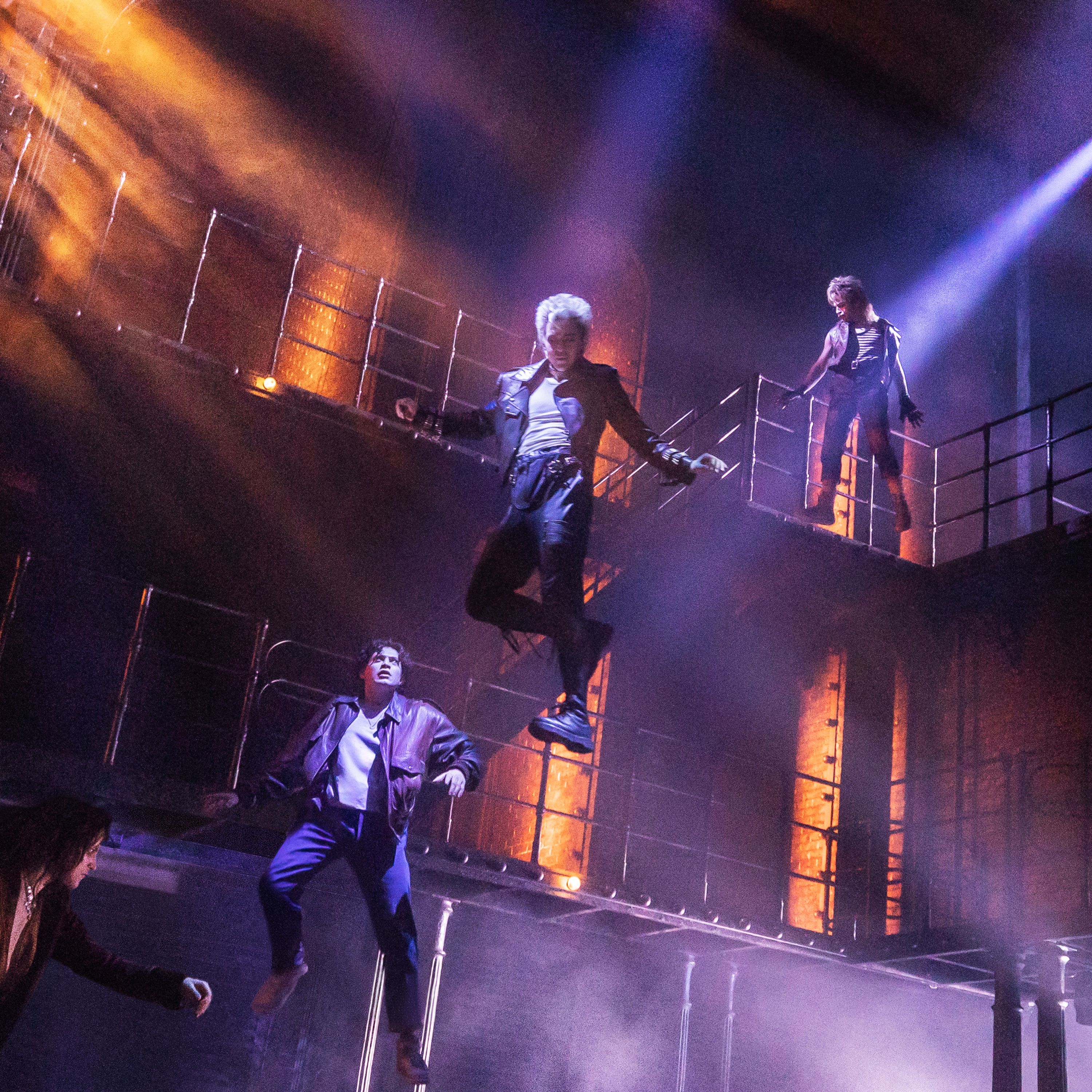
Loading summary
Transcript173 lines
- [00:00]
Progressive Insurance Announcer
All of it is supported by Progressive Insurance. Do you ever find yourself playing the budgeting game? Well, with the Name youe Price tool from Progressive, you can find options that fit your budget and potentially lower your bills. Try it@progressive.com Progressive Casualty Insurance Company and affiliates Price and coverage match Limited by state law not available in all states. WNYC Studios is supported by Odoo. When you buy business software from lots of vendors, the costs add up and it gets complicated and confusing. Odoo solves this. It's a single company that sells a suite of enterprise apps that handles everything from accounting to inventory to sales. Odoo is all connected on a single platform in a simple and affordable way. You can save money without missing out on the features you need. Check out odoo@o d o o.com that's o d o o dot com.
- [00:59]
Alison Stewart
This is all of it on wnyc. I'm Alison Stewart. I wanted to preview some of the conversations we have coming up on the show next week. You know it's summer in New York City because Shakespeare in the park is back. We'll speak with the cast of Romeo and Juliet which is now at the Delacorte Theatre. Bestselling author Ann Patchett has a new novel out titled Whistler and she'll join us to talk about it. And we'll learn about the science behind earworms. Those songs you can't kill get out of your head. That's coming up next week. Now let's get this hour started with the Lost Boys. Broadway's the Lost Boys has a few things to be excited about. One, it has 12 Tony nominations. Two, it was just announced the vampires and the vampire adjacent folks would be extending its run all the way through March of 2027. And three, just today the show's cast album became available for pre order. The musical is an Adaptation of the 1987 cult classic film about teenage angst and vampires in a beachside California town. A little bit later we'll talk about the Tony nominated to the Tony nominated director and scenic designer who responsible for bringing the movie's world to the stage. But first, I'm joined by two of its stars. LJ Benet makes his Broadway debut as Michael Emerson. The wayward teen tour between his family, a girl and the allure of eternal life community, even if it's a gang of vampires. Hi LJ Hi. And speaking of vampires, the seductive rock and roll coded vamp David is played by Ali Louis Borsgi. He's nominated for a Tony for the featured role it is nice to see you again.
- [02:41]
Ali Louis Borski
Nice to see you, too.
- [02:42]
Alison Stewart
All right. This is your Broadway debut. You told Billboard you were living with your parents.
- [02:46]
LJ Benet
Yeah.
- [02:46]
Alison Stewart
You were working as a handyman.
- [02:48]
LJ Benet
That's right.
- [02:49]
Alison Stewart
So what was the day, like, when you got the call that said, come to New York and be part of the show?
- [02:55]
LJ Benet
Oh, man, it was kind of a whirlwind. I flew to New York one day, did my audition, thought it went decently well. I didn't hear anything. And then the next day, I did a fly test. And then the day after that is when I got the call.
- [03:09]
Alison Stewart
What were you doing that day? Were you just out in the yard?
- [03:11]
LJ Benet
I was visiting my Cousin Torrin in SoHo, and he has this cool studio. He's a sound designer. And so he. I was visiting, and I was playing some of the music that I was writing at the time in a studio, and all of a sudden, I get this text from my agent being like, hey, can we zoom? And honestly, I thought it was a letdown call. Like, I never get a zoom from my agent ever. So I was like, oh, no, I didn't get it. And then I got the call, and they were like, you got it. You did it. And I was like, what do you mean, I did it?
- [03:37]
Ali Louis Borski
Well, meanwhile, I got to watch this last audition he did because they wanted us to do a chemistry read. So I knew the second he started that he got it. Not that they knew, but I was
- [03:46]
Alison Stewart
just like, well, of course in your soul, you knew.
- [03:48]
Michael Arden
This is it.
- [03:49]
Ali Louis Borski
It just felt right. Y.
- [03:50]
Alison Stewart
That's interesting. What do they do during the chemistry read?
- [03:52]
Ali Louis Borski
Well, we sat there and watched LJ do his material. This was me and Maria, who play star. And then afterwards, we went up and read some scenes. And to be honest, I mean, I feel like I haven't talked about this yet, but, like, we were doing one of the scenes together, and LJ was like, so great, and he was off book, and I hadn't done. I had done the workshop last year, but I hadn't done the scene in a long time. So all of a sudden, I'm like, oh, man, he's kind of showing me up. I'm kind of terrible.
- [04:13]
LJ Benet
No, no, no. Opposite, opposite, opposite.
- [04:15]
Ali Louis Borski
It was a really great time. And we just immediately were like, yeah, this is. This is definitely the guy. I mean, it was. It was one of the most amazing auditions I've ever seen.
- [04:23]
Alison Stewart
When you settle down, you said, oh, I got the job. What went through. Went through your mind next?
- [04:29]
LJ Benet
I actually walked to Times Square, and I walked to the theater. And I sat outside of it for a really long time. I've talked about this in a couple interviews, but my grandpa used to distribute playbills in, in New York at different theaters. And honestly, I just sat there kind of just thinking about him. Didn't really have a relationship with him growing up. I knew him when I was really. So I spent like a good hour just sitting outside, looking at the marquee on the ground and just like imagining him like the people he talked to and handed out things. And now people were gonna be handing out playbills for a show I was in. So I was really, I was just really grateful.
- [05:05]
Alison Stewart
So, Ali, what were you doing when you found out you got the role?
- [05:09]
Ali Louis Borski
Oh, well, actually, I mean, last time I was here, we were talking about we live in Cairo, and we had just finished that show and I was auditioning for that. During that, I was auditioning for the original workshop of this last year while I was doing that. And so I was having like the last sort of get together cast party with that cast and my agent called me and it was like super late at night. And so I was like, this is weird. And I got really super anxious and I ran out into like the stairway, this hallway, and I'm like, what, what, what, what? What's going on? And he, and he let me know pretty early on that I was going to be playing the role. And I had just spent a couple weeks trying to, you know, I auditioned tons of times, had to do like a guitar audition, had to do a bunch of in person auditions for the acting scenes. And I just wasn't sure because I really wanted to play a villain, but I wasn't sure other people could see me playing a villain. And I really wanted to prove that I could do that challenge, even though I've mostly played really kind and sweet people.
- [06:02]
Alison Stewart
You were an Orpheus.
- [06:03]
Ali Louis Borski
Yeah, exactly. I had just come in, Tommy and Michael had just seen me in Hadestown and like, oh my God, he's gonna think I'm just this sweet little boy. I promise I can be evil. But yeah, so I was just so excited and then I immediately got to work on that workshop and it was one of the most amazing things I've ever done, is to be able to create something from the ground up with a group of people. It was a really amazing world in which they had something started. And what they had started was amazing. But we got to build it together and I really got to help flesh David out into this full fledged character. Because in the beginning he was similar to the movie where he's there a lot, but he's sort of just a presence and doesn't have a lot to say. But I knew that in order for us to see the human behind the vampire, he had to have a bit more to say and a bit more vulnerability to show.
- [06:48]
Alison Stewart
When you two, you get the role, you meet up, you're having conversations about the characters. What is something that Michael Arden told you, your director told you in those early days that you still come back to?
- [07:01]
Ali Louis Borski
I would say it's the. I mean, it's the listening. And it's also like, he sets up that example by telling us that, but also creating a room where he does that in that way of just like, we were in the workshop and then this rehearsal, and we were able to bring so much to the table, and every department was able to bring so much to the table. And he never, like, made anyone feel bad for coming up with ideas. He actively listened to everyone and took those ideas seriously and often implemented them. But, yeah, he just. He tells us a lot, like, if you're feeling like you don't know what to do in a scene or you're getting lost in it, or you're feeling like you have to do too much, the best thing to do is just look at your scene partner and just stop trying so hard and just listen to them and just, like, breathe and put your focus on the other person. And that often simplifies the story and makes it much more clear.
- [07:48]
LJ Benet
Yeah, I felt like I was getting lost a little bit in the rehearsals in the beginning, just because the pressure and Michael Arden's direction of, like, yeah, focus on the other person and also just play the honesty, you know, like, these are real people that are existing. Yes, it's spectacle and vampires and stuff, but, like, if you play the honesty, that's how it works. And him kind of just drilling that into my psyche, like, really helped me uncover a lot, especially when it came to Michael.
- [08:13]
Alison Stewart
L.J. what was giving you pressure at the time?
- [08:15]
LJ Benet
Oh, you know, first Broadway debut. Broadway debut. Never been on Broadway before. Kid from la just coming in here being a lead of a musical. No big deal. No, it was a lot, but it was good. I love pressure. I'm really competitive, so I thrive off of it. But I just. I really wanted to be good. I just wanted to serve the material as best as I possibly could and just let them know that, you know, they picked the right guy.
- [08:41]
Alison Stewart
We're talking about the Broadway musical, the Lost Boys. I'm speaking to Ali, Louis Bourge.
- [08:46]
Ali Louis Borski
Borski.
- [08:47]
Alison Stewart
Thank you, Borski. And LJ Benet. Lj, you play Michael, a teenager. He's got this younger brother. You move with your mom to this beachside town. You've left your abusive father. We come to learn what's going on with Michael when we meet him.
- [09:03]
LJ Benet
Everything, my goodness. He's dealing with a lot of. I feel like he's kind of hiding behind this facade of, like, big tough guy, but on the inside he's this, like, little teddy bear. And I don't think you. He, like, you don't see that a ton until he meets David. Michael thinks he's, like, alpha in any room he walks into. And then he meets this guy, David, and then it's like, oh, this is the lion. Like, he's never felt more intimidated and, like, going back to the audition, oh, my gosh, I never felt more intimidated in my life than when we read together because I was just like, yeah, Michael, I'm the big guy on camp. Yeah, yeah. And then you see Ali and he's like playing this, like, so, like, tamed, but, like, intense, but also, like, I feel safe at the same time, but, like, I don't know what I'm supposed to do with that. There was a lot going on with Michael, but underneath it all, I think was this song belong to someone, which I feel like is. I don't know, that's. That's kind of like people say they have like, the song of, like, their week or like the song of their life. And I feel like that's kind of Michael's song where that's kind of living beneath his heart. He's putting on this facade of, like, tough guy. I got it all together. But, you know, he meets a girl, he meets a guy, and then all of a sudden, everything unfolds.
- [10:19]
Alison Stewart
So we get to meet David in sort of a spectacular fashion. He's a big rock star. He's come singing onto the stage. Why does that entrance fit David?
- [10:29]
Ali Louis Borski
Yeah, well, there's a really interesting thing with David is where there is, like the honest side of himself and then there's this portrayal which I, you know, is the rock star. And I think there is something in the fact that the first time we see him is he had this huge, huge spectacle filled rock song. And then the scene where he's like, very inward and stoic directly after. And the rock star for him is sort of this character that he plays in order to dissociate from the truth that he's running from. He doesn't know all this, you know, at heart, but I think. I think it's, like, what he's actively trying to do, you know, I think that the real tragedy of David is that he is, like, also the lost boy. Like, he is working so hard, this whole show, to save Michael from himself and to save Star from herself. And he thinks that he can, like, gift them this immortality to, like, cure themselves of their, like, mortal ills. But, like, actually, he doesn't realize that he's just. It's one of those, you know, cycle of abuse things where he's just continuing the cycle of abuse and trying to fix other people instead of just, like, inwardly maybe trying to fix the thing that he's running from. And the fact that, you know, there's this interesting thing with all vampires and, like, most vampire media, where they're all trying to pretend that they are above humanity and that they are nothing like humans and they're better, but at the same time, all they want is to be human again. And the thing that all vampires are looking for is to find a single moment where they can experience the, you know, a level of humanity again and experience what it's like to have life be beautiful because that disappears once. Once, like, ephemeral disappears. Then, like, nothing is special anymore.
- [12:10]
Alison Stewart
It's interesting the music is so varied in this because you go from rock and roll to music that sounds like. I turned on the radio and I heard it in the 80s to a beautiful ballad. How did you balance that when you were thinking about singing these songs? Because you do have to go through a series. A range.
- [12:32]
Ali Louis Borski
Yeah, I mean, I think, you know, the rescues really did an incredible job with this. And honestly, it was the music that made me want to be a part of this from the very start. I heard, like, two demos and I was immediately on board. But I think it's. I think it's sort of this combo of they. Yeah, like the rock thing and the time period. But also, you know, with the vampires, there's sort of this, like, ancient sound, too, and they have a lot of string orchestrations, and it's a lot about that sort of, again, the juxtaposition of, like, classic sort of, like, ancient harmonic choir of, like, you know, this group of people that have been, you know, part of this gang cult thing for a really long time mixed with, yeah, the excitement of the 80s. And I think that also matches the, like, excitement of these young people who are starting. And it happened. And this happened a lot in the 80s and under the Reagan administration of People feeling, like, suffocated. So then just, like, absolutely, like, pushing out of their borders and just deciding to, you know, wear, like, crazy hair and crazy colors. And I think that's happening again of people feeling really oppressed, especially young people and wanting to kind of break out. And so there's. There's something about that in the music. I think a lot of the songs are about these young people wanting to, like, break out of their chains and find what their truth is.
- [13:48]
Singer (Ali Louis Borski)
Yeah.
- [13:49]
Alison Stewart
Let's listen to a couple of songs. We're going to listen to you singing. Ali singing have to have youe. When does this come into the show? When does this come into the show?
- [13:58]
Ali Louis Borski
Oh, it's pretty early. Yeah. I mean, right out of the. It's the first big thing I sing, which is crazy to, like, how to start the show.
- [14:07]
LJ Benet
I know, to just thrash, scream.
- [14:11]
Alison Stewart
Let's listen to a little bit. This is from the Lost Boys.
- [14:15]
Singer (Ali Louis Borski)
Your pulse is racing. You drive me crazy how can you blame me? You're so beautiful, Baby. In the day of the night I have to have you I have to
- [14:39]
LJ Benet
have you
- [14:42]
Singer (Ali Louis Borski)
I have to have you I have to have you
- [14:51]
Alison Stewart
I want
- [14:52]
Singer (Ali Louis Borski)
to give you a caress your collarbone no preacher would condone what I would do to you Baby, baby.
- [15:18]
Alison Stewart
I'm taken back to my teenage years. That song.
- [15:22]
Ali Louis Borski
That's great.
- [15:25]
Alison Stewart
How did you find David's voice?
- [15:27]
Ali Louis Borski
Yeah, well, there's. There's two things, right? It's the singing voice and the speaking voice. And for the singing voice, I mean, I. I agree. This also hearing this song actually brought me back to my teenage years because it's got sort of an 80s rock flair, but it also has so much like, early 2000s punk to it. And I grew up listening to Green Day.
- [15:44]
Alison Stewart
Oh, it's so good.
- [15:45]
Ali Louis Borski
So I definitely was finding a lot in the music and a lot of the singing I do. I'm really channeling a Billy Joe Armstrong kind of sound and Arctic Monkeys. And I was just. I've always been obsessed with that sort of early punk sound, so I thought there was something fun about that. And also early on, our directors told. Told me to look up Scott Weiland from Stone Temple Pilots. And, like, really? Because like, even, like, the kind of attitude I have.
- [16:08]
Alison Stewart
So many Scott Weiland stories I can share with you. Oh, my God, not for air. But I'll share them later, I'm sure.
- [16:14]
Ali Louis Borski
But, yeah, you know, he had that great attitude of just kind of being, like, a little harrumph about everything. And I think there's something in that in David, but in the voice, I think the first thing I wanted to figure out was how to have a little touch of Kiefer Sutherland in there because the voice is so iconic in the movie, but then how to mix that with my own sound. And then also how a 90 something year old person who's trapped in the body of like a 27 year old guy, like, how do you have someone seem both young and punk, but also like is sort of this like really old ancient soul inside of that, and so that the depth and the smokiness kind of came from that.
- [16:56]
Alison Stewart
Lj, you're a singer songwriter.
- [16:58]
LJ Benet
Yeah.
- [16:59]
Alison Stewart
How does that help you in this role, man?
- [17:04]
LJ Benet
Kind of going back to your first question, it wraps into that too. But like as far as how we found the sound for like so many different types of songs, it felt like me, you know, And I feel like even just being a singer songwriter in this show, like, it still feels like me. Like I listened to so many different types of music growing up. Like, I'd listen. There was musical theater, like whenever, like the ox would come on, like for me in a car, it would be like musical theater, it would be rock, it would be like Elton John. Like it would be. There's so many different, like, varieties of music I was listening to. A lot of that was influenced by my parents. But I don't know. I think being a singer songwriter, it gave me a giant respect for what the rescues are doing. Like every line in our show is so intentional, especially because, like, you only have such a certain amount of time to like tell a story and you really want to make sure you get the words out. And for me, being a singer songwriter, sometimes you like singing cursive. So that was a little bit of a hurdle for me, was like getting the words out. But, like, you really just want to be intentional and you really just want to respect what they put on the page.
- [18:11]
Alison Stewart
Let's hear you sing. You mentioned this earlier. This is the song Belong to someone. Where do we hear this in the show?
- [18:18]
LJ Benet
Towards the end of the first act, let's hear.
- [18:24]
Singer (Ali Louis Borski)
To be part of something real to be half of a whole to be truly connected to surrender control All I need is famine that's gonna stand up for me Cause for so long I've been lost in looking for the light Is there someone out there Waiting to be found Come and reach out for me I'm tired of wandering around I've been searching for something more Something worth living for I wanna belong Just someone someone make me feel like them Give me what I never had Be the place where I belong I wanna belong to someone I wanna. That can slow down time lj, how
- [19:32]
Alison Stewart
does David offer a sense of belonging to Michael? David the vampire?
- [19:37]
LJ Benet
I think for the first time, you know, Michael feels like he's being seen. I mean, there's a lot of truths that are uncovered from David towards Michael. Not really chosen for him, but, like, just the idea of, you know, there's a moment where my shirt gets lifted and there's, like, this giant bruise on my stomach. Spoiler alert. But it shows the audience, like, oh, this kid has gone through something. He's not just mean to his mom for no reason.
- [20:08]
Alison Stewart
He's got generational trauma.
- [20:09]
LJ Benet
Yeah, he's got trauma that he's dealing with. And I think David sees that. And I think there's this part where, you know, David also mentions, like, we both have fathers that have done this. Michael doesn't know what that means, but for the first time, he feels like he's being seen by someone who's also gone through the same thing. And I think, like, any person that's gone through trauma specific to what you've gone through, once they hear a story that is similar to theirs, that they feel like they can actually have that conversation finally about, like, what that meant to them or, like, what that experience did to them and feels like you're on the same playing field and you can actually have a conversation that's meaningful. It's not someone just talking at you, but someone, like, talking with you and listening to you. And I feel like, for Michael, he's never had that. And so he's looking at this person and he's like, oh, you see me? And I feel like that's what all of us want. Especially if you go through, like, something as painful as what Michael's had to go through, you just want someone to look at you and be like, hey, I see you. I accept you, and I'm choosing you despite that.
- [21:11]
Alison Stewart
Let's talk about the nuts and bolts you fly in the show.
- [21:13]
LJ Benet
It's awesome.
- [21:15]
Alison Stewart
But I did. I was watching. I was like, you have to be incredibly athletic to be in this show. In some ways, I was like, you're hanging upside down for a good portion of it. Ali, what kind of work did you do with your choreographer to get ready and to be ready for this role?
- [21:33]
Ali Louis Borski
Yeah, there's a lot of people behind being able to do this for eight shows a week. And I've been trying to highlight that desperately, you know, behind all of this, because we're really, you know, the face of this thing. And a lot of the press, but, like, you would not believe that tapestry of people behind this. And so, yeah, our choreographers, Lauren and Cree, but also Fifth Wall Studio in Williamsburg, taught us Shout Out. They taught us how to do all this flying. And our producers were so great in terms of thinking about the fact that we should learn all the flying before we start rehearsal so we don't have to do all that at the same time. So back in the summer, when I was still doing Hadestown on the weekends, I was going and doing flying training. So we've been doing flying training, I think, for, like, six. So we've been flying for a long time, which is super helpful for me because I knew from the beginning that I needed to look like I had been doing it longer than everyone else. I knew that I needed to look the coolest in it. But actually, they taught me both our choreographers and Fifth Wall taught me that in order to look cool and, like, you've been doing it for a long time, you just do less. That's the trick to most aerial stuff, because I guess I also did aerial stuff in Tommy too. I guess that's my foray.
- [22:47]
LJ Benet
He's just the guy who does aerial.
- [22:49]
Ali Louis Borski
But, yeah, the more you just kind of, like, relax into it, the better. But. But I also worked with a physical therapist for, like, four months before this and a personal trainer. And, yeah, I just had to really take it very seriously. I knew that I wanted to be able to do this without having to, like, call out frequently or, like, be worried about my body. So I just kind of trained for this. Like, I was going to be doing a Marvel movie or something, because we basically are with all the wire work and stuff. So, yeah, it was just taking the physical part of it seriously. But I personally love when a show or a project forces you to take care of your body. It's pretty cool to have something. I mean, I guess I should learn how to just do that for myself at some point. It is nice when work motivates you, isn't it?
- [23:33]
LJ Benet
I remember when I told my family that we were gonna be flying. And my mom's a figure skater, my sister's a figure skater, and so a lot of the dancing and figure skating world, especially what you do off ice, is very similar as far as taking care of your core. So my sister set up a routine for that. I rarely ever did at home, to be completely honest with you. But she was like, are you doing it? Like, if you don't do this. Like, your body's gonna completely collapse. Like, you need to be doing certain stretches, workouts, all of it. It was crazy. She was really into it.
- [24:02]
Alison Stewart
I have one last question for you. When I went to see the show, there was a mechanical goof up.
- [24:08]
LJ Benet
Which one?
- [24:10]
Alison Stewart
It's Wednesday matinee.
- [24:12]
LJ Benet
Okay.
- [24:13]
Alison Stewart
And you didn't come out of the ground, like, two or three times.
- [24:16]
Ali Louis Borski
Oh, yeah, yeah, that one.
- [24:18]
Alison Stewart
Yeah. What happens when that happens? Do you just, like, soldier on? What's going on? Is it craziness backstage?
- [24:26]
LJ Benet
What's going on, Dave?
- [24:29]
Singer (Ali Louis Borski)
Fold.
- [24:30]
LJ Benet
Trying to figure out what's going on.
- [24:32]
Ali Louis Borski
It's great when you're the actor on stage, because then all of a sudden, you have this moment of just being like, all right, I have to acknowledge that this is happening, but also entertain a bit. LJ's great with crowd work, so Shawna just sat down and started reading people. Different people love it too, though. Too. They like to be a part of something like that happening, and then they're supportive.
- [24:49]
Michael Arden
Yeah.
- [24:50]
LJ Benet
I talked to Sean about it. She was like, she likes to stay in it. So, like, she's like, to break it. Yeah, you like to stay in it. I don't. I break immediately.
- [24:57]
Ali Louis Borski
I'm like, a good combo.
- [24:59]
LJ Benet
There was another time that it happened, too, where, like, I didn't jump off when I was supposed to, and it was my fault. And I, like, apologized to the crowd. I was like, that one's on me. They appreciated it.
- [25:07]
Ali Louis Borski
Outlaw goes. My bad.
- [25:08]
LJ Benet
I was like, my bad. And then was like, this part can be sick.
- [25:12]
Ali Louis Borski
Just wait.
- [25:13]
LJ Benet
And they appreciate that. So I'm.
- [25:15]
Ali Louis Borski
Yeah, but also, that's a good moment just to shout out. We have a great stage management team. There's so many moving parts in this show, and so if they ever need to make a call for safety, they always choose safety.
- [25:24]
LJ Benet
No, they really do, which is great. We have cameras in places you wouldn't believe. Like, making sure that, like, we're all clipped in and, like, making sure that everyone's safe. Like, they've really gone above and beyond in this production to, like, make sure that we are safe.
- [25:35]
Alison Stewart
Well, I've got your. Your director and your set designer out in the hall.
- [25:38]
LJ Benet
Oh, really?
- [25:39]
Alison Stewart
I'm gonna bring him in to talk to him.
- [25:40]
Ali Louis Borski
They're telling us to say that behind the. But we're so safe.
- [25:44]
LJ Benet
We're safe.
- [25:45]
Singer (Ali Louis Borski)
I promise.
- [25:46]
Alison Stewart
I have been talking to Ali, Louis Borsgi, and LJ Benet, the stars of the Lost Boys. Thanks for being with us.
- [25:53]
Ali Louis Borski
Thank you.
- [25:54]
LJ Benet
Thanks for having us.
- [26:04]
Alison Stewart
This is all of it on wnyc. I'm Alison Stewart. Let's continue to talk about the Lost Boys, the story about family and vampires in a beachside California town. To set the mood, let's listen to a song released just today. This is called the Secret Comes Out.
- [26:51]
Singer (Ali Louis Borski)
Don't know how things got so out of hand soon you will Truth will rise up eventually you'll be who you were meant to be when the secret comes out I promise you everything will
- [27:13]
Alison Stewart
become clear the Lost Boys on Broadway is nominated for 12 Tony Awards. Among them are for the folks who directed and designed a show that touches on generational trauma and flying vampires. Director Michael Arden and designer Dane Laffrey have been collaborators for a long time, more than 25 years. They were even roommates when they were teenagers in art school. Their collaborators on maybe Happy Ending earned them each a Tony award for their crafts. And they are up again for Tonys this year for the Lost Boys. Michael and Dane, thank you for coming to the studio.
- [27:44]
Michael Arden
So good to be here.
- [27:45]
Ali Louis Borski
Thank you.
- [27:45]
Alison Stewart
So you met at Interlaken.
- [27:46]
Dane Laffrey
That's right.
- [27:47]
Michael Arden
As people know, in Michigan, not Switzerland. Just to be clear.
- [27:52]
Alison Stewart
Just to be clear, do you remember when you first met Dane?
- [27:56]
Michael Arden
I think I do. I came in halfway through my junior year, and I think we met in Hemingway House, which was the dorm room for the underclassmen. And I thought, wow, who's this really tall, serious, talented guy? And Dane was the only real design major for theater in the program. So I was like, well, this dude's special.
- [28:22]
Alison Stewart
Why do you think your friendship turned into a partnership, a collaboration where you guys would. You would work together repeatedly?
- [28:30]
Dane Laffrey
You know, for my whole career, I've only really. The two things are inextricable for me. Like, I really, like, need to have a close personal relationship with the people I'm working with and to really fully explore those collaborations. And so when Michael, who had a sort of amazing career as an actor since I got. Since I moved to New York, started to contemplate directing, I was like, well, a, that's a great idea, and B, I can't wait to do this with you. Because, you know, our close relationship and that we had shared a kind of that. I think in a way, we developed our taste together, that as we came up together, that we fed into each other, and I brought certain things and he brought certain things, and we kind of, like, sat in a room in the woods together for a couple years and just kind of contemplated what theater was or the kind of things we might want to Make. And so when he wanted to sit up of dive into this world, I thought, well, this is going to be amazing. And I think it has been.
- [29:31]
Alison Stewart
Why do you trust Dane with your shows?
- [29:35]
Michael Arden
Well, I mean, I'm. I. I feel like I. He's the smartest person I know. He always forces me to sort of dig deeper and interrogate things from more perspectives than I would normally have. He has an incredible eye for things and. And his understanding of how to tell a story visually is truly unparalleled. So I feel like I would be somewhat lost without him. I mean, you go to see a play and so I think that design and direction and conceit are kind of inextricable from each other. And so especially at this point now, it just feels like breathing a little bit. You know, when someone asks me, would you like to do this project? You know, the first person I turn to is Dane. I say, what do you think about this? And we immediately start by saying, okay, well, what's it really about? And how can we convey that to an audience? So I guess I trust him because I have to, because I want to, and I need to. And it has made me a better artist and continues to make me interrogate the work in a way that I wouldn't on my own. I mean, collaboration is the key.
- [30:46]
Alison Stewart
Dane, how does Michael make you more creative?
- [30:49]
Dane Laffrey
Well, it also goes back to this idea of trust, right, that we are, you know, we are artists in our own right, but when we build something together, you know, we can turn to each other and go like, oh, this thing. We've been thinking about this. Maybe this is.
- [31:06]
Michael Arden
May not be a good idea.
- [31:08]
Dane Laffrey
You know, when you have 100% trust in your collaborator, that is the moment where you go, like, well, I might not have seen that. I might not be feeling that. But if he's feeling it, then we have to interrogate it. So it's a kind of like, wonderfully symbiotic thing in which we continually, up until the final moment when we're kicked out of the theater and have to stop working on something, that we are constantly interrogating things. And because we trust each other implicitly,
- [31:40]
Michael Arden
I think
- [31:42]
Dane Laffrey
there's never a moment of doubt that I have. Like, if he's feeling a concern about something, I'm like, oh, I'm. Maybe I didn't see it that way. But if you are, it is a concern.
- [31:52]
Maggie Smith
Yeah.
- [31:52]
Michael Arden
It's never really like a disagreement. It's sort of like if there is a. If there is a question from the other, usually it means we haven't found the right thing. It's not like one idea wins. It's that we. The obstacle of something not being quite right actually becomes an opportunity to, like, find a better way forward together.
- [32:10]
Alison Stewart
I just watched it in action because you were pouring water for yourself and you poured a glass for Dane and one for yourself while you were answering that question.
- [32:19]
Michael Arden
Well, I heard him clear his throat.
- [32:21]
Dane Laffrey
You know, apologies to the listeners.
- [32:23]
Alison Stewart
No, but it's kind of interesting. Like you're. That. You're that clued into one another and that was kind of nice. When did Lost Boys come into your mind?
- [32:31]
Michael Arden
Well, it actually came in an email to me in 2021, I think. You know, it was a time in our. In our world, as everyone might remember, Deep Covid, where we wondered, will we ever be in a theater again? I think we were actually working on an outdoor piece at the time or getting ready to. At the Williamstown Theatre Festival. And I got an email from my agent saying, these three producers are thinking about doing the Lost boys, Joel Schumacher's 1987 film on stage. Would you be interested in meeting about directing? And they very much like your work and would like you to do it. And of course, the first thing I did was forward the email to Dane or call him and say, hey, what do you think about this? And neither of us hadn't seen the movie. I somehow, like, even though I was born in 82, I was. I think I was like a little too young.
- [33:18]
Dane Laffrey
We were both a little too young
- [33:20]
Michael Arden
to know the movie, so. Which was good because I got to watch it with kind of like a, you know, sober eye, watched the movie. And I thought, well, this is strange. It's. It's so varied tonally. I mean, it goes from being a horror movie to being a kind of Goonies adventure film to being a comedy, to being a heartfelt family story to being a coming of age love story. It kind of encapsulated all this. And we thought, oh, here's a really interesting proposition if we can make. If we could get this to work, it could really be relatable to so many people with so many varied interests when coming into the theater. I mean, you go to the theater like you want to be entertained, but you want to. You want to, like, you want to. You want to go on a ride. You want to. You want to go through a multitude of emotions and feelings and things. And so it felt like if we could. If we could get it right, it would be really exciting.
- [34:13]
Alison Stewart
Dane, what were your first thoughts about Challenges about opportunities that you first saw once you committed to the show.
- [34:19]
Dane Laffrey
Well, listen, I. In another sort of act of trust, because I hadn't seen the movie, I didn't want to right away because I think it's amazing when you can approach something genuinely with a blank slate. So I trusted that Michael watched it and I, you know, read about it and we talked about it, and for all the reasons he just said, we felt it had a lot of potential. So I was able to kind of confront it first as a piece of theater, as opposed to engaging with what it was as a film vision, which is a lot of things. And so we kind of like walked alongside it as it was being written and designed it. And I eventually watched it. But, you know, what came up for us was that it did require an unusually large range of things theatrically, from something that is incredibly intimate in the home, that they. That sort of sits at the center of the space and that they're trying to, like, build and defend to like, you know, the sort of the luridness of the kind of 1980s California boardwalk to these sort of set pieces from the movie that we knew we were going to engage with because they're so narratively important. Like, you know, a bunch of guys jumping off a bridge into a foggy gorge. That's not normally something that kind of comes across our desk in the theater.
- [35:37]
Michael Arden
And yet maybe now they will.
- [35:39]
Dane Laffrey
Well, that's. But this is exactly what's the most exciting when you're approaching a new project is like, when the problems feel genuinely impossible, when you have absolutely no idea how you would possibly do that on stage. That's very exciting for us. That's the kind of thing that. Those are the kind of provocations that make us very, very excited about new work.
- [35:59]
Alison Stewart
We're talking about the Lost Boys with director Michael Arden and scenic designer Dane Laffrey. We'll have more after a quick break. This is all of It. You're listening to all of it on wnyc. I'm Alison Stewart in studio. With me is the director of the Lost Boys, Michael Arden, as well as scenic designer Dane Lafferty. They're nominated for many Tony Awards. It's happening in about a week and a so. But you're also the. Is it co director of lighting.
- [36:33]
Michael Arden
I'm the co. Lighting designer.
- [36:34]
Alison Stewart
Co lighting designer. And it's really, really stunning the way the lighting is working in this show. What element was the hardest to get right with the lighting? Because there's a lot of it, I
- [36:48]
Michael Arden
think, you know, what's interesting about the Lost Boys and why I was so attracted to really taking a hands on approach with the lighting. And I get to work with an incredible designer, Jen Shriver, who is miraculous designer on her own. And the fact that she let me collaborate with her was very exciting because I felt there was an opportunity in the Lost Boys to do something unique because light and dark is a plot point for vampires. You know, it's like it's life or death in a way. It's in the DNA of the story. So I think one of the most difficult and interesting challenges was what the darkness in ways like we were designing the light, but we were designing the dark as well. And you know, giving the audience enough understanding of the vocabulary on stage to understand the world we were in. Yet taking away parts of the scenery of the set, of the world, so that the audience's imagination could run wild, which, you know, an audience's imagination is more powerful and more enormous and contains more than anything we could ever do on stage.
- [37:57]
Dane Laffrey
And it's interesting that you say taking away because what you're actually doing is extending it in omitting some of the information visually. It allows the audience to picture what is beyond and to not when you can't kind of see. Because the edges of something inside a Broadway theater are much closer than you sort of want them to be. Right. The architecture is always, it's small, it's always smaller than, than you imagine. And so the kind of genius in the lighting is that in omitting the edges and kind of vignetting it in the way they do and creating so much architecture in the air with the light. The space can feel quite infinite when you want it to. And you really can't contemplate its edges, which has been an enormous asset to us, I think in this show in a world that wants to feel, you know, for the new arrivals in Santa Carla, like a little unstable and a little dangerous and that you don't quite know what's coming around the next corner. And I think that what the lighting does is so essential in conveying that sense of place.
- [38:57]
Michael Arden
And we wanted to really not use any hard edges. Any hard edges needed to be made by obstacle to light. So light, soft light coming through, scenery coming through, grading, creating shape. But we also were interested in making it really feel like this could have been lit in 1987.
- [39:18]
Alison Stewart
I was interested about the Palace Theater. Was that a choice, a specific choice for this show considering it was just renovated in 2024?
- [39:25]
Dane Laffrey
Well, we were very lucky. It's very normal in the Broadway sphere to not know what theater a show is going into until quite late in the process. Just given how the real estate works and certain things. Opening, closing, all that stuff.
- [39:41]
Michael Arden
Broadway is a bit like a. Like a parking lot. Right. And Broadway shows are cars and there are more cars than there are spaces.
- [39:48]
Ali Louis Borski
Yeah.
- [39:48]
Dane Laffrey
So you have to wait for theaters to space.
- [39:49]
Ali Louis Borski
Yeah.
- [39:50]
Michael Arden
You sort of hope for the best one.
- [39:51]
Dane Laffrey
But in this particular case, we knew we were going into the palace more than a year before we loaded in. So we were right at a. We were at a point in the. In the design process. We were able to actually tailor it to that space, which was great. And the palace is one of the most extraordinary Broadway theaters. It's big and incredible and feels like it invites shows of scale. So we were very happy to be able to provide one.
- [40:17]
Michael Arden
Well, also for the flying, going back to the lighting. I mean, from a practical level, the flying and its integration with lighting is one of the most difficult, you know, and time consuming and challenging kind of collaborations because, you know, we want to. At the same time, while we want to see every emotion on an actor's face and all parts of their body, we don't want to know how they're in the air. We really want the audience to. We knew early on that we wanted to try to hide. Hide any wires.
- [40:51]
Dane Laffrey
Yeah.
- [40:51]
Michael Arden
And that is a painstaking process. I really want to shout out our incredible team of choreographers and Ariel folks who came in early each morning and hung in the air while we lit them.
- [41:03]
Alison Stewart
Well, I wanted to ask because several years ago there's a show that starts with an S that had Ariel's in the show and six people were hurt and the show never got off the ground. And I had to imagine that was on your mind in some way. How do you keep your actors safe, which is your primary worry?
- [41:20]
Michael Arden
Well, I think training is one. I mean, we started working on the flying a long time before we ever entered the theater. We first went and worked with Flying by Foy, an amazing company that's been around forever. I mean, really the number one company who does this kind of thing.
- [41:35]
Dane Laffrey
And the first people who did it were you and me.
- [41:37]
Singer (Ali Louis Borski)
Yeah, exactly.
- [41:38]
Michael Arden
Dane and I put on harnesses in Las Vegas and flew up. So we wanted to. To see how it felt and see how it looked. And then we went to Vegas with the creative team and started shaping the flights. And then we did a work session with the actors at SUNY Purchase. We built our rig there and then we took time to work on the flying before we even started tech. So we really wanted everyone to, one, feel comfortable. Two, feel safe and be safe and put protocols in place in case something were to go wrong. So. But it's quite safe. And I think they're having a blast doing it.
- [42:15]
Dane Laffrey
And it's not. What we're doing in the Lost Boys from a theatrical aerial perspective is not especially novel. What's novel about it is the way in which we're deploying the tracks. So it feels extremely three dimensional because the tracks are not parallel to each other. They are on opposing angles. And so you can fly in three different directions in what would normally feel like quite a flat way. Does not feel flat in the lowest place. But that is part of. It was. Part of the calculus was to. Given all of the things that Michael just talked about, that we wanted to utilize, tried and tested stuff and not be trying to invent a new way of flying in this show that we just. There were too many other things we were inventing, I think, like the sequence of those guys jumping off a bridge. There's a lot of invention in that. There's some stuff in there that's just never been done in a Broadway theater before. And so we knew we had to kind of, like, you know, invest the time and resources and things like that and that the flying, we just needed it to be. Cause the flying in the show to talk about, again, what it does kind of narratively. It is a moment of release. It's supposed to be beautiful. It's joy. It's not supposed to feel stunty. It's supposed to feel, like, elegiac.
- [43:34]
Michael Arden
Yeah, it's, you know, when characters can't. Can't speak anymore, they sing. When they can't sing anymore, they dance. When they can't dance, they fly. It needed to be an elevation and it needed to be beautiful more than anything else to sort of have these characters connect with that childlike sense of wonder and belief in the impossible. So we knew that they needed to be able to feel joy and happiness while flying. So it was clear to us from the beginning that. That they needed to be happy while they're in the air.
- [44:04]
Dane Laffrey
Yeah.
- [44:05]
Alison Stewart
What's been interesting to you about the audiences that have come out to see the Lost Boys?
- [44:10]
Dane Laffrey
So, you know, after our first couple of previews, which were full of fanatics obsessed with the movie, right. And a lot of, like, Kiefer Sutherland T shirts and stuff like that, and the response was wild, and we thought, okay, great. Well, that was our first weekend and we had a couple days off and we did some work. We thought, all right, well, we're gonna get our. You know, we're a real tough New York audience on Tuesday. It's gonna be tough.
- [44:35]
Michael Arden
And Tuesday night came. They went nuts. They went nuts again.
- [44:38]
Dane Laffrey
It was amazing. So, you know, it's just been a response that I've never seen before.
- [44:44]
Michael Arden
And what's been incredible is that people are coming back over and over and over again because they want to see it again. They want to look at it from a different angle. They want to connect with a different character. I mean, people are coming 20 times. It's pretty cool.
- [44:56]
Alison Stewart
It's the Lost Boys. I've been talking with Dane Lafferty and Michael Arden. Thank you so much for being with us.
- [45:03]
Dane Laffrey
It's our pleasure.
- [45:04]
Michael Arden
Thanks for having us.
- [45:05]
Alison Stewart
I'll come back again. Yeah, it was really good.
- [45:07]
Michael Arden
Good be one of us.
- [45:09]
Maggie Smith
Hi, I'm Maggie Smith, poet and host of the Slowdown. Each weekday, I share a poem and a moment of reflection, helping you turn listening into a daily ritual. It's five minutes to slow down, pay attention, and begin the day with intention. Find it in your favorite podcast app and make the Slowdown your new daily poetry practice.