← All Of It with Alison Stewart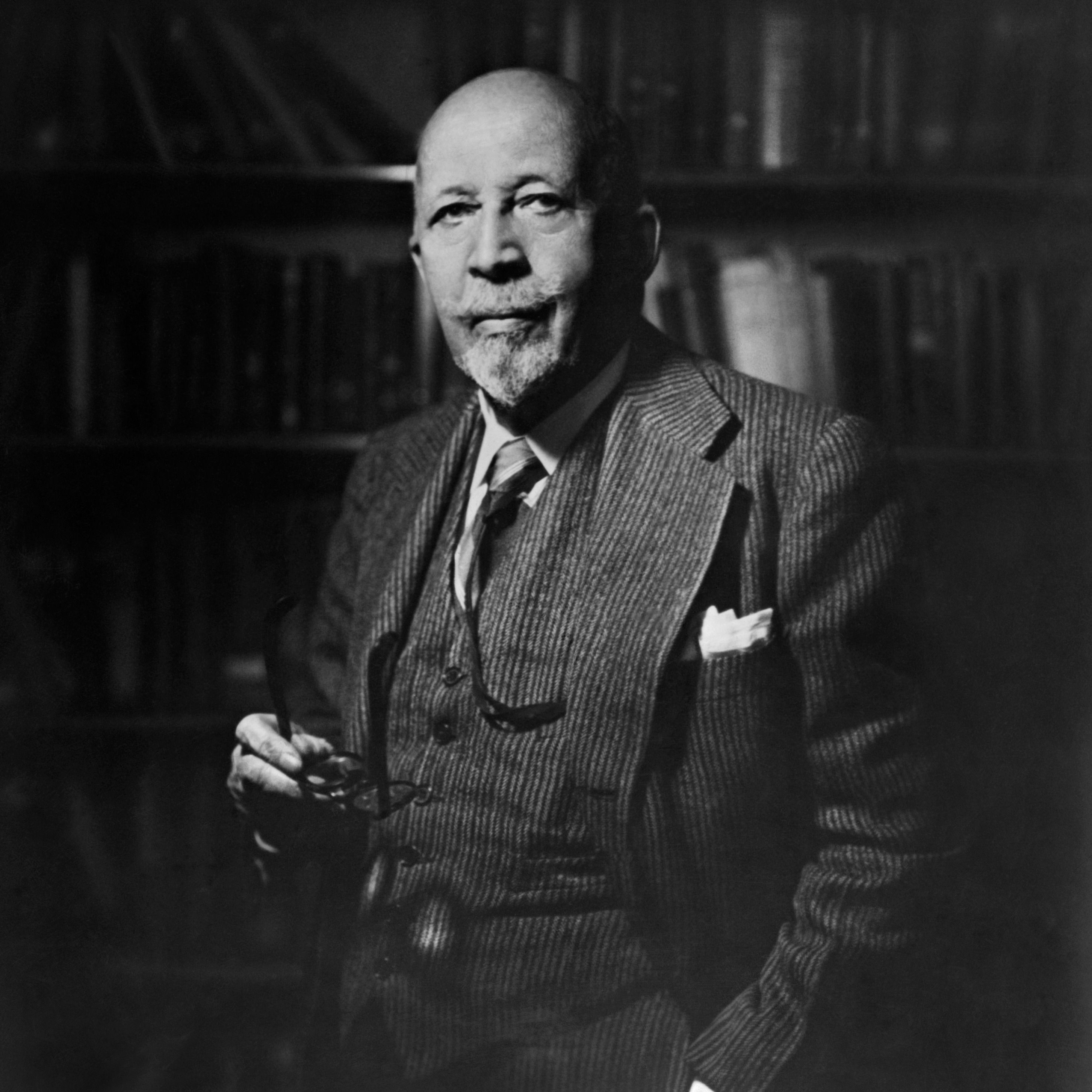
All Of It with Alison Stewart
W.E.B Du Bois, Black Scholar, Civil Rights Activist, and 'American Master'
00:25:24
Loading summary
Transcript31 lines
- [00:08]
A
This is all of it on wnyc. I'm Alison Stewart. A reminder to all you Broadway fans, we have the stars and creators of Cats, the Jellicle Ball, coming to WNYC next Thursday as part of our Broadway on the Radio series. If you'd like to get a glimpse at the show and the reason it earned an impressive nine Tony nominations, grab one of the last tickets to our event at the Green Space. They're just a fraction of the cost of a Broadway show and you get to be up close and to the action. We'll have performances from the Cats, including the legendary Andre de Shields. Plus, the show's Tony nominated directors and choreographers will be here, too. That's May 21 at 12pm It's a live broadcast of all of it with the cast of Cats, the Jellicle ball. Go to wnyc.orgcats to get your tickets right now. Now, let's get this hour started with a new documentary about a great figure. The life of W.E.B. du Bois is a timeline of black history. The scholar and activist was born in 1868, the same year as the ratification of the 14th Amendment, which codified citizenship and equal protection under the law for formerly enslaved people. Du Bois died in 1963, literally on the eve of the March on Washington. He was 95 years old, having witnessed firsthand struggle for black progress in America, from slavery to Reconstruction to the modern civil rights movement. His scholarship had a profound impact on how communities were studied and understood. In celebrated books like the Souls of Black Folk, a new documentary follows the life of Du Bois and his evolution from a child in Great Barrington, Massachusetts, to a leading activist for black freedom in America and in the world. The documentary is called W.E.B. du Bois Rebel with a Cause. It airs on PBS on May 19th at 9:00pm My guest now is director Rita Coburn. Rita, welcome to all of it.
- [02:07]
B
Thank you. Really great to be here.
- [02:10]
A
I'm so excited to talk to you about this film. It's a really beautiful film, by the way. And you've made other documentaries about black figures, about Maya Marian Anderson and Maya Angelou. Now, W.E.B. du Bois, as a filmmaker, what do you feel was left to correct or to tell about his story?
- [02:31]
B
Well, I think that our society had broken W.E.B. du Bois down to several sound bites. And in that month of black history that we often see so many black figures esteemed, revered. You didn't see him, so he was a bit archaic. That's the first thing. And the second is he's so much more than Those sound bites. Talented 10th he had a beef with Booker T. He had a beef with Marcus Garvey. People use those little sound bites and think that they know something. And so I think that it was important to contextualize his life, as you so aptly state, from three years past the Emancipation Proclamation, when he's born, until his death on the eve of the mark on march on Washington. And so we tried to take a comprehensive look at his life and the zeitgeist of his time and how he rebelled against and broke through so many structures to make sure that the statement that he said, I very early on got the idea that I was going to prove to the world that Negroes were just like other people. We hinged on that and then moved forward.
- [03:52]
A
Du Bois was born in Great Barrington, Massachusetts in 1868. How would you describe his upbringing in Great Barrington and how did it inform him later?
- [04:02]
B
Such a wonderful question? Because what happened was, it's 1868. Most of the country where there are black people, they are digging their way out of enslavement from 1865, fresh out of that type of oppression, violence and mental construct. On the other hand, W.E.B. du Bois is in an area of the country that has not practiced slavery for over a century, if I'm not mistaken. And in addition to that, his family is. Is rooted in the community, a small group of blacks. Not to say that there wasn't any racism, but for the most part, this was an upper working class area of people who were giving to their children because it was the sign of the time, a somewhat prep school education. And W.E.B. du Bois was the benefactor of not being enslaved, not having parents and generations who were. And he was also given an exceptional education.
- [05:19]
A
Yeah, he was a very well educated man. He attended Fisk, the HBCBU. He was the first black man to get a PhD from Harvard. He studied in Europe. How did his education inform the way he viewed black progress?
- [05:34]
B
Well, I think that what's so exciting about that is he grows up, he's the valedictorian of his class in Great Barrington. He tutors the other students who are primarily white students. He writes for newspapers. So he builds a kind of confidence in his education. And then, as you so aptly state, he wants to go to Harvard, but he doesn't have the money. And so the town helps him to go to Fisk. The churches, the whites and the blacks help him to go to Fisk. At Fisk, he finds himself, he finds other black people with the energy, the agency and the intellect that he has. And so now he's rooted in that education. And when he finally makes his way to Harvard as an undergrad, he's able to get to Berlin because He wants a Ph.D. not from Harvard, but from Berlin, because Berlin is breaking open a study of sociology, and he feels that this is where he might land. So he goes to the former president of the United States, Rutherford B. Hayes, and the Slater Fund, and says, I want the money that you have set aside for black people, a capable black man to study in Europe. And he doesn't get it the first year, but he gets the president of Harvard, all of these people to advocate for him. He advocates for himself. He gets to Berlin. It is at that point that he's outside of the Zeitgeist of his time. He's outside looking back at America and finding that not only did he grow up in Great Barrington, but he is able to, in Berlin, be respected, to walk the streets, to talk to sociologists, to see Paris, and to also see all the things he studied and in Great Barrington, Latin, Greek and so on at Harvard at this come to fruition. So he connects the dots of what he's learned with a larger world than most people, white or black, have seen.
- [08:01]
A
We're discussing a new documentary about the life of scholar and activist W.E.B. du Bois. It's called W.E.B. du Bois, rebel with a Cause, airing on PBS on May 19 at 9:00pm My guest, this director, Rita Coburn. He was a scholar, a historian, a sociologist whose research on black communities around the country is still very widely celebrated. I was specifically interested in his study of Philadelphia 7th Ward. This was a really interesting course of study. How did his research there and the way he conducted it stand out for the time?
- [08:37]
B
Well, for the time, it is noted as the first empirical study of sociology. Sociology was studied from a distance, but because he's been to Berlin and he's seen things that America doesn't have yet, the Bell curve. So he collects data in a different way, and he goes door to door. And this is the first time a black community has been studied in that way. And coming from Chicago, I know that Horace Caton here did a study of Chicago, the black metropolis. I used to think, wow, he went from door to door. But this started with Du Bois in this country. So Du Bois goes from door to door, has some students helping him, looks at over 5,000 people and how they're living, and then creates charts and data that can back up what he determines, which is very different than what he was brought in to do. Remember, Philadelphia at this time is a border town. It's about the late 1880s, and so many people are coming into Philadelphia that a lot of the whites there see them as problems. They're coming in, they're hanging out on the street. They don't care that their homes are hot and that they're crowded. They're like, will you tell us what's wrong with these people? And he does this empirical study and says, it's not the people, is the circumstances that you've essentially put them in.
- [10:15]
A
That was so interesting. Can you say that again? Because I think it's really important.
- [10:19]
B
It's not the people, it is the circumstances that you've put them in. If a black woman can't get a job to help her family because you're hiring more white people, if you put the schools for blacks to go to eight, nine miles away and they can't get there, then they're not being educated because you have developed a system and a structure in order to not educate them. And so when you want to say that they're all living together, cramped, that they have certain social ills, they're living in poverty because they can't work, because you're not giving them jobs or giving them the opportunities. And therefore, it's not a pathology with this group of people. It is a racial construct and a systematic discriminatory policy that is responsible for the way that they behave. And that had not been stated.
- [11:25]
A
How was that message received?
- [11:29]
B
Not very well. I would say not very well initially, because, you know, by this time, W.E.B. du Bois has a PhD from Harvard, and the people that brought him there wanted to get this PhD to say bad things. When he did not say that, then, of course, he was never offered a professorship, and he's educated beyond most people in the country at that time, but he was not offered any of these things. So I think the statement that the University of Pennsylvania that brought him in really made was, you know, we paid you for this study. We're not exactly happy with it. And it's years later that it's embraced. And it's years later that the University of Pennsylvania embraces W.E.B. du Bois as a result of the change in our society to have more parity, not total parody, but more parody, that his work is then recognized.
- [12:38]
A
We are discussing a new documentary, W.E.B. du Bois Rebel with the Cause, with its director, Rita Coburn. We'll have more after a quick break. This is all of it. You're listening to all of it on wnyc. I'm Alison Stewart. We're discussing a new documentary about the Life of scholar and activist W.E.B. du Bois. It's called W.E.B. du Bois, rebel with a Cause. It's airing on PBS on May 19th at 9pm and my guest is its director, Rita Coburn. This was something that I. I didn't know about W.E.B. du Bois, and I know a little bit about him, that his child, his first child, died and died under, like, really terrible circumstances. Would you share that with our audience?
- [13:33]
B
So at this is 1899, du Bois has left not only Great Barrington and the Cambridge and Fisk and traveled, but now he gets a position. After the Philadelphia Negro was published, he gets a position at Atlanta University, now called Clark University. He goes to the Deep south, and he has not had experience with lynching or any of the things that he's about to see. But also his family lives kind of on a hill above the city where at that time, Atlanta University has white professors and black professors, and it's integrated. And so there's a level of comfort there. The problem is, is that young Burghardt Du Bois, under two years old, gets ill. And when he is sick, he is not allowed to be touched by any of the white doctors. The white doctors won't care for him. Black doctors, the few are out of town. And so he watches his son die. And he and his wife go through this. And not only does Burghardt die, but as he spends a third of his annual salary to bury him and whites and blacks, because this is a little child who has been embraced by this community, all march through the city to bury him. And epithets, the n words, are hurled at them. And so they're grieving. Their son dies of rape because of racism to a large degree, and then there's no comfort. And that really shakes him as a person.
- [15:41]
A
W.E.B. du Bois was a member of the educated black community. Why did he come to the conclusion that it was the educated class, as people have called them, the talented tenth, that should lead black people to better prosperity?
- [15:55]
B
Well, if you take it in the context of the time black people could not get an education, there was a real rift between him and Booker T. Washington. Booker T. Washington had been a slave and was until he was six years old. W.E.B. du Bois was the young upstart. He had been free the entire time of his life, and he began to push for more rights. So he parts the company of really looking up to Booker T. Washington and says it's time for the 13th, 14th and 15th amendment to take hold, and we need to be educated. We can't just have the right to Vote. We need to be educated and you won't educate any of us as a society. If you would take our talented tents, people who have proved that they're educable, because you don't think any of us are, and I am, then we can lead the way for everyone else. We need lawyers, we need our own doctors, we need our own government officials. And everybody's not going to be that. But if we can get this 10% out there, we can then help everybody else. Now, some people find that still elitist and you have to contextualize it, but that was one of his thoughts. He later in years later in the 50s, would be very upset with what he called the talented 10 because he thought that they were greedy by and large and were not. Were not helping other people, but they had become wealthy or wanted what they wanted for themselves. So he does a reversal on his own idea. And that's one of the things about him. He had the courage to say, this isn't working. I thought it would work this way, but it didn't.
- [18:01]
A
It's interesting. We talk about this is working, this isn't working. Like during the Harlem Renaissance, he was a little bit of the older generation than the younger generation, younger generation of artists and intellectuals. How much did Du Bois support the idea of the Renaissance and how much did he spar with it?
- [18:18]
B
He did both. First off, he said, I'm now the editor of the Crisis magazine, which was the arm of the naacp, which he helped to co found. And most people don't know that it was entirely white board and he was the only black person. And he said, I want to full control of the Crisis magazine, which is the Internet of that time. Prior to this, you have Frederick Douglass speaking oratorically to small groups at best. But now you have a man who can be published in the Atlantic Monthly, who now is running a monthly magazine that is held as esteem for black people. And so now that he's doing that, he's also helping the Harlem Renaissance because the first writers are Jesse Fawcett. You. You have, I think, Toomer. You have all of these writers and artists that are getting their drawings and their words, James Weldon Johnson. You have all of them being published in the Crisis magazine, which becomes the bedrock for the Harlem Renaissance. And then when you have the Harlem Renaissance and all these writers and these artists get together, they start thinking a little differently. Because by now, Du Bois is kind of an old man. He's born, I mean, he's born in 1868 and you're in the 1920s. And he's saying, you all are doing art that is becoming entertainment for white people. You are not doing art as what he called propaganda at the time. Your art should have significance. It should mean something. And in the criterion of. Of art, he wrote something to that. He does not care an expletive for any art that is not propaganda. And so his feeling is art needs to mean something. And you've got a couple of people just want to paint beauty, still life, people having a good time, and he's. And books that he feels are not worth reading. So he, he sort of sounds like a curmudgeon at that point.
- [21:01]
A
It's really interesting in the documentary you have various different people voicing him. Who did you get for the documentary?
- [21:08]
B
Well, that was a way of helping the deep medicine of Du Bois go down because he was the sharpest knife in the drawer during that time. And so one of the ways I decided to break the sharp story was through his writing. He had written at least 21 books. He had written one article every 10 days for 24 years for the Crisis magazine. You can see all but one issue on the Library of Congress site. And so there was all this work. And so I thought the way to have a man who's deceased really speak about himself in addition to having scholars speak about him, but to have his say is to use his writings to tie the documentary together. And if I can bring it into a contemporary vein, my most plausible way to do that is with contemporary actors that people would know so that they could read with feeling his words. So Viola Davis is the narrator being a female. The three readers, all male, are common. Courtney B. Vance and Jeffrey Wright. And so in that way, these are people who are intimately culture positive for African Americans, really understand who they are politically at this time. And they have different ways in which they connect to this work. Courtney B. Vance has read for Audible both volumes of David Levering Lewis's Pulitzer Prize winning biographies of W.E.B. du Bois. So these people have connections and you get the feeling of his words. And that helps younger people and even people my age come to this documentary because they're going to see some familiar, familiar faces mixed in with obviously the, the Eddie Glads and Nicole Hannah Jones and, and, and the scholars themselves. But I think it was a way to help the medicine of Du Bois go down.
- [23:31]
A
I also want to point out that it's not hagiography, this documentary. You talk about him having affairs, him not being home, his wife sort of not knowing where he is. He gets married later in life after she passes away. Why did you choose to present him this way?
- [23:50]
B
I think that people have to be presented more fully. I don't think that we do ourselves a service by saying that iconic or historical figures are perfect. They live each day. They're human beings. The other part of that, I take a line from Bridges in Madison county when the the Meryl Streep character says the reason she wrote her diary and told about her personal life was because she wanted to be known. And I did not write anything that Du Bois did not say. When his works are when his words are read about the fact that he had problems with his wife. He wrote that and he said that he loved wine, women and song. It was not to pull the sheets back. It was to say what he said and to humanize him. He made many what people would say mistakes or decisions that people would find conflicting with some of his beliefs. But I would say that that's probably true of everyone.
- [25:10]
A
The name of the documentary is W.E.B. du Bois, Rebel With a Cause. It'll air Monday night. It'll air on PBS on May 19th at 9pm My guest has been Rita Coburn. Thank you for taking the time, Rita.
- [25:22]
B
Thank you so much, Alison.
- [25:24]
A
WNYC Studios is supported by AT&T Summer. It's when we share more time, more memories and more photos. And at AT&T the iPhone 17 Pro is your summer essential. It's center stage front auto adjusts the frame to fit everyone into group selfies. Right now at AT&T you can get iPhone 17 Pro for $0 with eligible iPhone. Trade in any condition required. Trade in of iPhone 15 or higher excluding iPhone 16e and 17e required eligible plan terms and restrictions apply. Subject to change. Visit att.comiphone or visit an ATT store for details.
- [26:03]
B
The new Sprite Berry Blast is here
- [26:05]
A
with refreshing sprite berry flavor and cold fo your favorite drink.
- [26:11]
B
Just got more blue, one of many
- [26:13]
A
new drinks now at McDonald's.