Loading summary
Transcript58 lines
- [00:00]
Narrator/Announcer
WNYC Studios is brought to you by Progressive Insurance. Here's a helpful fact you might not know yet. Drivers who switch and save with Progressive save over $900 on average. Pop over to progressive.com, answer some questions and you'll get a quick quote with discounts that are easy to come by. In fact, 99% of their auto customers earn at least one discount. Visit progressive.com and see if you can enjoy a little cash back. Progressive Casualty Insurance Company and affiliates national average 12 month savings of $946 by new customers surveyed who saved with Progress Aggressive between June 2024 and May 2025. Potential savings will vary. All of it is supported by Memorial Sloan Kettering Cancer Center. In a small groundbreaking clinical trial, 100% of participants with a specific type of rectal cancer saw their tumors disappear using immunotherapy alone. Researchers at MSK are now studying this approach in cancers of the stomach, liver and more, and a majority of tumors are disappearing. For MSK Giving Day, all gifts will be tripled. Learn more@msk.org all of it.
- [01:13]
Alison Stewart
This is all of It. I'm Alison Stewart live from the WNYC studios in soho. Thank you for spending part of your day with us. I'm really grateful that you're here. On today's show, New York Transit Museum curator Jodi Shapiro will be here to talk about a new exhibit celebrating the orange bucket seats on some subway cars. They're going to be going away. Artist Izzy Barber joins us to talk about her new solo exhibit of road inspired paintings titled Clay Pigeons and New York City Pride. Co chair Kaz Alexander is here to keep the conversation about pride going. And we'll hear from you what pride means to you in 2026. That's the plan. So let's get this started with another type of pride. Patriotism. This weekend marks the 250th birthday of our country. What do you have planned? Anything? This huge occasion comes when American patriotism is on the decline. A recent Gallup poll found that only 53% of Americans are extremely or very proud to be an American. It's a 25 year low. In an Atlantic piece titled How America Gave up on Its Own, history editor Yoni Applebaum spoke with scholars, looked at policy. He interviewed journalists. Applebaum wrote that, quote, if patriotism is going to be a word that can be used in polite company, then we will need to figure out how to tell the stories ourselves. Because without a coherent national story, we will fail to be a coherent nation. Yoni Applebaum joins me now to discuss. Hi, Yoni.
- [02:56]
Yoni Applebaum
Hey. So glad to be with you.
- [02:58]
Alison Stewart
So glad to have you. Hey, listeners, we would like for you to weigh in. What does patriotism mean to you? Is it voting? What makes you proud to be an American? And if you're not feeling patriotic, why not give us a call at 2124-3396-9221-2433, WNYC. You can call in and you can join us on air or you can text to that number, 212-433-9692. Yoni, when did you first realize that the idea of American patriotism had become somewhat controversial?
- [03:35]
Yoni Applebaum
You know, back in 2019, I was invited to speak with a commission that had been gathered of distinguished people who were trying to figure out how to pull America together. And they had deadlocked and asked some outsiders to come in and talk to them about what our national narrative might be. And on the very first day of that meeting, they did a sort of a confidence building exercise. They said, you know, we'll start off with points of consensus. Why don't folks throw out words that we can all agree on that can, can give us some sort of common basis on which to build? And I sat there thinking and came up with a word that means different things to different people. But that seemed fairly anodyne for an exercise designed to tell the American story. And I said patriotism and was shocked by the reactions of, of many of the people in the room who were not only did that word not speak to them, but they were offended by its use.
- [04:35]
Alison Stewart
So people recoiled when you said patriotism.
- [04:39]
Yoni Applebaum
They did, and the moderator declined to write it on the whiteboard. It was, it was a word that I came to understand that day means very different things these days to different Americans and that many Americans now would no longer describe themselves as patriotic. And that's particularly true on the left and particularly true with each successive generation. It's the youngest Americans who are least likely to think of themselves or their country in this way.
- [05:06]
Alison Stewart
What feels unique about our current moment of declining patriotism, to me, what is
- [05:14]
Yoni Applebaum
surprising about this is not that many Americans are dissatisfied with the state of their country. That is a continual American story. This is a country that was born out of dissatisfaction with the status quo. But what is surprising is that very often in the past, those movements for social reform have been intensely patriotic. They have called on America to live up to its founding ideals. They have faulted the nation for the way in which it has deviated from them or pressed for the extension of its promise to groups that had previously been excluded. What is unusual about this moment is the number of Americans who, instead of saying this is a country founded on ideals that were good ideals and the country should do a better job of adhering to those ideals, many Americans instead are saying, you know, we, we want no part of it that, that there is sort of nothing about this country that is better or more admirable than other lands.
- [06:17]
Alison Stewart
What are those ideals that you speak of at the. At people's very best? What is patriotism?
- [06:24]
Yoni Applebaum
Well, patriotism means different things in different contexts. In the American context, it has usually meant that this was a. A country founded not on blood and soil, but on adherence to a shared belief in the value of equality. The founder by magazine, one of them, Ralph Walter Emerson, had this great way of expressing the American idea. He said he'd heard it in the schoolyard as he walked past where one boy pointed at another and said, I'm as good as you be. And, and that, that is a nice encapsulation of, of the heart of the American idea that each of us is equal, which was and remains a really radical assertion to say that by virtue of birth, nobody is better than anyone else. And it means not just equality, but freedom, a commitment to justice, a commitment to building a better world, and, and to America being a place that cares for its citizens and extends its ideals. I mean, these are things that are. Would have been incredibly uncontroversial to assert at almost any point in our past. The controversy has always come not around what the ideals are, but rather over to whom they should be extended and who has been excluded.
- [07:47]
Alison Stewart
All right, I'm going to throw the skunk on the table. My people's feelings about patriotism depend on who the President is.
- [07:56]
Yoni Applebaum
You know, the polls tell us that they do to some extent. Particularly that is true of Democrats. Republicans tend to express relatively similar levels of patriotism, regardless of who's in the Oval Office. Democrats swing up and down a little bit more, but that's. Those are our short term shifts. The long term trends here are extremely clear and very, very stark that there has been over decades a consistent decline in the level of expressed patriotism, particularly among those on the left, and as I said, particularly with each new generation, which seems to be less patriotic, less likely to say that America stands for anything distinctive in the world than the generation that preceded it.
- [08:40]
Alison Stewart
We are discussing American patriotism with the Atlantic editor Yoni Applebaum. He is the author of a recent piece, How America Gave up on Its own history. Listeners, we'd like to hear what does patriotism mean to you? What makes you proud to be an American? If you're not feeling patriotic, why not give us a call at 2124-3396-9221-2433. WNYC. Let's talk to Christos from Jersey City. Hi, Christos. Thank you for making the time to call all of it today.
- [09:12]
Christos
Thank you, guys. I just wanted to say that I lived for over a decade in Europe. It was an amazing experience, but it really, really brings home how amazing America is and what a great country America is. And I think if more Americans lived overseas for over a decade, they would love this country even more. I mean, my grandmother was born here. She got birthright citizenship and that's how I became, you know, an American and was luckily born in this country. And today the Supreme Court upheld that. It still continues today. Like, this is a great country. It saddens me when people, like say that they don't love this country anymore. This has so much, there's so much in this country for everybody, I think. And I wish people kind of would turn their opinions around because I see those sentiments and it's like, it's heartbreaking.
- [10:01]
Alison Stewart
Thank you for calling.
- [10:03]
Yoni Applebaum
Where is your grandmother from?
- [10:05]
Christos
Greece. My grandmother was my family is Greece is from Greece. And during the Turkish, Greek, Turkish War, her parents came here for a couple years and she was born in the States. She went back to Greece and then she came here as an adult at 27 years old because she was born in America and wanted to move here. And she was proud to be an American even though she was raised in Greece. She always told people, I'm an American. I was born here. I love this country. It's given me everything. And we love our Greek heritage, but we love this country. It's amazing. It's given us greatest opportunities. I'm the product of the American dream.
- [10:41]
Alison Stewart
Let's talk to Kerry, who's calling from Croton on Hudson. Hi, Kerry. Thank you so much for calling all of it.
- [10:47]
Various Callers (Kerry, Simone, Nikki, Barbara)
Oh, hi. So I, I love this country. I feel patriotic. I have a son in the military. My whole family is, you know, my father was in the military, son of the National Guard. And but, you know, I'm very concerned about these times. And I think it is patriotic to protest. I think peace is patriotic. I believe in this country. I think we've done amazing things and used to do so much for humanitarian aid and helping others in the rest of the world. And I just want to work to restore that again. And that's how I'm living. My patriotism is trying to restore the justice and the humanitarian needs that we have, that we have for so long provided for the whole world. And I'm very proud that we could do that, and I hope we can get back to doing that on a more increased basis. It's just sad what is happening, but I still love this country.
- [11:48]
Alison Stewart
Carrie, thank you for calling in. This text says I'm not patriotic, but a proud American. Patriotic now has a negative connotation. What do you think about that, Yoni?
- [11:59]
Yoni Applebaum
Well, you know, I think we're hearing from your callers that there's a lot of pride and love of this country. I think it is a mistake for anyone of any political stripe to seed a word like patriotism or a symbol like the American flag to one side of the aisle or the other. These are our common collective heritage. There are things that bind us together that can overcome the many divisions that we have in the US and as your callers are saying, they are ideals that don't necessarily mean subscribing to or endorsing the status quo. We have a long history of people saying, look, I'm a patriot, and my patriotism is expressed just like that of your last caller. They'll say, because I am patriotic, I want more from this country because of my patriotism. I find fault with. With what's happening. I take to the streets and protest. I start a petition, I run for office. That these are authentic expressions of American patriotism as well.
- [13:05]
Alison Stewart
I'm sort of wondering if it's. The word patriot is different from patriotism.
- [13:10]
Narrator/Announcer
Do you think the word patriot has changed?
- [13:13]
Yoni Applebaum
You know, the polls suggest both, and there's certainly been an effort on parts of the political right to appropriate the word patriot to claim the heritage of the revolution.
- [13:27]
Anand
And.
- [13:27]
Yoni Applebaum
And that has been off putting to some who don't share the same values as those who have laid claim to those words. And, yeah, you know, people may recoil from saying, well, I'm not a patriot. I'm.
- [13:41]
Anand
I'm.
- [13:43]
Yoni Applebaum
I'm something else.
- [13:44]
Anand
Right.
- [13:44]
Yoni Applebaum
Like I have. I feel patriotic about the country in some ways, but I wouldn't define myself that way. But I think it also, and we should get to this, really reflects, particularly on the left, a broad discomfort with an embrace of American identity that has grown over decades. And so there's something deeper here than just. That's a word that those on the other side of the aisle use.
- [14:08]
Alison Stewart
Yeah. Let's talk about the main attacks from the left and the right, what would you say is the main attack from the left? And what about from the right?
- [14:16]
Yoni Applebaum
You know, 50, 60 years ago, we started to get an explosion of historical scholarship that grew out of the social protest movements of mid century, that also grew out of the fact that the academy was becoming much more inclusive and finally bringing in women and scholars of color who gave us a much richer and more complicated account of the American past, who wrote in the stories that had been neglected or suppressed, who forced this nation to reckon with many of the things that had been done in its name, of which people were justifiably not proud. And that was a wonderful turn, but it hardened over time into an approach to the country that said it is these things, it is these sins, these shortcomings, these failures that are the only thing that defines America and makes it distinctive. If you want to understand this country, it is a settler colonial nation founded in. In racism and oppression, and that that is the proper way to understand America. If in fact that's how you view the American past monolithically, that it is a narrative, a sort of unalloyed narrative of sin and oppression, then it is unsurprising that you would be incredibly uncomfortable describing yourself as a patriot, embracing the symbols of the country. You might look at its ideals, its articulated ideals, as mere hypocrisy and not worth particularly calling America to account, to live up to. But we have the opposite problem. On the right, we're partially in counter reaction to this. A narrative takes hold that America is a sinless nation, right. That the various things that America has in fact done wrong, the darker chapters of our history, should be glossed over, should be set aside, should be treated as deviations from the things that are true about this country. And we have an effort these days by the present administration to censor the historical record and remove signs and inscriptions, not because they are wrong, but precisely because they are right. That's really remarkable. Remarkable and bespeaks, I think, a lack of confidence in the ability of Americans to face the truth. And both of these narratives reinforce each other, as there is a push to focus solely on the things America has done wrong that drives many Americans to embrace the countervailing narrative that this is a nation that has nothing to repent for, that has no troubled past with which to reckon. But the polls tell us overwhelmingly that most Americans embrace neither of these narratives, that although they may be dominant among activists on the left and on the right, that they may have taken hold on the left in the academy or on the right among political actors, most Americans actually want the complexity. They want to know that our past includes both good and bad. They want to understand both our ideals and the ways in which we have sometimes failed to live up to them. That that's the narrative, as your colleagues are expressing, that most Americans still embrace themselves.
- [17:35]
Alison Stewart
Listeners, what does patriotism mean to you? What makes you proud to be an American? And if you don't feel patriotic, why not? Our phone number is 2124-3396-9221-2433. WNYC. We'll have more with Atlantic editor Yoni Applebaum after the break. You are listening to all of it on wnyc. I'm Alison Stewart. We're discussing American patriotism with the Atlantic editor Yoni Applebaum. He's the author of a recent piece titled How America Gave up on Its Own History. Let's take a couple of calls. And Yoni, dive in if you want to as well. Let's talk to Bruce in Brewster, New York. Hi, Bruce. Thank you so much for calling, all of it.
- [18:25]
Christos
You're welcome, Allison. Thank you for taking my call. To me, patriotism means progressive thinking. This country was founded out of progressive thinking and has progressed through time. The one attribute that has most resulted in the greatness that has been and is America is progressive thinking, starting with breaking away from our colonizers think. The technological innovations that we have created and the social innovations, abandonment of slavery, equal Rights Amendment, civil rights law. All of this has been progressive in nature. So to me, that's what patriotism is.
- [19:09]
Alison Stewart
Thank you for calling, Bruce. Let's talk to Simone, who's calling from Florida. Hi, Simone. Thank you for holding. You're on the air.
- [19:17]
Various Callers (Kerry, Simone, Nikki, Barbara)
Hi. I thank you for taking my call. My view of patriotism is perfectly emblematic by most of our support of the World cup soccer games. I think it's been really beautiful to see everybody supporting teams like Cape Verde and Tunisia and Morocco and Paraguay. And it's kind of brought out something that Americans have been wanting to celebrate people from other cultures and feel good about something in light of how the July 4th celebration has been kind of co opted by the Trump administration. And I think it's just a sign that we actually that doesn't represent who we are. Who we really are is supporting other cultures. And I think this has become evident in the World cup support.
- [20:13]
Alison Stewart
Thanks for calling in. And let's talk to Nikki, who's calling from Princeton. Hi, Nikki, thank you for taking the time to call. All of it. You're on the air.
- [20:23]
Various Callers (Kerry, Simone, Nikki, Barbara)
Okay. I feel no sense of patriotism right now. Every day I can hardly look at the news in terms of everything that is going on and particularly in terms of how the United States is participating in so many destructive things. I do not feel patriotic. I do not feel like celebrating July 4th. I don't even understand why people want to celebrate it. I mean, we have people that are dying all over the world that we're connected to, that is connected to us, because of us. I will tell you that I am a dual national. I am American, but I'm also another country and I do not feel like that caller who called and said, try living overseas for 10 years and you'll see that America is the greatest. There are a lot of countries that are very good as well. Now I'm a dual national of Switzerland, but no. So I don't have that much more to say. But I just feel so much despair in terms of what's going on and it makes me so, so bad that I, I, I'm at a loss of, at what we can do and I don't understand why people are celebrating.
- [21:44]
Alison Stewart
Thank you for calling in. Nikki, what did you hear in our callers? Yoni?
- [21:49]
Yoni Applebaum
You know, I, I think we, we had two callers there who are illustrating different parts of the problem. Simone defined American patriotism as cheering on other cultures. Which has been a wonderful aspect of the World cup is, is to watch the number of immigrants and their descendants in this country rallying to the standards of the various national teams that are here. But that, I think is not going to suffice as a definition of American patriotism. You can cheer for the Greek team if you're Christos and you can also cheer for the US Men's national team. One of the things I've been really struck by this World cup is the number of European visitors coming to America and finding within it much that they want to celebrate, whether it's sort of super sized Cokes at gas stations or the friendlessness of the strangers they encounter on the way. And it is possible not just to love other cultures, but to love our own. And in fact, the most American thing is to love both at the same time. Right? That, that is a steady strand of the American experience is that people come here and are simultaneously fully and patriotically American and still have that link to the cultures which they descend. The, the other caller was articulating a set of views that really worried me because the present administration and the President have spent the last year and a half trying very hard to identify the President and his administration and his policies, with the 250th, to the point where they shouldered aside the congressionally chartered commission that was supposed to be organizing these celebrations and largely took it over under a nonprofit controlled by the. And it is odd to hear somebody who seems to oppose many of the president's policies so willfully cede to him the. The question of what this 250th means. This is an anniversary for all Americans. It is my country, as well as Donald Trump's country, as well as your caller's country. The president does not have the power to lay claim to that. And I don't think that we should cede to him the. The power to define this celebration or turn our backs on our country just because you may disagree with whatever administration happens to be in office or its policies or the impact of those policies. The traditional American response to that is not to say to heck with it. It's to say, this is a country with a set of ideals that I deeply believe in and I'm going to protest or I'm going to vote, and I'm going to do my best to advocate for my version of how those ideals should be placed into practice.
- [24:44]
Alison Stewart
It was interesting because Bruce described patriotism as progress, and America has always been a work in progress. We started amending the Constitution. How is the quest for improvement a key part of the American story?
- [24:59]
Yoni Applebaum
I think that this is actually sort of the mainstream understanding of what it means to be an American. We look back at our past and say, look, you know, at the founding moment, you know, we. We had a document which said, all men are created equal. Written by a slaveholder. It said, all men are created equal and seems not to have contemplated women. There were lots of ways in which the implementation of that sentiment fell short at the founding. It was also an utterly revolutionary sentiment that rippled around the world, that brought freedom to many lands and gradually extended freedom within our own. Not as part of some inexorable process, not always moving forward. We move forward with reconstruction. We move back in the years after with redemption and Jim Crow. This has not always been an easy struggle. But that understanding of America as having a good set of ideals like equality and then moving imperfectly, haltingly, sometimes reversing, but on the whole, trying to better align our practice with our values. That is how most Americans, I think, today, understand their country. And having a set of aspirational ideals that maybe never can be fully fulfilled, but which are the right things to be trying for. That's a very powerful way to Define a nation. We don't define this nation, thank goodness. Today the Supreme Court has said we still don't define this nation solely as a matter of bloodlines. It's not just about the territory on which we live. We are committed to a common political project of trying to enlarge the equality of all Americans, of embracing the values on which this country was founded. And we're going to have very vigorous arguments with each other about how best to do that. And that's fine. That's part of the project, too.
- [26:49]
Alison Stewart
Barbara's calling from Nyack. Hi, Barbara. Thank you so much for calling all of it. You're on the air.
- [26:55]
Various Callers (Kerry, Simone, Nikki, Barbara)
Oh, hi. Thank you for taking my call. Comments about our American flag. I wish that more people would put their flags out, especially weekends like July 4th, which of course, is coming up. And I do put mine out daily. Part of the reason is I have a son in the military, so tremendous respect for our men and women who make the sacrifices that they do. But I just remember growing up on Long island and it seemed like so many more people had their flags out, especially on holidays like this weekend.
- [27:26]
Alison Stewart
Thank you so much, Barbara, for comment.
- [27:30]
Yoni Applebaum
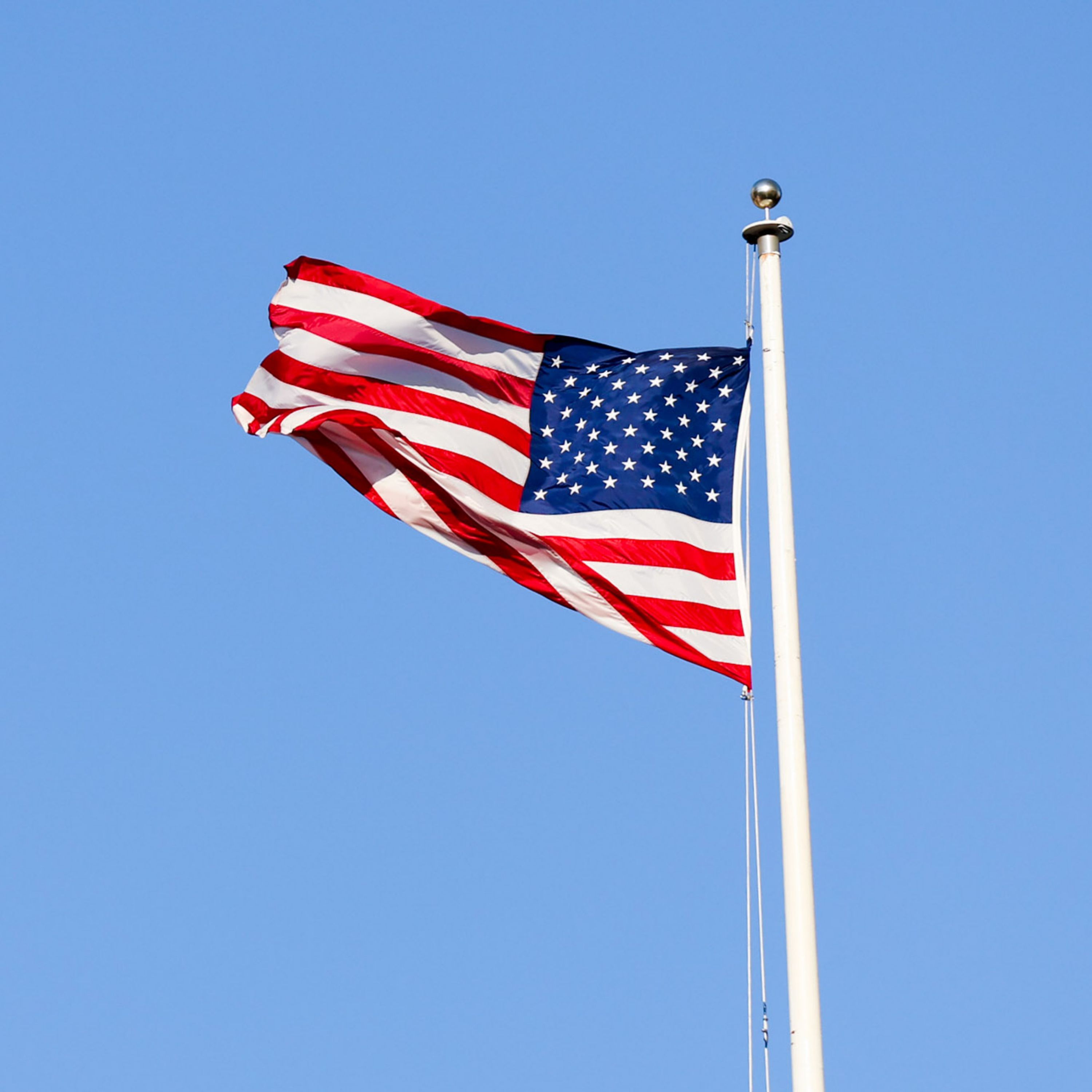
And my next door neighbor puts out an American flag every Memorial Day, every Veterans Day, every July 4th. She hangs it from her front porch. And I asked her once what it meant to her, and she told me that it was her way of honoring her father's service in the military and what this country had meant to him, which made me follow up. I, I asked, you know, that he had served in a segregated military, a country that had not treated him as, as fully equal. And of course she knew that he knew that. But he'd put out the flag every year. She put it out to honor him because although the country had not lived up to its promise fully to him, he had spent his life pressing it to live up to that promise and still believed in the flag for which he had fought. And that to me is, is part of the power of having national symbols. It doesn't mean sort of a reflexive endorsement of everything this country has ever done. It doesn't mean sitting on our, our hands and, and declaring that the country is good enough and we can stop trying to improve it. It can be instead a way of declaring that we love this country and because of that, we want to make it better.
- [28:43]
Alison Stewart
Let's talk to Anand. Hi, Anand, thank you for calling all of it. You're on the air.
- [28:50]
Anand
Hi, Alison. Big fan. Thanks for taking my call.
- [28:53]
Alison Stewart
Sure.
- [28:55]
Anand
I think the most important thing about patriotism is dissent. I think it's very easy to wrap yourself in a flag and feel great about your country. But if you're not really thinking about what your country is about and where it's going and not thinking about it critically, then I think it becomes a problem and brings us to the point where we are today. So I think dissent, like even the ACLU puts dissent as its patriotic thing to do. And I truly believe in that. This is sort of my 32nd July 4th in this country. I came as an immigrant, as a student, and this country has given me a lot a career. I make documentary films. I've learned a lot reading books, making documentary films from 1776 on to 2026. I've dived deep into this country and learned a lot, and I'm really, really grateful for all that I've learned. But I think dissent is what this country taught me and how important it is to always be critical of the people in power of where the country is going and hold up to what it's meant to be. And, you know, this country is complicated and continues to be complicated, but like you said, it's a work in progress. And I think that's what makes it great and probably one of the most, you know, special places in the world, at least for me, because it allows me to be free truly in my mind and in my heart. But unfortunately, this July 4th, I think the flag flies upside down in my heart and in my mind. I feel sad about where we've come, but also today's ruling on the citizenship gives me hope. So, yeah, those are my views, and I'll take, take your feedback on the other side.
- [30:43]
Alison Stewart
That's a great, great way to end. I did want to end with you, though. Yoni, I do have a question for you. From all your reporting and all the people you spoke to for this piece and other pieces you've done, what is something that could happen that would help us approach more unity in this country? Just one small thing.
- [31:03]
Yoni Applebaum
You know, I think we're hearing from the callers today that actually a lot of Americans already have a great deal in common, that they are united by a love for a country that fails in many ways, but they want us to keep trying. And so maybe the one thing is to encourage listeners to. To go out there on the 4th of July and to find a way that's meaningful to them to celebrate the occasion. We have these holidays as a way to convene the nation, as a way to share a celebration in common and to find the things that still bind us together. And so, you know, go out there, grill a hot dog, set off a firecracker, celebrate what it means to you to be American.
- [31:50]
Alison Stewart
We've been discussing American patriotism with the Atlantic editor Yoni Applebaum. Thank you for your time today.
- [31:56]
Yoni Applebaum
Thank you.
- [31:58]
Narrator/Announcer
Confidence.
- [31:59]
Alison Stewart
It's listening to your gut.
- [32:00]
Narrator/Announcer
It's moving forward, even when the path ahead is unclear. For nearly 160 years, Pacific Life has helped people keep their promises, building confidence for generations. Whether you're confident in your financial future or just beginning to envision it, we're here to help. Ask a financial professional how. Pacific Life, the power of a Promise. Pacific Life Insurance Company, Omaha, Nebraska. And in New York, Pacific Life and Annuity, Phoenix, Arizona.