Loading summary
Transcript54 lines
- [00:00]
Narrator/Announcer
WNYC Studios is brought to you by Progressive Insurance. Here's a helpful fact you might not know yet. Drivers who switch and save with Progressive save over $900 on average. Pop over to progressive.com, answer some questions and you'll get a quick quote with discounts that are easy to come by. In fact, 99% of their auto customers earn at least one discount. Visit progressive.com and see if you can enjoy a little cash back. Progressive Casualty Insurance Company and affiliates national average 12 month savings of $946 by new customers surveyed who saved with Progress Aggressive between June 2024 and May 2025. Potential savings will vary. All of it is supported by Memorial Sloan Kettering Cancer Center. In a small, groundbreaking clinical trial, 100% of participants with a specific type of rectal cancer saw their tumors disappear using immunotherapy alone. Researchers at MSK are now studying this approach in cancers of the stomach, liver and more, and a majority of tumors are disappearing. For MSK Giving Day, all gifts will be tripled. Learn more@msk.org all of it onDeck is built to back small businesses like yours. Whether you're buying equipment, expanding your team or bridging cash flow gaps, Ondeck's loans up to $400,000 help make it happen fast. Rated A by the Better Business Bureau and earning thousands of five star Trustpilot reviews, OnDeck delivers funding you can count on. Apply in minutes@ondeck.com depending on certain loan attributes. Your business loan may be issued by Ondeck or Celtic On Deck does not lend in North Dakota. All loans and amounts subject to lender approval.
- [01:44]
Alison Stewart
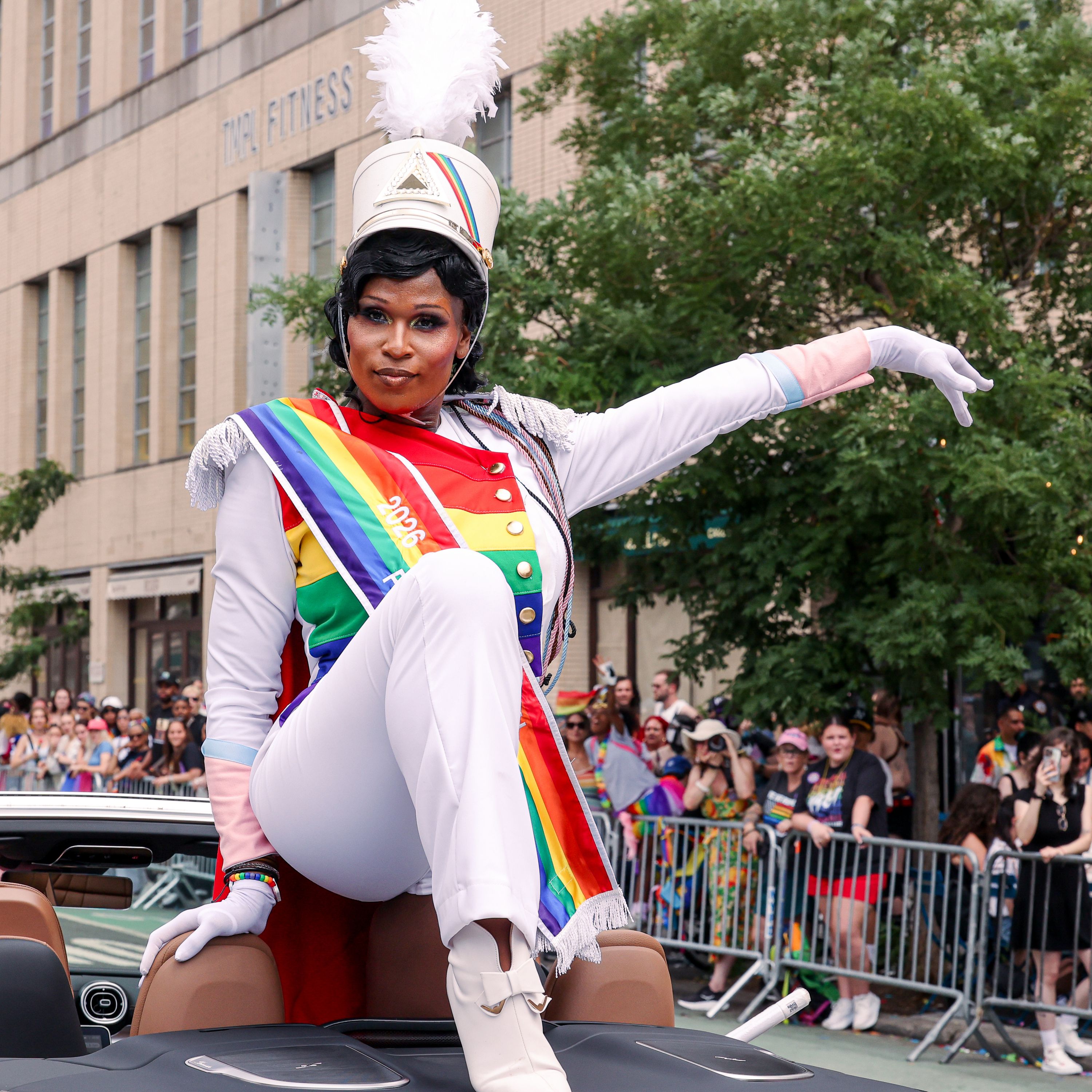
This is all of it on wnyc. I'm Alison Stewart. This weekend, thousands of people took to the streets for the 2026 NYC Pride March, closing out Pride Month with this year's theme for all of Us. It's a reminder of the words often attributed to Stonewall veteran Marsha P. John There is no pride for some of us without liberation for all of us. We here at all of it are asking the question, what does pride mean in 2026? For some, pride is a celebration. For others, it's protest. It's a chance to honor those who came before us, celebrate how far we've come, and reflect on the work that still lies ahead. For example, today the US Supreme Court upheld transgender sports bans in West Virginia and Idaho. So listeners, we wanna hear from you as Pride Month comes to a close. What does pride mean to you in 2026? How has its meaning changed over the years. Did yesterday's Pride march leave you feeling hopeful, inspired, or something else? Tell us about a Pride celebration or a tradition or a moment that changed your life or simply make you feel like you belonged. Give us a call or text us now at 212-433-WNYC 212-433-9692. Joining us is NYC Pride Co Chair Alexander Kaz. Welcome to all of it.
- [03:03]
Alexander Kaz
Thank you. Happy to be here.
- [03:05]
Alison Stewart
Now's your chance to sort of relax a little bit. A little bit. What moments from this year's Pride March really stay with you.
- [03:13]
Alexander Kaz
What really stays for me is just seeing New York come together. It happens every year, but it was wonderful to see a governor, a lieutenant governor, a mayor proud and out front, as well as over a million people. The city comes alive during the entire month, so the last couple of days as a culmination is really heartwarming. And just knowing that our city is still a place of liberation for people all over the country and all over the world is just wonderful to see. Plus, my mom was there.
- [03:45]
Host/Interviewer
Aw.
- [03:45]
Alison Stewart
Shout out to Mom.
- [03:46]
Alexander Kaz
Shout out to Mom. And my two beautiful nieces were there for the first time, so it was a fantastic to have.
- [03:50]
Host/Interviewer
Oh, that was amazing.
- [03:51]
Alexander Kaz
Yeah.
- [03:52]
Host/Interviewer
How is it for your nieces at the first time?
- [03:54]
Alexander Kaz
They had a joyful time. They're teenagers, so they love to dance and party a little bit. Just a little bit. So it was wonderful to see them and to have them there for the day, their first time present as well. So it's a place for families, for allies, but especially for those who are most marginalized to be proud and to be themselves.
- [04:14]
Host/Interviewer
Yeah.
- [04:15]
Alison Stewart
A lot of people see the parade
- [04:16]
Host/Interviewer
and all the fun events happening in June. How has the Meaning of Pride evolved since that first march?
- [04:23]
Alexander Kaz
I think it has changed because some folks see Pride, Pride or Pride Month, or our events as a party or a big party. And we know at its root, at its core, it's still a protest. And I think it is for all of us and for all of us, and it is all of that, if you will. We create a space where people can come together and talk about their issues, their challenges, show up as their authentic selves. I think it's hard just to live your whole life not being able to be yourself and to feel some of the pressure that LGBTQ folks feel. Whether you're hoping for liberation as a trans person or as a black gay man or as a lesbian parent, it's hard. There are different pressures that we all feel. It's nice to have Everybody come together, regardless of what your pressure is, and release a bit. So it could be a party, it can be a protest. It can be all of it.
- [05:26]
Alison Stewart
You know, all of it.
- [05:29]
Host/Interviewer
We were just having a conversation about patriotism. We're coming up on the 250th anniversary of the signing of the Declaration of Independence. What does patriotism mean for you as a member of this community?
- [05:42]
Alexander Kaz
I think it could also be patriotic to be part of Pride. You know, this country was founded on liberation, if you will, from tyranny. And I think that that's at the core of what we are celebrating as well. We're celebrating those who have been. Who've been in New York and who've been in this country and pushed past some of the things that have been challenging. I think that's the same as the history of the US I majored in history in college, so I'm like, pulling on some of those. Some of those Virginia roots. I'm from New York, but I studied Thomas Jefferson a bit. And so I know that at the root of this country is this idea that we should be free of tyranny. And I think that's part of what we are attesting to when we march for Pride.
- [06:32]
Host/Interviewer
It's the last day of Pride Month. We're discussing what Pride means to you with New York City Pride Board co chair Kaz Alexander. Listeners, we want to hear from you as Pride Month comes to a close. What does Pride mean to you in 26? How has its meanings changed over the years? Did Sunday's Pride march leave you feeling hopeful, inspired, or. Or something else? Give us a call at 2124-212243-39692. The theme of the Parade of Pride this year was for all of us. Marsha P. Johnson's famous words. Why did it feel especially right this year?
- [07:09]
Alexander Kaz
I think, you know, this is the last day of June, right? We've got our Supreme Court rulings that just came out maybe a few moments ago. Still haven't read through everything myself. I think for all of Us signifies that this is a space for every type of person who is feeling a challeng against their sexual orientation, against their gender identity. We create space. And that was, I think, one of the quotes that was shared from far before my time. Creating space for people and making sure that everybody has an opportunity to show up as their authentic self. So, you know, for all of Us means that everybody's included. I have three rules when we go into Pride Month. I'm a teacher. The first is be safe. The second is have fun. And I think New Yorkers know those two really well, but I think we know the last as well. And it's everybody matters. Every single type of person, every single type of body is allowed to show up. And creating that space for all of us means the world to me. I'll spend the entire year with our team putting that together because we want everyone to show up however they are, however they can, and at least have one day where they can be themselves.
- [08:17]
Alison Stewart
Something my son said to me, I live on the parade route, and I had to go to the corner to get him to come onto the street. And he said, I love my gay brothers and sisters and non binary folks, but, man, it's really terrible that they have to put garbage trucks at the end of the street to keep them safe. And that's an issue. How did you handle that this year, the safety of people? Because the first thing you said was be safe.
- [08:39]
Alexander Kaz
Yeah, I think it relies. The idea relies on all of us paying attention to one another, making sure. And I love that your son, you said, just referenced loving one another and loving brothers and sisters. I think that's a really important aspect of how we keep ourselves safe, that we see each other as brothers and sisters and as children of a movement. So that's really important. The safety is not just the eyes from those who are maybe working security or from the New York Police Department, who is, by and large, guarding the safety of the city that day. We're also guarding one another's safety. So I think we're paying attention to each other. I don't know that the sanitation trucks need to be there, but I think that there are different measures, lots of measures that we take to make sure that we are all on one accord and that there's a little bit of joy and a lot of paying attention happening at the same time. That's a very New York, very New York thing that you can, like, see something and say something while you also see something and celebrate.
- [09:50]
Host/Interviewer
Yeah.
- [09:51]
Alison Stewart
Let's take some calls. Let's talk to Sham, who's calling from Sleepy Hollow. Thank you for taking the time to call.
- [09:57]
Caller
All of it.
- [09:59]
Yeah. Hi, I'm Shyam. Nice to meet you guys. And, yeah, you guys were asking about what pride means, and I think pride just, like, shows that you're being celebrated and recognized. And it's important how. I think members like me of the LGBTQ community can have a month to be celebrated, because you can, like, you can feel that you're recognized by your Friends and things like that. But it's good to feel acknowledged and just have a month where everyone's happy that you're happy you can be who you are. So, yeah.
- [10:35]
Host/Interviewer
Well, thanks for calling in.
- [10:36]
Alison Stewart
Let's talk to Marcia from New Paltz. Marcia, thank you for holding. You're on the air.
- [10:42]
Caller
Hi, Alison. Thank you for this great program and every other program. I love your show and I appreciate it. So I live in New Bolt, New York. I called and said before that this is a celebration and a protest of humanity. It is to see each and every one in the LGBTQ community as humans, as people who are deserving of dignity and respect and care and equity. And so we need to, especially in this very trying times, really be there for them, really see them and that they know we're here to celebrate them and to be with them. New Paul's New York has one of the most beautiful Pride celebrations, and it's really about humanity. It's about family, it's about support. And that's what I want to see and that this is what should be. It's about supporting humanity and seeing the best in them as we see in each and every one of us.
- [11:56]
Host/Interviewer
Thank you for calling in. I sort of heard her emotion in her voice that sort of caught her as she was just talking about this.
- [12:01]
Alexander Kaz
I think what happens with Pride and Pride Month is that this idea of liberation and this idea of freedom, freeness to be yourself, whether you are queer, whether you are lesbian, gay, trans, non, binary, like, it sort of spreads. It's the joy that spreads. So if you have a family member, if you have a loved one, a friend, a best friend who's able to be themselves, it makes you. When you experience that, it makes you joyful. It might make you emotional. So I think there's something even bigger that happens during Pride Month that people, when they get to see other people be their authentic selves, they realize the value of that. And for some folks, they don't get get to have that. We've had dozens, if not hundreds of prides either pushed back or minimized or canceled all over the country. So our theme for all of us is really for all of us. We know that in New York, we have strength in numbers. We have strength in sponsorship. We have strength in family and support and in allyship. So we know that it's more than just queer folks who are showing up. We want to demonstrate that that's a possibility for others. We invite others to come in because we know that they can take our queer joy and Maybe replicate that, even if it's a smaller scale in their towns. And we're always happy to share support. So we actually had a couple of different Pride organizations that were canceled this year. Join us and join us on our Heritage of Pride float. So we're happy to share what we have. There's an organization called usap, United States association of Prides. I encourage folks to join that organization as well. It's Pride organizers from all over of the country. They have regional conferences. So there's a way that you can get connected. If you would like to figure out how to throw a pride in a small town or a city, or if your state is trying to figure out how to bring government and sponsors together, we're always happy to help. We are the largest pride in the country. It's New York City, so shout out to my hometown. But we can also, you know, make things feel very local and familial and feel like home.
- [14:12]
Host/Interviewer
Let's talk to Brian, who's calling in for Chelsea. Hey, Brian, thanks for taking time to call. All of it. You're on the air.
- [14:18]
Caller
Hey, thank you so much for taking the time and actually doing this segment. Happy Pride, everybody, this year. Hi. This year was so special because a group of friends and I, seven of us, about late 40s, early 50s, had brunch in the West Village, just like a few steps away from the parade. So you could imagine all the people with the rainbow and you could hear the loud parade goers. It was fantastic. But this year, similar to Thanksgiving, when people go around and say what they're thankful for, we went around and said what we were proud of. And I'm just going to say two for timing. But one of my dear friends, Michael from Louisiana, never dreamt that he'd be able to have a successful career and be promoted and be who he is and be able to be loved for who he was and promoted for it. So building a life in New York City and a community and having that support is amazing. Which kind of like leads into mine. My favorite words are community and camaraderie. And I'm so proud of having a supportive group of gay men and lesbians who just have my back and support me and are proud of me. And it's just very special when you have that community that, you know, just props you up and lets you become the best version of yourself. So that means a lot.
- [15:31]
Host/Interviewer
Thanks so much for calling in. We got a text here that says pride means to means to me, a celebration of hard won rights for my friends and Family members, as well as a day of remembrance for the loved ones. We lost pre azt. We gotta talk politics. We had a Scotish decision which upheld banning transgender student athletes.
- [15:54]
Alexander Kaz
Just came out a few moments ago.
- [15:56]
Caller
Yep.
- [15:57]
Host/Interviewer
There are 20 other. Five other states that have laws like that on books. How has the political climate, how did it affect Pride this year?
- [16:05]
Alexander Kaz
This year we had a bit of a renaissance, if you will. Last year was really hard In Trump 2.0, year one, I'm tracking. So last year was really difficult because folks were trying to sort of play it safe, I think. And by safe, I mean trying to stay out of the targeted agenda of Trump's administration. I think that has an impact on our organization because we don't receive city or state funding. I think people. It's a misnomer. People believe that the city or that the state. We certainly don't receive federal funding. We may receive a small grant here or there, but this is by and large put together by. By individuals and by companies and institutions and nonprofits that help to support our agenda. So I think when we come together to move the needle, maybe in a different way than folks might expect, that's how we survive. So we did okay this year. Better than last year.
- [17:06]
Alison Stewart
Was it a little louder, shall we say?
- [17:07]
Alexander Kaz
It was a little louder. A lot louder. But we can see that coming. And that, I think, is in response to this administration and folks feeling like they're standing on solid footing. They have an understanding of what the challenges might be for their companies, for their institutions. And we're seeing some of that friction happen with institutions like nyu, with companies that are perhaps in support of us, but not on the same agenda as the rest of our community. And so folks will have to make a decision. We are often asked, as an organization, Heritage of Pride organization that puts together New York City Pride. We are often asked to take positions. We're an event organization, but we're also an advocacy group. We have over a thousand volunteers and a very small staff and a okay sized board who put this together. But we're volunteers. I'm a teacher. So we are asked to make positions that both or take positions at both need to move the needle forward, but also keep the organization and the movement alive. So it's challenging, to say the least, year over year, but we did okay this year. And I think our response to the political climate that we're seeing right now is what's going to show up over the course of the next 12 months.
- [18:32]
Host/Interviewer
Like you said, Heritage of Pride is a volunteer organization.
- [18:34]
Alison Stewart
But it awards $75,000 to 11 nonprofits serving the NYC LGBTQIA community. And one of the year's recipients was
- [18:46]
Host/Interviewer
Teaching While Queer, which supports educators in school. You said you're an educator. Yes.
- [18:52]
Alison Stewart
What parts of Pride history are most
- [18:55]
Host/Interviewer
at risk of being forgotten as the celebration continues to grow? And you don't want it to be forgotten.
- [19:01]
Alexander Kaz
Trans liberation. I think that we have. We had three trans grand marshals, so we put them, you know, we want to hold our trans brothers and sisters on high, especially at this time where right are being challenged, as we can see by the Supreme Court ruling today. I think that's something that we have to make sure that we're talking about all the time. I think the truth of how we are moving in 2026 as a movement and sort of the balance between institutions and politics, how we can survive, we need to have advocates, we need to have advocacy, we need to have allies. And so I want to make sure that we are always talking about the larger framework, if you will. It's not just queer people who are doing this. Our organization is made up of parents of queer children. It's made up of lesbians, of gay folks like myself, of non binary folks, of trans folks all together, of every race and ethnicity. That's why I love New York. That's why I love the city. That's why we come together. And we might not all be friends, but we've become friends because we have to work together. So I think that those are the things that I want to make sure that folks see that it takes all of us, advocates, allies, those who are trying to push the needle politically. I think, as the caller mentioned, some folks don't always feel like they have a voice because maybe they might be threatened at work or there's some part of their safety, their humanity that's not going to be seen or dignified. So we're trying to put all of that up front as part and parcel of the movement.
- [20:41]
Host/Interviewer
What is something that younger generations should remember or take forward from older generations?
- [20:47]
Alexander Kaz
Well, as an. As an almost older. I think young people are the spirit of what we do right now. I think understanding of history is really important. And knowing that the pendulum swings both ways is really critical. And I feel like the pendulum is swinging back in a positive direction.
- [21:09]
Host/Interviewer
I'll leave it you with this. Pride is so American. To be free, to be yourself, to be supported in that. Whether pride or no, Kings, you know you're on the right side. When your group may be scared or angry, but still feel full of joy, love and creativity. I have been speaking with NYC Pride Co Chair Kaz Alexander. Happy Pride Month.
- [21:31]
Alexander Kaz
Happy Pride, Allison. Thank you.
- [21:33]
Narrator/Announcer
You're never just one thing.
- [21:35]
Alexander Kaz
You're the boss.
- [21:35]
Narrator/Announcer
Hey Google, when's my next meeting? The athlete that class wrecks me and their mom. Everyone in the all new Mazda CX5 more to move every side of you. Learn more@mazdausa.com Google is a trademark of Google LLC. Sequences shortened and simulated.