← All Of It with Alison Stewart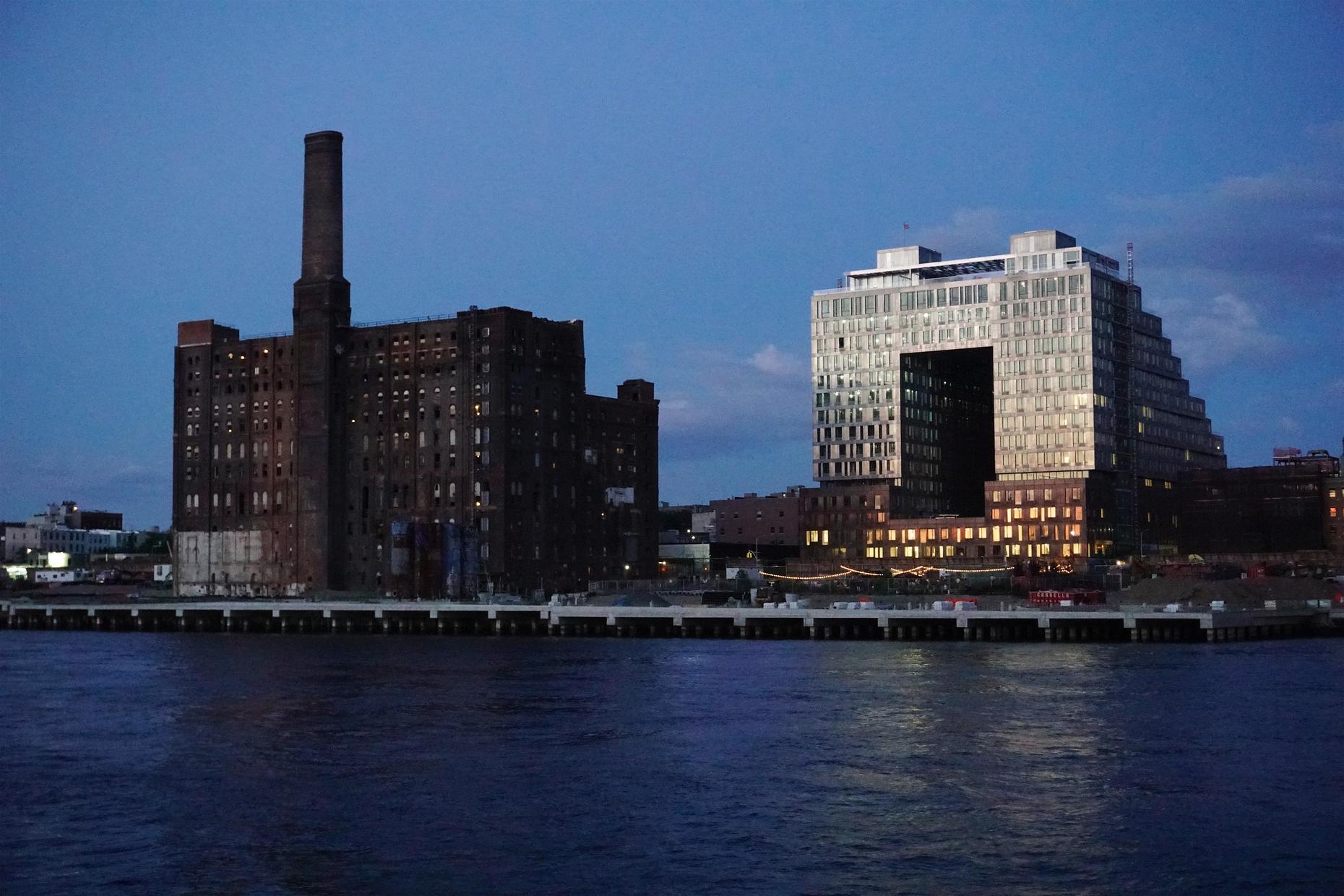
All Of It with Alison Stewart
What Happened to Williamsburg?
00:27:37
A recent feature in the New York Times maps the Soho-like transformation of Williamsburg, from industrial decay to its current identity as a luxury destination.
Loading summary
Transcript62 lines
- [00:04]
Stephen Kurtz
Listener support, WNYC Studios.
- [00:18]
Host 1
This is all of it from wnyc. I'm Alison Stewart. Our next segment is about the history of Williamsburg and how it's changed in the last several decades. But in light of our last conversation, we did want to acknowledge that the neighborhood is borough and the city we live in is on Lenapehoking, the ancestral present and future homelands of the Lenape people. Williamsburg occupies the land of the Canarsie Nation. But what the neighborhood of Williamsburg and that name conjures for you right now is probably pretty different depending on the generation you're from. For some, it's a bohemian artist haven of cheap rents and open spaces. For more recent generation, it's a land of luxury apartments and designer brands and.
- [00:58]
Alison Stewart
Trustafarians, if I can say that word.
- [01:01]
Host 1
Over the last several decades, Williamsburg has undergone a major transformation physically and culturally. Steve Kurtz is a New York Times.
- [01:08]
Alison Stewart
Reporter covering cultural trends and the writer behind the recent piece Williamsburg what Happened? A Four Decade Timeline of Total Transformation in Brooklyn. He joins me now to talk about the neighborhood and why it's changed so much in this past four decades. Welcome to the show. Hey, thanks for having me, listeners. Williamsburg Discuss. Are you a Williamsburg resident? Did you used to be? Call in and share your memories and experiences of the neighborhood. Tell us what Williamsburg represents to you. 2124-3396-9221-2433. WNYC. That is our phone number. You can call in and join us on air, or you can text us at that number, or you can reach out on social media oflofit wnyc. The conversation for the rest of the show is Williamsburg. What happened? So Williamsburg is big, Stephen. There are many different Williamsburgs even now. South Williamsburg, Williamsburg west of the bqe, east of the bqe, East Williamsburg. When you're writing about Williamsburg and its culture and how it's changed, what area are we talking about? At what time period specifically?
- [02:18]
Stephen Kurtz
We decided to. You're right, there are these different neighborhoods within Williamsburg and. And also Williamsburg bleeds into Greenpoint. But we, we decided to take Williamsburg as a whole. I mean, that would include South Williamsburg, the north side edges of Greenpoint, all together. Just for, you know, simplicity's sake, when we were looking at the neighborhood and the period of time, the piece is written as a timeline, and it starts in 1988 and it goes to 2024. So that's the period we're looking at, I would say, you know, the last 40 years and the huge transformation that's happened in the neighborhood in that period.
- [03:05]
Host 1
So in 1988, that's kind of the year you mark as when artists come in. But we should be clear who was there before the artist started moving in.
- [03:14]
Stephen Kurtz
It was a neighborhood of. It was an immigrant neighborhood of Puerto Rican and Dominican immigrants. South Williamsburg is known as a Jewish neighborhood. Ukrainians and Poles were also there. And in Greenpoint, and in fairness, the artists also didn't come in immediately in 1988. There were artists coming there in the early 80s, but 1988 seems. Seemed to us to be the point at which things started to coalesce and there started to be an artist scene in the neighborhood.
- [03:51]
Alison Stewart
What kind of artists are we talking about? Why were they attracted to Williamsburg?
- [03:57]
Stephen Kurtz
Because it's a classic artist story. You know, they got priced out of Manhattan, and Williamsburg was a rough neighborhood. And it was. It was cheap. And it also had the benefit of being one subway stop from the east village on the L train. So, you know, in search of cheap housing and cheap artist studios, artists started to. To, you know, come into Williamsburg at that time in the late 80s. And then once the artists got there, you started to get early art galleries like Lettuce, Flam and Heron Test site. These became the first commercial art galleries in the area. And it started very slowly to get this reputation as an artist haven in this period.
- [04:47]
Alison Stewart
Let's talk the first four years, 88 to 92, that you cover in the piece. Were there certain businesses, clubs, establishments that really define the era?
- [04:59]
Stephen Kurtz
Yeah, I think, you know, we start with this. With this place, the Lizard's Tale, which was in a makeshift artist space under the Williamsburg Bridge. And, you know, it was a place where it hosted poets and rock bands and one act plays very makeshift. I mean, the spaces at this time, including the living spaces, this is where, you know, you take over an abandoned loft or a derelict factory building and you turn it into something that actually drew a New York Times reporter in 1988 who called it here bohemia and said it reminded them of the lower east side in the early 80s. There's another place, the Right Bank Cafe on Kent Avenue. It was opened by a. A former firefighter in 1989, and it hosted rock bands and became a real gathering place for the neighborhood.
- [05:54]
Host 1
Let's take a call. Kate is calling in from the north side of Williamsburg. Hi, Kate.
- [05:59]
Kate
Hello, everyone. So I was telling the screener that I moved here in 1989, and a group of us got together and heard about a program called Homesteading. And so we all fit the low income criteria because again, it was mainly artists here and bought this building, and we all still live in it. So we bought it in 89. It took us until 1996 to get our CFO, but here we are.
- [06:34]
Host 1
Kate, why did you go there in the first place? What drew you there in 89?
- [06:39]
Kate
Just looking for a place to live. And I landed. I was on the J train. I got off, and there were a bunch of men sitting around playing dominoes. And I could smell oranges in the air. And I just was like, this place is awesome.
- [06:53]
Host 1
It's so funny you say a convent, Kate. Cause I dated an artist back in the day who lived in Williamsburg and the way on grand street, like off of. I can't even tell you what's there now. I can't tell you, but I won't. But it was to get into his house, we had to. Which was an old church. We had to lift up the gate like you do on a store to get in, and then inside and, like, we would find old religious statues, like, in the corners and in closets and things. What was your experience like, renovating the convent? I'm very curious. You just brought that memory back to me.
- [07:30]
Kate
Oh, yeah. One thing that was really cool is. So we're on Havemeyer, and there's the church. Annunciation is right across the street. And the building was built in the 1880s, so when you went down in the basement, there was a little tunnel that you could go into that at one point connected with the church, but we had to close that up. But that was pretty cool. Some of the other memories, too, are one of the women who a major force in this program discovered that there had been an old garden in the back which had been paved over and was a parking lot. So we just scraped up all the asphalt and kind of brought the garden back to life, and it's a substantial size.
- [08:13]
Alison Stewart
Kate, thank you so much for calling in. Really love all the imagery you're painting for us listeners. Are you a Williamsburg resident? Did you used to be Call in and share your memories and experiences of the neighborhood. Tell us what Williamsburg has meant to you in your life. 2124-339692-22433. WNYC. That's our phone number. You can call in and join us on air or text to us at that number. Social media is available as well. Nyc. My guest is Stephen Kurtz. He's a New York Times reporter covering cultural trends, social media design. He is responsible for the timeline. Williamsburg, what happened. So in 1992, New York magazine ran this cover story about Williamsburg, Stephen with a title, the New Bohemia. What was the premise of the story and how does that factor into the neighborhood starting to shift?
- [09:04]
Stephen Kurtz
Well, that is an important event. I think it's the first time the media starts to catch on to what is happening in Williamsburg. You know, you have. You have these nascent early years and now all of a sudden you have artists on the COVID of the magazine. It's the new Bohemia. And there's this great quote by a performance artist named Medea Device. And the quote is, in the 70s, it was Soho. In the 80s, the East Village. In the 90s, it will be Williamsburg. And came true. It absolutely was. So I think that was a real shift in perception that this is the cool new neighborhood in New York City. This is where culture is happening.
- [09:52]
Alison Stewart
In 1998, Diner opened under the Williamsburg Bridge. And you write that embodies the artisanal Brooklyn aesthetic that will soon be everywhere. What do you mean?
- [10:01]
Stephen Kurtz
Yeah, this is another sort of classic moment. This idea of, you know, it was. It was a local ingredients were the focus there. It was this old motif, this old fashioned motif of a diner, but reimagined and modernized and kind of hipified. And you saw that in the next 10, 15, 20 years in Brooklyn over and over again where you'd get an old fashioned soda shop, but it was done up in a different way. Or a butcher, but it was somehow, you know, a cool modern butcher, so. Or the Mass Brothers, the chocolatiers that were so famous in Williamsburg in the aughts. So diner really kind of created the template for this locavore, artisanal, kind of casual, cool service that restaurants and other businesses adopted in the years following.
- [11:00]
Alison Stewart
And then the next year, the zoning laws changed. In 1999, how did the new zoning rules begin to change the. The tenor and the shape of Williamsburg?
- [11:10]
Stephen Kurtz
Well, the zoning laws in 1999, there's a. There's the board of standards and appeals grants of variance that allows for construction in a warehouse, apartments to be made. And then when Bloomberg comes in, he says, we're going to redevelop the waterfront. And so the Bloomberg administration passes a zoning variance that allows for buildings up to 350ft to be built along the Williamsburg Greenpoint waterfront. And that really lays the groundwork for the total transformation that you see today in the neighborhood. I mean, that allows for the glassy apartment towers that line Kent Avenue and.
- [11:58]
Alison Stewart
Other places we are talking about.
- [12:02]
Stephen Kurtz
Oh, God, I was gonna say it's basically big money. You know, you know, big money comes into Williamsburg and big developers. At one point when I was doing research, I didn't realize this when I was living through it, but in doing research, reading about it, Toll Brothers, which is a housing developer known for suburban McMansions, comes in and builds in Williamsburg. And so you get, you know, companies like that now coming into this neighborhood of artists and bohemians.
- [12:34]
Host 1
We're discussing the New York Times piece Williamsburg, what Happened? We're discussing it with you listeners. We've got several calls on hold, people calling in from Greenpoint and Williamsburg. We will have more with Stephen Kurtz after a quick break. And take your calls.
- [12:48]
Alison Stewart
This is all of it. This is all of it on wnyc. I'm Alison Stewart. Williamsburg what Happened? It's a New York Times piece. We're speaking with its writer Stephen Kurtz, as well as you listeners. Williamsburg what Happened? Let's talk to Roger from Greenpoint. Hi, Roger.
- [13:12]
Roger
Hey, how are you today?
- [13:13]
Alison Stewart
Great, thanks. Thanks for calling in.
- [13:16]
Roger
So I have a quick memoir of the ship's mast that was on Wyeth and 5th. It was run by John Gallagher and his wife. They used to have a Monday night. This is in the early 90s when we were kind of a village back then. They used to have a Monday night sort of open mic night run by a guy named Wild Bill. Oh, they also had free dinner that night which consisted of hot dogs. But Wild Bill would run this open night mike and he would play the guitar for whoever got up to sing. But the funniest thing was the thing that cracked us all up was that if you didn't feel that you were doing very, he would stop you in the middle of the song and announce this to everybody and tell everybody so everybody could hear him advising, we come back in a couple of weeks and we'll try again. And I've missed that place ever since. We had a candlelit vigil outside when it closed down sometime in the middle 90s. And I'm sure there's a lot of people out there that will remember that place. It was great.
- [14:09]
Alison Stewart
Roger, thank you for sharing your memory. Let's talk to Michelle calling in from Williamsburg. Hi, Michelle.
- [14:15]
Michelle
Hi. Can you hear me?
- [14:18]
Alison Stewart
Yeah, you. You are on the air.
- [14:21]
Michelle
Yes. So I moved to Williamsburg when I got married, 1981. My husband, then my boyfriend would take me around Williamsburg and say to me, this neighborhood is going to change. This neighborhood is going to change because of his proximity to the track, to the bridge. So here I am, a girl from Queens coming to a neighborhood that is totally Devastated. The only thing that was functioning around here was the Domino Sugar Company, which I live two blocks away from. So I came here in 1981. So the reporter who was talking about the Right Bank, I celebrated my son's first communion there. So I'm still here. I was 25 when I came here. Now I'm 68. I have watched the transformation of Williamsburg. We bought a house here. We bought a house here on South 3rd Street. And I inherited tenants that were working in Domino. And in 1981, 82, 83, they were paying $90 for an apartment. And now you need at least $5,000 to rent an apartment here. So I have watched the transformation in terms of gentrification, economically changed. The things that were here disappeared, including somewhat the Polish neighborhood in the north side. And I believe, and I may be wrong, that Williamsburg went as far as Metropolitan Avenue. And then for Metropolitan Avenue northward, it was considered Greenpoint. I may be wrong, but I think that what they did was that they extended the neighborhood further north because he was becoming more and more attractive. And then after what they kind of like to develop Greenpoint, they stuck Greenpoint with Williamsburg. But that L train, that L train that become impossible to get on.
- [16:21]
Alison Stewart
Yeah.
- [16:21]
Michelle
When I used to go to work in the morning, because I was a New York City public school teacher and I used to work on 132nd street in Washington Nights, there were only six of us on the train.
- [16:31]
Alison Stewart
Wow, that's Michelle. I'm going to dive in here because we have a lot of full phone lines. Thank you so much for all the.
- [16:38]
Host 1
Context and for sharing your history with us.
- [16:40]
Alison Stewart
A deep history in Williamsburg. I got another text that says, I.
- [16:44]
Host 1
Was a 90s pioneer in South Williamsburg, where my bandmates and I took a 3,000 square foot loft, lived in it, and hosted rock shows for hundreds of people. It was called Happy Birthday Hideout. Our band was the turnoffs, and my rent was $300 a month. I feel like we're gonna get a.
- [16:57]
Alison Stewart
Lot more of these kind of calls.
- [16:58]
Host 1
Stephen, I did want to talk about the next phase in your piece, and it's an important phase to talk about. Post 911 Williamsburg 2002 to 2008. What are the hallmarks of this period?
- [17:12]
Stephen Kurtz
Well, these are. These happen to be my Williamsburg years. I moved to the city in 99. I lived in Brooklyn. I didn't live in Williamsburg, but I. I visited Williamsburg and I. The shorthand, I suppose, and I know this is a loaded word, but I mean, it's. It's kind of like the hipster years, this is when, you know, you have Vice magazine moving its offices to Williamsburg in 2001 and North 6, the Rock Club opening up. And Williamsburg starts to get a music scene that's. That's distinct from Manhattan. And this stuff is happening. These illegal parties and semi legal performance venues are happening. And then you have Galapagos art space, which opened in the 90s, but is still here in the early 2000s. This is all happening at the same time that the big developers are starting to move in. So there's this period of time where I wouldn't call it harmony, but there's a period of time where both of these things are existing at the same time. You have McCarran pool getting cleaned up, but you also have a place like Glasslands that's doing rock shows. So that goes on to. In our timeline, it's basically from 2002 to 2008. And then bigger changes, more noticeable changes start to happen in 2009 and beyond.
- [18:45]
Host 1
Let's take some more calls. Jenny is calling in from Bushwick. Hi, Jenny.
- [18:50]
Jenny
Hi, Allison.
- [18:51]
Michelle
Nice to be on.
- [18:52]
Jenny
Thank you. I grew up in the city, and I had a friend who had a cool dad who had a huge apartment in Williamsburg. And we also always used to go there on Friday evenings because he. He was the cool dad. And we could hang out. And I remember you had to walk up a ladder to the bathroom, and there was a swing in his apartment. But it was really close to this place called Domsies. There are some Domsies still around, like in Bushwick and Williamsburg. But you could bring a garbage bag and it was like 25 cents a pound for vintage clothing. And, you know, as a high school kid in New York City, that was like gold. The other thing was, your guest talked about Diner being one of the first big restaurants, but I remember always it was Dumont, and Dumont was where we would go for a nice cocktail, do Mac and cheese, and really good burgers. So those are my Williamsburg memories, even though I'm not too far away in Bushwick.
- [19:59]
Alison Stewart
Jenny, thanks for calling in. Yeah, you mentioned the thrifting. The thrifting Mecca in your. In your piece, Stephen.
- [20:07]
Stephen Kurtz
Yeah, I wanted to put a lot of Easter eggs in the piece. Places that were, you know, that if you lived in Williamsburg, you, you know, were touchstones for you. And Domsey's was one of those places. And, you know, the inspiration for the piece was really Hermes and Chanel. Excuse me. Moving in in the last couple of years, and it's a long way from Domsies to Chanel. You know, and that kind of, that's what the piece is really trying to address and get at. And I'm glad some of the callers are name checking these places like Dumont and others, because one of the difficulties of the piece was trying to figure out what to include, what to leave out. You know, everybody has their own touchstones and places and there were many more we could have put in and all of them had meaning and significance and that a lot of the commenters were sort of like, well, what about this? You know, you forgot about this. And it's true. And that was a difficult thing in creating the timeline.
- [21:14]
Alison Stewart
Someone is picking up on what prompted the piece. Someone texted, Omg am a 66 year old artist in Williamsburg. It has become a nightmare. Don't leave the house on the weekends. Too many people double parking and drinking coffee and vintage shopping. But getting worse. Hermes, three exclamation parts. Chanel, three exclamation marks help. So let's talk about what led to Hermes and Chanel being in Williamsburg. That is sort of the peak gentrification.
- [21:45]
Host 1
Part of the conversation.
- [21:47]
Alison Stewart
What are the markers? We talked about these stores. How did we get to the point.
- [21:52]
Stephen Kurtz
That Hermes, you know, I, I scratched my head, I. And I didn't talk to the, I didn't talk to, you know, I can only speculate because I didn't talk to these luxury houses. But I mean, you know, it, I guess it's not, it's surprising and not surprising, you know, you know, you have, you have this neighborhood even before Chanel and Hermes. This is a neighborhood where you have multi million dollar apartments and you know, rentals that are five and six thousand dollars a month. You have an app, an Apple store, and over and over again and researching the piece, it was, you know, when Ralph Lauren decided to open up its first branch in Brooklyn, it went to Williamsburg, Apple's first, you know, and maybe only store in Brooklyn. Williamsburg. So retailers decided that this neighborhood was the place to be. It increasingly throughout the 2000s, became a destination for international tourists and Brooklyn itself became an international brand. And I think Williamsburg more than any other neighborhood personified that. And so if you were a tourist coming to New York and you wanted the Brooklyn experience, you went to Williamsburg and somehow it still had some vestiges of grit. You know, it's not a leafy brownstone Brooklyn neighborhood. So there is parts of it, they're still gritty and, you know, some might say ugly. And that balance of grit and lux, I think is very appealing to Chanel and Hermes and you know, Is this peak gentrification? You know, Timeout asked that question when the Hermes went in. I don't know. In 10 years from now, every luxury house may be in Williamsburg, and we may look back at this period and think it's some sort of gritty era. I think it's only going to get more and more upscale.
- [23:50]
Host 1
I wanted to read you this text we got from Aaron, longtime Gowanus South Slope resident here. Hearing Williamsburg was rezoned in 99 and considering what it's like now makes me ever more worried for my neighborhood. Any lessons on how to keep a neighborhood interesting and accessible? What do you think are some of the lessons that could be learned from the Williamsburg story?
- [24:13]
Stephen Kurtz
Well, that's. That's a good question. And it so happened that I was in Gowanus yesterday and I hadn't been there in a while, and my head was blown. I mean, I could not believe it. And it wasn't just one or two buildings. The entire area from Carroll Gardens to Fourth Avenue is one huge construction site. I couldn't. I couldn't get over what I was seeing. You know, sometimes it's. You know, I remember when I first came to New York, this. This happened in soho. And there's a feeling now among some that soho jumped the shark. And that to the. To the point of that earlier email, that there's too much traffic, that it's crowded on the weekends. It's not for the locals. It's for the tourists. It's become an upscale mall. I don't find myself going to soho. I haven't gone to. So, you know, found myself going to soho for years. That could be Williamsburg's fate. That could also be Gowanus's fate. I mean, it's a delicate balance, maintaining a neighborhood vibe and a sense that it is a real functioning neighborhood for everyone and not just, you know, a playland for the international rich.
- [25:25]
Host 1
Let's talk to Brady, calling from Greenpoint. Brady, got about a minute for you.
- [25:29]
Brady
What's going on? I just wanted to say thanks for the article. I mean, I could talk for 10 hours about my experience being here and moved here in 1996. I lived in a loft on the south side and among other places, and I had a shop, wood shop, on North 6th Street. I rented from Galapagos, the owner of Galapagos. I had a hand in building out Monster island and a bunch of galleries I showed in the neighborhood. And I saw the gallery scene pop up and kind of disappear to Chelsea very quickly. I went to parties on Half Sunken barges on the East River. I watched the towers fall from water. But what I wanted to say, aside from thank you for writing it, is that I just saw a flood of Instagram posts coming off of the article of everybody reminiscing and putting in their experiences of being here. And I wrote one and you know, a lot of the things that were mentioned, everybody had something to say and what, what was really great about it is just, it just brought up, I mean, to have lived here in that time and read the article, it may not mean much to a lot of people, but if you lived through it. And I currently live in Greenpoint near McGolrich Park. And it's great, it's very quiet, it's very sleepy. But I just got an influx of people reaching out and it's rekindled some friendships of people that still live in the neighborhood that I don't see that much because I don't walk back to Williamsburg. So that was a really nice experience and I love living here. Greenpoint is great. Williamsburg was fantastic. And like I said, I could write 10 more pages about my experiences being here.
- [27:15]
Host 1
Brady, thank you so much for calling in. Everyone. Check out the piece Williamsburg what Happened. It's written by Stephen Kurtz, who has been my guest. Thanks to everybody who called in and thanks, Stephen, for sharing your work with.
- [27:26]
Stephen Kurtz
Us and thanks for having me.
- [27:29]
Alison Stewart
And that is all of it for this week. All of it is produced by Andrea Duncan Mao, Kate Hines, Jordan Loft, Simon Close, Zach Ghadara Cohen, El Malik Anderson and Luke Green. Meg Ryan is the head of Live Radio. Our engineers are Juliana Fonda and Jason Isaac. I'm Alison Stacy. I will meet you back here next time.
- [27:46]
Announcer
Our state has changed a lot in the last 140 years. We know because MultiCare has been here guided by a single making our communities healthier. That comes from making courageous decisions, partnering with local communities to grow programs and services, and expanding healthcare access to those who need it most. Together, we're building a healthier future. Learn more@mycare.org Since WNYC's first broadcast in 1924, we've been dedicated to creating the kind of content we know the world needs. In addition to this award winning reporting, your sponsorship also supports inspiring storytelling and extraordinary music that is free and accessible to all. To get in touch and find out more, visit sponsorship.wnyc.org.