← All Of It with Alison Stewart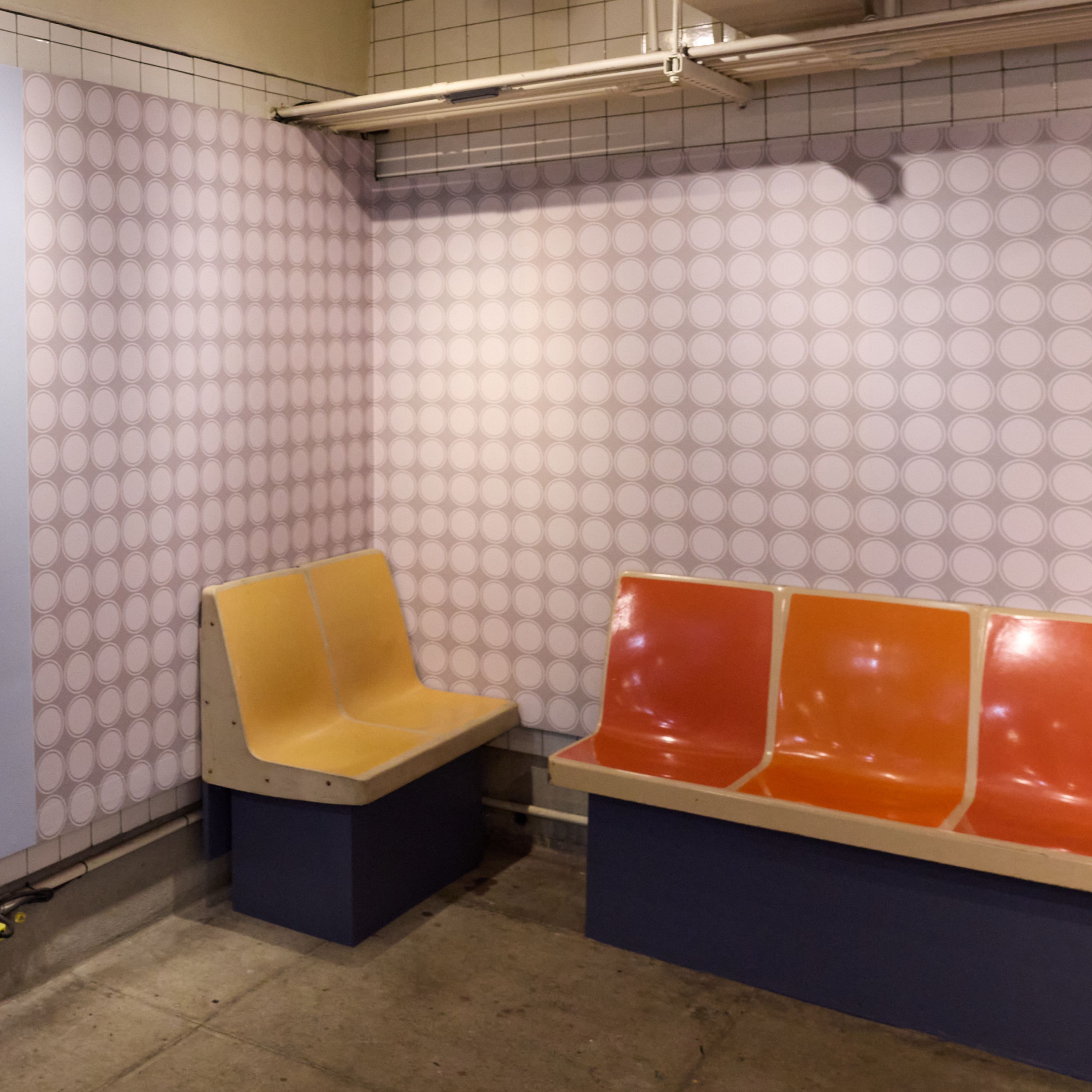
Loading summary
Transcript68 lines
- [00:00]
A
WNYC Studios is brought to you by Progressive Insurance. Here's a helpful fact you might not know yet. Drivers who switch and save with Progressive save over $900 on average. Pop over to progressive.com, answer some questions and you'll get a quick quote with discounts that are easy to come by. In fact, 99% of their auto customers earn at least one discount. Visit progressive.com and see if you can enjoy a little cash back. Progressive Casualty Insurance Company and affiliates national average 12 month savings of $946 by new customers surveyed who saved with Progress Aggressive between June 2024 and May 2025. Potential savings will vary. All of it is supported by Memorial Sloan Kettering Cancer Center. In a small groundbreaking clinical trial, 100% of participants with a specific type of rectal cancer saw their tumors disappear using immunotherapy alone. Researchers at MSK are now studying this approach in cancers of the stomach, liver and more. And a majority of tumors are disappearing. For MSK Giving day, all gifts will be tripled. Learn more@msk.org all of it.
- [01:13]
B
This is All OF it on wnyc. I'm Alison Stewart. Today, the temperature in New York is kind of standard. But this time tomorrow, as you just heard, it's going to start to feel scorching. So coming up on the show, we'll talk to the city reporter to city reporter and Queens native Katie Honan. She'll share her tips on her favorite beaches and she'll call in and you'll call in. You'll tell us, where do you go to stay cool in the city's biggest burrow? That's in exactly 24 hours. Now let's get this started underground. It is time for another edition of Small Stakes, Big Opinions, and it involves the subway. The New York City subway has seen a lot of changes in recent years. The Metro car disappeared. Cameras are being installed on subways and platforms. Countdown clocks have been refreshed. And now we are facing another watershed moment. The MTA is phasing out subway cars that have orange and yellow bucket seats arranged in an L shape. But like many things that have been working for over 40 years, they are ready to retire. So the MTA is replacing them, even though the change will take years to implement. The Transit Museum is helping writers say goodbye in a new exhibit titled Ode to the Orange Seats, which dives into the history of the yellow and orange seats on the subway. It also features work by 14 artists and is currently on display at the museum in Brooklyn. So for this edition of small stakes big opinion series. If you had to pick from the L configured orange seats, which is the best seat and why is it the one near the door? Do you like being tucked away in the corner seat next to the the window? What do you like or not about the orange seats? Call in and weigh in. Our number is 2124-3396-9221-2433. WNYC. You can also text us at that number. And if you want to see what we're talking about, go to our Instagram stories at all of it wnyc. Here now to talk about the transit museum exhibit and the allure of the RN seats is curator Jodi Shapiro. Hey, Jody, welcome back.
- [03:25]
C
Thanks for having me back. I love talking about all things sub rail with you.
- [03:30]
B
Love it. What's the origin of the orange seats in the subway?
- [03:35]
C
So basically, when there were new cars that were being being specced out by the New York City Transit Authority and the mta, there were a couple of changes that they wanted to make in the late 60s, early 70s that was extending the length of the cars that would go in the B division. When I say B division, that's all of the lines that are lettered. So they wanted longer cars, and they used that opportunity to make a slightly different seat configuration than had been in B division cars before. The origins of the conversational seating, the transverse, that had been in our system for a long time. But they hired an interior design firm, industrial design firm, I should say, called Sunbug Farrar. And, and they came up with this idea of contour seats in the conversation seating arrangement. And that was great, you know, like, okay, cool. Contour seats never been tried on the subway before in New York, but had been present in buses and had a modicum of success. So they tried it and the colors that they picked for those seats were shades of orange and yellow and so 70s, so completely 70s. Like, they could have picked avocado.
- [04:56]
D
That would have been the only other.
- [04:57]
C
I joked. I joked. And I'm like, they went to the kitchen catalog and like, why didn't they have the tobacco burst or whatever. Avocado burst. But yeah, you know, in the 1970s, it's, it's, it's phasing out of the flower children. It's back to, it's back to nature, but more in a earthy way and not a, you know, like, ooh, airy fairy kind of way, I guess you would call it. I don't even know how you would describe, you know, the chain. But so It's. It's yellow. It's orange. You know, Julio Torres had this great joke about orange where he said that that was the color that we were exporting in the 90s. And I don't disagree with him there. So that was a Sunbarg Ferrar decision, and it stuck. And as soon as the cars were introduced, the first car they were in was the R44, and that entered service in 1971. And right away, people had opinions, so we're gonna hear some of those today.
- [05:54]
D
The conversational seating in a subway. Should there be conversational seating in a subway?
- [05:59]
C
I mean, I think so, but, you know, whether you want to engage in that conversation or not is up to you.
- [06:06]
D
Do you have a favorite seat?
- [06:08]
C
I do. I really like. So I like where there's just the single one seat that's, like, not connected to anything, like, all the way in the back of the car.
- [06:16]
D
Okay.
- [06:17]
C
If I can get that, then I'll take it. But out of the seats that you talked about before, I always take the one by the window.
- [06:24]
D
You like the. I like the one by the window
- [06:26]
C
as well, because I can lean my arm on the little. The little shelf that's there, you know?
- [06:30]
D
Yeah. Well, I like it because you can turn this way, and it's your own little subway car, like in your own little world.
- [06:36]
C
And there's cool stuff to see out of the window, whether you're underground or above ground. So that's also part of the appeal for me. But it's really. You can only get bumped from one side, and that's important to me. I don't know if it's important to you, but.
- [06:50]
D
Well, one is, I like that. Again, I can be by myself. I can be in my own little world. But I have heard people say that your height makes a difference. That is a bad seat.
- [06:59]
C
If you're a tall person, I would agree. As a short person, I like that seat because I don't feel as crushed. But the part of sitting in that seat that I don't like is when there's somebody in the opposite seat and our heads touch. That's kind of a thing that I don't know. You know, there's many things about being out in public with germs and all that that every New Yorker has to reconcile within their own selves. And there are some days where I just don't want another person's head touching my head.
- [07:31]
D
I understand that. I understand that. And I've also heard people say. I don't agree with it. That you feel trapped.
- [07:38]
C
It I could see why people might feel that way, but I mean, again, you know, as a New Yorker, don't you feel trapped in many situations? And I feel like being quote unquote trapped in a subway seat by a window doesn't feel as threatening a trap as some other things that you could be in.
- [07:57]
D
One Reddit user described the trains this way. It's my favorite model. I seriously wish I could keep these forever. I love everything about them. The A line and Queens above ground just hits a certain way. I love the wood finishings, the art orange colored seating, the window seats and the warm lighting. I always loved age and things and it sits so right with me. I really don't like the new train interiors, but I understand why stuff has to change. I just wish they didn't feel so bright inside. It stresses me out.
- [08:26]
C
Interesting. I like the brighter lights. I'm not as thrilled with the new cars. The pitch of the seats. The contours of the seats are a little bit sharper than other blue seats were before. I and I know that there's a whole like scientific method to figuring this out, so I'm not questioning it. But as a short person, sitting in the seats on the R211s is a little weird for me. But maybe because there's more tall people then that's, you know, maybe they don't have a problem with it.
- [08:59]
D
We've got a bunch of texts here. Aren't Seats are the best. They offer space, privacy and offered many options. Love those seats. This says I will miss the conversations the orange seats enabled, whether with family, friends or complete strangers. Here is an opinion window corner facing forward. But even better is sitting with friends and being able to talk in a way that you can't when all four or five you are sitting side by side. In high school friends in high school friends and I would sit and talk while going home. That was really nice. The best seat is the front facing corner seat all the way in the back of the train. So you're tucked in and you have a headrest. A rare find, but the best way to ride.
- [09:43]
C
Person after my own heart.
- [09:45]
E
Yeah.
- [09:46]
B
We are talking about the MTA phasing out subway cars that have those orange bucket seats in the L configuration. The conversational configuration with the New York Transit Museum. It has an exhibit called Ode to the Orange memorializing the seat. We're talking to curator Jodi Shapiro. We're also hearing from you as part of our Small Stakes Big Opinion series. What is your preferred orange subway seat and why is the one by the door, Is it one in the corner? Is it next to the window? Would you like to be on the outside or the inside? Why do you pick that seat? Our number is 2124-3396-9221-2433. WNYC. So what made you want to devote a whole exhibit to the orange seat?
- [10:32]
C
It's something that we've been talking about at the museum for a while and the person that I co curated the exhibit with, Karen Eckhaus, you know, we were just like, we had all of these ideas about what we would want a show about orange seats to be. And then we've, we figured out, we figured, why not? Why wait? Just do it. Why don't we do it now? Because the cars are still running. Some of the cars that have them are still running. So they're not a complete, you know, extinct beast right now. But it's also, you know, they've been around for more than 50 years. You know, it's the museum's 50th anniversary this year and we felt like that was an way to tie things together because it's the 1970s for them and for us. So we, we just said, let's do it. And, you know, the amount of people who have been inspired by the orange seats, you know, I shouldn't ever be surprised that our transit system inspires people in so many different ways.
- [11:32]
A
Sure.
- [11:32]
C
But, you know, again, I was just like, I didn't realize how many people have made artwork devoted to these orange seats and how many different mediums they use and the imagination of some of these pieces. And so, you know, Karen and I, every artist that, that I was like, oh, we should talk to so and so, and Karen would go, oh, I already contacted them. So we were both on the same wavelength about, you know, who, whose work we liked, who we wanted to ask to participate, and then some good old fashioned investigation and just digging around and finding people through the Internet, through word of mouth, people that, whose work that we liked and also was inspired by the seats.
- [12:12]
D
Well, let's go back to when they first came out. How revolutionary was their design?
- [12:19]
C
I mean, New York is not unique as far as having contour seats or, you know, pretty much any of the features that are in our subway cars have been tried in other places before. Maybe not for as long as they have been in New York, but when the contour seats arrived here, it was a big change because you either had the short bench seats or, you know, the rattan seats or the contoured fiberglass benches. So bench seating was the norm. The color was also a revolutionary idea because Prior to the 1970s, subway car interiors were mostly cool colors, like blue or some kind of green. You know, there was. There was the odd beige here and there. Oh, you know, well, the rattan. You know, the beige. And there were a couple of attempts with red upholstery, but, like, nothing like this. So the contour and the color is something that was wholly new for New Yorkers. And, you know, I've been looking. I've been looking since we decided to do this exhibit, you know, a while ago, and just in general, trying to find reactions, public reactions to it, and it's kind of hard. It's. It's. It's different than, say, the subway map that was introduced, you know, shortly. Shortly after the orange seats made an appearance. You're just kind of like people. Everyone has an opinion about the map. People must have had opinions about the seats. And so far, I haven't found anything. I've heard apocryphal things that are like, oh, people didn't really like them, but, like, you could say that about anything in New York. But I'm looking for, like, focus group stuff. I know it's out there. I'll find it.
- [13:56]
D
You will find it. No doubt. Let's talk to Patrick, who's calling in from Brooklyn. Hey, Patrick, thanks for calling all of it. You're on the air.
- [14:05]
F
Hey, thank you. I had a thought about the actual colors that I used. The orange, the red, the yellow. At the same time that the subways were implementing those colors, so did a lot of the fast food chains. The McDonald's, Burger King. And there's a reason for it. Those colors, while they're inviting, subliminally they tell you they create a sense of urgency. So they basically are telling you, don't stay here to move. So if you notice that at the same time the subways put those colors in, so did fast food restaurants, so did airports, a lot of public places. And that was a calculated decision.
- [14:52]
D
Thank you for calling, Patrick.
- [14:54]
C
Yeah, I mean, that tracks because in the 1970s, the system is going through a period of disinvestment, and they're trying to get people to come back and use the system, but maybe not linger on it too longer than they need to. So that makes perfect sense. Also, you know, the whole thing about when the subway was first built and designed, the designers wanted it to feel not so much underground, but like you're going into a space that is. That is thought out. And that is inviting. And that's definitely what yellow does, is makes it feel like there's sunshine underground. So that's, you know, lots of cool color theory. Things were happening in the 70s, too. I. Way back in my past life, I worked in an advertising agency. And, like, figuring out, like, the correct colors for your product is a big thing. And so I am sure that when Sundberg Farrar said to the MTA and New York City Transit Authority, like, these are the colors that we want to use, you know, and I'm sure the materials had something to do with it with epoxy and all the things they're made of, but I can't imagine that that wasn't a consideration. Like, we're going to bring some nature inside the steel tube that people have to ride in.
- [16:15]
D
Let's talk to Judy calling from Brooklyn. Hey, Judy, thanks for calling, all of it. You're on the air.
- [16:21]
E
Thank you. I love those seats. I'm old enough to remember the rattan seats on the Carthage line where I grew up. But these yellow and orange seats, less chance of man spreading. And I sit not the ones facing forward because I have long legs. So I can't sit near the window. And then if that person sitting near the window has to get off before I do, then you have to get up, let them out. So I like the one near the door. And of a certain age, I need the pole to get up from the seat.
- [17:09]
C
Yeah. So you can make a quick escape.
- [17:12]
E
Yes. Yes. Well, I don't know. I don't know how quick.
- [17:17]
D
I bet you can do it. That's seat number one, by the way. If you want to know, we're talking your instagram @olive NYC for the configuration. You can tell us which is your favorite seat on the subway. In the L configuration, MTA is phasing out the subway cars, but we are paying owed to them, as is the New York Transit Museum. They have an exhibit called Ode to the Orange Seats. My guest is curator Jody Shapiro. This one says the orange. The orange facing window seat on the B train as you cross the Manhattan Bridge into Brooklyn is the best seat with the best view of the bridge, Lower Manhattan and Brooklyn Bridge Park. Can't argue with a view that's amazing, right? Let's talk about the exhibit a little bit more.
- [18:04]
B
How many artists are involved in the show?
- [18:06]
C
There's 14, and some of them are artists that we've worked with before, and some of them were on a wish list that I had been keeping for a while. You know, the museum have an art collection. And a lot of people don't realize that we have one. So this was also an opportunity for us to showcase some of the art that we had in our collection. It only ended up up that, like, there's one piece from our collection, but that's okay, because the artists that we. It became that every time we would contact an artist like Karen or myself, they would be like, oh, my God, the Transit Museum. I love your museum. I didn't think you. They said, I don't think you did art shows or I never thought that you would want to have my work in your museum. So hearing that as a curator, and, you know, I'm sure Karen feels similarly that, like, to people, to having people participate in an exhibit that you're planning and developing. It feels really good. And some of the artists that we asked to participate were artists that, you know, I had been trying to figure out how to use in a show for a long time because they are not the traditional artists that we've worked with in the past. But, you know, maybe they're street artists or more three dimensional artists that we traditionally have not worked with a lot. So, you know, when I said to Karen, I'm like, oh, you know who we should just ask, just, you know, to see if they say yes. Because the worst they could say is no. You know, why not ask Chris Daze Ellis if he would be into it? Because I know that he does. He does a lot of paintings. And Karen was like, already contacted him. And I'm like, all right. And then there's Steve Espo Powers, who had Espo Art World, which is not far from where the museum is. And, you know, I just. I adore his work and his attitude about art. And so for him to say, yes, I will participate was really great. There were some artists that we worked with before. Some of their art is in the MetroCard show that's in Grand Central. So Akiva Lisman and VH MacKenzie were two artists that we already had a relationship with. And, you know, Akiva has these great canvases that are shaped like he's like the seats or he does pigeons or chain link fences. And the part. The amphora cups, the coffee cups. So he deals with New York icons. So it was great to have a piece of. For his seats in this exhibit.
- [20:36]
D
I saw a tattoo.
- [20:38]
C
Yes, there's a. There's a tattoo artist in the exhibit also. And there's a video of. Of him doing the tattoos on people.
- [20:46]
B
He's making the L shape, right?
- [20:47]
C
Yeah, he's making the Conversation, seating with the pole, which is also important because it's got to have something to connect it. But yeah, like every, every artist was just like, oh, I've got this and I've got that, or can I show you this? Or would you be into this? And just the outpouring of support from the artists was just like, oh, we're doing something right here, you know.
- [21:11]
D
Let's talk to Barbara calling from Brooklyn. Hey, Barbara, thanks for calling, all of it.
- [21:15]
A
You're on the air.
- [21:18]
G
Oh, thank you so much for taking my call. So I must say that I think the discussion about colors is pretty irrelevant for me. And that's because the new trains, which I take all the time on, the B line from Brooklyn to Manhattan have about 50% fewer seats than the old orange configuration, which were much more comfortable. People could sort of squeeze in and put their legs in the aisle. And I think this is an example shown in other ways actually, of ageism on the part of the mta.
- [21:53]
D
That's interesting. Explain.
- [21:57]
G
Well, seats are more essential for older people. So I'm in my 80s, so I mean, it's just a subject that I kind of am invested in. And it's much harder to get a seat on the new beeline. Their seats are against the wall, as you know, and sometimes people like, spread their legs and take up two seats, sometimes even three seats. Whereas with the old configuration, the orange bucket seats, as you put it, there was always a seat to squeeze into, sometimes in the middle, which was always empty. You know, people don't want to sit in dreaded middle seat. And sometimes, actually, sometimes near the window. A lot of people didn't like to squeeze in there, but there was always a place to sit, even in a very crowded train. And I think that it's reprehensible, actually, that the MGA is putting on these new lines with far fewer seats. They don't have seats at the end of each train, whereas before they had those double seats.
- [23:05]
D
Thank you so much for calling in, Barbara. This says, I was studying abroad in the early 70s and remember how startled and delighted I was by the yellow and orange bucket seats on my first subway ride after I returned. I love the L configuration and prefer the backward facing window seat. Great discussion. So, New York, do you understand why people are so almost nostalgic about these seats?
- [23:33]
C
I think I've said it to you before. When We've talked about MetroCard and some of the other aspects of our transit system. It doesn't surprise me that things from our transit system become so dear to people, because people use our transit system every day. Every person who lives in New York has taken it at some point in their lives. Unless you're live in that rarefied air where you can get driven everywhere. But it's a universal experience for everybody who lives here and everybody who visits here. And so I have to think that because there's this outpouring of love for the seats, for the tokens, for a Metro card, for the car types that are retired, for the buses that are retired, that it's not surprising to me. It's just. It's kind of cool that our city has so many things to love about it, and yet everybody loves it, but everybody complains about it at the same time, too, which is a very New York thing, is that you don't love it if you don't complain about it at least once or twice.
- [24:40]
B
Let's talk to Harry calling from Manhattan. Hi, Harry. Thank you so much for taking the time to call all of it. You're on the air.
- [24:47]
H
Hi, Allison. Thanks for taking my call. Yeah, so I just had two quick points regarding the orange seats, which I absolutely adore. Aesthetically, I think the colors are fantastic, but one, and maybe the guests can correct me if I'm wrong, but I'm pretty sure the ergonomics of the orange chair seating system allows more people to sit down in one single subway car than the contemporary kind of line system. So I think that's just like a little bit more conducive to people who need seats. But two. Kind of like when Yankee Stadium decommissioned all of their old bleachers. Like, I don't want to stop seeing these orange and red chairs. Like, have. Has the museum thought about, like, commissioning artists, like, work with the seeds to make like, I don't know, like, one off productions. I would just hate to never see those again. And I think they could go to a lot of good use, so I would love to see them repurposed.
- [25:32]
C
Well, it's. It's funny you should mention that because the museum has developed some product around this exhibit. So there's. There's inflatable orange seat beach chairs, which are kind of cool. There's going to be, like, scarves and prints and things like that. But the actual MTA has been selling the orange seats that are taken out of the cars that are decommissioned and have been selling them at intervals. The museum doesn't really have much to do with that. We do benefit from the sales in a small way, but. Yeah, I mean, if I had a dollar for every person who's like, hey, the museum should make their own versions of the orange seats. It's like, we heard you. We're trying. If we can make them affordable, I'm sure we will. They're great. I'm waiting to get my own set of seats for my own house from the decommissioned cars.
- [26:24]
B
On the Trent Museum's website, you're asking people to vote on what they think the best seat is. How's it going so far?
- [26:31]
C
You know what? I haven't even taken a look at the tally because I wanted to come in fresh today and not have any, like, predisposed. If I had to guess, I would think that the. The window seat was the one that was winning, but could be one, though.
- [26:48]
B
Could be the one by the door.
- [26:49]
C
Could be the one by the door. Yeah. For the hasty escape that we mentioned before.
- [26:53]
B
Is there anything that I haven't mention about this configuration, about the art show that you want to get out?
- [26:59]
C
No, just that I, you know, it's. The works in this show are all an expression of love for this iconic piece of transportation, seating. It was a way for the museum to kind of expand its curatorial boundaries, which is something that we're always trying to do with all of our shows. And I hope people come and see it and enjoy it and weigh in on what their favorite seat is.
- [27:22]
B
I have been speaking with curator Jodi Shapiro from the New York Transit Museum. They have an exhibit called Ode to the Orange Seats. Thanks for joining us.
- [27:31]
C
Thanks for having me.
- [27:32]
I
You're great at protecting your data, but lots of places could still expose you to identity theft.
- [27:37]
A
I thought it was safe.
- [27:38]
I
If that happens, LifeLock gives you a US based restoration agent who will stick by your side from start to finish. Phone calls, filing documentation, preparing insurance claims. Your agent handles it all. In fact, we're so confident restoration is guaranteed or your money back. Isn't it nice to have someone like that on your side? Save up to 30% your first year at lifelock.com specialoffer terms apply.