← All Of It with Alison Stewart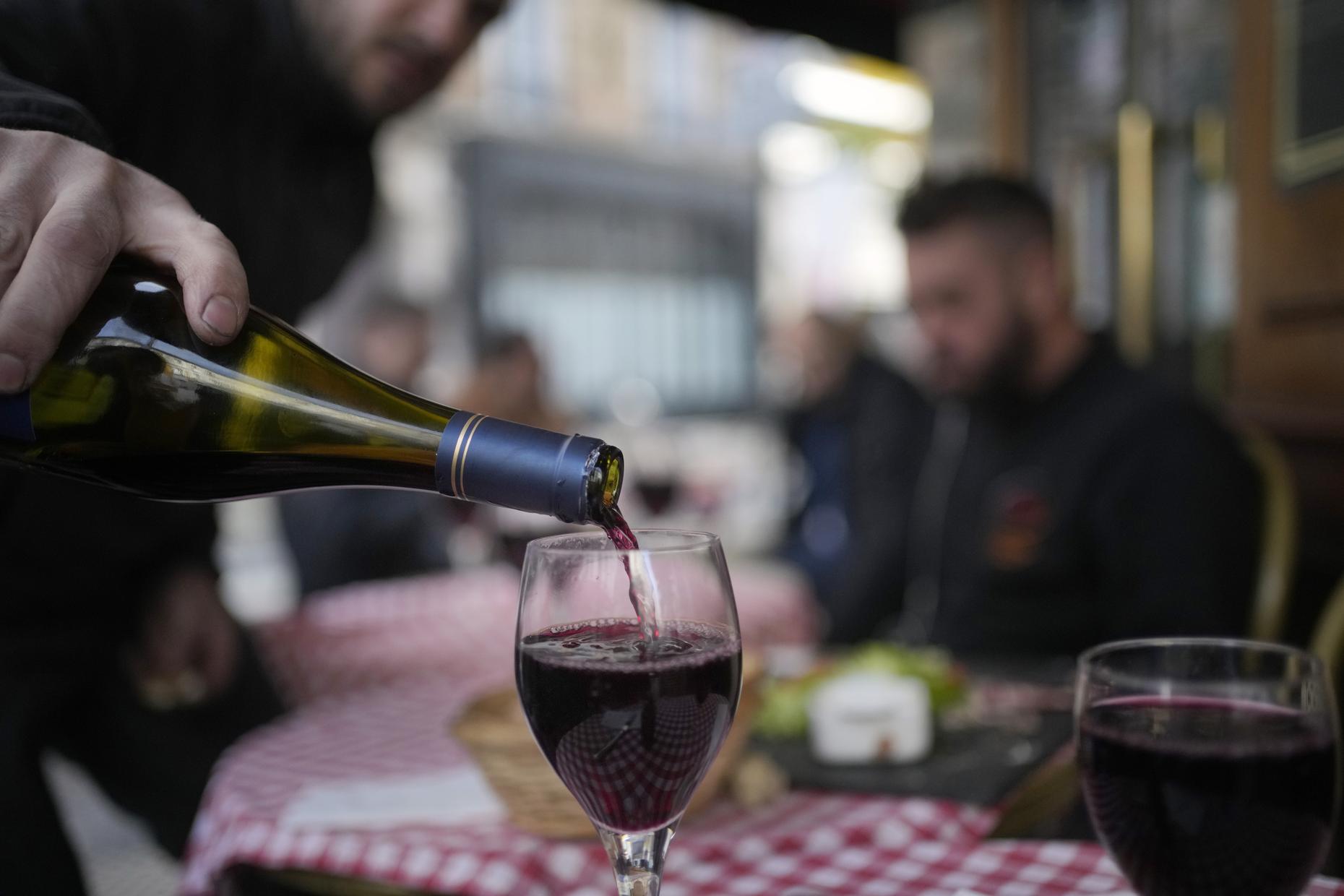
All Of It with Alison Stewart
What Wine to Serve this Holiday Season
00:28:31
Whether you're bringing a gift to a holiday party or hosting a meal, Food & Wine editor Ray Isle can help you pick out the perfect bottle of wine.
Loading summary
Transcript82 lines
- [00:00]
Wix Advertiser
How many times have you wished you could be in two places at once? With wix, you practically can. Wix's website builder is packed with powerful AI tools to make running your business online easier. Build a full site just by talking with AI, get an AI agent to manage your sales and marketing, or work like a 10 person team, even if it's just you. So you don't need superpowers to get everything done. You just need Wix. Try it now for free@wix.com.
- [00:30]
Bic Soleil Advertiser
Surprise beach day. No excuses. I'm in. Gimme Five. With Bic Soleil Glide Razor, you'll have hydrated, smooth skin that's ready to go on the fly. No shave cream needed. You can prep, shave and hydrate all in one step thanks to moisture bars that hydrate your skin during and after shaving. 5 flexible blades hug your skin for a close shave. Glide into smooth. It's your time to shine with Bixsol. Buy now at Amazon and Walmart. Ready? Your skin looks amazing. So smooth and beach ready.
- [00:57]
Ray Isle
Let's go.
- [00:59]
Caller/Listener
I' ma put you on, nephew.
- [01:00]
Ray Isle
All right, unk.
- [01:01]
Alison Stewart
Welcome to McDonald's. Can I take your order, miss?
- [01:03]
Caller/Listener
I've been hitting up McDonald's for years. Now it's back. We need snack wraps. What's a snack wrap? It's the return of something great. Snack wrap is back.
- [01:14]
Ray Isle
Limu Game OO and Doug Limu and I always tell you to customize your car insurance and save hundreds with Liberty Mutual. But now we want you to feel it. Cue the emu music.
- [01:24]
Caller/Listener
Limu.
- [01:25]
Alison Stewart
Save yourself money today. Increase your wealth. Customize and save. We save.
- [01:35]
Ray Isle
That may have been too much feeling. Only pay for what you need@libertymutual.com Liberty Liberty Liberty. Liberty Savings Very unwritten by Liberty Mutual insurance company and affiliates. Excludes Massachusetts listener supported WNYC studios.
- [02:01]
Alison Stewart
This is all of Allison. It's it. I'm Alison Stewart live from the WNYC studios in SoHo. Thanks for sharing your day with us. It's Friday, so let's do a quick look ahead at what's coming up on all of it next week. Sunday night is the season finale of one of my favorite shows, the Gilded Age. On Monday, I will speak with one of the stars, Carrie Coon, who plays Bertha. Love her in that role. And we'll get you in the holiday mood. Next week I'll speak with Reginald Hudlin, the director of the new film Candy Cane Lane. It's a big new hit. And later in the week, jazz pianist Christian Sands will stop by to play some Music from his new holiday album, Christmas Stories. And on Thursday, make some hot chocolate and sit in front of your radio or your computer because the West Village Cor. Chorale will be with us. No, Coral. Did I say it right? I think it's Coral. Coral. That's what I meant to say. West Village Coral will be performing some carols live in studio. That is in the future. Let's get this hour started with Ray Isle and holiday Wine. We've officially reached the midpoint of the holiday season. As you're scrambling to shop for last minute gifts or supplies for an upcoming party, there's one item you cannot forget. Wine. Our next guest is the executive wine editor at Food and Wine, the wine and spirits editor for Travel and Leisure, Ray isle's new book, 700 pages of it. This is it right here, is titled the World in a Wine Glass. The Insider's Guide to Artisanal, Sustainable, Extraordinary Wines to Drink. Now, Ray, welcome back to all of it.
- [03:39]
Ray Isle
It's great to be back. Thank you for having me and congratulations.
- [03:41]
Alison Stewart
On this big thing.
- [03:43]
Ray Isle
Yeah, it's, it's, it's. Admittedly, it's a little long, but if you, if you title something the World in a Wine Glass, you gotta add a few pages in there.
- [03:50]
Alison Stewart
It's not long. It's comprehensive, we'll call it.
- [03:54]
Ray Isle
And I will point out, you do not have to read it linearly. You can dip in and out. It's a lot of. It's a lot of short profiles of great wineries in people's own voices. There's a lot of people talking about why they farm the way they farm and the kind of wines that make. And it's actually fun. It's not technical. It's not a. It's not a like 17 grams of titratable acidity, whatever wine geekery. It's really about the people and the places and the wines they make. So I, I hope people enjoy it. It's. It's definitely out there. It's. It's in, it's in your independent bookstore near you. Ideally, it's. It's available, you know, from that, that Bezos guy.
- [04:31]
Alison Stewart
For people who can't. Hey, listeners, call out to you. We are talking wine. Do you need a wine recommendation for the holiday? Maybe you've been curious to try that Burgundy that you've been seeing in your local shop, or you want to know more about sustainable, affordable and accessible wines. Ray Isle is here. He will take your calls. Maybe you're hosting a dinner party and want to impress your guests with a Fancy new bottle of sparkling wine. You can ask your questions now. 2124-3396-9221-2433. You can call in and join us on air or you can reach out via text. 2124-3396-9221-2433 wnyc or you can hit us up on social media at all of it. Wnyc. Okay, I want to throw the skunk on the table. The hard conversation about price increases. This year the prices of wine increase led to a slight decrease in people purchasing wine according to at least one report in the BBC. So let's think about what, so people, what people need to know, what are the main factors that contribute to, to the price increase?
- [05:36]
Ray Isle
Well, I think, you know, the, the one not so much this year, but last year there was certainly inflation issues. And I think, you know, the weird thing about wine is that, that some wines are extremely expensive and there's no question of it. There's a lot of, there's a lot of really great wines that are not crazy expensive that haven't seen huge price increases. I think with wine there's a little bit of pressure from the, the essentially the non alcoholic trend which is, which is huge. And so that, that accounts more I think for that drop off in interesting and a little bit of a little. Everybody was like so thrilled to be out of a pandemic situation the past years that people kind of calmed down a little now and said, okay, we're back to reality. It's kind of normal. Maybe I don't need to buy six bottles, I'll buy two bottles. So there is that as well.
- [06:23]
Producer/Host Assistant
What are some of the challenges that winemakers are facing?
- [06:27]
Ray Isle
Oh gosh. I mean one of the things like researching this book which is, which is really about independent winemakers so small farmers and growers around the world, huge issues from climate every, every place I talk to people and it, whether it's fires in California or whether it's like unseasonal frosts in the lower valley, I think one micro one maker in Germany summed it up best for me, a guy named Philippe Wittman. He said, you know, it used to be that we had one or two vintages out of every ten that was unusual or unexpected or strange. And now it's nine out of every ten. Or they just, the weather is just unpredictable in completely bizarre ways. And that's, that's worldwide and it's, and it's not simply a rise in temperature so much as, as shifts in climate affecting every aspect of weather and it's, you know, that that's a challenge. And then, and then there's the day to day challenges of, you know, they say, you know, farming is not for wimps. You know, even, even without climate change. Sometimes you get a year where, you know, it rains all, you know, all season year this past year was 2023 for most regions was pretty great. There's a lot of good wine coming down the pipeline, as it were.
- [07:36]
Alison Stewart
Yeah, as we were. In the first section of your book, you say, you know, your focus is on the care and concern about the, how the wine is made. And that quote, it wasn't meant as an attack on mass market wines or the millions of people who enjoy drinking them. So just so we can tip our hat to them, what's a pro of drinking mass market wine and what's a potential conversation?
- [07:59]
Ray Isle
Well, one of the pros is simply findability. I mean, if you're looking at a wine that's made, if they make 3 million cases of it, let's pick a random mass market brand like Yellowtail. It's going to be in pretty much most stores that you go to in most, not supermarkets in New York, but in other states. And so there's that and as I say about mass market wines and their, you know, there are, they're out there that tastes perfectly good. And it's, you know, one of my analogies I use. I grew up in Houston and if I'm, you know, if I'm mowing the lawn in August and it's 105 degrees and someone drives up and hands me a cold Budweiser, I don't care that it's not a craft beer. I'm going to drink it immediately and be thrilled. But I do think with wine particularly, there's a, there's a kind of additional pleasure gained from, from, you know, from tasting wines that are made by a specific person in a specific place who's expressing kind of a vision of what they want to do and, and really expressing the land the wines comes from. It's, it's, you know, I, I took a, I borrow a little from Wendell Berry, who, who weirdly I, my parents knew growing up. And it, and you know, it's, wine is wine, like a lot of things is an agricultural product. And agriculture should be a give and take between humans and nature and industrial agriculture, mass chemical farming and so on is more of a take than a give. And the producers I'm really writing about in this book are working with nature rather than trying to Extract everything from it, in a sense.
- [09:32]
Alison Stewart
My guest is Ray Isle. The new book is called the World in a Wine Glass. The Insider's Guide to Artisanal Sustainable, Extraordinary Wines to Drink. Now he's executive wine editor at Food and Wine. I've got a question for you. Hopefully you can answer. This is June calling in from Long Island. Hi June, thanks for calling in.
- [09:50]
Caller/Listener
Hi there. Thank you for taking my call. My question has to do with kosher wines. My son is now drinking kosher wine and I'd like to be able to bring and serve him a decent kosher wine since we've all moved on from Manischewitz.
- [10:08]
Ray Isle
Yes, I mean Manischewitz, you know, all the best of them. But there are better kosher wines out there, I would say. And there are actually quite a few really good kosher wines out there these days. Days, you know, I think there are certainly, you know, most of the Israeli wines that are out there are, are kosher, if not all of them. Weirdly there are maybe one or two that aren't but. And then there are, you know, there are some beautiful, you know, beautiful wines that you wouldn't expect in since like Chateau Grey Sac in. In. In Bordeaux makes a kosher rose. That's really lovely. There are, you know, plenty of, of domestic kosher producers like Herzogen make some really, really delightful wines. Capsanus in Spain makes a great kosher wine. So what, you know, most good wine stores have a kosher section at this point and, and you can find really top notch wines it at all price points everywhere from 10 or 15 to, you know, to, to 100 bucks a bottle which is kind of wild.
- [11:11]
Alison Stewart
And what are the two names?
- [11:12]
Ray Isle
I hope there's a couple that they're useful.
- [11:13]
Alison Stewart
Yeah. What are the couple names she could start with?
- [11:16]
Ray Isle
Well, Capsanus in Spain makes lovely kosher wines. Chateau GRE Sac in Bordeaux makes a kosher rose. There's I believe it's Bartinura makes a Prosecco that's quite good. And Herzog H E R Z O G makes lovely kosher wines which are quite findable too, which helps listeners.
- [11:38]
Alison Stewart
We are talking wine. Do you need a wine recommendation for the holidays? Maybe you're curious to try that Burgundy you've been seeing in your wine shop. Or maybe you want to know more about sustainable, affordable and accessible wines.
- [11:49]
Producer/Host Assistant
We're here with Ray Isle, executive wine editor of Food and Wine and author.
- [11:52]
Alison Stewart
Of the World in a Wine Glass.
- [11:55]
Producer/Host Assistant
We do have a text before we get into some more details in your book. Text says if I drink White wine. I always get a bad headache. I'm not sure I can drink any wines. Any suggestions for headache prone individuals?
- [12:08]
Ray Isle
Yeah, the headache thing is so fascinating and unfortunate also, you know, for those who get them, a lot of people assume that it's sulfites, and it's actually typically not sulfites that are the issue. And interestingly though, if it were sulfites, you'd get headaches from white wines more than you would from red. There are some chemical compounds that are naturally occurring in the skins of grapes that seem to provoke headaches in some wine drinkers, and that's in the skins of red grapes specifically. Realistically, the single worst cause of headaches for people drinking wine is alcohol. And under realization of how much alcohol one might have consumed the night before, because you dehydrate and it just, it causes you pain. But if you're specifically getting headaches from white wines, I mean, I would. It's an interesting question because typically it's red wines that trigger the headaches. I would probably try rose and see if, you know, if you get the benefit of the. No headache, plus the lightness of the white wine and experiment a little. That would be my suggestion on that one.
- [13:14]
Producer/Host Assistant
In your book, you write Bordeaux may be the single most famous wine region in the world. Why?
- [13:20]
Ray Isle
So? Bordeaux is, you know, a couple of reasons. One, it makes wonderful wines. I mean, it is the kind of location for Cabernet Sauvignon and for Merlot as well. And. And it's been famous for hundreds of years, which helps a lot. Additionally, the Bordelais have been very good at marketing the image of Bordeaux over time. The second only to the Champenoise, who are the genius marketers of wine. And so that combo platter of great quality, plus really hundreds of years of creating the name of Bordeaux, has made it famous worldwide. What's interesting about Bordeaux to me is that the really famous wineries in Bordeaux or the grand couples a classified gross and so on, which is a very, very small percentage of the number of growers in Bordeaux. Bordeaux is a huge region with lots and lots and lots of small farmers and then some very famous chateaus. And it's a very strange situation where you've got really, really expensive wines and then very affordable wines at the bottom. And the economics for the smaller producers is quite tough, actually.
- [14:30]
Producer/Host Assistant
Well, if I want to. If I want to buy a Bordeaux, a good Bordeaux at a reasonable price from a small producer, who can I buy? What can I buy?
- [14:41]
Ray Isle
There's a. There are a lot out there. As I said because, partly because Bordeaux is, is such a, you know, such a big region. I, one of the wines I wrote about in the December issue for Freedom Wine is that the Chateau Smith au Lafitte, Leo de Smith, which is the second wine from Chateau Smith Lafitte. So the top platforms, the top chateaus in Bordeaux almost always have a second wine which is kind of the, the younger vines are more affordable red. That wine one's around $40. It's absolutely gorgeous. Cabernet, Chateau Talbot or Talbot, depending on how you want to pronounce it, has a second wine as well. That's, that's just a super steal. One of the books, one of the wines in the book, Champs de Tre, which is quite small and not in a famous part of Bordeaux, has a lovely red that's about 17 or 18 bucks a bottle. And, and you know, at this point what's weird is that we think of California as being, you know, kind of not as, not as fancy or classic as Bordeaux. But the truth is the average Napa Valley Cabernet is about 75, 80 bucks a bottle now. And you can buy really good Bordeaux for quite a bit less than that. So it's a, it's a, it's a strange inversion of what, of what the classic thought was on things.
- [15:55]
Producer/Host Assistant
We have a text that is semi related to that. It says what's the difference between the price of different wines? So why do wines price vary dramatically?
- [16:06]
Ray Isle
Yeah, it's both simple and complicated. So many things in life are. The spaceline answer is that it's a combo platter of land cost and labor cost and reputation on some level. So wine is a weird product in that at the, at the very affordable level, the costs are quite closely tied to production costs. So if you buy a six buck bottle of wine that's actually pretty tied to what it costs to make the wine and grow the grapes and all that. If you buy a 50 buck bottle of wine, reputation of the region, reputation of the producer. It's sort of the Armani soup thing where the, the basic ingredients don't add up to the cost of an Armani suit, you know, and, and so it's, it's a little all over the place. And that's why a lot of what I do for food and wine is kind of hunt up what I think are, are over performing wines, wines that, that, that, that don't cost that much, but, but taste like they ought to cost a lot more. And that in the book too, the what I, the book specifically concentrates on wines that are under 100 bucks and mostly between probably 20 to 30 bucks. 20, you know, 7, 15 to 35, whatever. Because I really wanted to write something that. That had wines in it that people could buy. I mean, you know, you can buy Domain Romanee Conti, and the least expensive bottle is 2,000 bucks a bottle.
- [17:27]
Alison Stewart
It's like, no, you can't buy that.
- [17:29]
Ray Isle
That's not. That ain't my budget. I don't know. I'm a journalist, you know, I'm not out there spending $2,000 on a bottle of wine.
- [17:37]
Alison Stewart
Let's talk to Yaisha from Brooklyn, who has a question for you. Yaisha, thanks for calling in.
- [17:44]
Caller/Listener
Thank you for taking my call. So I don't have a super sophisticated palate, so I like kind of like at least a little tiny bit sweet wines and red wines, but I don't really know what I like. So is there, like an affordable red wine that's a tag. Bit sweet that you could recommend?
- [18:03]
Ray Isle
Yeah. So, you know, it's interesting. There are a lot of affordable sweet white wines out there. That tends to be the default. There are fewer affordable sweet reds because the reds typically are made dry. That said, there's a kind of a category of red blends that has a little bit of residual sugar in it, and it's not. It's not. The one important point to make is not. It's not added sugar. It's. It's left a little bit of leftover sugar from. From the fermentation process. But I think there's, like, jam jar Shiraz, for instance, has a. Has a quite pleasant, you know, very affordable and lightly sweet ride. Apothecary has.
- [18:44]
Alison Stewart
I love that one. Even though it's delicious. Just gonna say that.
- [18:47]
Ray Isle
Yeah. And even though, like, there. Some of these wines that are out there, for instance, Apothec red, which is widely distributed, even though it doesn't say that it's sweet on the label, there's just an almost imperceptible level of residual sugar that makes it give a little bit of richness and a little bit of. You don't perceive the sweetness so much as you perceive it being softer, in a way. And. And so those are. Those are possibilities right there. And then there's. Then there are, you know, wines that are actually made to be red, but, you know, barefoot actually makes. Makes a inexpensive find of wine. One of my favorites, actually, is there. There's some beautiful sparkling roses that can be. Can be terrific out there in the Italian sort of zone.
- [19:38]
Alison Stewart
Yeisha, good luck. I hope you have a good party or festive time with your wine and cheese now that you have some wine suggestions from Ray Isle, executive wine editor of Food and Wine. The new book is called the World in a Wine Glass the Insider's Guide to Artisanal Sustainable, Extraordinary Wines to Drink.
- [19:53]
Ray Isle
Now.
- [19:53]
Alison Stewart
We'll have more with Ray and more of your calls after a quick break.
- [19:57]
Producer/Host Assistant
This is all of it.
- [20:08]
Alison Stewart
This is all of it from wnyc. I'm Alison Stewart. My guest is Ray Eyle, executive wine editor from Food and Wine. His new book is called the World in a Wine Glass the Insider's Guide to Artisanal Sustainable Extraordinary Wines to Drink. Now, listeners, if you want to get on this conversation, if you have a question about sustainable wine, or maybe you want to know what wine you can bring to a party this weekend or maybe you want to serve your friends. 212-433-WNYC 212-433-9692. Now, in your book, Ray, when you open up to one of the entries, sometimes it will say like organic and biodynamic. So first of all, what does biodynamic mean in terms of wines?
- [20:47]
Ray Isle
So biodynamic is a, is an interesting it's basically a form of organic viticulture that, that and the easiest way to describe it is that it looks at the, at the farm because it's really something that extends beyond grape growing. It looks at the farm as a kind of ecological whole. So it's not just grains and the grapes. It's the microbiological life in the soil. It's the birds, the bees, everything in the environment that are contributing and kind of interconnected. There's a little bit of weirdo spirituality. But to be brutally honest with Biodynamics, which some producer it comes from the t the writings of a Austrian philosopher named Rudolf steiner in the 1920s. He actually founded the Waldorf schools as well. And, and some of his beliefs are a little strange. Like, you know, astral forces come in through the tips of cow horns and affect the character of things. You bury the cow horns, but the baseline idea that you farm in a way that everything affects everything else is really cool. And there's some very, very good winemakers throughout Europe and the US who follow this and make some really gorgeous wines. It's become a, a, a kind of a passion for a lot of people. Yes, I do one thing I do because, because these, the labeling is so unclear on wines about what is organic, what is, what is sustainable, what is natural. I, I do spend a chunk of the first part of the book, trying to explain all those in ways that are actually easy to understand for people and, and, and, and more or less fun to read, as opposed to, you know, turgid and kind of tints. And because it's frustrating, there are so many people out there who want to buy wines where the grapes were grown in a way that was good for the environment and good for their bodies. And there's a little transparency on labels that I did my best to at least clarify it for folks.
- [22:38]
Producer/Host Assistant
Yeah. One of the wineries you mentioned is Steve Beckman's vineyard. And there's a particular Sauvignon Blanche, which is fermented in a stainless steel, but aged in clay.
- [22:51]
Ray Isle
Yes. Aged in clay amphora, which is a very, very, very, very, very, very old approach to winemaking. It starts actually where the origins of winemaking started, which is in Georgia, the country. And I've actually been to the oldest archaeological site where wine has been made. It dates back about 8,000 years, and it looks like a big pit in the earth like most archaeological sites. I was like, okay, cool. But what they. This is the method they have, is making wine in a big clay urn. And then you, and then you, you basically dump in the grapes, the stems, the seeds, everything. You seal it up, you bury it in the ground, you take it out a little later, you remove the stems and seeds, and then you let the wine age a little longer. And that deeply old school way of making wine became of interest to modern winemakers kind of starting in the, let's say, the early 2000s. And it's. And it's kind of percolated. It went from Georgia to Friuli in Italy and then kind of percolated out through the world. And now you've got people in California with, with, with, you know, big clay amphora. And it's, it changes the character of the wine a little. It changes the structure of the wine and it. And it's a very, again, it's a very low intervention, very natural way of making wine that is kind of fascinating. It's like the newest thing right now is the oldest thing imaginable.
- [24:11]
Producer/Host Assistant
I was going to ask about what are some of the other creative ways that wineries and winemakers are making wine to be sustainable? Some workarounds or maybe some more back to the future.
- [24:28]
Ray Isle
Yeah. In terms of growing grapes and making wine, which are obviously tied together. And then there's everything around that, which is to say there's some technological things, like the Monarch Tractor Company has, has created tractors that are entirely electric, work with solar power and so on, and, and don't belch diesel fumes into the air. And that's, that's a. Carlo Mandavi, actually, the, the grandson of Robert Mondavi is behind that. It's. It's pretty cool. At the same time, there's, you know, there's kind of, kind of a pull away from, from modifying wine too much. There's all sorts of technical things you can do to wine to. You can add liquid tannins. You can, you can use enzymes to push your fermentation. You can, you can suck out some of the alcohol and make it lower alcohol by reverse osmosis. And there's been a, with artisanal winemakers, there's been a pretty strong push back against that to just take grapes, take the native yeasts that are occurring in the vineyard and with some control. Because nature itself doesn't make wine. Nature itself. Grapes fall on the ground and they, they get eaten by wild boar or whatever. That's. Nature's not interested in making wine. But to kind of be as. As the least intrusive possible. There's also been, particularly in Europe and in other new. Other world, other parts of the world, a lot more interest in workers rights, in having people who are working in the vineyard have some sort of input into how the grapes are picked and so on. You've got great knowledge there that people haven't necessarily utilized in the past. It's a really interesting time in wine. And one thing I say in the book, which is, I think, true, is that one of the advantages grape growing for wine has wine, grapes are not a staple. They're not wheat or corn or rice. It's hard for me to believe, but no one will die if they don't have wine. We'll all just go along. Fine. I might, but that's it. So it gives grape growers for wine a little bit of freedom to be a little more pushing the boundaries on, on helping the planet.
- [26:37]
Alison Stewart
Let's take a couple more calls and texts before we need to wrap. Debbie is calling in from Astoria. Hi, Debbie, thanks for calling, all of it. You're on the air.
- [26:45]
Caller/Listener
Thank you so much. I have a question. There was a previous caller who asked about a sweet red, and I have a question about Lambrusco, because it's the holidays. It's red, it's kind of sweet and it's bubbly, but sometimes they taste like a little bit like grape juice. Is there anything that you can recommend a Lambrusco? A Sparkling red that maybe is not so maybe not as sweet and not as tasting like grape juice.
- [27:19]
Ray Isle
Absolutely. And it's funny that you asked that, because I was thinking about that earlier question, and one wine I didn't mention and meant to was a wine called Rosa Regale from Banffy, which is. Which is a little bit sweet, for sure. It's. But it's. It's really lovely. If you want something a touch drier than that, that still has that Lambrusco. Rosa Regali is not technically a Lambrusco, but Lini L I N I makes really lovely Lambruscos that are not mass market. They're. They're. They're a. I guess you'd call them a big, small producer in a way. They're, they're. And they're independent and they're not crazy expensive and just gorgeous wines. Both. And what people may not realize is there's white Lambrusco and rose Lambrusco and red Lambrusco. And the Ligny red is a terrific bottle of Lamborghusco for a really fair price.
- [28:05]
Alison Stewart
Oh, I just looked it up. Yes, it is a fair price.
- [28:08]
Ray Isle
Yeah, it's good, too. It's delicious.
- [28:10]
Alison Stewart
Excellent.
- [28:11]
Ray Isle
Great dinner party wine. You pour it straight through.
- [28:14]
Producer/Host Assistant
This is a text.
- [28:15]
Alison Stewart
I made the mistake of buying a Barolo on sale, and only after falling.
- [28:19]
Producer/Host Assistant
In love with it did I find out what it usually costs.
- [28:23]
Alison Stewart
Any tips for a good sub? $40 Barolo?
- [28:27]
Ray Isle
Yeah. So the tip I have, actually is to look slightly adjacent to Barola. There's a category of wines called Lange Nebbaiolo. Most Barolo producers make a Lange Nebo. It's. It's essentially the same grape from just outside the Barolo designated region. So same grape, same climate, same soil, same producer in many case. But because it's not designated Barolo specifically, probably half the price. The Vietti Vietti makes one called Perbacco, which is a steal if you love Barolo. It's a. It's Barolo in all but name and. And a good bottle of wine.
- [29:04]
Producer/Host Assistant
Our next section, Our next guest. We're talking all about cheese.
- [29:09]
Ray Isle
Oh, really? No, Excellent. My favorite. Actually, stick around for this one because there's the second to. Wine is the thing I love most in life.
- [29:17]
Alison Stewart
Can you recommend one white and one red? That is kind of universal for a cheese plate because we know the cheese will. We're talking about the different kind of cheese next. But something that's quite universal.
- [29:27]
Ray Isle
Yeah, absolutely. I mean, on white, the one classic is Sancerre. A good Sancerre and particularly with goat cheese, Sauvignon blanc and goat cheese. And Sancerre is Sauvignon Blanc is a spectacular combination. I also just dry Riesling. Not sweet, but dry Riesling with any kind of cheese is killer. And for red, I actually like a little bit lighter style red with cheese, something like a Beaujolais or Pinot Noir tend to be my go tos. I think the bigger reds in a way kind of sometimes fight against the cheese a little bit, with the sole exception of blue cheese and port, which I think is one of the great combinations on earth.
- [30:09]
Alison Stewart
Ray Isles, the executive wine editor at Food and Wine. The new book is called the World in a Wine Glass. The Insider's Guide to Artisanal Sustainable Extraordinary Wines to drink now. Ray, thank you for being with us and thank you so much for taking our listeners calls.
- [30:22]
Ray Isle
Oh, absolutely. Allison. Thank you so much for having me.
- [30:27]
Bic Soleil Advertiser
Surprise beach day. No excuses. I'm in. Gimme five. With Bix Soleil Glide Razor, you'll have hydrated, smooth skin that's ready to go on the fly. No shave cream needed. You can prep, shave and hydrate all in one step thanks to moisture bars that hydrate your skin during and after shaving. 5 flexible blades hug your skin for a close shave. Glide into smooth. It's your time to shine with Bix a lay buy now at Amazon and Walmart. Ready? Your skin looks amazing. So smooth and beach ready.
- [30:54]
Ray Isle
Let's go.
- [30:56]
Caller/Listener
I'mma put you on, nephew.
- [30:58]
Ray Isle
All right, unc.
- [30:58]
Alison Stewart
Welcome to McDonald's. Can I take your order, miss?
- [31:01]
Caller/Listener
I've been hitting up McDonald's for years. Now it's back. We need snack wraps. What's a snack wrap? It's the return of something great. Snack wrap is back.