Loading summary
Transcript53 lines
- [00:00]
Caller Tiffany
Foreign.
- [00:09]
Alison Stewart
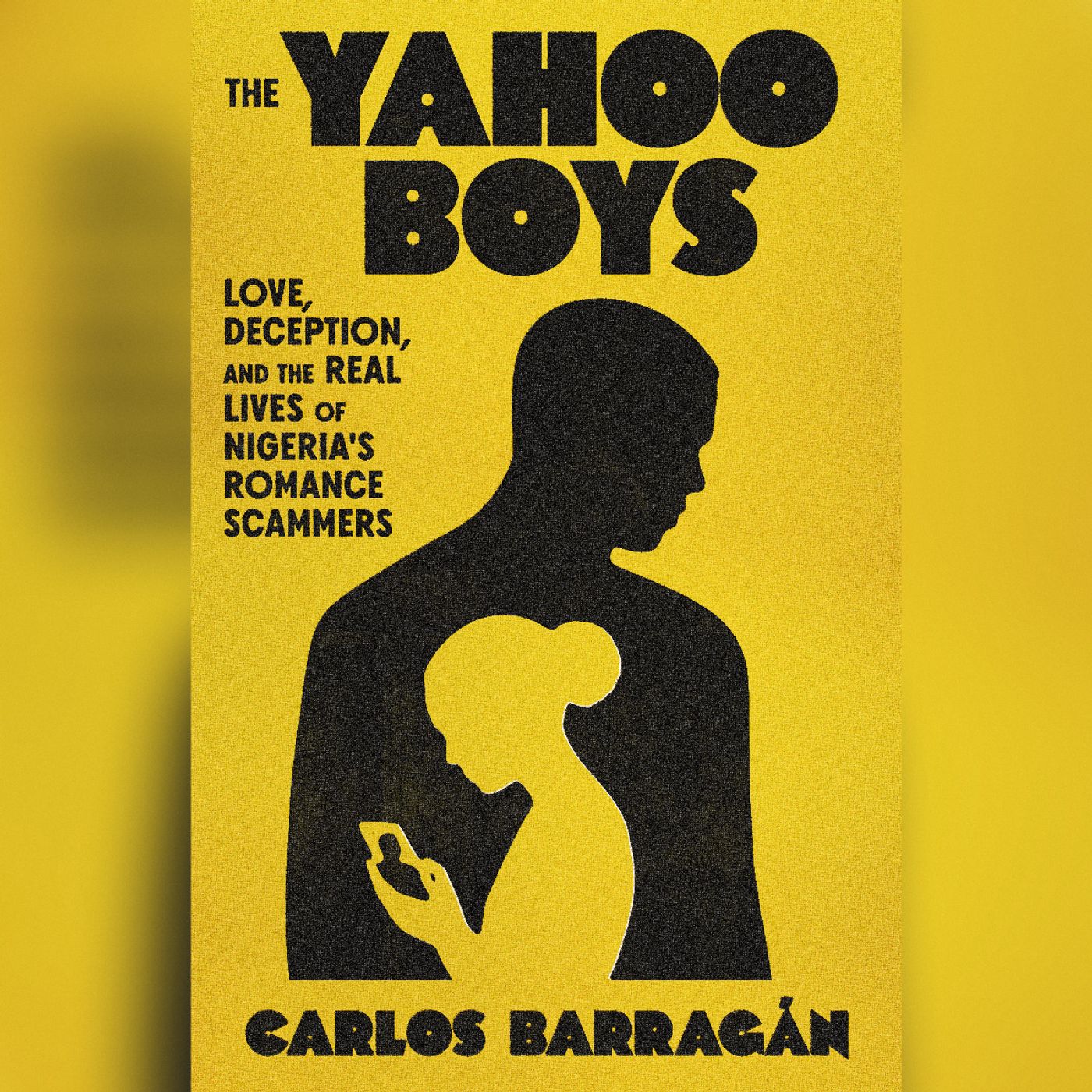
This is all of it on wnyc. I'm Alison Stewart. According to the Federal Trade Commission, in 2022 alone, Americans lost about $1.3 billion to romance scams. These people build fake profiles, contact people online. They. They build a relationship, and then they target them for money. Journalist Carlos Barragan became interested in these crooks after his mother fell for an American soldier on Tinder. For the record, there was no American soldier. After his mom was scammed, Carlos decided to attempt to find the person. He put his reporter skills to work and wound up in Nigeria. The result is featured in his book called the Yahoo. Love Deception and the Real Lives of Nigeria's Romance Scammer. Carlos Barragan is a reporter and researcher for the New York Times in Madrid, and he joins me now from Spain. Hi, Carlos.
- [01:05]
Carlos Barragan
Hi.
- [01:06]
Thank you so much for having me.
- [01:07]
Alison Stewart
The book started when your mother was scammed by someone impersonating an American soldier online. You kind of didn't pay attention at first, but when did you realize your mom was being deceived?
- [01:19]
Carlos Barragan
Well, this happened in 2015, and the Internet back then, I would say it was not as wild as it is now. So it took a while for us to understand what was happening. But definitely when my mom came one day and said, brian, who was supposedly stationed in Syria, is coming to Madrid to live with us for me and my brothers, didn't sound right. But definitely when she told us that Brian was going to send some gold bars to our house, that sounded like it was a scam. The thing was that he had not asked for money yet, so we didn't know what was the catch. But I found out that it was a typical kind of scam. And I traced his IP email address, and rather than being in Syria, of course, he was in Lagos.
- [02:09]
Alison Stewart
Why were you motivated to the extent to try to find out who did this? Because you did trace his account to Nigeria using your reporter skills?
- [02:19]
Carlos Barragan
Well, I wanted to write something about loneliness because my mom has always struggled with loneliness. You know, she's a mother of three kids, and she has always struggled finding a partner. But I couldn't grasp the depth of loneliness in Europe and in America. But at the same time, I became very curious to know who these young men were because there was not like a profound account of who these young scammers were. So I went to Nigeria. I tried to find him, and of course, as you might know, I didn't. Otherwise I would have a NETFLIX documentary. But at least I found a lot of them that were willing to talk to me and tell me why they were doing and how they were scamming lonely people in the west.
- [03:06]
Caller Dana
It's a fascinating story, by the way.
- [03:08]
Alison Stewart
But before I leave, your mom, you
- [03:09]
Caller Dana
know, she felt embarrassed.
- [03:10]
Alison Stewart
She's a bright woman, but she felt embarrassed that she had been scammed. How did you take the news that you wanted to go find her scammer?
- [03:20]
Carlos Barragan
Well, when I told her she was being scammed, she just pronounced these words, what a fool I am. But then later, she moved on. And when I told her I wanted to find her scammer, I was a bit scared because, you know, maybe she didn't want to, but she was quite eager. And she also told me, I still remember every time I hear John legends, all of me, I remember about him because that was a song that this camera had dedicated to my mom. And so she was happy I would do it. And now that the book is out, she's happy because other victims, they don't come out. They don't say, this happened to me out of shame. So my mom was gladly was glad that I did this.
- [04:05]
Caller Dana
We're talking about the dangers of romance scams and the people behind the scamming. My guest is journalist Carlos Baragan, author of the book the Yahoo. Love Deception and the real lives of Nigerian Romance Scammers. We'd also like, like to hear from you. Have you or anyone you've ever been tar. Have you been targeted by a romance scam online? What happened? How did you find out it was a scam? Our phone number is 212-433-WNYC 212-433-9692. This is a judgment free zone, by the way. Your story might be able to help someone else if you can tell us a little bit about the scam. How did it make you or your loved one or your family member feel? 212-433-WNYC-2124 9692. Carlos, you call the Yahoo Boys. They're called the Yahoo Boys in Nigeria. How did it get that name?
- [04:58]
Carlos Barragan
In the early 2000s, the email service Yahoo. Was the first one that was widely used. And obviously the scammers, the online scammers, were using this service. So now if you go to Nigeria and you pronounce this word, they are not thinking about the American company. They are thinking about young scammers.
- [05:18]
Caller Dana
You said that they most of the scams originate the syndicates in Southeast Asia, but other major hotspot is West Africa, particularly Nigeria. Why is Nigeria specifically a place where romance Scamming has grown into practice.
- [05:35]
Carlos Barragan
Well, there is a long history of impersonation scams that predate even the formation of Nigeria. When the British Empire got to West Africa, West Africans could dress up as the white man with white man's clothes to scare other West Africans out of the sheer terror some people, some locals had of the British Empire. And it evolved into many different things. And after the 70s and 80s, a lot of unemployed young men moved to what we know as the Nigerian prince camp. And this kind of particular scam was targeting rather than loneliness, it was targeting greed. And it was under the idea that an American would have to send money to a Nigerian who was rich but only needed a bit of help, translated in the money. And then later on with the advent of social media, and I would say also with the smartphones, they stopped targeting greed and they moved on to loneliness. And now the economic crisis there is dire. And you know, Nigeria has more than 200 million people living there. That many young people try their luck with this scam?
- [06:53]
Alison Stewart
Yeah, you know, people might think it's a group of highly organized criminals doing this, but you found young men in Nigeria hustling to stay afloat. How surprised were you about the day to day reality of romance scammers?
- [07:11]
Carlos Barragan
Very surprised. Because when you read about Roman scams or any kind of scams, you hear from experts saying this is all part of organized syndicates. International mafias were very well organized in a pyramid scheme. And then you, when I got there and I started reporting an interview in young men, they were all freelancers, you know, they were working on their own. And all you need is just a phone and maybe a help from an older friend who can guide you when you start scamming westerners. And it was a big surprise to me because then the message was even I would say more dire because I was expecting that the person who had scammed my mom was these very dangerous mafia. And that way I could accept why my mom had fallen for it, you know, but the, the revelation of seeing a 14 year old boy whose English is a bit broken and has no money even to eat as one of the main characters of the book, as is, is when you see that that boy is coming, war veteran in California or a single mom in Ohio, or you name it, then you understand the death of our loneliness epidemic. And that is a dire picture.
- [08:39]
Caller Dana
Let's take a call. This is Tiffany calling in from Merrick.
- [08:43]
Alison Stewart
Tiffany, thank you for taking the time to call, all of it. You're on the air.
- [08:47]
Caller Tiffany
Thank you so much. And thank you, Carlos, for talking about this, because I also have experienced this with my mom. My mom is a single mom, and she's been on her own for many, many, many years. And she also had experienced, you know, a scam like this and had also sent money to, you know, American soldier that she thought that she was dating. It was all on WhatsApp. And then, you know, years went on where she thought that it was a real thing. She thought he was going to come, you know, live with us, and she really thought she was going to marry him. But I'm just concerned, you know, is there any, like, organization or do you have ideas on how to go, like, how do I find her scammer?
- [09:34]
Carlos Barragan
It is very hard to find the scammer. But like, if you moved on to Gmail, for example, if you move to email, there are apps that you can use to trace their IP email address. It's true that other people maybe around you who are more familiarized with tech, there are other ways to know the location of, for example, their messages. I wonder if their phone number is American. But, yeah, those are the few ideas I have.
- [10:05]
Caller Dana
It's sort of interesting in your book. I can't remember who exactly, but they realize they look like.
- [10:11]
Alison Stewart
And it's.
- [10:12]
Caller Dana
She says, oh, you're. You're 4,000 miles from me. But they have an answer for everything.
- [10:17]
Carlos Barragan
They do have an answer for everything. And that's what is dangerous. You know, for example, I would tell my mom, before going the first time, ask them to do a video, because they can't do a video. Right. They are not the real person. But now with AI and now with certain tools, they can do a video. So I would be very wary of saying this is the way to prove whether this person exists or is real or not, because maybe as we speak, the technologies are already changing.
- [10:46]
Caller Dana
What do these people offer, the people that they're targeting? Why do they stay involved? Because there was one character in your book, they were involved for years.
- [10:59]
Carlos Barragan
Yeah. And the case, the story, the listener shared is very similar. What they offer is attention. You know, we are in the economy of attention. And we all know that tech companies want our attention to make more money. And around us, and maybe even ourselves, we are more lonely than ever. And what these people offer is constant attention and talking to them, them. You realize how important just a good morning, how are you? Every day can mean to a person.
- [11:35]
Caller Dana
We're talking to journalist Carlos Barragan, author of the book the Yahoo Boys Love Deception and the Real Lives of Nigerian Romance. Scammers. We're talking about the dangers of romance scam and the people behind the scamming. We're also hearing from you. Have you or anyone you known been targeted by a romance scam online? What happened? How did you find out? Was money sent as part of the scam? Once again, this is a judgment free zoom. Own your story might help someone else. You can also call in anonymously as well. Our number is 212433, WNYC 212-433-9692. In your book, you tell the story through the eyes of young men that you met in Nigeria. Biggie, Chibuki, Aziz and Richie. What was it specifically about these four people that demonstrated the Yah. What the Yahoo's life like life? Yahoo boy's lifestyle was?
- [12:31]
Carlos Barragan
Well, as you mentioned, these kind of scams also originate in other parts of the world, like Southeast Asia, where there are organized syndicates and it's more like enslaved people doing these kind of scams. But in Nigeria, they're doing it out of free will. So they are facing moral dilemmas all the time. Obviously the fact that so many young men, because it's. You find a lot of these young men on the streets doing it. The fact that so many people are doing it reveals that they are not psychopaths. There are other socioeconomic circumstances pushing these people into this. Of course this doesn't justify it, but it kind of like tells you the situation in Nigeria. And the people I talk to, you know, sometimes they felt bad. Sometimes they would even brag about their riches or the money they got or how they were scamming the victim. So these boys were quite conflicted and I think that drew me into their lives. And obviously in the case of Chivuke, for example, he scams €80,000 out of an Irish woman pretending to be a WWE Superstar. And look, I'm not an American, so I don't share that passion for wwe. But that drew me in right away.
- [13:53]
Alison Stewart
What is the reputation of Yahoo boys in Nigeria?
- [13:56]
Caller John
It is a.
- [13:57]
Carlos Barragan
The Nigerians. You know, the book focus on one small community in Lagos so I can talk about that community. It's a very struggle. It's a struggling community. Especially since the pandemic with inflation. A lot of people struggled even to eat with Ashish, for example, his mom sells food on the street and she cannot even afford buying meat for his 14, 15 year old boy. So in Ecotoon, the neighborhood, some people don't like at all the fact that these young men are doing criminal activities. They are Tarnishing Nigeria's image outside with the stereotype of, now Nigerians are scammers, which of course is completely rubbish. But at the same time, it pushes these young boys into criminal activities rather than, let's say, learning how to be a cobbler or learning how to be a tailor. And a lot of older people would complain to me about that. But of course, the picture is a bit more nuanced because these guys are bringing money into the community, and they would splurge the money in so many crazy ways. But at the same time, that money trickles down and it ends up in the pockets of people who have nothing to do with a scam.
- [15:15]
Caller Dana
Let's take a few more calls. This is Danya calling in from Manhattan.
- [15:18]
Alison Stewart
Hi, Danya.
- [15:19]
Caller Dana
Thank you so much for calling all of it. You're on the air.
- [15:23]
Good morning. This is Dana. And a friend of mine was scammed, and I'm questioning whether there are any female scammers scamming men that are feeling lonely if this is just a heterosexual issue. And my friend who was scammed, we talked all the time about it being a scammer. And she did have video calls, like you mentioned with him, which made her feel more real. And it was always good Morning Beautiful every day. And when he finally asked for money, she stopped contacting, blocked him. But what I found so interesting was she was heartbroken. She really missed that morning interaction.
- [16:02]
Thank you, Dana, so much for calling. Yeah.
- [16:05]
Alison Stewart
Does it go both ways, women and men? Did you?
- [16:08]
Carlos Barragan
Well, before I answer that, I can relate to that. You know, sometimes the scammers I talk to, their victims would tell them, I'm in love with your voice. I'm not in love with the person you pretend to be. So I can relate to that feeling because when you talk for so long with someone else, you just kind of. You build this bond. Going back to your initial question, I struggle with that question a lot because, you know, these scammers sometimes also scam men. So they pretend to be white women online. And how can you talk to a man in, let's say, Arizona if you are a Nigerian man? So what they do is that they use their girlfriends, their Nigerian girlfriends to talk to them on the phone. Now, of course, with the crisis and what happened in Nigeria, some of these girls thought, what if rather than helping my boyfriend and him getting all the money, I do it on my own? So in the book, I tell the story of four young men. But after a while, I found a young girl who is also scamming Americans. And my Findings are that she has to be more reckless than anybody else. And in a way, I think she's smarter than all of the. All of the characters combined.
- [17:25]
Caller Dana
John is calling from New Brunswick. John, you're on the air.
- [17:29]
Caller John
Yeah, good afternoon. I am calling to find out is what can I do to help a good friend of mine who is being scammed and she keeps sending Apple gift cards to the scammer and she's under the impression she's buying properties. She's helping them financially. They are. They suffer from harassment and they suffer because they are minority. All kind of excuses.
- [18:00]
Caller Dana
What can he do? Carlos, from what you've, from your reporting, is there anything he can do to help his friend?
- [18:07]
Carlos Barragan
Yeah, I gotta be honest because I've seen from the other side that these cameras, sometimes they are scamming people and all their family and friends are telling them you're being scammed. The police go to their house and tell them you're being scammed. And the scammers would tell me the victim still sends money, so take it easy. I know that it's very hard. What I would try to do is just send them maybe a couple of articles on this and a couple of documentaries on the Yahoo boys. I'm also reachable my Twitter account and my email. I'm happy to help. And definitely the gift cards is the method, the way scammers move money from country to country. So I would also try to be with that person as much as possible because the scammers prey on online people.
- [18:58]
Caller Dana
You paint a vivid picture of the effort required to be a successful scammer. They don't get a lot of sleep, they're on their phones all night to better align with western time zones. This sounds like a weird question, but what did you observe about the toll to make ends as a romance scammer?
- [19:16]
Carlos Barragan
Well, in a way it destroys the community. And that's why many local people, apart from obviously they know the impact on the victims, they don't like this Yahoo culture because they think that in the long term is destroying the community. You know, young people doing drugs, it's kind of like similar what happens to a town where young people start selling drugs.
- [19:40]
Caller Dana
Right, exactly.
- [19:41]
Caller Tiffany
And.
- [19:42]
Carlos Barragan
And it's quite a devastating picture because in the long run, unless they are smart enough to invest the money from their illicit gains, they keep getting the money and they keep wasting it until at some point they don't get the new update, as they call the new kind of scam that has evolved and they stop receiving money and they haven't studied, they haven't learned a trade and the picture is quite devastating.
- [20:09]
Caller Dana
The book, it's fascinating. It's called the Yahoo. Love Deception and the Real Lives of Nigeria's Romance Scammers. It's by Carlos Baragan. Carlos, thank you for your sharing your reporting.
- [20:20]
Carlos Barragan
No, of course. Thank you so much for having me here.
- [20:23]
This Father's Day. Do more with dad and spend less with low prices guaranteed at the Home Depot. Get him fired up with a new grill and accessories like the next Grill 5 burner for just $299 so you can spend more time together while he becomes the grill master he was always meant to be. Or build memories with savings on top brand power tools so you can tackle projects side by side, gift more and do more together this Father's Day with help from the Home Depot. Exclusions apply. See homedeoper. Com pricematch. For details.