← All Of It with Alison Stewart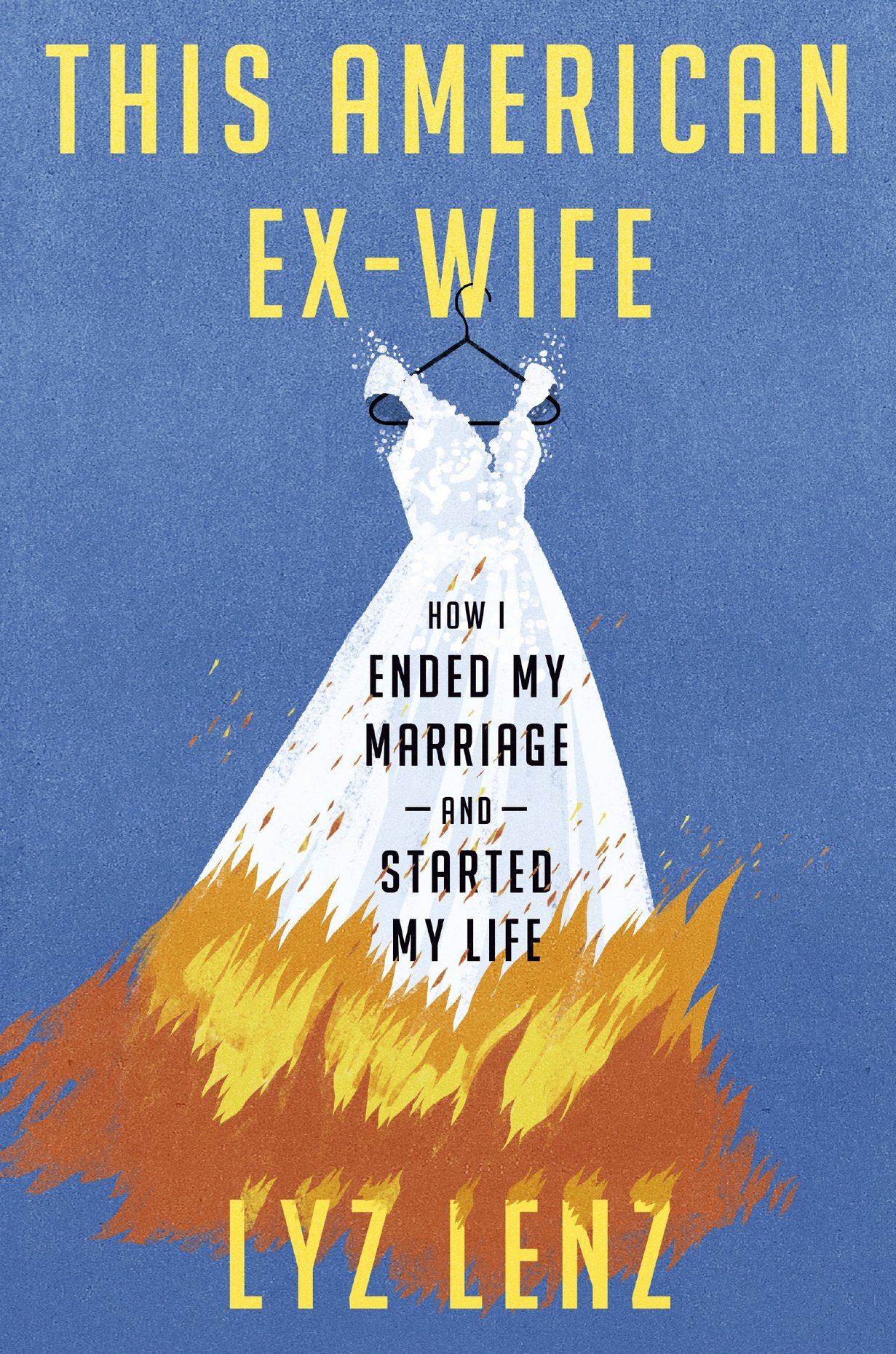
All Of It with Alison Stewart
Why You Might Consider Divorce
00:21:31
Author Lyz Lenz joins us to discuss, This American Ex-Wife: How I Ended My Marriage and Started My Life.
Loading summary
Transcript43 lines
- [00:00]
Wix Advertiser
No one knows your business better than you, so who better to create your website than, well, you? Wix's website builder puts it all in your hands. Create a beautiful website just by talking with AI or choosing from thousands of templates. Customize every detail with simple drag and drop tools and get everything you need to start running business your way. Build more, think bigger and do it all yourself on Wix. Go to wix.com it's not rocket science.
- [00:31]
Kusha Navadar
Grayscale has been educating investors on crypto for over a decade. Grayscale Invest in your share of the future. Investing involves risk and possible loss of principle. Visit grayscale.com for more information.
- [00:44]
Liz Lentz
At.
- [00:44]
RXBAR Advertiser
RXBAR they believe in simple nutrition without the bs. That's why they said NO to artificial ingredients and yes to deliver intentional, transparent nutrition. Try their original 12 gram protein bar, the Nut Butter and Oat bar, or Minis RXBar, the proud sponsor of no BS. Use code RXBar on RXBar.com for 25% off, subject to full terms and conditions and to change. Valid until September 30, 2025 and may not be combined with other offers. See rxbar.com for full details and limitations.
- [01:14]
Regain Couples Therapy Advertiser
This is an ad by Regain Couples Therapy and features real testimonials.
- [01:20]
Kusha Navadar
This was our first time trying therapy and honestly, it was long overdue. Looking back, we just wish we had started sooner.
- [01:27]
Regain Couples Therapy Advertiser
Regain's qualified therapists help couples when they can't get there on their own.
- [01:32]
Liz Lentz
We thought it was intimacy issues, but Andrea helped us uncover a deeper root cause we hadn't even realized was there.
- [01:38]
Regain Couples Therapy Advertiser
Visit regain.com couplespod to get 10% off your first month. Regain powered by betterhelp.
- [01:53]
Kusha Navadar
This is all of it on WNYC. I'm Kusha Navadar in for Alison Stewart. Thanks for listening. I'm so happy you're spending part of your Wednesday with us. Coming up on the show today, I'll speak with author Tommy Orange about his new novel titled Wandering Stars. It traces the lives of one Native American family across several generations. We'll also discuss how to prepare for the upcoming spring allergy season with two experts and we'll take your calls. We'll also talk about Bows. It's a new exhibition at the museum at fit. It looks at the history of the bow and its use in our fashion culture. So let's get this started with Liz Lentz, the best selling author of this American Ex Wife in the United States. We love to celebrate marriage, but are we giving enough respect to divorce? After all, anyone who's watched a rom com knows the trope of the character who's divorced. They're sad, lonely, maybe wistful. And more often than not, that role is played by a woman. But here's the thing. According to a study from the American Psychological association, women initiate divorce 70% of the time. That's 70 way more often than men. That narrative of a woman who is sad and lonely feels stuck in old gender roles. The institution of divorce may be one that we misunderstand. And personally, I'm very invested in this conversation, because in about six weeks, I'm getting married to a fantastic woman. And it feels more important than ever for me to understand what our society might be getting wrong about marriage. According to author Liz Lentz, it's a lot. In fact, the institution is, in her words, due for a reckoning. She talks about it in her book this American How I Ended My Marriage and Started My Life. Liz, a New York Times bestselling author, uses her own experience to demonstrate the advantages of getting divorced. She also frames a portrait of this country. How much of our misunderstanding comes from deeply flawed interpretations of love, of gender, gender equality, and justice. And if we examine divorce, if we give divorce its due respect, we have a lot to learn. This American ex wife is out now, and I'm thrilled to be talking to Liz Lentz. Hi, Liz.
- [04:30]
Liz Lentz
Hi. Thank you so much for having me.
- [04:32]
Kusha Navadar
Of course. So let's dive into the book and start at the start. The first thing I noticed after I opened the book is the title of the first chapter. It's called the End, which is a really intriguing title for the first. First chapter. Could you explain that chapter title a little? And. And what inspired you to write the book?
- [04:51]
Liz Lentz
Yes. So the chapter. The chapter begins at the end of my marriage. I. I wanted to create a book that had a traditional structure, but the love story is me finding myself at the end. And so I wanted to start kind of at the part where everybody thinks is, like, the worst part, right. The end of the mar. Marriage, and then build up from there and show how divorce can be freeing. It can be a tool for equality. And one of the reasons I wanted to write this book was because I did end my marriage in 2017. I had been married for about 11 years at that time. We'd been together since college, and it was a huge deal. And I grew up pretty religiously conservative, and divorced, to me, felt like the biggest failure. But I chose it because I was so deeply unhappy, and I. I didn't want my children to have an unhappy mother or an unhappy father either, because he was also unhappy because, you know, it wasn't a happy house. And. And so I remember, you know, those first couple days after I moved out, and I was pretty broke, and I just remember thinking, wait, I'm not sad at all. I'm really happy. I. I'm. I'm finding myself. I have equality. What it took to get equality in my marriage was 50. 50, which is great. And I think we need to talk about how great it is a little bit more. But. And then, you know, a couple years later, we were thrown into a pandemic. And I saw my friends who thought they had equal marriages suddenly take. Had no more child care, no more parental support, all those structures that had helped kind of rub Rube Goldberg. Their lives together had fallen apart. And they were screaming, you know, they were like, this isn't fair. And it's like the sociologist Jessica Calarco said, you know, America doesn't have a social safety net. We have women. And. And that became so clear. And that's when I was like, I need to write a book. I need to write a book about ways we can. About the way that marriage drives inequality and the ways that we can advocate for our own liberation.
- [07:14]
Kusha Navadar
And, you know, you talk about needing to discuss the advantages more. You mentioned equality specifically. Let's. Let's talk about that a little bit. When you were going through your own divorce, what was the gap you saw in the way maybe America portrays divorce versus the reality that you experienced?
- [07:32]
Liz Lentz
Yes. So, you know, by the time I moved out, the. You know, the hard part is when you're kind of like, do I or don't I? You're in therapy and you're trying to hold it together, and you're doing all the things. And. And then finally you're just like, ok, it's done. And. And then moved out. And then when I would tell people, they'd be like, oh, I'm so sorry. I'd be like, do not be sorry. It's the best thing I've ever done for myself. I suddenly had time to write my books. I suddenly had time to. To make money. I got these incredible opportunities to write for the Columbia Journalism Review, which I would have had to turn down had I not found some freedom, inequality, and help that way. And so, you know, I think there's this idea out there that divorce is this just, like, awful thing that you only do in extreme circumstances. But, you know, I don't think that that's true. And I actually, in researching the book, I found some studies that showed actually in countries that have liberal divorce laws, marriages and relationships last longer. Children are more likely to stay in school, women are less likely to be victims of domestic violence, and they're more likely to earn more. And I think this is because it's choice, it's agency. When you give people choice and agency, they're more free to make better choices for themselves and their families, and that drives longer lasting relationships. I really think equality is what's needed to make better relationships.
- [09:11]
Kusha Navadar
You know, you're talking a lot about the equality, and to put a point on it, it's equality of gender roles. In a lot of ways, which was one of the most striking moments for me in this book is when you discuss what a quote unquote good man is versus a quote unquote good women. I mean, you write about, was your father calling your mother so good, and it was a goodness that you refer to as brittle. So tell me, what do we get wrong about the. The gender roles?
- [09:40]
Liz Lentz
You know, I think there is a lot of. There's this idea out there, right, that, like, a good man, like, provides for his family and that's it, right? And. And I really think we shortchange men because, you know, one of the things I discovered even through my divorce was just like. And talking with, you know, the people who are close to me in my life, the men around me, you know, they were like, we actually want more time to be fathers, right? Like, if we don't have, I mean, something as simple as, like, paid, paid parental leave. And I say parental because it should be for mothers and fathers, right? Like, fathers want to spend time with their babies. You know, they want flexibility. And so when we have these ideas of what a good man is, I think we set the bar a lot lower than we do for women because it's like, oh, you see a dad out at the park, and like, seriously, I've seen this happen. You know, the women are like, oh, it's so great. You see a mom out at the park, you're like, good. Wait, why is she on her phone? Stop it. You know, and then it's. It's just like there are these. We have these unequal expectations, and I do think we need to. To raise the bar. And I do think it's also difficult because, right, like, we have a whole new generation of millennial fathers who are better perhaps, than their fathers, but there's still inequality, there's still labor that they don't see, right? There's that cognitive labor. They're not always seeing. There's that, like, scheduling labor, they're not always seeing. So it can be a hard conversation to have, especially in a partnership where you have a husband who's like, well, I'm better than my father. It's like, well, yeah, but, you know, your father was gone six months out of the year, so maybe that's not the bar. And so I do think we need to reset our bars for our relationships and what equality looks like and what goodness looks like. And, you know, you're talking about that Good Men chapter. And what I wanted to say was that maybe it's not about individual goodness. Maybe it's just about humanity. Like, maybe it's just about me being able to be as equal as a man, as human as a man, as messy, and as forgiven for it as a man. As I've gone out and promoted this book, I keep getting these questions like, well, how do you. How does your family feel? How does your ex feel? How do your kids feel? And it's so exhausting because it's like, y' all wouldn't ask Malcolm Gladwell that question. So.
- [12:23]
Kusha Navadar
And, you know, you were talking at the. At the abstract level here, but for you, it was very personal, right? Like, this is what you experience in your marriage.
- [12:32]
Liz Lentz
Yes, yes. This is very. I mean, and I think it's what a lot of people experience in their marriage is one of the reasons I wrote the book, because I think I felt so alone. I felt like it was a personal failure. But as a journalist, you know, I love to. I love to research, or maybe I just. As a nerd, I love to research. And I went out and I found that statistically, women are doing more of the work. They're trying to have these conversations, and they're not getting equality. They're breaking. And. And it's really. It's really difficult. And, you know, I wanted to say it's okay to walk.
- [13:07]
Kusha Navadar
Was there.
- [13:08]
Liz Lentz
Okay.
- [13:08]
Kusha Navadar
Was there a specific moment in your relationship where you thought this needs to go? In the book.
- [13:16]
Liz Lentz
I mean, I talk about a bag of trash on. On a little kitchen nook bench. And it was. It became this, like, huge thing in our relationship. And I think a lot of people had it. But, like, you know, our back trash cans, we live in Iowa, so the back trash cans was, like, you know, way far away out in the alley. So we'd have to take the trash. And it's cold, right? It gets cold here. So, like, sometimes we take the trash out of the. Out of the trash can, put it on the nook. And then it would just stay there. Especially my now ex, he would just put it there, and he'd be like, oh, I'll take it out later. And then he just forget. And then I would take it out, and it just became this thing that was, like, constant. And it. It drove me insane. You know, it made. I. I got like. I was like, this is it. My life is always going to be this bag of trash that, like, we're fighting over that I always have to take out. And it never ended. And to his credit, he was like, it's just a bag of trash. Why are you making it everything? But for me, it was everything, because my life, you know, was that constant. Laundry, cleaning, you know, two small kids, and that's this bag of trash. It's like, it's this one thing, and you can't take it.
- [14:34]
Kusha Navadar
And so this brings up another interesting angle from it. The book is very much about you, but of course it's about your marriage and the man you were married to who you don't name, unless I'm wrong about that. But I didn't catch a name in the book. And whom you write about, very frankly. You write it's hard to tell the truth about a marriage. But now I want to tell as much of the truth as I can. I want to be completely honest in a way I could not be if I had stayed. Telling the truth is often a demolition project. Did you talk to him about writing this? What were those conversations like with your. With your ex, with your children?
- [15:07]
Liz Lentz
You know, I do think that that falls under a category that my kids call nunya, meaning nunya business. But I understand the compulsion to ask it because. Right. Marriage is a joint project, and. And it is. It is a two people creating a joint narrative together. And when that falls apart, you know, who gets to write the story and who doesn't? And, you know, what I will say is I tried to be so honest, but also rigorously fair. And that's. But I also get to tell the truth of my life. I get to own my truth. And that is something that I think we don't always allow women to do. We want them to make excuses, and we want them to apologize, and we want them to kind of like, you know, tiptoe around the feelings of others. But that's not what this project is about.
- [16:05]
Kusha Navadar
Absolutely. And, you know, part of the project is looking ahead in the future. Another part that really stood out to me is when you wrote, I see women asking men to do their fair share, and Men doing it and then expecting a medal, expecting never to be asked to do it again, which you had mentioned before. And then you write more. And women, yes, are leaving, not in droves like they were in the 1960s, but they are leaving and more poignantly, they are opting out. So in maybe 30 seconds, could you give us some trends that you see that's happening with the way people are interacting with marriage and divorce now?
- [16:34]
Liz Lentz
Yeah, two trends, two huge trends. As younger women are refusing to marry, they're actually single women are this huge growing segment of home buyers, actually, which tells you a lot because it's really unequal and hard to buy a home these days. And so a lot of women are just opting out. They're saying this looks bad, I don't want any part of it. And you also see a huge growing segment of gray divorce where it's the people who did it, right? They stuck it out. And they were told if you stick it out, it's going to be good. And they stuck it out and they're getting to the end and they're like, wait, this isn't good. And they're choosing to leave because they don't want to spend the last few years of their lives miserable. And so I think those are two huge trends that are happening and that deserve more scrutiny because I think they're very telling about the state of gender inequality in America.
- [17:24]
Kusha Navadar
What do you think they are telling about that state of gender inequality?
- [17:28]
Liz Lentz
Well, that it's really unequal and that we haven't done anything about it. And that I think like, systemically, since we aren't making the changes that we need, like universal health care, childcare, paid parental leave, that edge, closing the wage gap, we are not doing those things. So people are taking it upon themselves to find individual solutions and that means opting out of this unequal system.
- [17:53]
Kusha Navadar
When you think about those elements, many of them fall into the category of like marriage preservation. Right. Of ways that the relationship can solidify, improve. How do you hope the way we talk about divorce would change in the future?
- [18:09]
Liz Lentz
I would love for us to stop talking about it as this like awful stigma, as this like, you know, huge tragedy. Often I think when a person, you know, domestic violence is, is hugely prevalent and so is emotional abuse. If, if somebody is choosing to end a marriage, they're not. It's not the easy way out. It's harder in a. It, it's easier for a 16 year old in America to get married than it is for a 46 year old to get Divorced. So it is not an easy way out. And so often if a woman is choosing to end their marriage, they're saving their lives, they're saving their children's lives, and they're often doing so knowing they'll be broke on the other side. I was broke for years. And, and, and they're, and they're making the hard, brave choice to, to preserve themselves and their, and their lives and their children. And I think we should talk about that as, like, what ways can we support families and, and what ways can we end inequality so that relationships can be better, so that, you know, women and mothers are not bearing the brunt of, you know, our childcare system, our pay gap, and even healthcare.
- [19:25]
Kusha Navadar
It reminds me of a quote that you have in the book that's perhaps the most toxic lie of modern marriage, is that it creates a nuclear family unit, whole and complete. How did you build community following your divorce?
- [19:38]
Liz Lentz
Oh, it was. It had to be very intentional because following my divorce, I. I had to recreate this idea of what I thought my life would be like because I always type a girl, go to college, you know, get A's, get a good job, marry, have kids. A boy, a girl. I did it. A dog, you know, like, everything. A house in Iowa. And, and, and when that fell apart, when I broke it apart because it wasn't what it had been promised to me as I had to go out and, and find new friends and new relationships. And I had to intentionally say to people, you know, I'm lonely. Can somebody have lunch with me? I had to be in a way that actually felt scarier than in any romantic relationship. And I had to build a coalition of friends that are of all different ages, all, you know, that are across the gender spectrum, just from different walks of life. And to build a community not just for me and my support. I also don't live around family, so, you know, that that's really essential. But also, but also to show my kids that there's more than one way of living life. You know, I have these dear friends, Molly and Jesselyn, and they live in these little houses near each other. And my kids are just like, why would you ever get married if you can live in a house near your best friend? And, you know, it's. It's a very queer neighborhood in town, so they call it the gayborhood. And, and I love that I get to have this community and be involved in it in a way that I wasn't able to before and to be vulnerable and to, and to show my children that life is, like, big and exciting, and there's more than one way to build a life and a relationship and to find joy and love.
- [21:37]
Kusha Navadar
I love that you use the term life is big and exciting, because for me, life is about to get very even bigger and more exciting. I'm about to get married. As I mentioned, it's coming up. It's in May, you know, in the 30 seconds or so we have left. Do you have any advice for me?
- [21:55]
Liz Lentz
Yes. I mean, I'm so excited for you. And I love that you're engaging in this conversation, that you're not shying away from it. I think that that's what you need to do, right? Like if, listen, you know, if your partner is telling you, hey, I am exhausted. I feel like I'm carrying everything, that's a great time to sit down and not be defensive and to say, okay, what does that look like to you? What labor am I not seeing? What can we do differently? Because you. You love this person you're gonna marry. You don't want your relationship to be built upon their unhappiness. And I think as long as you're always striving for that, always willing to have those conversations, the fair play cards in that book is incredible. And I think that that's goes. Is going to go a really, really long way to finding happiness.
- [22:48]
Kusha Navadar
Listen holy. Engage completely.
- [22:51]
Liz Lentz
Yes. And also realize that this isn't your one be all and end all relationship, that you both need other friendships and a bigger community because, gosh, raising a family in America is really hard. And don't you want all the love you can get?
- [23:04]
Kusha Navadar
Absolutely. Liz Lentz is the author of the book this American How I Ended My Marriage and Started My Life. Liz, thank you for coming. Thank you for the advice. Thank you very much.
- [23:15]
Liz Lentz
Thank you. And congratulations.
- [23:17]
Regain Couples Therapy Advertiser
This is an ad by Regain Couples Therapy. Let's be honest. Loving your partner doesn't mean you always like them. And guess what?
- [23:25]
Kusha Navadar
That's normal.
- [23:26]
Regain Couples Therapy Advertiser
Regain, powered by BetterHelp, offers couples therapy that's flexible, affordable, and 100% online. Whether you're reconnecting or working through conflict, Regain is here to support you both. See why people wish they'd tried couples therapy sooner? Visit regain.com couplespod to get 10% off your first month. That's regain.com couplespod.
- [23:48]
WNYC Sponsorship Announcer
Since WNYC's first broadcast in 1924, we've been dedicated to creating the kind of content we know the world needs. Since then, New York Public Radio's rigorous journalism has gone on to win a Peabody Award and a Dupont Columbia Award, among others. In addition to this award winning reporting, your sponsorship also supports inspiring storytelling and extraordinary music that is free and accessible to all. To get in touch and find out more, visit sponsorship wnyc. Org.