Loading summary
Transcript84 lines
- [00:00]
Progressive Insurance Announcer
All of it is supported by Progressive Insurance. Do you ever think about switching insurance companies to see if you could save some cash? Progressive makes it easy to see if you could save when you bundle your home and auto policies. Try it@progressive.com Progressive Casualty Insurance Company and affiliates. Potential savings will vary. Not available in all states.
- [00:27]
David Fuerst
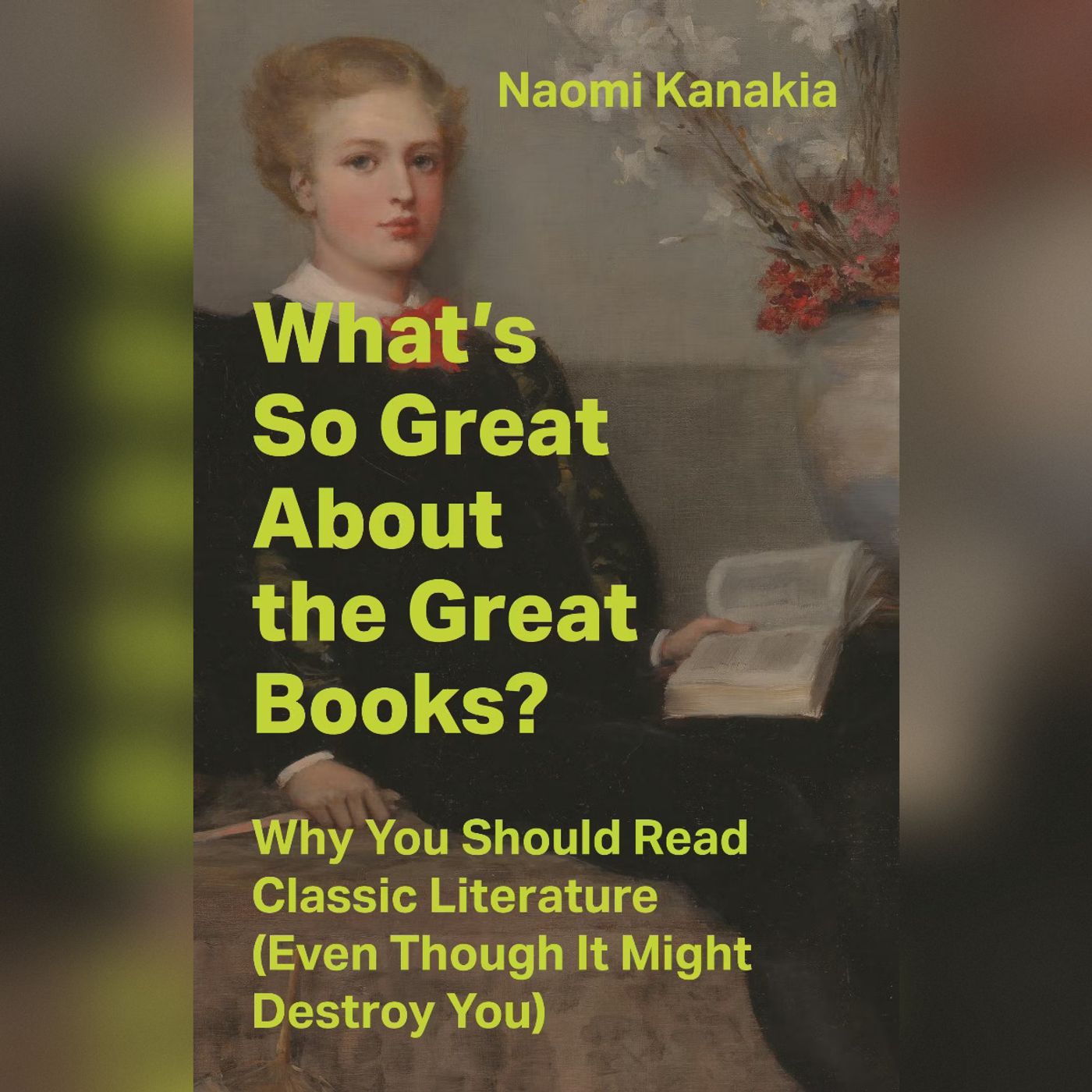
It's All OF it on wnyc. I'm David Fuerst in for Allison Stewart. All of it has launched the annual Summer Reading Challenge. To find out how to sign up, you can head to wnyc.org summerreadingchallenge and one of the categories this year is to read a classic. So we thought we would spend some time talking about why it's valuable to read from the literary canon with someone who has spent a lot of time thinking about it. Now Naomi Kanakia is the author of the Woman of Letters newsletter, which delves into classic literature. And now she is the author of a new book, what's so Great about the Great why you should read classic Literature even though it might destroy you. In the book, Naomi argues that reading the great books is a worthy task, even if the canon is not diverse, even if they are difficult to read, even if some of the books contain racist tropes, and even if you would rather be reading the latest bestseller. What's so Great about the Great Books is out now. And Naomi Kanakia will be speaking Tonight at the McNally Jackson Books South Street Seaport location. But first, she joins us here in the studio. Welcome.
- [01:44]
Naomi Kanakia
Thanks for having me.
- [01:46]
David Fuerst
So let's talk about that title, why you should read classic literature even though it might destroy you.
- [01:52]
Michael (Caller)
Let.
- [01:52]
David Fuerst
Let's get into that destroy part. What do you mean by that?
- [01:56]
Naomi Kanakia
I mean, if you think about the reasons that you would not read classic literature, the idea is that you might find something in there that's harmful or that damages you in some way that alters you. But when you really think about it, the mechanism by which that would happen is it would change your mind about something, that you would be altered by the experience of reading these books. And I feel like when we read, that's really what we want, you know, like we hope that we'll encounter something in a book that will radically change how we look at things.
- [02:32]
David Fuerst
Maybe not destroy us, but it's a bit of a playful idea, really, talking about fundamentally change us.
- [02:39]
Naomi Kanakia
Yeah.
- [02:41]
David Fuerst
What is a classic anyway? How are we going to define that? You really get into this question in the book in great detail, but how does one define what a great book is and what Makes them so great.
- [02:52]
Naomi Kanakia
You know, the oldest definition that we have for what makes a classic is from Horace, who was a poet, ancient Latin poet. And he basically said, you know, an author is great if they last for 100 years, if we're still talking about them after 100 years. And I feel like that is the definition that still really holds the most weight for me, that above all, classics are old. If there's a book from over 100 years ago that's still making an impact today, then that's a classic.
- [03:22]
David Fuerst
Okay, there could be an incredible book that came out a year ago, but it needs to stand the test of time.
- [03:28]
Naomi Kanakia
It's hard to really know. Yeah.
- [03:31]
David Fuerst
Listeners, we would love to hear from you during this discussion. Why do you enjoy reading classic literature? Why do you think it's valuable? And maybe there's a classic you would like to recommend. Let us know and give us a call. The number 212-433-9692. That's 212-433-WNYC. And, Naomi, you really started reading through the literary canon after college, right? This is not the typical time.
- [04:03]
Naomi Kanakia
Yes, I majored in econ in college, and I was a big reader all through middle school, high school, and college. But I only read science fiction. That's all that I loved, all that I cared about. I wanted to be a science fiction writer. And then after college, when I really started to think about pursuing writing more seriously, I thought, oh, you know, I really should read all the other stuff. So I was at a science fiction convention, readercon, and a Washington Post book reviewer, Michael Durda, was there, and he recommended, on a panel, he recommended a book called the New Lifetime Reading Plan, which is a list of 150 or so, 133 authors that.
- [04:43]
David Fuerst
This is one of those core lists.
- [04:44]
Naomi Kanakia
Yeah. So I went and I bought that list from Barnes and Noble, and I typed out the names in the list. And that has been my guidebook for 17 years.
- [04:54]
David Fuerst
I love that it really set you off on quite an adventure.
- [04:58]
Naomi Kanakia
Yeah.
- [04:59]
David Fuerst
Now, I mentioned that you didn't start really going through this until after college. Did you perhaps avoid some of these titles earlier in high school? College?
- [05:11]
Naomi Kanakia
Yeah. I really felt, you know, in high school and college, like, it wasn't for me that when I took English classes in college, I just. Something about it really didn't gel for me, the way that people talk about books and the way that you're supposed to write about books. I don't know what it was exactly. It just. It didn't Exactly. Work for me.
- [05:32]
David Fuerst
There could be a lot of obstacles for us. Right. The intimidation factor of, oh, gosh, I don't know if I'm going to understand this book or, you know, I need to be in a class to read this book.
- [05:45]
Naomi Kanakia
Yeah. I think there's. When you're studying a book in school, there's a lot of work of interpretation you're asked to do and a lot of work of analysis and that. But, you know, the. When I was reading these books, I was just bored, right. And I really wanted to enjoy them and be touched by them. But then, like. And I kind of skipped over that step in trying to perform this analysis. So when I was reading the books on my own, I didn't have to do all that analysis. I could really focus more on what I was getting out of it as a reading experience. And that, to me, really sent me down the path of genuinely enjoying the classics.
- [06:22]
David Fuerst
We're speaking with Naomi Kanakia. The new book is what's so great about the great books. Why you should read classic literature even though it might destroy you. If you would like to join this discussion. 212 433-9692. Maybe there's a classic you would like to recommend. 212-433-WNYC. And Naomi, you share in this book that when you started reading the great books, you sort of felt like you had to read them in secret. Why? Why did you feel that way?
- [06:57]
Naomi Kanakia
I definitely felt like an imposter, you know, that I was not the kind of person that should be reading the classics. I felt like if I talked to somebody about it, then I'd kind of seem like a poser. So, yeah, it was really something I just did on my own.
- [07:13]
David Fuerst
And let's take a call right now. Let's hear from Rachel in Staten island in the car, but I think safely pulled over. Is that correct, Rachel?
- [07:23]
Rachel (Caller)
Yes, I'm pulled over.
- [07:24]
David Fuerst
Okay. Okay. Welcome to the discussion.
- [07:29]
Rachel (Caller)
Thank you. I'm an English teacher. I've been teaching for 42 years. Literature. I think it's. And you're not a poser, Naomi. Don't even think that. That's ridiculous. I think it's so important for people, especially young people, to read the classics because they're so timeless. I've read so many of them more than once, and each time I read them, I get something else out of them. So. And they need to be put back in the curriculum. I just finished teaching Intro to Literature at the College down Allen CUNY. And my students love they ate up 1984. They wrote their own dystopias. We also studied the love song of JF at Poof Rock by T.S. eliot. And so many of them were able to identify with the protagonist in the poem. I think the writing is so rich and so universal, and that's why they have to stay alive for us.
- [08:30]
David Fuerst
Rachel, thank you for your comments. And what about that?
- [08:34]
Naomi Kanakia
Thank you. Yes, I do think that there is a longing by students to connect with the classics. That's really, for me, that was the starting point of my book. I didn't think I could sell the classics to somebody who's not at all interested in them and who doesn't have a place in their life for them. I was really trying to talk to people like myself at 23 who have some sort of latent desire, but just feel, for whatever reason, like it's not for them.
- [09:01]
David Fuerst
And you mentioned being bored when you were first encountering a lot of those books. I want to hear more about how it was the next time you encountered them. But why do you think it's so important to advocate for people to read books that might not seem to be fun or. Or enjoyable? Is this an eat your vegetables argument?
- [09:24]
Naomi Kanakia
Kind of? Yeah, you should eat your vegetables.
- [09:27]
David Fuerst
Well, that's true.
- [09:28]
Naomi Kanakia
I do now. I learned to enjoy reading the classics, but it was really a process of learning to enjoy things that I didn't think I would initially enjoy, which is a good practice for people to learn. With the classics in particular, and especially with a lot of the 19th century classics, I think there's just a big barrier to entry because people wrote differently back then. They used longer sentences, they had different syntax, they used different words. And really, once you've read a few of these books, then you kind of learn how people wrote back then, and it doesn't seem as foreign, and it's a lot easier to enjoy.
- [10:10]
David Fuerst
We're getting a text here, one person says. One thing I love about reading classic literature is the human connection. Seeing how human nature hundreds of years ago and now not so different. Homer, Shakespeare, Jane Austen, Charles Dickens, characters all relatable and recognizable today.
- [10:31]
Naomi Kanakia
I agree. I think that's one of the most important reasons to read the classics, is for that connection to the past. You know, we talk about diversity, and I think, like, that's the most important form of diversity that we get from the classics is hearing human beings from 300, 400, 1000, 2000 years ago who lived in societies completely different from our own, with very different customs and no knowledge of us and yet we still can see that there's something recognizably human.
- [11:02]
David Fuerst
You're talking about diversity of time periods, but as you point out, you take a lot of time talking about this in the book. You point out that this list, this list of core classics that you've been working from, is not very diverse in many other ways. Of what 133 authors featured, only eight are women, and there is only one black author. What would you say to someone who might argue that reading the great books presents a mostly white and male perspective?
- [11:34]
Naomi Kanakia
I mean, I would say that I think that's correct. There's definitely been an effort to diversify the canon. What I really appreciated about this book that I read, the new Lifetime Reading Plan is that in its latest edition, the fourth edition, they had made an effort to include a lot of Eastern classics. And so they had Tale of Genji, they had Romance of the Three Kingdoms, they had a number of Chinese and South Asian and one work from Persia. And I thought that was really good and valuable. But still, it is heavily male. Amongst, you know, named authors from history, most were men. What I would say is you shouldn't read only the classics. That if you read when you read. One good reason to read contemporary voices is that there are many people who have been excluded from authorship who now have access to authorship, and it's good to read those. But it is unavoidable that if you spend a lot of your time and a lot of your mental energy reading these older books, then your reading will be less diverse on that, like, racial and gender axis than it would otherwise be. But I do think that that diversity of time period is really important. And also these stories that we read in classics, they are reflective of an entire culture. So, you know, when I read Homer, those were originally like these oral stories that circulated in ancient Greece before there was writing at all. And, you know, a whole culture came together to make those stories. So I also think that there's a sense in which it's incorrect to say, you know, it was just male author or who was doing these things.
- [13:31]
David Fuerst
What do you suggest to readers for when they encounter some sections in some of these books that may be problematic to us reading in 2026?
- [13:44]
Naomi Kanakia
I think a lot of times it is difficult. There are a lot of things in classic literature that are difficult and striking. Like in the Tale of Genji, Genji, you know, I was shocked. He basically forces himself on several women. One of them, a priestess, is so upset that she commits suicide and haunts him thereafter, something he has to deal with. I think in a lot of cases when you read these books, you see that there's more complexity. Like that Tale of Genji is written by a woman. One of the few books in this canon that was written by a woman. And it was written for an audience mostly of women. And, you know, like, there's something about Genji that was both aspirational and attractive and dangerous. And that's all in the text. It upsets us because it's meant to upset us.
- [14:47]
David Fuerst
If you'd like to join this discussion, 212433, 9692, I'd like to read this text here. A recommendation we have here recommending Edith Wharton's House of Mirth. When you read anything by Edith Wharton or Henry James, you will find yourself in the hands of masters.
- [15:08]
Naomi Kanakia
Oh, yeah, I love House of Mirth. I actually discuss House of Mirth extensively in the book because, you know, Edith Wharton herself, their strong evidence was fairly anti Semitic. And the House of Mirth has a very striking Jewish character, Simon Rosedale, who Lily Bart, who is a suitor for Lily Barth. He's Jewish, and she is very repulsed by him and finds him to be a social climber. But at the same time, there's a lot of vitality in the way he's portrayed. He's kind of the only person who really respects Lily Bart and sticks with her throughout the whole book. And so you just. It really is one of the most striking things about the book. And I love the book.
- [15:53]
David Fuerst
We have a text question for you here. What do you think is the most recent classic?
- [16:01]
Naomi Kanakia
What do I think is the most recent classic? Okay. The book that is coming out right now that I really think is a great book is these Robert Caro biography of the lives of Lyndon Johnson. These books are so epic in scope. They are incredible. And they're really not just about Lyndon Johnson itself, but about, you know, all of mid century 20th century America. Like, there's really nothing like them. And when you read them, you are like, oh, this is, you know, this is like reading Proust. This is in its scope, in its ambition. It's like reading Ulysses.
- [16:38]
David Fuerst
See if we can take a call right now. 212-433-9692. Let's hear from Michael from Astoria. Welcome to all of it. Oh, Michael, are you there?
- [16:51]
Michael (Caller)
I'm here.
- [16:52]
David Fuerst
Oh, yeah. Did you have a question or did you want to join the discussion?
- [16:57]
Michael (Caller)
I just want to say what book I'm reading now people may find interesting. It's a Different book that I would normally read, but it's a classic from the 19th century.
- [17:12]
David Fuerst
Okay, what are you reading?
- [17:14]
Michael (Caller)
It's called Little Dorrit. D O R E R E T who is a character in the book. And It's Charles Dickens, 19th century. The background of the whole story is the poorer people in 19th century. These aren't odd. These are normal people who are not wealthy and not eccentric. So it has a lot of interest. As a matter of fact, most of the characters have been in jail. That's the big setting.
- [17:48]
David Fuerst
Well, there you go. We have a recommendation for some Dickens.
- [17:51]
Naomi Kanakia
Yeah, I love Dickens. Little Dorrit is a good one. Based on Charles Dickens own life. Right. With his father who was in and out of debtors prison when he was growing up.
- [18:00]
David Fuerst
We are speaking with Naomi Kanakia. The new book is what's so great about the great Books. And I had a question. You did not make your own list of great books. Right. You stuck with this existing list from the new Lifetime Reading Plan. Right? That's where it comes from. So why did you not want to make your own list or maybe even sneak some of your own books onto this existing list?
- [18:26]
Naomi Kanakia
I didn't really feel qualified, you know, like I hadn't. I haven't read all the books on the new Lifetime Reading plan list. I've read about 2/3 of them and it just would feel odd to drop names from the list. I also feel like there are definitely names that I would have added. Toni Morrison, Ralph Ellison, Martin Luther King. But I don't know that there are that many names that I would have added that I would have felt like there's genuine consensus that these are great books. If I'm making a list, I would want it to be not just my list but a list that a lot of people could agree on.
- [19:06]
David Fuerst
And hey, let's use one of these really famous established lists and deal with that also.
- [19:12]
Naomi Kanakia
It just is reality in that this is the list that I use. I still knock off a book or two from this list. Or like last year I read Walden for the first time, which I really loved. And so I'm still trying to make my way through it. How many books deep are you into this list? Yeah, I've read about 2/3. So I have maybe 90 to go.
- [19:33]
David Fuerst
Okay, getting there. Let's take another call. Cynthia from Rockaway, Queens, welcome to all of it.
- [19:43]
Rachel (Caller)
Oh, hello. Hello.
- [19:46]
David Fuerst
Oh, hello. Welcome to all of it. Do you have a question or a book you'd like to share?
- [19:52]
Rachel (Caller)
I have a comment. Well, it is A classic book is Alice in Wonderland. And what made me think of it was that I remember my rabbi saying that he read Alice in Wonderland every year, and every time he read it, he discovered new things.
- [20:14]
David Fuerst
That must be one of the marks of a great book, right? That when you come back to it, you're constantly discovering new things.
- [20:20]
Naomi Kanakia
Yeah, I've never read Alice in Wonderland, but it is on this great books list. It's one of the ones I need to get to.
- [20:26]
David Fuerst
You know, one of the big questions that face people who love art, movies, music, books is this question of separating the art sometimes from the artist. And some of the people who wrote the great books could be in that same category of needing to separate the art from the artist. What is your approach when it comes to some of those questions?
- [20:48]
Naomi Kanakia
For me personally, I don't necessarily worry about it that much. In a lot of cases, people who wrote the great books, we don't know that much about their life. And one thing I discuss in this book is in one case, Chaucer, about 100 years ago, a document came to light which seemed to be a court case where a woman had accused Chaucer of sexually assaulting her. And so for 100 years, people were like, oh, Chaucer has this, like, sordid sexual past. But then recently that document was reinterpreted and it was like, oh, this is just a court case over wages. I was not about that at all. So I think in a lot of cases, the person's life is so murky that we don't necessarily know what they have done in their life that we would dislike.
- [21:38]
David Fuerst
We're talking with author Naomi Kanakia about the new book, what's so Great about the Great Books? Why you should read classic literature even though it might destroy you. This is all of it on wnyc. We continue this discussion after a short break. This is all of it on wnyc. I'm David Fuerst. We're speaking with Naomi Kanakia about her new book, what's so Great about the Great Books? And if you'd like to join this discussion, the phone number is 212-433-9692. And Naomi, we have a text question for you here. It says you've already addressed the fact that many classics are difficult to get through and or challenging to read. But what advice do you for getting through the slog? It's so easy to give up. So that's a great question. What would you say to someone who's been thinking about trying some of the great books, but has been maybe intimidated to start.
- [22:45]
Naomi Kanakia
I would say there's a kind of art to knowing how much to try. You definitely try a little bit, but not too much. It's like lifting weights, right? When you lift weights, you're like, oh, this is heavy. This is heavier than I would normally lift. But you don't lift so many weights that you get injured. And I think just repeatedly trying, trying out on different books teaches you how much weight you can lift and how much is a good amount of trying and how much is too much trying. I give up on books all the time. Last summer I tried to read Gravity's rainbow. I got 200, 300 pages into it, and I was kind of bored. I was like, this is not working for me. And I gave up. I've given up on Leviathan several times. So I now have a fairly good sense of what is the right amount of trying. But I do think trying is part of it. I think it's not going to feel effortless oftentimes. And you kind of look into a lot of different books, try and different amounts, put various amounts of effort into it, and eventually you kind of learn.
- [23:57]
David Fuerst
We're getting some great texts here. Another recommendation. The Scarlet Letter was one of my favorite classics. That's Jean from Hell's Kitchen. And this really sets up a good question. Jesse from the Catskills says, I just started a classics book club with my friends. I absolutely can't wait to check out this list and your book. Such serendipitous timing. So, yeah, what about that? Is creating a great books book club potentially a good way to engage with the classics?
- [24:28]
Naomi Kanakia
Yes. I just talked to a friend who created a long, difficult book book club.
- [24:34]
David Fuerst
That's the name of the book club?
- [24:36]
Naomi Kanakia
Yeah, I mean, that's basically what it was. They had read War and Peace and they had read Middlemarch, and now they were starting Infinite Jest. He said, you need two or three people who are really committed to and will come to meeting after meeting, because there are a lot of people, especially with these longer, more difficult books, a lot of people are somewhat interested, but they fall away. But as long as you have two or three people who are really into it, then you can keep it going.
- [25:01]
David Fuerst
You can pull each other along when the slog gets tough. Okay, well, reading a classic is one of the categories for the all of It Summer Reading Challenge. If you'd like to sign up, by the way, and learn more, just head to wnyc.org summer reading challenge. But, Naomi, do you have Some recommendations to help get us started. Some classics you would like to point us to?
- [25:28]
Naomi Kanakia
Yes, definitely. One of my favorite writer from antiquity, from the ancient Greek era, is Euripides, an ancient Greek tragedian. He recently or not recently, there's a movie coming out, the Odyssey. And so I thought people might be thinking about the Trojan War. And he wrote a play, the Trojan Women, which is about the aftermath of the Trojan War. It's mostly about Andromache, Hector's wife who is taken into captivity, and about, you know, what the losers face in the aftermath of a war. It's so affecting and just a really powerful book play. And let's see, here in New York, there have been a lot of Ibsen adaptations recently. A lot of that I'm very fascinated by. One of the ones that you guys had a few years ago was Enemy of the People, which is about a doctor who discovers that the health spa in his town is making people sick and he tries to shut it down. But the town is like, no, no, you'll destroy the economic basis for this town. Wonderful play. I recommend that one. And then for a lot of the books on great books list tend to be these philosophical books, which can be less natural if you're used to reading novels and plays and poetry. But on this lifetime reading plan list of the philosophical books are often really not just foundational, but also quite accessible. One of the ones I liked the best was David Hume's Inquiry Concerning Human Understanding. He is a philosopher from the Scottish Enlightenment. I think this book is from the 17th century and it basically goes back into the roots of what is it possible for human beings to know? And it's a really fascinating book. Really opened my eyes as to the limits of human reason.
- [27:22]
David Fuerst
Thank you for all those recommendations. I hope everyone was jotting those down very quickly. I wanted to get to a couple of last texts and calls here a great text. Right here. Someone says, I found it hard to read Grapes of Wrath, so I listened to it on audiobook on my way to work. So what would you. Is there a right way to engage with these texts or just trying to read them at all in any way? A good outcome.
- [27:48]
Naomi Kanakia
I love to read. I love audiobooks, honestly. There is an audiobook producer, Naxos Audio, that does great editions of a lot of the classics. I listened to their audiobook of Boccaccio's the Decameron. I've listened to Spencer's the Faerie Queen. I mean, the limit is just whether you think you're actually getting something out of it, like I've tried at one point to read audiobooks of or listen to audiobooks of Henry James novels. And they're so, like, looping and intricate that I felt like I wasn't actually comprehending for audio. It does seem better when you have these very broad, maximalist books that can often, like our anthology books, like, contain a lot of, like, little stories. Like, I have to imagine something like Robinson Crusoe would be great on audio.
- [28:34]
David Fuerst
Well, let's take another call. Greg from Morristown, New Jersey, welcome.
- [28:40]
Greg (Caller)
Thank you for bringing me on. First of all, I want to second the recommendation about Robert Caro's biography, his four, currently four volumes. I don't think he's come out with the fifth one yet on lbj. It's an absolute picture of history because LBJ was so engaged in history. But number one, my recommendation for a classic is Flaubert's Madame Bovary. And number two, I actually converted a bedroom in my house into a library built in bookshelves on three walls. One of the fourth walls has a sectional bookcase. And what I need to do is weed out books because despite all that bookshelf space, I have books piled on the floor anyway. So I need a great books list so I can weed stuff out.
- [29:27]
David Fuerst
Well, I love that. And I have similar problems, so I could totally relate.
- [29:33]
Naomi Kanakia
Personally, I get rid of any book that I've read. If I've read it, it's gone.
- [29:38]
David Fuerst
So you can let it go.
- [29:39]
Naomi Kanakia
Yeah.
- [29:39]
David Fuerst
All right. Well, thank you so much for being with us for this discussion today. Naomi Kanakia, the new book is what's so great about the great why you should read classic literature even though it might destroy you. And Naomi, you're going to be speaking Tonight at the McNally Jackson Books South Street Seaport location. Once again, thanks for being with us today and thanks for the recommendations.
- [30:03]
Naomi Kanakia
Thanks for having me.
- [30:04]
Progressive Insurance Announcer
Your home holds the story of your life. Renewal by Andersen. Windows are built to weather every season with you. They frame the little moments and the big ones from first steps to graduation to new beginnings. While life keeps moving, our windows stand strong through every chapter. Let Renewal by Andersen be part of your story. Windows built to last. Visit renewalbyandersonhome.com to learn more. Finding ways to be financially savvy is a smart move. And knowing you could be saving money for the things you really want, like that dream home or new ride is a great feeling. That's why the State Farm personal price plan can help you save when you choose to bundle home in auto bundling. Just another way to save with a personal price plan. Head to statefarm.com to get a quote. Prices are based on rating plans that vary by state. Coverage options are selected by the customer. Availability, amount of discounts and savings and eligibility vary by state.