← All Of It with Alison Stewart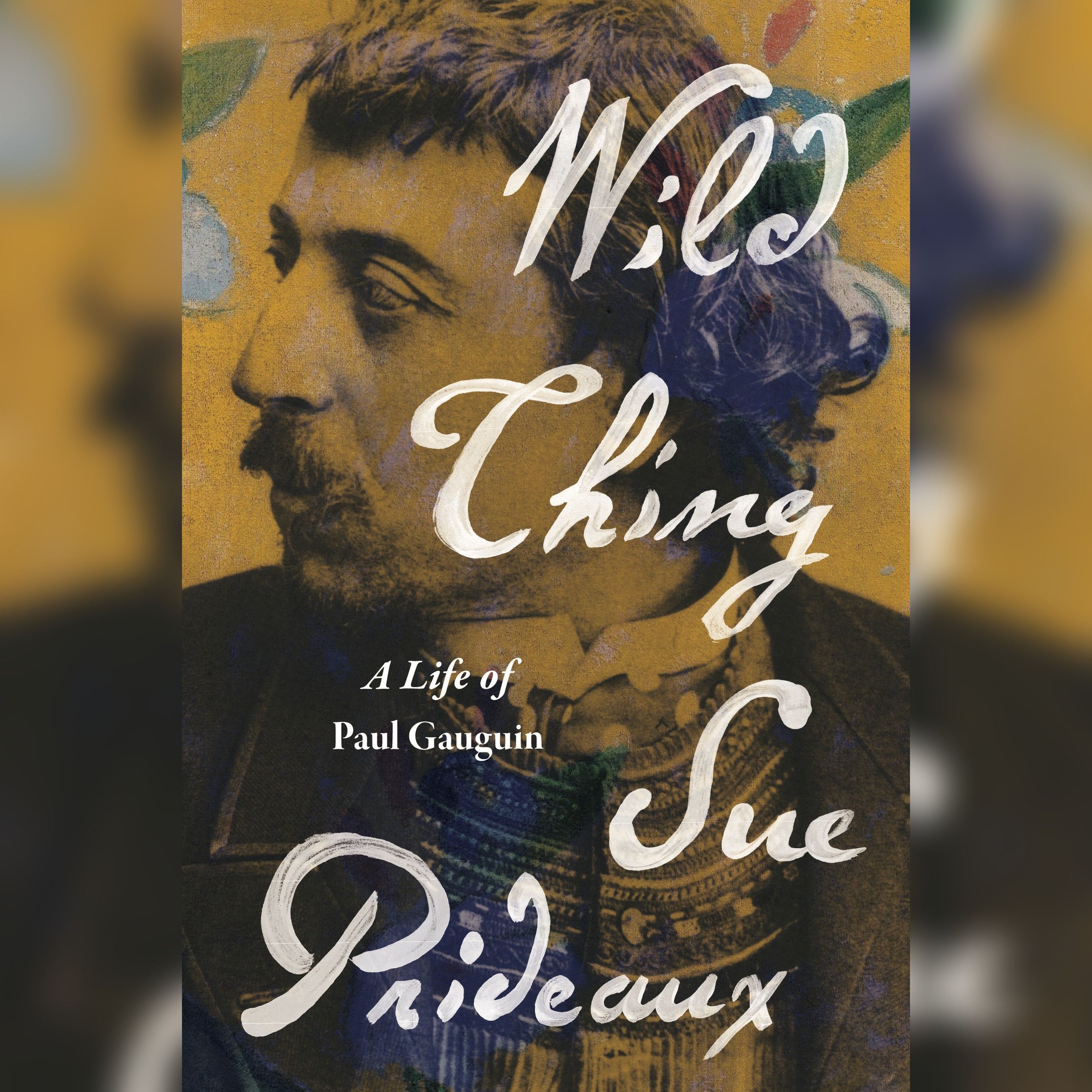
All Of It with Alison Stewart
'Wild Thing: A Life of Paul Gauguin' (Full Bio)
01:16:45
We present our August Full Bio about artist Paul Gauguin in full.
Loading summary
Transcript118 lines
- [00:05]
Interviewer (Alison)
Full Bio is our book series where we spend a few days with the author of a deeply researched biography to get a fuller understanding of the subject. The book we are discussing is a profile of the 19th century self taught French artist whose most famous work showed his vision of life in South Polynesia. It's called Wild A Life of Paul Gauguin by Sue Prudhoe. Prideau has written biographies of philosopher Friedrich Nietzsche and playwright August Strindberg. With the subject of her new biography, Prudho faced a challenge. While Gauguin's works are in art museums around the world, his life story can lead one to wonder if he was a problematic man or a madman or a person whose passions took over reason, or a visionary artist. For for her book, Prudho uses historic and primary sources, including a recently discovered 213 page work Gauguin completed in his final years. She also used a memoir written by his son. She used his paintings and sculptures, photos of them are in the book to help narrate what's going on in his life. I spent the first part of the interview asking Perdo about the challenge and then moved on with Gauguin's story. And his life story is quite one. Gauguin was the grandson of a feminist fighter, the child of activists who had to flee France. His father died when Paul was a baby and he was raised in Peru before returning to France to begin his adult life. Here's my conversation with Sue Prudho, the author of Wild A Life of Paul Gauguin. Sue, you've written biographies of artist Edward Monk, writer August Strindberg, German philosopher Nietzsche. Why did you want to write about Paul Gauguin?
- [01:58]
Sue Prudhoe (Author)
It's a very good question. It was in 2019, the National Gallery at London had an exhibition of Gauguin's portraits. And I've always loved his art and I mean, some of his pictures just give me goosebumps. But the reaction to the show was it was pequote moment and people were saying that Gauguin should be cancelled and his picture should be burnt. And I had just come out of writing a biography of the philosopher Friedrich Nietzsche and so sort of matters moral and philosophical were rather on my mind. And I thought, well, you know, I really can't get away with the idea of loving Gauguin's art and hating the man. So I thought, well, I'd better investigate and you know, see what, see if he really was as bad as they said he was. And so then I investigated and my investigations really became the book because there were so very Many new discoveries. There hadn't been a biography for 30 years, and there was a lot of new stuff.
- [03:12]
Interviewer (Alison)
It's very interesting. My friend and I always say we're just going to throw the skunk on the table. All right, so I'll read you a few headlines about Paul Gauguin. Gauguin. It's not just genius versus monster. Gauguin, he was a violent pedophile. Do we really need to vindicate Gauguin? Gauguin, the dilemma. How does your book handle the controversy around Gauguin's behavior?
- [03:37]
Sue Prudhoe (Author)
Well, of course, I'm a biographer. What I do is I research and then I write up the results. You know, truth as far as you can ever get to the bottom of truth. Okay, so Gauguin was a pedophile who spread syphilis throughout the South Seas. So you start with paedophile. Okay, so we're talking 1880s, 1890, when Gauguin was out in Polynesia. And then Polynesia was a French colony. The age of consent in France and the colonies was 13. And this actually is pretty typical of the time. And without sounding rude, I'm English, you're American. In the States at the time, ages varied between 10 and 12, except, I'm horrified to say, the state of Delaware, where it was seven. And in fact, actually on a more modern context, when I was coming to the end of writing the book, Japan raised the age from 13. So it's disgusting and it's horrible, but actually within the context of the time, Gauguin was doing nothing illegal or indeed at all unusual. So you just have to, you know, stare that in the eye and take it. So then, okay, so syphilis, the other charge. Well, Gauguin died in 1903. And in the year 2000, the mayor of Atuona on the little island where he lived called Hiwa Oa, decided that he was going to restore Gauguin's house. Okay, they knew where it was. They had photographs, et cetera, et cetera. So Gauguin had a well in the garden. And when they were excavating the well, they discovered this screw top glass jar with four disgusting old teeth in it. So the jar was sent to the Human Genome Project in Cambridge. Compared to the DNA taken from his father, actually his father was exhumed for the purpose and a known grandson, and they were definitely Gugas teeth. So then they pinged off all around the world to various other labs for testing for cadmium and mercury and the other heavy metals that were used to treat syphilis. And Nothing was found and, well, you know, it's all written up in a scientific journal. Anyway, the, the, the conclusion really is that 99.99% he definitely didn't have syphilis. So there, you know, Bango is a big myth. Yeah. So they were two things and so I was interested in them. And then just before I started writing in 2020, a very important manuscript came to light. Gauguin spent the last three years of his life writing. He called it Avant et Prais and it was a sort of recollection of his life, a sort of last will and testament, really summing everything up. And it was 200 pages, beautifully illustrated. Of course it was known about, but it disappeared shortly after his death. And then in 2020. Yeah, 2020, I think it was, it was offered, the manuscript, the handwritten manuscript was offered to the British government in of death duties. So they accepted it and it was lodged in the Courtauld Institute. And they have been incredibly generous. They just let me do whatever I wanted, you know, quote, etc, etc. And so that was the most amazing new resource, really. And then the other thing that happened was that the Wildensteiden Platner Institute completed the catalogue raisonne of Gauguin's paintings. And the catalogue raisonne is the bible of an artist, really. You know, every single painting, you get all the information on it, you know, when it was painted, when it was exhibited, the literature on it, the materials, et cetera, et cetera. So that was another amazing resource. And then I'm 3/4 Norwegian. Gauguin was married to a Danish wife and he, one of his sons lived in Norway and wrote a big family memoir in Norwegian that wasn't published. So I could read Danish and I could read, I can read Norwegian. And I also discovered actually nearby, near Oxford, in, in England, a wonderful great granddaughter of Gas. And she had all these papers in Danish and Norwegian and again, was fantastically generous. So, I mean, I just had so much new material, I just really had to write a book about it.
- [08:56]
Co-Interviewer/Interjector
My guess is, Sous Pradeau, the name of the book is Wild Thing, A Life of Paul Gauguin. It's our choice. For full bio, let's get into the history. Gauguin was born in 1848 to Clovis and Aline Gauguin. Now that's an important year in European history, a year that would affect him and his parents. Why did his parents choose to leave Europe when he was just a year old?
- [09:21]
Sue Prudhoe (Author)
Well, his parents, she was called Eileen and his father was called Clovis. And they were both republican journalists in France. And if you think about 1848, when Gauguin was born, Charles Napoleon was the President of the French Republic. And it was absolutely obvious to everybody that he was preparing to restore the monarchy, to sit on the throne as Emperor Napoleon iii, which indeed he did in due time. And both Eileen and Clovis were Republicans. Both were on the list of the secret police as anti Napoleonic agitators. And so they knew that when Napoleon came to power they'd be clapped in the Bastille, probably. So they fled France to Peru, taking baby Paul. He was a few months old. And so why did they go to Peru? Well, Eileen's mother, Flora Tristan, had family there and they wanted to claim her inheritance. So they took a boat to Peru. That took months. And Clovis, the father, had a heart attack and he died on the journey. He was only 34. And so Eileen had no alternative really, but to continue with the children, Paul and his elder sister Marie. And they showed up at the very grand family palace owned by Eileen's uncle. He was called Don Pio Tristo, Don Pio Tristan y Mouscusa. And he had been governor of Peru. And he lived in this huge palace with a large extended family and lots of slaves and servants and things. And Gauguin absolutely loved it. He adored it. He writes about it. It's like a sort of magical real Eden. And he's running wild in the rainforest and there are parrots and jaguars and snakes and the earth shakes and there are earthquakes and volcanoes and it's just totally magic. And really all his life. And actually, in a way, all his art looks back to those days.
- [11:35]
Interviewer (Alison)
Did Eileen consider herself to be of this. This higher class in Peru?
- [11:41]
Sue Prudhoe (Author)
No, no, no, no, not. No, she didn't. No, she was just a sort of. She thought of herself as a French woman. So when she was. When Gauguin was seven and the inheritance she was hoping for didn't materialize, she decided to take him back to France.
- [12:05]
Co-Interviewer/Interjector
Let me ask you about that inheritance. What had she hoped would happen in Peru?
- [12:12]
Sue Prudhoe (Author)
You know what big families are like and you know what sort of powerful men are like. And I think that, you know, Don Tristan had promised something to Flora, but I don't think there was anything in writing or anything like that, you know. So anyway, Eileen realized that nothing was forthcoming at all. And Gauguin was seven years old and he couldn't read and write and so on and so forth. So it was really time to take him back to France and It was disastrous for him, poor darling. He couldn't speak French and he could only speak Spanish. He was rather small and rather sort of dark and swarthy, and they teased him and they bullied him and he got into fights. And when he got into fights, he'd put up his fist and he'd say, I am a walton from Peru. And which, in fact is a cry that he sort of brought to the fore at various times in his life. He always felt, you know, definitely that Peru. You know, he was Peruvian. He was very proud of it. He wasn't really, but, you know, that's what he liked.
- [13:21]
Co-Interviewer/Interjector
He often said, though, that his grandmother was responsible for his painting, or at least his talent in some way. Her name was Flora Tristan and she was a feminist writer. What did you find interesting about Flora Tristan?
- [13:37]
Sue Prudhoe (Author)
Flora was absolutely amazing, actually. She was a real political activist. She was a firebrand. Her dates are she's sort of 1803 to 1844. So she's working the 1820s, 18, 1830s. And she fought for workers rights, early trade unionism, and for women's rights, of. Of course. I mean, you know, women were paid nothing and so on and so forth. And she was a writer and her work was much admired by Karl Marx, who came along a little after her. One of the things that Flora did was she wanted to see how Parliament worked in England. And so she dressed up as a man to get into the Houses of Parliament because women were not allowed in. Anyway. She was quite an agitator and the right wing newspapers called her Madame Encolaire, Madam in a temper. And, well, these days she's, you know, she's an icon of the French feminist movement. And Gauguin rarely idolized her. He kept. He kept his. Her books with him all his life. But then Paul. Flora, married Frederic Chazal, who was a terrible scoundrel, and he sexually abused their daughter, Eileen Gauguin. And Flora took him to court for the crime and won. But when he was released from prison, he was obviously a horrible man. He stalked Flora and he shot her. And the bullet couldn't be removed because it was three centimeters from her heart. It continued her political work and she put her daughter Eileen safely away from him, into boarding school, in fact, under the guardianship of George sand, another feminist. And both of them, they were determined that Eileen should have a proper education so she could support herself and not be reliant on a man. So that was Flora Tristan, and she was. She was quite a woman.
- [15:40]
Co-Interviewer/Interjector
We're talking to Sue Prideaux, the Name of her book is Wild Thing, A Life of Paul Gauguin. Before we leave Peru and we go back to Paris, before he's a teenager, I did want to ask about. Eileen began collecting pottery, and it was pottery, you said, that was influential on Paul, these vessels. Would you tell us a little bit about these vessels?
- [16:03]
Sue Prudhoe (Author)
Yes, indeed. They are pre Columbian remnants. And they weren't sort of felt precious by the Spanish because the Spanish took all the gold and all the silver and so on and so forth. But what actually remained in Peru were these moche pots. And they're earthenware pots. They date really from 100 A.D. to about 800 A.D. so they're early. They are earthenware. If you think about Greek pottery, you know, the red and black Greek pottery, they have that same sort of the same coloring, the same slip glaze, that sort of thing. But they are very, very. They're like kind of, whoo. The pots are. They're anthropomorphic. They relate to their gods. You know, sometimes they'll have a dog's head, they'll have paws coming out of strange places, snakes winding around them. They look. They almost look like sort of props from a hammer horror movie, some of them. It's obviously a sort of great explosion of what the early Peruvians believed in and what. What they were representing.
- [17:18]
Interviewer (Alison)
And why were they so important to Paul Gauguin in his life?
- [17:21]
Sue Prudhoe (Author)
Well, Eileen just was fascinated by them. She was a very artistic person, and she brought a whole collection of them back to France, which, of course, was, you know, the first ones, really. And Paul, I think they just lodged in his subconscious, actually. And then at a later moment, he's invited to make pots in Paris, which he does. And his are like these mochi pots, but they're a bit of a. More of a European Peruvian blend, because, of course, it's his memories sort of superimposed on these primitive objects. And also he experiments with glazes, but they're marvelous, actually. And after he died, there was a show of them, I think, in 1905, and Picasso saw them. And this was really what started Picasso's ceramics and his interest in indigenous and African art.
- [18:29]
Interviewer (Alison)
And before we leave Peru, you talked about it briefly before, but I want to get into it a little bit more. How do we see his childhood? It was only until he was seven years old, but where do we see that in his work? Can you give us an example of a painting where we see some of his childhood in Peru?
- [18:50]
Sue Prudhoe (Author)
Yes. Well, you know, what he does, he never really specifically paints Peru. But when he gets to Tahiti and to the Polynesian Islands, he is stylizing the jungle. And it's really, it's. He melds the two tropical places. He never, in fact, after he's seven years old, goes back to Peru. So it's a Peru of the mind, a Peru of the soul. He doesn't want to be literal ever.
- [19:29]
Co-Interviewer/Interjector
Let's talk about his mother in Paris.
- [19:31]
Interviewer (Alison)
She gets a job as a dressmaker.
- [19:34]
Co-Interviewer/Interjector
And you said when he returned and during his teenage years in Paris, you write that it provoked a teenager age Gauguin to obstinacy. What was he like? What kind of problems did he cause? What did he do?
- [19:50]
Sue Prudhoe (Author)
Poor man. Well, okay, so arriving In Orleans, age 7, in 1855, Gauguin was a misfit, as we said, he couldn't speak French, etc. Etc. Quite soon Eileen was bored of the provinces in Orleans, so she decided to try her luck in Paris, in fact, as a seamstress, which is, you know what women did. They got a Singer sewing machine, you know, God bless you, Winona Singer. And they, you know, they got independent life. So she put Gauguin to boarding school. And it was, in fact, it was a huge seminary for trainee priests. Gauguin slept in a dormitory with 40 boys. And he hated it. And the whole thing was impossible and he felt like a prisoner. But there was a saving grace because the school was run by Cardinal Dupont, a super intelligent cardinal who believed in boys reading the classics in the original Roman and Greek, rather than, you know, sort of French versions and of course the Bible. And so when Gauguin becomes an artist, he's totally fluent in mythology and symbol. He understands the whole canon of Western civilization, which of course makes it all the more interesting when he synthesizes it. I was talking about synthesis with Peru, with the culture that he's seen in the wild in the wider world, in Japan and Martinique and Peru and Polynesia. But to finish about Gauguin at boarding school in his awkward teenage. Yes, yes. I made a very important discovery, actually, as I was researching his school days. Gauguin's most famous painting is called Where Do We Come From? Who Are We? Where Are We Going? It's gigantic in scale. He painted it towards the end of his life to sum up what he believed in. And as I researched his school days, I discovered that every day the boys had to recite a special creed written for them by Cardinal Dupontloup. And it begins with those words. Where do we come from? Who are we? Where are we going? So these were the questions he asked all his life. I mean, he may have been a wild thing, and he was a wild thing and a rebel, but he was also an intellectual, widely read, he was thinking deeply, he had a philosophical bent, he read Nietzsche, and he definitely didn't think that God was dead. And in fact, he left school with a lifelong love of Christ, but also a lifelong hatred of what he saw as the hypocrisy of the Church. And so, of course, after school, Eileen didn't know what to do next with her problem son. So eventually he joined the Merchant Navy and knocked about the world, the French Merchant Navy. He lost his virginity to an opera singer in Brazil. And then in 1870, the Franco Prussian War broke out. By Now, Gauguin was 22 and his ship was seconded to transport prisoners. And he really hated this. He really couldn't bear the imprisonment of anybody, himself or anybody else. So he jumped ship and made his way to Paris. By now, Eileen was dead and her house was destroyed. But her lover, Gustavo Rosa, very decently took Gauguin under his wing and found him a job on the Bourse, on the stock exchange. And now begins a new news date in Gauguin's life.
- [23:43]
Co-Interviewer/Interjector
We've reached the point where he is sort of an adult. He has a job as a stockbroker. He was able to make a living. How long did he stay a stockbroker? Was he happy being a stockbroker?
- [23:56]
Sue Prudhoe (Author)
Well, I mean, it's most unlikely looking at his early life, but he was more than able to make a living. He was incredibly successful and he made lots of money. Became legendary for taking a taxi into work and then keeping it ticking while he did his deals and then taking it home again. They said he owned 14 pairs of trousers. What did he spend his money on? He didn't. He wasn't interested in money for money's sake. But it's 1874, the first impressionist exhibition, and he goes there and he buys Monet, Degas and Cezanne. And then in the evenings, on weekends, he taught himself to paint by copying them. He literally hadn't picked up a paintbrush till then. I mean, most painters, you know, there are lovely stories of, you know, when he was a child, he picked up a piece of coal and drew, but Gauguin actually didn't at all. And I really can't think of many other painters who started painting at 25 years old. Four years later, he was exhibiting alongside his heroes in the Impressionist exhibitions, which is pretty amazing. And of course, now you don't think of Gauguin as an Impressionist painter, but that's how he started. And when he got a bit more confident, he took lessons from Pizarro on weekends. And his first, you know, proper paintings are heavily influenced by Pissarro.
- [25:34]
Interviewer (Alison)
Yes, I'm going to ask. He wanted to learn to paint. What did he learn from his teacher, from Pizarro?
- [25:42]
Sue Prudhoe (Author)
It's a good question, actually. His early Impressionist paintings are pretty clotted, you know, and he had trouble with believable perspective, really. There's an early one called Working the Land, which is always sort of hailed as his first proper painting. And you honestly, you think the sky is going to fall down on the field. It's so sort of heavy. And. And, you know, he obviously loved painting the sky, so he overworked it dreadfully and it's right out of proportion. So. But, you know, he. He was good enough to exhibit with them. And the first thing he exhibited with them, in fact, was a beautiful, beautiful marble bust of Mette, who became his wife.
- [26:40]
Interviewer (Alison)
Well, that's good. This is a good place for us to talk about Mette. We'll sort of talk about her out of context. I would like to talk about their relationship as a whole, if that's okay. He met this woman, Mette, a Danish woman. She was smart, she was bright. First of all, how did they meet?
- [26:59]
Sue Prudhoe (Author)
Literally, on a boulevard. Rather wonderful. He writes about it and he says, you know, we met on the boulevard under the chestnut flowers, but actually it was in October, so the chestnuts couldn't possibly have been flowering. And then they met again. They went to the same restaurant. They met again. And it was. They just. It was what the French call a coup de foodre. Love at first sight. Absolutely bang.
- [27:25]
Interviewer (Alison)
When you think about her goal in life and his goal in life at the time that they met, what was her goal and what was his goal?
- [27:34]
Sue Prudhoe (Author)
Okay, well, he was. He was sort of busy being a stockbroker and starting on the painting thing. She had been the governess to the. She was Danish. The governess to the children of the Danish prime minister. And he obviously respected her very much and treated her as an intelligent being whose opinions were valuable actually for him in his job. So that was great success. And so she wanted to come to Paris to learn French. Anyway, Paris was the center of the universe, you know. And so she came with a girlfriend, and they were just really sort of, you know, learning to speak French and seeing the sights. And then there was Gauguin, and they fell instantly with. In love As I said, they married within the year and he. He wrote rather smugly that she was everything he could possibly want for or need. And he felt sorry for his fellow Impressionist painters who racketed around with sort of brothels and mistresses and things. When he and Meta had such a together. He doesn't describe their sex life, but from his letters to his friends, it's obvious they both enjoyed it very much. And they had five children in quick succession.
- [29:03]
Interviewer (Alison)
It's interesting because I want to talk.
- [29:05]
Co-Interviewer/Interjector
About the art that he made of his family, as you said.
- [29:08]
Interviewer (Alison)
There's this beautiful marble sculpture of Meta. It's only one of two that was made.
- [29:13]
Co-Interviewer/Interjector
I think the Metta one lives in the uk. This picture, excuse me, the sculpture of.
- [29:18]
Interviewer (Alison)
Emile, lives at the Met here in New York City. And in my humble opinion, the paintings.
- [29:23]
Co-Interviewer/Interjector
About his family, of her and of the children initially, they're really quite beautiful.
- [29:30]
Sue Prudhoe (Author)
Yes.
- [29:30]
Interviewer (Alison)
What did he see? What did he see as his relationship.
- [29:34]
Co-Interviewer/Interjector
Between his family and his art?
- [29:40]
Sue Prudhoe (Author)
Well, Meta was jolly awkward because she really hated posing. He had to snatch pictures of her. You know, there's one of her asleep on the sofa. He had to do them very quickly, which adds a great sort of freshness and excitement to them. And then he does the usual, you know, rather not very good sort of chalk drawings of his little ones, you know, big eyes and pretty faces. But then there's one which is totally amazing. They called one of his sons Clovis, after Gauguin's dad, you know, who died on the journey out to Peru. There's one called Clovis Asleep, which is in Gauguin's Impressionist period, so it's in the Impressionist style. And Gauguin, Clovis, the little child, is asleep with his head on the table. And then above him, Gauguin has put what he imagines are Clovis's dreams. But he's on the wall behind, so it looks. At first you think it's a wallpaper with these funny creatures on, but then you realize it's his dreams. And then you make the connection back to the strange creatures on the Peruvian Moche pots. So he's interested in his children's interior, conscious of his children's interior life and his children as separate people, you know, rather than just sort of, my kids belong to me.
- [31:13]
Interviewer (Alison)
He seems so taken with her. Yet they would spend years and years apart. What happened to them that they would end up spending so much time apart?
- [31:26]
Sue Prudhoe (Author)
It was so sad, really. 1882, the Paris Stock market crashed and Gauguin lost. He never saved any money, of course, so he lost everything in one fell swoop. Money, wife, family. Mette moved back home to live with her mother in Denmark, taking the children. Gauguin remained in France, trying and failing to make it as a painter. But of course, after a bit, almost a year, he wanted to join his family, so he organized a job for himself, being a sort of representative, selling tarpaulins. In Denmark, I think you call them tarps.
- [32:06]
Interviewer (Alison)
Tarpaulins, yes.
- [32:07]
Sue Prudhoe (Author)
It was a total disaster. He couldn't speak Danish, which is a pretty difficult language to learn. And if you're selling, you've really got to learn the language, haven't you? And of course, he'd arrived just at a moment when the demand for tarpaulins had fallen drastically because closed goods carriages on trains had been invented, and if you've got a roof on a goods carriage, you don't need a tarpaulin. So of course he couldn't sell them. Mehta's family took a very dim view of him. They didn't think art was a proper job, Impressionism was modern rubbish, and basically they couldn't see the point of Gauguin at all. In fact, they sniggered behind their hands and they called him the missing link. And so Mette banished him to paint up in the attic, and we can see how unhappy he was. He paints a self portrait in the attic, 1885, and he's all hunched up with cold and his nose is red because he's so cold and the ceiling of the attic is obviously so low he can't stand up, he'd bang his head. And he mounted an art show in Copenhagen and nothing sold and he couldn't sell tarpaulins. And he went back to France, where then basically, actually, he starved. This is one of the very lowest points in his life. He got a job posting up posters on Paris hoardings at 7 francs a day, and kept himself going by selling the Impressionist canvases he'd bought in the days he was rich and he hated. He hated parting with his beloved pictures, but it enabled him to paint. And in fact, his hardship made him all the more determined to become a painter. And, yeah, so they fought over money.
- [34:05]
Interviewer (Alison)
Was a big part of it.
- [34:07]
Sue Prudhoe (Author)
Oh, absolutely, absolutely. Meta stayed in Denmark and she gave French lessons to diplomats and Gauguin suggested that she translate Zola's novels into French, because Zola was very big at the time and she did, and that really kept her going, you know, that was good income for her. Which was great.
- [34:33]
Co-Interviewer/Interjector
At one point, and then we'll move on with Gauguin. But I think it's interesting, at one point in the relationship, she decides to sell some paintings and it really gets to him.
- [34:47]
Sue Prudhoe (Author)
Yes, well, he, he, he was very generous with her. And when she went back to Denmark, obviously he had nowhere to store the paintings. And so he said, you know, you must take them. And it was quite a big collection. And she sold them sort of one by one to, you know, to. To feed herself and the kids, et cetera. There she. She was living with her mother, but she would always, you know, should say, what shall I sell now? You know, what shall I sell now? And he'd say, oh, well, sell the money of this or whatever. But when she. There was a moment when she sold some paintings that he really didn't want her to sell and she hadn't consulted him and he was extremely upset by that. He felt, you know, although she could get the profit from it, she really shouldn't, you know, deplete his collection without his say so.
- [35:43]
Co-Interviewer/Interjector
And just for the record, they didn't divorce?
- [35:46]
Sue Prudhoe (Author)
No, no, they didn't divorce. Her family very much wanted them to divorce, but they had a conference about it and they both felt that once you were married, you were married, and particularly when you had children and you stayed married, and that was that. And also, actually, they both. In the early years, Gauguin was quite convinced that he was going to be able to make his fortune as a painter and his family would come and join him and they'd all live happily ever after. Never happened.
- [36:19]
Co-Interviewer/Interjector
My guest is Sue Prudho. The name of her book is Wild Thing A Life of Paul Gauguin. It's our choice for full bio. Paul Gauguin, he is a painter. He's decided he's a painter whether he gets paid for it or not. But he does have. He does catch the interest of Theo Van Gogh. And Theo van Gogh chooses to be his agent. And you describe this as a turning point for him around 1888, I think it was. What did Theo.
- [36:50]
Sue Prudhoe (Author)
Important. Important, yeah. My gosh, yes. A little sort of preface to this is that in 1887, the Panama Canal Company was advertising for workers. Gauguin had no money, so he went out to dig the Panama Canal. And usual Gauguin luck. Within a fortnight of getting there, the Panama Canal Company was laying off workers. So he was laid off, but he went off to Martinique where he made some marvelous paintings.
- [37:30]
Co-Interviewer/Interjector
Theo saw the paintings that Gauguin had made, Right?
- [37:35]
Sue Prudhoe (Author)
Exactly. Absolutely. He saw them and his brother Vincent van Gogh saw them. Theo was an art dealer, Vincent obviously, you know, the painter. And they were living together. And Vincent became absolutely obsessed with the idea of painting with, with Gauguin. And so he invited Gauguin to come and live with him in the Yellow House in Arles. By a very original way. He sent him a self portrait dedicated to Gauguin as the invitation. What an amazing way to extend an invitation. Gauguin replied with his own self portrait, Van Gogh. And the rather idealistic plan was cemented by the brother Theo van Gogh, who was supporting Vincent with a monthly allowance that Vincent always overspent. And he now he offered to pay Gauguin 150 francs a month to go and live with Vincent in the Yellow house. And Gauguin took up the offer. Well, he arrived in the autumn of 1888 and they painted together for nine weeks. And so of course begins one of the most famous episodes in art history, culminating in Vincent cutting off his ear on Christmas Eve.
- [39:01]
Interviewer (Alison)
First of all, they were the. First of all, they were the odd couple. Can we say Go was tidy? Vincent was not.
- [39:09]
Sue Prudhoe (Author)
We couldn't it. Poor old Vincent. Well, you know, he was, he was, he was not. Well, he was oppressive, bipolar, alcoholic, he had syphilis, he had psychotic episodes. He was possibly epileptic. You know, it was all up and down, up and down, up and down. But anyway, Vincent was, was very excited that Gauguin was going to come and live with him. And that's when he paints his famous sunflower paintings. All his sunflower paintings to hang in Gauguin's bedroom, as Vincent said, like a huge welcoming bouquet. I mean, what a bouquet. What a welcome.
- [39:48]
Interviewer (Alison)
I wanted to ask about the two self portraits that you describe because you have them in your book. The book is full of all kinds of beautiful imagery and they're really interesting. What would you say, how would you describe Vincent's self portrait versus Gauguin's self portrait?
- [40:06]
Sue Prudhoe (Author)
Well, Vincent sand self portrait is. He has represented himself, it is Self portrait as a Japanese bonze. B O N Z E a Japanese monk. So he's got his head shaved, his face is absolutely skeletal. He's rather bristly. It's against a plain, plain, wonderful jade green background. And he does frankly look a little unhinged. Gauguin's self portrait that he sent back is. He's a. He's a vigorous wild thing from Peru. You know, he emphasizes the hooked nose, he's got a strange look in his eye and he puts Himself against a yellow background with beautiful flowers, beautiful like yellow wallpaper. And then right up in the corner, he's done a little portrait of the artist Emile Bernard, who was meant to be coming to join them but never did. So you've got the very, very ascetic Van Gogh, really, and actually the very sensual Gauguin.
- [41:22]
Interviewer (Alison)
What was the basis of their friendship?
- [41:26]
Sue Prudhoe (Author)
Well, they were. They were both fascinated by Japanese art, by art itself, and they wanted to paint. They were both coming out of the Impressionists, really had run out of road. You know, all those, all those lovely little brush strokes, you know, sort of dissolving color and so on and so forth, blending color into their components part. And that had rarely been taken to the limit. And so what you do after Impressionism, and that's what Van Gogh and Gauguin are doing. And they're finding the answers to this in Japanese art, in Gauguin's, the art that Gauguin made in Martinique when he went to dig the Panama Canal. Because in Martinique, of course in the tropics, you really cannot use Impressionist technique because the light is so strong. And so you have to use solid color fields and jolly solid colors too. And so they were moving towards the whole thing of post Impressionism, which is much more definite, disregards realism, disregards conventional perspective and, and just emphasizes what they want to emphasize, you know, the best. Hokusai's wave was very important to them. Okay, so if you think about Hokusai's wave, you think of how definite the image is, how it's not in a picture box, it's not in perspective, it's just this incredible shape, this incredible, enormous shape. And if you think of the scale of the little fishing boat that's on the bottom of the waves, it's tiny. I mean, there'd be ants. And so Hokusai has privileged the emotion and the feeling of men are so tiny in this graceful force of nature. And it was that bringing forward of the emotion and rejecting trying to be a realistic that Van Gogh and Gauguin were doing. Bringing art into post Impressionism, as you.
- [43:46]
Interviewer (Alison)
Mentioned, this time in Naral was when Vincent cut his ear off after a series of tense moments with Gauguin. People have to read about it. But why did Gauguin decide I need to leave?
- [44:03]
Sue Prudhoe (Author)
Oh, it was so sad. There was a build up to it, really. It might not have happened if it hadn't been so terribly, terribly rainy in November and December. And so they couldn't go out and paint en plein air, which was what they were doing, you know, taking their easels outside and painting. The yellow house is absolutely tiny. I don't know if you've ever been there. I have. And claustrophobic, obviously. And so Gauguin hit upon this thing. He said, okay, Vince, you know, let's paint chairs. So Vincent paints the famous chair paintings of Gauguin's chair and his chair and so on and so forth. But really they'd run out of anything to do. And Gauguin tipped over the edge, really. And Gauguin writes an account of the ghastly night and it's asked for math. And it probably had something to do with Vincent receiving a letter from his brother Theo, saying that Theo had got engaged to be married. And Theo had been Vincent's absolute prop and stay. And he thought that he was losing his brother. Anyway, he pursued that. That evening he pursued Gauguin with an open razor. And Gauguin, looking around, was so frightened that in fact he went and stayed in a hotel for the night. And in the morning when he came back, there was a great crowd around the house and there was a little man in a bowler hat who was the chief of police. And Gauguin said, what's happened? He said, oh, you know very well, Monsieur Gauguin, you have killed your friend. So Gauguin said, ah, you know, is Vincent dead? Let's go upstairs and have a look. And he says, he says, I put my hand on his body and it was evidently warm, he was alive. I said to the chief of please, you know, please, I must go now. Gauguin must not see me when he wakes up, you know, I can't bear it. And he describes the yellow house full of blood stained towels. And then Gauguin left for Paris and of course poor Vincent was incarcerated in various mental asylums for the rest of his life. But it's very. There are all these sort of conspiracy theories. You know, Gauguin cut off Vincent's ear, et cetera, which you know, you need to look into. And of course, during that time Vincent and Theo were writing numerous letters to each other practically daily. And Theo and Gauguin and so on and so forth. And the first letter that Vincent writes is to Gauguin and he says, you know, I have a feeling that I did something wrong. You know, there was too much electricity in me, you know, I couldn't control it. Anyway, he lives for another year. And all through that year these letters are flying back and forth. Nobody ever blames Gauguin and Vincent takes responsibility for it. And then of course. And actually he keeps writing to Gauguin, saying, when are we going to paint again? Together again. Going to paint together again. Gauguin's absolutely terrified he's never going to do that. But he lets Vincent down very gently, which is so nice. And actually, there's the most lovely postscript to this time with Vincent, which is that 10 years later, when Gauguin was living in Tahiti, he sent for sunflower seeds from Paris, and he planted them and he got them to flower, and he put them in a sort of basket on a chair and he painted them. And he said, the painting was in memory of my gentle friend Vincent. So there was much affection.
- [48:02]
Interviewer (Alison)
Sue, when did Paul Gauguin first visit Tahiti?
- [48:07]
Sue Prudhoe (Author)
Ah, yes, he visited Tahiti in 1891. He was 43. And why Tahiti? Well, France was paying people to go out and live in the colonies, and Gauguin thought this was a very good idea. Japan was, in fact, his first choice. He was fascinated by Japanese art, as we've said. But he was planning to go to travel with another artist called Emile Bernard, and Bernard didn't want to go to Japan. He'd been reading up on Tahiti and wanted to go there basically for sunset and sex. But Gauguin wasn't keen because there really wasn't much culture, as far as he could see. But he gave in. And in fact, the Arts Ministry appointed Gauguin the first official French artist to Polynesia and promised to buy his paintings, a promise they never kept, of course. And the stupid thing was that Emile Bernard backed out at the last minute. And so Gauguin went to Tahiti alone. As I said, he was 43. He had let his hair grow long on the voyage, and he disembarked wearing a purple suit, Buffalo Bill, cowboy boots and a Stetson hat.
- [49:22]
Interviewer (Alison)
That's a look.
- [49:24]
Sue Prudhoe (Author)
He'd seen Buffalo Bill's show in Paris and was absolutely entranced by the whole thing. And he had long hair. He'd let his hair grow during the voyage. And the Tahitians never seen anything like this. And they said, mahu, mahu, mahu. And they giggled. The most accurate translation of the word mahu is man, woman, a mahu. There was a man who wore women's clothing and lived as a women or as a woman. They weren't necessarily gay or straight. They just had their own special position in Polynesian society. But the west, the Polynesians, had never seen a Western mahu before, so they were riveted. At that time, Polynesia had been a French colony for about 10 years. And the Frenchmen, of course, were either administrators wearing smart tropical suits or soldiers and gendarmes in uniform. So Gauguin really stood out and he didn't realize why.
- [50:24]
Interviewer (Alison)
I wanted to ask you a little bit about Tahiti at the time, in the 19th century, there were the indigenous people, the French colonizers and the Chinese. So. So please forgive me, but when did the French take control?
- [50:40]
Sue Prudhoe (Author)
They took control. 1880, something. Basically, it's 11 years before Gauguin arrives, and he arrives in 91. So we can work it out from there. But actually the first, it was a sort of. It was French colony, but with a Tahitian king. But the first night that Gauguin arrived, that Aishan king, King Pomare V, died. And so actually the first morning when Gauguin woke up, he was woken up by these cannons. He had a terrible hangover because he had been partying the night before. When he arrived, he woke up with these awful cannons. And he thought, gosh, you know, do they start every morning with cannons in Tahiti? Not at all. It was the king. And so he. One of his early paintings, he calls it the King's End. It's very strange painting. It's much more symbolic than literal or realist because, I mean, King Pomari just naturally kept his head to the end of his life. But this is more like a picture of John the Baptist, the king's head, beheaded, really, on a platter. And I wonder if maybe Gauguin felt it symbolized the ghastly fate of Pomara's people, the Tahitians, who really were sacrificed to French colonial greed.
- [52:07]
Co-Interviewer/Interjector
That was my question. What happened to the indigenous people?
- [52:10]
Sue Prudhoe (Author)
Well, indeed, there were only a few thousand of them on the islands, you see, of Tahiti. And they were ruled over with great brutality by about 400 soldiers and administrators, not to mention the missionaries. And they too were brutal. And they smashed all the Polynesian religious temples and artifacts and they destroyed their culture. They forbade dancing and nudity and making free love. And they forced people to wear ridiculous head to toe clothes, which is stupid in that climate. Missionary dresses known as Mother Hubbards, sort of from neck to floor that concealed killed every inch of sinful flesh. And they kind of terrorized them with hellfire evangelism, really. So they were most, most oppressed.
- [52:58]
Co-Interviewer/Interjector
And then the Chinese were brought in to provide labor.
- [53:03]
Sue Prudhoe (Author)
They were to provide agricultural labor, I think it was. They thought that they would be able to have good sugar cane crops on Tahiti, but it doesn't grow there. And so the, the Chinese, well, some haha were shipped off to dig the Panama Canal, of course, but some enterprising ones did. What a lot of enterprising Chinese do was they became storekeepers, you know, general stores, that sort of thing. Not, not very many of them. They were very resented because they didn't integrate, because rarely they were just making money from the stores so that they could go back to China and, you know, get by themselves a splendid to, you know, because from their religion that was, you know, what they should do.
- [53:48]
Interviewer (Alison)
So where did Paul Gauguin fit into this ecosystem that we've just described?
- [53:54]
Sue Prudhoe (Author)
Yeah, well, well, obviously he started in Papiete and because, because he was the official artist, he was commissioned to paint a portrait of a rather important local woman called Suzanne Bainbridge. But of course, being Gauguin wasn't the sort of flattering portrait they expected. After that, nobody asked him to paint anything at all. In fact, they thought the picture so bad it was put away in a cupboard. And they thought he couldn't possibly be a painter, but he must be a spy sent to Paris, sent from Paris to report on them. So they shunned him and he was very happy with that. He didn't want to live in the capital, you know, which was basically a French provincial town, but he wanted to live out in the country. And unlike the other Frenchmen, he, he took Polynesian lessons, he wanted to speak the language and he moved out of the claustrophobic capital down the coast to live the authentic life. He wanted to live with the locals as a local. But this of course was not as easy as he imagined. There weren't exactly supermarkets around and you know, when local bought him food to share, he was too proud to accept. But eventually it worked and he became known as the man who Makes Men. Because Polynesia didn't have a culture of painting. Their arts were carving and tattooing and dancing and textiles, but they hadn't seen paintings. But it's quite interesting because they immediately, you know, they could immediately could read it. They understood what he was putting on the canvas. So they called him the man who Makes Men. And his first lovely, lovely lady came to see him and he painted a lovely portrait of her called the Woman with the Flower. And after that people weren't self conscious. He, he took his easel out and painted them sort of doing their everyday thing and they didn't mind at all. That was fine.
- [55:56]
Interviewer (Alison)
When he sent his paintings back to Europe, how were they received?
- [56:04]
Sue Prudhoe (Author)
Well, the painter Degas got it at once and he called Gauguin the magician. Gauguin called Cezanne the magician and Degas called Gauguin the magician. And he bought his paintings and he studied them and he lived with them and he absolutely adored them. But otherwise they were absolutely, let's say, unappreciated. You know, people were in love with Impressionism, you know, it was nice. And one of the first major paintings that Gauguin made out in Polynesia was called Teorania Maria Hail Mary, 1891. And it shows a Polynesian Mary carrying a Polynesian Christ child and their halos merge and there are Polynesian bare breasted girls, vahines bringing tributes rather than the three wise men and so on and so forth. And when it was shown in Paris, it was uproar. It was scandalous to show the holy family with brown skin, which is pretty stupid if you think about where they came from. And believe it or not, I researched this and it wasn't until 1951 that a papal encyclical made it permissible to represent such a thing. And so, no. So Gauguin, you know, raged against the church and raged against racism.
- [57:33]
Interviewer (Alison)
He wrote sort of a, sort of a version of what he was experiencing called. Was it Noa Noah? Yes, in 1893. First of all, what was the purpose of Noa Noah? And I'm curious if you find it was a. Was it an accurate description of what was going on at Tahiti or was it a Paul Gauguin description?
- [57:56]
Sue Prudhoe (Author)
No, it was, it was, it was really. He went, he went. After a couple of years he went back. He had 100 paintings to show. So he went back and good old Dega organized the exhibition. Not a success. People, you know, nobody bought anything. And that was where Hail Mary Teoranho Maria call such a scandal. And so to make people comprehend this exhibition, Gauguin wrote Noa Noah telling. It was really telling Polynesian stories and legends. It was, you know, sort of fairy tales and romantic things illustrated. And at the same time he made his studio. He called it the studio of the South Seas. And he kept open house. He painted it bright, bright yellow. He even painted the glasses, the windows yellow. And he played Polynesian music and he demonstrated Polynesian dancing and storytelling and food and so on and so forth. And it was really just Noa Noah was to, you know, to make people understand. And he made a series of no Noah woodcuts as well. But actually the only people who really paid attention to him were people who couldn't afford to buy his paintings. It was the young Artists thought it was great, but, you know, no profit came of it.
- [59:24]
Co-Interviewer/Interjector
My guest is Sue Prudho. We're talking about her book Wild A Life of Paul Gauguin. It's our choice for full bio. Your book was described in the New York Times as not a whitewash of Gauguin's legacy. Instead, Prudho fills it with more details. In it, he had interactions with indigenous girls, some with parental approval. I personally think people should read the book to understand its nuances and then they can decide for themselves about whether they think it's appropriate, whatever their level is.
- [59:56]
Sue Prudhoe (Author)
I agree.
- [59:58]
Co-Interviewer/Interjector
How would you describe how Gauguin's interactions with the indigenous people made it into his art, however he saw it?
- [60:11]
Sue Prudhoe (Author)
Oh, hmm. You're talking about, you're asking rarely about colonialism and cultural appropriation.
- [60:23]
Interviewer (Alison)
Maybe, maybe not. I'm curious what you think.
- [60:26]
Sue Prudhoe (Author)
No, I mean, that's one of the charges against him, Colonialism and cultural appropriation.
- [60:33]
Interviewer (Alison)
Or was he choosing to do. It's funny because this makes me wonder when I was been thinking about this all week. I read your book and I've been thinking about it all week and I've been thinking, well, maybe not. Maybe he, this is what he thought was authentic. But then again, we have to think, well, we're watching it through his male gaze. His male white gaze, right?
- [60:54]
Sue Prudhoe (Author)
Yes, yes, yes. Okay, okay, okay. Yeah, yeah, yeah. Absolutely, absolutely. There are several points here, really. Well, of course, if you're talking about cultural appropriation, there was nothing for him to appropriate because there was no drawing or painting on the island. So what he does, in fact is he paints what's in front of him. He doesn't romanticize. It's not tourist art. He doesn't exoticize. He's painting what's in front of him. And if you go out there, you'll see he is painting what's in front of him. And this contrasts with sort of earlier artists like Delacroix and Ingres, who, when they painted exotic people, you know, North Africa or Turkey or whatever, they basically painted the people as sort of brown washed European bodies. You know, hourglass figures, tiny waists, elegant limbs. You know, the European ideal just kind of colored up a bit. But if you look at Gauguin's paintings, a, he shows them going about their business, day to day stuff, but he shows them actually as they are, the physiques of working people. Broad shoulders, strong bodies, not terrifically defined waists, big spreading feet because they don't wear shoes. So it's not tourist art. And he Shows a colony in transition in terms of colonial occupation. Sometimes, you know, in his landscapes, this wonderful landscape called Matamua, which is totally idyllic. You know, just Polynesian girls sitting in jungle. But more often than not, I'm thinking of horses on the beach and things like that. He's showing contemporary reality, painting individuals, real situations, real people, not. Not propaganda. Does that answer your question?
- [63:03]
Co-Interviewer/Interjector
Absolutely.
- [63:05]
Interviewer (Alison)
I want to describe, I want for people to understand that he had a very bad beating at one point and I believe it was on the French coast.
- [63:18]
Sue Prudhoe (Author)
Yes, that's right, that's right, yeah.
- [63:20]
Interviewer (Alison)
And it really affected the rest of his life. Yes, he wasn't treated particularly well by the courts. How important was that sort of street fight in his life?
- [63:31]
Sue Prudhoe (Author)
Well, it was important. It was very important. We talked about when he came over to Paris after two years in Tahiti and he had the exhibition and he had the NOAA Noah. He wrote the Noa Noah catalog to make people understand. And he was giving lessons in art school to make money. And, and one of the models there was, she was known as Anna the Javanese. I don't know what her real name was, actually. I don't think anyone knows. She'd come, she was Javanese. She'd been trafficked to Paris to be a maid to an opera singer. But she was pretty feisty and she soon put pay to that. She became a model in an art school. Gauguin took her down to Brittany for a summer holiday together. Anna was very colorful and she went nowhere without her parrot and her tame monkey. And down in Brittany, which was very, very rural, very old fashioned really, the sight of the white painter out walking with the black girl and her exotic pets was too much for the local fishermen. And they set on. Gauguin, nearly kicked him to death with their wooden clogs. In fact, his ankle was splintered and his shattered shin bone stuck out through the skin. And it was an injury actually that he would never recover from. He always walked with a stick afterwards. And of course, when he got back to Tahiti, it wasn't totally healed. And the doctors there, this is, this is where the legend, this contributes greatly to the legend of Gauguin's syphilis because the, the, the wound never healed. It kept suppurating. But the doctors out in Tahiti, where syphilis was rife, so they knew syphilis very well, they diagnosed eczema with erysipelas. And this was aggravated by a fly that they called the. No, no fly out there. And this fly actually, funnily enough, When I went out, the beaches are still closed because of the die, because it fastens on any sort of open wound and it eats and eats and infects and you can't get rid of it. You probably can now, I mean, but, you know, it would be complicated. And of course, in Gauguin's day you couldn't. And so this open wound actually never healed on his leg, which was absolute hell on earth. And at the end of that visit to Paris, that's when he goes back to Tahiti, determined, I'm never going to go back to France again. You know, this is how they treat me.
- [66:13]
Co-Interviewer/Interjector
In the later years of his life, he took on corruption in the Polynesian government. What did he see as the problem? How was he going to help solve it?
- [66:26]
Sue Prudhoe (Author)
Well, he saw. He saw the corruption in Tahiti. He saw the oppression of the indigenous people, the corruption, the injustice, the taking bribes, etc, etc, and he wrote to a local newspaper in Tahiti, you know, an indignant letter, and they took him on as if you like, a political correspondent. And so he wrote these wonderful sort of satirical articles about the local officials, illustrating them cruelly, as you can imagine. And he also, actually, he wrote to Paris exposing the injustices and the corruption. Anyway, eventually the governor of Tahiti was so fed up that he decided that he would, he would sue, as he would sue Gauguin for libel. And Gauguin knew that he would never win in the local, you know, court. And so, in fact, he fled. Yes, he. He started to fight for indigenous rights in the newspapers. He, he exposed the corruption of the governor, who threatened a libel suit. Gauguin knew he had no chance of winning, so he, he fled, in fact, to a tiny island 900 miles away called Hiva O, which was also a French colony. And on arrival in 1901, he only has three years to live, really two and a half more years to live. On arrival, he was amazed. He was mobbed like a celebrity, but not for his painting and not. But it was for his crusading journalism. They'd all read his articles and they were so thrilled that, you know, he fought for them. And as he walked down the only street in Hivara, he was followed by a crowd at the general store. He entertained everyone to tea and cakes and he decided that he would stay there. And everything on Heber A was run by the Roman Catholic bishop, Father Martin. If Gauguin went to church every day, he'd get his plot of land to build a house. It took 11 days and he never set foot in the Bishop's church again. In fact, they became deadly enemies as Gauguin set about championing the local people, restoring the old ways. And he started, very provocatively by building a maison de jour, a traditional communal house that had been banned by the missionaries. A gathering place for the locals who could behave as they had in the old days before Christianity. They could sing and dance and drink and flirt and maybe pair up for a little sex if they felt so inclined. And so the islanders loved him. He was invited to exchange names, which was the highest honor. It's like becoming a blood brother. When you exchange names, you exchange souls, and you hold your property in common, including your wives. The French, of course, hated him, particularly Bishop Martin, who was a terrible puritan who'd forbidden, you know, the usual things, nudity, polyandry, tattooing, dancing. But everyone knew that Bishop Martin had a 15 year old mistress called Therese. And Gauguin carved two figures, two sort of four foot figures of the bishop and his mistress. And he set them up in his garden. And so everyone giggled as they went by. And you can imagine the Bishop's fury. And he, yes, he's really his greatest. Well, he continued his work as the people's champion. A murder occurred and the wrong man was accused, plainly because he was black. And Gauguin Fulton won the case and people even wrote to him from other islands to write their wrongs. But his greatest legal victory really was over the bishop, because Bishop Martin compelled all the children, boys and girls, to attend French Catholic boarding school to the age of 14. And they were taught only in French. And the aim was to erase the Polynesian language, culture, family structure and national identity in one generation. So the children were distraught, of course. But Gauguin discovered a minor French law that only children living within 4 km of a school need attended. So of course, mass relocation ensued and language and culture and family unity survived. And Gauguin became more popular than ever. And the governor reported back to Paris. He wrote, more or less, quote, more or less. Gauguin was a defender of native vices, a subverter of the rule of law and a dangerous anarchist.
- [71:31]
Interviewer (Alison)
Oh, he must love that.
- [71:33]
Sue Prudhoe (Author)
Well, he did, yes, exactly. But then that, really, then all hell broke loose. When. When Gauguin then accused gendarme on a nearby island of accepting bribes, the governor responded with a charge of libel again. This time the case was heard by the local French magistrate and Gauguin was found guilty, fined 500 francs and sentenced to three months in prison. In fact, barely a year later, the case would be re Examined and Gauguin's accusations found to be correct. But by that time, he was dead.
- [72:11]
Interviewer (Alison)
He died in 1903.
- [72:13]
Sue Prudhoe (Author)
He did.
- [72:14]
Interviewer (Alison)
Paul Gauguin died in 1903.
- [72:16]
Sue Prudhoe (Author)
Yeah, yeah, yeah. And actually, there's a theory that Gauguin committed suicide after this sentence to the fine and the prison that unable to pay the fine, he took an overdose of morphine. And we'll never know for sure. But the two medically qualified men on the island, both doctors, both believed that Gauguin's heart, in fact, gave out. And this seems perfectly feasible to me. His father had died of heart disease, age 34, his mother at 41. Gauguin has suffered at least two heart attacks. He was 54, older than both his parents. Rarely. And, well, you know, it's not impossible that the prospect of prison and a fine he couldn't pay brought on the fatal attack. But there's a sort of postscript to this, which is that when his corpse was discovered by his Polynesian blood brother, Teoke, he planned to bury him next day in the common cemetery for Polynesian people. But early notes, morning. Bishop Martin snatched Gauguin's body away to be buried in the Catholic cemetery to claim his soul for the Catholic Church. And he reported to the French authorities of, you know, the sudden death of a fellow called Gauguin, a contemptible individual, a reputed artist, but an enemy of God and everything that is decent. Hmm. Not very nice.
- [73:52]
Co-Interviewer/Interjector
Paul Gauguin believed in authenticity.
- [73:55]
Sue Prudhoe (Author)
Yes.
- [73:56]
Co-Interviewer/Interjector
What did that mean to him?
- [74:00]
Sue Prudhoe (Author)
What did that mean to him? That's a very good question, isn't it? Well, authenticity. He was obviously. Obviously a great artist. Obviously his art was authentic because it was his very own. He was authentic. He was dedicated to his art, his loves, his children. He was obviously a very magnetic personality, had lots of charisma, pugilistic, and he was, yes, authenticity. He was a man of great integrity, according to his own rather eccentric ideals. And authentic poetic is a word he used very often. He hated pretense, hypocrisy. He was prepared to suffer a great deal for his art and indeed, prepare to suffer personally for social justice for the Polynesian people. That, I think, is an interpretation of authenticity. And he never ducked issues. Whatever life threw at him, he took it on at full throttle enough. And for me, you know, to research and write his life, it's been a great learning curve and a great, terrific adventure. Yeah, I think maybe authenticity, the idea. You can say it. I can say it as a scholar, and he could say it about his life, that history and art and life are not there to be comforting or to be condemned. They're there to be understood.
- [75:50]
Co-Interviewer/Interjector
The name of the book is Wild A Life of Paul Gauguin. It is by my guest, Sue Prideaux. Sue, thank you for spending so much time with us.
- [76:01]
Sue Prudhoe (Author)
Thank you so much, Alison. It's been an honor and a great, great pleasure. Thank you.
- [76:07]
Interviewer (Alison)
Thanks again to Sue Prudho. Check out our Instagram for more images of Gauguin that I took at the Met. Remember, you can always download our 100 pieces of art you should see in New York City. We put out a curated list on Instagram. I've been doing it at the Met all summer long and it's just a whole lot of fun. Head to Instagram at all of it. WNYC Full Bio is post produced by Jordan Loff, engineered by Jason Isaac and written by me. Up next on Full Bio, James Baldwin by Nicholas Boggs. The first biography of the writer in 30 years and let me tell you, it is so good.
- [76:46]
Commercial/Ad Speaker
And now a next level moment from AT&T business. Say you've sent out a gigantic shipment of pillows and they need to be there in time for International Sleep day. You've got AT and T5G so you're fully confident, but the vendor isn't responding. And International Sleep Day is tomorrow. Luckily, AT&T 5G lets you deal with any issues with ease. So the pillows will get delivered and everyone can sleep soundly, especially you. ATT 5G requires a compatible plan and device. Coverage not available everywhere. Learn more@att.com 5G5D Network.
- [77:16]
Sue Prudhoe (Author)
Morning.
- [77:17]
Commercial/Ad Speaker
One sausage McMuffin with egg, please.
- [77:19]
Co-Interviewer/Interjector
Okay, your total is.
- [77:20]
Sue Prudhoe (Author)
Wait. Let's negotiate.
- [77:22]
Commercial/Ad Speaker
How's about you throw in hash browns for a dollar?
- [77:25]
Sue Prudhoe (Author)
Well, yes sir.
- [77:26]
Co-Interviewer/Interjector
That price is already a dollar.
- [77:28]
Commercial/Ad Speaker
Take it or leave it.
- [77:30]
Sue Prudhoe (Author)
Take it, I guess.
- [77:32]
Co-Interviewer/Interjector
Buy one, add one for a dollar on sausage McMuffin with egg, hash browns and more with McValue. Most locations at open 5aM or earlier. Price and participation may vary. Limited time only. Valid for item of equal or lesser value.
- [77:44]
Sue Prudhoe (Author)
Bada ba ba ba.