← All Of It with Alison Stewart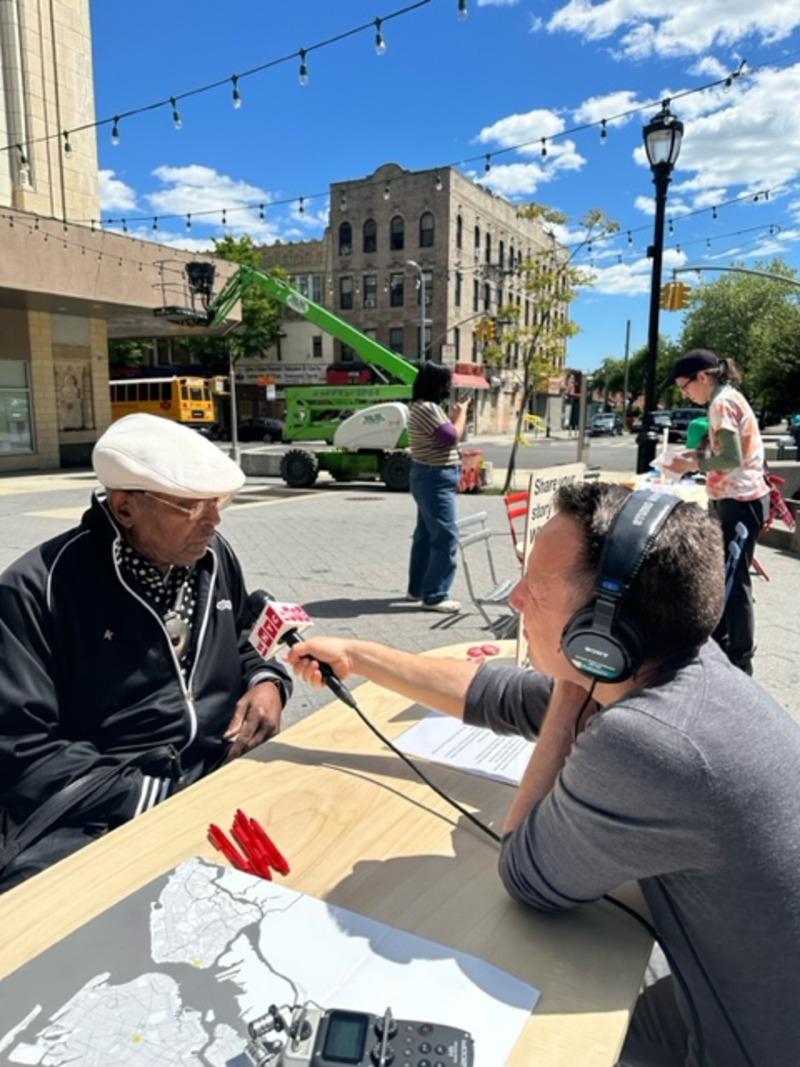
All Of It with Alison Stewart
Your Neighborhood Gems
00:29:34
WNYC's Community Partnerships Desk captures stories from across the New York metro area.
Loading summary
Transcript77 lines
- [00:04]
A
Listener support WNYC Studios.
- [00:17]
B
This is all of it. I'm Matt Katz in for Alison Stewart. Thanks for spending part of your day with us. I'm grateful you're here on today's show. Over the last decade, Eric the architect helped keep Brooklyn hip hop on the map with his sonically adventurous group, Flatbush Zombies. After moving to Los Angeles a few years ago, he's out now with his debut solo album, and he joins us for a listening party. A new book about the craft of writing from author Jamie Attenberg suggests writing 1,000 words per day, whether they're part of your story or simply a letter to yourself about the story or anything else. No judgments. It's called 1000 words, a writer's Guide to Staying Creative, Focused and Productive All Year Round. Plus, a debut novel imagines the nation after the first reparation bills for descendants of enslaved Africans has just been passed. It's titled Acts of Forgiveness. Author Moore Cheeks joins us to discuss. That's the plan. So let's get this started with WNYC's George Bodarky. One of the things that I love about radio is that it lets you hear people's voices in their own words. And what's specifically wonderful about local radio is you get to hear the voices of your neighbors in your community and maybe that community a mile away where you've never been. And that's why today we wanted to lift up the work of our Community Partnerships desk here at WNYC during MORNING EDITION and All Things Considered. They bring you stories from across the five boroughs into the suburbs. The desk is headed by George Bodarky, who joins me right now in the studio. He's always looking for suggestions. So we'll be taking your calls this hour. And George, welcome to ALL OF it.
- [02:09]
A
Hey, Matt, how are you doing?
- [02:10]
B
Great. You did not have a long way to commute. Your desk is literally the closest desk to the all of it studio.
- [02:15]
A
I have a front row view every day of all of it.
- [02:19]
B
Very good. So tell us what you're doing at this desk. Tell us what the Community Partnership desk is.
- [02:25]
A
Yeah. So the desk is really committed to building relationships and understanding the diverse needs and interests of the region's communities. We do that through various projects and initiatives. We just launched a project called Suds and Civics. Now in this project, we're spending time in laundromats across the New York metro area to find out what people want to know about the upcoming 2024 election and what issues they want to see the candidates address. So, Matt, if You need a load done, I'm your guy.
- [02:53]
B
Great.
- [02:54]
A
But really at the core of it, we strive to amplify voices within our neighborhoods. We have another project that I call our city, and in that project, we're out on the streets with a nonprofit organization, StreetLab. We literally set up tables on the street in neighborhoods across the five boroughs and simply ask people to share a story. Like, what's your story? We all have stories, and we've heard so many great ones. We've heard stories about people overcoming challenges, things like drug addiction to rebuild their lives or people who decided to start a baking business during COVID And so many stories of neighborhood pride, People who just feel so much love for their neighborhoods and the people and the places in their neighborhoods. You know, Matt, there are stories in every subway car, in every bodega, at every bus stop. And the more we hear each other's stories, the more we grow as individuals, and perhaps we understand a little bit more that we may all be more alike than we think.
- [03:56]
B
Sure.
- [03:57]
A
And there's so much diversity in the city, and I think it's really, really important. And we strive to make sure that we're reflecting that diversity in the V. Voices from our neighborhoods, but at the same time, reflecting our similarities and what connects us as people.
- [04:12]
B
That is absolutely. It's so cool. It's such a great concept, such cool ideas. In terms of, like, where you go about the laundromats. How did you come to that? Why laundromats?
- [04:23]
A
Yeah. So a number of years ago, I did a story about a artist who was doing ESL classes at a laundromat in Washington Heights. And I saw how people were so engaged. And first of all, people have time between washing and folding clothes. Right. You're just sitting there waiting and staring at the machine, spinning around, so why not do something productive? So that was tucked away in the back of my mind for a long time because I saw how well the laundromat served as a place to engage. Right. To build people up, to talk with each other. So I thought, you know, why not turn the laundromat into a place of civic dialogue, Right. Where there's a lot to talk about, coming up with the election and in general, every day with issues that are impacting our lives and our quality of life and things that happen in our neighborhood. So, yeah, why not use the laundromat to do that? And it's been really fantastic. I've been to a number of laundromats. I was on Staten island at Star Laundromat on Sunday for a couple of hours. And such a great diversity of opinions. And it's really interesting to see how that diversity changes from neighborhood to neighborhood and what matters most. And also the conversations that build. I was in a laundromat in Astoria and I was talking to one man who was 65 years old and he never voted in his life. And he said, you know what? My vote doesn't matter. Nothing ever changes, regardless of the candidate in office. And then I spoke to this other woman who was in the US for 30 years now, she's from Bangladesh, and she's like, I always vote. And then we had this great conversation between us.
- [06:00]
B
Wow.
- [06:01]
A
So, you know, it's also again, just having this conversation. So we're reflecting those voices back to as part of Suds and Civics too.
- [06:08]
B
Very cool listeners. We'd like to know your neighborhood gems. Is there a place in your community, community that serves as an oasis, whether it's a laundromat or anything else? What's a place that you take pride in? What's something that serves the community? Give us a call. We're at 2124-3396-9221-2433 wnyc. You can also text us at that number or you can reach us on Twitter, Instagram at all of it. WNYC 212-433-9692. Again is the number. I want to talk about a different project, the food memoir series, which you've been doing for a couple of years now. Tell us about that.
- [06:48]
A
Yeah. So really wanted to tell stories through food. Right. And reflect how food is a reflection, if you will, of our personal and cultural identities. So a couple of years ago around, you know, our big holiday season around November, decided to start to talk to people about family recipes and stories that they have related to their family recipes. And people have shared so many amazing stories with really a common thread. Food helps to bond us together. Right. Food helps us to have lasting memories. Food brings us so much comfort. Just the taste of a dish that we made in the kitchen when we were five years old with our grandmothers brings back this flood of memories. And also there, you know, regardless of your cultural background or the dish, we all have those memories and we all can relate to them. And I also say, you know, it's been was wonderful for me because many of these interviews, I met people in their homes, in their kitchens, and they were so giving and wonderful. And I gained like 10 pounds doing the food memoir project. But really, you know, when you when you hear these stories, they're just so personal. But at the same time, we can all relate to them.
- [08:02]
B
Sure.
- [08:03]
A
Because we all connect and again, grow memories through food.
- [08:06]
B
Let's hear from one of the people you spoke to as part of the food memoir series. Here's Lisa Wade. She lives in Addisleigh Park, Queens, and she talked to you about her family food memory.
- [08:18]
C
It was a breakfast, like a Sunday morning breakfast that we would have my great grandmother would make for me, and especially with grits. It was the best thing ever. We're from Tennessee, North Carolina and South Carolina, so I share that love of rice. What floods back for me, that memory is me sitting in our dining room on a Sunday before church. So she made it very early and gobbling it up and just thinking about how good it is because it's usually very crispy and I like the crispiness of the salmon cakes. My great grandmother died when I was 11. No, no, 15. And she was particular about not sharing the recipe with me because she was a cook and she wanted me to get an education and she did not want me to cook in someone else's kitchen for a living. So it's like a double edged sword for me because I don't have a recipe, so I just have to remember enough to make it.
- [09:15]
B
I love that memory, George, because she's remembering the details as she's telling you the story. Even the process of talking about it helps to bring people's memories back and helps people to understand how they connect with one another and their past. It's wonderful. This was also part of the Queen's Memory Project, this particular conversation.
- [09:34]
A
Yeah. So the Queen's Memory Project is a great project that works to preserve stories and photographs of life in Queens. And they have their own project where they're capturing stories around recipes and even putting out cookbooks based on those recipes. So we talked and we said, you know what, let's work together. So I've set up shop at some of their events, put my little story booth out, and invited people over to share stories about recipes. In fact, Lisa, I met at one of those events in Addislea Park. So, you know, great opportunity to connect. And we're doing also great work in preserving these stories for future generations.
- [10:10]
B
And this, this month, February, as part of Black History Month, you talked to people about black owned bookstores. What made you choose that particular topic?
- [10:19]
A
Well, first of all, I love a good bookstore, so any excuse to go to a good bookstore is reason enough for me. But the independent bookstore scene also isn't what it used to be. But we still have these really fantastic neighborhood gems. But beyond that, Matt, there is a lot of history here, right? The country's first black owned bookstore was established nearly 200 years ago. It was in Manhattan, and it served as a space for African Americans who were denied access to the city's public libraries. It was founded by publisher David ruggles back in 1834, 1 Cortlandt street and he was a black abolitionist, a writer, a publisher who played a lead role in the early network that would become the Underground Railroad. And today, many black owned bookstores continue a tradition of being more than just purveyors of books. And we have some great ones in the New York metropolitan region, including one in central Harlem. A wonderful, wonderful woman. Her name is Dawn Harris Martine. She's in her mid-80s now. And she started what wasn't a bookstore back in 1999. It was something else. I'll let her share it in her own words. But she saw a need in her neighborhood and she acted on it.
- [11:27]
D
I opened Grandma's place in 1999. There was a vacant building right next door to my house, and I did not want a laundromat or restaurant in there. So I decided, what did this community need? And I said, it needed a literacy center to teach parents and children to read. I was gonna name it the Kindred Literacy Center. And my 7 year old granddaughter said, no, Grandma, it's your place. It should be named Grandma's Place.
- [11:58]
A
Yeah. So, Matt, that literacy center over time. It's an interesting story because she was a schoolteacher at the time, working full time as a school teacher, and she would open the literacy at 3 o' clock in the afternoon after work. And over time, it's New York City. The rent went up and she said, you know, I want to keep this place, but I also need to pay the rent. So she turned it into a bookstore with about 20,000, 25,000 volumes of books that she had in her home. And it didn't do so well. It wasn't doing so well. So then she said, you know what? I'm gonna put some educational children's books and toys in here. And it stuck and it lasted. And she's still doing that. It's a wonderful shop, central Harlem, Grandma's Place. And it was rooted in her desire to help benefit the community. And now she's deeply, deeply committed to increasing financial literacy. It's a big push of hers now and to do financial literacy programs within the area too.
- [12:57]
B
Wow. Shout out to Grandma's. Place. So it's in central Harlem and it's operating in open.
- [13:02]
A
Wonderful. Yeah, definitely. Check it out. And you know, that's the wonderful thing about all of these bookstores, the diversity of titles in the bookshops. And one common theme in all the bookstore owners that I talked with, they saw the importance of making sure that kids and adults, of course, see themselves reflected in the titles of these books and the authors of these books. And I went to Source of Knowledge bookstore in Newark, New Jersey, which is now one of my also new favorite bookstores. I have some, they're all my favorite. But when you walk in and you see all of these children's books lining the shelves that reflect black and brown children, amazing stories of success and triumph. And Dawn Harris Martine shared the same thing. Growing up as a kid, she didn't see herself in books. So, so important for all of these bookstores to make sure that people see themselves in books. And you know, I'm not a little kid, but you can see a kid walking into any one of these stores and saying, wow, I could be president, I could be astronaut. And it was just really wonderful and so important to all of these owners to reflect that in their, in their titles, their books.
- [14:10]
B
Listeners, is there a particular bookstore or a place like Grandma's place in your neighborhood? WNYC's Community Partnership Desk run by George Badarkey has talked about black owned bookstores, Food memories. Next month he wants to hear your story of neighborhood gems. So give us a call. Give George some suggestions. What place in your community serves as an oasis? Oasis or a place that you might take pride in? What's something that serves the community and maybe people beyond the community don't know about? Give us a call at 212-433-9692. That's 212-433-WNYC. You can also text us at that number or reach us at all of it. WNYC on social media. Tell us your neighborhood gem. 212-433-9692. We actually just got a text, George. My little free library, located across from a retirement home and a park, is an impromptu multi generational gathering space. Bay Ridge, Brooklyn. How about that? Very cool, George. Last year you spoke to people who got involved in community gardens and I wanted to play some more tape. I love hearing these voices. This is Mike Young who is recounting his garden origin story which happened when he moved from Queens to Mott Haven.
- [15:32]
E
I moved here and I was taking my daughter to school one day and we Noticed this lot. This was not a garden at the time. We are living in apartments, and I've always bragged about, wow, I would love to have a backyard for the family. And she said, daddy, you can make that a backyard. I'm like, that's a lot of work. And at that time, it was old car parts here, old refrigerator parts. They made it a dumping ground, you know, until one day I saw a cute little old lady, Miss Ali. She had a little pair of scissors and on a little step ladder, and she was trying to prune the trees. I said, oh, my goodness.
- [16:17]
B
The. Oh, my goodness.
- [16:18]
A
Right? Yeah.
- [16:19]
B
I mean, he sees an elderly woman standing on a little stepladder trying to help a tree. And then he gets involved, and he remembers that all these years later. And the way he tells the story, it is so. It is so visual. I mean, these are the stories that make up the fabric of a city and a community. And, you know, we don't. In the newsroom, we don't always necessarily get to get into those sorts of stories. The packaging of new stories doesn't always allow for it, but you guys can.
- [16:45]
A
No, and really think about that. When you walk past something in your neighborhood and you look at it, take a moment and think about what's the story behind it, right? So who would have known that was the origin story of that community garden in the Bronx? And there were so many stories similar to that of people who, you know, started community gardens because they saw a need or they helped a neighbor. And all of a sudden, boom, here's this garden popping up in a community. But, yeah, it's so true, Matt. It's like, around every corner, if you stop and you think, what's the story here? Some amazing stories.
- [17:19]
B
We need to take a short break. We will have more with George Bodarky. Plus your calls. This is all you're listening to. All of it. I'm Matt Katz filling in for Alison Stewart, and we're talking with George Badarchy from WNYC's Community Partnerships Desk. And the work that George and his team do going out into the community, talking to folks about their memories and their neighborhoods and their communities. Last year, George, you spoke to older LGBTQ adults as part of Pride Month. And I want to jump back in by playing some tape from a woman named Donna Sue Johnson. But maybe you should tell us about her first.
- [18:04]
A
Yeah. Donna Sue. Donna Sue. I can still see her big smile. She had the most infectious smile and laugh. But Donna described herself to me as this. And this is a quote, direct Quote, a big, black, beautiful, bohemian, bougie, Buddhist, butch lesbian. So I think that tells you a lot about Donna Sue's character and who she is. And she's an outspoken woman, a wonderful woman. She came out when she was in the military, and she found a lot of solace in reading when she was younger. But overall, she was just a blast to talk with.
- [18:37]
F
I remember seeing dykes on bikes, and I remember calling my grandmother, and I said, wow, Mama Dot. We called her Mama Dot. I said, wow, Mama Dot. I can't wait to get a motorcycle. She said, we don't have no dykes on bikes in this family. I said, mama, dad, how do you know about dikes on bikes? She said, I watch Phil Donahue. What a magnificent epiphany of blissful pleasures to be able to understand and embrace who I am as a black lesbian who is aging with grace, aging in place, and aging intelligently. Not all of my cohorts are able to do so.
- [19:19]
B
That was Donna Sue Johnson. She sounds fantastic, George. I want to go to the phone lines and get some suggestions for neighborhoods for you to go to and hear some more stories, like from men. Meet more people like Donna Sue. So let's go to, actually, appropriately enough, sue from Manhattan. Hi there, Sue.
- [19:38]
G
Hello. My daughter recommended a cafe to visit, and it's called the Artbox Cafe. It was originally going to be called Arbox, and then she changed it to Artbox. So it's spelled O U R T. And it's at 2144 Fifth Avenue, which is halfway between. On the west side of the street, halfway between 1 32nd and 133rd, 132nd and 131st in Harlem, and right up from the National Black Theater, where they're renovating. It's owned by a woman named Lydia, and Lydia runs a small cafe, but original. And. And it's a wonderful cafe. And she makes wonderful, wonderful banana puddings. And it's really a welcoming space for. She has a small garden in the back so it can be an event space when the weather is warm. And I really recommend going there as a cafe. But it was originally the Gumby Book Studio. Alexander Gumby, who lived from 1885 to 1961, opened the cafe. And you can look it up if you look up Alexander. Alexander Gumby. G U M B Y. It's really quite interesting. For five or six years, he has this Gumby Book Studio, and there's a plaque on the wall. It's not a museum. It's now a cafe. But she took over A space. And I said to her when I met her, this is really a beautiful space. It's sort of unusually perfect for a cafe. And she said it's because it was one of the first. First small museums in Harlem and certainly one of the first LGBTQ museums. So I highly want to recommend it. It's artbox. Artbox Studio. O U R T Box. And it's open every. I think it's open every day but Monday, but you can look it up.
- [21:41]
B
Thank you very much, Sue. George was taking notes.
- [21:43]
A
Yes, I was taking notes. I mean, I love that. Right. Because not only is it a neighborhood gem in its existing form, but the history behind it, and that is so wonderful about New York City. And sometimes you just need to ask the question. You see a plaque on the wall. What's that plaque? What's that about? I once found this story, and I did a story about it because I was in a diner in Park Slope, Brooklyn, and I saw a photo on the wall of a plane that had. It was a crashed plane. I'm like, where was that? That was right out here. And I'm like, when was that? I think it was. I want to say don't quote me, but it might have been, like, in the 60s, and I had no idea. But there was a whole story behind that, and people who still lived in the neighborhood who remembered that. So this is wonderful. Took notes. Thank you.
- [22:23]
B
You beautiful. All right, let's go from. And thank you, Sue. Let's go from Manhattan to Brooklyn. Zakiya, are you there?
- [22:31]
H
Yes, I'm here.
- [22:32]
B
Can.
- [22:32]
H
Can you hear me?
- [22:33]
B
Absolutely. Thanks for calling.
- [22:35]
H
Thank you for having me. I just wanted to give a shout out to the Free Black Women's library. It's located 2 to 6 Marcus Garvey Boulevard in the Bedford Stuyvesant area. It is a beautiful community space in which women come and you can bring your laptop and sit down and do your work. The phenomenal thing about this space is that all of the books in the space are written by black women authors. Ola started this as a passion project on her stube, sharing books and giving books to people in the Bedford Stuyvesant community. And it's morphed into a home and a space for people to come and sit and read and partake in all of the events. All of the events. Events are free.
- [23:27]
G
Yeah.
- [23:28]
H
I don't know what else you want me to say, but I just wanted to share that as we talk about phenomenal spaces and spaces that represent black people and black women in particular.
- [23:39]
B
Thank you very much. Zakiya. That's wonderful. George was again taking notes, getting a growing list here.
- [23:44]
A
I love it.
- [23:45]
B
You know, it's interesting, George. There is this concept of, I think it's third space. You have your home and you have your work. And then there's this idea that people need another place where they can. Where they can be, where they can exist, where they can interact with people they know and strangers. And that's important for communities.
- [24:03]
A
Yeah, it's so important. And, you know, that could be a community garden, that can be a bookshop, that could be a cafe, but really it is that space, right? That solace that we find outside of our own homes. And then certainly with places like community gardens, and we heard that from Mike in the Bronx, like, when you don't have a backyard and you don't have a balcony, where else do you go? And these spaces within neighborhoods just enrich people so much, and there's so much pride in keeping them up and going strong.
- [24:32]
B
We have a text about another bookstore. The Worldsboro Bookstore is a fairly new bookstore in Jackson Heights where there was a pitiful dearth of bookshops. According to our texter, it's also an events venue and near a school whose students like to. Where students like to go after school.
- [24:50]
A
School.
- [24:50]
B
That's all right.
- [24:51]
A
Yeah, that's great. You know, that's also a recurring story related to bookstores, because even in the Bronx, for instance, where there was a Barnes and Noble in Bay Plaza, and when that closed, people were really saddened by that because there was a place for them to go and there weren't other, really places to go. So one of the bookstores that we focused on in Mott Haven, Edokyo Bookstore, opened also now a community space and a place for people to go for educational events and other things. So, again, not just a bookstore, but affording much more. So I can definite relate to that one.
- [25:22]
B
You know, one. One theme that. That runs through the. The. The interviews that you've done is that no one you talk to is. Is famous. I mean, these are not household names. They're just people out there living their lives. What, why. Why is that important to you to kind of lift up those voices?
- [25:39]
A
I mean, these are the voices that make this city tick, right? These are who we all are, right? With our own stories. And there's so much that we can learn from each other and each other's stories. I mean, storytelling at the core of it, connects us. So. So I often say ordinary people. I don't know what that means. Right. We're all extraordinary in our own right. But extraordinary stories, and sometimes even what we don't think are extraordinary stories can really impact somebody else because it makes you feel inspired. It helps you to get over a hurdle because someone else is sharing something that you can relate to. And again, it's thinking about. We never know what somebody else's story is. So to get to know that and to understand that, again, this is the fabric. This is what keeps our communities going. So that's really what it's at. Right. Not just celebrity, if you will.
- [26:31]
B
And do you hear from people afterwards that they appreciated the opportunity to be able to talk to hundreds of thousands of New Yorkers on the air?
- [26:39]
A
Yeah, yeah. No, not only that, but people do. They really do appreciate the fact that their voice is heard. Right. That their voice matters. And also on the other side of that, hearing from people who say, thank you for sharing that, because I related to it, or it made me think of my grandmother and cooking in the kitchen, and it took me back to this place. So, yeah, on both sides, people appreciate sharing, and then we appreciate receiving.
- [27:04]
B
All right, let's. Let's listen to one more story, get one more story shared. Jack is a caller from the East Village. If Jack is available to us. Maybe not just yet. Okay. No, Jack, tell us before we get. Oh, Jack is now here. Hey, Jack.
- [27:22]
I
Hello.
- [27:23]
B
Hi, you're on the air. Thanks for calling in.
- [27:27]
I
Oh, my gosh. Hello.
- [27:28]
B
Hi.
- [27:29]
I
Big time listener, welcome. Love npr.
- [27:34]
B
Excellent.
- [27:35]
I
No, I wanted to talk about a cafe on my street called the Lazy Llama Cafe. It became extremely important for the whole neighborhood during the time of COVID because she kept the cafe open. And suddenly there were no cars on the street. There was very little pedestrian traffic from outside of the community. And for the first time having lived here for 40 years, I became aware of my neighbors, people in my building who would. We'd pass and not talk. Suddenly, we were meeting for coffee and social connection. And it's become so important to the community in terms of supporting each other, shared conversations, health issues. A lady in my building lost her husband, and we all were able to share in that story. And also she gives out tree. The woman who runs the Cafe Oya is originally from Turkey. She's the most generous and she's beautiful. Beautiful. And she hands out treats for the dogs. So you can see the dogs pulling on the leashes down the street, aiming for the cafe and pull them in and. But it's. It's made such a difference to our neighborhood being able to talk about neighborhood issues, being able to take care of ourselves, have that space, checking out for each other. And I have a great idea for a television series. I don't know if you know a show called Coronation Street. It's been a big time thing on, on BBC.
- [29:11]
B
Well, well, Jack, we'll take your, we'll take that concept at a later date. But really appreciate you calling in. Let us, letting us know about your, your coffee shop. That's great. Thanks so much, Jack. George, thank you very much. Tell us real quick before I let you go, what do you have on tap for March?
- [29:26]
A
Yes. So neighborhood gems. I'm taking note here.
- [29:28]
B
Okay, great.
- [29:28]
A
Llama Cafe and these other recommendations sound great. So yeah, later in March you can expect us to be out in communities talking to folks about their neighborhood gems.
- [29:37]
B
George Bodarki from WNYC's Community Partnerships Desk, thanks so much, George. Appreciate it.
- [29:42]
A
Thank you.
- [29:43]
F
NYC now delivers breaking news, top headlines and in depth coverage from WNYC and Gothamist every morning, midday and evening. By sponsoring our programming, you'll reach a community of passionate listeners in an uncluttered audio experience. Visit sponsorship.wnyc.org to learn more.