← All TWiT.tv Shows (Audio)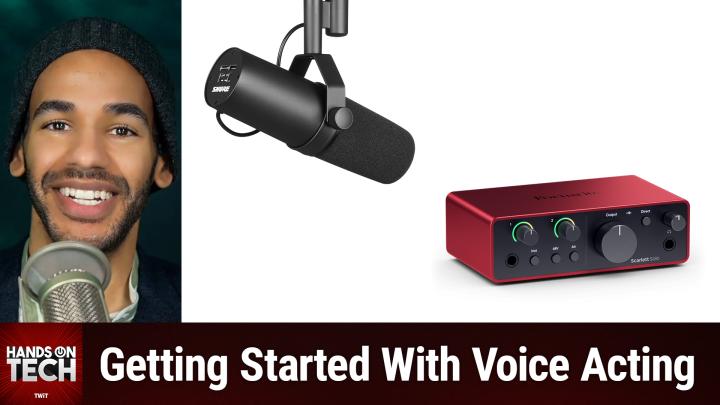
All TWiT.tv Shows (Audio)
Hands-On Tech 203: Voice Acting Setup & Gear
00:14:44
Getting Started With Voice Acting
Loading summary
Transcript9 lines
- [00:00]
Micah Sargent
Coming up on Hands on Tech, let's take a look at what you might need. If you are looking at setting up your voice acting career, stay tuned.
- [00:10]
Unknown Advertiser
This is twit. Attention taxpayers. The IRS is intensifying collections in 2025. If you owe $10,000 or more or have unfiled tax returns, it's time to take action. Tax Network USA's experienced lawyers have saved clients over a billion dollars. They're ready to negotiate with the IRS on your behalf. Don't risk wage garnishment, property seizure or losing your home. Call 1-800-958-1000 today. Get the help you need at 1-800-958-10000 or visit tnusa.com listeners are you looking.
- [00:49]
For a shortcut to better auto insurance for you? Something that takes all the research off your plate. Something that's easy, Something that matches you with lower rates. Something that something genius. That's where NerdWallet comes in. Their nerds already did the work for you. Just answer a few questions and ta da, you'll be matched with top insurance providers in your area. Find the right rate for you@nerdwallet.com after all, using NerdWallet is more than smart. It's genius. Not all applicants will qualify for the lowest monthly payments. NerdWallet Insurance Services Incorporated, CA Resident License Number OK 92033 hey Prime Members, Are you tired of ads interfering with your favorite podcasts? Good news. With Amazon Music you have access to the largest catalog of ad free top podcast podcasts included with your prime membership. To start listening, download the Amazon Music app for free or go to Amazon.com ad freepodcasts that's Amazon.com ad free podcast to catch up on the latest episodes without the ads.
- [01:45]
Micah Sargent
Hello and welcome to Hands On Tech, the show where I, Micah Sargent, take your tech questions and do my best to answer them. We get in some great questions of all sorts from different topics and subjects and it's always a good time to a figure out what people are struggling with out there and what I can help with, but also to see what people are into, what kind of tech they're they're, you know, using and occasionally learn some new things myself. This week's question is a fun one because I think it's a little bit different from what we're used to, where we're kind of troubleshooting right computer issues. This one comes in from Faye and Faye writes in to say what microphone slash setup would be best for voice acting. Is there a standard Mixer slash audio editor that people record on. I'd love to know what your take is as a beginner's guide to voice acting tech. So, Faye, first and foremost I want to say that's super awesome that you're thinking about getting into this. This is a question that you could ask 15 people and get 15 to 20 somehow different answers. It all depends on budget, on desire. In terms of, you know, how important this is going to be on. I think it needs to depend on success. I need. I think it depends on longevity. There are so many factors involved in what I would recommend you buy. And I think first and foremost I'm going to say this. There's no. Sometimes you see people make the mistake of investing a bunch of money in something that either A, they unfortunately do not find success in, or B, decide that it's not for them. And given those things, you don't want to over invest because over investing is again going to. It's risky. It's risky to do. So let's talk about some things to be aware of before we even talk about the microphone. I argue, and actually so do many others, that the space you are in is more important in so many ways than the microphone you are using. And when people are kind of buying these expensive microphones that are very good at picking up sound and are, you know, sort of providing a richness and robustness that they were not used to, they suddenly hear the neighbors that are arguing across the street or the H Vac that's running in the background, or the, I don't know, fish tank that's bubbling in the same room as them. Getting your environment right is the first step to making sure that you have good sound. Now I have a recommendation for you. Getting into voice acting. I'm kind of curious if you mean narration, if you mean, you know, voice acting for television shows, whatever it happens to be. But there's a fantastic website that is ACX.com and ACX is kind of Amazon's audible situation. It's. It's the place where people who are looking to narrate audiobooks go to sign up and kind of put their portfolio out there to be chosen by the authors of the different books or the production companies or distributors or whomever it happens to be in charge of making those choices. And ACX has some good guides for people who are starting out, including a guide called A Studio of One's Own. And this guide talks about setting up your studio and very importantly talks about how location is a huge part of what you're doing so when it comes to having a room that is quiet, you can invest in sound panels, but if you're just starting out. Interestingly, ACX says this Block out external noise and dampen vibrations by covering your walls and your ceiling with acoustic panels, egg crate mattress covers, carpets or even thick moving blankets, duvet covers or curtains. If you're using fabric insulation, leave a bit of space between each panel so the sound of your voice can be diffused a little and won't sound flat because fabric can absorb sound too well at times. Treat the studio side of your door the same way as your walls and ceilings. You want to make sure that all cracks are covered and you also able to get in and out easily. We recommend using a plastic door sweep or a long dense pillow to cover the crack between the door and the floor when you're recording. They go on to talk about the floor of your space. If you know you don't have a carpet on the floor and furniture because it actually turns out that you know putting even just normal stuff into your room, a bookcase that has books in it will help to make it so that you are producing better sound. But treating your room is so important when it comes to getting good sound and then looking for sources of sound that you don't want to be part of your recording, and ditching those is very important. After that, you want to make sure that you don't have any issues with electronic devices kind of wreaking havoc on your system, particularly if you're using a budget option. Occasionally, some of those budget options will not have cables that are shielded properly to keep those devices safe from other electrical interference. And so you want to kind of listen for that and make sure that everything's good to go there.
- [08:07]
Unknown Advertiser
Attention taxpayers. The IRS is intensifying collections in 2025. If you owe $10,000 or more or have UNF tax returns, it's time to take action. Tax Network USA's experienced lawyers have saved clients over a billion dollars. They're ready to negotiate with the IRS on your behalf. Don't risk wage garnishment, property seizure or losing your home. Call 1-800-958-1000 today. Get the help you need at 1-800-958-10000 or visit tnusa.com listeners.
- [08:37]
Are you looking for a shortcut to better auto insurance for you? Something that takes all the research off your plate. Something that's easy, Something that matches you with lower rates? That's where NerdWallet comes in. Their nerds already did the work for you. Just answer a few questions and ta da. You'll be matched with top insurance providers in your area. Find the right rate for you@nerdwallet.com after all, using NerdWallet is more than smart, it's genius. Not all applicants will qualify for the lowest monthly payments. NerdWallet Insurance Services, Inc. California resident license number OK 92033 Living a Healthy life.
- [09:08]
Looks different for everyone and Symbiotica is here to support your journey. Their products are free from seed oils, preservatives, toxins and artificial additives designed to complement your lifestyle. Plus their liposomal vitamin C packets use cutting edge technology for better absorption and results. Go to symbiotica.com and use code I HEART at checkout for 20% off +free shipping. That's symbiotica.com and use Code IHEARTCHECKOUT for 20% off +free shipping.
- [09:38]
Micah Sargent
When it comes to getting going, the the Studio of your of One's Own actually has at the end a little starter pack guide and interestingly, a device that we often send to our our panelists and guest hosts is the focusrite Scarlett and that is one of the options that is listed here in the in the blog post. And so that inter paired with the microphone can be a choice. But here's the thing again, when it comes to what gear you're getting, start with the space and then start looking at that because you would be surprised at the level of quality that you can get out of a less expensive microphone when you have that set up around you that is making it so that you sound your best and it's just you and your voice and that's all that's involved in the process. Now once you've got that figured out, then you can start looking at what comes next. Like the microphone. I'm not going to recommend any individual microphone. Instead I'm going to suggest that you consider starting Faye with a USB microphone. I'm there's one microphone suggestion that I'm going to make as a Never under any circumstances should you get this microphone. Despite the fact that so many places suggest that it's an option. It is never an option as far as I'm concerned to get the blue Yeti Snowball. The blue or so the blue Snowball, the blue Yeti is a good microphone that unfortunately is very sensitive and so a lot of people end up getting that one and then they they don't have the properly set up space and they don't set the right pattern on it and there's, there's a lot that's involved with it. You can get great sound from it, but there's a lot that's involved with it. But under no circumstances do I ever recommend getting the blue snowball. It is, it's just the, the shape of it and the, the, the, the idea of it and the way that it picks up sound and the default options that you have with it are all kind of conspiring, I think, against you to produce the best sound. And it just is not. Well, I can't say enough about how much I don't recommend that microphone. But look at modern USB microphones and consider starting there. Once you've got your setup figured out and the space is nice and quiet and is properly kind of routing the sound around you. And then what's great is that ACX actually has a tool that will kind of check your audio quality and see if it's up to what it should be. So you can use that to kind of test and make adjustments and test and make adjustments and test and make adjustments. And I also recommend listening to. If you're doing voice acting, if you're doing narrating, if you're doing whatever it happens to be listening to those and kind of comparing your sound to those after the fact, I would recommend having a, especially if you're doing voice acting, a pop filter of some sort that's this little air, this, this little device that's over the top of the microphone. And it basically helps to disperse the plosives, the P's and the, and anything that, that pushes air at the microphone, it helps to disperse it so that it doesn't sound as, as rough when it hits the microphone. And when you're doing voice acting, when you are, you know, switching from different dynamics when you're, you're going up and you're going down and you're getting quiet, you're getting loud. That is incredibly important. So make sure that that's part of your setup as well. And then last but not least, I don't know about you, but if I'm doing voice acting, I got to get my body involved. And so that means making sure that your microphone is not sitting on the table or the surface where you are of interacting. Meaning that you've got some sort of boom arm or some sort of setup that keeps your microphone isolated from the things around it. So something like a shock absorber, like the shock mounts that you can use, anything that will keep that protected. So that when you're, you know, moving around and really getting into it that the microphone is not picking up on every single vibration of the space around you. So yeah, head to ACX.com and check out the blog page which has more about this. And the reason why I keep pushing ACX is I just they're this is literally the focus of this. This site is making good narrators because they need them to be able to sell audiobooks. So it's within their it behooves them right to provide good advice and suggestions to help you make a great setup. And Faye, I'd love to more about what you plan to do with the voice acting. If you again are thinking more like TV shows or narration or whatever it happens to be and let us know what you end up going with to get started. And you know, over time you kind of upgrade from there, right? And add to your system, take things away depending on what works for you. So I'd love to hear more about that Faye. And thank you for writing in. That is our question of the week. Some gear for voice acting and some suggestions for voice acting as well. If you have questions, you can email those Hot Whit TV if you would like a premium oh, did you hear that? I think I might have been a little bit too close. If you would like a premium experience here at well can I invite you to join the club $7 a month at TWiT TV Club TWiT. When you join the club, you gain access to every single one of our shows ad free. It's just the content, none of the ads because you're supporting the show. We also gain access to the Twit plus bonus feed that has extra content you won't find anywhere else behind the scenes before the show. After the show, special club Twitter events get published there and access to the members only. Discord Server a fun place to go to chat with your fellow Club Twitt members and also those of us here at TWiT. If you have been thinking about joining the club but you're just not sure if it's for you, well I want you to join the club because for a limited time we've got two weeks of Club Twit for free at Twitter TV Club Twit. So just head there, check it out, see if it's for you and once you've decided, you know, then you can hop on board for $7 a month as members of Club Twit. If you're listening to this Twit TV Club Twit referral is where you should go because you can earn free months of Club Twit by joining the club. And we'd love to have more of you here. So thank you for your support and thank you all for tuning in this week to Hands On Tech. We'll be back next week with another episode. Buh.
- [17:31]
Unknown Advertiser
Bye.