← All TWiT.tv Shows (Audio)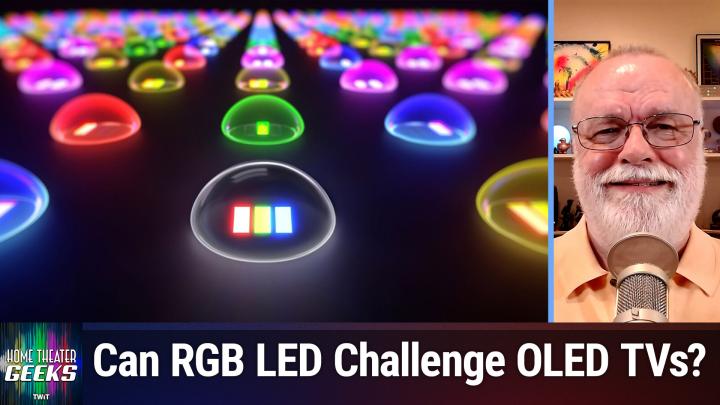
Loading summary
Transcript11 lines
- [00:00]
Scott Wilkinson
In this episode of Home Theater Geeks, I talk about a new LED TV technology, so stay tuned.
- [00:09]
Bluehost Advertiser
I'm no tech genius, but I knew if I wanted my business to crush it, I needed a website. Now thankfully, bluehost made it easy. I customized, optimized and monetized everything exactly how I wanted with AI. In minutes my site was up. I couldn't believe it. The search engine tools even helped me get more site visitors. Whatever your passion project is, you can set it up with Bluehost with their 30 day money back guarantee. What do you got to lose? Head to bluehost.com that's B L U E H O S T.com to start now.
- [00:39]
Ryan Reynolds
Ryan Reynolds here from Mint Mobile. I don't know if you knew this, but anyone can get the same Premium Wireless for $15 a month plan that I've been enjoying. It's not just for celebrities. So do like I did and have one of your assistant's assistants switch you to Mint Mobile today. I'm told it's super easy to do@mintmobile.com.
- [00:57]
Mint Mobile Advertiser
Switch upfront payment of $45 for 3 month plan equivalent to $15 per month required intro rate first 3 months only, then full price plan options available, taxes and fees extra. See full terms@mintmobile.com.
- [01:12]
Bluehost Advertiser
Podcasts you love from.
- [01:14]
Club Twit Advertiser
People you trust this is.
- [01:28]
Scott Wilkinson
Hey there Scott Wilkinson here, the home theater geek. In this episode I'm going to talk about a new technology that was introduced at CES 2025 for LED TVs. What are really LCD TVs with LED backlights and more specifically mini LED TVs. Hisense and Samsung at CES introduced this new technology that I it looks like it might give OLEDs a run for their money. It's surprising for me to say that, but it could be. And since then Sony announced that it's also been working on the same technology. It's called RGB LED. Instead of blue LEDs in the background in the backlight, which we can see in graphic 1, this is provided by Sony sort of just to show this is this is a conventional backlight with blue LEDs. It uses red, green and blue LEDs in basically each LED or has a red, green and blue sub LED in it, I guess you could say. So each LED is really full color and and controllable to produce just about any any full color. The next graphic shows the basic structure of a current QLED tv. There's a blue mini LED backlight, a quantum dot enhancement film which has red and green quantum dots in it when combined with blue makes white. And what you end up with is a low resolution black and white version of the image. That light then passes through color filters in the LCD layer to form the full color image. This has been around for a few years and it's a really good technology. It works great Now. Graphic four shows the new RGB LED structure. The backlight has red, green and blue LEDs, mini LEDs, really, which form a full color image, though again at a lower resolution in the backlight. This light then passes through an LCD layer with red, green and blue filters to form a much higher resolution final image. So it has several advantages. It has greatly increased brightness. Hisense showed a prototype with 10,000 nits of brightness. Now no home content is mastered with 10,000 nits. The most they go up to is 4,000 nits, so you got a lot of headroom there. But it also offers a lot less blooming around images, bright images on a dark background. It also has a wider color gamut. Hisense claims 97% of BT 2020 and a larger color volume which we can see here. The color volume of W OLED is relatively small. QD OLED is quite a bit larger. Mini LED LCD TV is larger and RGB is the largest yet that has the largest color volume, which means colors remain saturated over a greater range of brightness levels. So that's a pretty big advantage. It also has a better color spectrum which we can see here. The gray line is a typical color spectrum for a mini LED tv, a conventional one. And you can see it's very similar in the blue and the green, although it's a bit wider in the green, but it's quite a bit shorter in the red, but with an RGB LED backlight. That's the colored line you see here. And it's a narrower green and a much taller and narrower red in the spectrum, which gives you a lot of advantages. Greater color volume, greater color gamut, and those are all really good things.
- [06:09]
Ryan Reynolds
Ryan Reynolds here from Mint Mobile. I don't know if you knew this, but anyone can get the same Premium Wireless for $15 a month plan that I've been enjoying. It's not just for celebrities. So do like I did and have one of your assistant's assistants switch you to Mint Mobile today. I'm told it's super easy to do@mintmobile.com.
- [06:27]
Mint Mobile Advertiser
Switch upfront payment of $45 for 3 month plan equivalent to $15 per month required intro rate, first 3 months only, then full options available, taxes and fees, extra fee, full terms@mintmobile.com Now Sony flew.
- [06:42]
Scott Wilkinson
A few journalists to its Tokyo headquarters. Sadly I was not included in that trip. But oh well. And all were quite amazed at the picture quality. All the reports I read were really really glowing. According to Ryan Juaniata at Wired, the prototype had richer and more saturated colors than the Bravia 9, which Sony put the prototype next to, and even the Bravia 8 OLED. And it was clearly brighter than the Bravia 9, which is the probably one of the brightest consumer TVs you can buy today. He was also impressed with the off axis performance, which surprises me because LCD has this basic problem with off axis performance. But apparently the Sony prototype was performed very well in that regard. But he did say the black levels were not as good as OLED, which in is typically the case for LCD based TVs. Now Sony claims that it can reproduce 99% of the DCI P3 color gamut, which is what's used in commercial Cinema and in T4K Ultra HD TVs these days, and 90% of BT 2020, which is the sort of ultimate color gamut. The prototypes still use color filters like conventional QLED or other forms of LCD TVs along with Sony's XR color booster and other technologies. Now the Hisense 116 inch UX Trichroma RGB TV using this technology is set for release in 2025. Samsung didn't disclose much about its technology at CES. Sony expects to have RGB LED TVs on the market in 2026. Now could this technology give OLED some real competition? It could at first. It's likely to be very expensive, very expensive, maybe more than oled, which is already more expensive than any type of LCD tv. I will reserve judgment on off axis performance until I actually get to see one for myself. I'm skeptical because LCD TVs that's an Achilles heel for all TVs based on LCD technology. Can it possibly be as good as oled? We'll see. On the other hand, it'll certainly be much, much brighter than OLED and with greater color volume than even a QD oled. So it's a very interesting technology and I wanted to share it with you as a sort of a preview of things to come. Not a day of not a dull moment in the TV industry, that's for sure. So hope you enjoyed that. Now if you have a question for me, please send it along to htgwit TV and I'll answer as many as I can right here on the show. And as you undoubtedly know by now, all of TWIT's shows are available on YouTube for free but with ads. If you want to go ad free, join the club. Go to TWiT TV ClubTWiT and sign up today to get all of Twitt's shows, including Home Theater Geeks ad free. Until next time, Geek out.
- [10:33]
Club Twit Advertiser
Hey buddy, are you a geek? Are you a tech enthusiast? Then I would love to invite you to join a tech community like no other. You can gain exclusive access to our incomparable quality tech content with Club Twit as a member. You'll Enjoy all Twitt TV shows ad free plus access private video feeds for insider shows like iOS today, home theater Geeks and so much more. Dive into the members only Twit plus bonus feed for behind the scenes content, club discussions and special events. But here's the best perk. Join our incredible Discord community to watch live show productions and chat with hosts and participate in exclusive members only activities. It's your backstage pass to the world of twit. Whether you're a tech enthusiast or a lifelong learner, Club Twit elevates your knowledge while entertaining your interests. Get two weeks free when you sign up now and unlock unparalleled access at TWIT TV Club Twit. That's Twit TV Club Twit. And from the bottom of my heart, thank you and welcome to the.