← All TWiT.tv Shows (Audio)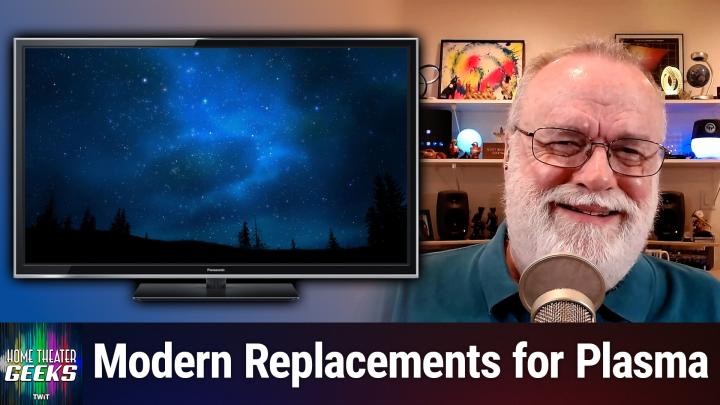
All TWiT.tv Shows (Audio)
Home Theater Geeks 494: Best Plasma TV Replacement?
00:17:32
Getting caught up on modern TV tech
Loading summary
Transcript15 lines
- [00:00]
Scott Wilkerson
In this episode of Home Theater Geeks, I answer a question from Edwin Boone who has a 12 year old plasma and wonders what would be the best replacement. So stick around. This is one of the most spectacular venues with all kinds of character and hospitality scenery. These people in this Gita Task valley, they love when you come to see.
- [00:24]
J.J. Harris
What they have to offer. I'm J.J. harris, an Ellensburg rodeo clown and I want to invite you to to the rodeo. Come hang out with us in Ellensburg. Great rodeo, great time. Two performances on Saturday. One is the Extreme Bulls of the Year event. Do not miss the Ellensburg Rodeo August 29th through September 1st. We'll see you there.
- [00:43]
Brad
When the Moore family ditched cable Internet and switched to Zigly Fiber, they got so much more. Mr. Moore got more upload speed for next level gaming and livestreaming to the masses with reliable service. Mrs. Moore is no longer her family's IT guru, leaving her more time to stream games into overtime.
- [00:58]
Scott Wilkerson
Let's go.
- [00:59]
Brad
And young Mason Moore got more quickly uploading HD product demos and video conferencing without freezing the numbers look good.
- [01:06]
Scott Wilkerson
Brad, you're on mute.
- [01:07]
Brad
Switch from cable Internet to Ziply Fiber and get more of what you love for $65 less per month than cable@ziply fiverr.com.
- [01:16]
Unknown
Podcasts you love from people you trust. This is twit.
- [01:32]
Scott Wilkerson
Hey there Scott. Wil Dickinson here, the home theater geek. In this episode, I answer a question from Edwin Boone who writes, I've got a 60 inch Panasonic Viera Plasma TV that's now 12 years old. It's running great. I keep it out of the sun through the windows. In fact, I usually only use it after sunset and I turn it off completely after use. I have blown fresh air from a leaf blower to the vent areas a couple of times and so far no bad side effects have appeared. I worry about the TVs electronics. They're old, but no failures yet. I'm very happy with the plasma, but it can't go on forever. Any advice about which models might be comparable these days? Well, Edwin, I've got plenty of advice. The Panasonic Plasma TVs were great, second only to the Pioneer Kuro plasmas which I had for many years. But the Panasonic's were also great. And if you're happy with the TV's performance, I'd use it. As long as it works. No reason not to. Well, there might be, which I'll get to in a minute. And you're doing all the right things, keeping it out of direct sun, turning it off when it's not in use, I would say. Also, don't pause content for long periods of time unless your source has a screensaver that kicks in after a little while. Because still images on a plasma can lead to image retention, which is temporary, which would be sort of outlines of still images that were on the screen for a long time or burn in, which is the same thing, only it's permanent. Plasmas were particularly susceptible to this, so I would recommend not doing that. Also, if you watch a lot of news programs with tickers along the bottom, or if you watch a particular channel for a long period of time that has a, what's called a bug in one corner that identifies the channel that you're watching, these can also cause image retention or burn in. Also, if you play video games. I was just at my nephew's house yesterday and was watching, doing some video games with him and there's a big old scoreboard at the, in the lower corner of the screen and it just stays there. And if you did that for many hours or days at a time, that would definitely cause image retention or burn in. Now there's two things that your Panasonic plasma can't do. 4K or UHD resolution and high dynamic range or HDR of those two, HDR is far more important in my opinion. There's quite a bit of 4K UHD content out there now and you're plasma can't take full advantage of it, but it also can't take full advantage of high dynamic range, which is really important. It really improves the picture tremendously. In fact, it has a lot more obvious impact improvement in picture quality. So this is a strong argument for upgrading your TV sooner than later. As you know, plasma TVs aren't made anymore. They ended quite some time ago. Now, it was my favorite TV technology of the time, but times have moved on. The most comparable TV technology today is oled, which I prefer over the other primary television technology, which is LED backlit LCD, which is called LED TV for short. Now LED TVs are often brighter than OLEDs, but OLED can, can achieve essentially perfect blacks, which LEDs generally cannot. And also OLEDs look a lot better when viewed from off center, what we call off axis. Now in general, OLED TVs are generally more expensive than LED TVs of comparable size. But in my view it's well worth it because of those perfect blacks and the off axis, better off axis viewing. Now, when talking about replacements, you don't mention a budget But I'll give you a few recommendations anyway. OLEDs typically come in 55 inch, 65 inch and 77 inch, along with some smaller sizes in many cases and a few that are larger. 83 and even 97 inches in a few cases, but not 60. The plasmas came in 60 inches, but OLEDs don't. So you're gonna. If you want something of a similar size, you're going to have to stick with 55 or 65.
- [07:02]
Unknown
From the cascades to PDX to your kitchen. We recycle like we live here. That's why governments, brands and recycling companies are all joining together to bring change to make recycling better. As in trusting that your recyclables end up in the right places to be made into new things and having brands help fund the cost of recycling. You can find the latest updates@wisconsin michaelon.org Oregon From Mount Hood to the bin under your desk. Together we can do this.
- [07:32]
Scott Wilkerson
Now the main Companies in the US that sell OLED TVs are LG, Samsung and Sony. And recently Panasonic got back into the game. As you know. Well, they have a, they used to sell plasma TVs in the US but they got out of the US market some time ago and they've only recently reemerged into the US market with some OLED TVs. So I put together a little spreadsheet that I will show you here and we can go over some of the options for OLED TVs that would be good replacements for your Panasonic plasma. And if we take a look at that, we can see I've categorized them into less than $2,000 and more than $2,000. And LG has the most models that are available. And I looked specifically at the B series and the C series in the lower, lower end they also make an A series, but the B series has 120Hz refresh rate which, which is where I'd like to start. So as you can see, and I can included the 2024 models and the 2025 models and they indicated by the last digit in the model number. So the 55B4 which was last year's model is selling on the website. And by the way, all these prices are from the manufacturer website. Sometimes they indicate a sale. You know, they say, oh, the list price is this, but our sale price is this. And I'm listing this, what they call the sale price, it's effectively the purchase price. I, I think those are relatively long term sales, shall we say. Anyway, so the B4, as you can see the 55 inch is a thousand bucks. The B5 which is current model, 1300 dollars 300 difference. If you go up to the 65 inch Bs. The B4 is 1200 and the 65 B5 is 1600. Interestingly, take a look at the Cs in, in the LG line. The C4. The 55 inch C4 from last year was not discounted. It was listed on that site as $2,000. That's like what? I, I don't get that at all. The 55 inch C5 is only 1400 dollars, 600 less than last year's model. Okay, that doesn't make a lot of sense, but that's what was on the site. So. Okay, and then the 65 inch C4, as you can see there, C4 is 1400 and C5 is 1700. Continuing in the under two thousand dollar range, Panasonic has a lower end model 65Z85A for a thousand bucks. That's pretty good for a 65 incher. Samsung has three models under two thousand dollars which you can see there. And those are all. Those are all QD OLED. The, the LGs are all what are called W OLED, which means conventional OLED. A red, green and blue subpixel and a white subpixel. Hence the name W O L E D. The Panasonic Z85A is the same. The Samsung models are what are called QD OLED or quantum. OLED. And that's a better technology, no question about it because it uses quantum dots, doesn't have that white subpixel so it maintains color saturation at brighter at higher brightness levels. And they have three models here. The 55 inch S85F, the 55 inch S90F and the 65 inch S85. The S90F does have a 65 inch version, but it's actually over $2,000. So I put it in the next category and you can see the prices there. Sony has two OLEDs under $2,000 called the Bravia 8. The 55 and 65 also woled conventional OLED. And you can see there, they're just a little bit more expensive than the Samsung's which we have come to expect from Sony. Just a little bit more expensive, but in my opinion worth the extra hundred bucks because they generally have better processing. Samsung processing is no slouch, don't get me wrong. But I will say this. The reason I normally don't recommend Samsung TVs is not because they're not good TVs. They are good TVs but they don't support Dolby Vision. High dynamic range. Samsung has chosen as a company to not support Dolby Vision in any of its TVs. And I think Dolby Vision, it's, first of all it's common, that's used a lot and it's a really good HDR format. So I want a TV that supports it. So that's why I generally don't recommend Samsung. So that's under $2,000. If you, if you have the budget to go over $2,000, you've got some options as well and they will generally be higher quality. And by the way, I will say this. When you go from one model line up to the next, say for example from LGB to C, you're going to get more brightness and better processing. That's the primary difference. They're all going to be 4k, they're all going to be HDR capable. Samsung's won't support Dolby Vision, but they do support other HDR formats. So that's basically what you're getting when you go from one product line to the next. So over $2,000 we have the LGs again, the G4 and the G5 from 2024 and 2025. And you can see the prices there. 65 and, and again the 65 inch G4, last year's model is way more expensive than the, than this year's 65 inch G5. So weird. I don't get that. The Panasonic Z95A only comes in a 65 inch. The 85A only comes in a 65 inch as well as far as I could tell. And that's 3200 bucks. That's very expensive. Very expensive. Samsung has some QD OLEDs that are over 2000 but under three that. Well the 65 inch net S95F is 3300 bucks. So that's pretty expensive. And then the Sonys, the last year's A95L is the TV I actually have in my theater and I love it. I think it is a beautiful TV and you can get the 55 incher for 2000 bucks. This year's QD OLED is the Bravia 8 Mark 2 and it also comes in 55 and 65 inch versions. And you can see there they're quite a bit more expensive than the a95L. So what I recommend, what the, the models I recommend are in green in this Spreadsheet. And so you can see, I recommend for the low end, lower end, the LG C5 and 65 inch C4.
- [15:30]
Unknown
Or.
- [15:30]
Scott Wilkerson
The Sony Bravia 8. Both of those are really, really good. And these are all good. OLEDs generally are exceptionally good. Let, let me not miss that fact. They're just a much better technology in my opinion than LCD, any LCD based TV. But those, the, those LGs and the Sonys are my favorites in the under 2000 category. In the over 2000 category, I would still recommend, I would mostly recommend the sonys, either the A95L or the Bravia 8 Mark 2. Those are all QD OLEDs as well. And QD OLED is my favorite currently available TV technology. So if you're gonna replace the tv, depending on your budget, I would get one of those. It's the closest thing you're gonna get to plasma and it's gonna look great, really great. As long as you choose cinema mode, picture mode or movie picture mode or filmmaker mode, one of those modes that gets it close to being calibrated. And Sony goes a long way toward calibrating their sets on the assembly line. Another reason I really like Sony and another reason they're more expensive but worth it in my opinion. So anyway, that's what I recommend and I wish you all the best. Now if you have a question for me, please send it along to HTG and I'll answer as many as I can right here on the show. And as you know, TWIT is now offering all of its programs for free on YouTube with ads. If you want to go ad free, join the club. Go to TWIT TV Club Twit to sign up today. Until next time, geek out.
- [17:39]
Unknown
From Silicon Valley boardrooms to tomorrow's AI breakthroughs, if you need to keep up to date with tech, you need TWiT TV. At TWiT, we are tech experts who understand what's happening and can keep you in the loop. And we do it in a thoughtful, informed and fun way. Start your Sundays with this Week in Tech, a roundtable of tech journalists and people in the know with a rundown of the week's most important tech news. But that's not all. All week long, you can stay ahead of Security Threats with Steve Gibson and Security. Now, keep up on all things Apple with MacBreak Weekly. Listen to the most informed Microsoft experts in the world with Paul Thurat and Richard Campbell on Windows Weekly. Our flagship shows feature tech's most respected voices, giving you the insight you need to understand and benefit from the changing world of technology. We give you analysis you won't find anywhere else so you can make smarter business decisions and take advantage of the technologies transforming your world. Whether you're a CEO, IT professional, or simply passionate about technology, TWiT's network of shows gives you the edge you need in today's digital landscape. Don't miss a minute. Subscribe to TWiT TV today.
- [18:54]
Scott Wilkerson
Sam.