← All TWiT.tv Shows (Audio)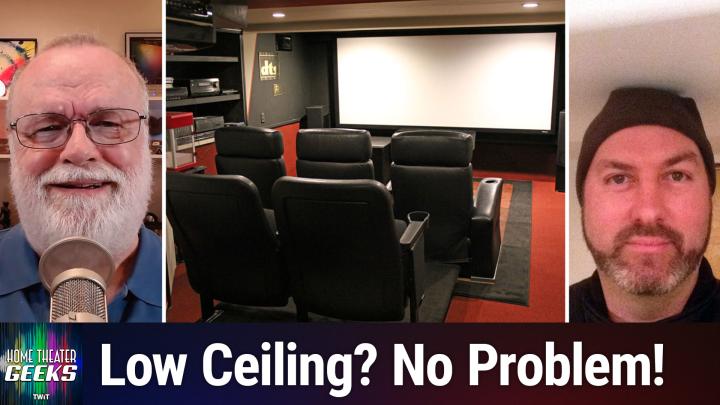
Loading summary
Transcript20 lines
- [00:01]
Aura Advertiser
Did you know data brokers are making billions selling your personal information, usually without your consent. That's how your information lands in the hands of scammers, spammers, even stalkers. It's why you get endless robocalls and why ads seem to follow you everywhere. That's where Aura comes in. Aura actively removes your data from broker sites and keeps it off. They also instantly alert you if your information shows up in a breach or on the dark web. With one app you get a vpn, antivirus, password manager, spam, call protection, dark web monitoring, and up to $5 million in identity theft insurance. All backed by 24. 7 US based support. Other companies might just sell credit monitoring or just a vpn. Aura gives you all of it at the same price. Competitors charge for just one service. Start your free trial today at aura.com hidden Protect yourself now at aura.com hidden hey guys.
- [01:00]
Gold Belly Advertiser
Finding the perfect gift for the food lover in your life is easy thanks to Gold Belly. Gold Belly ships America's most iconic foods straight from world famous restaurants right to your door. So if you want to treat someone to Joe's Stone Crab from Miami, Franklin Barbecue from Texas, or desserts from famous foodies like Ina Garten or Martha Stewart, Gold Belly has you covered. Just go to goldbelly.com and for a limited time, get 20% off your first order with promo code gift. That's promo code gift.
- [01:27]
Scott Wilkinson
In this episode of Home Theater Geeks, I profile the home theater of Terence Huntington, the composer of the Home Theater Geeks theme music. So stick around. Podcasts you love from people you trust.
- [01:45]
Gold Belly Advertiser
This is Twit.
- [01:57]
Scott Wilkinson
Hey there. Hey there. Scott Wilkinson here, the home Theater geek. In this episode, I'm going to profile a very special home theater. It was built around 11 years ago by Terence Huntington, who is the composer of the Home Theater Geeks theme music. So I'm really happy to show you what he did with his home theater. Now this was back in 2014. I profiled it on AVS forum and we'll put a link in the show notes. Some of the articles that are that old have lost their links to the graphics, so that's unfortunate. But we'll show you them right here. Now. At the time, Terence was living in Grass Valley, California. He has since moved, but I profiled this theater because I thought it was very interesting. He had very little, little space to work with. He wanted to build a home theater in his house, but the only space he could do it was in his basement, which was pretty small. And you can see in the first photo, the, the, the basement as it originally was. Difficult to see in context. No, but. No people there. But take my word for it, it's pretty small. He, the first step, he had to remove the support posts. You see the support posts there in the left half of this image. And you might think that they're structural, but amazingly they're not. He was able to remove them and reinforce the existing beams with what are called wafers. And then Terry and his father got to work with the help of some contractors to do the heavy lifting. As we can see in the next graphic, I think it's his father standing in the room without the beams and the, the. Well, yeah, the posts, the beams have been reinforced and the posts are gone. And now he has room for a home theater. Notice also the cinder blocks in the left half of the picture. Those were installed in order to keep dirt from intruding into the home theater. Now, you can see in this picture a little bit of the heater system. The next picture will show more of the H vac heating, ventilation and air conditioning. And the water heater, which he had to enclose here. You can see the framing for that because the heater gets pretty loud. And so, you know, he wanted it to be quiet in there, obviously, for, for the home theater. So he enclosed it in, in a closet with heavy insulation. And he says when the heater's on or even the ac, it basically sounds like a projector. You'd be hard pressed to hear any hum or rumble. So. So that was an important thing to do down there. But it also even decreased the space even more. Okay. Once we had the framing installed in the next picture, you can see there. Oh, look, it's starting to look almost like it could be a home theater. We've got the framing up, we've got the insulation. You can see that retaining wall there. So everything is looking like it could start to become a home theater. Now, one of the main challenges that Terence faced was making sure that his JVC projector with a panamorph anamorphic lens would fill the screen. It was 115 inch screen, 2.4 to 1, so it was very widescreen, meant to show movies. The screen was the Carada Precision fabric. And he said with no, no formal plans about it at all. He carefully measured and calculated the throw distance of the projector. And he said he guessed a lot too. And he found that it would work just barely. Now, to show you how small this, this space is, there's a pic. Here's a picture of Terry standing in the space. He's six feet tall and he just barely clears the ceiling there. So it's a pretty small space, which is why he called it duck and cover. Now he decided on red carpeting and doors with off white walls, which is not what I would normally recommend for a home theater. But he, what he did to counteract that was to put the screen in what's called a black shadow box. And here we can see the black shadow box where the screen is going to be on the far wall. That will definitely make a big, big difference in the perceived contrast in the image on that screen. So that was, that was a good idea. Reduces reflections from nearby walls and the ceiling. So I have a, I have a lot of respect for him for doing that. That was, that was a really good thing. Another problem he said he had was acoustics. I didn't have high hopes for good sound, he said, but with the carpet and the seating installed, the sound totally exceeded his expectations. I was surprised at that too. In fact, the sound was so good, he said that he disabled the Odyssey room correction. That was in his Integra DHC 40.1 preamp processor. Didn't even need to use room correction. That's pretty amazing. I didn't hear the room myself, but I certainly trust him on that. So that was great. A happy, A happy coincidence. A happy happenstance, as they say.
- [08:35]
Leo Laporte
Hey everybody, Leo Laporte here and I'm going to bug you one more time to join Club twit. If you're not already a member. I want to encourage you to support what we do here at Twit. You know, 25% of our operating costs comes from membership in the club. That's a huge portion and it's growing all the time. That means we can do more. We can have more fun. You get a lot of benefits ad free versions of all the shows. You get access to the Club Twit discord and special programming like the keynotes from Apple and Google and Microsoft and others that we don't stream otherwise in public. Please join the club if you haven't done it yet. We'd love to have you find out more at TWIT TV Club Twit. And thank you so much.
- [09:23]
Scott Wilkinson
The seating includes three Salamander designs, Mateo recliners and two traditional movie theater chairs on an 8 inch riser as the second row. Now interestingly, each row has a butt kicker LFE low frequency effects transducer which kicks in with the subwoofer on low frequency stuff. And it's very interesting that Terence used one butt kicker for each row instead of one in each seat, which is what is normally done, but in this case he just put one in each row. Personally, I like that because I don't like the intense shaking of the seats during loud low frequency stuff. So having one in the whole row for all three seats or two seats in the back would be less intense. That would be fine with me. Not necessarily for some bass heads out there, but I thought it was great. The next picture we have is a the custom equipment cabinet in the left wall, which includes shelves that leave a 4 inch gap behind them for easy cable accessibility. And this is really important. Some people don't think about this until it's too late. What if you need to replace a component or you want to upgrade a component to a new one? You have to be able to reach the cables in the back. Terrence thought of this and good for him. The equipment includes an Integra DHC 40.1, as I mentioned before, a surround processor nad power amps, an Apple TV streamer, and several game consoles. The speakers were Paradigm Studio 60s for the front, left, center and right, and Studio 20s for the surround. Paradigm is a great speaker manufacturer and so that was an excellent choice there. The subs included an Epic Tower 15 inch sub and a shoe MBM12 mid bass module. That's what the MBM stands for, which is paired with the center speaker. So Terence realized that the center channel is extremely important. Carries most of the dialogue certainly, and a lot of the rest of the soundtrack as well. So he wanted to beef up the bass performance of that center channel speaker. And so he used this shoe mbm12. So but about a month and a half later, not really very long, and about $20,000 in budget, the theater was complete. Terence remembers the best moment was when the carpet was finally installed. And working with my dad during the construction was a real joy. I know that feeling very well. I didn't work with my dad on construction, but we did play a lot of music together and that is some of my happiest family memories. Absolutely. And here you can see this theater which you kind of have to duck to get into to walk into, but once you're seated, that thing is going to be pretty darn nice. I think it. It just looks beautiful. And I congratulate Terence on, on that theater. Now he has since moved to a different location and I hope to catch up with him and find out what he's been doing home theater wise lately. But I wanted to show you this one because several people have told me that they face a challenge of a small room. And how do you deal with it? Well, Terence Huntington dealt with it beautifully and not that expensive. He did a lot of the work himself. He says his budget was about $20,000, which certainly ain't chump change, but it's a lot less than than people spend on their home theaters often. So I, I applaud him for what he did with such a small space and what great performance I'm sure he got out of it. This is a perfect example of how that can be done. So congratulations to Terence and thank you again for the theme music to Home Theater Geeks. Now, if you have a question for me, you can send it right along to htgwit TV and I'll answer as many as I can right here on the show. And as you know, Twit now shows all of its programs on YouTube for free but with ads. If you want to go ad free, join the club. Go to Twit tv Club Twit and join today. Until next time, geek out.
- [14:31]
Jeff Bridges
Morning Zoe. Got donuts.
- [14:33]
T-Mobile Spokesperson
Jeff Bridges, why are you still living above our garage?
- [14:36]
Jeff Bridges
Well, I dig the mattress and I want to be in a T mobile commercial like you teach me. So Dana.
- [14:43]
T-Mobile Spokesperson
Oh no, I'm not really prepared. I couldn't possibly at T Mobile get the new iPhone 17 Pro on them. It's designed to be the most powerful iPhone yet and has the ultimate pro camera system.
- [14:54]
Jeff Bridges
Wow, impressive. Let me try. T mobile is the best place to get iPhone 17 Pro because they've got the best network.
- [15:02]
Scott Wilkinson
Nice.
- [15:02]
T-Mobile Spokesperson
Jeffrey, you heard them.
- [15:04]
Jeff Bridges
T mobile is the best place to.
- [15:05]
Scott Wilkinson
Get the new iPhone 17 Pro on us with eligible traded in any condition.
- [15:11]
Jeff Bridges
So what are we having for launch?
- [15:12]
T-Mobile Spokesperson
Dude, my work here is done.
- [15:15]
T-Mobile Legal Disclaimer
24 month bill credit is on experience beyond for well qualified customers plus tax and $35 device connection charge credit send and balance due. If you pay off earlier, Cancel Finance agreement. IPhone 17 Pro 256 gigs $1099.99 and new line minimum $100 plus a month plan with auto pay plus taxes and fees required. Best mobile network in the US based on analysis by Oaklove Speed Test Intelligence data 1H 225 visit t mobile.com hey guys.
- [15:31]
Gold Belly Advertiser
Finding the perfect gift for the food lover in your life is easy thanks to Gold Belly. Gold Belly ships America's most iconic foods straight from world famous restaurants right to your door. So if you want to treat someone to Joe's Stone Crab from Miami Franklin BBQ from Texas or desserts from famous foodies like Ina Garten or Martha Stewart. Goldbelly has you covered. Just go to goldbelly.com and for a limited time get 20% off your first order with promo code gift. That's promo code gift.