← All TWiT.tv Shows (Audio)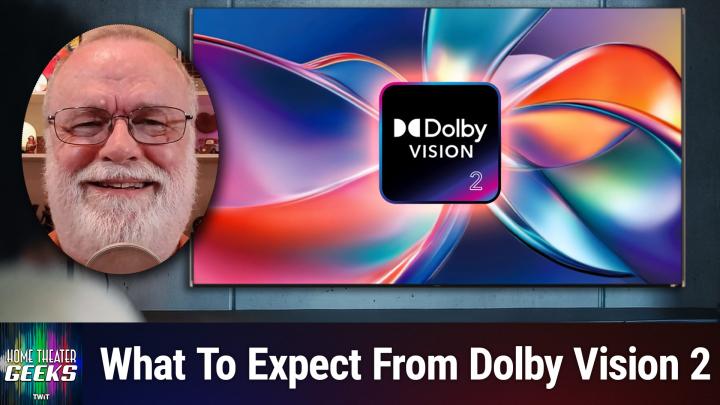
All TWiT.tv Shows (Audio)
Home Theater Geeks 503: Dolby Vision 2 Explained
00:21:05
Next-Gen HDR Is on the Horizon!
Loading summary
Transcript23 lines
- [00:00]
Bluehost Advertiser
I'm no tech genius, but I knew if I wanted my business to crush it, I needed a website. Now, thankfully, bluehost made it easy. I customized, optimized and monetized everything exactly how I wanted with AI. In minutes, my site was up. I couldn't believe it. The search engine tools even helped me get more site visitors. Whatever your passion project is, you can set it up with Bluehost with their 30 day money back guarantee. What do you got to lose? Head to bluehost.com, that's B-L-U-E-H-O-S-T.com to start now.
- [00:31]
AT&T Advertiser
And now, a next level moment from ATT Business. Say you've sent out a gigantic shipment of pillows and they need to be there in time for International Sleep day. You've got AT and T5G so you're fully confident, but the vendor isn't responding and International Sleep Day is tomorrow. Luckily, AT&T 5G lets you deal with any issues with ease. So the pillows will get delivered and everyone can sleep soundly, especially you. ATT 5G requires a compatible plan and device coverage not available everywhere. Learn more@att.com 5G Network.
- [01:01]
T-Mobile Actor
Limu EMU and.
- [01:03]
Scott Wilkinson
Doug Here we have the Limu Emu in its natural habitat, helping people customize their car insurance and save hundreds with Liberty Mutual. Fascinating. It's accompanied by his natural ally, Doug.
- [01:18]
AT&T Advertiser
Uh, Limu is that guy with the binoculars watching us.
- [01:21]
Scott Wilkinson
Cut the camera. They see us.
- [01:23]
AT&T Advertiser
Only pay for what you need@libertymutual.com Liberty Liberty Liberty Liberty Savings vary underwritten by Liberty Mutual Insurance Company and affiliates excludes.
- [01:30]
Scott Wilkinson
Massachusetts in this episode of Home. Welcome back Home Theater Geeks. I answer a question from Victor Pavi about Dolby Vision 2, the new HDR format that was just introduced. So stay tuned. Podcasts you love from people you trust. This is Twit. Hey there, Scott Wilkinson. Here, here, the home Theater geek. In this episode, I answer a question from Victor Pavi who writes, what's your opinion of the new Dolby Vision two? Well, Victor, that's the shortest question I've ever received and it was something I was going to talk about anyway, so your timing is great. This is a new high dynamic range HDR format from Dolby that is the second generation of Dolby Vision. So before I get into that, let me just explain a little bit about what Dolby Vision and high dynamic range in video is now. In my opinion, Dolby Vision is the gold standard of high dynamic range formats that are available today. It's been available for, gosh, 10 years. And we have a couple of graphics that Dolby has put out to show sort of the difference that Dolby Vision 2 makes in the image. These have been widely published, and we can see them around various places. And you can see on the left, there is greater color, greater contrast. This is a still image, but on the original image, you see that little green circle with the arrows going in either direction. You can move the cursor back and forth and see more of the image in Dolby Vision versus not. There's another one that we. That we'll show you as well that has the same sort of illustration to it. The car has greater depth to it. There's more contrast. It just looks better, you know, and that HDR looks better than standard dynamic range, no question about it. Now, there's Dolby vision and there's HDR10, which is another HDR format, one of several, but the other most common one. And that one is different from Dolby Vision because of the use of metadata. Now, metadata is the information that travels along with the image, information that specifies how bright the picture is, how what. What's the maximum brightness and what's the average brightness, among other things. Now, in HDR10, there's one number for the maximum brightness and the average brightness for the entire program, be it a television show or a movie. With Dolby Vision, it uses what's called dynamic metadata. And that metadata explains or specifies the parameters for each scene, even each frame, if you want to get really granular. So it's much better at representing what is happening in terms of brightness in each scene or even each frame, which is why I like it that much better. Now, there's another one, another adaptation of HDR10 called HDR10, which also uses dynamic metadata. And in fact, it's not quite as widely used as Dolby Vision, which is a bit strange because Dolby Vision requires a licensing fee, whereas HDR10 is free. This is probably why Samsung uses HDR10 instead of Dolby Vision, but it's the only major TV manufacturer that does. All the rest of them have paid the licensing fee and implement or support Dolby Vision when it's in the content that's coming in. Samsung's the only company that doesn't. If you played Dolby Vision content on a Samsung TV, it reverts to HDR10. I suppose it might go to HDR10 Plus. There might be some conversion in the TV. I don't actually know the answer to that, but this is why I normally don't recommend Samsung TVs because I like Dolby Vision and a lot of product, a lot of content is made with Dolby Vision, so I'd rather have a TV that supports it.
- [06:49]
Leo Laporte
This episode brought to you by Red Canary when cybersecurity threats hit fast, you need an MDR partner that moves faster. Red Canary delivers 24.7expert MDR support, total visibility and actionable insights. Plus it helps you detect four times more threats so you can stay ahead without burning out. Red Canary clears the noise and has your back every hour, every incident. Get the backup you deserve. Visit redcanary.com difference to learn more. Hi there, Leo Laporte here. I just wanted to let you know about some of the other shows we do on this network you probably already know about. This Week on Tech Every Sunday I bring together some of the top journalists in the tech field to talk about the tech stories. It's a wonderful chance for you to keep up on what's going on with tech, plus be entertained by some very bright and fun minds. I hope you'll tune in every Sunday for this Week in Tech. Just go to your favorite podcast client and subscribe this Week in Tech from the TWIT Network.
- [07:50]
T-Mobile Actor
Thank you.
- [07:51]
Scott Wilkinson
Now getting to the question. Dolby announced Dolby Vision 2 at the IFA 2025 trade show in early September, and what it is is tools like Dolby Vision. It's tools for content creators as well as specifications for the metadata that goes to displays that should be able to interpret it. And you know, this was introduced at IFA and it was. It made kind of a big splash. There's a lot of content online, both written and video, that talks about it, which I'm going to discuss here in a minute. At the heart of Dolby Vision 2 is a redesigned and more powerful image engine which generates more metadata or maybe different metadata, probably the same as Dolby Vision, but with the addition of some more stuff. The key feature suite is called Content Intelligence and it's a suite of new tools which are AI based to some degree. And there are three elements in Content Intelligence. One is called Precision Black, which addresses the issue that HDR content has sometimes faced and has been criticized for, which is dark scenes that are just too dark. If you might remember the one of the episodes of Game of Thrones, I'm not sure if it was the finale or one of the late episodes. There were scenes that were so dark that people couldn't see what was going on, and that's frustrating. So this Precision Black addresses that by improving shadow detail. The second one is called Light Sense, which adjusts the image according to a light sensor on the tv measuring the ambient light. So if you're watching in a bright environment or if you're watching in a dark environment, it adjusts the picture accordingly. And there's some new reference lighting data that it uses as a comparative function. This makes me a little nervous. I don't like it when companies, content creators or TVs devices adjust things automatically. I'd rather adjust them manually. So I'm a little nervous about that. I also wonder how different it is from Dolby Vision iq, which is a variation of Dolby Vision that does this exact thing. It adjusts the image based on the amount of ambient light in the room, which is measured by a sensor on the tv. I don't really know. It must be more advanced. It must be an improvement of some sort. I hope. Anyway, Dolby Vision IQ only depends on the overall brightness or luminance of the ambient light. Maybe Dolby Vision 2 Light Sense takes the spectrum of the ambient light into effect. That would require a new sensor on the tv. So I don't know. I'm speculating here. That's all I can say. The third element of content intelligence is called sports and gaming optimization, which includes white point adjustments and motion control to address the unique needs of live sports and gaming. Live sports. I, I didn't know they used a different white point than other TV shows or movies. Maybe they do. I, I don't know. I'd have to look into that. Gaming might. It might want to be bluer. The white point might be set bluer than it is for TV and movies. And so being able to change that appropriately, you know, that's okay. Okay, so those are the three things in content intelligence. There's another feature that's very interesting. It's called authentic motion. What this does is it allows content creators to adjust the amount of de juddering, that is frame interpolation on a shot by shot basis. So if you have one shot that has a lot of judder in it, you can add frame interpolation to one degree or another to sort of soften that, make that less obvious. And then if you have a scene or a shot without a lot of judder, you can turn it off so it becomes a variable thing, unlike frame interpolation on a tv which is fixed. You turn it on, you turn it off, you set the amount of it, but it's the same throughout the entire program. This makes me a little nervous also because there are an awful lot of people who really hate frame interpolation which results in an artifact called the soap opera effect which makes movies look like they were shot on video, like, like a soap opera. On the other hand, if you have very high brightness HDR and high contrast in that HDR signal, it can have very high perceived judder. It can look really juddery as, as things either move through the frame or particularly in slow camera pans. So if content creators can do something to mitigate that, especially in high dynamic range content which Dolby Vision 2 is all about, then that could be a very good thing. Now this technique has been available for some years from a company called Pixelworks and they have a system called TrueCut Motion which is a tool for directors and cinematographers to do exactly that, to mitigate judder by manipulating the image in, in specific ways that are pretty secret. I think it was used in Avatar the Way of Water, which was a, the, I guess the second edition of the Avatar franchise. And also the Wild Robot was, were. These were two of the most recent movies that have used it, but there have been quite a few. So whether or not that this authentic motion will improve upon that, I would expect that because Dolby is so powerful in this industry that it's going to get used a lot. Whether or not it's a good thing, I don't know. We shall see. Now Dolby Vision 2 is going to be available in two tiers from TV manufacturers. There's going to be Dolby Vision 2 Max which, which is really intended for high end displays and it'll have all the features including authentic motion. And then There's Dolby Vision 2, sort of regular I guess for mainstream TVs that will have the new image engine and content intelligence but as far as I know it won't have authentic motion. So what about industry adoption? Who's going to implement this? Well, Hisense announced that they will. It's going to be, they're going to be the first company to do so in their TVs using the MediaTek Pentonic 800100 processing chip. It'll be in their 116 UX and 110 UX models which are RGB mini LED backlit LCD TVs. I know that's a mouthful, but that's what they are. And so that will probably be Dolby Vision 2 Max. Now what about studios? There's one content provider called Canal plus which is a French content provider and they'll be the first ones to use Dolby Vision 2 in their content. I assume that other more major content providers like Warner Brothers or Universal or Disney will, will incorporate this as well. I can't imagine that they won't. Now, it's important to understand that Dolby Vision 2 will not render your current TV obsolete. Very important to understand that regular Dolby Vision will continue to work just fine. Even if a TV with regular first generation Dolby Vision gets a Dolby Vision 2 signal, it just ignores the extra metadata and will continue to work just fine. So this is not immediate obsolescence. You don't have to go out and buy another TV when it's time to buy another tv when yours poops out or you decide you want to upgrade or whatever, whenever that is. Dolby Vision 2 might well be more common and you'll maybe want to buy one. Will it be that much more expensive? Who knows? But there's no need to worry about, oh my TV is going to be obsolete. It's not. It's going to work just fine. My current TV is Dolby Vision. It's a Sony A95L and I'm not worried about it. I'm going to be just fine. So Victor asked the question, what do I think? Well, I haven't seen it, so I can't really say from personal experience. I'm a bit nervous about authentic motion, but if it's used judiciously, it could be a good thing. Also, this Light Sense feature, I don't like manufacturers or others automatically adjusting things for me. I just, I would prefer to do that myself, so I'm a little nervous about that. But again, if content creators are careful about using, could be okay or maybe even an improvement. We shall see. I suspect that Precision Black will be a good thing. I believe that the complaints about some HDR images being too dark are real and, and justified. So if this can improve the situation, I'm all for it. Like I said, I haven't seen it yet. But a journalist by the name of Matt Bolton at TechRadar did see it at IFA 2025 in Berlin and he wrote about his experience and he was very impressed. I put a link to his article in the show Notes and you'll. You'll want to take a look at that because he was impressed. He saw a demo on two small Hisense A5 TVs. These are entry level TVs. QLED Quantum dot LED backlight conventional with full array local dimming. So not super entry level, but certainly on the lower end. And they were probably prototypes built for the IFA demo because One of them at least was able to receive and Decode Dolby Vision 2. The other one was undoubtedly set to Decode Dolby Vision 1 and they played appropriately encoded content on both the same content I assume, and Matt reports that the difference was striking. The DV2 Dolby Vision 2 image had more pop, the colors were more saturated, whites were cleaner and elevated, shadows and dark areas look deeper, but with improvements in shadow detail and improvements in perceived contrast overall, making the image seem sharper Even though the two TVs had the same resolution with more nuanced detail in both bright and dark images. And this was on, as I said, an entry level set. So it was Probably Dolby Vision 2, not the max version. So he didn't see authentic motion probably. He reports that Tom Graham, the head of Dolby Vision Content Enablement at Dolby Labs, explained that nothing has changed in the color or dynamic range spec of Dolby Vision for creators. It's still captured and crafted the same as before. Dolby Vision 2's improvements come from being able to provide more data to the TV about how the image is supposed to look as defined by the creators when they encode the content to Dolby Vision. It's about taking the data that's already there and making better use of it. So Matt Bolton was quite impressed and others who have content online either written or in YouTube form were also impressed. So I really look forward to seeing it and when I do, I'll certainly report about it right here on Home Theater Geeks. Now if you have a question for me, please send it along to HTG at TWIT TV and I'll answer as many as I can right here on the show. And as you know, all of Twitch shows are available on YouTube for free but with ads. If you want to go ad free, join the club. Go to Twit TV Club Twit and join today. Until next time, geek out.
- [23:07]
T-Mobile Actor
Morning Zoe. Got donuts.
- [23:09]
T-Mobile Actor Jeff Bridges
Jeff Bridges, why are you still living above our garage?
- [23:12]
T-Mobile Actor
Well, I dig the mattress and I want to be in a T Mobile commercial like you teach me so Dana.
- [23:19]
T-Mobile Actor Jeff Bridges
Oh no, I'm not really prepared. I couldn't possibly possibly at T Mobile get the new iPhone 17 Pro on them. It's designed to be the most powerful iPhone yet and has the ultimate pro camera system.
- [23:30]
T-Mobile Actor
Wow, impressive. Let me try. T Mobile is the best place to get iPhone 17 Pro because they've got the best network.
- [23:38]
Scott Wilkinson
Nice.
- [23:38]
T-Mobile Actor Jeff Bridges
Jeffrey, you heard them.
- [23:40]
T-Mobile Actor
T Mobile is the best place to.
- [23:41]
Scott Wilkinson
Get the new iPhone 17 Pro on us with eligible trade in in any condition.
- [23:47]
T-Mobile Actor
So what are we having for launch?
- [23:48]
T-Mobile Actor Jeff Bridges
Dude, my work here is done with.
- [23:51]
AT&T Advertiser
24 month ago credits on experience beyond for well qualified customers plus tax and $35 device connection charge credit sending balance due if you pay off earlier. Canceled finance agreement. IPhone 17 Pro 256 gigs 1,099 99 and new line minimum $100 plus a month plan with auto pay plus taxes and fees required. Best mobile network in the US based on analysis by Oakland Speed Test Intelligence data 1H 2025 visit t mobile.com.