← All TWiT.tv Shows (Audio)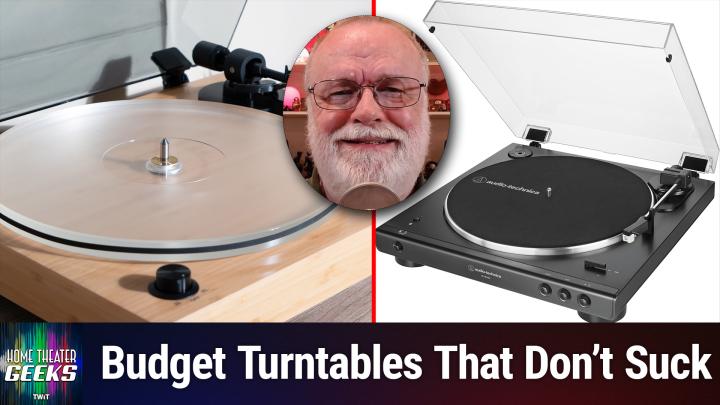
All TWiT.tv Shows (Audio)
Home Theater Geeks 504: Turntable Recommendations
00:13:51
Belt Drive, Phono Preamp, USB, & More To Know
Loading summary
Transcript30 lines
- [00:00]
A
This episode is brought to you by Cohesity for security and IT professionals. Resilience is not just a feature, it's a movement. Cohesity makes sure you're ready for the midnight alerts and morning reviews. With Cohesity, you can secure and protect your company's entire data estate with a single platform, reduce your risk from threat actors, and quickly respond and recover from destructive cyber attacks, strengthening your company's resilience. That's why Cohesity is trusted by 70% of the Global 500. Learn more@cohesity.com Resilience everywhere Morning Zoe.
- [00:32]
B
Got donuts.
- [00:33]
C
Jeff Bridges why are you still living above our garage?
- [00:36]
B
Well, I dig the mattress and I want to be in a T mobile commercial like you teach me.
- [00:42]
C
So Dana oh no, I'm not really prepared. I couldn't possibly at T Mobile get the new iPhone 17 Pro on them. It's designed to be the most powerful iPhone yet and has the ultimate pro camera system.
- [00:55]
B
Wow, impressive. Let me try. T Mobile is the best place to get iPhone 17 Pro because they've got the best network.
- [01:02]
D
Nice.
- [01:03]
C
Jeffrey, you heard them.
- [01:04]
B
T Mobile is the best place to.
- [01:06]
D
Get the new iPhone 17 Pro on us with eligible traded in any condition.
- [01:11]
B
So what are we having for lunch?
- [01:12]
C
Dude, my work here is done.
- [01:15]
E
The 24 month bill credit is on experience beyond for well qualified customers + tax and 35 device connection charge credit send and balance due if you pay off earlier. Cancel Finance Agreement. IPhone 17 Pro 256 gigs 1099.99 and new line minimum 100 plus a month plan with auto PayPal taxes and fees required. Best mobile network in the US based on analysis by Oklahoma Speed Test Intelligence Data 1H 2025 Visit T mobile.com in.
- [01:31]
D
This episode of Home Theater Geeks, I answer a question from listener Daniel who wants some turntable recommendations. So stay tuned.
- [01:44]
A
Podcasts you love from people you trust. This is Twit.
- [02:00]
D
Hey there Scott Wilkinson here, the home theater geek. In this episode I answer a question from Daniel who writes do you have any suggestions for a not terribly expensive turntable? I have received some albums from a friend who has a band. I bought a hundred and fifty dollar CD record player on Amazon. It sounds okay with CDs but for some reason it sounds terrible with records faded and tinny. I remember having toy record players that sounded better. I tried hooking it up to my sound bar and the records still have a poor sound. Before I try another player I thought maybe you might have better suggestions for where or what to look For. Well Daniel, this is a great question. Now I will say up front that I am not a big fan of vinyl records or turntables. I much prefer digital audio. And I know there are a lot of audiophiles out there who think that vinyl records are the end all and be all of sound and they sound better than CDs and, and other forms of digital audio. But I, I'm not a big fan still, you know, I know something about them and I thought I would help you. Although I'll first say that one of the reasons that I'm not a fan is partly because of the quality of playback. It's so variable. It depends on the quality of the stylus or needle, the tone arm, the turn, turntable drive system also clicks and pops and noise on the record that are inevitable as well as limited dynamic range. So those are a few of the reasons I'm not a big fan. And yet many people prefer the sound of vinyl and they often spend inordinates amount of money on turntables, which is another reason I'm not a big fan. I don't want to spend that much money. Now I think it's possible to get a reasonably good sound without mortgaging your house. Now unfortunately you don't say exactly what you mean by not terribly expensive. So I'm going to offer some recommendations. Well under $1000 I think you're going to have to spend more than 150 though. Maybe not much more though. We'll see. So I started by consulting some of my trusted sources for their best turntables lists and those include wire cutter. And I'm going to put all these links in the show notes by the way so you should be able to see them link to them from there. So I like wire cutter, I like cnet. They're very reliable. Digital trends had a, had a really nice one. I, I often go to them as well. And Wired had had a list of their best turntables. All These are from 2025 and some common models emerged which I thought was very interesting. The, the company called Audio Technica has been around for decades for a very long time. I have some of their microphones but they're also really well known for turntables and they have a bunch that would be appropriate. I think the least expensive I found was the at LP60X which is 199 bucks. So that's close to the to your 150. It's getting down there within 50 bucks. So that would be one to look at. And that's that has appeared on a number of best turntable lists. There's the at LP 60 XBT for 300 bucks. That's got Bluetooth in it so you can send Bluetooth to Bluetooth speakers and and hear it that way. There's the at LP 60x BT USB for 350 bucks and that one has Bluetooth and USB which lets you take the it digitizes the signal from the LP from the record and sends it digitally into a computer so you can digitize records using that turntable. Other models from Audio technica were the LP 70X for 279 bucks and the LP 120X USB for 445 bucks. That one also has USB output. Another company that was well regarded in a lot of lists is called Project P R O dash J E C T. They have the T1 for 399 bucks and the debut Carbon Evo which was very highly regarded in a bunch of lists for 550 bucks. So those are certainly worth worth considering as well. The other company I want to draw your attention to is Fluance F L U A N C E Canadian company. They I have a pair of their Bluetooth speakers which are wonderful. They really sound great. So I would assume that their turntables are pretty good too and they have a whole range as well. The ones that showed up on these best lists include the RT82 for 350 bucks and the RT85 for 550 bucks. Now that one does not have a built in preamp and I'm going to talk to you about preamps here in a second. Generally speaking though, the higher the price, the better the cartridge, which includes the stylus or the needle. It also will have more features like Bluetooth and usb. So you know, if you need any of those features, then you want to look for them in the particular models that you're looking for.
- [08:56]
A
This episode brought to you by Red Canary when cybersecurity threats hit fast, you need an MDR partner that moves faster. Red Canary delivers 24.7expert MDR support, total visibility and actionable insights. Plus it helps you detect four times more threats so you can stay ahead without burning out. Red Canary clears the noise and has your back every hour, every incident. Get the backup you deserve. Visit redcanary.com difference to learn more. Hey everybody, it's Leo Laporte. You know about MacBreak weekly, right? You don't? Oh, if you're a Macintosh fan or you just want to keep up what's going on with Apple, this is the show for you. Every Tuesday, Andy Anako, Alex Lindsey, Jason Snell and I get together and talk about the week's Apple News. It's an easy subscription. Just go to your favorite podcast client and search for Mac Break Weekly or visit our website Twit TV mbw. You don't want to miss a week of Mac Break Weekly.
- [09:55]
D
Now, most of these turntables that I've talked about are what are called belt drive. So there's a there's an elastic belt that goes around the platter which you put the record on, and then it goes around a much smaller spindle which has the moat which is attached to the motor. And as the motor spins, the belt moves the platter and that works fine. But that belt can wear out and needs to be replaced once in a while. So you have to keep that in mind. More expensive turntables are often what are called direct drive, so they don't have a belt, but the motor sits under the platter itself and moves the platter directly. This is generally a more expensive thing. Now some of these turntables are automatic, so you put the record on and you hit go and it automatically moves the tone arm over and sets it down, which is fine for most people, but audio files prefer a manual turntable generally, which means they have to pick up the tone arm and place it on the record. Like I said, that's, that's more of an audio file thing. Now preamp in addition to the turntable itself, you need a phono preamp to connect the turntable to an audio system. Now some turntables have a built in preamp. Most of the Audio Technica ones seem to have a built in preamp. The ones I looked at certainly did, which means you can then take that output and connect it directly to a sound bar or another audio system with left and right analog cables. One of the reasons I suspect your turntable sounded poor when connecting it to the sound bar was maybe it didn't have a built in preamp, although the fact that it also played CDs implies that it maybe did. So I don't really know. In any event, whenever you have a turntable you need a phono preamp because the turntables electrical signal is not at the same level as that from a CD player or another what's called line level audio device. So it needs a preamp in order to boost that signal up to where it's the same level as other audio components. And as I said before, some turntables like from Audio Technica have A built in preamp and in some cases you can buy a turntable but the preamp costs extra. I'm going to give you a couple of examples of that in a minute. Now if you have an AV receiver with a special phono input, then the preamp is in the receiver and you can connect your turntable without a preamp directly into the AV receiver and it will act as the phono preamp. There aren't that many receivers anymore that are built with that. But I guess, yeah, I'm not 100% sure about that because even if the receiver doesn't have a lot of analog inputs anymore, which most receivers don't, they might still have a phono input because a lot of audiophiles still like vinyl records and they still have turntables and they're going to want a phono input. So this is what I'm, I'm saying here for you. I would look at the Audio Technica turntables. They have good quality, reasonable price. Most are in the 200 to 500 range. There are some that are over that they have built in preamps as far as I can tell. And if you want to digitize your friends records or any other record, you want to get one with usb. And I've included a link to the Audio Technica page that has all their turntables which go all the way up to $2,000, but I know you don't want to spend that much. I'd also look at the Fluance turntables and I'll include in the show notes a link to their turntable page as well. They range in price from 250 to 550 bucks. So within a similar ballpark to the Audio Technicus, some have a built in preamp, others Fluance gives you the option of buying a Preamp for an extra hundred bucks. So you want to take take that into account. I didn't see any on their website that had usb. So if that's important to you to want to digitize vinyl records into a digital form, you're going to need to get one with a usb. And Fluance then might not be the best choice for you. Audio Technica certainly does have models that do that, so that's probably the first place I'd look. Anyway, that's what I have to say about that. Good luck. Now if you have a question for me, send it along to HTG and I'll answer as many as I can right here on the show. And as you know, all of TWiT's programs are available on YouTube for free but with ads. If you want to go ad free, join the club. Go to Twit TV Club Twit and sign up today. Until next time, geek out.
- [15:53]
B
Morning Zoe. Got donuts.
- [15:55]
C
Jeff Bridges why are you still living above our garage?
- [15:58]
B
Well, I dig the mattress and I want to be in a T mobile commercial like you teach me.
- [16:04]
C
So Dana oh no, I'm not really prepared. I couldn't possibly at t mobile get the new iPhone 17 Pro on them. It's designed to be the most powerful IPH yet and has the ultimate pro camera system.
- [16:17]
B
Wow, impressive. Let me try. T Mobile is the best place to get iPhone 17 Pro because they've got the best network.
- [16:24]
D
Nice.
- [16:25]
C
Jeffrey, you heard them.
- [16:26]
B
T Mobile is the best place to.
- [16:28]
D
Get the new iPhone 17 Pro on us with eligible traded in any condition.
- [16:33]
B
So what are we having for launch?
- [16:35]
C
Dude, my work here is done.
- [16:37]
E
The 24 month bill credit has experienced beyond for well qualified customers plus tax and $35 device connection charge credit send and balance due if you pay off earlier Cancel Finance Agreement. IPhone 17 Pro 256 gigs $1099.99 and new line minimum $100 plus a month plan with auto pay plus taxes and fees required. Best mobile network in the US based on analysis by Ooklove Speed Test Intelligence data 182025 visit t mobile.com.