← All TWiT.tv Shows (Audio)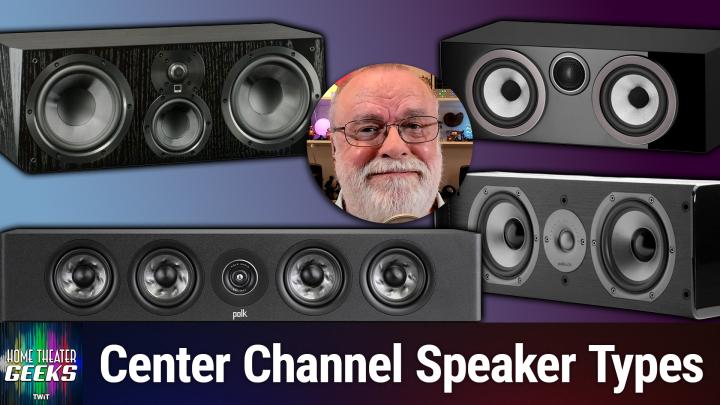
All TWiT.tv Shows (Audio)
Home Theater Geeks 509: Best Type of Center Speaker
00:17:48
The Central Hero of Home Theater Sound
Loading summary
Transcript10 lines
- [00:00]
Leo Laporte
Today's show is brought to you by Progressive Insurance. Do you ever think about switching insurance companies to see if you could save some cash? Progressive makes it easy to see if you could save when you bundled your home and auto policies. Try it@progressive.com Progressive Casualty Insurance Company and affiliates. Potential savings will vary. Not available in all states Resilience isn't.
- [00:26]
Cohesity Advertiser
Just about bouncing back. It's about being ready. It's how you show up every single day. Because every name in your system is a person who trusts you and every password is a door you're responsible for locking. And when the threat comes, and it always comes, you hold back the chaos. Learn more@cohesity.com Resilience Introducing Family Freedom from.
- [00:55]
T-Mobile Advertiser
T Mobile we'll pay off four phones up to $3200 and give you four free phones, all on America's largest. Visit T mobile.com FamilyFreedom up to $800 per line via virtual prepaid card typically takes 15 days. Free phone via 24 monthly bill credits with finance agreement. Example Apple iPhone 16128 gigs $829.99 Eligible trade in example iPhone 11 Pro for well qualified credits end and balance due if you pay off early or cancel Contact Us.
- [01:25]
Scott Wilkinson
In this episode of Home Theater Geeks, I answer a question from Jason who wants to know about center channel speakers. I have some answers, so stick around.
- [01:39]
Leo Laporte
Podcasts you love from people you trust. This is twit.
- [01:55]
Scott Wilkinson
Hey there Scott Wilkinson here, the Home Theater geek. In this episode, I answer a question from Jason in Phoenix, Arizona who writes, I was wondering whether it's better to have a center channel speaker that's designed as a center channel speaker, or just use a speaker from the same line as the front, left and right speakers in the center position. What are the pros and cons of using a specifically designed center speaker as opposed to just using a speaker from the same line as the front right and left? Also, wouldn't it be better to utilize surround speakers that are the same size as the front left and right instead of a smaller surround speaker design? Well, this is a great question, Jason. Thanks for sending it in. The center channel speaker is arguably the most important speaker in the whole system because it carries most of the dialogue and and that's what you need to understand the story that's being told. In most cases. There are a few examples of movies without any dialogue, but for the most part the center channel speaker carries that dialogue and therefore needs to be really good have good dialogue intelligibility. It's the most important speaker in the system. Now, an ideal situation, the ideal situation is to use three identical speakers across the front for the left, center and right. This is really important because the tonal character of the center speaker needs to match the tonal character of the left and right. Because very often things that make sound pan across the screen. And as they're making sound and panning across the screen, as the sound moves from one speaker to the next, those speakers better have the same tonal character. If they don't, then you're going to hear the difference as the sound moves. That's going to take you right out of the movie or the TV show, no question about it. So they need to match as closely as possible. And one way to do that is to use identical speakers. Now, with floor standing speakers, the only way to do that is with an acoustically transparent projection screen. Because such a screen, you can put the speakers behind it, or at least the center channel, even if the left and right are maybe outside of it, they can be behind it or not. And then the projector puts the image on the screen. It's also the best placement for a center channel speaker to have the sound coming directly from the screen itself rather than above or below. So that works great. If you have an acoustically transparent screen in a projection system. Now with a flat screen tv, LCD or oled, or a non acoustically transparent projection screen, or one of these new microled direct view screens, you can't put a speaker behind it because it's opaque to sound. So you need to put the speaker in most cases below the screen. Occasionally they can be put above the screen, depending on the situation, but they have to be above or below. Now you could do this with three identical bookshelf speakers, put the left and right to the sides and the center bookshelf speaker below the screen, say. But it wouldn't look very good. So you could also put, if you had a bookshelf speaker that was vertically aligned like so, tip it on its side and it would be then horizontally aligned and it would fit better under the screen. But that could cause problems itself because that speaker was designed to be vertical. So manufacturers now design speakers that are supposed to be horizontal. There's center channel speakers that are supposed to be horizontal under the screen. Now these speakers are relatively long and thin and horizontal. They typically put two woofers or mid range woofers on either side of a tweeter in the center, such as this one from Polk. And that's how a lot of center channel speakers are built. Now there's always compromises to the sound one way or another. One of the main problems is something called horizontal lobing, which we can see in this graphic here. The two speakers, the two mid range woofers on either side of the tweeter in the middle are sending out the same signal. And that signal suffers from something called interference. So when waves, you've seen this, if you've dropped two stones in a pond, you see the ripples going out and you see them interfering with each other as they meet in the water. Same thing happens with sound waves in the air. In some locations they interfere what's called constructively and in fact become louder at, at those locations and frequencies. In other cases, in other locations and frequencies, they destructively interfere and become softer. So you get this lobing, this depending on where you are dead center or 10 degrees off axis, 20, 30, 40 in either direction, you can see that some of the frequencies are lower and some are higher. And in this particular graphic, one of the ways to solve that problem is by designing the crossover frequency from the tweeter to these lower mid range woofers in such a way that it minimizes or reduces anyway, this lobing and the, those different graphs were different frequency, different crossover designs and some of them work better than others at solving this lobing problem. Now this is a problem when you take a vertical bookshelf speaker that maybe, maybe has two mid range woofers and a tweeter in the center and just flip it on its side. When you use it vertically as it was designed, you still get that lobing, but it's vertical and the human ear is much less sensitive to it. And when you're sitting at a certain location, it, it's not going to change from position to position. If you've got, if you're sitting with several people and they're all watching the same thing, they're not going to hear different sounds coming out of that center speaker of the right and left. Rather, if it's vertical, if it's horizontal and you're sitting with a bunch of people, the person next to you are two places down could very well hear a different sound because of that lobing. So there are various ways to solve the problem. I mentioned crossover frequencies or crossover designs. There are many different ways to design a crossover and you can do that to minimize that lobing as we saw in that last graphic. So for example, here we see it again, the solid line is what's called a third over third order crossover. And it's got a pretty big bump right at the center and another slight bump at 50 degrees, but somebody sitting at 20 degrees is going to hear a lot less. The second order crossover is the dotted line and that boy, people sitting at 50 degrees are going to hear not much at all. The mixed second and third order crossovers looks like the best solution here. It's the sort of dashed and dotted line that causes the least amount of problems, but it's still not perfect.
- [10:30]
Leo Laporte
Hi, I'm Leo laporte, host of this Week in Tech and many other shows on the Twit podcast network. Can you believe it? 2026 is around the corner. So this, my friends, is the best time to grow your brand. With Twit, nobody understands the tech audience better than we do. We love our audience and we know how to effectively message to them. We develop genuine relationships with brands, creating authentic promotions that resonate with our highly engaged community of tech enthusiasts. You know, over 90% of TWIT's audience is involved in their company's tech and IT decision making. Can you believe that 90, 88% have actually made a purchase based on a Twit post read ad? No one comes close. We're the best at this. As one Twit fan said, I've bought from Twitt TV sponsors because I trust Leo and his team's knowledge of the latest in tech. If TWIT supports it, I know I can trust it. You cannot buy trust like that. Well, actually you can. You can buy an ad on Twitter. All our ads are unique. They're read live by our expert host, Micah Sargent Me. We simulcast all during the shows on our social platforms so everybody can be watching live. You know, one of our customers, Harun Meer, the founder of ThinksCanary, he's been with us since 2016. Since 2016. He said we expected TWIT to work well for us because we were longtime listeners who over the years bought many of the products and services we learned about on various Twitch shows. And we were not disappointed. The combination of the very personal ad reads and the careful selection of products that TWIT largely believes in gives the ads an authentic, trusted voice that works really well for our products. 10 out of 10 we'll use again. Thank you Harun. We love you. And it's been nine years. That's kind of. That's the proof, right? Partnerships with Twit offer valuable benefits, including over delivery of impressions. You get presence on show episode pages. So there's a link right there that our audience can click on. We're in the RSS feed descriptions, a link there too and social media promotion. Our full service team will craft compelling creative to elevate your brand and support you throughout your entire campaign. I work on the copy myself to make it authentic, to make it real. If you want to reach a package passionate tech audience through a network that consistently over delivers, please contact us directly. PartnerWIT TV that's email address PartnerWIT TV let's talk about how we can help grow your brand or just go to Twit TV advertise for more information. I look forward to working with you. Thanks for listening.
- [13:19]
Scott Wilkinson
Another solution is to place the woofers closer together and nest the tweeter above them. And we see this here in this B and W speaker the woofers are closer together. The tweeter is kind of above the center and kind of nested between them. So that's one way to address the problem. Another way is to limit one of the woofers frequency output compared to the other one. This is sometimes called two and a half way speaker. And so one of the two woofers might go all the way to the crossover point to the to the tweeter. The other one might might be cut off sooner. This leads to fewer frequencies interfering with each other and reducing that lobing effect. You can also make a three way design which some manufacturers do, many of them do, which has the two woofers, a mid range and a tweeter which allows the woofers to be crossed over at a lower frequency which would reduce the lobing. And also the mid range and tweeter are mounted vertically so there's no lobing between them and good dispersion. This picture is of an SVS center channel speaker. Yet another solution is to use multiple mid ranges and woofers. So this Polk reference in the next graphic you can see that it has four mid range or woofer drivers and one tweeter in the center. And those larger drivers are probably configured in such a way that they don't make all the same frequencies at all the same time. So that's just another way to do it. Of course the more drivers you put in a speaker, the more expensive it's going to be. So that's one thing to think about. Now if you're going to use a horizontal center channel speaker, which is what you're going to use if you have a solid TV or non transparent screen, non acoustically transparent screen, be sure to get one from the same manufacturer in the same line as the front left and right that it's been designed specifically for. The same front, left and right speakers that you might already have because it will be tonally matched as much as possible to those other two speakers. Which is really the most important thing about a center channel speaker, that it tonally matches the front, right and left. So that's my recommendation there. I mean, if you've got an acoustically transparent projection screen, sure, put three identical speakers behind it, that's the best. But everybody else needs to think about center channel speakers that are horizontal. Get it from the same manufacturer, get it from the same line as the front, right and left. Now, as for surround speakers, again, the best solution is identical speakers all around. But that's not very practical for most people. So there's no real problem with having smaller surround speakers because they're normally more frequency limited because they're smaller. They don't go down as low, but they don't need to because most of the surround channel information is more frequency limited than the fronts as well. It's often the case anyway. So the smaller speakers work just fine and they're in fact practical for most people, whereas putting full range speakers or the same size speakers all around are not. Stay tuned to my next episode because I'm going to show you a theater where they are all the same. And it's quite astonishing. But that's, it's not practical for most people. And as with center speakers, it's best to use surround speakers from the same manufacturer, ideally the same line. They've designed them to tonally match the fronts. And that again makes it better when sounds pan from the front to the surrounds so that you don't get a big tonal shift between things that are in front and things that zoom overhead or zoom to the side. You want that tonal character to remain consistent. So that is the answer to my. To your question. I hope it helps. Now, if you have a question for me, send it on along to HTGWIT TV and I'll answer as many as I can right here on the show. Also, if you have a home theater, I invite you to send me some photos and maybe a sentence or two about your room and what makes it special. I'd like to start featuring home theaters from listeners in my Home Theater of the Month segment and maybe even have you as the home theater owner on the show to show us around your room in real time on your phone via Zoom. Could be really fun. If you're interested, send me a an email to htgwit TV and I look forward to hearing from you. Until next time, geek out. Foreign.
- [19:14]
T-Mobile Advertiser
From T Mobile, we'll pay off four phones up to three 200 and give you four free phones, all on America's largest 5G network. Visit t mobile.com familyfreedom up to 800 per line via virtual prepaid card typically takes 15 days. Free phone via 24 monthly bill credits with finance agreement. Example Apple iPhone 1612028 gigs $829.99 Eligible trade in example iPhone 11 Pro for well qualified credits end and balance due. If you pay off early or cancel, contact us.
- [19:42]
VRBO Advertiser
VRBO helps you swap gift wrap time for quality time. Go to VRBO now and book a last minute week long stay and save over $390 this holiday season. Book your next vacation rental home on VRBO. Average savings $396.00 select homes only.