← All TWiT.tv Shows (Audio)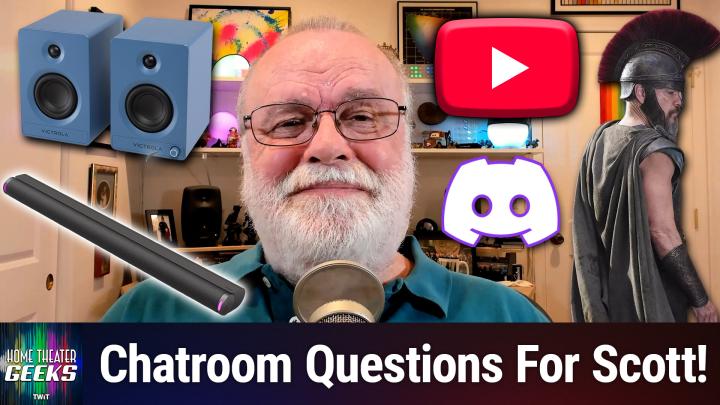
All TWiT.tv Shows (Audio)
Home Theater Geeks 511: Chatroom Q&A Special 3!
00:44:07
Blimps, Bad Sound Mixing, Hi-Res Audio, & More!
Loading summary
Transcript33 lines
- [00:01]
Ad Host (Cohesity Resilience)
Resilience isn't just about bouncing back. It's about being ready. It's how you show up every single day. Because every name in your system is a person who trusts you, and every password is a door you're responsible for locking. And when the threat comes, and it always comes, you hold back the chaos. Learn more at cohesity.com/resilience Today's show is.
- [00:31]
Leo Laporte
Brought to you by Progressive Insurance. Do you ever think about switching insurance companies to see if you could save some cash? Progressive makes it easy to see if you could save when you bundle your home and auto policies. Try it@progressive.com Progressive Casualty Insurance Company and affiliates. Potential savings will vary. Not available in all states.
- [00:54]
Mrs. Claude Claus
Guys, thanks for helping me carry my Christmas tree.
- [00:56]
Scott Wilkinson (Home Theater Geek)
Zoe, this thing weighs a ton. Drew Ski Live with your legs, man. Santa.
- [01:00]
Ad Host (Cohesity Resilience)
Santa, did you get my letter?
- [01:01]
Scott Wilkinson (Home Theater Geek)
He's talking to you britches. I'm not.
- [01:04]
Mrs. Claude Claus
Of course he did.
- [01:05]
Scott Wilkinson (Home Theater Geek)
Right Santa, you know my elf Drew Ski here. He handles the nice list and elf. I'm six' three. What everyone wants is iPhone 17 and at T Mobile. You can get it on them. That center stage front camera is amazing for group selfies. Right Mrs. Claus?
- [01:19]
Mrs. Claude Claus
I'm Mrs. Claude Claus, much younger sister and AT T Mobile there's no trade in needed when you switch so you can keep your old phone or give.
- [01:26]
Scott Wilkinson (Home Theater Geek)
It as a gift.
- [01:27]
Mrs. Claude Claus
And the best part, you can make the switch to T Mobile from your phone in just 15 minutes.
- [01:30]
Scott Wilkinson (Home Theater Geek)
Nice. My side of the tree is slipping. Kimber. The holidays are better.
- [01:34]
Odoo Ad Host
AT T Mobile switch in just 15.
- [01:36]
Scott Wilkinson (Home Theater Geek)
Minutes and get iPhone 17 on us with no trade in needed.
- [01:40]
Odoo Ad Host
And now T Mobile is available in US cellular stores with 24 month credits.
- [01:44]
Scott Wilkinson (Home Theater Geek)
For well qualified customers plus tax and.
- [01:45]
Odoo Ad Host
$35 device connection charge credits and imbalance due if you pay off earlier. Cancel finance agreement 256 gates $830 eligible.
- [01:49]
Leo Laporte
For it in a new line.
- [01:50]
Odoo Ad Host
$100 plus a month plan with auto. Check out 15 minutes or less per line.
- [01:53]
Scott Wilkinson (Home Theater Geek)
Visit t mobile.com in this episode of Home Theater Geeks, I answer questions from the chat room in real time. So stay tuned.
- [02:05]
Omaha Steaks Ad Host
Podcasts you love from people you trust. This is twit.
- [02:21]
Scott Wilkinson (Home Theater Geek)
Hey there Scott Wilkinson here, the home theater geek. In this episode I'm going to be answering questions from the chat room in real time. So stick around and let's see who's going to ask us a question. 2228 says. Nice to see Scott. Thanks, I appreciate it. Hopefully we've got some folks in the chat room who have got some home theater or AV questions for me. I used to love to do this when I filled in for Leo on his radio show. Remember when he had his radio show? And I was honored to fill in for him a number of times. And it was great, great fun. So I am looking forward to it here too. While people are lining up their questions, I thought I would share with you something that I just learned recently, which is that there's a movie coming out next year called the Odyssey, filmed by Christopher Nolan, and he's going to film it. This, I think, is a first. He's going to film it entirely, or did already, in fact, shoot all the footage entirely on IMAX cameras. In fact, he had to create some new equipment, specifically sound isolation containers. He calls them blimps. Because the IMAX cameras, film cameras are pretty loud. And he was. He's been using them since the Dark Knight to shoot action scenes. But to shoot close ups of actors having intimate conversations, they. They couldn't use them because they were too loud. Now, obviously, Christopher Nolan really likes to use onset sound. You could always dub in the dialogue later, along with, you know, foley and other sound effects and whatever, and you wouldn't have to worry about the camera sound. But apparently he likes to use onset sound. So he needed to find a way to damp the sound of the IMAX camera with its film and its reels and it's moving physical film around. So this apparently is able to do it. He says he's able to. To shoot actors from a foot away and get their sound, get their dialogue and use that in the movie. So this is going to be one that I'm gonna travel over the hill to see in imax. I don't think I'll see it in a film imax. I'm not sure there's even one near me. But even if there is, I just. I don't like film. I've said this before, and I'll say it again. I don't like the jitteriness of film. I don't like the fact that once it's gone through the projector a few times, there are scratches and stuff, noise, dirt, things like that. You know that Christopher Nolan is one of those directors that really loves film. He thinks that's the way to go. But I will go to a digital IMAX and see it there, the one with a large screen, a 1.9 to one screen. There's one over in Santa Clara, near San Jose that I went and saw. What did I just go see there? It'll come to me anyway and it's a great theater. But Ultron Tron Aries, which one of my podcast episodes I talked about going to see that movie and I'm sure I'll go see the Odyssey there too. You know, I just don't like film. Like I said, just like I'm not a big fan of vinyl records and I know a lot of people will disagree with me strongly about that, but I prefer good high quality digital audio. Not highly compressed mp3s but high res audio on a good system or a good pair of headphones. That is my go to he said I found this article and he said he used 3 million 2 million feet of film. 2 million feet of film. According to Kodak, a foot of 65 millimeter film costs a buck 50, which means that it cost him $3 million just in film. So that's pretty amazing. Okay, looks like we have some questions here now. So Mike Rin says I have a timely question as my wife is watching the CMA Awards right now on our hisense TV and sound bar. On this and any award show, the narrator sounds fine, but the volume of any music performances are very low. Tried all the sound bar settings, the presets, movie music, news night, surround, on, off, but no luck. Any ideas? Sad to say, I have noticed this too. The mix. The audio mix from most awards shows is terrible. Even the Grammys. I make it a point to watch the Grammys every year. And the sound mix, the audio mix from the performances is usually dreadful and there's nothing you can do about it because it has to do. It's at the source. How they manage to do that, I don't know. I find the same thing often on Saturday Night Live. Mostly I watch Saturday Night Live for the music performances and Weekend Update. Their skits don't really interest me too much anymore. They're kind of one trick ponies, you know, one little idea stretched to five minutes. It's like, no thanks. But I do watch the music performances. Most of these artists I don't know, but I want to keep up to date and I want to see what the kids are watching and listening to. But. But the mix from that show is also often terrible. And those vocals in particular are way down in the mix. Why is that? They're the most important thing and I can't understand a word they're saying. Sometimes it's the fault of the singer, but as often as not it's the fault of the mix. So I'm sorry to say I don't think there's much you can do about it. If your sound bar has a center channel boost level control that's separate for the center channel, you could certainly increase that because that's where the vocals are. If it has a center channel EQ, you could boost the high mids in the 2 to 6k range, roughly because that's where most vocal intelligibility rests. If, if you have that capability in your soundbar. Many soundbars don't. Only the sort of more expensive higher end ones do. Maybe. So those are the two things that I could suggest. But it's not going to do much because it's coming from the source and they're. They. Why don't they mix things better? It really bugs me. Really bugs me. Jammer B. Here's Jammer B, my good friend. I got a Vizio soundbar with wireless rear speakers and sub for my sister and it works pretty well. I'm considering wireless rear speakers too for my 5.1 in my new home. Can you recommend a 5.1 system between 2 and $3,000? Now, most systems with wireless surround speakers are going to be sound bar based. Say that three times fast. That is they're going to have a sound bar in front of and then wireless surrounds and probably a wireless sub in the rear. I don't know of any 5.1 surround systems with separate speakers in the front that have wireless surrounds. So there are a few I want to mention. There's Vizio, of course. They're famous for their sound bars. And they have the Elevate SE which is a 5.1.2. It has a sound bar in front with front, left, right and center, and two up firing speakers that bounce the Atmos channels off the ceiling. And they also have two surrounds on a wireless sub. In this case, the surrounds actually connect to the sub with wires and then the sub connects wirelessly to the sound bar. So you'd need to put the sub in the back of the room and connect the surround speakers to it. There's. And that is about 400 bucks, that system. There's the TCL Q85H which is about 650 bucks. That's a 7.1.4 core system and it has wireless surrounds. Actually wireless surrounds. You need to plug any wireless speaker into the wall, into the ac, you know, power, because they have an amplifier built in and they have a wireless transceiver built in. So and that's all got to get powered. But the TCL Q85H does have wireless surrounds. Now if you want to really go high end. You can go with the Samsung Q series. The HW Q930D is about 1200 bucks and that's 9 1.44 surround channels or overhead channels. Atmos channels with the surround speakers also firing upwards. The TCL that I just mentioned has that as well. And those surrounds are wireless as well. And if you want to go really whole hog, you can go with the Samsung HW Q990F which is $1700 but it's 11 with 11 channels around you and four Atmos channels overhead firing upwards from the sound bar and the surround speakers. And those surrounds are also wireless. So that's the best way to get wireless surrounds is to buy a system, a sound bar based system with wireless surrounds. Let's see who else would be good. B W is probably too expensive. Let me just see if I can do a quick search here and see 5.1 speaker systems and see what I can find here. What? Hi Fi is a pretty good, pretty good brand. A pretty good source of, of information. Oh, ELAC would be another one to look at. I don't know that they make five point wireless surrounds. B and W says best speaker pack. They say best speaker package. But if I check Amazon. Oh, KEF. Here we go. KEF Q Concerto Meta 5.1 system. I'm not sure that they, they have wireless rear speakers, but that would be, that would be one place to look as well as svs. Oh, sound bars. You weren't, you weren't really looking at sound bars. Klipsch makes some really good ones. Their speakers tend to be kind of bright sounding. Here's the Klipsch Reference Theater Pack 5.1. Don't know if their surrounds are wireless or not, but that would be another one to look at. So anyway, I would look at elac. Let's see if ELAC has any, any wireless surrounds. I bet they do. ELAC and no, not East Los Angeles College. There we go. Audio file speakers. Elac.com home theater and let's see. Well, they've got a huge, huge number of products. And so I would definitely look there. I don't know, maybe you want on wall or in wall. Huh. That's interesting. They don't have surround speakers separated out. Okay. Anyway, Lava being, yes, the mix could be better. Probably. Almost certainly. Yeah. They managed to do it badly by not hiring good people. Yeah. Lava being saying, I wonder if live music performances are mixed so that very little goes through the center channel. That's a good question. You know, I used to go to The Grammys and get a backstage tour and stuff. And they were mixing for 5.1. I assume they were mixing into the center channel. I didn't ask that specifically. Aunt Nielsen says upgraded from a Vizio Soundbar 5.1 system to the Sony Bravia Theater quad. Really happy about it. Yeah, Sony makes great stuff. Glad to know you. You were satisfied with that? I would be, I'm sure. Sony. I love their Sony stuff. Chamber B says, news that you like high resolution audio files. How do you play high res audio files? Years ago I asked how do audio files listen? How do audio files P H I L E S listen to audio files? F I L E S He's got a Raspberry PI that runs digital transport. Send files to the dac. I normally listen to high res audio files on headphones and I've got a lot to say about high res audio files on a speaker system. And the core of it is there aren't very many speaker systems that can reproduce higher than 20 kilohertz. And high res audio files typically can go beyond that and often do have information above that. And headphones often can. High quality headphones. I have a pair of focal headphones that are very, very good. And when I want to really listen to high resolution audio, that's what I use. My speakers are rated to 20K in my, in my home theater. They probably will go above that. They're Grimanis, but they're Grimani. Tony Grimani is very conservative in his rating, so he doesn't say they go above 2020 kilohertz, but I'm sure they do. Then you need amplification that reproduces more than 20 kilohertz and that's not cheap either. The point is if you're going to listen on speakers to high resolution audio and you want to hear the full experience of high resolution audio, you have to spend some money, some real money to get a system that will reproduce it. Because if it doesn't reproduce it, what's the point? There is no point. You might as well just listen to CDs which are fine, by the way. I think CDs are perfectly fine. A lot of people say, oh, they're cold and they're brittle and they're clinical. I don't find them that way at all. That's why they like vinyl. These people who say they prefer vinyl over CDs because it's warm. Yes, but that to me means distorted. It's not accurate, it's not flat, it's not what the producer intended people are going to push back on that really hard and they always do. I've said it for years, throughout most of my career. That's what it that's how I feel about it.
- [19:31]
Ad Host (Cohesity Resilience)
Resilience isn't just about bouncing back. It's about being ready. It's how you show up every single day. Because every name in your system is a person who trusts you and every password is a door you're responsible for locking. And when the threat comes, and it always comes, you hold back the chaos. Learn more@cohesity.com Resilience.
- [20:01]
Odoo Ad Host
Imagine you're a business owner relying on a dozen different software programs. Each one is expensive, overly complicated, and worst of all, none of them are connected. It can be incredibly stressful right now. Picture Odoo CRM Accounting, Inventory, Manufacturing, Marketing, HR and more. Odoo brings all the tools your business needs into one simple platform and all seamlessly connected. Everything works together, giving you the peace of mind that your business is running smoothly from every angle. Odoo's open source applications are user friendly and designed to scale with your business, saving you time and money. Say goodbye to juggling multiple platforms and hello to efficient integrated management. Stop wasting resources on complicated systems and make the switch to odoo today. Visit odoo.com o-o o.com and discover how Odoo can simplify and streamline your business operations. Odoo Modern Management Made simple the holidays.
- [21:02]
Omaha Steaks Ad Host
Always remind me of the year I was scrambling for the perfect gift and ended up discovering how effortless great hosting and great gifting can be. From unforgettable presents to stress free entertaining, Omaha Steaks delivers the world's best steak experience. I love gifting Omaha Steaks because the quality is unbeatable, USDA certified tender steaks, premium proteins, elegant sides and indulgent desserts. Every box I've ordered has arrived perfectly packed and everyone I've gifted it to has raved about the flavor and variety. With five generations of expertise, Omaha Steaks makes holiday magic easy, delicious and guaranteed. Save big on gourmet gifts and more holiday favorites with omaha Steaks. Visit OmahaSteaks.com and for an extra $35 off, use code Flavor at checkout. Terms apply. See site for details. That's Omaha steaks.com promo code flavor hey.
- [22:02]
Leo Laporte
There, it's Leo Laporte, host of so many shows, I'm Twit Network thinking about advertising. In 2026, we host a network of the most trusted shows in tech, each featuring authentic post read ads delivered by Micah Sargent, my co host and of course me. Our listeners don't just hear our ads. They really believe in them because we've established a relationship with them. They trust us. According to Twit fans, they've purchased several items advertising on the Twit network because they trust our team's expertise in the latest technology. If Twit supports it, they know they can trust it. In fact, 88% of our audience has made a purchase because of a twit ad. Over 90% help make it and tech buying decisions at their companies. These are the people you want to talk to. Ask David Coover. He's a senior strategist at ThreatLocker. David said Twitch hosts are some of the most respected voices in technology and cybersecurity, and their audience reflects that same level of expertise and engagement. It's the engagement that really makes a difference to us. With every campaign, you're going to get measurable results. You get presence on our show episode pages. In fact, we even have links right there in the RSS feed descriptions. Plus our team will support you every step of the way. So if you're ready to reach the most influential audience in tech, email us partnerwit.com or head to Twit TV advertise. I'm looking forward to telling our qualified audience about your great product.
- [23:34]
Scott Wilkinson (Home Theater Geek)
So let's see. Hey Wizardling, good to see you. I really like to let's see. Dms7362 I really like to watch movies with spatial audio on my AirPods Max through my Apple TV. Spatial audio doesn't work with my 4K UHD movie discs. Any way to get spatial audio from UHD discs into the headphones? I'm not a hundred percent sure about that. And by spatial audio I assume you mean immersive audio like like Atmos and what have you. I thought the AirPods AirPods Maxes had a spatial audio up mixer. I'm not sure about that. And probably if you're playing a disc and it's got and it's and it's Atmos and you maybe plug or are you using wi Fi or a Bluetooth? Depends on which codec you're using. Some of the later ones might have spatial audio in them but but it depends on whether or not the device that is sending the Bluetooth is able to up mix it into spatial audio or send it as spatial audio. In the case of a uhd blu ray 4k uhd movie discs they will often have Atmos. A lot of them do. So can that be translated into Spatial audio for the AirPods AirPod Max would depend. If you're playing a disk, it's going to go into a receiver and I assume you're going to get the Bluetooth from the receiver or the preamp processor. And that depends on whether or not it will upscale or up mix I should say into immersive audio or transmit it if it's already there over Bluetooth. In fact let me just quickly look and see here if Bluetooth Atmos. Let's see if any of the I don't remember whether Bluetooth talking about Atmos Bluetooth speakers but I'm talking. I don't see anything about Atmos 2 headphones. That's a, that's a question I'll have to spend a little more time researching because it depends on whether the Bluetooth codec carries that information or not. Shreen Sometimes I have trouble with these screen names. ShrinCompter Shrine Compter KEF would be a good option. Yes, KEF is a great speaker company. Do they make wireless surrounds? I'm not 100% sure. Jammer B. Andrew Jones Wireless at ELAC Andrew Jones hasn't been at ELAC for a while, several years. So they wouldn't be Andrew Jones. I don't think he ever designed any wireless surrounds. So whoever's there now, maybe they've started doing wireless. It's a good question. Wizardling says what is my Recommendation for compact 2.0 speaker system that still has bass that isn't MIA? Don't expect miracles, just something that has a decent setup for built in speakers. So I guess what that means is you don't want a subwoofer and that is going to be tricky. My question, my follow up question for you is what's your budget and what's your size limitation? Can you have big floor standing speakers? Can you spend a lot of money? Because if you can then yes, you can get a 2.0 system with good bass. But if, if you have to have small ones and they have to be cheap, I would say not. I don't think so. Donnie Murdoch says yes, I love Flac Flac, which is one of the lossless audio codecs which is what I use to listen to high res audio streaming from a company called Qobuz. Q O B U Z It's very much like Tidal T I D A L in that they stream high resolution losslessly compressed audio. I chose Qobuz. I used to have both of them but I ended up dropping Tidal and just using Qobuz because they tell you on each track. What is the resolution? And Tidal didn't. And when I was doing a lot of reviews, I wanted to know what's the resolution of this track? Is it 4896? I mean sorry, 9624 or 4824 or CD quality or what? And Qobuz gave me that information, so I kept them and dropped title. Wizardling is saying think Thinking for portability. 2.0 for less cables. 2.0 for less Cables. Less hassle. Moving but not wireless. No need for that. Okay, good move meaning you want to move this system from room to room. I don't assume you mean like move, you know, oh, I'm going to move from this city to that city. Probably means more moving than once every few years or whatever. So that's what I'm guessing that you are meaning. So when you tell me what kind of budget you have, I can maybe make some recommendations. Berserk says I have used Sony home AV amps for the last 20 years. They all have 5.1 sound. Can you use speakers you have or buy. And I mean you can use speakers you have. And I mean any. The Sony amps let you configure the speaker loudness and placement to easily set up any group of speakers. You could easily do this for $2,000. One thing that comes to mind when you're mentioning that is you can configure the speakers. You can use speakers you want. Any, any speakers. It depends on the impedance, the nominal impedance of the speaker and whether or not the amp can drive it. Most speakers, most sort of mid range speakers have a nominal impedance of 8 ohms, maybe 4 ohms. Most amplifiers can drive that, but if the speaker dips into the 2 ohm range, you have to have a pretty special amp to be able to drive that without causing problems, maybe even damaging the amp. So when you say any I, I have to ask about the speaker impedance. The Sony amps let you configure speaker for configure the speaker loudness and placement to easily set up any group of speakers you're talking about. I think probably relatively recent models that let you put speakers in various places and then compensate for that with correction algorithms that make it seem like they are where they're supposed to be, that is front, right and left at about 60 degrees or so, surrounds at 110 degrees center in the middle. So if the Sony amps let you do that, and as I recall they, they started doing that a Few years ago. You know, that's really good, but you want to make sure that your impedance of your speakers matches the impedance output of the amps. I should say the output impedance of the amps. In most cases it'll be fine, but in some more esoteric cases it might not. And Lava Being says assuming the room has carpet and can hang drapes. Yes. You don't want a room with hardwood floors and, and lots of glass walls. That's going to be too reverberant. Wizardling says we used egg cartons back in the day. Yeah, I remember those days well. And you know, they provide some measure of acoustic damping and help if the room is too reverberant. And Wizardling says draping cheap curtains over the walls and using rugs for bare wood floors works and is cheap. It's true. Gobek says you talk about high def recordings and listening to them. Being elderly, wonder if listening to recordings that can reproduce the high frequencies is of any value. Great question. Really great question. Because being elderly, I will admit to that. I am now elderly, I am a senior citizen, I get my senior discounts and I take advantage of as many as I can. And you're exactly right. As we age all humans, our high frequency perception drops, no question about it. And so what's the value of listening to high res audio? And the answer is there may not be any. You certainly no one can hear above 20 kilohertz even if there's information up there. But there are arguments to say that that information up in the ultrasonic range affects what we can hear. There are what are called difference tones or combination tones, which are combinations of the ultrasonic frequencies that manifest in the audible range. And if there are things up there and they cause these difference tones down in the audible range, you'll hear them. There's also a theory that I read somewhere recently that ultra high frequencies coming out of speakers, this doesn't apply to headphones, but coming out of speakers actually have an effect on your skin. And so it's not hearing that you're here, hearing that, perceives it, but, but a tactile sensation almost. It's not high volumes and you know, rippling on your skin because the sound waves are so loud. It's, it's a theory. I, I don't really know if I believe that or not. I have to do more research on it. But there are mechanisms apparently by which ultrasonic frequencies can have a perceptible effect. So now listening to high, listening to high res audio on headphones. Yeah, that's probably not. Except for this. These combination tones, difference tones that may have some effect in headphones that even I'd be able to hear. Interestingly, I did. I. I've had multiple audiograms taken of my hearing, and there is a dip in the, I'd say, I guess, 2 to 6 kilohertz range, probably due to playing in rock bands as a youngster and big bands, big, you know, jazz orchestras, where I'm in the trombone section and the trumpets are right behind me, blasting right into my ears. I did that for many, many years. And I played in a few rock bands in college. And those can get really loud, really loud. So that is. That has probably caused the notch in my hearing. But interestingly, the audiogram, I go to an audiologist, they're rare, but I found one whose audiometer, that is the device that tests your hearing, goes all the way to 20 kilohertz. Most audiologists have audiometers that only go to 8 kilohertz because all they're really concerned about is whether or not you can understand speech. But there are a few who cater to musicians and they want to hear all the way to 20K, my audiogram. Actually, after the dip, I got back up to 20k. I could perceive 20k. I was astonished. Not that it's, you know, important really, but even at my age, I couldn't believe it. But there it was in an audiogram. Unbelievable. Wizard link. Everybody's hearing degrades at different rates. That's also true if you have not been subjected to really loud sounds for over long periods of time, over your life, not, I mean, constantly, but, you know, repeatedly. Then if you haven't been exposed to that, then your hearing is going to degrade much differently than those of us who have. Now. Youngsters love to go to concerts, and concerts are really, really loud. I think I've told this story before at ces. One year, some years ago, JBL put on a concert with KISS in a hotel ballroom. And I went and I wore hearing protection and I brought my sound meter during each of their songs. It was in the 120 decibel range. It was like, oh, my God. So, yeah, you go to enough of those concerts, you're gonna lose some hearing easily. No question. And it's not going to be immediate. That's. This is the pernicious thing about it. It's going to be over time, it's going to be delayed. You're going to go to that concert, you're going to come out with your ears ringing. Maybe temporary, maybe not, but you're going to go, oh man, that was loud. But then two or three days later you go, oh, okay, I'm fine. 20 years later, you're going to have permanent hearing loss. So please, please, please protect your hearing when you go to these really loud concerts. You're going to thank me 20 years from now.
- [38:48]
Ad Host (Cohesity Resilience)
Resilience isn't just about bouncing back. It's about being ready. It's how you show up every single day. Because every name in your system is a person who trusts you and every password is a door you're responsible for locking. And when the threat comes, and it always comes, you hold back the chaos. Learn more@cohesity.com Resilience.
- [39:18]
Omaha Steaks Ad Host
The holidays always remind me of the year I was scrambling for the perfect gift and ended up discovering how effortless great hosting and great gifting can be. From unforgettable presents to stress free entertaining, Omaha Steaks delivers the world's best steak experience. I love gifting Omaha Steaks because the quality is unbeatable. USDA Certified tender steaks, premium proteins, elegant sides and indulgent desserts. Every box I've ordered has arrived perfectly packed, and everyone I've gifted it to has raved about the flavor and variety. With five generations of expertise, Omaha Steaks makes holiday magic easy, delicious and guaranteed. Save big on gourmet gifts and more holiday favorites with omaha steaks, visit omahasteaks.com and for an extra $35 off, use code Flavor at checkout terms apply C site for details. That's Omaha Steaks.com promo code flavor this.
- [40:18]
Leo Laporte
Episode is brought to you by Red Canary. When it comes to the security of your business, it's not enough to feel safe. You need to prove it. With Red Canary, you get the data, visibility and expert partnership that make your impact unmistakable. Their MDR detects four times more threats than the the competition, giving you the clarity and confidence to show leadership the real value of your investment. Behind every alert, there's a Red Canary expert ready to respond. Day or night. That's non stop protection, measurable performance and a calmer, more focused team. Turn protection into proof. Visit redcanary.com difference to learn more.
- [40:50]
Scott Wilkinson (Home Theater Geek)
So Wizardling says he can spend about $500 for a pair of speakers. Okay, so $500 for a pair of speakers that have some some bass in them. So we're talking really bookshelves. ELAC debut reference is 800 bucks. JBL Studio 630 is 87769 Wharfdale Diamond 12.0 bookshelf speakers 329. That, that's pretty good. Wolf Shelf is Wharfdale. Sorry. Is quite good. You don't want to. Let's see. Here we go. New York Times. Wire cutter. I like wire cutter. Brent Butterworth is my fit. One of my favorite speaker reviewers. Top pick Sony SS CS5M2. 178 bucks on Amazon. Is that for the pair? Wow. Well that, that would certainly be good. Triangle Borea BR03. Don't know that brand. 500 bucks a pair. Looks like the Sony's. The Sonys might be each 178 each. Still, that's well within your budget. Triangle Borea. I'd never heard of those guys. That's kind of interesting. Let's see if he's got any others. Polk Signature Elite ES15. But those Sony's. Let me go quickly. Look at the Sonys. Is that a piece? No, it's for a pair. Wow. Three way speakers, I would say. Look at those. Absolutely. Save a lot of money that way. Okay, let's see here. Yeah. Okay. Wants to take them between rooms. Too many parts, too many cables, it's going to be annoying. You're right about that. Now the speakers I've been talking about are passive, which means they need an external amplifier or receiver. So that's not going to be that easy to move around from room to room. So later on in Brent's article on wire Cutter, he talks about powered speakers, bookshelf speakers. And these are what I think are going to be the most applicable to your situation because they don't need an amplifier or receiver. They have their own built in. You got to plug them in as with any powered speaker because the amplifier that's built in needs power. But they are relatively easy to move around. I've got a couple of them in my house and they, they make a. Make it really nice to move the speaker from one room to another. So if you scroll down in Brent's article, you will see his picks for powered bookshelf speakers. And these are pairs of speakers. So you're going to do stereo in this case. And since you wanted to be in the 500 range, budget wise, I'm going to stick with that. So there are a couple that Brent recommends and I think I trust his recommendations implicitly. So I would definitely look into these. There's the Victrola Tempo VPS 400, which is a pair of speakers. It's only $200 at Crutchfield and Amazon, so that's well under your budget. And if Brent likes them. I bet they're really good. If you want to go a little more upscale, ELAC has a pair that I think are really good. The debut connects DCB 41 and that connects is C O N N E X and these are on the ELAC website for 524 bucks, down from 700. I don't know how long that sale is going to last, but as of this recording they're just slightly above your budgetary range. I would add two more. I love audio engine speakers and they make a bunch of powered basically desktop speakers. Speakers that are intended to be used with your computer, but they sound really, really good. The audio engine A5 plus is a really good choice. You can get them without Bluetooth for 400 to 470 bucks depending on the finish. Come in a wood finish or white or a couple other colors or 500 to 570 bucks including the ability to stream Bluetooth audio to them using the APTX codec, which is a high quality codec APTX HD actually. So those would be great. I would really be happy with those. And the company SVS makes a pair that I think would be really, really good as well. They're called the Prime Wireless Pro. Now those are a little over your budget. They're $700 on sale, down from 900 as of this recording. So they might be a little over your budget even on sale, but they certainly are worth considering. But the audio engine or the ELAC would also be great choices. And the Victrola, if you want to save some serious money, that would be my recommendation for speakers that you could more easily move around from room to room. Okay, so. Well, we got a lot more questions and I'm really sorry that we're already out of time. Lava being for paid cinemas, is there any way to find screens or cinemas that don't play movies too loud? I have been looking for that my whole career. Every movie that I've measured recently, including Tron which got pretty loud. Overall the average level they kept right under a whisker under the defined limit which is 85 decibels a weighted over the length of the movie as Tron was 84.6 I think know and it reached peaks of of over a hundred. But all the movies that I've been to actually stay within the specified boundaries for for movies doesn't mean it's not too loud. It is in my opinion but oh no wizardling. I avoided too much loud music as a young person and then Covid went and gave me Tenidis Anyway. Damn. I'm so sorry to hear that. What a pain. Okay, let's see here. Oh, Zoic says I have separate tweeters that I can point directly towards where I'm sitting. Helps my old ears. True. That would be good if you have aimable tweeters. Excellent. Okay, well, we've come to the end of another session much too quickly, I'm sorry to say, but I'm going to do these regularly. Stick, stick, stick around, stay tuned. Every couple of months, I'm going to do one of these. And I do love interacting with the chat room in real time. So thanks a lot for being here and. And being part of the show. Now, I also answer questions on my regular episodes, so if you have one for me, send it along to HTG and at Twit TV and I'll answer as many as I can right here on the show. And if you have a home theater, I would love to hear about it. Send me some pictures and a sentence or two about what makes it special for you. I want to start featuring listener home theaters on my monthly home theater of the month show, the episode of Home Theater Geeks. You could even be on the show, and that would be really fun if you're up for it. So again, send me some photos to HTGWIT tv and I look forward to hearing from you. Until next time, geek out. Berserk says the sound levels are usually garbage. Most places I often go tell the manager to turn it down at the movies. Yeah, but they won't do it. Just. Just as a side note, I went to a concert, a live concert of one of my favorite artists, a guy named Jai Utah here in Santa Cruz. And it was so loud that I walked out and the producer or the promoter was in the lobby. And I said, hey, just want to let you know I'm leaving because it's too damn loud. And he said, oh, I'm sorry to hear that. Was he going to go turn it down? No, not a chance. Not a chance.
- [50:35]
Ad Host (Cohesity Resilience)
Resilience isn't just about bouncing back. It's about being ready. It's how you show up every single day. Because every name in your system is a person who trusts you, and every password is a door you're responsible for locking. And when the threat comes, and it always comes, you hold back the chaos. Learn more@cohesity.com Resilience hey, guys, have you.
- [51:05]
Gold Belly Ad Host
Heard of Gold Belly? It's this amazing site where they ship the most iconic famous foods from restaurants across the country, anywhere nationwide. I've never found a more perfect gift than food. Gold Belly Ship Chicago Deep Dish pizza, New York Bagels, Maine Lobster rolls, and even Ina Garden's famous cakes. So if you're looking for a gift for the food lover in your life, head to goldbelly.com and get 20% off your first order with promo code GIFT. That's goldbelly.com promo code GIFT.