← All TWiT.tv Shows (Audio)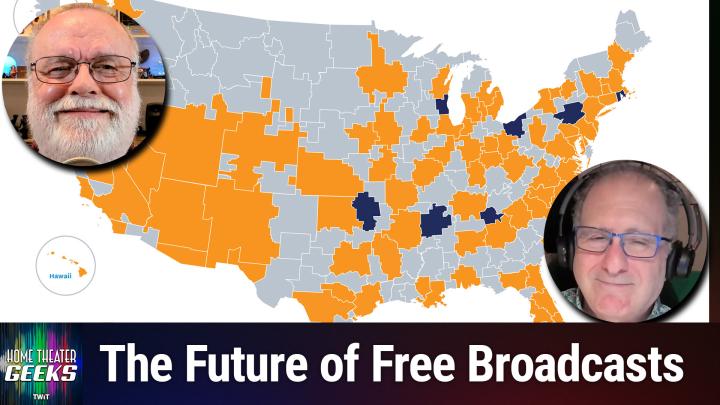
Loading summary
Transcript132 lines
- [00:01]
State Farm Announcer
This episode is brought to you by State Farm. Having insurance isn't the same as having State Farm. It's like matching with someone who says they're adventurous only for them to cancel your date because they're feeling too lazy to leave the couch. You wouldn't settle for dull dates, so don't settle for just any insurance. When it comes to getting the help you need, State Farm is the real deal. Like a good neighbor, State Farm is there.
- [00:28]
Scott Wilkinson
So good, so good, so good.
- [00:31]
Nordstrom Rack Announcer
Newmark nows up to 70% off are at Nordstrom Rack stores now. And that means so many new reasons to rack.
- [00:38]
Scott Wilkinson
Cause I always find something amazing.
- [00:41]
State Farm Announcer
Just so many good brands.
- [00:42]
Scott Wilkinson
I get an extra 5% off with my Nordstrom credit card.
- [00:45]
Nordstrom Rack Announcer
Join the NordicLub to unlock exclusive discounts. Shop new arrivals first and more. Great brands, great prices. That's why you rack.
- [00:56]
Mint Mobile Announcer
Well, the holidays have come and gone once again. But if you've forgotten to get that special someone in your life a gift. Well, Mint Mobile is extending their holiday offer of half off unlimited wireless. So here's the idea. You get it now, you call it an early present for next year.
- [01:11]
Scott Wilkinson
What do you have to lose?
- [01:12]
Mint Mobile Announcer
Give it a try@mintmobile.com Switch limited time.
- [01:16]
Mint Mobile Terms Announcer
50% off regular price for new customers. Upfront payment required. $45 for three months, $90 for six month or $180 for 12 month plan taxes and fees. Extra speeds may slow after 50 gigabytes per month when network is busy. See terms lead to.
- [01:26]
Scott Wilkinson
In this episode of Home Theater Geeks, I talk about the next generation of over the air TV with my good friend Michael Heiss. So stay tuned.
- [01:38]
Michael Heiss
Podcasts you love from people you trust. This is twit.
- [01:54]
Scott Wilkinson
Hey there, Scott Wilkinson here, the home theater theater geek. In this episode, I'm going to continue my conversation about over the air television with Michael Heiss, industry consultant, journalist and a jolly good CDF fellow. Hey Mike, welcome back to the show.
- [02:13]
Michael Heiss
Hey Scott, thanks for having me back. You know, it seems like it was only minutes ago.
- [02:19]
Scott Wilkinson
And yet in. In other time frames, it was a week ago. Yeah, right. Twilight Zone and winner of the.
- [02:28]
Michael Heiss
Not winner. I'm sorry, not about to say winner. Recipient of the CDL lifetime achievement award.
- [02:33]
Scott Wilkinson
Well, that's right. Congratulations on that. We talked about that during the Cedia show.
- [02:38]
Michael Heiss
Yeah, a couple years ago, but yeah.
- [02:40]
Scott Wilkinson
And you know, that's. That's a fine honor for a career. Well played.
- [02:47]
Michael Heiss
Another piece of another tchotchka.
- [02:49]
Scott Wilkinson
Another tchotchke on your shelf. Well, we're going to talk this episode, last episode we talked about over the air television in general and the benefits thereof and why it's still important. People might not think so, but it really is. And this episode we're going to concentrate on the current standard of over the air broadcasting, which is sometimes called Next Gen TV, more officially known as ATSC 3.2. ATSC standing for Advanced Television Systems Systems Committee. Right. So the, the previous one, the previous standard for over the air broadcasting, digital broadcasting, the first one for Digital was ATSC 1.0. So we have a graphic that shows something of the difference between them. Why don't you help us understand that?
- [03:50]
Michael Heiss
Well, the most important thing is what happened to ATSC 2.0?
- [03:53]
Scott Wilkinson
Well, I was going to ask that.
- [03:56]
Michael Heiss
And the answer is it ran off to some foreign land with MPEG3. No, no, wait a minute. No, no, no, there's MPEG. Yeah, there's MPEG, I'm thinking MP3, there's MPEG2 and MPEG4, but there's no MPEG3. And there really was going to be an ATSC 2.0, but by the time they sort of got down the road for all the standards, the heck with it, we'll just go to the next one. So ATSC 1.0, as you all see on the chart, is Digital and it's 19.4Mbps. And that's the bandwidth. And as we spoke in the last episode, you can divide that up any way you want. You want 1080, you can have 1080, you want 720, you can have 720, you want 11080 or 7 20, and you want a bunch of 4 80s. And as we showed on the chart, up to 13, 14, 15 different 4 80s, you can do that all well and good. You can do, you know, 1080 and all that 16 by 9, that's what that brought. But, you know, even though it's only been around in the grand scheme of things, you know, 25 years, they wanted something better to really be future proof. So what ATSC 3.0 does is it can give you more room and, you know, a little compression and a little trickery. But you can see the 9Mbps is for your main channels and then you. Oh, there's the rabbit ears. How'd they get in there?
- [05:32]
Scott Wilkinson
How'd they get in there?
- [05:33]
Michael Heiss
Yeah, they went to the old time water store and they put them in the closet. But you can see you can divide it up into different things. So for example, if you want to go full out, you can Do Nobody outside of Korea is doing it. It can do 4k, but no one in the US is doing it. Now I've seen the demos at NAB, as we probably talked about and it looks pretty good. But the advantage of having this extra, these extra bits is you can do 1080p, you can do 4K, you can do Dolby Atmos, you can do HDR10, you can do Dolby Vision, you can do that and many other things that we'll talk about that you just can't do. Because ATSC 3.0 is an IP based system. So put that aside from compression, it's just a method of transmission.
- [06:34]
Scott Wilkinson
And IP meaning Internet protocol.
- [06:38]
Michael Heiss
Yes. Not intellectual property or not any one other, you know, bunch of things. It's. Yes, it's Internet protocol just as you're using now to, you know, watch this cool show and it lets you do a lot more and more of it. For example, you can also do, as we'll show, you can do special features that will be like streaming. Now there are some other things that we'll talk about. It doesn't need, but it's nice to have a broadband back channel because it knows where you are. And yes, you can turn it off so that you know that they don't come to your door and all that.
- [07:21]
Scott Wilkinson
Privacy concerns.
- [07:22]
Michael Heiss
Privacy and they're very cognizant of that to be sure. But it knows where I am. So if I want to know the weather, I can use my Zinwell or at, excuse me, ADT ADTH boxes turn on channel 4, virtual channel 4, KMBC 4.1 NX and I can get the weather, the radar, the, you know, local sports, the international news, lots of stuff that you can't otherwise get over the air other than for the cost of the box for free. And during elections or sports, it's really cool. And the other thing is because it's IP and again, you have to, you know, take a choke a bit on the privacy concerns. But once you tell it where you are, excuse me, my throat is a little dry. Once you know where it is, it has what's called Awarns, which is an advanced emergency system. Now I'm sure everybody is used to.
- [08:37]
Scott Wilkinson
Oh my God, Duck under the desk.
- [08:42]
Michael Heiss
We're old enough to remember Duck and Cover.
- [08:44]
Scott Wilkinson
I am old enough to remember Duck and Cover.
- [08:46]
Michael Heiss
I think Duck and Cover are actually my accountants. But that's, but you know, and, and it is. And, and before that Conor Ad. And those were things that were born Conor at from actually Post World War II technology and then early EBS Emergency Broadcast System. You know, this isn't that, this is not. This isn't only a test, but those kinds of things which came in very handy regrettably last year during the fires out here in LA. But with ATSC 3.0, the system is considerably more advanced. So they sent out one of those things where it beeps your phone. Evacuate. Evacuate. Where I live or where you lived when you're down in SoCal, those were close to, but not in the fire zone. Somebody pressed the wrong button and everybody in Los Angeles county got an evacuation notice. I was at CES and my wife freaked and I'm in Las Vegas enjoying CES and she said we got to leave. You got to come home now. No, you got to come home now. Now. And I did, you know, clearly. And then thankfully, you know, we were outside the zone. But with Awarns, it knows where the TV set is. So if there, I'll do something a little bit more benign, not much than wildfire, but if there's. In the Midwest you always see the derailed toxic material tanker. Right now if there is an evacuation notice in the northeast side of town, ATSC 3.0 will send the alert only to the impacted area in the northeast, while the people in the southwest area of the coverage don't have to, you know, go out and change their underwear kind of thing. So hey, you know, it happens. So I mean, and that, that, I mean, you know, I kind of make a joke out of it, but I mean, but that's, that's really serious, Stu. And it's really very, very good. Or do you want the ticker to say the high school sports store sports scores where I live or the high school sports scores down in Orange county or up in Ventura county where your grandkids might be because probably that's all they can afford. Or if I only had grandchilds, but talk to my son and his and my daughter in law but fortunately they're not watching so they won't call and yell at me. But, but, and, or even things like pagers now you might say, huh, pagers, Pagers. Yeah, like what doctors have pagers.
- [11:30]
Scott Wilkinson
They still have pagers.
- [11:31]
Michael Heiss
What do volunteer fire people have? Pagers or emergency, you know, certain volunteer emergency responders, they still use pagers which take off spec, take up spectrum and you might be out of the range of, of where the pager. I used to have a pager, you know, when I worked at Harman and you know, once every two or three weeks I was the on Call guy. So if the factory exploded, you know, my pager would go off. And I say, you know, get the marshmallows, but what am I going to do? You know, get a garden hose. But no, but seriously, pagers, people might not realize that they take up spectrum, but they're very important. So you can take some of those extra pieces of bandwidth that you saw on that slide and use what's called OTM, OT2M1 too many. So you're sending it out to everybody, but then it will just ring Mike's pager or Dr. Jones's pager, but not Dr. Smith's pager. And that's a very efficient way of doing that without using new spectrum. And spectrum is very valuable.
- [12:46]
Scott Wilkinson
Yeah.
- [12:46]
Michael Heiss
So you know that that's really cool. So there are all these cool things that it can do if you can put up the slides. One of the things that it can do is these days broadcast stations are either 1080i, 720p or 480i or some 480ps. But the NT, the ATSC 3.0 next gen signals can do not only more, but they can do better resolution. So if you want to watch the, you know, Monday Night Football or the NBA on NBC or, you know, the games on Fox, the NBC over the air is on channel point 4.1 is 1080i. But when you go to 4.1 NX, which is the next gen is 1080p and HDR10 for free. X the cost of the box.
- [13:55]
Scott Wilkinson
Right.
- [13:55]
Michael Heiss
And even if you watch it on some of the football or sports things that are on KTLA channel 5, they're 720 over the air 5.1, 5.1 NX is 1080p. Does it make a difference? You know, if you're a sports fan and you want the better frame rate, yeah, it does make a difference.
- [14:18]
Scott Wilkinson
Yeah.
- [14:19]
Michael Heiss
So, you know, that is a big no 4k. Yet it can do it. But I think only because quite frankly the state of the economics of the linear TV broadcast industry, about the last thing stations want to do now is convert everything to 4K. Some of them are probably still paying off, you know, converting from, you know, SD to hd. Right. You know, that that cost them a lot of money.
- [14:47]
Scott Wilkinson
Right.
- [14:47]
Michael Heiss
So there are lots of things going on behind the scenes in the broadcast world, but the change to the higher progressive resolution, you know, I think that that's significant. And the ability to do hdr, whether.
- [15:02]
Scott Wilkinson
It'S Dolby Vision or Atmos, and yes, immersive audio exactly.
- [15:10]
Michael Heiss
At the broadcast. And again, much like, you know, we always talk about HDMI things that HDMI can do. HDMI 2.1 is a bucket of stuff. And if you know, bits a bucket, obits. As a manufacturer, if you do any one of those things, you can claim your HDMI 2.1. So if you have a set that does EARC and nothing else, no vrr, none of that other school stuff that we like to talk about, you can still we call it HDMI 2.1 with EARC.
- [15:46]
Scott Wilkinson
Right.
- [15:46]
Michael Heiss
And it's the same thing with next gen. You can do all of these things but there's no requirement that you have to. So one of the cool things they also can do instead of just English and typically it's Spanish, second language, they can do three or four second language things. SAP secondary audio program and one year at NAB Dolby, somebody did a demonstration with Dolby where they had English Spanish for a soccer slash football match. They had the home team's presenters, it's English, the visiting teams presenter. And then they had a second, a separate audio channel for people who didn't know what soccer is about. Now let me call you in. Don't touch the ball with your hands unless you're the goalie. And the goal is to get it from here into them nets at the other end of the, the end of the end of the pitch. But they had these English comedians. Well, you know, this is a soccer game and you have to do this. I mean it was hilarious, but it was, it was a proof. It was to prove what it was capable of.
- [17:03]
Scott Wilkinson
Right.
- [17:03]
Michael Heiss
But you know, and again I point to Los Angeles. That's where I've, you know, lived for a long time, but where you have many different languages. It wouldn't be outside the realm of possibility to have in Los Angeles to have English, Spanish, but on some channels, Mandarin, Cantonese, Armenian, Tagalog, Japanese, you know, pick a language, any language. There are people that Russian, you know, there are people that speak it in the Los Angeles metro area. So, you know, I kind of make fun out of it, but it's a serious and an important thing for, you know, for all the different communities in a service area.
- [17:44]
Scott Wilkinson
Yeah.
- [17:46]
PwC Announcer
How does PWC take your company to the leading edge? They bring the sharpest minds in tech to your team so you can bring the ideas that will transform your business. They're passionate about your industry. So you can walk into any room with every advantage and they're with you every step of the way. So you can know you're headed in the right direction. PwC builds for what's next so you can get there. Now get started@pwc.com US LeadingEdge.
- [18:14]
Leo Laporte
Hey everybody. Leo Laporte here with a little bit of an ask. Every year at this time, we'd like to survey our audience to find a little bit more about you. As you may know, we respect your privacy. We don't do anything, in fact, we can't do anything to learn about who you are. And that's fine with me. I like that. But it helps us with advertising, it helps us with programming to know a little bit about those of you who are willing to tell us. Your privacy is absolutely respected. We do get your email address, but that's just in case there's an issue. We don't share that with anybody. What we do share is the aggregate information that we get from these surveys. Things like 80% of our audience buy something they heard in an ad on our shows or 75% of our audience are it decision makers. Things like that are very helpful with us when we talk to advertisers. They're also very helpful to us to understand what operating systems you use, what content you're interested in. So, enough. Let me just ask you if you will go to TWiT TV Survey 26 and answer a few questions. It should only take you a few minutes of your time. We do this every year. It's very helpful to us. Your privacy is assured, I promise you. And of course, if you're uncomfortable with any question or you don't want to do it at all, that's fine too. But if you, if you want to help us out a little bit. Twitter TV Survey 26, thank you so much. And now back to the show.
- [19:37]
Scott Wilkinson
Tell us what we're looking at here. There you go.
- [19:40]
Michael Heiss
Okay, so what you're seeing is on the left before channel sharing is today. So in the map of all the 157 channel program virtual channels that I can receive in Los Angeles on one RF physical channel, you can do one HD and as many SDs that you can squeeze in or, you know, and that's what you can do with, with ATSC 1.0, with 3.0, what they're doing is you can put more channels on one. And that's how you didn't have, you don't have to do the kind of transitional thing that we had in, in the 1990s during the digital transition, because you can have different stations that you might think and indeed our competitors sharing the same stick. So if you could stick meaning Transmitter. So if you could put up that, that table chart that shows all the different channels. So you can see that are all of these different channels, many of which are competitors, living on the same. If you will stick, you can talk like you're a professional. So in Los angeles, there are 1, 2, 3, 4, 5 different virtual channels, all living on chat physical channel 13. And this is from my zapper box. And you can see that little, you know, colored device to the left of the channel number and it shows that's where the next gen channels are. So if I pick channel 2.1 and X channel 2.1 regular lives, where does it live? It lives here somewhere. It lives on channel 31. So the. Right, that's where channel 2.1 A, ATSC 1.0 lives.
- [21:49]
Leo Laporte
Right.
- [21:50]
Michael Heiss
And the next gen lives on channel 13. But you don't have to worry about that because the TV set knows. And as you click through the channels, you'll see 2.1 NX and then 2.1 or 2.1 HD and that'll, you know, you, you don't really have, you know, hey, we're home theater geeks, right? We care about this stuff.
- [22:11]
Scott Wilkinson
That's right.
- [22:12]
Michael Heiss
But grandma doesn't have to worry about it.
- [22:14]
Scott Wilkinson
Right? Right. Okay, good.
- [22:20]
Michael Heiss
Sorry for the, you know, change.
- [22:21]
Scott Wilkinson
No, that's, that's fine. That's fine. No problem at all. Now the net, now the map. Let's take a look at that map, which is. There we go.
- [22:32]
Michael Heiss
Yeah, go ahead.
- [22:34]
Scott Wilkinson
This is where ATSC 3.0 was available about a year ago.
- [22:40]
Michael Heiss
Right. And I did check last night with my ATSC 3.0 next gen whisperer, the amazing David Arland, who does the PR for Pearl TV and Indiana Associated Broadcasters, he said this is about where it is now. Now, it may look like there's a lot of gray space and with respect to my friends that don't that live in those gray spaces. But the coverage that's on the air or about to come on the air is about 75% of the US television market. And, and again, in fairness to the markets where it's not available, those are typically under 100 market areas where the cost to do this is, you know, a burden for some of these stations. It ain't a good time to be in a linear TV business. But, you know, but it's there and it doesn't, because this is not mandatory yet. Now here in la, cbs, NBC, cw, Fox, they're not, they're not on yet. And Fox, Channel 11 and KCLP, which is also owned by Fox are next gen. ABC is not. And I've asked people like why? And the answer is because I didn't want to. You know, I don't know. I'm sure there's a reason that we're not meant to know. At some point will they that brings up the question is for the original SD to HD analog to digital transition. There was a hard shutoff date. It was moved, but I think it was July, 6-12-95 I believe when if you were 8, if you were not digital, you were gonzoed. Right now there is no hard turn off date, but there's a lot of wrangling in Washington. I know shocking though you might that may be. And the hilarious Brendan Carr, the chairman of the FCC is being lobbied by broadcasters and local interest groups and all sorts and kinds of groups as to whether or not there should be a hard turnoff. And people are pushing hard for 20, 28 and that might happen. But what the heck, it's still, you know, two years down the road and at that point it'll either happen or not. One thing's for sure, given the political and I will behave myself given the political tenor of the times, I don't think that there will be $40 coupons this time. Yeah, that just ain't gonna happen. But there are boxes available now from ADTH and Zinwell and Zapper Box and there are a couple more coming down the road. If you buy a new tv, there are some Sony, Samsung, Hisense and TCL sets. Oh and Panasonic back in the market that have, that have next gen and you know, tune in in January to own theater geeks when you'll hear me make a four on myself again to be talking about what's shown at CES. But there are some more can, you know, NDAs I can't talk about yet. But you will see more sets from these brands I mentioned and others with the tuners built in or the cheapest one. Now I think you can probably get the ADTH for 79 bucks. Now 79 bucks is 79 bucks. But hey, use your, use your points, you know, so you know, it won't be the end of the world. But that's, you know, and again, I don't mean to make fun of it because it's hard times for a lot of people and you know, if you are using ATSC because it's free, does the government want to disenfranchise you? And I'll, you know, I'll leave it.
- [26:58]
Scott Wilkinson
There, leave it as an exercise for the reader.
- [27:01]
Michael Heiss
Correct.
- [27:02]
Scott Wilkinson
Right.
- [27:03]
Michael Heiss
But you can do it. If you don't want to buy a new tv, which I totally understand, you can now buy one of these boxes for as little as 79 bucks or less. You know, and all the way up.
- [27:17]
Scott Wilkinson
Right. So one graphic you sent me, I wanted to show demonstrated, I think this was. You shot this off your tv showing a better resolution and better audio, which you mentioned.
- [27:29]
Michael Heiss
Yeah, that's the one I was looking for. Yeah. Okay, so this is the channel information. Now you can see under the one at the top. It was. It was Sunday night. You can see that there was football night in America. And you can sort of see through the graphic. So this is from my Zapper box on 4.1 NBC 4LA. What am I getting? 1080i.
- [27:54]
Scott Wilkinson
Right.
- [27:55]
Michael Heiss
Nothing wrong with that. But 4.1 NBC NX, which is the next gen, is 1080p and HDR10. Now KTTV, which is Fox 11, and you can see their little icon is. Is white and the other one is colored. The OT, whatever the heck show that was. There's 720p, but it's 1080p and HDR. Now you might say, what do I need to do that? My set will upscale it anyway. But I'm gonna take a leap of faith that in some cases it might be native 1080pmaterial that's actually downscaled or whatever the broadcaster is using to go from 720 or 1080i to 1080p. I kind of bet what they're using, as good as your TV set might be, is a heck of a lot better. Yeah.
- [28:58]
Scott Wilkinson
And the resolution, it's professional equipment, so it's going to upscale better.
- [29:02]
Michael Heiss
Yeah. With. With less compression. And if you're watching it, you know, through you. And again, I'm not picking on them YouTube TV or swing or a similar service.
- [29:14]
Scott Wilkinson
Right, right. And you also sent me a couple other screenshots from. From your tv. And let's take a look at those.
- [29:24]
Michael Heiss
Okay, so this is from the Zinwell, and this is just, hey, are we geeks or what? Here we are super geeks.
- [29:31]
Scott Wilkinson
No question.
- [29:32]
Michael Heiss
We're super, super duper geeks. So if you look at the one at the top is channel 11, KTTV TT, KTVDT and not next gen.
- [29:44]
Scott Wilkinson
It's ATSC 1.0.
- [29:46]
Michael Heiss
Right. But you can see the video is MPEG 2, because MPEG 3, you know.
- [29:51]
Scott Wilkinson
Ran away, ran away with ATSC 2.
- [29:54]
Michael Heiss
And the dish. The dish ran away with the spoon.
- [29:56]
Scott Wilkinson
Right.
- [29:56]
Mint Mobile Announcer
And.
- [29:57]
Michael Heiss
But if you Go down to the atsc, clearly you've got a lot more information. But you can see that it's AC4, which is Dolby Audio.
- [30:06]
Scott Wilkinson
Right.
- [30:07]
Michael Heiss
And you can see it's using HEVC compression. Now, it is compression, but Hevc, which is actually MPEG4, because MP3 is much gentler on the signal than MPEG2, and it's a heck of a damn lot better than whatever the streaming services are using. So. But you can see also, you might, if you get into this, you might see that the signal strength on whatever channel, physical channel, the ATSC 1.0 is on, as opposed to what the NX is on is. It's at the same location, but it's lower. But, you know, but if I just showed you the picture, you wouldn't know the difference. So there's lots of other cool stuff. Oh, yeah. Lots of other cool stuff that's going on there.
- [30:57]
Scott Wilkinson
Yeah. And if we look at the next picture, we will see.
- [31:03]
Michael Heiss
Okay, so that's really cool. Those are the special features. Now, if I didn't tell y' all what that is, you'd say, oh, you know, that's like from some streaming service, but only in. On NBC, KNBC here in oa. But there are other stations doing it because this is optional. If you press the little app button, you get all these little, you know, thumbnails. You can do weather. You can see. You know, this is back from the summer. Is. Is LA on track for the 2028 Olympics? Good luck with that, folk. But you can click on all of these things and it's free. And it's got one other. Again, only when you have either the ADTH or the Zinwell box. Zapper is doing other things. And the fellow that runs it I spoke to, he's getting to it, but he's doing other things first. But this has got a cool thing which is called Back to Beginning. So if I get home tonight and the news is on, but I miss the first 15 minutes, I can turn on my TV with my ADTH or Zenwell box, go to 4.1 NX and it'll show an icon that's not there that says, go back to the beginning. No DVR needed. And that is, like, way cool.
- [32:28]
Scott Wilkinson
That is way cool. It gives you a DVR buffer basically without having to have a dvr.
- [32:38]
Michael Heiss
Now, if you want a DVR for this, the only one that does that right now, because there's a lot of. This is like serious copy protection and other kinds of things, is the Zapper box. But Zapper does. In fact, it was erasing some stuff off my my zapper box last night and I still had the Olympics from whenever in HD. The Paris Olympics in HD. I'm sorry. In 1080p and Atmos and HDR10 recorded.
- [33:13]
Scott Wilkinson
Yeah, local.
- [33:14]
Michael Heiss
I don't need no stinking cloud. Way cool.
- [33:18]
Scott Wilkinson
Very cool.
- [33:18]
Venmo Stash Announcer
Vimo Stash A toggle on one hand and ordering a ride in the other means you're stacking cash back with Venmo Stash. Get up to 5% cash back when you pick a bundle of your favorite brands. Earn more cash when you do more with Stash. Venmo Stash terms and exclusions apply. Match $100 cash back per month. See terms at Venmo Me StashTerms.
- [33:34]
TaxAct Announcer
TaxAct knows filing taxes can be confusing. So we have live experts on hand who can help answer any questions you may have. Questions like, can I claim my SUV is my home office? If I answer work emails in my car? If I adopted 12 dogs this year, can I list them as dependents and am I doing this right or am I doing this very, very wrong? Our experts have the answers to those questions and many others. Taxact, let's get them over with.
- [34:04]
Scott Wilkinson
Speaking of copy protection, what are the DRM digital rights management issues that people think about?
- [34:12]
Michael Heiss
And that's when I do my lectures for cd. That's one of the most frequently asked things that I get from the attendees is the broadcasters. And not even the broadcasters because it's a pain in the kibosky for them but the content owners, them pesky studios where they're not busy trying to figure out, you know, who owns what and who's buying who. But you know, but it shows the value of intellectual property, not Internet protocol. Or that too. But they wanted some protection. And so in la, of the five channels, both two and four, you do need to have a box that's capable of unlocking that. All of the products that I have mentioned have it. For some of them you need a wired broadband connection for or you need a broad. I'm sorry, you need a broadband connection, but it doesn't matter if it's wi fi or wired, but you need it. For some you don't. The Zinwell box and the adth and I think now the zapper no longer require it. But you need to make certain that that is there. And that is a source of some contention. But it's there. Channel 5, Channel 11 and Channel 13, you know, don't have it, you know, it's. It's There, it's their choice, but it's there. But once you understand it and you've got all the settings clicked right, you're.
- [35:43]
Scott Wilkinson
Good to go, right? And I guess you have told me that there's much more to come.
- [35:52]
Michael Heiss
Yeah, much more to come. Again, it's a question of spectrum. You know, it's about, you know, to paraphrase James Carville, it's all about the spectrum, stupid. And spectrum be valuable, you know, just ask the cell carriers, mobile carriers. And one of the things that I've seen and that they showed at NAB is we talked about pagers, but what if you were just going to do one to many broadband and instead of having to worry about 4G, 5G fiber, blah, blah, blah, what if you just send it over the air, the downstream over the air and the upstream, then you know, would have to be some other kind of connection. But that's a way of distributing over the air for free without using any additional spectrum. And there are plans in the works for that to happen maybe this year or there's another thing that's doing atsc. I don't remember the name of the service. I've actually got the microphone over on the side there, but it's under that green cloth covering. How awful my office really is. More than you see, to do over the air Karaoke with ATSC 3.0 transmitting the music and the little thing around the bottom with the lyrics and you can sing along and that's like, that's way cool. And there are lots of things that you can do with this, but the award, I think, and it's something that, you know, you don't pay attention to until it's too late. And you know, the extra features and the resolution and the ability if the broadcaster does it, to do immersive audio and how many times do we have to say it? Once you get the box, it's free. It's like the guy here in Kennel in la, one of the mattress guys, you know, beat this price and your mattress is free. Well, it's like, Larry, you're killing me. Larry, you're killing me.
- [38:02]
Scott Wilkinson
That's right.
- [38:02]
Michael Heiss
You know, the mattress, the mattress is free and the TV is free. And you know, and again, times are tough and, and for some people and, and it's, it's an important thing. There's one other thing that I, I think is also important to mention is that most of the boxes require again, and it's wrapped up in all this copy protection mishigos, which is a very technical Term all of this technic copy protectant protection stuff. Yeah. That you need a direct HDMI connection from the tuner box to the tv because there's a concern, particularly as they get into more kind of specialized programming that people are going to nick off a really cool, you know, copy of something. So it required a direct connection. But Zapper is the first to do it and I can attest to it because I have one that tested it out, that I have the main boxes here in my office and a little mini box which is, I don't know, 79, 99 bucks is in the den and it can not only catch the programs from the box that's connected to the antenna in another part of the house, but I can also pick out the stuff that's locally stored DVR. And the best analogy, if anybody's familiar with the TiVo ecosystem, they have the main TiVo boxes and then they have little minis they use the same name so that you don't have to have a big tivo. Can't get them anywhere anyway in every room. So you get the, you know, couple hundred dollar box in the main room and then you'd have a little Minis around the house and get multiple channels and access the DVRs. And that is where you don't have to have a direct connection because it's going through my local network. And that shows that this is an evolving system. And again, like everything else today, a lot of it is political and there are different sides to every issue and this is one of them. And that's why I'm a little reluctant to do too much prognostication because you can't read the winds of where the FCC is going today versus where the FCC is going tomorrow versus fill in the blanks. I'm not allowed to go any further.
- [40:43]
Scott Wilkinson
Right. You mentioned awards and you sent me one graphic I just wanted to show everybody which is, oh, there you go.
- [40:53]
Michael Heiss
Well now this is not awarn. Like there's a jackknife tractor trailer on the 405 at Oxnard spilling out bad stuff. But. And again this is, you know, back from the spring, but you know, we're out in LA today. There's a no burn alert. Poor choice of words. But you can't because of the, you know, current weather conditions. They don't want people putting stuff in their fireplaces. But at this point there were wind advisories. So you get the FEMA alerts or the weather and you can actually read, you know, the thing that's on the right side of the screen is if it was not as localized as this is, because it is for Valley Village Ca, which is where the zip code thinks I live. But you get this instead of. Right, you know, and, and that's, you know, that's serious stuff. And it's very, you know, it's very important and, you know, not in today's world. In any world.
- [41:55]
Scott Wilkinson
Right.
- [41:56]
Michael Heiss
You know, that's the, you know, that's the 2025 version of Duck and Cover.
- [42:01]
Scott Wilkinson
Well, I certainly prefer that to crawling under my desk, which would.
- [42:07]
Michael Heiss
During a nuclear holocaust.
- [42:09]
Scott Wilkinson
Yeah, yeah. Not that that would have done any good anyway.
- [42:12]
Michael Heiss
Yeah, right. Yeah, I'm under my desk. That'll help.
- [42:15]
Scott Wilkinson
That'll help. Well, listen, thank you so much for sharing your great knowledge about ATSC 3.0, otherwise known as Next Gen TV. It's available in around 75% of the country right now. Unfortunately, according to that map we showed earlier, there was a little sliver of gray in. In Central California, which includes where I live. So I don't get it yet. You can see, oh, right there.
- [42:44]
Michael Heiss
Right there on the far left is.
- [42:45]
Scott Wilkinson
That San Francisco is totally covered, but that next little bay below San Francisco is the Monterey Bay, which is where I live.
- [42:54]
Michael Heiss
Yeah, but you're sitting on the dock of the bay. I am watching the dock. Watching the tides roll in.
- [42:59]
Scott Wilkinson
Yeah. In fact, I do do that and it's really cool.
- [43:03]
Michael Heiss
Now it's my turn to do a laugh.
- [43:07]
Scott Wilkinson
Well, listen, next time we speak with you, you will have come back from ces.
- [43:13]
Michael Heiss
Indeed I will. And I can tell you there, Scott, there's going to be some really. I could tell you in the immortal words of Tony Garani, also a cd, a lifetime award recipient this year, and Immortal Words with Tony Grimani. I could tell you, but I'd have to kill you. Yeah, right.
- [43:30]
Mint Mobile Announcer
And.
- [43:32]
Scott Wilkinson
But you'll be able to tell us next as soon as you get back in.
- [43:36]
Michael Heiss
In less than three weeks.
- [43:38]
Scott Wilkinson
In less than three weeks.
- [43:39]
Michael Heiss
And if there's going to be some. Hold on to your wallets, boys and girls, you're going to be wanting to spare. Going to be some really, really cool stuff. But we'll talk about it in the. Everybody have a happy New Year.
- [43:54]
Scott Wilkinson
Thank you. And you too, have a. Have a great holiday season, a great new year and a great show at ces. And we will talk to you as soon as you get back.
- [44:04]
Michael Heiss
Thanks. Can I plug my places here?
- [44:07]
Scott Wilkinson
Absolutely. Where can people find you online?
- [44:09]
Michael Heiss
Okay. If you want to be notarized. I'm a notary www.michaelheist.com gives you all the information and my silly backstory. And so my articles, which you can also find from Residential Technology Today, Res Tech Today or Hidden Wires, which is a European magazine, but show some you want to see some really cool houses and home theaters, hidden wires.co.uk and you know, looking forward to see everybody online.
- [44:40]
Scott Wilkinson
Thank you. Thank you, Mike, so much. We really appreciate it. And we'll look forward to seeing you right after ces.
- [44:47]
Michael Heiss
Cool.
- [44:48]
Scott Wilkinson
Great man, thanks. Now, if you have a question for me, you can send it along to HTGWIT TV and I'll answer as many as I can right here on the show. And if you have a cool home theater, I want to hear about it. Send me a message at HTGWIT TV with some photos and write about what's so cool about it and I'll get in touch hopefully and maybe even get you on the show here to talk about your theater and have you show us around. So I do hope you will consider that. Until next time, geek out.