← All TWiT.tv Shows (Audio)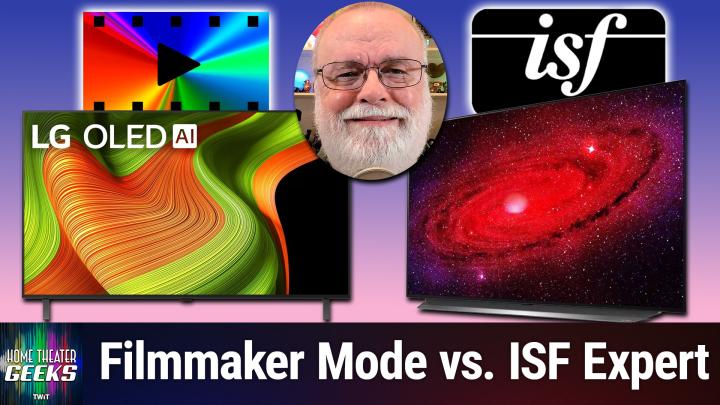
All TWiT.tv Shows (Audio)
Home Theater Geeks 519: ISF Dark vs Filmmaker Mode
00:09:05
Are These Settings Any Different?
Loading summary
Transcript4 lines
- [00:00]
A
This podcast is sponsored by IQ Bar. I've got good news and bad news. Here's the bad news. Most protein bars are packed with sugar and unpronounceable ingredients. The good news? There's a better option. I'm Will and I created IQ Bar Plant Protein Bars to empower doers like you with clean, delicious, low sugar, brain and body fuel. IQ Bars are packed with 12 grams of protein, brain nutrients like magnesium and Lion's Mane and Zero Weird Stuff. And right now you can get 20% off all IQ Bar products plus free shipping. Try our delicious IQ Bar Sampler Pack with seven plant protein bars, four hydration mixes and four enhanced coffee sticks. Clean ingredients, amazing taste and you'll love how you feel Refuel smarter, hydrate harder, caffeinate larger with IQ Bar go to eatiq bar.com and enter code BAR20 to get 20% off all IQ Bar products plus free shipping. Again, go to eatiqbar.com and enter code
- [00:59]
B
BAR20 in this episode of Home Theater Geeks, I answer a listener question about ISF Dark versus Filmmaker Mode. So stick around.
- [01:12]
A
Podcasts you love from people you trust. This is twit.
- [01:28]
B
Hey there Scott Wilkinson here, the Home theater geek. In this episode, I answer a question from Christopher Patrick, a listener in Discord, and he writes, I got a 48 inch LG B5 OLED for a bedroom that's usually dark. I was wondering if Filmmaker Mode or ISF Dark Mode would be better and what the differences between them are. I have it set on Filmmaker mode currently. Well, this is a good question, Christopher. Both of these modes are very good at setting the TV to meet the standards that are used by content creators, and the standards that creators use are the same standards that you should use. I recommend on your TV when playing back that content because it will look like what they intended it to look like. Now, ISF stands for Imaging Science foundation, which is an organization that contributes to defining those standards and training calibrators to set up TVs that adhere to those standards. Now, typically, if a TV has ISF modes, there will be two ISF dark and ISF Bright. As you might imagine, dark is meant for being used in a dark room, and bright is meant for being used in a bright room with much more ambient light. In ISF bright mode, the brightness of the image is higher than it is in dark mode, as you would expect. But both strive to match some of the characteristics that are standardized, such as the white point, the color of white, and the color range used by the content creators. The white point is called D65. A little too much to get into right here, but it's the color of white and the range of colors is called BT709 for standard dynamic range content. Another standard point, data point if you will, is that the peak brightness for standard dynamic range is 100 nits for the peak brightness. Now in ISF bright mode, I guess both modes it can be more. It doesn't have to be 100 nits, but that's what standard dynamic range content is mastered at, so I always recommend having the display there as well. Now, in a bright room, an argument could be made for making it brighter. Now, the ISF modes do not have separate settings for high dynamic range. In fact, Joel Silver, the president and founder of isf, told me that he was informed by an executive at Sony that Sony anyway thinks it's their job to extrapolate the SDR settings if the TV receives HDR high dynamic range content. So that means that calibrators don't need to do several calibrations and the TV does that work. Interesting perspective if you ask me. Now ISF Dark disables all the processing and so called enhancements such as frame interpolation, black frame insertion, both of which are generically called motion smoothing, automatic changes in black level, and all that kind of stuff. In ISF Bright mode, the ISF recommends that you do that, but it's not necessary. They can be left on if the manufacturer wants. Now Filmmaker mode strives to do the same thing, reproduce the white point and the range of colors used by content creators. It also turns off all of the processing and all of those enhancements and sets the peak brightness to 100 nits. It's also specifically for standard dynamic range. Now Joel Silver I spoke to him a little while ago and he reported to me that when he's done measurements on ISF Dark mode and Filmmaker mode, if you put a TV in one of them, do the measurements, put it in the other one, do the other, do the measurements. Again, the measurements pretty well match as you would expect, so there's not really very much difference between them. Now in doing the research to answer this article, I came across a Reddit thread that was pretty interesting and pretty on point. It was about the LG CX or C10. The CX is from 2020 and some of the comments in this thread advocate using ISF dark or bright depending on the amount of ambient light in your room for SDR content and the cinema or Cinema home picture mode for hdr. One comment said that the Filmmaker mode is too dark and too juddery and I would imagine it is pretty dark so you would want to use it only in a dark room. Cinema mode. So this person in the thread reports doesn't have frame interpolation, but it does use black frame insertion which helps with 24 frame per second judder. Now ultimately it's a subjective call. I would recommend that you try filmmaker mode and ISF dark and cinema mode and see which one you like. I would recommend doing that with the same material so something streaming or something on disk. Heaven forfend physical media. But yes, I would say use the same material and look at it with the three modes and see which one you like. It may depend on the amount of light. You say your bedroom is mostly dark, but it probably changes ambient light levels throughout the day to some degree or another. So there may be one mode that works better at one time of day and another that works better in another time of day. But I would suggest giving them a try. I bet you won't see much difference between filmmaker mode and ISF dark. If you try ISF bright it'll be brighter. See what you think. And then there's cinema mode which is also recommended. It keeps black frame insertion on and might be more smooth in appearance for motion. Anyway, that's the answer to that question. Thanks for writing in. Now if you have a question for me, send it on along to HTGWIT TV and I'll answer as many as I can right here on the show. And if you have a home theater that you're proud of, send me some pics to HTGWIT TV and we might just feature it right here on the show and maybe even get you on the show to talk about it. Wouldn't that be fun? Until next time, geek out.