← All TWiT.tv Shows (Audio)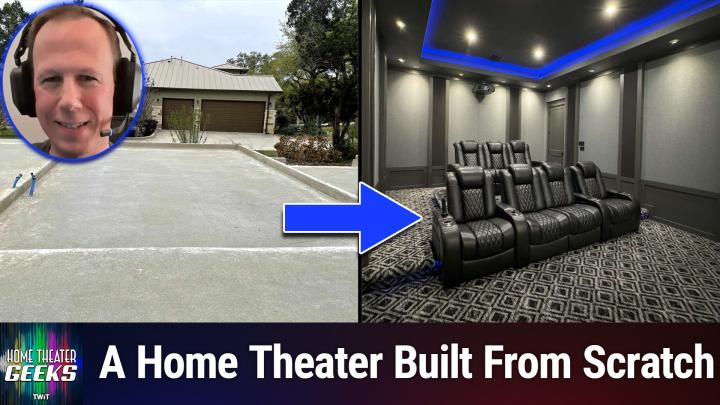
All TWiT.tv Shows (Audio)
Home Theater Geeks 521: Texas Triumph
00:54:56
Home Theater of the Month Interview!
Loading summary
Transcript221 lines
- [00:00]
Grainger Announcer
If you're a maintenance supervisor at a manufacturing facility and your machinery isn't working right, Grainger knows you need to understand what's wrong as soon as possible. So when a conveyor motor falters, Grainger offers diagnostic tools like calibration kits and multimeters to help you identify and fix the problem. With Grainger, you can be confident you have everything you need to keep your facility running smoothly. Call 1-800-GRAINGER clickgranger.com or just stop by Granger are the ones who get it done.
- [00:30]
Scott Wilkinson
In this episode of Home Theater Geeks, I feature a Texas home theater that's a real triumph. So stay tuned.
- [00:42]
Kurt Dorsey
Podcasts you love from people you trust. This is Twit.
- [00:58]
Scott Wilkinson
Hey there, Scott Wilkinson here, the home theater geek. In this episode, I'm going to feature a home theater in Texas built by my guest, Kurt Dorsey. Hey, Kurt, welcome to the show.
- [01:11]
Kurt Dorsey
Hey, Scott. Thanks for having me.
- [01:13]
Scott Wilkinson
Yeah, so glad to have you here. You originally submitted a home theater to AVS Forum and unfortunately, that column, they stopped doing that column. But I get to do it here on Home Theater Geeks. So I'm so glad you agreed to be with me here on the show.
- [01:32]
Kurt Dorsey
Absolutely.
- [01:35]
Scott Wilkinson
So tell us first how you got started, how you got interested in the home theater hobby.
- [01:41]
Kurt Dorsey
I'll try not to take too long here, but it all starts when I was. I was a kid and my dad actually got me into it. He got an old Yamaha. When dope Dolby prologic first started, he got a Yamaha receiver and a hi Fi vhs and he introduced it to me. And ever since then, I was hooked. He found out how much I loved it and he actually got me an old Kenwood receiver with Dolby prologic for my room in my bedroom. And I started watching movies all the time. I had speakers on top of bookcases in the back, and I was watching movies all the time. And one movie that I would always watch all the time is there was one particular scene in the movie Lethal Weapon where there's cars blaring by you on each side. And I was just so fascinated by it. You know, I was a teenager at the time.
- [02:30]
Scott Wilkinson
Sure.
- [02:31]
Kurt Dorsey
And, and I just loved it. I would play it over and over again because it fascinated me. The, the surround sound.
- [02:36]
Scott Wilkinson
Yeah.
- [02:37]
Kurt Dorsey
When I got to be, you know, 16 years old, I decided to go get a job and I got a job at the local theater and I worked at that theater. It was a little five screen theater. And I worked myself up to projection to where I was up at the, you know, Running all of the five, five projectors up there. And that was back when, you know, DTS was, was kind of new and there was this big old stack, this big old rack of, of amplifiers and it was a DTS was on a little CD and you'd have to make sure that the DTS CD was in before they, they ran the, ran the movie. And from there I decided I wanted to do something with my life with audio. So I went a computer engineer and decided I was going to focus on audio. So I, I did my kind of focus as audio for the past, the last two years of my career at UC San Diego actually and ended up not going into sound and audio. Ended up just becoming a computer engineer. As it, as it happens for a lot of us, you don't. You go to college for one thing, you end up something else.
- [03:36]
Scott Wilkinson
Yeah.
- [03:37]
Kurt Dorsey
But you know, it became my hobby at that point, which sometimes hobbies are better than professions. So I kind of started small with little 5.1 system, building my first theater about, about 10 years ago, a dedicated home theater. Actually I had a build thread for that as well. And then the one we're going to talk about today is actually my second theater that I built, diy and it's
- [04:02]
Scott Wilkinson
totally, almost totally diy, which I'm really, really impressed with. We're going to get into that. But first I wanted to ask a follow up question about when you were a projectionist. It used to be as I recall, that in those days with a multiplex five theater whatever, the film would actually run between the theaters. Is that correct? Or was it all, all independent in each theater?
- [04:25]
Kurt Dorsey
We could actually do both. So you could run the film on a single projector and it was the films on platters and. But there was a way that we could run it between two theaters. There was two at my theater. There was two theaters that were linked in that way where you would actually run it across and they would be, I think it was like a minute or so difference in, in time that one theater would be a little bit ahead. But yeah, we did have that ability. But that, that only happened two or three times while I worked there. It was mainly just, you know, single movie per projector.
- [04:57]
Scott Wilkinson
Yeah, okay, well I remember that. I remembered that. I thought that is so cool that you could just run the. Of course nowadays, you know, it's all hard drive based and you know, there's.
- [05:08]
Kurt Dorsey
I remember I would be there, you know, you know, once I turned 18 and I was able to work there, you know, later at night I would we would get in the movies on Thursday night, and you'd have to put them, splice them together because they'd come in multiple reels, and then you'd have to watch the movie to make sure that, you know, for the, you know, customers, that what's opening the next day, that there was no bad splices or the film wasn't in, you know, the wrong order. So there were so many movies where I got to watch at, you know, 2:00am 1:00am on Friday morning before it actually got released. So that. That was a lot of fun.
- [05:39]
Scott Wilkinson
That's cool. That's very cool. Okay, so when did you purchase your current home, and where is it located?
- [05:46]
Kurt Dorsey
Yeah, so we purchased the home. We actually did a full custom build on the home, and it's located in New Braunfels, Texas, which it's about 45 minutes north of San Antonio and about an hour south of Austin.
- [06:02]
Scott Wilkinson
Okay, so you're kind of out in the boonies a little bit.
- [06:04]
Kurt Dorsey
A little bit, yeah. So I've got. I live on an acre and a half, and that's one of the things that I. I wanted to make sure that I could turn it up as loud as I wanted and not have to bother the neighbors. So there was a lot of things that went into that. But, yeah, we. We actually moved into the house in 2003, but we. We started building it in 2021.
- [06:24]
Scott Wilkinson
Wait, you moved in and.
- [06:26]
Kurt Dorsey
Yes, it was a. It was right after Covid, and it took a very long time to actually go through the whole planning stage because you had to work with an architect and, you know, go through the plan iterations and then finally get it built. And during COVID it was very difficult to get trades to get into to actually, you know, drywallers synced up with the framers and all of that. So it actually, you know, typically, a build like this would take probably about a year, but it took well over almost nearly two years to fully complete. Yeah, it was crazy.
- [07:01]
Scott Wilkinson
So you say you moved in in 2023?
- [07:03]
Kurt Dorsey
Yes, in May of 2023 is when I moved in.
- [07:06]
Scott Wilkinson
Got it. Okay. Well, then you had the opportunity to do what most home theater owners would love to do and most can't, which is design and build your theater from literally from the ground up from scratch.
- [07:22]
Kurt Dorsey
Yeah.
- [07:22]
Scott Wilkinson
Which is super cool.
- [07:24]
Kurt Dorsey
Yeah, I. You know, when we decided to move from the Austin area down here and we decided to build a house, I kind of. You know, my wife jokes that we built our house around my theater. So I had a couple requirements, and she Had a couple of requirements for the house too. But my requirement was, you know, hey, I need to have another home theater. I'll build it and I'll let the builder take it up as far as they would would be able to do. But my requirement really was, is I wanted the home theater away from the kids room. So I wanted to be at night to be able to turn it up as loud as I want and not have to wake up the kids. And I. And I definitely accomplished that. But yeah, I was able to from the ground up. I did a lot of planning. Since there was a lot of time between getting the plans and going from plans to actually building and working with the builder. There was a lot of time to do planning and just make it just right.
- [08:16]
Scott Wilkinson
Yeah. Cool. Well, we have a couple photos of the before stage that is literally a vacant lot, which is where your house is now, right?
- [08:26]
Kurt Dorsey
Yep, yep, yep.
- [08:27]
Scott Wilkinson
And then the next picture is the concrete slab that your house is built on. And this is the area where the home theater will be, right?
- [08:36]
Kurt Dorsey
Yes, yes. I actually had them drop the slab so that when I walked in, I actually walk in on the platform so that the, the bottom level of the theater is actually below the house, a slab. So that way I can walk in. And it's kind of a three tiered theater as you'll probably, as we'll see later, you walk in kind of on the mid and you can either step up to the back row or step down to the bottom row. So that's why I planned it that way.
- [09:01]
Scott Wilkinson
Cool. So let's take some, some. Let's take a look at some of the photos of the build process. We start with framing, which I guess the builders did this part, right?
- [09:13]
Kurt Dorsey
Yeah, yeah, I got the. Luckily I was able to get the builders to do this, but. But yeah, I had the builders frame it out. And if you look closely, you can see that it is a double wall set up here. So I do have, you know, a room within a room set up here, walls. And that was one of the design choices for the sound isolation I went for. You know, from sound isolation, I went to the. The methodology of. I want it just enough, as I mentioned, so my kids don't hear it in the middle of the night and not to bother the wife too much.
- [09:44]
Scott Wilkinson
Right, right. So that was one goal of your theater was sound isolation.
- [09:50]
Kurt Dorsey
Yeah.
- [09:51]
Scott Wilkinson
What were some of the others?
- [09:53]
Kurt Dorsey
Some of the other goals of the theater was I wanted to make sure that I had two rows. I wanted to make. You know, my goal was 11 I did set it up for 11, but unfortunately due to the receiver that I got, the max I could get was 9.2.6 there. But sound isolation so that I didn't fully bother everybody else in the house was another requirement of the theater. And I wanted it big enough so that I could get that full immersion. My theater that I made, my first DIY theater that I made, the back row was all the way against the wall. So the atm, you really didn't get the full effect of the surrounds and the atmos in it. So that was another thing. I wanted to make sure I could walk around each and every seat and get the full effect of speakers behind me, speakers above me and all around and just fully immersion.
- [10:47]
Scott Wilkinson
Very good. So the next picture is some wiring which in a 9.2.6 or 11, 2.6 theaters, there's going to be a lot of wiring involved.
- [11:00]
Kurt Dorsey
Yes, yes, there is lots of wiring involved. And also, you know, it's not cheap to wire, obviously, so that was, that was fun. But really the, the challenge here was I had to plan it out enough because I, as you'll see later, I've got columns in the theater where all the speakers are. I had to plan out every single wire to the exact location because I was having the builder do this all the way up to, up to drywall. So that was one of the big challenges. There was wiring, making sure it's all in the exact spot, making sure I can it after the fact. Same with lighting as well is you can see that I've got a bunch of can lights there. But you'll see later how I washed the wall with directional lights and I had to get those, you know, within half an inch of where I needed to be. Otherwise it just wasn't going to work out. So yeah, it's, it was a lot, lot of planning and drawing and, and putting plans together and mock ups, et cetera. But yeah, lots of wiring in this thing.
- [11:58]
Scott Wilkinson
Yeah, yeah. And then finally the drywall goes up and this is partial and we can see all the insulation in, in between the, in between the framing, which is great. And.
- [12:12]
Kurt Dorsey
Yeah.
- [12:12]
Scott Wilkinson
What's, what's this purple dry. That isn't the drywall, is it?
- [12:15]
Kurt Dorsey
Yeah, that. Is that. What I originally wanted to do is I wanted to do two layers of drywall. So two, what is it? Five 8 inch drywall layers and green glue in between. But my contractor, they didn't feel comfortable doing the, the green glue. And I knew it was just going to, you know, the cost was probably going to skyrocket just because they, they didn't feel the comfortable doing it. So what they offered is they were able to get this drywall here, which is, I think it was called Sound Breaker xl, which actually has a layer of their own green glue in between it. So it's kind of this, it's two pieces of drywall put together that makes 1 5, 8 inch thick drywall. And so what they did is they on first and then after that they put standard 5, 8 inch drivewall on there right next to it. So it's not sandwiching the two pieces of drywall together, but that purple one has that little layer in it.
- [13:11]
Scott Wilkinson
Right. And for those who don't know, green glue is a special kind of glue that home theater owners use a lot. And you squeeze it in between two layers of drywall and it's, it's designed to, to be acoustically to, to dampen the sound that comes that is trying to get through the drywall. Right. Okay. And then finally we have a picture of the drywall finished and. Lovely job they did there.
- [13:43]
Kurt Dorsey
Yeah, yeah, it was, it was a little bit scary because I, at that point all of the, the speaker cable got all covered up and I, you know, had to make sure that I, I marked it correctly on my, on the floor there because I put all these marks on the floor. But yeah, really one of the, you know, the, the accomplishments of finally getting it to drywall and fully drywalled. But the thing that happens when you do this in a, in a room that has no windows is it's incredibly dark, obviously.
- [14:10]
Scott Wilkinson
So which you want it to be in a theater?
- [14:13]
Kurt Dorsey
Oh, absolutely. But you know, we go there to, to go view it. We're taking flashlights, looking around, trying to, you know, hey, how does the drywall look? And I think here I actually brought in, I think it like one of those little lanterns, one of those a battery powered lanterns I took in there so I could really get a view of it. But yeah, this was, it was really cool to finally see it drywalled and come together into like an actual room.
- [14:38]
Scott Wilkinson
Yeah, yeah, I'm sure. Okay. Next stage was building the stage and the riser for the second row of seats. And you did that yourself?
- [14:49]
Kurt Dorsey
I actually did. Well, I did partially myself. So I was able to get the builder to do the, I gave him the plans for the stage and the riser in the back back. But I went in once they completed it and I filled it in with all of the, the insulation. So I went in there on a Saturday because they basically Gave me a day to. They said, we're going to do it on this day, but we're going to cover it with OSB on Monday. So they gave me the weekend actually to go over there and fill it in with all the. The. The insulation here to. Otherwise I would lose a chance. So. Yeah, I was in there, you know, in the dark. You see the two lanterns that I mentioned earlier there and there. I had a. I know. A mask on, trying not to breathe in any of the fiberglass. And.
- [15:32]
Scott Wilkinson
Yeah.
- [15:32]
Kurt Dorsey
You know, no ventilation. So it was. It was fun. I was covered in fiberglass when I got home. Had to take a shower. Itched for a couple days. But it was. It was well worth it.
- [15:42]
Scott Wilkinson
Well worth it. Yeah. Yeah. The sacrifices we do for our hobbies.
- [15:46]
Kurt Dorsey
Exactly. Exactly.
- [15:49]
Scott Wilkinson
Next picture shows. I think the. That it's pretty complete. There's the stage.
- [15:54]
Kurt Dorsey
Yes, yes.
- [15:55]
Scott Wilkinson
So the screen wall. That's where the screen and front speakers are going to go.
- [15:59]
Kurt Dorsey
Yes, yes. So this is. This is finally painted. And all the tops are on the. The stage and the risers in the back here. I'm standing at the very back here.
- [16:07]
Scott Wilkinson
The.
- [16:08]
Kurt Dorsey
The door is on my left. And. Yeah, that's the. The screen wall up ahead. And you can see. I don't know if I have any photos of it, but up top I've got the. The soffits up front, but there's an actual lip up there that actually I was able to put LEDs in and get a whole LED lighting all the way around it. And, you know, I also. That's another thing that I had to plan right at the very beginning to make sure that they got it right, because once they put. Once they put the drywall on, I was a. That would have been done, but yeah, that's it.
- [16:37]
Scott Wilkinson
Yeah. I love the color. I mean, I'm always. I'm always into, you know, dark gray or black rooms. What. What is the paint that you use? Do you remember?
- [16:45]
Kurt Dorsey
This is Sherwin Williams iron ore. It's a very, very dark gray. Not black by any means, but very dark. And. No, I love it. My last. My last theater had, I think was called Secret Society, which is a very, very dark, dark, dark blue, almost black. But I like this one much, much better. I would too. Yeah.
- [17:08]
Scott Wilkinson
My home theater is painted what's called a Monsel gray, which is a no hue in it whatsoever. So I appreciate it when. When people choose to do that.
- [17:18]
Kurt Dorsey
Yeah.
- [17:19]
Scott Wilkinson
To go for hueless, so to speak, because.
- [17:22]
Kurt Dorsey
Exactly.
- [17:22]
Scott Wilkinson
Any reflection that comes off that wall, as little as it is is not going to get biased by blue or red or green or whatever.
- [17:31]
Kurt Dorsey
Exactly. And it looks great. And it's dark enough, you know, when the lights are on, you can't even tell it looks black. It just gives a little bit more character rather than like a black hole walking into a full black room. You know, with the theater, the projector off, it gives a little character to it.
- [17:46]
Scott Wilkinson
Right, Right. Cool.
- [17:48]
Leo Laporte
This episode of Home Theater Geeks is brought to you by Helix Sleep. How are you preparing for the spring cleaning season? Well, you know, you should do what we did last spring. Upgrade to a Helix mattress and get a good night's rest all year long. We love our Helix mattress. No more night sweats, no back pain, no motion transfer. Don't settle for a mattress made overseas with low quality, questionable materials. Rest assured your Helix mattress is assembled, packaged and shipp Arizona within days of placing your order. You can also take the Helix Sleep quiz. That's what we did. It matches you with a perfect mattress based on your personal preferences and your sleep needs. And it really makes a difference. In fact, I've got the proof. In a Wesper sleep study, Helix measured the sleep performance of participants after switching from their old mattress to a Helix mattress. Here's what they found. 82% of the participants saw an increase in their deep sleep cycle. That's the most important one. In fact, participants on average achieved 25 more minutes of deep sleep per night. That's a significant improvement. Participants on average also achieved 39 more minutes of overall sleep per night. You'll sleep longer, you'll sleep better, and you'll wake up feeling great. Time and time again, Helix Sleep remains the most awarded mattress brand tested and reviewed by all the experts. Forbes Wired Helix delivers your mattress right to your door. You get free shipping in the US and you can rest easy with seamless returns and exchanges. The Happy with Helix guarantee provides a risk free customer first experience ensuring you're completely satisfied with your new Mattress. Go to helixsleep.com theater for 27% off site wide during the Helix Sleep Sleep Week sale. Best of Web now this is exclusively for you listeners to Home Theater Geeks. So make sure you go to that address. Helixsleep.com theater for 27% off the sleep Week sale. Best of Web this offer ends March 15th. Make sure you enter our show name after checkout so they know we sent you. And if you're listening after the sale ends, you gotta still check them out. Helixsleep.comtheater thank you Helixleep for supporting Home theater geeks now back to you, Scott.
- [20:05]
Scott Wilkinson
So we have some pictures of the screen wall that you built that I think is really interesting. So let's take a look at those.
- [20:12]
Kurt Dorsey
Yeah,
- [20:14]
Scott Wilkinson
it starts. Oh, I'm sorry, I forgot the carpet.
- [20:17]
Kurt Dorsey
Yeah, so the, this is the carpet that we put in. As you see, I did two. Do different, different colors of carpet up front. I did black carpet kind of to just give that kind of black hole feeling up front that's on stage. Mean that's on the stage. Yes, up there. And then the carpet that I have in the back here, it's off the top of my head. I can't remember. It's in my build thread what the, what the name of the carpet was. But yeah, this, you know, watching this carpet go in really, you know, this is the final piece that the builder did before we took possession of the house. So I knew that, you know, now that this carpet was in, I, I was going to be able to start building, you know, within, within weeks. It was great.
- [20:57]
Scott Wilkinson
Yeah. Yeah. Okay, so we're looking at the screen, the stage now. And now we're going to look at the screen wall with your three front, left, center and right speakers on the stage. They're going to be lifted up. We'll see that in a minute. What are these speakers?
- [21:13]
Kurt Dorsey
Yeah, so my entire, all my speakers in my theater are monolith. Monoprice. Monolith. So these right here are the monolith in wall 465. And yeah, I put them there. I basically built in the backer boxes. You can kind of see right above them. Each one of those is a backer box for the, for the speakers. And I didn't put the speakers in at this point here. I waited till the drywall was up. But the, the screen wall itself was one of the major undertakings of the, of the room because it's, I, I did a, it's a, it's brought out, I think it was 24 inches in some instances on the right and the left hand side there, you can kind of see that there's, it's diagonal to toe in the, the L and R speakers there. But yeah, I built it. It was the first time I'd ever framed anything up, you know, with two by fours and, and two by sixes. And you know, I built it on the ground and, and walked it up and, and you know, put it in place there. So there is quite a bit of space behind there where I was able to fill it in with the, the insulation. And then after that drywall, it up and you know, install. Yeah, right here. Install the LCR speakers in there to really kind of give it a very, very clean look to it.
- [22:28]
Scott Wilkinson
Really clean. It's really nice.
- [22:31]
Kurt Dorsey
So I did two layers of drywall here as well, like I did on the. On the sides. But I didn't use the. The, you know, any green glue or anything like that. It was just two, two. Two layers of drywall, you know, right on sandwich right on top of each other.
- [22:45]
Scott Wilkinson
Yeah, that's cool. And. And here we have now the black. What. What, you put this on top of the drywall, this black material?
- [22:54]
Kurt Dorsey
Yeah, it's a. It's like a Lin acoustic. It's a. What was the name of it? It was quite QC quiet R. I think it's an Owens Corning product that's very much like the Lillian acoustic. So I did two layers of 1.5 inch right on top of each other there to really just give a. Some good padding and some good absorption to that front wall there.
- [23:19]
Scott Wilkinson
And also the fact that it's black is important because you're going to put an acoustically transparent screen in front of those speakers.
- [23:27]
Kurt Dorsey
Yes. So you can see those two T's sticking out up top there. And if you look down, you can see the ones on the bottom there. So that's what my screen's going to attach to. But I think you probably have a picture coming up later of what. What I do to that to make it just completely black and black know behind it and really just hide everything. Very, very clean.
- [23:48]
Scott Wilkinson
You can see the two subwoofers on the stage as well.
- [23:51]
Kurt Dorsey
Yes, yes. So I was limited in my subwoofer placement in this room because I need. One of my requirements was to make it absolutely clean. I didn't want to see any. Any equipment. I wanted to be a very, very clean room. So I. That kind of removed the ability to kind of put a subwoofer in a corner. So I did put two subwoofers up front. I knew that there would be some, you know, give and take with. With n acoustics with those, but I was able to get a lot of those taken care of with post processing afterwards.
- [24:22]
Scott Wilkinson
Sure. Okay. So I think the next picture is. Is we're gonna. Oh, here's the frame which you see the subwoofers a little better. You can see a laser level, which is really cool.
- [24:33]
Kurt Dorsey
Yeah, the laser level. That thing paid for itself multiple times. I'm surprised. It was a cheap one. The cheapest one I could find off of Amazon. It was one of those 361s. And I got my money's worth out of that. But yeah, I, I built a frame here and you can see that bottom there. It's. What is it, 2x2 there? That is stretching the length of the theater, the width of the theater there with the two by. I think that's actually two by sixes on the walls there, if my memory serves me right, to really. Because what I did is I put up fabric channel and then covered it with fabric afterwards. So this is the, the false wall that I put on top of the false wall and two false walls there. Exactly. To. To really make it just this black. It's. It's like a spandex. But.
- [25:21]
Scott Wilkinson
Yeah, we have a picture of, of that going up.
- [25:26]
Kurt Dorsey
Yeah. So this was, this was a fun part. It was stressful because when you're stretching this much fabric, a single piece of fabric across all these corners, ripples are going to happen. And I wanted to, you know, not get any ripples, any really weird patterns in the, in the fabric. So it was a constant stretch, stretch, stretch, you know, all around. And here you could see my, my ladder that I, um. You know. What's that?
- [25:55]
Scott Wilkinson
That's a cool ladder.
- [25:56]
Kurt Dorsey
Yeah, it is. It is. It was one of those ladders that is, you know, adjustable. I think I got it at Costco. And you can adjust one end to, to be on stairs and the other one. So, you know, it was a little rickety, I'll be honest with you. But, you know, having to take that thing go all the way around like four or five times to get it really nice and stretched, it was, it was stressful, but. But it was actually really rewarding. Once, once it finished and seeing it completed, it was. It was amazing. Amazing.
- [26:19]
Scott Wilkinson
Yeah.
- [26:20]
Kurt Dorsey
Really happy with it.
- [26:21]
Scott Wilkinson
In this picture, you can see it's. It. It looks very smooth at the top, but there's still a lot of ripples in the bottom because it's not fully stretched out yet.
- [26:28]
Kurt Dorsey
Exactly, exactly. And this stuff stretches a huge amount. It's a rose brand fabric and it's. It's very much like a spandex in it. If you have a ripple in it, you just keep pulling and it will, it will straighten it out. So, yeah, it's. It turned out really good, in my opinion. This is finished. Yes. So that's the entire screen wall up there. You can see up top there. I've got the, there's two, two French cleats up there for my screen that I used to, to connect up my seamer screen. And then down at the bottom, you can kind of see a little ripple on the bottom side and the left hand side. And that's where the bottom basically standoffs are for the screen. So it gives it something. So it doesn't swing into the actual screen wall to give it something to, against. But you can see with the, all the lights here, the, you know, trying to wash the, wash the screen with the lighting. And you'll see it a little bit more once you get the screen up there.
- [27:28]
Scott Wilkinson
And that picture is the screen.
- [27:30]
Kurt Dorsey
Okay.
- [27:31]
Scott Wilkinson
Hung up there. There we go.
- [27:33]
Kurt Dorsey
Oh, yeah, that was a, an accomplishment there to finally get that screen up. And I knew I was on the home stretch, but yeah, that was, that's one thing I didn't do diy. I actually did have to get my wife in there to help me with that one.
- [27:46]
Scott Wilkinson
Well, when I say diy, I do mean that includes help from one spouse or one's friends or one's father, whatever. I mean that you're not paying them.
- [27:58]
Kurt Dorsey
Yeah, no, I was joking there. Yeah.
- [28:01]
Scott Wilkinson
Okay, good. We have some pictures of your, your speaker columns on the side. The build of that, which I think was very cool as well.
- [28:13]
Kurt Dorsey
Yeah. So with this right here, I'll go ahead. Okay.
- [28:15]
Scott Wilkinson
No, no, please.
- [28:16]
Kurt Dorsey
With this right here, I actually, because, you know, OSB is only 8 foot high and I had, I think here it was 10 foot under the sofa and 11ft to the top. I had to break up the columns into two pieces. So the, the natural place to break up my columns was where I was going to have some trend. I put some. I think it's called the, the judges paneling or. Wayne Scotting.
- [28:41]
Scott Wilkinson
Wayne Scotting, I think.
- [28:42]
Kurt Dorsey
Wayne Scotty. That's it. I put that on there and I used that to actually hide all my seams so that I put it in, I put the bottom layer in. And when you get later, you'll kind of see how it happened there. And then I actually built each of the columns outside and installed them after the fact and then put up the wainscotting to cover up all of the, all of the seams. But behind here I put in all. Sorry. I put in insulation into all these little crevices here as well, just to make sure. Very good, very good. No resonances or anything in there. Yeah, yeah, yeah.
- [29:16]
Scott Wilkinson
Excellent, excellent. You can sort of see the, the side surrounds here as well.
- [29:20]
Kurt Dorsey
Yes, yes. So I've got three on each side and then I got two in the back.
- [29:25]
Scott Wilkinson
Huh. And then the next picture we'll see the columns With. With the Wayne Scotting and the. The framing of the columns there.
- [29:35]
Kurt Dorsey
Yes, this was. This was paint day.
- [29:38]
Scott Wilkinson
So.
- [29:39]
Kurt Dorsey
Yeah, this paint day, I had everything, you know, masked up and you can see that I. Everything with, you know, the columns and the sides were all painted prior to getting them into theater just to give them a base coat. But all of the. The Wayne Scotting and framing I did, it was all done inside the theater so that I can make sure that my seams were clean. I didn't. I wouldn't be able to move it into the theater and build it outside. But. Yeah, this is one of those things where, you know, it looked good on paper, but after I got done with about three of them and realized I had, you know, five more to go, it was. It took a long time to build all these columns, but it was well worth it.
- [30:15]
Scott Wilkinson
Yeah. I think the next picture shows the finished product.
- [30:20]
Kurt Dorsey
Oh, yes. So this was actually. This is. This picture is slightly before the. The photo you had beforehand where I had the. I had just put the columns up and I put the speakers in there just to make sure everything fit correctly. I ended up taking the speakers out for painting. Etc.
- [30:37]
Scott Wilkinson
Good.
- [30:38]
Kurt Dorsey
So this is kind of what it looked like. Everything painted except for the trim. After this, I put up the trim and that's what that. That. That last photo was. And then painted and then that was. That was it.
- [30:49]
Scott Wilkinson
I had them a little out of
- [30:49]
Kurt Dorsey
order, so it's okay.
- [30:55]
Scott Wilkinson
I think that that's it for the speaker column photos. There's one of the seed installation, and I thought that was kind of interesting. Let's take a look at that.
- [31:04]
Kurt Dorsey
Yeah. Yes. So I got. These are. What are they seft. See Seats. And they all come. They're all very, very heavy. And they all come individually boxed. And I actually, one of the things I did with this theater to keep costs down is since I had such a long Runway of knowing what I was going to do, you know, like I said, I started planning it in 2021. I was able to purchase things as I go. So, you know, before we moved in here, me and my wife, we lived in a family. Lived in a rental for a little while while the house was built. And I was. I had, you know, seats and speakers and. And subwoofers scattered all around the house because as I found a Black Friday deal, I would buy them. So I had actually had these for. For quite a while in the box. And it was, you know, one of those moments of truth is, you know, you want to open things when you get Them to make sure there's no damage.
- [31:54]
Scott Wilkinson
Right.
- [31:55]
Kurt Dorsey
But, you know, if I open them, then it kind of undoes the seal, and so I actually. Exactly. You can't return it. So it was that moment of truth of when I opened them about a year after purchasing them or so. And everything was great. They turned out fantastic. But. But it was really co. To. To finally get the seats in there. And the back seat was a. Was. It was a bear to get in. It was huge. I actually had to hire movers to get that. The back sofa in because it was just so heavy. I couldn't do it.
- [32:24]
Scott Wilkinson
Well, we'll see pictures of the final result here pretty soon. And then lastly, we have some pictures of. Well, not lastly, of the acoustic treatments and. And the panels that you put in front of the surround speaker.
- [32:41]
Kurt Dorsey
Yeah, so this right here, I. I went through many iterations of trying to figure out how to cover my speakers. So I didn't want my speakers to be visible inside the columns. And I thought of taking really, really thin plywood and covering it and stretching fabric around it. And I came up with this idea of getting what is a screen frame. So, like, screen for your screen on your window. It is very, very thick. I had to special order it to get the sizes that I need. But, yeah, I built these frames. I put braces in there so they didn't hourglass. And then I took the same fabric that I used on the front screen wall and wrapped it around it and used the same mechanism that you create screens with the. The rolling. The. You can see the little spline there. You use this little tool and you roll it into the. In the spline, into the channel there. Oh, yeah, it worked fantastic. They. They look beautiful.
- [33:34]
Scott Wilkinson
And the second picture we have, it shows one of them finished. Okay.
- [33:38]
Kurt Dorsey
Yeah. So, yeah, this is. I mean, they're. They're a little less than six feet tall. And six feet was, I think, the longest I could find. So I was lucky to find the special order on online. But it turned out great. It's very, very thin and low profile. I think it's. I think it's what, three, eight of an inch thick? Very, very thin. And it's pretty rigid. Once you put a couple bracer bars in there to make sure that it stays apart. And it turned out fantastic, in my opinion. Opinion.
- [34:09]
Scott Wilkinson
Now, is this another of those, or is this. Is this an acoustic treatment?
- [34:14]
Kurt Dorsey
This is my acoustic treatment. So with my acoustic treatments, I went in my last theater, I. I built all of my frames and I put all the O.C. you know, Owens Corning 703 in there, Rock wool in there and stuffed it full. And this. I, I went a different, different route is I put all of the acoustic. The, the. I, I mainly use Owens Corning all around on the walls and I put used insulation hanging spikes to do it. I brought them out about an inch from the wall with little spacers. So I had all of the acoustical treatments up on the wall and then I built these frames to kind of go around them and fit friction fit around them so that I can, if I take these off, I have them set up where I can take them off fairly easy. All the acoustical treatments are still up on the wall. So it makes it really, really light. And then I can take off the acoustical treatments as I see, you know, as I want to, if I want to reduce or you know, know if I want to change out the acoustical treatments later on or something like that. And then I can just throw these back on there.
- [35:10]
Scott Wilkinson
That's, that's brilliant. And here's a picture of what it looks like with one of. I guess the middle one has that panel on and the, and the right and left ones. The panel is off and you can see the acoustical treatments.
- [35:22]
Kurt Dorsey
Yeah, yeah. So the, the middle one has the acoustical treatments behind it. Another, you know, instance where the lights had to be in the exact spot to get to wash right in the center of that panel there. But yeah, on the right and the left hand side. I did the same thing. I the acoustical treatments up and then I built the panel to go around it, stretched all the GLM fabric around it and put it up there. And it's very precise. As in I kind of have to wiggle those frames a little bit to get them in, but they come out fairly easy. So it's, you know, for servicing that, it's really great.
- [35:53]
Scott Wilkinson
It's brilliant. It's really a brilliant solution. I commend you on that. By the way, FYI, gm, you mentioned GOM fabric. That stands for Guilford of Maine Maine. It's a company in Maine, I guess, that provides fabrics that a lot of home theater users rely on.
- [36:13]
Kurt Dorsey
Yeah. And they actually have changed their name. I think it's Dolevex now. They still use glm, but yeah, they, I think they, they merged with another company and you can still find them via, you know, go for your domain. But yeah, they're also under a different name too.
- [36:28]
Scott Wilkinson
Wow.
- [36:28]
Kurt Dorsey
Yeah.
- [36:29]
Scott Wilkinson
Okay. Things never stay the same, but it's
- [36:32]
Kurt Dorsey
great, it's great stuff to Work with. Very easy to work with. You know, I use staples to, to wrap it around all the frames. And I probably went through thousands upon thousands of staples in this thing.
- [36:43]
Scott Wilkinson
Well, as I said that your solution, I think is, is brilliant because you can so easily just take that. Those panels off and move the acoustic treatments around as you need to. If you find that, oh, if it's over here, it works better, or I've just discovered a new one and I can stick in there instead. It's really, really. And then when it's done and it's all put together, you can't see it all at. At all.
- [37:06]
Kurt Dorsey
Exactly. And that's one of the things I was thinking is, you know, right now this is what I put up. But in the future, maybe something new comes out. Maybe. Maybe something that I want to try comes out. And it really is a very quick swap out. As long as they, you know, the thickness. And I can, I've got, you know, another inch to play with since I have an inch air gap in there. I can really change them out if I want to add some more diffusion, if I want to add more absorption. And I did a lot of testing, you know, acoustical testing with, with the actual fabric off of it and just the, just the acoustical panels, the fiberglass in there, because I wanted to be able to move around to your point, move it around and see where it sounded best before I finalized on the solution.
- [37:47]
Scott Wilkinson
It's brilliant. It's just beautiful.
- [37:50]
Kurt Dorsey
Thank you.
- [37:51]
Scott Wilkinson
Let's take a look at the equipment rack, which is also really nice. You located it straight just outside the entrance. And we see here the, the front of it.
- [38:01]
Kurt Dorsey
Yes.
- [38:03]
Scott Wilkinson
Which is covered by some sort of smoked glass, it looks like.
- [38:06]
Kurt Dorsey
Right. Yeah. This is one of the things where my builder thought I was. I'll be honest, they thought I was a little nuts. You want a hole in your wall. But yeah, this is one of the things that I, I wanted to. I didn't want inside the room because I didn't want the lights, I didn't want the noise. I wanted it as quiet as possible in there, but I didn't want it too far away. So if I wanted to swap out a Blu Ray or something, I didn't have to go across the house or into a different room. Did is I built in our master closet is where I built the AV closet. And I basically just had him put a hole in it and measured it out beforehand. The exact rack that I wanted to get. And once. And on my build thread, I actually have pictures of the rack arriving on the day after I closed so that I could get it slided in there. And no, it's a fantastic rack. I think it's called a strong rack if the memory serves me correctly. But yeah, on the back I could walk around into my, my master closet and I've got a door in there and I can take a look at
- [39:06]
Scott Wilkinson
that in a second. First of all, here's the, here's the smoked glass door open so you can see the equipment from the front side, from the user side, if you will. All beautifully arranged and, and lovely to see that. But then the next picture is, is you walk into your closet and you can see the business end of things.
- [39:27]
Kurt Dorsey
Yeah, so this is the part that, that only I get to see. This is about as clean as it's been for a while. But. But yeah, as you see there, I monitor up on the wall too. So a couple other things that I did to my theater that I wanted is I wanted to be able to watch the. At what's on in the theater and other parts of the house. So in the, in here I've got a monitor connected up. So whatever plays in the theater plays on this screen here. I don't have audio, it's just video streamed for my Denon. And then I have a long HDMI cable run up through the attic into my living room where I can put whatever is on the theater into the, into the living room as well with full audio in four. So it's really nice to be able to, if I have something on with the kids in the theater, to have it on in the, in the living room as well. So we know, you know, what point in the movie it is and how much is left to really kind of just monitor. So it's actually really cool.
- [40:20]
Scott Wilkinson
You used a long HDMI cable. It must have been an active cable. Right.
- [40:24]
Kurt Dorsey
It's a fiber optic 150 foot. Yeah. That I had to run.
- [40:29]
Scott Wilkinson
Yeah, you're not going to run 150ft of HDMI passive, that's for sure.
- [40:32]
Kurt Dorsey
Yeah, yeah.
- [40:35]
Scott Wilkinson
Okay, cool.
- [40:36]
Kurt Dorsey
But yeah, in here I've got all my. It's kind of the home control center here. It's got all my. Up top there you see, I've got my network, a whole, you know, Ubiquiti unifi set up there with a 48 port switch. Since I took this picture, I've filled up a couple more of those, more of those slots. And then I also have an HTPC in here, Amazon Fire Cube. That's what I do. All my. My streaming with Plex on, and then I've got my denon a1h right below there with two emotiva bass x a7amplifiers down at the bottom there and down under there. I've got a Synology NAS as well as an htpc. So I kind of fit everything into this rack, kind of really to control the entire house.
- [41:24]
Scott Wilkinson
Yeah, yeah, it's a. It's beautifully done. And I love the. The wire dressing too. I mean, you. You clearly a technical guy and. And know the importance of. Of avoiding techno spaghetti.
- [41:36]
Kurt Dorsey
Yes, yes. I actually. With each one of these cables, I actually bought sleeve online and sleeved every single cable to make it look good. So it wasn't just the white Ethernet or the white speaker cable. So, yeah, I put all the ends on and all these blue. You can kind of see blue sleeves here on each and every cable to try to make it look good, even though I'm the only one that'll see it most of the time. It's a sense of pride thing to make it look. Look good.
- [42:02]
Scott Wilkinson
Absolutely. Couldn't agree more. Couldn't agree more. So now we get to the point of seeing the final result, and you were kind enough to shoot a little video for us, so we get a little tour of your home theater. Let's take a look at that. So walking in to the entrance, which is in the back. Left, left of the room. Look at that. You have. How many. How many seats?
- [42:39]
Kurt Dorsey
So I've got seven seats in there. Three in the front and. Or, sorry, four in the front and three in the back.
- [42:44]
Scott Wilkinson
Three in the back. Yeah.
- [42:45]
Kurt Dorsey
Yep. And I've got.
- [42:47]
Scott Wilkinson
Go ahead, Go ahead. I was gonna say I can see the COVID Cove ceiling LED lighting there. The blue.
- [42:55]
Kurt Dorsey
Yes, yes, that. That I use WLED for all of my. My, My LED lighting with a. What is an ESP32. I've got multiple of those for the steps and. And up there at top two. And it's all programmable. I do everything via home assistant. So it's all programmable and automated.
- [43:12]
Scott Wilkinson
Yeah. And here's a walk around. I just love the colors that you've chosen here. The. The gray and the dark. Dark gray.
- [43:22]
Kurt Dorsey
Thank you.
- [43:24]
Scott Wilkinson
It's. It's really, really nice. It's just my aesthetic too, you know, Clean.
- [43:29]
Kurt Dorsey
Yep.
- [43:31]
Scott Wilkinson
You know, nothing super fancy. I see the projector up there. That's. What's the projector?
- [43:36]
Kurt Dorsey
It's the Epson LS12000 4K folk. I guess they call it pixel shift.
- [43:43]
Scott Wilkinson
Yeah, it's a pixel shift. Projector. But it's a. It's a laser projector.
- [43:47]
Kurt Dorsey
Yeah, it is. Yeah, it is. And it's. And it's fantastic for what I need. I'm more of an audio file compared to a video, so it's totally fine for me.
- [43:57]
Scott Wilkinson
Yeah. The only other one I might have recommended would be the jvc.
- [44:02]
Kurt Dorsey
Yes. I looked at both of them and it came down to a, a cost situation where I was getting the deal on the, on the Epson. I got a good deal because I had already purchased from the company that I bought it from a couple times, so they gave me a pretty good discount. So that, that's really the main reason why I went Epson over the jvc. But I had my eyes on it.
- [44:21]
Scott Wilkinson
Yeah. And I'm sure it's fine. I'm sure it looks.
- [44:24]
Kurt Dorsey
Oh, it's beautiful. Yeah.
- [44:25]
Scott Wilkinson
Just beautiful.
- [44:26]
Kurt Dorsey
And if I don't see the other one, I don't know the difference.
- [44:29]
Scott Wilkinson
Yeah. If you're not looking at them side by side.
- [44:31]
Kurt Dorsey
Yeah, exactly.
- [44:34]
Scott Wilkinson
Let's see. Oh, there was another video that you shot that I thought was pretty interesting. Tell us about this one.
- [44:40]
Kurt Dorsey
Yeah, this is my. This is kind of the main listening position for when my wife and I are in the theater just watching Netflix, etc. But this is actually. This couch has a pull down in the center that lets us put our drinks on, put some popcorn on, as well as charge our phones. It's really. You know, we had this in my art, my old theater, actually, the, the same type of setup. So when we, when we built this, we both agreed we needed to get one of these because it really. It's really nice to be able to put, even if we're eating in there, you know, just put a plate up there, you know, a couple drinks. It's. It's nice. Yeah. And kids have popcorn. They put it up there and not have to have it in their laps.
- [45:18]
Scott Wilkinson
It's great. It's really great. Last couple of photos, I, I was interested to see the LED lighting in the steps. We saw it in the coved ceiling. Not coved. What's it, a tray ceiling?
- [45:32]
Kurt Dorsey
Tracy. Yeah.
- [45:33]
Scott Wilkinson
Yeah. But it. You also put, put it under the steps for safety, which I thought was really cool. So here we see. I guess this is under one of the steps and, and it's hard to see, but there's a strip of LED light lighting there.
- [45:46]
Kurt Dorsey
Yeah. So I, I put LED lightens on anywhere that you might go up or down a step because I didn't want. I. I'm kind of a klutz at times, especially in the dark. So I didn't want to trip on anything. I didn't want my kids or anybody that I have or trip on anything. So I have them set up with a very, very low intensity, really low glow that you can't really see. I. That right there, I've got it cranked up a little bit so you can see it, so you can take a picture of it. Yeah, exactly. But as you see on, you know, stepping up to that back row there, I have a, an area where you can see the lights and then stepping down the steps as well. I assure you, when I'm. I'm watching movies, it's not this loud or not. Not this bright.
- [46:27]
Scott Wilkinson
I love that. Yeah, the lighting's not this loud. Yeah, it kind of feels that way. I totally agree. Yeah.
- [46:34]
Kurt Dorsey
But I have it. So I can, I can, if I wanted to, I can change the colors. You know, the, the, the tray ceiling and, and those I have set up where I can set them to music if I want. The little things that you can do.
- [46:46]
Scott Wilkinson
You mean like flashing around? Yeah, that kind of thing.
- [46:48]
Kurt Dorsey
I never do it, but I did
- [46:49]
Scott Wilkinson
it because I wouldn't either. I wouldn't either. But it's nice to have as an effect.
- [46:55]
Kurt Dorsey
Exactly. It's really just a showoff thing when, when, when you do that.
- [47:01]
Scott Wilkinson
Okay. What would you call the greatest moment in the whole process?
- [47:05]
Kurt Dorsey
Ah, the greatest moment was obviously the, the finishing of it, but really just, you know, seeing it all come together and watching, you know, one in the, in my last theater, the one thing that I wanted to watch and I never watched was the movie Interstellar. And I. I don't know, for some reason I never ended up watching it in my other theater. So I told myself, you know what? I'm gonna wait to the new theater to watch Interstellar. And I bought it and I had it for years. And finally that was, that was one of the first movies that I watched, actually. I think it's the first movie I watched fully through in the theater once it was fully calibrated and set up. And that was kind of to finally watch it. You know, I did all I could not to get spoilers from the movie. I succeeded there. But just that initial launch scene in the movie is, Is just amazing with the, with the bass and the subs that I have. It just really, really rattles the house.
- [47:59]
Scott Wilkinson
Yeah.
- [48:00]
Kurt Dorsey
So, yeah, that was, that was, you know, finally having it all come together, seeing everything actually work. It was, it was, it was just an amazing Feeling.
- [48:08]
Scott Wilkinson
Yeah. Yeah. And that's, that's a pretty amazing movie to. To have as your sort of initial experience experience in the theater. Do you, do you still watch discs?
- [48:21]
Kurt Dorsey
What I do is I don't watch this. If I buy discs, I usually try my best to buy them on Black Friday etc from. From Amazon. And I have a synology so I. Oh, you realize I utilize that to, to watch through Plex. And I have the entire room automated with Plex and home Assistant so that when I push play, the lights go down. Down. If I pause it, the lights and the, the stair lights go up just a little bit so you can kind of see and walk out if you need to go, you, you know, get a drink or, or use the restroom. And once you push play again, the lights go down. So I've got it all fully automated, you know, startup scripts, shutdown scripts that are all really tied to. To Plex. So I, I use that for most of it and then I do stream on Netflix. That's in Netflix and Amazon are the only two setups that I have.
- [49:13]
Scott Wilkinson
Are you comfortable sharing what all of this cost you?
- [49:17]
Kurt Dorsey
Yeah, yeah, I can. You know, I watched a. The last one that you did and it was quite a bit more expensive than what I did. So I can't put a full cost on the entire theater because of course,
- [49:29]
Scott Wilkinson
because some of it was. You paid your builder to part of the house. It's part of the house. And you paid your builder to build your house.
- [49:35]
Kurt Dorsey
Yeah, but yeah, from a. You know know, I take me taking over all materials and I'm talking wood paint, my receivers, my speakers, my subwoofers, my projectors and seats and everything. All in was about 35. So it really was not bad at all.
- [49:53]
Scott Wilkinson
Really not bad at all.
- [49:54]
Kurt Dorsey
You can get a really nice theater for not that much. It's a lot of my time, you know, so that, that, you know, there's labor involved there. But I did a lot to try to get, you know, like my, my A1H Denon A1H was an open box. So I got a significant discount on that. And the thing had only been out for a few months, but I got lucky enough to get an open box and then like Black Friday deals and buying it over several years really helped to. To reduce the price and get it down, you know, more manageable.
- [50:24]
Scott Wilkinson
Right, right. Well, that, that is remarkably low for what you have. For what the result is, is I'm pretty proud of. Remarkable. Yeah. Oh, you should be. You absolutely should be. It's. It's just a beautiful theater.
- [50:38]
Kurt Dorsey
Well, thank you.
- [50:39]
Scott Wilkinson
And, and I congratulate you.
- [50:41]
Kurt Dorsey
Well, thank you very much. It was fun to build and you know, I'll probably do it again at some point.
- [50:47]
Scott Wilkinson
Well, we in the hobby are sort of accustomed to that. And not only build another one, but you'll probably upgrade this one along the way, don't you think?
- [50:56]
Kurt Dorsey
Oh, yeah. I've already got things in mind here. You know, sound isolation. I've got a open, open attic that's a spray foam, so I can walk up in the attic and sound does travel around the house from the, you know, the can, lights, et cetera. So I got plans to put on some bracker boxes there. And I did wire it and I have speakers for 11.2.6. I only use 9.2.6 and I use a mini, mini DSP depending on if I'm front row or back row to enable the which surrounds I'm using there. But I do plan on shifting up. I would load the train off, but you know, maybe when damage comes as
- [51:34]
Scott Wilkinson
much as the whole theater.
- [51:35]
Leo Laporte
Exactly.
- [51:35]
Kurt Dorsey
That's why I didn't do it. Um, but yeah, I, I, maybe, you know, when Denon comes out, I'm a big Denon fan and Marantz fan, so maybe when they come out with a 9.26. So, yep, you know, I've got a couple things in the future that I want to do, but right now I am incredibly happy with it and use it almost every night.
- [51:51]
Scott Wilkinson
Well, for those who want to learn more, and there's a lot more to learn, you can go on AVS Forum and look at Kurt's build thread and we'll put that link in the show notes so you can go see that. Because there's a lot of information there and a lot of comments from, from AVS Forum members who I'm sure gave lots of advice while you were doing it. Oh yeah, that's a great resource.
- [52:17]
Kurt Dorsey
I took a lot of advice on there as well as a lot of ideas. A lot of my ideas that I came up with, you know, other people, I didn't do them. I wasn't the first to do it. I found out and, you know, kind of mimicked other people and it, it all kind of came together. But yeah, great, check out the build thread. A lot of information there. I think it's 16 or 17 pages worth of stuff. A lot of packages, pictures.
- [52:36]
Scott Wilkinson
I believe you. You also said that you did the calibrations yourself based upon comments and suggestions from from AVS and elsewhere.
- [52:46]
Kurt Dorsey
Yeah, so I, I Use Durac with base control with the, the Denon on my, on my setup. So I did all of the calibrations myself. It's one of those things that I, I kind of nerded out on it where I, you know, use REW to test it and then modify and test in this, you know, constant loop of modifying the, the, the house curve and testing it. And I've probably done seven or 800, and that's not an exaggeration of measurements in that room. But, yeah, I did all the calibrations myself. The video calibrations. I go off of some of the, the, the threads for the Epson 12,000. So I don't, I, I really. It all kind of looks the same to me when it comes to video calibration, but for the audio calibration, I did all myself, and I actually set it up so I have different calibrations for, you know, whether I sit in the front row or the back row as well.
- [53:36]
Scott Wilkinson
Right, right. Well, once again, congratulations. It's a wonderful theater, and I thank you so much for being here on the show and telling us about it and sharing it with us.
- [53:45]
Kurt Dorsey
Thank you for the compliments, Scott. It was, it was great talking and it was great sharing. I appreciate it.
- [53:51]
Scott Wilkinson
You bet. You bet. That's Kurt Dorsey in lovely Texas, where he enjoys his home theater, I'm sure, every single day. Now, if you have a question for me, send it on along to HTGWIT TV and I'll answer as many as I can here on the show. And if you have a home theater that you're proud of, as Kurt is justifiably proud of his, send me a few pics and maybe we'll get you on the show to share it with everybody. Until next time, geek out.
- [54:29]
Leo Laporte
Hey, everybody, Leo Laporte here, and I'm going to bug you one more time to join Club twit. If you're not already a member, I want to encourage you to support what we do here at Twit. You know, 25% of our operating cost comes from membership in the club. That's a huge portion, and it's growing all the time. That means we can do more. We can have more fun. You get a lot of benefits ad free versions of all the shows. You get access to the Club Twit discord and special programming like the keynotes from Apple and Google and Microsoft and others that we don't stream otherwise in public. Please join the club. If you haven't done it yet, we'd love to have you Find out more at TWiT TV Club TWiT. And thank you so much.
- [55:27]
Sofi Announcer
What if you could use your home to build more home? It's possible with a SOFI Home Equity Loan. A home equity loan allows you to leverage your home's equity at a typically lower rate than a personal loan with low fixed monthly payments, and all without increasing your mortgage rate. Whether it's a new bathroom, updated kitchen deck, or more, your home could help grow itself. View your rate@sofi.com homeupgrade today. Mortgages originated by Sofi bank and a member FDIC NMLS number 696891. Terms and conditions apply. Equal Housing Lender.