← All TWiT.tv Shows (Audio)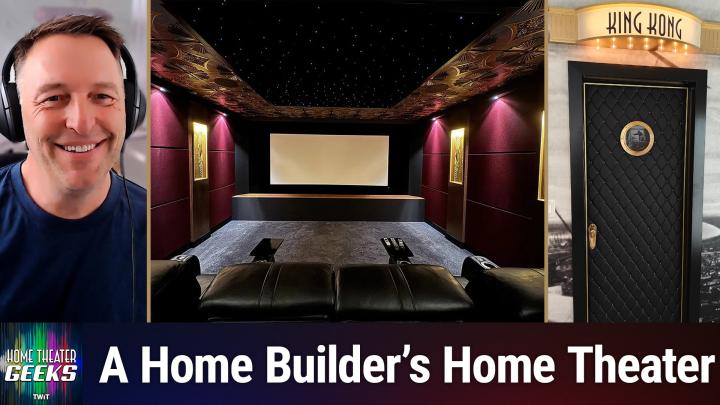
All TWiT.tv Shows (Audio)
Home Theater Geeks 525: Deco Dream
00:58:20
Home Theater of the Month Interview!
Loading summary
Transcript219 lines
- [00:00]
Scott Wilkinson
Ugh.
- [00:01]
Depop Advertiser
You said you were over him, but his hoodie's still in your rotation. It's time. Grab your phone, snap a few pics and sell it on Depop. Listed in minutes with no selling fees. And just like that, a guy 500 miles away just paid full price for your closure. And right on cue.
- [00:18]
Scott Wilkinson
Hey, still got my hoodie?
- [00:19]
Depop Advertiser
Nope. But I've got tonight's dinner paid for. Start selling on Depop, where taste recognizes taste list. Now with no selling fees, payment processing fees and boosting fees still apply. See website for details.
- [00:31]
Scott Wilkinson
In this episode of Home Theater Geeks, I talk with Andre Sinclair, a home builder who built his own home theater. So stay tuned.
- [00:44]
Andre Sinclair
Podcasts you love from people you trust.
- [00:48]
Leo Laporte
This is twit.
- [01:00]
Scott Wilkinson
Hey there, Scott Wilkinson here, the home theater geek. In this episode, I'm going to feature a home theater in Canada built by Andre Sinclair, who is a home builder himself. So I thought it would be very interesting to see what he did in his own home theater. Hey Andre, welcome to the show.
- [01:21]
Andre Sinclair
Hey Scott, thanks for having me on.
- [01:23]
Scott Wilkinson
Oh, so glad to have you here. So let's start with how you got interested in the home theater hobby.
- [01:34]
Andre Sinclair
Well, I guess we have to go back 50 some years. I was 10 years old in 1977 when Star wars came out and had such a big impact on my life that movies and everything to do with film and movies was just something I was extremely interested in. And then when I got into my own apartment as I got older, started adding a few pieces here and there and built up a little five channel system in my living room with just freestanding and a big projection TV on one wall and went from there. And it wasn't until I got my own house that I started to take a little more seriously. I had a basement, but I only had seven and a half foot ceilings and I tried to do the best I could in there. Had a big electro home, three gun CRT projector on the roof that you'd knock your head on if you walk by it. My five Mirage speakers. And then I bought a couple for the back and you know, had a theater and I was pretty well the only one that had one and I absolutely loved it.
- [02:47]
Scott Wilkinson
So now you have your own home, maybe one past that one. When did you purchase or build this current home you're in and where is it?
- [03:00]
Andre Sinclair
It's on the outside of Calgary, so it's in an acreage. As a builder, you jump around a bit, buying lots and moving and building. And so when I got this, the original house Was just an old 1940s bungalow that I had the first theater in. And when I got this house, it was kind of one that I figured I could actually do something. And it had a walkout basement and nine foot ceiling. So with the original one, you know, I had a Yamaha RXB992 processor that did the seven channels in that one. Towards the end of having that bungalow, I went to a Lexcon MC1 and a Powermaster EAD or near the Powermaster 1000amp. And that was kind of when everything changed for me. Going to separates from an integrated just absolutely blew me away. So I always had in my mind over the next 10 years as I moved, you know, I really wanted to do something a little bit bigger in a house I had. So we picked this house up, I think it was around 2019, right before COVID really hit. So timing kind of worked out. I had a lot of time on my hands to actually build something.
- [04:17]
Scott Wilkinson
So you didn't build this house yourself?
- [04:20]
Andre Sinclair
No, this house was built in 1996. It was. It had a finished basement, but the room that I that became the theater was kind of a bigger office. And then adjacent to that was just this massive kind of vestibule to go outside. It was kind of a useless space to the door to go outside into the walkout.
- [04:50]
Scott Wilkinson
Okay, so you installed it within an existing room, basically, Right?
- [04:55]
Andre Sinclair
Well, I took down the wall that separated the room and this kind of tiled entrance to the exterior of the house and then rebuilt the wall a few feet back, Took over some of this wasted space where the, I don't know what you call it, a boot room or something was, you know, in front of the door there.
- [05:18]
Scott Wilkinson
What were your primary design goals for this theater in terms of sound isolation, number of audio channels, decor, number of seats, that sort of thing?
- [05:33]
Andre Sinclair
I was kind of limited seat wise, so I could only fit four in it. Just with the dimensions of the room. It's about 17ft long by 16 and a half wide. What I always had in my mind going up to this was just how good I could get the sound. I knew I wanted to kind of get rid of my freestanding speakers. And because I just didn't have the space anymore to go in wall and then it was just a theme. We kind of went back and forth between art deco and a space theme that a lot of people do, but kept going back to kind of the art deco. I like the King Kong, the old movies. And as a builder, Art deco is one of my favorite styles as well. So I kind of stuck on that. And there was a couple looks on AVS forum, I think, at the start of my thread. I just have a picture of a pillar, and I kind of love that pillar that they had there. So I kind of actually built the room around the idea of art deco pillar and made everything out of that. Yeah.
- [06:39]
Scott Wilkinson
Yeah.
- [06:39]
Andre Sinclair
Okay.
- [06:40]
Scott Wilkinson
Well, we're going to see pictures of that, and you shot some video as well of the. Of the room now as it is, so I look forward to seeing that. How long was the planning phase?
- [06:55]
Andre Sinclair
I'm notoriously bad for just starting things without planning and kind of having an idea in my head and sketching it on the wall as we go. And I did a lot of reading on avs, and I knew that I could cover up a lot of drywall with paneling and things, so I really kind of sketched it out. And I guess the. The main planning was probably just a couple months, and it was mainly just getting an idea and a theme and then kind of thinking about how that would look and then how realistic that'd be, because in your mind, you always have something that's just crazy. And then when you think of building it, it's like, is that going to take two years? Is that going to cramp the room? And going back and forth just on. On being realistic with it, so.
- [07:47]
Scott Wilkinson
Right. Well, you did post one graphic or diagram of kind of a floor plan, real basic, which we can take a look at here. So you see where the seats are? Like, the. The gray rectangle is. I. I can't quite see what that says. Oh, star ceiling. Yeah.
- [08:11]
Andre Sinclair
So that's a star sitting from above. And that was actually kind of created fairly deep into the project. I was just. I wanted to get an idea how the carpet would lay out, because I had an idea I was going to put in this art deco carpet and trying to get the pattern to match in the room. It was just over the width of the carpet. But it ended up being so difficult to get swatches from the manufacturer. And to find out how to get that up here, I just ended up going black. But that is kind of the layout from above with the star ceiling. The brown bar is a cabinet at the front that houses the subwoofers. I wanted to try and hide those some way and not just have a freestanding box. So I wanted to hide as much as I could in the room and make use of the space that I had.
- [09:03]
Scott Wilkinson
Sure.
- [09:03]
Andre Sinclair
Black triangles are the bass traps in the corners, and then the brown on the side are the the columns.
- [09:10]
Scott Wilkinson
Right. So let's take a look at some of the construction which as with most AVS forum build threads such as yours, there's an awful lot of pictures of the process which I, I appreciate very much. I really like that, that people do that and you were no exception. So here's, here's some initial framing.
- [09:40]
Andre Sinclair
Yeah. So that's looking within the room, back towards the entrance of the, of the area I kind of took over, took back. And in the wall is just some framing for the speakers in the back. I didn't really have a choice where to put the door. I had to get. I had to put in the back. I would have preferred on the side, but the door into the theater, you mean? Yes. And that ended up being kind of the best space for it. And then I wasn't quite sure at that phase if I was going to have the in walls just opening into that box or if I was going to make a custom box. I didn't really like the idea of having them free floating, especially on the front because I had two exterior walls. So the two by fours are an inch and a half off the concrete, which basically makes it a massive cavity. It's not just the 2 by 4 cavity there. So at that stage I was tossing around quite a bit on how I was going to get the speakers in the wall.
- [10:46]
Scott Wilkinson
And we have another picture of the framing. This is, I guess. Yeah, you tell us what it is.
- [10:55]
Andre Sinclair
Yes. That's kind of my first idea on the equipment room. So there's a base there and I was going to have the equipment facing into the theater so I could change a movie if I wanted and things. And then I had a door there that I could see the back of all the components. I didn't, I didn't have a lot of room to play with. So I had this little tiny space here to do it. And as, as I changed direction many times this ended up not going that way. I ended up sealing it and thinking, you know, I don't really want the lights in the room.
- [11:30]
Scott Wilkinson
Yeah, I would agree with that.
- [11:31]
Andre Sinclair
Yeah. And if you put a movie and you tend to put it in, go into theater, watch it, you're not changing multiple times. And I ended up wearing an IR extender behind the screen. That worked really well. And then I could just control everything in the room regardless from within the
- [11:50]
Scott Wilkinson
theater, moving on to the next picture. I think that's one of the speaker frames, right?
- [11:58]
Andre Sinclair
Yeah. So I used monoprice monolith speakers for in walls and monoprice Said to use. I think it was one cubic foot, which just seemed really small to me. I was having trouble fitting them in that that was super tight. So I did a test at this point. This is one of the points. I did a test of just setting the speaker in the wall before I did the sound pressure level testing. And this was. It looks like probably a 1 cubic foot box. My choice was either the 1 cubic foot wide open or to try and get maybe another half cubic foot out of it by going wider to the 24 inch spacing between the studs and then the full depth of the five and a half inches that I had in there.
- [12:49]
Scott Wilkinson
And what ended up working best, the 1.5.
- [12:52]
Andre Sinclair
I mean the free air was kind of the. The worst. And then monor prices, one still had a dip. I can't remember what my graphs said at the time. It was probably around 90 hertz or so that it had a real drop off. And then the one and a half smoothed it out. It wasn't perfect, but it was definitely the best that I could get it for the build without going to way deeper walls and expanding the cavity more.
- [13:19]
Scott Wilkinson
Right. And then the next graphic is some drywall going up. And we can see here that the room is starting to take a little shape. You insulated inside. Inside the studs.
- [13:35]
Andre Sinclair
Right. Not in the ceiling. Like the ceiling there is exposed because we were renovating actually quite a bit of the upstairs at the same time. So that was plumbing for the kitchen above. And I figured when we were in here, everyone would be in here anyway. So I didn't need to soundproof for the house. And I thought it was going to be a losing proposition anyways. There's just the amount of speakers and the size of the drivers of the subs I had. I didn't think I could really make a subproof anyways. But in the back wall, I definitely did put soundproofing in there. Just because it's open. I figured I might as well put insulation in those back walls. And it does cut down a bit. I got to be honest. It works fairly well when you're upstairs. You can have it to have decent volume and in there. And it's not super audible.
- [14:30]
Scott Wilkinson
Not bothersome to anybody.
- [14:31]
Andre Sinclair
Yeah, yeah, yeah. Okay.
- [14:34]
Scott Wilkinson
So the next series of pictures I want to show is the. What is the screen wall? And these are the cutouts for the front, left, center and right.
- [14:43]
Andre Sinclair
Yeah. So the benefit of the style I picked putting the cloth screens and walls was that I could leave everything looking as awful as this. And it all Be hidden. But these are the cabinets I had built that ended up being that 1.5 cubic feet. And I spray paint on black because I wasn't sure what I'd see through the acoustic screen. So those are set in the wall and an anchor to do the studs on either side. Mm.
- [15:16]
Scott Wilkinson
Then the next picture shows a little. You're proceeding along well, you ended up painting that whole wall black, which is a very good idea in my opinion.
- [15:28]
Andre Sinclair
Yeah, you just, I mean, you don't know what's going to shine through. And I ended up putting velvet over top. But anyways. But on that wall I did a lot of reading. There was a guy on Abs Big Mouth in DC that has a lot of threads on soundproofing that are. They're probably fairly old now.
- [15:46]
Scott Wilkinson
But he's a very well respected guy. Yeah, a lot of people call on him to help.
- [15:52]
Andre Sinclair
Yeah, I read and read and read. And any advice, number one advice I give to someone is some of those threads like that helped so much on this wall. He said, you know, to have that wall completely dead, the wall behind the screen. So I ended up doing a 2 inch lin acoustic. And I'm not sure if that's showing that there and then a layer of 3 or 3 mil poly and then another layer of linacoustic. And then once that was on, I. This is, this picture now is showing the draping of the black velvet going down because I wanted that screen to kind of float in the black there.
- [16:31]
Scott Wilkinson
Well, and it's also important because you used a trans acoustically transparent screen, right? Yeah, because of the speakers are behind it. And so the light from the projector is going to go through those holes. And if there's any reflection on the wall behind it that some of that's going to get through the holes in the other direction, it's going to reduce the contrast. So. So you did the right thing here.
- [16:53]
Andre Sinclair
Yeah. And I also put the screens over there. Painted yet. But I painted those black because like you said, there's, you know, on a tweeter, there's the dome, there's. There's everything. And I didn't want to have it all set up and then, oh my God, I can see something shining through there and have to take it all apart. So yeah, every. Every single thing I painted black whether I thought I could see it or not.
- [17:16]
Scott Wilkinson
Good.
- [17:17]
Andre Sinclair
And that's getting to the point when the velvet's down, I had it kind of tied around the speakers. And then after that I put the black screens on top of the speakers.
- [17:29]
Scott Wilkinson
Right, the grills.
- [17:30]
Andre Sinclair
Yeah.
- [17:31]
Scott Wilkinson
Yep. And you can also see in this picture near the bottom, your subwoofers installed there. In the next graphic, I think we have a shot of the subwoofers being installed. Oh, I'm sorry. No, there's one more of the screen. Screen, wall with the screen up. So there you go.
- [17:52]
Andre Sinclair
So the subs I waffled back and forth so many times. I was going to buy something pre made, but then you've got a box sitting somewhere in there. So I really wanted something I could hide. And I didn't want to go too small, but I didn't want to go too big if that was possible. And I don't think it's possible.
- [18:17]
Scott Wilkinson
I mean, yes, for a given space it's possible, but you know, I've seen 50 inch subwoofers.
- [18:25]
Andre Sinclair
Yeah. I'm used to back in the 90s with the car audio and windows rattling and I didn't want that. I just wanted really tight control. And I got to say, stressing over it and finally doing the 18s and I tuned it down to 17hz, built a box that was online. It was absolutely the right decision to have two of those in there. There's the box there. It's not too much. I'll tell anyone if you're stressing over it. Like you said, I don't think you can go too big. You just, you don't crank them loud, you know, you just have them do what they're supposed to do. But having that authority and control there when you want it is just like nothing else.
- [19:12]
Scott Wilkinson
Yeah.
- [19:12]
Andre Sinclair
And that's one of the things people comment when they go in is just the bass blows them away in there. And I don't have it cranked up so much. It's just, you know, it's there when it's supposed to be there.
- [19:22]
Scott Wilkinson
Right, right, right. It's well balanced with the rest of the acoustic spectrum. Yeah, absolutely. Now what you did, one thing that I personally don't like, but that's just me and that is seat shakers.
- [19:37]
Andre Sinclair
I have eventually, you know, I kind of wanted to do full actuators and then the cost kept me back and so I put those in there and I thought, you know, what if I don't like them, I could turn them off and I have them turned down so low that they really only kick in when there's a lot. Like there's a sub or a helicopter in your face or an explosion. Other than that, they never go off.
- [20:07]
Scott Wilkinson
I might be able to tolerate that.
- [20:09]
Andre Sinclair
Yeah, I didn't want it just taking away from a movie where whenever someone talks, you know, if James Earl Jones is talking, your scene is rumb. Right, right. But that's another thing. You know, I find it just accentuates the bass when. When it is there so much that your bass sounds that much better. And the room size I had, there were a couple of standing wave spots that I couldn't quite deal with. The bass traps, I didn't want my traps to keep coming out further and further that my wall with walls were really encroaching. So I decided to live with some of. Some of that. The cancellation in there and then accentuate it with just. Just a bit of the. The base shakers.
- [20:57]
Scott Wilkinson
Well, it. In terms of nodes or room modes, I mean, you know, also depends on where your seats are. And if you only have four seats. So if you place them where there isn't a null, it should be okay.
- [21:12]
Andre Sinclair
Yeah, I've got. I think the seats are about 12ft up to screen and then behind the seats there's. There's probably only a couple feet. So I don't have a lot of room unless I went to the right to the wall. But then I didn't want to get too close to the rear speaker. So it's always, you know, I. I've learned after this build to kind of let go of certain things.
- [21:35]
Scott Wilkinson
Good, good.
- [21:35]
Andre Sinclair
You always want to be. And then, you know, it's that analysis paralysis. You can sit there and waste six months of trying to chase that little tiny bit. And, you know, I had the space that I had to deal with and, you know, kind of the base, the bass shakers and things I think added to it. And I'm really happy with just how the base turned out in there. The response.
- [22:05]
Scott Wilkinson
Cool.
- [22:06]
Andre Sinclair
Cool.
- [22:07]
Leo Laporte
This episode of Home Theater Geeks, brought to you by Helix Sleep. How are you preparing for spring cleaning season? It's time to upgrade to a Helix mattress. Take that old mattress, put it on the street, get a good night's rest on a nice new mattress. No more night sweats, no back pain, no motion transfer. Don't settle for a mattress made overseas with low quality and questionable materials. Rest assured, your Helix mattress is assembled, packaged and shipped from Arizona within days of placing your order. You can also take the Helix Sleep quiz. That's what we did when we got our Helix mattress. It matches you with the perfect mattress based on your personal preferences and sleep needs. I'm a side sleeper. I like a firm mattress. Got the perfect Helix, and now I sleep like A baby. And you know what? There's a study that shows I'm not alone. In a Wesper sleep study, Helix measured participants sleep performance after they did exactly what we did, which is switch from their old mattress to a Helix mattress. And here's what they found. 82% of participants saw an increase in their deep sleep cycle. Me too. Got an hour and a half deep sleep last night. It was awesome. Participants on average achieved 25 more minutes of deep sleep per night. I was like an hour more this time. It's usually about 25 more minutes. Participants on average achieved 39 more minutes of overall sleep per night. Time and time again. Helix Sleep remains the most awarded mattress brand tested and reviewed by experts at Forbes and Wired and others. Helix delivers your mattress right to your door with free shipping in the US and rest easy with seamless returns and exchanges. The Happy with Helix guarantee provides a risk free customer first experience ensuring you're completely satisfied with your new mattress. So go to helixsleep.comtheater for 20% off site wide during the spring savings event. That's helixsleep.comtheater, for 20% off site wide. This offer ends April 16th. And if you're listening after the sale ends, don't worry, you can still check them out. Great deals@helixsleep.com theater. Thank you Helix Sleep for supporting Scott and home theater geeks. And now back to Scott.
- [24:16]
Scott Wilkinson
So I wanted to take a look at the decor a little bit because you mentioned earlier that you went with an art deco theme and I think you did a spectacular job. Job. Let's take a look at some of those pictures. Here's tell us what we're looking at here.
- [24:31]
Andre Sinclair
So I had this vision in my head that I was going to do these columns and have the screen indented in them and backlit kind of on that basic. The very first picture I posted on abs, my kind of inspiration. So I couldn't, I couldn't find anyone to do metal. It was getting so difficult. And the couple places I ended up finding wanted close to a thousand bucks a screen. And I wanted four of them and they weren't that big. So I found a guy that could do it on wood and I thought, well, maybe I can do it in wood and wood harden it and if no one touches it and I can put it in there and it looked good. And this guy, to his credit tried a bunch of times with it and we thought we had it and then something would go wrong on it. And eventually he just said, you know, I just can't do it. It's when we're getting to the small details, it's burning the wood too much.
- [25:29]
Scott Wilkinson
And so is this like laser.
- [25:32]
Andre Sinclair
Laser cutting laser. Yeah. And that's birch. And I can't remember what thickness we were trying like 8th inch or something there to do. And as we got to the thinner details, it would just heat it too much and the wood would kind of start to warp a bit to plywood. And at that point I was actually considering completely switching directions because I hadn't bought any of the other decor in there. And going back to my space theme, because this was such a big part of it that if I couldn't do it, you know, the rest of the room just wouldn't have. It'd just be a dark room with some wallet columns on the side. And just before, you know, probably as I was going to give up, I just, I went on Kijiji and it was. Someone had posted an ad and it was. And this Hutterite colony down in far south Alberta. And they're kind of like, if you don't know what Hutterites are, they're kind of like Amish. But they, they embrace technology, though. But it's the same.
- [26:30]
Scott Wilkinson
Interesting. Wow. I'd never heard of them before.
- [26:32]
Andre Sinclair
Yeah, they're. They're out of Germany and we have quite a few colonies around Alberta.
- [26:36]
Scott Wilkinson
And what did you call them again?
- [26:39]
Andre Sinclair
Hutterites.
- [26:40]
Scott Wilkinson
Hutterites. Okay.
- [26:41]
Andre Sinclair
Yeah. So they had this big. A huge laser machine and they said they would do it when I said, you know, I kind of want this other metal and 8th inch thick and can you do it? And they said they could. And that charged me like 100 bucks a screen. And my in laws were down 10 kilometers away from their colonies, so they could rip over and grab it and then bring them up to me when, when these are done. So all of a sudden my deco theme is back on track. Now. Persevere. Don't give up.
- [27:17]
Scott Wilkinson
Good, good advice. I like it. I like it. Okay, so let's take a look at the next picture. These are some of the screens that are going to end up being in a column.
- [27:27]
Andre Sinclair
This is in their shop. And they kind of sent me a picture of them and I was kind of ecstatic when they showed these to me because I thought, man, this is exactly what I wanted. It was, you know, an SB design I bought for 10 bucks, a little vector file. And now you can see it in metal and.
- [27:44]
Scott Wilkinson
Oh, these are metal?
- [27:45]
Andre Sinclair
Yeah, that's, that's metal. One eight inch deck. So now kids put Their hands in there and poke at it. It's not gonna break. This is what I wanted originally.
- [27:54]
Scott Wilkinson
Right.
- [27:55]
Andre Sinclair
Not the second best birch. So. So now I'm like, wow, I'm back on track. Wow.
- [27:59]
Scott Wilkinson
Cool. And then the next one, I think we see. Oh, this is interesting. This. This is the strip of LED lighting at the top that's going to backlight these panels.
- [28:13]
Andre Sinclair
So when I got the panels, I realized I didn't want to cover up all the top and have it hidden from backlighting. You kind of get, man, I should have added a little height to it just for the lighting above. So I had to figure out how I was going to do this and still have a majority of the panel visible. So this was kind of me just setting up some blocking on the sides and. And seeing which lighting worked and which didn't. And also, you know, should I do walnut behind it? Originally, I was going to do a gold, which. The panel kind of got a little lost, and then I tried black, and it went back to walnut again to kind of keep it just a solid walnut column.
- [28:56]
Scott Wilkinson
And the. This little. This LED light strip is going to provide you with that backlight.
- [29:01]
Andre Sinclair
Yeah. And it's. That's more than enough there.
- [29:04]
Scott Wilkinson
Yeah.
- [29:05]
Andre Sinclair
And so I got a dimmable, of course, because once you get everything up again, if it's not the way you want, you want to be able to tweak stuff for sure. Right. And not just have an on off switch on it.
- [29:18]
Scott Wilkinson
Right. So the next picture shows, I think, some installation in. In the process of install installation. There's one installed and one going up.
- [29:27]
Andre Sinclair
Yeah. So, I mean, I kind of got excited and leaned one column there and right against the wall and the other one just to see what it looked like. And I'd already started doing the tin ceiling at that time. Now, those are actually like polypropylene kind of painted a copper to make it look like a copper panel.
- [29:47]
Scott Wilkinson
Oh, the ceiling panels.
- [29:48]
Andre Sinclair
Yeah. And then on the wall, I have a burgundy and a gold swatch, because I wasn't sure at this time if I was going to go with a gold fabric or burgundy. And so I wanted to kind of get a couple of columns semi in place there and have a couple things and just see if the gold would be too much if I did it all gold. Originally, I kind of wanted to do it gold. But then when I put the fabric swatches, it became obvious that burgundy was the way to go.
- [30:17]
Scott Wilkinson
We'll see that a little later. Here's one of the ceiling tiles with an overhead Atmos speaker.
- [30:25]
Andre Sinclair
Yeah. That's when the RSL C34 MK2 Atmos speakers I bought and I kind of wanted something with a bit of an angle on it and that I could turn and angle towards the seating just because I didn't have, you know, the massive room that I really wanted to. But that's kind of what it looked ended up looking like within the ceiling tile.
- [30:50]
Scott Wilkinson
It's beautiful.
- [30:52]
Andre Sinclair
You know what? And I didn't move that speaker around to be in the center. It ended up following Dolby's guidelines that it fell in the center. And it was one of those things that really worked out. All four of them actually fell in the center of a tile. And I was like, man, that's better. Yeah, yeah.
- [31:10]
Scott Wilkinson
Couldn't work out better.
- [31:11]
Andre Sinclair
Yeah.
- [31:12]
Scott Wilkinson
Okay. We mentioned the earlier the star ceiling and a lot of people do this fiber optic strands going into a panel to give you the effect of stars. And here's a picture of it in process.
- [31:27]
Andre Sinclair
Yeah. So for you, the base shakers aren't something you enjoy. And for me, this is kind of one feature that I think is kind of unnecessary. But I put in for two reasons. My kids love the idea of it for resale and people coming over if they walk into the room that's ooh and ah. Is the first thing they see is a star ceiling.
- [31:51]
Scott Wilkinson
Yep.
- [31:52]
Andre Sinclair
For me, I never have it on because it casts too much light on the screen.
- [31:56]
Scott Wilkinson
Good point.
- [31:57]
Andre Sinclair
And I want, you know, to be dark. And when I got the chairs too, they had LED lighting on the chairs. I thought this could look amazing. I had it on for about two minutes and I disconnected all the LED lighting. It made my screen glow. But this was a fun project. It does look really good. And as anyone has done one, it took a while of figuring out how exactly to do it. It was two sheets of the pink foam. A lot of drilling, pre drilling the holes. I wrapped the velvet around each panel individually and then figured out how to get it on the screen so. Or up on the ceiling. So I ended up with the crown molding and then I put a. I think it was a one by two on that kind of just made a cradle that I would go and put the panels in. And I figured if I had three sides that would hold it and then I could get the last fourth side of the crown molding up and seal it in. So that was one of those figure figured out as you go moments. And I'm not going to be able to take it down if something goes wrong with it. Take it all the crown off again. But we use it so little that I don't think it's going to die. But, I mean, the kids like it. My daughter loves it when she watches her movies down there with her friends. And they turn it on. They always want it on. And it's definitely something I think it was worthwhile to put in.
- [33:22]
Scott Wilkinson
Yeah. Cool. Okay, let's take a look at some of the acoustic treatments and those. That maroon fabric that you ended up putting in. Here's. Here's your acoustic treatments before those final fabric panels.
- [33:36]
Andre Sinclair
Yeah. So I did the linen acoustic diaphragm in the front wall and the side walls. Again, I was reading and reading and reading abs. I didn't want the room to be too dead, and I didn't want to have to take everything apart. So that first reflection point at the front actually goes floor to ceiling. That's the only one. I did the Owens Corning floor to ceiling. On the other ones coming back, I just did ear height and then the lower portion.
- [34:08]
Scott Wilkinson
Oh, I see.
- [34:08]
Andre Sinclair
And according to, again, big mouth, he said, oh, that they found a lot of rooms were dead, you know, doing too much of it. So, yeah, what they found worked was putting this, either a sticky craft paper or a sticky foil, like the H vac tape and vertical strips on the Owens Corning. So you spray it with an adhesive first, and then you'll do, you know, like 4 inches of ohms corning visible, 4 inches of your strip of foil, 4 inches of Owens visible, and then 4 inches of foil and go across. So I did that.
- [34:45]
Scott Wilkinson
A little bit of reflectivity.
- [34:47]
Andre Sinclair
Exactly. Yeah. And so I did that at that. The ear level on the first reflection point, just to widen the soundstage a bit. I did that on either side speaker, just on the panels beside the side speaker and then on the back wall. I did that with the. On either side of the rear speakers as well.
- [35:10]
Scott Wilkinson
Well, that's. That's a good approach, Big Mouth.
- [35:13]
Andre Sinclair
And it worked out. It worked out well. Like I said, in the room, I don't. I don't sit there and think I gotta take a panel off, like. Right. The device worked well. So very happy with that.
- [35:26]
Scott Wilkinson
Yeah, very good. Okay, I think we have another couple pictures. Oh, this is the bass trap in the back, I think. Right?
- [35:33]
Andre Sinclair
Yeah. So those were a pain to try and make and then carry down without it all falling apart. All the little triangles of rockwool in there. So that's what all the painter's tape is on there, trying to hold it together. And some of Them I ran wire up and down, really thin wire, just to try and hold it in place so I could get down. That was just a test fitting there. With that, I was trying to figure out how I could attach them to the walls. And I ended up buying some speaker grill posts and then drilling into the wall behind there with a female and then putting the male posts on the bass trap and then hoping that I could get them all lined up perfectly and then kind of snapping it into placing the wall. And it actually worked really good. It's. It held them in place well. And after that, I took them back down and wrapped the fabric around them, brought them back down and put them in place.
- [36:36]
Scott Wilkinson
Cool. Oh, here's. You're building the final fabric panels.
- [36:44]
Andre Sinclair
Yeah. So those were kind of my bane. I think there's over 30 of those in there. And it's one of those things. I thought I could do it with a hand circular saw. And I should have bought a table saw for it because it ended up taking so long cutting the strips by hand and making these frames and then trying to figure out, you know, I've got a cross brace in there to hold it a little more steady. And in the frames, I ended up having to make an L on the back so that they didn't warp on the sides when you pulled the fabric tight. So they ended up being. I think there's 1, 2, 3, 4, about 9 or 10 pieces for each frame times 30 frames. So. Oh, man, that was a lot of cutting, a lot of nailing and gluing. And then you can see in there. I ended up just doing Velcro on the walls and putting little strips of Velcro so I could remove it. I wasn't sure how the sound treatment was going to work out, so this is one part I decided to make removable.
- [37:51]
Scott Wilkinson
And here's a shot of some of those panels in place.
- [37:54]
Andre Sinclair
Yeah. So this is, I think, getting the columns are a little more fixed. Walnut columns. And then starting to fit the panels. And then just to see if my lighting up in the valence above was too close or too far, I wanted it to cast that kind of a shadow there across the panel. So it worked out good. I think it was maybe just 2 inches off the wall.
- [38:20]
Scott Wilkinson
Nice effect.
- [38:22]
Andre Sinclair
Yeah.
- [38:25]
Scott Wilkinson
Let's see. I think if I'm not mistaken, we have some photos of the lobby, the lobby of your theater being built. Here it is.
- [38:38]
Andre Sinclair
Yeah. So I found a place called. Called Poster Wall or something. It's out of Sweden. And I'll take any high Res image you can find. And they'll blow it up and scale it to a wall you want. And they'll ship you the wallpaper. So I took the famous scene of King Kong and the skyscraper and sent it to them and just kind of measured out my wall so I could see exactly where all the elements in the. The image would fall in the wall. Except that doorway right in the center. I didn't want that to be over top of King Kong.
- [39:13]
Scott Wilkinson
Yeah, right.
- [39:15]
Andre Sinclair
And it was a really cool process. Highly recommend them. And then the rolls came. I think it was six or seven rolls sideways. And the process went a lot easier than I thought. I was really worried along the ceiling getting it cut. Right. But yeah, it went really easily, actually.
- [39:34]
Scott Wilkinson
Yeah. Cool.
- [39:36]
Andre Sinclair
And this was a product at the time called Manubric. And there are a lot more people making this kind of stuff now. But even six years ago, this was the only company I could find that would do these 3D bricks.
- [39:49]
Scott Wilkinson
And these are faux bricks. They look like bricks, but they're not really bricks.
- [39:55]
Andre Sinclair
Yeah, they make it out of a material. It's almost like what's inside a drywall. So you can cut. Scored them with a X Acto knife and snap them and put them on the wall. So I. Because they snap so cleanly, I decided, well, I'm going to make this little hidden room where my components are. And make it just a little fine line so it's. It looks like a brick wall. And I mean, there's a handle there to get into the room. But other than that, it's kind of a hidden little doorway to get into the rack.
- [40:25]
Scott Wilkinson
It's very cool. We're going to see a picture of that, I think, in the next one or two. Here's just a picture of the finished lobby. And you can see that beautiful, you know, King Kong still. In fact, I guess you're calling the movie the theater the King Kong.
- [40:44]
Andre Sinclair
Yeah. Well, I just kind of thought back in the days when you'd go down to the door and it would have the marquee over the door and the name of the movie, you know, on top of the door or outside the building. You know, I grew up in a town. We had one little tiny room for a theater. And it was like that. And yeah, that was the final product. That marquis was one of the hardest things to get done.
- [41:09]
Scott Wilkinson
Oh, yeah.
- [41:10]
Andre Sinclair
And that brass porthole, I thought that would be an easy thing to source. But that ended up. I had to get that out of India. Some guys made that by hand for me. And I don't know why. I would think for restaurants and things you'd find those things really easy. Yeah.
- [41:30]
Scott Wilkinson
Like a seafood place or something.
- [41:32]
Andre Sinclair
Yeah. And well, I didn't want to look like an ocean thing with, you know, the hinges and everything.
- [41:38]
Scott Wilkinson
Yeah, yeah. And the bolts and stuff.
- [41:40]
Andre Sinclair
Yeah. Because I just wanted some screws around there and I thought, you know, most of the kitchens have that. So you can see if a server is coming through on the other side.
- [41:48]
Scott Wilkinson
Oh yeah, sure.
- [41:49]
Andre Sinclair
Push the door. So it's. It's a pretty common thing. But no, not anymore. I guess I don't know where to find them, but other than where I did. And it took a while to get it, but that was. That kind of was the little cherry on top of you and it looked good. And I put a picture inside the porthole of a movie theater that I found someone taking a picture back in the 40s of the King Kong movie being played with a movie inside a movie theater. So I have that. So if you kind of look at the glass, it looks like you're looking into an old time movie theater.
- [42:23]
Scott Wilkinson
That is really cool. In fact there's. In fact there you can sort of see it.
- [42:30]
Andre Sinclair
Yeah. So you can kind of see, I think the scene there is Kid Kong's on the stage when they've kind of unveiling for everyone to see. And yeah, it's in some theater with the crowd watching the movie.
- [42:45]
Scott Wilkinson
K Pop Demon Hunters, Haja Boys Breakfast Meal and Hunt Tricks meal have just dropped at McDonald's. They're calling this a battle for the fans. What do you say to that, Rumi?
- [42:54]
Depop Advertiser
It's not a battle.
- [42:56]
Scott Wilkinson
So glad the Saja boys could take
- [42:57]
Andre Sinclair
breakfast and give our meal the rest of the day.
- [42:59]
McDonald's Advertiser
It is an honor to share.
- [43:01]
Scott Wilkinson
No, it's our honor.
- [43:03]
Andre Sinclair
It is our larger honor.
- [43:05]
Scott Wilkinson
No, really, stop. You can really feel the respect in this battle. Pick a meal to pick a side
- [43:13]
Andre Sinclair
and participate in McDonald's while supplies last.
- [43:16]
Leo Laporte
Don't let tax refund worries hold you back file now with TurboTax on Intuit credit Karma. They'll find every credit and deduction to help you get every refund dollar you deserve or your money back. Start filing today in the Credit Karma app.
- [43:33]
McDonald's Advertiser
Pros, just because something on the job runs out doesn't mean you have to order it on the Lowe's app. My Lowe's Pro Rewards members get free same day delivery on eligible orders over $25. Get the fasteners, hardware or tools you need to keep the job Moving. Order by 2pm and get eligible in stock items delivered right to your job site by 8pm members get more at Lowe's loyalty program subject to terms of terms and conditions. Subject to availability restrictions and terms@lowe's.com Shipping terms subject to change.
- [44:02]
Scott Wilkinson
We have a couple pictures of that door to the equipment rack that I wanted to show people because I think that's very cool. It looks like it's a brick door, but. And here it is the finished product with the, the grout or whatever you put between bricks. And here it's opening slowly or a little bit. And then the next picture you can see it's open quite a bit. And there's all your equipment.
- [44:26]
Andre Sinclair
Yeah. So yeah, the manu brick, you just, you glue it on there. It sticks on really well. And then the grout is. They give you this big. It's almost like what they use for putting icing on. It's one of those big conical socks. And you fill it with the grout and you. It's kind of a pain. You got to go through every joint and.
- [44:45]
Scott Wilkinson
Yeah.
- [44:45]
Andre Sinclair
And then you do a little scrape inside there. But it turned out really well because it allows you to kind of fill in your edge along that cut line. I did. And make that really tight and, and clean and. Yeah.
- [44:59]
Scott Wilkinson
So cool. What is the, what is the basic list of equipment you've got in there?
- [45:06]
Andre Sinclair
So for amps, I got two. I, I used to have the. One of the EAD Powermaster 1000s. And I bought a second one just because I, I, I've had that first app for probably 25 years up to the point about the second one. I absolutely love it. And I have a Tice Power Block 3, a signature power conditioner, a Parasound Halo, a 23 kind of. I needed that extra channel because I have 11 channels. So I needed one more. One more channel of an amp. And that's all kind of run by the Anthem AVM60. And then for the subs of a Behringer NX6000D Subamp. And then the Dayton system has its own little Spa 250amplifier that runs the shaker.
- [45:55]
Scott Wilkinson
So what is the speaker configuration?
- [45:58]
Andre Sinclair
I've got seven of the monolith THX365 eyes on the walls and then in the ceilings are the RSL C34E MK2s and into two BNC 18 inch drivers for the subs.
- [46:17]
Scott Wilkinson
So is it a 7.2.4? You have four overheads?
- [46:20]
Andre Sinclair
Yes. Correct.
- [46:21]
Scott Wilkinson
Yeah. Great. And then what do you use for source device or devices?
- [46:30]
Andre Sinclair
Sure. The Oppo 203.
- [46:34]
Scott Wilkinson
My favorite. My rack as well.
- [46:37]
Andre Sinclair
Get it when it came out. And I pry for my cold dead ends.
- [46:40]
Scott Wilkinson
Yep, exactly.
- [46:45]
Andre Sinclair
And then there's an Apple tv. And then I run infuse on the Apple TV to a qnap read array with a bunch of movies on there.
- [46:53]
Scott Wilkinson
Okay.
- [46:54]
Andre Sinclair
Yeah.
- [46:56]
Scott Wilkinson
So you took some. Some video of. Of your theater, and let's take a little tour through these videos, and you can sort of narrate them as we go. So here's a video in the lobby.
- [47:11]
Andre Sinclair
Yeah. So this is just going up to that equipment. You can see the seam in the door turned out really well. Just opening the door to the components. Tucked a little popcorn maker in the corner. And then walking down the poster wall to the main door. And I'll get the door. Was kind of fun to build with the tucked velvet and then all the little brass pins in the door. And then walk again. Yeah. So this is kind of the finished product.
- [47:44]
Scott Wilkinson
It's very elegant. It's. It's. It's not overbearing at all. It's very clean. I love those sconces, too. That's another deco touch.
- [47:53]
Andre Sinclair
Yeah. I mean, it's kind of funny when you look around Wayfair or ebay, what you can find at kind of back in those days. And there's a lot of people, too, that, you know, are getting things from buildings that are being torn down. The handle, actually on the component rack for that room there, the little black. It's. It's bake light. And that's actually from New York I bought on ebay from some art deco building. I kind of thought it'd be neat to have at least one piece that was real from back in the day.
- [48:24]
Scott Wilkinson
Wow. Wow.
- [48:25]
Andre Sinclair
Yeah.
- [48:27]
Scott Wilkinson
There we go.
- [48:29]
Andre Sinclair
And this is just a slow pan. I'm in the room because walking from light to dark, my camera kept adding a bunch of gray to it. So
- [48:41]
Scott Wilkinson
in the middle there, you could see the star ceiling.
- [48:44]
Andre Sinclair
Yeah. Yeah. You always kind of toss back and forth. I thought, you know, do I do everything black, black, black, and have that screen kind of floating in the darkness? And, you know, the subs I covered in a walnut, and it's a really slight reflection on that, and I could cover that in velvet. But, you know, I decided I was just going to keep some aesthetics there. And if there's a little bit of reflection on the ceiling or around the wood, then I wasn't going to sweat it because I. I wanted it to look as good as. As it played. I kind of had 50. 50. I wanted to have the best picture I could have. But also, like you said, have it look like a nice theme.
- [49:33]
Scott Wilkinson
In this video, you were actually playing some content.
- [49:36]
Andre Sinclair
Yeah.
- [49:37]
Scott Wilkinson
Which, you know, you can't tell in a video how good it is, but I bet you it's really good.
- [49:45]
Andre Sinclair
Yeah. You know, I was. I had the. Started out with the electrohome CRT and for the longest time. And I was kind of spoiled back then in the late 90s and early 2000s because, I mean, they'd always say those things, Project Black, they. They're either on or off on the CRT plate. So the, the next projector I wanted, I. It had to be a step up. So. So of course JVC is the only way to go in that category if you want your blacks.
- [50:16]
Scott Wilkinson
And I agree with that and I'm
- [50:18]
Andre Sinclair
absolutely happy with that choice too.
- [50:20]
Scott Wilkinson
So which JVC do you have?
- [50:23]
Andre Sinclair
I think the X590R. So our labeling might be different here in Canada from.
- [50:31]
Scott Wilkinson
It probably is.
- [50:32]
Andre Sinclair
It probably is, yeah. Next 590R, I'm not sure which RS that translates to.
- [50:40]
Scott Wilkinson
Right.
- [50:40]
Andre Sinclair
But it's probably like an eight year old. So Laser will be the next when they come down, if they ever come down in price. Right, right.
- [50:51]
Scott Wilkinson
So how much of this theater it sounds like most of it was true diy, that is with your own hands or with the help of friends or your wife or your. Your father, whatever, as opposed to contracting out
- [51:07]
Andre Sinclair
pretty well. All of it was myself. There was, you know, it was just weekends over a year. Took a lot longer than I thought. And then there was probably three months. I was really tired of it and just didn't do anything. I thought I gotta get back into it and get this done. The kids came and helped for the Star Theater because. Or the Star Ceiling because they thought that was kind of cool. And so they helped kind of in the first panel until they got bored. And then I finished the second panel. But yeah, most of it was. Well, I guess all of it was pretty well myself. And a lot of YouTube videos on, you know, how do I finish walnut and how do I. How do I veneer a walnut and kind of do that stuff? And I. I have fun with that as well. So it wasn't really work. I wanted to learn how to do it and I just, you know, when you kind of finish it and you've done it yourself, it's a pretty good feeling when you look very satisfying.
- [52:01]
Scott Wilkinson
Sure. What were your biggest challenges?
- [52:09]
Andre Sinclair
I think just sort of trying to convert what I had in my head to reality. Like to screens, trying to get that done. The marquee was one of the toughest things. Even though it doesn't look like it to get that done. And then I think just finding time to do it was a challenge. Everything takes a lot longer than you think and you don't want to rush it. And, and trying to, trying to figure out how to mount things, that's always tough. And to hide how you mount things is difficult.
- [52:48]
Scott Wilkinson
I forgot to ask, what screen is it?
- [52:51]
Andre Sinclair
That's a C more 140 inch, 2 point or 2.35 acoustically transparent screen.
- [52:59]
Scott Wilkinson
C More is a great brand.
- [53:01]
Andre Sinclair
Yeah. I mean I was kind of thinking this is our forever place. And I kind of went and looked, you know, within my budget, what was the best for that. And they were constantly at the top and I think there's, you know, there's two things. There's what you see and what you hear. So that was kind of at the top and then, then the decor kind of fell down below that and you know, if I'm doing it all myself, it was a lot easier to, to kind of, kind of make it look good than if I was paying a contractor come in. I don't think I would have done as much if it was on my dime kind of to pay someone. But the screen as well, I stressed over am I going to be able to see the dots? Is it not going to be as bright? And you're always going to stress that these different stages as you're building and, and that's another thing. It's just. I'm glad the speakers are hidden. Hearing the voices behind the character's face and people comment on that when they come in the theater too. And yeah, it worked out well with, with them for sure.
- [54:04]
Scott Wilkinson
Sure. What would you say the greatest moment was in the process?
- [54:12]
Andre Sinclair
I always worry because when I had the speakers going in the surround speakers, even though the response sounded good and the off axis response was good, when I put Spotify on or something, play music, it didn't sound good. It never did. And it sounded really tinny and horrible and I was really stressed out on how it was going to sound if I made the wrong choice. Going within walls and you know, you got to wait till you got it finished and get the subs in there and get everything in there and get some of the wall treatment up. I think the best thing was, you know, when I, when I got the Owens corning up and I had most of the treatment up and I just had to listen to it and I had to subs and I dragged the apps out and kind of jerry rigged it to hear a music and some audio and I was kind of blown away. That was, that was one of the best feelings because that's kind of what I was chasing was just the sound I really wanted to sound. I mean, like Lucas says, it sounds 90 of the movie. So if, if it's not sounding as good as you want, then it doesn't matter what you put everywhere else.
- [55:27]
Scott Wilkinson
Yep, exactly. Right. So last question. What do you estimate your budget was? What did you spend on this?
- [55:39]
Andre Sinclair
Well, I was pretty lucky. I bought some stuff back in the 90s. And anyone that's kind of watching this, I always recommend there are certain things that you spend money on and you'll pass on to your kids. You know, like amplifiers and things like that.
- [56:00]
Scott Wilkinson
Those don't change much over the years.
- [56:02]
Andre Sinclair
No, they don't. And you know, so I had a bunch of things that I had. But even looking back at the price, and I think just on the audio portion alone was probably ended up about 30,000 with the projector and everything and the speakers in the wall. I think the room itself with the, the seats included in the carpet and everything was probably, you know, about 10 to 15,000. So it was over a while. So it's kind of hard to remember what each things cost, but 40, 45 Canadian I think was. And had a lot of blood and sweat.
- [56:43]
Scott Wilkinson
Yeah, right. A lot of sweat equity. Well, that, that, that sounds, that is a lot of money. It sounds like a lot of money. It is a lot of money. But for what you got for that money, I think it's really, really good. It was good value for that money, if you ask me.
- [57:02]
Andre Sinclair
Oh, thanks. And I think anyone that's watching this podcast is probably going to be, you know, kind of a nut like us on, on home theaters and people have their own thing. You know, some people collect muscle cars and some people do, you know, different things. And, and to me this is, I love going down there and just being blown away when a new release comes out. And my wife, you know, you always talk about the wife approval factor. She prefers to watch a movie down there and go into the theater now she goes, it's more intimate. It just sounds actually better than a theater. So to me it was, it was, it was well worth it. Yeah, for sure.
- [57:44]
Scott Wilkinson
Yeah. Certainly a well designed and well built home theater will surpass most commercial cinemas. No question about it.
- [57:52]
Andre Sinclair
Yeah. Yeah.
- [57:54]
Scott Wilkinson
Well, thanks Andre so much for being here and for sharing your home theater and your process with us. It's always instructive, I think, to see what people have done for those who are interested in doing something themselves, and they might not go quite as far as you did, they might go farther. But it's always really, really interesting to see what people have done. Now we're going to put a link to your AVS Forum build thread in the show notes. So if people want to go get more detail and see all the commentary from big mouth in D.C. and a bunch of other people who who have contributed to that thread and a bunch more pictures as well, you'll be able to go do that. So thanks again for being here. Really appreciate it.
- [58:46]
Andre Sinclair
Thanks for having me on.
- [58:48]
Scott Wilkinson
You bet. So if you have a home theater that you're proud of, like Andre is justifiably proud of his, send me some pics and maybe we'll get you on the show to to talk about it and share it with the whole audience. And if you have a question for me, any question at all about audio or video, send it on along to HTGTWIT TV and I'll answer as many as I can right here on the show. Until next time, geek out.
- [59:25]
Leo Laporte
Hi there, Leo laporte here. I just wanted to let you know about some of the other shows we do on this network you probably already know about. This Week on Tech Every Sunday I bring together some of the top journalists in the tech field to talk about the tech stories. It's a wonderful chance for you to keep up on what's going on with tech, plus be entertained by some very bright and fun minds. I hope you'll tune in every Sunday for this Week in Tech. Just go to your favorite podcast client and subscribe this Week in Tech from the Twit Network.
- [59:55]
Andre Sinclair
Thank you.
- [60:06]
Blinds.com Advertiser
The right window treatments change everything. Your sleep, your privacy, the way every room looks and feels. @blinds.com We've spent 30 years making it surprisingly simple to get exactly what your home needs. We've covered over 25 million windows and have 50,000 five star reviews to prove we deliver. Whether you DIY it or want a pro to handle everything from measure to install, we have you covered. Real design professionals, free samples, zero pressure right now. Get up to 45% off site wide plus get a free professional measure at blinds. Com. Rules and restrictions apply.