← All TWiT.tv Shows (Audio)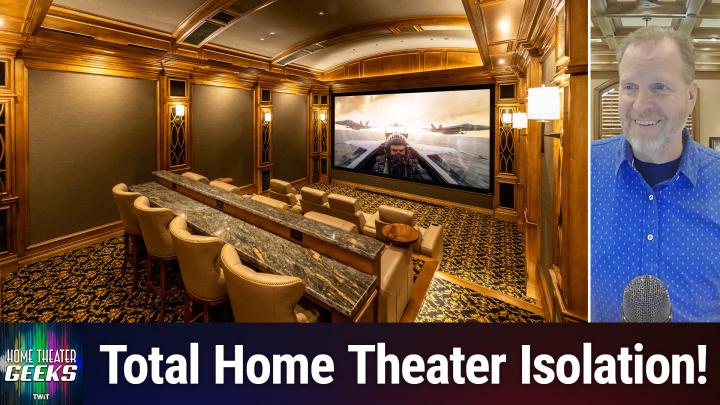
All TWiT.tv Shows (Audio)
Home Theater Geeks 534: The Van Cave Theater
01:10:30
Home Theater of the Month Interview!
Loading summary
Transcript266 lines
- [00:00]
Scott Wilkinson
In this episode of Home Theater Geeks, I profile a doozy of a home theater. So stick around.
- [00:10]
Leo Laporte
Podcasts you love from people you trust. This is twit.
- [00:26]
Scott Wilkinson
Hey there. Scott Wilkinson here, the home theater geek. In this episode, I'm gonna do home theater of the month. And what a home theater it is. It's one of the most extensively planned and implemented home theaters I've ever seen, and I have no doubt it would be one of the most amazing performances of any home theater I've ever seen or heard. I only hope to get to one day. The owner is Robert Vanman, who lives in Texas, and he joins us now.
- [01:00]
Robert Vanman
His.
- [01:00]
Scott Wilkinson
Hey, Robert. Welcome to the show.
- [01:02]
Robert Vanman
Good afternoon, Scott. Thanks for having me on your show.
- [01:05]
Scott Wilkinson
Oh, happy to have you. This is an amazing home theater, as we will see. But I want to start by asking how you became interested in the home theater hobby.
- [01:19]
Robert Vanman
Well, I was an audiophile from a young age, so all of my, you know, early days was about collecting speakers, and I used to make my own speaker boxes. And then when I started to drive, you know, I put in obnoxious stereos
- [01:37]
Scott Wilkinson
into all my cars.
- [01:40]
Robert Vanman
And then I was forever, you know, chasing the best equipment I could afford. So it's been kind of a lifelong
- [01:49]
Scott Wilkinson
passion as it is with most of us, I would say, and from everybody I've talked to, certainly that seems to be the case. Okay, so when did you purchase. Actually, you built this home right from the ground up. When did. When did that happen?
- [02:06]
Robert Vanman
Yeah, so I bought the property in 2019, and we spent a year in planning and architecture, and during that year, we had hired. Well, initially I hired Elliston Systems as my integrator, and then Elliston Systems introduced me to Paradise Theater as well as Keith Yates. And so I met with both of them, interviewed them to see which one we wanted to pick to be the theater designer. And ultimately I ended up picking. I felt they're both great, but paradise just seemed to be a little bit more down to earth in hopefully not making, you know, too. Too absurd of decisions that would add obscene cost to the system. So that's why I ended up picking Paradise. But I was very pleased with Paradise.
- [03:05]
Scott Wilkinson
So I don't know paradise, but I know Keith Yates, and I know he's phenomenal.
- [03:11]
Robert Vanman
Oh, yes.
- [03:12]
Scott Wilkinson
And. And definitely takes no prisoners. So this theater was built.
- [03:21]
Robert Vanman
So like I said, it started in 2019 in planning. Construction started a year later, but then it took four years to all the construction on this house. So it was a long, painful process. And there's a There's a outrageous amount of wood trim in the house, and everything set and built for the theater was the other thing that added a lot of time to the process. But all in all, it was five years, start to finish.
- [03:57]
Scott Wilkinson
So what were your primary design goals for the theater in terms of sound, isolation, number of channels, decor? What were the most important things that you wanted to accomplish?
- [04:09]
Robert Vanman
Well, I definitely wanted Dolby Atmos system. I wanted infrasonic subwoofers. I was. I. I wanted to build essentially a smaller version of the Han theater in Connecticut. And the isolation was. Was very important to me because at my last house, I had a. I had a. A decent theater in the last house, nothing on par to this one. But I. I discovered that I cannot use my theater when my family is home and they're not watching the movie with me, because when I. When I would play movies at. At decent levels, not even reference levels, you know, it would just disrupt the house. And so I would not be the. The favorite family member if I. So I wanted. Since, you know, we're building this from scratch, I wanted to. To make the theater such that it was so isolated, I could operate the theater anytime, day or night, and nobody would hear me. So I would never hear the. Turn it down.
- [05:18]
Scott Wilkinson
Not now.
- [05:19]
Robert Vanman
You. You can watch it later.
- [05:20]
Scott Wilkinson
Right.
- [05:22]
Robert Vanman
And so that was. That was a key thing. Even more so than making the room quiet. I was more focused on not letting any of the energy in the theater make it into the rest of the house.
- [05:35]
Scott Wilkinson
And yet you did. Also puts considerable effort into making the noise floor very low, which we're going to see later.
- [05:43]
Robert Vanman
Yes,
- [05:46]
Scott Wilkinson
it. It. It's astonishing, and we're going to see it. But I wanted to first show some. Some of the design drawings that you created. And these are remarkably detailed and specific. If we take a look at graphic one, here's, I guess the. The footprint of the first floor. Is that right?
- [06:07]
Robert Vanman
Yeah, that's first floor. And then the theater, as you see, is an appendage onto the house. So it shares one wall with the house, but that's on the garage. So there's. That was intentional to help isolate the theater.
- [06:22]
Scott Wilkinson
If we look at the next one, we can see this isolation wall. You spent a lot of time on that.
- [06:29]
Robert Vanman
Yeah, that wall is 38 inches thick.
- [06:32]
Scott Wilkinson
Wow.
- [06:33]
Robert Vanman
And there's 15 different layers of that isolation wall. And Paradise Theater had done the calculations on what the STC value of that wall was, and their calculations were an STC of 114.
- [06:49]
Scott Wilkinson
STC stands for sound transmission coefficient.
- [06:53]
Robert Vanman
Yes.
- [06:53]
Scott Wilkinson
A Measure of how much sound is transmitted through that wall. And 114 is exceedingly little.
- [07:02]
Robert Vanman
Yeah. It effectively means that a 114 decibel sound in the theater, if measured one meter outside of that isolation wall, it should be. You won't be able to hear it with a human ear.
- [07:20]
Scott Wilkinson
Yeah, yeah. Going on to the next slide. We can see you even. This is the entrance into the theater. You call it an airlock. Yeah.
- [07:30]
Robert Vanman
So there's two acoustic doors. The main theater door is a thing of. Of Note. It's a 550 pound 5 inch thick acoustic vault door. That is. That was rated at STC61 before we put on decoration layers. And then so any sound that escapes past the primary theater door would go into this airlock, so to speak, and should be caught by the next acoustic door that sits on the right side of that diagram. So the combination of the two acoustic doors closely matches the performance of the 38 inch thick isolation wall.
- [08:26]
Scott Wilkinson
Moving on to the next one here we have a cross section, a side view, I think, of the, of the theater. And the thing of note here is that you've got this whole room isolated. Twice isolated, actually three times. Three times isolated from the structure of the house.
- [08:48]
Robert Vanman
So it's a room within a room within a room.
- [08:51]
Scott Wilkinson
Chase.
- [08:52]
Robert Vanman
So there's three different foundation or three different floor systems and three different wall structures. And the ceiling is its own fully isolated system. So there's the foundation structure is. Sits 30 inches lower than the rest of the house. And that was to make enough space for all of the additional layers. And then inside the structural foundation is a fully floating foundation. So that, you know, effectively makes no direct contact with the structural foundation. And so that's kind of the yellow layer you see in the diagram here. And then the acoustic walls were connected to the floating foundation. And so the acoustic walls do not make direct contact with the structural wall. So the green is the structural walls, the yellow is the acoustic walls. And then kind of this orange is the visible room. So the visible room is, you know, ultimately it has a much lower volume than the structural room.
- [10:13]
Scott Wilkinson
Yeah.
- [10:13]
Robert Vanman
So it's actually only one third of the volume of the structural room. So there's. So, yeah, a room within a room within a room. So triple isolated.
- [10:25]
Scott Wilkinson
Yeah.
- [10:26]
Robert Vanman
And then the blue, the isolated subfloor is another layer of isolation that does not make direct contact with the isolated foundation or the floating foundation. So that blue is the third layer,
- [10:42]
Scott Wilkinson
which is the actual floor that you stand on.
- [10:45]
Robert Vanman
Yes.
- [10:47]
Scott Wilkinson
Okay, let's move on to the next one. So this is the plan for the acoustic treatments.
- [10:54]
Robert Vanman
Yes. So Paradise Theater spent 5,000 hours of simulation time to come up with the optimal acoustic treatment for the room, to maximize speech intelligibility and to make sure the room was not too dead from over absorption. So you see all the blue here? Those are diffusers and there's some reflectors. And then the pink is primarily either absorbers or combos. So a lot of those are combination diffuser absorber that, you know, operate best at different frequencies. So they spent a lot of supercomputer time to come up with the optimal room treatment.
- [11:40]
Scott Wilkinson
And here we see the viewing angle to the screen. And this is pretty important for immersion.
- [11:46]
Robert Vanman
Yeah. So the, you know, I wanted the front seats to have a 60 degree viewing angle. We ended up with a 62 from the front seats. And the middle row has. I can't even read that. I think it's like 42, 42 degrees. And then there's a row of bar stools on the back as well.
- [12:07]
Scott Wilkinson
Now the THX and SMPTE recommendations are more on the order of 40 or 30, 30, 36 or something like that. So 62 seems mighty big to me.
- [12:19]
Robert Vanman
Well, I would argue that 40 degree recommendations are dated and not immersive.
- [12:30]
Scott Wilkinson
All right, all right, I would accept that argument. And it's a mighty big screen too. 194 inch diagonal.
- [12:41]
Robert Vanman
Yeah.
- [12:41]
Scott Wilkinson
16 by 9. We're going to talk about that screen later. Yeah.
- [12:46]
Robert Vanman
You can kind of see from this drawing that every speaker in the room was both horizontally and vertically aimed to the primary listening position.
- [13:00]
Scott Wilkinson
Yeah. Yep. Okay, let's move on to the next one. We got like 10 diagrams. Here are the angles to all the speakers.
- [13:10]
Robert Vanman
Yeah, it just kind of gives you a good idea. The, the front row is my primary. So my wife and I, we. We watch movies from the front row.
- [13:24]
Scott Wilkinson
From the middle two seats.
- [13:26]
Robert Vanman
Yes. So I host a lot of movie nights. In fact, while I'm standing here, I have a movie event going on right now. It's actually a bunch of kids.
- [13:36]
Scott Wilkinson
Oh. Yeah.
- [13:38]
Robert Vanman
But I, I host movie nights regularly with multiple groups and I have a kind of a queue of people waiting to come for the next movie night between the different groups.
- [13:50]
Scott Wilkinson
Well, next time I'm in Texas, I. You, you'll hear from me.
- [13:53]
Robert Vanman
Just give me a call.
- [13:57]
Scott Wilkinson
I think we have one or two more plan diagrams. Okay. Here are the speaker angles from overhead. Yep.
- [14:04]
Robert Vanman
And you just kind of see from there that everything is vertically and horizontally aimed for that primary lifting position.
- [14:11]
Scott Wilkinson
Exactly. I forget if we have another Drawing or not? What is the next one? Oh, here it is. The speed, the coverage from. Yeah, from the front speakers and you can see all the seats get coverage from all three LCR speakers.
- [14:32]
Robert Vanman
Oh, definitely. Yeah.
- [14:36]
Scott Wilkinson
Yeah, that's. This is all so well planned out. And you had a lot of help with that?
- [14:43]
Robert Vanman
Oh, yes. Yeah. I mean I had, you know, I had a lot of concepts in my head of what I wanted it to be. And fortunately Paradise Theater was able to take all of my input and put it into the design.
- [15:04]
Leo Laporte
Hey, Scott. Hey, everybody. This episode of Home Theater Geeks brought to you by my mattress. Love my mattress, Helix Sleep. It is time, a good time to upgrade to a Helix mattress and get a good night's rest. No more night sweats, no back pain, no motion transfer. And you don't have to settle for a mattress made somewhere questionably overseas with low quality and weird materials and then put on a container ship for six months and gets to your house. It smells like bunker fuel. Rest assured, when you get a Helix mattress, they build it to order. It's assembled, packaged and shipped from Arizona where the air is fresh and pure within days of placing your order. So it is brand new fresh materials, the best materials possible. They want you to have a great night's sleep. That's why they have the Helix sleep quiz. Lisa and I did that before we bought our Helix mattress. It matches you with the mattress based just right for you, based on your personal preferences. We like a firm mattress, your sleep needs. I'm a stomach sleeper, she's a side sleeper. We were able to get a mattress that suits us perfectly. I've never slept better. And by the way, I'm not alone. Helix did a Wesper sleep study. They measured participants sleep performance. After doing what we did, switching from our old mattress to a Helix mattress, this is what they found. And this exactly matches my experience. 82% of participants saw an increase in their deep sleep cycle. That's the most important one, the one that cleans out the brain, right? Participants on average achieved 25 more minutes of deep sleep per night. That's practically exactly what I got. I doubled my deep sleep. Participants on average also achieved 39 more minutes of overall sleep per night. You just wake up feeling great. Time and time again, Helix Sleep remains the most awarded mattress brand tested and reviewed by experts like Forbes and Wired. And Helix delivers that mattress right to your door with free shipping in the US and you can always rest easy with seamless returns and exchanges. The Happy with Helix guarantee provides a risk free customer first experience Ensuring you're completely satisfied with. With your new Mattress. Go to helixsleep.comtheater and find your perfect mattress match. And do enter our show name or just htg after checkout so they know we sent you. That's helixsleep.com theater. T H E-A-T E R. Okay. Helixsleep.com theater we thank him so much for supporting home theater geeks and frankly, for my great night's sleep. Now back to you, Scott.
- [17:41]
Scott Wilkinson
Great. So let's take a look at the actual build. So, as you see. Yeah. Foundation is lower than the rest of the house.
- [17:52]
Robert Vanman
Yes.
- [17:54]
Scott Wilkinson
To accommodate all that flooring that became
- [17:56]
Robert Vanman
a swimming pool during the construction stage. Until we got a roof on it.
- [18:01]
Scott Wilkinson
Right, right. Moving on to the next one. We can see some framing, I believe. Yep. Yeah.
- [18:07]
Robert Vanman
So this is a steel system. So the, the ceiling is a suspended ceiling. And this steel holds that, that whole assembly and it does not touch the rest of the room. So it's completely isolated and it's very heavy. That is. I think that is 28ft tall. I forget the height of that, but it's. It's way up there.
- [18:35]
Scott Wilkinson
It's way up there. And in the next picture, we can see some of the framing around it.
- [18:41]
Robert Vanman
Yeah. So that the isolation wall has, you know, a 6 inch layer of solid concrete. So the cinder blocks filled with concrete. That's just one of the layers. But there's 15 layers.
- [18:55]
Scott Wilkinson
The next picture shows that isolation wall completed. Yeah.
- [19:01]
Robert Vanman
That. Well, at least that part of it.
- [19:02]
Scott Wilkinson
That part, yeah.
- [19:04]
Robert Vanman
As there's a whole bunch of layers that go on beyond on the inside of the room from here.
- [19:09]
Scott Wilkinson
Right. But that's impressive in itself.
- [19:14]
Robert Vanman
Yeah. So that this wall goes all the way up to the very top. So there's. It's a lot of effort went into ensuring that nothing, no energy leaves this room and enters the rest of the house. That's. That's how the floating foundation started life.
- [19:33]
Scott Wilkinson
Right. Was with plywood and these foam isolators.
- [19:37]
Robert Vanman
Yes.
- [19:41]
Scott Wilkinson
And then you poured concrete over that.
- [19:44]
Robert Vanman
Yeah. So what you're seeing here is the first layer of plywood. What you don't see is on the screen wall side of the room, there's a bunch more of these green blocks because there's so much weight in the front of the theater. The screen wall, because of the design that we did to isolate basically the, the speakers. I'll. I'll talk about that later.
- [20:10]
Scott Wilkinson
But yeah. Yeah. Next picture shows I believe you're getting ready to pour the concrete.
- [20:16]
Robert Vanman
Yeah. That's that's the floating foundation prep. So yeah, the, the concrete gets poured on top of that. So underneath what you see here is, you know, below here there's two layers of, of three quarter inch decking and then these foam isolators that sit underneath the decking. And then there's insulation between the foam isolators. This is after the isolated the floating foundation. So you're seeing the framing for the acoustic walls. So the foam that's there, that's the foam that's in the structural walls.
- [20:54]
Scott Wilkinson
Right.
- [20:55]
Robert Vanman
And then there's a gap between these new walls that you see here and the wall behind it, which is the structural walls.
- [21:03]
Scott Wilkinson
Right. The next one shows the hat channels that you use to isolate the ceiling.
- [21:10]
Robert Vanman
Yeah. So the ceiling structure is a steel hat channel system with insulation, rockwool insulation above it, and then a sandwich of sheetrock, green glue, plywood, mass loaded vinyl, and then another sheetrock layer. And then it's all offset from the walls by a quarter of an inch. So that whole ceiling floats inside of the room and then it's filled with acoustic caulk to seal it without letting basically any energy that gets absorbed into the ceiling structure. We don't want that to get transferred to other layers in the room.
- [21:57]
Scott Wilkinson
Why did you build a pitched ceiling here when you knew you were going to have that? Seems like an awful lot of wasted space above this ceiling.
- [22:06]
Robert Vanman
Well, above that is all of the ventilation not wasted after all? No, it's.
- [22:12]
Scott Wilkinson
It's filled ventilation wiring stats. Sort of.
- [22:16]
Robert Vanman
Yeah. I don't know what other pictures you got to show, but there's, you know, there's a lot going on on the ceiling.
- [22:23]
Scott Wilkinson
Okay. All right.
- [22:25]
Robert Vanman
All right. So now that ceiling is completed.
- [22:27]
Scott Wilkinson
Yep.
- [22:28]
Robert Vanman
And you have the sheetrock on the ceiling and the walls. The next thing that goes in here is the isolated subfloor.
- [22:36]
Scott Wilkinson
Right. Which we actually start with in the next picture. Okay.
- [22:41]
Robert Vanman
Yep. So here's a part of the subfloor. Now the subfloor uses polyethylene sheets underneath it and to the sides. And there's no. The isolated subfloor is not attached to the room or the house. It's just nesting inside of these polyethylene sheets.
- [23:01]
Scott Wilkinson
And the next picture shows the polyethylene sheets, I believe.
- [23:05]
Robert Vanman
Okay. Yeah, you see one there. So the, the per. This subfloor was designed to be super heavy and to not resonate. So it's all glued and screwed together. There's two layers of plywood with a mass loaded vinyl layer in between. And then all glued and screwed Together. It was very heavy. Oh, and of course, filled with Rockwool insulation, which I think.
- [23:31]
Scott Wilkinson
Right. Which we saw in the previous picture. Well, wow. That. And that's just, that's just the, the, in the foundation basically of the theater.
- [23:43]
Robert Vanman
A lot more than that.
- [23:44]
Scott Wilkinson
A lot more in there. Next thing we're going to talk about is, is the, what's, what you. You call the baffle wall. It's the screen wall, basically the front wall, where the front left, right and center speakers and a lot more are located. So first we, we see a diagram of what was planned.
- [24:06]
Robert Vanman
Yep, that's the, the front wall assembly. So the speakers, there's basically, there's a baffle wall in the middle section. You're holding the lcrs.
- [24:20]
Scott Wilkinson
And by baffle wall, we mean that the speakers are mounted so that the front is flush with the wall.
- [24:27]
Robert Vanman
That's correct. And there's a key strategy that we employed. You know, I'm a, I'm a very firm believer in how speakers are mounted has a audible impact on how they sound. And I think having speakers freestanding, you know, if the speaker is not heavy enough, then the, the cabinet can move a little bit. That's very destructive for the sound waves that it generates. So, you know, you want to. To hard mount speakers whenever you can. You want the speaker box to be rigidly held down so it can't move. But the problem is, is when you rigidly mount speakers that, you know, you're coupling it to something, and that is a conduit to transfer that energy to other stuff. So. And of course, the isolation was such a big part of this design. So we wanted to. To get the best sound out of the speakers with rigid mounting. But we wanted the best isolation possible. And the way to achieve both of those at the same time was using a very, very heavy systems for mounting the speakers and then using extreme isolation underneath the speakers, that would keep the, the stands or the cabinets or the baffle wall from being able to transfer energy. In fact, ahead of the call, I went and grabbed one of these things. So this is a Sorbothane isolation ring. So this is a kind of a gooey soft material that holds the world record for the greatest damping characteristics. And so I had done some research into what are the best isolation materials and came across Sorbothane, and I ended up.
- [26:36]
Scott Wilkinson
By the way, congratulations for using the word damping, not dampening. Dampening means making wet, and a lot of people make that mistake. So that's the editor geek in me coming out.
- [26:49]
Robert Vanman
Yeah, I Don't want any dampening in my theater.
- [26:52]
Scott Wilkinson
No, no. You want damping.
- [26:54]
Robert Vanman
Yes. So anyhow, so this for the subwoofers. Maybe we should talk about the speakers.
- [27:02]
Scott Wilkinson
Yeah.
- [27:03]
Robert Vanman
So I have JBL synthesis speakers in the theater, plus I have two Ascendo 24 inch infrasonic speakers. Now the, my LCRS are JBL's flagship, the SCL ones and those are, you know, dual 12 inch drivers and a big horn and they're large speakers. They're. I don't know if you. There's some pictures that show.
- [27:28]
Scott Wilkinson
Right. Well here's, here's the, the front wall being built.
- [27:33]
Robert Vanman
Yeah. So this is a good photo to show a little bit of the scale. So the two speakers on top of the stands on the left and right, those are JBL subwoofers, Those are the SSW1s and those are dual 15s that are separately driven and separately ported. But those, those speakers weigh 350 pounds. And I mean it, it took, I mean it took machines to put those speakers up on those stands, not people. And then below Those are the Ascendo 24 inch infrasonics. But both the JBLs and the Ascendos are bolted into this steel stand assembly that is heavy weighted. So there's 2 inches of cold rolled steel, you know, across the whole bottoms to boost weight. And then there's I think five layers of birch plywood and four layers of mass loaded vinyl all to increase the weight of these assemblies. So these assemblies weigh a thousand pounds.
- [28:46]
Scott Wilkinson
Oh man.
- [28:46]
Robert Vanman
And then the, so the JBLs are bolted tightly down into this stand and the Ascendos are compressed. So there's, there's a series of brackets that squeeze the Ascendos into the stand between two mass loaded vinyl layers. So there's a little bit of give with the mass loaded vinyl. But the point of compressing the Ascendos into a super heavy speaker mount was to make the speakers behave as a 1000 pound speaker. So that helps the energy that's going in to the speaker. You know the difference between the weight of the cone material and the weight of the speaker which is now a thousand pounds is you know, the delta or the, the ratio is extreme so allows the, the cone material to move much more relative to the speakers moving. Because the speakers are just not moving when they're this heavy.
- [29:52]
Scott Wilkinson
Yeah, yeah.
- [29:53]
Robert Vanman
And then there's eight sorbothane isolation rings underneath each of the subwoofer stands. And that ensures that the vibrations and energy that the speaker stand experiences has a, a Virtually impossible job of being able to transfer energy to the subfloor. It, it just, it doesn't transfer the energy.
- [30:20]
Scott Wilkinson
And those subwoofers, and particularly the infrasonic subs, they are generating a lot of mechanical energy.
- [30:28]
Robert Vanman
Yeah, those, those have three inches of throw. So they, they're, they're moving. Yeah, they move a lot of volume.
- [30:37]
Scott Wilkinson
Yeah. Yeah. The next picture shows the baffle wall basically done with the screen framing.
- [30:46]
Robert Vanman
Yeah. Now the LCRs are not in place there. I don't know what speakers do you have some pictures of the lcr?
- [30:52]
Scott Wilkinson
I do. Coming right up. All right, but before we get there, you sent me a couple of pictures to the next one next to in fact show the scale.
- [31:03]
Robert Vanman
Yep. That's the ascendos.
- [31:06]
Scott Wilkinson
That's, that's a massive subwoofer. And then the next one I think is the JBL subwoofer.
- [31:12]
Robert Vanman
Yep. So I have five of those in the room. So there's one of these in each corner and there's a fifth one that's front and center.
- [31:21]
Scott Wilkinson
And then the last picture in this sequence shows them all in place.
- [31:26]
Robert Vanman
All right. Yeah. So the, the lcrs. I mounted the lcrs by putting on eight steel right angle corner brackets, not corner, just right angle brackets on each of the JBLs. And then was able to bolt the JBL LCR speakers into a £2,000 baffle wall. So the baffle wall that they're mounting mounted on is a three, three layers of plywood, birch plywood, two layers of mass loaded vinyl and then filled with rockwool insulation. It is. And then it's all on this steel stand. So that assembly weighs 2,000 pounds. And then there's a whole bunch of sorbothane isolation rings on the bottom to ensure that any energy that's experienced by the baffle wall does not transfer to the subfloor. And it's staged off from the back wall of the acoustic room.
- [32:29]
Scott Wilkinson
So it's very, very heavy and very isolated.
- [32:34]
Robert Vanman
Yes.
- [32:36]
Scott Wilkinson
Wow. Okay, next up, I want to talk a little bit about the projector and the projector box in particular.
- [32:44]
Robert Vanman
All right, so the projector that I have is. It's a Sony.
- [32:50]
Scott Wilkinson
Trying to remember the VPL VW 5000 ES.
- [32:55]
Robert Vanman
That's the one. Thank you. So that is, it is an older projector. It's the same projector that's in the Hans theater.
- [33:02]
Scott Wilkinson
Which was your previous theater.
- [33:05]
Robert Vanman
No, no, that was somebody else's. My target, the Han theater in Connecticut won the Home Theater of the Decade by AVS forums.
- [33:16]
Scott Wilkinson
Right.
- [33:17]
Robert Vanman
And so the Han Theater is a pretty famous theater. And reading about the Han Theater, I, I ended up choosing to use the same projector in the Hannah I had. Actually, I was going to go with the new version of the Sony that was a 10,000 lumen version of their professional. But Paradise Theater did the testing or I guess the geometry, and they determined that a 10,000 lumen. Lumen projector in my theater would be a real eye safety hazard. So if you walk by the screen
- [33:56]
Scott Wilkinson
and you look up at the theater projector as it's blasting. Ye.
- [34:00]
Robert Vanman
Yeah, that, that's, that's a legitimate eye safety hazard. So I decided to, to not go bonkers on the projector. Just leave some eye safety protection.
- [34:11]
Scott Wilkinson
I think that's wise. Sure.
- [34:13]
Robert Vanman
But the projector looks great. I mean you don't, you don't feel like you're missing any brightness, I'm sure.
- [34:22]
Scott Wilkinson
And then.
- [34:23]
Robert Vanman
So the box that you saw there, the. Yeah. So that the projector box has two layers of plywood. It has a mass loaded vinyl sandwich in the middle of that. Then it's insulated on the inside, but you can kind of pick up from here. The projector box does not touch any of the cabinets or the ceiling. It's double isolated. So the projector box is on some kinetics isolation hangers. And then inside the projector box is another layer of isolation. Yeah. So the, the tray is suspended inside a suspended cabinet. So it's double isolated and insulated. It has its own ventilation in and out that's separate from the room. AC ventilation. And it on the front of it is a port glass window with two layers of port glass that are at different angles and they're different thicknesses of port glass to ensure there's not interference patterns that can be generated. And so it's sealed to the room. The only air is going off into my attic that's feeding the projector box.
- [35:44]
Scott Wilkinson
Right.
- [35:45]
Robert Vanman
And then I use magnetic clips to put the, the stain trim around this. So it looks like it's built into the cabinet, but it's actually suspended inside.
- [35:57]
Scott Wilkinson
Yeah. Yeah. Amazing. Okay, next picture we, we're going to see the room closer to being done. Yep. And this is I guess without the fabric of all of these surfaces that all of these places you see now where there's a bunch of speakers are covered with fabric, which we'll see later.
- [36:20]
Robert Vanman
Yes. So all of the, the bed layer channels and the Atmos channels are the JBL synthesis SCL6 which is a very narrow. It has four, four, you know, drivers plus a horn. But it's designed to be a wall mounted speaker. But we wanted to aim every speaker both vertically and horizontally. So we, we built our own boxes for the SCL6s. But in order to be. To maximize the back box volume, we ended up creating six different configurations. So some of the. Some of the speakers are. Are biased to the top of the box, some up to the bottom, some to the middle, just in order to fit into the room best. So we could do all these custom boxes to. To minimize compromises.
- [37:22]
Scott Wilkinson
So, yeah, I'd say this whole theater is a no compromise situation almost. Anyway, the next one is another view without the, I guess, the screens in place here. But you have lighting behind the fabric,
- [37:38]
Robert Vanman
so this is finished. So there's. There's fabric here, but none of the interior lights are on in the room. But I have lighting behind the fabric to illuminate the goods behind the fabric. So you can see the speakers and the diffusers. You can. Now this is a little bit of a cheat to hate to admit it, but the screen is, of course, it's acoustically transparent, but it is not visually transparent. So I did.
- [38:13]
Scott Wilkinson
If it's acoustically transparent, it can't be visually transparent because it's got to have some holes one way or another. Woven fabric.
- [38:21]
Robert Vanman
It is a woven Seymour screen Excellence screen. But it just. You, you. I couldn't see the speakers in the baffle wall even with the lighting behind it. So I'm cheating. I'm actually projecting a photograph that I took. So I took a photograph of it before the screen got up. And then, then I have a little. A little device that I can project that photograph onto the screen.
- [38:50]
Scott Wilkinson
So there's no light behind the projection screen itself.
- [38:54]
Robert Vanman
Oh, there is, but you can't see it.
- [38:58]
Scott Wilkinson
So that's amazing.
- [38:59]
Robert Vanman
Cheating a little bit just so you can kind of appreciate.
- [39:03]
Scott Wilkinson
All right, all right, I get it.
- [39:05]
Robert Vanman
But all the rest of these openings are, Are legit. These are. You're looking through the fabric with the lighting behind the fabric.
- [39:13]
Scott Wilkinson
Right. Got one more picture, I think, of. Of the side wall with that same kind of effect. And you can see the acoustic treatments and the speakers.
- [39:22]
Robert Vanman
Yeah, there's actually a speaker. You see the two columns, the right column on this photo, there is a speaker inside that column. Yeah, you can see a little bit of cones there, but that. So one of the. The speakers are mounted into that column.
- [39:43]
Scott Wilkinson
And the next picture shows some stuff in the back, I believe.
- [39:48]
Robert Vanman
Yeah. So the back wall has, you know, two fabric sections, but those fabric walls are actually doors that can swing open so you can see what's behind it. So you can. This is actually an access door, but it allows you to, to see behind the fabric wall completely.
- [40:09]
Scott Wilkinson
Yeah, yeah. Well, it's, it's starting to look like something real special. The next picture is your equipment rack.
- [40:18]
Robert Vanman
Yep. So I have a little AV room off the airlock. And then it's, there's I think 11amplifiers. So there's five amplifiers for the JBL subwoofers and those, they were crown amps, they're now a JBL amplifier. But those are 5200 watts. So they're, they're 2600 watts per channel. So each of the subwoofers. Those are the subwoofers. And then below those five subwoofers are six ATI amplifiers. And so the front speakers, the LCRs, each get their own 1000 watt amplifier. And so the, the front LCRs are bi amped. So 500 watt channel goes to the low frequencies and a 500 watt channel goes to the high frequencies. So each of the LCRS has a dedicated thousand watt amp and then there's three amps that are six channel amps and they're 300 watts per channel. So all of the surround speakers and the Atmos speakers each have a 300 watt channel. And then there's a Trinoff processor. It's actually the JBL branded Trinoff processor on top.
- [41:43]
Scott Wilkinson
Right. So JBL synthesis, SDP 75, 32 channels of audio processing. Yeah.
- [41:51]
Robert Vanman
So it's, it's the same as a Trin off, it's just branded jbl.
- [41:55]
Scott Wilkinson
Right, right. Also in this rack, I believe is a MADVR NV Extreme video processor, which helps with aspect ratio control and other things. You're using Kaleidoscape as your primary source, right?
- [42:10]
Robert Vanman
Yeah, absolutely.
- [42:12]
Scott Wilkinson
But you also have an Oppo UDP 203 in there, just like me. Yeah. Hard to come by now. Yeah, they're coveted for sure. Apple TV 4K and. And so on. Crestron for control. Now I wanted to point out in your, in your coffee table book, which we're going to talk about in a minute, you say that there's a total of, of, let me see what it is here. 46,400 watts, man. 46 kilowatts of power.
- [42:57]
Robert Vanman
Yeah. That AV room can get really hot. So it has its own AC unit. But I've been having problems with that AC unit. So when it goes down and I, I realize that that AC unit is down again. That AV room, you know, can get Way too hot.
- [43:18]
Scott Wilkinson
Really hot.
- [43:23]
Leo Laporte
Membership means more with American Express Business Gold. Earn four times Membership Rewards points in your top two eligible spending categories every month, including eligible U.S. advertising purchases in select media and U.S. purchases at restaurants, including takeout and delivery. What are you waiting for? Get the card that flexes with your spending every month. Terms and points cap apply. Learn more@americanexpress.com Business Gold AmEx Business Gold Card built for business by American Express.
- [43:52]
Robert Vanman
We gather here tonight to bring women
- [43:55]
Scott Wilkinson
back to their rightful place.
- [43:57]
Robert Vanman
The Testaments, a new Hulu original series from the executive producers of the Handmaid's Tale. It's easier to accept a story than believe that the people around you are monsters. The battle isn't over. There comes a time when you have to take action. When you have to take action, choose your own destiny. Never quite as it seems. Watch the new Hulu original series, the Testaments, streaming on Hulu and Hulu on Disney for bundle subscribers. Terms apply.
- [44:22]
Leo Laporte
Hey everybody. Leo laporte here and I'm going to bug you one more time to join Club Twit. If you're not already a member, I want to encourage you to support what we do here at Twit. You know, 25% of our operating costs comes from membership in the club. That's a huge portion and it's growing all the time. That means we can do more, we can have more fun. You get a lot of benefits, ad free versions of all the shows. You get access to the Club Twit discord and special programming like the keynotes from Apple and Google and Microsoft and others that we don't stream otherwise in public. Please join the club. If you haven't done it yet, we'd love to have you find out more at TWiT TV Club TWiT. And thank you so much.
- [45:11]
Scott Wilkinson
Okay, now once the theater was done, you did some calibration obviously and some noise testing and I want to show the results of that. First is a picture of the testing setup which you have a microphone in almost every chair.
- [45:33]
Robert Vanman
Yeah. So the calibration was done by Paradise Theater, their acoustic engineer. And they spent three days. So there's actually three of their. Their guys were working on this over three days. So nine man days went into the calibration of this theater. And I have to tell you, before calibration, I was disappointed. You know, I, I listened to some music and watched a movie before we did the calibration and if you can imagine, you know, five year project and you know, it was not inexpensive and so I had high Expectations and. But when I first listened to it, it was disappointing. It sounded, I mean, there was no doubt there had a lot of power, a lot of bass, but the bass was kind of muddy and vocals sounded terrible, actually. And so I was challenging Paradise. I said, I, I don't, I cannot comprehend that just calibration is going to fix this. And they assured me, robert, just chill. Just let us get the calibration done. You'll be amazed. And I was. After they did the calibration, it was, it was like a chorus of angels. Like. No, it was a joyful moment when I, when I heard it after calibration. And so they ended up saving a number of different profiles. They did a flat profile, you know, that was essentially flat from 7 hertz to, to 40,000 hertz. But it was not a very exciting sounding profile. And ultimately the profile that I like the most that we saved as the default has a base increase from 200 Hz down to 2 Hz.
- [47:29]
Scott Wilkinson
And we have a picture of that.
- [47:31]
Robert Vanman
Oh yeah, you can throw it up so you can see actually peaks at 12 hertz and then down to 7 hertz. You know, the SP level at 7 hertz is the same as what's across the, you know, pretty much the rest of the curve. And then there's still a lot of energy down to 2 hertz. So there's, there's truly deep bass in this room. And then we did roll off above 10,000 hertz. So 10,000 to 20,000 hertz has a distinct roll off. It just sounded more pleasing to.
- [48:12]
Scott Wilkinson
So this sounds, this looks very much like, like the curve that, that most people target that they really want called the, the room curve. Sometimes used in headphones as well to try and balance the headphone sound to replicate this. Yeah, and it, it looks phenomenal. I mean, I'm not sure headphones go down to 10 hertz or 2 hertz or 2 hertz. That's, that's pants flapping territory there.
- [48:42]
Robert Vanman
Yes.
- [48:45]
Scott Wilkinson
Now, other measurements that, that you did in order to verify the, the noise floor and the sound transmission to the rest of the house were also very interesting. Here's, here's the noise floor measurement in your room.
- [49:02]
Robert Vanman
So the first time we did a noise floor measurement, the curve looked different than this. And it turned out that the room is so quiet that the microphone system that paradise had been using for years, the internal noise in the microphone was too high, so that you couldn't really see any fidelity or any detail below really was 12 hertz or 12 decibels. So they after testing the Van Cave initially they made the decision to buy this new microphone that was, I think it was like $30,000 this microphone. But they were able. Then they came back to the Van Cave and did a new set of testing which is what you see here. So the, there's a green curve and an orange curve. The orange curve is with the system turned off. The ventilation in the room is still running with that. And then the green curve is with the system on. And the reason there's a difference all has to do with the ascendo subwoofers. So I love them, but they, it sure does irritate me that they make so much noise. They have. Relative to how quiet this room is.
- [50:23]
Scott Wilkinson
Right. And the noise is coming from the amplifiers.
- [50:26]
Robert Vanman
There's fans on the built in amplifiers.
- [50:29]
Scott Wilkinson
Fans on the amplifiers. Yep.
- [50:32]
Robert Vanman
Just cooling fans. But when the room is this quiet, that tiny little cooling fan is audible. You can hear it. You know, normally I think most any other theater you would never notice that. But that was, it stood out like a sore thumb in my room. So if you take a look down the orange curve, you know, at 250 hertz, all the way up to 10,000 hertz is basically measuring zero DB. So there was effectively, you know, well, inaudible.
- [51:12]
Scott Wilkinson
Completely hearing. I mean zero db is, is inaudible. Completely inaudible, yeah. And just so that people understand, these other curves here, there, there are these curves labeled NC 45, 40, 35 and so on. These are the thresholds, essentially the noise floors at different decibel levels. And what most recording studios get to, they get to or below like NC15 or NC10 and you're down at least NC10 and below.
- [51:49]
Robert Vanman
Yeah. So with this, the infrasonic amplifiers on, you know, it was rated at NC10 but with those amplifiers off, you know, it is well below the bottom curve which is NC5. So arguably it's NC0.
- [52:06]
Scott Wilkinson
Yeah. NC standing for noise coefficient noise Criteria. Criteria. Sorry. Yes, exactly.
- [52:13]
Robert Vanman
All those curves are the equal loudness contours.
- [52:16]
Scott Wilkinson
Right, Exactly. Okay. So it's a super quiet room. You can probably hear your own heartbeat if there's.
- [52:25]
Robert Vanman
Oh yes, it's, it's can be unnerving,
- [52:28]
Scott Wilkinson
but it's not quite an anechoic chamber, but it's close.
- [52:33]
Robert Vanman
It's, it's wonderful to go back into the theater to read or do devotions or you know, even, even if I'm not running the system. Yeah, it's, it's a delight to hang out in.
- [52:50]
Scott Wilkinson
So then we get to the Sound transmission coefficient, which is how much sound in the room is getting out to the rest of the house or at least a meter away on the other side of that wall.
- [53:04]
Robert Vanman
Yeah. So this is some measurements of noise in the theater and then recordings of during that same moment outside of the theater. So one meter beyond the second acoustic door. And the problem is, you know, so ultimately they concluded that it's about an NC1 or not NC, that it's STC. STC 110 was what they rated the room at. They couldn't measure it directly because to measure a STC110 you would have to generate sounds so loud in the theater that it would destroy the equipment. You just couldn't do it. So what they did is they ended up generating a 94 decibel pink noise stimulus.
- [54:01]
Scott Wilkinson
Which is the purple curve.
- [54:03]
Robert Vanman
Yes. And then they measured what they could pick up from the game room and then they, they ratioed this or they, they extrapolated for a higher level. So it's, it's not a super legitimate STC110 test, but it validated the calculation of STC110. But I mean the, the practical reality is when you're watching a movie in the theater and you're out in the game room, you can't hear what's going on. Certainly the rest of the house, there's not a chance the game room shares the one door. But you have to, you have to be standing basically right next to the door and listening carefully. And sometimes you can pick up a little, little bit of rumble, but it's so, so tiny.
- [54:58]
Scott Wilkinson
Well, just tell us quickly what the red cyan and yellow curves are.
- [55:02]
Robert Vanman
All right, so this, this is different locations. Ah, so there's, the red line is a combined level 1 meter outside the door. The blue line is a combined level in the center of the game room. And then the yellow line is the background noise level of the game room. So if, if there was no, nothing going on in the theater, the yellow line is what the game room was. So then the, the blue and the red are measurements with the 94 decibel pink noise running in the theater. So basically there's, there's effectively no sound transmission below 50Hz or 125Hz. I'm sorry, so below 125 there's a little bit. But if you remember back to the equal contour lines of the, or equal loudness contours. Yeah, you, those follow a curve like that. So it's, it's, it's Very, very, very tiny.
- [56:13]
Scott Wilkinson
Yeah, yeah. And, yeah, yeah, it's. It's astonishing. It really is. Okay, let's finish off with a video tour that you, you shot some video. And I would love to show people the final result of all of this work.
- [56:33]
Robert Vanman
All right, so we're walking down the back hallway. If you look up to the left here, we're going to enter the Van Cave. So my last name is Van man and this is my man cave. So we call it the Man Cave.
- [56:45]
Scott Wilkinson
Very good.
- [56:45]
Robert Vanman
And this is my game room. I entertain a lot. So I have, I have events regularly at my house. And so it's just a number of tables. Gaming, foosball. I have a professional poker table, pool table, kind of a puzzle table, or in fact, I think there's a puzzle on that table right now. Chest table, and then a bar area. So. All right, so as we're entering back here, you see the, the marquee above the theater door. I have a popcorn machine on the left.
- [57:19]
Scott Wilkinson
Of course.
- [57:20]
Robert Vanman
Yes, you gotta have popcorn and I have popcorn.
- [57:23]
Scott Wilkinson
Got a whole. You got a whole little bar area. Kitchen. Little kitchen.
- [57:28]
Robert Vanman
A sonic ice machine there and regular ice maker.
- [57:31]
Scott Wilkinson
And so here's the first door.
- [57:33]
Robert Vanman
Yeah. So now you're entering the, the sound lock.
- [57:35]
Scott Wilkinson
The airlock.
- [57:37]
Robert Vanman
The airlock, yes. And then the, the, you're coming up to the big heavy theater door far left there. So I'll just let the video.
- [57:49]
Scott Wilkinson
You know, it's interesting that that actually, for the size of the overall structure, the room does not feel that big.
- [57:58]
Robert Vanman
Yeah, I mean, the, the visible room is, I think it's 25ft, 8 inches by 18ft, 3 inches. So this door, before I go on, you see there's three seals on this door. And then the door actually lifts off the ground as it opens. So it's, it's actually about a half inch higher as it's open. And now as you close it, the door is dropping down. And then when it closes, now the whole seal on the bottom is sealed so it drops into place at the end. And then I have these huge magnets that hold it open once I open it.
- [58:42]
Scott Wilkinson
Nice bar area or. Yeah, bar stools. Yeah, in the back.
- [58:46]
Robert Vanman
And then it's got a, A barreled ceiling.
- [58:50]
Scott Wilkinson
That was astonishing to me. I, I don't think I've ever seen. I've seen it. But it was so rare to have that curved barrel ceiling.
- [58:58]
Robert Vanman
Yeah. And it's high. So actually the, you know, the acoustic room has a 14 and a half foot ceiling height. The visible room is, I think it's 12ft or 12 and a half feet technically for the visible room.
- [59:21]
Scott Wilkinson
I noticed you went with a 16 by 9 aspect ratio screen. And when you want to watch movies, you have a, the automatic masking system reduces gums up from the top and bottom. Yep.
- [59:35]
Robert Vanman
And we biased it to the bottom. So when, when, you know, most of the movies that I watch are going to be a 240 or 235 aspect ratio. And so I use the maximum amount of fabric that the Seymour screen excellence comes with. So it's from 16 by 9 to 240. The top comes down, you know, about, I don't know, probably 18 inches. And then the bottom comes up about 4 inches. So since the primary listening position is in the front row.
- [60:14]
Scott Wilkinson
Right. At the lowest level.
- [60:15]
Robert Vanman
Natural. So if the screen is up high, you know, it's not as natural. So I wanted the screen to, to bias to the bottom to feel more natural from the front row.
- [60:28]
Scott Wilkinson
Right. And I see you're in your office or in an office. And it's got a, also a, a tray ceiling there. Very nice. A lot of wood.
- [60:40]
Robert Vanman
A little bit of wood. This is my study. So I work out of my, my home office currently.
- [60:48]
Scott Wilkinson
Right.
- [60:48]
Robert Vanman
So I wanted my home office to function as an office. And it's, it's got lots of wood. I like the wood.
- [60:57]
Scott Wilkinson
Okay, so the final question is, how much did you spend on this?
- [61:05]
Robert Vanman
So I had, I had not revealed that until this past January. I had a fundraiser. My, you know, when we started the project, my Target goal was $500,000 was my budget for finish out and equipment. But I like to say that that was absolute ignore. And so, you know, it wasn't until I, you know, much later I, I finally forced myself to actually look at the real cost. And I ended up spending about 1.3 million, all said and done. So there's just so much time spent in the, the construction and then, you know, the, the woodwork was not inexpensive and there's just. Everything adds up, you know.
- [62:06]
Scott Wilkinson
I mean, most construction projects certainly of this level tend to go over budget.
- [62:13]
Robert Vanman
Yep.
- [62:13]
Scott Wilkinson
This one, this was no exception,
- [62:17]
Robert Vanman
unfortunately.
- [62:18]
Scott Wilkinson
Yeah. Unfortunately. Well, you know, yes, it's not within reach of most people, but in the old adage, you get what you pay for and you got something really, really special here.
- [62:32]
Robert Vanman
Yes. And I, I use it a lot and it's so much fun, you know, to have a, a venue that my friends like to come to. So it's just, it's been, it's just great having the opportunity to, to Host, lots of friends, and to be kind of a central hub with the. The people in my life.
- [63:01]
Scott Wilkinson
We'll. We'll mention that the YouTube personality known as Youth man, real name Michael Stevens, did a profile on your theater, and that is on his YouTube channel. Will include the URL in the show notes so that people can go see that one, too. I believe you said that a lot of your contractors were in on that video as well.
- [63:30]
Robert Vanman
Yeah, that was. That was a pretty highly produced video. And we had. The builder was there. Paradise Theater was there. Uh, the interior designer, uh, the, uh, acoustic engineer was there.
- [63:44]
Scott Wilkinson
Acoustician, Yes.
- [63:46]
Robert Vanman
I couldn't think of that. Elliston Systems. They were there. So there's kind of interviews of a number of people involved in the project.
- [63:57]
Scott Wilkinson
Right.
- [63:58]
Robert Vanman
So it's actually very entertaining. It is very long, but it's like watching a TV show.
- [64:04]
Scott Wilkinson
There you go. Exactly. I also want to take a moment to acknowledge one of the things that you do is that you have a charity that is quite amazing, and this fundraiser that you did in January, I think, was for that charity, is it not?
- [64:24]
Robert Vanman
Yeah, it was.
- [64:25]
Scott Wilkinson
So tell us a little bit about that.
- [64:27]
Robert Vanman
So my nonprofit is called Amazi Water, and we build water wells in the country of Burundi, Africa. And most people have never heard of Burundi, Africa. It is the poorest country in the world by quite a wide margin, and also has the least access to clean water of all countries in Africa. One of the unique things about. About Burundi is no major water charities have worked in this country. So in the water sector, it's. It's actually called the forgotten country. Nobody wanted to work in Burundi because, you know, the. The infrastructure of the country is. Is very, very limited. And, you know, it's this. It's a very challenging environment to work in. So, you know, there were a lot easier targets for most major water charities. So as a result, the country has been left behind. And so when I got started In Burundi, only 15% of the population had access to clean water. Wow. 85% of a country of 13 million people draw their water from rivers and lakes and. And swamps, and they have the. The death rate and the mortality rate that one would expect by drinking swamp water. You know. You know, somewhere between one out of four and one out of five children die before reaching five years old.
- [66:06]
Scott Wilkinson
Oh, my God. Well, it's.
- [66:09]
Robert Vanman
It's, you know, the mortality rate for children is extreme, and it's all preventable. It's just lack of access to clean water. So we, after selling my company to Motorola, we, you know, we ended up establishing this nonprofit called Amazi Water. And we are focused explicitly on Burundi and we build large distributed solar powered water projects that are effectively small municipal water systems in each community. So some of the other factors about Burundi is it's the most densely populated country in East Africa and there's a lot of available groundwater because it borders Lake Tanganyika, which is the second largest body of fresh water in the world. So the water is there, the population density is extreme, and the need is off the charts extreme. That makes building water projects in Burundi are extremely beneficial and cost effective. So there's more people per pump per se. So each, our average water project is serving 5,000 people and it makes the cost per person served about $15. And you compare that to pretty much all other water charities which are doing great work, but they don't have these unusual efficiencies and opportunities that we have. In Burundi, most water charities are spending 50 to $65 per person served. Where Rosie water is $15. In fact, last year we're at $14 was what we ended up at the end of the year. And it's, it's, it's the most. The way I looked at it is I wanted to find something that had the maximum impact I could possibly make with my resources. And, and that's, that's what this is, is I know of no other thing I can possibly do in my life and the extra resources that, that God has entrusted to me than building water projects in the country of Burundi, Africa. I like to say that we are working to help fix the biggest problem in the poorest country in the world and that that enables us to have the maximum impact per dollar. So we calculate that every $200 that we spend will eliminate one child's death. And we have, in fact, most of the projects that we end up auditing, we end up more about $100 per life. We, you know, we try to be conservative in our claims. Our claims, 200 per life, but right now we're actually beating that.
- [69:12]
Scott Wilkinson
Wow. Well, you, you are so blessed to be able to do that. And yeah. You are offering such a blessing to, to this country that so desperately needs it. I, I applaud you, sir.
- [69:26]
Robert Vanman
Well, it's, it's a joy. And that's, it's, you know, back in 2014, you know, I felt God saying, this is the next chapter of your life. So that's, that's what I've been focusing on.
- [69:42]
Scott Wilkinson
Well, commendations, many commendations to you for that. That's.
- [69:47]
Robert Vanman
We have a great team we have some amazing people that have, you know, come. You know, we have about 150 employees right now.
- [69:58]
Scott Wilkinson
May you continue your good works. Oh, I appreciate it. And I thank you so much for being here on the show and showing us your amazing home theater. I mean, next time I get to Dallas, you can expect a call.
- [70:13]
Robert Vanman
All right, you be sure to call me, Scott, when you come out and schedule some time. I'll spend some time with you.
- [70:21]
Scott Wilkinson
Excellent. I sure do appreciate it. Thank you so much. That is Robert Van man in near Dallas, Texas, with the amazing Van Cave theater. Look at that. That is just. Just astonishing. And you should have led with that picture, Scott. Well, maybe we can do that in post. Okay, very good. Thanks again, Robert. Thank you, Scott.
- [70:51]
Robert Vanman
Have a great day.
- [70:52]
Scott Wilkinson
Thanks, you too.
- [70:53]
Robert Vanman
Goodbye.
- [70:54]
Scott Wilkinson
Now, if you have a question for me, send it on along to HTGWIT TV and I'll answer as many as I can right here on the show. And if you have a home theater you're proud of, even if it's not quite up to the level of the Van Cave Theater, that's totally fine. Send me some pics. I'd love to see. See them and maybe we'll get you on the show. Until next time, geek out.