← All TWiT.tv Shows (Audio)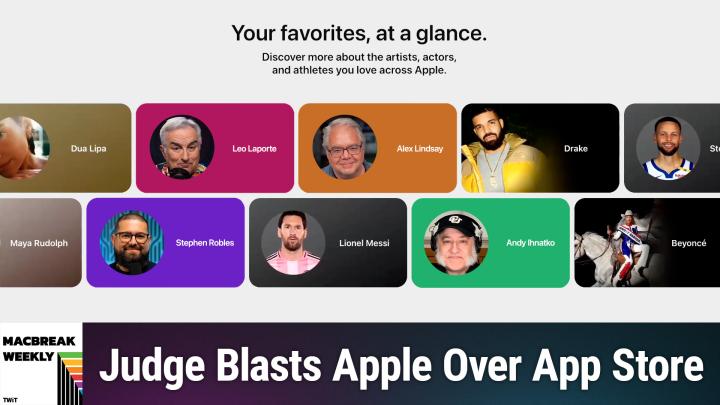
All TWiT.tv Shows (Audio)
MacBreak Weekly 971: Cook Chose Poorly
02:07:12
Judge Blasts Apple Over App Store
Loading summary
Transcript490 lines
- [00:00]
Leo Laporte
It's time for Mac Break Weekly. Andy and Akos here. Alex Lindsey filling in for Jason Snell, the bearded tutor, Stephen Robles himself. We will talk about the judge yelling. I say yelling at Apple for their malicious compliance. And already apps are flooding into the App Store with little buy us, buy here, buy buttons. We'll also talk about Apple's quarterly results. They were good, but the future may not be so good. We'll talk about that too next on Mac Break Weekly. Podcasts you love from people you trust. This is Twit. This is Mac break weekly. Episode 971, recorded Tuesday, May 6, 2025. Cook chose poorly. It's time for Mac Break Weekly, the show. We cover the latest Apple news and there is a quite a bit of Apple news. Just, just quite a bit. That's all I have to say. Alex Lindsay's here from Office Hours Global. Hello, Alex.
- [01:05]
Andy Ihnatko
Hey.
- [01:05]
Alex Lindsey
Good to be here.
- [01:05]
Leo Laporte
Good to see you as always. You've been traveling. Where were you? You were in Israel.
- [01:10]
Alex Lindsey
Oh, that was a long time ago.
- [01:12]
Leo Laporte
Oh, it was a long time ago.
- [01:13]
Alex Lindsey
Yeah, yeah, yeah. No, I was, I was maybe a decade ago.
- [01:15]
Leo Laporte
Where were you recently? Anywhere. Your backyard?
- [01:18]
Alex Lindsey
I, I have been mostly in the. In the backyard. Yeah, I was in. I was in Carpinteria a couple weeks ago. That was new for me. It's a beaut. Really, really cool. But that's about it as far as I've gone.
- [01:30]
Leo Laporte
Andy Inocco also here. He's been to the library and back. Hello, Andrew.
- [01:34]
Andy Ihnatko
Hey there. Hi there. Ho there. I just did my good deed for libraries and Star Wars Day and it's a short story, but I'm very proud. And it's just happened. Somebody took all nine episodes of the feature Star Wars Blu Rays off of the shelf and put them into like the library book sales section. Okay. I think with an eye towards saying, oh look, a dollar each for the Blu Ray of a New Hope. And everything took them right to. I took them right to the desk and said, I bet these aren't supposed to be here, but if they're supposed to be here, here's $10 keep. And they were puzzled, they were hurt. They said, I don't know who did that or why, but thank you so very much. On be. She actually said, on behalf of the library, thank you very much.
- [02:18]
Alex Lindsey
And I felt, on behalf of the.
- [02:19]
Andy Ihnatko
I felt 10ft tall that day.
- [02:21]
Alex Lindsey
On the behalf of State of Massachusetts.
- [02:23]
Leo Laporte
Actually, he's in Rhode island, which isn't even, you know, when you get Rhode island on your side, you Got something. I don't know what. And also here, Mr. Stephen Robles filling in. As we know, Jason Snell is off celebrating the birthday of his mama. So Stephen has kindly agreed to join us of the primary tech show, the bearded tutor himself, ladies and gentlemen.
- [02:49]
Stephen Robles
Pleasure to be here. Thanks for having me again.
- [02:51]
Leo Laporte
Good to see you.
- [02:52]
Stephen Robles
Yeah, very good.
- [02:54]
Leo Laporte
So it was hard for me to decide what to put on the top today. We have Apple results. We have an Apple executive movement. We have Stephen's excellent piece on Siri versus Perplexity. But I guess I should really talk about the judge blasting Apple for lying on the stand. Judge Yvonne Gonzalez rogers of the U.S. district Court in Northern California said Apple violated an injunction the court issued in this Epic vs Apple case. They won the case pretty much, except for that one thing where the judge said, Apple, you gotta let app developers offer methods of making purchases outside of the App Store. Yeah, Apple did that malicious compliance thing. It does so well. She wrote, Apple, despite knowing its obligations thereunder, thwarted the injunction's goals and continued its anti competitive conduct solely to maintain its revenue stream. Remember the Apple decided to impose a 27% commission instead of 30 in off app purchases. And in her ruling, the judge said, Alex Roman, who I'm not familiar with, but he's VP finance quote, this is the judge outright lied under oath. She said that Cook sided with his finance team instead of another Apple executive, Phil Schiller, who advocated that Apple comply with the injunction. She wrote Cook chose poorly. Yes, the nicest three word sentence ever.
- [04:32]
Andy Ihnatko
I mean, like, you gotta read this entire ruling. Because she was very, very, very esteemed and was not like, this is, this was not, this is not a negotiation. This is a ruling which you have to comply with. And like it was, it was, it felt like every time as a kid when your parents were so angry with you that they were talking calmly and said, so because you didn't want to ride the bus, you then thought, I know they're the keys to dad's car. I'll just take the keys and drive myself to the movies Even though I'm 14 years old and don't even have a learner's permit. Following that, it was on and on and on.
- [05:14]
Leo Laporte
Judge Rogers has referred the situation to the U.S. attorney's office in San Francisco for criminal contempt proceedings. Apple, meanwhile, immediately appealed. Apple said, no way. However, everybody else jumped. Epic Games says Fortnite's going back, baby. And Amazon has already put a buy it now button on its Kindle Apple.
- [05:38]
Andy Ihnatko
Yeah.
- [05:39]
Leo Laporte
So you know, this is, I mean, Absolutely.
- [05:43]
Andy Ihnatko
Yeah.
- [05:44]
Leo Laporte
And this is what the judge ordered.
- [05:46]
Andy Ihnatko
And let's just be super clear, like, this wasn't. Oh, well, gosh, he said something, Alex. He said something that was. Turned out not to be totally true. It's like in the actual testimony, you knew that he was cooked because the, because epic's lawyer said, wait a minute, you're saying that the decision to charge 27% for any transactions that follow from following a link or a button out of the App Store, you decided it on this day and not before, like, he asked for clarification. And so when EPIC decided to sue, saying, look, you're not, you're doing malicious compliance, you're not complying with the order, they got access to a whole bunch of Apple, like internal communications in which. Yeah, it turns out that they've been discussing this for months and months and months, first under Project Michigan and then under Project Wisconsin. And they had decided on, they decided on that figure not, as he testified, that while we hired an outside consultant to decide what that percentage should be like. And that's why. And we decided to heed the advice of this outside consultants, whereas all of the stuff that got through discovery was, yeah, we literally made the decision that we want to make this as painful as possible so that there is absolutely no reason whatsoever to encourage a developer to not do in app purchases. It was like, bam, bam, bam, bam, bam. Every point of this Apple was dead to rights. And judge was not amused.
- [07:07]
Alex Lindsey
And I have to say, as a, as a lawyer, son, it is idiotic to have these conversations over email. Like, what are you doing? Like, like the dumbest part of this whole thing and to me was what was like, why are you having these conversations in writing, you idiot? You know, like, you know, like, you know, like, you know, if you're going to have a conversation like this, if he goes to jail or if he has to get fined or whatever, he deserves it. Just for them being stupid. Like, it is, this is, this is an unforced erro in their entire process of like, I. And you know, this is the reason I joke oftentimes that, that a lot of representatives don't use email. One of the big reasons they don't use email is because they don't want to have any, any trail. Right? You know, like, they just don't want to have written. They're all lawyers and they, and most lawyers know, don't say anything every email. Like the thing that's going to be hilarious when we talk about this five years from now, you know, all those little AI transcripts that are working for you. Those are actually subpoena. You can be subpoenaed, you know. And like did you have any of those? And submit all of those as well. And so, so the thing is like, like that people doing that is also crazy. But the fact that they did, they had the, they started talking about strategy over email is insane. Like especially after they have already been sued once. At some point you go oh, I lost some data on my drive. Maybe I should never do that again.
- [08:28]
Stephen Robles
Yeah.
- [08:28]
Alex Lindsey
And then you just started saving stuff to your drive again. Like, like, oh, I'm not going to back that up. I'm just going to throw it on. But it was like you. They learned not.
- [08:35]
Leo Laporte
I hope Apple loses on appeal because this is obviously the way it should be. Here's what this is from Jeopardy. Contestant Dan Moran writing 6colors.com I didn't see the show yet. Don't tell me how tomorrow. Yeah. Was it tomorrow? I thought it was yesterday. Is it tomorrow?
- [08:50]
Andy Ihnatko
I thought it was the seventh but I couldn't name it.
- [08:52]
Leo Laporte
It's the seventh maybe. Okay, good. So future Jeopardy contestant Dan has the screenshot from the Kindle app. He said then I went to check the Kobo app. They also have a get book button but they also include Apple. He writes it Apple's now prohibited Scare screen.
- [09:10]
Andy Ihnatko
Yep.
- [09:12]
Leo Laporte
Which they could get rid of, you know, and probably should. So it's only a matter of time before everybody does this. Maybe there's some nervousness that the on appeal that it'll be reversed. I can't imagine it will on appeal.
- [09:24]
Stephen Robles
What's wild is this was from. This was from a court case in 2021.
- [09:27]
Leo Laporte
You know, that was when took Epic forever. Yeah.
- [09:30]
Stephen Robles
Well and it's taken Apple forever to actually comply, you know because they've now had four years to make the changes that the judge ordered. And that's why she's so mad. They took four years to deliberate this and chose the most malicious compliance option possible. And if listeners and viewers aren't aware, this was strictly just to allow developers to link out for customers to purchase subscriptions outside of an app, outside of Apple's tax. And Apple literally won everything else from that Epic case. You know, Epic wanted a game, you know, a third party game game stores in the App Store like they now have in the EU because of the Digital Markets Act. And Apple won so much of that case except for this one thing. Anti steering allow developers to link out to the web. And because Apple chose to really not comply, now it's on them and now there's lots of apps even like Patreon jumped on this, which they were going to redo their entire payment system, but now that they can link out in the Patreon app so people can support creators, that way, they're going to redo their whole app and take advantage of this. They don't know how long it'll last. But I don't think that you could put the genie back in the bottle.
- [10:35]
Alex Lindsey
Well, that's what I think. I think that that's what they're trying to do is make everyone's trying to make sure that they provide a bunch of services to show people what they'd be missing out on if they, if this goes back in. Because the reality is, is that I, while she's very upset, the judge is not totally accurate. So they did what she said. They just didn't do it the way she wanted to. She, if by the letter of the law, she said you have to give people access, she didn't say how to give them access. And while she can talk about malicious content until you prescribe exactly what they. So there's a lot of openness there about what they can and can't do. So, you know, there's. So the thing is, they did what she told them to do. They just didn't do it the way she wanted them to do it. And so she's upset about that and she's going to write a long letter, but it's going to go to the Court of Appeals. And I would give it 50, 50, but I do think that there's a relatively good chance that the Court of Appeals is going to. I think it's probably 70% that the court of Appeals will file an injunction that will stop anything from happening until it gets to the Supreme Court. But given the past Supreme Court rulings, the chances of Apple succeeding are actually probably not. They'll buy time, but they're not going to. They, they, you know, at this point, they're probably going to lose this one, you know, and so, but the heart.
- [11:51]
Andy Ihnatko
Of that Apple fight also, just quick, quick note, they've also, they've already Apple already tried to appeal this to the Supreme Court. The Supreme Court said, now we're not interested. That's after losing their first appeal.
- [12:00]
Leo Laporte
So, yeah, they preemptively both Apple and they ran it up the flagpole and were turned down.
- [12:06]
Alex Lindsey
Two different things, though. The first time that they took it to the Supreme Court, they said we should strike this all down. The second time this is, we did what we were told to do, we followed it and now we're being told we have to do more. But we weren't prescribed that explicitly in the first ruling. So the two cases are very different as they go to the Supreme Court. If the Supreme Court looks at just the case that it's in front of them now, the question is, did Apple buy the letter of the law? Maybe not. The spirit of the law and spirit doesn't exist. Like, you know, it's like, you know.
- [12:37]
Leo Laporte
It'S like it doesn't really follow the letter. That makes sense.
- [12:41]
Alex Lindsey
All the letters. So they followed the letter. They allowed absent to link out. It didn't say they couldn't put other things into it or charge them or do any. It didn't. That. That wasn't prescribed in the initial ruling of what they can and can't do. Now she could rule again and say, you can and can't do all these things. But to say that they are in contempt of court for not doing it, I think that is, I think that's a, that's a much weaker case than, than saying, than just going ahead and prescribing like, hey, you got to turn all this other stuff off.
- [13:07]
Andy Ihnatko
It's, it's not, it's not a slam dunk, however. And of course, speaking as an absolute legal expert. No, the. I spoke to a couple attorneys who litigate stuff like this and they said that after having read the ruling, after read the original order, they, these two individuals felt as though the judge was very, very clear about what the corrective action needed to accomplish and the fact that it wasn't just, oh, well, we'll charge you 27%. It's also, we're going to put in all kinds of scare screens to make sure the user will be too scared to actually enable this. We're going to make sure that the people, the developers who take advantage of this will have to not only track usage of that button, expensive purchases that happen through that button, but they're going to have to track it for seven days after where any person who buys something from this, from this external store, 7 within 7 days after clicking the button is owed 27%. Terror Tariff, 27% is owed back to Apple. Bam, bam, bam, bam, bam. And also the internal communications, as you said, is really hard for a judge to ignore that they were actively discussing. I don't. They were. They stopped just short of saying, how can we absolutely screw everybody except for ourselves? How can we choose an option in which the least of what the judge is telling us to do is actually done and that nobody, but nobody, no developer and no user will avail themselves of this poisonous tart of turds that we have decided we have built inside the App Store to implement this. So that's why I agree this not a slam dunk. But my understanding right now is that Apple has an enormous hill to climb to get over this. They have 90 days to comply. And so you're right, they could issue a stay of this. It looks as though people are betting that as you say, let's make sure that people see how good it is to be able to actually buy a book that's being recommended in the Kindle app and be taken to a link to the Amazon store and buy it from there and not have to deal with all that hassle and find out that wow, Apple has said that the entire world will come to an end if this is allowed. And it turns out the sun still rises and sets.
- [15:23]
Alex Lindsey
Well, I think, I think, I think the real problem for Apple though is that, is that the as, as it gets more complicated to buy things because that's what's going to, this is going to be more complicated for the user to buy things. You can decide whether, how, whether that's. Oh no, no. Good or bad. To click out of my app to buy something. It's absolutely more complicated for me. I mean I do that all the time with apps.
- [15:43]
Leo Laporte
Wait a minute, that's ridiculous.
- [15:45]
Alex Lindsey
Alex.
- [15:45]
Leo Laporte
I have a Kindle app on my phone. I want to buy a.
- [15:47]
Alex Lindsey
No, no, I'm not.
- [15:48]
Leo Laporte
Which is more complicated, clicking a Buy now button in the app.
- [15:51]
Alex Lindsey
That's one.
- [15:51]
Leo Laporte
We're exiting the app, going to the website, buying the app, buying the book and then going back to the app to open the book.
- [15:57]
Alex Lindsey
That's one app. But I'm talking about all the apps on the App Store. When I click on an app and it says, hey, can you give me your email? Like I'm like, oh my gosh, you idiots. You know, like, you know, and so like that. Like all I want to do is click buy, show my face and go back to what I was doing.
- [16:11]
Leo Laporte
And the thing is very clear that Apple is permanently. I'm reading the text restraining and enjoin from prohibiting developers from including in their apps and their metadata buttons external links or other calls to action. She didn't say anything about what the consequence like charge 27% but she did refer to California's anti competitive law which and said specifically you can't do something that's non competitive. That's anti competitive.
- [16:37]
Alex Lindsey
Right. So what I'm saying though is that, is that what's going to. The reason what's at stake for Apple is not just losing the revenue from those apps. What's at stake for Apple is as it is when you're buying apps, having to do anything other than show your face is a higher friction experience. And as you increase that friction, it's not that people will just not, you know, Apple doesn't just get that, that revenue, they just. The App Store becomes less, less interesting. You know, like.
- [17:06]
Leo Laporte
And I pay 15 to 30% less on my. Will you. Will you like?
- [17:10]
Alex Lindsey
Because, because we have, we, we pay outside for HBO and they just keep increasing the price. Like the idea that we're paying less, they're just gonna, we're gonna go outside and then we'll just get paid.
- [17:18]
Leo Laporte
Quite a few developers Spotify charge you a premium to buy.
- [17:22]
Alex Lindsey
They do and they'll. But they're going to keep on increasing the price and evening it out. It's not, we're not really saving that much money. But the main thing is, is that as users and it doesn't matter whether the user's saving money or not. Like for instance, I started looking after this ruling, I started looking at the apps that I've bought in the last whatever and the app purchase or my app download has dropped probably 80, 90% since subscriptions became a big deal because I'm just like, I don't want to subscribe to anything. I definitely don't want to give you my email because I don't want to. If I'm really interested in your app, I'll give you my. Because I want to know what's happening next. Buying it is not the part of the. Is not the time that I want to give you the ability to send me another email. And so the thing is, is that, is that I think that what Apple, you know, the. A lot of times a lot of things that make something special is a lot of ingredients. You know, like if you take yeast out of, out of a bread recipe, it's still bread, but it's really hard to make sandwiches with. You know. And the thing is, is that, is that the end. So the thing is, is that when you increase the friction for a people to purchase it, it's not just that they're going to, they may. They'll go to the App Store less overall as you increase friction is. I spend a lot of time studying friction because it is a huge part of my business. And when you increase the friction, like when we start, when we ask someone for one more thing, we lose 20. Every question is 25% throughput. It is an incredible. Friction is an incredibly powerful tool to slow people down from adoption. And so it's really complicated. And what I would say is, you know, so Apple has a lot. Now, I think that Apple may respond by allowing users, which I'm hoping for, to just simply in our preferences for the store, just say, these are the payment options I want to see. You know, like I just want to see. And it may be five or six of them. I want to see only free ones, only subscriptions, only in app, and only third party. It's not.
- [19:14]
Leo Laporte
It'll be.
- [19:14]
Alex Lindsey
It won't be just third party, but it'll include third party. And you just flip that off and then you don't see any of those apps again.
- [19:19]
Stephen Robles
So I just want to say this. So going back the 27% that Apple was charging for those outside payments, Apple argued in this case that it was because they provided value as the platform maker. And like what you're saying, Alex, is they believe they have value to developers for maybe increasing conversion or lowering friction. Well, I experienced that personally from the podcast side because we offer a podcast subscription directly in Apple Podcasts and we offer it through Memberful and in the podcast app we have listeners that can very well click a link to Memberful, sign up with their email and credit card and support us that way, or use their Apple ID and payment system. And both in my current show and previous show 2X, we have two times more people that sign up through Apple Podcasts directly because it's less friction, uses their card and they can manage it with the rest of their subscriptions, which as a user I would prefer that too. I want all my subscriptions in one place, manage it all under one Apple id. So when I get a new device, it's all there. I don't have to log into 50 different apps or 50 different accounts. So Apple does provide value. I think they might have just miscalculated how much value they provide. And that 27% was really just a number they picked out of thin air, like in a lot of the internal court documents. But the bottom line is I think Apple could compete. I've heard from a lot of independent developers that because of the international payments and just the ease of distributing via the App Store, they would choose that anyway, even given the 15 or 30%. So if Apple really feels they provide the value, then actually compete and allow these links not just because a court order, but allow someone to sign up, outside, or in the app, and make that App Store experience with your Apple ID and subscriptions so good that people prefer to do that rather than jump out.
- [21:00]
Andy Ihnatko
Yeah.
- [21:00]
Leo Laporte
Meanwhile, the short. I'm sorry, we gotta move on.
- [21:03]
Andy Ihnatko
Okay.
- [21:03]
Leo Laporte
Meanwhile, the short story is those buttons, those links are in and will remain in until the 9th Circuit, Apple has appealed. The 9th Circuit overturns it or the Supreme Court overturns it, or at. Or they don't, and it will remain in. And that's. I think it's, you know, we can argue about the merits of it, but I think it's the right thing to do. Let's take a break, and when we come back, we will have the Apple quarterly results. The quarterly results are good, but is the future very bright? We don't know yet. You're watching MacBreak weekly. Stephen Robles filling it. Is it Roble? How do you like me to say it? Robles.
- [21:42]
Stephen Robles
You could say Robles.
- [21:44]
Leo Laporte
Stephen Robles of the primary tech show Beard FM. You catch him on YouTube and his podcasts. It's great to have you filling in for Jason Snell, but we will have Jason's colors. Six colors will be here, just not Jason himself. Andy, Anako, Alex, Lindsay, and you. So glad you're here. This episode of Mac Break Weekly is brought to you by zocdoc. Excuses, excuses. When was the last time you needed to go to a doctor? But what'd you do? You pushed it off, right? You made the excuse. Ah, I'm too busy. That's, you know, it's gonna heal on its own. I don't need help. That's a very masculine response. I can do it myself. I think we've all been there. Booking a doctor's appointment can just, I don't know, feel daunting. But thanks to ZocDoc, there's no reason to delay. They make it easy to find and book a doctor who's right for you. ZocDoc is a free app and website where you can search and compare high quality in network doctors and click to instantly book an appointment. We're talking about in network appointments with more than 100,000 healthcare providers across every specialty, from mental health to dental health, primary care to urgent care, and more. You could filter for doctors who take your insurance, who are located nearby, who are a good fit for any medical need you may have, and who are highly rated by verified patients. Once you find the right doctor, you can see their actual appointment openings. Choose a time slot that works for you and click to instantly book a visit. Plus ZocDoc appointments happen fast, typically within just 24 to 72 hours of booking. You can even score same day appointments. If I had needed this product, it's what I'd use. So stop putting off those doctor's appointments and go to Zocdoc.com MacBreak to find and instantly book a top rated doctor today. That's Zocdoc.com Zocdoc.com MacBreak Back to the show, let's talk about the quarterly results. I have Jason's pictures here, but I can give you the top line numbers. 90 services revenue, an all time high revenue of 94 point, 95.4 billion. That's up 5% year over year. Strong quarterly results, double digit growth in services. Tim Cook said, quote, we are Happy to welcome iPhone16e to our lineup and to introduce powerful new Macs and iPads that take advantage of the extraordinary capabilities of Apple silicon. And we're proud to announce that we've cut our carbon emissions by 60% over the past decade. You want to look at pitch colors first before we weigh in.
- [24:35]
Andy Ihnatko
Chats, chats.
- [24:36]
Leo Laporte
It's always nice to have chats. But Apple's very spiky quarterly revenue actually in every respect because of iPhone sales. So this is Q2, which means the iPhone sales are kind of almost all happened in the previous quarter. So you're gonna see a little bit of a drop all round profit. Not bad though. For three months, $24.8 billion. That's, you know, that's a good couple of billion a week. I'd take it. I'd take it year over year revenue. Is that. Did I do my math right? Let's see, there's 12 weeks. Yeah, 2 billion a week, year over year revenue up 5%. As I mentioned, iPhone not quite half of the total revenue. Look at that chunk of that purple chunk of services though. Holy cow. That's becoming more and more important to Apple. IPad revenue, you know, 6.4 billion. That's down from the previous quarter. But that's because there was. Well, there were some new iPads in this quarter, weren't there?
- [25:38]
Andy Ihnatko
Yeah, I think they mentioned the iPad Pro 3. I think with each segment they also mentioned how like for instance, wearables is. Those numbers are kind of weird because. Yes, they're way down. But remember that this quarter, this quarter last year we introduced the vision Pro. So that's going to offset all this sort of stuff. It's interesting you mentioned the spikiness of like iPhone sales. There was a rumor this year via Minchi Kuo and the information that Apple is going to cease that in the spring they'll introduce like the iPhone, the mainstream iPhone+ the iPhone E model. In the fall they'll release like the pro models. And you've got to wonder if that's a desire to let's make sure we keep that income kind of stable rather than count on a big payday in September and October.
- [26:30]
Leo Laporte
The one thing that's not spiky services, which is a very steady line of growth. This is by the way, why Apple's fighting for 27% in the app Store. A lot of that comes from the App Store. A lot of it comes from Google. That 20 billion a year doesn't hurt.
- [26:47]
Stephen Robles
Which that's at risk too. I mean Google's in revenues right now and that could stop. But there's a pie graph in Jason Six Colors article that shows, you know, revenue by category. IPhone still half, 49% services 28% but growing. But you know, Apple would like for you to believe it's Apple TV plus or maybe even iCloud plus but it's the App Store, you know, it's game.
- [27:09]
Leo Laporte
It'S the App Store plus. Google, you know, about a quarter of it is Google. So I mean it is, it's not to be dismissed and they well may well lose that. Where the judge right now is pondering what remedies in the DOJ vs Google trial, which Google lost and the remedies are extreme. It's going to be a challenge for Google whatever happens.
- [27:31]
Stephen Robles
We should be reminded too that there's an open case that the Department of Justice has against Apple that's not even entered trial yet. That's about exclusivity with the Apple Watch third party digital wallets. All of that is also coming. Whatever Apple decides to do with the App Store in this case and what happens with Google, I mean we can have a very different outlook.
- [27:51]
Andy Ihnatko
It was really, it was really interesting, the Q and A. I think that was the first time that someone, an analyst offered a question about like the quote, very ongoing, very high profile legal cases that touch on Apple. And that was one of those areas where Tim just had to waffle.
- [28:06]
Leo Laporte
Yeah. Did they ask him about Siri?
- [28:11]
Andy Ihnatko
Yeah, they did. They asked him about Apple intelligence. Difficult. I have a quote here. I'd like to go back to my question from the last call and ask what are some of the learnings you had from those delays and whether you attribute them to organizational factors, meaning your management stinks to your legacy software stack, meaning that Siri stinks I'm adding notes here or is it a matter of R and D spending? And once again Tim Waffles basically saying, repeated what he said during his opening comments, which is that look, yeah, we shipped a bunch of stuff that worked and we expanded it to other, other new countries.
- [28:44]
Leo Laporte
Yeah. But he starts off by saying if you step back from what we said at wwdc and that was the whole core of the problem was they promised something and didn't deliver it right. Yeah, yeah, just forget what we said at wwdc, that it's not so bad.
- [28:58]
Andy Ihnatko
They were also asked about does basically given that you spend, I think I'm quoting from Emmer here, like you spend $3 billion on like your large language models and other research and the people that you're competing with are spending many factors of that. Is that a problem? They reiterated both him and Kevin both said the same thing, that one, we're investing for the long term, B we do not underinvest historically in things that we think are going to be important for our future. And third, they pointed out that look, we have a hybrid model for this. Yes, we have our own LLM, but we also are going to be using other people's models like especially to train and build our own internal models. So yes, we're not spending quite so much, but it's not quite as desperate as we hope that you're not going to conclude.
- [29:39]
Leo Laporte
We spent a lot of airtime on it over the past month or so. But I think what Tim says, does this make it okay? He said we just need more time to complete the work so that it meets our high quality bar. There's not a lot of other reasons for it. It's just taking a bit longer than we thought. But we're making progress and we're excited about it. I think that's the right thing to say. It's probably the true, you know, if you smooth over the details of managements and so forth, it's probably the accurate thing to say. And is it going to hurt them that's going to take a little longer than they thought in the long run, probably not. In fact there are, there's a credible argument it could help them that they won't suffer the slings and arrows that these other AI companies are.
- [30:23]
Andy Ihnatko
Yeah. And plus I think they, they were also asked a question. He was also asked a question about do you have any even more information? In the last call he mentioned that he thinks that there are indicators that people are. That the AI features partially drove purchases of the iPhone 16. He didn't have much more to say about that. But that's okay because the interpretation of that would be that we don't need AI to sell our phones in the near future. So, yeah, I mean, it's fair. It's going to take a long time. That's fine. They seem to be at least admitting that, yeah, we had a game plan and then we went to the locker room and counted our broken bones and bloody limbs and said, yeah, let's, let's, let's, let's decide that our game plan needs a little bit of modification.
- [31:06]
Leo Laporte
Jason Snell got me laughing when he quoted the Verge's deputy editor, Todd Hazelton, who said, I'm not saying Apple's dead in the water here. Jason said, well, that's good, Todd. Probably not a thing you should said. The water is many things. It's choppy, it's chilly, there may be blood in it, there might even be sharks swarming. You pick the water metaphors you want, but Apple certainly is not dead in the water. 24 billion in profit.
- [31:32]
Andy Ihnatko
Oh no. They're worth slightly less than $3 trillion now. They're only the second most viable. Oh no.
- [31:38]
Leo Laporte
But there are headwinds. I mean, nobody denies that. Not, you know, there's tariffs. Apple's already saying, you know, even though we shipped a lot of stuff out of India at the last minute to try to, you know, feed the supply chain, we're still going to have to struggle with tariffs. They said they did admit to losing almost a billion dollars to tariffs already. Right?
- [31:57]
Andy Ihnatko
I think, I think they said that they, they don't feel as though this quarter was affected by tariffs because they were able to preload their supply chain and in products. But they said that they, and they're actively anticipating that it's going to, the tariffs are going to cost us $900 million in the upcoming quarter. And they stressed, I think 2 or 3 times that. That's all just based on the idea that the situation doesn't change a huge amount from what it is right now. It could be far worse, it could be far better. We're playing it by ear right now.
- [32:26]
Leo Laporte
Thought it was interesting. Cook said, we didn't see a lot of kind of pre planning sales of iPhones. People worried about, about tariffs and buying ahead. He called it pull forward in demand due to tariffs.
- [32:39]
Alex Lindsey
I think part of the problem is that when you get to the second half of the year, anybody who knows about iPhone is like waiting. You don't want to buy now.
- [32:47]
Stephen Robles
I do want to Go back, though, and mention you don't need Apple Intelligence or AI to sell iPhones. But they did really push Apple Intelligence that entire season. I mean, I can't tell you the amount of times I heard Snoop Dogg save the world intelligence in podcasts and super bowl ad. And they created the videos with Bella Ramsey varying. I mean, they weren't great, but they did advertise features like the semantic index in those videos that is still not out yet.
- [33:13]
Leo Laporte
And so I wonder though, I mean, you and I, we pay attention to this. We know it, you know, was kind of a flop. My son just bought. And he's not. He's not an unsophisticated user. Just bought a new iPhone 16 Pro Max. He was on a 15 because he wanted Apple Intelligence. So A, he wasn't paying attention to the sales cycle and B, he thought Apple Intelligence was already there. He might even be happy with what he got.
- [33:38]
Alex Lindsey
I mean, Leo, Leo, you have Genmoji. It's probably faster. He might be happy with the 16 than the. Than the 15. Maybe. There you go.
- [33:45]
Andy Ihnatko
I don't know.
- [33:46]
Leo Laporte
Maybe he email completion or there's some, you know, writing summaries. I don't know.
- [33:51]
Stephen Robles
My son's 16 and he actually just got a 16 Pro as well. But when it comes to Apple Intelligence, he also uses ChatGPT all the time. And I think for like teenagers and younger, like, there is a clear delineation with what ChatGPT is capable of and what quote, unquote, Apple Intelligence is capable of. So while it might not affect iPhone sales, I do think it's coloring people's idea of what an assistant from Apple looks like and what it could look like from these other companies.
- [34:16]
Alex Lindsey
But I think the question is, are they buying any less Apple products because it. They have to use Chat GPT app on iPhone?
- [34:23]
Andy Ihnatko
Yeah, and. Exactly.
- [34:24]
Alex Lindsey
I mean, I have a shortcut that takes me straight to Chat GPT and I'm sitting there talking to it.
- [34:30]
Leo Laporte
To the point of your videos, Stephen. I actually have the action buttons set to load Perplexity right away instead of Siri. I don't ever use Siri. I just use Perplexity all the time. And it talks to me and I talk to it and high Perplexity. Sorry, I didn't mean to wake you up. Go back to sleep.
- [34:45]
Stephen Robles
You talk so slow, though. It's rough. You really need to be able to speed up that voice because it's bad.
- [34:51]
Leo Laporte
They should have better choice choices. What was your conclusion? I think you thought Perplexity was a.
- [34:56]
Stephen Robles
Better oh, well, here's the thing. I mean, I feel like it's actually gotten. Oh, sorry. I shouldn't say it out loud, but the dingus on iPhone has gotten worse. I feel like just by itself, we.
- [35:06]
Leo Laporte
All agree the dingus is worse.
- [35:08]
Stephen Robles
Yeah, because six months ago, like I was 17, I used to be able to ask it, how many days has it been since January 1st? A simple question. And now it can't answer it. It'll fall back to ChatGPT or give me like a web result. And so I'm not sure what is going on behind the scenes just with the device that the assistant that's on my phone right now. But what Perplexity did who doesn't have direct access to the phone plugged into hooks that Apple already offers, like, to Apple Music, to like podcasts. And you can ask Perplexity a lot of things to do directly on your iPhone. And it's so much better. Even just at something like composing an email, I was able to speak for like a minute saying, you know, I think the subject should be this and not really any, you know, clear communication to the assistant. And it was able to parse a subject line that was coherent and made sense. Parsed an email. And if you ask the assistant, the Dingus on iPhone to do the same thing, it just cannot. It put everything I said in the subject line of an email and said, hey, do you want to send this? It's like, no. No, I don't.
- [36:09]
Leo Laporte
If Jason were here, he's a San Francisco Giants fan, as I am, he would might mention that when you this season, when the opposing team strikes out to a Giants pitcher, the stadium PA plays a sound that goes. And that's kind of what I get every time when I use Siri. It's like so disappointing.
- [36:28]
Stephen Robles
Now. I did have a lot of people on my video though, talk about they have concerns about privacy and security. When it comes to perplexity and Perplexity, CEO has come out and be like, we believe tracking everything is a great idea and we're going to serve ads, you know. And so it's clear, like Apple again, just like in the App Store here with their assistant has the ability to differentiate. They talk about privacy and security. I think people still trust that with Apple, they can still offer an assistant that does amazing things like these AIs, but with privacy and security built in. But they actually have to do it. Like it has to be there.
- [36:59]
Alex Lindsey
And I just don't think they're in a rush. I don't think they should have been in a rush. I don't think they needed to be in a rush. I think they could have. I think that they needed to. I guess they felt like they needed to say something. But as a user, like, again, I, my, my family is almost completely shielded from advertising. So I realized that when I asked my wife, like, do you know anything about Apple Intelligence? She's like, I don't even know what that is. I think there's some smart people that work there, you know, like, you know, like she, she's like, doesn't have any, any interaction with that. And my kids are, you know, using ChatGPT all the time. They don't really. And so no one really feels like there's any draw to it. But again, none of us are seeing any of the ads because we don't see ads. But, but the, but I think that that's the. I think that Apple just got. I feel like it just was. There's a group of people in there that said, we got to do something. We gotta, we gotta show that we're doing something. And they got everybody all stirred up. You know, there's a lot of energy around, you know, AI right now, and there's all this money flowing around. And I think that somebody just got panicked and they, they got panicked enough to panic other people, which is very unusual at Apple because usually Apple is kind of like, there's not that much excitement. There's not much. Like, there's like, like, how do we approach this like adults? And they did not approach this like adults, you know, and they, and, and so I think that that's the, the challenge for them is to slow down and just kind of keep putting. I do agree with you, Steven. I think that the end game for Apple five years from now, if they can figure it out, is way better than everybody else's solution. The problem that I have with that is that they have been spending billions of dollars on Siri for a decade and they have not been very successful at this. And I think it comes down to them being so safe. Wave. There's this incredible, incredible paper that. I don't know why. I mean, I didn't read it. I wasn't reading papers back then. In 1995, Harvard Business Review talked about disruptive technologies. And they did a whole thing about disruptive technologies. And it was called Riding the Wave. And it was pre Steve, which is important because everything that talks about disruption after Steve Jobs talks about Steve Jobs, right? Like, you know, like that's what, that's all they talk about. So this is 1995 and they just showed how all these companies before Steve Jobs was at Apple were disrupted by others because they couldn't get past their own business model. In fact, protecting where they were stopped them from going to where they needed to be. And they talked about like Seagate wanting to stay on 5.25 drives because they, because all. Because their customers measured the value of the drive by the cost per megabyte and they couldn't get that density. They couldn't get the same cost per megabyte to 3.5-inch drives. And they got the, their butt handed to them because they didn't, because other people came up really quickly and suddenly took over. And so the thing is, is they were trying to protect a $300 million value and lost a $6 billion market. And so I think that the problem that Apple has is they're trying to hang on to this brand of always being safe and always being right and always being whatever, and they just can't get out of that box to get to the next thing. And I think that's going to be the biggest challenge for them. And I don't, I don't know how they fix that, that problem specifically.
- [40:00]
Andy Ihnatko
It's the classic book the Innovators Dilemma talks about st to say that there's one aspect of Apple's plan that I really do like. I don't think they're being really explicit about this, but basically saying that yeah, we have Apple intelligence. Yeah, we have our own stuff that's very privacy forward. Yeah, we're even building, we even built our own server operating system that is AI Privacy forward that runs on dedicated servers that was again designed from the ground up that we can't even, this, this server OS can't even store data. It can only basically run this, these llc. But yeah, we're doing that. But you know what, if you want to run ChatGPT, we'll help you run ChatGPT if you were doing it. Sundar Pichai, that in his court testimony last, last week on his own very, very bad day was saying that, hey, we expect to close a deal with Apple very, very soon to get Gemini on basically on OpenAI's level on Apple Intelligence, meaning that if you want your, your, your, your, your keyboard editing, if you want your text editing summaries to be powered by Gemini, great, just select it and it'll just work. That's the sort of thing that I think works great. Apple's job, we, we often forget, is to sell phones. They great, they love Services. Yep. They're going to talk about their technology, but their job is to sell iPhones and just like they don't need to have their own Instagram, they just need to build a phone that takes the best photos for Instagram ever. That's the priority.
- [41:22]
Alex Lindsey
And, and I think that, I mean, mean to take that one step further. What they're, what the rumors are with them partnering with Anthropic and to put Claude Claude in Xcode. My mind just twists inside out. Like I, you know, like, you know, I feel like the, I feel like the, the, the, the, the. When anybody looks at the ring in Lord of the Rings, like what I will do if they put clot because I'm using Claude right now from outside of Xcode and it's really powerful. I was like, Claude inside mode.
- [41:50]
Andy Ihnatko
Yeah.
- [41:50]
Alex Lindsey
I'm just like, oh, with this power I could, you know, like, you know, and so, and, and it is. And I think that Apple, I don't think that they're going to have their own version of that anytime soon. But, but being able to.
- [42:02]
Leo Laporte
Were they intending to with Swift Assist, were they. So this is another example less known of Apple punting. Basically.
- [42:11]
Alex Lindsey
Yeah, but I mean it's a punt into the company that.
- [42:13]
Leo Laporte
It's a good punt.
- [42:15]
Andy Ihnatko
They passed the ball to the person who could run the ball. Ball.
- [42:19]
Leo Laporte
Yeah, it's not a punt, it's actually a pass.
- [42:22]
Andy Ihnatko
Lateral pass.
- [42:22]
Leo Laporte
Yeah, yeah, lateral pass.
- [42:24]
Alex Lindsey
Yeah. So I, I think it'll be, I think it'll. If, if they actually do that, the explosion of, of development will be pretty minor.
- [42:32]
Andy Ihnatko
I just want to quickly say it's timely because just last week I, I have, I have a web app that I built for basically timing run that I run during podcasts to like make edit notes so that when, oh, someone, someone coughed, I'll just make an edit note for the else, timestamp the event and that sort of thing. And works great as a web app. But I said, well, how difficult could it be to basically put this inside a web wrapper and just have it as a standalone Mac app so I can use all the windowing features? And it turned out to be more complicated than I thought. But the difference between this time trying to build something in Xcode and my previous times building something in Xcode is having Gemini in a different window and saying, hi, Xcode just vomited all of these errors and I don't think I did anything wrong. Could you explain what happened? And then for Gemini to say, oh, I can see okay, I know that your webview doesn't actually access the network. It only opens an HTML file that's bound into the app bundle. But the sandbox still demands that you give it network permissions or else it won't run. I'm like, I would never have guessed that. Thank you for telling me this. Oh, just go into this box and click this box and it'll work. The idea of just, just feeling as though you're on equal footing against this foe known as like Xcode and App store guidelines and APIs, it's just such a powerful thing. So if Apple were to put that and built in and not be fussy about. We don't want to tell people that this is a stupid way for Xcode to do things. We're going to say that you were wrong. That's going to be a great thing, I think.
- [44:04]
Alex Lindsey
And for me, I was building this app and this drawing app that I wanted to build, and I've been building drawing apps since I was 10 years old. So it's like my little thing that I do. And so the ability to tell ChatGPT I want to write this application in Swift. I need you to give me not only the code, but tell me exactly how to do this, how to execute the whole thing in Xcode. And it just. Here's the. Cut this out, open this up, click on this button, Click on this button, Click on this button. Now paste this. Now click on this button, Click on this button. Now do this. And it's just step by step by step. Now all those steps could be removed if it's inside of the app, and again, more importantly is if it is actually bound to the, you know, not just inside the app, but, but tied into the operating. Into the app itself, you know, so it's. So it's able to control everything that's in there. One of the things that we're seeing, you know, there's a new graphics app that Zoom Liminal, you know, Andy Carluccio and Liminal, the Liminal team put out that is the Zoom graphics and it's in. You know, and one of the things about it is they're writing an app for the human and writing an app app for the AI so that you can. And basically the way it's all built is so that you can vibe code your graphics, you know, and, and it's. But they're designing it so that you can train, you can give the AI what it needs and then just ask for what it. What you want and then put, and then cut and paste it into the app. And it's built for the next generation. And so I think this, this kind of integration is going to be really interesting.
- [45:35]
Leo Laporte
I just, while you guys were talking, solved the advent of code problem from day eight using Claude code, which is a command line based version of anthropics Claude. I have an empty emacs file and I just said, well, switch to day eight and see what you could do. And I said, well, let's see. Oh, first thing I have to do is download the input. Let me do that. Is that okay? And then it just wrote. Yeah, it just wrote the solution while you were talking. It wrote the solution.
- [46:06]
Alex Lindsey
Yeah.
- [46:07]
Leo Laporte
And yeah, we're pretty much. Do you want to make this edit? Yeah, go ahead. Yeah, you might as well do that since you seem to have solved it. It's pretty incredible. It's pretty incredible.
- [46:20]
Stephen Robles
I use ChatGPT to help me build shortcuts and that's a great place where I would love more integration because if my app would just say like, oh yeah, use this action for what you're trying to do, but I'll use it all the time for like register and matching text. Like if I'm pulling HTML. And I even helped me build some API shortcuts like for the movie database, National Weather Service. I can point jet GPT and just say, just ingest all this documentation about the API and then let me ask you questions about it and it'll say, use the get contents of URL action. Use this dictionary value to pull this information. And I created like a custom shortcuts GPT that I share with my private community and I use that all the time. And I love that in the shortcuts app, you know, feel like Apple could do that.
- [47:02]
Andy Ihnatko
Yeah. Imagine having a console like that for the user that kind of like, kind of like how shortcuts is a user oriented, easy way to build like automation. But imagine like a version of Shlomo that is the nerd Shlomo, which is like, yeah, here's something that I have to do every single week. I have to take this omni outliner outline and I have to turn it into a spreadsheet. But it has to be reformatted this way. And we'll ask you some questions and walk you through. Okay, Is this right? Like, what's wrong with it? Oh, this column should be here. Okay, how about this? Like that's perfect. Great. Would you like me to automatically do that to every file that you drop into this folder? Or I could do this and without even having to touch code. Make your computer not just work better for every user, but specifically for the weird stuff that you need it to be better at. That is such a huge, powerful enabling thing that I almost can't wait for Apple or somebody else to really crack that.
- [47:57]
Leo Laporte
We're gonna take a little break. And it does kind of take some of the fun out of the advent of Code Challenge next December. I don't know. People are doing.
- [48:05]
Andy Ihnatko
It's like having the teacher's guide, isn't it?
- [48:07]
Leo Laporte
Yeah. It's like answers written. We don't. Okay.
- [48:11]
Andy Ihnatko
I don't want to look in the margin, but I'm looking at the red text in the margin and says that. Oh, that's how we do that.
- [48:16]
Leo Laporte
Okay.
- [48:16]
Alex Lindsey
You know, I think the way I think of it, though, is that I've learned more about. About in the last little bit. I've learned more about building apps in XCODE than I, than I, you know, than any anything I would have learned just trying to write everything by hand. And I think. I think of it kind of like when you learn how to play a guitar and you start with tabs, you know, you're just like, where do I put my fingers? And where, you know, what am I doing? Eventually you get into theory, you know, like, you know, eventually there's like, you're going to go. But you go backwards. First you get to something that sounds good and that you understand how to do it, but then the next thing is, is that for some people, they're going to want to actually understand why it works.
- [48:50]
Leo Laporte
Yeah. And that's one thing that's kind of cool. You can, at least in this particular case, say, well, explain to me that bit of code there. What did that do? And why did you do it that way? And you can actually learn from it. I mean, you probably don't learn as much as if you did it by yourself.
- [49:07]
Andy Ihnatko
Just quickly. That's Gemini's default. Like, it doesn't do your homework for you. It's okay, well, here's how to do this in this, like. Or here's the change here. Here's a completed script that will actually work. But here's what I did every step of the way. And along the way, I'm like, oh, so the way that I've been writing text files in AppleScript has been the wrong way all along or the hard way. Now I know I'll just pass that to a command line. Okay, thank you very much, Gemini.
- [49:31]
Leo Laporte
Yeah, there's. It's just no question in my mind that this is. This is a breakthrough and something's happening here and Apple doesn't need to be right up front with the Apple intelligence. I think there's time. Yeah. Let's take a little break here. Andy Inacco. Jason's now being replaced by the wonderful Stephen Robles. And of course, Alex Lindsay. You're watching MacBreak Weekly this week brought to you by 1Password. I know you know that name, but 1Password has something new that answers this question. Do your end users always work on company owned devices and use IT approved apps? Of course not. Right? They're sitting there with their BYOD iPhone, their own laptop. So how do you keep your company's data safe when it's sitting on all those unmanaged apps and devices? Well, 1Password has the answer to this question. Extended Access Management 1Password Extended Access Management helps you secure every sign in for every app on every device because it solves the problems traditional IAM and MDM just can't touch. Imagine your company's security like the quad of a college campus. There are nice brick paths between the buildings. Those are the company owned devices, the IT approved apps and managed employee identities. And then there are the paths people actually use, the shortcuts worn through the grass that are the actual straightest line from point A to B. Those are the unmanaged devices, the shadow IT apps, the non employee identities like contractors. Problem is most security tools only work on those happy little brick paths and many security problems occur on the shortcuts. Right? 1Password Extended Access Management is the first security solution that brings all these unmanaged devices and apps and identities under your control. It ensures that every user credential is strong and protected, every device is known and healthy, and every App is visible. 1Password is ISO 27001 certified with regular third party audits. It exceeds the standards set by various authorities and is a leader in security. It's security for the way we work today and it's now generally available to companies with Okta and Microsoft Entra and in beta for Google Workspace customers. Secure every app, every device, every identity, even the unmanaged ones at 1Password password.com MacBreak all lowercase. That's 1P A S S W O R D.com MacBreak we thank 1Password for their support. The Mac Break Weekly you referred to it Andy, but we can go a little deeper into it. This comes from Ming Chi Kuo and so it's a rumor. The information also had the story from other sources, but apparently Apple was going to move away from releasing all the phones in September. They've been doing that since the 4S came out in 2011. According to both the information and quo, Apple's moving to launch its cheaper phones, the budget iPhones in the first half of the year and the fancier phones in the fall. It's kind of how Google does it too. They release a Pixel 9 Pro in the fall and then in the spring the Pixel 9a, that kind of thing.
- [52:52]
Andy Ihnatko
And also significantly, Samsung generally releases its flagships early in the year so maybe they're, I don't think they're having a lot of problem getting, getting people to like stick with iPhone and not switch to Samsung, but that might be a factor too. Again my. The first thing I thought was that they don't like that big spike every October and they would much rather have a smooth consistent income. And again given that we saw that chart that God, they cannot get that iPhone part of the pie any smaller than half given how big a contributor it is, that probably will make a less bumpy road for all their financials, I'm guessing.
- [53:29]
Leo Laporte
Yeah, and the information also says well and it's tough. The marketing has to do everything all at once. Especially if you're going to do a very different high end iPhone in 2027, a folding iPhone, which everybody seems to agree they're going to. It makes sense to spread the resources, marketing resources and so forth out throughout the year.
- [53:51]
Andy Ihnatko
Actually, you know what that makes, that makes me think about something that the folding iPhone is predicted to be costing like $2,500 like absolutely like the most expensive iPhone ever. Maybe that's another way of trying to. They'll still have a big spike but now they, they have to have to deal with the fact that there's going to be a high fashion iPhone air. According to rumor there's going to be a folding phone that's going to be super expensive. That maybe that says we need a more consistent stream of income from iPhone instead of now this incredible Everest style spike that will come after we introduce these two new models.
- [54:26]
Leo Laporte
Yeah, that by the way that's what Samsung charges for its Samsung fold. So that's 2500. Is it going, is the going rate. Let me correct myself next year for the foldable phone is what Wayne Ma is saying in the information. I think others are saying as well including Bloomberg's Berman Bloorman Mark Gurman of Bloomberg. Yeah, so Wayne Mott writing in the information says the level of consumer demand for the thin iPhone is so uncertain that Apple's manufacturing partners are dedicating only about 10% of their production capacity to the new model. Most of the capacities for the iPhone 17 Pro, Max and Pro, which I didn't realize this, that even though these are the most expensive iPhones currently, they are the best sellers. 40% of the iPhones are pro maxes, 25% are pros. @ least that's what the production is going to be.
- [55:24]
Stephen Robles
With that 17 air. I mean being super thin, it'll differentiate by looks but like battery life, how is that?
- [55:30]
Leo Laporte
Well, they already say the bat. Yeah, they're already saying battery life life will suffer.
- [55:34]
Stephen Robles
Would it, would any of you be attracted to a thin iPhone? Like is that something that people want?
- [55:39]
Leo Laporte
Well, somebody doesn't travel maybe if they are often near a charger.
- [55:43]
Alex Lindsey
Yeah, I just, I, I would go thicker with more battery or more power or more.
- [55:49]
Leo Laporte
But you're not a fashion plate, Alex. I. Excuse me for saying that.
- [55:53]
Alex Lindsey
No, no, I just, I, I'm just, I would be curious. I mean it'll be interesting to see when they put it out whether people go for more power or more. I'd rather have, you know, again, I, I just want. All I care about, as I've said before, is the camera. Like just make the camera bigger, faster, you know, like, like that's the, that's the thing that matters. And so I don't want to give up anything.
- [56:13]
Andy Ihnatko
You don't have to as long as the, as long as people have a choice. Like I like the idea that Apple.
- [56:17]
Alex Lindsey
Yeah.
- [56:18]
Andy Ihnatko
Given, given how great they are at design of making something that you just want to own. Like yeah, if you, if you're willing to give up a few hours of battery life life, that's great. Buy the fashion phone. If you want something that will definitely give you all day supply, then you don't have to take the hit.
- [56:33]
Leo Laporte
MA also says in the information wayma also says that the way the manufacturing works, they ramp up in the summer, they crank them out in the fall and then things slow down in January, making it difficult for Apple's manufacturing partners to keep the same amount of workers and equipment operating year round. So that's one way to kind of keep year round manufacturing happening.
- [56:58]
Andy Ihnatko
I wonder if the globalization is having some sort of effect too. One of the most more interesting things that came out of the call was that moving forward, Apple wants to have all US bound hardware and iPhones manufactured in India and Vietnam. All world, other rest of the world's phones and devices will be manufactured by China. So I wonder if that's also if there's a factor of how do we Balance this new capacity and the workforce that is unique to those countries. When they're expecting people to actually be able to crank out at max capacity versus there's a month long holiday in which we're probably not going to be able to get much done.
- [57:33]
Leo Laporte
Yeah. So if there is a schedule change, it won't happen till the iPhone 18. So it won't happen. Base iPhone 18 launch in 2027, spring 2027 and then the Pro models six months earlier in the fall of 2026. Which kind of makes sense. Apple loses a big court case in the UK to what some have called a patent troll. London Court of Appeals rules that Apple pays Optus a $502 million lump sum. The patent is essential, they say, to certain technological standards, like 4G. So this is a significant amount of money even for a company as loaded as Apple.
- [58:22]
Andy Ihnatko
That's the classic company that buys up a whole bunch of mobile patents and goes fighting.
- [58:28]
Leo Laporte
Apple says, we're disappointed by this decision and we plan to appeal. Option makes no products their sole business.
- [58:35]
Andy Ihnatko
We're disappointed by this court ruling and.
- [58:37]
Leo Laporte
We plan to appeal.
- [58:38]
Alex Lindsey
I do think that, I mean, I guess again, this gets back into the letter of the law. This is just the way we use patents today is not the way they were designed to be used, you know, and I think that we really need to think about people needing to take action on a patent over a certain period of time or it invalidates the patent. Like you can't just, you can't just come up with an idea. You actually have to prove that, you know, you should be protected to come up with that idea. But you should have three years or four years to show action, to move to market, you know, and it can be anything. You can be doing things with it. Because right now what this company does and what a lot of companies do is they just buy these all up and let them sit on the rack and figure out who they can sue. That's not taking action. Like you need to have a lab that's doing something that's putting it together that cost you money, you know, before. I just think that the idea that you can just come up with an idea and then sit on it just is crazy. Yeah, it really, it degrades our ability to innovate.
- [59:32]
Leo Laporte
Yes. I think we all agree. What is this thing that Apple is launching? The celebrity snapshot.
- [59:43]
Stephen Robles
This website is one of the most insufferable. Only because I would almost like it. Basically what you can do is go to this website, click one of these faces and it will tell you what Apple music is available by them, what Apple TV shows they're in, even what. What Apple podcasts they've been in, which is kind of cool.
- [59:59]
Leo Laporte
Oh, it's just their connection to Apple.
- [60:02]
Stephen Robles
Like, yeah, if you click one, you'll just see all the Apple stuff. But you can't search. There's no. Just like straight text list of people's names. So if you, like Ms. Messi or whatever, you have to, like, wait till he slowly comes around, slowly scrolls back. But it is kind of cool.
- [60:17]
Andy Ihnatko
Like a sushi restaurant on conveyor belt.
- [60:20]
Leo Laporte
Conveyor belt sushi.
- [60:21]
Stephen Robles
But if you go to the bottom, there's like, you know what podcast interviews they in. And you can go to that episode of.
- [60:26]
Leo Laporte
It's called snapshot.apple.com and it's just. You're right. It's this. It's this. So I can't, like, I have to wait till.
- [60:32]
Stephen Robles
Yeah, you can't drag. You can't scroll. You just have to wait till it slowly rolls.
- [60:37]
Leo Laporte
Who thought this was a good idea?
- [60:40]
Stephen Robles
Well, at the Apple podcast, I mean, I like the. Like, if I want to see an interview with Messi or Cate Blanchett, like, yeah, that's cool. I'd be curious what, you know, so if they curate that stuff. But yeah, but it's just gotta be searching.
- [60:49]
Leo Laporte
And there's no way I can. I just have to sit here and watch.
- [60:54]
Stephen Robles
Gotta wait.
- [60:54]
Leo Laporte
This is a marketing thing, not a. Not a tool.
- [60:58]
Andy Ihnatko
And if you don't like Seth Rogen, you got to spend 18 seconds thinking about how much you don't like Seth.
- [61:03]
Leo Laporte
Rogen and why are they putting Drake in that jacket? That's the meme. The meme Drake.
- [61:09]
Andy Ihnatko
I didn't think about that.
- [61:11]
Leo Laporte
Is that the best you could. Some people are in little dots. Some people are full. Full tile. It's just. This is. Whoever designed this.
- [61:23]
Alex Lindsey
My guess is that with some of those, they didn't have an image that they felt like was good enough to do something outside. They put it in the dot when they didn't have. I mean, as someone who's had to.
- [61:33]
Leo Laporte
Do lots of this, poor Jennifer Aniston is only in a dot. The Beyonce gets a full tile with a horse.
- [61:39]
Alex Lindsey
Probably because they had done.
- [61:40]
Andy Ihnatko
Because she's the queen, Leo.
- [61:42]
Alex Lindsey
Well, probably had a different photo, a better photo or whatever, they could do it.
- [61:45]
Leo Laporte
It's not even a good photo of Jennifer Aniston, I might add.
- [61:49]
Alex Lindsey
Yeah, I'm sure.
- [61:49]
Leo Laporte
Which haircare.
- [61:51]
Stephen Robles
It does look like they pulled that off Google Images or something. That's kind of weird.
- [61:54]
Leo Laporte
Well, they had rights to it, obviously.
- [61:56]
Alex Lindsey
Obviously. You reach out to the, to the, to the artist management and they send you something. And then, and then now what will happen is the artist management will ping Apple and go, hey, what's the deal? And Apple will go, well, send me a better photo. And then they will. And then it'll update.
- [62:10]
Andy Ihnatko
This is how this works.
- [62:11]
Alex Lindsey
I'm just telling you. Watch.
- [62:12]
Leo Laporte
Watch all of them. I am calling for Brie license with pretty licensed team. That is the worst picture ever.
- [62:21]
Alex Lindsey
Apple will go back and go, oh, we're really sorry. We're happy to have her come into one of our studios. We'll do a photo shoot with her and we'll put up something nicer and they'll go, oh, that's so great. And unless Apple chit chat with them and talk to them, it's worth sitting.
- [62:34]
Leo Laporte
Here to watch this incredibly slow scroll just to see that bad bunny is full screen where Ariana Grande is not even a dot. What the hell's going on there? Just a light.
- [62:44]
Andy Ihnatko
That photo is at least two noses old. You need update it, man.
- [62:48]
Leo Laporte
Yeah, really.
- [62:50]
Alex Lindsey
It's probably the image again that they had from their, from their management.
- [62:53]
Leo Laporte
And would you know that Roger Federer was a tennis player from that picture of him in his suit and tie? I don't know. Hi, Elton. That was a few years ago.
- [63:02]
Stephen Robles
I've never even gotten this far. I've never let it slow this far. I didn't realize. I didn't realize. Elton John.
- [63:06]
Leo Laporte
I want to know if there's an answer end. Poor Lady Gaga's having a bad hair day. Jeez.
- [63:12]
Stephen Robles
So they have way more than you can just see. That's why. Just put a full list. Just do an alphabetical list.
- [63:16]
Leo Laporte
Yeah, there's no fast forward. There's only a pause button. Like, oh, it's moving too fast.
- [63:22]
Alex Lindsey
It's a crazy idea. Like, why can't you just jump to the next window or just swim? Yeah, it's nutty. It's a nutty design.
- [63:29]
Andy Ihnatko
You think this is a way to basically get people more engaged in all of their services. Like, maybe people are using Apple tv, but they're not using Apple podcasts. So let's try to engage them this way. And if so, how would that be an answer? But I'm with you, Steven. It's like I'm trying to figure out what. I don't think it's bad. I don't think it's stupid. I'm just saying it's well done for what it is. I just don't know why it exists.
- [63:49]
Leo Laporte
Did you go any slower?
- [63:52]
Stephen Robles
I don't know where you would find that page either because it's not like linked on the homepage.
- [63:55]
Leo Laporte
Snapshot.apple.com for those who wish to enjoy. Right.
- [63:59]
Stephen Robles
Yeah. It doesn't seem like they're publishing it, like promoting it really yet.
- [64:02]
Leo Laporte
But it's not an alphabetical order. It. So that's another thing. I mean, I don't know what the order is. It's just random. Can we just sit here and watch for a while? I just.
- [64:13]
Stephen Robles
I'm. I'm way too invested.
- [64:14]
Andy Ihnatko
We have a little asmr.
- [64:16]
Leo Laporte
Mesmerized. Who's going to be at the end of this or what's going to happen at the end? Is it going to wrap around or.
- [64:22]
Stephen Robles
You might be at the end. Leo.
- [64:23]
Leo Laporte
I'm just gonna stop.
- [64:26]
Stephen Robles
It's Morgan Freeman's there. They put Morgan Freeman so far into.
- [64:29]
Andy Ihnatko
The scroll he should ever get. If you make it to the end, it should be Morgan Freeman. He should say, and what is the Billy is creation in reality, that's nothing.
- [64:39]
Leo Laporte
There's not a picture. There's a black thing.
- [64:41]
Andy Ihnatko
And you can't go back. There is only forward and this is the end. I'm sorry to be the one to break.
- [64:46]
Leo Laporte
Oh, we're repeating finally.
- [64:47]
Andy Ihnatko
Oh, there you go.
- [64:48]
Leo Laporte
Back to Austin Butler and Sabrina Carpenter.
- [64:53]
Stephen Robles
He was, he.
- [64:54]
Andy Ihnatko
I was just joking.
- [64:55]
Leo Laporte
But that was Morgan Freeman and Billie Eilish at the end.
- [64:58]
Stephen Robles
It's hilarious.
- [65:00]
Leo Laporte
Well, I'm sure we enjoyed that trip down snapshot lane, everybody.
- [65:04]
Andy Ihnatko
Somebody worked hard on it. They did a good job for what they were told to do. They did a really good job. We're not making fun of you.
- [65:09]
Leo Laporte
I think they vibe coded it. To be honest, they weren't paying much attention.
- [65:13]
Andy Ihnatko
Well, a lot of people just been let go from the AI part. Apple intelligence. Maybe they just need. Look, I need to hold on to my office and my Kovarki space. Give me something, anything to do.
- [65:22]
Leo Laporte
Gosh. All right, let us take a break and return with the victory lap for Mark Zuckerberg. He was. He was mad about Apple. Hopping mad about Apple in the. Mark. In the interview Mark did with Ben Thompson of Stratecherie. We'll talk about that and a lot more in just a bit. Our show today, brought to you by Melissa. Happy birthday, Melissa. Celebrating 40 years. I thought when we celebrated our 20th, that was big deal. 40 years as the trusted data quality expert, whether it's manufacturing and supply chain management or the healthcare industry AI now has the power to boost efficiency. We've seen it right personalize customer experiences and spark innovation. But using poor quality data can result in expensive, embarrassing mistakes in areas like healthcare. Using AI models with inaccurate data can be worse. It can result in a wrong diagnosis. A recent study found that only 4% of companies considered their data ready for AI models. 4%. Even the most advanced AI models can't correct underlying data quality issues. That's where Melissa comes in. Imagine having a data expert that never sleeps. Melissa's intelligent system verifies identity to prevent fraud and gaming operations ensures valid patient and medicine identification in healthcare systems securely updates and verifies constituent data across government databases Know your business enables verification and monitoring for financial institutions. Melissa guides you through complex data management with ease, making advanced data quality accessible to everyone from small businesses to enterprises. And with real time data validation, comprehensive enrichment, cross reference verification with gold standard reference data and intelligent anomaly detection. It's no wonder why Melissa is the trusted data quality expert worldwide. And don't worry, Melissa securely encrypts all file transfers and has an information security ecosystem built on the ISO 27001 framework, adherence to GDPR policies and SoC2 compliance. Contact Melissa's team to learn how they can elevate your business and improve your data quality. Get started today with 1000 records cleaned for free at melissa.com TWiT that's melissa.com TWiT we thank him so much for supporting MacBreak weekly melissa.com TWiT some more leadership changes boy, Apple's just almost feels like reorganizing everywhere. Apple Music and the Global affairs divisions are the latest to have Changes Music, which now is co managed by longtime executive Rachel Newman and they brought in a TikToker, former TikTok music veteran Olay Oberman. Global affairs reorg adjusts how government relations teams across Europe, Asia and China are managed so I think the music thing is the most interesting bringing in the former global head of music business development at TikTok from 2019 to 2025. During his tenure at TikTok, Oberman was instrumental in driving the platform's music strategy and negotiated significant licensing agreements, including the reinstatement of Remember this when UMG said we're going to pull out a TikTok big fight, he brought him back. Former chief Digital officer at Warner Music Group, he had strategic positions at Sony Music as well. So he's a music guy. Don't know what this means.
- [69:15]
Andy Ihnatko
You think it's. Yeah, I was about to say do you think it's his management or just his contacts, either one could be valuable enough.
- [69:20]
Leo Laporte
Yeah, maybe they want to bring back Ping and his co manager Rachel Newman has been at Apple for 16 years so she was at itunes. She joined the company in 2009 as iTunes Australia New Zealand manager for music. So she's a company person and I think bringing in somebody like Olay is saying yeah, we want to try something new, we want to make maybe more deals with record companies. What do you think Alex? You have some.
- [69:50]
Alex Lindsey
I think that obviously he proved to me making a deal with the record company is hard.
- [69:55]
Leo Laporte
Yeah. The fact they got UMG back in.
- [69:57]
Alex Lindsey
The field to get them to, to come back and do something reasonable I think was, was, was there. I think that also the knowledge of how TikTok approaches that market I think is really interesting. To Steven's point, the problem for Apple is Ping like I think that there's so much scar tissue there.
- [70:13]
Leo Laporte
Did you have to say the P word?
- [70:14]
Alex Lindsey
I know.
- [70:15]
Andy Ihnatko
Don't say the third time please.
- [70:17]
Leo Laporte
It's hard for them.
- [70:18]
Andy Ihnatko
You may and God knows what we'll.
- [70:20]
Alex Lindsey
So I think that that's the, that's the challenge is that it's very, very hard to start a new social network. So it's not, probably not something there. But how do you liven up music in a way that makes it more, you know, more interesting for the artists?
- [70:33]
Leo Laporte
I love what they're doing with Apple Classical. Andy, you've probably noticed this. They have. Not only do they have like the entire liner notes and everything, but in some pieces when you're listening to it they will have a movement by movement text description. Yeah, instead of, instead of, you know, the lyrics in a song describing what you're listening to in the movement. I think that's fantastic. Very educational.
- [70:54]
Andy Ihnatko
It shows that they didn't just buy it for the content libraries and the license deals, they've actually been putting money into this and developing it. So that shows you how much they, how much of their future they want to put into services.
- [71:05]
Leo Laporte
Yeah, very interesting.
- [71:07]
Stephen Robles
It could also be a play to try and reach the TikTok generation because Spotify still has a hold on like the playlist curation. And you'll see a lot of people say the only reason I'm still with Spotify is playlist and so maybe it's having more of a finger on the pulse of what people want from those playlists, especially younger audiences. And if you look at Apple events recently you see a lot more like TikTok influencers and short form video creators and they might want to do something with Apple music and that genre of content to try and get Apple music in front of more people using those avenues.
- [71:37]
Leo Laporte
Feels like Apple might be having some ambitions in the, in the, I think this, this gets back in direction, it.
- [71:45]
Alex Lindsey
Could be, but this gets back into where Apple's really blind spot is, which is uncurated. Content is not their, you know, it's not, it's not their jam, you know. And so the, the, you know, they, they always, anytime you talk to someone at Apple, they're always like, well it's, you know, it's curated and it's, we're going to make sure that it's great and safe and all the other things. And so it becomes very hard. Like one of the things that I think is really interesting in TikTok right now is there's this growing popularity of DJs that were, oftentimes they were first they were just radio jocks. You saw this like the radio jocks would just take a phone and set it open while they're in their studio doing the morning show, right? And so you just kind of see them doing whatever they're doing. But now people are former radio jocks and people who wish they were radio jocks. You can see the difference really quickly. By the way, a former radio jock, you know, the level of, of, of understanding how to do this is so much higher for someone who's done, you know, 2000 shows than someone like I'm gonna, I could do the same thing he can do. And they go on and it's very, very uncomfortable to watch, you know, like, you know, to, to make it work. There is a certain muscle memory to it. But you're seeing these radio jacks from album oriented rock and so on and so forth, just throwing up. I'm just doing the show that I used to do on radio on Tick Tock. And I think they're taking advantage of the fact that Tick Tock doesn't, doesn't seem to really enforce anything related to songs as long as it's live. So they're not, you know, so people are just playing whatever they want to play inside of that live stream. They're doing like out, you know, like, like a whole show, like a two hour show live on TikTok and it just sounds like radio. I think Apple could definitely, I think that there's a real opportunity there to do, to build a live show. I don't think you need to play the songs live. I think you could, you know, but I think that there is A place where people just want a curator to talk to them about the music and have the radio experience without ads. Like if you gave someone. Someone talking, you know, when I. When I was growing up, and then when I was in radio, we had Rockover London, you know, and Rock Over London, you know. Hello, this is Graham Dean, and you're listening to Rock Over London, you know, and. And you're the dong. And they would play us all the cool songs that were coming out of Manchester and everything else, and Sunday night we would listen to that. But it was interviews and it was talking about the bands and.
- [73:55]
Leo Laporte
Did you ever listen to Radio Caroline, the pirate radio ship?
- [73:58]
Alex Lindsey
You didn't? No. But you did you listen to Rock Over? No, it was an 80s thing.
- [74:02]
Leo Laporte
It was an 80s.
- [74:03]
Alex Lindsey
It was 80s. It was 80s. It was gone. I don't know when it was gone. I do know that if you take the rock over London CDs that come to the radio station and you melt them over a hot. A hot flame and put them between two shot glasses, you can make these Rock Over London shot glasses. Everyone's like, how did you get that? You know, and so not. Not that I've ever did that, you know, so anyway, so I have no idea. Anyway, so. But it was really funny to spend your childhood listening to Rock Over London and then end up at a radio station where you were playing Rock Over London anyway. But I think that that kind of experience of this curated and people have cobbled them together. There's some people who are doing playlists, but I think that tightness is still something that be an opportunity to tie people in. I will say that I don't know what Apple's doing with the recommendation engine, but. But I'm getting to the point I was listening to something my daughter and I listened to. We trade music back and forth when we're driving. And I was like, did you pick all these songs? And she's like, no, no, I just let it run, you know, like. And it has gotten so good where it just sounds like, you know, it's starting to really tune in. And I think that even my daughter is starting to say that the Spotify and Apple playlist, you know, the suggestions are starting to get pretty close, you know, and that's the thing that's really interesting.
- [75:19]
Leo Laporte
Are there people on TikTok stuck playing recorded music for hours at a time, like DJs?
- [75:24]
Alex Lindsey
Oh, yeah.
- [75:24]
Leo Laporte
Oh, yeah. That's really interesting.
- [75:26]
Alex Lindsey
I'm really tempted to do it, like, I have to admit.
- [75:29]
Leo Laporte
Yeah, bring back your heyday.
- [75:31]
Alex Lindsey
Go back and just. Just go like Saturday night and just do a show or something like that. It'd be fun.
- [75:35]
Leo Laporte
So you could listen.
- [75:38]
Alex Lindsey
Yeah, you could just turn it on and just listen to the.
- [75:40]
Leo Laporte
That's a new model for these guys. That's very interesting.
- [75:42]
Alex Lindsey
It's, by the way, like, it's like, oh, my gosh, maybe you didn't notice.
- [75:47]
Leo Laporte
This extended the deadline that he's already extended. This is. TikTok is not going away.
- [75:52]
Alex Lindsey
I think he's just hoping we forget about the whole thing.
- [75:54]
Leo Laporte
Yeah, TikTok's not going away.
- [75:55]
Alex Lindsey
He's going to keep extending it and then we're all going to just forget about that Congress. Yeah, yeah.
- [76:01]
Leo Laporte
He loves it because it helped him get elected. And Jeff Yass, who's a big Republican contributor who's contributed millions to Trump, is a 35% owner of TikTok. So I think TikTok's here to stay. I think that's very interesting. It's a really cool radio, basically.
- [76:19]
Alex Lindsey
Yeah, I mean, I. Apple's gotta be.
- [76:21]
Leo Laporte
In fact, I figure Ole Oberman probably left TikTok thinking, oh, it's gone, it's over. Now he's saying, wait a minute, it's not over. What could Apple do that would be pretty hard to make those decisions?
- [76:35]
Alex Lindsey
Well, I mean, I think that there's.
- [76:36]
Leo Laporte
TikTok backed into that.
- [76:37]
Alex Lindsey
No, I, I think that. Yeah, but figuring out how you. It's. Again, I don't know how you do it because Tick Tock did it by breaking a bunch of rules and just making aggressive. Making aggressive moves and just letting people do stuff. And that's just really not Apple's jam. So I think that the problem is, is that Apple doesn't want to. They're too. They're too tight laced to do that process. But I do think that the artists are still hungry to figure out how they can make more money.
- [77:01]
Andy Ihnatko
Like.
- [77:02]
Alex Lindsey
Like, you know, how do I engage fans more? How do I, you know, do those things? And I think having some from TikTok definitely understands engagement. So it's just a matter of figuring out what that looks like. I don't know what the answer is, to be honest. I do think that there are things that Apple could add to Apple music that would make it more sticky. There's, you know, I think relatively simple things that. Like crossfades. I know that sounds like a crazy thing, but if you gave. If you. Here's the reason crossfades is so important is that right now they just have blends, like dumb blends. But when we used to make mixtapes, I used to make mixtapes as a dj. And so I would mix everything together. I would actually, you know, like, mix the thing. I would go and oftentimes do it in Pro Tools because I was one of the only people in Pittsburgh that had Pro tools. And so I would sit there and build, build my mixtapes with Pro Tools. And I could build, custom convert, you know, this song goes with this song, but only at this pace, you know, and I could. And it doesn't take very much. It's a little B spline, you know that all you got to do is pull that. But you got to have a little bit of control over how fast it gets from one place to the other. You put that into your playlist, and no one's ever going to leave, ever. Because once that. Once you go through the trouble of mixing all your songs just the way you want them, you can't just take the list and move it to Spotify.
- [78:10]
Leo Laporte
You can't.
- [78:11]
Alex Lindsey
Like, it's. It's like the lock in is concrete, you know, and so people start going through the trouble of doing that. So I think those are that kind of thing, giving people a way to do live, you know, again, live DJing, where maybe they just put in their own two cents and then they play songs that are still coming out of the library. And so that they get the, you know, they get something out of it. The artist gets some, you know, gets tracking, you know, you know, so there's a lot of things that that could be done there that would be really interesting that they haven't done yet. So I don't think. I do think Apple has fallen way behind in podcasting. Like, I think that that's kind of, you know, YouTube and, you know, YouTube has kind of exploded there. I know that we're, you know, substack is, you know, picking up speed really quickly, you know, in the area of supporting a lot of creators in a lot of different ways. And so I. I think that that's. But between those two and Spotify, of course, I think that Apple, the. The problem that Apple has is they're just not putting out features fast enough. Like, hey, I want to do video as a special feature. Oh, we can't do that. You know, like, you're. And then you're just kind of like, okay, so, like. And so, you know, and they haven't been able to do that for years now. Like, and it's clear that, you know, and I think that, you know, a lot of people are Talking about the fact that video is the next. I mean, I know, Leo, you. You won't believe this. I'm gonna. I'm gonna. This is gonna shock Leo. But people are saying that video is the next. The next big thing in podcasting is video.
- [79:32]
Stephen Robles
And so I was just at Podcast Movement last month, and yes, that's what everyone's saying is video. And to the Apple Podcast point, I'm.
- [79:40]
Leo Laporte
Glad I wasn't there. I would have probably burst a socket.
- [79:45]
Stephen Robles
Whenever I talk about Apple needing to add things like video, a lot of people ask, like, what? Well, do we just expect them to pay for hosting or whatever? And it's like, Spotify is doing this right now for free. So if you're a creator, I can create a Spotify for Creators account totally for free, host my audio and upload my full video, and Spotify just handles it all. And now someone.
- [80:06]
Alex Lindsey
And they're inserting ads into it, Right? Or they're putting them before. After round.
- [80:09]
Stephen Robles
You can choose to. You can choose to monetize what they're getting, but mine don't.
- [80:12]
Leo Laporte
Is something Apple probably is. Maybe Apple would want it. They're getting information because eventually they do want to put ads. Look, there's two ways Spotify makes money. By inserting ads or by getting a paid subscription out of you. And giving this stuff away is smart. I mean, they bought Anchor fm, that turned into an audio podcast platform, and now they're doing video, too, and they're getting, I'm sure, enough information. Although remember, Stephen, that they fired everybody in the podcast division.
- [80:41]
Stephen Robles
Well, and most creators are too small to get. Get, like, sponsors. And so monetizing through Spotify does allow creators just like YouTube for the entry level. But for someone like me, I want to be able to host my podcast somewhere else, have that RSS feed, and Spotify lets me do that. I can host with transition.
- [80:59]
Leo Laporte
That's what we do as well.
- [80:59]
Stephen Robles
Yeah, yeah, give it to Spotify. And then once that episode hits the RSS feed, Spotify lets me upload the video. And that's all I really want for Apple Podcasts to do. Let me attach a video to the episode once it hits in podcast Connect. But they still do things like strip the chapters out of my subscriber audio. And so it's little things like that that hopefully they can accelerate those features a little more. So creators want to be on the platform.
- [81:22]
Leo Laporte
I am no expert on what's going on in the podcast industry. I don't even go to the conventions anymore. But it does seem to me that there's a stratification now in podcasts. There are the very high end Joe Rogans and Emma Chamberlains and call her daddies of the world, who of course can get a million dollars for an ad and have real interstitial ads. And then there's almost all the rest of us. I think direct ad insertion, which Spotify's doing, Libsyn's doing probably is how 99% of podcasts will monetize. You and I are right on the cusp, right? We're not the Joe Rogans of the world, but we're not quite. But we're looking more and more at DAI being DAI plus membership being.
- [82:06]
Stephen Robles
Well, but yeah, and membership is a big deal. And I think, and I talk about this on the Riverside YouTube channel, if you want to monetize your show and you're just starting or have a small audience, do the direct membership and just provide amazing benefits for people that want to pay you directly and you do have to sell them on it. But we offer ad free episodes, we offer bonus episodes. You can offer private community access like a discord and you can make that membership really appealing. So you can do it with memberships, you can do with the DAI if you want to do the dynamic ad insertion. But I think there's still room. And the reason why video is pushed so much is because it is harder to grow that audio side than it is video. And so if you do video, you can be on YouTube, you can monetize with AdSense. There might not be a lot of money, but it also is appealing then to sponsors because you could say your ad is not only going to be in the audio version that gets this many downloads, but it's also going to be in the video and we might get that many views. So that's why there's such a big push towards video.
- [82:57]
Leo Laporte
Yeah, I feel like that's a good idea. Maybe we should start a club ourselves. I think that's a clever.
- [83:03]
Stephen Robles
People always say Apple podcast does video and they mention Mac Break Weekly and they mentioned Twitter and I said I know they've been doing, you know, the dual RSS feed for, for many years.
- [83:10]
Leo Laporte
Yeah, our, my, my thought was always get to get our shows to everywhere we possibly can so that people can watch it any way they, they want. But we're always reluctant to let let companies host the feed because then we don't get metrics. But that's why Spotify wants to do it. They want all the metrics. They want to know who you Are when you listened, how much you listened and all that stuff. Hey, you know what? We haven't done the Vision Pro segment.
- [83:37]
Stephen Robles
What do you see? What do you know? It's time to talk to Vision Pro.
- [83:43]
Leo Laporte
It's not the longest segment this week, but since we didn't do it last week, Apple has now released a TV plus trailer with the first ever full length immersive film.
- [83:57]
Alex Lindsey
How long can it's the trailer for it? I don't think it's out until June.
- [84:00]
Leo Laporte
No.
- [84:00]
Andy Ihnatko
Yeah.
- [84:01]
Leo Laporte
This is the Bono Stories of Surrender concert style documentary event. It'll be the first feature, so you'll have to wear the helmet. How long for this thing?
- [84:11]
Stephen Robles
Also, you won't be able to delete it from your account count. Just like that back in the day.
- [84:16]
Leo Laporte
This is going to be given to you.
- [84:18]
Andy Ihnatko
What's the Edge doing in our kitchen?
- [84:20]
Alex Lindsey
What's funny is, what's interesting is to see the pattern of bands that have been out for a while that have been very good at always jumping on the next new thing, you know. So YouTube and Metallica are two examples of bands that are constantly looking at how they, you know, how they evolve their brand, right. And how do they keep on doing it. And so first you saw Metallica, then now you see. Nice YouTube.
- [84:44]
Leo Laporte
You liked how the Metallica video was done, right?
- [84:46]
Alex Lindsey
I like parts of it. You know, I think that parts of it were great. I mean, when you look at anybody's work, but especially Apple's right now, and especially on something that no one's ever done before, you look at a bunch of things and you go, I'll never do that. You know, like that's a bad idea. But then you look at things that you wouldn't have done, that you absolutely would take and do again. Like the, the James walking onto the, onto the, you know, he walks through this piece and onto this opening. I would have never done that. Moving a camera like that is against all the rules that I grew up, you know, that I've been doing for the last 10 years doing immersive. But it worked. Totally worked. And I don't, you know, and now I have to admit, it does feel like you can feel your stomach pulling in. If they went any faster, you'd be like, oh, that's too much. The, the audience shots, the wide shots, maybe a wide shot once. But the. Too many wide shots. The audience shots are worthless. The, there's a bunch of shot. The, the drums are too close, but there's a handful of shots. There's this one shot With James is also, like, looking, you know, playing in the band, people are reaching up towards him and the dimensionality of that really, really works. And so, and there were.
- [85:48]
Leo Laporte
And.
- [85:48]
Alex Lindsey
And they ran into lots of challenges. Like, they didn't get the guitar for Enter the Sandman. And I'm pretty sure it's because they had all those bouncing balls. I was like, why didn't they get the solo? Because you can hear the solo going on. You're like, why are they showing it? And. And, And I was like, oh, it's the balls. The balls.
- [86:05]
Stephen Robles
I really, I really enjoyed watching that Metallica concert in Apple. And that's one of the things. Whenever there's new immersive content, I charge it up and I put it on the beach. Ball's super stressful. Like, the whole time I was just feeling for all the security people. But all those wide shots, I was looking for the immersive cameras. That's what I was doing. Whenever it showed the wide audience shot, I look for those dual lenses. But immersive content, it's the most compelling thing that I think is Apple Vision Pro can do. And I watch every adventure episode. There was that one that just came out and I think just experimenting, seeing what can happen.
- [86:34]
Leo Laporte
And this would be interesting because they're going to release it as a 2D film on Apple TV plus on May 30, and at the same time as an immersive video for Vision Pro use.
- [86:44]
Alex Lindsey
It'll be interesting to see how they handle the framing and how they do. I mean, a lot of it as far as the time goes. I mean, my biggest problem with the Apple Vision Pro is I get in and I start fiddling. Next thing I know, I've been there for three hours. And so it doesn't really.
- [86:54]
Leo Laporte
You don't like it?
- [86:54]
Alex Lindsey
You know, like, I don't. I don't think that the, you know, the, that the time is really an issue for me. I will be interested to see, you know, how they, how they do that. I think one of the things I was thinking about watching part of the. The Google Sphere. I don't know if you saw the, the, their whole thing in the sphere. They took the wizard of Oz and they extended it for the sphere. So they used AI to make those scenes bigger, you know, and fit them in. And I suddenly realized, oh, wow, you could make every movie immersive, you know, like without. Well, no, no, not without paying anything. You would. Well, you would. It would. It'd be expensive. Like, you'd have people doing the. Some Part of it by hand, part of it by AI it would still cost millions of dollars per unit to do it. It's not like it's going to be free, but. But if you started producing, like if you built a. Because if you think about it, if you start creating, you can. If you start letting AI recreate the entire scene based on the camera angle. So as the camera angles move, it figures out what every. Everything's there and then puts it back into the. Into the scene and makes that whole scene bigger in a way that you could sit there and watch it. I realized that they could do that with a lot of films and it would be really interesting to see how that looks. But it'll be. What I'm really fascinated by is what will the Apple TV version feel like and look like compared to what the immersive version looks like and feels like.
- [88:11]
Andy Ihnatko
But wouldn't that. That's an interesting proposition. But wouldn't that be anti creator? Because the shot was composed that way? Because that's what the director wanted you to see at that moment. Also the set or the play, the scene that the shot takes place in. The art director decided to place objects where they need to go. If you have an AI, AI. If you have an AI that's filling in. I decided that there should be a. There's a bedroom behind you and here's what the bedroom is decorated. Like, is that going to be consistent? Secondly, like, if the director said, look, I don't want you looking at this photo that's. That's on the nightstand generated by AI you're supposed to be looking at these two people arguing.
- [88:51]
Alex Lindsey
Well, I think, I think that the number one is that they're. They're doing the wizard of Ozone with the copyright holders and with the people who own it and everything else. And also. So the question is, are the people. If the directors were here today, the ones that worked on it, would they use the latest technology? And they probably. Many of them probably would. But you'll have to go back to the copyright holders and look at it. And it's not going to be something that you just hit a button and it goes. I'm sure that while Google talked about it being AI it's not like it's AI like mid Journey. It's AI like very complex, working with the license holders and putting that stuff together. And I think that, you know, it could be really interesting. And it won't, you know, there'll be some license holders that go, no, you can't change that movie. Can't do that. You can't move that through. But a lot of them are, you know, taking older films, for instance, and making them 3D and they look bad.
- [89:38]
Leo Laporte
Like, you know, in 3D.
- [89:39]
Alex Lindsey
But they did it anyway, you know, and they didn't ask.
- [89:41]
Leo Laporte
They asked.
- [89:42]
Alex Lindsey
You know, it's whoever owns the rights to the film or the. Is the. I mean, at some point that becomes the artistic intent is the.
- [89:48]
Andy Ihnatko
And so, yeah, it's, it's, it's, it's. It can get iffy. It's. It's always a clean thing. If the original creators are there and they can either sign off saying, do what you want, I don't care, or can be involved in it. It's a problem when you're suddenly deciding that we're going to redo Costa, we're going to redo Casablanca, and I don't care that the company that made Casablanca was bought by this company that was bought by this company that has given approval for the marketing to create this as an immersive experience. I mean, it's not. Of all the sins that one can create in one lifetime. That's not really high on the list, but it's worth discussing. The only opposition I would have is if we just simply say, oh, of course, push that button. There's no consequences. There's no reason to even think about this. But I agree with you that the bad stuff will be found out really quickly and nobody cared. Just like original colorization, the bad version of colorization died very quickly because it was horrible and nobody wanted it. How. However, if you have a modern situation where people are not going to watch this simply because it is black and white, but they might watch it if they, if it looks like 1940s color, that's also consideration.
- [90:55]
Alex Lindsey
And I do, I do think that, I mean, wizard of Oz is still making whatever money it's making for the, for the copyright holders. But if you had an immersive version that was in 3D that was totally. I mean, a lot of people would.
- [91:07]
Leo Laporte
Buy that, of course.
- [91:08]
Alex Lindsey
You know, like, you know, like, like every. Every Vision. Vision. Every Vision Apple Vision Pro user that. That knew that it existed would buy it because it's at 10 bucks or 20 bucks or 30 bucks. I don't think it would matter just because they would, because it is a, you know, that would be an amazing experience to. To. To see. And I think that that's the. I do think that what. What Apple's kind of moving towards. I don't think that's. I think Apple's Mostly looking at, this is an original film. And as the new, as the new blackmagic camera comes out, you're going to see more original films getting produced, do release.
- [91:43]
Leo Laporte
Like this one where you see a 2D, 3D version.
- [91:46]
Alex Lindsey
I think this is a big. This, this is part of it, but I don't think. I think that a lot of it's going to be too complicated to do that. And I think that for the most part, you're going to start seeing short films. Yeah, yeah. You know, every time you start to compromise between two mediums, you end up just getting the lowest common denominator. And so I think that, you know, taking advantage of that, I think. I think you're going to see first short films and, you know, other little experiments and little mini concerts and so on, so forth. But as the camera starts to roll out, I think you're going to start to see some pretty impressive, impressive videos. But I think that what I didn't think about is the fact that you could go into the whole old library and start. And I don't think Apple at first would do a whole movie, but I can imagine them taking a scene from the wizard of Oz or a scene from some movie and just extending. Because what's funny is the old movies are actually easier to do this with because the camera doesn't move very much.
- [92:34]
Andy Ihnatko
Yeah.
- [92:36]
Alex Lindsey
So taking an old film that's locked off and extending it out is actually a much easier puzzle than doing it again.
- [92:45]
Leo Laporte
Yeah.
- [92:46]
Andy Ihnatko
And just go ahead.
- [92:48]
Leo Laporte
No, we're going to wrap up soon.
- [92:50]
Andy Ihnatko
I was going to say. And to be fair, I'm fascinated by these topics because it keeps coming up decade after decade. And like, remember the first time that Fred Astaire. They took a scene from Fred Astaire and the Barclays of Broadway where he's dancing down a flight of stairs with a. A cane and decided, hey, what if we change that to a stick vacuum cleaner and it becomes a vacuum cleaner ad and people are absolutely aghast. Oh, it's a sin. Ignoring the fact that Fred had very, very good legal representation, state representation, and he had explicitly put into his will that, hey, look, if you want to reuse and readapt my old stuff to advertise stuff and generate money, go ahead and do it's. It's. I don't want to. I find it an interesting academic discussion about how do you preserve the original intent and respect the original intent. Even if you think that, wow, it'll be great if we upscale. This would be great if we. Instead of Having subtitles for this, we were able to regenerate the lip movements to match this new language that it has to go in at the same time sometimes. The reason why the creators want to do these new technologies, such as as I want to colorize this, such as I want to license this music for out for commercial purposes and commercials, is that, look, right now this is on the shelf and nobody's watching it because it's in black and white and or no one's listening to this, this track because it's a 40 or 50 year old piece of music. If we allow it to be in a Nike ad, people will listen to this John Lennon track that they had not been able to listen to before. They wouldn't have listened to before. If this movie is in color, maybe they will look, they will watch it. Whereas instead of just dismissing it as, oh, here's an old movie that I don't care about. So it's a complicated thing. I just find the academic discussion really interesting.
- [94:33]
Leo Laporte
And that, oh, by the way, no truth to the rumor that Siri is going to be renamed Bono, that that's something Tim wanted, but it's not going to happen. That's your Vision Pro segment now.
- [94:45]
Stephen Robles
You know, we're done talking the Vision Pro.
- [94:51]
Leo Laporte
I do want to mention that that thing that you invented in your brain there. Stephen Rubbles. The idea of a club is something we've been doing for four years now and it's worked out so well for us. It's now 25% of our revenue. And thank goodness, because if it weren't for Club Twit, I don't know if we'd be able to keep doing the shows that we do with the people we have, the team that we have. You've kept everybody employed. Thank you, club members. If you're not yet a club member, here's the pitch. Seven bucks a month, $84 a year, gets you ad free versions of all of our shows. Gets you access to that discord that, you know, social group that Stephen was talking about. We also do special programming, just like Stephen said. Micah's Crafting Corner coming up next week, Wednesday, 6pm Pacific. That's where you get together with Micah and work on your own craft. He's working on Lego Succulents, but you could do crocheting, painting, whatever you're coding, whatever you're in the mood for. Stacy's book club is also on the 16th. Really good book. I really enjoyed Ursula K. Le Guin's the word for world is forest. It's short. It's a novella. So there's still time to read it for next week. And I would encourage that. We also will be covering keynotes. In fact, that's part of the news is all of our keynote coverage will now be club only. It'll only be inside the club Twit Discord. And that's just to avoid the takedowns that we've been getting from Apple. So the first chance to do that be Microsoft build on May 19th at 9am Pacific. Then the next day Google I O at 10am Pacific. I'm getting together with the giz whiz for a special hangout. Dick D. Bartolo. Lots of stories, anecdotes and even some old jingles. May 23rd, 1:00pm Pacific. And then we are going to do our AI users group. We do that every first Friday of every month, monthly on the first Friday. Okay, so we did it. We just did it. The next one will be June 6th and WWDC shortly thereafter. June 9th, Micah and I will do our coverage of the Worldwide Developers Conference again in the club Twit Discord. You're going to have to be a member if you want to watch our traditional coverage where we stream the keynote and then talk about it. And because we're doing it in the club, we're going to have, I think not only the morning keynote, but we'll do the State of the Union keynote note and just take up the whole day. Mike and I will just hang out with you and because it's in the club, you'll get to be a part of the conversation. Now as a club member, seven bucks a month promise that you will be grandfathered in if we raise the price. We're looking at that right now as costs go up and ad revenue goes down. So it could go up in the next few months, but if it does, you're guaranteed to stay at that. Seven bucks a month. If you join now Twit tv.
- [97:36]
Alex Lindsey
We.
- [97:37]
Leo Laporte
Would love to have you in the club. Our picks of the week are coming up next on Mac Break Weekly. Stephen Roble's filling in for Jason Snell. It's been great having the bearded tutor in our studios with us along with Alex Lindsey and Andy Inocco. And of course, great to have you as well. Our show today, brought to you by Storyblock. I think if you've ever worked in an enterprise, if you've ever done marketing or, you know, created a website of any kind, you know the pain of legacy content management systems. CMSs, they promise enterprise grade features, but what do they give you? Delivering slow, clunky systems that often need developer support for even the smallest update. And when you're trying to move fast, that's no good. StoryBlock changes that. Unlike those monolithic CMSs, StoryBlock is headless. This is such a good idea. It's what we did for our website. And backend. It really works. Decouple your back end from your front end so developers can build in any framework they like. React, Astro Vue, whatever. While marketers can use an intuitive a really nice CMS visual editor to create and update content without filling out dev tickets. Storyblocks scales whether you're a freelancer or part of a global enterprise. They have of course a global cdn AWS data centers in the us, Europe and Asia. It's built for performance at scale, but it's also comfy for its users. It's really nice. Storyblock is enterprise ready. They've got role based Access control, enterprise, SLAs, top tier security, all the stuff Fortune 500s demand. One global e commerce giant switched to StoryBlock and cut content update cycles from weeks to hours. It's a remarkable success story. You can read more about it on the website. Another major brand empowered marketing to launch campaigns independently, freeing up devs for bigger projects. StoryBlock has an API first approach. Your content loads fast anywhere in the world. That means better ux, higher engagement, improved SEO. And that beautiful real time visual editor means marketers can see exactly what their content will look like before publishing. No more endless back and forth over minor tweaks. Devs, you get fewer interruptions. Marketers, you get more autonomy. So it's a win win. Oh, and if you're an agency, StoryBlock offers multi client workspaces, flexible permissions and seamless collaboration tools so you can manage multiple projects without disrupting development workflows. Whether you're a startup, an enterprise or an agency juggling multiple clients, StoryBlock gives you the power and flexibility you need. Try it today at storyblock.com twittv25 and use the code TWIT2.5. TWiT listeners will get 20% off for three months on growth and growth plus plans. That's storyblock.com twittV25 the offer code TWiT25 for 20% off the first three months. Months on growth and growth plus plans. S-T O R-Y-B-L-O-K.com twittv-25 and don't forget that offer code TWiT25 for twenty percent off for three months on growth and Growth plus plans. Thank you, Storyblock. We appreciate the support. All right. Oh, nice. Dr. Do gives him. Gives Storyblock his endorsement. Thank you, Dr. Dew. Good sponsor, he says he apparently has used them. Nice time for our picks of the week. And of course, as our guest, Stephen Robles, I think you should go first.
- [101:32]
Stephen Robles
Well, thank you very much. I'll do two quick ones if I could. I'm obsessed with magsafe fashions. This is a portion of my collection.
- [101:41]
Andy Ihnatko
1, 2, 3, 4, 5, 6.
- [101:44]
Stephen Robles
There's one one, actually I'm testing right now on my iPhone. So there's a seventh and then I have about 10 more in the closet. Anyway, I actually saw the last time I was on, I made a magsafe recommendation.
- [101:54]
Leo Laporte
Does Apple still make theirs?
- [101:56]
Stephen Robles
No. And many people bemoan it because if they were to update this with USB C, it'd be a good deal. It'd be a good deal.
- [102:04]
Leo Laporte
I still have mine.
- [102:05]
Stephen Robles
Yeah, yeah.
- [102:05]
Leo Laporte
So what do you recommend? Because I just bought the Anker. It's big and heavy and thick, but it is type C. Well, which, which.
- [102:12]
Stephen Robles
Which anchor is the question.
- [102:13]
Leo Laporte
Well, it's a big heavy. I think it's a newer one because It's a. It's so 10,000, I think.
- [102:18]
Stephen Robles
Last time I recommended this anchor, which is.
- [102:20]
Leo Laporte
Oh, that's bigger than that. This one?
- [102:22]
Stephen Robles
Yeah, this one's a big one. But the one I would recommend now and it might be the one you have. This is Anchor's ultra slim.
- [102:27]
Leo Laporte
Yeah, that's the one I have. I just got it.
- [102:29]
Stephen Robles
Yeah, it's. It is the best one. I just did some tests.
- [102:32]
Leo Laporte
Yay, I did the right thing.
- [102:34]
Stephen Robles
What's the best one?
- [102:35]
Leo Laporte
But the best one, I was testing.
- [102:39]
Stephen Robles
Multiple yesterday and most battery packs, even if they say 15 watts fast charging wirelessly, it's not true. They'll charge it maybe five or seven and a half watts. And you can just look at the charging graphs like in your settings to know like, oh, this is not fast. I actually have one from another creator that I tested. And the iPhone will actually tell you if it's a slow charger. If you go to settings battery, it'll say, this is a slow charger. You might want to recontrol. So this anker 1, it's Qi 2, which means it doesn't get as hot. It actually charges faster. It'll bring your iPhone from 1% battery. I just did this yesterday, 1% battery to 90% in about 2 plus hours. So really fast charging for a wireless battery. And I've had this one for a while, so would highly recommend this one. It's 60 something bucks on Amazon. And don't fall for all the other ones. Just get this anchor one.
- [103:29]
Leo Laporte
I bought the black one. That's why it says purchase. I just got it april 26. Look at that.
- [103:35]
Stephen Robles
It is the best one.
- [103:36]
Leo Laporte
Yeah, I'm very happy with it. It's heavy. I mean, there's no doubt about it, but boy, if you want to keep your phone going. I went to a baseball game and it was almost dead by the end of the day. And so I thought, I need this.
- [103:47]
Stephen Robles
Yeah, it is. And real quick, this one, you can't get it yet, but this one, Moft sent me their new Dynamic Folio for iPad. And this thing is like an origami case. And so you can. It has a bunch of magnets in it. And you can do this so you can stand it up. And I've done this a lot, just like watch something with it or whatever. But then you can do like more stuff. Like I can fold this over. And now it's more of like kind of a. I might do my podcast editing on my iPad with ferrite on here or drawing. And then it's got a bunch of other like, configurations. And so you can do this and like put your iPhone here and while you're working on your desk. And this one, it's on Kickstarter right now. I'm not sure when it's releasing, but it should be soon. They sent me this and it is, it is really cool.
- [104:34]
Leo Laporte
M O F T. Yeah, Moft.
- [104:37]
Stephen Robles
So I've been using. They sponsored a video a couple months ago, but I've been using it now every day and I really love it. So I recommend, once it comes out.
- [104:45]
Leo Laporte
It should be out. They say, they're saying next month, so. Or maybe this month, May 2025, so.
- [104:49]
Stephen Robles
Oh, there you go. Yeah, it's pretty cool. It's pretty cool.
- [104:52]
Leo Laporte
Nice. And not, not expensive. 34 bucks if you go through the Kickstarter.
- [104:57]
Stephen Robles
Yeah, yeah, that's not at all. Yeah, and it's. And it's nice, it's durable.
- [105:01]
Leo Laporte
And the only thing I have, I have a Kobo with the origami case and I feel like an idiot trying to fold it. Is it?
- [105:08]
Stephen Robles
Well, here's the thing. Here's what I like about it. So they put little icons on the blue part.
- [105:13]
Leo Laporte
Oh, very smart.
- [105:14]
Stephen Robles
And they say if you forget how to fold it, just match the icons with each other. And it really helps.
- [105:19]
Andy Ihnatko
Like, I need that to remember how to fold it.
- [105:21]
Leo Laporte
I need that because I'm so.
- [105:22]
Stephen Robles
Yeah. I usually don't like origami cases make.
- [105:25]
Leo Laporte
Me feel like a moron.
- [105:27]
Stephen Robles
This one doesn't do that. This one helps you out. So I appreciate that.
- [105:30]
Leo Laporte
I'm going to throw one in because I have. People have often complained that I'm late all the time and I don't want to be late. But now there is a way my iPhone to not be late. It's lately 2.0. For people with ADHD or just people like me who have a hard time being on time. It will remind you to leave and then say and no. Really leave. No leave. No leave now leave. It knows where you're going. This is such a clever little app. I think it's a very good idea. Lately the version 2.0 just came out. Of course I'll still be late, but now I have no excuse. It gives you a countdown showing how much time you have left. And you see the little progress bar. So you can just see it whittling away as you get later and later and later. I think this is a brilliant idea. Solves a problem, certainly that I have lately 2.0, and I can't remember if it cost me anything or not. I think it wasn't.
- [106:32]
Stephen Robles
Let's see. I need a way to send that anonymously to family members.
- [106:36]
Leo Laporte
Yeah. You know, it's like I was going to say. Exactly.
- [106:38]
Andy Ihnatko
If you're on a family plan and an app like this suddenly appears on your phone.
- [106:42]
Alex Lindsey
Yeah.
- [106:43]
Andy Ihnatko
That's one step closer to divorce. That's a frank discussion that needs to happen immediately.
- [106:49]
Leo Laporte
I am that guy. I am often, often late. I got it for myself. Mr. Andy Anonko. How about your pick of the week?
- [106:59]
Andy Ihnatko
Mine is a free notes app. I've been. For a few years now. I've been making a conscious effort to. Every time I get an idea for something I'd like to write or just a thought that is worth jotting down, capture. No. Okay. That's easy. Everybody does that. I've been using Google keep for that and I've realized that that's become an unwieldy way to dip into this inventory of ideas, particularly when it's like articles and blog posts and things I'd like to write. I was trying to do that in Ulysses, which I'm sure there's a really great way to do it, but I also found that. Okay, so now I've got. It's a lot of work to keep the things that are just notes separate. And distinct from the things that are actual things that are in progress. So I decided that I need to keep the factory floor Ulysses being the factory floor clean that only has projects that are actually in progress. So I've been looking for a dedicated notes app that will be just for capturing again these ideas and I seem to have settled on Joplin. It's an open source notes app and here are the reasons why I settled on it.
- [108:05]
Leo Laporte
1.
- [108:05]
Andy Ihnatko
It's free. It is open source and it's free. It's multi platform. Apple Notes for instance, would be an absolute non starter because I can't be locked onto just iOS and iOS. It doesn't try to be like Evernote, which is your all in one personal information, project information and calendaring app. No, I just need the quickest possible pipeline between oh that's a good idea. I should write this down before I forget it. And boom. It's a note that's synced between every single one of my devices and the cloud. It is free. You can pay them for cloud syncing service or hey, it's open source. You can just simply say hi, here's my Dropbox. Please put everything on a folder here and it will automatically sync through. It's worked pretty well. I think it has has just enough features to do the thing that I want it to do. Your notes can be marked down, you can add PDFs, you can add images. That's not pretty much what I want to do with it, but at least it has that sort of stuff. It is open source, but every time I try out something that's open source, my biggest worry is how open sourcey is it. Does it look like a Unix terminal app from a Sun microsystems device in 1997? Or does it actually look like a modern Mac Android desktop app? It's only a little bit open source. Y it works just fine. And again, as an idea of having a dedicated place that lets me capture and organize notes where this is not the factory floor when I need to think. Okay, I need to put something on the editorial calendar for two weeks from now. Let's see what I got to fill in my Thursday slot. Oh, actually that's a good idea. Let's put that in there. Just enough features to make it useful, but the features that go beyond just simply capturing and organizing notes are one step behind the surface so they don't screw you up. And again, it's free. Go to joplinapp.org, it's in the app Store, it's in the Google Play Store, you can get it as a Mac app, whatever, and at least give it a try. And I put all like 400 something of my Google notes. Google keep docs that were tagged as ideas. I imported them all in there. Actually, this is why I was so excited to talk to alex about, about ChatGPT and Gemini for stuff like that because that was a point where I used to know how to write to a Text file from AppleScript but it's giving me errors no matter what I do. And that's when Gemini said, yeah, I don't know why that's not working either. Hi, let's brainstorm other ideas. What if you just actually had a command. Send it as a command line to. Oh, now it's actually working. Thank you, Gemini. So I've got all 400 of my notes in there and it's been working fine for the past couple of weeks, so. Love it.
- [110:48]
Leo Laporte
I use Joplin for a long time. I, I, I have a bad habit of going from note taker to note taker. Obsidian and Logseek and Joplin and Rome and on and on and on. I really like Joplin. I forgot why I stopped using it. Maybe I should.
- [111:00]
Andy Ihnatko
Yeah. And, and I checked out Obsidian, but it is, it's super powerful. But you really have to, I think you have to be part of the, of, of the cult to get it to do. It's definitely a cult.
- [111:10]
Leo Laporte
Yeah.
- [111:11]
Andy Ihnatko
Simple note from Automatic is free, but it's, it's a little, it's not, it's not powerful. It's just short of powerful enough for what I want to do with it. And as, I mean you and I are in the same boat. It's like every time there's a brand new notes app, I at least got to check it out just to see. And that's the big thing that means that, oh, you're not actually big, you're not actually becoming more productive by investigating new productivity apps because you are now eating most of your time by looking at new productivity apps. No, stick with, with the, with, with the one that brought you and get the actual work done. And Joplin.
- [111:43]
Leo Laporte
I do like it that Joplin has a node based command line interface as well. So you really can use it everywhere. That's really, that's, yeah.
- [111:51]
Andy Ihnatko
And, and that, that's the, that's part of the open sourceiness I like because like, oh God, how am I going to get these 400 notes in there? Well, it will just, you can just point it to a folder full of text files and it'll Import each one of these text files as a separate note saying, oh, and Google Keep allows me to create. Turn all of those into a Google Doc, which I can then save as a text file, which I can. And then parse into separate files. I bet using an Apple script open source stuff lets you do that as opposed to. That's great. You should definitely add it to our features list on our membership blog and we'll get to it sometime.
- [112:21]
Leo Laporte
All it takes is a pull request, Andy. That's all it takes.
- [112:24]
Andy Ihnatko
You are so close to being helpful. I want to encourage you, but you're so close to being helpful.
- [112:29]
Leo Laporte
Thank you, Andy and Ako. I agree. Joplin. Really a great choice. I think it's really cool. Alex Lindsey. That leaves you. What's your pick of the week?
- [112:37]
Alex Lindsey
It does show you how sticky things are. Like, I've been using notes for so long that a big chunk of like, I could never use another platform. It's a greater. Is that it's so good. And the problem is that there's so much in it that I don't like. Every time I leave, every time I go to a PC, I'm like, I.
- [112:52]
Leo Laporte
Can'T do it right.
- [112:53]
Andy Ihnatko
Can I just quickly say that that's. Even before I switched from iPhone to Android, I noticed how much I was dependent on Apple Notes. And I said, but what if there's a better app out there? But I won't be able to switch to it because I'm so stuck in Apple Notes. And that's when I weaned myself off of it and also made it easy to switch to Android.
- [113:10]
Alex Lindsey
Wanted to do that, experimented at it, but I was like, I can't find anything that I like better.
- [113:14]
Andy Ihnatko
It's a great app. There's nothing wrong with it.
- [113:15]
Alex Lindsey
So well written. So my pick is Mid Journey 7 and specifically Omni Reference. So what Omni Reference does is it allows you to. I'll show you an example here. I can use Leo as an example.
- [113:28]
Leo Laporte
Trouble.
- [113:29]
Alex Lindsey
He'd like to take an image. So I just grabbed this image.
- [113:32]
Andy Ihnatko
Oh, no.
- [113:33]
Leo Laporte
Show Alex's.
- [113:34]
Alex Lindsey
Yeah, he looks so happy before. You're gonna do whatever. I thought it better.
- [113:38]
Leo Laporte
Oh, nice. It even took the smile away because I'm a dead serious jet airplane fighter pilot.
- [113:43]
Alex Lindsey
There's, there's. There you are. There you are in the. In the cockpit. There's just. You're just being nice here. You know, there you're a little more serious. They're not all perfect. This one's a little, you know, it's.
- [113:53]
Leo Laporte
Looking less Less like me. Well, that's not.
- [113:56]
Alex Lindsey
That's not too bad, you know, And. But if. In a group of other ones.
- [114:00]
Leo Laporte
That was all from that one picture?
- [114:01]
Alex Lindsey
Yeah, this is all from the one.
- [114:02]
Leo Laporte
Picture because it's getting different angles and stuff. That's pretty good.
- [114:05]
Stephen Robles
Yeah.
- [114:05]
Alex Lindsey
No, no, it's. It's. It's all. That one's a little odd there, but there's. There you are with casting a spell. I thought that would be useful. I don't know what you're playing. I guess, playing a game here. You know, another casting spell. Here's.
- [114:18]
Leo Laporte
I like the Monk Leo. I think that's turned up.
- [114:20]
Alex Lindsey
So I turned up the. They'll make sure you can turn the scale up. Like, how hard. And because you had kind of a smile, it gave you kind of this crazy look.
- [114:28]
Leo Laporte
Monk smirk that was kind of like.
- [114:29]
Alex Lindsey
Yeah, another. Another one with the pilot there. I was playing with kind of a different weight there. I just did this. I literally did these while we were talking, you know, like, it was, you.
- [114:41]
Leo Laporte
Know, like, all so amazing. I mean, we've come a long way from. How many fingers does it have? They've really. They've really.
- [114:47]
Alex Lindsey
Vendor problems.
- [114:48]
Leo Laporte
Like, it's not. It's not.
- [114:49]
Alex Lindsey
Yeah, it's not completely, you know, figured that out, but it is. But it's much better. And this new Omni reference is out of control. Like, you can just sit there and it'll get all kinds of different, you know, versions of it. So it's. It's pretty slick. So, you know, I think I have.
- [115:06]
Leo Laporte
I was.
- [115:07]
Alex Lindsey
I took an older photo of my. Let's see if I can pull it up here. I don't know if I can. You know, this was me playing around a little bit. Let's see. Sorry, I'm just think a second here. One of the things I wanted to do was. Was, I think for education, being able to visualize things would be really interesting. So I. I gave it pictures of Vietnam and asked it to use that as the style. But then I prompted it to give me the Civil War. Like, you know, so. So then you end up with images like that.
- [115:36]
Leo Laporte
So it's, like, confusing the hell out of people.
- [115:39]
Alex Lindsey
Yes, but. But it's.
- [115:42]
Leo Laporte
I like the new uniform style. Yeah, exactly.
- [115:49]
Alex Lindsey
But here's. Here's the. But here's the photo I grabbed from, you know, that I had laying around. And then, you know, you have all these different. And it's really getting different views of the whole, you know, thing. And it. And it's kind of an amazing Thing that it's. It's rebuilding all that geometry, you know, like, it's not. Not. Then of course, you can do selfies with the president, which is, you know, important, so.
- [116:12]
Leo Laporte
But you look like Matthew. What's his name, the daguerreotype guy. Can we do it? Matthew Brady? Can we do a selfie, Mr. President, before I shoot your portrait?
- [116:23]
Alex Lindsey
Yeah. Yeah. So anyway. Yeah, so. But it's come a long way and it's just an amazing demo app. I don't find. I use a lot of it for anything final, but to brainstorm and to. To and to think about what things look like. And I think for pitches, but also for education, for other things. I think there's a lot of opportunity there.
- [116:43]
Leo Laporte
I just realized I've been paying for a Mid Journey subscription for the last two years.
- [116:48]
Alex Lindsey
I would. I would recommend it. I don't. The only one that I have, the one that's, you know, I pay per year and it's like 50 bucks a month. So it's like a lot at one time, but it just means that I just have a lot of hours there. I have 30 hours that I can use every. Every month, and I use them all up. There's. Sometime in the last couple days, I go, oh, I'm out. Like, I now have to go back to slow.
- [117:11]
Leo Laporte
You're so good with. You are a Mid Journey whiz. I mean, you really do a great job.
- [117:15]
Alex Lindsey
It just takes. It's just practice, I mean, and learning what it. Learning what it likes to do and what it doesn't. And I do a lot of things where I just go through the. Explore. The great thing about Mid Journey is it shows you. You know, there's a section in it where you just go explore and then it just shows you what everybody else is doing and it shows you all their prompts. So you sit there and go, oh, I see what they did there. And I see how they got that. That imagery.
- [117:36]
Andy Ihnatko
That's evil. I admire that. And I would like to replicate it.
- [117:39]
Alex Lindsey
Yeah. Like a lot of times people achieve some look like a sketch look or a cartoony look or like this other look. And. And you then dig into their prompts to figure out what they. What. What did you say to do that?
- [117:52]
Leo Laporte
Very nice.
- [117:53]
Alex Lindsey
Mid Journey.it's Mid Journey 7. And specifically, the thing that I would recommend playing with is Omni reference, if you. If you have access.
- [118:01]
Leo Laporte
But what's the. What's the website? I know you can dojourney.com midjourney.com.
- [118:06]
Alex Lindsey
Yeah, you can Go. I, you know, it's funny, I don't use the Discord version anymore. I, I thought it was great. But then now that the web version has so many extra tools and things and everything else that it's really hard.
- [118:15]
Leo Laporte
It's got all the interface stuff that you would need. Yeah.
- [118:18]
Alex Lindsey
Yeah.
- [118:18]
Leo Laporte
Very cool.
- [118:19]
Alex Lindsey
Pretty amazing, in fact.
- [118:20]
Leo Laporte
A little easier perhaps to use than the Discord. You don't have to remember all those prompts.
- [118:23]
Alex Lindsey
Much easier. And there's. There's some editing tools now in, in the web that I'm not talking about right here. But you can now bring in layers. You can, you know, grab on, you know, change certain. There's a lot of the editing tools now are also pretty intense.
- [118:35]
Leo Laporte
I got to set up the personalization first.
- [118:39]
Alex Lindsey
I don't.
- [118:40]
Leo Laporte
Do you use V7? Is that the one you want?
- [118:42]
Alex Lindsey
Yeah, I use V7, but I don't use V7.
- [118:46]
Leo Laporte
You haven't personalized it?
- [118:47]
Alex Lindsey
No.
- [118:48]
Leo Laporte
You teach it what you like?
- [118:49]
Alex Lindsey
Yeah, I tell it. This is what I want. This is the reference. I don't want it to look at something old. I just wanted to look at like I'm giving you some style. I'm going to give you some references and I want you to do those things. I don't want you to. To think about other things that I may have wanted in the past.
- [119:01]
Leo Laporte
You could do a mood board. Yeah, I want something brand new. Yeah.
- [119:05]
Alex Lindsey
Yeah. So. So I, you know, but the. But like, you know, for instance, we were playing around with.
- [119:11]
Leo Laporte
Oh God.
- [119:12]
Alex Lindsey
Storyboards this morning.
- [119:13]
Leo Laporte
I took a picture from my youth of my mom and dad when they were young. And I said, update this to be 90 year olds.
- [119:21]
Andy Ihnatko
Oh, no.
- [119:22]
Leo Laporte
And it did. They don't look like my mom and.
- [119:24]
Alex Lindsey
Dad, but looks like somebody's mom and dad, right?
- [119:29]
Leo Laporte
Yeah, somebody's mom and dad. This is the original.
- [119:33]
Alex Lindsey
Right.
- [119:34]
Leo Laporte
Quite a bit later. That's fun though, that you could do stuff like that. I think this is really cool. Yeah. And you have choices, obviously. Wow. This is so much improved over the last time.
- [119:44]
Alex Lindsey
And if you click on it, if you click on one of those, you'll get a full size view. And then you see there's edit tools there. And now you get strong scale. Yeah, yeah, it there. You'll start to see all the extra tools that are available to you.
- [119:55]
Leo Laporte
And yeah, apparently my dad looks like Kevin Spacey now. So that's good. Yeah, this is interesting. Yeah. Very nice. Midjourney.com. it's, I would say. Would you say it's still the best image AI. I mean, there are a lot of.
- [120:11]
Alex Lindsey
Good image, it depends. So I use a lot of different ones. So if I'm trying to do something specific, then then I'm. I'd go to ChatGPT because I can sit there and say something and it's much more accurate, like, do what I ask you to do. And I can say, change this, change this, change this. I don't like this, I don't like that. It's, it's, it's a. It's not quite as talented, but it's not as nutty, you know, like, so, so, you know, Mid Journey is kind of like your nutty uncle. Like, you're like, hey, do this. And he goes, oh, how about this? And you're like, that's great. We'll do another one, something completely different, you know. And so, so, but, but the Chat GPT is a little bit more focused. It won't produce the same quality image, in my opinion. But what it does do is it's much more specific and much more. And then for, you know, for design, Leonardo AI does better about, like, logo design and more graphics design and so on and so forth. And then you have, when you start to, you know, when you start to, you know, Wonder Dynamics and, and Cling and Lemon and a couple other ones that. For animation, you know, Wonder Dynamics from Autodesk as well, where you can start to put those animations together based on the content that you're creating. But oftentimes, as an image resource, Mid Journey is kind of still my favorite as far as producing a really beautiful image, you know.
- [121:25]
Leo Laporte
Yeah, I mean, horses for courses, we're not yet at the point where you could say, this is the one. No, and you should try them all really well.
- [121:33]
Alex Lindsey
And you figure out, as you start to play with them, you start to figure out which ones are the strengths and weaknesses, which ones are stronger. And, you know, like, for instance, ChatGPT is my daily, like all day. It's opened all the time. I'm asking it questions. But if I'm programming, I've kind of moved to cloud for most of that. And so, you know, ChatGPT does a great job, but Claude is more accurate. So you just kind of, you kind of keep evolving with all of these. I don't know where the answer is going to end up.
- [121:57]
Leo Laporte
Thank you, Alex. Officehours Global is the place to find Alex Lindsey. What's going on in the old office hours these days?
- [122:04]
Alex Lindsey
You know, we're, you know, where we, we do this thing every morning. We meet and we talk and we answer questions and then we. And then off we go.
- [122:11]
Leo Laporte
That's pretty much.
- [122:12]
Andy Ihnatko
That's the start.
- [122:12]
Alex Lindsey
Pretty much what we're. You know, like there's. It's a. It's a pretty straightforward process. But yeah, a lot of Q and A. And that's what we. That's what we've been doing.
- [122:21]
Leo Laporte
Cooking five years now. Music on Saturdays and just all sorts.
- [122:25]
Alex Lindsey
You know, it's. It's.
- [122:26]
Leo Laporte
It.
- [122:26]
Alex Lindsey
The Saturdays have calmed down and once we got out, you know, so it's just. It's still that, that, that first hour, the, the fun, the one that I enjoy a lot also is Sunday. Sunday is more philosophical. You know, we don YouTube so you can't see it. And it's more of a. Kind of a private conversation about what people like about office hours, what they don't like about office hours, philosophical questions about the industry. And so we, we kind of have. So it's a much more freewheeling thing. That's. That's the Sunday. Sunday sessions.
- [122:51]
Leo Laporte
Can you join as it. In the past by going to Office Hours Global. And you just go Office Hours Global.
- [122:57]
Alex Lindsey
Join and you can sign up and then you'll start getting emails and they'll have links to our Discord. We've got about 2200 people in Discord. And then we have. And so our Discord. And then you get links to where to go see the show, all of those things.
- [123:12]
Leo Laporte
Very nice. Office Hours Global. Thank you, Alex. And of course, if you want to hire Alex090 Media, there is nobody better at this kind of thing. Andy Anako. Anything you would like to plug?
- [123:25]
Andy Ihnatko
Anako Comms proceeding WWDC is next month. It seems like it'd be a good time to.
- [123:31]
Leo Laporte
Would you like to join us for our keynote coverage?
- [123:34]
Andy Ihnatko
I think I would.
- [123:35]
Leo Laporte
Okay. Well, come on in. We, as I mentioned, we're gonna try doing the State of the Union as well, which means a marathon. But you can come and go as you wish.
- [123:46]
Andy Ihnatko
I'm. I'm a zephyr. I'm the wind baby, floating in and out.
- [123:50]
Leo Laporte
Thank you, Andrew and Stephen. Thank you. It's so great to see you. Stephen Robles, the bearded tutor. He does the primary tech show. Where's the best place to find that? Stephen?
- [123:59]
Stephen Robles
Yeah, you can go to PrimaryTech FM or search primary technology anywhere. We're on YouTube, Apple, podcast, Spotify, all of that. And Beard FM has my links to everything I do if you want to visit that.
- [124:11]
Leo Laporte
He's all FM all the time.
- [124:13]
Stephen Robles
That's it.
- [124:13]
Leo Laporte
I used to have LEO am, but I gave it up for FM Higher Fidelity. Very nice. Anything else you want to mention? I definitely recommend your YouTube episode on Siri versus perplexity. Really some good tips there. I think we're all getting more comfortable with and getting better at using AI now, and there's some great opportunities out there for sure.
- [124:39]
Stephen Robles
I also did a recent video on Bear Notes. We were just talking about Bear Notes.
- [124:42]
Leo Laporte
Oh, I love Bear Notes and I.
- [124:44]
Stephen Robles
Did a comparison to Apple Notes. So yeah, that's up on the channel too.
- [124:46]
Leo Laporte
Ah, very good. Yeah, we've recommended Bear in the past. It's very good. Markdown Editor thank you Stephen. Great to see you. Jason Snell will be back next week. I hope you will as well. We do Mac break weekly every Tuesday 11am Pacific, 2pm Eastern Time 1800 UTC. We will be here in the chair streaming and you can watch us live. You don't have to, but if you want to, club members can watch. In our club, Twit Discord. We're also on YouTube, Twitch, TikTok, X.com, facebook, Facebook, LinkedIn and Kik. Watch where you want. Chat with us there because I see a combined chat of all the different channels. So that's the main reason to watch live is to chat with other people who are watching live and with all of us. But after the fact of course you can get a copy of the show audio or video at our website, Twitter TV mbw. Yes indeed. You can subscribe in Spotify or Apple Podcasts or whatever your favorite podcast client is audio or video. For the those. There's also a YouTube channel dedicated to the video and that I mentioned because it's very handy if you saw something you wanted like oh I want to tell my friend about this don't be late application. You can clip it. You can clip it from the YouTube and send it. It's very easy way to share. It does a nice thing for us, shares the show as well as the content of the show. So if you want to do that please you'll find us on YouTube. All of our shows have a dedicated YouTube channel. Join the club if you're not Already member TWiT TV club TWiT to our club Twit members. Thank you so much for making all of this possible. We will be back next week. I hope you will be too. But now it is my sad and solemn duty to have to say get back to work because break time is over. Bye bye. No matter how much spare time you have, TWiT TV has the perfect tech news format for your schedule. Stay up to date with everything happening in tech and get tech news your way way with TWiT TV. Start your week with this Week in Tech for an in depth, comprehensive dive into the top stories every week. And for a midweek boost, Tech News Weekly brings you concise, quick updates with the journalists breaking the news. Whether you need just the nuts and bolts or want the full analysis, stay informed with TWiT TV's perfect pairing of tech news programs. Hey friend, I know how this feels, waking up exhausted after multiple trips to the bathroom and feeling embarrassed by sudden leaks. I used to be constantly on edge searching for a restroom whenever I was out. Then I discovered Better Woman.
- [127:29]
Andy Ihnatko
I was skeptical at first first, but.
- [127:31]
Leo Laporte
Two months in, everything changed. I experienced improved bladder control, no more heart stopping moments when I laugh or sneeze, less urge to go deeper and more restful sleep. I finally felt like myself again, confident and in control. Better Woman is natural, effective, clinically tested and trusted by Women for over 25 years. Ready to take back your control? Head over to bebetternow.com to order your supply today. That's bebetternow.com these statements have not been.
- [128:05]
Alex Lindsey
Evaluated by the FDA.
- [128:06]
Leo Laporte
This product is not intended to diagnose, treat, cure or prevent any disease. Use as directed. Individual results may vary.