← All TWiT.tv Shows (Audio)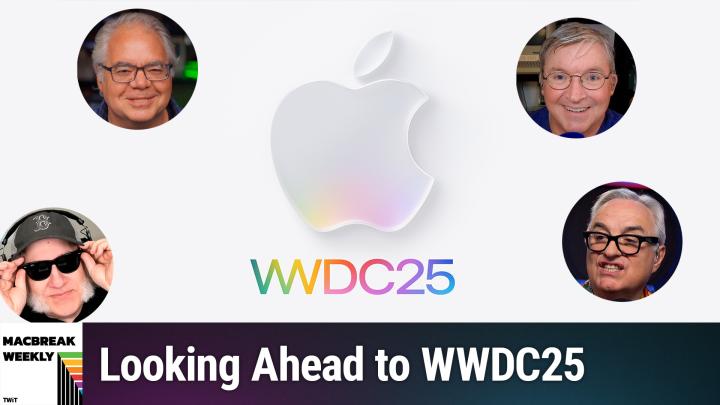
Loading summary
Transcript523 lines
- [00:00]
Leo Laporte
It's time for Mac Break Weekly. Our Sleek Peak, our annual It's a Week before wwdc. What the heck is Apple going to announce Show. Andy Inako, Alex Lindsey, Jason Snell are here. We will talk about all the things Apple might and might not talk about. Apple design award winners and finalists and how could you use 20 iPhones to make a movie? All that and more coming up next on MacBreak Weekly. Podcasts you love from people you Trust. This is TWiT. This is Mac Break Weekly. Episode 975, recorded Tuesday, June 3, 2025. Sleek Peak. It's time for Mac Break Weekly, the annual the Week before WWDC we got nothing to say episode. Which means it'll probably be really, really long. Jason Snell is here from 6colors.com Good to be here.
- [01:00]
Jason Snell
Far be it for me to advise a broadcasting professional such as yourself, but starting your show saying we got nothing to talk about doesn't seem like a recipe for success.
- [01:10]
Leo Laporte
It's the new Sleek Peak version of Mac Break Weekly. Thinner, lighter, and less, less filling.
- [01:16]
Jason Snell
Well, goodbye, everybody.
- [01:18]
Leo Laporte
Hello.
- [01:18]
Jason Snell
I must be going.
- [01:19]
Leo Laporte
You know, this is called confidence, Jason. I know. Our fabulous audience.
- [01:23]
Jason Snell
They're not leaving us.
- [01:25]
Leo Laporte
Is going to say, I don't care. You guys talk. Just talk for three hours. I gotta commute. Listen.
- [01:30]
Jason Snell
Sounds like us.
- [01:31]
Leo Laporte
Sounds like us. Andy Natko is also here from the library. Hi, Andrew.
- [01:36]
Andy Ihnatko
I'm excited because that means we have more time to talk about. Really get into the Patti LuPone Autumn McDonald beef.
- [01:43]
Leo Laporte
God, you know, when you get your rap beefs between Broadway stars, you know, you know, there's something going on in the culture.
- [01:52]
Andy Ihnatko
I'm just saying when people are saying, oh, my God, she actually apologized for something she said. Said, you know, this person has led kind of a life.
- [02:01]
Leo Laporte
What a life. What a life. Actually, you know, we do have quite a few stories. We're going to have some fun. This is actually not a lightweight episode by any means. Thank goodness Alex Lindsay's here from Office Hours Global. He's no lightweight. He is also a Sleek Peak. Hello.
- [02:19]
Alex Lindsay
Something like that.
- [02:19]
Leo Laporte
Hello. What is this? What does this Sleek Peek mean with this thing? Sleek Peak. It was tweeted.
- [02:29]
Jason Snell
Nobody knows.
- [02:30]
Andy Ihnatko
Yeah, no one ever knows.
- [02:31]
Alex Lindsay
We all guess.
- [02:32]
Andy Ihnatko
Yeah, the, the. It's notable for people who like to pick apart such things because that wasn't what it originally said. It originally said something.
- [02:41]
Leo Laporte
Yeah.
- [02:41]
Andy Ihnatko
So why. And as you. As you let off the show with. We have no. The world has nothing else to talk about.
- [02:48]
Leo Laporte
Apple speculation.
- [02:49]
Andy Ihnatko
Because there's the quiet Week.
- [02:51]
Leo Laporte
Yeah. Monday Micah Sargent and I will do the keynote. We'll be doing it all day. We're bringing our lunch. Literally Micah is getting a lunchbox, as.
- [03:01]
Andy Ihnatko
Am I. I will say when you look at the logo, one way to interpret like because it's like a, it's a like frosted glass and only at the bottom of the Apple logo there's some color and then there's the WWC 25 like Rainbow sort of logo, logo type. Now one way of looking at that is that it's reflecting like the, it's absor. It's reflecting the light or like lensing the light from below. Another one is that people inside Apple are so shocked at the state of affairs in system software and artificial intelligence that the color has literally drained from.
- [03:35]
Leo Laporte
Like their faces, they're pale. I like how the colors are. The all six colors are kind of cycling at the, at the bottom. That's very pretty. Obviously I'm going to think that they're going to talk about it seems premature, the extra slim iPhone that has been rumored for the fall.
- [03:53]
Jason Snell
What do they mean the design? They're going to say it's a sleek glass based solarium design. And so that's what it is. It's a peek at the new.
- [04:00]
Leo Laporte
So instead of lickable, it's slickable.
- [04:03]
Alex Lindsay
Does that mean we're kind of going almost back to the Aqua like, you know it does. It's kind of like we went, we went from Aqua to all these other things and then we're back system again.
- [04:13]
Andy Ihnatko
Remember iOS7. The whole point is let's flatten everything. There are no highlights, there are no shadows, there's no skeuomorphism. I mean are we, can we hope to dare that we'll have the Apple logo back in the middle of the menu bar where God intended it to be with OS 10.0.
- [04:29]
Alex Lindsay
That's crazy.
- [04:30]
Leo Laporte
No, it's interesting how companies follow Apple's design queue because Google did material design flat. Microsoft did Aqua. They did their version of Aqua. They called it Aero.
- [04:44]
Jason Snell
Yeah.
- [04:45]
Leo Laporte
So just I wonder, the clock will be ticking as soon as Apple announces Sleek. What is that, what's the code name that Gurman said it was going to?
- [04:52]
Jason Snell
Solarium.
- [04:53]
Leo Laporte
Solarium.
- [04:54]
Jason Snell
So glass and a lot of light. Yeah, I think so. I mean, I think I always talk to, you know, we're talking about computers and there's always the, we love our listeners but there's the, you know, computer nerds who are like it's just fashion, it's just a computer. Why do they do fashion. Why do they change the world? Because of fashion. But, you know, I think as somebody who. I mean, I'm not going to defend fashion, although I think that that's obviously very. It's a real thing that exists in the world. But I'll just say, as somebody who's been through many, many, many redesigns of magazines and websites and stuff like that, that design systems fall apart. Like, the moment you create a new design, it starts to fall apart because you design it to do X, and then over the course of time, you add Y and Z, and then you're back around to A, B, C, D, E, F, G. And then you look at what used to be a really clean, nice new design. And six, seven, eight years in, it's just patch together, it's falling apart, and you gotta declare bankruptcy and do it from scratch and start over. And so, like, I feel like after it's been, you know, a decade since iOS7 and they've refined it, but they've also patched it in so many different ways. So it's like, I think it's time. I think it's time to rethink things. And, you know, the last time they did a redesign, they didn't do a global redesign, they did an iOS redesign.
- [06:12]
Alex Lindsay
Right.
- [06:12]
Jason Snell
And now they've got iOS, iPadOs,macOS, WatchOS, TVOs, you know, and. And more, and many others. And so maybe it's time to do that and think of all their products and, like, not saying that they'll get it right, they may well get it wrong. They're probably going to be things in there that we all look at and think are head scratchers. But, like, it seems like it's time to actually do this after a decade.
- [06:35]
Andy Ihnatko
Yeah. And iOS is a good example. Like, it was pretty outrageous when it was released. I mean, it was. They went way, way too far and just removing, quote, clutter, unquote. It was like, you took a system where it wasn't just simply that, oh, things are different now, and I'm unfamiliar. It's like, no, I'm literally looking at this app and I don't know what to push to do the thing that I want, where to touch to do the thing I want to do.
- [07:01]
Jason Snell
But.
- [07:02]
Andy Ihnatko
And, wow. And every line was really thin. But they kept the. Over the. Over the next couple of releases, they kept the original int. But they, they basically dialed it back a number of steps they learned from feedback and they fixed it. So, I mean, I mean, it's. Jason made a whole bunch of good points. I would add to that is that the world changes around your design and what people are seeing and what people are experiencing changes over the next 2, 3, 4, 5, 6, 7 years until suddenly people are asking why. Why have. Are you spelling progress with two Fs? Isn't it soon to be called progress, not progress? And this is what Google was doing with Material Design Expressive, where they weren't really revolutionizing it when they introduced a couple, two or three weeks ago, but they basically made the case that here's some things that we think will make it feel more emotive, more like something that is 2025 rather than 2020. Starting with something that was already very good, let's figure out a way to modernize it in a way that doesn't alienate people. I think. Was it the Mac rumors or Apple Insider? They published a. I have a note in the show Docs, but they did a roundup of what they said, oh, here are the new user interface elements of the next iOS, the next macros, which was completely speculative, but it turned out to be a very nice little rundown of. Here are things that were introduced in Vision os, which lots of people are anticipating are going to be informing this new interpretation of macOS and iOS and everything else which is very, very interesting. It's not like going to make it, if true, it's not going to make it look like Vision os. It's going to make it look a little bit more modern, leveraging a lot of what the graphic capabilities and the processing capabilities are of modern Apple silicon.
- [08:56]
Alex Lindsay
Well, and I think that Apple probably is, I mean, more than anyone else trying to get. They have all these different operating systems with all this different, these different legacies. And over time I think they're always trying to pull them together like so that, that the, the visual experience you have in these, as much as it makes sense, is looking more and more like they all kind of fit together. You're not changing one mode of operation, one way of doing things or a look based on the platform that you're on and you know, with varying levels of success. But I think that, but I think that, that, that seems to be a kind of a constant commitment. I'm always amazed that I look at older Apple designs and they were perfectly great when, when I was using them. And then they feel very old now. Like, you know, you're like, oh, but, but that was the, that was the new newness at the moment. And so they do a pretty good job of moving it forward.
- [09:47]
Jason Snell
Yeah, life. Life moves on. And the world moves on and you got to kind of keep pace with it and as well as again, hitting reset every now and then. And so I also. Andy mentioned just how jarring iOS7 was, and it really was.
- [09:59]
Andy Ihnatko
Yeah.
- [10:00]
Jason Snell
But I will say I always want a redesign to go a little further and then kind of rein it in, because I feel like if you don't push things too far, you can't find out the places where it was good to push and the places where it was bad to push. But then you got to be responsive to feedback and then you got to start to dial it back. And iOS7 was a good example where, like, they dialed it back and it became a much better design and that we all kind of live through the pain. And it'll be an interesting summer, right, because they're going to drop this design on us next week and then there will be a beta period. And, you know, what do they stick to their guns about? And what do they say, oh, we thought this was good in Cupertino, but the people out in the world aren't drinking the same water as we are. And it turns out it was a terrible idea. And, you know, they'll roll some of that stuff back. We'll have to see what that is, what the details.
- [10:49]
Andy Ihnatko
And this is one of those areas where Apple's vice, like, grip this iron boot hill on the necks of its users and its developers is actually a good thing because it has the ability to, I don't want to say the word, inflict a change on the entire ecosystem, but basically they can decide that, look, here's the direction we want to take. This is what it's going to be. You have to live in this world or leave this world. Your choice. We think that you're going to want to live in this world. On our side, we will realize if people hate things that we're doing and we will respond to feedback. But you can't do this sort of thing in Android, really. You can't do this sort of thing in Windows, really, because they'll push back or they'll say, oh, okay, that's cool, but we're just not going to upgrade to this. We'll just stick with an old operating system or we even as an oem, like, we are not going to burn this into our systems. We're not going to apply these changes because we're just simply taking the code you give us and we can reinterpret it. Apple, however, they can really move the bar forward. And that's why I agree with Jason that I hope that they go a little bit too far and then dial it back rather than say, what if we change the radius of this button from 6 pixels to 4 pixels? Like let's, let's a b test it. Like, no, make a decision, have a point of view, design it.
- [12:06]
Leo Laporte
So one of the reasons Apple's spending all this energy on design is because they have so little to say about the most important technology in the world today, AI, and they got badly burned a year ago. Gurman saying it's not going to be a big WWDC on Monday. He says Apple needs a comeback, but that probably won't be happening at this year's wwdc. People within the company believe the conference may be a letdown from an AI standpoint. In fact, I think we should have a little betting pool. I hope it has AI is mentioned at all.
- [12:40]
Alex Lindsay
You know, again, I know I say this every week, but I just don't think it's that important for Apple to have this done right now. Like, I think that over time they have to figure out how to build it into the R experience and there's all kinds of advantages they can take with local LLMs with the secure LLM that they're working on with. But what I'd love to see more of is how are we going to allow you to get to ChatGPT faster or integrate it more into what you're doing or CLAUDE or whatever it is. I'm more interested to see Apple talk about integrations than I am talking about what they're going to do because I'm using AI every hour of every working day, you know, for something. And like, it's just a constant flow of AI and I'm doing it on my Mac, I'm doing it on my, on my phone. I don't need Apple to do. I don't need anything from Apple right now in this area. So. So I think that.
- [13:30]
Leo Laporte
Yeah, but that's like saying I don't need anything from Apple right anymore. I've got Android. I mean, they, they need to have a play in this. It's not getting them any money. If you use Chat GPT, it's taking you out of the ecosystem.
- [13:42]
Alex Lindsay
I don't. Well, the key is if they integrate it well, it's not necessarily taking ecosystem. I think that their larger plan of being able to take advantage of the fact that there's a certain level of privacy and there's a certain level of control that they would have and that I would have as a user in the long term play of what they're doing but that's going to take a lot of work to get done and it just takes. I just think that there's a lot I don't think anyone's leaving the iOS, the their, their Macs or their iPhones or anything else anytime soon. The, the lock in is so deep for most people, not all people but for most people that Apple is not in they're the same rush for Google I think it's an existential threat because Android's cute but most of their money like when you do any Google event their money is made on ads let's.
- [14:28]
Leo Laporte
Be clear is not a product for them.
- [14:31]
Alex Lindsay
Android is right so, so chat GPT is an existential threat for, for Google they have to do what they did at, at Google IO because they will be dead very fast if they don't. Apple I don't think is in the same position. I think that Apple could go two or three years and figure things out and make sure that the integration works and, and no one where are we going to go?
- [14:51]
Leo Laporte
I mean seeing Jony I've and Sam Altman hanging out in a bar together creating something that probably is a hardware device that I think that a lot.
- [15:02]
Alex Lindsay
Of Apple users are kind of over. Johnny I've like I just don't think, I don't think any, any of us really care like you know like and I think he ruined our keyboards and messed up our computers and you know like without Steve I think that the magic was Jony I've plus Steve I think Johnny by himself I don't think any of us are like oh let's.
- [15:18]
Leo Laporte
See what's going Johnny I Sam off.
- [15:20]
Alex Lindsay
I'm not saying he's not smart guy but without the limitations that Steve put on him I think that there's, I haven't seen anything else that he's done that has been compelling.
- [15:28]
Jason Snell
So Leo, I have, I have I think three things for us to look for regarding AI at wwdc.
- [15:32]
Leo Laporte
Good.
- [15:33]
Jason Snell
And I think what you're, what you're talking about is one of them which is Apple intelligence. Right. So Apple intelligence that's the real open question is do they soft pedal it and they're like look yeah we're still working on it but they're not. But they're not or because you know they may have some new models. What Gurman has said actually is not that Apple is way behind in, in their own models. Actually what Gurman has reported is that Apple is not pushed itself ahead of the leaders but that Apple feels that it's got models running internally that are close to the level of the Chat GPT models and who knows if that's true or not. They certainly somebody talks to Mark Gurman and says that to him so maybe we'll believe that. But, but, so that is a question I have is like are there new models? Are the new models better? Do you say we've improved our models a lot? Do they show, hey, Image Playgrounds doesn't make horrific images anymore. It looks a lot better now. There are things that they can do and that's the home baked stuff that, that ultimately will be table stakes. You need to have a good model that is a foundational model. Mostly because of number two, which is how do app developers get access to Apple's models or other models? And I think that that for a W, which is supposed to be a developer conference, I think that's actually really important. And if you talk to developers they're like, yeah, it'd be really nice if I could use Apple's LLM to summarize content in my app or generate an image or do what, you know, do stuff. And currently that stuff is not a developer story. It's all basically just for Apple. And so this year they could say we're improving our models and our app developers can use our models now for free on device or maybe even private cloud compute, but starting on device, that's a great message and that's a message number two. And number three is what Alex wants, which I think is something to definitely watch, which is are there new partnerships? Because one quick way that Apple can diffuse a lot of the tension about Apple's AI strategy is to say not only are we building our own models, but it already works with Chat GPT that integration is deeper. We're also adding Gemini, we're also adding maybe some other partners as well. You can choose the one you like, you log in, you know, you use your, you know, use your subscription or credits or whatever and the job is done. And so like those are the three parts and that means, I think that there's a substantial AI portion of the keynote. But you know, it's in those different areas. And some of it I think needs to be Apple saying it's not. Don't put this all on us. We're also going to be a really good partner for those guys over there, whoever they might be.
- [18:02]
Alex Lindsay
And you know, if they said in a developers conference, here is Claude totally integrated into xcode and we've trained it all, there's a specific model that we've trained against, all of our documentation, against all of our, you know, like, we've very specifically worked on making sure that Claude has all the information you need.
- [18:21]
Leo Laporte
They put that in the State of the Union, though. They put that in the.
- [18:23]
Alex Lindsay
Yeah, they may, but I'm just saying that as wwe, they may not be the keynote. But the point is they mentioned it though. They might mention it. Yeah, that'd be a big mention. But having that completely built into it so that people can, you know, build quickly.
- [18:35]
Leo Laporte
You think Sam Altman, Sundar Pichai and Satya Nadella will walk on the stage with.
- [18:43]
Alex Lindsay
I just think, I think that they could.
- [18:44]
Andy Ihnatko
Contrasting colored polo shirts with an Apple logo on them.
- [18:47]
Alex Lindsay
Yeah, I think, I think it was.
- [18:49]
Leo Laporte
Interesting because at the Microsoft event they did have Elon Musk and Sam Altman.
- [18:54]
Jason Snell
Remember, this is all pre taped, but Sam was there last year when they announced. I mean, physically at the event. He wasn't, I think, in the video, but he was absolutely like, they're walking.
- [19:03]
Leo Laporte
Around at the Enemy now. I mean, they.
- [19:06]
Jason Snell
I don't think so.
- [19:07]
Leo Laporte
You saw those court documents. They want to make an assistant to basically replace Siri.
- [19:12]
Andy Ihnatko
Yeah, I mean, but I mean, I like to piggyback on what Alex keeps saying because I think that it's a contrasting sort of model where, yeah, Google needs to find. Google needs to find a way to replace the more than half the money that it makes on advertising. Apple needs to make sure they protect the more than the half the money that they make on hardware sales. So it doesn't really matter so much to them if they win the crown of, hey, wow, we've got, we've got this great foundation model that is wonderful and the privacy is better than anything else you're going to see everywhere else. And it runs great. And there's no ethical issues and there's no environmental issues. All they care about is will it help us sell more phones? Yes. Great, let's do it. So that's. They're very, very much on board with. If OpenAI wants to create essentially a replacement for Shlomo, something that's so good that you just forget that there's an onboard Apple assistant at all. That's not a problem for Apple. If they want to welcome. If they want to make sure that developers who are all in on Gemini can make their apps that are, that incorporate Gemini, that's not a, that's not a problem for them. So long as it helps them continue to sell hardware, they're going to be.
- [20:21]
Leo Laporte
Good with that they surprise doesn't come into this. They're, I mean, I feel like culturally they hate the idea of saying, oh yeah, we're just a platform.
- [20:31]
Jason Snell
Well, they, I think, I mean, like I mentioned the table stakes before. I think that they are not at the point where they're going to say, well, we give up. I think that Apple believes that there always needs to be a foundational model that, that they own. But I think that they also realize that especially as long as they're not number one or a leader or so good, you don't need to use anybody else, that making deals with these other leading AI companies and giving people choice, it may not be, you know, again, it's like this classic thing. Yeah, they'd love to have complete control and lock everybody else out, but that really happens when you invent it. And they didn't invent this. They're behind. So instead you make deals to make the iPhone the best place to have all of those things happening on a smartphone. And the advantage that they've got is that the alternate platform is owned by Google, who is the arch competitor of every other AI company and is coming for them. So, so they've got. Apple's got a lot of advantages there. And I think that that's, I mean, yeah, again, I think there's some tension, but right now the expediency and wanting to win and wanting to protect the iPhone probably comes way ahead of wanting to be the only model on their platform.
- [21:38]
Alex Lindsay
And I think that, But I do think that where this, if Apple plays this well and doesn't keep zigzagging and doesn't worry about today and thinks about tomorrow and next year and so on so forth. Three years from now, we're going to be on the show having people want to figure out how they can get the EU to crack open Apple's AI, you know, because it's so tightly wound with the hardware, you know, and so, and it's working really well and it, and it has all this privacy things and Apple's not going to want to let anybody else have it. So the, you know, like. And it's. And I think that that. But I think that because that longer thing that they talked about last year of being able to use the hardware, and especially when you're developing, when you're designing the chips and you're designing the operating system and then you're designing the AI, there is a huge advantage that does not happen overnight, but does happen over years that becomes very hard to compete with. And I Think that Apple just has to stay focused on, on what that looks like because having been able to handle like not how to, you know, I don't know, figure out how to take over the world might be it. But, but being me, being able to just constantly have my phone, constantly grabbing information, information that I might not be comfortable handing to anyone other than Apple having it, constantly looking at that information and constantly finding things for me in a way that I don't feel like all the data is going to be sold to somebody else. I think that that's a, that is a compelling argument for them, for their, that their type of use.
- [23:03]
Leo Laporte
The question is can you do that if you, you know, I mean, so that's the real question. And I think it's one of the reasons Apple's behind. We're going to find out. I, my theory is all this hand waving about a new look and feel and a new way of naming. It is a good way to distract people from the.
- [23:22]
Andy Ihnatko
It's a thing.
- [23:23]
Leo Laporte
What they culturally feel like is a crisis. I agree it's not a crisis, but culturally they don't want to be a platform for other people. They want to be. That's why they pushed. That's why they made Apple maps. They want to do it all.
- [23:35]
Jason Snell
Well, they don't.
- [23:36]
Leo Laporte
We're going to take a break. We'll have more in just a bit. There is another big announcement we're going to hear on Monday and we'll talk about that in just a little bit. You're watching Mac Break Weekly with Andy Inocco, Jason Snell, Alex Lindsey. This episode of Mac Break Weekly brought to you by Melissa, the trusted data quality expert since 1985. We've been talking about Melissa almost as long. They actually been around longer than we have. Wow. Melissa's address validation is literally state of the art, is the gold standard. But what's great about Melissa is they don't rest on their laurels. They're always expanding, always doing new and interesting things. For them it's all about data science. They have just added for instance their address validation app. And my daughter is very excited about this, as is my son. For merchants in the Shopify app Store, it's right there in the store you can enhance your business's fulfillment, even keep your customers happier. With Melissa, they've got all built in. So it's part of your E commerce solution. They've got enhanced address correction which will correct and standardize which is very helpful for delivery addresses in more than 240 countries and territories. Melissa also adds missing components, things like postal codes. They ensure compliance with local formatting rules. And Melissa's address engine is certified by leading postal authorities worldwide. So you're getting addresses they approve of. That's good news. Smart alerts will warn in real time as your customer is entering the data, if there's a potential issue with the shipping address that goes, hey, we can't ship there. Is that right? And then the customer goes, oh no, let me update the information. That's before you even see the order, before it's even processed. That information is clean when it gets into your database. Now, a business of any size will benefit from Melissa. Their data quality expertise is much more than just address validation. They are truly data scientists. They will do data cleansing and validation in all kinds of areas. Healthcare, for instance. 2 to 4% of contact data in healthcare becomes outdated every month. Millions of patient records in motion demand precision. Only Melissa can do that. Slight variations in addresses, misspelled names can cause duplication and fragmentation, errors and risk of misidentification or lost records. And I'll tell you, when it comes to medicine, you don't want those kinds of mistakes. That's why so many healthcare businesses use Melissa's data enrichment services to remove that gap. By using Melissa's enrichment as part of their data management strategy, healthcare organizations build a more comprehensive view of each patient, which supports continuity of care and timely follow up. Your care is better. And it's because Melissa's there. Melissa's approach aids in predictive and analytics as well, allowing providers to identify patterns in patient behavior or medical needs that can inform preventative care. Data is safe, compliant and secure with Melissa. That should reassure you because so many of the areas Melissa's in have regulatory concerns. Melissa's solutions and services are GDPR and CCPA compliant. They're ISO 27001 certified. They meet SOC2 and HIPAA Hitrust standards for information security management. That's why so many businesses, so many organizations use Melissa. Get started today with 1,000 records cleaned for free at melissa.com TWIT that's melissa.com TWIT we thank him so much for supporting MacBreak weekly. Actually, Mac Break Weekly, brought to you today by the number 26. So this is a Mark Gurman scoop. Maybe I should call it Scooplet. Apple says, or Apple plans, he says, to rebrand iOS to iOS 26, give it the year Mac OS 26. Do you think that's credible and why?
- [27:39]
Andy Ihnatko
It makes sense logistically, doesn't it? I mean, to get everything in Sync given if they are reunifying everything under a new user.
- [27:48]
Leo Laporte
Let me give you a cautionary tale. Microsoft did this. Remember Windows 95? Remember Windows 98? The problem was in the year 2000, people were using Windows 98.
- [27:57]
Jason Snell
Yes.
- [27:58]
Leo Laporte
And then went, hey, is this old?
- [28:02]
Jason Snell
But now it's 75 years before anybody has to care and we don't care. So go for it. Knock yourself out.
- [28:08]
Andy Ihnatko
Apple has traditionally, what, 80 something percent adoption rate. Every single update. Anything that can run this OS will be upgrading this os. So. And I have to admit that sometimes I get casual confused about, are we on 15? Are we on. Oh, wait, no. I already. If they're going to be doing a major update every single year like clockwork anyway, it just makes sense.
- [28:29]
Leo Laporte
It's also confusing. You've got iOS 18, WatchOS 12, Mac OS 15, Vision, OS 2. I mean, they don't. So this. They'll all be for the year, right? They'll all be 26. Is that right? Like new car models. It'll be in the fall. You get the new model.
- [28:45]
Alex Lindsay
Yeah, I mean, I think it totally like it. I never know what I'm supposed to be on. I'm always trying to figure it out. Then you have names. Is it Sonoma or is it this?
- [28:53]
Leo Laporte
I think they're still going to do Sonoma, right?
- [28:56]
Alex Lindsay
Yeah, I'm still going to do that, but people don't.
- [28:59]
Jason Snell
26 Tahoe.
- [29:01]
Leo Laporte
26 Tahoe.
- [29:03]
Jason Snell
Yeah. You got to get a new GMO and go off road.
- [29:06]
Andy Ihnatko
Yeah, that's another thing I could ever remember. Right. I'm always, I always have to like do a certain search for. Okay, well, I know it's. Is it the now now? Is it like Frozen Tahoe? Is it Mountain Tahoe? Because this is the next version. But it's not a. It's only a point.
- [29:20]
Leo Laporte
Well, very important. It's California Tahoe, not Nevada Tahoe. Okay. This lake spans two states and I. And it's very important that it be California Tahoe. I just want.
- [29:30]
Andy Ihnatko
So it's not. It's not the side where Fredo. Fredo Corleone got shot. It's the. It's the other side. It's the fun of the sun.
- [29:37]
Jason Snell
Actually, technically, Andy, that was at the Cal Neva Resort, which is right on the state line. So it depend. Depends on like where that boat was. It really depends on who's investing, where.
- [29:47]
Andy Ihnatko
The body settled at that point. I think there's a think piece about this. Thank you.
- [29:55]
Leo Laporte
Okay. I. You know, I guess, I mean, it doesn't matter Right. It really doesn't matter. I feel like to some degree, Apple's doing a lot of stuff to distract, to make it look like they're moving forward.
- [30:10]
Andy Ihnatko
I don't know if I'd use the word distraction. I think there are a lot of good reasons to do something. Why not? The thing is, any company does lots of tiny things and then lots of big things, trying to get AI going, that's a big thing. But you have to be sure that if this is true, again, we're assuming that this is true, but a lot of people are falling behind this, that it's probably something that was discussed as a low ranking sort of, that would be a good idea. But maybe this is not the year for it. Maybe next year. And then it gets more and more converts on the side of, you know what, let's just do it. Let's just pull the plug. Next time we have, the next time we have a big redesign coming, let's just underscore it by calling it hey, by the way, we're also reunifying everything under a number for the year.
- [30:50]
Leo Laporte
Yeah. Well, now they're committed. Now they got to update every year. Right.
- [30:55]
Andy Ihnatko
Even doing it was the last time they failed to update.
- [31:00]
Leo Laporte
Right.
- [31:01]
Jason Snell
They are already, already committed.
- [31:03]
Alex Lindsay
WWDC kind of drives that like, what are you doing? It may not be a lot, but it's happening.
- [31:07]
Leo Laporte
Yeah. Yeah.
- [31:09]
Jason Snell
All right.
- [31:10]
Leo Laporte
I'm just thinking about downsize. Microsoft's experience probably isn't because they didn't update every year again.
- [31:15]
Andy Ihnatko
I mean, it's embarrassing. Last night on last week's John Oliver show on hbo, they made the point, they made the point that, oh, some of these air traffic control computers are still using Windows 95.
- [31:27]
Leo Laporte
And it's like, that sounds pretty old, doesn't it?
- [31:30]
Andy Ihnatko
And that's not, and that's not a problem that like Apple users, Apple community has again.
- [31:36]
Leo Laporte
Note though, they do not use MAX for air traffic control floppy disks.
- [31:40]
Alex Lindsay
No.
- [31:43]
Leo Laporte
There is also from Gurman the rumor or the story that shortcuts will get AI features that actually could be cool.
- [31:51]
Jason Snell
Yeah. This was rumored a long time ago and he said, he says this. So there's a category of his stuff where he knows people are working on it, but he doesn't think they'll actually announce it because one of the things that Apple has learned from getting burned last year is if they, I think if they, they can't ship it by the end of this year. If they can't ship it by what they would probably call, you know, sometime this fall, that they're just not going to announce it.
- [32:11]
Leo Laporte
He says they were planning to, but delays could see it, see it appear in 2026.
- [32:18]
Jason Snell
I think they're do. Every feature is now getting a gut check, which is, can we actually ship this? How confident are we? Because there's nothing stopping them from announcing more features in stream over the course of the year. They don't need to announce every single feature they're going to work on over the next year. Right now they can hold some stuff and that saves them from being embarrassed about promising something it can't deliver. But the idea, he reported about this a while ago and it seemed kind of weird. It was like you could use AI to write an app for you and write a shortcut for you. But if you think about it, this is actually. Shortcuts are driven by app intents, which are little bits of code in apps that let you control parts of apps and app intents. And using AI, AI to control app intents and therefore run your apps for you is a part of those things that they announced and haven't quite shipped yet. Well, an interim step could be to make the shortcuts, which is supposed to be, you know, shortcuts are supposed to be less than programming, and they are less than programming, but they're still more complicated than most people are ever going to want to use. So if you could use AI to say, can you build me a shortcut that does this thing? And it said, oh, yeah, you know, you've got these apps and I can do this and this and this, and let's try it and see how it works. And that would be pretty awesome. Because the whole point of user scripting is not the noodling. The noodling is fun and all, but the point is to get something done. And if you could, if you could use that shortcut system to get something done and save a little icon or have something that you can just speak into your phone that just does a thing for you that would otherwise have required three steps. That's great.
- [33:48]
Alex Lindsay
You should.
- [33:49]
Jason Snell
That's awesome. That's a great idea.
- [33:50]
Leo Laporte
Is anybody, is anybody doing vibe coding with shortcuts at this point? I mean, I guess you could.
- [33:57]
Jason Snell
You. You can't. I mean, it's very hard. There are, there, there are some people who've tried to make shortcuts a little more Cody, but the problem is it's a lockdown format. You can ask, you can ask an LLM about building a shortcut and it will try to help you, but then you're Going to have to go through the steps. A lot of what Vibe coding happens is shortcuts can run Apple scripts and they can run Python and, you know, command line commands and all sorts of things like that. So you end up Vibe coding kind of like the command to put in a shortcut. I actually have Vibe coded a little bit using AppleScript, which is hilarious because that's an ancient format.
- [34:33]
Leo Laporte
Yeah. But it knows it.
- [34:34]
Jason Snell
You know what, there's so much data of AppleScript on the Internet that it will write decent AppleScripts.
- [34:40]
Leo Laporte
And you also do great job with Common Lisp.
- [34:42]
Jason Snell
Yeah, right, because it's old. It's old and it's well documented. Exactly. So, so, so yeah, the idea that you could Vibe code shortcuts down the road is awesome. And I think it's a good idea because that's. It's hard to do that because it's a very spec. That, you know, you can't really get into. And so it can't give you something to copy and paste in to Shortcuts. That's a complete shortcut.
- [35:03]
Leo Laporte
It can't. You couldn't do that.
- [35:06]
Jason Snell
No, no. I mean there, there are like workarounds. So there's this, this thing called jellycuts.
- [35:10]
Leo Laporte
You have to drag and drop actions and stuff like that.
- [35:13]
Jason Snell
Well, yeah, exactly. And it's not a standard, it's not a standard file format. There is an app called Jelly Cuts that actually tries to turn shortcuts into a programming language. But even there you've got to like install an app that runs and a. And a block that runs inside the shortcut. It's complicated.
- [35:28]
Leo Laporte
So app always use the Apple Script tool in shortcuts to run an Apple script.
- [35:33]
Jason Snell
That's the trick is that's, that's how you do it is, is you take. I have, I have Vibe coded absolutely. Some stuff using Python and the Python is, is wrapped inside a shortcut that does things like grab information and then put it on the clipboard and all of that. And in the middle of that it runs a Python script to do something. And that works great.
- [35:50]
Leo Laporte
But Shortcuts has better access to app intents than AppleScript does. Or.
- [35:55]
Jason Snell
No, no, this is the, this is the sad state of affairs is that you can still do more with AppleScript than you can do with shortcuts, because short. That's what app intents is trying to eventually solve is if you get into the nitty gritty of like saying, hey, look at this window in mail and tell me what messages are there. And then in this One particular message that matches, tell me who it's from. And like, that level of granularity is not something shortcuts can do in basically any app. And so that's why when they say shortcuts is the future of automation on the Mac, there's a big missing piece which is, well, what do you do with the level of detail that AppleScript offers? App intents is the start of an attempt to get there where there's more granularity inside apps.
- [36:42]
Leo Laporte
This article from 9 to 5 Mac by Michael Burkhart Google Gemini integration in Siri might be a bigger deal than we initially thought. There have been rumors that there will be Gemini support in Apple Intelligence alongside Chat GPT. But Google at Google IO made a big point of the fact that the reason Google Intelligence is good is because we know everything about you. We have something we call, and I'm quoting them, personal context. With your permission, Google Gemini models can use relevant personal contact across your Google apps in a way that's private, transparent and fully under control. I doubt Apple would allow that. Right.
- [37:27]
Andy Ihnatko
Well, I mean, it's. The thing is we hand so much, excuse me, many of us, or I think even most of us, hand over a lot of information to Google kind of willingly because it's like if you're gonna, it's the devil that you know, as opposed to the devil you don't know. And this has always been something that I thought that Apple, when they were announcing Apple Intelligence. Yeah, there's no company that I would trust more than Apple than, yes, absolutely, have access to all my contacts, all my mail, all my messages, even I'll let you peek at my screen if you want to. However, that's not an exclusive club. And as soon as Google says, oh well, I mean, we've already like spent 20 years collecting information about you with your either knowing consent or unknowing consent. We can also leverage all that information for you as well. And that's something that they've consistently demonstrated to be an advantage, or at least a benefit. Not an advantage, but let's say a benefit to spying on you. The thing is that Google services have always, always been a lot more useful than most of the concurrent Apple services because Apple doesn't want to know much about you, whereas Google can say, oh, well, actually we can tailor these maps results, we can tailor these messaging results, we can tailor everything because we know what you consider to be important because we watch you use our apps and we kind of take control of that. So it's another thing that makes it just because Apple says, hey look, we're going to personalize our Apple intelligence experience based on who you are and what we know about you. That's nice but it's not really exclusive. They have to do it as well as Google can do it or better than they can do it.
- [39:06]
Leo Laporte
One person you probably won't see on the stage on Monday is Tim Sweeney of Apple Games touting the arrival of Fortnite on iOS. But you might see Apple talk about its own dedicated games app. That's another rumor replacing Game Center.
- [39:24]
Andy Ihnatko
Yeah, by the description. It's sort of like what Apple Music is for. Music that here is an app that has like all of your games in it and a store for all your games and it basically kind of like an Xbox Live or whatever.
- [39:38]
Leo Laporte
Which is what Epic wanted to do by the way and Microsoft and a.
- [39:41]
Andy Ihnatko
Bunch of other people or Steam or something like that. Yeah, I think that could be great. There's been a lot of interesting gaming news. They're buying their for the first time they're buying a gaming studio. A two person studio, but not a small one. And the thing is like this has been in front of us for the whole time and maybe I feel a bit foolish for like I won't be calling it like a revelation but boy over the if you look at the Apple TV with fresh eyes after like five years, it's a hell of a gaming console. If you have no interest in the Apple TV just as a streaming box. If you say, well here's a gaming console that cost $100, let's call it 150 by the time you buy a couple controllers with it, then add on to it an Apple Arcade subscription. Now here's something you can keep in your living room that you know that your kids are not going to get into a whole lot of trouble with it. They're not going to charge a lot of money with it. There's not gonna be in app purchases. It's gonna be family friendly. Again, if you forget that it's a streaming box that costs a lot more money than a TV streaming box really has to. It's a hell of a game console.
- [40:50]
Alex Lindsay
It is. The problem is the games. Like I have Arcade, I have an Apple tv. When do I play games on my Apple tv? Never. Yeah, I wonder what percentage of Apple.
- [41:00]
Leo Laporte
TV owners do play games on it.
- [41:02]
Alex Lindsay
Well and I think that again I think part of the problem is just the games aren't. The controllers are casual controllers that. But it's casual and it you kind of play it for a little while and you're like, okay. And then you go back to what you're doing.
- [41:13]
Leo Laporte
Apple bought the Sneaky Sasquatch. Guys. That's a perfect example of a cute little arcade game. But you know, how long are you going to play that? Right, right, yeah.
- [41:28]
Andy Ihnatko
Someone to buy for your kids.
- [41:31]
Alex Lindsay
It's just that we didn't, I mean, you know, we played something like, what was it, Cricket through the ages or something like that that became a thing for like all week.
- [41:39]
Leo Laporte
But yeah, that's the thing. I played sneaky. I can't say it, but I played it for a couple of days maybe.
- [41:46]
Alex Lindsay
Right.
- [41:47]
Leo Laporte
But, but it's not that compelling.
- [41:49]
Alex Lindsay
Yeah. And so I don't, you know, I think Apple could, I think people could build some really interesting games that would be, that could go across all the different Apple platforms, have them all tied back together. There's a lot of things that Apple could do with it, but right now there just hasn't been, I think enough. I think they know that they need to get into games, but I don't think they've kind of cracked the code of what that's going to actually take to do it.
- [42:10]
Leo Laporte
Do you think it'll be any kids as, I mean, as Sneaky Sasquatch is?
- [42:15]
Alex Lindsay
I mean almost everybody that has had success in this area at some point has built a first person shooter that was developed by the owner of the platform. You know, whether it was PlayStation or Xbox or Fortnite or here's a Call of Duty, a first person shooter that, I mean, that's how you turn games on in your platform is first person shooters.
- [42:37]
Leo Laporte
Right.
- [42:38]
Alex Lindsay
You know, and you can do a lot of other things. I mean, even, even if you look.
- [42:40]
Leo Laporte
At that, people will never do a first person shooter. Well, maybe not with people shooting an Apple off.
- [42:46]
Alex Lindsay
But the, but the, but I think that the, the. Even when you look at the most compelling game still on the quest, in my opinion is Robo Recall. You know, like it's, you know, like it was the best game built by Epic, by the way. That was. And so, but that's what, that's what, those are the ones that are compelling to get people to really come back and spend lots of time there.
- [43:07]
Leo Laporte
Taking a break, come back with more. I guess when we come back, I'll give you guys some time to think what your predictions will be for Monday. What kind of WWDC keynote will we see? Micah and I will be covering it and it's sad to say, only for club members. But you know, just we don't want to get banned on YouTube and Apple's threatened to do so on YouTube and on Twitch. So we will be there 10am Monday, streaming into the Club Twit Discord. You can join us on the stage. The advantage of this is if you are a club member you can participate. It won't just be in me and Mike, it'll be all of the club members. And then as I said, we're bringing our lunch boxes. We're going to stick around. We'll do the for the first time ever, the State of the Union, which will probably have a lot more AI and vibe coding in it I would imagine. 1pm Pacific. So 10am Pacific. 1pm Pacific and again, you must be in the club if you're not a member. It's not too late to join TWiT TV club TWiT. You get ad free versions of all the shows. You get a special events like these in the Club Twit Discord. Of course you get access to the Discord too. So this is a good time to join the club and we will see you club members on Monday. Your predictions next gentlemen. First a word from our sponsor. 1Password over. This is scary. Over half of IT pros say their biggest challenge is securing SaaS apps. With the growing problems of SaaS sprawl and shadow it, it's not hard to see why. Well, 1Password has something new for you. Trelica Trelica by 1Password Thankfully Trelica can discover and secure access to all your apps, managed or not. Yeah, Trelica by 1Password inventories every app in use at your company and then. And this is so cool. Pre populated app Profiles assess the SaaS risks letting you manage access, optimize, spend and enforce security best practices across every app your employees use, including the Shadow IT apps. So you can now manage Shadow IT securely. Onboard and off board employees meet compliance goals all with Trelica by 1Password a complete solution for SaaS access governance. And it's just one of the ways that extended access management helps teams strengthen compliance and security. 1Password's award winning password manager is trusted by millions of users. Over 150,000 businesses from IBM to Slack. Now they're securing more than just passwords with 1Password Extended Access Management of course. 1Password is ISO 27001 certified and has regular third party audits and the industry's largest bug bounty. That's how 1Password exceeds the standards set by various authorities. It's a leader in security. Take the first step to better security for your team by securing credentials and protecting every application, even unmanaged shadow it. Learn more@1Password.com MacBreak that's 1Password.com MacBreak all lowercase 1Password.com MacBreak thank you, 1Password for many years of excellent products and for supporting MacBreak weekly. So will there be any surprises? Jason Snell on Monday.
- [46:34]
Jason Snell
Probably not. One more thing I saw there was one piece this week that speculated that that home pod with a screen that has its new this home OS that they're doing is floating out there as something that although the reports were it relies on some features that didn't ship and therefore it got delayed, the fact that it's a product that doesn't currently exist in any form suggests they could show it, say it's coming and talk about the OS that runs.
- [47:08]
Leo Laporte
But it would be for the fall.
- [47:09]
Jason Snell
It would be presumably for sometime in the fall. So that's, that's the I think maybe the only hope for a hardware thing is that unless they want to do a real surprise reveal about the Mac Pro and what's going on with that, that's another possibility. Although I don't, I don't think I.
- [47:26]
Leo Laporte
Would say whatever happened to the Mac Pro? I forgot about that.
- [47:29]
Jason Snell
Yeah, yeah. And there's supposedly there's AirPods, you know, Pro3 coming at some point, but again, that feels more like an iPhone event.
- [47:37]
Leo Laporte
Any announcements about M5?
- [47:41]
Jason Snell
Only when they get the hardware right there, and that's not expected until the fall.
- [47:45]
Leo Laporte
Okay, Andy, what do you think? Any surprises?
- [47:49]
Andy Ihnatko
No, I think that if there's any the idea of showing off a HomePod if they've got something to show, sure, it'll cause a lot of happy jollies to start to prime the pump for. Hey, here's something that you're going to want to spend 30% more than market rate for in September when we ship this in time for holiday buying season. There are a bunch of rumors over the past month that particularly from Gurman saying that they really want to ship it this year, so much so that they're willing to basically trim back features to make a holiday ship date. And then just like with the Apple Watch, they know that if they get the hardware right, they can always add on features like next year or next season, it doesn't matter. And that'd be a nice way to if they've got a thin bill of sale for the rundown, it's be a nice way to pad things out. Also, it's nice to have video of something cool to put into the electronic press kit. And for people to put into their YouTube videos. That would also be nice. I think, I do think that it's just going to be, it's going to be a very subdued, very low key sort of thing. I wouldn't be shocked if they did a tease for some upcoming silicon because that gives them a way to basically leverage all the work that they're doing as really great engineers and they could use some of that content if they're, if they're trying to tell a complete story over the course of 48 minutes, that's part of the story they want to tell. I think we'll see a lot of demos of, of this new user interface. As usual, we're going to see some very, very selective demos of Mac OS 26. That's something that we can count on every single year that hey look, here's a small thing that we added to mail this year and it will hopefully hint at something that's going to be much bigger coming up in January. I don't think it's going to be terribly exciting. If there was a year that we could ever put onto the wager board a musical guest. I think this might be it because it's not as though they're going to have a really big story that they're going to want to try to tell. Last year they had to tell the story of artificial intelligence. That didn't work out quite so well. I think this is just going to be the annual first day of wwdc. State of the Union. Here's who we are. Here's our green initiatives. Hey, look at our really great new landmark stores that we've got opening. And some exotic, exotic locale. I don't think it's going to be terribly, terribly exciting.
- [50:18]
Leo Laporte
All right, your chance to tell us, Alex Lindsay, how exciting Monday's gonna be.
- [50:24]
Alex Lindsay
Flax to gold with your iPhone. That's the rumor that I've been hearing.
- [50:29]
Leo Laporte
Very excited.
- [50:30]
Alex Lindsay
Right into the usbc. Yeah, exactly. I think that, you know, there's certain threads that I think we're probably going to see probably some new initiatives related to Animojis and you know, all the other fun stuff that the kids like with the new operating system is going to be like how do do cooler things. For instance, maybe you can do have your Apple intelligence make a character and then actually make a talk, that kind of thing. They're, they're not that far away when you look at how they're generating that geometry. I think that you'll probably see some updates for Vision, the Vision Pro where you Know, there's. I think that obviously the Vision Pro now is out. We talked about how to build for it. I think generating content for it and figuring out how more people build something that people want to play with it I think is going to be very important. So I think I would expect to see, you know, things that are around guidance in that area. So, you know, I think that we'll probably see the blackmagic camera on stage.
- [51:25]
Leo Laporte
Oh, that would be cool.
- [51:26]
Alex Lindsay
I'd be surprised if we don't. It's. It's getting pretty close to the, I mean, the rumors are it's getting pretty close to the surface. So, so it, so it sounds like that they have at least one. There was one at nab, so there's.
- [51:35]
Leo Laporte
No reason they show it off or would it just be there taking pictures?
- [51:39]
Alex Lindsay
I think that. No, no, I think it, I think that they'll, I think they'll show it on stage. They might show some of the footage. You know, talk about what that means.
- [51:47]
Leo Laporte
How much time will Apple spend on Vision Pro?
- [51:50]
Alex Lindsay
Oh, I bet you 15, 20 minutes.
- [51:53]
Leo Laporte
Really?
- [51:53]
Alex Lindsay
Like, I bet you there's stuff they're.
- [51:54]
Leo Laporte
Still, they're still all in it.
- [51:56]
Alex Lindsay
There's. Oh, yeah, yeah. I don't think that they're, they're not going anywhere, so. Because I think that the real issue, and we'll see where they go with it, is, you know, the content, whether it's video content or 3D content or entertainment content, you know, it's really. The platform's there. It's just a matter of giving people the tools. And we can say, well, developers just aren't developing for it. Well, developing some of this stuff is pretty hard. If Apple builds better libraries and better guidance and so on and so forth, there's a lot of things that could be done. There's been rumors that Apple has been working on AI to 3D and that would be really interesting for users, for Apple Vision Pro users and other users there. So it'd be interesting to see what, what, you know, what that looks like. You know, anything to do with camera is always going to be interesting to people. And then the big thing is I think that there, there is going to be a big play for the integration between something very tight. There's already some integration with chat, GPT, but very tight integration with a third party to xcode. That's a WWC announcement.
- [52:59]
Andy Ihnatko
Good point.
- [52:59]
Alex Lindsay
That is a, that is going to be. That's the thing that I'm waiting for. And if I don't see that, that's the only thing I really care about, you know, is, is all the other stuff is like, yeah, whatever you want to announce, it's all cute. Like, I'm not. There's nothing I'm waiting for, for them to release. But what I am, what I do want as a mostly a vibe coder, I have to admit, these days, what I mostly want to see is the ability to build more apps and better apps without writing any lines of code.
- [53:26]
Andy Ihnatko
Yeah, there was a, there was a good rumor, I think was originally from Gurman that one of the things that they're going to be doing is at least giving developers access to Apple's foundation model. So that, yeah, Apple intelligence will not exist as a feature on the side of the box. But to cite a really great example that Jason gave a couple of weeks ago, that if a developer of a podcast catching app wanted to introduce a feature where it automatically creates transcriptions and then sends that up to a server so that everyone can get transcriptions, they could simply add that to the feature without having to and keep it all in the Apple family. I'm sure that Apple developers sense that Apple's going to get AI right at some point. Best to be on board early so that they know what these tools are and how they can use them to enhance their apps.
- [54:12]
Alex Lindsay
And I think that what is a developer changes too. I mean, so a friend of mine, C.J. covell and I, we have this complaint that we can't have our own reflection maps inside of motion because motion has its own environment maps and we use motion a lot and we can't do it. We want to have different reflection maps. So we figured out a way to take. If I take a theta image and I make an EXR of it, mostly CJ Vibe coded this one where basically you throw it onto the app and it builds all of the reflection maps that motion requires. And then you hit a button and this is the kind of thing you can't. I can't sell it this way because you hit a button and it actually opens the motion package.
- [54:53]
Leo Laporte
So that you.
- [54:54]
Alex Lindsay
Can drag, so that you can take woods or whatever and replace it with your own reflection maps.
- [54:59]
Leo Laporte
Right.
- [54:59]
Alex Lindsay
And so, but that is a, you know, that's a, that is a non trivial set of math and everything else to do all the things that Apple was doing to build those reflection maps and now it's drag and drop, you know, to do that for us now. But I, what. And the reason I bring that up is that, is that it is a, that is an example of the kind of apps that a bunch of us are building where we just go, I need something for something quirky that I need to solve a problem and I want to. And I can sit there and do, just talk to ChatGPT and. Or Claude and get it out the other end. And I think if Apple builds that tighter, you end up with a whole new generation. And I find that my understanding of app development has changed dramatically because I can Vibe code in the sense that. Because I'm not worried about. We talked about this last week because I'm not worried about commas. I'm worried about packages and signing it and doing all the other things and putting all the, all the bits and pieces together to do it. And again, I haven't built anything I would release, but I'm solving problems all the time, whether it's on my iPhone or on my Mac with lots of little helper apps.
- [56:01]
Leo Laporte
I apologize because I think we've been using the term Vibe coding and assuming everybody knows what it is, but it's a relatively new AI term for writing code, using the AI to do it, but with prompts, not with actual computer code. And I'm hoping that's going to be the subject of our AI users group this Friday. I want it to be do a little. It'll be premature if Apple does announce something with Xcode, but I want to show Claude code and I know we have a number of Vibe coders in our club. I think Darren's going to stop by, so that'll be interesting.
- [56:38]
Andy Ihnatko
The things it could do to enhance Xcode if all it did was the ability to. If all it did was add Apple's own AI or let OpenAI do it, or let Gemini do it. Basically an integrated tool that's, hey, I'm going to look at the logs of Xcode so that you can just simply say, what the hell just happened? It would say, oh, okay, it failed. Because this API needs this permission and you didn't enable it. Just go into this settings of your project and click on this button and it should recompile and should run well.
- [57:10]
Alex Lindsay
And there's some point where that, where it does it on its own. Like right now, that's what happens when I'm vibe coding with ChatGPT or Claude. I throw something, it tells me everything I need to do in Xcode. So I just follow along, put it into Xcode, it sends it out, I get an error, I tell it what the error is, it goes, okay, do this. And then you put it in and there's like this extra step, there's some point where it just goes back and forth with Xcode until it's done.
- [57:32]
Leo Laporte
Well, that's what's cool about you don't. You know, it just does it. You don't have to put it in anything.
- [57:39]
Andy Ihnatko
I start getting so much further. I started getting so much further with xcode. Just the ability to again, turn to Gemini and say, what the hell just happened?
- [57:47]
Leo Laporte
What happened there?
- [57:47]
Andy Ihnatko
And I mean. And part of it's Vibe code. Part of it's just, oh, okay. I would have figured that out, but it would have taken me eight hours because I'm a noob at this.
- [57:57]
Alex Lindsay
And as someone who's been. When I say I develop apps, I guide teams that build apps for the last 15 years. So for me, this is a really comfortable. Because it's exactly the same conversation I was having before, where I'm defining what I need in the app and then someone's building that for me in pieces.
- [58:14]
Leo Laporte
Yeah, I mean, that's the old school way of doing it. Have an intern or somebody.
- [58:18]
Alex Lindsay
Well, not an intern. I'm talking to a guy. Work with Worldwide Technologies or whatever will be. I'll be sitting there working with one of their teams, and we sit there for hours defining what the app's going to be. And then they're they. And they build it better than I would even imagine building it. But the point is, is that. Is that I'm used to working. That's how I've been building apps for. I guess that's more like 25 years of that. I'm not the one coding it. I'm just the one complaining about it.
- [58:40]
Leo Laporte
And, you know, and I remember seeing Colleen at our old. At the cottage, standing looming over a young woman who's writing some code in college, was telling her what to do. It was great. I mean, that's the old. That's the original Vibe coding, but now you have an AI do it for you with, let's admit, mixed results. But if you know what you're doing, you can get some very good results.
- [59:05]
Alex Lindsay
Exactly. It gets back to how you're asking for things or what you're looking for. And if you try to. The mistake most people make when they start is that they try to tell it everything they want the app to do at first. That's right. I'm like, I need you to do one thing. This part. Okay, now do this part. Now add this to it. Now add this to it. And it. That it does well. And you learn that from, like mid journey. Like, don't take one little image and then say, make the whole image. Like just do the part that you want and slowly build out. And if you do that, you can do it. It's not. It is much faster and in small amounts, oftentimes more accurate to do it with the vibe coding. But as soon as you get to anything complex, it falls apart. I mean, for me, it. I haven't been able to.
- [59:42]
Leo Laporte
Let me just show people what it looks like.
- [59:44]
Alex Lindsay
Three missions in your done.
- [59:45]
Leo Laporte
This is I just launched Claude code in a code folder and you initialize it. It's all command line based. It works on it. You do get charged for this, but it's like a couple of bucks for thousands of lines of code. And then it will ask you, you can turn this off, but will ask you, do you want me to save what I did? And you can say, okay, now look at what I've written and can you tell me what's wrong with it? You could say, write tests. You could say, okay, what I'd like to do is add a feature. And this thing is kind of amazing. Let's see, is it waiting? Okay. It also has very good verbs. It's smooshing, right? Yeah.
- [60:28]
Andy Ihnatko
The way I put it, that is if you understand what an elephant is and how it works, it will help you build an elephant. If you try to describe an elephant without understanding what an elephant is, it will give you something with a hose, it will give you some legs, it might give you some pointy stuff, but it will not give you an elephant. So if you've been spending a long time, I don't know, let's say an app development fandom, so to speak, that you understand that. Here are frameworks for building tools on the web. Here are interface APIs, here's XYZ. It will. Oh, I know what that is. Great. I know the language that you're. I know the verbiage that you're using and that will help me steer you towards the right code that you were trying to make.
- [61:11]
Leo Laporte
So I asked it to look at my code and see if I did anything wrong. It said, well, your solution is well structured and perform it, but here are some suggestions for improvement. And this is the edits it's suggesting, by the way, this file is in Emacs using an ancient programming language called Econom and Lisp, but it does just fine. It does just fine. And then it says, do you want me to make that edit? Yeah, go ahead and edit. And so it's going to work through my code and improve it make it prettier. Run some things.
- [61:39]
Jason Snell
People out there who are doing the Sam, the Eagle, and they're like, no, it's nothing sacred. No. Right. Like, I'd say this is essentially consuming the old cycles that you spent going to Stack Overflow and going to Reddit and finding an obscure documentation somewhere and finding that there are three different ways to do it, what you want, but none of them is exactly right. And so you try to merge the code together and it doesn't work. And you go back and you figure it out and all of that. And like, and like, so much coding that I did and even back to when I was learning how to build web pages in the 90s, is you look at the source of somebody else's work and then you try to figure out how to adapt it for what your needs are and what the LLMs. I would say what LLMs are literally best at, period, is consuming all that stuff and then just giving you code based on your specs. And it's awesome. And like, I don't feel. I feel like my cycle is actually. It's not perfect, but it's better than what I used to do, which is, you know, delving into Stack Overflow and Reddit and places like that to try to find code snippets or, you know, Apple for, you know, ages old AppleScript code and things like that. The LLMs know it. They know it. Just ask the LLMs.
- [62:50]
Andy Ihnatko
Yeah, can I say that? Like, it's also very, very validating and reassuring, especially when you're doing AppleScript. Both Jason and I are absolute, like battle scarred from AppleScript. I still remember when I wrote, I wrote something for Mac user that was a really cool applescript but then stopped working when Apple updated it, like updated AppleScript slightly. And all of a sudden the fact that I had the. We spent days ultimately figuring out that. Oh, the fact that you had the word the in here, that's normally like an ignored word. And this new update suddenly causes everything to crash. It was very validating when I was trying to do an Apple script in Gemini just last month and I just had to write something to a file at a certain step and like, okay, okay, then go back to Gemini. Okay, that doesn't work. Okay, well, what happened? Okay, well here's what happened. Okay, well, how about, oh, okay, why don't we try this? Okay, no, that didn't work. And then after the fourth time, like we were. Gemini was getting as frustrated as I was saying, okay. It basically said, okay, to hell with this, instead of using, instead of using Apple's like, file IO, let's just do a shell script to write the file and like, oh, great, that worked. It even, like, bent the brain of Gemini, say, okay, screw this. Let's forget this entirely and just do it as a shell script. Like, okay, great.
- [64:10]
Leo Laporte
All right, let's take a little break. Then it'll be time. I just want to prepare John Ashley for the Vision Pro series. Okay, don't play it yet. It's coming up. You're watching Mac Break weekly. Andy Anako, Alex Lindsay, Jason Snell. Our show today brought to you by zocdoc. I love zocdoc. Okay, now a typical guy, you know, when you need to go to the doctor, you put it off, you make excuses, you say, oh, you know, I'm too busy. You know, if I just wait, it'll probably get better on its own. I'll rub some dirt on it. That'll make it better. Guys are really bad at this. But I think a lot of people resist going to the doctor because sometimes it's hard to get a doctor to get the right doctor. Booking an appointment just feels daunting. That's why you need zocdoc. There's no reason to delay. This is good for your health. ZocDoc makes it easy to find and book a doctor who's right for you. Zocdoc, It's a free app and website where you can search and compare high quality in network doctors and click to instantly book an appointment. We're talking about in network appointments with more than 100,000 healthcare providers, not just MDs, but every specialty from mental health to dental health, primary care. I was looking for an endocrinologist, found one quickly, easily booked an appointment. You can filter for doctors who take your insurance, who are located nearby, who are a good fit for any medical need you may have. And this is the thing I really value. They have have verified patient reviews, actual patients. And so you can say not only I want a highly rated doctor, you can say, I want a doctor that fits my style, that fits my needs, that, you know, is very communicative or just tells me what to do or, you know, whatever it is you want, has a great bedside manner or just shuts up and tells me, take this pill. Once you find the right doctor, you can see their actual appointment openings. You could choose a time slide that works for you and you can click instantly to book a visit. Plus, Zocdoc appointments happen fast, typically within just 24 to 72 hours of booking. You can even score same day appointments. If I had needed this product, it's what I'd use. So stop putting off those doctor's appointments. Go to Zocdoc.com MacBreak Zocdoc.com MacBreak to find and instantly book a top rated doctor today. That's z o c-o c.com macbreak zocdoc.com macbreak let's see, here's a. Thank you, Dr. Dew. Rub some dirt on it. There it is right there. That's. I learned that in, in baseball, you know, you get a little boo boo. Just rub some dirt on it. This, by the way, we do not recommend. Go to Sock Doc. Please, I beg of you. All right. Play the Vision Pro jingle because it's time. Oh, we can't. We have to wait. Oh my God.
- [67:17]
Alex Lindsay
I forgot that I turned it off. I'm sitting right here. I just. I didn't forget to turn it back on.
- [67:20]
Leo Laporte
You have a button. I love that.
- [67:30]
Jason Snell
Vision Pro.
- [67:32]
Leo Laporte
Please don't go Vision Pro. Hello, Vision Pro segment. Hey, are you cool or what? Baby, you are so cool. Andy and Nako. So this is actually a on demand Vision Pro segment because I am told, I am told that Jason has seen something very exciting on Vision Pro that isn't out yet.
- [67:57]
Jason Snell
No, it is out. They're both out.
- [67:59]
Leo Laporte
Oh, never mind. I thought you had a scoop for us.
- [68:03]
Jason Snell
There's two new. Well, I mean, I saw them both before they came out, but I think they're both out now. So there's two new things. First is the immersive version of Stories of Surrender, which is the Bono's one man show.
- [68:14]
Leo Laporte
I've seen that everywhere on my app, his memoir. How is that?
- [68:20]
Jason Snell
I liked it. I don't know. Alex, have you seen that one?
- [68:23]
Alex Lindsay
I saw part of it.
- [68:24]
Leo Laporte
I can't bring myself to watch it. I'll be honest with you.
- [68:27]
Jason Snell
I'm a YouTube fan, so I'm happy to watch it for you and say that I liked it. I do think I was very excited about the idea that it was the first feature length immersive project that Apple has released. But of course it's only a few parts of it that are immersive. Other parts of it aren't.
- [68:43]
Alex Lindsay
I think that was the. I'm not going to watch this whole thing. I've seen you two a couple times. A big fan. But I think I was just frustrated by the, by the immersive version because you open it up and there's no, like, you just feel like, okay, we're.
- [68:59]
Leo Laporte
Not how much immersive is there? It's not all immersive.
- [69:03]
Jason Snell
I'd say there's about 20 minutes of immersive content. And it's. There's. So when he sings. When. Yeah, when he sings, those are usually shot in immersive. So you're suddenly. It's like switching to. If you're ever in a movie theater that's got partial scenes in imax, it's that kind of thing where suddenly it goes from being kind of the 16 by 9 to being this immersive thing. And it's. You're in the theater with him and he's performing.
- [69:25]
Alex Lindsay
But I felt like they were cutting back. It wasn't all immersive.
- [69:29]
Jason Snell
It wasn't all immersive, although, mostly. But the thing that I actually like the most about it is that there's this conceit in it, which is these hand drawn things drawn by Bono in his, you know, in his handwriting lyrics and also drawings of like sketches of people, but little line drawings. And they're animated in the 16, 9 flat version, but in the immerisive version, they're animated and they are in front of the 16x9 shot and they expand beyond the frame. So you end up with this kind of thing where it's being annotated in a larger space than just on the movie frame itself, which I thought was very clever and interesting and I enjoyed the whole thing. But again, I end up saying what I really would like to see is an actual full length immersive movie, not a full length movie with portions that are immersive. Which is. I thought this was the first one, but it's not. So I guess if I'm still seeking that, I guess you could say I still haven't found what I'm looking for.
- [70:36]
Alex Lindsay
Well, and I'm so tempted to just say, well, and it wasn't the sweetest thing.
- [70:45]
Jason Snell
You know, we may be waiting till the end of the world, but.
- [70:49]
Alex Lindsay
But there we'll say octun, baby. So anyway, so the. So the, the. I think that I looked at it. I think if you're trying to sell filmmakers on, hey, you don't have to shoot the whole thing in immersive. And you can have some of your 16 by 9 stuff in here as a. As a test case, I guess that's okay. But I looked at it and I thought, well, for the budget that I'm sure they spent on this, I could have built an immersive stage, like literally a dedicated immersive stage, and done a concert Every week. Not with YouTube necessarily, but I could have done a concert every week. And would Apple Vision Pros love to have a brand new immersive concert?
- [71:27]
Leo Laporte
They could do like an Austin City Limits for Vision Pro and for the.
- [71:31]
Alex Lindsay
Budget of this one, of this one show, I could have given them or.
- [71:35]
Leo Laporte
A tiny desk, just something.
- [71:36]
Alex Lindsay
But I could have given them that every single week with a set that was only built for that in LA or New York or whatever.
- [71:42]
Leo Laporte
Do you think? I mean, they could go to the tiny desk and make a deal with NPR and say, hey, we want to just do a vision 3D vision.
- [71:49]
Alex Lindsay
I think you could add it now.
- [71:50]
Leo Laporte
That the earth is out, right?
- [71:51]
Alex Lindsay
I think you could add it. You know, the earth is not out yet, but I think that they could add that at some point where you add it right next to the camera.
- [71:59]
Leo Laporte
If I were Eddy Q. I'd be working on that deal right now.
- [72:02]
Alex Lindsay
Yeah, right.
- [72:03]
Leo Laporte
Because then you have a weekly. You have a weekly drop. A new thing every week.
- [72:07]
Jason Snell
Yep.
- [72:08]
Alex Lindsay
Yeah.
- [72:08]
Jason Snell
Yeah.
- [72:08]
Alex Lindsay
And the thing. And again. And the tiny desk works pretty well. I think that because it's got so much geometry, so there's so many things that are happening close to you and far away. The reason that you may want to build your. It's Apple. Apple could just build their own stage and invite people over.
- [72:23]
Leo Laporte
Yeah, they do easily do their own tiny desk.
- [72:25]
Alex Lindsay
So they could build it over. And the key is, is that there are things you want to do that would be hard in tiny desk, which is that what we call frame violations, which is that along those edges and a lot of those things, you want to design that so that it just feels like it falls off. And Apple hasn't been very good at taking advantage of that anyway. Like, the concert for one, to me was kind of like. Like a car crash. Like, it was just. It was just the. Literally almost everything that we tell people not to do was in it. So. So the. So the.
- [72:52]
Leo Laporte
So I throw off. Did you rip the Vision Pro from your head? Throw it across the room in dismay?
- [72:58]
Alex Lindsay
I watched the whole thing because it was shorter and so. But I was like. It was pretty painful. And so. And I think that what. And that's why a lot of us are really excited about the camera getting out and the workflow getting out and handing it off to a lot of people that are going to do a.
- [73:12]
Andy Ihnatko
Lot of different things with it job.
- [73:13]
Alex Lindsay
Because I think that, you know, I think that, you know, Apple's got a way of doing it. The hard part is always that. That what what's happened with every company, this is an Apple, just Apple is that the brand has, like, we got. This is a big launch. And so now we're going to have to bring in important directors that are going to, you know, that have done. Have a lot of history that, that bring a lot to it, and those directors ruin it. Like, you know, they, they just, they just. Because they don't know anything about Immersive, and they think up all these stupid ideas that don't work. And, and they, you know, and, and they, because they're excited, they, they think of all the things that, that we have that have worked in Immersive. It's the same stuff that we thought in the first six months. Like, it's all the, it's all the same. And so they just, they're making all of the early mistakes that you make doing Immersive again, you know, and you feel like, well, if you just hired the immersive guys, that would be, this would shorten the pipe here. But, but we're so, we're still in that kind of experimental stage where nothing really works that well. But I think that there's a, there's a bunch of us that have put money down on the camera camera and are waiting to get it. And so it's like, I think that pretty much the list of all the people that I think should be shooting with this, I think almost all of us know, you know, we all know each. That we've all kind of made deals where if one person gets it, the other people are gonna put money into that one so that we can very quickly get shooting with that thing and wait for the other cameras to come out. So we're all excited about actually going out and shooting some footage with it, because I think it, I think the camera, I think the platform is amazing. I think that the content that we've seen so far, there have been moments. There's moments of Metallica that are brilliant. I didn't see a lot of moments in the, the, the Bono one that were brilliant. There are, you know, I, I, I have to go back and, and, and look at it a little bit. And then the, you know, there's again, there's moments of things that I go, oh, that's something I wouldn't have done to their advantage. That are the, and I did see some of the writing that Jason showed, and I thought that was a really great use of the, of the space.
- [75:06]
Leo Laporte
There's a still of it.
- [75:07]
Andy Ihnatko
I'm in and out.
- [75:08]
Leo Laporte
This doesn't do it. Justice, but.
- [75:10]
Alex Lindsay
But it takes that and it wraps it all around you. And I thought that that was really interesting. I think if they did that, I don't know, I felt like if they did that. I guess when I, when I saw Immersive, I just really wanted to go see an immersive. Something that was really designed as an immersive movie. Just don't sell it that way if you're not going to make it really, truly immersive. It just felt like they're working too hard.
- [75:29]
Jason Snell
Yeah, I really enjoyed the show, but, you know, the problem is I enjoy the show as a fan of U2 and as you know, but as a Vision Pro immersive video kind of thing. Yeah, it just, I ended up walking away with like, oh, this wasn't a 90 minute immersive version of that movie. This is a 90 minute version of that movie with a few reshot immersive elements. And like, that's okay. I think those elements are good. But again, we're looking for, you know, something that is more. And this, this is. I thought this was the answer of like, finally they did it. And the answer is no, they still haven't done it. Although actually, actually this is a very funny thing that happened to me and I mentioned this in my article about it, which is about nine or ten minutes in the opening credits start because there's like a sort of a pre credit thing and he does a Vertigo and he does all that and then, and then the kind of like opening credits start and I had a moment. I have watched so much immersive content that's snackable that the opening credits started. And I thought, oh no, that's it, it's over. Because after 10 minutes of any Vision Pro thing, it's usually over. And then I was like, no, no, no, settle down. Those are the opening credits. But it just, it was so telling that I'm so used to these things being stackable. So it's a step. Well, you know, it's another step, but it's not the step I thought it was.
- [76:46]
Alex Lindsay
I feel like I just, I. One of the things that we've. That we found working in Immersive for a long time is that you don't have to do as much as Apple keeps doing, which is that you can just put the. Can't set the camera down and let things evolve. You know, just go to places and let things happen. You know, you're not. It's just not the same as filmmaking the way it was before. And it's just one of those things that it just felt like there was so much work being done as opposed to just letting you know. I would love to sit in the Edge. I mean, if you look at the. I don't know. I'm sure, Jason, you've seen the It Will Be Loud, you know, the documentary. Have you seen that with.
- [77:22]
Jason Snell
I haven't.
- [77:23]
Alex Lindsay
Oh, my gosh. That. So what I was thinking about when I was watching this one was if they had done It Will Be Loud, which is this documentary with. With Jimmy Page and.
- [77:36]
Jason Snell
Oh, it might get loud, right? That's David Guggenheim again. Yeah. Okay.
- [77:41]
Alex Lindsay
And if they had done that, like, if you just watch that documentary and think of that as immersive, mind blowing, like, it just would have been. That would have been exactly what I wanted. And I realized. I think I went into it because I had seen. Because it was the Edge was in that movie. I think I went into it with this mind of. It's going to be like that except it's going to be immersive. And it was definitely not that. That one. If you look at that one that was built for it. Like that movie was built for immersive, except before immersive existed, you know, and. And I think that that would have been a. Because they're. They're in a studio like just, you know, three of the greatest guitar. Guitar players in the last 50 years are sitting in a. In a studio with amps just playing. You know, just curious. It did. It did get pretty loud, actually. But I, you know, my volume is loud up too. Might get loud. And there's kind of a world of.
- [78:32]
Leo Laporte
Difference between it will get loud and it might.
- [78:34]
Alex Lindsay
But there's a shot.
- [78:35]
Leo Laporte
There's a shot. It will succeed. It might succeed. There's a big difference.
- [78:39]
Alex Lindsay
Like, but there's a shot where, like the edges in his, like his amp, you know, his effects space, you know, and at home and. And you're just like, oh, that would be amazing to see. Amazing. Well, just stacks of the processors and everything else that he's playing with. And I just think if you think. But if you watch it might get loud. And think about that in a Vision Pro shot with 180 degree camera. Camera. To me, that's.
- [79:03]
Leo Laporte
Dream on, Alex. Why is Alex.
- [79:05]
Alex Lindsay
I don't plan to dream on slow to do this.
- [79:07]
Leo Laporte
I don't understand.
- [79:08]
Alex Lindsay
Because it's hard. Like, like, so the. It is what Apple has been more than a year. You and. And they had to. No. No camera existed to do this, to do things.
- [79:19]
Leo Laporte
So they're right well, it exists.
- [79:21]
Alex Lindsay
There's not many of them, you know, so, so there, you know, but the, the, the thing is, is that nothing was shooting at that resolution, at that frame rate that was available to the general public, right? And so an Apple, by all rumors, just was tearing blackmagic cameras apart and putting them back together in a way that made it work. And so the thing is that having being able to mass produce a camera that allows everybody to do this is hard because there's a whole bunch of metadata there that has to realign the inner axial distance between the lenses with the interocular distance. When you push the little button on the Apple Vision Pro and you see a little thing pull in, that's because it now knows what your interocular distance is. And it's correcting that footage for your. The footage from that camera for your eyes, not just everybody's eyes, and that's what the other ones don't do. And doing that at 8K, at, you know, 90 frames a second is. It's the only platform that's available to the public that does that. And so getting a camera built for that is not a minor. It's. It, you know, it's. It's a year of engineering and being able to, and then being able to mass produce it, right? And being able to have it, a factory in Singapore, pumping these, able to pump these cameras out out is. Takes a year. Like, that's just hardware. You know, when we look at the iPhone, I mean, they were working on that for two or three years, right? And so, so take getting a new camera that does something that nothing, nothing that's never happened before takes time. And we're about to see. You know, I, I'm gonna guess that they're going to talk about it at wwdc because I think that, you know, we, we see, we saw versions of them at neb. So there's no reason why they can't show, at least show the. At it, like, here it is. But the other side of it is like, how do you make the, you know, all the stuff that Apple's been doing on the back end to make these shows has been proprietary. So how do you get that all into resolve, which is where you know where it's going? And so all of those things are. It's a huge lift to make that happen. But once it comes out, I think that you'll see a lot of people, you see suddenly a lot of, a lot more content. It'll take time, but by the end of the year, I think we're going to see a lot of content coming out for the Vision Pro.
- [81:24]
Leo Laporte
Jason's review. Stories of Surrender is spectacular and somewhat immersive. Somewhat immersive is up on the sixcolors. Com now. That's not the only one, though. There's a new Time magazine, World War II document.
- [81:37]
Jason Snell
Yeah. Yeah. So Time Studios and Targo did this thing, and it's interesting because it's an app. It's $5, and it's called D Day, the Camera Soldier. And it is. So this is another way you could approach this, which is. It's not a purely video format. It's an interactive form documentary, essentially. And it's. It's about a guy who was a. He literally was on the beaches at Normandy on D Day with a camera instead of a gun. And we have. It's the story of people who are historians and documentarians who are trying to find information about this guy who actually ended up finding his daughter who had a lot of the information about it. And she was, you know, interested in learning more about what her father had done because, you know, when she was little, she didn't really understand, and he was, I think, probably suffering from PTSD and didn't want to talk about it. And all those things that happened with so many people who came back from World War II that made it harder to understand what happened there. But they have. So they have his film, they have his footage, and they have his stills because he also had a still camera. And they. So there's a documentarian. They go with the daughter to Omaha Beach. They're at the cemetery. They're down on the beach. But they also have his footage of D Day. And then they have also built some immersive environments so that are based on his. His pictures. So there is a. You get to stand on the open door of the boat at Omaha beach looking out at the gun emplacements in the beach in the moment before you.
- [83:10]
Leo Laporte
You.
- [83:10]
Jason Snell
You go on D Day. And there are a few different kind of like, locations like that. Also there are a bunch of sort of scanned 3D objects, so you can pick up the photographs and you can pick up different objects and as dog tags and things like that. So it is. It's interesting. It is very much an interactive documentary. It's not an immersive video, but it does have an immersive quality to it as well. I thought it was really interesting. So if you're interested in. And we are. We are in. In sort of D Day anniversary season right now. In fact, I Would say, if you're.
- [83:41]
Leo Laporte
Thinking about force, if you're thinking about.
- [83:43]
Jason Snell
This, if you're thinking about this and you've got a Vision Pro. I thought this was a really interesting approach to this format where it is using and I've seen a lot of stuff like this that's, that's like not purely immersive. And instead what they're trying to do is combine, you know, app based interactivity. Almost like the old school CD ROM kind of idea, right? Where it's multimedia, there's 3D content, there's an immersive location, there's video. It's all kind of like accumulating to tell this story. A really interesting idea to do a doc this way. So I liked it. I thought it was really smart.
- [84:17]
Leo Laporte
I like the innovation. D Day, the camera soldier. $5 for the vision Pro only.
- [84:22]
Jason Snell
Really good, very smart, very good.
- [84:26]
Leo Laporte
And that's your Vision Pro.
- [84:28]
Alex Lindsay
Now you see, now you know, we're done talking. The Vision Pro.
- [84:36]
Leo Laporte
Andy, why'd you take your glasses off?
- [84:38]
Jason Snell
Glasses are just for the Vision Pro.
- [84:39]
Andy Ihnatko
Segment because you had Vision Pro Vision Pro theme A which is the cool bebop cool hipster version of it. And then you had the, the happy, happy fun.
- [84:50]
Jason Snell
Yeah, you gotta take that off.
- [84:52]
Leo Laporte
All I can do is put these on.
- [84:53]
Jason Snell
1, 2, 3.
- [84:55]
Leo Laporte
Let me see the world.
- [84:56]
Andy Ihnatko
These, these are, these are creative choices, Leo. It's not just random.
- [84:59]
Leo Laporte
Yeah, okay, whatever you say.
- [85:01]
Andy Ihnatko
I have a process.
- [85:03]
Leo Laporte
Oh, they just woke up. Sorry. I'm now have. I'm now in the metaverse. Oh well, the show today. We're going to get to more of your thoughts and prayers in just a little bit. But the show today brought to you by Cash Fly. We've been using Cash Fly at TWIT since practically since the beginning, I think almost 20 years. We love Cachelize Lag free video loading, their hyper fast downloads, friction free site interactions. Cachefly is the only CDN built for throughput. That means they can give you ultra low latency video streaming. Deliver video to over a million users at the same time with latency of less than a second. Whoa. Lightning fast gaming delivers downloads faster with zero lag glitches or outages. And they do something really cool. It's called mobile content optimization. Automatic and simple image optimization. So your site loads faster on any size screen. Cashfly is great. It was really important for us because we were brand new. We didn't know what it would cost. We didn't know how much bandwidth we would need. They gave us and they will give you Flexible month to month billing for as long as you need it. And then once you know what you need, you can get discounts for fixed terms. The point is, you design your contract when you switch to Cash Fly. Cashfly delivers rich media content up to 158% faster than other major CDNs and allows you to shield your site content in the cloud, ensuring a 100% cash hit ratio. And with their amazing elite managed packages, you get the VIP treatment. You'll have a dedicated account manager who will be with you from day one, ensuring smooth implementation and reliable 24. 7 Support. Support when you need it. Learn how you can get your first month free@cashfly.com TWIT we literally deliver petabytes every month to our audience thanks to cashfly at C-A C-H-E-F-L-Y.com Twitter, you've been hearing me say it for 15 years now. Bandwidth for Mac break weekly is brought to you by Cash Fly at Cache Fly. Thank you Cash Fly for all you have done to make this possible. All right, let's see what else, what else we we. Oh, well there's actually quite. There's a. Now we're going to get in a little bit of the court stuff. The EU is appealing, or rather Apple is appealing the EU law, as they should, that requires it to share sensitive user data with others. Part of the Digital Markets act is this interoperability requirement. Now I think maybe this is a way you might spin it if you're Apple, to say, well that means we have to share personal information with other people. The interoperability requirements say data like notification content and WI fi network should be available to third parties just as it is to Apple.
- [88:06]
Andy Ihnatko
This is. Is. Go ahead.
- [88:07]
Leo Laporte
Yeah, well Apple says what? We can't see it. Why should anybody else see it?
- [88:12]
Andy Ihnatko
Yeah, this is a nuanced one where I see. I see both sides here. That is. That is a biased way of putting it that. Oh, Apple doesn't. Apple wants. Apple is being being ordered to share personal from your personal information. Technically, yes. One of the things that this EU requirement is trying to address is like you are building an Apple Watch that can't be competed with in any positive way by any third party because.
- [88:42]
Leo Laporte
Or these meta glasses. I can't get an Apple notification on these meta glasses because Apple won't allow it. And so that's in fact Meta is one of the companies that wants access to this information.
- [88:56]
Andy Ihnatko
But there are parts of it that are like. The thing is, if you're building the Entire ecosystem. There are things you can trust to yourself that you legitimately shouldn't trust to an outsider, like the certain biometric information that maybe you don't necessarily want to share with outsiders. It's a little bit complicated. It's not as simple as usual. It's not as simple as Apple saying, oh well, we're trying to protect people. But it's also not as simple as saying Apple wants to protect its monopoly on the Apple Watch and some of its other providers. One of the big things that makes this complicated is like, okay, but what do you do about Airdrop? Airdrop is wonderful. Anybody? It's one of the few things where it's like every single time I have to move a file between my phone and my MacBook or my iPad, I'm like, if I had Airdrop, this would be done in about 1/2 of 1/2 instead of my having to basically save it to a Google Keep note and then go on this other device and download it from Google Keep or whatever. But the thing is like, how can Apple comply with this directive without essentially creating an open version of Airdrop? And there's no international consortium that wants to do like an open version of Airdrop that Apple could then sign aboard. That's an example of this where it would be very difficult for Apple to comply. But things like the Apple Watch. Yeah, I mean, I do think that Apple should be, should have a better argument in defense of what they're doing than, oh well, gosh, we just don't want, we don't want Samsung or a third party glasses maker to be able to see your notification. Yes, but I bought this so I could see notifications on this device. I'm cool with it. Give me a checkbox to click to say I'm cool with it, Apple and we'll be good.
- [90:29]
Leo Laporte
That's a good point. The only person who's asking for those notifications is the person who they're intended for. Not. Well, I don't know. Anyway, Apple appealed. It'll be a few months before the EU response to the appeal. If the order stays in place. Apple would have to do this as part of iOS 19 by the end of the year.
- [90:48]
Andy Ihnatko
Or, or I mean the things Apple had provided a statement to the press that everybody who asks is the same statement back. And it has the same kind of boilerplate we've seen Apple do with other problems like this. Basically say that, not saying that, not necessarily just saying that. Oh well, if we complied with this, then we would have to compromise user privacy, but also if we were to comply with this, we might have to limit the functionality of our products in the euro eu, basically hinting that, oh well, the way we would comply with this order is basically by making airdrop not work at all in the eu, which is stuff that they've done before. Basically say, if the only way that we can avoid half a billion dollar fine every eight months is to simply turn off this feature. We're just going to turn off the feature.
- [91:36]
Leo Laporte
Yeah.
- [91:36]
Alex Lindsay
And if the EU gets too aggressive, I mean, there is some point, I mean, Apple makes like $14 billion gross in the EU, I believe a year. If they keep on pushing, pressing down on it, there is some point where Apple may not make sense anymore.
- [91:49]
Leo Laporte
Well, they don't need to withdraw from the market, but they just say, well, we're going to turn those features off or something.
- [91:55]
Alex Lindsay
And this gets into that whole. Like when we talked about Tim Cook, the choices that Tim Cook makes when he doesn't go to Saudi Arabia with Trump, because Trump could make a lot of this go away. The EO has a big talk. But if Trump just said, hey, if you keep on doing this, we're going to increase all your tariffs to 80%, the EU would probably just give up.
- [92:15]
Andy Ihnatko
Sorry, I don't think that would.
- [92:16]
Alex Lindsay
So anyway, if he actually did it. But the point is, is that he's not gonna. But he's not gonna do that now because he's. Now he's talking about.
- [92:23]
Leo Laporte
Now he doesn't like Apple. So maybe he's saying, yeah, have you. I've been reading Apple in China, Patrick McKee's new book. Boy, is that a fascinating read. Highly recommended. The gist of it, at least so far, is that Apple, in its desire to make the iPhone, first the ipod and then later the iPhone, iPhone success basically built this manufacturing capability in China. There was nowhere else they could do it with Chinese suppliers like Terry Gao of Foxconn. Foxconn, who had, you know, connections with the Chinese government. The government loved this, right. They gave him tax breaks, they gave him free land, they bought his equipment for him. Yeah, yeah, Apple bought. Well, that's the other thing. Apple bought all this test equipment for these suppliers. They really turned the notion of outsourcing manufacture on its head. Head. And by doing so created an incredible. This is what Tim Cook's achievement was, a supply chain for. First the ipod and then the iPhone. No one else can duplicate it. No one else can come even close. But McGee's point is it also means that Apple is very much stuck in China. That no one else can. You can't do it in India or Vietnam or anywhere else because you're gonna have to do the same thing you did in China over a period of a day, decade.
- [93:42]
Jason Snell
Yeah, I think that it's a really interesting book. I'm still going through it, but one of the things that I've walked away from it with is the idea that if you believe that entering a country and then getting it to scale up to do what you need, if you believe that that is you taking advantage of the country, you need to understand that it is also the country taking advantage of you. Because if you build that capacity and knowledge, they have it now and they can use it for whatever they want. And so it is. There is a quid pro quo there of, you know, you're not just taking advantage of the, of, of being in China. You're teaching China how to make things that they didn't make before at a level they didn't have before. And now they've got it right now that all those skills are transferred.
- [94:31]
Andy Ihnatko
And part of it was arrogance too, where the State Department was basically the government at the time was like, oh, no, great, absolutely do that. Because China is opening up that hopefully we want to see it transform into a Western style. Maybe not necessarily. Maybe a Western style democracy was way too much to hope for, but they were hoping that they could sort of inflict a capitalist culture upon them without understanding that, yeah, China's been through that with the west way too many times and they've learned some bad lessons from this and they're not going to really let that happen again. So this is part of this is arrogance based on basically coming to bite the. Bite capitalism in the ass.
- [95:07]
Jason Snell
Also. It is, I mean, the personalities matter. Like the rise of, of Xi Jinping matters. Like he. It could change someone else with a different approach.
- [95:19]
Leo Laporte
They were headed towards capitalism and she decided to put the screws.
- [95:24]
Jason Snell
They went. They went from a bunch of sort of faceless leaders to a guy who basically wants to be the, you know, the dictator for life and has a much more bellicose attitude toward the west and is much more authoritarian and is pushing a lot harder. And like, I think that a lot of these bets were made when, when they did not anticipate that happening.
- [95:43]
Leo Laporte
Things are.
- [95:44]
Alex Lindsay
And they also.
- [95:44]
Leo Laporte
That's right.
- [95:45]
Alex Lindsay
I don't think they anticipated the iPhone to be as big as, I mean, like, you know, they didn't know.
- [95:48]
Leo Laporte
Yeah, of course.
- [95:50]
Alex Lindsay
So. So the thing is, is when they were doing all of this in the aughts you know, it seemed like a good idea. Well, this happens all the time. You. You start building something, and the next thing you know, it's racing forward and you're building it all up and you've got these. These foundational pins.
- [96:05]
Leo Laporte
But that's why it was in China, because it could scale. That's what Terry Gow brought to the table, is he could scale, build and scale up a factory in a month with a hundred thousand people, Right? And you can't do that anywhere.
- [96:17]
Andy Ihnatko
But nobody.
- [96:18]
Leo Laporte
That's one of the reasons they did it there.
- [96:19]
Jason Snell
Nobody starts at zero and expects the scale of the iPhone is the thing. And so what happens is you start and then the demand hits and some.
- [96:27]
Leo Laporte
Idea because of the ipod. They saw the ipod explode after they opened it up to Windows.
- [96:32]
Alex Lindsay
The numbers, sure, but numbers of the.
- [96:34]
Jason Snell
Iphone, not like the iPhone. Right. So. So this, like, I'm sure they anticipated numbers, but not the numbers that they ended up getting.
- [96:39]
Leo Laporte
This is how Foxconn won. Foxconn actually really pitched Apple that we can do this.
- [96:45]
Jason Snell
But my point is, once you're in. Once you're in it, all you can do is try to fulfill demand, and it totally changes the game. Right? And it's not. If you. If you went to Apple, you know, in a time machine and said, here's what your iPhone volume is going to be in 2020, they would make different decisions. They would, but that's not how it works. That's not how it works. So instead, you'd make expedient decisions, and then you. And then you wake up and you look around and you realize that you've got this enormous business that's entirely dependent on China.
- [97:14]
Leo Laporte
It's a great book as well, because it's one of those great books that come around from time to time about the computer industry that has the personalities, the stories, many of which you didn't know. It's pretty clear Tony Fadell was probably one of the biggest sources of information, which may make some of it, you know, a little questionable, but he did interview 200 people. And it is a great story about Tony Blevins, who I really didn't know the Blevin of all that well, but he was Apple's VP of procurement, who made these draconian agreements with companies like Foxconn. He would arrive in China with a bunch of, you know, employees, and one of the tricks he would do to teach him, because he learned his chops selling used cars in high school, and he. So he learned how to negotiate, and he would get. Give the employees 100 bucks and say okay, whoever brings back the most silk ties with this hundred dollars wins. They learned absolutely rapacious negotiation techniques. He eventually was fired over a viral TikTok, which actually is completely fitting. But there's stories galore in this and it really, it's a great read. I highly recommend recommend it and very informative but I haven't got to the end yet. But many of the articles and reviews of it say that the bottom line is that Apple has or China has Apple by the short hairs that at any point China could put the squeeze on Apple.
- [98:56]
Andy Ihnatko
Yep. And also as we've said before in this episode, Apple makes more than half of its money off iPhone sales. They cannot afford to not put an iPhone in the hands of some somebody who's coming at them with money to spend on an iPhone. So it's not like they can take a 10% hit in shipments by totally change or 20% or 30% hit in shipments by changing how they source their hardware.
- [99:20]
Leo Laporte
I'm at the point of the book where Apple's opening its first store in China and they had no idea. They just put somebody on a plane and said figure it out. They didn't have licenses, they didn't have any idea. So China was a non existent market for Apple until the iPhone and all of a sudden it became a very important market giving China even more leverage over Apple. I would not want to be Tim Cook at this point with the problems he's having with the US government, with the threats in Taiwan.
- [99:51]
Alex Lindsay
We knew this. I mean five years ago we were talking about this decade was all going to be about dealing with governments for Apple. They're not. They're so far in many places, they're so far past their competitors that it's really just a few about dealing with governments, with antitrust, with all the other things that are going on. But it wasn't going to be about competition with, you know, with other software hardware companies.
- [100:13]
Leo Laporte
Well, and if you're interested in how Apple got ahead of the competitors, this really tells that story. It's really. I mean we've been covering Apple this entire time and I knew many of these stories, but there's some detail in here I did not know.
- [100:25]
Andy Ihnatko
He's a good storyteller too. This isn't a dry business book read. This is. You could make a movie, you could make an example HBO series out of this.
- [100:31]
Leo Laporte
Oh yeah, maybe they will. I would love to see that.
- [100:36]
Andy Ihnatko
Not going to be on Apple tv that's for sure.
- [100:40]
Leo Laporte
Oh, I loved this and I bet you Alex will have a few things to say about it. Danny Boyle, we knew, was filming his sequel to his 28 day series, 28 days later, with iPhones. But I didn't. I don't know if I knew exactly what he was doing. Doing with those iPhones. I thought it was maybe. Oh, it's just a gimmick. Oh, no. Look at this rig.
- [101:02]
Alex Lindsay
Yeah.
- [101:03]
Jason Snell
Yeah.
- [101:04]
Leo Laporte
How many? That is a bunch of iPhones in a semicircle around the actor. Alex. What's he doing? What is the point of this?
- [101:16]
Alex Lindsay
Well, I. I actually don't know what he's doing on that one specifically, but what it looks like is bullet time, you know, so the ability.
- [101:21]
Leo Laporte
He said he could choose the shot and. And the frame he wanted, the framing that he wanted. It also could be made more immersive. Yeah, we used a very widescreen format, he told ig, and we thought we'd benefit from the unease that the. It's about zombies. Fast zombies, the unease the first film created about the speed and velocity, the visceral aspect of the way the infected were depicted. If you're in a widescreen format, they could be anywhere. You have to keep scanning and looking around for. For them. And. And that's why he used all those iPhones.
- [101:55]
Alex Lindsay
But in the. In the past, he is. He's been very experimental as far as what he. What he likes to use. And so he was the perfect director for Apple to go or. And he probably went to Apple going, hey, I got this film. I want to shoot it. I don't even know if Apple probably approached him. He was just like, I got a cool idea. I want to do something that's, you know, that's out there. And.
- [102:12]
Leo Laporte
And the reality they're shooting this at 2.76 to 1. Is that unusual.
- [102:17]
Alex Lindsay
Super wide. Like, it's. And the problem with that wide of a format is that the screen isn't really big. It's actually.
- [102:26]
Leo Laporte
It's like a Look at a mail slot.
- [102:28]
Alex Lindsay
Yeah, it's. It's pretty. It's pretty vertical. It's pretty wide, you know, so unless you're on a really big screen. But that's the.
- [102:34]
Jason Snell
His.
- [102:35]
Alex Lindsay
I get his idea there. The interesting thing is that aspect ratio will do exactly what he's talking about when it. When you go to the Vision Pro, because it'll be super wide and you'll be looking around with your. You know, because. Because it will be as large as you want, relatively as large as you want to make it. But I think that it was. It's really interesting. They really pushed the outer envelope. If you look at some of the kit that they put on them, you know, the lensing, I think that they're using the Beast. The Beast connection, Beast Grip I think is the company that made the. The ones that are being used here and. But they're putting full size lenses on them. They're putting, you know, they're looking at them. This isn't like just picking up your iPhone and shooting a movie.
- [103:21]
Andy Ihnatko
Yeah.
- [103:21]
Leo Laporte
This is from the IGN story. Several production techniques were used in an attempt to achieve that immersive feeling, including attaching cameras to actors, special sensors, designing rigs to house multiple cameras, drones and working with a wide variety of camera types and lenses. They had three special rigs for the iPhone sequences. So the whole thing wasn't shot on iPhone, but there was an eight camera rig which Danny says could be carried easily by one person. Okay, there was a 10 camera rig and there was a 20 camera rig. Explains the director. I never say this, but there's an incredible shot in the second half of the film where we use the 20 rig camera. You'll know it when you see it. It's quite graphic, but it's a wonderful shot that uses that technique and in a startling way that kind of kicks you. You into a new world. Which sounds like bullet time a little bit.
- [104:10]
Alex Lindsay
Yeah, it can be bullet time, but it could also be something very chaotic where it's bouncing around between 20 cameras. You know, it could be. There's a. That's all happening at the same time in a way that would be in any camera other than something as small as the iPhone would be very difficult. Right.
- [104:24]
Leo Laporte
Imagine 20 IMAX cameras.
- [104:26]
Alex Lindsay
Well, you could do it with like Sony. Sony has these really tiny little cameras.
- [104:29]
Leo Laporte
Alexis maybe, I guess they have these.
- [104:32]
Alex Lindsay
Tiny little like smaller than a GoPro camera that could potentially use. But the reality is is that the IPH sensor and lens is actually.
- [104:41]
Andy Ihnatko
It's a little.
- [104:42]
Alex Lindsay
Still more expensive than the Sony, but it is actually a better image at this point.
- [104:48]
Leo Laporte
He says it gives you 180 degree vision of an action. And in editing you could select any choice from it. Either a conventional one camera perspective or make. This is the bullet time. Make your way instantly around reality time. Slicing the subject, jumping forward or backward? Backwards for emphasis. It sounds like it's going to be terrifying. He says for the same reason I love jumping the line. What is jumping the line, Alex?
- [105:14]
Alex Lindsay
So jumping the line is when you, when you're actually. Most of the time when we make film, you think Of a line. And there's like two people talking, you know, to each other here. All the cameras are on one side of the line. And usually we say crossing the line. But so all your cameras, your wide shot over the shoulders here, are all going. They are. All the people are always talking. We're never over here. Right. We don't jump over that line because that way, what happens is that. And you do it in horror films and some action films.
- [105:43]
Leo Laporte
It makes viewers queasy.
- [105:46]
Alex Lindsay
They lose track of where they are. Right. So we're used to this. This is what we live in. And then you suddenly jump the line. Now, usually when you want to cross what we do, crossing the line, you swing the camera across the line during the shot.
- [106:00]
Leo Laporte
So you can, you know, you've moved.
- [106:01]
Alex Lindsay
I move from this side to the other. But if you're constantly jumping back and forth, then they don't know where you're going or what's happening.
- [106:07]
Leo Laporte
There's a scene in the Brutalist. They're at a table, sitting at a dining room table, and they cross the line suddenly in a jump cut. And I thought, I don't. It must be. They didn't have the footage to not jump the line.
- [106:20]
Alex Lindsay
They're all designed. If they do it, typically they do it on purpose. Like, it's not.
- [106:24]
Leo Laporte
Watch the Brutalists and let me know. You'll know. You'll see it immediately. Because I saw it. It was like, wow, he just cross the line.
- [106:30]
Alex Lindsay
Yeah, usually that's a, that's a, I mean, it's a conscious decision. I mean, most in most films, there's a lot of talk about every shot, and they're shot, they're not shot as coverage. Most films aren't coverage. Like Danny Bos here is kind of halfway between design shots and coverage. When you're shooting with 20 cameras, it's kind of a coverage shot.
- [106:46]
Leo Laporte
Right.
- [106:47]
Alex Lindsay
But most of the time, they're, they're designing those, those shots. And so if they jumped over the line, it's pretty rare that they did it by accident. It's because it's kind of a big deal.
- [106:57]
Leo Laporte
I, I, I said the least. I said, I think, I think that was a mistake.
- [107:02]
Alex Lindsay
There may have been a reason they wanted to do it. I mean, maybe they want to do it. Usually they don't have any cameras on the other side. Like, they don't even have cameras on that side.
- [107:09]
Leo Laporte
They would have. That's what I thought. Why would they shoot different angles and then intercut?
- [107:14]
Alex Lindsay
Yeah, you gotta, then you gotta dress the other side of the set. There's, you know, because a lot of times right outside, like a pixel outside the, about outside your frame. Oh yeah, there's a big light and there's a, and there's a mic hanging down and there's. So usually it's designed and, and it, it's rarely, rarely by accident in the.
- [107:33]
Leo Laporte
Entertainment segment, lots of rumors about Apple. And I know you're Jason, a big baseball fan buying Sunday Night baseball to add to their Friday night baseball for Apple TV plus.
- [107:43]
Jason Snell
Yeah, it looks like baseball is, I mean ESPN may come back to the table. They're the ones who currently have it and that deal is expiring and they, they kind of walked away and there was a little acrimony and it's unclear clear about what's going on there. They may come back to this and, and that would be useful since they're launching their own streaming service this fall, but I would say called, you know, called espn, which is their over the top, like get everything that's on cable that currently is not available on streaming. It's a big deal. But it looks like what Major League Baseball is doing is weighing two major offers here. One from Apple is more money, money and it's probably better reach in terms of international. But you're going to get a much smaller audience in the US because you've got to be an Apple TV plus subscriber to watch it presumably. And there aren't that many of those. So you're going to, you're going to have a much smaller audience than you currently reach with this showcase game. And this is the showcase game, Sunday Night Baseball. It's like only available on ESPN right now. It's sort of the end of the week. It's a, you, you know, you can tune in and see a marquee match matchup. And so they go to Apple, they're taking the money, but they're probably downgrading what that is. Or they could go to NBC, which also is in the bidding for this. And NBC, it's interesting because they have Sunday Night Football and they're going to have Sunday night primetime basketball next season as well. And so this would give NBC essentially a Sunday night sports franchise all year round. But they're not going to pay as much as Nick Apple. So Major League Baseball, it sounds like, is going to have to weigh these options and see where it's going to go. But it is interesting that Apple is in the mix. Ironically, one of the reasons Apple is in the mix is that ESPN complained that Major League Baseball was trying to charge them too much for Sunday night baseball and pointed to what they charge Apple for Friday night baseball.
- [109:33]
Leo Laporte
85 million a year for Friday night. ESPN pays 550 million a year, almost more than half a billion a year for Sunday night.
- [109:42]
Jason Snell
Yeah, so. And some other stuff, too. Home Run Derby, which they may, which they may uncouple from this entirely. It sounds like Fox kind of wants to buy the Home Run Derby for All Star Week, but we'll see how it goes. But Apple is a player still. I think what we've learned with Apple and sports rights is that Apple is willing to talk and they're willing to spend, but they're not willing to get in a bidding war. And we saw that, you know, that they'll pay a price that they think, think is worth paying to give something a shot. But what they're not, they don't seem to be willing to go kind of like all in and pay more like some of these other companies. They've got other businesses going on and they're like, okay, we'll pay a little bit more because there's ancillary reasons why having this sport is good. And Apple doesn't seem to be doing that. So this would be an interesting pickup for Apple. But you know, honestly, if I were Major League Baseball, I would, I would do the deal with NBC because I think with a, with a showcase like a Sunday night baseball, what you really want to is domestic viewership. You want eyeballs, you want the power of the broadcast networks, the broad power of a broadcast network to promote your sport. And if it's just on Apple tv, plus, I feel like nobody's going to watch it.
- [110:46]
Leo Laporte
But I wonder, you know, who else is running out on ESPN this year is Formula One racing. And Apple, of course, has a big F1 movie premiering later this month. And apparently Liberty, which owns the rights, you know, actually owns it all, is having a hard time finding a US Buyer because all the formula races happen in the middle of the night, in the middle of the night, very early morning. And maybe Apple would be a good person to good company buy that.
- [111:14]
Jason Snell
Not, not necessarily a bad partner. Other than all those issues. The problem is, the problem is that they, they make a lot of money selling their rights to F1, obviously in the rest of the world, right? And what a lot of the streamers want is international is world rights. Right? And there may be a time and this Major League Baseball story is for three years of rights. And what they're trying to do is sync up all the rights Deals so they can go out and all of them expire at once. Right. So F1, I don't know. I mean, I would imagine that what Liberty Media is trying to do is sync up all their rights so that they could potentially sign a worldwide deal with somebody down the road. But right now it's just US rights. And yeah, that's the big challenge is this stuff happens in the middle of the night in most cases. And so the value isn't. Isn't quite there. But. But it is perfect for streaming though.
- [112:02]
Leo Laporte
Because people don't watch it live right into the U.S. yeah, you could.
- [112:04]
Jason Snell
And you could put, I mean, we know you could, you could tie it in. You know, Apple could work on some software stuff that would, you know, give you live readouts while you're watching and like, and, and the Vision Pro with a, with a, you know, virtual race.
- [112:17]
Leo Laporte
I wonder if it's dependent on how well the movie does. If the movie does well, then there's a market.
- [112:23]
Jason Snell
Wouldn't hurt.
- [112:24]
Leo Laporte
Wouldn't hurt. Finally, before we take our last break and get our picks of the week, the 2025 Apple Design Award winners for innovation, ingenuity and technical achievement in app and game designs. Is this really the. Are we talking the best of the best or is this more political? You think?
- [112:45]
Jason Snell
Think.
- [112:45]
Andy Ihnatko
No, I think they select these largely based on what message is Apple trying to get out about the capabilities of their platforms right now? I mean, they do, they do select for like really good stuff. But the thing is, if you're going to have like another like Bluetooth music app, doesn't matter how good. Another. Another mark, let's say another markdown text editor. Really doesn't matter how good it is.
- [113:11]
Alex Lindsay
Right?
- [113:13]
Andy Ihnatko
I mean, it's not going to be considered.
- [113:16]
Leo Laporte
PBJ the Musical looks pretty good. Yeah. A lot of these are really. I think you nailed it. Of course Balatro's in there. Capwords is the winner. A Chinese language learning app. Lumi from India. That's interesting, isn't it? Photographer. This is kind of photographer's ephemeral, which has been around for quite a while, but maybe it's a prettier version of that denim, which is a playlist cover maker from India. Balatro is going to be a clear winner in games everybody loves.
- [113:50]
Jason Snell
Absolutely.
- [113:51]
Andy Ihnatko
I'm glad to see. Thank goodness you're here.
- [113:52]
Jason Snell
Maybe. Thank goodness you're here.
- [113:53]
Leo Laporte
Oh, wonderful. Panic. Panic's fantastic little silly British puzzle game.
- [113:58]
Jason Snell
Northern English game. Yeah, yeah.
- [114:00]
Leo Laporte
Prince of Persia. These are runners up for inclusivity. Speechify1 in apps, hundreds of voices, 50 available languages. Turns any written text into audio. Art of fauna from Austria. A puzzle game. Oh, that was kind of cool. That really looked kind of. It looked like you're rearranging pictures of animals and things. It looked pretty cool. Puffy's, which Micah Sargent picked as his pick of the week because couple of weeks ago on Mac Break Weekly. That's kind of fun.
- [114:35]
Jason Snell
Gears and Goo, by the way, which did. Which is a runner up in two different categories. I've played that a little. That's a Vision OS tower defense game. Oh. And I gotta say, tower defense games are fun, but tower defense game, where the tower defense is happening on your table. It's pretty good.
- [114:52]
Leo Laporte
Really Sounds cool.
- [114:53]
Alex Lindsay
What is that one?
- [114:54]
Leo Laporte
That's Gears and Gears and Goo from Sphere. A fresh take on tower defense.
- [115:01]
Jason Snell
Yeah. And for Vision os.
- [115:04]
Leo Laporte
Yeah, what fun that would be.
- [115:05]
Jason Snell
Little animated guys that are running around blowing things up and. Yep, it's good.
- [115:11]
Andy Ihnatko
And just as I said, I mean, a distraction free text editor is exactly the sort of thing that they would honor in this. So I'm glad to see IA Writer also.
- [115:21]
Leo Laporte
Did IA Writer get an award?
- [115:24]
Andy Ihnatko
It got an honorable mention.
- [115:25]
Leo Laporte
I'm sorry. Oh, yeah. And apps Taobao was the winner. 3D design elements for Vision Pro. But IA writer. Good, good on Iowa Writer.
- [115:33]
Andy Ihnatko
But my point, Stan. I think they try to send a message about what the platform can do.
- [115:37]
Leo Laporte
And Jason's favorite recipe manager, Mela.
- [115:40]
Jason Snell
Yeah, great, great, great little app.
- [115:42]
Alex Lindsay
And I think that Feather got. I think that was a pick. I think at some point, which is incredible.
- [115:49]
Leo Laporte
Oh, watched. We need that here in Northern California. That keeps an eye on wildfires. We all have it. Ground News, which I like quite a bit, is a kind of balanced news app. Neva for the Mac. Emotional effects of environmental decline. Okay. Not my kind of game. There's that autofauna again. Feather. This is the one you like. It's a 3D drawing.
- [116:16]
Alex Lindsay
It is so cool. You're sketching in 3D. So you. You define a surface and then you draw on it. They define another surface and draw on it. And it is. It's a. Yeah, I think it was. I think I picked it maybe a year ago or something.
- [116:28]
Leo Laporte
Yeah, I remember. Yeah.
- [116:29]
Alex Lindsay
But it just keeps getting better. It does take a little bit to figure out, get your head around what you're doing, but you can build some really complex things. But if you're an artist who wants to have 3D, it's the. Like a drawing artist that wants to have 3D capability. It's pretty amazing.
- [116:45]
Leo Laporte
This is iPad. All right.
- [116:47]
Alex Lindsay
Yeah.
- [116:48]
Leo Laporte
Feather draw in 3D, $15. Not bad. Anyway, some good. You know what? This is a good thing to look at if you're looking for a new app to install. The Apple Design award winners@developer.apple.com in all the different categories.
- [117:08]
Andy Ihnatko
One other thing that is worth pointing out that the editorial committee at the App Store has so much power and so much influence and such a great responsibility because Apple does not doing a really good job of helping you to simply on your own, navigate the App Store and find stuff on your own. It really is the responsibility of the editors who are working at the App Store to surface really good apps. Again, sometimes for political reasons, but sometimes simply because we think this is a great app. This shows off the platform, it's really useful. We love it and we want more people to find out.
- [117:40]
Leo Laporte
True for podcasts too, man. Such dependence on the podcast app and the podcast team because there's millions of podcasts. How else is anybody going to find you? And by the way, the WWDC 25 hello playlist has just dropped. So you can get sleek or whatever it is if you want to. If you want to listen, Benson, it's out, man. Let's see. Should I start playing all those wonderful tunes? Benson, Boone, Charlie, xcx, Lord, Ed Sheeran, and a bunch of people I never heard of. So that'll be fun. Of course, that's just me. All right, one last break and then your picks of the week, my friends. You're watching Mac Break Weekly with Andy, Alex, and Jason. They're so well known, they're so famous. I only need the first names. Andy, Alex, and Jason. I know who that is. Right up there with Barbara and Cher. Pick of the week. Let's start with you, Andrew and Otko.
- [118:47]
Andy Ihnatko
I love gallery apps. I love, like image preview apps. There's so many times where I just have like, I'll put in a thumb drive or I'll mount like a hard drive, you know, done in a while and oh, look, it's a pictures folder. Like, oh God. Thank you. Thank you past Andy for not organizing any of this. I just want an app so I can just drag the folder onto an app and just show me everything that's in there and give me a really, really simple and clean interface for figuring out which one of these are worth keeping copying onto Google Photos or whatever. Right now, my favorite app is Phoenix Slides because it really is just direct and clean. It's open source, and as I often say, when I recommend an open source thing. It's how open sourcey is it. It's not as open sourcey as you would fear. It's not the cleanest looking Mac app, but it's not quirky or weird. It gives you a really good field of thumbnails that you can scale up and down. At the top deck of the window, you can navigate the folder structure of what you're doing. But the thing is, makes it really easy to just click on something. Click the space bar and you're seeing it just having to scale it up or down. It's going to fill up this entire screen. Makes it really easy to discover which ones of these. Oh, I've got three pictures that seem to be about the same. Okay. But this one is high resolution, this one is screen resolution. Great. I'll save this one and then just simply drag it into the finder or drag it onto something else. It's open source, so it's free. Free, free. And you can't beat that. Also, I was looking for different apps like this about a month ago. Apollo 1 is. If you want something that's a lot cleaner, that looks a lot more like an Mac app, Apollo 1 is worth looking at very fast, very easy, very pretty looking. It is that they want money for it because they put a lot of effort into it. So if you're looking for something that's not. If you're not afraid to pay a small subscription fee, by all means, take a look at Apollo 1. But Phoenix slides, despite the word, it must be a really old app if they say, oh, it's slides, slides. It's for doing slideshows. No, it isn't. It really is just an easy, easy preview and organizer app.
- [120:56]
Leo Laporte
I like it. Yeah, it's really cool. Yeah, it's very straightforward, very simple.
- [121:02]
Andy Ihnatko
Yeah, it's almost as if they took like the finder's built in gallery view and just said, this is 30% of the solution. Let's write the other 70%.
- [121:11]
Leo Laporte
Yeah, I like it quite a bit. All right. And it's free. Phoenix Slides from Gold Mountain Software, Mr. Alex Lindsay, your pick of the week.
- [121:22]
Alex Lindsay
So it all started when I lost the controller for my air conditioner. So I have an air conditioner in my room. My wife likes the tropics. And so the rest of the house is kind of very warm all the time. But I like my. I like, you know.
- [121:36]
Leo Laporte
Sure you do.
- [121:37]
Alex Lindsay
65 degrees. And so I like it to be cold. And so anyway. But I have this little air conditioner that's in mind. That cools. Just my one room room. And I lost the controller. And so I was trying to figure out how I'm going to manage that and I Finally, for $9 or whatever, I got a universal controller that figured out what it was because of course I bought a cheap one that doesn't, you know, anyway, so. But I need. I was like, if I'm going to do all this trouble, I really want to be able to control it with my phone. Like, I don't want to keep on like having any kind of controller. So I got this little Sensibo. So Sensibo, basically this you set somewhere in the vicinity of your. Of the, of what you're trying to control. Your AC unit can control a lot of different things and you have an app. And now I can, if I buy into a subscription, which I haven't, I can turn it on and off right now really easily if I want to have a whole bunch of features. I mean, there's schedules, you can put sensors, you can have it.
- [122:30]
Leo Laporte
Like, it basically, how does it control the ac? How does it know?
- [122:33]
Alex Lindsay
So you literally take your controller and you point it at the sensibo and the sensible goes, oh, you train it. Like, as soon as you point at the controller at it, it just sees it, it reads it, it goes like, I understand what I'm talking to. And then it immediately start talking to whatever it was.
- [122:46]
Leo Laporte
So it's a universal remote for appliances.
- [122:49]
Alex Lindsay
That goes back that is, that can take, that you can put into shortcuts. Yeah.
- [122:54]
Leo Laporte
Oh, I like it.
- [122:55]
Jason Snell
Yeah.
- [122:55]
Alex Lindsay
Like, so it's basically, it can talk to whatever you're pointing it towards, but it can also. You can now, you know, you have tons of. You can start building all kinds of other things. It can also tell you how long it was on and when it was on. And you can set up sensors that come back to it and it uses those.
- [123:12]
Leo Laporte
You can even talk to. To it.
- [123:13]
Alex Lindsay
Yeah, there's. Yeah, you could just. I can now, I haven't quite set it up yet, but I can, I will be able to say, hey, turn on the air conditioner. Or I can. Or have it pay attention to when I came back home, it turns it on or when I leave, it turns it off. Those all, all those things are. There's, there's, you know, geofencing and so on and so forth. So it can decide, you know, when it's going to turn my air conditioner back on or when it's going to turn it off. Like, oh, he's gone for the day. Let's turn it off. Let's not pay for that.
- [123:38]
Leo Laporte
So.
- [123:38]
Alex Lindsay
So anyway, it's a really good. Again, not something that I had expected to find, but have found quite useful.
- [123:46]
Leo Laporte
The Sensibo. And it's on sale right now for $139 for one unit.
- [123:50]
Alex Lindsay
Yeah.
- [123:50]
Leo Laporte
Although they have kits for your whole household.
- [123:53]
Alex Lindsay
Takeover. Yeah, Takeover. And it is. It is one of the requirements was. Is that it's Apple, you know, home kit.
- [123:58]
Leo Laporte
Yeah, yeah, yeah. Nice. Thank you, Alex. I guess that leaves you, Mr. Jason Snell. What's your pick of the week?
- [124:06]
Jason Snell
All right, I'm going to pick the theater app by Sandwich, Lonely Sandwich. It is Vision Pro app, and this is relevant. So first off, it's a really nice app. It gives you a bunch of virtual theaters. You can watch your own video, but it's got a catalog. You can rent or buy a bunch of different stuff. They've got a bunch of 3D movies. They've got a. Or 3D, like documentaries. They're like nature stuff. They've got a bunch of planetarium shows. They've got a full.
- [124:32]
Leo Laporte
They call them full dome shows.
- [124:34]
Jason Snell
Yeah, they've got a virtual planetarium you sit in. And then they've licensed all this video that plays in various planetariums. And you can just watch it with the Vision Pro, which is actually pretty awesome. And they don't even have to look up, do you? I mean, you can just lean back and look up if you want to. And. And of course, they're going to be streaming, it looks like the talk show live from WWDC on Tuesday night. And they've got that in there. And I think. I think you. I think maybe it's free in 2D and you pay for 3D or something like that. I don't know what they're doing with that. I just saw that this morning when I was trying it out. But it's a great little app. It will play your own videos or it'll play stuff that's in the store. And again, fun catalog. They seem to have unearthed a bunch of interesting 3D content and the planetarium content and apply to Vision Pro, which I think is a really smart idea as well. So it's a free app and then there's a bunch of previews of content, so you can just sort of check out the previews and see how it's like to sit and watch that planetarium show. And then they're also doing apparently the talk show live on Tuesday like they did last year. That's. I think they premiered this with that event. So. So it's back.
- [125:41]
Leo Laporte
This is the new version, 3.0.
- [125:43]
Alex Lindsay
I love. I love planetarium. So I'm pretty excited about the planet.
- [125:45]
Leo Laporte
Yeah, that's a great idea.
- [125:47]
Alex Lindsay
Yeah.
- [125:47]
Leo Laporte
Talk about a way to get content.
- [125:49]
Jason Snell
That's stuff that doesn't go anywhere. Right. Like, other than being at the planetariums. Like, who can ever see that? And so they've seemed to have licensed a bunch of planetarium stuff, so you can make your own planetarium at home.
- [125:59]
Andy Ihnatko
Nice.
- [125:59]
Leo Laporte
That's Adam Lisigor. Still at it. Good for him.
- [126:02]
Jason Snell
Yep. Yep.
- [126:03]
Leo Laporte
Lonely Sandwich.
- [126:05]
Jason Snell
Yep.
- [126:06]
Leo Laporte
Now just sandwich.
- [126:08]
Jason Snell
Yeah, Sandwich Vision.
- [126:09]
Leo Laporte
No longer lonely. He's just a sandwich.
- [126:12]
Jason Snell
Yes, exactly. It's called theater.
- [126:14]
Leo Laporte
Theater. Do you know who John's going to have on the stage?
- [126:19]
Jason Snell
I do not. I do.
- [126:20]
Leo Laporte
Apple executives turn him down.
- [126:22]
Andy Ihnatko
Yeah.
- [126:22]
Jason Snell
I do not know. I will be. I'll be there, but I don't know what he'll have that's interesting. I will not be on stage unless he calls me up.
- [126:31]
Leo Laporte
I bet Adam will. I'm just thinking this might be a chance for Adam to jump in there, maybe. So do you think he's getting punished by Apple for losing faith in Cupertino?
- [126:40]
Jason Snell
I. I don't know. I mean, nobody. Look, you can never take access with Apple for granted. It comes, it goes. You just got to kind of get over it. And, you know, I know that. You know that. I know that. It's just. It happens. I think that it, you know, I think it's. I think that's a pretty good stage for them to be on that. I think that if. If all they're doing is doing it out of spite, then they're probably shooting themselves in the foot. I also think maybe with things the way they are and the negativity around Apple intelligence, the negativity around some of the court cases, I think maybe there's a larger kind of let's just lay low and control everything. And so I wouldn't be surprised if there's really no availability of executives and just the videos. And they leave it really limited and certainly no live on stage in front of an audience that is not chosen by Apple. They're probably like it even. I mean, even if they're unhappy with John for what he wrote about them.
- [127:41]
Leo Laporte
I don't think they do that, honestly.
- [127:43]
Jason Snell
I.
- [127:43]
Leo Laporte
They're more strategic.
- [127:44]
Andy Ihnatko
I wouldn't leap to that.
- [127:45]
Jason Snell
Yeah. If they. If they did, you know, it's a mistake, I think. But. But there are plenty of other reasons for Apple to try to avoid public scrutiny. Right now.
- [127:53]
Leo Laporte
Yeah.
- [127:53]
Alex Lindsay
If there's not going to be a lot of impressive things to release tomorrow. That would be a wide angle, you know, or.
- [127:59]
Jason Snell
Exactly.
- [127:59]
Alex Lindsay
There's no reason they just wouldn't want to be in that where there's going to be a bunch of hard questions that they have to dance around. I think that's the most likely solution.
- [128:07]
Andy Ihnatko
Yeah, it's good, it's good. It's, you know, that's, that's, that's added something else to like sort of pay attention to. And the yearly like scorecard that I think we all kind of do, whether it's official or unofficial, it's like, okay, now which seven or eight YouTubers are going to get the 20 to 30 minutes with like a C Suite or VP, high VP level, like Apple Executive because it's always been fun because they've always done such a great balance between. Okay, Marques Brownlee gets one. Okay, almost certainly. But also, wow, this is a utility with fewer than 8,000 views per video. That's great that they're getting that kind of exposure. But you're right, it's going to be interesting to see if like, oh, they didn't actually talk to anybody this year and that's not suspicious. I think that that's a really good point. They just don't have that marquee thing that they need to talk about that they want to message out there. Last year they absolutely wanted to talk about AI so they had lots of time to make available to people to talk about, about it. Let's see, let's see if Wall Street Journal gets anything. Let's see if the New York Times get anything. Let's see if somebody gets a sit down interview for, let's be honest, let's.
- [129:15]
Leo Laporte
See what Ijustine gets. Right? I mean that's what really counts, right? Is Marquez Brownlee going to be on the stage or just next to it? That's what matters. That's what really matters. Andy and I co website.
- [129:28]
Andy Ihnatko
There is a numerical countdown in my office right now.
- [129:30]
Alex Lindsay
Yay.
- [129:31]
Leo Laporte
We won't say what the number is.
- [129:33]
Alex Lindsay
Starts at 1000.
- [129:34]
Leo Laporte
Allison, I hope it's not like the ticket machine at the deli counter at our local grocery store where there's a number on the sign says 12 and the number I pulled is 26. I hope it's not that.
- [129:44]
Andy Ihnatko
No, it's, it's, it's, it's like, it's like the start of the, of the Barkley marathons where race organizers have picked a date. Nobody in the part no participant know, excuse me, knows what the. What time the start the. The race will start. Nobody who is actually marshalled at the start line knows what hour between. Between midnight and midnight it's going to be. But it's.
- [130:03]
Leo Laporte
That's my kind of marathon. I like it.
- [130:06]
Andy Ihnatko
Check it out. I will say check out the Barkley Marathons. If you haven't heard about it. It's amazing.
- [130:09]
Leo Laporte
I will. B A R K L E Y Bark Eric. B E R K E L E.
- [130:14]
Andy Ihnatko
Y B A R K L E Y. There's an amazing documentary about it. But even if you just read about this most amazing road race ever devised. It is a work of art the way this race has been devised. You're talking about someone who has no interest whatsoever in road racing whatsoever. And it's like whoever did this should.
- [130:33]
Leo Laporte
Ultra marathon 15 people have ever completed it all.
- [130:39]
Andy Ihnatko
I will say to prevent like a half hour discussion of this amazing event, the whole point of it is when you talk to the person who designed this, it's like the whole point of something being a challenge is that there has to be an anticipation of failure. If you go into this thinking that there's a good challenge chance that you're going to succeed, you're not really challenging yourself and everything is just designed to basically give you an amazing experience.
- [131:02]
Leo Laporte
Now that would be a good Vision Pro movie. I'd go see that. There was a documentary in 2014, the Barkley Marathons, the race that eats its young.
- [131:13]
Andy Ihnatko
Only 40. It takes place in a state park and they're only even allowed to have 40 people running this race. And so basically, basically people apply. There's no website, no phone number. Their theory that the idea is that if you have any business running this race, you will figure out how to. How to. How to apply. If you're accepted, you get a. You get a letter saying, we regret to inform you. You have been accepted as a racer marathon.
- [131:38]
Leo Laporte
So sorry. You're gonna, you're gonna, you're gonna please seek this out.
- [131:41]
Andy Ihnatko
It's amazing. It's a very positive thing. It's not like alpha male. Oh, hello, email. I'm gonna hit myself with a hammer. I Every third step, it's like. No, it's like Yoda in Paris. Strike's back telling Lu Skywalker what's in the cave. Only what you bring with you. Just patiently sitting and just playing with.
- [132:00]
Leo Laporte
A stick for the couch potato in all of us. Let's watch somebody else suffer this.
- [132:06]
Andy Ihnatko
Fun to watch, not fun to do.
- [132:07]
Leo Laporte
Yeah, fun. Fun to watch. Not Fun to do. Alex Lindsay is at officehours Global. What's coming up on Office Hours?
- [132:15]
Alex Lindsay
We thought that this week we were just going to answer questions.
- [132:18]
Leo Laporte
So, so we were like, I'm going to stop asking you. I'm sorry.
- [132:21]
Alex Lindsay
No, no, no. So, so we're, we are excited about. We will have extra hours on Monday night. We're going to bring a couple programmers. Oliver Breidenbach from oh, I love Oliver. And Adam Tao from that does mix effects. And we're going to bring them on with a couple other folks and talk about it that evening. Of course we're going to do some. We're not gonna do the whole day. We're not. We're not as committed as you are. So, so the. So we'll do something during the actual keynote and then we'll of course talk about it on Tuesday. So our first half of the week will be very focused on dietary as well.
- [132:53]
Leo Laporte
Very cool. Officehours Global and of course Michael Krasny's show, which Alex produces at Graymatter show. And I would be remiss if I did not thank Jason Snell who produces more content than any living human atsixcolors.com sixcologists.com Jason, for all those shows, anything you want to particularly mention?
- [133:14]
Jason Snell
I mean, we just did our WWDC draft on Upgrade.
- [133:19]
Leo Laporte
Oh, I love that. Yes, that's right.
- [133:21]
Jason Snell
And then we'll be doing Upgrade next week, hopefully live from Apple park on Monday afternoon. So we'll see how that goes.
- [133:29]
Leo Laporte
Nice.
- [133:30]
Jason Snell
So, yeah, just keep it tuned to whatever thing you use to tune things for more. More next week, which will be a wild week.
- [133:38]
Leo Laporte
Relay fmupgrade.
- [133:40]
Jason Snell
Yes, sir.
- [133:42]
Leo Laporte
Very nice. Yeah, I always like to listen to the draft ahead of time to know what I'm looking for. Do you make a bingo card or anything like that?
- [133:48]
Jason Snell
I mean, the draft is my bingo card. I mean we picked 14 each. So there's lots of random things in there this year which should make for a really nice random selection of who wins and who loses.
- [133:58]
Andy Ihnatko
Did anyone pick the line? Which I didn't think of until. Until Alex started talking about what he was expecting for wwc. The line. Our people love the Apple Vision Pro. I think that's.
- [134:17]
Jason Snell
There is. There are.
- [134:17]
Andy Ihnatko
I want that to happen.
- [134:18]
Jason Snell
Not that, but there are some stagecraft picks in there. So we'll see. We'll see whether I made a mention to like an Apple, is there an Apple TV or F1 like reference somewhere in the regular presentation or not. You know, stuff like that. Are they going to Are they going to actually mention that there's something that they failed to do last year that they're doing this year, or are they going to just glide on by like, we made some picks. We'll see.
- [134:43]
Leo Laporte
Yeah, they're all there. At upgrade cards, you can, you can get your draft picks.
- [134:49]
Jason Snell
Score at home.
- [134:50]
Leo Laporte
Score at home for fun. I. Maybe we'll do that. Maybe we'll.
- [134:54]
Jason Snell
We'll do Micah, you know, give a running update about. About who's doing Hurley's winning.
- [134:59]
Leo Laporte
Hurley's running. Oh, no.
- [135:01]
Jason Snell
Yeah, he's on a streak now.
- [135:02]
Leo Laporte
So thank you all. We do Mac Break Weekly, which is also fun to watch and believe it or not, fun to do every Tuesday, 11am Pacific. That would be 2pm Eastern Time. That would be 1800 UTC. I mentioned that because you can watch this live. Of course, if you're in the club, you get behind the velvet rope backs access in the club Twit, Discord. But there's also YouTube, Twitch, TikTok, Facebook, LinkedIn, X.com and Kick seven other places you can watch live at that time. But you don't have to because we actually record it on reel to reel tapes and then put it up on our website at TWiT TV. And actually there's video as well as the audio. There's also a YouTube channel dedicated to the video. Great way to share clips with friends and family. And of course, you can always subscribe in your favorite podcast application. Despite attempts to destroy rss, it lives on. And thank goodness. We're very happy to be distributed that way. If you have a favorite podcast application, I hope you will give your favorite podcast five stars. That will help us out a lot. Thanks for being here, everybody. We'll see you next week. And as I have said for so many years, we're coming close to our thousandth episode, you know, 20, only half a year away. Get back to work.
- [136:16]
Andy Ihnatko
A nice cake for that.
- [136:17]
Leo Laporte
Yeah, a nice cake. Yeah, get back to work because break time is over. Bye.
- [136:24]
Jason Snell
Hey, focus up. That is what I said to Hands on Tech when we looked at the relaunch. It is time for us to focus on one topic at a time and make sure we're answering that. That question. I am answering that question as thoroughly as possible. If you are a member of Club Twit, you can watch the video version of this show completely ad free. Of course, listen to the audio version ad free. If you're not a member, the show will still be available to you in both ways. You can watch the video on YouTube with ads or you can watch the audio as you always have. I mean, listen to the audio as you always have in our feeds. In any case, you gotta tune in to Hands On Tech because I guarantee there's going to be a question you're going to want to have the answer to. And from time to time, I also review a gadget, a gizmo or something of the sort. You gotta check out Hands On Tech. And I can't wait to get your question.