← All TWiT.tv Shows (Audio)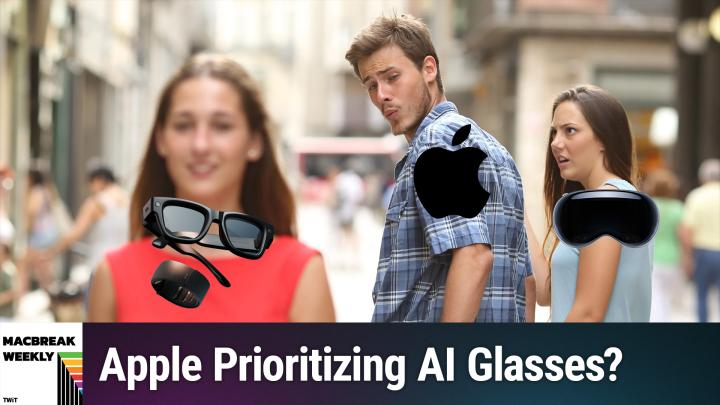
All TWiT.tv Shows (Audio)
MacBreak Weekly 993: An Orifice for Ads
02:43:20
Apple Could Be Shifting Work From the Vision Pro to AI Glasses
Loading summary
Transcript658 lines
- [00:00]
Leo Laporte
It's time for Mac Break Weekly. There is controversy aplenty. Did Apple just kill the Vision Pro? Maybe not. But we are going to kill the Vision Pro jingle, right? Maybe not. Apple removes ice block. Is it a danger to law enforcement? Or is Apple caving to an authoritarian government? We will debate and then we'll take a look at some of the new features on the iPad coming out in beta, including the return of of a long missed feature. All of that coming up next on Mac Break Weekly. Podcasts you love from people you Trust. This is TWiT. This is Mac Break Weekly. Episode 993 recorded Tuesday, October 7, 2025. An orifice for ads. It's time for Mac Break Weekly, the show we cover the latest in Apple news. And here he is, all the way From Apple Central aka sixcolors.com Mr. Jason Snell.
- [01:07]
Jason Snell
Apple Central would have been a different name for my website, but thank you. It's good to be here. Happy October to all.
- [01:14]
Leo Laporte
We could give it a different name. Apple Central.
- [01:16]
Jason Snell
Wasn't there a Apple Central, Mac Central.
- [01:18]
Leo Laporte
That's right.
- [01:19]
Jason Snell
Jim Dalrymple did that.
- [01:20]
Leo Laporte
Yes, that's right.
- [01:21]
Alex Lindsay
Back in the day.
- [01:22]
Leo Laporte
Back in the day. Also with us, my friends, it's Mr. Andy Inocco now in the Boston Public Library.
- [01:29]
Andy Ihnatko
Yes, I'm making my way up the Eastern seaboard of libraries. I've got Nashua, New Hampshire and then York, Maine, and then I got some feelers out for libraries in Canada.
- [01:39]
Leo Laporte
I love it. And what's nice about the Boston Public Library, they have shelving so it is empty.
- [01:46]
Andy Ihnatko
I mean, if I wanted to put up some canned goods for the winter.
- [01:51]
Leo Laporte
You got it.
- [01:52]
Andy Ihnatko
There you go.
- [01:52]
Leo Laporte
Also, Alex Lindsey, officehours global and 090 media. Hello, Alex.
- [01:57]
Alex Lindsay
Good morning.
- [01:58]
Leo Laporte
Good morning. I almost referred some business to you. There's an exercise channel I participated in and he had a live stream where he promoted it like crazy on October 3rd. It was like Friday was going to promote it like crazy. They turn on the camera. We're all excited. There's 300 people in the audience, no audio. And they turn it off and turn it on. Turn it off and turn it on. They change the channel, they still can't get audio. They say screw it. And they say, we'll do it tomorrow. And I almost said, you know, you should call one Media. They could help. I know they could help anyway.
- [02:33]
Alex Lindsay
Even just put a question in office hours. We could help there too.
- [02:37]
Leo Laporte
Don't attempt this without the help of Mr. Alex Lindsay, I guess, is the answer.
- [02:41]
Alex Lindsay
Live is hard. Life is hard and especially the audio. The audio was the hardest part.
- [02:45]
Leo Laporte
Hey. Ah, hey, look at this. We're going to kick it off with the Vision Pro segment.
- [02:54]
Jason Snell
I was not ready for that testing John Ashley. I was not ready for that.
- [02:58]
Leo Laporte
But you did it. There was only a slight hesitation and actually the good news is this is the last Vision Pro segment.
- [03:06]
Jason Snell
No, it's not.
- [03:07]
Leo Laporte
It's all over for the Vision Pro. It's done, it's finished.
- [03:12]
Jason Snell
It's not.
- [03:13]
Andy Ihnatko
Our social experiment is at an end.
- [03:15]
Leo Laporte
Mark Gurman says they're not going to do the least less expensive vision Pro in 2027. He didn't say that?
- [03:24]
Jason Snell
No.
- [03:24]
Andy Ihnatko
Oh, you're not.
- [03:24]
Leo Laporte
What did he say?
- [03:25]
Andy Ihnatko
Jason?
- [03:26]
Jason Snell
Okay, so, and this is as somebody here with Alex who talks about all the great things about the Vision Pro, I think this is actually the right move and I'm glad that they're doing it. But what they did is they're going to take the people who are building the Vision that next, next generation, lighter, cheaper, but probably still heavy and expensive Vision Pro hardware, and they're putting them on the AR glasses, catch up to Metta project so that they can ship things like the Meta ray bans and the Meta ray bands with AR faster than they were going to do it because they were, they are many years behind on that side. They're still going to ship an M5 Vision Pro Vision OS proceeds. But I think what they realized is just something they should have realized five ago, which is just approaching this from the top down is the wrong way to do it. And you also need to approach it from the bottom up, like what Metta has done. And so they're going to go, they're going further in on bottom up on building, you know, AirPods glasses and then.
- [04:27]
Leo Laporte
Glasses though, aren't going to do spatial computing. They're not Vision Pros, not in the.
- [04:32]
Jason Snell
Short, not in the short term, but I think that, that they probably converge or get close to converging eventually. And I think Apple's mistake was saying, well, we'll work on this big heavy thing and make it lighter. And that' not necessarily the wrong approach, but the other way to go is to do what matters doing. I mean, that is met as building headsets too, but they're also building these lightweight things that are more like smart AirPods. Basically it's all tech that Apple already has and they kind of pooh pooh did. And now then they seem to do grimmer report a while ago and we talked about like an investigatory phase and now they seem to have decided that they've investigated it and it is a good idea. And they pulled the people who were working on the, the sort of 2000, what, 28 again, Vision Pro follow on that would have been lighter but probably still heavy and cheaper but probably still expensive. And instead saying look, we need to ship these, these glasses products way sooner because we are so far behind Meta. And I think that's the right call.
- [05:33]
Leo Laporte
They, he says they are still going to do the M5. Yeah, upgrade the Slipstream upgrade this year and maybe next. Yes.
- [05:42]
Jason Snell
And for the Vision Pro which is just a, I mean it is an experimentation and, and you know, way too early for anybody to buy it for realsies product anyway. So they'll, yeah, they'll push it up to M5 and then they're going to move on for a little while.
- [05:55]
Leo Laporte
And it still says the company's working on two types of smart glasses. The first one, dubbed N50 will pair with an iPhone and lack its own display maybe as soon as next year. And then they'll do one that is just like the Meta Ray Ban display with a display in it for 20, 28, three years from now or possibly.
- [06:16]
Jason Snell
Sooner because they're putting more people on it. I think that timeframe is one of the reasons why they realized they needed more people working on it.
- [06:22]
Leo Laporte
Come on, come on, admit it. They're killing the Vision Pro. You got to admit it.
- [06:26]
Alex Lindsay
Yeah, I don't think so. No, no. I think that the big thing is that the current Vision Pro is a little underpowered and for what some of us have been producing, there's still the next generation of just adding the processing power is going to add a lot more to it. It provides very valuable resources when you're thinking about wanting. I think the reason that Apple went down this path in the first place is that if you're going to build those, those, if you're going to build the glasses eventually having the data that you're getting from the Vision Pro users is really valuable and having the ecosystem getting built up around that is really valuable. And I don't think that they're, you know, I don't think that Apple really, you know, is going to release a product that they view as an existential solution and then go after a year, oh, I don't know if we're going to do this anymore. That's a Google thing to do. It's not an Apple thing to do. And I think Apple Car.
- [07:20]
Andy Ihnatko
Apple Car.
- [07:21]
Leo Laporte
Well, they never released it. They never released it.
- [07:24]
Alex Lindsay
Apple has produced many Things, although we.
- [07:26]
Leo Laporte
See Apple hi Fi and ipod socks and there are a few things.
- [07:30]
Alex Lindsay
Yeah, but I think that this is a platform. This is a platform that they did. But xserve was around for a while. It's not like it was there for a year and then they said, oh, it doesn't work. It's not that Apple's ever put something to sleep, it's just that it is, this is a platform. You know, they've built an OS for it. It's going to be here. It's going to be here for quite some time. The, the. Because the hard part is, is that it is. The question is, can Meta actually, you know, execute over time, you know, in a way that can compete with what Apple's doing? And so, so I think that that'll be the thing to. And it's same thing with their headsets. And I think that. So I think that, I don't think. And I think that they're, I think what they gave up on is, hey, it's probably really hard to make this lighter and cheaper. Like that's the part that I think they've given up on is that we might as well just do head. Do work on the glasses because we have the tank and the tank will probably continue to get chip updates. I would be surprised if the form factor of the Apple Vision Pro and the basic design of the Apple Vision Pro change dramatically in the next three years. I think.
- [08:30]
Leo Laporte
Is it fair to, as flying comic in our club twit says, call it the Apple's Lisa?
- [08:37]
Alex Lindsay
I don't think so.
- [08:38]
Jason Snell
Like, I think the Lisa technically was.
- [08:40]
Leo Laporte
Apple's Lisa, but I mean the Lisa.
- [08:43]
Andy Ihnatko
Glasses, you know, I mean the problem is that we still, there still has not been any sort of proof that this is, this is something that anybody that the market wants in enough quantities for Apple to really, really justify it.
- [08:56]
Leo Laporte
Even though even Metis glasses, you could say that of they've only sold a coup couple of million.
- [09:01]
Andy Ihnatko
I mean it's, this is, this is Apple waiting patiently like at the, in front of the, in front of where they think the puck is going to be waiting and waiting and waiting for that puck to come. And it might never come.
- [09:11]
Alex Lindsay
It's the problem.
- [09:12]
Andy Ihnatko
It could be the same thing with, with glasses too. Again, it's a, it's not that it's an unviable product, but Apple doesn't sell boutique products. They don't sell and they, so they don't try to sell things in hundreds of thousands or even low millions. They want to sell things as the next phase phone. And I don't, I don't. I'm not saying I doubt that will ever happen. I'm saying that we don't have anything to go on other than faith that this market is ever going to coalesce.
- [09:35]
Jason Snell
Yeah, but I think the difference here is, I mean, what you're, you could interpret what you're saying as being, unless Apple releases a hit, it should never release a product.
- [09:44]
Andy Ihnatko
And I will even play that.
- [09:46]
Jason Snell
I think you did. But I'll just say this is a different kind of product and it is, it is entirely speculative. And I, I do think the way it was marketed was a gigantic mistake. I think there are people inside Apple who only know one thing, which is sell products to the mass market. And this was always from day one a weird, is this a thing for the future kind of product that most people shouldn't buy? That has not changed and it's not going to change. But I think Apple is thinking having an operating system that is ready for AR and VR and that builds on their app platform and, you know, having that is valuable. Having people build that is valuable because they're going to be able to roll that into future products, both AR and VR. And that's what this product is. And you know, again, I think it's. I think it's fine. I. Shipping it was probably a good idea. The problem was people judging it by like regular Apple products because, I mean, it was so clear from day one that it was not going to be that it's all about the future speculation.
- [10:42]
Andy Ihnatko
Can I say it was also clear from day one that they brought almost nothing to the. Excuse me, excuse me. To me, it was clear from day one that they brought almost nothing to the table. There was, except for, except for the developer community, which is an eternal Apple asset. But the shocking thing to me when I first saw the Vision Pro and then when I actually used it myself is that this is just another one of those. There are VR headsets out there. They made another one of those. They didn't do what they did with the iPhone. They didn't do what they did with so many other platforms. But they figured out here are some pain points or here's somewhere where our specific point of view as a company and as designers can actually transform this product and at least make it into a unique Apple experience. This is not that it runs iPad.
- [11:23]
Alex Lindsay
I don't know.
- [11:23]
Jason Snell
I mean, I just totally disagree.
- [11:25]
Alex Lindsay
It is dramatically better than the Meta Quest. Dramatically like it is dramatically better.
- [11:31]
Andy Ihnatko
It's the same thing. Thing only with better specs. It's like not true.
- [11:34]
Alex Lindsay
Not true. Everything about it is better.
- [11:36]
Jason Snell
The OS is so much better. Meta has now copied aspects of it, trying to get it more like Vision Pro. But like the Vision OS is, is a very different kind of experience. Now we could argue that the ways in which it's better are all about spatial computing. Things that don't. That nobody wants. Well, I think that there's an argument.
- [11:54]
Alex Lindsay
To be had and I think that the issue is, is that if you go back to like let's say when Apple released Maps, because I think it's probably, I think Maps is a better corollary than Lalisa that they came out of it, they didn't have enough data. They didn't have the data that Google had. So they weren't as accurate as Google. They'd send you down dead ends. They, you know, there's lots of things that were glitchy and then they just spent a lot of money on it and kind of just leaned into that as it slowly moved forward. But the, but the big thing is, is that what they need, what you need for doing anything like this is an entirely new way of computing. It's entirely new way of interacting and you need data and you don't get data without a product if you don't have hundreds of thousands of people banging on your product and looking at it. And this isn't about selling product right now, it is about gamma testing, you know, and so it is, it is all about figuring out like watching how people use it. There's so many things that have gotten better just in the last couple operating, you know, oss and, and I think that you're gonna keep on seeing them, they're progressing those so that when they have a product that they're going towards a mass market, all of those things are working because none of those things would work by themselves, you know, like that you can't just come out of it from the lab and have it all working. And so the infrastructure and the process and you know, a lot of the other things I do think to your point, Andy, that Apple has the weakness that Apple has is this idea that build it and they will come, you know, and we're just going to build something and people are going to show up. And to some degree people have. But what was genius that EPIC did was the mega megagrants. The megagrants had everyone forget that Unity existed. Like when we, when megagrants came out of we're going to give away $100 million with very little very few strings, like under $25,000, almost no strings over $25,000, maybe a couple. You got to tell us what you're going to do with it. And suddenly everyone is brainstorming on how to use the Unreal platform. And so the thing is that I think that Apple never wants to pay people to develop for their platform because it's a slippery slope and they don't want to do that. But I think that that kind of grant at this moment with a new platform would make a huge difference. If Apple said we're going to give away a billion dollars a year to, you know, which, you know, they roll off one of the bills on the outside of the roll. We're going to give away a billion dollars a year for people to develop apps for it. Suddenly you have all these people creatively thinking about proof of concepts and process and you know, because you can see hints of it, of what people are building for these things. That is truly amazing. You know, but, but when we look at the amount of work Apple's done, when you go back and realize that USDZ was for the headset, like, you know, that's, that, that was, that was what, 10 years ago that they started talking about it. And so, so this is a very long play. If Apple, I would be blown away. They, they're obviously going to make adjustments because that's what a good company does. But, but I, if, if they give up on this less than 10 years after the release, I will be very surprised.
- [14:49]
Andy Ihnatko
Well, I don't think I'm being really clear with what I'm saying. I'm not, I'm not going to re prose what I'm saying. I'll leave it at this is that sometimes it's that people just don't like tomato flavored soda. It's not that. Oh, well, the problem is that it's too expensive. No, it's not too expensive. Oh, what if we put it in 6 ounce cans instead of 1216 ounce bottles? No, it's not that. What if we use much, much better? Well, this is higher quality tomatoes and we've got the spice blend correct again. It's possible that people just have no real need, use or interest in tomato flavored soda. I'm not. Again, I, I just don't think that we could, I don't think that Apple should or will go ahead with the understanding that all we got to do is bunker down, dig our trenches deeper and deeper. Just keep improving this, improving this and people will come around or market factors will come around. And suddenly this will be another computing platform that is viable, that is not simply, oh well, you know how you can run iPad apps on an iPad? Imagine you had virtual iPads and that way that you, that you had to strap to your face for three or four hours before your neck tires out. That's what I'm saying. I still think that this will never become.
- [16:01]
Alex Lindsay
This headset isn't the product. The AR glasses are the product. This headset is the R D platform to figure out interaction, figure out there is. So it is what they're doing and what meta's doing. Accepted is so hard. It is so hard to do. But I don't think that this is considered the product. Like this is getting a bunch of people willing to test, you know, human interaction, you know, with that process. And I do think that I don't know if it would sell that many more. But like, for instance, if, you know, I could, I could build something that would be providing really cool concerts once a week and a lot of people would subscribe, could I? And I could probably make it, you know, with enough capex, I could probably make it something that generated a profit pretty quickly, you know, with the people with just the platform that's here right now, you know, but, but you have to have someone willing to put the work and time into, into that process. And I think that, you know, there's, you know, and there are people, I'm in these conversations every day. There are people working on it, you know, and the blackmagic camera just came out. There's a handful of them that are floating around. I get access to one every once in a while. And, and I think that as that becomes something that more and more people have, you're going to see more and more content. And, and the content is pretty compelling, you know, and I, and I will say that, that it is, it has always been this mixture of not having enough content and not having hardware that can deliver that content. So we've been shooting more content than the, than the Meta Quest and even the Apple Vision Pro can play regularly for a long time. So, so we are constantly shooting more and it's been really difficult to, to work on that content. By pulling all these things together, we're going to get to a point where that content is a lot easier, a lot cheaper to, to produce. And also we have the, you know, that with that, with the headset, we have something that can actually play it. And I think when they upgrade it with the M5, if that actually, you know, whenever that happens, it's going to close a huge gap from performance wise that does make a difference. There's a, there is a, there's a hill that sits right on the other side of where the current Apple Vision Pro sits. That it makes a huge difference from my experience of working with headsets in the frame rate when we go from 90 to 120 frames a second, it's, it's a completely different world from a lower brain perspective. And so I think that again, they're doing something that's hard and the thing is that they are playing a game that I think people are going to want wearables. Do they want the Apple Vision Pro? Probably not. Do they want something that they wear that I think Google saw it first, gave up quickly. I think Meta is pretty committed to what they're doing. I think Apple is putting it in but this is a big boys game. This is super expensive and it's a huge AR race and it's only going to be, you know, two or three companies that are pull it off. And I think that the company that, I don't think it has to be one or the other either but I think that Meta has privacy concerns around their headset. That is going to be an albatross as they try to grow. Wanting to wear those wearing, wanting to wear glasses that are constantly telling Meta what you're doing and where you are and everything else. There's a lot of people that are not going to be very excited about that so that it's a constant drag on their, on what they're doing. And nobody else is playing at the level that Meta and Apple are playing. So Apple has this huge market of people that say I don't want to share my information with Meta and I. And if they, if they put out a headset that is less than $2000. I mean people are paying $2000 for their phone, they'll pay $2000 and they'll pay in $1000 for their watches, they'll pay $2000 for.
- [19:36]
Leo Laporte
They're not doing that.
- [19:38]
Andy Ihnatko
They're spending $200 for their phones worldwide. They're not spending.
- [19:42]
Leo Laporte
Wait a minute.
- [19:43]
Alex Lindsay
All I care about is Apple users.
- [19:45]
Andy Ihnatko
Like who cares As a niche product. They can make it work.
- [19:48]
Leo Laporte
You don't think this is a signal from Apple saying we give up?
- [19:52]
Jason Snell
No.
- [19:52]
Leo Laporte
I'm stunned obvious that they're giving up. And they, they looked over, it's like, it's like that meme with the guy looking over his shoulder. They looked over at the medical asses and said oh yeah, we should probably be doing that instead.
- [20:05]
Jason Snell
Leo, if I had $10 for every time you declared the Vision Pro dead, I wouldn't be.
- [20:09]
Leo Laporte
Well, it's finally dead. Yet real Dog bites Man is just limping on one glasses that like metals. It was never a good product. It was never a good product. It still isn't a good product. Nobody should buy it, and especially now. Do you think this will really help sales? Like, oh, well, obviously Apple's all in on the Vision. No, it's not. They're in on the platform, off the Vision Pro and put it on glasses. There's nobody. You go to the Vision Pro offices, there's nobody there.
- [20:44]
Jason Snell
There's still. I mean, Vision OS is still going forward and they're shipping the M5, I think.
- [20:48]
Leo Laporte
Okay, there's a couple of people there.
- [20:50]
Jason Snell
Look, look, look. I think the. If you don't believe that this is a category, that's fine. The Vision Pro is what it is. It's weird and it's not what Apple usually does. I think the. I think that what's happened is that it's all been exacerbated by the fact that Apple blew it in terms of we don't need to make things like the Meta ray bands because we have AirPods and that should be good enough. And now they're realizing, oh, maybe that was a mistake, which it totally was, and they have to catch up. I think there. I think one of the big questions is, is this a product category in 10 or 15 years at all? And I've heard different things, but, like, if you're Apple or Meta or, or even Google, the. They're all. They have so much money and they are all afraid that in the2030s, nobody's going to need a smartphone anymore. Or, or even if they do have a smartphone, everybody's going to have a thing on their face that is showing them everything about the world. And that, that if. If they don't build that product, someone else will and they will lose the glass, that opportunity.
- [21:53]
Leo Laporte
So the Vision Pro, the glasses.
- [21:54]
Jason Snell
Okay, but. Yeah.
- [21:55]
Leo Laporte
So you're saying the glasses are the same.
- [21:58]
Jason Snell
I'm saying that. I'm saying it's all the same. Because. Because even though what Metta is showing now is like a widget in your corner of your right eye, in the long run, you need a software platform for it. Who's going to have one? Apple's going to have.
- [22:11]
Leo Laporte
I agree with you.
- [22:12]
Jason Snell
They're going to need to learn miniaturized sensors. You're going to need to have to like, these are all things that need to be done. The real difference here is that Apple is doing Vision Pro in public and they could have kept it as a lab project. And I think that that is a lot of what I hear from people about this is if it's not going to be a successful product to the market and that people like us, even somebody like me who kind of believes in the product, says nobody should buy it, then maybe they shouldn't have released it at all. I think in a world where developers are more excited about building for Apple platforms, maybe they could have gotten away with it. But the challenge right now is that there's nobody there and people feel really put upon. Developers feel really put upon by Apple and taken advantage of by Apple. And on top of that, then let's say this cycle, developers are using every spare second to fix all of the liquid glass issues with their apps. The last thing they're going to do is throw more time. I mean, I know developers I've talked to about this and it's like they think Vision Pro is cool. But like in the end, even if they think Vision Pro is cool, if they're only gonna have 50 users and they've got. I mean, they will never prioritize it.
- [23:22]
Leo Laporte
Isn't that the wisdom of the crowds? Aren't the developers saying the same thing I'm saying, which is we're not gonna develop for it because it's a dead end.
- [23:28]
Alex Lindsay
Again, I think that this is where.
- [23:31]
Jason Snell
Because the product's too heavy and expensive today. And that's the question again, nobody's ever.
- [23:35]
Leo Laporte
Gonna wanna strap that onto their face. They will definitely wanna wear glasses.
- [23:39]
Andy Ihnatko
What if we make tomato soda into a powder that you can mix into? Probably again.
- [23:44]
Leo Laporte
Anyway, I'm going to tell John Ashley.
- [23:48]
Jason Snell
Many billions of dollars are being spent by tech companies who think tomato soda is going to be a thing. And maybe they're wrong. Andy, hold on.
- [23:55]
Leo Laporte
I'm going to tell John Ashley not to burn the Vision Pro jingle. You can keep it around.
- [23:59]
Jason Snell
I already burned.
- [24:01]
Leo Laporte
I started. Erase it.
- [24:03]
Alex Lindsay
All I can say is that a year from now, when things are cooking along.
- [24:06]
Leo Laporte
Oh, yeah, you told me that when the Vision Pro came out.
- [24:09]
Alex Lindsay
Jason and I.
- [24:09]
Leo Laporte
Maybe you're cracked.
- [24:12]
Alex Lindsay
Well, let's see.
- [24:12]
Leo Laporte
What.
- [24:13]
Alex Lindsay
Let's look at the.
- [24:13]
Leo Laporte
Let's look at how I've been saying this all along.
- [24:15]
Jason Snell
Yeah, I know.
- [24:17]
Alex Lindsay
They'Ve talked about ar. The platform is the glasses. That is what they've been going towards the whole time. They've all.
- [24:24]
Leo Laporte
I think, I think you're being revision.
- [24:27]
Jason Snell
That's why they have all those stupid cameras on that thing.
- [24:30]
Alex Lindsay
Yeah, that's why they have. We have been talking about that on this show. I'm sure we can go back and.
- [24:34]
Leo Laporte
Look, I agree with glasses. I'm not fighting glasses at all. I'm just saying the Vision Pro ain't it. And I think it's revisionist to say, well, no, really, what they were doing is making glasses.
- [24:43]
Alex Lindsay
They've said that in the past.
- [24:46]
Jason Snell
It's been there since day one. And the only explanation for why the Vision Pro has its entire AR mode with all those cameras, those incredibly expensive cameras everywhere is it's an AR simulator. Because Tim Cook only will talk about ar. Tim Cook is all about glasses. I know, but they can't build an AR product right now. And I think again, we come back to the meta style glasses. I think this is where they went wrong is they said, well, we can't build this thing that Jony I've is envisioning from the2030s. So let's just. That whole category is stupid. We'll just build this thing in the meantime. And you know, there would be no shame for the company that makes AirPods to make something a lot like AirPods. That's glasses. And yet it took them how many years to figure out that they maybe should build it and only now are they really ramping up a team to build it. I think, you know, till 2028 speculating about the Vision Pro. We can disagree or agree, but like that's where they really blew it is they thought, well, no, no, no, we're just going to do this thing. And that other thing is, is dumb.
- [25:44]
Leo Laporte
So you're agreeing with me now?
- [25:46]
Jason Snell
I'm agreeing that they should have also been working on glasses.
- [25:49]
Leo Laporte
Yeah.
- [25:49]
Jason Snell
And they shouldn't have pooh poohed it for sure.
- [25:50]
Andy Ihnatko
Yeah, I just. And just. I don't, I don't think that when, when glasses actually become a really good thing and I think they have the potential for it. I was a big fan of Google Glass when it first came out. Blew my mind. It was very, very useful. For what? For a lot of use cases that I wanted them for. I think that the idea of running something that even seems like a descendant of Vision OS is a gamble. I think that smart glasses are going to be running agentic AI, not something that translates into, oh, well, I'm running something that's similar to a phone app. But this is the display that I've got in front of my face right here. This is What M's trying to get at that. But again, it's a great idea. I'm glad they're pushing it forward. I don't think they should cancel Vision Pro. I'm glad they're moving forward to it. But I have not seen the fundamental problems of this form factor, even speculating into what a wearable piece of glasses with integrated waveform displays is going to be like. There's a bunch of fundamental questions about what this device is and what the wearer's relationship is with that device that have not been addressed. And nobody has shown an insight into cracking that solution. Which is not to say it can't happen, but I'm saying that this is not a linear progression. Well, first we build like the big clunky VR goggles, but then we keep focusing towards making a tinier, tinier version of it. No, the tinier, tiny version of that will not be running anything that's similar to apps. It's not going to be something where you're sitting like in the middle of the day like this, trying to.
- [27:25]
Leo Laporte
Do you think Meta learn something?
- [27:26]
Jason Snell
That's one vision.
- [27:28]
Andy Ihnatko
It's going to be agentic AI.
- [27:29]
Leo Laporte
Do you think meta. I agree with you on that. Do you think Meta learned anything from Vision Quest for its glasses or is it just two separate products?
- [27:37]
Alex Lindsay
Oh, I think you definitely learn. I mean you have so many things that you understand around content, around people.
- [27:42]
Leo Laporte
The way people use the glasses have no content. No, no, the glasses are right now just AirPods.
- [27:47]
Alex Lindsay
Oh, you mean they're did meta.
- [27:50]
Leo Laporte
The meta Ray Bans. Are they in any way genetically related to the Meta quest?
- [27:56]
Jason Snell
Not now, but.
- [27:57]
Leo Laporte
Oh, as.
- [27:59]
Jason Snell
As time. Well, yeah, so the next one's going to have something that's like widgets and it's going to be really basic, but they have to do that again. A thing Apple already did, but refuses to put in a product. But in the long run, I mean, I guess this comes down to how you see the future of interfaces. And if you see that everything that is an interface in 15 years is going to be agentic AI, I think that however you define that, or if you think it might be more like.
- [28:21]
Andy Ihnatko
Software, I guess we'll see not everything. But again, you're dealing with the fact that that as good as these displays again, we're imagining in 10 years is going to be, they are still going to be between your eyeballs and the real world and you're going to have to navigate that. You're still going to have to be in the real world while you're interacting with these if they are absent at all. And that's not a solution that anybody has really posited yet.
- [28:48]
Leo Laporte
Absent a keyboard, absent a mouse, absent touch. It's hard to imagine a user interface that works with glasses. I mean, but an AI could in fact be the user interface if people.
- [28:57]
Alex Lindsay
Are willing to do that. And I think that the challenge really is that like I know for me if you're wearing. If I literally have had probably two or three occasions at this point where someone has Meta glasses on, I ask them to take them off. Like I just won't, I won't have a conversation like I just. At lunch.
- [29:12]
Leo Laporte
But if they were Apple glasses, you wouldn't mind.
- [29:14]
Alex Lindsay
I probably would be less sensitive. But I'm not going to be sitting there talking in front of a Meta and think that the. But this is the thing is that there are two players right now and there's so much money that's required to get into this game that there probably will be two, potentially one more. But that'd be about the most you'd ever get into this game because the, the, the ramp up and the miniatures, don't forget.
- [29:35]
Leo Laporte
OpenAI's got Jony I've working on something. Although they're apparently having technical difficulties. Yeah.
- [29:40]
Alex Lindsay
Because Jony I've doesn't have the Apple engineering team behind us. Like it's not going to work. Like it's going to be a dead, dead on arrival. So, so the, the thing is, is that I mean he can make things look pretty, he just can't make them. The issue is that there are going to be two big players and there's going to be privacy and no privacy and there's going to be a lot of people that pick one or the other.
- [29:58]
Leo Laporte
I completely agree with you. When I saw the new Meta glasses.
- [30:01]
Andy Ihnatko
No privacy and more privacy.
- [30:02]
Leo Laporte
It's not merely privacy, it's also ecosystem. Meta just doesn't have the ecosystem, Apple does. And so Apple has a huge advantage in glasses. I think Apple's right to turn and look at the girl going the other way because those glasses are the same hundred percent.
- [30:15]
Jason Snell
This is where we agree is that they blew it. And I think they really blew it. And in fact, fact, to follow on something that, that Alex said, look, Meta is ahead here and Meta has spent a lot of effort and done a lot of interesting things. And I'm not. What I'm about to say is not to say that that's not true. What I am going to say is corporate culture is a real thing and Apple has a culture of shipping products. And Apple is a company that makes products and it delivers for customers. And Meta, at its core is an advertising company that wants to profile people and sell ads. And it's the, it's the. And it doesn't mean they can't make interesting hardware. But in the long run, I wonder if they're capable of winning a race with a company that actually cares about products. In fact, I would say throw in Samsung to that. Like on the. Coming around the bend on the far side of the track, headed for the finish line like other companies that are better at building hardware and thinking about products than Meta. It's the same conversation we've had here before about why I can't stand any of the Amazon Echo products now is that. Not that they weren't trailblazing, interesting and way ahead of the world, but in the end all Amazon ever wants to do at the end of the day is market another product for me to buy. And it's. And it turns those interesting devices into orifices for ads. And that's my skepticism about Meta here is not that they haven't done great work and not that they aren't skating to where the puck is, but it's Meta. And I, and I just don't believe that in the end they're going to be able to change their culture to be as create, you know, focused on creating pieces of consumer hardware that people actually want to use instead of getting things that punish them for using them as Apple is. And we'll see. But that's, that's why I think that Apple's got a real chance and why they can still catch up. But it's also why it's a real shame they're so far behind.
- [32:07]
Andy Ihnatko
One last thing that's really important. We talk about Apple, we've been talking about Meta. I don't think that they're. I don't think that any discussion of this is complete unless we're talking about Google and to a lesser extent, OpenAI. It's possible that the way that all this works isn't, oh, we need a design company and an engineering company and a product company. Google can. Gemini has been doing so much good stuff through Gemini as they keep adding features to it and relevant features to it and powered by what I personally see to be a really good philosophy behind how AI agents and AI helpers are best integrated into how people get throughout their day. It could just be that, wow, those are great glasses. The answer to all the solution or what we wind up with could just simply be the glasses are a commodity piece of hardware. Just like you go into the store, you buy whatever pair of glasses that you think work for you. And just like our car has CarPlay on it or Android Auto, hey, wow. It works with Gemini Agent Tech AI. Great. That's all I need to know. And it's not going to be something that we have a brand loyalty to for hardware so long as our favorite AI agents work with it. So long as you put them on and it actually starts doing things for you, not just giving you one more screen for distraction and one more screen to project apps on. That's where a company like Google or OpenAI can really run away with this.
- [33:33]
Alex Lindsay
And I think the problem is that Google has a hard lift because they already gave up up once and so, and they. And I'm sorry, go ahead anyway, but that, that's a hard one to get. I, I haven't seen Google give up on something and then. And then come back to it. Number two is that AI. I mean open AI just is not a hardware company and they're finding that out really quickly and they're going to continue to find that out. It takes an enormous amount of culture and process to build hardware, especially at the level that these have to be built at. And I think a open AI will not be able to do that.
- [34:03]
Leo Laporte
Well, Google, Microsoft wasn't a hardware company either. And Microsoft's done all right as a software company, I think. All right, but pitching it's going to be a new operating system and I have a feeling they might be in a good position to do that. And then anybody who wants to make hardware can it be interesting to see instead of a proprietary Mac hardware environment, you had a open environment like the PC world running a variety of AI operating systems.
- [34:29]
Alex Lindsay
I think actually that's kind of the world we're into. I'm already benefiting from it. Half the reason that I use my Vision Pro more than my meta quest is because anytime I want to put something on my Vision Pro it's super easy to do from the rest of my platform. And so the rest of the platforms I can just share with it. I can. It all pops up in there. And that's the. But that's what Apple has as an advantage is that there's a whole. It doesn't matter what non Apple users think or care about or anything else. It's can they provide a product that goes back to people who are already committed to the ecosystem and provide them with something that they want to use.
- [34:58]
Leo Laporte
Right. We're going to open your ad orifice because we're going to take a break and when we come back, we have another controversial subject we will get to. So keep the boxing gloves on. And John Ashley, okay, I guess you can keep the Vision Pro jingle because we are in fact America's premier Vision Pro podcast.
- [35:17]
Jason Snell
If we don't close it up now, technically, we're always in the Vision Pro.
- [35:20]
Alex Lindsay
Segment from now on.
- [35:21]
Leo Laporte
Why don't you finish it out?
- [35:22]
Jason Snell
John Ashley now you see, now you know.
- [35:24]
Alex Lindsay
We're done talking the Vision Pro.
- [35:29]
Jason Snell
Through the power of AI I was able to salvage.
- [35:32]
Leo Laporte
You got it back. Nice. Andy Iannako, Alex Lindsey, Jason Snell, you're watching Mac Break Weekly. Our show today brought to you by a name. I know everybody knows 1Password, but 1Password is expanding their operations with something brand new called Extended Access Management. And it's very cool. It solves a big problem in business. Over half of IT pros say that their biggest challenge, their number one challenge, is securing SaaS apps. It's a growing problem. Not only SaaS sprawl, but shadow it. And you know AI is just added to that, right? All of a sudden you, your employees are sending proprietary information out to who knows where using AI. You could see why SaaS is a problem. Thankfully, there's a solution. Trelica T R E L I c a by 1Password can discover and secure access to all your apps, whether they are managed or not. Trelica by 1Password inventories every app, every app in use at your company and then pre populated app profiles. Assess the SaaS risks, let you manage access, which means you can also optimize, spend and enforce best security practices across every app your employees use. Even Shadow It. Imagine that managing Shadow It. Oh, you can also use it to securely onboard and offboard employees and meet compliance goals. Trelica by1Password provides a complete solution for SaaS access governance. It's just one of the ways that extended Access management helps teams strengthen compliance and security. Of course, you all know, we all know 1Password's award winning password manager, trusted by millions of users and over 150,000 businesses from IBM to Slack. But now 1Password secured, securing more than just passwords with 1Password Extended Access Management. Of course 1Password is secure, ISO 27001 certified with regular third party audits and the industry's largest bug bounty. 1Password exceeds the standards set by various authorities and is a leader in security. Take the first step to better security for your team by securing credentials and protecting every application Even unmanaged shadow it. Learn more at 1Password that's 1Password.com MacBreak all lowercase. We thank him so much for supporting MacBreak weekly. 1Password.com MacBreak I was watching last night that liberal bastion Rachel Maddow on msnbc, and I was very pleased to see that she had Joshua Aaron on the guy who wrote Ice Block. It was really interesting because he says, you know, I grew up Jewish in a family, and I had the privilege of knowing a number of Holocaust survivors. And the country they described in Germany in the 30s was starting to remind me a little bit of what's going on here. And that's one of the reasons he created Ice Block. Ice Block. Rachel Maddow compared it to having on your maps the ability to say speed trap ahead or speed camera ahead, which we all accept. What Ice Block did is it was a mapping app that allowed people to say, we've seen ICE in this neighborhood. And obviously the theory is stay away, right? But the Department of Justice and the Attorney General, Pam Bondi, say, no, no, this is being used to target ICE agents and to promote violence against ICE agents. She had threatened Joshua Aaron previously, saying, we're going to have to investigate him personally. Then they wrote a letter to Apple, and Apple immediately took it down along with other similar apps without even a letter. Google did the same thing, saying it was protecting vulnerable communities, which I think you could argue Ice Block was intended to do. Critics of tech giants, I'm reading now from npr, critics of the tech giants capitulating to the Trump administration say it shows the sway President Trump has over Silicon Valley. They didn't even have to threaten Apple. They didn't have to do anything but say, hey, you should be pulling that we demand. In fact, Pam Bondi says they removed the Ice Block app and they did. So a number of people see this as needless capitulation on the part of Apple. There wasn't a legal problem with Ice Block, as far as I know. It wasn't like, you know, we've often said, well, Apple has to obey the laws in the countries it operates in. But this wasn't a law. This was just a request request from the government. The same choir request, by the way, that they decried under the Biden administration asserting, I don't think it's true that the Biden administration requested Twitter take down Covid disinformation, things like that. And they said, oh, that's terrible, but this is not. So here's the question, and I open it up to you. Is Apple doing the right thing. Are they protecting law enforcement or are they capitulating to an authoritarian government prematurely? And is this, by the way, and one of the things Aaron brought up and Rachel Maddow brought up is Apple has, yes, perhaps a duty to the government, but Apple has a greater duty to its customers. And its customers in the long run have more to say about Apple's business than anybody.
- [41:28]
Andy Ihnatko
Yeah, I mean, what makes this doubly dangerous compared to the platforming of Andro Android is that at least with Android, okay, I can sideload an app. If people want to create a distribution network for Ice Block, they could create an APK file and distribute it that way. Google's starting to clamp down on that in general anyway, so let's see if that's still true a year from now. But at least there are alternatives. With the iPhone, there is one pinch point and one pinch point only for putting an app app on the phone. And that gives a frisky totalitarian esque government or government with interests in totalitarian directions. Simplicity. This app is completely legal to have. It's illegal, it's legal to use, it's legal to distribute. They don't. But a government does not have to go through all the paperwork to make it illegal and to remove a right or an ability from the populace. All they have to do is apply pressure on the that one pinch point of this $3 trillion company that has lots of interests that do not involve making sure that people have access to any app that they actually want. And apps that don't violate their own terms of service and policies for the App Store, they're not going to defend that, they're not going to protect that. And if you accept the argument that apps are a form of speech, a form of free speech, which is an argument that I accept, then this is a very, very bad and dark thing. There is an argument to be made that an app like this, if it were allowed to escalate and metastasize and become a lot more effective just in the same way that Wikipedia used to be just a whole bunch of user generated articles and then it became the enormous, sprawling de facto reference source that the entire world relies on. If apps that allow you to track the movements of law enforcement became of that scale, yes, then that would be a big problem. This is a discussion that we definitely need to have. However, right now that is absolutely not what is happening. And so that's why at this moment I'm focused on the question of, well, great, so if, because if a government wanted to apply pressure to that one pinch point to say that we don't think that we're getting a fair shake from CBS's late night host. We want you to not remove the CBS app, the streaming app. We don't think that the New York Times. We think the New York Times is a Democratic, radical, violent, liberal. Loudspeaking HORN we want you to remove the New York Times app and we want you to promote this app instead. I see this all of one piece and I can't think that this is in any way something that Apple shouldn't be completely ashamed of.
- [44:26]
Leo Laporte
Constitutional experts call it jawboning. The First Amendment prohibits government officials from censoring the speech of private actors or from even insisting the private actors do anything like pull down an app. However, they often, especially on social media, will threaten. And of course Apple is vulnerable because of a number of Trump, as you say, pinch points. Tim Bray. So very interesting post from Brent Simmons, the creator of Net Newswire, why Net Newswire is not a web app. I mean that would be. One solution is for Joshua Aaron to make it a web app. Right. Apple can't control that. Tim Bray says the canceling of Ice Block is more evidence where any needed that the web is the platform of the future, the only platform without a controlling vendor. There are some technical reasons Brent Simmons doesn't make NetNewsWire a PWA. Although I think you probably could make ice block a PWA.
- [45:24]
Jason Snell
Yeah, although I think, I think part of what Ice Block is trying to do is use there. They were trying to use Apple's private push notification framework to send these alerts. And one of the downsides of using the web is you can do push notifications but then you have a direct link to who those people are. And it's all on the Ice Block website, which would be subject to a different kind of scrutiny than Apple, which does. Apple really does a lot to obfuscate who's getting push notifications so that the apps don't actually know, they just send it and it happens and it's. And, and so there's. I just got, yeah, I got a, I got a message on social media like an hour ago that said this is why it should all be on the open web. And it's like, well, the open web has advantages and disadvantages. The Ice Block was trying to take advantage of some privacy features of iOS. But as Andy pointed out, the only way you can do that is by being inside the Apple dome. And if Apple kicks you out of the DOM dome, there's no other way to get in there. And that. That's one of the. For the. For the record, I think this is a bad decision on Apple's part. Although I understood. I understand why they made it, because it's very much in the sphere of Super Squishy App Store, we can do whatever we want kind of things. But. And I, I would. What I would say is, I think a lot of the Super Squishy App Store stuff was built, as with a lot of things in the United States, it turns out, with an ex. A belief in norms and good faith that don't exist right now. And so I think if you're Apple, you say, you know what if the Attorney General of the United States comes to me and says, I'm concerned that an app on your store is putting law enforcement officers at harm, and maybe we could just take that down, we're going to say yes, because that seems like a perfectly reasonable request. Right, right. And, and right now, I mean, there. There are people out there who will argue it is a perfectly reasonable request, and there are other people who will argue that it is jawbo. That it is a use of an authoritarian government to try and prevent some of their actions that are deeply questionable in nature. But for Apple, because it's a black box, it's just always so easy for them to just knock something off the store. And there's really no recourse. There's no visible process and there's no outlet for it because there's no other way on to iPhones and iPads than then through the App Store Store, technically speaking.
- [47:50]
Andy Ihnatko
Oh, no, no, no. We did. Oh. We didn't pull the app because it puts. Because of pressure from the, from the. From the Department of Justice. It turns out that it violates our App Store guidelines.
- [48:00]
Leo Laporte
Oh.
- [48:01]
Andy Ihnatko
Oh. Ignore the fact that we, we reviewed it earlier and said it doesn't, but now. Now it does. Now it totally does.
- [48:06]
Jason Snell
And we put speed cameras and stuff.
- [48:10]
Leo Laporte
Here's a hypothetical. So people who have Ice Block are not losing it.
- [48:14]
Andy Ihnatko
Apple.
- [48:14]
Jason Snell
Right.
- [48:16]
Leo Laporte
Didn't they just took it out the App Store? What if Pam Bondi now comes to Tim Cook and says, oh, now I want you to kill it on all the phone it's on, because it's still a hazard to whoever has it.
- [48:27]
Alex Lindsay
I mean, you know, and so it's. I mean, I think that Apple has had a pretty strong red line of. You can't have access to the phone. They haven't had a strong red line anywhere in the world around anything else. No, they pulled Down.
- [48:39]
Leo Laporte
China requested it.
- [48:41]
Alex Lindsay
Yeah, but they, but they have, they haven't given anybody access, any country access. Access. And if you start creating a bunch of red lines between these governments, then eventually you're going to have to give up the one that you're trying to protect. And the one that they're trying to protect is no data on the phone, not on icloud, not on other things, not on apps. You know, they're protecting. They have this one enclave that they're protecting and if they pick a bunch of fights, that eventually is going to get pulled into that fight, you know. And so I think that they are and I think that when you have, you know, when you have a leadership. That is the way it is right now in the, in the U.S. i think that, you know, Apple has to think about a bunch of things and you know, whether they protect an edge case that doesn't have that many users that are. That is going to do something to me. I, I can see why you'd want to keep it. But I, but if, if I was in the same position, I'd probably do the same thing. It would just be like, like it's not worth the fight. It's not worth the fight with this administration, you know, over, over this. Like, it's not like they are. What they're trying to make sure is they manage and they manage them going, not going, not going after that secure enclave which they could, you know, the secure area on your phone and there. And of course you're going to, you're going to wring your hands of it and have a bunch of conversations. But everybody did this. I mean, you know, everyone's going to. Every corporation is going to make the same.
- [49:56]
Jason Snell
So. So where do they. I think the question is where do they draw the line? Where do they draw the line? Because what we've learned is bullies are going to keep coming back and yeah. For more. Where do they draw the line? Somewhere. Is there some. Some request Is that. Is it.
- [50:08]
Alex Lindsay
I mean we have.
- [50:09]
Jason Snell
Is it encryption backdoors advocate.
- [50:12]
Alex Lindsay
We should be devil's advocate an administration before this one telling everyone what they were allowed to put on Facebook and YouTube. So like let's be clear. Like this is.
- [50:19]
Leo Laporte
That's not true. What are you talking me all.
- [50:23]
Alex Lindsay
There was so many believe the Twitter files.
- [50:25]
Leo Laporte
Is that what you're saying?
- [50:26]
Alex Lindsay
No, I'm not talking about Twitter files. I'm talking about people talking. I mean, you know, basically you would. If you said certain things during COVID you are going to. You are. You're going to have that stuff taken off of YouTube, you know, like.
- [50:36]
Leo Laporte
And you're saying YouTube did it because.
- [50:38]
Alex Lindsay
The Biden administration 100% did it. They 100% did it because the Biden administration didn't, didn't just say it on social media. They told them directly.
- [50:47]
Andy Ihnatko
I'll double check my facts here. I did a lot of research on this topic a year so ago and.
- [50:53]
Alex Lindsay
I'm just saying that it's not as simple as both sides have told people what they can say and what they.
- [50:56]
Andy Ihnatko
No, no, no, it's not a both sides things. Don't you dare turn this into a both sides thing.
- [51:01]
Leo Laporte
This is not that there's no evidence that, that, that that happened, Alex. That we don't need evidence of this happening happened that the administration announced that again and again.
- [51:10]
Alex Lindsay
I think that any, at any also.
- [51:12]
Andy Ihnatko
If they, if they ever did that. I'm not agreeing that they did or didn't because again, I don't have, I don't have my files in front of me right now. But there's a difference between, hey, we have actual provable facts that are in the public sphere that you can actually go and verify that. The claims that we're making that this, this is actual misinformation and it is going to have a terrible impact upon mortality of this versus, oh, we're just going to claim that this app is being used to target law enforcement and oh, we're going to throw out that, oh, attacks against ICE are up 500%. Oh, wow, that's, that's horrible. You, you must have, you, you must be really excited to give us the data so we can, we can tell, we can tell everybody that you're absolutely, oh, wait, no, you don't have any data about that. So I mean, I think it's not a both sides sort of thing.
- [51:55]
Alex Lindsay
The biggest mistake of this is I doubt that the app was actually making much difference. Like, you know, like the whole thing.
- [52:00]
Leo Laporte
Is they took no, it's probably true price blockers.
- [52:04]
Alex Lindsay
It had any impact on anybody. And so the thing is this was a flex by the administration. It didn't actually affect probably almost anything. And so that's the unfortunate part of this is that there's a big fight over something that wasn't really making any difference.
- [52:18]
Andy Ihnatko
At some point we're going to have to ask the question, does Apple actually stand for anything? It's Corporation Again, they're $3 trillion corporation. But they keep saying that, oh, we believe in this and oh, these other companies and we're protecting People.
- [52:33]
Jason Snell
That's right.
- [52:33]
Andy Ihnatko
What do you actually believe in? What are you actually going to?
- [52:36]
Jason Snell
Where do you draw the line?
- [52:37]
Andy Ihnatko
What battle are you willing to fight just because you think this is right and this other thing is wrong, you don't care how? If it's only 1/2 of 1% of your user base that's being affected by that, if it's 10 people that are being abused by a horrible policy, Apple, are you willing to stand up and say we will protect those 10 people on principle? Where is your definition of what is right and what is wrong? And where do you stand? Or is it just, just wherever the breeze will blow us, that's where we're going to go.
- [53:08]
Leo Laporte
And is there any risk of Apple losing revenue because of this? Look, it was pretty clear that Jimmy, the banning of Jimmy Kimmel cost Disney quite a bit and, and, and they in fact backed down because of it. Is there any evidence that this might cost Apple in any way?
- [53:25]
Jason Snell
I think feel like it's just a gradual erosion, but I do think the, the thing to watch, I think think is a more aggressive attempt to get user data, not the app. Like I said, I mean the streets are literally.
- [53:38]
Leo Laporte
What about the Kill switch? If they, if they, if they went and said, and I could, by the way, I could see the DOJ saying okay, now take it off all the phones it's on for the same reasons.
- [53:47]
Jason Snell
Right. It might make a difference or it might just be one of those things that's lumped in with all the other things we have. The world has grown pretty acceptant of the fact that Apple can just kill things in the App Store.
- [53:57]
Leo Laporte
Have they ever used the kill switch switch?
- [53:59]
Jason Snell
They use it for malware. Right? They use it for malware. But I'm not sure that they've, they've, they've used the Kill switch for something that's just a policy violation. They prefer that sort of just silently vanish. I've still got, I've got, I've got so many rejected apps that are, I still have in my iPad, my iPhone, like emulators and all sorts of things that snuck in and you download it and then it goes away, but you still have it on a device. I think my best guess is that push comes to shove when somebody at the, in the government asks for, for Apple to create a backdoor or subvert encryption or hand over user data in a way that completely disembowels their privacy issue or turn off, to turn off their end to end encryption or whatever it is. I suspect that if they were to take a stand, it would probably be something like that that is so deleterious to the image that they've built over the last 10 or 15 years that they have to stand up. Because, I mean, yeah, Disney did it. Because in the end, what happened with Disney is they got the point where they had to make somebody unhappy. They either had to make their. A lot of their customers and the creative community really unhappy by saying, no, we're just going to keep Jimmy Kimmel off, or they were going to make everybody in the government and who supports the government angry because they were going to bring him back. And they realized, oh, well, we have to decide one way or another. Apple, so far, it gets to kind of have it both ways. Like, they've had forever with the App Store, right? All of these tempests in teapots where we talk about all the issues involving the App Store and Apple being totally arbitrary. But in general, it just, you know, it just keeps happening, other than in Europe, and even there it still keeps kind of happening, but theoretically it shouldn't. And. And, you know, so they may be able to get away with this just because I feel like everybody's used to abstra rejections and it's like, well, whatever. It's their platform, whatever. Even though people obviously are grumbling about it. I. I do wonder when is that moment where Apple has to really decide if it's going to take a stand at all.
- [56:00]
Alex Lindsay
And they've had lines and the FBI has tried to get into a phone that San Bernardino was a line, a terrorist who shot people. And Apple was like, this is the line. This is. You can't get. We're not going to give you a way to get in.
- [56:11]
Leo Laporte
It was a different time, though. I mean, I wonder if the same thing happened today.
- [56:14]
Jason Snell
But that was. That was. Are you going to tell us to build a backdoor or are you going to demand that we task our engineers to subvert our own code and make fake code for you? Like, they're like, you want us to break our make bugs or break our own bugs? And they're like, that's too far for us.
- [56:35]
Alex Lindsay
And they are constantly making the phone itself more and more private, the entire platform more and more private. And so the issue is that's their line and they don't have another line. I don't think. I don't think that that's. And I don't think that we should expect them to, you know, like.
- [56:51]
Leo Laporte
Cause I have a feeling when you give the. What was it John Oliver said when you give the, the bully your lunch money, it doesn't make the bully go away, it just makes him more hungry. We'll see. I have a feeling that, well, there's.
- [57:05]
Alex Lindsay
A lot of things the administration can ask for that still wouldn't cross that line. And I think that, I think that they, they know where that.
- [57:11]
Leo Laporte
And they may be smart enough not to go too far.
- [57:13]
Andy Ihnatko
You think you have a lot, you have a lot of faith that I don't have.
- [57:17]
Alex Lindsay
I mean, I, I, you know, I think, did I use it.
- [57:19]
Andy Ihnatko
I'm just smart. I'm just a little, I'm, I'm just a little bit taken aback that things that I would never have contemplated, things that I would have dismissed about. Well, Apple will never do that. Would never do that. I don't, I know that, you know, they're not as pure at heart as they, as they like people to think, but, you know, there are lines that they won't cross, there are things that they won't do, there are things they won't capitulate to. And things that I would have assumed were absolutely true that way a year ago are now everything, nearly not everything, but nearly everything is in play. Because this is. Tim Cook decided, decided that Apple needs an integrity problem. And he decided, hey, we can have an integrity problem. All we got to do is build a solid gold thing and make a big show of it. And now we'll have the more integrity problems that we'll ever know what to do with.
- [58:02]
Leo Laporte
Yeah, Yeah. I don't envy Tim Cook. It's a, it's a, it's a tricky line, but at some point.
- [58:09]
Jason Snell
Well, you.
- [58:10]
Leo Laporte
Gotta adhere to your values.
- [58:12]
Jason Snell
I just want to say again, none of this is an issue if the App Store isn't the only way onto the phone.
- [58:21]
Andy Ihnatko
Yes.
- [58:21]
Leo Laporte
And that's maybe the solution you think is.
- [58:23]
Jason Snell
You know what? Well, I mean, I wrote about this last year that Apple already has built an entire system for, for it, and it's on the Mac and they're actually deploying part of that system on the, in the eu where you've got a whole regime that's locking the device down, but that ultimately, if you want to run software that hasn't been approved by Apple on your Mac, you can do it.
- [58:43]
Alex Lindsay
It.
- [58:44]
Jason Snell
It's funny now, though, that we may get in it. There are certain circumstances that may arise where it's actually beneficial for Apple to say, oh, we can't write like a lot of Apple strategy, as Alex said, where they're locking things down. A lot of Apple Strategy is what they want to do. Like, Apple seems to be of the mind that if a government comes to them and asks them to do something legally or jawboning anyway, they'll do it because they're just going to do that. What their strategy seems to be behind the scenes is, is make it so we can't just make it so we can't make it like, sorry, it's encrypted. We don't, it's math. We can't do anything about it. That's their strategy. The challenge with the App Store is there's no loophole there and it would be a huge pressure release if in a circumstance like this they could just say, well, we're going to not let it in our store, but we don't control what gets on our platform. Now that wouldn't help with the push notification thing, right? Because that's, that is Apple's and you wouldn't get access to it if you were on the outside. But it's another, you know, it makes this all harder on Apple because it has complete control over the software that runs on its platform.
- [59:51]
Leo Laporte
One more data point. Yesterday the Supreme Court declined to block the order that required Google changes Play Store. In other words, they ruled in favor of Epic and against Google. Google said, hey, there's security concerns we can't do. And the court said, no, no, no, it's one of those rocket docket cases, so there's no opinion that we can rely on. But the justices declined to block that district order. So Google will now have to make those changes to its Play Store, the changes that Epic wanted. Apple's in the same situation. I don't know if Apple has appealed to the Supreme Court or not, but.
- [60:30]
Andy Ihnatko
Yeah, this is just why I keep going back on. This is not just about these issues about the App Store. They're not about a billion dollar corporation fighting with a trillion dollar corporation. This is the right to simply decide that if I want to put an app on my phone, I should be able to do it because I spent $1,000 on this thing and sometimes the reason why I can't get that app on my phone is because they're evil people doing evil things who don't want me to have freedom.
- [60:53]
Leo Laporte
So yeah, I think, Jason, you were right that the best path forward for Apple is to find some way to make sideloading or alternative.
- [61:06]
Jason Snell
It would certainly change the tenor of the discussion and take some heat off of app.
- [61:10]
Leo Laporte
That's kind of funny that we're support for PWAs because they could with Service workers provide, you know, notific private notifications and more. There would be ways to do this. I always thought Apple would do that by now, and they haven't.
- [61:25]
Jason Snell
Well, they haven't felt the need. Right. I mean, I think one of the great questions about why does Apple do things the way they do is when you are one of the world's most valuable companies and you are kicking off enormous amounts of profit every single quarter, and you have for decades and the number only goes up, it's real hard to say we should change our behavior.
- [61:43]
Leo Laporte
Yeah, yeah. All right, we're gonna take a little break. That wasn't as bad as I thought it might be. I was prepared. I have a fire extinguisher right here. We'll have more in just a little bit. In fact, Jason is firing up the six color printer because Apple's quarterly results are coming soon. You are watching MacBreak weekly with six colors man Jason Snell. Andy Anako, library man Andy Inocco. And let me see, what should I call you? Spatial video guy. Alex. Lindsay. It's great to have all three of you. Yeah, it's a 3D our show today, brought to you by Zocdoc. Love Zocdoc. You know, every morning I do my work workout. It's a great way to take care of your body. But there's more to getting truly healthy than just hitting the gym. It takes consistent annual check ins with your doctor getting things checked out that feel off or not normal. You gotta have a quality nutrition regimen. I've talked about that too. And of course you gotta take care of your mental health too. Zocdoc makes it easy to do all of that to start your health plan by helping you find and book doctors in your area who are right for you. Zocdoc is so great. It's quick, it's easy. It's a free app and a website. You don't even need to install an app. Just go to the website where you can search and compare high quality in network doctors and click to instantly book an appointment. More than just MDs, by the way, I mean dentists, mental health professionals. With Zocdoc you can book in network appointments with more than 100,000 doctors across every single special mental health, dental health, primary care, urgent care. I used it to find a gerontologist for my mom. I mean, it's just fantastic. And what I love about it is you can filter, you know, the doctors in your search. You can say, I want doctors who'll take my insurance. I want Doctors that are located within a certain radius, you know, nearby, or I'm willing to drive a little bit. You can find doctors that are a good fit for any medical need you may have have. And the thing I really love the patient reviews highly. You could say I want doctors that are highly rated by verified patients. That's super, super useful. You can also filter kind of on your preferences, whether that's looking for a male doctor or a doctor that speaks a specific language, has availability that fits with your work schedule, has an opening tomorrow, for instance. Once you find the right doctor, you can see their actual appointment openings. Choose a time slot that works for for you and click to instantly book a visit. Oh, this is another great thing about Zocdoc. Appointments made through Zocdoc happen fast, typically within 24 to 72 hours of booking. More often than not, you can even get same day appointments. I love ZocDoc. I use it and you should too. Stop putting off those doctor's appointments and go to Zocdoc.com MacBreak to find and instantly book a top rated doctor today. That's Z O C c d o c.com macbreak zocdoc.com MacBreak thank you, Zocdoc. Oh, I missed this. There was an. We should have put this in the Vision Pro. Well, don't play the theme again. There's a new immersive elevated episode. What is the elevated?
- [65:22]
Jason Snell
Oh, that's like a screensaver but more immersive.
- [65:25]
Leo Laporte
Well, how could it be narrated by Tim Robbins if it's a scream saver?
- [65:28]
Jason Snell
Well, it's those very slow aerial shots that go over a terrain.
- [65:35]
Leo Laporte
Now you can go over Maine.
- [65:36]
Jason Snell
Yes, but with some sound. It's not just like a screen saver.
- [65:42]
Leo Laporte
Tim Robbins, the star, the Shawshank Redemption.
- [65:45]
Jason Snell
Have you ever wanted him to narrate a screensaver? Now you can.
- [65:48]
Andy Ihnatko
Now it's like you're in the sewage pipe with him.
- [65:50]
Jason Snell
They're beautiful. They'. Their first one was Hawaii and it was, it was nice. But it is. Of all the things that Apple's produced, to me it's the most nothing because it really is just sort of like what if aerial screensavers.
- [66:05]
Leo Laporte
But fall is more than four season feeling. It's a feeling.
- [66:12]
Jason Snell
Get out of that silo.
- [66:14]
Alex Lindsay
I think the problem is I just don't think that, that the in general, I don't think that the headset lends itself to stuff that's more than 30ft away.
- [66:24]
Jason Snell
Yeah. Far off.
- [66:25]
Alex Lindsay
And so, so 30ft is like the outer edge.
- [66:27]
Leo Laporte
So you don't gain anything by. By looking at it.
- [66:30]
Jason Snell
It's the. It. It's not going to use your spatial. Right. It's really going to be that it's immersive, that it's. That it's a 180.
- [66:36]
Leo Laporte
It's a screensaver. This could be the aerial screensaver with narration. Right.
- [66:40]
Jason Snell
But. Right. Alex. It's like because you have no depth perception at all, it really is just that it fills your field.
- [66:45]
Alex Lindsay
It's not quite sharp enough for that much data. And I just. So when I saw the first one, I was not, not. I feel bad about.
- [66:51]
Jason Snell
It's the least interesting show because I.
- [66:53]
Alex Lindsay
Always get feedback on that. But I, I just didn't. I, I don't get the, the, the aerial shots at all. I don't get wide shots at all. I'm kind of like. I, I think that the Vision Pro is really powerful under 30ft and more than 30ft. I'm kind of like fall.
- [67:05]
Leo Laporte
It's more than the fourth season. Yeah, it's.
- [67:11]
Alex Lindsay
If you gave me close ups of fall somewhere, you know, like, like in space and rivers and stuff like that, I think I'd be more interested fall.
- [67:21]
Leo Laporte
Join me in the sewer pipe as we escape from fall. I did mention you got to go to work because Apple has announced that the day before Halloween it will report its Q4 results.
- [67:35]
Jason Snell
Yeah. Now this. Is this the one where we always have to say it's only got a couple of weeks of iPhone sales in it. So it's not going to really tell you a lot. But usually when they talk to the analysts afterward, they will characterize how iPhone sales have been good going, you know, over the previous six weeks. Beyond what's in the data.
- [67:52]
Leo Laporte
Early indications are it's going very well. Right.
- [67:55]
Jason Snell
Seems, seems like, I mean all those reports are very hard to track. And it seems like they're selling a lot of iPhone pros, which is what they want because they make the most money on those. And so yeah, we'll get a, we'll get a first hint of it. But the real big quarter is the holiday quarter, which we'll hear about in January. So this will be. Because this is just. It ends in late September. It's not quite on the same. It's not month by month, it's weeks. It's like a 12 or 13 week quarter. So it will be late September. So it's really only going to be a couple weeks of iPhone sales. Very. That a lot of that just washes out because you've got a whole Month or a whole quarter worth of sales data. So it'll. We'll get some clues. We'll get some clues about how Apple's summer. How Apple spent its summer and early fall.
- [68:40]
Leo Laporte
Morgan Stanley, which I don't know. They must have their look, they're analysts. They're telling their clients, invest in apps. Apple, they say the iPhone 17 cycle is modestly stronger than we originally expected. And adding that while the market has already priced this in, there is a positive bias to T12M estimates. I don't even know what that is. This is why I don't invest. And the early drivers of iPhone 17 strength get us more excited about the iPhone 18 cycle. Oh, okay. Of course. Okay. All right. I'm even more excited about the 18. They say, hmm, no one knows about iPhone air. That's a big question mark. I know. They don't mention it. It's still not for sale in China.
- [69:27]
Jason Snell
Yeah. And. And, you know, I would make the argument that we're not going to know for a while because I think that's a grower. I think that. That a lot of the people who buy phones the first two weeks are tech nerds who care about specs, and they're all going to buy the pro and then the holidays, maybe we'll see some of it then. But I just think the air is one of those things that is. It's. If it's going to work, it's going to take some time.
- [69:49]
Andy Ihnatko
Yeah, I agree. I don't think that this was designed to replace any product that's already in the iPhone line. I think it's to attract a type of user that we're just like, okay, I suppose I want an iPhone, so I suppose I'll get the closest one to what I want. But this year they're looking at this and saying, oh, this is what I want. And they'll give them all the information that they need to know to continue to make more phones that are like that.
- [70:12]
Jason Snell
Yeah. And they're not going to care that there's one fewer GPU core or that it throttles more because the dissipation. And only has the one camera, which is a very good camera, but there's only the one. They're going to be like, ooh, oh, look at this. It's awesome. And done. Right. And I think that. Or they're going to see somebody with one and go, whoa, I can't believe it. We'll see how. I mean, that may only translate to. It's going to do 8% of iPhone sales instead of 5%. But you know, Apple, only Apple knows why Mini and Plus sales were not good enough enough. And you know, and as we said before, the other advantage of the Air, in addition to it being cool, is they're learning a lot in public to teach them how to make phones like this in the future. Not just that folding model next year. But you know, you really get the sense that like over time we are going to be talking a lot about more and more tech getting stuffed up in a little plateau and having all of the rest of it be battery and screen because it makes sense that you'd build phones like that. So I think we'll see more and more of that over time too. But yeah, we'll get something kind of.
- [71:14]
Leo Laporte
Interesting a couple of times. Now I'm very curious. Both the Vision Pro and the Air you're implying are valuable products because they're, they're not necessarily themselves the product they intend to sell. They are learning about something for the future. Has Apple done that in the past? I don't, I don't feel like Steve Jobs ever cared what anybody.
- [71:36]
Alex Lindsay
I think that they, they, they did that in the Apple one. It was a piece of, it was a board.
- [71:42]
Leo Laporte
But that was not the same Apple.
- [71:43]
Jason Snell
I'll give you, I'll give you, I'll give you some. I mean my. I think the best example is the original MacBook Air in 2008, 2009, which was not that I had one not that good, but you could. But so thin and so light and the fact.
- [71:58]
Leo Laporte
Do you think that they released it with the intent of okay, we know this isn't the product we're going for, but this is a. I think they were to find out what.
- [72:05]
Jason Snell
Because it was. I mean it's got a lot of baggage, but minimum viable product. I think they realized that at that point that Air was good enough that people would really enjoy it, which I would say the iPhone Air is way more usable than the MacBook Air was in by comparison. But like that. This is what people want from this product is they. There are people who want a thinner and lighter product, are willing to have it be slower and have all of these other connectivity issues because it's thin and light. And of course over time they knew that they were going to be iterating on it that and they were going to do another error that would be better and another one that would be better. And then yeah, I also think that they were thinking in the long run we'll probably make all of our laptops this Way, even though we can't do that right now, it's not practical. And then over a decade, that's exactly what happened. The Pro became airfied, essentially. And I think that that is sort.
- [72:53]
Alex Lindsay
Of what's going on here for most hardware companies. I think Apple especially what you're using today, is three or four generations behind what most of the team is working on.
- [73:02]
Jason Snell
Right.
- [73:02]
Alex Lindsay
You know, you're, you know, they're, you know, they're, you know, they, you two years out, they're really worried about how the fab works. Right. And making sure that they can produce them at volume. So I think that in all cases, it's an iterative process.
- [73:17]
Leo Laporte
That's the pitch that Steve Jobs gave Bill Atkinson. To hire Bill Atkinson, he says, the stuff you're using is stuff from two years back. If you want to use the latest stuff, you have to work for Apple. So it's been that way for a long time. I just feel like Steve really, he made a big deal about, I don't use focus groups. I don't, I know what. If you ask people what, what color car or whatever, they're going to tell you.
- [73:44]
Jason Snell
He didn't listen to focus groups, but he looked at sales figures.
- [73:47]
Leo Laporte
Yeah.
- [73:48]
Jason Snell
And intuited like, I mean, I think.
- [73:50]
Leo Laporte
He would have released a subpar product though, with the idea that, okay, but we're going to iterate on this and we're going to have a better product.
- [73:57]
Jason Snell
I don't think he thought the MacBook Air was a subpar product. I think that for tech nerds, it was a subpar product. But what it got right and shot a boat or, sorry, shot below par. Isn't subpar good anyway? Only in Golf. It was so thin and light.
- [74:13]
Leo Laporte
That's very confusing.
- [74:14]
Jason Snell
It was so thin and light that the MacBook Air was a win as a thin and light laptop, even though it had lots of issues. I think that if Steve had looked at that and said, well, this thing is bad and no one will buy it because it has no positive qualities, they wouldn't have shipped it. But a bunch of people, hi, me bought it because despite, despite its weaknesses, it had those strengths of being thin and light. I think that's the, that's the magic is you can't make a product that literally nobody wants, but you can make a product that is gonna have a specific point of view that is gonna really hit some people hard. And other people are gonna be like, no, it doesn't have the cameras. I'm not gonna, doesn't have the battery I'm not gonna use it. Fair enough. Like the iPhone Pro is so good that it's okay. You don't need to buy the iPhone air. The iPhone air is there for people who are like, I don't care, I have to it, have, have it. And like that's, that's. And it does have those characteristics. And so did the MacBook Air. As, as broken as that first one was. It really did. And very quickly they got it to be much better.
- [75:14]
Andy Ihnatko
Yeah. I keep thinking back to, I think the, the, this conversation about the iPad, the MacBook Air. There's a, there's a story about the development of the Apple IIC where Steve Jobs walks into the appropriate executive's office, lays down like an Apple existing, like Apple II motherboard, lays down on top of it a small keyboard, lays down on top of it a half height five and a quarter drive and says, that is a great product. We should be making this. That's the sort of vibe that I keep getting year after year about what the original MacBook Air was. It was. Now I can top your story. I had a loaner from Apple like the day that it was released and I took it a week later on a week long conference as my sole computer. I know pain, sir. I know suffering.
- [76:02]
Jason Snell
Yeah.
- [76:03]
Andy Ihnatko
I know what the bad points of that device are. But I keep thinking that this is something that Steve Jobs would have, would have said, that is a great product. Let's make it. And if it's not going to be great for the first time, it's still a great product. Let's make it.
- [76:18]
Alex Lindsay
I still, as someone shooting a lot with my 17 Pro, I can't even imagine not having the lenses. Like, I can't, it's like out of my reality. My wife, now if we're in the same room, my wife just wants me to shoot the photos. Like she, you know, like she's like, I don't, like I don't even. Because I shot, I shot a picture of my daughter playing drums is another one that I shot last on Friday, 60ft away, full frame 4K, you know, you know, totally still like she's on a stage, I'm sitting in the audience in the back, just shooting all the way through it and just looking at this going, I'm handheld. I was like, I cannot believe that I'm doing this with a phone. Like it was just, it was absurd, you know. And I have to say that the, I didn't think the 8x was, would matter.
- [77:02]
Jason Snell
It really does, doesn't.
- [77:03]
Alex Lindsay
It does matter. And so anyway, I think that I get. I've had a couple friends buy the Air. I think I mentioned this before and they've already moved to the Pro and given the Air to their wife. This will fit better. But I think that the 17 is a huge. I didn't get the 16. So for me the 17 is a big jump up from the 15.
- [77:29]
Leo Laporte
By the way, those stats, you know, you read. Since Apple doesn't tell us how well the Air is selling or the Pro or whatever, you often get them from other sources like Applovin. We've probably quoted Applovin on sales figures or App Store figures. Turns out maybe they're not the best company in the world. They're being probed now by the Security and Exchange Commission because apparently they are collecting information they violated. So Applovin is built into many different apps. They violated the partner service agreements and pushed more targeted advertising to consumers. And apparently Applovin said we don't want to talk about it, but it did hurt them yesterday in the stock market. It's responding to. The SEC is responding to a whistleblower complaint, this is from Bloomberg, filed earlier this year as well as multiple short seller reports. Interesting. So the regulator SEC has not accused Applovin of wrongdoing, but they are looking into it. We're looking into it. Reports from short sellers Fuzzy Pants and Muddy Waters. I'm not making this up. Accused Applovin of abusing its position within the mobile advertising ecosystem to harvest proprietary identifiers from other platforms in an unauthorized manner to track users across different websites and apps and retarget them with advertising. You know, we know this happens. We've seen this. Not just with Applovin, we've seen it happen with others. It is prohibited in Siri by Apple and by the way was barred by Google until February. Not anymore. Another reason maybe to keep using an iPhone. Have you seen the new Apple 8 Minute ad about the blue screen of death? This was hysterical, I have to say. I mean, it's a little broad. The premise is these four people and I guess they've used them.
- [79:38]
Jason Snell
Yeah, they're recurring characters.
- [79:39]
Andy Ihnatko
Yeah, part of the Apple cinematic universe.
- [79:43]
Leo Laporte
I can't show it without getting taken down because even though it's an ad for Apple, they apparently don't want me to show it. But the thing was poking fun at the CrowdStrike. Remember this CrowdStrike problem last year? Millions of Windows machines booted to the blue screen of death and couldn't be brought back because of an error. Pushed update from CrowdStrike so the idea is the underdogs were a fictional company going to a packaging trade show. They're really trying to sell their green packaging, but there's a lot of competition there. Until the competition, which all ironically uses PCs, gets shut down by the CrowdStrike blue screen. And of course the underdogs are using all Apple and they show throughout the ad a bunch of, of Apple features like continuity.
- [80:38]
Andy Ihnatko
They're in the packaging business. And so all of the shorts that they do are like, oh, now they're going across the seas to a trade show to try to sell a Asian retailer who needs a million boxes. No, now they need 2 million boxes. This one is funny because they're trying to land a really big fish at this convention. Convention who is not Robert Downey Jr. But it's totally Robert Downey Jr. Oh, that's interesting. And they're trying to, and they're trying to basically sell their biodegradable packaging.
- [81:12]
Leo Laporte
He does look like Robert Downey Jr.
- [81:15]
Andy Ihnatko
He's got the Iron man sunglasses and everything.
- [81:18]
Leo Laporte
Yeah, of course he is wearing AirPods, so he is. As a result, we know he's not a villain, although he's.
- [81:26]
Andy Ihnatko
And in the end they help out their competitors.
- [81:29]
Leo Laporte
Oh, isn't that sweet.
- [81:31]
Andy Ihnatko
We'll let them have Apple products so they can get their booth back up and running because, oh, we feel sorry for them.
- [81:38]
Leo Laporte
At the end of the commercial, there's a guy going through the convention hall with a cart of Mac Minis that he's handing out to everybody so that they can get back into operation. It's pretty funny. I enjoyed it.
- [81:51]
Andy Ihnatko
It's good, silly fun. I think to me it's like the analog of Google's Best Friends, Best Phones Forever campaign, which is occasionally where it's not like, oh, we're going to basically make fun of the opposite opposition. We're just going to basically live in the same, our products live in the same world and they have to relate to them and they're kind of, we don't have to be jerks about it, but we're going to show off what we think is best about our platform. And I, I really do love this line of. Again, if they, if they decided to do a, do a Christmas special, I'm not even joking. Instead of like another video. If they decided to do a 30 minute Apple TV Christmas special. The actors are great, the characters are.
- [82:27]
Leo Laporte
Great and they do a little, there's a little separate severance, tiny little severance cameo in it, but there's also a severance callback because the underdog team looks across the aisle at the competitor and they're a kind of a bizarro world duplicate of the team, down to the same archetypes for all four members. And that's, of course, happened in severance. I thought it was nice. I imagine they get a lot of money for those.
- [82:53]
Andy Ihnatko
I hope so.
- [82:54]
Leo Laporte
Yeah, I'm sure. The product. Do you know anything. Do you know the production company? Alex, do you know anything about these?
- [82:58]
Alex Lindsay
I don't know anything.
- [82:59]
Leo Laporte
They're very well produced. They must spend millions. It's pretty stuff.
- [83:02]
Alex Lindsay
Everything Apple does is well produced and spend millions on, you know, so it's, you know, they're, they, they just throw money at the problem and there's nothing, you know, like. And I think that I. Yeah, yeah. So I don't know anything about this production specifically, but. But it's.
- [83:16]
Leo Laporte
Sure, it's pretty cool.
- [83:19]
Alex Lindsay
It's incredible. I've had the opportunity to work on a couple things that are tangentially related, and it just really, you know, you don't get to do production like that very often. Like, like, you know, where, where you go, well, we get like the, the, the show, you look at it and.
- [83:33]
Leo Laporte
Think, boy, that bit. The catering was really good on that show.
- [83:36]
Alex Lindsay
I know the catering was, you know, like, and, and it had all the things, you know, if you were vegan, if it, if you were this, if you were that, if you were, you know, I'm sure it had all, all of those things were figured out.
- [83:46]
Jason Snell
Yeah.
- [83:46]
Andy Ihnatko
And I, I also like to think about, like, how Jason knows about. Probably knows about this documentary, Bathtubs over Over Broadway, which was a great documentary documentary produced by, like, a former, like, Letterman writer about, like, these industrial, like, musicals that used to go on in, like, the 50s and 60s, and how, like, everybody who's involved in it were, like, real Broadway talent. And they loved the idea of having to write this whole. And produce this whole show about the new Frigidaires because it meant that this one will pay me so much money that I can afford to still be a poor struggling actor for another year and a half. And so I kind of. I kind of want to check out the IMDBs for these people because I imagine that it has the same sort of. Sort of role. So long as. As long as Apple decides to do one or two of these a year, they can continue to be actors looking for, like, that next big thing. And they're all. And again, they're all really, really good talent.
- [84:34]
Alex Lindsay
I think that there was there was something about. I saw an interview, I think with the, With Devo and it was like they. Some random song, almost random song that they did that was pulled out of their library has basically paid everything, you know, and it was on some, on some random show, you know, ask Roger.
- [84:51]
Andy Ihnatko
Daltrey how much they made off of Won't Get Fooled Again simply because it's the game for csi.
- [84:55]
Alex Lindsay
Yeah.
- [84:56]
Leo Laporte
But you know, I would just give it to them because doesn't it put those things back on the charts? I mean, isn't the best, but it's.
- [85:01]
Alex Lindsay
Nothing like the money that you get for the replay. I mean, you talk to the. You look at like Ed talking about with Bare Naked Ladies, you know, with the theme song that they did for.
- [85:11]
Leo Laporte
Oh, the Big Bang Theory.
- [85:12]
Alex Lindsay
Yeah, Bang Theory, Yeah. I mean just printed money, like print. Like literally there's a printing press that just spits out money every time that, that good.
- [85:20]
Leo Laporte
So, yeah, I'm glad they made, made money good. They deserve it.
- [85:23]
Alex Lindsay
There's a great. By the way, I don't know where it is. Somewhere on YouTube there's a great thing where he explains how he just wrote it at the last minute because he didn't know who the people were. And someone said, his wife said, you need to really pay attention to this. And he quickly wrote something together and that's the song. So.
- [85:38]
Leo Laporte
Wow.
- [85:38]
Alex Lindsay
Yeah.
- [85:39]
Leo Laporte
Wow. It's a good, good story.
- [85:42]
Alex Lindsay
Yeah.
- [85:43]
Leo Laporte
Let's see what else is going on. Apple has apparently renewed the claims of being carbon neutral from the Apple Watch and the iPhone, I guess because the EU or some, somebody in the EU complained about it.
- [85:58]
Jason Snell
Yeah. There's some degree of carbon offsets that Apple is purchasing where they're getting, they're, they're planting trees, but it's like trees on leased land that there's this whole issue about. Like, are you really.
- [86:09]
Leo Laporte
It's hard to be carbon neutral. We try to do this, you know, we, we, we pay carbon credits for our usage, not only when we travel, but as a company because we want to do something. Right. But it's. I mean, unless you put solar panels everywhere, it's pretty hard to buy carbon neutral power everywhere. And so.
- [86:30]
Andy Ihnatko
But this technique's a little bit. I'm sorry, go ahead. I interrupt you.
- [86:33]
Jason Snell
I was just going to say what you need to do is buy land that used to be, ideally used to be forest and isn't now, and plant trees and guarantee that you will never cut them down or buy land that's threatened. I mean, there are ways to do that, but, but the problem is Germany, frankly.
- [86:52]
Leo Laporte
Some land found that Apple misled consumers because the forestry offset projects that they were buying in Paraguay had lease agreements expiring in 2029, far short of the 2050 time frame consumers would reasonably expect for carbon neutrality. I had no idea that I had a reasonable expectation for carbon neutrality.
- [87:16]
Alex Lindsay
I was really waiting. I really expected 2021.
- [87:20]
Andy Ihnatko
In addition to these things, I'm sure that Apple was working in good faith to try to make their goals. So I don't really blame them that much. But these are really, really controversial because they're typically done by. Let's get a whole bunch of land that is already being used by the people who live there. We will plant an invasive species that does not exist. And now the people who used to use that need that land for grazing, for pasture land now doesn't have it anymore. Plus, you have all these plants, plants there that don't. They're planted there because they are so good at sucking up carbon stuff from the atmosphere, but they're not supposed to be there to begin with.
- [87:54]
Alex Lindsay
I will tell you as someone who experienced some of this planting for different reasons. In the early 80s, the state of Pennsylvania had a thing about planting trees that if you. You wouldn't have to pay taxes on any part of your land if it was. If there were trees on it. And so any field that wasn't particularly good, we would plant pine trees and they'd send them to you. They'd send you these packs of pine trees to put in. And I can tell you, 40 years later or 50 years later, pretty cool. Like it is, Rose, because what we did is we put a. We put a. We put a pole on a tractor wheel and then just drove and it just dumped a hole every fun. And then we just. I didn't. One of us would take turns. I mean, we were like 12 years old or something like that. So one of us would be on the tractor, one of us would be with the putting things down, and one of us would be pouring water and putting the thing in. And now you go back and there it's the craziest pine tree tree. Like these are huge pine trees that are all perfectly spaced and pine trees, there's like four feet of pine needles. And I'm not sure if that's what they're doing, but I'm just saying, if you want to movie look for these.
- [89:00]
Andy Ihnatko
Things, a whole bunch of cool birds and critters there that weren't there before too.
- [89:03]
Leo Laporte
So the German court ruled that this was greenwashing. And that it really wasn't environmentally friendly. I think really there's a larger problem in other areas. For instance, I iFixit says the AirPods Pro 3 still a tragedy. There is no the repairability is zero.
- [89:23]
Alex Lindsay
Yeah.
- [89:25]
Leo Laporte
And it's been that way since day one. Right. I mean.
- [89:30]
Andy Ihnatko
Apple's doing a lot of really great work in trying to make their phones, their devices a lot easier to repair. At least not they used to be. Absolutely hostile against Republicans.
- [89:40]
Leo Laporte
I have to.
- [89:40]
Andy Ihnatko
But this is where I can give Apple a little bit of a slack. If you want to have a battery in a device that that's that small, you really just got to destroy the whole thing to get into it. And that's a fact of life. That's. I mean it's one of the, it's one of the reasons why I'm not, I'm not sure how I feel about smart rings where they're great technology, but they are 300 and 400 device that is just going to be disposable in three years time and you can't upgrade, you can't swap out the batteries, you can't. It's going to just simply die.
- [90:06]
Leo Laporte
Nothing that small is going to be replaceable.
- [90:08]
Andy Ihnatko
Yeah, exactly.
- [90:08]
Leo Laporte
Even the case on the it's just are not repairable though, which maybe they could be.
- [90:13]
Andy Ihnatko
That's a problem.
- [90:14]
Leo Laporte
Yeah. So iFixit gives the AirPods Pro 3 a zero in repairability. Sound great. Track your heart rate, handle a Dunkin water. But when it comes to repairability, still a zero out of ten. That's to me more of an issue than whether Apple's buying trees in Paraguay.
- [90:33]
Andy Ihnatko
But well again it's like what could they be doing to design that earpod so that this could be repairable and that this could be renewable? Renewable. And I just don't know how that's even possible. So either, either we decide that this, this entire product line which is so great in so many different ways is just not sustainable and not something we should be supporting or we simply accept that you know what we're as, as we're as we're arguing over like how much recycled packaging is how much recycled contents is going into this box. There is an oil company that's dumping 80 million gallons per second into wetlands. So maybe, maybe it's okay. There's a lot of issues.
- [91:09]
Leo Laporte
Although I remember I was pretty upset about the loss of wired headphones. Remember there's no battery. I still wire headphones.
- [91:17]
Jason Snell
I still have.
- [91:18]
Alex Lindsay
I still have a USB C to.
- [91:20]
Leo Laporte
Wired headphone isn't it ironic that now if you want to listen to lossless audio, you have to get a wire. Yeah. For your AirPods Pro Max or your Bose QuietComforts, they're wireless wired again.
- [91:33]
Alex Lindsay
It's a lot of bandwidth.
- [91:34]
Leo Laporte
Yeah. Yeah. We are going to see some new products. You think? Are we going to see them this month or next month? German says there's at least five products.
- [91:46]
Jason Snell
This is as good as mine. Although if I, if I had to guess, I would say that given that the results are coming on the 30th, they frequently do it right before the results.
- [91:56]
Leo Laporte
Ah.
- [91:57]
Jason Snell
So it would be Tuesday the 28th. May maybe. Ish.
- [92:00]
Leo Laporte
Okay.
- [92:01]
Jason Snell
But I haven't seen any dates reported. It's also, I don't, you know, the question is really will there be an event that they invite media to and all that or will they just do what they often do, which is roll things out in the morning and then all of us in the media get a briefing later that day and then they fed access some stuff to review. It really is kind of. They've done it both ways. This is the one, I think the last couple of years they've had an event in New York. This is the Jason flies to New York for a day to get Apple products products kind of thing. But they might do that. They did that with the M4 iPad Pro. Maybe they'll do it again. But yeah, I might. If I had to throw a dart at the board, I would say if there's a, an event of a sort, it would be the 28th. Ish. Just a guess. And if they're, if they have products to roll out and they're going to roll them out quietly. I still kind of feel like doing it the week of the 2027 and then doing your, your financial results on the Thursday makes the most sense to me. But we don't know. Nobody's reported anything. That's just based on.
- [93:05]
Alex Lindsay
I think they also probably it's the veracity of the products that they're releasing, whether they think that those are going to be, you know, something they want to talk about on the quarterly or something they just want to serve people up with. So you know, I think that they.
- [93:17]
Jason Snell
Usually like mentioning it on the quarterly. Oh we, and just this week we had a new iPad with the amazing M5 processor and blah, blah, blah. Right. They, they prefer to do that. It's, it's not a must. They could do it in November, they could do it in December, they could really do it whenever. But I think that if you're loading the channel up with new iPads and some other stuff for the holiday quarter. Sooner is better.
- [93:40]
Leo Laporte
Well, yeah, and do the press release because I. Justine isn't going to come to the event. She's way too busy making. Sorry. Sort of videos. She is. She is prolific would be one way to describe it on. On Sora, there are this year just the videos of her.
- [93:56]
Alex Lindsay
I mean, I think.
- [93:58]
Leo Laporte
Pig. Yes. There's a lot of them with pigs.
- [94:01]
Alex Lindsay
Remember, there's a lot of people doing them with her cameo. So they're not all.
- [94:04]
Leo Laporte
Yes, well, I did the same thing. You know, she has said the cameo is your avatar that you. You design when you first sign up for Sora. And I did the same thing, realizing that you can't really control it, so you might as well. I mentioned on Twitter, it gives me. It gives me plausible deniability that, you know, if everybody has access to my avatar, then no video you see of me really can be trusted ever again. So I'm bouncing on a trampoline for bunnies.
- [94:39]
Andy Ihnatko
I'm just adding myself to the beta list. Thank you. That was a good argument. That was a very good argument.
- [94:43]
Leo Laporte
You might as well just double down. I mean, if you can have J. JFK in the shopping market, you can, you know, shopping for frozen goods and Kraft Macaroni and cheese, you can pretty much. Pretty much do anything. This has taken. This is the number one app on the App Store.
- [95:01]
Alex Lindsay
It's magical. Like, I just have to say, like, I've spent the last couple days playing with it, and it's now I'm mostly doing just geeky stuff with it. But I have to say that the funny thing about the pig, by the way, is that I believe that the owner of the. Of the cameo can add something to your prompt. So they can say, anytime someone uses my cameo, it comes with this prompt. And I.
- [95:21]
Leo Laporte
Is that why the pig keeps showing up?
- [95:23]
Alex Lindsay
I think Justine added with a pig. I think that was.
- [95:27]
Leo Laporte
It's a very cute pig. Here she is with a pig. Actually, she's with Jake, Paul and a pig. Or who's the pig? I'm not sure. But anyway, yeah, it's pretty amazing. So when you made the cameo, by the way, you make the cameo very quickly and easily. You say three random numbers, which I think is to keep you from making a cameo of somebody else's image because it's different every time and it somehow captures your voice from then. Does a fairly good job.
- [95:59]
Alex Lindsay
I haven't done the cameo. I'm just playing with the App.
- [96:02]
Leo Laporte
Oh, okay.
- [96:02]
Alex Lindsay
So I've been. And so I just been making stuff on the. The app. I haven't been ready to do any cameos. So anyway, I don't need. Didn't need that part.
- [96:11]
Leo Laporte
Yeah, you probably don't need that part.
- [96:14]
Alex Lindsay
So. Yeah, so. So the. But you can just do, you know, just tell it things and give it prompts and everything else. I think the cameos are fun, but there's a lot of things in there that are. That are. Oh, there you go.
- [96:26]
Leo Laporte
That's me and Sam altman doing a TikTok dance. Here I am with Anthony Nielsen, also doing a TikTok dance. This is actually my favorite, favorite, favorite one here. My name is Leo. I'm out here trying to get back on my feet. I heard you might have an extra Sora invite. If you could spare one. It would mean the world to me. I promise I won't waste it. Just trying to get a fresh start, you know? Hey there. It kind of sounds like me, right?
- [96:44]
Alex Lindsay
A little bit, yeah.
- [96:45]
Leo Laporte
I mean, I only read three numbers. Portable telephones. The entire transmitter and receiver are contained in this single case. And it weighs a shade under five pounds.
- [96:53]
Alex Lindsay
Yeah.
- [96:55]
Andy Ihnatko
Let me put it this way. I would not be wiring $32,000 to rescue you from the terrorists who are kidnapped you if that was the video that they sent.
- [97:03]
Leo Laporte
Oh, I'm going to make one. Andy, Andy, quick. I need. I need money.
- [97:09]
Andy Ihnatko
And that's where I know it's fraud. Because, you know, I'm a freelance journalist.
- [97:13]
Leo Laporte
In a classic market, you know, that I give you $8 and you're the wrong guy, I guess. Yeah. Yeah.
- [97:18]
Alex Lindsay
I think that the thing that I'm constantly surprised by is normally I see things coming and I go, oh, I can see where this is going to go. And AI is the first time. I just keep getting surprised at how fast.
- [97:28]
Leo Laporte
Like, it's incredible.
- [97:29]
Alex Lindsay
It's the.
- [97:29]
Leo Laporte
Remember, two years ago, Will Smith couldn't eat a plate of spaghetti. Now he can be eating a plate of spaghetti with John F. Kennedy and Martin Luther King. And it looks real. It's kind of. We're at the point where it's. I think it's pretty close to indistinguishable from.
- [97:46]
Alex Lindsay
It's at the point.
- [97:47]
Jason Snell
Yeah. The danger. Or it's not danger. I just wanted to say, isn't it quaint that we once again have reached the point in computers where we're constrained on power and we have to sit and wait for things to. That's the thing that struck me about it, is I put in those prompts and then it starts spinning and it's like, come back in four minutes to get your video. And I know what it's doing is amazing and like that it can do it in four minutes is great. But I also think it's really funny that people who have never experienced having to wait for their computers to do things now have to do it. And from a business perspective it means it shows you that there's. This is why there's an insatiable desire to get more GPUs.
- [98:23]
Andy Ihnatko
It's like, it's like hearing a dial tone again. It's like, wait, what is.
- [98:27]
Leo Laporte
Wait a minute, I haven't been many years.
- [98:30]
Alex Lindsay
Well, and then you get really good at like I just. Same thing with mid journey. I just stack a whole bunch of them up and then I go do something else and I come back and it's like past me gave current me a present me a gift of six new videos. And most of mine have been like historical recreations. Like I want to see Abraham Lincoln giving the Gettysburg Address, you know, like, you know, and it's pretty wild, you know.
- [98:51]
Leo Laporte
And only one very bad picture exists of the that because it was such a short. It's such a short speech. It was only two minutes. The photographer thought he'd have a lot more time to focus the camera. So the only picture they have of Lincoln in the Gettysburg Address is of Lincoln leaving. You know, he's a blurry figure going away. Yeah, I've lost. Now we have it because of Sora. Thank you.
- [99:15]
Andy Ihnatko
I'm so with you, Alex. Like the number of times where I have like stayed up until 4am Without a intending it simply because I was using. I was just testing out an image generator and oh well, generate a panel of a comic book in which this is happening. And then I'm like, oh well generate the next panel in which this is happening and this dialogue is happening. And like, oh my God, I've just done like 60. I've just made like a very, very mediocre to bad like 18 page comic book that looks beautiful. But I wish I had had that extra six hours of sleep because it is so addictive and seductive. I will say I can't believe what it can do.
- [99:51]
Alex Lindsay
I'm a managing AI addict in the sense that I don't lose big chunks of time anymore. I used to, I used to sit down for four hours. I'll fiddle with something for a little while and then unless I need something, I mostly am just. It's kind of A constant flow during the day, but nothing. I don't stop and spend a lot of time on it unless I'm waiting for my kids to.
- [100:08]
Andy Ihnatko
I'm vulnerable during like my bedtime like wind down thing where I'm just, I'm closing windows and closing tabs of windows. Like, oh, wow, that's. Oh, that's right, it was Chen. There was an update to Nano Banana. I wonder if it can now do this thing that it couldn't do that it kept screwing up like the last time I tried it. And then it's like, okay, again, I've got. Congratulations Andy. You have another mediocre to poor comic book that's nonetheless one of the most amazing pieces of technology that you've ever seen in your entire life. But you could have used this time more productive.
- [100:35]
Alex Lindsay
What I think is really fascinating is how much you can just tell it what you want this person to do. And it goes and finds through all the written work and through everything else, you know, it nails it, you know, pretty often.
- [100:47]
Andy Ihnatko
I mean, I won't turn this into like an hour, a selling point for people as if I've just discovered AI, like just the other day, but I had a problem setting up, setting up a server and before I got like 99% of the way and there was a final like little problem that like I didn't instinctively know how to solve. And then at this point, I've been using Gemini for so long that I thought I, oh, I know, I'll just take screen grabs of these two or three configuration pages from these two or three stages in the configuration, say, hey, I keep getting this error when I try to do this. Here's what I've got it set at. What's the problem? And just immediately said, oh, that's a common thing. You need to go into this page of settings for this service and uncheck this box. And I'll be damned. I unchecked that box and I saved myself three weeks of deciding, okay, I guess I'm not meant to be a system administrative administrator at all.
- [101:37]
Alex Lindsay
I will say that logo or not. And Sora is pretty good at putting up these little logos that people are trying to get rid of at times and everything else.
- [101:44]
Leo Laporte
18 apps now that can do that, by the way.
- [101:47]
Alex Lindsay
I will say that logo or not, anything that looks outrageous now that I see on any feed, I assume that it's not real. Like, it's just, you know, like you can't show me something that I go, oh, I would, you know, and you.
- [101:59]
Leo Laporte
Know, it's made skeptics of, I would.
- [102:01]
Andy Ihnatko
Hope all of us, even before AI Exactly. We should all have a certain amount of, of culture, of media literacy to know that this is an absolutely authentic photo that was taken on film, shot on film on a Nikon F1 camera. But it is actually of not a political rally but of a soccer stadium and people are actually cheering for a soccer team. Always verify everything before you decide anything from something you've seen.
- [102:27]
Leo Laporte
So. And if it says policia, it's probably best not to pretend it's Portland, Oregon. I'm just saying. Well, that would be just the first thing I would say.
- [102:36]
Alex Lindsay
You know, the thing is, is, you know, Benjamin Franklin was making up stories about his, his competitors, you know, in his own rags, you know, 250 years ago.
- [102:45]
Leo Laporte
So it's a long standing tradition, isn't it?
- [102:47]
Alex Lindsay
So, so the thing is, I don't think there's anything, you know, particularly new here. It's just that it's gotten to a point where I think it is important that people are literate enough to know that. And you see this a lot on X where there's someone's like grok in grock will sit there and go, no, that's not true. Like no, no, no, no, no.
- [103:05]
Leo Laporte
Yeah, let's take a break. Andy Inaco's here, but he's not for much longer. He's got to take off because the Boston Public Library closes.
- [103:13]
Andy Ihnatko
Can I, can I share something with, with you?
- [103:15]
Leo Laporte
Yes.
- [103:16]
Andy Ihnatko
So, so there's like, there's like a whole wall of these like, like little rooms you could, you can book.
- [103:21]
Leo Laporte
Yeah, it's a kind of glass Steady Carols. Yes, exactly.
- [103:25]
Andy Ihnatko
And 15 minutes ago. I'm not lying to you. I'm not making this up. A man in a floor length black cape holding a long wooden staff approached the door, looked into the door as though he was. Oh no, the hobbits aren't in number four.
- [103:39]
Leo Laporte
This you shall not pass.
- [103:42]
Andy Ihnatko
And I'm like, this could go in so many different ways, depending, you know.
- [103:47]
Jason Snell
Nothing like an interaction makes you think, am I the Balrog?
- [103:55]
Leo Laporte
That's Jason Snell once again on point. And I'm just going to add that.
- [103:59]
Andy Ihnatko
To the show title.
- [104:01]
Leo Laporte
Yeah, I think that's definitely a show title. And Alex Lindsay is also here. Show today. Speaking of AI, there are lots of ways to use AI in your life. This is one of the tools I've been using for years, made even better with AI. I'm talking about our sponsor for this segment of MacBreak weekly, Zach Happier, you know, I mean, obviously on these shows we cover trends. And of course, the trend of the minute, the hour, the day, the week, the month is AI. But talking about trends doesn't necessarily make you better, more efficient at work, right? For that you need the right tools. You need Zapier. I've been using Zapier for years. It's what I use because I spend a lot of time every single day going through tech news stories, stories, bookmarking them. And Zapier will take my bookmark and we'll process it. It'll put it out on Twitch social as a, as a link. It will put it in a Google spreadsheet so the producers can put it in our rundowns. It does all this wonderful processing. I've been using Zapier for a lot of automation, but now Zapier is even better. Zapier's helping you break the hype cycle and put AI to work across your company. So what is Zapier? I should probably explain. Zapier is automation made easy. In fact, I would say now because of AI. It is an AI orchestration platform. It's how you actually deliver on your AI strategy and not just talk about it. With Zapier's AI orchestration platform, you can bring the power of AI to any workflow. And this has always been Zapier of your secret sauce is they have more than 8,000 connected apps, everything from Google Docs to, to websites to RSS to all the apps you use. Now you can bring the power of AI to it, so you can do more of what matters. You connect top AI models like, and they have Malt Chat, GBT and Claude to the tools your team is already using. So you can stick the AI exactly where you you need it, whether that's AI powered workflows, an autonomous agent, a customer chatbot. Yes, they have a whole bunch of customer interfacing connections or anything. You can orchestrate almost anything with Zapier. Zapier, by the way, is so easy to use. It's for everyone. You don't have to be a tech expert to use it. And that's the other thing I love about it. I don't have to spend a lot of time thinking about coding something up. I could just have Zapier automated teams have already Automated, automated over 300 million AI tasks using Zapier. So even if you've used Zapier in the past, I want you to take a look at Zapier today, because with AI, it's amazing. Join the millions of businesses Transforming how they work with Zapier and AI. Get started for free by visiting Zapier.com MacBreak that's Z A P I E R.com there's pretty much nothing you can't do with Zapier and AI. It's amazing. Zapier.com MacBreak we thank him for supporting MacBreak weekly. Apparently the crossbody strap is a hit. Either that or they didn't make very many because it's still way, way out. Backordered. Did any of you. Did any. I know you got some from Apple, Jason. Have you been using it?
- [107:27]
Jason Snell
They're still in the box. I need to try that. I need to walk the dog with the crossbody strap. I have friends who have used it and really liked it, but I just haven't had a chance.
- [107:35]
Leo Laporte
So if you order now, you're going to get delivery in November.
- [107:39]
Jason Snell
Yeah. I have them in a box here.
- [107:40]
Leo Laporte
Though, so I know you have.
- [107:42]
Jason Snell
I'll be okay. Anybody want some? Come over to my house. I got an extra.
- [107:47]
Leo Laporte
There are. It depends on the color. Apparently they come in a variety of colors. Colors. Although even the Apple Store may not have all the colors you want. Let's see what Amazon. Because you can get the crossbody strap from Amazon as well. The thing is, there's. Yeah. October 31st through November 23rd, even for prime members. Usually ships within one to two months. That's the Sienna.
- [108:11]
Jason Snell
That'll change.
- [108:14]
Alex Lindsay
If you don't know what it's going to do. You don't make too many first.
- [108:18]
Leo Laporte
Maybe that's. It also depends on the color. Like, you can get the green one pretty quick. You can get the white one within one to two months. Orange. I need orange because I have an orange phone. One to two months. Wow.
- [108:34]
Alex Lindsay
What about the yellow one? Because the yellow one just looks so ugly.
- [108:37]
Leo Laporte
That's so hideous. But you won't be run over easily.
- [108:40]
Jason Snell
Yeah.
- [108:41]
Leo Laporte
You can get that one quicker. October 24th voice maybe because.
- [108:44]
Alex Lindsay
Yuck.
- [108:46]
Leo Laporte
It's kind of a. It's a safety. Safety color. Yeah. Well, you, You. We should wear that when you're. Yeah.
- [108:52]
Jason Snell
If you're.
- [108:52]
Alex Lindsay
If you're an event crew and you're. You're like, I don't need a. I don't need a. A jacket that has all the reflective stuff. I've got.
- [108:58]
Leo Laporte
I've got a crossbody strap.
- [109:01]
Andy Ihnatko
They said they should make a purple one so that, like, you could. So that if you're. If you're like a Catholic priest, you can put it on to give.
- [109:06]
Leo Laporte
Oh, yeah. Be part of your regalia. That's a good, good idea. All right. It must have been a slow week for Mark Gurman, because once again, he's talking succession and he's always thought John Ternus was probably the next CEO of Apple. Why is he talking about it again? Is there anything.
- [109:30]
Andy Ihnatko
There isn't a whole lot in the piece because the headline is very, very explosive. And it got so much play every. Because it's such a great headline. But mostly he's like, oh, well, so and so is getting old. And so and so has said something about how maybe at some point he's not. He doesn't intend to die at 82 as an apple employee. So that means he's probably thinking of moving. The only couple of things that he's. That. That were in this piece that I thought were. I don't know. I don't know if they were like. I wouldn't call them smoking guns, but at least interesting were the idea that his impression that Apple PR seems to be runwaying a certain profiling, a certain executive that had a hardware, as though they want this person to be more visible as part of the senior corporate team. The other tidbit that I kind of highlighted in my head was that they are considering hiring outside from. From Meta to get a new direction for AI again. But it doesn't. I don't. It doesn't merit the headlines that this thing has been.
- [110:28]
Leo Laporte
It feels like he's recycled his story, to be honest with you.
- [110:31]
Jason Snell
Look, Mark is a really good reporter. Having to do a newsletter every week. He. Mark does not have 50 scoops a year. Yeah, he just doesn't. And so you get these weeks where it's just like people are paying for Bloomberg to get the Mark gman newsletter, and it doesn't come out. Only when he's got something to say. It comes out every week. I mean, we've all been there. You got this p. This podcast happens every week. Whether we got anything to say or not goes. And he's only one man. He's but one. We can survey the entirety of the world. That's true. Park German is just one man.
- [111:04]
Leo Laporte
But one man.
- [111:05]
Jason Snell
Even a good reporter, he does not. He's not gonna have it every week. I feel bad for him, actually, because it's one of those things where, look, he's doing great, he's gotten promoted, he's got a lot going on, he's got. Had a great career, and he's a very good reporter. But this one is like, Mark, you got to do a newsletter Every week. Okay. But, like, he just doesn't have scoops every week. Nor should he. And it's fine. But so he has to kind of recycle or punditize or do whatever he.
- [111:30]
Leo Laporte
Tim cook will turn 65 next month. I mean, that, you know, that's normally the retirement age, right?
- [111:37]
Jason Snell
I mean, is it anymore?
- [111:38]
Leo Laporte
I guess not.
- [111:39]
Alex Lindsay
I mean, if you're taking good care of yourself, it's when you get tired of doing what you're doing.
- [111:44]
Andy Ihnatko
Also, he said he's had. So he has. With so many of these senior executives, they've got so much money. You wonder why they've been working for the past 18 years of their lives, let alone they're working now. So there must be something keeping Tim. Exactly. Yeah. What's he going to do, like, from 5am I don't think he plays golf.
- [112:03]
Leo Laporte
Maybe you should take up a hobby.
- [112:04]
Alex Lindsay
I think it'd be hard to find something else that's challenging, you know, and so I think that that's, you know, and I think you. Yeah, yeah.
- [112:09]
Jason Snell
I think you don't become at this level at Apple without being so committed to it, that that's all you have in your life. And this is the side effect of that, which is, what else are you going to do? And. And although, you know, again, we. We credited Jeff Williams, he's stepping away. Phil Schiller's still there. But I do get the sense that Phil Schiller has backed off and, you know, he's on boards and stuff. Stuff. But, you know, Tim Cook, I don't know, he feel. It feels to me like he's sort of singularly focused on this. And so I think he's going to want to do it as long as he can, or at least as long as he feels like it benefits Apple. Because, I mean, we said this about Steve. It's true about Tim now, too. It's kind of his life's work. Like, this is. This is what everybody. This is line one of the obituary. This is what everybody's going to know him for. And I think he wants to take Apple and leave it in a good place. And right now, things are really. I was talking about this with my colleague Dan Morin, who really firmly believes he will not leave during this administration. Right. He feels that he is the best person to navigate what's going on right now and keep Apple up and running and be that as it may like. Yeah. I don't see he's going anywhere anytime soon.
- [113:17]
Alex Lindsay
I still think that one of the reasons. One of the Many reasons that I still think we're going down the road of glasses and the Vision platform and everything else is this is Tim's project. You know, this is not. This is, you know, everything else has been Steve's projects, you know, and so. So I think that this is a. So I think that could be. You know, I think he might be. When this, whatever form it takes takes over the next five to 10 years, at some point when that has proven to be successful, I think that that's.
- [113:46]
Leo Laporte
That's the equivalent of the super bowl ring. You got to have the product that defines your career.
- [113:51]
Alex Lindsay
Because all the products that make all the money for Apple right now, now we're still at least gestating well and even.
- [113:57]
Leo Laporte
I mean, I guess he could take credit for Apple Silicon, right?
- [114:00]
Andy Ihnatko
Absolutely.
- [114:01]
Leo Laporte
That's a pretty good product.
- [114:03]
Andy Ihnatko
Guys, I got to roll. There might be someone who needs this room in about a minute and a half.
- [114:06]
Leo Laporte
The. The hobbits are there. I can tell. They're outside. So get on out.
- [114:10]
Jason Snell
They got the whole fellowship.
- [114:12]
Leo Laporte
Have a great week. We'll see you next week.
- [114:13]
Alex Lindsay
Put some books on the show.
- [114:14]
Jason Snell
Hi. The fellowship for us.
- [114:18]
Leo Laporte
And that ring, you know, don't put it on, whatever you do.
- [114:21]
Jason Snell
Nope, don't do it.
- [114:22]
Leo Laporte
It's so tempting, but don't.
- [114:23]
Jason Snell
I don't Recommend IT.
- [114:24]
Leo Laporte
IT. IOS 26.1 beta 2 is out for developers. Anything.
- [114:32]
Jason Snell
Have you played it big iPad news this time? Actually, they changed something. They changed the way you cancel an alarm, which I know is really bugging people. It's like there's like a slide to cancel. Now the big iPad news is one of. With all that new multitasking that they added, one of the things that they didn't ad is or they took away is slide over, which was the original multitasking. The idea that you could have like a little app off to the side and then you could swipe and bring it in and then kind of swipe and put it back out.
- [115:03]
Leo Laporte
I remember people were complaining about losing it.
- [115:06]
Jason Snell
So this is one of those cases where I think Apple internally just didn't think about it. They were like, no, but this is going to be so much better and we're going to get rid of all the old multitasking. And then they did actually do a split view sort of within there, but not a slide over. So they added slide over in this beta. It's in there now, which is cool.
- [115:23]
Leo Laporte
So remind me what slide over is because I don't know the words for it. I've probably done It.
- [115:29]
Jason Snell
It's when you stick an app off the side and then you can swipe to bring it in and then swipe to make it go away again.
- [115:34]
Leo Laporte
Oh, I thought I still had that.
- [115:35]
Jason Snell
No, not in 26.
- [115:37]
Leo Laporte
Oh, okay. Sometimes I'll be using an app and then the little edge of it'll be on the right there. If I accidentally do something, you can.
- [115:46]
Jason Snell
Stick an app on the edge, but this is a full on. Like, it disappears and then it reappears.
- [115:51]
Leo Laporte
Disappears completely. Oh, okay. Okay. So it's back, baby.
- [115:56]
Jason Snell
Yeah, yeah, it's back. And you can do it with a menu bar or a keyboard shortcut or whatever.
- [116:01]
Leo Laporte
Or the green icon in the app window.
- [116:04]
Jason Snell
Yeah, you can. Yeah, you tap and hold it big when you tap it and choose slide over. If you got a keyboard, though, the best thing is you can do globe. I mean, it's like globe option left or right will just kick the window in there. And then you do globe backslash to make it slide in and slide out, which is really, if you're using an iPad with a keyboard, it's pretty great. And this solves that issue that. I mean, I think the bottom line, I wrote about it in my review, like, the people find great value in kind of keeping an app around to be quickly accessed but then, then sent away again, hovering. And it hovers over all the other windows so you can. You can see it. And then. And now you can with, with beta 2, you can resize it so you can make it tall or short or wide, and it still just slides off the side. It can be left side or right side.
- [116:49]
Leo Laporte
Some.
- [116:50]
Jason Snell
Some people use this feature, the old version of it, to have like a bunch of apps that they would switch.
- [116:55]
Leo Laporte
Between multiple, multiple apps slid over.
- [116:58]
Jason Snell
And you can't do that in 26. And personally, I think if you're going to do that, you should just use multitasking. You should use all the windows. Having a second set of like, I think it's way too complicated. So it's like if you want a window off to the side, you can now do that in this beta developer beta. So that'll be coming in 26.1. I think that's really great. Also for podcasters, one of the things, when they added the local capture of audio, they failed to add a gain control in software. And so if your microphone came out of the gate hot and over modulated, there's nothing you could do. Well, in beta 2, they added a slider so you can actually crank down the volume and make your microphone sound Proper. So they're getting, I mean seriously, I read multiple reviews of ipados26 that mentioned these two things as shortcomings and to have them both be in beta two of somebody that was paying attention, I think which is great.
- [117:53]
Leo Laporte
Paying attention.
- [117:54]
Jason Snell
Yep.
- [117:55]
Leo Laporte
There were a few other bugs. There's a bug affecting imessage that they have fixed. There was a bug with Outlook that you couldn't sign up in mail for Outlook. There are a few bugs like that that they're fixing.
- [118:08]
Alex Lindsay
And a lot of times by the way with some of those features it's oftentimes there's. In many companies there's a conversation about whether people will miss it or not. Right.
- [118:16]
Leo Laporte
And then they find out and so.
- [118:17]
Alex Lindsay
They comment and it out. They don't like remove all the code. They just like, you know, we're not going to compile that part. And then when someone, when people go what this is?
- [118:25]
Jason Snell
I mean this is. They, they rebuilt it from scratch. I think this really is that they, they just culturally thought Slide over was an artifact of the past and that they didn't need to build it is my guess. It is funny that they did split view. If you do a side by side tile, it basically behaves just like Split view. But Slide over, they're like eh, you know, you just put a window wherever and people said no, no, no, we really want this to be the way it was. And so they, they, they have it now and it's, it's part of that mode. You have to be in multi window mode to use it because it's a, it's an extra window. But really nice. Good feature.
- [119:00]
Leo Laporte
Taylor Swift fans, good news. There is an itunes exclusive version of the Life of a Showgirl, the Deluxe edition. So if I had a cricket sound effect here, I would play it right now.
- [119:14]
Jason Snell
There's lots. There's. I mean and also there's a target. I mean there's. We're not a podcast about Target or whatever but like there are, there are exclusive versions everywhere of this Taylor Swift. Really mark how to market her out.
- [119:26]
Leo Laporte
So smart.
- [119:27]
Jason Snell
The itunes. There's always an itunes exclusive one and there are lots of others too.
- [119:31]
Leo Laporte
Okay, thank you.
- [119:31]
Alex Lindsay
And there's not a big. There's doors evidently in 12 cities with images and videos and you know, so there's lots.
- [119:38]
Leo Laporte
Oh man. They know how to market that. They.
- [119:40]
Alex Lindsay
Yeah, they, they're rolling it out.
- [119:42]
Leo Laporte
Wow, wow, wow.
- [119:45]
Jason Snell
That's how you do it.
- [119:46]
Leo Laporte
Yeah, that's how you do it.
- [119:48]
Alex Lindsay
They're better at it. I will argue that that her team is better at it than anyone else in the world. Yeah, well, they are.
- [119:54]
Leo Laporte
You know, they're doing something right.
- [119:56]
Alex Lindsay
And, and they, you know, they just really understand their, they understand their audience, they understand their, their customers to an incredible level and know exactly what to do to have them be happy. So. And want to buy more things.
- [120:10]
Leo Laporte
Rivian CEO says, you're never going to get CarPlay in Rivian. He says, I know some people won't buy our cars or trucks because of that. So be it.
- [120:20]
Jason Snell
Boo. Boo.
- [120:21]
Alex Lindsay
I'm glad, I'm glad, I'm glad they did that because I really actually think the Rivians are really cool. And it would be now I'm not.
- [120:26]
Leo Laporte
Going to buy one.
- [120:27]
Alex Lindsay
Conflicted. But as soon as I saw that, I was like, it just literally just was like, well, I'm never buying list.
- [120:31]
Jason Snell
He's got the same disease as GM and as Tesla, which. And what angers me is he tries to cloak it in lots of other things. Right? It's like, oh, well, we know you care, but we. But in the end, it's the same egomania, which is carmakers think that what's important is your car and not your smartphone, which is insane. That's just not true of anybody. Our smartphone is where all our lives are. It's not just in our car, it's everywhere we go. And these days what they try to do is they try to poo poo it and say, oh, oh, but you're not gonna have to worry because all of your apps are gonna be there and all of your apps is literally Spotify and Apple Music and like, okay, but like, my wife uses Libby to listen to audiobooks. I listen to podcasts in Overcast. They're like, oh, well, you should use Apple podcasts. And maybe they have like Audible or use Spotify for that. And it's like, but I don't want to. And I'm not gonna change, change my life for you car. I'm not gonna do it. And so the answer is, well, I guess just use Bluetooth. But like, it is. I was talking to my wife about this because she doesn't care about the stuff we talk about at all. Right? She just doesn't care. And she's like, oh, I don't, I don't care. She said, well, actually I do use CarPlay because if my audiobook isn't playing, I can open the Libby app and I can start it playing.
- [121:50]
Leo Laporte
Yep.
- [121:51]
Jason Snell
When I drive to work. And I was like, yes, well, on Rivian, you can't on Rivian you've got to take your phone out of your purse and unlock it and go to Libby and play because Rivian thinks that theirs is so cool that you should wrap your rest of your life around it. And so does GM and so does Tesla. And I think they're clueless, but I'm not surprised at this point because I mean it's their job to believe that their thing is number one. I mean I get they also just. Sorry, I'm ranting here a little bit. But the other thing that they do is they say, well, but we've got advances, features. It's like look, I think you can say we have self driving, we have navigation. Electric cars have to find their way to charge areas and that their map and their data, it's always going to be far better than anything that Apple is going to provide. Okay, that's fine. If you've got a better map then be a better map. And people won't use CarPlay for maps, but they'll use it for all their other, their entertainment centers and stuff. But in the end they're like, well, but no, because we've got to a deal, you know, we want to sell subscriptions to our data plan and have all of the, all of your music play through our data plan instead of through your phone's plan. And it. And, and so it's ego and money and it's stupid. It's stupid.
- [123:07]
Alex Lindsay
I still, we'll see what happens. But I still think Slate is going to be a rude awakening for a lot of car manufacturers when they find out how many people just want a car. Like they don't care about any of the features, they don't care about any of the stuff that they put in the, the car. And all they want is a le. Less expensive car that's, that's modular that they can fix and do their thing and everything else. And I think that that's going to be, you know, it's going to be hard because you know, people, I just don't, I don't care about my car at all. Like it. As long as it keeps running, you know, like I'm, I'm fine with it, you know, and I think that that's the, that's going to be the challenges. And I look at my kids, they now are kind of wanting to get, get a car but there's, there hasn't been the rush that we had when we grew up of like getting a car, having the car or whatever. It's just, it's just not, it's different, isn't it? Becoming less and less important to the next generation. Interesting. And it's, you know, and it's, you know, why is that?
- [123:53]
Leo Laporte
Do they take Uber? What's the deal?
- [123:55]
Alex Lindsay
Because it's a. This is the part that they don't get. It's because the car interrupts their ability to communicate with their friends. So the thing is, is that when you drive you can't text and when you. Or you shouldn't text the. So when you're texting and there's all the stuff that get, you know, all the surfing, all the social media, all the. Everything else gets suspended by driving, you know and, and of course that's why, you know, everybody wants to do self driving and everything else. But, but because right now people don't care about the car because. Or don't want to use a car. My, my kids would oftentimes rather take the train because they can keep on doing what they're doing.
- [124:31]
Leo Laporte
Yeah.
- [124:31]
Alex Lindsay
You know, and so, so I think.
- [124:33]
Leo Laporte
That that's going to be.
- [124:34]
Alex Lindsay
And like my, and, and the interesting thing is like my, my wife did wayo once and now does not consider Uber or taxis even, even valid.
- [124:43]
Leo Laporte
Like she's just like, she will only do waymo.
- [124:45]
Alex Lindsay
She only wants. She doesn't like having people in the car. You know, as a woman, I don't like people in the car. Like I just want to get, I want to get into the machine and have it take me where I went. You know, she loves it. And so I think that that's, you know, it'll be interesting to see. But, but I think, and I think that self driving cars like true self driving cars that are still a ways out, you know, it's, it's the, it's the edge cases. I wish that they would just solve highways like and just build stuff into the highways that it always worked in highways because that's really where you want it. The other stuff I think is less important, but they'll keep on working on it.
- [125:16]
Leo Laporte
Here's something, Jason. I know your wife cares about Formula one racing.
- [125:20]
Jason Snell
Oh God, that is. You could drive a Formula one car through our house and not find anybody to watch it.
- [125:28]
Leo Laporte
Not even you.
- [125:30]
Jason Snell
I don't care.
- [125:31]
Leo Laporte
You don't care?
- [125:32]
Jason Snell
Well, I don't care. Well, actually my wife and I both grew up watching IndyCar. We just have completely fallen off. And Formula One it just for whatever reason. Well, the good news, Leo, is this, that Apple is close to approaching, to actually announcing apparently that They've got the F1 for the US you may remember.
- [125:51]
Leo Laporte
Tim Cook waving the checkered flag last year in Austin on the Circuit of the Americas in Austin, Texas.
- [125:57]
Jason Snell
Yeah.
- [125:57]
Leo Laporte
Formula One is coming back to Austin in two weeks on the 19th. And according to John Orand at Puck, he thinks that Apple and Formula One will make a formal announcement at the US Grand Prix in Austin.
- [126:10]
Alex Lindsay
Yeah.
- [126:11]
Leo Laporte
Apple apparently paying $140 million a year for the US rights, which is almost. It's more than 50% more than ESPN is currently paying now.
- [126:21]
Alex Lindsay
50% more than ESPN is paying now. And chump change for Apple.
- [126:24]
Leo Laporte
And chump change for Apple.
- [126:25]
Jason Snell
Yeah.
- [126:26]
Leo Laporte
And maybe, you know, I thought when Tim Cook was at the race last year that, well, it's because of the F1 movie.
- [126:32]
Jason Snell
I think it's all connected. Right. I think that they worked.
- [126:34]
Leo Laporte
Formula One by John the Long Liberty Media, an American company.
- [126:39]
Jason Snell
Yeah.
- [126:39]
Leo Laporte
That's who's doing the negotiation. Now here's the thing that scares me as a Formula One fan. I watch their streaming service, F1TV. I find it superior to ESPN. Apparently Apple wants them to shut down.
- [126:56]
Jason Snell
That's going to get shut down on.
- [126:57]
Leo Laporte
TV in the U.S. yep. Oren says it's not clear how this has shaken out. Formula One says F1TV is profitable in the US market. But this would be something that would I be very, very sad about because.
- [127:16]
Jason Snell
Yeah, I think the real question is going to be do they take the contents of F1TV and do a version of that, that streaming product for Apple or do they take what ESPN is doing, which is taking the English language feed from the UK and running it through. I don't know. It's a good question. This is US only. So they have to define.
- [127:38]
Leo Laporte
ESPN uses the sky feed. Right?
- [127:39]
Jason Snell
They use the sky feed and I've heard from a lot of F1 fans who say it's not good. They don't like the sky feed.
- [127:44]
Leo Laporte
I like the F1TV.
- [127:44]
Jason Snell
I really prefer F1TV. So that's the. It's a good question. It's also funny, isn't it weird? Like John Orand reported that this deal was done like two months ago and he just re reported it and has a figure now. But Apple is so weird. Like they just. What are they waiting for? It's. Maybe it is the Austin Grand Prix and then they can talk about.
- [128:06]
Leo Laporte
There's a dispute though over F1TV. I mean that's a big dispute.
- [128:10]
Alex Lindsay
I, I've worked on. I'm in the middle of a lot of contracts and they take a long time. It's like, like there's all these little details. Well, what about this and what about.
- [128:18]
Leo Laporte
This and who gets tiny amount of money for Apple, it is significant for Liberty. Right?
- [128:23]
Alex Lindsay
But it's also, it's just all the details. You know, you always, it's a prenup, you know, for everything about how do we exit if we don't like it and what does this look like and who, who's going to get what? And you got to, and so once you've decided, even if you've handshaked on a, on a deal, sometimes it's six to six months to a year before you get paid.
- [128:39]
Jason Snell
F1TV is an online software product and, and what ESPN does is, is linear TV. I, if, if, if that's what Apple does, I don't understand this deal because they should be saying F1, we want to, we are going to brand F1 TV, right. I think inside Apple. And that's how put it on the Vision Pro, right?
- [129:00]
Alex Lindsay
When you, everywhere, when you see Apple building cameras for a movie, like with their engineering team, they're planning to do a lot more than linear TV. Like they're, they're definitely, I mean they.
- [129:12]
Leo Laporte
Have, well, F1 is a perfect example.
- [129:13]
Alex Lindsay
They've got cameras everywhere, telemetry.
- [129:16]
Leo Laporte
On the F1TV you can watch each individual driver's point of view. And like F1TV, individual buyers, drivers, radio.
- [129:24]
Jason Snell
Apple TV is software driven. I mean, I guess I know they'll have to do a, like a light stream that'll be available on like TV sets and stuff like that. But like the whole point of doing this for Apple has to be to show off their technological prowess. And if the best they can do is be espn, that is a huge missed opportunity. So I wonder, yeah, I wonder what the deal is, is about. It's got to be in part like what is F1TV? Can they take parts of it? Because, because Apple's an online. I mean they're a streaming service subscription. How could they allow F1TV to continue to exist in the US? I mean they have to be buying it out for the US Market. So, but, but they should also use it as the replacement. They should not. They should not. It will be a real loss I think technically for Apple if all they do is flat stream in ESPN style from Sky.
- [130:12]
Alex Lindsay
I think, I think the maps that we saw that got pulled back the, you know, all the stuff, I think all of that gets wrapped into this. I mean I think Apple wants to use this as a, as a, as a platform, you know, different features across different devices where they make the most sense. I mean, I think it's a. It's a treasure trove for Apple.
- [130:28]
Jason Snell
So here's my theory. Keying off of MLS is that this will be a package that they will sell. It'll be priced similar to F1TV and that the raw basic feedback, like from sky will be available maybe more broadly, maybe it'll be to any TV plus subscriber.
- [130:44]
Alex Lindsay
Yeah.
- [130:45]
Jason Snell
And then if you want to buy the package, you get the full F1TV experience.
- [130:49]
Alex Lindsay
Yeah.
- [130:50]
Jason Snell
And I think inside of Apple and.
- [130:52]
Alex Lindsay
I think their goal is going to be to outdo the app. You know, like, they're going to, you know, they're going to want to take that and then go, what if we had a whole bunch more money and we just pummel it into this thing? And what would it look like? And I think that's what it'll probably go down.
- [131:03]
Leo Laporte
Very interesting. Well, I will be watching. Watching the race from Austin and I'll. I'll fill you in.
- [131:09]
Jason Snell
Let us know.
- [131:10]
Leo Laporte
I'll let you know.
- [131:10]
Jason Snell
I will not be so.
- [131:11]
Leo Laporte
Let me know. She won't be watching it. Let's take a break. Go ahead.
- [131:16]
Jason Snell
There's an ESPN commentator for baseball who got in trouble with some dummies online because his partner, who, who knows he's from Louisiana, was reading an. An NHL on ESPN promo and said, are you going to be watching that? Knowing that his answer was going to be, there's no chance I'm going to watch. Watch hockey. I'm going to go hunting or something. Right. Like. And people are like, how dare you say you're not going to watch hockey? It's like, not everybody needs to like everything. So I realized I just did that.
- [131:44]
Andy Ihnatko
I just did that here, which is.
- [131:45]
Jason Snell
Like, I'm not interested in.
- [131:47]
Leo Laporte
I understand.
- [131:48]
Jason Snell
F1, you know, walk my dog instead.
- [131:50]
Leo Laporte
Yes, you should, because Most of the F1 races are in the middle of the night.
- [131:54]
Jason Snell
Two in the morning, I'll go to sleep. I want to count sheep instead.
- [131:58]
Leo Laporte
That's, by the way, why the streaming is so important. Even ESPN most of the time, puts it on delay because it's in the middle of the night. Singapore was like 3am or something. All right, let us take a break. When we come back, your picks of the week. And I will do Andy's pick because it's a very important pick and it's one we don't want you to miss. But first, a word from our sponsor. Actually, more than a sponsor. MacBreak Weekly is quite literally brought to you by Cash Fly in Fact, all of our shows are because Cash Fly is our content delivery network. For over 20 years, Cash Fly has held a track record for high performing, ultra reliable content Delivery, serving over 5,000 companies in over 80 countries. And we know because we've been using Cashfly practically since the very beginning. They saved our bacon. We had no idea what we were getting into and when. When the bandwidth demands became untenable, Matt Levine and his team from Cashfly came to the rescue. And we've been using Cash Fly ever since. We love their lag free video loading. That's so important. When you come to our website and you press the play button, people are impatient. You're not going to wait five seconds for that video to start. It's got to start right away. And you know what? Thanks to Cashflow, it does hyper fast downloads, which are very important. When your podcaster is downloading the show, you want to it quick, right? And friction free site interactions join companies like Adobe, Microsoft, lg, the NFL and many more that rely on Cash Fly. Most CDN providers will hold you back. With Cash Fly you get a tailored solution and performance obsessed partners. Really For Cash Fly, performance is everything. So your CDN becomes your competitive advantage. Cash Fly's proof is in the petabyte events stream smoothly to millions of concurrent users worldwide with less than 1 second latency. Online games start 70% faster, they scale instantly, they play without lag, software downloads flawlessly during releases, patches and updates. HD video plays on demand with ultra fast sub second start on every device. And podcasts reach global audiences at record speed at any scale. We deliver petabytes, petabytes of data every single month with Cash Fly. And you can rely on them. And I know this because I have the experience. Cashfly delivers rich media content up to 158% faster than other major CDNs and allows you to shield your site content in their cloud. This is something we've been doing for years now and it eliminates any cash misses. We have a 100% cache hit ratio. No. Another reason your podcasts come in fast from Cash Fly. Never pay for service overlap again either. Because Cash Fly is flexible month to month billing for as long as you need it, which is so important to us. When we were just getting started, we had no idea how much bandwidth we'd use. But once you get it, once you understand, you get discounts for fixed terms. Once you're happy. The point is you design your own contract. When you switch to Cash Fly Cash Flight, it's like gaining an extension to your team when Your entire business business model depends on delivering massive content like ours does. You can't afford to go it alone. You can count on personalized help anytime from a tenured expert who gets IT Engineer to Engineer 24. 7. Learn how you can get your first month free at cashfly.com twit. That's C-A-C-H-E-F-L-Y.com twit. We love you, Cashfly. Thanks for watching your support. Andy wanted everyone to know his pick of the week, the Great Pumpkin Charlie Brown, which I think arguably is the best of the Charlie Brown shows, is free Saturday, October 18th and Sunday, October 29th. Apple, as you know, bought the rights to all of the Peanuts TV shows. But they have every year kind of made it available in some form or fashion. And in a way, I think this is still better than back when it was on broadcast TV and you had to watch it exactly when it was available. And this time, you get two shots at the Great Pumpkin Charlie Brown. This is. Andy always picks this every year. I love it. Jason Snell, Pick of the week.
- [136:15]
Jason Snell
Yeah, I have picked this before, but I just bought a couple new ones and installed them last week, so I'm going to do it again. My favorite smart home brand is Lutron. They're rock solid. You buy one little puck and attach it to your network. And I have never had a failure, ever. And I, I say that as somebody who has to repair my Hue bulbs constantly.
- [136:35]
Leo Laporte
I have Lutron throughout my house, Stace, because Stacy Higginbotham said the same thing.
- [136:40]
Jason Snell
It is rock solid. It's amazing. So I'm going to specifically promote these new switches that I got. The old switches that I have in my house look like computer switches. There's like a square button and another square button, and it's like beep boop the robo.
- [136:54]
Leo Laporte
I have some of those. Those are the Cassettas, I think.
- [136:57]
Jason Snell
Yeah. So there's a new Cassida. Yeah, exactly. So this is Diva, which is also their general name for their paddle switches. But this is their smart paddle switches. They've got dimmers on them. They look like regular outlet rocker switches with a dimmer, but they're smart. And the reason that I'm recommending these is in many, many, many cases, the right thing to do is not buy smart bulbs for your house. Buy smart switches. Control stupid bulbs. That's right. And so, yeah, if you've got places that that have switches or dimmers, you can swap these in. They're completely usable by regular human Beings and they also are on your HomeKit network at Rock solid and they stay on it. So I'm able to automate.
- [137:44]
Leo Laporte
I might have to substitute my old casetas with these.
- [137:47]
Jason Snell
These are nicer, right? Like Cass, they look less like computer things.
- [137:49]
Leo Laporte
I don't like that button thing.
- [137:51]
Jason Snell
I don't love it. I don't love it either. I'm in the process of doing that too. So anyway, I installed a couple of these last week. The dimmer works like a regular slide up and down dimmer, except there's a little bit of a different thing because this doesn't stay switched on or off, it goes back to the middle. If you press it, it'll go up to the dimmer level and then you press it again and it goes all the way to full 100%, which is kind of nice. And then of course, it's incredible. Your home kit, you can do things like say, you know, add an automation so that whether you're at home or not in the evening, your lights come on for a little while. And I, I have that on all the time. I, it, you know, it either has the lights on for me or it has the lights on. So people think that there are people in that house either way.
- [138:31]
Leo Laporte
You still, if you're using HomeKit, do you still need the base station?
- [138:35]
Jason Snell
You do. The Lutron base station is still, at least for now. I, I forget what standard they're using, but like, I kind of don't want to mess with it. It supports up to like 99 items in your house.
- [138:47]
Leo Laporte
We have three floors in an ADU and it doesn't see all of, doesn't.
- [138:51]
Jason Snell
See all of them. Yeah, well, that, that's, that's, that's kind of tricky. I, I, ultimately this is all going to like thread or something, but we're not there yet. And I'm happy with lutron because it, it doesn't have the issues that some things like the, I like my Philips Hue stuff, but it loses authentication way too often or if there's a power outage, it loses conversation with other devices. And lutron, I just have never had it. They've got a whole line. There are remote controls. One of the greatest things. I installed smart lights in my living room and the thing that my wife liked the best is that it comes with one of their pico remotes. And that means that we can control the lights in our living room from the couch instead of having to get up and walk halfway across the room to adjust the lights. And when you're watching A movie. And you just want it to be a little bit darker. It's really nice. And I could do that. Could I do that on my phone? Yeah. But you know what's even better is just pointing the little button down and then it solves. So they make them for. For three way. A lot of them don't require neutrals. If you're an older house, I just put one in. I have a slot with a dummy switch where there used to be a switchable outlet and I always wanted that outlet on. So my electrician just unwired it and made it a dummy switch. Lutron sells a. Oh, I need that. A pico remote holder that goes in the side. The size of the decor and you slide a little remote in. And now it's a. Now it's a push button remote.
- [140:14]
Leo Laporte
Right.
- [140:15]
Jason Snell
That's not actually using it. It's. Yeah. Pretty clever. So anyway, if you're thinking about smarter stuff in your home, especially if the idea of buying bulbs gives you pause, this is the answer is don't buy smart bulbs. Buy smart switches and make your dumb bulbs smart.
- [140:33]
Alex Lindsay
Yes.
- [140:34]
Leo Laporte
Lutron the dot com. Thank you. Jason, Alex, Lindsay, your pick of the week.
- [140:43]
Alex Lindsay
Talking about lights. Today we keep on talking about lights. Now a little bit more basic. So I. I've been using this one for a long time. This is a Nebo and it's called the Big Larry two, I think.
- [140:53]
Leo Laporte
And I have a Big Larry Big Larry 2.
- [140:56]
Alex Lindsay
The Big Larry 3 came out and somehow cheaper than the Big Larry 2. I buy a lot of these because I put them in kits.
- [141:03]
Leo Laporte
They have a magnet on them, right?
- [141:04]
Alex Lindsay
It has a magnet. I don't know if it's see it, but it'll snap to.
- [141:07]
Leo Laporte
I love that.
- [141:08]
Alex Lindsay
And it. It's strong. It's a strong magnet. You worry about putting it next to things and it will snap onto things.
- [141:14]
Leo Laporte
I keep one in my car because it's.
- [141:17]
Alex Lindsay
I have a couple of them. There's one in my car, there's one in my kit. I work in theaters a lot and so like being able to snap it to something and be able to be working in a dark area is really, really valuable. And it's got a couple. I have to admit, the only version I use, you have this kind of the end there and then you have. You can have it. It's a side one, but it also.
- [141:37]
Leo Laporte
Has a red light for the theater.
- [141:40]
Alex Lindsay
It has like a blinking red. But I mostly just use the. I'm mostly just using this one and I just. And it's 600 lumens, the new one. And, and so it's, it's bright and you just snap it on. It's double A batteries. There's nothing special about it. Nothing crazy about it. Maybe there's a better one out there. But I gotta tell you, I've been using these now for years and they work great.
- [141:59]
Leo Laporte
And the Nebo.
- [142:00]
Alex Lindsay
And everyone asks, literally every time I pull it out and snap it onto the side of something and turn it on, everyone's like, where did you get that? You know, so, so if they don't have one, they, they, they ask. And, and so, so there you go. And it's.
- [142:13]
Leo Laporte
You want the Big Larry 3? That's the one you want.
- [142:15]
Alex Lindsay
It's cheaper.
- [142:17]
Leo Laporte
This.
- [142:17]
Alex Lindsay
It's $16 on Amazon right now. I just bought one cheap.
- [142:20]
Leo Laporte
I might buy a few.
- [142:22]
Alex Lindsay
I have a few. Yeah, yeah. And so, yeah, and it's. It's, it's about the same. I think they just figured out how to make it for a little less. I'm not super excited about the orange. Orange on the end, but it's not a big deal, so.
- [142:31]
Leo Laporte
Well, that's. So you can't. People. You don't want to get shot. People know that it's not a real. Whatever. It's not a wizard's wand.
- [142:41]
Jason Snell
Yeah, exactly.
- [142:42]
Alex Lindsay
He's not going to cast a spell.
- [142:43]
Leo Laporte
Look out.
- [142:43]
Alex Lindsay
He's going to cast.
- [142:45]
Leo Laporte
This is from Nebo. Is from acgbrands.com nebo.acgbrands.
- [142:53]
Alex Lindsay
You can hear it. So you hear it. There you go.
- [142:57]
Jason Snell
Look at that.
- [142:57]
Leo Laporte
That is a magnet sticking out.
- [142:59]
Alex Lindsay
Yeah, yeah, exactly.
- [143:01]
Leo Laporte
That's good. That's good. Thank you, Alex Lindsay. Thank you, Jason Snell. And in absentia, thank you, Andy Inatko. Alex is at officehours Global. That's where you'll find him every morning, answering questions, helping people get the most out of their technology and particularly in media and production. Special shows. Oh, good. You have a link now in the first front page. Check out our special shows here.
- [143:25]
Alex Lindsay
So if you're interested, on Tuesdays, on Tuesday evenings. Not every Tuesday, but when we have something we want to cover, we're doing, you know, we bring someone on. So it's not part of the general Q and A. It's kind of a separate conversation. We used to do it in second hours and it was just too many. So now we have it where we can do it. So you can see some of the special.
- [143:42]
Leo Laporte
Oh, this is great. This looks good. Yeah. Officehours Global is the website. There's also Office hours global on YouTube with no dot. And for the immersive video samples. It is. Oh, what is it? Oh, global.
- [143:58]
Alex Lindsay
It is, yeah. Oh, global. Immersive. Immersive. And there'll be some more videos up to this week.
- [144:04]
Jason Snell
Nice.
- [144:04]
Alex Lindsay
Yep.
- [144:06]
Leo Laporte
Thank you, Alex. Jason snells@sixcolors.com his podcast sixcolors.com Jason, plug something, something exciting.
- [144:18]
Jason Snell
Something exciting.
- [144:19]
Leo Laporte
I don't know. I'm sorry. That's a lot of pressure.
- [144:20]
Jason Snell
Okay. All right, I'll do you talk about the book club that club members do here. I will say our latest episode of the Incomparable the mothership@the incomparable.com. it's a really great group talking about William Gibson's Neuromancer and reading it all of these years later, including one panelist who had never read it before, which is amazing. And then the rest of us did. Deeply well versed in that incredibly influential book that gave us. It didn't define the term cyberpunk, but it certainly he did that in a short story, but it popularized it and led to lots of really bad late 80s movies. But such a great book, especially Leo, you'll like this. And I go into it on the podcast a little bit. Bill Gibson wrote that book on a manual typewriter, having never used a personal computer before in 1980, and you read it in 2025 and you're like, pretty good. I mean, there aren't any phone booths anymore, but otherwise, like the stuff that he visualized based on sort of trends. Apparently he was inspired by walking by a video arcade and watching kids playing video games in an arcade. And he was like, cyberspace. But he had like, never. It's a, it's, it's one of the seminal books about computers, and he had never used a computer when he wrote it.
- [145:37]
Leo Laporte
You know, it's funny, I, I just saw on Reddit somebody begging Framework to make a clear case for their Framework laptop. So it would look like the laptop.
- [145:47]
Jason Snell
In Neuromancing, like a cyberspace deck. I, I started buying little mechanical keyboards because they're like, they're so close to being like, here's my cyberspace deck. By the way, Apple TV plus is doing this as a miniseries next year.
- [145:59]
Leo Laporte
So I don't know if that's good or not.
- [146:01]
Jason Snell
I don't know. But. But I'm kind of glad we waited this long because otherwise we would have gotten Johnny Mnemonic. Also, the reason there hasn't been a Neuromancer movie up to now is because they made the Matrix, which is Entirely or not entirely. But like it's kind of clearly deeply inspired by Neuromancer. And after that, I'm not sure you could have made a Neuromancer movie after the Matrix came out.
- [146:20]
Leo Laporte
It's such a visual novel there. I just don't see any way you could make it to actual visuals and make it as good.
- [146:28]
Jason Snell
Will be interesting.
- [146:29]
Leo Laporte
So good at that to see them try.
- [146:31]
Jason Snell
But anyway, so that. So the incomparable podcast available where you get your podcasts in the latest episode is me and Anthony Johnson and Glenn Fleischman and Lisa Schmeiser and newbie Erica Ensign, who had never read it but did live through the 80s, so she's got that going for her. Yeah. Anyway, it was cool. So that was a fun thing we did last week.
- [146:51]
Leo Laporte
Erica played the D and D with Micah for.
- [146:53]
Jason Snell
That's right.
- [146:54]
Leo Laporte
Yeah, that was really fun for St. Jude's all right. Theincomparable.com and that's their mothership episode 780. I will be listening to that. Maybe I'll turn the lights off, read the book and then listen to it. Thank you, Jason Snell.
- [147:08]
Jason Snell
Thank you.
- [147:09]
Leo Laporte
Thank you, Alex, Lindsay. Thank you, Andy and Nako. A special thanks to our Club Twit members who make this show and all the shows and everything we do at twit possible. 25% of our costs are paid by club members. Frankly, I'd like to make it 100%. I would. If you're not a member of the club, you know, only about less than 2% of our entire audience is a member. If we get that to 3 or 4%, it would take all the financial pressure off. It would be an amazing thing. And believe me, we're not asking for your money without giving you something in return. You get access to the Club Twit Discord, which is a great place to hang out. You also get, of course, ad free versions of all the shows. Because you're paying us, we don't need to charge advertisers to get to you. That means no trackers, no ad, nothing completely private. You also get to listen to and watch special events that happen in the Discord, only for club members, like Micah's Crafting Corner coming up on the 15th. Our photo time with Chris Marquardt on the 16th. And you mentioned Stacy's book club. We're going to do a memory called Empire. Really interesting book on the 17th of this month. There's still time to read it. It's well worth reading or listening to. Although honestly, the audiobook wasn't great. It wasn't a great rendition. I think I would read it if I were you. Anyway, join the Club Twit TV Club Twit. We'd love to have you. Twit TV Club Twit. And thanks to all of our club members for making everything we do possible. We do this show every Tuesday, 11am Pacific, 2pm Eastern Time, 1800 UTC. If you're in the club, you can watch us do it live in the club Twit Discord. We put video in there, you can check chat with us there. But we also make it available to the public when we're doing the recordings. You can watch kind of behind the scenes as the show happens on YouTube, Twitch, TikTok, Facebook, LinkedIn, X.com or Kick, take your pick. And if you're chatting in there, I will see the chat. I have a unified chat. I see everything that people say in all the different places. Thank you for all of you chatting with us after the fact. On demand versions of the show available at our website twit tv mb. There's a YouTube channel dedicated to the video. Yeah, we do audio and video and of course you can subscribe in your favorite podcast player. Whether it's, you know, Pocket Casts, Overcast, Apple podcasts, whatever you use, just look for Mac Break weekly. Choose audio or video or both. It's free. Subscribe now and that way you can listen at your leisure to every episode. Thank you so much for being here. Unfortunately I'm sitting sad to say. It is my sad and solemn duty to tell you at this point you better get back to work because break time is over. We'll see you next week.
- [150:05]
Jason Snell
Morning, Zoe.
- [150:06]
Alex Lindsay
Got donuts.
- [150:07]
Jason Snell
Jeff Bridges, why are you still living above our garage?
- [150:10]
Alex Lindsay
Well, I dig the mattress and I want to be in a T Mobile commercial like you.
- [150:15]
Leo Laporte
Teach me so Dana.
- [150:17]
Jason Snell
Oh no, I'm not really prepared.
- [150:19]
Alex Lindsay
I couldn't possibly at T Mobile get.
- [150:22]
Jason Snell
The new iPhone 17 Pro on them.
- [150:24]
Andy Ihnatko
It's designed to be the most powerful.
- [150:25]
Alex Lindsay
Iphone yet and has the ultimate pro camera system. Wow, impressive. Let me try. T Mobile is the best place to.
- [150:32]
Leo Laporte
Get iPhone 17 Pro because they've got the best network.
- [150:36]
Jason Snell
Nice, Jeff.
- [150:37]
Alex Lindsay
Free. You heard them.
- [150:38]
Leo Laporte
T Mobile is the best place to.
- [150:39]
Andy Ihnatko
Get the new iPhone 17 Pro on.
- [150:41]
Leo Laporte
Us with eligible traded in any condition.
- [150:45]
Jason Snell
So what are we having for launch? Dude, my work here is done.
- [150:49]
Andy Ihnatko
24 monthly bill credits on experience beyond for well qualified customers + tax and.
- [150:51]
Leo Laporte
35 device connection charge credit send and balance due if you pay off earlier, Cancel Finance Agreement iPhone 17 Pro 256 gigs $1,099.99 and new line minimum 100 plus a month plan with auto pay plus taxes and fees required. Best mobile network in the US based on analysis by Oaklove Speed Test Intelligence Data 1H 2025 Visit t mobile.com.