← All TWiT.tv Shows (Audio)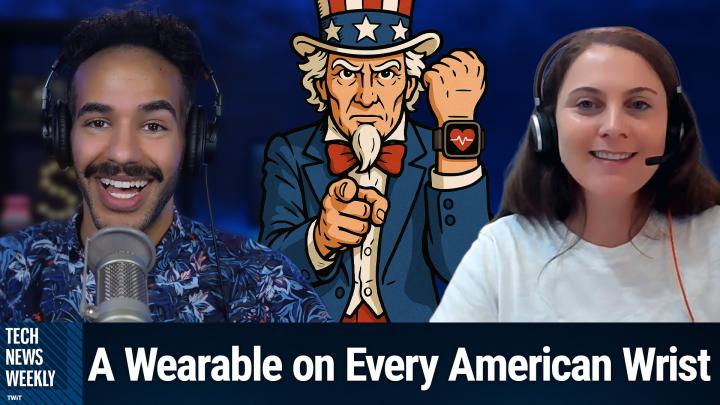
All TWiT.tv Shows (Audio)
Tech News Weekly 393: Wearables for Every American?
01:05:21
Government Ad Campaign to Get You Wearing Trackers
Loading summary
Transcript139 lines
- [00:00]
Micah Sargent
Coming up on Tech News Weekly, Emily Forlini is here. And we start off by talking about RFK Jr. S plan to get health trackers into the hands of every American. Afterward, we talk about how Apple's CarPlay Ultra is trying to make its way into more cars, but maybe those automakers aren't interested in it. Then Kate Nibs of Wired stops by to talk about some landmark AI copyright wins before we round things out with Will Saddleberg of 9to5goog, who tells us a little bit about Fairphone's latest, the Fairphone 6. All of that coming up on Tech News Weekly. Stay tuned. Podcasts you love from people you Trust.
- [00:47]
Emily Forlini
This is TWiT.
- [00:51]
Micah Sargent
This is Tech News Weekly. Episode 393, recorded Thursday, June 26, 2025. Wearables for every American. Hello and welcome to Tech News Weekly, the show where every week we talk to and about the people making and breaking that tech news. I am your host, Micah Sargent, and I am joined this week at the end of June by Emily Forlini. Welcome, Emily. It's been a while.
- [01:21]
Kate Nibs
That was so great. Hi. How you doing?
- [01:24]
Micah Sargent
I'm doing well, thank you.
- [01:25]
Kate Nibs
I'm excited.
- [01:27]
Micah Sargent
Oh, good. I'm glad. I'm glad. Yeah. I thank you, of course, for your wonderful work. While it's just. It just feels like it's been a long time since we've been able to do the show together. So it's great to. To be back here together to talk about our stories of the week. Yes, this is the time where Emily and I have both picked out stories and at least in one instance where someone has written that story and we talk about what's going on. So I will let you take it away.
- [01:58]
Kate Nibs
Okay, so my story of the week is about our friend or foe. Depends who you are. RFK Jr. He is leading the health policy for the nation and he is doing a lot with health trackers. He, for the past several months has been reiterating this vision that he wants every American to get a health tracker like an Apple watch, a smartwatch, a fitness tracker, a piece of consumer tech that you would buy. And just this last week, I think it was this week actually, he kind of testified or spoke to the House getting approval for his budget. And in the Q and A portion, he reiterated his vision that, quote, every American would have a wearable. And he said that they're going to embark on what he called the biggest advertising campaign the agency has ever done to basically, I guess, convince us all to buy, I think probably Apple watches. They didn't Name it that way. People have their brands they like. But it seems like a really big part of his health strategy is to kind of work with these private companies. He met with a group of CEOs who make these products, not Tim Cook. And so, yeah, that's a very different shift. I haven't seen seen anything like that.
- [03:16]
Micah Sargent
Yeah, I find it interesting. One of the quotes from the piece, my vision is every American is wearing a wearable. Within four years, they can see what food is doing to glucose levels, their heart rates and a number of other metrics as they eat it. So about that first one. The. Unless you were talking about the very new but available over the counter option for glucose monitors that you can wear on your arm, I don't. Do we think he's thinking, like, I could just put an Apple watch on and it tells me my blood glucose levels. Or do you know if he was talking to CEOs of health companies that do? Because like I literally have one over here. It's lingo from. I don't remember lingo. I think it's. Let me see. Lingo. Glucose. Oh, Abbott, which of course is a huge glucose tracking company. And I wore the lingo for however long it was two weeks and just saw what different foods were doing and didn't learn much because there wasn't much for me to learn. And by that I mean, like my blood glucose is pretty aver. But it was still an interesting thing. But I don't think a lot of people know about that. So I'm kind of curious. Do we think that he's talking about those?
- [04:37]
Kate Nibs
Well, that's the thing. It's very broad. And of course everyone's health is so individual. It seems like he's just saying, hey, we have these devices that, you know, American companies have created. They are really smart. Like I think, for example, the atrial fibrillation detection, like sleep apnea detection, a lot of. There are a lot of stories out there about how these devices have saved people's lives. The one thing that's a little sticky is kind of like putting the health in the hands of companies that are incentivized to profit off of it really directly and obviously. And something I worry about is there's addiction kind of features in these apps and they actually can harm your mental health as well. You're so worried, what is my sleep score in the morning? And there's a lot of, I guess, unhealthy aspects to them too. So if you're telling the whole nation and making this policy like, go and buy these devices from these for profit companies and then we're going to be a healthier nation. Give them your data, Maybe they'll give us your data. You know, it's, it's, it's a very murky policy. But at the same time I do think those can, can be almost like miracle products to help people. So I, I'm like of two minds about it.
- [05:47]
Micah Sargent
Yeah. So I very much that, you know, there are already a couple of places where we've seen something like that kind of bear out. There are some, especially if you get insurance, health insurance through your employer here in the. Several of them, I shouldn't say many, but several of them offer these little things where you hand over your health data in some way. It might be going in and getting a health test done by a doctor, it might be handing over your Apple watch wearable data, it might be some other thing like getting a little fitness tracker. And then depending on how well you perform or your body performs, you can get discounts on your health insurance. Sometimes it opens you up to other options you can get. It's sort of an incentivized program where you get, you know, coupons and things like that. And then we've seen it in car insurance as well. There'll be little dongles as you are very familiar with. But the listeners might not be. You plug into your OBD2 port and it looks at how you brake, it looks at how fast you're going, where you're driving, all of that. And on the face of it it seems like oh, what we're saying here is if you choose to drive safely and carefully, then you will get a discount. And that part is true. But what people might not realize is A, all of that data is being scooped up and sent off and you don't necessarily know where it's going unless you do a lot of digging. But B, it also does mean the opposite, that instead of being positive, it can have positive impacts, it can have very negative impacts and suddenly you are seeing a change in your policy and you don't have any control over it. Where, when it exists in a gray area, right. Of, of not having that physical data, there's less, there's, you have more standing ground than if they can go, well, I just saw that you broke hard seven times and that means that you're not a good driver. So we have to, you know, up your policy. Yeah, that's, that's the part that kind of worries me about this, particularly with an administration that is also so focused on Other aspects of health care in the U.S. that's, that's a little concerning.
- [08:13]
Kate Nibs
Or at least is willing to experiment with alternative, not as proven. Like, some of their strategies are not necessarily based on years of scientific evidence. So it's like in these health trackers, if are they gonna, you know, they said bans were tolerable, like, oh, your sleep, like, wasn't good. You know, who says it wasn't good? It's because they said in the tech, what defines good sleep? Where they set in the tech, what defines good exercise? And there's, they probably customize it for the person. But it's like they're, they are in a sense setting standards through these, these watches or wearables that people now think I'm healthy, I'm not healthy based on that. And it's not like people are really in a position to check, like, how do they develop those ranges, you know, so if, if, if the government is going to push out standards through these companies or like, how is that going to work? And there's just a lot of questions.
- [09:06]
Micah Sargent
Well, and I can remember as a kid being part of some federal program. You know, my mom, my mom was a single mom, and so she had food assistance for us. And I remember having to go in every couple of months. I think it was. Honestly, I don't remember how often it was, but however often it was, I would have to go in, we would have to go into this office. I was a kid and I can remember I had to get my finger pricked and they tested my blood to see that I was getting the nutritional levels that I was supposed to be getting. And that would have an impact on what assistance we were given and, you know, what was needed. And when I think about this now we're looking at what if, you know, the only way that you get your food stamps is if you are shown to be taking 10,000 steps a day or something like that. That gets a little frightening.
- [10:08]
Kate Nibs
Do you know if the program. Was it wic?
- [10:10]
Micah Sargent
Yeah, it was wic.
- [10:11]
Kate Nibs
So my sister works on wic.
- [10:13]
Micah Sargent
Oh, is this the work? The same as it did back when I was a kid.
- [10:16]
Kate Nibs
I haven't heard about finger pricking. She does a lot of. She's more on the research side. So I don't. She's not working in the offices, but she's working to develop like, what would be, what would be best to be offered in that program. And I wonder what she would think about all this.
- [10:29]
Micah Sargent
Yeah, that's. And I'd love to hear more. I think from the experts. The problem is when it comes to this, this kind of story, it is, it is coming from certain, certain folks who I think are, they've got the ideas that they have and they're going to make it happen.
- [10:49]
Kate Nibs
Yeah.
- [10:50]
Micah Sargent
And so you don't necessarily hear the, the alternative other than for us coming from the tech side, just talking about the concerns around privacy. Right, that's, that's a big thing that.
- [11:01]
Kate Nibs
I mean we're coming sticks out. We, we work in this so we see all the ways tech companies abuse this stuff. But the other side of the coin could also be like there's just a lot of basic health knowledge people don't have. Like, yeah, some people might think eating 8,000 calories a day is normal. And if they had a device that was like, hey, actually that's not normal. Like actually you should cut it, cut it back. Like there could be.
- [11:23]
Micah Sargent
That's a good. Yeah, we, we should talk about that side of it. Right? Yeah, I, and I agree. I think I have seen for people who do get wearable devices a of course there are the negatives, there are the, the, the sort of anxieties that can come up. But I have also seen sort of transformative experiences and I think particularly when it comes to the glucose thing like that and, and sleep apnea are probably two areas that I really sort of champion in a way and like always celebrate.
- [12:01]
Kate Nibs
You're a self identified sleeper.
- [12:03]
Micah Sargent
Yes, I am. Yes.
- [12:04]
Kate Nibs
These devices, everyone's talking about their sleep.
- [12:07]
Micah Sargent
Yes, everybody's talking about their sleep. And they're, you know, again there, there are anxieties there. So much so that there's actually a term for like doctors have now come up with a term for when somebody's sleep scores and their sleep metrics cause them to have worse sleep because they have so much anxiety about it. But outside of that, I do think that in particular with sleep apnea, peop, A lot of times people just, they're like, oh yeah, I snore. Sleep apnea is frightening because of what it actually does to the physical structures inside of your body and how it changes the pressures in your chest, which causes your heart to have to beat in a way that is not sort of its natural way of beating. So it can cause your heart muscle to grow stronger in ways that poorly affect you. And of course less sleep overall. There's so much impact there. So more people learning about that and then having something to help them out with it, I think is, is great heart rhythms. You know, you, you may not realize that you have an arrhythmia and being able to have. That is cool. So, yeah, I like the idea of people having more access to this. I don't like the idea of the government having more access to.
- [13:27]
Kate Nibs
Right. Like, you could just.
- [13:28]
Micah Sargent
That ends up being the case.
- [13:29]
Kate Nibs
We could just have more health trackers and like, not have the government involved.
- [13:33]
Micah Sargent
That would be awesome.
- [13:34]
Kate Nibs
Two things can. They can maybe do more like, research based, less contract, collective interest based, you know, public health work.
- [13:40]
Micah Sargent
Yeah.
- [13:41]
Kate Nibs
But I think one other angle we didn't discuss is obviously, you know, as part of Trump's whole agenda, they're downsizing a lot of these agencies. So there's huge cuts that RFK Jr is making into the agency. And I don't know if the wearables thing is outsourcing some of the work.
- [13:59]
Micah Sargent
Yeah. Okay. That's. Yeah. If you don't have to have the human bodies kind of keeping track of the metrics, that would already be part of the process. That makes sense. So, yeah, that could be a big part of why. Why this is going.
- [14:15]
Kate Nibs
I just want to see the ads. Like, when people start seeing the ads, like, we need to.
- [14:19]
Micah Sargent
Let us know.
- [14:20]
Kate Nibs
Yeah.
- [14:20]
Micah Sargent
Let us know if. Yeah, if you see them first, I want to know what they look like.
- [14:23]
Kate Nibs
Is this going to be the new Got Milk?
- [14:25]
Micah Sargent
Like, oh, my God, that would be interesting. And also. Or the new. This is your brain on drugs, like the p. You know what I mean? Yeah. Don't do drugs. Yeah. The new dare. It's got to be something that's like, slightly cringy, or else it doesn't feel like it came from the government.
- [14:40]
Kate Nibs
It's going to be like a piece of celery being, like, kind of wearable.
- [14:45]
Micah Sargent
I love it. I hope that's what it is. It's just celery with eyeballs saying, googly eyes, celery.
- [14:51]
Kate Nibs
All right. Love it.
- [14:52]
Micah Sargent
All right, let's take a quick break before we come back with my story of the week. I want to tell you about drata. We're bringing you this episode of Tech News Weekly. If you are leading risk and compliance at your company. Well, I'm looking at you, and you probably have. Yeah. 10. You're wearing 10 hats all at once. You are managing security risks, compliance demands, budget constraints, and you're doing it all while trying not to be seen as that roadblock that slows the business down. But GRC isn't just about checking boxes. You know that. It's a revenue driver that builds trust, accelerates deals, strengthens security, and that's why Modern GRC Turn to Drata It's a trust management platform that automates the tedious tasks so you get to focus on reducing risk, proving compliance and scaling your program. With Drata, you can automate security questionnaires, evidence collection and compliance tracking. You can stay audit ready with real time monitoring. And you can simplify security reviews with Drata's Trust center and AI powered Questionnaire assistance. Instead of spending hours proving trust, build it faster With Drata ready to modernize your GRC program? Visit drata.comtechnews to learn more. And our thanks to Drata for sponsoring this week's episode of Tech News Weekly. All right, we are back from the break. I'm joined by Emily Forlini for this episode of Tech News Weekly, and it is time for my story of the week. Apple's newest in car interface, CarPlay Ultra, represents a dramatic expansion of its automotive ambitions, taking over not just infotainment, but actually the entire dashboard. And while some automakers are eager to adopt this immersive system, honestly others are hesitant or in some cases even resistant. At the heart of the debate is this fundamental question, who owns the in car experience, the automaker or the tech company? And here's the thing about that fundamental question. Why is there not the third one, which is the person who purchased the car, because that is what it feels like is the person who ends up suffering in this case. So I want to talk a little bit about CarPlay Ultra. First and foremost, in comparison to CarPlay, so many people are familiar with CarPlay. I always bring up one aspect of it that I think people don't pick up on with CarPlay and both with and also with Android Auto, these systems are not built into your car. And a lot of times that is the thought that you sort of plug in your phone and that's the key to turn it on in your car. And that's not the case. What's happening is your phone is projecting this system into your car. So your phone software has CarPlay built into it or your Android phone has Android Auto built into it. And when you plug it in or you connect wirelessly, you're pushing that data onto the screen or screens that are available in the car. And that's important because of course that works fundamentally different from the built in infotainment systems. Those are in the car, those are part of the car software. And in many cases up to this point, what that's meant is the car's software firmware all works much closer to what the car physically is doing. So Things like speedometers and H VAC controls and all of that traditionally have needed to be done by the thing that's built into the car itself, because having any lag when it comes to speedometers to some of these other controls is a hazard. But with CarPlay Ultra and the work that the company has done on improving its software in this very particular thing, it's all about that no latency experience. And of course, working closer with car manufacturers to kind of overlay onto the dashboard experience. So with CarPlay Ultra, speedometers, as I mentioned, H Vac controls, radio and media functions are all part of the experience and it kind of overlays onto your car and you get this really Apple branded UI across the screens. But as it happens, and I think as it makes sense, a car manufacturer who comes up with a concept and design and everything may feel a type of way about that part of their car being taken over by another company. That's something that you are bringing into the car. I want to open this up in just a moment, but really quickly. I'll also mention kind of where things stand right now. Aston Martin and Porsche are actively adopting this technology. Ford and Audi say they are planning, say that they are planning to adopt it. Hyundai or Hyundai, Nissan, Mercedes, Benz, Kia, Infiniti are saying we're evaluating it. And Volvo, Genesis, Jag, Jaguar slash, Land Rover, Polestar and Renault I think are saying we're not planning to adopt it. And then of course GM and BMW are both going, yeah, no, that's not happening at all. I wanted to ask you because there are kind of two parts of this, Emily. One is that sort of ideological aspect of if you design the thing, do you get to design it from the ground up and do you bear in mind what an end user might want for their vehicle? And then we will also talk in a little bit about the data collection privacy implications that also are, I think, part of this conversation. But yeah, your first take on this, what you think about the car infotainment systems in general, how you approach it whenever it comes to vehicles, like, do you like using what the car provides, et cetera, et cetera.
- [21:03]
Kate Nibs
Yeah, so this is kind of my, one of my big reporting spaces. So I have a lot of context. So one key thing is Google already has a version of this that it's called Google Built in. And some car companies have already adopted it. So they have a Google version that is the dash is the whole, all the screens. So Apple's really doing catch up here and saying we're also going to offer that. And I'm sure Google has pitched every car company on the globe to get their experience. And also not all of them have gone for it. So this is not a new debate. So Volvo and Polestar do have the Google built in and I've been in their latest vehicles that have that and it looks beautiful. It looks really great. And I interviewed the former Polestar CEO about this and he was like, when cell phones became big, everyone was like, car dash screens look like cavemen tools compared to slick cell phones. So every car company was like, we're going to become a tech company and they're going to hire all these engineers and they're going to make their dash just as good as the cell phone and the tech's going to go be so much better. And he was like, but you know, the years have gone by and we're, we're just not that good at it. Like that just didn't really happen. I mean like Tesla put a lot of effort into their dash screen, which is a bit more like that. And he was like, yeah, it just, we're not great. We do other things. And so we decided to get Google built in because it looks great. It's something our users know already are familiar with. You know, the maps on infotainment screen just are Google Maps. And it's like, great. That's all I really want, you know. So Apple is just coming in with a competitor and that's really what's happening here. So there kind of could be a fork in the road of like companies that go for Google, companies that go for Apple and then companies like Tesla or Rivian or GM or. It sounds like BMW are like, no, we're still, we're on our own path. We're building our own tech stack. We're going to connect it to the EV battery, we're going to connect it to our mobile app and then they have their own tech vision. So that's kind of the state of the union.
- [23:13]
Micah Sargent
So why do you think Google has a not kind of been at the crux of the conversation here, given that it did it first and seems to be not as troublesome that it, it, it, it's doing the full in Google car experience.
- [23:39]
Kate Nibs
I think this is a weird media. Like the way the story is evolving is, doesn't really make sense to me. And I'm not sure if it's because people are not familiar with Google's product, which is actively in the most, some of the most popular cars. So I'm not sure if people are creating a false tension or like I.
- [23:58]
Micah Sargent
Interesting.
- [23:59]
Will Saddleberg
I'm.
- [23:59]
Kate Nibs
I haven't written about it cause I'm kind of like I don't really understand what's happening here.
- [24:03]
Micah Sargent
Yeah. So I mean it's odd because we are seeing, we, we have seen car manufacturers, like GMC said going forward we're not supporting CarPlay and what was the other one? BMW. We're not supporting CarPlay. And I've heard from people who said well I want to use CarPlay in my car. I've used CarPlay for years. I like that. I like it. And I think too as you mentioned, it's been the case for so long that those in dash infotainment systems kind of sucked, to put it frankly. And you would do everything you could anecdotally to avoid having a conversation with the car. Sound that sounded like this. Yeah, it was horrible. And oftentimes you plug in CarPlay or.
- [24:54]
Kate Nibs
Android Auto and you're just trying to forget, get it out of the way.
- [24:58]
Micah Sargent
Exactly. So I understand why people are not wanting to, you know, have the built in systems but I also understand a company wanting to kind of own that experience. And I wonder if that maybe is where there's friction because that's Apple's whole thing is we own every part of the stack and so we make our hardware, we make our software, they combine together, they work so well together and we think about design and this and that, whereas Google is more obsequious and it's just kind of like oh, we'll be where you used to be. And so I wonder if there's maybe now that they, these teams as you mentioned have been built up for like think about, I think about being a designer or developer working for BMW and my job did not exist maybe to the extent that it does now, 15, 15 years ago, 10 years ago. And going forward I have to continue to make it so that my job is important. And I think part of that is kind of pushing back and saying oh no, no, no, we are not ceding ground to Apple, to Google, to whomever. We can do this ourselves and we can do it better. Don't fire me.
- [26:22]
Kate Nibs
Yeah, I think it's that. But it's also more like the car company is now handing over that experience to a non car company. So if you think like Riv puts a lot of work into its dash and they develop new dash features that Apple would be so far behind on like really unique ways of calculating range and energy and finding chargers, things like the pet mode, there's a button on the dash, you press that and your whole car turns into like a pet mode. They have all these really fun things. They have you access the different modes, drive modes like through the dash. So their whole experience is custom. And if they're gonna, you couldn't. Now you're requesting features to Apple, like screw that, you know.
- [27:04]
Micah Sargent
Yeah.
- [27:04]
Kate Nibs
And you're convincing them, oh, add this to your product. So I guess I'm more that that by the way is very Apple like mentality. So the more similar a company is to Apple probably the less interested they are in this.
- [27:18]
Micah Sargent
That's a good point. And that that does bear out. Absolutely. We are running out of time. But I did want to mention another aspect of this that is front of mind for me. I think it was Mozilla, the Mozilla foundation that did a study looking at the major car manufacturers and their built in infotainment systems and looking at the data collection policies of them and some of them are pretty egregious. There was even one I think was actually I don't want to say who I think it was because that might be inaccurate but there was one car company who was even collecting data on sexual activity as one of the data points. Mozilla foundation was like we have no idea how they would know that, what they would be doing to try to determine that. But that was part of the data collection highs for high schoolers. Yeah, exactly. And that is one thing where or one place where you know, I like using CarPlay over a built in system where I at least know the privacy and data collection policies of Apple and what is collected, how it's collected and how it's shared versus maybe not knowing that for an external or for the car company and what they would want to do with that data. So that's something that I've kind of kept in mind as we look at all of this. But yeah, when it comes to those really custom designs like you talk about with Rivian, I think I would want what Rivian provides, if it's good over what Apple, you know, brings to the table externally. Again, I hate to say goodbye but we've got somebody waiting in the wings. So I want to say first of all thank you very much, much Emily for being here. If people would like to follow the great work that you're doing, where are the places they should go to do that?
- [29:05]
Kate Nibs
I'm in all the places. I'm on Blue Sky, I'm on Twitter, although I don't post too much there. So Blue sky is probably the best option and where else? I mean LinkedIn if you like that. We got TikTok, but I think Blue sky would be good. I'm actually two followers away from my next threshold.
- [29:28]
Micah Sargent
Oh, we gotta get Emily there. So. Yes, are youforlini there? Yeah, beautiful head there today, somebody that's.
- [29:36]
Kate Nibs
A special place in my heart. If you in the next two.
- [29:41]
Micah Sargent
Beautiful. All right, well thank you so much for your time and I'll see you again soon.
- [29:45]
Kate Nibs
Yeah, thanks. Have a good day.
- [29:47]
Micah Sargent
All righty folks, we're gonna take a quick break before we come back with our next an interview with Kate Nibs of Wired. All about the very interesting and very, I think important conversation around AI copyright rulings. But first, let me tell you about StoryBlock. We're bringing you this episode of Tech News Weekly. You probably know the pain of legacy cmss. They promise enterprise grade features, but deliver slow, clunky systems that unfortunately need dev support for even the smallest updates. And when you're trying to move fast, That's a nightmare. Storyblok changes that. Unlike those monolithic CMSs, Storyblock is headless, completely decoupling your back end from your front end. Developers can build in any framework, react, Astro Vue, etc. While marketers can use an intuitive visual editor to create and update content without filing dev tickets. Storyblocks scales whether you're a freelancer or part of a global enterprise with a global CDN, AWS data centers in the US, Europe and Asia, it's built for performance at scale. Storyblock is enterprise ready with role based access control, enterprise SLAs and top tier security. It's the stuff Fortune 500s demand. One global e commerce giant switched to Storyblock and cut content update cycles from weeks to hours. Another major brand empowered marketing to launch campaigns independently, freeing up devs for bigger projects. StoryBlock has an API first approach so your content loads faster anywhere in the world. And that means better ux, higher engagement and improved SEO. With a real time visual editor, marketers see exactly what their content will look like before publishing. No more endless back and forth over minor tweaks. Devs get fewer interruptions. Marketers get more autonomy. Win, Win. If you're an agency, Storyblock offers multi client workspaces, flexible permissions and seamless collaboration tool. You can manage multiple projects without disrupting development workflows. So whether you're a startup, an enterprise or an agency juggling multiple clients, StoryBlock gives you the power and flexibility you need. Try it today at storyblock.com twitTV25 and use code TWIT25. TWIT listeners get 20% off for three months on growth and growth plus plans. That's storyblock.com with code TWIT25 for 20% off the first three months on growth and growth plus Plans. S-T O R-Y-B-L-O-K.com TWIT T V-25 with code TWIT25. Thanks so much to Storyblock for sponsoring this week's episode of Tech News Weekly. All right, we are back from the break, and I'm very excited about this next interview. We are joined once again by Kate. Welcome back to the show, Kate.
- [32:49]
Will Saddleberg
Hey, thanks so much for having me.
- [32:51]
Micah Sargent
Yeah. So you are a prolific writer. You've now covered two major AI copyright rulings in the same week. Love to know what stood out to you most about how differently the courts handled the Meta and Anthropic cases, and maybe a quick little kind of overview of what's going on with these cases.
- [33:11]
Will Saddleberg
Sure thing. Yeah. It was a very busy week. Please pray with me that no other huge copyright.
- [33:17]
Micah Sargent
Yes. Let's take a moment. Okay, good.
- [33:20]
Will Saddleberg
Thank you. Yes. So there are, there are dozens of AI copyright lawsuits currently winding through the courts. These were the first two summary judgments from judges dealing with generative AI. So they're hugely precedent setting. They're both very important and they're fascinating because on the surface, both of the judges sided with the AI companies over whether some of their use of copyrighted materials was fair use in these cases. So surface level looks like a win for Anthropic. Looks like a win for Meta. What's fascinating is that they're also losses for the tech companies in very different ways. And I will explain. So Judge William Alup made the summary judgment in the Anthropic case, and he basically came out and said, in general, it's fair use to use copyrighted materials to train AI tools. However, because during the discovery process that came out that Anthropic had pirated over 7 million books to create a library that it was planning to use to train AI tools, the judge said, well, piracy is not okay and you still have to to go to trial over that. And so the plaintiffs are going to be able to take Anthropic to trial and the damages could be over a trillion dollars, which would be really bad for Anthropic. Yeah.
- [34:46]
Micah Sargent
Wow.
- [34:47]
Will Saddleberg
And it opens the door for other plaintiffs to do the same to other AI companies because Anthropic isn't the only AI company that it's known that they Used pirated materials.
- [35:01]
Micah Sargent
Yeah, the precedent of it all.
- [35:03]
Will Saddleberg
Yeah. So one of the AI companies that we know also use used pirated materials is Meta. And in the Meta case that was decided yesterday, the plaintiff's lawyers spent a lot of time arguing about the piracy angle, saying, you know, we can't ignore this. They pirated these books. That is theft. It doesn't matter what they did with them.
- [35:27]
Kate Nibs
Really.
- [35:27]
Will Saddleberg
Like, we got to address this. But the judge judgment, Chabia, he didn't really care about this argument. Like, it was not of interest to him. He was laser focused on whether the plaintiffs could prove that Meta harmed their financial prospects by training on their books. He really, really wanted the, the plaintiffs to prove what is called market harm. And so his ruling was, I'm siding with Meta, but not because I think that every single instance of training on copyrighted books is fair use. It's because I think the plaintiffs did a bad job arguing their case, pretty much. So that also leaves a door open for other plaintiffs to bring Meta to like to file lawsuits against Meta for copyright infringement and just argue it differently. So, yeah, it's, it's really wild to see how this has all unfolded.
- [36:24]
Micah Sargent
Yeah, there's a lot going on in the anthropic case. The court called LLM training and I thought this was, I mean, this is kind of, again, all of this is so interesting. I'm sure you, you probably shout this at people walking down the street. No, I'm kidding. I would want to do that. Like, you don't understand. All of this is so precedent setting. And I can't imagine being a judge who has to make any of these rulings because you're really like, wow. Anyway, so the court called LLM training, quote, one of the most transformative uses will ever see. How important is that fair use framing and what precedent. I know I'm going to keep saying that word. Somebody's going to have to start to make a little drinking game. But what precedent might it set?
- [37:09]
Will Saddleberg
I think when the, like, all of the defense attorneys for the AI companies read that line, they probably took a shot of celebratory champagne or something, because that's definitely going to be huge going forward for them as something to point to, to say, well, look, the judge, this is what the judge said in this first summary judgment. Because whether something is transformative or not is, is hugely important to making the determination about fair use. And just for anyone who doesn't know what fair use is, because it's fairly like wonky thing in copyright law, it's A doctrine that allows people to use copyrighted materials without permission in certain circumstances. So that's why, like, I can quote from a book in a news article without first getting permission from the author to do so. My use would be transformative and thus fair. It's why people are allowed to, like, create parody sketches of popular TV shows without getting sued by the creators. So whether something is transformative, whether it. It takes the materials and does something new with it, is one of the big things that judges look at when they're deciding if. If use of copyrighted materials was legal or not.
- [38:23]
Micah Sargent
Well, the judge in the Meta case emphasized that market harm was a deciding factor. And you talked about this a little bit, seemed almost frustrated the plaintiffs didn't build that part of the case. Do we, I guess, hearing this from the outside. Right. It almost sounds like. It almost sounds like a judge who perhaps wanted to rule a different way and then said, you messed up so bad that I just, like, you didn't do what you were supposed to do. Otherwise, it could have been this. When you. When you talked about that, it almost sounded like what you were saying, and I would love to be corrected if I'm wrong here. It's almost a hint maybe that if you want to argue this in the future, it could be the ruling that you're trying to get if you do a better job on this specific type of argument. Is that the vibe? Like, what. What exactly was going on there?
- [39:24]
Will Saddleberg
That is exactly the vibe. Like, I wouldn't say the judge was almost frustrated. He was pissed. Like, he even in hear that they were having. Leading up to this summary judgment, he was saying to the plaintiff's lawyers, like, if you are able to lay out why this is harming your clients financially, I'm gonna rule in your favor. Like, it was sort of the plaintiff's case to lose in the judge's mind, and the summary judgment was sort of an indictment of the way that the case was argued.
- [39:55]
Micah Sargent
Wow.
- [39:55]
Will Saddleberg
Yeah. So he seemed. Seemed quite pained to be issuing the judgment that he issued.
- [40:02]
Micah Sargent
Understood. Both rulings, of course, involved allegations of piracy. I mean, but only one judge allowed that part to go to trial. What is it there that made the courts kind of treat these issues so differently?
- [40:19]
Will Saddleberg
It's so wild watching all of these cases, because it really cements the truth that it really depends what judge you get. I'm so curious how it would have played out if Judge Alsip had been the one sitting for the medit case because he really cared about piracy. So, yeah, it. It truly can sometimes Just come down to the judge's interpretation of the law. Also, the Anthropic case was a class action and the Meta case was just limited to 13 plaintiffs. So I think, think. And again, I'm not actually a copyright lawyer, even though I'm obsessed with this. So I think that might have played into why one was going to trial and one wasn't. But yeah, I listened to so many hours of legal proceedings in both of these cases leading up to these judgments. And the whole way through, Judge Chabria didn't seem to want to hear about the piracy and now we know why. It's because he wasn't planning on making it an important part of his ruling.
- [41:22]
Micah Sargent
Understood. In reporting both stories, I'm curious if you got a sense of how these rulings are being received in the AI industry overall versus the creative and publishing sectors who are kind of at odds here?
- [41:34]
Will Saddleberg
Yeah, I get a lot of feedback. It's so interesting because everyone is sort of declaring victory here. The AI companies obviously did technically win in the. The submarine judgment sided with them. Advocates who support the idea that, that AI training is fair use are also just calling this a win. And they tend to be emphasizing the way both judges did say that AI training was transformative. But a lot of people close to the plaintiffs that I've spoken with and other plaintiffs that I've spoken with in lawsuits that are still ongoing and just advocates for rights holders, they're kind of chalking these up as wins too because of the huge caveats that the rulings came with, like, like now they have opportunities to go for damages worth billions and maybe trillions of dollars. Anytime that piracy was involved in the amassing of the data sets that are used to train. And then, yeah, the judge in the Medicase truly did leave a huge lane for anyone who wanted to bring a different lawsuit against the tech companies. So everyone's a winner somehow.
- [42:53]
Micah Sargent
To round things out here, looking ahead, are there any cases or rulings that you are particularly watching that might further clarify the limits of fair use in AI training? Or maybe it's just what happens next in these cases?
- [43:09]
Will Saddleberg
Yeah, I'd say there are three that I have a close eye on. One is the New York Times versus OpenAI, and that had sort of long been considered one of the best laid out complaints against a tech company. They had provided a lot of instances that they were able to show OpenAI regurgitating word for word New York Times content. Similarly, there was a new case. Disney and Universal sued Mid Journey, the image generation startup, similarly to The New York Times case, they brought tons of receipts that they were just like all of these different images of very recognizable Disney and universal characters like the Boss Baby and Darth Vader that had been generated by midjourney. I think both of those cases will still be hugely important. And then there's also been a lot of rumors that the music labels are considering settling with the music generation startups Suno and Udio, and we haven't seen a settlement at all. So that would be huge too. So those are the three that I'm like keeping the closest eye on. But. But the anthropic case kind of came was a sleeper for me and now it's hugely important. So there's probably at least one or two others going on that I should be paying attention to. If anyone listening wants to tell me what else I should be looking.
- [44:30]
Micah Sargent
Yeah, please reach out. In fact, if people would like to follow along with the work you're doing and maybe reach out, where are some places they can go to do that?
- [44:39]
Will Saddleberg
Yeah, well, of course, Wired.com, i'm publishing very regularly there. I'm on Bluesky. Kate, Nick Nibs X. I still sometimes I'm there at Nibs threads. I don't even know what my username is. Just Google me.
- [44:55]
Micah Sargent
Yeah, there you go.
- [44:56]
Will Saddleberg
Yeah.
- [44:57]
Micah Sargent
Kate, I want to thank you so much for taking the time to join us today. Always a pleasure to get to talk to you, especially kind of pulling all of this stuff apart and also nerding out about all of it because I think it's also very fascinating. Thank you for your time and we'll see you again soon.
- [45:11]
Will Saddleberg
Yeah, thanks watching for having me.
- [45:13]
Micah Sargent
Alrighty, folks, we're going to take a quick break before we come back with our final interview, this time about a phone that promises a little fairness. But first, let me tell you about hawkshunt, who are bringing you this episode of Tech News Weekly. As a security leader, you get paid to protect your company against cyber attacks. But it's getting harder with more cyber attacks than ever and phishing emails generated with AI Legacy. One size fits all awareness programs don't really stand a chance. They send, at most, four generic trainings per year, and most employees ignore them. When somebody actually clicks, they are forced into embarrassing training programs that feel more like punishment. That's why more and more organizations are trying Hawks Hunt. Hawks Hunt goes beyond security awareness and changes behavior by rewarding good clicks and coaching away the bad. Super, super cool stuff. Whenever an employee suspects an email might be a scam, Hoxhunt will tell them instantly, providing that dopamine rush that gets your people to click, learn and protect your company. As an admin, Hoxhunt makes it easy to automatically deliver phishing simulations across email, slack or teams using AI to mimic the latest real world attacks. Simulations are personalized to each employee based on department location and more. While instant micro trainings solidify understanding and drive lasting, safe behaviors, you can trigger gamified security awareness training that awards employees with stars and badges, boosting completion rates and ensuring compliance. Choose from a huge library of customizable training packages or or generate your own. With AI, Hoxhunt has everything you need to run effective security training in one platform, meaning it's easy to measurably reduce your human cyber risk at scale. But don't take my word for it. Over 3,000 user reviews on G2 make Hoxhunt the top rated security training platform for the enterprise, including easiest to use and best results. It's also recognized as customer's choice by Gartner and and thousands of companies like Qualcomm, AES and Nokia use it to train millions of employees all over the globe. Visit hoxhunt.com securitynow today to learn why modern secure companies are making the switch to Hoxhunt. That's hoxhunt.com securitynow and our thanks to Hoxhunt for sponsoring this week's episode of Tech News Weekly. All right, we are back from the break and I am excited to be joined by 9 to 5 Google's Will Saddleberg. Welcome to the show, Will.
- [47:57]
Emily Forlini
Thanks, Micah. That's the first time I've been referred to as that because I only started at 9 to 5 last week. So that's new. Yeah, you're the first to say that.
- [48:05]
Micah Sargent
Brand new. Oh, I'm honored. Really excited to talk to you about this because I think these devices don't get enough attention, frankly. And so it's really cool to get to talk to you about the Fairphone 6, which sticks to the company's sustainable, repairable design roots. I'm curious, what are some of the hardware or design choices that stand out most this time around? And if we could, for the uninitiated, maybe you kick off by telling us about fairphone's sort of overall mo.
- [48:36]
Emily Forlini
Yeah, if you're in North America, you actually might not know fairphone just because they're not a huge presence here and we'll get to that later. But the Fairphone 6 is Fairphone's first smartphone in almost two years. It's not a radically new design, but it is a more modern design. It's got kind of what you expect from a modern smartphone. Flat edged, flat back, curved corners, all that stuff. Right. So it feels very modern. It's a little thicker than maybe like a Pixel for example, or an S25. But yeah, basically what Fairphone centers on is sustainability and repairability. Right. So this is a phone that is meant to last you the eight years and we'll get to that too. But the eight years of, of guaranteed software support that fairphone delivers. And if there is any issues with the phone, it is designed so that you can repair it yourself without having to buy a new phone or go to a repair center or ship it away or file a warranty claim. It is designed first and foremost for you to be able to get in there and do the work yourself with as minimal interruptions as possible. Like nothing is glued down, for example. It's all screws.
- [49:53]
Micah Sargent
Nice. Now one of the most creative additions in this version is the modular backplate system. Yes. Can you talk about how these accessories work and what possibilities it opens up for customization?
- [50:05]
Emily Forlini
Yeah. So if you look at the phone, first of all, you'll see that it's got a removable back which is rare and has been rare on phones for, you know, even Android phones phones for basically a decade now. It's not hot swappable. Right. You're not sliding this back off, but it's just two screws and along with those two screws you can basically, once you take that plate off, you can slap on whatever optional accessory fairphone sells. So they have for example, a grip back that is the same backplate but with a built in grip. You don't have to add one with an adhesive. They have, oh gosh, now I'm forgetting I don't have the photos up and now I'm forgetting they have a whole bunch of them. There's a wallet one for example. I also think that because fairphone sells replacement parts, you should just be able to buy a back. So let's say you buy the Fairphone 6 in white. You should be able to get the green back and then just slap that on and you have a more unique take on a phone phone just like that.
- [51:12]
Micah Sargent
Yeah, that's pretty cool. I love the idea of a wallet back that's a little bit more fastened.
- [51:18]
Emily Forlini
Than the typical magic, like fully built into the phone. So, you know, I love MagSafe. In fact, I would love to see them make a MagSafe back for this. But at the same time, like every MagSafe wallet I've ever tried will slip off every now and then. Like if you put it in your pocket. Weird. And that's not going to happen with the this phone.
- [51:37]
Micah Sargent
Very cool. Let's talk about the new Moments mode. How does it compare to minimalist phones like the Light phone? Or of course installing a third party Android launcher that offers similar functionality.
- [51:49]
Emily Forlini
So this is a pretty out of left field idea for fairphone. Like they have not done anything like this before and in fact there had not been a lot of leaks on this device and so no one really knew what this hardware switch off to the side was going to do. It looks like a mute switch, but instead it's actually a hardware switch that activates what they call moments. And it's a customizable alternative launcher that has different modes you can set so you can set your essentials. The examples they give on the website are like Deep Focus or Recharge or Quality Time. And then all of those modes have just five apps listed in text on the home screen so that you are a little less likely to browse Reddit while you want to be just relaxing, watching TV or something. Maybe it's just your messaging app in your phone app or something instead of social media. You can keep that for later. So it's sort of trying to be something like the Light Phone without having you completely replace your, your smartphone with something that can't run any apps. Right. This is trying to be like best of both worlds.
- [53:03]
Micah Sargent
Understood. Yeah. Now with this, of course there's this dedicated hardware switch that, that turns on Moments.
- [53:11]
E
Yeah.
- [53:12]
Micah Sargent
What is your, what are your thoughts on the decision there? Is this something that feels like they're sort of pushing this onto you or maybe it's helpful.
- [53:21]
Emily Forlini
I, you know, I actually hadn't even thought about it as in, you know, pushing onto people until right now. I, I'd have to try it in person. I have not held this phone to see does it feel, you know, rigid enough to avoid accidental switches. I wrote in my post that it reminds me a lot of and OnePlus has just replaced it on their most recent phone with a button. But you know, most OnePlus phones have had a mute switch similar to what the iPhone used to have, but theirs was vertical instead of horizontal like Apple's. And practically every OnePlus phone I've reviewed where I've slid it into my pocket like inevitably at least a few times during that review period or thereafter while I'm still using the phone, it will it will hit, you know, and switch from silent to vibrator, silent to full sound. And I could see that happening here, depending on like how hard it is to push the button and flip the switch. It shouldn't be the end of the world as long as it doesn't interrupt your notifications. But I'd have to try it. I still think it's like a cool idea to have it linked to something physical. I think that makes it feel a little more like a decision you're making of like, okay, I'm not just toggling something in quick settings, I am flipping a switch. And now my phone is kind of a different phone. And I think that's a cool idea. But I'd want to try it in person first.
- [54:45]
Micah Sargent
Absolutely. This episode is brought to you by Compiler. Everyone's talking about AI these days, right? It's changing how we work, how we learn, and how we interact with the world at a tremendous pace. It's a gold rush at the frontier, but if we're not careful, we might end up in a heap of trouble. Red Hat's podcast this season on Compiler is diving deep into how AI is reshaping the world we live live in. From the ethics of automation to the code behind machine learning, it's breaking down the requirements, capabilities and implications of using AI. Check out the new season of Compiler, an original podcast from Red Hat. Subscribe now wherever you get your podcasts.
- [55:29]
E
Today's show is brought to you by Progressive Insurance. Do you ever think about switching insurance companies to see if you could save some cash? Progressive makes it easy to see if you could save when you bundle your home and auto policies. Try it@progressive.com Progressive Casualty Insurance Company and affiliates. Potential savings will vary. Not available in all states.
- [55:53]
Micah Sargent
Now this is of course a big part of this. Fairphone is promising eight years of software support, seven major Android upgrades. How realistic do we feel that is and does it set a precedent?
- [56:07]
Emily Forlini
Yeah, as long as fairphone is around as a, as a company and they've been around for a bit at this point, this is their sixth generation phone. I think it's fairly realistic. You know, a lot of the we've seen Google and Samsung Move to 7 years of OS upgrades and security patches. We've seen, you know, OnePlus is not super far behind that. Right. A lot of the on older Android devices, a lot of the roadblocks were, oh, Qualcomm has stopped supporting this chipset after three or four years. Therefore there's not a lot the OEM can do. Even if they want to continue supporting it, that's not really a problem anymore. Qualcomm has gotten really good at supporting their modern Snapdragon chips. So it's kind of as long as fairphone is around, I would say this should get its full eight years of, of software support, which is great. I think that takes us to 2033, which is like a wild thing to think that you would hold onto your phone. And I think that pairs well with the repairability where it's like okay, my battery is shot after four years, you just buy a new one, you swap it out with a few screws and you're good to go.
- [57:19]
Micah Sargent
Yeah, that is again a pretty cool thing, the idea of just being able to swap as needed. Now in terms of specs and pricing, how does the Fairphone 6 compare to other mid range Android phones?
- [57:31]
Emily Forlini
It's a little more expensive. I think the phone I would probably compare this to the closest is nothing's 3A Pro, which is like $150 cheaper I believe, or maybe even $200 cheaper. You pay a little bit more upfront for a fairphone because than you would for similar specs because it's in this sustainable package, right? Not, not just replaceable but also they're using recycled plastic and all of this material. I think it's. As long as you're not a hardcore mobile gamer, right. If you're not playing Genshin Impact every night or something, I think this is a perfectly fine phone, at least for today. Obviously mobile AI applications kind of complicate things a little bit. There's only 8 gigabytes of RAM. That's pretty low for on device AI. But that might not be a thing that Fairphone customers really care about anyway because they're chasing, you know, more sustainability, more green minded users. So if you're kind of just a general eyebrow, social media and the web and I text people on my phone kind of user like I think this is perfectly fine and will even last up through, you know, certainly 2030 and maybe you'll start to feel a little bit of slowdown after that. But, but I think this will get most people through.
- [58:54]
Micah Sargent
And then last but not least for our US listeners, we know that the phone is not going to be available directly.
- [59:00]
Emily Forlini
No, unfortunately.
- [59:02]
Micah Sargent
How does that work and how will it work if it does? And yeah, I mean is it, has it been your experience that fairphone doesn't get a lot of attention in the US because of its in availability directly?
- [59:19]
Emily Forlini
Yeah, pretty much. I mean, you know, you know I would Love to see fairphone come to the us. It's really in addition to a duopoly kind of marketplace where Samsung and Apple kind of rule and then Google is a third place alternative. The carriers also complicate things like it is difficult to, you know, that is why OnePlus devices can be hit or miss here even though they have been on stores like T Mobile before. You know, Nothing is another example where we're finally going to see them kind of take a step Forward into the US with the Nothing Phone 3 next week. But you know, they've been slow to approach the market. Similarly, if you want to buy the fairphone in the US and you don't want to just like import it and jump through those hoops, the only way you can do it officially is by buying through fairphone's partner, Murena. Murina is a company I believe based out of France that sells de Googled versions of smartphones. So they're running like a custom ROM installed by Murena called Eos. They've been around for a few years now. I used to write an Android Police. I reviewed or did a hands on with their de Googled Pixel tablet. So it's basically like they strip all of the Google apps and services out and then they kind of have their own alternative app store. You can anonymously browse the Play Store. It's not like you can't find your apps. It's not quite as limited as something like a Fire tablet, but it is certainly not something to buy your parents or something. It is an enthusiast product and it is going to be more expensive as well. So it's not really an option for most people. I would say the de Google version, I'm curious if you can just kind of get software from fairphone. And just because this is, and I actually haven't looked into this, this is I think the third phone they've sold with Mirena. So it's possible that those ROMs are already there and you could maybe just flash like Fairphone's own ROMs and go back to a stock material.
- [61:26]
Micah Sargent
That would be ideal.
- [61:28]
Emily Forlini
Yeah, but you're going to be paying whether you import it or buy it from your arena, you're going to be paying a markup and jumping through some hoops. And it's unfortunate because I think this is a really interesting phone and it's doing, it's got some cool ideas and it's very like oh, you want to get your hands dirty, right? You want to go in there and swap the battery when you want or fix a camera or something. I think that's a really cool idea and I do think there is a market for it in the US but it's a little too niche for fairphone to probably, probably fully step into this market.
- [62:04]
Micah Sargent
Understood. Well Will, I want to thank you so much for taking the time to join us today to talk about the Fairphone. I'm glad you're writing about the Fairphone. Of course folks can head over to 9to5Google now to check out the work that you're doing. Is there anywhere else they should look to keep up with what you got going on?
- [62:20]
Emily Forlini
I'm on various social platforms. Lots of stuff coming down the pike for me at 9 to 5 where you we're working on more podcasts, I'm writing more editorials than maybe 9 to 5 has put out in the past. So yeah, it's going to be an exciting time. So follow me on social media or just pay attention to 9 to 5 and I'll be there.
- [62:41]
Micah Sargent
Awesome. Thank you so much. We appreciate it.
- [62:43]
Emily Forlini
Thanks Maika.
- [62:45]
Micah Sargent
Alrighty folks, we have reached the end of this episode of Tech News Weekly. Of course you can go to Twitter TV TNW to subscribe to the show in audio and video formats. And I want to mention Club Twit at Twitter tv. Club Twit. When you join the club, we've got monthly and yearly plans. You will gain access to some pretty awesome things. You will gain access to our ad free versions of all of our shows. You'll also get access to the Twit plus feeds. We've got three of them. One for little bits and clips, one for news events. And now I'm forgetting what the third one is. Anthony News and bits and clips. And so there's clips which is just the like before and after club shows is all the events and the news is like the keynotes. There you go. Yes. So it was the Club Twit events one that I was forgetting as, as the third there. So I think, I think recently Patrick may have said there's coming up on like two, three weeks of content there. So joining the club gets you access to all of that stuff and access to the members only Discord Server. A fun place to go to chat with your fellow Club Twit members. And those of us here at TWiT, we would love to see you in the club. I'd love to give you a little wave and have you check out some of the stuff we're doing in the club. I've actually been talking to our resident engineer Burke about some ideas that I have. I don't want to say more than that just yet, but I'm really looking forward to that Some some tinkering we might be doing soon. So please be sure to head to Twitter TV Club Twit to join the club. If you'd like to follow me online, I'm ikeasargent on many a social media network. Or you can head to Chihuahua Coffee, that's C H I H U A H U a Coffee, where I've got links to the places I'm most active online. And of course, be sure to check out my other shows, including shows that'll go out today, I Owe Today and Hands On Apple. You can also check out Every Sunday my show, Hands on Tech. Thanks so much for being here and I'll see you again next week for another episode of Tech News Weekly. Bye bye.
- [65:00]
E
The tech world moves fast and you need to keep up for your business, for your life. The best way to do that Twit TV on this Week in Tech, I bring together tech's best and brightest minds to help you understand what just happened and prepare for what's happening next. It's your first podcast of the week and the last word in tech. Cybersecurity experts know they can't miss a minute of Security now every week with Steve Gibson. What you don't know could really hurt your business, but there's nothing Steve Gibson doesn't know. Tune in Security now every Wednesday. Every Thursday, industry expert Micah Sargent brings you interviews with tech journalists who make or break the top stories of the week on Tech News Weekly. And if you use Apple products, you won't want to miss the premier Apple podcast, Now in its 20th year Mac break Weekly. Then there's Paul Thurat and Richard Campbell. They are the best connected journalists covering Microsoft, and every week they bring you their insight and wit on Windows Weekly. Build your tech intelligence week after week with the best in the business. Your seat at Tech's most entertaining and informative table is waiting at TWiT TV. Subscribe now.
- [66:28]
Micah Sargent
Hi Zoe Saldana, welcome to T Mobile. Here's your new iPhone 16 Pro on us.
- [66:32]
Kate Nibs
Thanks.
- [66:33]
Micah Sargent
And here's my old phone to trade in. You don't need to trade in. When you switch to T Mobile, we'll give you a new iPhone 16 Pro. Plus we'll help you pay off your old Phone up to 800 bucks and you still get to keep it. There's always a trade in. Not right now. @ T Mobile.
- [66:46]
Kate Nibs
I feel like I have to give.
- [66:47]
Micah Sargent
You something in return for karma. That's okay.
- [66:49]
Kate Nibs
I don't really have much in my purse. Oh, let's see. Hand sanitizer. It's lavender.
- [66:54]
Micah Sargent
I'm good. Seriously. Let me check this pocket. Oh, mints. Really, I'm fine.
- [66:59]
Kate Nibs
Oh, I have raisins. I'm a mom.
- [67:01]
Micah Sargent
Wait, wait one sec.
- [67:02]
Kate Nibs
I've got cupcakes in the car.
- [67:03]
Micah Sargent
It's our best iPhone offer ever. Switch to T Mobile. Get a new iPhone 16 Pro with Apple intelligence on us. No trade in needed. We'll even pay off your phone up to 800 bucks with 24 monthly bill credits. New line $100 plus a month on experience beyond finance agreement $999.99 and qualifying ported for well qualified plus tax and $10 connection charge.
- [67:22]
Emily Forlini
Pay off via virtual prepaid card.
- [67:24]
Micah Sargent
Allow 15 days credits end and balance due. If you pay off earlier, cancel CT.
- [67:27]
F
Mobile.Com Marketing is hard, but I'll tell you a little secret. It doesn't have to be. Let me point something out. You're listening to a podcast right now and it's great. You love the host. You seek it out and download it. You listen to it while driving, working hours out, cooking, even going to the bathroom. Podcasts are a pretty close companion. And this is a podcast ad. Did I get your attention? You can reach great listeners like yourself with podcast advertising from Libsyn Ads. Choose from hundreds of top podcasts offering host endorsements or run a pre produced ad like this one across thousands of shows. To reach your target audience in their favorite podcasts with Libsyn ads, go to Libsyn ads.com that's L, I B S Y N ads.com today.