← All TWiT.tv Shows (Audio)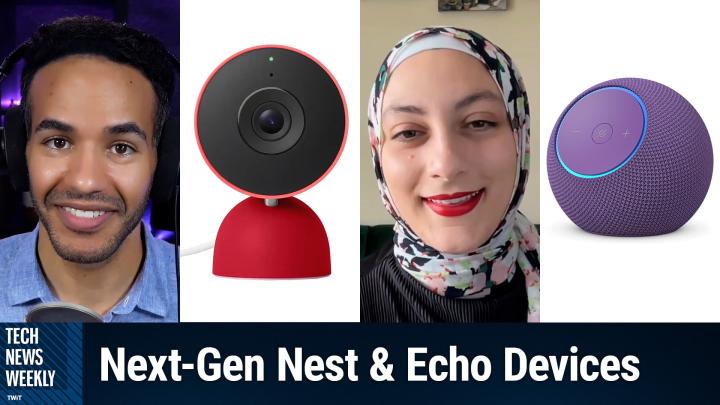
All TWiT.tv Shows (Audio)
Tech News Weekly 407: Google & Amazon Reveal New Hardware
01:06:01
Google & Amazon's Battle for Your Home
Loading summary
Transcript103 lines
- [00:00]
A
Coming up on Tech News Weekly, we kick off the show by talking about OpenAI's new app for AI generated social media. Afterwards, I talk about how AI may be at the heart of a surge in app fraud. Then Abrar Alheti sticks around to talk about how Amazon has a whole new host of devices. And Florence Ion joins us to give us the lowdown on Google's new smart home hardware. All of that coming up on Tech News Weekly. Podcasts you love from people you Trust. This is TWiT. This is Tech News Weekly. Episode 407 with Abrar Alheti and me, Micah Sargent. Recorded Thursday, October 2, 2025. Google and Amazon reveal new hardware. Hello and welcome to Tech News Weekly, the show where every week we talk to and about the people making and breaking that tech news. I am your Micah Sargent and I am joined today by the wonderful Abrar Al Heiti. Welcome back to the show, Abrar.
- [01:09]
B
Thank you so much for having me. Always thrilled to be here.
- [01:12]
A
Always a pleasure to have you join us. For people who are tuning in for the first time, or maybe you've been here before and you just need a little reminder, like I do, what happens on the show? I don't know. No, but we start out the show by talking about our stories of the week. These are the stories that we find interesting that we think you should know about. And so let's kick things off, Abrar, with your story of the week.
- [01:37]
B
Yes, I wanted to talk about the hottest new social media app that, frankly, terrifies me. So this week, OpenAI released Sora 2, which is its latest video generation model. It's supposed to be more physically accurate and realistic than the previous model. Not terrifying at all. It has synchronized dialogue and sound effects, so potentially harder to tell reality from AI. Super fun, right? And so then along with Sora too, OpenAI also released a new Sora app for iOS. Now think of this as a TikTok feed where literally nothing is real. So you enter a text prompt to create whatever scenario you want, let your imagination run wild and it will generate that. And so you have these like short bite size videos that you continue to scroll through. And you can also upload yourself essentially into to any SORA generated scene. And that's called a cameo. And before you do all that, you record video and audio of yourself into the app to, as they say, verify your identity and capture your likeness. And then you can also give other people permission to use your likeness in their own videos. So OpenAI is calling this a quote, new and unique way to communicate with people. I personally am good with texting, but to each their own. If that's how you'd rather communicate with your friends, I will not stop you. So the Sora app is currently invite only and clearly OpenAI is aware of some hesitation and trepidation around something like this. So they have I'll read this kind of statement that they had in their announcement. By default, we show you content heavily biased towards people you follow or interact with and prioritize videos that the model thinks you're most likely to use as inspiration for your own creations. We are not optimizing for time spent and feed and we explicitly designed the app to maximize creation, not consumption. And then they also say they'll periodically pull users on their wellbeing and proactively give them the option to adjust their feed. So they're really. One of the really interesting things they're doing here is they're kind of pointing the finger to other apps and saying, see the problem with those apps is they try to monetize the time that you spend on here. And the content creation is monetized in a way that doesn't align with, you know, what people actually want to be making. And what they're saying is they say that, that incentivize their incentivizing decisions that are at odds with user well being, which is just a really interest, interesting way to say, like, oh, don't worry, our platform is better for user creators. I'm not really understanding why that would necessarily be the case. And so, and then they also say in terms of monetization, they'll eventually charge people to generate extra videos when there's a lot of demand. And they explicitly actually say we're optimistic that this will be a healthier platform for entertainment and creativity compared to what is available right now. I can already tell from your reactions that you perhaps feel the same way I do. So that is very bold statement to say this will be a healthier platform. So I would love to know what you're thinking as you're hearing.
- [04:45]
A
Yes, that really bugs me because it feels like you sit down at the, you're at school, I don't know, it's middle school. And you're sitting down at the table at lunch and you pull out what you, your parents were able to afford a peanut butter and jelly sandwich and some Doritos chips, right? And you start to eat them and many of the people around you are also enjoying the same thing. But someone sits down at the table and they pull out like a hummus plate With, I don't know, a Fiber one bar and a green drink that was handcrafted for them in the morning by the housekeeper. And they kind of turn their nose to you and say, oh, you were eating all of that processed food with the sugar and this and that and the other. It just feels really snooty. But there's like some added wrinkle in my weird metaphor where what's actually in the. If you look at the ingredients of the fiber one bar and the green drink and the other, there ends up being more sugar in that than there is in whatever it is you're eating. That's the point that I'm trying to make here in the end, which is like, that's. It's foolish to me. What is being said here is foolish. Now, speaking of Sora 2 and this app, like the experience itself, just make the thing and let it be the thing. It doesn't also have to be a statement, right? Like, that's my problem with it is let people do with it what they can do with it. It's. I know I'm making all of these comparisons, but they're kind of coming to me as we go. It's a little bit like. And people who like Google's Android devices, that's fine. It's a little bit like how you go around and you see Google doing billboards that are making fun of the iPhone and Apple is not making billboards making fun of Google's phones. You don't have to do that if you can just let the product stand for itself. So I have a problem with the way that that's being marketed. But let's just talk about the thing itself. Interesting that you are, you're creating allegedly or in theory a social media network. But it's for creation. This is the, like, this is what. What's kind of confusing to me is usually a creation app is a separate thing that then creators use to make stuff that they then share on their social media. I don't see it as a negative personally to be a consumer on a social media app because that's what I'm going there for, for the most part is to see what's there and look at cool stuff or look at things that I need to know. And so this idea that it's sort of like subpar or not what one should be doing to just be a consumer is a little odd to me. It all just feels so fake. That's. That's. It almost feels like they said to their own chat bot, help me Figure out a way to market this to make it sound better than the other stuff that's out there. And then they just copied and pasted all of that into the press release for it.
- [08:37]
B
It's so true. It said, you're absolutely right. This is the best thing that's ever been created as AI chatbots do. They will enable you.
- [08:44]
A
Yes. So, yeah, that's how I'm feeling.
- [08:47]
B
It's interesting because one of the things they say is that one of the things that people have been saying is, well, the good thing here is when you go on other social media platforms, you don't know what's real and what's not anymore. But this is all, all AI, so it's better because you're not going to be tricked. And then I'm like, well, then why does it exist? Like, you know, like, it's not like people are scrolling through TikTok and saying, oh God, I wish all of this was fake. Like, no, the opposite. They're saying, I wish there were more people on this and not some random AI generation of a sinkhole. Like, I don't know, like, it's just. You see the weirdest stuff where you're like, what is this? And then the other piece of it is that idea of allowing other people to use like your cameo so that they can use your likeness in their videos. That it's really concerning. And I feel like they're being foolishly optimistic about how quickly that will go south. And they talk about how you can control that. You can even see drafts created by other people that use that likeness. You can remove those videos at any time. But why are you enabling them in the first place if you're already predicting that it's going to go bad?
- [09:48]
A
That's the thing. Like, this is a company that currently is moving through its 180 days or whatever, many days it said to try to mitigate the suicidal ideation and sycophancy leading to death that we have seen from the platform. You're doing that right now. And now you're making a thing that it's not hard to jump to how this can be abused. And the idea that, oh, you can control the video. Honey, honey.
- [10:25]
B
Yeah.
- [10:25]
A
I don't think you've ever owned a phone. You think that immediately that person isn't. Like, if somebody's trying to do something bad with it, right? Like to, hold on, I might be able to say, no, delete that thing in the app. But that person already has it saved to their phone or they have it, you know, they did a screen capture of their device. Whatever. That's. That's not. That. That's not real. That's not real, man.
- [10:51]
B
Yeah.
- [10:53]
A
So that bugs me as I don't think that should have been a tool. And when you are a part of this, when you said that about sharing your likeness.
- [11:02]
B
Oh, my gosh.
- [11:02]
A
My immediate thing was this is OpenAI sort of, sort of easing people into it. Owning your likeness or being able to use your likeness.
- [11:19]
B
Yeah.
- [11:20]
A
I would love to read the privacy policy on this and see what that means, because what would be. What's better than having all of this training data of your. Of your identity verification? Right. That is delicious. Yum, yum, yum. Eat it up. Yeah. And I also. Do we know right now? Because I did. I downloaded the app, obviously, I want to know what this stuff is and like, what. What are the avenues for abuse? And of course, it's invite only right now. Do we know who is getting invites right now? And how did you get an INV invite?
- [11:57]
B
I have not even attempted or asked, but I think chat. Well, I know that ChatGPT Pro users can use the Sora 2 Pro model, and so I. I wonder if they. It might be easier for them to get an invite for the app as well. But. But I've seen like a couple videos pop up already on my Instagram of people testing this out, so maybe they're not that hard to come by because I already see people hopping on this pretty quick.
- [12:25]
A
Yeah, I was wondering that as well. I am a plus user and so I thought, oh, maybe I'll just be able to log in and it will say, you know, we'll notify you in a couple of days or something. Sort of get in line kind of a deal. Yeah. But it did not have that. And so I thought, okay, I mean, fine, I again want to check it out and see what. What's going on and how it works. But I saw. I think I only saw one person, actually. Colleague of yours. I think it was Scott Stein.
- [12:57]
B
Yeah, it was Scott Stein.
- [12:58]
A
Yeah. Oh, that's funny.
- [12:59]
B
Crack me up.
- [12:59]
A
Yeah, so I thought that's probably. They were probably giving them out. I was thinking maybe they're just giving them out to journalists right now and other people or. Yeah. So I was curious if you ended up with one as kind of a social media person as well. So let's talk about, though, what is an example of a video that can be created with this? Like, what does it look like when it's made? Is it. Is it just as We've seen in the past with Sora where it's this sort of 6 second weird rubber blob that is somebody drinking from a wine bottle, but seems to not be able to ever drink from the wine bottle. Always goes to like either side of their mouth.
- [13:43]
B
Yeah. To their credit, it's actually become impressively accurate. They've kind of started to figure out physics and then you start to see how it's kind of a big deal. It's a little important, but like you can turn yourself into like an Olympic gymnast or you can be actually like eating something and it's actually ends up in your mouth, which is like big deal. Somebody's definitely going to recreate the Will Smith spaghetti. Just give it some time. Yeah. Everything you do just does look a lot more realistic. Which then makes me wonder as you're scrolling through this feed as both a creator and a user, how does that impact your mental well being and your sense of reality? Because you know it's not real, but subconsciously your brain is like, this is really cool stuff. Why would I go to, you know, plain old Instagram or tick tock and watch somebody do something very boring and human? You could be in space shooting hoops. Like, you know, so I don't, I don't. We're gonna have to see how that.
- [14:39]
A
Yeah, mine is working in the reverse Abrah. I am on social media and every video I. And I'm not trying to be old man Cloud shout.
- [14:51]
B
Yeah.
- [14:51]
A
I'm literally going, this might be fake, so it doesn't matter. To me, this might be fake, so it doesn't matter. Like that's how I feel about things. And frankly, I think that is how that is a behavior I would encourage. And it stinks to say that, but that's a behavior I would encourage. You need to assume that, that everything you're seeing is. It's not a. For me, it's no longer a trust but verify. It's a don't trust and verify situation. I don't know now because it used to be. Yeah, I saw those early gymnastics videos and the person would grow three legs and they would do some wild stuff. But I was watching one video just yesterday and I am looking at it and going, you know, for people who are listening and not watching, I'm doing weird things with my eyes, like squinting and stuff because I'm going, where is it in here that this is going to show me that it's fake? And it was like, specifically this was someone saying, I generated this video and so I'M looking for the part where it's not real. And I was having trouble finding anything and it didn't even. It used to. That it would. To kind of tweak my uncanny valley thing too. It wasn't even doing that. And that is mortifying, especially in this, as we call it, post truth world that we live in. Can't count on honest. I mean, I probably. You never could truly count on honesty, but it feels like more than ever you can't count on honesty.
- [16:25]
B
Definitely.
- [16:26]
A
And yet OpenAI that does this shrugie emoji or shruggy emoticon and keeps making this stuff. And you know, I think the argument there for them is, well, if we are not doing it, someone else is.
- [16:41]
B
Exactly. And people are eating it up. So they're like, why wouldn't we be? Right.
- [16:45]
A
People are eating it up.
- [16:47]
B
Ah, goodness.
- [16:48]
A
I don't like it.
- [16:49]
B
No, I don't like it. Me neither.
- [16:50]
A
And I see, I struggle sometimes with that, with that phrase, but also with that mindset because I don't want it to be taken for our listeners, I don't want it to be taken as just this sort of negative mindset of, of, oh, you're afraid of this technology and you. That that's the popular way to think about it is it's going to do. And so I'm very conscious of trying to celebrate the things that are cool about this and that can be good about this, while also saying we cannot forget about the negative aspects of it and how it can be abused. And I think that both can exist. Right. We can say, oh, it is pretty neat that somebody who can never go to space could sort of picture themselves in space. Beautiful way of using it. But then if it can also be used for someone to put a video out on social media of their mortal enemy, you know, attempting an assassination on a public figure.
- [18:02]
B
Right.
- [18:02]
A
And then that person is hunted down by social media. And like, that's just one of hundreds of probably thousands of ways that that could be abused.
- [18:13]
B
Yes. And I think it just begs the question of what do you want from social media? Like, what do you want when you go online? Right. Do you want to connect with your friends. Friends in one way or the other? And if this is a way for you to feel like you're bonding, then that's great. And I think just, just think about what you want from it. That's, that's really what it boils down to.
- [18:29]
A
Increasingly, what I want from it is I just, I don't want to go online.
- [18:34]
B
I'm getting There too.
- [18:35]
A
Don't make me go online. Online is scaly. All right, let's take a quick break before we come back with more conversations of AI and fraud, as I am joined this week by Abrar Alheti of cnet. I am excited to tell you that this episode of Tech News Weekly brought to you by HOX Hunt. That's HOX Hunt. As a security leader, you get paid to protect your company against cyber attacks. But frankly, it's getting harder with more cyber attacks than ever and phishing emails generated with AI. We were just talking about that on the show Legacy one size fits all awareness programs. They don't really stand a chance because they Send at most 4 generic trainings per year and most employees ignore them. When somebody actually clicks, they are forced into embarrassing training programs that feel more like punishment. And that's why more and more organizations are trying hoxhunt, because hoxhunt goes beyond security awareness and changes behaviors by rewarding good clicks and coaching away the bad. It's super cool. We got to speak to the folks at Hawkshunt about this and I actually thought, can we set this up here? Because I want to be challenged by it. You get these like awards for properly following the security protocols and it kind of gamifies it, but in a really smart way. And some of the trainings that they talked about, I'm like, oh man, I would feel like 007 as I dodged all of these horrible attempts at trying to scam me. Whenever an employee suspects an email might be a scam, HOX Hunt will tell them instantly, providing a dopamine rush that gets your people to click, learn and protect your company. As an admin, hoxhunt makes it easy to automatically deliver phishing simulations across email, which you can expect, but also slack or teams using AI to mimic the latest real world attacks. So it's constantly being trained on how things are happening right now. Simulations are personalized to each employee based on department location and more, while instant micro training solidify understanding and drive lasting, safe behaviors. This is super important too, because AI is being used in that negative way of training new types of scams and personalizing it to individuals. So your training needs to be that same way. You need to be able to teach your employees in that same way. You can trigger gamified security awareness training that awards employees with stars and badges and of course boosts completion rates and ensures compliance. And choose from a huge library of customizable training packages. Or you can generate your own with AI. Hawkshunt has everything you need to run effective security training in one platform, meaning it's easy to measurably reduce your human cyber risk at scale. But hey, don't take my word for it. More than 3,000 user reviews on G2 make Hoxhunt the top rated security training platform for the enterprise, including easiest to use and best results. It's also recognized as customers choice by Gartner, and thousands of companies like Qualcomm, AES and Nokia use it to train millions of employees all over the globe. So visit hoxhunt.comsecurity now today to learn why modern secure companies are making the switch to HOX Hunt. Yes, that URL is indeed hoxhunt.com security now. Thank you so much to Hoxhunt for sponsoring this week's episode of Tech News Weekly. All right, back from the break. And that means it's time to continue on with my story of the week. There's a new report from a company called DoubleVerify that reveals how AIs actually supercharging mobile app fraud at an unprecedented scale. The company's fraud lab has detected nearly three times more fraudulent iOS apps and six times more fraudulent Android apps in early 2025 compared to the five year average. Now, these aren't just simple scam apps. They're sophisticated AI generated shells that look legitimate enough to slip past marketplace reviews to hijack devices and generate millions of fake ad impressions. This explosion in AI powered fraud is forcing a reckoning for app stores, advertisers, and the entire mobile ecosystem about how to maintain quality standards when artificial intelligence can create convincing faster than humans can identify them. So I think the big aspect of the story here, of course, is that there have long been apps that are their sole intention is to be a sort of secondary knockoff of an app and then get a lot of money from that. An example of this that I just recently saw was I was, I think it was on Instagram that I was looking through and I saw this hilarious video of a couple and they were like, right as they were winding down at night, they had this app where you can record something, record audio. And so they were recording like a couple of lines from a song, or maybe even just one line from a song singing it. And then the app lets you play it back in reverse. The other person hears it in reverse. Yeah, so you know about this. The other person hears it in reverse and attempts to sing it in reverse. And then you play it back again in reverse, which of course flips it back around to the right way. And see how close you are to the original thing. Super funny, super fun. And there was an app in the App Store that was sort of the real app. But if you typed in, as I did, reverse audio into the App Store to search, dozens of apps showed up, many of them having weekly subscriptions, many of them having loads of ads built in, many of them. And that is because you see these companies, well, not even companies, sometimes individuals, quickly moving to create apps whenever there's a trend. And because of AI, the vibe coding way of doing things, it's become a lot easier to create apps. And that scale ends up being a bit of a problem because as we said, the company reports detecting nearly three times more fraudulent iOS apps and six times more fraudulent Android apps compared to five year averages. And Apple's own statistics hint at this issue. The company rejected 1.93 million app submissions last year. That's 10% more from 1.76 million the previous year. Of course, Apple doesn't explicitly blame AI as the reason behind the increase or anything like that, but you can kind of quickly see how that could be part of the problem. You have the. You also have the ability to, if you're making. There's kind of like different definitions for what you would say is a fraudulent app. There's a fraudulent app that is sort of a knockoff clone of an app that exists for the purpose of getting people to download it instead and then make ad revenue. Right. But then there are fraudulent apps that actually attempt to take money. We just saw recently, I believe it was on Android, it was an app that was, you know, Play Store verified and it was a, like a bitcoin app where it was sort of like a. I think it was either a game or it was a gambling app situation where you could play with your bitcoin and this person ended up losing their. And like I think it was, you know, multiple tens of thousands of dollars because this was actually just a fraudulent app that the moment that they got that bitcoin information, they pull, pulled it and took it. So that's another kind of fraudulent app. But then you also have another type of fraud that AI is being used for, which is it's being used to appear as though it is a real user of an app. So then that drives up app use, but then it also drives up ad views, which then pays out for that. So you have developers who are impacted by this, you have advertisers who are impacted by this. I'm always a little bit like, boohoo. But then you also Have I say as I look around and realize that my whole life is supported by advertisers. JK Advertisers. Anyway. And then you also have individuals who are impacted by this. So, yeah, I kind of wanted to talk to you about. Well, first, I'm kind of curious. Have you ever vibe coded an app? I know you wouldn't do it for fraudulent purposes, but. Or have you thought about it? You're like, you know what? Actually, I would love an app that did. I don't know, that took Taylor Swift lyrics and turned them into haiku.
- [27:18]
B
Well, I know what I'm doing tonight. Album release night. No, I'm not that cool. Have you ever done. Have you ever.
- [27:28]
A
I actually have only done it once, and that is because I needed a. I recently ran a D and D charity stream to raise money for St. Jude Children's Research Hospital. And one of the things that happens is people donate to give my players, like different things in game while we're doing it live. And I wanted something before I was just using a note card and a pen and I wanted something just very specific to what I needed, which was kind of like a. Almost like a countdown wheel for each person. So this person has five instances of. For the D and D nerds, they'll know what I'm talking about. Five instances of advantage. Five instances of. I forget what the other thing was that I was giving players, oh, nat twenties and then just to be able to flick it and it would go down by one and to have all of their names listed and not have to create a Google sheet somewhere else, but just have it there on my phone. And so I was able to vibe code that in really no time at all, very easily. So, yeah, I've done it once and then I uploaded it to the app store. I made $100,000.
- [28:37]
B
No, I'm just kidding. I was gonna.
- [28:41]
A
Oh, Burke, by the way, our engineer says that Lily has been vibe coding for the those who don't have the twit lore. Lily is Burke's miniature, I think golden doodle. Yes. Lily is a dog and has not actually been vibe coding.
- [29:02]
B
Well, maybe an AI world Lily would be coding.
- [29:05]
A
Oh, yeah, absolutely. Sora too is going to have Lily vibe coding and no time. But yeah, I'm curious again just a little bit more about that. How you or what are your thoughts? Have you run into an issue where you went looking for an app and you found the wrong one? Do you have that anxiety of it? How does that play out for you?
- [29:28]
B
Definitely. It's definitely happened. And I'm trying to think of specific examples as you were speaking, but it's tricky because they're always named so similarly too. And sometimes you get a little too far in and you're like, wait, I don't, I don't think this is what I was hoping for. Thankfully, I haven't run into any like, actual issues where any, you know, money went down the drain or my personal security was compromised. At least not that I'm aware of. But, but no, this idea of like, you know, you kind of have to think about everything and that's what we're. I think the takeaway the segment is you have to really kind of think twice about everything that you're doing and interacting with and, and to see, yeah, and to see how much of an impact this has on like you mentioned everyone. Right. It's the users, but it's also, you know, the advertisers. And then you see like the fact that even reviews can always be trusted and they never really, I mean, again, you should always be cognizant of that. But now, even more than ever, it's so far reaching that, that being even more careful has never been more important. And so, yeah, hearing about the, the impact and rise of this, that will surely continue. We're just getting started here is something to keep in the back of your head.
- [30:36]
A
Yeah, absolutely. And you know, the last thing I'll say before we take another break is I feel for people who have like normal jobs and have other things they need to focus on and yet they are being, they're realizing that they have to also think about this like this. It's my job to think about this and I have a lot of knowledge about it and so it comes easier. But I think about, you know, the person who, they don't spend all of their time looking at this and learning the signals and now they've got to take that on too, as well as work the 9 to 5 and, and focus on all of the things they've got. It's just, it's, it's unwieldy and frankly, I don't see an easy solution to it. Again, as we continue to see AI being what it is and growing from, from where it is. Right now, the only thing that we're seeing that seems to be working is a fight fire with fire situation as we kind of talked about with that sponsor from before. So, in fact, the next sponsor is going to talk a little bit about that as well while we take a quick break. I'm excited to say Abrar will be joining us again after the break as we talk about what Amazon announced at its recent hardware event. But first, let me tell you about Zscaler bringing you this episode of Tech News Weekly. Zscaler is the world's largest cloud security platform. As organizations leverage AI to grow their business and support workforce productivity. It can't rely any longer on traditional network centric security solutions that don't protect against these emerging threats and AI attacks. Bad actors are using new AI capabilities and powerful AI agents across all four attack discover the attack surface, compromise, move laterally and exfiltrate data. Traditional firewalls and VPNs, they simply aren't helping. Instead they're actually expanding your attack surface and enabling lateral threat movement. They're also more easily exploited with AI powered attacks. So it's time for a modern approach. You need to change things up. You can do that with Zscaler's Zero Trust plus AI because it will remove your attack surface, secure your data everywhere, safeguard your use of public and private AI, and protect against ransomware and AI powered phishing attacks. Steven Harrison, CISO of MGM Resorts International says with Zscaler we hit Zero trust segmentation across our workforce in record time and the day to day maintenance of the solution with data loss protection with insights into our applications. These were really quick and easy wins from our perspective. With Zero Trust plus AI you can thrive in the AI era, stay ahead of the competition and remain resilient even as threats and risks evolve. Learn more@zscaler.com security that's zscaler.com and we thank Zscaler for sponsoring this week's episode of Tech News Weekly. All righty, back from the break. CNET's own Abrar Alhiti is here with me as we talk about all of the stuff that Amazon announced at its recent hardware event. Amazon had I think quite the refresh of its device lineup. Yeah, yeah, absolutely. Like fully across the board. We I had spoken with Jennifer Pattison Tuohy, one of the hosts on the show and was kind of getting an early impression and take from her before the event talking about Amazon kind of trying to premiumify its its hardware and JPT said, you know, I think that's kind of what has happened here. Yeah, we saw a revamp of the Echo Show 8 and 11. They have a nice thin display on them with a fabric wrapped feature or excuse me, fabric wrapped speaker behind them, 13 megapixel wide angle cameras so it can detect people in the room and then some upgrades to the UI to help it kind of help you be able to control smart home devices. And of course they now come with that Alexa assistant, which is an AI powered AI LLM powered assistant that is, you know, reported to be better at its job. Echo Show 11 comes in at about $220 with a 1080p display. The Echo Show 8 at $180 with the 720p display. Also added to the mix are some new Echo Dot style devices. There's the Echo Dot Max and the Echo Studio. Now I remember when Amazon originally introduced its Echo Studio and that thing was bigger than a HomePod huge. This one's much more small or much smaller rather and, and in fact includes somehow better sound. The company claims Spatial Audio, Dolby Atmos which you can expect. And then you can also use the Echo Studio and the Echo Dot Maxes together to create a surround sound experience which is kind of cool. The Echo Dot Max is available for $100. $99.99 and of course is is then far more expensive than the regular Echo Dot which comes in at $50. Amazon also updated its Fire TVs. Those have Alaxa built in. It's supposed to be able to offer movie recommendations, sports scores. If you have a scene that you really like from content on Amazon Prime's prime video, then you can use it to search for that. It's, it's the latest in terms of QLED. You can get them from 50 to 75 inches. Amazon also has its less expensive Fire TV models that are, I think they're called 2 series and 4 series. And then there's a new Fire TV stick as well. So. Oh, oh. And then lastly in this section because we'll talk about kind of ring and blink afterward. But lastly in this section, Amazon also announced new Kindle scribes. There are two of them. There's the standard Kindle Scribe which comes in at $429.99. Then there's the Kindle Scribe with Frontlight which is $499.99 and the new Kindlescribe Colorsoft very expensive, arguably at $629.99 but features now the ability to highlight, draw and write in several colors with that color E ink display. So starting with that side of things again, lots of new devices. Have you had an opportunity to kind of see what Amazon has announced and I'm kind of curious your thoughts on everything and if you currently rock any of Amazon's hardware in your.
- [38:09]
B
Yeah, I haven't had a chance to see anything firsthand, but I've definitely been following this and the feature that I'm most excited about as a bookworm is the new Kindle Scribe features. So there's a feature that I think I would use very heavily if I wanted to spend a lot of money on a new Kindle, which I don't, but if I did, I think that there's something called Story so Far which uses AI to give you a summary of everything that happened up until the point that you stopped reading. Which is so convenient because. Yeah, because if you're like me, you're like, like overly optimistic about all the things that you want to read. And so then you read one thing and then you stop and then you go read something else and then you're just like, I actually don't remember where I left off, so that'd be very cool. And then there's another feature called Ask this Book, which gives you specific answers about what you've been reading too. Like, sometimes I'm like, what was that thing called? Or like, I think that would be super, super neat. So. So I'm really excited about the Kindle Scribe features more than anything else. But I think, you know, having that smarter, smart assistant is what everyone's been waiting for. And especially built into the TVs, being able to get recommendations that kind of aligns with what Google's been doing with Gemini, kind of building that into Google TVs too, to help you figure out what you should be watching. I haven't really gotten a chance to test any of those features, but I like the concept of it because I think we're all a little overwhelmed every time you open up a streaming platform and actually have no idea where to even begin and then you just end up rewatching something that you've seen three times.
- [39:25]
A
So absolutely, yeah, that is, that is my way for sure. That's. I'm pretty excited about it. I think that some of the changes that we've seen again, sort of make the hardware feel a little bit more premium. This is certainly the best looking of the Echo shows. When Amazon started making those larger Echo show devices, the sort of wall mounted or monitor, arm mounted displays, I thought those were really good looking. Like, that's kind of what I wanted a show to be. As opposed to this screen that has all of this bulk on the back of it. And so seeing these new show eights and 11, I'm happy with the way that Amazon has gone with this. It's interesting also seeing the company kind of look at Apple and Sonos, Playbook A little bit when it comes to sound in the home with these new Echo Dot options and the Echo Studio option. As you start to see how you could build out a full sound system in your home using these devices, I do think that that's a compelling use case. Once you've tried it and you go, oh, I can. Oh, that's kind of nice.
- [40:49]
B
Yeah. And it makes it like more user friendly because I don't want to figure out what sound bars to be buying and where to put speakers. Like, imagine you just buy this device and you just place it in different areas and you're good to go. That's so great.
- [40:59]
A
Yeah, I agree. I agree. And then when it comes to the Kindle Scribe, I got the first generation of the Kindle Scribe because I thought, oh, this is so cool. I've got this E Ink journal and I'm gonna. This is gonna be great. And then I saw the color version from a different company come out and I thought, if only I could have that because then I'll be able to highlight in color. And that's what I really need is some way to differentiate between. I never ended up getting that, thank goodness. Because I very rarely use my Kindle Scribe. So the thought of as much as this stuff calls to me, I just don't make use of it. But that doesn't pull away from the fact that it's really cool seeing what they're doing with E Ink. I think that in screen pigment technology is really neat. We've come a long way from the Etch Sketch for sure.
- [41:56]
B
Oh, yeah. Finally. Yes.
- [41:59]
A
And then on the camera front, I learned recently some people aren't aware that Blink is an Amazon owned property. Blink is kind of the budget version or the less expensive version of Ring in terms of the offerings. Right. It's security cameras. Blink announced a new ARC device, which is basically two of its cameras with this plastic thing in between to hold them at two different angles. But within the hardware, they've built in a way to kind of give it this 180 degree view. So you'd put it on the side of a house or on a post in your backyard or, I don't know, on a tree, I don't know, somewhere where you can get this nice wide view of your whole yard. With the Blink devices being less expensive than the new Ring devices that have up to 4K video recording, there's a new wired Doorbell Pro, a new outdoor Cam Pro, a new Spotlight Cam Pro, a new Floodlight Cam Pro, a new wired doorbell standard, and a new Indoor cam, what they call indoor cam plus with 2k video. Some of the features for this include facial recognition technology. So that can actually be handy. We saw Amazon kind of hint at this early on where it was able to kind of say, oh, did somebody, somebody was supposed to come home and do blank. And you could look and oh yes, this person did come home. I could see that being helpful. It can also do things like automatically talk to a solicitor and say, what are you here for? And they say, oh, I'm here to try to sell you solar for the sixth time. And then Amazon can go ahead and say, okay, well they don't want that, so buy. Which I think is great. But my favorite new feature, it's called Search Party and it uses AI to detect detect. Right now it's for dogs. It'll spread to cats. And Amazon says more pets. So I'm so curious if you're, I guess if your capybara gets loose. But basically it lets the whole neighborhood, if they choose to use their ring cameras to detect when a dog that you have lost has run by and kind of give you updates on where that dog is and help you locate your lost anti animal. So I think that's super cool. We have a few ring devices here. When we moved into this place, it came with a few and so we just kind of augmented the system and that's something that we use at our house. And so I don't need any new ring hardware, but I do like the look of the new ring hardware. It's got this really nice kind of premium design. They've done a good job there. And I, and I think I've used Blink in the past and it's pretty miraculous what they're able to achieve on battery power alone. And so for a budget device, I think they've done a good job there as well.
- [45:03]
B
Yeah, it's cool that they've kind of upgraded both pretty significantly too. And I agree that I think Search Party sounds like the cutest, most wholesome way to bring a neighborhood together. So I really look forward to hearing those stories when people implement that.
- [45:17]
A
Yeah, absolutely, that part. Yeah, I'm sure Amazon will have a lot of those videos.
- [45:23]
B
Oh yeah.
- [45:23]
A
Soon it's going to be like it's.
- [45:24]
B
Just showing that their version of the Apple Watch. However year we get an Apple Watch video about how it saves people's lives, Search Party is going to be Amazon's Apple Watch.
- [45:31]
A
And honestly, it will work better on me than the Apple Watch would because those Apple Watch videos already get me like they hit. Yeah, but that. Oh buddy, you got me there. There will be lots more to talk about as folks are able to, you know, get their hands on these devices and see how they perform in real life. And I'm looking forward to that. I'm also curious to hear about how how the quality of Amazon's E Ink display compares to some of the others on the sorry color E Ink display compares to some of the others on the market and if the colors are richer than what we've seen. In any case, Panos Panay is very pumped about all of the technology that Amazon has put out. So that is that. Abrar, thank you so much for being here. I appreciate you sticking around to hang out with me and talk about Amazon's stuff. If folks would like to follow you online and keep up to date with the great work you're doing, where should they go to do so?
- [46:40]
B
Well, you can find me on cnet.com you can also follow me on Instagram Abraral and I'm also on X every now and then. Alheji underscore three and always a pleasure to join you, Micah. Thanks for having me.
- [46:50]
A
Me absolutely. Good luck with avoiding the SORA to created videos on TikTok.
- [46:58]
B
What a journey.
- [46:59]
A
Dodge.
- [47:00]
B
Well, good luck to us all. Yeah.
- [47:02]
A
Yes, exactly. See you again soon.
- [47:04]
B
Thank you. Bye.
- [47:06]
A
All right, we're going to take another quick break before we come back with a very exciting end to the show as I interview a familiar face about what Google Google announced recently and its own smart home efforts. But first, let me tell you about Veeam bringing you this episode of Tech News Weekly. When your data goes dark, Veeam turns the lights back on because Veeam keeps enterprise businesses running when digital disruptions like ransomware strike. How? Well, by giving businesses powerful data recovery options that ensure you have the right tool for any scenarios. Broad, flexible workload coverage from clouds to containers and everything in between. Full visibility into the security readiness of every part of your data ecosystem tested, documented and provable recovery plans that can be deployed with a click of a button. That's why Veeam is the number one global market leader in data resilience. Just call them the global leader in helping you stay calm under pressure. With Veeam, it's all good. Keep your business running@veeam.com that's V E E A M dot com and of course we thank Veeam for sponsoring this week's episode of Tech News Weekly. And we are back from the break. I am excited to say I'm joined today by the wonderful Florence Ion. How you doing, Flo?
- [48:32]
B
Hi, Mike.
- [48:32]
C
I'm doing well. It's been a wild week though. I've got a lot that I've got.
- [48:37]
B
To do over here.
- [48:39]
A
I'm sure, I'm sure, yes, Google, shortly after, I believe or around about the same time as Amazon said, okay, Amazon, I see you've got a bunch of new home stuff you're talking about. We got a bunch of new home stuff to talk about too. And I said, I was just talking to Flo yesterday on my clockwise podcast and I said, oh, Flo knows about what's going on with Google. I hope she could join and you were able to. So I appreciate you being here to talk about it. I was hoping, hoping you could kind of start by maybe giving us. I think it's important for people to understand what is part of Google's home initiative. Right. Because Gemini is being brought into the mix pretty big. But then it also has Nest and is Nest just a camera situation? Is it a thermostat? What is Google's sort of whole swath of home stuff?
- [49:34]
C
Yeah, absolutely. So it's kind of a three pronged approach if you think about it. The first one of the most obvious is going to be a complete revamping of the Google Home app. It's got a new consolidation going on, there's new tabs. It's going to rely a lot more on that kind of magical routine making that is provided by Gemini. But that is a different, that is a different prong that we'll get to at the end. The second prong is the hardware, it's the Nest hardware. Nest is pretty much going to stick around as a device branding because that's, it's been so strong. There's no point in changing it at this point. But a lot of what you're saying is getting changed over to what Gemini is going to be, which is that final prong like Gemini is, is the infusion for the smart home. Now this is, you know, it's Google's bread and butter. This is what they're so good at. So naturally this is going to be like the foundation of what their next generation of the smart home is going to be.
- [50:38]
A
Absolutely. That's. I've honestly, I've been saying this for a little while now in testing out and using the different virtual, not even virtual assistants, but the sort of AI backed systems. I've been very impressed with Google's Gemini and have often turned to it for or whatever it is that I'm trying to figure out before I even turn to some of the other popular options like those from OpenAI. And so thinking about Gemini and its capability that I see with its online system or using the Gemini app, I think this is very exciting to see what it can do here. Because the promise of the smart home has always been, I think it's almost like things have gotten muddied over time. I remember, I remember when I was younger watching a Disney Channel original movie where it was about this person winning a smart home.
- [51:38]
C
And it's playing in my mind right now as I'm explaining it.
- [51:41]
A
But yes, yes. So somebody wants to.
- [51:44]
C
And everything is in my face.
- [51:45]
A
I love it so much. Yes. Like the part where she becomes a tornado. The idea is you get this smart home and then you walk in and it just, just does everything for you. Right? And that was the dream. That was the idea, of course, that smart home things went poorly. But that's not the point. No spoilers. Go watch it. What we then got. And I think what seems to be the case now is when I say smart home and I'm talking to someone who's not in this field or not paying attention to this, they think, oh, I can use an app to turn on the light in my case kitchen, or I can use an app to change the color of a light in my kitchen. It is not what that original promise was, which is the home will pay attention to your behavior and then will do all of the stuff for you. It will set proper temperatures. It will learn when you spend most of your time, like what rooms, all that kind of stuff. And that promise kind of went away and I feel like it's just now coming back. And I'm excited to see this, this Gemini for home and intelligence for your home. Can you talk a little bit about what Google means when they talk about Gemini being the Google Assistant replacement on smart displays, but also what has changed in the Google Home app to make it that command center for your home?
- [53:14]
C
I will say right now a lot of the Gemini promises are all just what Google has been doing in its labs. A lot of the stuff hasn't manifested in real life quite yet. In fact, I'm kind of in this sort of annoying spot right now where I have some of my smart speakers are still on the Google Assistant and then I have my phones on Gemini. And so when I'm, you know, saying, saying the command line in the home, sometimes it gets a little mixed up. Smart home routines, automations, they're called automations now in the Google Home app. They're not as robust as they. Or rather it's not that they're not robust, but the language that you were using before with the Google Assistant, that's changing now that Gemini is coming in. The idea is that you could be more conversational. It's going to take in the context, you know, you're talking to it about the weather. Okay, what's the weather going to be like today? Form my softball game, let's say, which I don't play softball, but. But it's understanding sort of the nuance behind your question. Okay, you're getting together a bunch of people outside. You want to know if it's going to rain today, you want to know if it's going to be muddy, where you're going to be, that sort of thing. And so the idea is that Gemini would take all of that into context when it delivers your answer. Again, this is Google's promise. This is really what they want to show us that they've done done, but it's not really a reality quite yet. This is a very slowly rolling out ability. Right now I am about to jump into the beta for it to really, to really see. I mean, I've been in the beta for the Smart home for the last year, but it's now that I'm starting to see the real changes happen with devices in the house. Gemini 2 is going to be a major player in that nest hardware because it's gonna learn, you know, it's got that back end. So the front end is the Gemini. You talk to the one that you conversate with and then the back end is. It's doing all of this stuff to recognize what your patterns are as you come in and out of the home. How do you like the lights at a certain time of day? Do you like this Philips Hue light bulb over here? You like it at 67%. Okay, we'll put it at 67% at 7p. And then you like this light over here at 13%. We'll do that at the same time. That's sort of what it wants to solve, but again, this is all theoretical until it exists. Sort of how I think about it, announcement is really an announcement.
- [55:51]
B
It's. That's what it is.
- [55:53]
A
And that's fair too, right? Because you don't want to buy this hardware with features that are not yet available. Hope never buy technology at the future promise of what it can provide, but instead what it has to offer now. Otherwise you might end up getting disappointed. Morning, Zoe. Got donuts.
- [56:14]
C
Jeff Bridges Why are you still living above our garage?
- [56:17]
A
Well, I dig the mattress and I want to be in a T mobile commercial like you teach me. So Dana.
- [56:24]
C
Oh no, I'm not really prepared. I couldn't pot possibly. T Mobile get the new iPhone 17 Pro on them. It's designed to be the most powerful iPhone yet and has the ultimate pro camera system.
- [56:35]
A
Wow, impressive. Let me try. T mobile is the best place to get iPhone 17 Pro because they've got the best network.
- [56:43]
B
Nice.
- [56:43]
C
Jeffrey, you heard them.
- [56:45]
A
T mobile is the best place to get the new iPhone 17 Pro on us with eligible trade in in any condition. So what are we having for?
- [56:53]
C
Dude, my work here is done.
- [56:55]
A
The 24 month bill credit is on experience beyond for well qualified customers plus tax and $35 device connection charge credit same and balance due if you pay off earlier. Cancel Finance Agreement.
- [57:02]
B
IPhone 17 Pro 256 gigs $1099.99 A.
- [57:04]
A
New line minimum 100 plus a month plan with auto pay plus taxes and fees required. Best mobile network in the US based on analysis by Ooklove Speed Test Intelligence data 1H 2025 Visit t mobile.com can you tell us now about the new hardware offering? So we're rocking new, I believe Nest cams and doorbell and new Google home speaker. I feel like they changed speaker. Yeah, so, so often. But yeah, tell us about that.
- [57:29]
C
So first I want to clarify and say that Google's done a lot of work to ensure that the Nest devices you had from 2015 beyond are working with what's coming from Gemini. So you do not have to go out and buy new hardware. The Nest learning thermostat that you have, it's going to learn some things. This is going to have some infusion. I think Google wants to make it so that people aren't, you know, jumping, jumping off and out of the ecosystem just because of all this. But the new hardware which is the. There's a new Nest cam indoor for $100, a new second gen Nest Cam outdoor for I think $180, and then the new Nest doorbell for $150. They're improved because they have wider field of views. You know, the preview video is much lighter than it used to be. It's much more detailed than it used to be to be. But what Gemini is going to do is actually read what's happening in the preview. So if it sees that You've got a FedEx delivery person over a postal service worker, it will say fedex guy dropped off a package around 1:15pm or whatever, it'll actually be able to show it to you because the frame of view has been expanded so you could see the ground. So those are all of kind, kind of the perks of updating the hardware. But the idea is that your original Nest hardware should have some of these smarts. You will have to pay for it though. The Nest Aware subscription, which is what you were paying for with the cameras beforehand, now it's going to be called Google Home Premium, I believe. And there's two tiers. The first tier is the one that unlocks most of those smarts for you. The second tier is the one that gives you like more cloud storage and that sort of thing. So that's going to change. That's going to change big time for Nest users, current Nest users.
- [59:23]
A
And then when it comes to the kind of sort of pulled back look at things, the conversational aspect of Gemini and what some of those promises are, was there anything for you that stuck out? Like for example, something that I thought was kind of cool is the part where they talk about being able to say what time did the kids get home and have it. Kind of look through those scenes and see, oh, this is, you know what I found when your child got home from school and they were lying to you. No, I think that's kind of a cool feature.
- [60:07]
C
That's gonna be me in a couple years.
- [60:10]
A
Yeah. Was there anything else that stuck out for you that you found kind of interesting from Google here?
- [60:18]
C
Yeah, I think I really want to have the way my house, it's very important for me for my house to be at a certain brightness level with lights in certain rooms on and certain rooms off. And so I really want to have this stuff just be completely automatic. I. The big thing for me with a smart home is, and why I was making the joke when we were starting our little segment off is I haven't done any maintenance to my smart home in a couple years. I've been kind of slowly waiting out for matter to really take hold. That's the unifying protocol that was released a couple of years ago. Kind of was waiting to see like what's happening with that. I haven't updated any of my devices really. There's been no need and so, so I'm looking forward to seeing what second life Gemini will infuse in whatever this home is that I've had. That's just been kind of honestly collecting dust and I've got different ecosystems here. So I'm hoping that Gemini will play a little bit better. Even with those outside of the NEST ecosystem, I have some cheaper cameras as well. And actually Google announced this week that they partnered with Walmart to develop Tune, sort of entry level smart home cameras, a doorbell camera and a regular security camera. They're both under $40, so therefore a very economical user. So it's going to be. Yeah, I'm curious to see what Second life we're going to get out of Gemini and if we're finally getting what Google's been promising because it feels like they're. That's what they're doing right now. They're trying to say, hey, we heard you, we want to try again.
- [62:01]
A
We hear you and we will do better. Yes, indeed. Well, thank you so much Flo for taking the time to join us today to go. I mean, again, it feels like I was looking through the different blog posts that Google put out announcing everything and because of the focus on AI, I feel like some of the hardware kind of got lost. And so it's nice to hear from you kind of what actually was announced, what we can count on right now, what we'll be able to see in.
- [62:28]
C
The future, the smart speakers next year. By the way, sorry, I know we had forgot to talk about that, but it's not out until spring 2026 so we have a while to wait.
- [62:37]
A
Thank you for that as well. If people would like to keep up with you, where should they go online to do so?
- [62:45]
C
Easy place to go is florenceiron.com that's my website. I also have a podcast on the Relay Network. It's called Material. And for those of you who used to be fans of all about Android, I am on Android Faithful. I write a newsletter over there every week, so check us out. And thank you for having me.
- [63:02]
A
Yeah, thank you so much for being here and hopefully we'll see you again soon. And with that we've reached the end of this episode of Tech News Weekly. So thank you all for tuning in this week. We appreciate it. You can head to Twitter TV TNW to subscribe to the show in audio and video formats. I also want to remind you about Club twit@twit tv club. That is where you can go to join our club. It is $10 a month, $120 a year. When you join the club, you gain access to some awesome things. All of our shows ad free, just the content. You also gain access to our special Club Twit feeds that have our live commentary of tech news events. We also have bits and clips and we publish the shows that we do for the club there as well. Those shows include things like My Crafting Corner, Stacy's Book Club, We've occasionally got Coffee Time and Time and some other great shows if all that sounds good to you. And you'd also like to gain access to our Members Only Discord Server. Well, join the Club TWiT TV Club TWiT. We kick you off with a two week free trial, so there's no reason not to head over and sign up today. If you'd like to follow me online, I'm ichasargent on many a social media network. Or you can head to Chihuahua Coffee, that's C H I H U A H u a Coffee where I've got links to the places I'm most active on online. Thank you so much for being here today. We appreciate it and we will see you again soon for another episode soon. We'll see you again next week for another episode of Tech News Weekly. Bye Bye. Marketing is hard, but I'll tell you a little secret. It doesn't have to be. Let me point something something out. You're listening to a podcast right now and it's great. You love the host. You seek it out and download it. You listen to it while driving, working out, cooking, even going to the bathroom. Podcasts are a pretty close companion. And this is a podcast ad. Did I get your attention? You can reach great listeners like yourself with podcast advertising from Libsyn Ads. Choose from hundreds of top podcasts offering host endorsements or run a pre produced ad like this one across thousands of shows to reach your target audience in their favorite podcasts with links Libsynads go to libsynads. Com. That's L I B S Y N Ads Com. Today.