← All TWiT.tv Shows (Audio)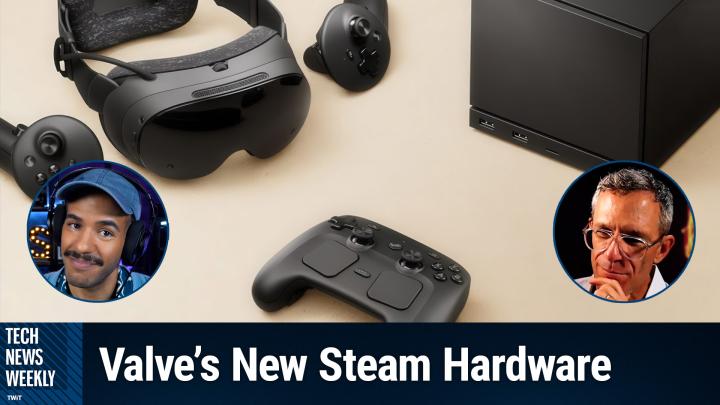
All TWiT.tv Shows (Audio)
Tech News Weekly 413: Testing Valve's Steam Frame, Machine & Controller
01:12:57
Valve's New Steam Hardware
Loading summary
Transcript94 lines
- [00:00]
Micah Sargent
Coming up on Tech News Weekly, Jake Ward is here. His story of the week is all about genetically engineered babies. Then I talk about why people say they care about privacy but then don't demand it. Afterwards. Zach Bowden of Windows Central talks about how Windows president who said, well the platform is going to be an agentic OS got in a lot of heat on social media before Scott Stein of CNET joined us to talk about his hands on with all of the news Valve hardware. Really exciting episode coming up of Tech News Weekly. Stay tuned. Podcasts you love from people you Trust. This is TWiT. This is Tech News Weekly. Episode 413 with Jake Ward and me, Micah Sargent. Recorded Thursday, November 13, 2025 testing Valve's Steam frame machine and controller. Hello and welcome to Tech News Weekly, the show where every week we talk to and about the people making and breaking that tech news. I am your host Micah Sargent and I am joined this week. Yes, it is already the second week of November by Jake Ward. Welcome back to the show, Jake.
- [01:19]
Jake Ward
What's up, Micah? I have to say this one snuck up on me. I was like, is it time again already? I don't know if time is accelerating because I'm getting older or what's going on, but yeah, I'm glad to be here with you.
- [01:28]
Micah Sargent
I can't believe it. Yeah, it's wild. Now we of course like to kick off the show by sharing some stories of the week. These are stories that we find interesting or think that y' all should know about. And I am excited to hand it over to Jake to introduce his story of the week.
- [01:46]
Jake Ward
All right, so I'll start in the kind of self involved way that a professional journalist has to with a story that I did once upon a time. So back in 2018, I was at an academic conference and I was at the sort of like, you know, coffee table at the end of it and a guy, this, this very nice, very shy man and I are speaking and, and he says, I say to him, and what do you do? And he says, oh, I'm a genoeconomist. And I was like, I'm sorry, what's that? You're what? And he says, oh, I use people's DNA to predict social outcomes in their lives. And I, I think I may have actually said, I'm sorry, what? Yeah, I'm sorry, what? And it turns out that he was part of a new field that was popping off at that time called genoeconomics, in which you have economists, this guy was an economist, and geneticists putting Together their ability to do statistical analysis on both the social influences in somebody's life and on the genetic influences in somebody's life in order to arrive at what they were calling a polygenic score. This is a way, if you are having ivf, for instance, you could look across all of the eggs, the 20 or so eggs that you have to choose from, and evaluate each of them according to their polygenic score. And know this one is more likely to graduate from a four year university, this one is more likely to wind up smoking cigarettes. They even were doing studies. I met a very nice LGBTQ researcher who was him themselves, studying whether people, they could predict whether people were going to turn out to be lgbtq. So I, and I, I remember just being so flummoxed by this. I then pitched it to the New York Times Magazine. I wound up writing this piece called the Genome. Economists say DNA can predict your chances of success. And the big scary thing for me in writing this Times Magazine story was just this question of what's going to happen when this thing gets commercialized. And I remember going to a gathering of these folks after this piece came out and basically saying to them, like, you guys, I think the market's going to make some scary stuff out of this. I don't know what to tell you, but I think this is a really scary thing. Yeah, that's the piece. And, and this, this, you know, these nice folks, they're very pleasant researchers. You know, a few of them really lost their cool at me at this, at this gathering and said, are you kidding me? We can't hold back on doing this. We are scientists, we have to do where we have to go, where the data leads us. So then, as you can imagine, then.
- [04:30]
Micah Sargent
You made them watch Jurassic Park.
- [04:32]
Jake Ward
Yeah, then I made them watch Jurassic Park. Exactly. And then this week, yesterday, I believe the Wall Street Journal dropped an amazing expose in which they looked at the Silicon Valley billionaires who are funding, not just the companies that I was worried about coming along, the ones that already exist which do polygenic scoring on a for profit basis. So you want to figure out if your kid has a greater, lesser chance of having a high set score or being tall or whatever else, you can pay these companies anywhere from $10,000 to $50,000. And Elon Musk, Sam Altman, other people have, are already clients in this case. It turns out that Sam Altman and this guy Brian Armstrong, who's the CEO of Coinbase, big crypto platform, are behind a company called Preventive that is trying to get in there and truly genetically engineer certain diseases out of babies ahead of time. And this is the, the headline here. You see, for months, a small company in San Francisco has been pursuing a secretive project, the birth of a genetically engineered baby. And I, my, my head popped off.
- [05:42]
Micah Sargent
I did for months.
- [05:43]
Jake Ward
Only for, for, for months they've been working on this, according to the Wall Street Journal. Now, Brian Armstrong from Coinbase and the preventive CEO and all say, no, no, no, no, we're not rushing to market with this. We're being very, very careful. This is not a thing. But when you get into the ways in which people are talking about and hyping the potential here, there is in this story these incredible quotes, including one from Brian Armstrong who says at one point on X, he posted in April that he envisioned the IVF clinic of the future powered by a Gattaca stack of technologies. Yes. Together, he wrote, the technologies combining embryo editing and genetic screening, like polygenic scoring, could, quote, start to accelerate evolution. And so let us pause there, Micah, and hear what you, what your reaction is to this. Yeah.
- [06:44]
Micah Sargent
So there are so many layers to this. Right? Like this, this. Who knows if we even get to mine, because we might be breaking this down for a while. But I want to start with kind of the last thing that you were talking about there that we see so often at play. You said that in these, these folks talking about it, there's a lot of hype, Right. Because of the nature of the way that our economy works and the way that innovation is driven by. Prof. Profit is driven by innovation, and it's all wrapped up within each other. I think it's very difficult. I remember us talking about a different story before where you were speaking about, I think a CEO could have been a cto. But regardless, this was a person who was very much hyping the thing that they were working on and feeling very positive about it. But that's what they have to do, no matter what is, oh, this is going to be the best thing. It's going to change everything. Right now, you're not, it's, it's hard to find a measured response from someone who's in this role. And I think that, look, we know that the brain is not able to differentiate between what's real and what's imagined when it comes to the brain's ability to sort of affect the rest of the body. And what I'm talking about here is that there was, there've been plenty of studies, but one study where they took professional basketball players, they attached a bunch of electrodes ecg. And they had them play basketball, and then they had them sit and think about playing basketball. And both of those experiences made the same parts of the brain light up. Right. And so all of that is a precursor for me to say that. I think if you say things enough, you'll really start to believe it yourself. And then you start. And if you're surrounded by other people who are constantly going like, yes, this is the future. This is good. Why should we stop? We are scientists. We have to do this. We have to push forward. You just get this, this steamroller that's just rushing through and making this stuff happen. So there's that aspect of it of like, because of the way that our world works. And, you know, some would argue it works better, some would argue it works worse. There is this feel that it's a drive to make this happen no matter what.
- [09:17]
Jake Ward
The toothpaste is out of the tube.
- [09:19]
Micah Sargent
People like, yeah, the toothpaste is out of the tube and somebody else is going to squeeze the toothpaste. So we need to be squeezing as well.
- [09:23]
Jake Ward
Be me putting. Squirting it all over the ceiling.
- [09:26]
Micah Sargent
Exactly. And then when we look at. Because I am glad that I'm not in charge of differentiating, of determining, of defining that line between what is a designer baby and a sort of designed creation versus what we do allow. And by that I mean I already could go in and get a bunch of tests that say, okay, your DNA says that you are prone to this, this, this and this. And you have this much of a chance to pass this on to your child based on what, you know, knowledge we have right now about the genetics, and then you can make an informed decision. We also have the tests where we. Where a person with breasts knows that if their gene, if they have this spec, then it's very, very, very likely that they will get breast cancer. And so you can have your breasts removed before that.
- [10:28]
Jake Ward
So just had dinner with someone the other day who had proactively done all of that in her. I think she wasn't even 30 because of the BRCA gene.
- [10:42]
Micah Sargent
That's right.
- [10:43]
Jake Ward
It gave her a chance to get out in front of a thing that had killed her mom and the rest of it. That's exactly right. Can I jump in on this question? So I think you're really bring such an important thing. So clearly there is a role in genetic screening for figuring out the medical challenges that face, you know, someone and trying to account for those, you know, and, and the polygenic screening companies that will look at your, your available eggs and tell you which one is going to be tallest or shortest, but also will tell you which one is, is likely or not to have this or that genetic disease. So one of these comes a company called Orchid, and the spokeswoman tells the Wall Street Journal, quote, it's not about genetic superiority, it's about disease risk mitigation. Children who make it to adulthood without life threatening diseases are genetically lucky because, and, and they, you know, they charge 2, 500 per embryo to run a slate of genetic tests and produce a risk score for Alzheimer's, bipolar or schizophrenia. Okay, now what the, what the experts, however, say is when you look at the way this, you know, first of all, the American College of Medical Genetics and Genomics concluded last year that polygenic screening does not offer proven clinical benefit. And you have in this piece just, you know, ethicist after geneticist after researchers saying things like this. University of Virginia behavioral geneticist Eric Turkheimer said that marketing unproven promises of vague optimization is, quote, corporate eugenics. And to my mind, what you brought up there, right, the profit motive, the need to make money off of this puts it into a different category than the rest of then to my mind, just sort of screening for disease and the fact that there is almost no regulation other than the actual like genetic engineering of a child. There's no real regulation around screening, certainly. And so I, you know, I have spoken to, when I was doing the New York Times piece, I spoke to a practitioner in LA who was offering parents the chance to choose skin color.
- [12:56]
Micah Sargent
Wow.
- [12:56]
Jake Ward
The range of skin colors available in the, in the eggs that were available to them. Right. And when, and I'll tell you, right now, they're not choosing darker.
- [13:04]
Micah Sargent
Right.
- [13:05]
Jake Ward
You know, you give them a choice of eye color, they're not choosing brown eyes. Right, Right. And so to my mind there is, you know, there is clearly a, a line here. But, but you know, I, I, I wonder, you know, you've, you've spent as much time as I have observing the way that Silicon Valley sort of processes these choices. There is, as you say, this kind of toothpaste out of the tube idea. And there's also this idea that like you can optimize everything. And again and again and again, there's this feeling that like children can be optimized, right. That like literally so, so one of the founders of one of these polygenic scoring companies and I, I would point out here very gently that a number of these folks are backed by Peter Thiel and our teal fellows. Worth noting. And if you Watch Ross Douthat's conversation with Peter Thiel where Peter Thiel refuses to endorse the idea that humans should survive as a species. You'll get some sense of how odd his thinking is about humanity in general and our future. But anyway, so the founder of one of these companies, this guy Keon Sadegi says has described polygenic screening screening as, quote, genetic optimization software. He talks of it as part of a, quote, neo evolution, a term he defined in a now deleted post on X as, quote, genetically engineering ourselves at scale. Right. It is the, the lingo and the I and the, and the optimization ideology of software applied to kids, which is just, I don't know, something, something. You're right. I don't know how to draw that line. But there's a line and there is a line. We don't have it. We don't know what it is yet. Yeah, we can feel it. We just don't know quite what it is yet.
- [14:51]
Micah Sargent
And I think that that's one of the, one of the biggest factors there for me. Right. Is that it is not a person making a choice for themselves on how they want to. You know, I could walk in and have somebody I don't know give me some sort of injection that then I wake up in two days and my eyes are a different color and I'm not hurting anyone else. And then, sure, that's one thing, but the idea, because I already, I already have complicated feelings about just the idea of, of bringing life into the world in the first place. And the concept of like, you know, you not only bring a life into existence that didn't ask to be brought into existence, and now this person has to experience hurt and experience struggle and experience all of those things. And also the good things. Absolutely. But again, there's already kind of a loss of autonomy that comes with that. And then you're in many cases choosing a name for this person, so you've got that choice that you're making for this person for the rest of their life, unless they choose to make a change when they're old. So. So there's already, for me, this concept of loss of autonomy that comes with bringing a being into the world. And then to go further and say, I am going to also enact all of these small changes as well. And then we just have to keep in mind that as many of these experts are saying, our full understanding of how all of this works together is still not a full understanding. And so you make one little change and you just really don't know the impact that that could have later on down the line.
- [16:44]
Jake Ward
That's absolutely right. There's a Stanford University bioethicist, this guy, Hank Greeley, who's a very respected person in this world, and he says, quote, responsible. This is. He's talking here about gene editing, trying to. Trying to actually edit a baby. And he says it still carries the risk of inadvertently inserting or deleting snippets of DNA. Quote, responsible adults agree. We can't do it now because it's unreasonably unsafe. And then he continues, the risk benefit ratio sucks at this point. And there's a real. Like, it is one thing when you're, when you are, you know, like, I really think. I think your. Your point is a really smart one, Micah, that, like, if you're going to mess with yourself, right, if you're gonna. If you're gonna have horns surgically attached to your head or whatever you're gonna do, I, I think, you know, I would argue there should be a little bit of mental health screening, but maybe, maybe. But for the most part, you should be allowed as a, as an adult to. To do what? In this case, you're right. This idea that you are going to, you know, make a choice for a child that isn't born yet and that you're. That you feel you. I mean, as anyone who has kids, right. I have two kids. Like, what you. The number one thing that parenting actually teaches you is just how little control you have over this world and how. And, And. And that every day is kind of a gift and that, you know, the idea that you, that, that you're, that you're in charge of your child's development other than the sort of like, saving their life moment by moment when they're toddling around, you know, the idea that you're in charge of who they're going to become is such an illusion so quickly is dispelled. So that's the other thing is this really feels like people who don't have kids thinking about how parenting is supposed to work.
- [18:29]
Zach Bowden
Yeah.
- [18:29]
Micah Sargent
Yes, that. And is. Is it not ultimately a lack of empathy that is so often at the heart of so much of this? You just. See, I remember I was speaking to. I can't remember. Kate was, I believe her first name. John. Maybe you can do some Googling in the background. The book is called Waste, and it was about our problem across the entire world, where we've got a lot of waste that's stacking up. And I interviewed her for a show that we used to do on the network. And one of the things that she was talking about on the show is how we humans have a lot of difficulty with a. Putting ourselves in someone else's shoes, but even putting ourselves in our own shoes later on down the line. And so we have trouble even conceptualizing me in seven days and what he's going to experience, which is why we'll procrastinate. Oh, Micah in the future's gonna deal with that. We'll do all those things. And so, so many of these choices that we're making, especially whenever you idea that what we're doing is optimizing for humans in the future that we. Yes. Kate o', Neill, thank you. We're optimizing for futures in the. In, excuse me, humans in the future. We are trying to fix things for our people down the line, but so often it's not really that, and we are not conceptualizing what that actually feels like. And I think just even talking to the people who are actually impacted by it, and there's that just that energy of hype and desire to just make, make, make, do, do, do. Control.
- [20:18]
Scott Stein
Control.
- [20:19]
Jake Ward
Right. That's the other part. Like. Like, if you gave your average parent the chance to choose the embryo, most likely. You know, there's a good point being raised here on. On Discord, Wizardling says, just wait till a gene mix is linked. Holy. And this is totally right, because even if. Even if we don't go all the way to the. The, you know, horrific science fiction movie version that you. That we're all imagining in with that comment, just if you gave your average adult the choice, would you prefer an embryo that's more likely to agree with you politically or less likely to agree with you politically? Right.
- [21:01]
Micah Sargent
Are they going to choose?
- [21:01]
Jake Ward
What are they going to choose? And, like, isn't the classic of some of the most creative and active and amazing people the idea that they want to rebel against their parents? Right, right.
- [21:12]
Micah Sargent
You know, or rebel against it. Right. The machine.
- [21:15]
Jake Ward
The machine or whatever. Yeah, exactly. Like. Like the idea that you're gonna wring uncertainty out of children in order to, you know, in the name of. Somehow, in the name of optimization. I just think it's one of these things where it's just like, we, you know, if you truly ask two people what they want out of life. No. Agree. And so the idea here that there's some sort of, like, universal playbook by which we should be making choices in advance, like, this is just. Makes me crazy. Now, Micah, I do want to get to yours, though. This is a big one. But let's get to yours. I really want to hear about yours.
- [21:48]
Micah Sargent
We yeah, we'll take a quick break. We'll come back to talk about my story of the week. But you know, obviously this is one of those where we'll keep an eye on things and see how it all plays out. This episode of Tech News Weekly, brought to you by Pantheon this week. You know that your website is your number one revenue, but when it's slow, when it's down, when it's stuck in a bottleneck, well, that's when it becomes your number one liability. Pantheon is there, though, to help keeps your site fast, secure, and always on, which means better SEO, more conversions, and no lost sales from downtime. But this isn't just a business win, it's a developer win too, because your team gets automated workflows, isolated test environments, and zero downtime deployments. No late night fire drills. No, it works on my machine headaches. It's just pure innovation. Marketing can launch a landing page without having to wait for a release cycle. And developers? Well, they can push features with total confidence. Oh, and also, you know your customers because they will see a site that works 24.7Pantheon powers, Drupal and WordPress, sites that reach over a billion unique monthly visitors. Visit Pantheon IO and make your website your unfair advantage. Pantheon, where the Web just Works thanks so much to Pantheon for sponsoring this week's episode of Tech News Weekly. We are back to the show, joined this week by Jake Ward, and I am sharing my story of the week. It's a paradox that perfectly captures our current digital predicament. When the Trump administration handed Immigration and Customs Enforcement access to a massive database of Medicaid Recipient information in June 2025, privacy and medical justice advocates immediately raised alarms about the potential for human rights violations and public health disasters. Yet for most Americans, this news likely prompted nothing more. A little shrug before scrolling on to the next headline. And here's the thing. We're realizing that the reaction isn't quite born from indifference. In fact, it's far from it. According to a 2023 Pew Research center survey, 81% of American adults that's most American adults express concern about corporate data practices. 71% worry about government surveillance. But then things get interesting, because 61% of those same people believe their individual actions make no meaningful difference. Writing in the conversation, researchers Rohan Grover from American University and Josh Wadera from USC's Annenberg School introduce a compelling framework for understanding this disconnect. It's what they call data Disaffection, a learned helplessness that has conditioned us to accept data exploitation as an unchangeable fact of modern life. I have seen this, this apathy, this, this disaffection certainly play out over time. And this is kind of what I wanted to talk to you about because I will say I used to be particularly, you know, myself within that. I can remember the day that I started to change. This has been several years ago. I worked for Imore, which is part of the, was part of the Mobile nations parent company. And I did a show on the network called the Imore show with Georgia Dow, Renee Richie and some other folks. And I was talking about how, you know, I had the classic refrain of, well, there's nothing I'm doing that's going to get me in trouble. I don't really care. And Georgia Dow, who is a friend of the network and also a psychotherapist from Canada, kind of sat me down, so to speak, and was like, okay, young man. Yeah, young man, exactly. You may feel that way, but it is our job to not feel that way and to push back against that. And I really had this moment of going, you are right, I may not be doing anything wrong, but that's not the point. It's about, you know, maintaining. And so I've tried to keep that as part of how I see things and really pay attention to the ways that my data is shared online and also just talk to other people about how they feel. And that's where I wanted to open it up. I would love to hear how your, how you feel things have changed around you and for yourself over time, if they have and how things are going.
- [26:26]
Jake Ward
Man, I really like this a lot. So when I was in my 20s, I was covering advertising for a few years for a magazine called the Industry Standard. Long time ago in the 90s and during the first Internet boom. And it, as a, as a beat, taught me to be. So I was so angry and cynical about data collection that, you know, the, the, you know, somebody at Safeway would say, you know, do you have a, do you have a reward card with us? And I'd be like, no, you lonely? You know, get out of my, get out of me. Get out of here. You know, that kind of thing. Like, I was just, I was very, very, very reactionary about it. And, and, and so I absolutely have gotten to a place where I have, you know, kind of calloused over in some of that, in some of that stuff. Right. I use Google Maps, which I know to be one of the Great tracking devices of all time. And yet I'm still outraged by, I consider, and I know, I'm sorry everybody who's got this playing out loud and I just set off your, your device. But that's your problem because I think like you guys bought, we bought these surveillance devices and brought them into our homes. We paid them for that. If that thing said NSA on it, you drown it in the bathtub. And yet for some reason it's okay because it's a for profit company. You know what I mean? Like, there's something very crazy in this. I, I really love that you've brought up this idea, this, this, this, this, this tension between the, the outrage, the, the clear, ongoing, you know, allergy we have to the idea of surveillance. We hate that. But we also are very, are increasingly sort of apathetic about it. I have to say. I, I, I really, for me, I've, I've really, I'm going through a phase right now in my life sort of psychologically where, where, you know, I've been dealing with AI and, and its many risks for so many years that I'm sort of in the place that I was with, with advertising once upon a time, where I've been for a little while there for about a year or so. I was really annoying on the subject. Just anybody brings it up and I'd be like, don't do it, don't engage with it, blah blah, blah, you know. And now I'm at a place where I'm starting to realize like I just kind of put my head in the sand for about a year, I didn't want to think about it and now I've, I'm just starting to sort of think about it again because I really think that, that as Dow said to you, just because you're not getting your way doesn't mean that your principles on this stuff should change. Right? Just because you're not seeing your morals enacted in the world doesn't mean they shouldn't be your morals. You know, this is the essence of that famous now famous Ezra Klein Ta Nehisi Coates conversation that went viral, where in that podcast Ezra Klein basically says, well, but if I'm not getting my way, why should I keep doing this job essentially? And Ta Nehisikot says, welcome to being black. You know, stop, stop, stop whining. You know, you, you hold your, your morals firm to keep the center of gravity as close to your morals as possible. If you let it slip, it's going to slip, you know, and so, you know, and, and what the, the bummer is, I think we've let these for profit companies define what privacy is supposed to look like in a way that when you, when you go to other like major Western democracies, especially the smaller ones, it's so interesting to see how easy that conversation is for them. They don't have the toothpaste out of the tube. You know, instinct. I interviewed the President of Estonia. Estonia is only like 1.6 million people, so it's not a fair comparison. But you know, this is a country that digitized very, very quickly. They, that's a country where you pay your taxes on your phone, you don't need a physical driver's license. Like everything, every interaction with the government happens through your phone or a laptop. And as a result there would be incredible potential for surveillance. And you know, this kind of panopticon that, that we're seeing pushed right now in the US but there they were very clear. Oh no, no. We're going to create a system, of course, where he describes it as a Christmas tree with all the ornaments and each ornament is a different part of your data. So your healthcare hangs separately from your medical record, from your bank records, which hang separately from your police records. None of them can be accessed together and only you can see them all. You can hand permission off to us, a, a physician or somebody if you want to, but, but nobody can sort of just rummage through it and certainly no for profit company could. And, and you know, when I asked him, well, what's it like to get to that place? He was like, well, that was just the obvious choice, you know, and here we've just, we've been. Something has been co opted in the name of convenience, you know, to sort of say, oh no, we concede it's okay if a certain amount of surveillance takes place that I don't, wouldn't normally want because of the conveniences of it or because it's free or whatever the thing is. So anyway, I love that you're bringing up this tension.
- [31:42]
Micah Sargent
Yeah. And I will, I'm going to briefly touch on the data disaffection kind of defined and then we'll have to, we'll have to move on because we've got our next guest waiting on the line. But Grover and Widera, the people who wrote this, talk about data disaffection as kind of trying to define the phenomenon. And so again, it's very much distinguishing it from apathy. So in my calling it apathy, that is not what they are. They're talking about disaffection, not the same as apathy. It's not a lack of feeling, but rather an unfeeling, an intentional numbness. This numbness serves as a psychological defense mechanism, allowing people to function in a world where constant surveillance and data extraction have become prerequisites for participation in modern life. So it's almost this idea of being in denial. Denial and knowing it. It's. It's not the frog in the boiling pot, it's the frog in the boiling pot. But the frog knows that it's boiling and it feels like the way for it to protect itself is to pretend like the water's not boiling. It's the dog. It's the dog. It's fine dog.
- [32:48]
Jake Ward
Yeah, I'll leave you with. Just stay spicy, everybody. That's my. That's my final.
- [32:52]
Micah Sargent
Exactly. You gotta stay spicy.
- [32:53]
Jake Ward
Stay spicy.
- [32:55]
Micah Sargent
So everyone should go check out this piece in the conversation. It is fantastic and really, I think touches on a lot of it and for me, kind of reignited some of fire that I needed to pay attention to that's around me. Right. So I think that that was helpful because I think when you can define a thing and you can point it out and you can deal with it, is that not cognitive behavioral therapy in and of itself. So wonderful. Of course. Jake, always a pleasure to have you on. We have great conversations. I love what you bring to the table. I'm very excited to say that Jake will be filling in for me next month as the host of the show. So we're looking forward to that.
- [33:33]
Jake Ward
Big shoes. I know he looks like a normal sized guy, but these. So thanks, Micah.
- [33:38]
Micah Sargent
Yeah, absolutely. Real quick. If people want to follow you online, check out your work. Where are the places they should go to do the rip?
- [33:43]
Jake Ward
Current.com is my newsletter and podcast. I'm. I would deeply appreciate any subscription. You could follow it anywhere you get your podcasts. And I'm all over TikTok for some weird reason at by Jacob Ward. So thanks, Micah.
- [33:58]
Micah Sargent
Thank you so much.
- [33:58]
Scott Stein
Bye bye.
- [34:00]
Micah Sargent
Alrighty folks, we're going to take another quick break and we'll be back with our first interview view. Coming up next, all about Windows and its agentic promise. Firstly though, this episode of Tech News Weekly is brought to you by Veeam. When your data goes dark, well, Veeam is there to turn the lights back on. Veeam keeps enterprise businesses running when digital disruptions like ransomware strike. Ooh, we know ransomware.
- [34:26]
Jake Ward
Huge.
- [34:26]
Micah Sargent
It is pervasive. It is going to impact so many businesses, you need something to help you out. So how does Veeam do this? Well, it gives businesses powerful data recovery options that ensure you have the right tool for any scenario. Broad, flexible workload coverage from clouds to containers and everything in between. Full visibility into the security readiness of every part of your data ecosystem. Plus tested, documented and provable recovery plans that can be deployed with a click of a button. That's why Veeam is the number one global market leader in data resilience. Just call them the global leader in helping you stay calm under pressure. With Veeam, it's all good. Keep your business running. @veeam.com that's V E E A M dot com and we thank Veeam for sponsoring this week's episode of Tech News Weekly. All right, we are back from the break and I'm excited to be joined this week by Windows Central's own Zach Bowden. Welcome back to the show, Zach.
- [35:26]
Zach Bowden
Thank you so much for having me.
- [35:27]
Micah Sargent
Me, yeah. So I looking forward to this conversation because it's a little bit about a social media own, but more about kind of looking at a platform that every time I see news about it, it's all about AI. So I was hoping that you could kind of walk us through what the Windows president announced about the operating system becoming an agentic OS and the specific reactions that his post received on X.
- [35:58]
Zach Bowden
Yeah, so he tweeted this week, or I guess posted on X, sort of highlighting the fact that Windows is evolving into an agenticos. This isn't technically a new announcement. Microsoft has sort of been hinting at this, pushing towards this vision over the last few months. But this tweet in particular seems to have found a certain crowd that isn't very happy with the direction that Windows is moving in. So his tweet, which now has replies disabled, if you take a look at the replies that were able to make it. Yeah, if you look at the replies that made it in before he disabled replies, most of them skew quite negative. People aren't too happy with this idea that Windows might be moving towards becoming an agentic os.
- [36:38]
Micah Sargent
Now, when Microsoft says agentic OS or when the Microsoft president says so, what does that mean? And how has the company kind of been positioning Windows to move in this direction over recent months?
- [36:51]
Zach Bowden
So when Microsoft refers to an agentic os, they're talking about an operating system that can do things for you on your behalf. If you think about how we use computers today, we basically have to manipulate everything from the buttons you click to the functions you Use within apps, you're doing most of the work with an agentic os. The idea is you can just tell an AI to do the task you want to do and it will do it for you. And Microsoft has even announced a feature coming soon to Copilot that will allow the AI System Assistant to take control of your PC, take a task and complete it within its own little Windows desktop environment. You can watch it do the task, or you can minimize the window and go about doing your own task and sort of do two things at once. Kind of. It's a feature and a vision Microsoft is working towards actively, but people just aren't too keen on it, especially coming from Microsoft, given how much data it requires from you to be functional.
- [37:42]
Jake Ward
Right.
- [37:42]
Zach Bowden
AI is quite an unprecedented, unprecedented level of data access, which I think a lot of people aren't comfortable giving Microsoft.
- [37:51]
Micah Sargent
Now, this is one of the interesting things about this. Typically when you see kind of a negative or when someone receives kind of a negative reaction on social media, there's always this sort of immediate defensive reaction that says, oh, this is just a small vocal minority. These are the two or three people or 10 people that are just angry all the time. And that's all you're seeing here. But you kind of suggest that it's so not really just a small vocal minority. What patterns are you seeing in how Windows users are expressing their concerns about the way that the platform's going?
- [38:26]
Zach Bowden
Yeah, if, if you take a look at any of the coverage around Microsoft's AI efforts when it comes to Windows, if you, if there's a comment section on any of these articles or forum posts or Reddit posts, the, the responders are usually quite negative. They're not interested in this vision Microsoft is trying to push forward with Windows. People think Windows has other problems that needs to be seen sold first. Things like bloating, slow performance, bugs and issues that crop up constantly. I think almost every week these days, you'll find a headline where some new Windows Update or App update has caused something to break within Windows. People just feel like Windows isn't in a great place right now. And so for Microsoft to be focusing so heavily on bringing AI stuff to the platform, that's not where their priority should be, which, you know, is. I think Microsoft finds itself stuck between a rock and a hard place there because Microsoft is very much an AI company now and so forth. For them to sort of step back and go, all right, we'll stop with the AI stuff, we'll focus on doing other stuff instead. Doesn't really track, especially when it comes to shareholders and stuff.
- [39:21]
Micah Sargent
Currently there's also, from what I've seen, sort of there's the, the hardware side of things where we see these AI first PCs and sort of marketing surrounding having hardware that is ready for the AI future. Do you this, this isn't a question that I originally had considered, but do you think that there's maybe some pressure in, you know, those, those third party manufacturers and even the first party hardware manufacturer, Microsoft itself, making Windows PCs that you've got to then provide the OS that runs on the hardware that's there now that you put the hardware out there. Does that kind of play a role in things as well?
- [40:08]
Zach Bowden
Well, I think Microsoft thinks that might be part of the picture, but I think for a lot of people they're not too interested in the operating system being an AI platform, but more the things that run on top of it being AI capable. I think for a lot of people they'd rather Windows be this sort of blank slate which is just there to host the apps and services they want to run. The problem with Windows right now and the thing people have the biggest issue with when it comes to Windows is that Windows tries really hard to get you to use Microsoft apps and services. It's constantly bombarding you with using Edge and Outlook and Office and OneDrive and Copilot. Whereas I think a lot of Windows users don't want to use that stuff. They want to use Gmail, they want to use ChatGPT, they want to use alternatives that aren't made by Microsoft. They only really want Microsoft in the picture for the platform. And so for the platform to be trying to force other services made by Microsoft onto users, people just aren't happy. And so, you know Microsoft. Yes. Microsoft would like people to think, oh, we're selling these AI PCs so surely they want to use Copilot. But I think in reality is it's more people just want. Well, I wouldn't even say people want to use Windows. People feel they need to use Windows so that they can run the apps on top of it versus wanting to use Windows.
- [41:15]
Micah Sargent
Understood. Now there's also sort of forced account requirements that play into the conversation. Right. Can you talk a little bit about how that has or hasn't changed over time? Has it always been the case that there are these complaints that people have about the forced account requirements or is this a new thing in the age of the AI PC?
- [41:36]
Zach Bowden
Windows 11 has always required a Microsoft account to my knowledge, especially on Windows 11 Home. They've since extended it to Windows 11 Pro and stuff. But yes, Windows 11 has always insisted on using an online account when setting up the PC for the first time. And as far as I'm aware, Windows 11 is the only, only operating system that does that. IOS, iOS, even Chrome OS. There are options when setting up the computer or device which allow you to use the computer without an Internet connection or without signing in with a Google or Apple account. Microsoft is the only company doing that and people really don't like it. Of course there are workarounds, but the workarounds aren't officially supported. And so if you're a sort of normal user, when you set up a new Windows 11 PC, you will have to sign in with a Microsoft account. And this ties back into the whole services thing. People just don't really want to. A lot of people don't really want to use Microsoft services. Microsoft doesn't really have an ecosystem pull like Apple and Google does. You know, people, when they sign in to their iPhone, they kind of want to sign in with an Apple ID so they can use the App Store and Apple Music and whatever else Apple offers. Same goes with Google, YouTube, Gmail. Microsoft doesn't have that ecosystem pull unless you're, you know, fully invested in OneDrive and Office and Copilot. Then of course that makes sense. But for a lot of people, it just comes back to the fact that people want to use Windows as a platform versus is something that's part of an ecosystem.
- [42:55]
Micah Sargent
Now this is an interesting aspect because Microsoft, of course, is not just a. It's not just an operating system maker and not just a hardware maker, but also has some other platforms, including Xbox. Is there a suggestion, is there sort of an external understanding that Microsoft's budget allocations are then having an impact on other divisions? And can you talk about that in terms of kind of how you and others know that that is sort of at play here?
- [43:33]
Zach Bowden
Yeah. So it's very clear that over the last 12 to 18 months there's been a lot of belt tightening at Microsoft. There's a lot of budget allocation moving towards AI specific projects and efforts. Of course, AI is not cheap. Right. To run these server farms and spy all these GPUs, it costs a lot of money. And money doesn't just come out of nowhere. Microsoft has to find the money from somewhere. And how they're doing that is cutting budgets from other parts of the company which aren't entirely AI focused. So things like Xbox, we've seen in the headlines. Xbox has seen significant layoffs, studios closing down, projects cancelled, hardware scrapped as a result of Microsoft trying to fund its AI efforts. Same goes for Surface, really. Microsoft Surface hardware used to be all about niche, unique experimental form factors. There was a Surface for every kind of person. But these days there's only really two or three Surfaces and they're all very sort of boring's an unfair descriptor for Surface Devices company. They're great hardware. It's like MacBook Airs. They're sort of vanilla products these days. They're not pushing the boats out. Whereas Surface before used to be all about experimentation, you know, Microsoft would sink millions or billions of dollars into the R and D of a device that only sold 20,000 units. But that's what Surface was about before, not anymore. It's all about, you know, if it's not making money for us, we're not interested. Because all of the money that they do make has to go towards, towards investing in AI. And unless you're somebody who's super into AI and super into copilot, that just makes Microsoft not very fun to follow, not very fun to be a fan of, if you will, or even a customer of. Because if it's not AI, they're not interested currently.
- [45:02]
Micah Sargent
Wow. Yeah. Now one of the things that we've, we've seen, or that I've seen rather is for the people who are into AI who are not sort of against it from a fundamental perspective, who don't use Windows, who use macOS, who use Linux, there does seem to be this sentiment that it would be cool and better if there was platform level AI for them. And by that I mean on macOS, not having to, you know, summon up an app that then lets me, that lets me interact to say, okay, in this app that I'm currently using, I want to do this and also I want to do this over here. And it's a little bit hacky to make that happen. Right. Because it's not getting into the root of the system and being able to kind of be aware of what's going on and act on your behalf. This is exactly what Microsoft is saying it will offer. And yet there's a lot of negative pushback on it. What's going on here? Did Microsoft, was it drop the bag, fumble the bag? Is that how it goes? But like what, what's happened here? Do you think that makes it not as appealing? Whenever I consider about, you know, there are times where I'm in terminal, for example, and I, and for people who don't know on macOS, that's the, that's the ability to kind of access things at the code level and, and play around and I'll, you know, oh, what is that command? Wouldn't it be great if I could just from here ask my operating system AI Chatbot what is it that I'm trying to think of and then it could tell me and do it? That's what Microsoft says it's, you know, trying to provide in Windows. So was it its rollout? What's going on?
- [46:55]
Zach Bowden
Yeah, this is super interesting because you're totally right. I think this is a great idea. The idea that the operating system will be able to be ambiently helpful all the time, but, you know, the response online seems to be the complete opposite of that. And I think it just comes down to Windows's reputation and Microsoft's reputation. People don't believe Windows is in a place where it should be able to do all these things right now. There's so many other issues it needs solving first before that they, before they can get around to enjoying building AI experiences for its customers. And, you know, Microsoft also just doesn't enjoy the same level of fandom that other platforms might have. You know, Mac OS and even Android or Chrome OS or whatever it may be. The people who use those platforms generally like them or like to use them and have chosen to use them. Where a lot of people using Windows kind of have to use Windows, they don't really have a choice in the matter. So people are less people. Not many people love Windows as much as Mac users love Mac, if you catch what I'm saying. But I do agree that. I do think that this sort of agentic OS vision does make sense. And Microsoft is going to do this regardless. People are pushing back, but this is where the tech industry is going. Mac is going to do it. Google's going to. Everyone is going to do it. It would be weird for Windows to not do it. I just think right now the optics don't look great. Consider considering the rest of the state of Windows when it comes to sort of unreliable updates, poor stability, bloatedness in the operating system. There's just a lot of other core fundamental issues with Windows that kind of also needs to be addressed. And then I think people will be a little bit more okay with this. And then the other thing is, this is all stuff that we're yet to actually use. So it's all in people's heads and people don't really know how it's going to work. Once people realize how useful this tech can be, I think people will probably be less angry about about it.
- [48:35]
Micah Sargent
I love that. I think that's a great sentiment to sort of round things out there because I saw that with the I can't think of what it's called. Maybe you'll help me remember. But the oh, was it Windows recall? I think is what it was.
- [48:48]
Scott Stein
Yes.
- [48:49]
Micah Sargent
Everyone was very much against it and I thought no one's even used it yet. And I understand sort of from a conceptual level it being but I think there is something to be said for let's maybe see how it actually, you know, works in practice before we give our full and official I can imagine that would be frustrating as a developer working for a company, working hard to bring something to market and seeing everyone be very upset about it. It's like, well, have you even tried it yet?
- [49:18]
Zach Bowden
I don't know.
- [49:20]
Micah Sargent
I want to thank you so much for taking the time to walk us through the social media blowback and also the current state of Windows. If people would like to keep up to date with the work that you are doing, where are the places they should go to do so you can.
- [49:35]
Zach Bowden
Check out my work@windowscentral.com and you can follow me on on xackbowden.
- [49:40]
Micah Sargent
Awesome. Thank you so much. Always a pleasure to have you on the show.
- [49:43]
Zach Bowden
Thank you.
- [49:44]
Micah Sargent
Alrighty folks, we're gonna take a quick break and then we'll be back with our next interview. But first, let me tell you about threatlocker bringing you this episode of Tech News Weekly. We've talked about it so much Ransomware is harming businesses worldwide through phishing, emails, infected downloads, malicious websites, RDP exploits. You don't wanna be the next victim. ThreatLocker's Zero Trust platform takes a proactive deny by default approach that blocks every unauthorized action, protecting you from both known and unknown threats. Trusted by global enterprises like JetBlue Port of Vancouver, ThreatLocker actually shields you from zero day exploits and supply chain attacks while providing complete audit trails for compliance. ThreatLocker's innovative ring fencing technology will isolate those critical applications from weaponization so it stops ransomware limits lateral movement within your network. ThreatLocker works across all industries. It also supports Mac environments. It provides 24.7us based support and enables comprehensive visibility and control. Mark Tolson, the IT director for the city of Champaign, Illinois, said this about ThreatLocker Threat Locker provides that extra key to block anomalies that nothing else can do if bad actors got in and tried to execute some something I take comfort in knowing threatlocker will stop that. So stop worrying about cyber threats and instead get unprecedented protection quickly, easily and cost effectively with ThreatLocker. Visit threatlocker.com TWIT to get a free 30 day trial and learn more about how ThreatLocker can help mitigate unknown threats and ensure compliance. That's threatlocker.com TWIT and we thank ThreatLocker for sponsoring this week's episode and of Tech News Weekly. All right, we are back from the break and I am very excited to be joined by the prolific and wonderful Scott Stein of cnet. Welcome back to the show, Scott.
- [51:43]
Scott Stein
Hey, great to be back on. Thanks.
- [51:45]
Micah Sargent
Yeah. So you once again got your hands on some awesome hardware, which means once again, boop boop boop. I came up to the email bucket and said please join me on my show. And thankfully you said yes. I was very excited to see that Valve had a bunch of announcements, announcements and again very excited to see some photos of you using the new hardware. Starting with the Steam frame. You know you've been focused a lot on the VR Arkansas XR space. Tell us about what initially struck you about the Steam frame, what it you know is exactly and when you put it on, how does Valve position this VR headset when it comes to some competitors like the Meta Quest and the Apple Vision?
- [52:31]
Scott Stein
Yeah, it feels right now I've been covering this for a long time, but it feels like there are a lot of VR headsets and a lot of glasses, more than people are probably asking for. And so I think it's interesting because, you know, you go, well what are these really being used for? And the Quest is low price. That's one of its advantages and it's been fun, but it still is not a necessary thing for a lot of people. To be sure, I think that the Steam frame is interesting because Valve is kind of fusing this with Steam Deck. They are making this proposition that it's not just about VR, but it's also playing games from your steam library, regular 2D games. And it seems like a lot of them, although it's going to be on an ARM processor. So this is the first time that Steam's been on an ARM processor, which is them kind of kicking the tires on what games could be compatible, what could you do? And so I felt like it was like a handheld meets VR headset. What I got to see, it was very much Quest like it was fun. It didn't quite fit my glasses perfectly, although hopefully they'll make slightly wider foam pieces for it. But there are also prescription inserts and we don't know the price. So the price really factors in how much value is in this because you have things right now going from like, you know, $300 for, for a Quest headset to $3,500 for the Apple Vision Pro, which Apple does not call a VR headset, but it is technically that plus mixed reality. And so that is where we're at. And Valve is not going into the high end mixed reality AI game. They're going into that. We want to play fun games and work with the stuff you've got game.
- [54:17]
Micah Sargent
Now can you tell us a little bit? Because it's sort of a unique controller design. Right. What is it? How does it enable playing VR but then also traditional Steam games. That's interesting.
- [54:30]
Scott Stein
Yeah. And that's the controller's really one of the interesting things about this because they put the standard control setup on this like D pad on one side, four buttons on the other. Then you got your triggers, dual triggers and things that are more like an analog sticks which are on other VR controllers. First thought I had with the D pad was what happens when you have a VR game that uses buttons on this side and will the D pad feel weird? But that's a trade off. But it does mean that you could play all the games that would be on your regular game controller equipped library because the button mapping should be the same. The only thing they left off were the trackpads which are on the Steam deck deck and also on the new Steam controller. They didn't put those on but you've got every other button on there.
- [55:16]
Micah Sargent
Nice. Now, according to the specs and what you've talked about here, the Steam frame uses Valve's new 6 GHz wireless protocol and offers. This word is always just funny to me. Foveated streaming. How did the technology actually perform when you tested the PC VR games like Half Life app And then what's the difference between it and standard WI FI streaming? Because they're really hyping this it seems.
- [55:43]
Scott Stein
Yeah, they really are. And it looks like a protocol. Like a lot of what Valve's doing is something that they're promising will be possible not just on their hardware, but across other PCs and other devices, maybe even other VR headsets. You need that dongle though. And so first the wireless thing you can already stream wirelessly with VR. Steam has that already. Already over WI Fi or other connections like that. So the quality varies. The point they're making is they wanted a super reliable, high bandwidth way to do it that wouldn't be dependent on your WI FI network. So it's kind of like those plugs that you would use to play with a mouse or a controller, like a dedicated dongle, but for wireless. Now, foveated streaming is. There's another technology called foveated rendering. And in the world of VR, I've been seeing this for a while. There are eye tracking cameras on the VR headset. And what it's doing is it's keeping track of where your eyes are looking, only drawing a box invisibly of that and putting the highest resolution rendering there. And when your eyes look around, you're not actually seeing a lot of high detail outside of your fovea around all this part. And it's a magic trick. So it looks like fine and you never notice it. And foveated rendering is for graphics. So to do more on a smaller graphics chip, but they're trying to do more on smaller streaming bandwidth while still playing the game on your PC, which is interesting. I mean, I kind of thought this would already have been here in the VR landscape, but VR doesn't move as fast sometimes as I think it would.
- [57:19]
Micah Sargent
Yeah, that is interesting. And the difference between the two that you would have, have, I guess, you know, the potential for, for both really. So the Steam frame, that's one bit of hardware. But Steam said, oh, we've got more. There's a Steam machine. You use the Steam machine, Of course, we'd love if you could start by telling us a little bit, little bit about it, but then tell us about the performance inconsistencies that you experienced. Which of the games kind of ran well and which had issues. Choose. And what did Valve have to say about the optimization timeline?
- [57:54]
Scott Stein
Yeah, so I mean, the box is really cool. It's, you know, it's small. It's a six inches. I think by six, it's a cube that looks smaller. It is smaller in general than the largest xbox. It's easily game console sized. It's something that looks more like a thing you put next to your tv, which is what it's meant to be. And Steam's Valve is done this before. A decade ago, CNET was looking at the Steam machine technology that Valve was also talking about putting in front of your tv and that didn't work out so well. It was obviously much earlier days. The idea here is that it'll be good enough graphics wise and that it'll play games well on a tv. The thing that Valve is touting here is they said that they've been learning a lot about how to optimize games on smaller graphics from what The Steam Deck does. Now, I am impressed because the Steam Deck really does play a lot of games really well that you wouldn't think would be possible. And that kind of that conversion magic is what's given them this edge and kind of changed the shape of what handheld game game systems can do now. You know, can they pull that off on the Steam machine? When I played it, they were definitely showing a lot of super, you know, graphically Simpler games, like 2D Types of games that may play Balatro and things like that. But of course you can play those on your phone. Some other games looked okay, Cyberpunk 2077, but some games like Sonic Racing, Crossworlds, which should have played really smoothly, it looked like it was having some graphic slowdowns. The team, though, was mentioning that my demo was so early in this, there were only a handful of us that were at the headquarters. And I think it was one of the first demos of the. Of the multiple days. They said that there may be future graphics updates in these. And then also a lot of the optimization that Valve's trying to do with this, not to defend them on this, but, you know, I think they were saying that the library capability with like Steam Deck kept changing over time and that we're still like this. This is not coming out till 2026. So it's hard to tell from what I demoed how well games will play. But I think the expectation would be that this is not going to be bleeding edge graphics gameplay. This is going to be something, you know, in maybe even less than what some pro consoles can do. I don't really know. And, you know, like, what the. How good that is and how much that costs. Yeah, is everything. The graphics horsepower they were touting was six times the Steam Deck, which is a weird metric because that's a gaming handheld. And, you know, that's not like what you'd want to compare to a PC. And it's hard to tell based on the chip specs, which I have my story, it's hard to tell what that will all be. Will it be like a gaming laptop? Will it be like this? And people are already curious about that. But I do think what it is is that I looked at the whole ecosystem idea here. It's like instead of being a new game handheld, you've got this VR headset, this game machine, and this new controller, and you're like, well, what are all these and why do I buy. Buy them? And it seems like they're exploring basically how to get Steam games everywhere outside of your desktop PC, you know like on smaller things in front of your TV and make it more competitive with mobile and where console's going. And I'm sure the hardware that they make for this is going to keep evolving too and that other companies are going to make. So I think it's, I saw it as more as the infrastructure even more than the individual products but for sure, sure they're making these products next year.
- [61:27]
Micah Sargent
That, yeah. Okay, that's, that's interesting as this sort of ecosystem. Right. All right, let's take a quick break. We are joined this week by Scott Stein. Very excited about our conversation but I want to tell you about Cashfly for a moment. We love Cash Fly because For more than 20 years CashFly has held a track record for high performing ultra reliable content delivery serving more than 5,000 companies in over 80 countries. At TWIT, we have been using Cashfly for more than a decade. We love the lag free video loading. You love the hyper fast downloads, the friction free site interactions so you can join companies like Adobe, Microsoft, LG, the NFL again us at TWIT and many more that rely on CashFly. Cash fly's proof well it's in the petabytes events stream smooth to millions of concurrent users worldwide. Online games, well those are going to start 70% faster. They're going to scale instantly. They're going to play without lag software downloads flawlessly during releases, patches and updates. HD video plays on demand with ultra fast sub second start on every device. Podcasts while those are going to reach global audiences at record speed at any scale plus 100% availability in the past past 12 months Cash Fly delivers rich media content up to 158% faster than other major CDNs and allows you to shield your site content in the cloud ensuring a 100% cash hit ratio. Never pay for service overlap again because with this you will get flexible month to month billing for as long as you need it and discounts for fixed terms once you you're happy. So that way you can design your own contract when you switch to Cash Fly. Cash Fly, well it's like gaining an extension of your team because when your entire business model depends on delivering massive amounts of content, you can't afford to go it alone. You can count on personalized help anytime from a tenured expert who gets IT Engineer to Engineer 24 7. So learn how you can get your first month free@cashfly.com that's C-A C-H-E-F-L-Y.com TWIT and we thank Cashfly for sponsoring this week's episode of Tech News Weekly. All right, let's head back to our interview with Scott Stein of cnet. One thing going back to. With this device, the Steam controller, this is supposed to have some improvements over the original. Do you feel like you noticed these. These changes? Is it more for a sort of a pro player to realize what the difference is here? Or is it maybe just a matter of, over time you'll come to feel like these changes have an impact?
- [64:20]
Scott Stein
I really like the controller. I thought it was, you know, I thought it was great, but there are so many control options out there. You know, I think. I think people will have controller and keyboard and mouse preferences when they played these things. What I think is really cool, though, is that Steam Deck really nailed a lot of controls really well on the handheld. And I think as far as a statement on gaming handhelds, they provided so many different ways to play it, with the trackpads and the thumbsticks and the rear triggers and, you know, kind of just every option. I feel like you could kind of want. And what's nice is they just put that set of control on a separate controller. So the idea is that you would also use that. If you put a Steam Deck connected to a tv, you could use the Steam Controller because you can't detach those Steam Deck things from the side like a switch. And that's really useful. You know, that's just like a basic, good, useful thing. The wireless again, using a custom wireless dongle for that is nice. Again, the idea is that they want all those things to, like, not tap everything else and how it's connected. Again, I'm curious how much it costs, but everything about it felt really good. They also have people who, like, nerd out on gyro aiming. It has the ability to tilt and aim, and you can put your fingers on the top or underneath and just lightly touch them and activate Gyro and then untouch them. So there were a lot of, like, I think there was a lot of flexibility to. Was not the thing that immediately excited me about the visit, but it was like an. Another part of. To me, it's another play to say. They kept saying, you could use this and this or this and this, and you could kind of use all the products together. The question is, how, like, how many of them would you want? Would I be just picking up a Steam frame or would I want a Steam machine and a controller, or am I getting all three? And, you know, and I think that was an interesting. Like when you have three different options at the same time or three different parts of a system, your mind kind of works like that.
- [66:15]
Micah Sargent
Absolutely. Lastly, I think it's time to talk about the fact that pricing hasn't been announced. These are supposed to be launching in early 2026, which if I check my calendar, that's beginning of this coming year. What is your sense of where these devices are going to need to be positioned to succeed? Succeed? And then my second question is of the hardware that you saw kind of which one had you the most excited about its potential or that maybe you would be most likely to purchase of what you saw.
- [66:56]
Scott Stein
I mean the thing that's like the Scott Stein product would be the Steam frame. The thing that's like, yeah, sure, it fits in my zone. I'm interested in that. I'm interested in how it would travel, how much it would feel like a real handheld for your face. That being said, I already have so many other options with playing things and so I'm curious and I think the Steam machine is great, but if it's really good at playing all the games that I want it to play, as opposed to would I go for an Xbox or could a PlayStation outperform it price wise? It's a good question. Everything's going up in price. So we're at a time where things are getting more expensive already and, and there's a lot of creep from tariffs and everything else. You know, tariffs and you're getting to a point where stuff can cost 600, 700. The Xbox Ally handheld has two configurations. One is $1,000. I think it's tough if this price creeps too high. Although the storage configurations that were listed had a broad range, like either 256 at one end, I think it was was like 2 terabytes. So I'd be hopeful that it would get into a console or VR headset competitive range, which could be whatever. To me that's like I feel like $500 ish. But I think if the prices go too high for all these components, then you wouldn't pick them all and then you'd have to pick and choose. And I don't know if they want you to think about bundling them, so there's strange math with that. But again, I think what's also happening here is that like I said, I think they're testing waters with like new ways for hardware to work. And so, you know, the thing that makes me kind of hopeful about price is that Steam Deck actually was a pretty competitively priced product that actually has been pretty. It goes up to the higher end, but it can start pretty reasonably and I think that's where it would need to be. I think that's no surprise that Steam Deck became popular. Popular because of that. Because you think, oh, I'm going to buy this. It's fun. These are fun things. They're not necessary things. And, and so I think that's, yeah, there's a lot of, a lot of curiosity about no price and how you evaluate things in that vacuum.
- [69:14]
Micah Sargent
Absolutely. Well, Scott, I want to thank you so much for taking the time to join us today. After doing all this work. I hope you're able to get some rest soon.
- [69:25]
Scott Stein
I'm working on it. Get rid of my ear inf. Yeah.
- [69:30]
Micah Sargent
If people would like to follow you online and keep up to date with the great stuff that you are always working on, where should they go to do so?
- [69:37]
Scott Stein
Thank you. You can follow me on Blue sky, you can follow me on Threads, you can follow me on CNET always. I also have a fun newsletter I'm doing for myself, just called the Intertwex on Beehive. If you can find that. It has a lot of my floaty tangly thoughts each week about the stuff that I'm saying.
- [69:55]
Micah Sargent
Awesome. Thank you so much. We appreciate it.
- [69:57]
Scott Stein
Yeah, thanks a lot.
- [69:59]
Micah Sargent
Alrighty folks, that brings us to the end of this episode of Tech News Weekly. Our show publishes every Thursday at TWiT TV TNW. That is where you can go to subscribe to the show in its two formats, audio and video. If you would like to get all of our shows ad free, just the content, none of the ads. Well head to Twitter TV Club Twit. $10 a month, $120 a year. That gets you access to every single one of our with no ads you also gain access to our special feeds. These include behind the scenes, before the show, after the show. You also gain access to our feed that has our coverage of tech events. So live commentary of Apple events, Google events and everything in between. And access to a feed that has our club content including Stacy's Book Club, My Crafting Corner. You also will be able to see our Dungeons and Dragons adventure that I'm currently dming a spooky corn maze. Plus so much more. All of that is available to you in the club along with an all access pass to the Discord, a fun place to go to chat with your fellow Club Twit members and also those of us here at twit. If that sounds good to you. Again, head to Twitt TV Club Twit to check it out. All right, if you would like to follow me online, I'm ichasargent on many a social media network. Or you can head to Chihuahua Coffee, that's C H I H u A H u a Coffee, where I've got links to the places I'm most active on online. Be sure to check out my other shows on the network, including Hands on Apple and iOS today, which we'll publish later today as we record this, and of course, Hands On Tech, which publishes every Sunday. Thanks so much for tuning in. I'll be back again next week with another episode of iOS. Sorry, I paused because I was like, is it next week? But it is still next week. Be sure to tune in next week for another episode of Tech News Weekly. Bye Bye.
- [72:12]
Chris Gethard
Vrbo's Last Minute deals make chasing fresh mountain powder incredibly easy. With thousands of homes close to the slopes, you can get epic PayPal, freshies, first tracks and more. Find last minute deals with the Last Minute filter on the app. Book a private vacation rental now@verbo.com hi, I'm Chris Gethard and I'm very excited to tell you about Beautiful Anonymous, a podcast where I talk to random people on the phone. I tweet out a phone number. Thousands of people try to call. Talk to one of them. They stay anonymous. I can't hang up. That's all the rules. I never know what's going to happen. We get serious ones. I've talked with meth dealers on their way to prison.
- [72:44]
Micah Sargent
Prison.
- [72:44]
Chris Gethard
I've talked to people who survived mass shootings. Crazy funny ones. I talked to a guy with a goose laugh, somebody who dresses up as a pirate on the weekends. I never know what's gonna happen. It's a great show. Subscribe today Beautiful Anonymous.