← All TWiT.tv Shows (Audio)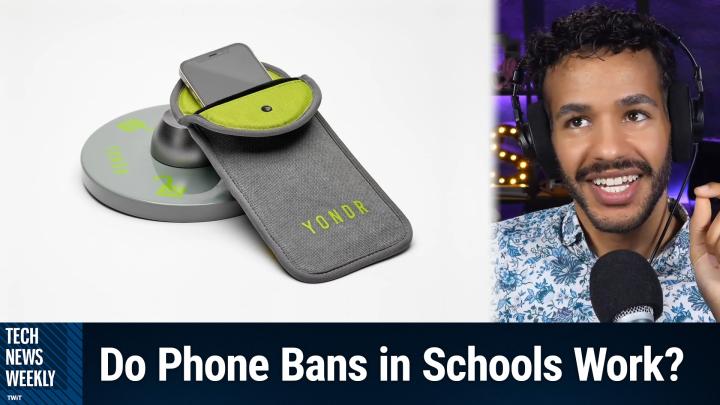
All TWiT.tv Shows (Audio)
Tech News Weekly 436: What 40,000 Schools Tell Us About Phone Bans
01:16:15
Do Phone Bans in School Really Benefits Students?
Loading summary
Transcript80 lines
- [00:00]
A
Coming up on Tech News Weekly, Abrar El Heti of CNET is here. We talk about the Oscars changing its rules with AI. I also talk about Apple's upcoming settlement over Siri and AI. Then Andrew Langston of CNET joins us to talk about tech making him a grumpy old man. Well, and also just tech being troublesome before I talk about a ban on cell phones in schools and the results therein. Stay tuned for this episode of Tech News Weekly. This episode is brought to you by outSystems, a leading AI development platform for the enterprise. Organizations all over the world are creating custom apps and AI agents on the Outsystems platform and with good reason. Build, run and govern apps and agents on one unified platform. Innovate at the speed of AI without compromising quality or control. Trusted by thousands of enterprises worldwide for mission critical apps, teams of any size and technical depth can use Outsystems to build, deploy and manage AI apps and agents quickly and effectively without compromising reliability and security. With Outsystems, you can accelerate ideas from concept to completion. It's the leading AI development platform that is unified, agile and enterprise proven, allowing you to build your agentic future with AI solutions deeply integrated into your architecture. Outsystems build your agentic future. Learn more@outsystems.com TWiT that's outsystems.com podcasts you
- [01:32]
B
love from people you trust.
- [01:35]
A
This is TWiT. This is Tech News Weekly. Episode 436 with Abrar Al Heiti and me, Micah Sargent. Recorded Thursday May 7, 2026. What 40,000 schools tell us about phone banks. Hello and welcome to Tech News Weekly, the show where every week we talk to and about the people making and breaking that tech news. I am your host, Micah Sargent and I am joined across this very vast Internet. I don't know why I'm doing it as a song, but I am by the wonderful Abrar Al Heati. Hello, Abrar.
- [02:15]
B
Hello. I wish I had an operatic voice to like, do it right back at you, but good to be here. I'm just gonna keep it simple. Sorry to kill the vibe.
- [02:21]
A
Yeah, no, no, you never kill a. You are the vibe. And we're so happy that you're here now. For people who are tuning in for the first time, this is the part of the show where we. Oh, I should say also welcome. Please take your shoes off at the door, there's sparkling water in the fridge, et cetera, et cetera. But anyway, we love to talk about our stories of the week. These are the stories that we think are interesting and want to share with all of you and also get to chat with each other about them. So, Abrar, tell us about your story of the week.
- [02:55]
B
I wanted to talk about the Oscars new AI rules. I feel like this has been such a big topic of conversation over the last several days because we've been having all these very pertinent conversations about AI and art and what constitute art and what doesn't and what should be considered for awards. And I think this is, you know, very much been the case in the. In the movie industry. Right. We've. We've heard about some. Some uses of AI that might make people wary of what's to come. There's a lot of uncertainty and doom, but then there's also this ide of, okay, but what technologies do we embrace? Right. There are other technologies that have been embraced and are now a cornerstone of so many of the films that we watch and enjoy. So you might remember when that Netflix movie, the Eternaut, that I probably mispronounced that, but had that AI generated scene. Recently we saw a trailer for as Deep as the Grave, which has a completely AI generated recreation of Val Kilmer, which sparked a lot of controversy, even though he had, you know, created an AI version of his voice before he died. Other actors, Matthew McConaughey, Michael Caine, have also worked to clone their voices in AI. Right. So there's all this movement towards using AI in films in different capacities, but the industry is very much still working out the nuances. And now the Academy of Motion Picture Arts and Sciences has laid out some new rules regarding what qualifies for an Oscar and what doesn't. So there were many rules that they listed, but two related to AI that have really been generating the most buzz. So I'll read them the first one. In the acting category, only roles credited in the film's legal billing and demonstrably performed by humans with their consent will be considered eligible. Okay, so that's number one in terms of acting. No AI actors, no Tilly Norwood here. Okay? She's not welcome. And then in the writing categories, the rules codify that screenplays must be human authored to be eligible. So, you know, you're not just gonna generate an entire screenplay in ChatGPT and then call it a day. Right? There needs to be a human behind this. And to be clear, this doesn't mean that AI cannot be used in any part of the process. And that's the really critical element here. I think that would actually be quite Unrealistic if they banned it outright because it's already being implemented in various areas. Some people are using it to analyze scripts and make sure everything is flowing correctly, generating scenes like I'd mentioned earlier. So with things like vfx, for example, you could technically still use AI in that process. You know, this is. This is just targeting AI actors and screenplays. And so, you know, then that raises other questions. Like, okay, so does an AI generated song qualify for a category like Best Song? Right? Like, does that get to compete with human written and performed numbers? And then there's also this note that the AI will. Or the Academy will quote, take into. Take into account the. Wow, let me try that again and learn how to speak. Okay. The Academy will, quote, take into account the. The degree to which a human was at the heart of the creative authorship. So then they can ask for more information about how generative AI was used. And so it still kind of leaves a lot of wiggle room here, right? So, like, we know there are certain categories. What some people have flagged is, okay, these are categories where AI was least likely to win anyway. We don't really see, you know, AI actors actually popping into these Hollywood blockbusters. Right. And then the other piece of it is screenwriting could still. Or AI could still be used in screenwriting. Right, but to what capacity? What if. What if somebody put something in the machine and then tweaked it or, you know, how much can AI be involved in that process? So, and then the other side of that argument, of course, as you're going to have with any conversation about AI is, okay, well, this just feels like you're not embracing the technology, so people are. There are strong opinions on each side here. But I would love to know what your thoughts were, because you mentioned you kind of, like, had some. Some thoughts and questions, too. And I'd love to know kind of what degree you think is a healthy, comfortable amount, if any, for AI to be used in a film that could be nominated for an Oscar.
- [07:01]
A
Yeah, I think there's a lot of confusion that, of course, we see this, play it all the time, right? There are headlines, and the headlines are all that people have time to read or choose to read. And it misses a lot of the nuance. And so the thing that I have heard people saying and had to kind of go, there's a little bit more to it than that is Oscars has banned AI. That's not what has. Like, AI is not banned across the board. It's. There's so much more. More depth to this, because the fact is, as you said, AI can still be used in vfx, and AI has been used in VFX for years, even before generative AI became what it is, the process for de aging a person. Process for. I mean, think back to early Disney animated films where they would have a lead artist who would draw sort of the, you know, the character in one place and then the character in the place that they're trying to get to. And then you would have 5 or 6 lower paid artists who would fill in the blanks there. And so the keyframe artist was the one that was more talented and, well, in theory, more talented, probably just older and was able to do that part. And then everything else was filled in. And now a lot of that interpolation has been something that can be done by the computer. And we just had a different name for it at the time, and it didn't have the stigma that it has now. So, like, when I hear, when I have heard people saying, you know, the Oscars has banned AI, I'm like, oh, man, you have to stop for a moment and think about what you're saying and how unlikely it is that that's the case now moving to this idea of it being with their consent versus without the consent. And I of course, feel like screenplays that are getting awards should be. These are awards that humans have created for humans. And I think that that's okay that we are setting rules on that. That said, there's a lot of gray area which in a perfect world where humans and, well, non humans, where no one has bias, then that's great. But my immediate thought was, what about the politics? And I don't mean the traditional politics, of course, of government and everything involved there, but the politics, as in the greased palms and the conversations and whatnot that could play into this, where maybe if there's one film that is controversial or whatever, then it gets more scrutiny. And the way that they define what AI use is is different from how they. I, I have so many questions about what this process will entail. How much of it is really just honor system. What, what, what would require these judges or whomever is reviewing this? What would require an actual review of the process to make it like. I'm sure you have dozens of questions as well. And I think that it's good that they're doing this. And I'm sure that part of it is like, we have to announce this as quick as we can so that the films that are in process right now are able to you know, follow these new rules.
- [11:21]
B
Yeah.
- [11:21]
A
But I do think that there was perhaps room for clearer delineations. I guess that. That. That helped to explain what's going on here. Yeah. I mean, you know, you see Tilly Norwood and you're like, we're a long way off.
- [11:43]
B
Oh, yeah. Thank God.
- [11:45]
A
This be. Yeah. From this being anything near that. And I do think that there's room for both kinds of media, which I know is a bit of a controversial thing to say, but I think that the most important thing is that we as humans have the choice and the, you know, the knowledge of what's going on. In the same way that, like, GMOs, which. That's a whole different thing because it's not. It's. GMOs are fine. I feel. GMOs are fine. GMOs are good. GMOs. Fine, good, whatever. But some people choose to avoid them. And there's labeling for it. I mean, we've had labeling for religious reasons on food packaging, for my gluten intolerance. So, yeah, let's do the gluten free, you know, film versus the. The AI generated film. And I'm not saying that that needs to have a. An award show, even the AI Stuff. But, yeah, I mean, I think that. I think that it's going to exist. And so what. You know, that that part is like, I think it's going to exist. It's probably going to happen. But I'm glad that we're setting rules now. I just wish those rules were clearer. What are. You did a great job of kind of opening us up to the topic. I'd love to hear your thoughts now on how you feel. And I also want to know if you're like an award show person as well.
- [13:13]
B
Yeah, well, first of all, I love every point you brought up. I am an award show person. I also don't have ca. So I'm also really excited for the Academy Awards to be on YouTube in a couple of years. It's going to be so much easier for some of us. But. But, yeah, I love award shows. And. And so this was something that I was like, very. My curiosity was very much piqued by this. But you bring up a really great point, which was also a conversation I had yesterday with somebody who was like, well, can't people just enjoy what they want to enjoy? Like, what if somebody likes something that's AI generated? And I don't know about you. My friends have been showing me. I got off TikTok recently, but these Videos are also on Instagram if you want it. All the, like, dramas, like, AI Cats and, like, AI fruits. Have you seen these videos? This is like a whole world that I am not exposed to. So it'll be like, fruits that are, like, cheating on each other, and then, like, they, like, there's, like, drama between them, and then there's, like, the same thing with, like, the cats. They. There's, like, a lot of cat drama or, like, cat chefs. And then, like, it's like a whole genre of just completely generated dramas on. On social media. And my friends love these things. Okay. Like, this is like, this is their joy when they go on social media. It is my cup of tea. And that's okay, right?
- [14:25]
A
Like, oh, they're kind of horrifying.
- [14:27]
B
Find this stuff?
- [14:28]
A
Yeah, I found the watermelon and the strawberry. I.
- [14:31]
B
Let me see if I can show the strawberry.
- [14:33]
A
Yeah, Jump scare. Let me see. I've got to share this to the chat somehow.
- [14:41]
B
You can all have an understanding if you're not already on this algorithm. This will open your eyes.
- [14:46]
A
I was going to say, now you're about to enter a new world, and I don't know if you want to
- [14:50]
B
be there, but, yeah, do it at your own risk.
- [14:52]
A
Oh, my good. Okay. Kiwi baby's pretty cute. Oh. Oh.
- [14:56]
B
See? Yeah. See, this is how they get you. Right? Like, you're watching that and you're like, oh, I can. I can do this.
- [15:01]
A
Yeah. But then the one I saw is literally like a couple's therapy session playing out here. Just like.
- [15:09]
B
Yeah, exactly. This is the one. My friend loves this one.
- [15:13]
A
Ms. Barry and Mr. Melon are hanging out, and he's like, why are you ignoring me? I don't need. I already have all of that in real life.
- [15:22]
B
Like, we like to. Yeah. Escape. But this is for some people in Escape.
- [15:27]
A
Escape.
- [15:28]
B
So maybe I don't know if that will ever win an Oscar, but there are people who want that kind of content or are okay with it. So I think we're at a point where this is still relatively new, although these guidelines coming out in 2026, I think is maybe a little bit later than I would have imagined, considering how long we've been talking about generative AI. But I think it's just going to evolve. I think this is a first step. And then as these things become more pertinent and pervasive, then we' they'll probably revisit. And I think every year we'll see new updates to where this all stands.
- [16:03]
A
Yeah. Personally, for me, when it Comes to that kind of a thing. Well, I don't know if it's that. That kind of thing. When. When. Okay, let me. Let me back up because I. There's a little bit of a confession, I guess, in a way, which is that perhaps one would feel that I would be completely opposed to the idea of like, AI Book generation or something. And in many ways I am in the sense of. I think that, you know, human authors should. In fact, one of my dearest friends is an author and I want him to be able to, you know, make money off of his books. There are specific situations where perhaps an author has lost interest in the work that they've done or an author. This is the literal two situations. One where the author has not published the final book in the series for, you know, many, many years now, and now is not even being coy about maybe publishing in it one day. And then the other one is the. Is now. I've forgotten. It's a. What was the other category? So one is where the author. Oh, the author passed, unfortunately.
- [17:26]
B
Oh, yes.
- [17:28]
A
The author's daughters have been trying to find someone but can't. And it's been years and years and years. And it's kind of. So in those cases, for me, in the privacy of my own home, without making any money off of these things, there's a world in which I want the. I want AI to be at the creative level enough that I could say, can we. You finally close the chapter in my brain on this by looking at this author's body of work and then coming up with a reasonable and interesting conclusion to everything? And a. I would be going into that with the understanding that it is not the author. And that also. That's just a completely selfish thing.
- [18:17]
B
But.
- [18:18]
A
And this is the part that I was really trying to touch on. I feel that there is a difference between a person making a choice for themselves that they are. They are. It's just. It's you and the thing. Right. I wouldn't take that book and then put it online and go, I'm going to sell this for five bucks. And you could. No.
- [18:40]
B
Yeah.
- [18:40]
A
And that's the difference. Right. I don't. The technology exists and it is available for use, and it is. And. And I try to be mindful about the, you know, the companies that I work with in. In that field and all that kind of stuff. And so then in that way, I think that there's room for something like that. That's where I was going with your friends kind of talking or whoever you said that was saying, like, isn't it okay if we just enjoy the thing that we enjoy? I do think that it is. I think it's all about sort of what your motivations are.
- [19:21]
B
Yes, totally.
- [19:22]
A
And what your impact is. And honestly, like, for me, if I did that made those two books. Well, not I, but the thing made those two books and then the authors came out with their. Of course I'm still going to get them because I want to know a how they saw it ending, but B how different it is from the thing that the AI created as well.
- [19:43]
C
So.
- [19:43]
B
Yeah, absolutely. Absolutely. I'll just note that you are a lot, you have much higher morals than most people by choosing not to sell stuff like that. And I wish everyone who approached it, approached it the way that you did and the world would be a happier, more peaceful place and people could enjoy their, you know, their AI use without, you know, encouraging anybody's territory or monetizing it. But we can dream about that ideal world and, and AI behaving and, you know, there's, there's a bright future out there. Right?
- [20:09]
A
It's, it's a dream. Certainly. We'll take a quick break before we come back with more. This is a sort of AI quibbles and AI was it foibles part of the show. But let's go ahead and move into the sponsor. Our first sponsor, this episode of Tech News Weekly, is brought to you by Simply C X. When you think about the companies actually winning in tech right now, what do they have in common? Sure, great products, but more often it comes down to how they make customers feel and how seamlessly everything works. Works. If you're a this Week in Tech Listener, you know the future of tech isn't just what gets built, it's how it's experienced. That's why Microsoft launched simply CX. Hosted by Nicole McKinley, Microsoft's global customer experience leader. Each episode of Simply CX features real, no fluff conversations with leaders from companies like CarMax, TD bank and T Mobile on how AI data and design are reshaping customer expectations. Need a place to start? Check out their recent episode featuring Jim McDonnell, Microsoft's global lead for customer advocacy, about why AI agents are becoming key influencers in customer decision making and practical ways leaders can identify high impact, low risk AI starting points. New episodes drop every other Tuesday. Find Simply CX wherever you get your podcasts and follow host Nicole McKinley on LinkedIn to keep the conversation going. Thank you, Simply CX, for sponsoring this week's episode of Tech News Weekly. Back from the break and joined this week by Abrar Al Heati. We started the show by talking about Oscars rules and its limits on AI. There's another company that is dealing with a bit of an AI issue and it's Apple, which has agreed to pay $250 million, a drop in the hat for that company, to settle class action lawsuits alleging it misled consumers about the AI capabilities of its iPhones. And if you bought certain models in a specific window, well, there's a check with your name on it. How big that check is will of course depend on how many other people have also said, I want that money. According to CNET and Queenie Wong at the Los Angeles Times, the settlement covers people in the United States who bought an iPhone 16, an iPhone 16E and iPhone 15 Pro Pro, or an iPhone 15 Pro Max between June 10, 2024 and March 29, 2025. Payouts will start at $25 per device. Could climb as high as 90, $95 depending on how many people file claims. Here's what's at the heart of it, though. The Apple intelligence features Apple used to sell those phones, particularly the upgraded, more conversational Siri, which never actually shipped on time and in some cases still haven't shipped at all. Apple denies any wrongdoing. Roughly 37 million devices are eligible, and there's a chance that many of the people listening to this will be part of that class as well. Now, the headline number, of course, is this $250 million, which for people who follow these tech companies and follow their financials will go, oh, that's a very small amount, but otherwise might feel like it's, you know, a big fine. It's really not as you and honestly, the more telling number is 37 million because that's roughly how many US devices are eligible, according to the court filing referenced by the LA Times. You, if you are part of this class, will be notified by mail or email. And of course, it depends on how many claims roll in how much money you'll end up making. That said, there's still a judge in the U.S. district Court for the Northern District of California that has to approve the deal. As I pointed, or as I mentioned earlier, Apple has denied any wrongdoing and that's why this is a settlement. The company is saying it's going to stay focused on doing what we do best, delivering the most innovative products and services to our users. But honestly, I remember Bella Ramsey showing us all the new AI or the new Siri. And of course, Apple's ongoing promos of its Apple intelligence features. I have wanted more than anything else this more aware Siri. This was the technology that, you know, I'd really been waiting for. This thing that I can trust to have or that I feel I can trust at least to have access to my contacts, my messages, all the stuff that I do day in and day out and have it act on that and perhaps make it much easier for me to remember that I need to remind someone that, you know, we have to leave tomorrow at five in the morning because our flight's at, you know, X time or whatever. That that is very, very nice. And frankly, due to the fact that some of these AI features did require a better processor than the devices that they may have had at the time, then there is, I feel, a legitimate argument that these devices were in part being sold on being more capable and more able to make use of these AI features. I am curious to hear abrar a if you've had any yearning for a Smarter Siri, but then also kind of where you stand on this whole idea of Apple marketing AI and the smarter Siri and then not delivering yet.
- [26:30]
B
Yeah, I mean, AI was such an especially Siri. In particular, Smarter Siri was such a huge focus of the iPhone 16 launch. And so it does not surprise me that people feel like they were cheated out of all the features that they were promised. And yeah, Getting up to $95 back is great, but they spent like a thousand dollars on these phones. Right. So very justifiable to feel like you've been, you know, a little tricked is a strong word, but, you know, like you didn't get what you were promised. I actually don't use, which is why my phone is not going crazy right now as I say that word, sorry to anyone out there, I don't use it because it's not great. And I think a lot of people feel that way. I mean, even, you know, like the old school Google Assistant that's sitting behind me that is not running Gemini is not very great either. So the thing that is great is, is Gemini, right? So when I'm, when I'm using an Android phone, it's really great to have something, I mean, in Google's really just been killing it and really, really pushing Gemini on every single platform it has. And it, and it makes sense, right? Because then you think, oh, this is actually a use case where I would want to use AI to make my life easier, to do those everyday tasks, to surface the information about my flight. When I'm typing a text message and somebody Asked me, hey, what time is your flight? If I'm on a Pixel phone, it'll show that information pulled from my Gmail. That's what AI should be doing. Right. The fact that we can't do that on an iPhone yet is disappointing. That's the side where I'm like, you know, that that kind of baked in AI integration that we were kind of, that was kind of teased for us has yet to materialize. And that's the downside there. So when Siri becomes better and when it can do those kind of very menial tasks, when somebody asks me for photos from a trip and it can is able to pull up those photos automatically the way that I can on my Galaxy phone when we get there, then it will be, that will be very exciting. And I think, and I'm sure Apple's working on it and you know, Apple's partnering with Google to integrate Gemini AI model models into that next version of Siri. So they feel the pressure, they obviously feel the pressure here. And the thing that they always point to is, well, there are all these other Apple intelligence features that have launched with visual intelligence. Genmoji, who doesn't love a gen emoji? I've never made one. Have you made one? I don't know. Right. So there are other things that they point to of like here we've done all this other stuff, but that big promise was that smarter series. So until that arrives, then people will stop feeling like, okay, like when, when is is the iPhone going to step up in the way that Apple had promised us almost two years ago at this point?
- [29:07]
A
And I think, you know, so what put a big old text on the screen. What I am about to say is not, not based in any evidence that I have. It is entirely speculation. Yes. But I have to wonder if there wasn't a bit of calculation done where the company, which was seeing out in the world the narrative that it was falling behind in the AI race, if the company said, let's think about how much money we might lose in our, our stock price from not making it clear how much AI we have, and if that number is greater than our calculations for what could be in a class action lawsuit, then perhaps we proceed. Because I'm going, why announce these features so far ahead of time and then have to keep delaying them when. Because Apple has done this in the past where there are features that are, that take a while to come forth, but they've, it's never been the center right of the marketing campaigns around these devices. And I think that's where the company went wrong. But at the same time, it still got to put that out there and make people kind of calm down a little bit on their, their fears about the company not, you know, staying up.
- [30:48]
B
I wouldn't put it past them. They're very smart, they know what they're doing. So I, I, I can totally follow that theory for sure. Yeah.
- [30:55]
A
Well, I know that I am looking forward to next month when Apple's WWDC is underway and we are meant, or we're hearing that we should see this new version of Siri, the thing we've been waiting for because yeah, I would like for it to be a lot more like a Pixel phone in that sense of, of, you know, giving me the information I need when I need it and just making things much more convenient.
- [31:23]
B
Definitely. Time.
- [31:23]
A
Yep. Well, Abrar, I want to thank you so much for taking the time to join us today. It's always a pleasure to get to chat with you. If people would like to keep up with the great work that you're doing, where are the places they should go to do so?
- [31:36]
B
Yes, you can find me on cnat.com you can also follow me on Instagram. Abrar Lhiti. There are no fruit AI videos on my Instagram, but you know, we got some decent stuff on there. I'm also on X occasionally. Alheti underscore three. And thank you so much for having me. This was a really fun one.
- [31:52]
A
Absolutely. Thank you so much for being here and we'll see you again soon.
- [31:56]
B
Yes, take care.
- [31:58]
A
All righty folks, let's take a quick break before we come back with my interview with Andrew Langson. All about, well, something near and dear to my heart. But I don't want to spoil it, so we'll wait for that. But first let me tell you about Webroot sponsoring this episode of Tech News Weekly. If your computer feels sluggish, if it heats up when you open a few tabs, or sounds like it's preparing for liftoff every time it runs, your device probably isn't the problem. Your antivirus is. Many big name brands have become bulky and complicated and full of pop ups and upsells. I see it happen all the time. I mean, even on Mac os, sometimes the software pops up and it's like, have you installed these three things? It's ridiculous. Webroot offers all in one digital protection for up to 10 devices with a variety of plans designed to protect you and your loved ones from digital threats. You get powerful antivirus and identity protection without the slowdowns or those pop Webroot keeps you protected online while staying out of your way. Webroot Essentials scans six times faster and takes up 33 times less space than the average competitor, and it ranks number one in performance compared to Norton and McAfee. Webroot Essentials vs Norton Antivirus it scans 3.7 times faster, installs 35 times smaller, and uses 5 times less RAM when idle. Webroot Essentials vs McAfee Antivirus it scans 10 times faster, installs 16 times smaller, and is also 5 times less RAM when idle. These differences can make your computer feel newer, faster and easier to use because you're not sitting there going, why won't my click register? WebRute also offers Webroot Total Protection, which includes antivirus, identity monitoring, privacy protection, and cloud backup all in one simple and hassle free subscription. Designed for for everyday life, webrute Total Protection ranked first overall when compared to top competitors. It scans seven times faster than the average competitor and takes up three times less space than the average competitor on hard drives. AI has completely changed the cybersecurity game. Scams have gotten smarter. Malware has gotten faster, phishing emails have gotten even more realistic. But the good news is you don't need to be a tech expert like yours truly to stay ahead of it when you use security that can keep up with AI threats. Unlike free antivirus tools or older security programs, Webroot is built to counter modern AI driven attacks. It's fast, it's lightweight, and it's designed to spot threats before they ever reach you. Live a better digital life with Webroot. Webroot is offering our listeners an exclusive 60% off offer. 60% off offer. Visit webroot.com/twit to learn more. That's webroot.com/twit. Thank you Webroot, for sponsoring this week's episode of Tech News Weekly. All right, we are back from the break and as I promised, Andrew Langson of CNET is here and very excited because look, we've all had moments where the tech in our lives feels less like a tool and more like a big old obstacle in our path. But. But is that just the way things are now? Or are some of us simply getting harder to please as we get older. One CNET writer has been asking himself that very question lately, and his answer might resonate with a lot of you, as it has with me. Joining us today to talk about it is CNET's own Andrew Langson. Welcome, Andrew. Hey, thanks for having me Absolutely, yeah. I saw this piece fly by, went and read it and was going, yeah, yeah, there's a lot here where I'm to going, going. I just feel like tech can be so frustrating sometimes. But I think the great thing about this piece is that it's also about some of the stuff that you have found that resonates with you. You write about rediscovering the joy of putting on a full record, letting it play versus that endless Spotify stream. I was curious for you, what is it about the vinyl experience that's been such a revelation? And, and do you think that you'd feel the same way if streaming music worked more reliably in the ways that you expected? Could streaming music work as well or give you the same feelings that vinyl has lately?
- [36:28]
C
Interesting. I definitely would feel a lot better if I knew that I could reliably put on an album on my phone, airplay it to my home pod, and actually have it play more than like one or two or two and a half songs before it decides to just completely cut out. Forget that I had a connection and I'd have to be there tapping at my phone, desperately trying to re establish this before the mood is entirely killed. But I actually think that what I've really learned about this is actually it's given me a sense of, I suppose, like intentionality in my music listening. It's not about how having 5,000 saved songs in Spotify, it's about having a smaller number of vinyl records. But I've actually made a point of going out and selecting and buying from artists that I really love. And particularly if you find those like live recordings, those special ones that kind of have some extra meaning and listening to music then becomes like a thing I do in the evening. We make a point of putting on that record and actually enjoying it. For me, it's not about. I know a lot of people have always talked about, oh like their character and the warmth of vinyl and that's not that big of a consideration for me. I'm not the biggest music snob. As long as it's good enough then that's fine. But an Apple HomePod and lossless streaming, like it's already pretty good quality, but it's more about the purpose of actually putting something on rather than just hitting shuffle on a 5,000 song playlist than seeing what comes up. And that's been an experience that I've really enjoyed kind of getting back to.
- [38:06]
A
I love that you also mention that, well, maybe you've always felt a bit older than your Years, you talk about some of those experiences. How much of this frustration with modern tech do you think is genuinely, and I want to be clear here, this is a question free of any bias in one way or the other. Genuinely, when you think about it, how much do you think is about the tech itself versus just who you are as a person and finding, you know, the natural fit for what tech works for you and what doesn't?
- [38:41]
C
Honestly, I think it, it is probably equal parts. I would say. I definitely want to accept my share of, of the blame in this, but because I am someone who I can frequently get frustrated by the little things, often like the big things, I'm fine if something just fundamentally doesn't work. If it's broken, it's like, okay, well, that's a bit annoying, but okay, let's get it fixed or send it back or whatever it is. It's when things kind of work, like a Bluetooth connection that's kind of there and then it just stops for almost no discernible reason. That's what bugs me. And it happens so often. And, and I think it is me. But I also think that we should feel that way. I don't think I'm necessarily wrong in kind of thinking this. I think we should hold the products we use, the companies that we buy them from, to higher standards. Where actually Apple's old adage of, oh, it just works. Well, where has that gone? Because things don't just work with that same level of simplicity to the way that we expect anymore. There are more steps involved, more things that can go wrong, more companies blaming other companies saying, oh, well, actually, no, it'll be your routers that isn't doing this. And the router company says, oh, no, it's because of this. And, oh, it's your. No, it's your isp. And like, okay, well then who's to blame for why I can't just stream songs in my living room with my family? You know, Yes, I am grumpy about it. And as a journalist, my job is to be a little bit grumpy and to kind of call out these, these problems. But I also, I do think that we should, we should care. We should care about the little things because it will help make the bigger things better to control.
- [40:33]
A
Absolutely. Yeah. I have to agree with you. I think something that I have noticed as someone who's been steeped in tech for years is how often I have. Have sort of just let those little. There are a lot of little inconveniences with tech that I that don't register for me anymore. And it's because usually those are things that can be fixed, but at the same time, it's like, why do I need to do that, that. That extra step? Why do I need to do the workaround? But I would just do it and it would sort of collapse, you know what I mean? In my brain in the sense of, like, I don't hold on to it. But in paying attention to the everyday user more and hearing their frustrations, it kind of woke me up to go, holy cow. I have really just let a lot of that fly by, that it wasn't a concern for me. And so then it sort of shaped this narrative that perhaps everything was a little bit better than I thought it was. And when I really pulled back, as you did in this piece, it's like, oh, yeah, literally you. Your thing about. About playing music from your phone to an. To a home pod, literally last night, for the 50,000th time, it did that exact thing. And I just went like, in the moment. But when reading your piece, I was like, I'm not alone. That is so annoying. So, yes, this was very helpful in that way as well.
- [42:01]
C
Yeah, we just get used to it as well, don't we? You know, like, we. I think we normalize, particularly, you know, those of us working in tech and we're product testing and reviewing things all the time. You normalize those. Those little things, they stop standing out because they're just part of the experience. But I fundamentally feel that if you ever. Whenever I've been at CNET 15 years, and I've always felt that if I ever have to look at a product manual, then that product has fundamentally failed in its usability. So I will not have to. If I have to look something up on how to do it, then it's broken. It needs to be better. And I just think that we're now being asked to do all of these extra steps, all of these, oh, have you done this? And you know, even just down to logins, you know, when you sign into a new Android phone, there's so many things, steps you have to take before you're actually taken to that home screen and find a lot of them are worthy and they should be there. But then there's. It just reminds me that, as you say, like, the actual sort of everyday user experience is very different to kind of how we as sort of tech professionals see it. Absolutely, yeah.
- [43:09]
A
Yeah, I think. And that's again, why I think this piece is important. You talk about game consoles and that does Seem to be a particular sore spot. Can you tell me what a typical sort of I just want to play for an hour experience looks like on your Xbox and how that compares to firing up a console a decade ago?
- [43:30]
C
Yeah, well, I think one of the problems I have with it is that I'm a relatively sporadic gamer. So I, you know, I, I may go three or four weeks before firing up my Xbox and even then, like, I might not play the same game I played last time. It may be two months since I last played a game. So I turn it on and the Xbox needs to download a, I don't know, 50 gigabyte update. And I've got, I've got pretty fast Internet, but it's still like, okay, fine, well this is going to take, take half an hour, 40 minutes, it's going to restart twice and then I go to load up the game and it's like, oh, well, now the game needs a big update that's going to take another 20 minutes, half an hour. And usually when I fire up a game is because I found a little brief window of time when, you know what, I don't have anything to do. I'm going to sit down, I'm just going to take this next half an hour to play a little game, play a little bit of Forza Horizon, and then suddenly I find, no, I can't do that because actually that little window that I decided to set aside is just updates. So better go and do something else. Stare out of the window and I make a cake. So that's kind of the experience. What I don't have, I mean, you asked about like consoles a decade ago. What I found is the, is almost the antidote of it is I bought a Bob. I had a Nintendo Switch since day one, but I bought a Switch 2 recently and that is much better. With its updates, every so often there is a new update, but they're usually pretty small and the game updates themselves tend to be much better. And because of the sort of state saving, I'm replaying Cyberpunk at the moment, I can just turn the console on and I'm ready to play. Like within seconds I am back in the game. So that is perfect for the very sporadic way that I, I tend to play games. I guess if you're playing frequently, every day, those updates, you know, they come once in a blue moon, they're not really a problem. But if you're like me and you turn your Xbox on fairly rarely, then that's when it kind of hits you.
- [45:36]
A
Now Bluetooth and sort of wireless connectivity did get a lot of attention. We talked a little bit about the home pods disconnecting in car connection stuff. Could you tell us, is there one specific incident? Is it the HomePod incident that really kind of pushed you over the edge and made you start going, wait, is this stuff actually getting worse?
- [45:58]
C
The problem is that I don't know if there is one incident. It's a culmination of it just happening too frequently, too annoying. Bluetooth has got better, I think, in the last couple of years. I remember I was so hesitant to move to wireless earbuds versus having an actual wired set of headphones because the first pair that I had, it was, I think it was an old Jabra pair or something. And as I was walking down the road, one just popped out my ear, straight down a weather drain and lost forever. So that was a total waste. So I went back to the ones that had. They were still wireless, but they were connected around the back by a wire. They were great. And as a result, because they were connected, they didn't have to have a wireless connection built in. Then when I went back to full wireless and yeah, then one would suddenly drop out, but one would still play, so I'd have to repair the whole thing. Or the worst was when one was a tiny millisecond behind the other and so you got the weird sort of echo thing, which just basically gives you a headache. And it just happened so often. More so if I were using non Apple headphones with an Apple phone. Obviously Apple's products tend to play a little nicer with one another. I have that less often with AirPods, but not never. It does sometimes still happen, or maybe one didn't charge in the case. So I put them on, ready to go out for a walk and one's 100% and one's dead. So great. I don't think there is one incident that made me finally go, oh, well, no, no, this is it. This is terrible. It's just, just lots and lots of these little things that as we've said, we've kind of normalized. And then when actually was able to kind of take a step back and think about what this is actually really like, what it is that I'm putting up with, I realized actually, no, this isn't okay. This isn't as it should be. It's not the wonderful tech utopia that we were promised and I'm sure little booty of connections on the grand scheme of things, not that big a deal. But I just, I don't like these little annoyances when they crop up that often. And I wanted to call it out.
- [48:16]
A
Yeah, you also make a great point about Scrabble because it doesn't need that day. You don't have to open the box and then wait for the box to update and then wait for the game itself to. It's. It's all right there. And it made me think about Amazon and its day one devices or day one products, where there were all these consumer products that were essentially just experiments that may or may not. You know, there's the shift towards always online, always updating products. Do you feel like this represents companies kind of offloading development costs or perhaps sort of R and D costs onto consumers? Or instead is it just an unavoidable trade off when you've got more complex hardware with more complex software running it?
- [49:13]
C
I think it's more that it's probably the demands of companies being forced to ship products sooner to make sure that they're hitting the shelves and that profit can start coming back in. That certainly has been the case in the games industry a lot. When we look at games like I think I call Cyberpunk out in the game I mentioned, I'm already replaying it, it's still buggy, but when that first launched it was incredibly buggy. People were up in arms about this game, like Borderline Unplayable. Like it just, it was already being delayed and clearly they just wanted to get it out the door so that they can actually start kind of making some money back and then fix it with day one pipe patches. But Cyberpunk is by no means the only game that that was the case for. There are a whole load of others, but we're also seeing it with. I've reviewed plenty of phones that when they've actually gone on sale and I've been out testing things like the cameras and I found some significant problems that simply shouldn't be there. And it's because they just haven't really spent the time and probably the money in doing enough R and D. So it then becomes, oh well, it's fine, we can just put out a software update. They're doing this.
- [50:26]
A
Cars.
- [50:26]
C
Even now there are plenty of cars where the infotainment systems are launching and they're buggy or they'll, they'll cut out. I was driving an EV last year through the center of a Spanish city. I had no idea where I was, where I was going. I was relying on the route that I had in this, in this sat nav, which then just crashed completely The. The guidance, not me, thankfully, in the car. But I was. I don't know where to go. I don't know what to do. It's incredibly busy. And it. It's like the company's like, okay, fine, an update will fix that. Like, if you're paying money for any product, you should expect that product to work on day one. I think that extra features can be added, games, adding DLC later on. That's fine. That's nice that they can kind of add extra value into that product down the line. But if you're spending any amount of money, whether it is like $70 or however. However much cyberpunk was on day one or $120,000, I think that car was like, you should expect it to actually do what it's supposed to do and not break. And I don't think that day one patches and firmware updates are an excuse for putting out shoddy products.
- [51:42]
A
I agree. I agree. Now, all that said, you do mention buying an $8,000 camera, falling for a Hasselblad, so, you know, the tech lover in you isn't dead. What do you think separates the gadgets that still spark joy for you versus the ones that cause so much frustration?
- [52:02]
C
Good question. And yeah, definitely, I'll point out, yeah, the tech lover in me is not dead. If it was, I probably wouldn't have. I wouldn't be allowed to hang around at CNET for much longer. But I think for me, it comes down to the. That simple user experience. I don't necessarily mean it's very basic, but it's just that in that it does what it is supposed to do. You mentioned the Leica. I bought this thing, I paid a lot of money, and it doesn't even have an interchangeable lens. It doesn't have a lot of the features that my less expensive Canon camera does. And I wanted something that really kind of gets you back to the. For me at the time, it was like the purity of photography and not having to think about lots of other features, lots of other things. The Hasselblad I mentioned is incredibly expensive. It takes wonderful photos, doesn't even shoot video. And so many people are like, oh, how can they possibly put out this camera if it doesn't have video? And the company's like, well, but because it's about. It's supposed to do one thing and it does it well. And that, for me, is still crucial. It's not about trying to cram as many features in as possible, not trying to cram in lots of other software Updates. No, don't. Do you know that your camera or your games console can also do all these other things? I don't even like. I bought a new TV recently and you can only buy smart TVs that come pre installed with Netflix and everything else. I'm like, that kind of bugs me because all I wanted is a very good quality panel because I'm already going to be plugging in my Apple TV or my Xbox, both of which have Netflix and other streaming services. So why am I paying again to have smart services in a tv? I just wanted a good but otherwise like basic TV and you can't really get that. That again it just bugs me. I still bought it, I still have it, it's still wonderful. But it bugged me that I'm having to kind of put up with more things being crammed in for basically no reason. And so certain products like the Leica, it's about having that intentionality in what it is that you want it to do and it does it well.
- [54:15]
A
Yeah, I used to do a call in radio show and one of the most common questions we would get because it's about tech questions, but one of the most common questions we would get is what's the. What's a dumb TV you recommend? So you're definitely not alone in wanting to have the. And I, I do have to wonder why the major TV manufacturers don't offer at least one model that is that, that is, you know this is just about getting the panel and the remote.
- [54:49]
C
I'd love it. Yeah, it was an LG I bought and it's a lovely bit of kit. But I, yeah, all of the information about it is about oh it has all of these services and all of the streaming and oh, it can get freeview channels like okay, don't need any of that, don't want any of it. I just want, I want an HDMI in and I want a really good OLED panel. So like I don't mind the amount of money that I paid for it, but I would like it even more if all of that just went into getting me the best quality panel so that I could just plug my Apple TV in. Because I've never used any of LG's services on it, not once. I only ever use Apple TV or my Xbox so it just feels like a waste of money.
- [55:35]
A
Lastly, perhaps the hardest question. If you could wave a magic wand and fix one specific thing about the current state of consumer technology, one frustration that would disappear tomorrow, what would it be and why is it that one.
- [55:52]
C
Ooh yeah, I think it would have to be day one. Updates, software updates. As mentioned, fixing things that shouldn't be broken in the first place. If your product isn't ready to go to market, it shouldn't be on the shelf.
- [56:07]
A
Very well put. Well, I want to thank you so much for taking the time to join us today. Making me feel less alone and I imagine making other people out there as well feel less alone. Of course people can head over to cnet.com to check out the great work that you're doing. But if they want to keep up to date with what you are up to, where are the places online they should go to do that?
- [56:30]
C
Best bet would be Instagram, where I am attoryhq, or my YouTube channel which is about the photography I do with the leica, which is YouTube.com Andrew Langsonphotography awesome.
- [56:44]
A
Thank you so much. We appreciate it.
- [56:46]
C
Thanks for having me.
- [56:47]
A
All righty folks, we are going to move right along, but before we do, I want to remind you all about Club Twit TV Club Twit. When you head to that URL or use the QR code in the top corner there you will be taken to a page. And on that page you will be given the option to join a club. $10 a month, $120 a year. When you join the club, what happens? Well, you gain access to some awesome benefits. You get access to every single one of our shows ad free, just the content. You also gain access to our special feeds like our behind the scenes, before the show, after the show moments. You'll also get access to a feed that has our live coverage of tech news events like the upcoming wwdc. And access to a feed that has our special club twitch shows like My Crafting Corner, Stacy's Book Club, and so much more. If that's not enough, I understand. Don't you worry because you're also going to get an invite. An invite to join our Discord. Yes, our Discord, which is a fun place to chat with your fellow Club Twit members and those of us here at Twit. All of that available to you. Twitter TV Club Twit. And you know we run deals and have free trials and all that jazz as well. So I hope you'll consider joining us and I look forward to seeing you in the Tomorrow morning is knocking.
- [58:10]
B
Stock your fridge now. How about a creamy mocha frappuccino drink? Or a sweet vanilla smooth caramel maybe? Or white chocolate mocha? Whichever you choose. Delicious coffee awaits. Find Starbucks Frappuccino drinks wherever you buy your groceries.
- [58:23]
A
Club. All right. Finally, I want to round things out with a story that I saw on the New York Times. It's a new study out this week as we record the show on Thursday, May 7. It's the largest, most rigorous look yet. What actually happens when American schools take phones away from kids? And, well, the headline is more complicated than either side of the debate probably wanted it to be. Writing for the New York Times, education reporter Dana Goldstein walks through findings from a National Bureau of Economic Research working paper. It's important to understand this is a working paper by a team of economists from Stanford, Duke, Duke, the University of Pennsylvania, and the University of Michigan. In order to put together this piece, they studied more than 40,000 schools between 2019 and 2026 using GPS data, test scores, discipline records, and surveys of teachers and students where they zeroed in on schools that adopted yonder. Those, if you're not aware, are those magnetic locking pouches that you may have seen at concerts when the venue or the artist doesn't want things filmed. You put this in this little pouch and there's a special lock that can only be unlocked by someone who has the unlucky thing. Anyway, the bans worked in the sense that phone use plummeted. If you ban phones by taking phones away, well, then, yeah, phone use did plummet. But the results on the things that the bands were supposed to fix, the test scores, the attendance, the bullying, are mostly a wash. There's kind of a lot to unpack here, so let's kind of dig in. First and foremost, it seems that the findings currently don't match. The political consensus is two thirds of US States have passed laws restricting phones in schools over the past three years. And, and this is one of those rare policies that actually has true, genuine bipartisan support. So when you have something that is supported by all parties, it's a little bit more awkward when the actual results suggest that everything that you've been rallying behind is maybe not what you expected. The researchers found that yonder pouches absolutely do what they say on the tin because GPS pings on school grounds drop dropped by about 30%. And teacher reported in class phone use fell from 61% of students down to 13%. That's a roughly 80% drop in teachers seeing kids on phones. But on test scores, the average effect across all schools is, in the author's words, close to zero. They can rule out improvements larger than 0.008 student level standard deviations. So what about attendance? No Effect. What about perceived online bullying? No effect. What about self reported classroom attention? No effect. And arguably slightly negative in the second year. The political pitch for these bans was that they'd fix a long list of problems. The data says they fixed one of those problems, which is of course people using phones. But it seems that most of the rest are largely unchanged. You know, I was personally concerned when I heard about this that standardized test scores would drop per chance because students were using their phones to help answer the questions they were being asked. So in a way I'm glad that there's been very little change to test scores because it means that it's not had the impact that I thought it would. So at least there's some level of teaching that's actually happening. That's good, right? There's also a difference between parents and students. It's a gap that nobody's really talking about. It seems in, in the news part of it, but it is part of the report. Arguably kind of one of the more interesting findings because the researchers ran a national survey with Gallup. So that's 2,000 teens and a parent in each household. And they asked both groups what they thought a yonder style policy would do. Again, I remind you, that's that bag. You put the phone in the bag and at the end of class you can get your phone back out again. Parents were enthusiastic across the board. They expected it to improve test scores. They thought it would improve student relationships. And of course what they thought more than anything else was that it would improve mental health. So that means that on the whole, parents by a wide margin supported the ban. Students saw it completely differently. In fact, they said, said in doing this ban, we expect there will only be a modest improvement on every measure. And of course on the ban itself, the students were completely opposed or overall they were net opposed essentially. So you have two groups looking at the exact same intervention. Parents are convinced it's going to fix their kid's life. Kids are convinced that it mostly won't. And frankly it landed closer to the students predictions than the parents, the kids called it. There's so much there that I like. I wish that I had a degree in psychology because I just would love to dig into. It's like that fear that we become our parents. I just think about what that means, which is that in a way as we age there's a risk that we lose some ability to empathize with people who are younger than us and move quickly to assuming we know better in every way and that we or maybe it's not that we know better, it's that they don't know better. And also that they, despite a desire for some level of autonomy, should not be given that level of autonomy. And that is a pattern that like, you know, movies, TV shows, it's in our cultural lexicon. So it's not just something that's made up. That is we see. It's like you forget the awareness that you had as a child at these different ages and you just sort of lowest common denominator, these people because of their age and whatever else is at play. So in a way, I'm not surprised that the human beings who are actually part of this experience and part of this process would have more insight into the impact than people who are litigating and controlling things without being part of the experience. Yeah, I don't think that I'm surprised by that part of it, but it's odd to me that that part is not being shared a lot more where it's essentially the kids called it. And I don't know why that's not a bigger part of the story. Anywho, there's another aspect of this. In the first year that a school adopts yonder, according to this study, suspensions go up by about 6, 16%. And that's not a small number. In fact, it's the kind of finding that opponents of these bands will probably reach for because, well, suspensions mean that a child is outside of school and is not learning. The paper does offer a few explanations for why this is. I think you can probably guess. Some kids get suspended for trying to circumvent the policy itself. And so you're going to get kicked out. But the more interesting theory comes from Thomas, Thomas Dee, who is the Stanford education economist on the paper. Dee told the Times that some of the new conflicts may come from kids no longer self anesthetizing through their phones. So in a way, phones were absorbing social friction and when you take them away, well, that friction has to actually go somewhere. That means it's going into peer conflict, into classroom disruption, into the kinds of things that, that get kids sent to the office. So yeah, where perhaps those adhd, those, those children with ADHD as one example, who maybe had found an outlet for the attention and impulsive aspect, impulsivity aspects of their ADHD are then no longer putting that into the phone. Now they're putting it out in the world. I don't mean to categorize everyone as everyone who's been suspended as having adhd, but as someone with adhd. I am very aware of the idea that I need that sort of hamster on a wheel part of my brain to have something to focus on. And so the idea that, that, you know, now that's no longer there. Yeah. You're looking for other ways to, to, to stimulate that hamster. And that could mean social friction or friction in class. The good news is that this effect does seem to fade in subsequent years because the children and the schools will adapt. But you know, it's something that these, these schools have to be aware of whenever they put in this program. And of course that also means that well being is going to drop before it goes up. This is a sort of subjective curve. And in the first year of adoption, students reported well being drops by about 0.2 standard deviations. By the second post adoption year it swung positive, it was up about 0.0.16 standard deviations. So can we compare that? Yes. The paper notes that an earlier study found deactivating Facebook for four weeks increased well being by 0.09 standard deviations. So the eventual gain here is, you know, it's meaningful. But that dip does happen first. And you know, I'm not surprised that when you take away their phones, they're unhappy for a time and then stay unhappy for about a school year before they just go, okay, well this is
- [70:11]
B
the way that things experience a membership that backs what you're building with American Express Business Platinum. Get 2 times Membership Rewards points per dollar on eligible purchases and key business categories as well as on each eligible purchase of $5,000 or more on up to $2 million in eligible purchases per calendar year. American Express Business Platinum there's nothing like it. Terms apply. Learn more@american express.com Business Platinum
- [70:42]
A
now streaming Disney plus invites you to go behind the scenes with Taylor Swift in an exclusive six episode docu series. I wanted to give something to the fans that they didn't expect.
- [70:53]
B
The only thing left is to close
- [70:55]
A
the book the end of an era and don't miss Taylor Swift. The ERAS Tour. The final show featuring for the first time the tortured poets department, now streaming only on Disney R. Interestingly, I think I've probably said interestingly a lot, but that's because a lot of this is interesting. Another another thing that stuck out to me was how high schoolers benefited, but middle schoolers didn't seem to be affected. The headline that says no effect on test scores does hide a bit of a split because in high schools there was a modest positive effect. Math especially did see a bump and and in middle schools, on the other hand, there was either very little bump or in fact negative. Why is that the case? Well, as I mentioned, impulse control. Younger kids may substitute toward other disruptive behaviors more readily when those phones disappear. So middle schools eat the cost of enforcement without getting the focus benefit. So there's not that that ability to stay focused afterward and it just becomes a method of or a need to continue to regulate and enforce. But the other is that the phone activity drops less in middle school to begin with. Middle schoolers are less attached to their phones. They haven't spent as much time with their phones. So perhaps they're not using them as much and using them in the same ways. And in many cases you're blocked from using certain things that you may not be blocked from using in high school. So all of that comes together to mean that there's less to gain by banning the children from their phones if A, there aren't a lot of, there aren't as many middle schoolers with phones and B, they're maybe not using them as much and are not as driven to paying attention to them. So kids, the kids the bands seem to help are the ones that are already old enough to mostly self regulate anyway. And the kids most often cited as needing protection, middle schoolers are the ones getting the worst of the deal. Now these bans are having an impact. The comparison that schools will weren't. Let me try this again. So there's a detail that you have to kind of understand to get the full scope of the study. The comparison schools weren't phone free for alls. So the paper reports that 62% of schools adopting Yonder were already transitioning from a no show policy. So understand that it wasn't as if before the Yonder policy came into effect, everybody was able to just use their phone or it was just, you know, run by classroom to classroom. No, these schools were already, many of these schools were already working with a no show policy. So kids had their phones but they were not supposed to have them out. They shouldn't be seen. Yonder isn't being measured against, you know, entirely permissive chaos, but instead was being measured against an honor system system. So it kind of gives you a better understanding of the, the value of a physical lock over a rule and the value of honor system versus enforcement. And I think that's fascinating because based on GPS data and teacher reports, it's the lock that is doing the real work. Kids were not seemingly following those no show policies or if they were no show, they were hiding their phones in places where they were still out with Yonder, they're not able to do so. So ultimately, when it comes to this, teachers seem pretty happy with the change. They're more satisfied with their school's policy. They report fewer in class distractions. The deputy superintendent in Cape Girardeau in Missouri, Missouri Shout Out Missouri told the Times that Yonder had become a recruiting and retention tool for that district because there were teachers and parents who were looking for places where their students would not be encouraged or would would actively be discouraged from using their phones in schools. Look, there's a lot in the study itself. There's a lot in the New York Times piece about this. I continue to think about all of my friends and all of you dear listeners out there who do have kids in school at this time, because I think there's a lot of a lot of interesting stuff going on with tech regulation between cell phone bans, but also the influx of AI into schools and into teaching and into homework and everywhere else. And I can't imagine what it's like having to navigate all of that, but I imagine it must be pretty stressful. Folks, that is going to bring us to the end of this episode of Tech News Weekly. I want to thank you all for being here today. If you aren't currently subscribed to the show, head to Twitter TV TNW to subscribe to the show on audio and video formats. I mentioned Club Twit during the show, but again, head to Twitter TV Club Twit to check out more there. If you'd like to follow me online, I'm ichasargent on many a social media network. Or you can head to Chihuahua Coffee that's C H I H U A H U A Coffee where I've got links to the places I'm most active online. Be sure to check out my other shows including Hands On Apple, Hands on Tech and iOS today. And I'll be back next week with another episode of Tech News Weekly. Bye Bye.