← All TWiT.tv Shows (Audio)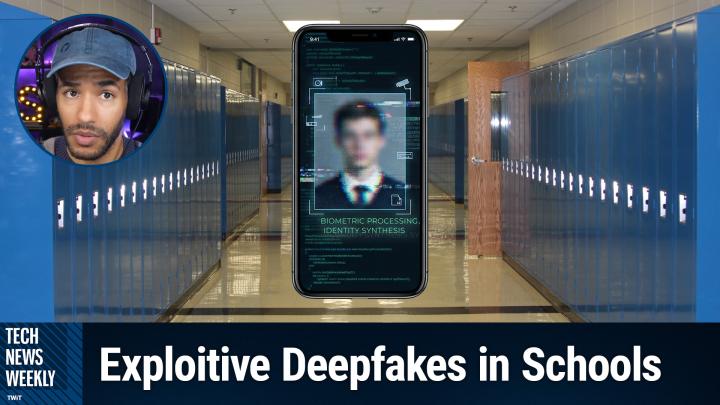
All TWiT.tv Shows (Audio)
Tech News Weekly 440: Inside a High School's Deepfake Nightmare
01:11:10
When Deepfakes Go Too Far in Schools
Loading summary
Transcript112 lines
- [00:00]
A
Coming up on Tech News Weekly, Abrar Alhiti joins me. This week we talk about the AI offerings of many a tech company. Google IO, what it had for consumers, Microsoft and lastly WWDC which is right around the corner. Then Sam Cole of 404 Media joins us to talk about deep fakes in schools and the ongoing struggle between legislation, parenting, app stores and everything in between. Then I round things out by talking about actuators. Yes, they're actually quite interesting actually. Stay tuned for this episode of Tech News Weekly.
- [00:42]
B
Podcasts you love from people you Trust.
- [00:47]
A
This is TWiT. This is Tech News Weekly episode 440 with Abrar Al Heati and me, Micah Sargent. Recorded Thursday, June 4, 2026 inside a high school's deepfake nightmare. Hello and welcome to Tech News Weekly, the show where every week we talk to and about the people making and breaking that tech news. I am your host Micah Sargent and I am joined. Yes, it is the first Thursday of the month, so I'm happy to be joined by Abrar Alheti. Hello Abrar.
- [01:18]
C
Hello, how are you? These come by quicker and quicker every month.
- [01:21]
A
I know it just. But it's funny because I've noticed for me at least, when my co hosts are absent for, you know, various reasons, then it feels like it's forever until a lifetime.
- [01:34]
C
Yes, exactly. So that's the trick of time.
- [01:39]
A
So for folks tuning in for the first time, welcome. We like to kick off the show by talking about our stories of the week. These are the stories we're finding interesting and think you should know about. And this week we're going to be kicking off the, we're having the first half of the show sort of COVID some of the big conferences that have taken place or are taking place place or will soon take place as it were. Google IO is now one of the sort of older events in, in the scheme of things. And Abrar, you and I had a chance to talk about the appreciation I think that we both had for what Google has done with AI. Yeah, and I, I want us to talk about that because in, in our conversation we leading up to this episode sort of touched on how it seems that there are some companies that have to focus on the consumer aspects of AI and how to translate what is on the AI side of things. A lot to do with coding and all that jazz, but it's the job of these companies, these consumer facing companies to make these things interesting and useful to the people that they're selling the hardware to. And I think Google's done a Good job of that frankly.
- [03:06]
C
Yeah, I think this year and it's interesting what they've done in the last couple of years of separating kind of like the Android updates a week before the IO developer centric updates. And I think what that does is when we get that sneak peek into what those Android specific updates are, then folks like me who are more focused on kind of the consumer side of things, they make sense. Right. So you learn about things like it's now called Gemini Intelligence, sounds a lot like Apple Intelligence, but you know, it's all intelligent different intelligence systems. So Gemini Intelligence being able to like fill out forms on your behalf, pulling information from your other Google apps, scheduling appointments for you, making reservations, the things that were promised when AI was pitched, generative AI was pitched as this thing these agents that could really be helpful and save you time. It doesn't mean we have, you know, we're still far away from that end goal of actually having it be truly proactive and doing all your tasks for you. But this is definitely a step in that direction. And so I do think, you know, this year's IO was the usual amount of very developer centric AI updates, but there were also kind of the very human things, you know, the smart glasses, the things that people are really excited about that they'll be able to get their hands on very soon. I think these Android updates are very tangible and I enjoyed learning about those things because you know, we all spend a lot of time on our phones and so to have those kinds of updates be baked into our devices and I think, you know, in, in hearing from executives, the goal really is that you don't have to think about it. Right? You don't have to think about how do I make this AI useful for me, it should just do it for you and you shouldn't have to be hit over the head with the idea that AI is completing these tasks for you. So I do think the messaging for this year was, was good and I think kind of separating those two big batches of announcements really, really helps with that. But yeah, was there anything that stood out to you from, from this year's I.O. that you think that you're excited about or that you think other folks are, are going to love to use?
- [05:08]
A
I mean I honestly it's, it's, it's been a little bit of a trickle after the event of seeing what folks are, are sharing and what has been able to be tested. Right. Because some of this is pre announcements and is not yet available. But I remember seeing someone, there was a Tech had reported on the new sort of voice powered Google Document docs opportunities. So you would be able to kind of dictate and have. I mean it ends up being a bit of a back and forth which I think is interesting. Those the writing features tend not to be too interesting to me. But I believe it was the Verge that had one journalist who had the opportunity to try Scout. And Scout is Google's take on the AI agent, right. That can go out and do things for you. And we've seen little versions of this in the past. I can send out an agent from Anthropics Claude to look across various, I've talked about it before recipes to try to find the best way to make a gluten free sugar cookie that you can shape, you know, exactly as it needs to, that it doesn't fall. There were all these different things I said okay, these are the usual issues that I have. Go find what people say. And so this go out and do aspect what was really cool was the coverage that the Verge did regarding Spark and how, you know, he sort of went into it a little bit skeptical and was like, okay, this is what every single one of them talks about. Oh, I can book flights for you, I could do this for you. And a lot of times it's kind of like, I don't know, I don't know if I trust it. I don't anyway, sends this thing saying hey, I'm about to go to. I think it was a weekend getaway and I'm bringing my kid and this and our dog and this and that. And because of the knowledge that Google had about this individual from being able to use the personal intelligence of email and contacts and whatever, I mean he was genuine. They were, I can't remember who it was. So they were genuinely surprised and in a way delighted by this, this thorough, thorough guide on being able to, you know, go on this trip and check out things. It wasn't the Here are the top five rated things that you could have found in a Google search if you had looked it up. It was like, no, I'm going to make this specific to you. Ye talking about dog friendly hotels. But on top of that, not just dog friendly hotels, but how much it would cost talking about, you know, nearby dog parks for walks. Also having the knowledge of the somehow this is, this is where it went into the creepy territory for this person was somehow it also had the knowledge of his child's bedtime.
- [08:24]
C
Oh wow.
- [08:27]
A
Yeah. And so a little bit like wait, what? Or excuse me, not bedtime. But nap time. And so there was even like a nap time built into the schedule. Wow. But I think that's supposed to be the promise of these AI systems. And yes, it's creepy at first, but I think we can perhaps reconcile when we realize the data that we're putting in and, you know, what can come out of it. This is a bit of a little bit of an offside thing, but I've been watching hacks, the show hacks, and a lot of these people are wealthy people who have personal assistance. And this is not to obviously, like, if you can afford a personal assistant, that's the best thing that you could have, but many of us cannot. And exactly some of the things that they would. That a personal assistant would do. You know, I'm going, man, it'd be so cool to have that. It would be really nice if someone. Someone knew me that well, like what I needed for work or whatever. And so I think the promise of that is really cool. And I kind of love the idea of democratization of. Overwhelm, or democratization of the thing that helps with overwhelm, that helps with overload. Right. So more people being able to. To. To. To have better assistance in completing the things that they want to complete. Yeah, I know that was long winded, but.
- [10:07]
C
No, absolutely. And I think the perfect example of that, the feature that I'm still, like, so thrilled about is Magic Q, which, like, say somebody texts you and asks you for information, and it'll just be like, when is your flight landing? When are you arriving? Like, all these things, it'll just pull that from like, your Gmail or wherever else that information is stored. And I think there are some people who might say that it's creepy, but it's like you're already using all these Google plat forms, like, why not. Why not let it help you a little bit and just pull that information? It's all within the same company still. You know what I mean? So those are surfacing.
- [10:37]
A
What's there already?
- [10:38]
B
Exactly.
- [10:39]
C
And like, it's. It's those menial tasks that can be. That can add to that feeling of being overwhelmed where it's like all the little things that really add up. And I think in our. In our jobs, it's like if. If I could just focus on doing my actual job, like, doing the work and not all the, like, you know, the little tasks that I have to, you know, spend hours of my day on, that'd be fantastic. I mean, I welcome any. Any help that obviously protects my privacy, but, like, I'LL I'll take it.
- [11:05]
A
I want to. I'm sensitive to the fact that. And respect the fact that people on the whole are a little bit bored with people going, look what I did with AI.
- [11:22]
C
Right?
- [11:22]
A
Look at, look at this thing that I did. Look at how I was able to do this. And so I won't go into a lot of detail, but I want to talk about something that really kind of. It was the same sort of clicking moment for me with agentic experiences. And so recently I've been talking with a friend of mine for a long time now about going on a fishing trip. And she likes fishing and I like fishing. We haven't done it in years and so very good. I'm sure, you know, everybody has that experience of you talk about a thing and it just ends up happening, right?
- [11:57]
C
Yep.
- [11:58]
A
I was like, we're making this happen. And so I started to research, you know, everything that I needed to know ahead of time where, you know, what fishing permit. Because in Oregon there are, there's basically like, there's a permit and then there are these little add ons that you get depending on where you are. So if you want to do ocean fishing or you want to do, they're called endorsements. But anyway, that, well, I started to look into that and then I was like, okay, I'm getting a little overwhelmed here. There's a lot going on and I still need to figure out these other points. But the point that I really want to get to is something that I would have struggled to quite know how to research that the agent was able to do, which is that both of us, my friend and I, are people of color. In fact, we're both black. And Oregon outside of Portland is not the safest place for people with a little bit of a tan. And so I knew, you know, there may be all these great fishing spots, but are they safe for us? And so being able to task this with like, could you just. I don't even know where to start. But how can we kind of look into different areas and what makes sense and sort of getting that conceptual understanding too, of, okay, let's not just look at the history of this town and whether this was a sundown town or not. But also let's look at how far away is it from civilization? You know, how much driving are you going to have to do through small towns depending on the time of day, are there park rangers regularly reported in these areas? So it was able to even look at like, people that were complaining that, oh, that park ranger keeps coming by and no, I didn't have my fishing license so I got charged. But to take that and flip it and go, okay, that means that this is patrolled regularly. Yeah, that was aces and made us feel much more comfortable about being where we decided to go. And it did end up where the place that I was thinking we should go was. We were warned away from that's and so that it was very helpful.
- [14:11]
C
That's such a high level of detail.
- [14:12]
A
Wow.
- [14:13]
C
Yeah.
- [14:14]
A
And so I really like those things that, you know, again, it's like I have this idea of what would be important here. Let's kind of figure out how we can go about attacking the problem.
- [14:26]
C
Yes.
- [14:27]
A
So yeah, the agentic stuff is really interesting to me is really what that boils down to.
- [14:31]
B
Yeah.
- [14:31]
A
I want to continue to talk next about build because that's going on and a little bit about our expectations for wwdc, but we do need to take a quick break, so we'll do that now. The first sponsor of today's episode of Tech News Weekly is Zscaler, the world's largest cloud security platform form the potential rewards of AI too great to ignore, but so are the risks. Loss of sensitive data and attacks against enterprise managed AI. Generative AI increases opportunities for threat actors, which of course is going to help them rapidly create phishing lures, write malicious code, automate data extraction. You know, there were 1.3 million instances of Social Security numbers leaked to AI applications. It's time to rethink your organization's safe use of public and private AI. Chad Palette, acting CISO at BioIVT, says Zscaler helped them reduce their cyber premiums by 50% while doubling their coverage and improving their controls. Take a look at this from Chad With Zscaler, as long as you've got Internet, you're good to go. A big part of the reason that we moved to a consolidated solution away from sd, WAN and VPN is to eliminate that lateral opportunity that people had and that opportunity for misdirection or open access to the network. It also was an opportunity for us to maintain and provide our remote users with a CAFE style environment. With Zscaler Zero Trust plus AI, you can safely adopt Genai and private AI to boost productivity across the business. Their Zero Trust Architecture plus AI helps you reduce the risks of AI related data loss and protects against AI attacks to guarantee greater productivity and compliance. Learn more@zscaler.com Security that's Zscaler.com Security thank you Zscaler for sponsoring this week's episode of Tech News Weekly. All right, back from the break, joined again by the wonderful Abrar Alheti of cnet. And we are currently talking about some of the big tech conferences that have taken place. Microsoft Build is sort of, all of the details are being spread right now. There was a great piece from Emma Roth of the Verge, who talked about and sort of went through the big announcements from the event, including a little box, a little PC. I say a box. It's a dev box that is for AI development. Better improvements to Windows for developers. This is a build conference, but again, the big thing there. Oh, and I have to do a correction because I did call the Google version Scout, but I think it's called Spark, because Microsoft's version is called Scout.
- [17:38]
C
I mean, I don't blame you. It's all blurring together.
- [17:41]
A
Thank you so much. This is, you know, I'm sure you at this point have heard as well, have heard about openclaw and the excitement and interest there. Now we're seeing all of these major tech companies sort of addressing OpenClaw. Nvidia has its sort of integrations with OpenClaw. Microsoft has essentially built on top of OpenClaw. It's like, I think that the person who created OpenClaw called it a gateway to OpenClaw. And for people who aren't familiar the concept, the idea is that you have what is essentially a local LLM and so you on your local device or devices can run your own LLM. And the cool thing often about this is that it is also able to then call out for help if it needs to. And so it's a mixture of doing as much locally as possible with also access to other things. But because you're in control of it, it also means that companies don't feel as responsible about putting up guardrails. And so you are also able to give it more access to more stuff than you would otherwise be able to. So where somebody for some reason might want an agent that could pay, pay for things on their behalf. I'm still not there yet. But yeah, yeah, then you could do this. But yeah, did anything. We talked about how Build. There's so much going on right now that it was kind of hard to stay up with what was going on at Build. But this company as well, Microsoft has to make a play for not just developers, but also for general consumers. And I would argue Abrar has kind of gotten some blowback for how much it pushes AI on its consumers.
- [19:48]
C
Oh, God. Yeah. I think it's such a. It's such a Tricky thing to navigate because I feel like there's two different types of pressure. One side of, you know, the shareholders want you to talk all about AI and there's all this competition and then consumers are like, I, I just want to be able to like, do the everyday tasks. But I think, you know, one of the things that kind of stood out to me is the, the operating system that can work across devices. Project Celera. I feel like that is those kinds of things where you're like, this is something that is a tangible thing that people can understand and tap into that could potentially make their lives easier. I think a lot of the other stuff is so in the weeds. It's like, yeah, here's a million AI agents we just unveiled. And you're like, okay, like, what does that mean for me? So I think kind of those, those just, yeah, those very much more tangible and applicable announcements speak to consumers. But I do think there is this huge rift between what the everyday person wants and what company leaders are told to do, and then that trickles down. But I feel like when I talk to anybody outside of the tech bubble, it's like I can't even figure out how to back up things on icloud. And you're like, okay, you know what I mean? There's just this whole divide of the everyday person doesn't know, but will never know about any of these things or care, you know, and so how do you, how do you boil that down in a way that they don't have to think about it and it just becomes embedded in these devices?
- [21:16]
A
You know, that's such a fascinating thing. Right. Because I think that due to the, the, the rapidity that that exists in, in this space in general, tech is already a fast moving thing.
- [21:31]
C
Yeah.
- [21:32]
A
But then you add on top of it this AI revolution, and I don't use revolution. It's not a completely positive thing. I want to be clear because. Yeah, it's, it's just that is, things are, the ground is moving. Yeah. And so with that, that adds even more on top of it urgency. And I think that that makes us sometimes feel. Because, you know, we are out there trying. I know for me, I don't want, I don't want Tech News Weekly to be a show that is entirely about AI.
- [22:06]
C
Right.
- [22:07]
A
And so I'm, you know, looking for other news and being pelted in the face with like all of. Right.
- [22:14]
C
It's.
- [22:15]
A
And so it makes it feel like it is everything everywhere all at once.
- [22:19]
C
Yes.
- [22:19]
A
And given that, I think that you, you've touched on something there that's fascinating, which is that perhaps I do at times overestimate how much and how often people are using this. People are using this technology. Not my people, but people. Absolutely. And so that is important. Right? That's an important thing that we have to keep in mind.
- [22:44]
C
Yeah.
- [22:45]
A
And there may be people who never use most of this. There may be people who use some of it and don't even realize that that's what's going on. And they're just using some new tool they have. And that's probably quite a few people that fall into that.
- [23:02]
C
Yeah, yeah, absolutely. Yeah. I think it falls on companies now to figure out, okay, you've announced all these things, but how do you make it seamless? And how do you just blend it into everything people are doing? And there are some features that I think speak to that things. Obviously, smart assistants are a great example of that. But even photo editing tools that tap into AI, it's so easy to edit photos on your phone now. Like, who needs Photoshop, right? I mean, unless you're actually a professional photographer. But like, if you're not, you have all these tools at your disposal. I mean, my example of this week was I had to do a slide deck for the first time since, like college because I don't do that. I like, write articles is what I do for a living. I don't make slide decks. And I was like, how do I make this not look awful? And there was Gemini helping me polish up the look of my slides. And it was like, well, this is amazing. Like, that's really cool, you know, isn't it? So cool? Like, what a huge help.
- [23:55]
A
Oh, that's so. See, because I. So I originally. Graphic designer, like, that's what I originally intended to go to school for, or rather what I did originally go to school for. And then I ended up switching to journalism. And so I. But like, again, the things that you have time for versus don't have time for. And so once again, I was just in the middle of something. I needed to create a Google sheet and get some stuff in there for one of the shows shows that I do. And then I was like, you know, it'd be kind of nice if this looked pretty. Yeah, I don't have the time right now, though. But hey, what about the next time I come back? I look at it and it's got some theming to it. And so, yeah, that was a cool little.
- [24:38]
C
It's so cool. There are lots of really cool hidden uses like that. And again, it's like you just tell it what to do and it does it. Like that's the magic of it. That's what it should be.
- [24:45]
A
Yeah, absolutely. Well, that's sort of, sort of a look at Microsoft build. There's a lot more. In fact, yesterday Windows Weekly will have had lots of coverage on it. So you can check out that for, for more. But the point is ultimately kind of looking at these different companies and seeing how they are trying to, to, to. To put their AI message out there. And we'll wrap up with this, which is that WWDC is right around the corner. I think both of us, it sounds like, are grateful that we don't have to be there in person.
- [25:23]
C
Correct?
- [25:23]
A
That is correct. Lots of COVID fact. Leo and I will be doing our live commentary. So for folks listening, be sure to tune into that. But more importantly, I'm kind of going, at this point, we've seen all the other big companies and what they're doing is, for me, I think I've said this, but again, for me personally, is this going to. Am I out of excitement at this point? Is there anything that Apple's going to be able to show that's not just like, oh, yeah, we're doing the Google, what'd you call it, Magic Q thing too.
- [25:57]
C
Right, Exactly.
- [25:58]
A
That's interesting to me. What are you expecting from wwdc? I can't remember if you're primarily an iPhone user.
- [26:07]
C
I am, yes. So, yeah, I have some hopes. And I think my biggest hope in terms of watching it and listening to it is that Apple will continue doing what it does best, which is not making things sound insufferable. And what I mean by that is like, is like, even if they talk about AI, they're not going to say the word AI every 30 seconds. They're going to make it sound like an experience. Like, here's what you as a user, here's how your iPhone or your MacBook or your iPad is going to get better. And they're so good at marketing. We know this. Right. And they do it in all of their keynotes. So I am looking forward to them continuing this theme of over the last few years. You know, even when they talk about machine learning and AI, you're not. You're learning about how it can actually work and help you. The big thing, you know, everyone's talking about this. Everyone's waiting, is that smarter, smart assistant Siri. I won't say it. Try not to trigger your devices. That is. That's the big thing. It was promised Two years ago. This is. This would be a great time to announce it. And that would be, you know, similar to what Gemini can do. Right. Based off of what's on your screen. Carry out more tasks, handle multiple requests, things like that. But the other big thing that I'm really curious about is if we will get any teases. It's not a hardware event. We know that. If we get any teases into the long rumored foldable iPhone and if these new software updates will hint at something. Right.
- [27:43]
A
What will.
- [27:43]
C
What will that look like across a bigger phone? So that's the big question. But also, this being Tim Cook's last Big Apple event, what does that mean before he hands over the baton? And will they save all the big, big things for the iPhone event when John Turner takes over? So that's kind of the big thing that I'm wondering.
- [28:00]
A
But yeah, especially because I have curiosity about. Does. Has. Does Tim have the desire to claim any of the. You know what I mean?
- [28:12]
C
Right.
- [28:13]
A
Is. Is this an opera? Or even if it's not his desire, do other people desire for him to be able to claim some of this stuff as a. As a going away sort of, you know, last. I don't mean call it. Yeah, last raw as CEO.
- [28:26]
C
Exactly.
- [28:28]
A
So that's fascinating too. Right. Just to see how that's going to turn out. So.
- [28:33]
C
Yeah.
- [28:33]
A
Wow. I know. I love what you said and about Apple, sort of making it feel a little less insufferable. They do have a fantastic marketing team, that is for sure. Even if they are in trouble for me for having those advertisements about a smarter Siri before it was ever available to us.
- [28:52]
C
Yeah. And it cost them a $250 million lawsuit. So you're not the only one that's upset.
- [28:57]
A
That's true.
- [28:57]
B
That's true.
- [28:58]
A
You know what? No, actually I was gonna say they've paid for it, but $250 million for them.
- [29:02]
C
Pocket change.
- [29:03]
A
Pocket change. Can you imagine being able to say that? Pocket change for 10 to 50 million dollars.
- [29:08]
C
Must be nice.
- [29:09]
A
If I could say that then frankly, I am. I have too much money and I should give some of it to other people.
- [29:18]
C
Hand it out. Yeah.
- [29:19]
A
Just one of the things I'll do when I have my billion dollars.
- [29:24]
C
Yes.
- [29:25]
A
And I is I'm going to get you a 100% sterling silver high tea set.
- [29:31]
C
Oh my God. Okay. How do we make this happen, guys? Let's make Micah billionaire. Let's.
- [29:41]
A
Thank you so much, Abrar, for being here. It is always a pleasure to get to chat with you always have such a great time. If people would like to follow you online and keep up with the great work that you are doing as you kick off the campaign, make Micah a billionaire. Where should they go to do that?
- [29:57]
C
You can find my work on cnet.com, i'm also on Instagram, Abraral, occasionally on x. Not really Alhiti 3. But yeah, thank you so much for having me and we'll, you know, best of luck for us surviving next week and look forward to talking to you at the end of it.
- [30:11]
A
Yes, me too. Bye bye bye. All righty, folks, we're going to take a quick break before we come back with my interview this week. Looking forward to the interview. Not so much the subject, but that's, that's the hint I will give you for now while we go into this next break because this episode of Tech News Weekly is brought to you by Simply C X. When you think about the companies that are actually winning in tech right now, what do they have in common? Sure, great products, but more often than not, it comes down to how they make customers feel and how seamlessly everything works. Because customer experience is the ultimate strategy to scale companies. So stay ahead of the curve with SimplyCX, the podcast produced by Microsoft and hosted by Nicole McKinley, Microsoft's global customer experience leader. SimplyCX features conversations with executives from companies like T Mobile, CarMax and TD bank exploring how AI data and insights insights are reshaping the customer experience and driving business growth. In fact, their recent episode with Mark Chamberlain, the global managing director of customer experience at Kantar, is a masterclass in modern CX and the metrics you actually need to monitor. And that's really what makes SimplyCX stand out. The conversations are grounded in real business challenges and full of practical takeaways for team leaders and brand builders. New episodes drop every other Tuesday. Find SimplyCX wherever you get your podcasts and follow host Nicole McKinley on LinkedIn to keep the conversation going. All right, we are back from the break and as I mentioned, this next story is honestly a little tough, but again, incredibly important. Roughly a thousand students attend one of the top ranked high schools in Pennsylvania. And last December, that community was upended by something a single freshman did from behind a phone screen. What followed exposed how unprepared schools, police and law still are when AI collides with the lives of teenage girls. 404 Media's Sam Cole spent months reporting this one out and is here to tell us what you found. Hello and welcome.
- [32:26]
B
Hey, thanks for having me.
- [32:28]
A
Absolutely. So I was hoping you could start by kind of walking us through what happened at, I believe it's Radner High School last December. What did this specific freshman do? And then how did the rest of the school find out about it?
- [32:41]
B
Yeah, so there was a night in early December where the kids were talking, as they do over Snapchat. So disappearing messages oftentimes, you know, talking about. There was a kid in their class that had made these images with an app that turned pictures from these girls, five specific girls, social media pages, their images online into AI generated sexually explicit videos. So we're talking about, you know, what we used to call child pornography. It's child sexual abuse material, whether it's AI or not. So that was what was being talked about. The next day, the kids all go to school, and these girls are confronted first thing in the morning with everyone talking about them, everyone talking about the images. Everyone's saying, you know, did you see the images? You know, these are very, again, sexually explicit, sexualized images of minors. And, you know, they're freshmen in high school school. They're kids. So it was just a really, really tough day. And then the months that followed, the weeks that followed, were just getting worse and worse. And it's ongoing today. But, yeah, we can focus on kind of the immediate fallout for this story. But, yeah, it's these Nudify apps that are on the app stores.
- [33:54]
A
In this, you actually. So with these photos, you write that no one that you spoke to had actually seen the images. But, of course, the harm was undeniable. I was actually. Actually wanting to hear your take on the gap between unseen content. But the v. The very real consequences that came as a result of it, particularly, I would argue with parents and then at least older students with more of an awareness of this, the potential risk and fear that exists when it comes to things like these Newify apps.
- [34:31]
B
Yeah, I mean, it is. It's a tough situation because, again, none of the parents that I spoke to had actually seen the images themselves by the time the school reacted. And the parents were able to, you know, get a handle on what was going on. Allegedly, the. The kid who made the images, anyone who had seen the images were just deleting the apps, deleting the images off their phones, deleting them from all these chats. Again, the chats were happening in these ephemeral platforms where their messages delete automatically. So it was tough to get a hold on what was actually happening for the adults who were responsible. And you add to that a general ignorance about how these apps work and you know how the, how even like Snapchat works. You know, the fact that the images or the, the chats were disappearing was something that confused the administration and the police. So I think just adding to the, the already very kind of slippery like whisper network that was happening with these kids, you have adults who are learning about this for the first time who maybe don't know what they're talking about, what the seriousness that they're talking about. They're like, oh, it's just, you know, like filters or something or it's, you know, they just like photoshopped something or they made, you know, this with some goofy app that you would make like yourself in Spider man or something. But the reality of it was it was actually sexualized content of these kids is what was what we were talking about here. And we know this because the app that they were using, allegedly using again, it's like this is information that I'm hearing from parents and kids. But the app was called Movly, which is no longer on the App Store because it creates this sexualized content, this non consensual AI content through the guise of being, you know, you put yourself in a Marvel movie, put yourself in on the beach or try this new outfit, but once you pay for a subscription, you can actually access these tools that turn images into more sexualized content.
- [36:29]
A
Yeah, so that's, that's a big part of this. The app at the center of this Movely, it was available right in Apple's App Store. And I do think arguably there is this mindset, particularly with Apple's App Store. I don't hear it as much with Google's Play Store, that this is some sort of blessed place where only the, the, the right apps get through and you don't really need to worry and everything. And perhaps there's even an argument at times that it's too locked down. And so the fact, I mean people might hear this and there might be a little bit of a cognitive dissonance moment where they're going, wait, that was a, how did they, was the phone jailbroken? What's going on? And so I wanted to ask you, what did you learn about how these Newtify tools are, are marketed? And maybe we could also rewind a little bit and I think it's self evident. But nudify, what is that in, in terms of, of how these work and then how easily is it for kids to get, get access to them?
- [37:31]
B
Yeah, so just to kind of establish like the stakes here, it's very easy. It's extremely easy. These are apps that are advertised on TikTok and Instagram and they're, you know, you just, just. There was a report recently that came out that said it showed that just typing in, you know, Nudify brings up these apps, which is crazy. This is illegal material that the App Store is just surfacing for anybody to see. But the apps themselves are. I mean, this started years ago. So this is kind of the progression of Generative AI. But originally these apps, you would put an image, like a full body image of someone wearing clothing on, in the app or on the website. And then it would spit back out an image of them that looked like they were not wearing any clothes, which is like, not. It's not great. It's not. It was bad at the time. It's still bad. But now what we have is Generative AI has turned it into. You're just uploading a picture of someone's face. So like a yearbook picture. We're not even talking about, like these images were already on Instagram and they, these girls had done something wrong by posting, posting pictures. It's like any kind of photo that is available, you can just put one picture in these apps and then it puts that person's face into whatever situation you ask it to. So in this situation, it was offering like twerking videos or like videos where they're, they're like taking their clothes off or making out with somebody. You know, stuff that, I mean, for 14 and 15 year olds, it's like this is really inappropriate and sexualized content and. And then there were also. It was talk of these images being images of these girls touching themselves or, you know, masturbating, things like that. It's like it got more serious as we were started digging into this. So I think that's really what we're talking about. We're talking about these apps and they are everywhere. It's like you said, it's like these kids are downloading these apps from the Apple App Store, which is not shady. You know, it's like it's. They're not on the dark web. They're not digging around looking for like the, the scary apps. They're on the App Store, which is on their phone. And the App Store is saying it's a safe place to be. You know, it markets itself as being safe. And the apps often are rated for ages. It's like, you know, 13 plus, 18 plus. But those ratings are just like if you were gonna watch a movie at home.
- [39:52]
A
Home.
- [39:53]
B
It's like you don't actually need to be 18 to download one of these apps. You can just download them as a child. They're just suggestions. They're just like, you know, maybe you'll want to be this age if you want to add on which it's a ridiculous system. But you know, they are on like you said, they're on this platform, very easy to find. And the Apple App Store ostensibly is supposed to be checking for this stuff, but they wait until reporters are researchers contact them and say what's going on with this app to actually take them down. So the App Store is definitely. And these. It's happening on the Google Play Store as well and just on the, on the open Internet.
- [40:32]
A
But yeah, you're reporting of course then Doc. I mean this is one of the main thing Everybody, of course we'll link it in the show notes. Everybody absolutely should go read this. You incredibly detailed reporting. And I think that there's something to be said for having sort of the, I guess the journalistic stamina that I think makes these things a little bit difficult. We hear about them in the first. But there's no resolution or even part. I know that it's still ongoing, but even partial resolution because people have moved on. And so just as an aside, I just want to express my appreciation for you taking the time to continue to go through and talk about this and really cover it. And so yeah, please, even if you out there listening, don't have the time to read the whole thing, click the link. It's well worth it.
- [41:27]
B
Yeah, thank you for that. I appreciate that. Yeah. It takes time. It takes time to follow one of these things.
- [41:31]
A
So yeah, absolutely. Now in this reporting, it documents a series of shifting and contradictory messages from the school district and from police over the course of these several weeks. Could you talk about how the administration's account changed from December through January as more discovery took place and perhaps as more whispers of how they should handle things took place as well.
- [41:57]
B
Yeah, for sure. So this happened early December. It was not until mid January, January 14 that parents heard anything from the police department about what actually, actually was happening as far as charges. So, you know, up until this point, they had been pushing for investigations. They had get gotten the DA's office involved. They were trying to kind of get some movement on this to figure out what was actually happening and to get some kind of recourse or closure or some answers to this. The kids were still going to school. You know, it's, they're, they're in school dealing with bullying and harassment. So in Mid January, the police told the parents that they. That the kid that made the images was charged with summary harassment. And which is. It amounts to, you know, kind of a slap on the wrist type charge. And then two days later, the school and the chief of police sent a message to the parents, to the entire school community, saying that no crime was committed and that there was an investigation, the investigation's over, and no images were found. And that was very confusing. You know, it was kind of like, wait, what's going on? He just got away with it. This is absurd. The. The email said that they included their investigation and found that during a small gathering off school grounds outside of school hours, which, again, they're emphasizing that they're not responsible because it happened elsewhere, which is not really true. The app made images that appear to move and dance, which, again, downplays what was actually happening on these apps. I mean, this was very confusing for everybody involved for the, the girls who were targeted for their parents. It was not until a week later that the police department actually posted a notice on Facebook saying that a crime did happen. So they've gone back and forth several times, and at that point they said that there was an investigation and a juvenile offender was charged with the crime of harassment from their conduct be alerted to the dangers of AI and criminal use of. It would be investigated and charged appropriately. Which I don't know about that last part. It seems like maybe not. So it was just a lot of confusion, a lot of like, what's going on all this time? You know, the, the school, as far as I know, and I asked them all this and they did not answer these questions, but did not actually discipline or, you know, disband or expel the students that made the images or take that part into their hands. They were like, the police is going to handle this. And that's. That's what that looked like. So, yeah, very confusing.
- [44:29]
A
Absolutely. And of course, a lot of the story hinges on, frankly, what the school owed these girls versus what was actually offered. And we've touched on that a little bit there. There's talk of these supportive measures and how things turned out. I think, you know, we've heard how the administration responded, how police responded, how did the families respond to the school's handling of it, and frankly, this situation in the first place.
- [45:04]
B
Yeah. So, I mean, we see this happen over and over again with gendered violence, with domestic violence, with harassment and violence against women and sexual violence also, especially where the victims are punished for what happens. So what that looked like in this case was the girls were offered the opportunity to leave class early and to eat lunch separately. And if anything else came up, they could go to the assistant principal and request more accommodation, which again, it's like you're 14, 15, this is already a charged social situation, to say the least. And now the school is saying, well, you can leave class early if you want. You can stop your studies and go excuse yourself. You can sit separately at lunch, which, you know, I don't know. I remember high school nightmare.
- [45:58]
A
Yeah, you don't want to do that. Exactly.
- [46:01]
C
Yeah.
- [46:01]
B
So they, they were put in this position where they had to, I don't know, just like deal with what they, what they were given or not. The parents, obviously you asked about the parents response. They were, they were livid. They are livid still. I don't want to speak too much for them, but they are still pushing for more. They pushed for policy changes at the school, which they did get, but it's. It's a kind of a too little, too late situation for these girls in particular. But hopefully this doesn't happen again in the same way. Hopefully there's been some lessons learned. But they got policy changes that added more language around cyberbullying and AI and they got more language around Title 9 protections, which the school was pushing back against because they were saying it didn't happen here with us, didn't happen at the school on campus. So it's not our responsibility for Title 9. And now the policy is saying, you know, if this, if it affects school, you know, activities, then it should be investigated as a Title IX situation. So I think that's. Those are great pieces of progress, but again, still pretty unfulfilling. And the message that the boys who were creating these images and sharing these images, or we don't even know for sure if they were sharing them, but like talking about them still bullying these girls and talking about it in school today, they get the message that nothing happens if they do this. You know, they're. They got away with it and, yeah, they don't have to have any repercussions, which is I think maybe one of the more damaging parts of. It's a highly damaging part of the story.
- [47:41]
A
Absolutely. Let's take a quick break because I want to tell you about webroot bringing you this episode of Tech News Weekly. If your computer feels sluggish, heats up when you open a few tabs or, well, sounds like it's preparing for liftoff every time it runs, your device probably isn't the problem. Your antivirus is Many big name brands have become bulky, complicated and full of pop ups and upsells. Webroot offers all in one digital protection for up to 10 devices. With a variety of plans designed to protect you and your loved ones from digital threats. You get powerful antivirus and identity protection without the slowdowns or pop ups. Webroot keeps you protected online while staying out of your way. Webroot Essentials scans six times faster and takes up 33 times less space than the average competitor. And it ranks number one in performance compared to Norton and McAfee. Webroot's Essentials vs Norton Antivirus, while it scans 3.7 times faster, installs 35 times smaller, uses 5 times less RAM when idle. When we Compare it to McAfee Antivirus, it scans 1010 times faster, installs 16 times smaller, and is also using 5 times less RAM when idle. These differences can make your computer feel newer, faster and thereby easier to use. Webroot also offers Webroot Total Protection, which includes antivirus, identity monitoring, privacy protection and cloud backup all in one simple hassle. Free subscription. Designed for everyday life, Webroot Total Protection ranked first overall when compared to top competitors. It scans seven times faster than the average competitor and takes up three times less space than the average competitor on your hard drive. AI, of course, has completely changed the cybersecurity game. Scams smarter, malware faster and phishing emails look shockingly real. But the good news is you don't need to be a tech expert to stay ahead of it when you use security that can keep keep up with AI threats. Unlike free antivirus tools or older security programs, Webroot is built to counter modern AI driven attacks. It's fast, it's lightweight, and it's designed to spot threats before they ever reach you. Live a better digital life with Webroot. Webroot is offering our listeners an exclusive 60% off offer. Visit webroot.com twit to learn more. That's Webroot. And of course we thank Webroot for sponsoring this week's episode of Tech News Weekly. All right, let's head back to the show. You place Radner inside, of course, a much larger national pattern that we're seeing here. What ultimately is that through line that you found across these cases? And as you just mentioned there with the, the way that the punishment seems to go, is that the way that you see this across, across the board? And why do we think that schools keep responding this way? Why is it that there is this pattern of, of frankly, from the outside? What Seems like the wrong way of doing things.
- [50:54]
B
Yeah, I mean, I think there's a lot of complicated factors going on in each of these schools, and they do, they were. There is a pattern and they do respond similarly every time. But it's either no repercussions for the kids who actually do the harassment or, you know, total severe felony charges go to jail at 13. These are kind of the, that's kind of the spectrum. And there's very little actual prevention of the images in the first place. There's little education about consent, an age appropriate literacy around sexuality. Like, this isn't something that's happening in schools, in public schools, to my knowledge, in this country. I don't know about you, but I didn't get any sex ed, so. Or not. Not to the degree of like, this is okay with, you know, this is okay with the other person and you should be aware of, you know, other people's boundaries and their bodily autonomy.
- [51:51]
A
I'm from Missouri, so we got the don't get pregnant, so.
- [51:54]
B
Yeah, exactly.
- [51:55]
C
Yeah, you get it.
- [51:57]
B
Yeah. So I, I think that there's so one common thing that's just. It's kind of like a time bomb waiting to happen in all schools is there's so little actual education around what these apps are, what they can do, and also what isn't, isn't okay to do. And again, these are crimes like the, these kids should be aware that they are committing serious crimes. And it is a felony in Pennsylvania and, and it's a felony in the US to make child sexual abuse material, whether or not it's, you know, quote unquote real or if it's AI. So I think that's something that these schools owe these kids is to have some kind of education around this new world that they're entering into. And I think the parents don't know what's going on. The cops definitely don't know what's going on. The administration is like, we don't want to know what's going on. And so I think the refusal to talk about sex and sexuality in general is really harmful and ends up in these scenarios where, you know, we have, you know, kids getting away with these really heinous things and then other kids feeling the impact of that as, you know, silencing and traumatizing them in their school day.
- [53:12]
A
Lastly, toward the end of the piece, experts parents points to where solutions might actually live from. Legislation, of course, app stores, updates there conversations at home. Based on everything that you've reported thus far, I'm kind of Curious to hear what gives you the most hope going forward and then perhaps what's got you feeling like there isn't as much hope available.
- [53:41]
B
Yeah, for sure. I mean, I, as slow as it is, I've been writing about deepfakes for eight years now and, and as slow as the progress on this topic is, and as worse as it is today, it is way worse today than it was even when it first started, which is mind boggling. But so much about our conversation in this country about sex and sexuality and identity is worse than it was eight years ago. But I, I think just getting, unfortunately the awareness has to come from really terrible things happening. And apparently that's just how it's going to get. More awareness is like really bad happening to more people, which is awful. I wish it was not that way, but like, this is how we start talking about this stuff is waiting around for these girls to get victimized again. I don't like that. I don't think it should be happening that way. But the fact that more people are talking about it is great. These, a lot of the parents in the community, in this community and these other communities that are affected, they're hearing about deepfakes for the first time ever through this really tough situation, which is awful. But the more that these situations can reach a bigger audience, I think that's, I think there is a lot of value in this not being just like, oh, this is a weird thing that happened in one small town. It's something that's happening all over the country. And there was a lot of conversation through this story about parental, you know, the, the responsibility that parents have to talk to their kids, I think that's huge. You know, talking to your teenage sons about how they should treat girls is great. You should do that. That's, you know, we need more of that. Talking to them about what isn't, isn't okay to do on your phone, not just don't look at porn, but here's what happens when you come across this kind of thing. Here's what these apps are, here's what they can do. This is why it's not cool. This is why it sucks. Nobody likes this. You shouldn't do it. I think it's a conversation that parents need to be having with their kids all over before this happens. So I'm hoping more of those conversations start happening. I'm not a parent myself, so it's easy to say. That conversation is probably very difficult. So I can imagine it's, it's hard to bring that sort of thing up. But it's necessary, it's, it's protective of the entire community to have this conversation. So that gives me hope. More people talking about this stuff in general gives me hope. Gives me hope that folks like you guys want to talk about it on air. So great.
- [56:10]
A
I mean, and again, thank you so much for A, being here and B, reporting on this stuff. I think, yeah, you've, you've touched on something that I found frustrating in reporting and talking to folks, folks reporting on the deaths that have come, at least in part, as a result of AI psychosis and those and humans and our need for object lessons is a frustrating aspect of us, for sure. Yeah. So thank you. If people like to keep up with your work. 404 Media. Is that the best place to go to get Your latest?
- [56:54]
B
Yeah. 404 Media CO. Subscribe Sign up for the newsletter we're writing stuff every day that will either scare you or give you hope. So sign up for that.
- [57:06]
A
Yeah, absolutely. Well, thank you so much. We appreciate it and we'll see you again soon.
- [57:10]
B
Thanks, Micah.
- [57:11]
A
Absolutely. Tomorrow morning is knocking.
- [57:16]
C
Stock your fridge now. How about a creamy mocha Frappuccino drink? Or a sweet vanilla smooth caramel maybe? Or white chocolate mocha? Whichever you choose, delicious coffee awaits. Find Starbucks Frappuccino drinks wherever you buy your groceries.
- [57:30]
A
All righty, folks, we have one more here. It's a little story of the week. I came across this story and I was hooked. Turns out we have an actuator problem. This one comes from Kylie Robison, writing for for Core Memory. And it's about the single most boring sounding part that you probably haven't spent a lot of time thinking about the actuator. Turns out that, you know, a lot of devices have actuators in them. There's a chance that there's one involved with the camera on your phone. Certainly if you're driving in a car, you've got dozens of actuators surrounding, surrounding you one area where they're very popular and necessary drones, also robot arms and every humanoid robot that Silicon Valley is working on right now as a means of reshaping the economy. Well, you need actuators for those friends. And it's something that we don't really do here in the US outside of a few, few small companies. It's the part that takes the energy that is created through some means and turns it into motion. And almost all of them are made in China. The piece follows and look, I want to be clear on the front of it. It's not just, oh, these are made in China and just because of that it's a problem? No, the idea is that we make a lot of, we design a lot of the stuff, but we don't have the capabilities of making any of the stuff. And in instances of issues of trade, we may not have access to the stuff. And so we need people making these. Robeson's piece follows two American startups. One's called West Mag in South San Francisco, and the other one's called Atlas Motion Systems that splits its time between Long beach in California and the Philippines. They're both trying to fix that. They kind of disagree on how. And I love this because it's almost a disagreement on the definition of what American made means. So for one company, American made means that it's built on American soil, but the other just says, hey, as long as it's American owned, it doesn't matter where you make it. It's wherever the math. Well, it matters where you make it. It matters where the math works. So let's kind of talk about it again. An actuator, it's the part of that machine that turns energy, what could be electric energy, hydraulic energy, pneumatic energy, into motion. The ones that we're talking about are most often a motor that spins control electronics that set speed and force and then gearing that takes speed and. Or that rather trades that speed and provides more torque, more or less torque. And in this, you know, something that I started to, after, after reading this piece, I thought, where, where can I look around me and see actuators? And you're going, oh, wow, they're everywhere, they're everywhere. They're everywhere, everywhere. So they're kind of this unrecognized, important piece of what makes so many of our modern devices do what they do. It's kind of wild how we've seen the focus government wise on trying to bring more chip manufacturing to the US and then also I didn't even realize how much drones are a focus for our government and other sort of, you know, ruling bodies in terms of having that happen here in the US Because I was thinking mostly of consumer drones. But those aren't the only drones that are out there. And all of those pieces require actuators. And then there's also this idea that, you know, there could be future, future soldiers who wear gear that have that, that that helps to move their arms better or help them lift things or whatever it happens to be. And the thought this is, you know, from the perspective of the Department of Defense, for Example, the thought that the actuators inside of the fancy super suit worn by the US soldier being created somewhere outside of the US and potentially having some security issue is quite large. Like it looms large. And here's the thing. China really didn't plan this the same way that it did not plan to be the world's recycling dump. And why it's no longer the world's. Well, as much the world's recycling dump, it didn't plan to do it. It kind of got backed into actuator dominance because two of the big industries that were important in China, one being drones and the other being EVs, were happening there and those companies needed actuators. Chinese companies control 90% of the consumer drone market, 70% of the enterprise drone market, and this is wild. 92% of state and local first responders market. So you make a lot of drones, you supply a lot of drones, you need actuators and you need them right there. Then EVs, China's all in EV. Bet you know, wanting to have as many electric vehicles there and replacing the polluting gas powered vehicles meant that also had to build out the, the necessary components to make these actuators that there. And Chinese automakers built roughly 60% of the world's electric cars in 2025. So they needed those parts not just for themselves, but for the rest of the world as well. After that you've got robotics. China had nearly 90% of the humanoid market last year. So yeah, that's a lot. Even with this humanoid sort of market, humanoid robot market, it's, it's a small, small market, but there are a lot of actuators that are part of it. And when it comes to what we can do here in the U.S. well, we really can't do much. There's like as it stands because there are only two companies working on this. The math, as they say, doesn't math, but they're working on it. West Mag is trying to do it, needing to build out, to build up. So westmag says, look, if we can make enough of these that companies want more of these and then we start to build it out from there to scale. Once we're making enough of these, then the math adds up. Yes, it's too much cost right now, but if we could just get over this hump, then we can do this. The way that they went about doing this was they had hoped that they could go and just buy an actuator manufacturing plant in China and then by doing that, go there, research, study, learn Et cetera. But the problem is it's the way that things are set up. It's not just a manufacturing plant, it's a manufacturing village. There are the other necessary component manufacturers nearby that make the other parts and pieces that then the actuator plant needs. But on top of that, the people who work at these places are also nearby. And so you would have to go there and buy so much. It doesn't work that way. So instead what they did was they purchased the machinery required to create an actuator and then they rebuilt the factory in South San Francisco. So they are trying to do that right now with low volume being an issue. And once the hope is they, they get more volume than they'll be able to pay for it. But the other way of doing this, Atlas says, look, we're going to design. And, and it's, it's sort of the Apple way, but the, the factory is in the Philippines. And so they, the difference is though, where Apple or other big tech companies work with a manufacturer overseas, the factory in the Philippines is still owned by Atlas. It's, they're not, not, they're not farming out the, the, the, the work. They own both places, the production in the Philippines and the, the studio or whatever in Long beach and together are able to create that. Now this, the reason why it's become like a Washington problem is because it exists in a space that is getting a lot of attention. We've got batteries and the need for batteries between all of our different devices, but also EVs. We have drones and we have solar power. And so much of that is currently centered in China. These are things that America on the whole invented the battery and some of the modern battery technology, solar power and solar, I believe it's the solar cells in particular as well as modern small drones. And unfortunately, despite America inventing these things, not able to make them at scale anymore. That's why it's gone elsewhere. And so all of these different devices require these actuators and we aren't able to supply them here. There's no chip style act for actuators. There's no targeted subsidy, no Department of Energy program to make these fabricating plants. And so we don't really have a handle on what things look like going forward. There's a lot of really interesting stuff in this piece that kind of looks at where we see AI companies going in the coming years. And I believe it was even Sam Altman himself who said that OpenAI planned to create its own actuators, like manufacture them, not create them as in design them, but actually manufacture them and would be creating a factory to do so.
- [69:03]
C
So.
- [69:04]
A
So it's definitely a focus, but nobody's quite nailed it in terms of the way to make it work here in the us. So it, it may sound like a boring premise at the at the front of it, but there's a lot of good stuff in this and I ended up, you know, reading it, you know, front to back in no time at all because I thought Actuators. Huh. Never thought about that. So be sure to check out that piece while have a link to it in the show notes folks. That brings us to the end of this episode of Tech News Weekly. Of course, the show publishes every Thursday. TWiT TV TNW is where you go to sign up and we would love to have you subscribe. You can also check out my other shows by looking at TWiT TV. You can check out iOS today, you can watch Check out Hands On Tech and of course hands on Apple. I want to mention Club TWiT. TWiT TV Club TWiT is where you go to sign up. $10 a month, $120 a year gets you access to some pretty awesome things. First you will gain access to some special feeds. We've got a feed that has sort of behind the scenes moment before the show. After the show we've got a feed that is devoted to our live coverage of tech news events like the upcoming Apple wwdc and a feed that has our special club shows like My Crafting Corner, upcoming Media Club, Stacy's Book Club and so much more. The AI User Group is there as well. So on top of those feeds you also get every single one of our shows ad free. Just the content. Very nice. And you gain access to our members only Discord Server. A fun place to go to chat with your fellow club Twitters and those of us here at TWiT. If all of that sounds good to you, well head to Twitt TV Club Twit to check it out. If you'd like to follow me online, I'm ichasargent on many a social media network. Or you can head to Chihuahua Coffee at C H I H U A H U A Coffee to see the links to all the places that I'm most active online. Thank you for being here and I'll catch you again next week for another episode of Tech Newsweek. Bye bye
- [71:19]
B
Sam.