← All TWiT.tv Shows (Audio)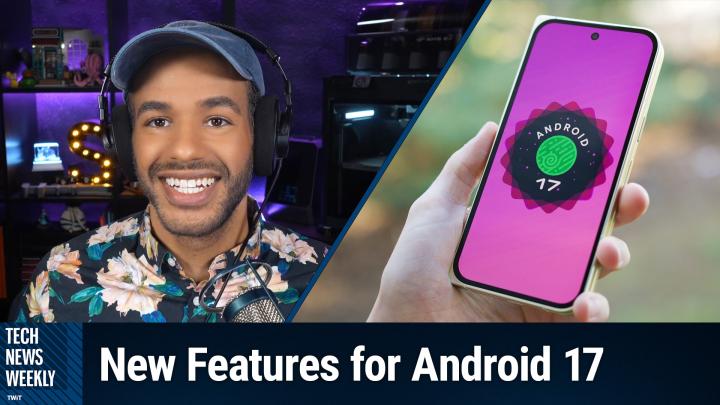
All TWiT.tv Shows (Audio)
Tech News Weekly 442: Android 17's Best New Features, Explained
01:03:39
What's New in Android 17
Loading summary
Transcript64 lines
- [00:00]
A
Coming up on Tech News Weekly, Dan Moran of Six Colors is here. We talk about the warning from Tim Cook that Apple's prices are going to increase, plus discuss dumping Roku after its potential acquisition. Patrick Holland of CNET stops by to give us the lowdown on Android 17 now that it's finally here. And I share a warning about how hackers have found a backdoor into many an American home. All of that coming up on Tech News Weekly. Podcast guests you love from people you Trust.
- [00:36]
B
This is TWiT.
- [00:40]
A
This is Tech News Weekly. Episode 442 with Dan Moran and me, Micah Sargent. Recorded Thursday, June 18, 2026. Android 17's best new features explained hello and welcome to Tech News Weekly, the show where every week we talk to and about the people making and breaking that tech news. I am your host Micah Sargent and we are t joined by Jennifer Pattison Tuohy of the Verge this week, but JPT will be joining us next week. In her place today is the wonderful east coast bureau chief of Six Colors. It's Dan Morin. How you doing, Dan?
- [01:19]
B
I'm doing well, Micah. I'm glad to know I'm the utility infielder of Tech News Weekly. I can third base, shortstop, second base, first base. I can do it all. Just call me. Call me up whenever you need me from the dugout.
- [01:32]
A
I will call you up when I need you from the dugout. And I will call you up when I need baseball metaphors I do not understand.
- [01:37]
B
Excellent. Good. I've got a billion of them.
- [01:39]
A
That's fantastic. I am proud of myself that I did know it was baseball though. That's good.
- [01:43]
B
So I guess next I was a real swing and a miss is what I said.
- [01:47]
A
I get that one too. Haha. Cricket. Anyway, let's go ahead and get into the show. In case you didn't know this welcome or if you've been here before and you didn't know what's going on. In any case, this is the part of the show where we share our stories of the week. These are the stories we find interesting or maybe frightening. And for whatever reason, we want to share them with you. Am I selling it? I hope so. Our first story of the week comes from you, Dan. Tell us all about it.
- [02:14]
B
Yeah, you know, it's always an interesting moment when a CEO has to go talk to a news publication and even more so when they have to deliver some bad news. And this week we got to see Apple CEO Tim Cook do just that when he went to talk to the Wall Street Journal. And tell them that sadly Apple is going to have to raise prices. This is not a thing that they do very much. It happens occasionally from time to time and mostly it's to keep up with the state of the world. And in that case today, this week, the, the state of the world is bad. No, the state of certain markets in the world are bad, specifically memory chips. You've probably heard this if you are a follower of Tech News. But RAM and SSD flash, you know, NAND chips are both in a high demand right now in large part because of the huge increase in artificial intelligence usage. Apple is jockeying a lot more for position with its suppliers, a position that it's, it's previously been able to kind of lock down by the fact that they've got this huge business that's very predictable, very seasonal. Right, okay, we know we need a bunch of new iPhones in the fall. We know we're going to need X million gigabytes of RAM and Y million gigabytes of storage. And so they kind of negotiate these deals ahead of the time. But we've seen in tremendous increases in demand and that has led to tremendous increases in price. According to the Journal, memory prices in particular DRAM have gone from in Q1 2023 to now that has risen almost 900% which is a whole lot of percents. That's a lot of money. That's a lot of money. I mean that the, the Journal has a graph of this and it is scary looking. And so you know, between that and, and flash storage going up, they're expecting the storage on, on NAND to sort of even out. But it looks like RAM for the moment is going up even, even further. I guess that 900% is an estimate of where it might be next year. Right now it's still, it's only, only 600 or so percent. Sorry. And you know, people want devices, you know, lot buying both consumer level, you know, products as well as especially these high end servers and server like computers to do things like run artificial intelligence agents or train models, et cetera. This is. Look, it's always been the case with computer technology that there are certain processes that things like, you know, can eat as much memory and storage as you're willing to give them. And so that's one of the reasons I think when I often we counsel the people to buy computers, we say buy as much RAM as you can afford because there's always more. RAM is always useful. But AI in particular is incredibly voracious when it comes to that because the more RAM and storage you can throw at it, the more complex and powerful you can make these models by feeding them more and more information. AI truly will take as much RAM as you can throw at it. So there's no ceiling on it. There's no point at which it's like, well, it becomes less efficient for us to have. You know, there's sort of a sweet spot. No, it's just you keep feeding it ram. And so since we have that and we have tons and tons of companies looking to do that, obviously more and more demand and that means less supply for companies like Apple that want to be able to lock in these prices in advance. So taking an unprecedented move, you know, Tim Cook going out there and letting people know they're going to have to raise prices. As he says, we're doing our best to mitigate the huge increases that are being passed to us, and we've been trying to shield our customers from the increases, but that situation has become unsustainable. To me, that reads like Apple was willing to take a bath on its gross margin for a while because it was intent on trying to see if it could ride this out and basically not upcharge consumers. And it took that approach as well with tariffs from everything. You know, during the whole, like, up and downs of tariffs, Apple kept its prices pretty steady and I don't think suffered too much financially as a consequence. But it's clear that because there's no respite in sight from these high prices, Apple is going to have to adjust their pricing. And of course, the other shoe that he doesn't drop here, but I think you can kind of read between the lines, is when prices go up, they rarely come down again. So I think we can expect to see some higher prices. Apple has some tools available as disposal because it can take sort of a holistic look at its entire product line and say, well, something like the MacBook Neo, which we has, you know, kind of exists predicated on this low price point, we can kind of peg that and keep that stable. But that may mean raising prices on higher cost products that we think are, you know, less subject to that because the people willing to pay those high prices are willing to pay a little bit more for the products that they want. And you have this additional pricing tool of a few products that we kind of expect to be coming down the pipeline but have not arrived yet, which do not have price tags affixed to them. So, for example, that much removed foldable iPhone that's coming in September, which we are already Expecting to be expensive, nobody knows what it's going to cost. So Apple can charge whatever they want for it and nobody can say, but that's more expensive than it was before because the product didn't exist before. Similarly, the touchscreen MacBook Pro that we're expecting to show up either late this year or early next year, nobody knows where that is on the price point. So they could basically adjust that and hope to make up some ground from that. So, yeah, I mean, the biggest question is we're going into the set of the back half of the year. Apple traditionally sells a lot of stuff in its holiday quarter towards the end of the year. Obviously people are very price sensitive right now. And so the question is, will these higher prices impact consumers buying habits in the holiday season and will that impact Apple's bottom line? We just don't know. But we're going to have to keep an eye out as we move into the fall.
- [08:08]
A
Something that sticks out to me about this in general is, you know, we see after WWDC and different event that Apple has press events, announcements that come by way of interviews. Right. With, with different publications. And so you'll see head of software talking to the Wall Street Journal or someone and kind of detailing a little bit more about whatever it was that they didn't have an opportunity to get out on stage or they felt like they needed to go into more detail. But it feels, and this is where I hope you'll correct me if I'm wrong, like it's been a while since we've direct and clear what could be termed negative information directly from the company. Right. You'll get, oh, we've got headwinds and we've got this, we've got that. But for an article that is straight up just Tim Cook saying, look, the price increases are going to happen. Seems like it is a unique thing, at least in a while. What do we think that this is just, I mean, we've also got a CEO transition happening. We've got all this other stuff. There's a part of me that wants to ascribe more to this about like, well, we can let Tim say the bad news because he's about to move to a different role.
- [09:31]
B
I don't think that's wrong. I think that that is the reason Tim Cook is out here saying that so he doesn't have to, you know, John Ternus, who's the incoming Apple CEO, is expected to take over September 1st. I don't think he wants his first note to be. And I, I, John Ternus have rolled in and decided to raise all the prices. Right. That doesn't look good for him. It's not a great foot to start his new tenure on, especially because, you know, we're expecting him to be a long term CEO, right. Like this guy's been in Apple as a lifer. So I think he wants to be able to come in with sort of the decks cleared. And there's no, there's no harm to Tim coming out and saying this, right. He is a, you know, lame duck CEO as it were. And so him coming out and giving the bad news is I think a very, very savvy thing to do. I'm interested that they did it at this particular moment. I think part of that is, you know, a lot of the, the world is still sort of looking at the stuff from, from wwdc. I, I noticed, I couldn't help but notice as I looked at the byline on this, the dateline on this, that it came out at 5 o', clock, which is after the markets close. So you know, there's no question here that they're kind of trying to soft pedal, especially five o' clock before a long weekend in the us a holiday weekend. You know, if they really wanted to bury it, I guess they could have done it Today, Thursday at 5:00 o', clock, coasted that right into that three day weekend. But it still feels like something they're trying to put out there but also not let take over the news cycle. And of course we haven't seen the price increases either. Right. This is advanced knowledge. You might see strategic leaks like this from time to time. Famously, of course the Journal had a scoop that the, the iPad when it debuted would be under a thousand dollars. And then of course Apple came in, you know, much lower than that. But that was a planted leak. This is a CEO on the record saying these things, which is a very different, very different beast not noted in here is how much right. Those prices could be. I mean a price increase of 5% or a price increase of 10% might look very different. And again, that sort of talks to the overall calculus of does Apple kind of act strategically here? I doubt that we're going to see a price increase across the board. I don't think they're going to be like every single thing we sell is going to be X percent more expensive. I don't think that that really makes sense for the way they run their business. I think we're going to see sort of strategic and targeted price increases on specific types of products, maybe even models within that, maybe even things like customizations within that. Right. Like, for a long time, Apple has been, I think Apple was buffered a little bit here because, you know, anybody you ask will tell you that Apple's prices for its RAM upgrades have always been on the high side compared to what you could do if you could buy your own ram. In recent years, you haven't been able to do that because of the way Apple builds its computers. But I think they had a little bit of buffer there and were able to say we can absorb this much in terms of fluctuations in the market, but now that it's hit such a level at such a sustained period, they can no longer kind of subsidize that. So, yeah, it's, it's a lot of interesting questions. I'm not sure we'll see anything before the fall just because the summer tends to be kind of a fallow period. And we know there are new products coming in the pipeline, but it will be really interesting to see how they handle it.
- [12:44]
A
Absolutely. Yep. And we will be keeping an eye on it, of course. All right, we do need to take a quick break before we come back with my story of the week. I want to tell you about Melissa bringing you this episode of Tech News Weekly. Melissa is of course the trusted data quality expert since 1985. Inaccurate data doesn't just hinder operational efficiency, it also directly degrades the quality of your AI outputs as AI models are only as reliable as the data that feeds them. Whether you are managing customer relationships, logistics or internal internal analytics, clean data is essential. Melissa has been solving data quality issues for going on 41 years now. Here's some more of what Melissa can do for your business. First, Melissa's alert service. It's the best way for companies to keep track of changes to their customer data in real time, including address updates, change of address, property transactions and hazard risks. Melissa's matchup technology provides smart deduplication by finding non exact matches. Global address verification and Autocomplete will validate and standardize addresses in real time across more than 240 countries. Melissa's change of address tracking monitors and updates customer address records plus data enrichment that lets you append demographic data, property information and geographic insights. There's also mobile identity verification which connects customers to their mobile numbers seamlessly and reduces fraud. Join more than 10,000 businesses worldwide using Melissa, including Etoro, the social investing platform with 23 million users. EToro chose Melissa for its unmatched global data coverage, proven expertise in electronic identity verification and commitments to compliance. EToro's business analyst says we find electronic verification is the way to go because it makes the user's life easier. Users register faster and can start using our platform right away. No matter the size of your business, Melissa integrates with you. Melissa has easy to use apps for Salesforce, Dynamics, CRM, Shopify, Stripe, Microsoft Office, Google Docs, and more. Melissa's solutions and services are GDPR and CCPA compliant, FedRamp and ISO 27001 certified and meet SOC2 and HIPAA high Trust standards for information security management. Get started today with 1000 records cleaned for free@melissa.com Twitter that's melissa.com twit and we thank Melissa for sponsoring this week's episode of Tech News Weekly. All right, we are back from the break, joined this week by Dan Morin of Six Colors. And I have a piece that I found over on Engadget that I think is really worth talking about. If you out there own a Roku, I mean, a lot of people do, whether it's a Roku TV or a Roku smart box or something in between. There is of course some concern going forward and Devendra Hardawar thinks that it could be time to throw it out. Hardawar argues that the era of Roku as a friendly independent streaming box is over, and that's because of a blockbuster deal. Fox's proposed Twitter $22 billion acquisition of Roku. Hardawar says he was already souring on the company as it shifted from a simple set top maker into an ad and data machine with a clunky interface that still can't easily switch between apps. But handing the keys to Fox, Devendra writes, is the last straw, frankly, because it's time to consider what you are buying, what you are sort of being willing to put up with and what data is being shared. You know, you can think of this piece as kind of a consumer rights manifesto, also a little bit of a eulogy for Roku. Pour one out for the original Roku and frankly, you know, it comes down to whether it's a good idea to sort of keep supporting the company and keep hoping that it will continue to be what people want it to be versus, you know, moving on while there's still time to find something else. So let's kind of talk about this because frankly, the complaint begins before we even get to the Fox Steel. Hardawar was saying that, you know, watching Roku transform from being a simple set top box provider to a money making machine driven by ad sales and data collection was enough to make him go I don't know about this. There was the moment that Roku added Alex Jones Infowars channel. That's after it was blocked by YouTube, by Apple, by Twitter, by Facebook. And Roku did reverse the decision after users complained. But it was an odd thing to add it after it had been blocked entirely by others. And then there's the software too. The simplistic OS might be just a little bit too simple because it doesn't let you easily jump between different apps. But that Fox acquisition is the biggest kind of red flag at this point and kind of the thing that made hard of our feel like it was time to move on. I wanted to ask you Dan, are you rocking a or multiple set top boxes in your home? What is your fan? Does your family do they go Roku, what do things look like for you?
- [18:22]
B
Yeah, I'm pretty much exclusively an Apple TV user. We only have one television and that's it's got Apple TV on it. That's the main interface. I got my parents an Apple TV years ago which they use. I think people tend to use either that or their built in, you know, TVs apps if they have them. I it's been a long time since I've used a Roku. I'm not sure I've ever owned a Roku. I am. I own some of the Amazon Fire TVs in various points and maybe some of the Google options as well. But I never really delved in the Roku but I know people who really like them and prefer for them. But I understand all of these criticisms, especially Fox's acquisition. It seems like something that it is an interesting acquisition too. Right. Because it gives them this weird little inroad where it comes to all of the the stuff that's on your tv not just producing content, but worrying about software and, and hardware and all of those things and, and kind of makes me wonder whether or not the software and hardware is long for this world because so much of it seems to be driven by things like ad sales and because you know, Roku has its its ad supported Roku channel and as as this story notes Foxbot to be back in 2020 as well, which also required them to divest a 5% stake in Roku. And so it feels to me like maybe that ad supported network thing is is more in alignment with what Fox is trying to do. And so I'm kind of curious to know whether or not they actually intend to hold on to all of the hardware and software that they are. They are Making. But yeah, I don't know, I can't. It must be a difficult world for Roku, I'm thinking getting squeezed out by things like not just the premium experiences that things like the Apple TV offer, but then the integration for the larger companies, whether it's Apple or Google. Google, you know, they obviously have huge advantages because they play within their own ecosystems. And then on top of that, things like the Fire tv again, huge play with Amazon's ecosystem and low prices that get subsidized by the fact that, you know, it's supported by Amazon. Where does Roku, a little independent, you know, maker of hardware, sit in this world that the, when the point is that these systems have become so commoditized. On the other side of that you also have the fact, as I said, that TVs tend to have these apps built in now. And so I got to imagine that Roku is hitting a little bit of a squeeze there when it comes to well, how, how much is it worth it for us to continue to build physical hardware and maintain software when maybe we just make our services available on other platforms and that's where our money making opportunity is.
- [21:03]
A
Yeah, I. So in my home most of what we have is Apple tv. The main space has an Apple TV in it and that is the way that we watch most of what we watch. But we do have two televisions that are TCL Roku TVs that are now just called Roku TVs and on both of those the built in Roku is enough. But what Hardawar specifically is discussing here about not being able to switch between apps and it is very much the case. It's like I wish that I could buy a little bit of extra RAM and pop it in there because it is slow to switch between things. Sometimes you hit a button and it doesn't go back and then you wait a second and then it goes back and so there's just. They're very underpowered when it's just built into the tv. And that's kind of annoying, especially when you are used to that more premium experience that frankly you do get with the Apple tv. In fact in our chat Moose Espionage says after using an Apple tv, the ad ridden horrible interfaces of the other platforms make me recoil in horror whenever I see them. Of course speaking with a little bit of, of, of hyperbole. But the fact is, yes, you look at, you launch the Roku and there's some sort of ad popped up in the lower left hand corner and there's always different recommendations and things that are being presented to you that are kind of obnoxious. And I think also there's the fact that a lot of people don't go in and turn off some of the content scanning features and, and everything else that helps to subsidize. But I think that people are becoming more aware that. And I do wonder how much of that is eating into what was once a means of profit or at least revenue for Roku, as people kind of look to reclaim their privacy. And so, you know, obviously don't know the percentage of people who turn that stuff off versus keep it on versus care about it or do not. But I do find it interesting that that is also part of it. Regardless, you know, it is a little bit frustrating to see what feels like an accessible platform, financially, an accessible platform being gobbled up. It is the way of things. It's unfortunate that it's the way of things. It is. You know, I'm not surprised by this, but I do think that it is unfortunate that it has gone this way simply because I liked that they're. I like that there is.
- [23:52]
C
Yeah.
- [23:53]
A
An option. An option, exactly.
- [23:54]
B
I mean, I think it's just really hard to make. It's just unfortunately really hard to have a business that is a, you know, niche business. And especially a niche business that I think is not a high end business. Right. Like, because sooner or later your stuff is going to get commoditized and taken out on the lower end. Buy things like TV apps or your streaming box from your cable provider. They have apps or streaming options on them now. Right. It's a, it's a very vulnerable business. And it's unfortunate, but unfortunately that is the way I feel the same way oftentimes about. Saw somebody writing about Logitech Harmony this week the, the universal remote and. Is the dream of the universal remote dead? And the answer is those, those universal remotes still technically work even though they're no longer being supported. But in a world where every TV you buy and every box you get from your cable provider has a remote with some sort of possible capability to handle these things, it's really hard for an individual company that is just dependent on making that product survive. It's a lot of overhead. It's a lot of work to manufacture something. And I think Roku is realizing that maybe it's, it's coming to the end of its, its line there.
- [25:09]
A
Yeah. Now, Roku, of course, was originally incubated by Netflix, became that independent space that made it so that TVs,
- [25:22]
C
they are
- [25:23]
A
in Some ways responsible for the modern smart tv. And you know, of course we've seen Roku get into the, this kind of home theater, but again more accessible home theater where these devices were more cost friendly and so more people were able to access smart sound and excuse me, home theater sound and surround sound. And that is really cool. You know that that was part of the, part of the history of this company. But seeing that this acquisition is, you know, something that they're, that we're now faced with, that we're now confronted with, it is a matter of once again watching right what happens next. Devindra Hardawar sort of puts out a bleak future where things get rather drastic on the platform of using it as a means of selling and pushing different Fox properties. We don't know if that's going to end up being the case. We don't know until we see that. But certainly, you know, you may be wondering where to go next. It is hard, it is difficult to suggest the Apple TV as an easy replacement for Roku because of its cost. It is I think a, a really good experience, particularly if you're in the Apple ecosystem. If you're not, then things do get a little bit more complicated. I suppose that, you know, any Google TV style product that's available at this point might be okay. Samsung has its own take on smart TV but you have to, it has to be the, the full TV purchase. So yeah, I don't know. Dan, do you Maybe a refurbed 1080p Apple TV like what would you recommend for people?
- [27:26]
B
I mean I, I always recommend the Apple tv. About that is because I'm firmly entrenched in the, in the Apple ecosystem. You may be able to find deals on them, you know, on Amazon and other places but they are expensive and I get it, I get it from people who don't want to do that. I do think Google certainly offers a cheaper option. I have not personally used a lot of the Google interface for that. I know some people still like, I mean with the budget stuff, the, the Amazon will sell you a, you know, fire stick for right now, for prime day it looks like for 25 bucks. Right. It's hard to argue with the cost. Then again, as I said, a lot of that sort of gets subsidized by the idea that you are not only an Amazon subscriber, but there are ads, etc. Right. Amazon loves itself some ads. So for that if you are, if you are allergic to ads in your experience, then the Apple TV is for sure certain the best option that you're going to see, but it is, it comes at a premium and not everybody's willing to go for that. And some people are pretty happy with the built in apps, right? Those are quote unquote free. So if your TV or your, you know, cable box has some ability to stream stuff, that might be enough. If that's all you want to do. Just all you care about is is getting your shows. But yeah, it is unfortunate that that everything is kind of getting squeezed out to the same, the same major players that control literally everything else.
- [28:45]
A
I do forget also gaming consoles often true as well.
- [28:49]
B
Yeah.
- [28:50]
A
All right, well, Dan Morin, I want to thank you so much for taking the time to join us today. Of course, folks can head over to 6colors.com to check out your work, but where else should they go to do so?
- [29:00]
B
Well, you can find me on most social media as de Morin and if you'd like to see my books, my science fiction and fantasy books as well as all the podcasts and all the other places that I rent, please go to dmorin.com and check out links there and you'll find all the things that I do across the Internet.
- [29:20]
A
Sounds good. Thank you, Dan. We appreciate it.
- [29:22]
B
Thanks. See you later.
- [29:24]
A
All righty folks, we're going to take a quick break. Before we come back with my interview this week, I want to tell you about ThreatLocker. Bringing you this episode of Tech News Weekly. ThreatLocker's Zero Trust platform now delivers the industry's most comprehensive suite of Zero Trust solutions. It's going to protect endpoints, networks and the cloud. By extending zero trust enforcements to cloud services and company networks, ThreatLocker ensures that devices are validated through a secure broker before connecting to platforms such as Salesforce, Microsoft 365, Asana, Google Workspace, and GitHub. So even if a user is successfully phished, attackers cannot access resources unless they have possession of the user's trusted device. ThreatLocker works across all industries and provides 24.7us based support. It supports Windows, Mac and Linux environments and enables comprehensive visibility and control. Rob Thackeray, end user technical architect at Heathrow Airport, said this Threat Locker was the most intuitive solution we tested and the responsiveness of the organization, the willingness to engage with us, set up a demo and work with us on weekly audit reviews was very good. It's great to have an ongoing relationship with a company that's so responsive to our requests. Trusted by global enterprises such as JetBlue, the Indianapolis Colts, and the Port of Vancouver. Threat Locker consistently receives high honors in industry recognition. It's a G2 high performer and best support for enterprise. Summer 2025 Peerspot ranked number one in application control plus get apps best functionality and features award in 2025 confidently ensure users have access to a consistent, safe network connection. Offices, remote users, internal servers and critical services can maintain smooth operations without the need to open inbound ports or deploy traditional VPN solutions. Your end users will get the secure, reliable internal system access they need need without complex infrastructure changes. Get unprecedented protection quickly, easily and cost effectively with ThreatLocker. Visit threatlocker.com TWIT to get a free 30 day trial and learn more about how ThreatLocker can help mitigate unknown threats and ensure compliance. That's threatlocker.com TWIT thank you ThreatLocker, for sponsoring this week's episode of Tech News Weekly. All right, we are back from the break and Android's biggest update of the year is here. Android 17 is rolling out now with even more arriving in the months ahead. Which leaves an obvious question. What's worth jumping on today and what's worth the wait? Here to walk us through it is CNET's own Patrick Holland. Welcome back to the show, Patrick.
- [32:05]
C
Hey, thanks for having me. Glad to be here.
- [32:07]
A
Absolutely. So now we know Android 17 officially rolling out. If people haven't been following along, can you kind of set the stage for us? What devices are getting it right now? What are the sort of tent pole features and how is the rest of the rollout expected?
- [32:24]
C
Absolutely. So Android 17 is Google's latest version of their Android phone operating system and it is out right now. So if you have a Pixel device, specifically a Pixel 6 or newer, you can download it and start using many of the features we're going to talk about for people with Samsung phones and Android phones from other brands, Those will likely, Android 17 will likely come to those phones later this summer because those brands have to integrate it with their own things. So like for example, Samsung has like one UI. What's neat about Android 17 is this is not like a, if this was like a house remodel. This is not. We got a fancy new kitchen and a new wing we added to the, the, the house. This is, hey, we really improve things with the foundation as well as some of this like the flow of your house. So I think a big theme that we're noticing and my, my cat here to really support us here with these discussions is the fact that Android 17 is about making your life easier and kind of reducing the friction you have with your phone.
- [33:23]
A
Absolutely. Now, Google's release timing seems to have shifted over the past few years. Why does it matter that this update is landing when it is? And how does that timing compare to the rest of the industry? Also with I think an acknowledgement that WWDC we saw a similar commitment to performance improvements, improvements to the subtle changes as opposed to. Here are some big new things you need to check out.
- [33:51]
C
Yeah. Well, let's talk about the release schedule. Right, So a few years ago it would be that we saw our first glimpse of the new Android OS at Google I O in May and then it would roll out in October, starting with Pixel phones. A couple years ago they started releasing those Pixel phones in August. In fact, there was an awkward year where we didn't have a new Android on the Pixel phone. And it was very scandalous for those of us who covered Android and Pixel Phones. But I think with their new schedule, what's neat is there's been a developer beta of Android out since the beginning of this year. And what Google's done is right before Google I O they kind of released all the stuff that would be kind of more consumer stuff, things that they would be excited about like Pause Point and bubbles and some of the stuff we'll talk about. And now we're not even a month we're able to actually people are able to download it and use it. This is not a beta. This is the actual version of it. Compare that to Apple and it launching a preview of iOS27 and that will come out in the fall, probably September. And right now we're still in the first developer beta of that. And so it's going to be a while for those features hit. Now the big difference between those two things is the fact that with Android it's got to go through those other companies to be integrated with their software. Whereas with Apple, once that launches in September, remember pretty much everybody can download it that day. I think it's thematically what's interesting is both companies have talked a little bit about like kind of that behind the scenes stuff. It's the, we might call it like bugs and security things, these things that are very important to the phone and just squashing those. And while it's not the most exciting thing to report on, or it doesn't make the most exciting TikTok video to watch, it's probably going to be the stuff that most people like because no one likes to have that bug or that friction or like, oh, why does it do this? Or I just have to restart this app on this phone. Hopefully a lot of stuff will be relieved with Android 17.
- [35:39]
A
Now with this, one of the features that you did spend a little bit of time on is screen reactions or screen reaction. Could you walk us through what it actually does and then especially for you, what made it stand out as you were testing it?
- [35:52]
C
Yeah, what's great about this is I think this is definitely. There's a lot of things geared toward creators and we'll talk a little bit about that. But one of them built right into the phone is you can record the screen of your phone and now you have the option to turn on your selfie camera. And what's neat about this is it turns you into a mini green screen studio and it would cut me out from my background and put me on the bottom of that screen or I can move my image around wherever I want. And I'm sure we've all seen those videos on social media where someone's reacting to a social media video. I see a lot of those for cooking. I'm really into that. And what's neat about this is you don't need to go through another app. It's reducing that extra step or steps to do that. You do not need an actual green screen. Basically, as long as you have your Android 17 powered phone, you'll be able to do it from anywhere. And I think it's kind of neat because as someone who has become kind of like the default it for their friends and family, how many times would it be cool to do a screen recording or and make the reaction of me showing them the setting where they're supposed to hit the toggle and then the other button on the other side where they're supposed to turn something on and they could actually have a little mini Patrick do that. So I do think it's going to be a really neat feature. I think as people learn with it, you might see more of these kind of reaction videos and social media, but also think it could be a nice little like it tool for your friends and family.
- [37:15]
A
That that's really cool. Especially for those of us who do that.
- [37:20]
C
Yeah, I think your audience could probably
- [37:22]
B
relate to that a lot.
- [37:22]
A
Absolutely. Exactly. There are a whole new set of creator editing tools. This is. Yeah, you know, all of this area, this partnership with Meta though, things like video stabilization, AI powered editing with Instagram. Tell us more about this. What can people do that they maybe couldn't do before? And then did you get a chance to test these tools and how did they hold up?
- [37:46]
C
Yeah, so there's a Bunch of tools that are specifically targeted for meta apps like Instagram and Instagram Edit. And what's neat about this is all APIs. So these are things that can be adopted by software developers for other apps. So maybe TikTok for example, might adopt some of this. But what's neat about is it brings a lot of functionality to Instagram that Android owners either had to go through their native app and then then do a video with Night Sight there and then upload it. So now you can record video straight in Instagram, which is nothing new, but you can now record ultra HDR videos and images. You can also record Night Sight. Take Night Sight photos and videos inside your Instagram app. You can also. I think this is pretty cool. It has stabilization. So if you're holding an ear on the go, those apps did not have stabilization in Instagram. You'd have to use your native app to record that and then upload it again. It's just reducing those friction points. And in Instagram Edits, which is a separate app, there's some really cool features. There's one where it can smart enhance your photo. It uses your on device AI to make the image quality look better, sharper, more vibrant. And one that I'm sure Burke, your sound guy, will appreciate is it could take the audio from, from a video and separate that audio out into different audio tracks. So the example they showed us was a recording that a mom made of her kid at the beach and there was different tracks for the mom's voice, the people kind of far away. There were different tracks for the water and the wind. And then you go in and mute the mom yelling at the kid and raise the water level, the sound of the water. So you really captured the scene that that kid was experiencing. So, so all that is built right into Instagram or Instagram edits. And it just goes to show, you look at something like that, you look at screen reactions. Android kind of is aware of how people are using their phones. And it's not just people who have recognizable names that are influencers. A lot of people are on social media or are sharing things and this is just a way to make it one less step, one less app that you have to go through to get some of the quality that we have have for our photos and videos.
- [39:52]
A
Otherwise nice. Now with these changes, it seems like Android 17 is leaning into the digital well being of it all. I believe you mentioned pause point at one point. How does it work? What problem is it trying to solve?
- [40:08]
C
This is it's technically my favorite feature, it's probably a close second would be bubbles. And that's a whole other conversation. But pause point. And Micah, maybe as someone who covers tech, do you ever find yourself, like, on your phone or on, on your laptop or even iPad or tablet, and you're just scrolling through an app for minutes on end, and then there's just a moment like, wait, how did I.
- [40:29]
B
What.
- [40:30]
C
How did I get here? What was I doing?
- [40:31]
B
You know.
- [40:32]
A
Yes.
- [40:32]
B
You lose.
- [40:33]
A
Yeah. You lose track of time.
- [40:34]
C
You lose.
- [40:35]
B
Yeah.
- [40:35]
C
And maybe you're someone who wants to be, you know, may want to use YouTube less, not to watch less Cnet videos or watch less Twitter videos, but everything else, I want to kind of reduce my. That I want to. Or there are certain apps that you want to use more purposefully. So the idea of pause point is when I like, for example, if I go to open YouTube and I have this set up, it will just interrupt that open process. And it has a couple different options, but I think my favorite is breathe. And it's literally about 10 seconds and it just shows an icon of breathing. And then it just politely asks you, you know, what's your intent? Or what do you want to do? Is this something you want to do? And you have that option to open the app or, or not. And I think for people like me who can sometimes be on autopilot, like, oh, I went to check the weather, and now I'm, I, you know, 12 scrolls down in Instagram, it might just prevent that little bit of friction. Not too much for you to reconsider. So I think it's a smart tool. But it's also telling that now our phone companies who've created these highly addictive devices are the ones also helping us to limit that a little bit or control that. So I think it's a welcome tool, and I think it's probably one of the biggest parts that we're seeing here. So in my. My category is as well. So.
- [41:48]
A
And we love it. And we love it. Let's go to the security and safety side. We've seen a lot of companies paying. Paying more public attention to this. There's a batch of changes around things like location sharing, protecting a lost or stolen phone. Do you think these updates are going to matter to the average person and how come?
- [42:09]
C
I think they will. I think let's talk security stuff first. A lot of it's just some things that you'd be like, I can't believe that wasn't a thing before. Like the idea of being able to share selected contacts with an app versus all your contacts, the ability to give approximate location versus precise location to like a website for example. So some of these are kind of long time coming. Some of the anti theft features, I think we've all been there where we maybe we've forgotten our PIN number or something like that. It's actually going to limit how many times you can do it. So if someone does get a hold of your phone it will limit the amount of times they can try different PIN numbers or passwords to get in. In terms of safety stuff, I do want to say so this is specific to Android 17, but I was actually talking to some of the people at Google about this and I was like, hey, well what's like one of the most important features of Android that a lot of people aren't talking about? And I think a lot of us saw videos or the news coming out of the Philippines recently of that horrible earthquake they had. And one of the features that's built in are these earthquake alerts. And they were quick to say like they didn't want to take credit that this may have helped people. But as someone who's in California, I get them on my phone too. But it's amazing that having that extra couple seconds to decide what to do or there's that dramatic video, someone running out of a jollibee and the whole building falling down. How. Well the phone here is actually not only helping you be safe online but literally in real life. So I do think when I see features like that, they're not the most exciting features and we hope that no one ever has to use a feature like that or no one has to use a feature like some of the anti theft detections protections on their phone. But they're there and it's nice to see Google really upping the level of that. And some of them, like I said, like stuff like contact sharing, like huh, that's right. That's never really been a system wide thing before.
- [43:59]
A
Huh. I mean that is, that is interesting. I mean especially again when we are presented with this idea that the changes to the platform are more subtle, they're kind of tiny little fixes and stuff that's really where you, you sort of lean into that. But there's a lot of this stuff that's just right behind the surface that when you get into it you go, oh wait, this is actually going to make a big difference my experience overall. Or it can make a big difference to the experience overall. And I also think it can be a little difficult on the Google, on the Android side of things because of those pixel dumps that, you know, wondering what's new, what's coming as part of the operating system and everything. So being able to kind of peel that apart is important as well. Of course, something that all of the big tech companies that make consumer devices are talking about is AI. And it seems like a lot of the most ambitious pieces of Android 17, Gemini Intelligence, for example, aren't arriving until later this year. What is still on the way? Where do we think Android is heading? And maybe you could tell us a little bit more about. Because when I first read Gemini Intelligence, I think, wait, isn't that just Gemini? What is this unique aspect of it? Yes, you could tell us about that as well, would be great.
- [45:25]
C
Yeah, I think there's like that old 60s Batman TV show with Adam west and all their things were like, oh, we got the Batmobile, the Bat computer. And it feels like, hey, we have Gemini Intelligence. We got the Gemini Flash bottle and Gemini flashlight, Gemini Assistant. There's all these things. So we know the word Gemini. And I think with Gemini Intelligence, what's neat about this? And we're going to try to not even say the term. It's about kind of helping things become more helpful on your device. Right. And I'll use the term once, but there's a lot of talk about this agentic AI and essentially the idea is it's able to surface things on your phone when you need it, it's able to find things that you do on your phone and be helpful. A very simple example is something like intelligent autofill where maybe I filling out a form and I need my driver's license number and some contact info or something like that. The contact info I think a lot of people are used to, but having the driver's license stuff, it might be able to surface that for you. And it's doing that all on device and it's doing that in a secure way. So we see Apple doing something similar with their launch of Siri AI, which is like really showing that, hey, if we can do this in a, a way that protects your privacy, but a way that can also use your data, these things could actually be very useful. And whereas we're talking about things like the apps earlier that can save me from having to go to a green screen app and upload a video, like having that kind of functionality on your phone just directly to find the information you want to acknowledge context in a chat conversation that you're having with friends to be able to pull up that info so you're not hunting things down or search the phone for like hey, where is that invite to my interview with Maika today? Like find the link. Is that in a text message? Was that in my email? And it can locate those things. So I think what's interesting we talked about the timeline real quick of Android is this stuff with AI. It's not on an annual cycle. It's done a monthly or quarterly update. Stuff like, like by the time a lot of these features come out, there's gonna be a whole bunch of other things that are faster, smarter, more intelligent, more accurate. That'll be right behind it as well. So by Google adjusting the Android cycle, it's one to be there for the pixel and have things ready for the fall launch of all these phones. But I think it's also there to really set the stage for things like Gemini Intelligence and the improvements. We'll see to that over time as well.
- [48:01]
A
That makes sense. Well, Patrick Holland, I wanna thank you so much for taking the time to join us today. It's always a pleasure to get to chat. You and of course folks can head over to cnet.com to check out your work. But if they want to stay up to date with the great work you're doing, where should they go to do so?
- [48:16]
C
You know? Okay, I'm going to say a couple of sites. One is LinkedIn. I know LinkedIn. What? But yeah, look up CNET. Look up Patrick Holland. You'll find me there. I post a lot there. You can also find me under directed by Patrick on Instagram and Threads. You'll also see the lovely cat that made a cameo is often on that feed as well.
- [48:31]
A
Awesome. Thank you so much. We appreciate it.
- [48:33]
C
Thanks for having me. Take care.
- [48:35]
A
All righty folks, we're going to take a quick break before we come back with my story of the week. I want to tell you about our next sponsor. This episode of Tech News Weekly is brought to you by Simply cx. Great customer experiences don't happen by accident. They're built on ease, speed, trust and consistency. And the companies getting it right are doing something different. That's exactly what Simply CX explores. It's a podcast from Microsoft Hosted by Nicole McKinley, Microsoft's global customer experience leader. Diving into how companies are putting AI to work in real world operations. Not in theory, but in practice. In the latest episode, Nicole sits down with Jess Lauren, founder and CEO of Global Objects, to explore how photoreal digital twins are reshaping industries from media and entertainment to energy, education and cultural preservation. Together, they unpack why accuracy Trust and emotional connection are becoming the essential pillars of X in an AI driven world. It's a genuinely mind expanding conversation that has practical applications for any line of business. New episodes drop every other Tuesday. Find simply CX wherever you get your podcasts and tell them Tech News Weekly sent you. All right, we are back from the break and it's time for my story of the week. This is a wild piece. The Wall Street Journal published this exclusive from CyberSecurity reporter Robert McMillan. It's the kind of story that makes you look a little differently at every gadget you have plugged in around your house. I've got a lot of those. The short version of the story. Millions of cheap Internet connected devices in American homes. Video streaming boxes, digital picture frames, even pirated copies of video games shipped with hidden backdoor software baked in. Yeah, that software quietly turns your living room electronics into something called a residential proxy network. You can kind of think of it as Airbnb, but for Internet access and where there's, you know, no payment actually involved. Someone in Moscow or Beijing can route its traffic through a home network in maybe Bellingham, Washington, and then look to all the world as if it's just an ordinary American user. But it's not just scammers that are running through these connections. It's actually state backed hackers from Russia, from China, from Iran, from North Korea. The whole thing was uncovered by Comcast, believe it or not. And it started with a single phone call. So let's talk about how this works. First, the phone call that started it all. In February 2024, Comcast head of information security, Newport Davis, got a call from her Microsoft counterpart named Igor. Igor Sigansky. Forgive me, Igor, if I mispronounced your name. Now, Microsoft was investigating a break in that was tied to one of the world's most capable cyber adversaries and wanted information on something specific. Six Comcast IP addresses. From there, the trail led to Midnight Blizzard. It's a hacking group that's linked to Russia's foreign intelligence Service. And it had gotten into the email accounts of Microsoft's own senior leadership. You may remember this, the method that they used was they routed these through ordinary consumer Internet connections to disguise the traffic. Davis of Comcast said it was such a step change from any threat we'd seen before. Yeah, so they hacked it, but they hacked it while looking like they were just your everyday ordinary users. So with a residential proxy network, these services let anyone who pays route their Internet traffic through someone else's home address. So in that way that's where it's like an Airbnb for Internet access. So a user in Moscow can bounce their traffic through a home network in Washington and then appear to be that local US connection. It's important to note that not every user is a criminal. There can be different reasons why this technology is used, but of course the networks have ballooned in scale and and have also ballooned in risk. So where before it may be that somebody in a different country is trying to view parts of the web that they would otherwise not have access to, they are able to view those parts of the web or get access to content, for example, that they might not otherwise have access to. But it's not just your everyday user, it's also cyber criminals. And for a hacker, that payoff is simple because a US based IP address makes them look like a normal American user instead of a full on foreign threat. We'll talk more about how this has gone down and what has been done to try to fix it after we take a quick break so I can tell you about our final sponsor of the show today. It's Outsystems, bringing you this episode of Tech News Weekly. Outsystems is the leading agentic systems platform. Outsystems helps businesses bridge the enterprise gap to their agentic future where the constraints of the past give way to unlimited capacity and scale, scale architect, deliver and scale governed agentix systems with agility and trust using one open and unified platform Power secure company wide agentic orchestration for core business operations. Outsystems provides the only agentic systems that are unified, agile and enterprise proven. Outsystems is unified, enabling you to build, run and govern apps and agents on a single platform. The platform is agile, allowing you to innovate at the speed of AI without compromising quality or control. Outsystems is enterprise proven. It's trusted by enterprises for mission critical AI applications and durable innovation. Outsystems is the secret weapon behind the world's most successful companies. They're not just for small apps, they are for the massive complex systems that run banks, insurance companies, government services. Outsystems even helps companies with aging IT environments bridge that gap to the AI future without having to go through that rip and replace nightmare. One example, OutSystems provides the safest and fastest way for an enterprise to go from we need an AI strategy to we have a functioning agentic system. So stop wondering how AI will change your business and start building the agents that will lead it. Visit outsystems.com TWIT to see how the world's most innovative enterprises use outsystems to engineer, orchestrate and govern agentic systems quickly and cost effectively without compromising reliability and security. That's O U t s Y-S-T e m s.com Twitter twit to book a demo. Thank you outsystems for sponsoring this week's episode of Tech News Weekly. All right, we are back from the break. As I mentioned, my story of the week this week is about hackers using residential proxy networks to appear as if they are US based in order to gain access to, well, it depends, in some cases rather critical company infrastructure. It started with six addresses and became a backdoor into America. So remember that this was sort of a collaboration between Microsoft and Comcast and it involved six IP addresses that turned out to be part of a network of roughly 750,000 IPs across various homes and businesses. The DCA Digital Citizens alliance, which is an advocacy group, estimates that there are 20 million of these backdoors in the US alone. 20 million. The wall Street Journal describes tens of millions of consumer devices that get turned into criminal cloud computing networks. Comcast engineers concluded this was, quote, a backdoor into America operating at an industrial scale. A bigger problem because of the sheer numbers. So now you're probably going, right, right. But like, how in the world does this, how did this happen in the first place? Well, here's how the backdoors get into your house. The Chinese provider behind the network Comcast traced is named IP Idea. IP Idea got its software preloaded on low cost devices like video streaming boxes, digital picture frames and more. And then it also will attempt to sneak software into mobile apps and copyright free illegal copies of video games. So if you're going online and getting copies of video games, then you may not realize that built into it is some software that is called IP Idea. Once it's installed, then the company can rent out access so that paying customers can bounce their traffic through that home network by September of 2024. Two years ago, Comcast found the software could get into networks even if it was behind firewalls, and then hop from one device to another. So an infected streaming box could be used to reach a phone. And then if that phone connects to a bring your own device work network, then company data could be exposed. Now, now let's talk about who's actually getting these right, because as I mentioned, it's not just fraud, it's not just cybercriminals, but definitely people, you know, everyday cybercriminals, but government backed hackers from Russia, from China, from Iran, from North Korea. And of course again, it makes it look like it's coming from the US So it can't be traced back to a foreign government. Brett Leatherman, the assistant director for the FBI Cyber Division, said if the actors can get US based ip, they have a leg up in being able to target government agencies, industry and others. In April of this year, agencies from nine countries, including the us, the uk, Germany and Japan, warned that China's state hackers were using networks of hacked consumer devices. And of course, that made it difficult for anyone to attribute where the malicious activity was coming from. Over the past year, Russian hackers have been stealing Microsoft 365 credentials, then using bogus Microsoft Teams meetings. Normally, Microsoft's servers would take care of this problem by flagging a login from overseas. So now because of these residential proxies, it makes them look legitimate so they're no longer trying to fish your password. It's hard to detect where this is coming from and who is doing it. And frankly at this point, according to Adam Myers, senior vice president of CrowdStrike, says identity is their bread and butter and one of the infrastructure pieces that they're dependent on is residential proxies. So why can't you just shut this stuff down? Well, in January, Google did use a US Court order to dismantle IP Ideas infrastructure. Unfortunately, the network was back in operation within two weeks. It just picked up new proxy devices from a different provider. So this can be very difficult to detect, it can be very difficult to fix, it can be very difficult to figure out. And it becomes a matter of personal responsibility, not buying the least expensive tech available and connecting it to your home network, not pirating video games, and also being careful about the software that you install on your computer. If you do those things, then you are protecting yourself more than the people who end up being involved in this. But if you've got the chops to do so, you can also keep an eye on your network to provide even more protections therein. Regardless, a piece well worth checking out. There's a lot more detail involved and I think it's going to be something that we're going to have to keep an eye on going forward when it comes to the different smart home devices that we have in our homes. Right folks, that is going to bring us to the end of this episode of Tech News Weekly. The show publishes at Twitter TV TNW every Thursday, so be sure to check it out. If you're not subscribed, get the audio the Video version. If you would like to get all of our shows ad free, just the content, well, we got a way to do so. It's called Club Twit at Twit TV Club Twit. When you join the club at Twit TV Club Twit, $10 a month, $120 a year. You can also use that QR code in the top corner to get there. You will gain access to every single one of our shows ad free. You'll also get some special feeds, a behind the scenes feed that has kind of before the show, after the show we have a feed that is devoted to our live coverage of tech news events and a feed that has our special club shows like My Crafting Corner. Just had that last night as well as the upcoming Media Club Tomorrow we'll be talking about the Fifth Element and more in the future. Stacy's Book Club. All sorts of great stuff, all available to you in the club, but also as a feed afterward and access to the members only Discord Server. A fun place to go to chat with your fellow Club Twitt members and those of us here at TWiT. And because our our club shows are ad free, that also means that we are well aware of where content shows up within the show. What does that mean? It means that we can have chapter markers. So becoming a member of Club Twit means that you will gain access to chapter markers for our shows. Yes, very exciting. It's something that people have been asking for for a long time and we've finally been able to provide it to club members. So once again, Twitter TV Club Twit to check it out. If you'd like to follow me online, I'm ichasargent on many a social media network or you can head to Chihuahua Coffee that's C H I H U A H U a Coffee where I've got links to the places I'm most active online. Be sure to check out my other shows including iOS today, hands on Apple and Hands On Tech. Tune in Sunday for us to wrap up the month of June and I'll be back next week with another episode of Tech News Weekly with Jennifer Pattison to All right everybody.
- [63:28]
B
Bye bye. Have no fear.
- [63:40]
C
Chosen Foods is here to defend your
- [63:42]
B
favorite foods from the forces of seedy oils and sketchy ingredients with cooking oils, salad dressings and mayo, all powered by the good fats from 100% pure avocado oil and simple delicious ingredients. Chosen foods.