← All TWiT.tv Shows (Audio)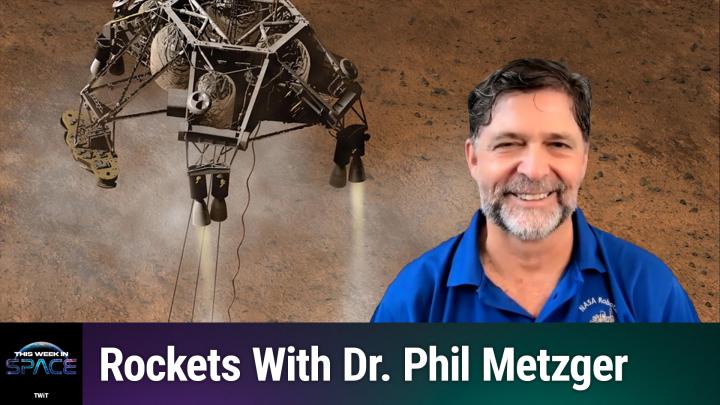
Loading summary
Transcript176 lines
- [00:00]
Rod Pyle
Coming up on this Week in Space, Trump's pick for NASA Chief meets the U.S. senate. There's a new comet in the night sky and we're going to talk to Dr. Phil Metzger in Florida about all the ins and outs of landing on the moon on Mars and how we're going to safeguard our stuff once we get there. So tune in.
- [00:15]
Unknown Speaker
25 years ago, a small group of business and government leaders met in Washington, D.C. they envisioned the creation of an independent nonprofit organization with a mission to help people, businesses and government mitigate the growing threat of cyber attacks. Today, the center for Internet Security embodies that vision. For 25 years, it's worked with a global community of IT and cybersecurity experts to develop the CIS benchmarks and CIS critical security controls. These proven security best practices defend against common cyber threats and streamline compliance with industry frameworks, regulations and standards. Today, CIS provides cybersecurity services, threat intelligence and critical resources to help public and private sector organizations alike strengthen their Cyber defenses. Visit cisecurity.org today. That's the letters cisecurity.org to find out how CIS can help your organization as we create confidence in the connected world.
- [01:16]
Hey prime members, are you tired of ads interfering with your favorite podcasts? Good news. With Amazon Music, you have access to the largest catalog of ad free top podcasts included with your prime membership. To start listening, download the Amazon Music app for free or go to Amazon.com ADFreePodcasts that's Amazon.com ADFreeP Podcasts to catch up on the latest episodes without the ads.
- [01:41]
Here in America, work is in trouble. We've offshored our manufacturing, sent away good jobs and lost so much ability to make things. American Giant is a company that's pushing back against this tide. They make high quality clothing, sweatshirts, jeans, dresses, jackets and so much more right here in the USA. Visit american-giant.com and get 20% off your first order when you use code STAPLE20 at checkout. That's 20% off your first order. At american-giant.com, promo code STAPLE20Podcasts you love.
- [02:16]
Tarek Malik
From people you trust. This is Turret.
- [02:22]
Phil Metzger
This is this Week in space, episode number 156, recorded on April 11, 2025 rocket blast. Hello and welcome to another episode of this Week in Space, the Rocket Blast Edition. I'm Rod Pyle, Editor in Chief of Ad Astra Magazine. I'm joined by that Space ace himself, Tarek Malik, Editor in chief@space.com hello partner.
- [02:45]
Tarek Malik
Hello.
- [02:45]
Rod Pyle
Hello Rod. Space Ace was a great arcade game Back in the day. Very much fun. Yes.
- [02:50]
Phil Metzger
I just can't get away from it. In a few minutes, we'll be joined by Dr. Phil Metzger from the University of Central Florida, who's an expert in many things, including CIS lunar space, and specifically has worked on the problem of rocket plumes when landing spacecraft on the moon and Mars.
- [03:06]
Rod Pyle
Exciting.
- [03:06]
Phil Metzger
Which may not be something you thought a lot about. Many people haven't up until recently, but it's a big problem and basically it's kind of like assaulting normandy beach in 1944. You know, there's a lot of very dangerous stuff heading at you, so it's something that's going to need to be reckoned with. And he's just the man to listen to. But before we start, please don't forget to do us a solid and make sure to, like, subscribe and all the other podcast things to let us know that we have your love, because that's important. And now it's space joke time.
- [03:40]
Rod Pyle
All right, I'm ready. I'm ready.
- [03:42]
Phil Metzger
And this is a space joke from name redacted. Hey, Tarik.
- [03:47]
Rod Pyle
Hey, Rod. How's it going?
- [03:49]
Phil Metzger
Have you heard there's a new sheriff in town that isn't dc?
- [03:53]
Rod Pyle
No, no, I have not heard that. Who is this?
- [03:55]
Phil Metzger
Yeah, it's time to get out of Doge. Okay. Name unredacted. That was mine and I didn't use AI. AI was too stupid. I thought it was clear.
- [04:06]
Rod Pyle
I thought it was clear. Not very spacey, I guess. NASA, I guess about. Well, I'll give it to you.
- [04:12]
Phil Metzger
With the science budget being slashed, I think it's plenty spacey. Now, I've heard that some people want to hang us high when it's joke time on this show, but you can help send your best, worst or mostly different space joke to us@twiswitdp. Now let's talk about some headlines.
- [04:31]
Rod Pyle
Headline, headline news.
- [04:34]
Tarek Malik
Headline news.
- [04:35]
Rod Pyle
I got it.
- [04:39]
Phil Metzger
You nailed it. So, hey, we. We just had a confirmation hearing. Finally, finally at last for our favorite prospective candidate for NASA administrator, who I like to call Space Jesus.
- [04:52]
Rod Pyle
Is he our favorite or is he the only one right now? Right.
- [04:56]
Phil Metzger
Well, I haven't heard of any alternatives, but I don't think I'd. You know, there's always a case to be made, in my humble opinion, for a strong politician in that position, because you really need to know how to brass knuckle with people to keep your budget straight. But if they put a number, and I haven't heard who the deputy might be under Jared I suspect they will be a politician, hopefully somebody who can handle that heavy lifting for him. And then we suspect Greg Autry will be in position number three. That's the CFO talk. Right. So that's a team right there. But I'd like to get your take on the hearings because the one thing that stuck out to me more than anything, and I forget which senator it was, but he said, Now, Mr. Isaac, man, I just want to know if Elon Musk was in your meeting with Donald Trump.
- [05:48]
Rod Pyle
Yep. That was Senator Ed Markey.
- [05:51]
Phil Metzger
Jared said it was a meeting between me and the President. It was a meeting with the President. Yeah. And then he asked that question four or five more times and Jared repeated the same answer every time. So clearly that was something that was prep descriptive.
- [06:06]
Rod Pyle
He also asked, asked Jared Isaacman to answer yes or no. And, and he refused to answer yes or no and just repeated that he had. He was there for a meeting with the President. And that's actually one of the things I wanted to talk about. It was actually a very interesting and, and long. I think, I think it lasted about like two and a half, three hours. The, the hearing, its 12:30. Yeah, about, about two and a half hours. And it wasn't just Jared Isaacman alone under his, you know, being, being pitched as the Trump's NASA chief, you know, to be confirmed, there was a, a member of the board, I believe, for the FCC as well. And she was grilled about independence from Elon Musk and Starlink in FCC communications, which was very interesting in its own right. But you know, but for us, and for the purposes of the show, clearly Trump has a favorite. It's Jared Isaacman, billionaire Shift4 CEO, made his billions with that payment system. Every time you, you check out at a store or whatever, if it says Shift four, he's getting some of your, your ducats, you know, while you're doing that. And that's, that's where he got all of his billions so that he can have a private air force. He has the largest private air force. He actually trains US Military pilots with his, with that company he co founded and he has flown to space twice.
- [07:26]
Phil Metzger
Excuse me, but let me just say maybe a good preparation for being NASA administrator is the fact that his private air force plays the adversary in the war games.
- [07:36]
Rod Pyle
Oh yeah, there you go.
- [07:37]
Phil Metzger
If you're used to shooting down pilots and mock battles, maybe that's a good thing for running an asset.
- [07:42]
Rod Pyle
Sorry, I mean, so, so this, I mean, and he is a pilot. He doesn't just own the company, he flies those supersonic planes. And so he's got a lot of that experience. Just it's not with the military, it's not with NASA. Right. It's this private stuff that he has done over time. And he bought two flights already with SpaceX. He, you know, flew the first all private mission to orbit Inspiration4 back in 2022. Just last year he did the first private spacewalk with his crew on Polaris dawn. And he did buy or reserve at least two more flights, including the first crewed flight of Starship. If he's confirmed though, as NASA administrator, those missions are going to be on hold because that would otherwise make him both customer and then, I guess, contractor to SpaceX.
- [08:29]
Phil Metzger
Well, I think I read that he was actually going to cancel them if he was confirmed.
- [08:32]
Rod Pyle
But yeah, at least on hold. Yeah, yeah, at least, at least on hold. But it was very interesting, you know, during the panel he was grilled repeatedly by Ted Cruz of Houston and others about what his plans would be. And then also the impact that Elon Musk may or may not have had on those plans. And two things really stood out. Three things actually. Number one, he really feels that the path that we're on with SLS to get to the moon for Artemis 3, etc. Is like the fastest, if not the most efficient way to do it. This is the system that we have. So he anticipates kind of, you know, seeing that through so, so that we can achieve.
- [09:08]
Phil Metzger
Well, to be specific though, flying through Artemis 2 and Artemis 3.
- [09:12]
Rod Pyle
Exactly.
- [09:13]
Phil Metzger
And I think he's leaving it open for that proposed off ramp from Scott Pace and others where we say, okay, do we now move off of SLS?
- [09:20]
Rod Pyle
Exactly. But the Artemis 3, that was like the question, like, are we going to go to the moon with that or not? And so, but, but a little bit of a twist to that is that he doesn't see the moon as the end all destination that the Artemis program is making it out to be. He sees it as like the stepping stone to Mars. We've heard that a lot. But it seems like it has a bigger focus. That's not surprising because he seems to be very close with Elon Musk. That's what Elon Elon's whole spiel is about. Number two, he said that he didn't anticipate big cuts to science, which is really at odds with something we're going to talk about in a little bit too. Like it was too early to tell, so kind of the jury was still out. And very similarly, he was asked about closing NASA centers or moving them. There's a push to move NASA headquarters to Kennedy Space center, for example. And he said that it's too early to understand. He needs to get the lay of the land once or if he's confirmed. So that's interesting. But a lot of talk was about his independence from Elon Musk. How much of an actual independent operator will he be? He was asked repeatedly by senators, did Elon have any input in your plan for NASA? No, no, he said. In fact, he said he didn't have detailed discussions with Elon Musk at all. He did admit that when he went to Mar A Lago to meet with President Trump to interview for the, for the position that he did, I guess, have some kind of conversation in passing.
- [10:42]
Phil Metzger
Well, so they kept pressing, did you have a meeting with Elon at Mar A Lago? And he said no. Well, did you see Elon? Yes. Did you have a meeting with Elon? No. Did you have a conversation with Elon? Perhaps. I mean, it was just. It gets to the point where it's absurd the way they're parsing. I understand the importance of knowing the difference. He did finally come out and say, look, SpaceX works for us, not the other way around, which I thought was a good thing for him to say. And he did also confirm that he plans to stay with the ISS through 2030. Because of course, Elon's been saying, oh, let's get rid of it.
- [11:16]
Rod Pyle
Well, he said that he wants to talk to Elon Musk to find out what his reasoning is to end the space station, but he doesn't see the need to end it early, but wants to know what the reasoning is. That. That's what he said during the time it was, it was very.
- [11:30]
Phil Metzger
You think the reasoning might be.
- [11:32]
Rod Pyle
Yeah, I know.
- [11:33]
Phil Metzger
Would a couple of starships in orbit make a good space station base? Okay.
- [11:37]
Rod Pyle
I don't know. I don't know. But it was quite interesting. But the big exchange with the Senator Ed Markey from Massachusetts was, was, I think the, the, the big sticking point was Elon Musk in the room when Donald Trump offered you the job? Yes or no? He wouldn't say. It sounds very much that through that omission that, I mean, Elon might have been in that room, which you would expect. The, he's like his biggest customer right now for private space flights. So we'll have to see if, you.
- [12:04]
Phil Metzger
Know, does Elon being in the room necessarily that he envisions having Jared be a sock puppet at NASA, which I don't think any of us believe would be the case. And if he wasn't shoveling gold doubloons on the musk to Trump's desk, I don't see the problem.
- [12:20]
Rod Pyle
Well, I guess it's a matter of optics, right? Because if the answer is yes and if he says yes to yes, Elon was there, I had a meeting with him about NASA and everything, then it's a really bad luck. It looks like Elon is able to, you know, walk over the president to get his yes man in charge. It makes Jared look like a yes man and that's the only reason that he's there. And it makes Trump look like he got, you know, that he has no say, that he's just kind of throwing Elon a bone to get what he needs. So I can see that there's optics there, but I really hope that anyone that gets, you know, that if Jared does get confirmed, Jared Isaacman, that, that there will be an independent, you know, administrator in charge for the best of the government. He said that was his, his, his guiding star. What is the best path for the country, for NASA, for the legacy of the U. S Space program. Not for this company, for that company, for this party, etc, so that's encouraging, I think.
- [13:19]
Phil Metzger
Well, in time will tell and I'm no expert and this is just a personal opinion, but I've met him a few times. I've heard, I think, three addresses by him and we'll probably hear another one at the ISDC that you'll be attending because he's going to be one of our keynotes. And as far as you know, anybody could tell, he's sincere, he's on the right side of the angels. He really wants the best for the country in the space program. There's no political agenda there, at least not that's obvious. Of course you can't be NASA administrator without being a politician to some extent. But I think he'll be as good as we've had.
- [13:54]
Rod Pyle
So it is, it is, it is very challenging. I agree with you 100. He seems like a great guy. I've met him as well. I've interviewed him as well and, and he seems to know also what he's talking about in a very unique way. Like we talked about the private space force. It's a very different perspective. And you know, we saw, I think we saw a lot of similar talk about Jim Bryden scene when he was selected and, and we got Artemis out of that. We got a lot of steadfast and there was Pushback to many efforts by that first Trump administration to shut down Earth science under Brighton. In fact, they resurrected some programs. So we'll see. We'll see. I mean, I think that in the climate, it's a much more politicized and dynamic one than there was back in that first one. So we'll see how this whole thing pans out because sadly, like you just said, it touches everything. Now, nothing is apolitical, even if it seems like NASA would be one of those.
- [14:49]
Phil Metzger
Well, nothing at NASA is safe, including the Goddard Space center, which they're talking about closing. Okay, let's, let's try and get through a couple more.
- [14:55]
Rod Pyle
Yes, yes.
- [14:56]
Phil Metzger
You're going to insist on talking about Katy Perry again. Katy Perry. Katy Perry. Katy Perry. What about Katy Perry?
- [15:02]
Rod Pyle
Because, baby, she's a firework, right? She's going to show us what, what she's worth.
- [15:06]
Phil Metzger
I hope not. I hope not.
- [15:08]
Rod Pyle
No, no.
- [15:09]
Phil Metzger
And indicates explosion in flight. We don't like that.
- [15:12]
Rod Pyle
Well, well, Katy Perry is going to space. As of right now, the next time you and I speak, a pop star will have flown in space. Lauren Sanchez, fiance and I guess former journalist. Right. Of Jeff Bezos has recruited an all female crew. The world's first to launch on a blue origin's new Shepherd. Liftoff is set for 10am Eastern Time on April 14th. As we're recording this, Katy Perry is on the crew as is Gayle King of CBS News. Also I think she's Oprah's friend, if memory serves, and a number of other other luminaries. It's actually quite interesting. They have picked Aisha Bowe, a former NASA astrophysicist and like a stem, a stem person. You have Carrie Anne Flynn, a filmmaker, and Amanda Wynn, I believe she's an activist if memory serves. And they are all very accomplished women. And now they've all been broug on one crew to launch on New Shepard. And not since Valentina Tereshkova's flight have we had a flight that was just a full female crew. And of course that was just one person back in the 60s. So, so that's, that's pretty much it, you know, like one of the biggest pop stars on the planet is going to launch into, into space. It's really going to happen this time. Not like Lance Bass when he was trying to get to the space station way back when. And it's gonna be interesting to see how it all goes. It will be live streamed and it's gotten a lot of pushback. I think we might have talked about it a Little bit. There's been a lot of criticism about what kind of look this is for Katy Perry, for all the crew, but mostly Katy Perry. In fact, actress Olivia Munn called her out saying it was one of the biggest wastes of money in a really tough economy where everyone else is like under, you know, feeling the pinch. But here these people are going on an extravagant space flight, more so than any other blue origin space tourist flight. You know, am I seeing the backlash? And it's very strange, you know, at this point in time to see how severe it is.
- [17:22]
Phil Metzger
Yeah, that's not like it's tying up NASA resources. I mean, I suppose before Sarah Brightwell chickened out of her trip to the space station, I suppose you could have.
- [17:31]
Rod Pyle
Oh, Sarah Brightman, that's right. She was gonna go to the space then. Yeah, yeah, that's right.
- [17:35]
Phil Metzger
And you could argue.
- [17:36]
Rod Pyle
Is that what happened? She.
- [17:37]
Phil Metzger
She decided not to go? Yeah, well, no, she's afraid, but she decided not to go. Which, you know, if your family said, mom, please don't get on that rocket, I can see where you might do that. But you could make the argument there. It's going to tie up ISS resources. Although since then they've developed a plan, a chart of how much you have to pay per day. But it does tie up time and resources up there. But a blue origin New shepherd flight is completely private and independent and doesn't tie up any of that.
- [18:02]
Rod Pyle
Also lasts 10 minutes. That's it. It's like. Yeah, it launches and it comes back down. It's over with.
- [18:07]
Phil Metzger
So we have a new comet coming.
- [18:12]
Rod Pyle
Yeah. So did you find this one? I don't remember putting this one on.
- [18:17]
Phil Metzger
Oh, that's you.
- [18:18]
Rod Pyle
Oh, wow, look at that. That's me. I'm so smart.
- [18:20]
Phil Metzger
And we have a link.
- [18:21]
Rod Pyle
Yes, yes. So it's a brand new found comet. It was discovered on March 29th by skywatcher Vladimir. I think it's bazookly. I think that's how you pronounce his name of Dnepro, Ukraine, who found it. And then it was in fact followed up on it. It's this new comet. So it Comet C 2025 F2 Swan. And this weekend is the best weekend to look for it. We're getting reports that it is already visible to the unaided eye, which is really exciting. Some of our astrophotographer friends have been sending us great images of it. And so if you are looking to try to see this comet, you need really dark skies because it isn't like the brightest. It's not like a great comet because even, uh, I think at its closest point it's going to be like 89 million miles away, something like that. But, but this weekend is, is, you know, I've been told by our experts@space.com like it's the best time to really look for it because after this weekend, you know, getting into mid next week, it's going to go into the southern hemisphere. It will be a southern hemisphere primarily object at that point in time. So great for everybody in Chile, not so great for us. And so I advise anyone if you can get out to really dark skies, you know, check out one of these guides. See, see where it is in your. In your night sky and let me know if you can see it. I would like to know what it looks like because I haven't seen a comet forever.
- [19:50]
Phil Metzger
So back during the pandemic, I ran out trying to see two comets and I drove probably three to four hours each time and it was still bright. I mean there's just nowhere unless I hop on the boat and go offshore for about three hours. There is just nowhere dark in something like California. And I suspect it's probably similar. We are. All right.
- [20:08]
Rod Pyle
Beach at Malibu and out in the desert you can get out there too. But it's.
- [20:11]
Phil Metzger
Malibu ain't dark anymore, brother.
- [20:13]
Rod Pyle
Oh no. Well, that was 25 years ago.
- [20:15]
Phil Metzger
Yeah, I mean probably if you went out to Point Conception or something.
- [20:18]
Rod Pyle
But anyway, all right, everybody sounds like a high school. High school, like kissing make out Point Conception there.
- [20:27]
Phil Metzger
Not.
- [20:27]
Rod Pyle
I'm not going to ask you about it.
- [20:28]
Phil Metzger
Not for people like us that were in band. But anyway, I digress. All right, so we are going to be right back with Dr. Phil Metzger to talk about Rocket Blast. So go nowhere. And we are back with Dr. Phil Metzger, who I've been aching to get on the show for a long time. Phil, I saw you recently at a. Which conference was that? It was in Florida. That's all I remember.
- [20:58]
Tarek Malik
Nsdc Maybe.
- [21:00]
Phil Metzger
Maybe ISDC probably. Anyway, so I. It was good to see you face to face because I could finally say, hey, we really want you on the show. So here you are and that's a pleasure for us. So for those of you in podcast land, Dr. Phil Metzger is a research professor at the University of Central Florida, the director of the Stephen W. Hawking center for Microgravity Research and Education, co founder of the famed Swamp Works at ksc, which we'll talk a little bit more about later. And did I miss anything important?
- [21:33]
Tarek Malik
No, that.
- [21:35]
Phil Metzger
That's Enough, that's enough. So you're involved in an awful lot of stuff, but I think what captured my interest, and it's not all we'll be talking about, but your work with rocket plumes is kind of a big deal because we're discovering or figuring out that having a rocket land nearby your space habitat is kind of like walking into a hail of machine gun fire. Which is not a good look, I don't think, for lunar habitats. Oh, and I forgot, you're part of the lunar Architecture team, the Mars Architecture team and Lunar Exploration Analysis Group, who helped develop NASA's technology roadmap for planetary surface technologies.
- [22:12]
Rod Pyle
Going to all the places, all the good places, right?
- [22:15]
Phil Metzger
Yeah.
- [22:15]
Rod Pyle
Moon, Mars, all the fun place.
- [22:17]
Phil Metzger
So can you tell us a little bit about the institute at ucf?
- [22:23]
Tarek Malik
Sure, yeah. When Stephen Hawking was alive, he, you may remember, he flew in reduced gravity. Peter Diamandis put him up to that. And at the time people were asking him, why are you doing this? And he said it's because he thinks space is our future and if we don't go to space, we're not going to have a future. So he, he wanted to get the public interested in space and he believed that taking a microgravity flight was a step towards space flight. So that was his attempt to get the public more interested. And at the time, some people at the University of Central Florida approached him and said, hey, would you like us to continue this messaging that you're doing by creating an institute in your name? And he said yes. Well, it took about 10 years to get it through the state legislature in Florida. And in the meantime Stephen died. But we've worked with his estate and so we stood up the Stephen Hawking center for Microgravity Research and Education and they asked if I would lead it. A little over a year ago, we're still trying to formulate the goals of the center and we're still working with the state government trying to get all the legal documents in place. But the direction I really wanted to go is to help democratize space, get more people invested in space so that people all around the world have equity in the process of settling space, expanding industry into space. That way, once we reach that massive scale up point, which I think is only some decades away, once it starts to scale up, whoever owns that industry will never have a motive to dilute their equity. And so whoever owns it, owns it. And so I think it needs to be democratized before we hit that massive scale up transition. If we want to keep society healthy, have Democracy, survive into the future, et cetera. So that's what I'm trying to aim us towards.
- [24:22]
Phil Metzger
Well, that sounds like a very good plan. And Tarek, I have one quick follow up, if you don't mind. Can you tell us. I toured Swamp Work years ago. I had been on a Caltech working group with Rob Mueller and then I had a chance to go out to Florida and he gave us a great tour and we saw your lunar, I guess you call it a simulith bay and some of the other stuff you're doing there. Can you tell us a little bit about Swamp Works?
- [24:46]
Tarek Malik
Yeah, so there were. I was in the technology development group at NASA and I was going back to school, getting my PhD at the time. And there was a point where NASA got a windfall of cash back from a contractor that had underperformed and was sued and we had to spend the cash quickly. So I volunteered to spend some of the money on equipment for geotechnical testing. And once I got the equipment, I didn't really have anywhere to keep it. And so a young woman that you may have met along the way, Jackie Quinn, was also in the tech group and she, she pulled some levers and helped me get a laboratory. And so I, I knew Rob Mueller and I asked Rob if he wanted to go in on this lab with me. And, and we did. And then we just had one success after another over the next few years. We ended up taking ownership of a large high bay out at the Space Center. One serendipitous thing after another. We were given a budget of a million dollars to retrofit the facility. And so we ended up branding it as the Swamp Works. And it was really just a bunch of young technologists. Not all young. I wasn't young. But mostly it was young technologists at the Space center who wanted to be involved in extending civilization bey Earth. And so we were acting as intrapreneurs trying to create this organization inside of NASA. And we got a lot of pushback, but the people at NASA headquarters really loved what we were doing and kept giving us funding. And so it grew into the Swamp Works. So it's now focused on developing technologies for mining, manufacturing, construction in space, exploration in space, just basically surface technologies for the surfaces of planetary bodies.
- [26:43]
Rod Pyle
Is that Swamp Works because it's going to be a swamp on the moon or because of the Florida swamp? Or just because, you know, when you're launching and testing new rocket stuff, your armpits get all swampy from the stress. I don't know where does that Come from.
- [26:56]
Phil Metzger
They don't have skunks in Florida.
- [27:00]
Tarek Malik
No, we do actually have skunks in Florida. I think I remember them from when I was a kid. But. But no, we wanted to be like the Skunk Works or the Phantom Works. There's a number of these innovation hubs around the country. We were intentionally adopting methods from Silicon Valley and from Kelly's. I forget the name now. Kelly Johnson. His methods of running an engineering organization. And so we wanted to name it something like Skunk Works. And people tell me that I was the one who came up with the name Swamp Works, but I don't remember that. But it was just because the Kennedy Space center is on a marsh, and it didn't sound good to say Marsh Works. So you changed it from marsh to swamp.
- [27:52]
Phil Metzger
I think I would have gone for Gator Works, but all good mosquito.
- [27:56]
Rod Pyle
So. Yeah. You know, Phil, I'm very curious. You know, I know that you have a, Like a bachelor's degree in electrical engineering from Auburn, a PhD in physics from. From UCF, but I'm curious about the path that puts you on that road to space. If it's something that's been with you since you were, like, young, where you kind of knew it was something you wanted to do on, you know, for the future, or was it something that you discovered a little bit later on as, like a side passion that really turned into a career while you were trying to do something else entirely?
- [28:33]
Tarek Malik
Yeah, so I grew up assuming I would work on space because I grew up in Titusville. My dad worked out at the Cape, and everybody that I knew had a dad or a mom or aunt or an uncle that worked out at the Space Center. And it was just understood that's what you do. You grow up and get a job at the Cape. But then I started to get interested in other things. Went away to college, was going to get a degree in architecture, decided that wasn't really for me, and ended up just coming back to the space program. And. And so I. I got a job right out of college working on the navigation systems on the space shuttle. And then I worked on the comm and nav systems on the space station. And along the way, they started talking about getting NASA more oriented towards research, less in operations. So they were sending employees back to get PhDs. And I applied to the program. I asked a bunch of different managers what would be a good research topic that I could put on my application. And one of the people I talked to was Mike O'Neill. Mike was the deputy to Joanne Morgan. I don't know if you've heard of Joanne. She was, I think, the first female person in the launch control center at Kennedy. So the first launch controller who is female and she's kind of famous. But Joanne and Mike talked about ideas and they said, well, let's. What about when you have a rocket fuel factory on Mars and you're going to land on Mars and then refuel to come back to Earth, when you land near it, you don't want to sandblast it and destroy it. So they suggested that I study how rocket exhaust blows soil. And I thought that was really cool idea. So that was what I adopted. And I've been doing that ever since now for like 25 years. I've been studying how rocket exhaust blows soil.
- [30:29]
Phil Metzger
So if you grew up in Titusville, you must remember the Titusville Mall, which I saw, I think in 1986. It was the first time I'd ever been in a mall that had, I think, eight foot ceilings in it or something. It was kind of odd. I don't know if it was the mall, but it was a mall. And I remember walking around going, yeah.
- [30:44]
Tarek Malik
I remember when it was built, it was called the Miracle City Mall. I don't know why Titusville was considered a miracle city. It was kind of a little backwater place my whole life growing up. But yeah, it was a big deal for Titusville when we finally got a mall.
- [31:02]
Phil Metzger
Well, and it's grown a lot the last few years I was there, I don't know, I guess two years ago. And I was really impressed with, with how things had changed.
- [31:10]
Rod Pyle
I like that. I like the swap meet in Titusville on, on, on Route 1, which, which, if you dig, you can find a lot of great space, like artifact gems there, and they even make really great hamburgers, too. So.
- [31:22]
Phil Metzger
All right, we're going to go to a quick break and then we'll be right back with our next set of stirring questions. So stand by.
- [31:30]
Unknown Speaker
Hey, prime members, are you tired of ads interfering with your favorite podcasts? Good news, with Amazon Music, you have access to the largest catalog of ad free top podcasts included with your prime membership. To start listening, download the Amazon Music app for free or go to Amazon.com ad freepodcasts. That's Amazon.com ad free podcasts to catch up on the latest episodes without the ads.
- [32:00]
Phil Metzger
So are you focusing primarily on rocket plumes at this point? Is that your main area of research now?
- [32:06]
Tarek Malik
Well, probably about 50%. The other half, I'm working on robotics for mining construction and just Operating on the moon in general.
- [32:17]
Phil Metzger
Okay. And maybe you could talk a bit about why. I mean, I kind of touched on it in the intro. But there's a lot more to it than that, why it's so important to worry about plumes, because those of us that grew up during the space race thought. And of course, there was nobody else there when the lunar landers, when the lunar module set down. But, you know, watching the grainy 16 millimeter film from the, from the LEM landings, you didn't get the impression it was going to sandblast structures a half a mile away. But apparently that's a very real concern. So I wonder if you could sort of elaborate on that.
- [32:49]
Tarek Malik
Yeah. So when I first started working on this topic, I was facing a lot of resistance inside NASA because nobody wanted to believe it was a real problem. They said, you know, we didn't have a problem in Apollo, we didn't have a problem in Viking landing on Mars, so why is this a problem?
- [33:07]
Phil Metzger
And because there was nothing there, maybe.
- [33:11]
Tarek Malik
Well, you know, the thing was in Viking, they, they spent millions of dollars redesigning the, miking the Viking thrusters to reduce the plume effects, and it was successful. And then on Apollo, we blew a lot of dirt. They did a lot of research and we blew a lot of dirt at very high velocity, but we didn't land near any operational hardware, so we didn't damage anything. And so that's why they just have this memory that it was no problem. But we did on Apollo 12, land 160 meters from the Surveyor 3 spacecraft. And the astronauts cut pieces off and brought them back to Earth. And there was a point where I went to Houston and went through the lunar receiving laboratory and I looked through all of the parts they had brought back from Surveyor and we checked them out, got them shipped to us. I used to keep them in a safe. We had to bolt the safe to the floor, to the concrete slab, bolt it from the inside so you couldn't steal the safe. And it had to be in a facility that was under security in addition to the safe, you know, so these were like national treasures. And we studied them for several years, quantifying how much they were sandblasted. What we found out was that the sandblasting would have actually been a thousand times worse, but they were down inside of a crater that. It's called Surveyor Crater now. And the Apollo lunar module landed on the rim. So most of the spray went over the Surveyor and only a tiny fraction from particles colliding with each other scattered out of that main spray and sandblasted the Surveyor. But even so, it was more than 100% coverage for scouring the entire surface. And then it was peppered with little sand grains that punctured holes all in the paint. And so by counting the sand grains, we could calculate the quantity of material that was blown in that direction. Then we compared it to the pictures of the blowing dust as we're landing. That's how we got the comparison. But, yeah, it totally scoured up the surface. It etched permanent shadows into the hardware, ruined the paint. Surveyor damaged itself during its own landing. It had a camera looking sort of downward, and the plumes between the three vernier thrusters meet in the middle and then spray up. And so it sandblasted the camera, ruined the lens. So we do have some experience also, by the way, you may remember, when Curiosity landed on Mars, it got gravel all over the instrument deck, and the aft wind sensor was broken. And they believe that was because of a gravel strike. A lot of people were really surprised at that. But then we finally got pictures during the Perseverance landing, where you can actually see during descent all the rocks blowing all over the place. So, yeah, we definitely have experience of spacecraft getting damaged from plume effects, and we've done a lot of theory, a lot of analysis, a lot of experiments, and we've tried to quantify how much the damage is going to be in the future, and it's. It's pretty bad if we don't mitigate it. Yeah.
- [36:19]
Phil Metzger
Well, I think it's worth mentioning for both Perseverance and Curiosity, the kickback material from the surface was from a rocket pack that was probably, I don't know, 20ft in the air. Right.
- [36:32]
Tarek Malik
I'm sorry, that was for the. Which one?
- [36:34]
Phil Metzger
For Curiosity and Perseverance, they were using the Sky Crane. So, you know, at Viking, you had those. Those small rocket motors that had, I think, 12 or 16 little tiny nozzles. And we had Rob Manning on here a while ago, and he was talking about how by the time they came around to the 21st century, that talent pool was gone, and they really could not recreate those engines, which is part of the reason, I guess, they came up with Sky Crane. But, yeah, so if it was actually a rocket engine right on the surface, which I think Surveyor had, I guess the effects would be much worse.
- [37:07]
Tarek Malik
Well, there was a scientist at JPL named Anita Sengupta. I think she's still there, but she's not working on rocket plumes now. I think she's working on something else. Well, Anita did the plume analysis for the sky crane and what she found was that even though the sky crane is way up high above the, above the surface, the jets from those thrusters would be coherent, narrow jets all the way to the ground. Wow. And the reason why is because Mars has enough of an atmosphere to focus them into jets, but it's not enough atmosphere to cause turbulent mixing to taper the jets off and extinct them at a short length like it would be on Earth. So it's actually a worst case on Mars. You get, you get these jets and they go much longer than they would on Earth. And so they reached all the way to the surface. She predicted that would happen. She predicted the vehicle would get sandblasted as it was being lowered to the surface. But you know, the way it is when you, when you talk to people, it's hard to get them to really grasp what you're saying unless there's a visualization. So when they finally saw the gravel all over Curiosity, they were saying, I remember it on tv, they were saying, we had no idea this would happen. And I was going, anita told you it was going to happen. But, but then they believed it, you know, after seeing it, because seeing really drives it home.
- [38:35]
Rod Pyle
See, I think that's like a thing that I find surprising because when we talk about plumes on, on, on the moon, on Mars, maybe even on Earth, we think about blasting other stuff that's nearby, oh, your fuel depot, oh, your habitat, but now the spacecraft itself when you're not even there. I mean, we were just Talking about the SpaceX's Starship when they did their big first test launch and talk about like a plume there, they lost a bunch of engines because they kicked it all up right into the, right into the bottom of the rocket there. And they didn't even get off the ground. They weren't even on the moon.
- [39:10]
Tarek Malik
Yeah. I had a graduate student just defend his PhD last week and he, he and I did some research on that starship launch because you could see chunks of concrete flying up in the air past the rocket and then you could see splashes in the ocean. And I measured from the video that the height of the splashes, they were as tall as a six story building.
- [39:33]
Rod Pyle
Oh my gosh, the giant chunks of.
- [39:35]
Tarek Malik
Concrete hitting the water. And so I measured the timing, you know, how long did it take the water to the rocks to get to the water? You know, the timing of the chunks flying up in the air, the, the farthest distance any of the chunks traveled. And we figured out they were traveling 90 meters per second. So basically a football field per second. Chunks of concrete, like half the size of a Volkswagen.
- [39:59]
Rod Pyle
Wow.
- [40:00]
Tarek Malik
So, yeah, it was a big blast. The real fun thing that surprised me the most, though, was they got sand raining down on Port Isabel, which was, I think, six miles away.
- [40:14]
Rod Pyle
Yeah, that's where we were. We were over there.
- [40:16]
Phil Metzger
Yeah.
- [40:17]
Tarek Malik
Now, sand should not be able to travel that far in atmosphere because the atmospheric drag would stop it. It shouldn't go more than 100 meters or so. No matter how fast you shoot the sand, it's not going to go that far. Now, dust, really fine dust can get suspended and carried infinitely far. You know, that's why dust will come from Africa, across the Atlantic to the US but these were sand particles raining down in Port Isabel. So we were shocked. And we did a lot of research. We worked with a professor at Rice University as well, and we got people to send us samples. And what we found out was that the sand flew up in the air with this hot rocket exhaust. The rocket exhaust was mostly water vapor. And so the sand seeded the formation of raindrops, and it created a hot cloud that was rotating. It had internal rotation which kept the sand in the raindrop suspended. And this cloud traveled six miles north. And we measured the speed of the cloud, and we got the local winds, and everything made sense. And then what happened was, by the time it got over Port Isabel, the raindrops had grown large enough, seeded around the sand grains that they started to fall out of the sky carrying the sand with them. So that was pretty remarkable. That starship launch not only blew up the launch pad, it actually created a rainstorm over Port Isabel.
- [41:48]
Phil Metzger
Wow. So I guess it's safe to say that you don't want to be standing in a cloth spacesuit EVA suit a couple hundred meters away from anything that's landing or taking off.
- [41:59]
Tarek Malik
No. Well, the thing about the Moon especially is that there's no atmosphere to slow it down.
- [42:04]
Phil Metzger
Yeah.
- [42:05]
Tarek Malik
Here on the Earth, the dust doesn't go very far. You know, the sand doesn't go very far normally, other than unless it's carried in a rain cloud. But the things that go the farthest on Earth would be like concrete, but they don't go that fast because they're inertia. They don't speed up that fast. Well, on the Moon, it's the opposite. The smaller things go the farthest because they speed up the most in the rocket exhaust. And then there's no air to slow them down. So the sand and the dust will go Close to the speed of the rocket exhaust, which is like 3 kilometer, 3 kilometers per second. And that's above lunar escape velocity. So you do blow dust completely off the moon into orbit around the Earth and the sun every time you land a large enough rocket on the moon. And, and so you, and you do damage at very long distances. The question is, well, we can't make it. Zero damage. You know, you're going to damage things all over the moon every time you land on the moon. We can't make it zero. The question is, how low do we need to make it so that it'll be good enough? Because the space environment is constantly damaging your hardware anyways. You know, there's dust in space, it's falling to the moon, it's accelerating as it falls. So you're always being pummeled by dust in space. We just need to get the level low enough to where it's acceptable. But unfortunately we don't have any international agreement on how low is low enough. And that's, that's an area we're gonna have to work on.
- [43:36]
Phil Metzger
Boy. So now we got to worry about moon smog on top of everything else. Okay, we'll be right back after the short break. Go. Nowhere.
- [43:48]
Rod Pyle
Is it moon smog or would it be hail? Like moon?
- [43:51]
Phil Metzger
Well, depends on how big the particles are, right? Hail hurts more than smog does. So a natural, I guess, progression from this is talking about landing pads. And I think you've done some work on robotically constructed advanced landing pads, right?
- [44:09]
Tarek Malik
Yeah. When I was at the Swamp Works, we had a project one time where we brainstormed ways of doing construction on the moon, like to build a landing pad or to build other things. And we came up with 50 different technologies. And they ranged from bringing polymer from Earth to mix with the soil. Because the moon doesn't have any natural cements. It doesn't have clay minerals, and it does have calcium in the lunar highlands rock. So you could make cement, but it would be chemical processing to do that. But. So we talked about bringing binders from Earth using microwaves to melt the soil using infrared lasers and a lot of other methods. It's basically the favorites nowadays are microwave sintering, bringing polymer from Earth. You can rake up rocks from the moon from the soil and then make a rock bed. You wouldn't want that to be in the center of your landing pad, but the majority of the acreage around the perimeter of your pad could be rock gravel. Another method would be baking pavers in an oven. So like a convection oven or an infrared oven so that you, you're not necessarily using microwaves, but then if you make pavers, then you have to have robotics to lay them down and grout them to keep the gas from going through. So those are some of the methods. There's still other groups working on other technologies. I've worked a bit on the microwaving one. I worked on methods to get the energy lower. I was hypothesizing that the lunar minerals that are highly magnetic would probably also be more microwave absorptive. That was the hypothesis. We tested it. We used magnetic fields to sort the lunar soil simulants, which were very high fidelity with the correct mineralogy. And it was true. We were able to reduce the energy by 70% by passing it through a magnetic field first. So a bit of work on that.
- [46:22]
Rod Pyle
Can I ask, Phil, does that mean that you're like aiming like a microwave gun at the regolith and then it just like bakes itself into a flat plane? Is that what we're talking about? Where I could just like if like an astronaut who's there just stands out there with one of those little like a garden hose thing and slowly cooks himself a landing base for the people to come?
- [46:44]
Tarek Malik
Yeah, it would be on a rover, and the rover would drive along slowly with a horn antenna pointed down at the ground, just shooting microwaves in it. Let me tell you a little story. One time we had a group, the Florida governor had selected a group of, I think, 12 high school students. And for us it was an honor thing. And they, they gave them a tour and in two or three days at the Space Center. So I had to host them in my lab for half a day. And I, I gave them each the task of coming up with a technology to build a lunar landing pad. And I gave them all different ideas. Well, one kid said he wanted to microwave. So we had a microwave oven in the lab. And so he put a bowl in a, in a little, a little high temperature bowl, a little bit of lunar soil simulant, stuck it in there and hit start. Well, I was working my way around the room, helping all the other students with their projects. Zap, zap. 20 minutes later, 20 minutes, I came back to that student and said, how did it turn out? He said, oh, it's pretty good. Look in the window. And I said, what? It's still baking. After I looked in the oven, in the microwave oven, window, and he had a bowl of literal lava. Oh, glowing red lava. And so I immediately unplugged the microwave and I went to Grab it to take it outside. It was so hot I couldn't touch it. It, I had to put on oven mittens and carry the whole microwave outside and set it outdoors. And it, it cracked the, the turntable and melted the turntable in place so it wouldn't rotate anymore and it cracked the, the beaker that it was in. But, but yeah, you can melt lunar soil in a microwave oven.
- [48:26]
Rod Pyle
Well, you made a scientist that day, Phil, for sure.
- [48:31]
Phil Metzger
That's a, a Madame Curie moment right there of fun discovery. I wanted to ask next about did you have a follow up, Tarek, I didn't mean to jump.
- [48:44]
Rod Pyle
Well, I'm just wondering like, I get the need to make these landing pads, but I'm curious if just in the studies, Phil, that you ran, does it just make more sense when we send people there to not even build anywhere near these things? Like, why build above ground if you're going to get sandblasted every time a starship brings some people down or, or your cargo lander comes down where you could just dig into a cave and then nothing's going to hit you because you're underground.
- [49:11]
Tarek Malik
Well, I've never been a really big fan of the idea of building in caves. I think partly because I've never seen one, you know, on the moon. I know I've seen pictures of skylights into, into supposed lava tubes. I don't doubt it. They're, there's surely lava tubes on the moon, but are they, are there going to be enough lava tubes? Are they going to be where you want them? How hard is it going to be to go in and out of lava tubes? You know, what kind of infrastructure do you need to lower things down? People have talked about sealing them off. You could do that. You're not going to have a perfect seal, but if you can seal it good enough so that the makeup rate on the air isn't too high, then you could do that. But to me it just seems like a lot of complications. And maybe after we get to the moon, after we get experience working on the moon, that might be the step to go next. But I think the first step is just building on the surface, less complication. And also the solar energy is on the surface. Communications is easier on the surface. So I think just for simplicity, I would, I would aim that way first. Now, I do have friends that are all into mining under the ground underground on the moon. And we've had arguments about this moon. The moon is, is not like the Earth. The Earth. The crust is constantly recycled. And so we have a lot of bedrock, but on the moon, there's no recycling of the crust. And so for billions of years it's been bombarded and busted up and you have to go down like 10km before you get to bedrock.
- [50:53]
Phil Metzger
Whoa.
- [50:54]
Tarek Malik
Yeah, I mean, it's, there's, there's, I mean, there are some pieces of bedrock exposed in some of the steep rims of, of the deep basins from impacts, but, but mostly you just, there's. You're going to be digging through rubble for a very long depth. When you finally get down to the bedrock, it's all shattered. It's shattered up bedrock, you know, so, so I don't know what mining would be like under those conditions. You know, you'd have to be stabilizing the surface, stabilizing the walls constantly as you go. And I'm just not sure that that's going to be that easy. I've always focused on surface mining, just scooping up the minerals that are on the surface and extracting resources from that.
- [51:40]
Rod Pyle
Like a quarry more than like a, like a hole, like a.
- [51:43]
Tarek Malik
In the ground, like strip mining. You know, there's big strip mines where they're getting copper or, or other resources. And the mine might be 10 miles across and a mile deep or something crazy like that. You see these gigantic trucks and they can only do two trips per day. It takes four hours to drive to the bottom or two hours or something because it's such a long trip, and then drive back out again, spiral up and out. So you can have big mining operations that are on the surface. It's not a limit to the size, but that's the way I've always considered it to be.
- [52:21]
Rod Pyle
Yeah. Yeah.
- [52:22]
Phil Metzger
Well, let's do those on the far side so we don't have to see them from Earth. We're going to run to one more break and we'll be right back. Stand by.
- [52:31]
Unknown Speaker
Hey, prime members. Are you tired of ads interfering with your favorite podcasts? Good news. With Amazon Music, you have access to the largest catalog of ad free top podcasts included with your prime membership. To start listening, download the Amazon Music app for free or go to Amazon.com ADFreePodcasts that's Amazon.com ADFreeP Podcasts to catch up on the latest episodes without the ads.
- [53:00]
Phil Metzger
You've talked a bit about the idea of industry on the moon and infrastructure and supply chains and so forth. I wonder if you can comment on that and what the tipping point might be for all this to work. Work commercially.
- [53:13]
Tarek Malik
Yeah, so. So I, I do think we need to move industry off the planet as much as possible. I don't believe we can move all of the heavy industry off the planet. You know, we, we hear Jeff Bezos say that a lot. The problem with moving heavy industry off the planet is how do you move the products back to the Earth and entering through the atmosphere heats the atmosphere and cut, which drives chemistry, which creates greenhouse gases. KNOX and so I don't, I, I have never really been a big fan of bringing a lot back from space other than very special things. They're, they're not gigantic quantities. I'm, I'm more into trying to move what we can off the planet where the product would be data or energy so we can beam energy back down to the Earth or we can move the compute off of our planet and unburden the planet that way. You know, I, I think I, I firmly believe by the end of the century, most of the economy is going to be compute and most of the manufacturing will be making compute, making GPS and making, making power systems to support all the compute. And so if we move that off the planet, that's going to unburden our planet by like 50% or more of its burden. So that's what I think the long term win would be for space industry, in addition to just making a more vibrant, more exciting civilization and opening the horizons to great things. So that's what I'm looking forward is trying to move enough industry off the planet to where we can benefit the Earth, create a bright future. Now, how long will it take before we can really get this supply chain in space to be self sustaining or sufficiently built so it can start to scale up rapidly? That's a hard question. And the reason it's hard is because it's difficult to find business cases in the midterm. You know, the near term is simply support NASA, support jaxa, support esa, and then launch satellites that provide data, you know, very centered on the planet. But not going beyond the midterm, would be trying to do things that go beyond that. Start to use space resources, start to develop a supply chain in space before there is a supply chain in space. Now once you finally get a supply chain in space and we're in the long term, everything becomes easily economically viable and it's no problem. That midterm is the hard part. Who are the customers? What is the product that you're going to produce that people on Earth are going to pay you for? That's not simply launching comsats. Well, so I got so frustrated with this years ago, I started looking at alternatives. One alternative is we get enough billionaires to just pour their money into it. So Jeff, Bezos, Elon, Musk, and a whole bunch of others pour their money into it. How fast can we get over that hump if they do it without making revenue in the midterm? And I was thinking, oh, that could be something on the order of 20, 20, 30, 2040, I forget the number, but you could get there pretty quickly. It only take like 20 or 30 years to get to that tipping point if you had enough people throwing money into it. You know, unfortunately, Elon and Jeff don't even have enough money to do it though, because they're, you know, the money they have is actually just the valuation of their companies, and that can't be converted into liquid funds. You can't just spend it on making space stuff without tearing down their existing businesses. So I started looking at other alternatives. Another alternative is get the governments of the world to just pay for it and do it quickly. And I wrote a paper about that, how to bootstrap industry in space very rapidly. It would make NASA more efficient, it would give us better science, better exploration, and it would bootstrap the future. And it would only cost about a third of NASA's budget for something like 20 to 40 years. So very doable. But somebody named Tom Kahlil, he was in the Office of Science and Technology Policy in the White House. He later became the CTO for Schmidt Futures for Eric Schmidt, former CEO of Google. Anyways, Tom contacted me and said, I read your paper, really like it. We really want to pursue this, but the problem is we're still not going to convince Congress to pay for it. So we started working on other ways to fund it creatively, like making educational and entertaining programs that would help fund this bootstrapping process. So. So anyways, if we continue the slow path, Ron, it might be the end of the century. Yeah, if we got enough billionaires to pour money into it right rapidly, it might only be 30 years. But I think the most likely scenario is a combination of all of that happening, and then at some point the governments of the world are going to wake up and realize it is coming. And it's. It's not going to be 2100, it might be 2040, might be 2050. And once they realize, then they're going to suddenly go into reaction mode and start to bootstrap it intentionally so that they can get there before the, before their competitors do. So I think that's most likely going to happen. And I Think we're already seeing signs that the governments are starting to wake up.
- [58:47]
Rod Pyle
You know it's funny that you mention like the things about computing, you know, getting that like the bulk of that as you know, off the earth and then providing energy. Because we've seen that, I mean just on, just this year with intuitive machines landing the first data center on the moon, of course it tipped over, but it's there, you know, on the moon and it's not going to be the last one for sure. And you know, I'm curious if you see kind of this influx from these commercial landing partners, you know, because it sounds like the TLDR of your message of like if the governments get together to really push things that's like a teamwork makes the dream work but like on steroids on the moon. But I'm curious if, if there's a business case for a stepping stone thing that would end up making it cost effective to bring industry up there. And, and what, what I think about is oh like if someone builds a bunch of little rovers like at Disneyland and you put the quarter in the, in the slot and then you can drive the car around for like 10 minutes. You know, like I could see that being a, a, a, a business case to get kids driving things on the moon, you know, and then there's, there's revenue and then you scale that up up in science for you know, tele operated, you know, rovers for scientists that are looking to do xyz, that sort of thing. And then after a while you've got enough of those pieces that you can industrialize everything there. I mean is that, is that kind.
- [60:17]
Tarek Malik
Of, that's actually what the Hawking center is trying to do. We're, we're, we're right now working on programs that students can 3D print robots. Like 12 year old students are building lunar mining robots. And in the classroom the students love it, the teachers love it. We're trying to promote this in, in locations including Mexico. We just, I had some discussions with people from Lithuania who are interested and so we want to push this program. We're also then working on the teleoperation. So start out by telling operating robots that are. In our facility we have a big dirt arena similar to the Swamp Works. We're actually a little bigger. We built this in the Exilith lab at University of Central Florida. We built this great big high fidelity lunar highlands soil bin.
- [61:09]
Rod Pyle
Oh wow.
- [61:10]
Tarek Malik
It's the largest indoor bin in the world from what I understand. And we going to have students teleoperating Them from around the world, from the classroom. Eventually we'll be putting robots, having college students building robots for competitions, doing the competitions on maybe volcanoes or in the desert, teleoperating them. The high school students or the college students may go with their robots to the volcano, but then the elementary school students have their day where they log in and drive the robot. But then eventually it'll be on the moon. We'll be putting robots on the moon and students can upload their software into the robots and operate them and have competitions for who can write the best software to operate the robots, you know, so it's just a step by step, piece by piece, trying to find a way to self fund the development of the infrastructure that will contribute to getting that supply chain off the planet. So, and we've got ideas of how to monetize it that we've been working on. But yeah, I think, I think ultimately we're going to get there. It's going to be a combination of these commercial companies. There are a lot of companies, they do have a lot of business models and I hope they're successful. Like you mentioned, Intuitive Machines launched a data server that was from Lone Star Lunar. Chris Stott, the CEO of Lone Star Lunar is a friend and his wife Nicole, by the way, lived in the space station for a year. So they're a super cool couple. But they, their vision includes putting data servers on the moon. I don't know how soon they're going to start to have positive revenue from that, from that business model, I don't know. But I've worked on lunar mining to make rocket fuel. That one will definitely become profitable, but it'll take some time. It might take, let's say it takes five to 10 years to build your hardware and launch it to the moon. It's going to, after you start operating on the moon, I think It'll take another 10 or 12 years before it's actually making a profit out competing, launching from the earth. So it's going to take a couple of decades and that's the fundamental problem. There are business models that you can do to make a profit in space. The problem with all of them that I've seen so far is they take like 20 years and that's a little bit too long for investors. Unless you get some really visionary investors and have a Series B that buys out your series A at a profit and then series C. You know, if you can keep the optimism growing for 20 years, then you're good. That's the fundamental problem right now. Getting over that two decades of operation that it's going to take to become profitable.
- [64:10]
Phil Metzger
So I've got. We don't have a lot of time left, but I've got a couple of two questions I want to get through. We've heard for years, helium 3. Helium 3. Helium 3. And as far as I know, we still don't actually have something to do with it once it gets here. But assuming, and up until recently, my understanding was that it was very thinly distributed around the moon, at least according to Pascal Lee, you'd have to dig up, I don't know, something the size of Clavius Crater to get enough to make it worth shipping at home. But now, according to our friend Tarek here, and something he spotted yesterday, there's been a much bigger deposit of it. Noted. So what are your feelings on the value of helium 3 and how realistic that is?
- [64:50]
Rod Pyle
Not on the moon. It's coming in a stream off the sun, so that's a little bit different.
- [64:53]
Phil Metzger
Well, I thought you said it was off the moon.
- [64:55]
Rod Pyle
No, no.
- [64:55]
Phil Metzger
Okay, well that didn't make any sense. All right, I mistook you. The question stands though.
- [65:00]
Tarek Malik
Okay, well, you know, if these streams come off the sun, then over geologic time, some of them hit the moon. Right. And absorbs into the soil. But yeah. So I just signed paperwork to become an advisor to one of these helium mining companies, Magna Petra. And so I have to be careful not to say anything that I'm not allowed to say. But I'll tell you this interlude. Another one of these companies has put out publicly that they believe the business case is going to be quantum computing because it's going to increase the demand for helium and because helium is used for getting to the super cold temperatures that you need for maintaining quantum entanglement. So they think there's going to be a growing demand, a gigantic growing demand for helium which will drive the price up. And so that, that changes the economic estimation. Like, is it concentrated enough to bring it back from the moon? Now, beyond that, I probably shouldn't really say anything else. I'll just say this. I know the people that I, that I know at Magna Petra are super smart. And I know that Rob, his last name, slipped in my mind at the moment anyways, CEO of Interlune. Goodness gracious. I can't believe I, I suddenly forgot his name. Anyways, he's really smart too, you know, these are super smart people and they know how to do a business plan. They knew to do how to do the analysis. So I, I understand the skepticism. You know, I've been there myself. But there are, you know, business landscape is constantly changing. And so just, I would just leave it at that.
- [66:47]
Rod Pyle
It is. The plot of Moon, starring Sam Rockwell is.
- [66:50]
Phil Metzger
All right. Okay.
- [66:51]
Rod Pyle
All they're doing.
- [66:52]
Phil Metzger
And I think you were referring to Rob Myerson. Right?
- [66:56]
Tarek Malik
There you go. Rob Myers.
- [66:57]
Phil Metzger
Okay.
- [66:57]
Tarek Malik
I was going to say Rob Manning. I think you mentioned Rob. Rob Manning earlier. That messed me up.
- [67:04]
Phil Metzger
So I guess my last question is we. We just saw an article out from Eric Berger that appears to confirm what was previously said to be rumored cuts to the NASA science budget. And if Eric's sources are correct, here we are. The cuts are coming 50% across various areas in. In unequal measures, but it's certainly severe and it appears to be inordinately weighted on Earth science, which is no surprise. Thoughts?
- [67:37]
Tarek Malik
Well, I think that's unfortunate. I mean, I understand that we have a financial crisis in the United States. I really believe that what people are saying. We only have till 2025, 2026, 2027, somewhere in there to solve this problem, because the accelerating interest that we're paying on our debt is a real issue. But is the. Is cutting science the solution to it? I. I don't really think it is. I understand there's a political aspect to this as well. A lot of people are. Are angry at various groups in the US because of the political anger that's gone both ways. And so there's this wanting to take it out on the other side, you know, punish the other side. And you guys brought it on yourself, that kind of an attitude. I totally understand that. I get it, you know, but. But ultimately, science has been the thing that's made America unique in the world for a long time, Since World War II, at least, we've drawn the best scientists from all over the world to come to the US and to stay here. And this has been the source of our. One of the main sources of our success over the past half a century. And so I think it's a real danger to mess with that. They were talking about cutting the overhead. The NIH was cutting it to 10%, which is ridiculous. The real overhead rate is literally about 100%. And that's not too high because that covers real expenses, like the cost of managing radioactive material. There's a lot of cost involved in that. And so all of those costs are put into this bucket that they call indirect. It's not just overhead, it's indirect. And so there's no way that universities can operate with 10% indirect costs and still be in compliance with the law. But now, if they're cutting not just the overhead, but the overall science as well, that's. I think that's a real mistake. I think it's going to hurt us in the long run.
- [69:40]
Phil Metzger
Well, that sounds very prescient, and I hope that it doesn't. I want to thank everybody for joining us today for episode 156 that we like to call Rocket Blast. Phil, where can we track our exploits online? And do you have any books or other projects you'd like to tell us about?
- [69:56]
Tarek Malik
Well, you can find me on Twitter or X, Dr. Philtill. D R, P H I L T I L L. You can also look for the. The Stephen Hawking center at ucf. Just find our website. We're trying to start posting materials of the projects that we're doing online there.
- [70:14]
Phil Metzger
And if you haven't started on a book yet, I think you should because you're a wonderful communicator.
- [70:19]
Rod Pyle
Thank you. Agreed. Hear, hear.
- [70:22]
Phil Metzger
Where can we find you checking your exhaust plumes these days?
- [70:25]
Rod Pyle
Well, that's between me and my doctor Rod. And you said you weren't going to bring it up.
- [70:30]
Phil Metzger
Sorry.
- [70:32]
Rod Pyle
You can find me@space.com, as always, also on X and elsewhere at tarikj. Malik. If you like video games, I'm @spacetronplays on YouTube. We got a new season of Marvel Rivals out play a lot of fun things. Space Guitar in Fortnite. It's a lot of fun. A lot of fun. But why are you yawning? You asked. You.
- [70:53]
Phil Metzger
I'm sorry. I'm sorry. It's just. It's like listening to somebody my son's age. Okay. And of course, you can find me at pilebooks.com or@astromagazine.com, which I edit, and various other places like the liquor store down the street. I did want to mention, Phil, you're coming to the International Space Development Conference in June, which is going to be in Orlando, Florida. I think Tarek has saddled you with me on a panel or two. So there will be a great intellectual disparity there, but hopefully I can keep up. And if anybody's interested, you can go to the International Space Development Website conference website. Just Google isdc. We're the first hit and it's a great event where you can hang out with your tribe and learn an awful lot and have a good time and throw rocks at Tarik when he receives his Space Pioneer Award on stage, which I'll be tossing to him from the other side of the stage. And remember, of course you can drop us a line at TwistWit TV. That's TwisWit TV. We welcome your comments, suggestions and ideas, and we answer all our emails. New Episodes this podcast publish every Friday on your favorite pod catcher. So make sure to subscribe, tell your friends, and give us reviews. I usually say here, give us five stars or thumbs up or whatever, but you know what to do. Just tell us you love us. And don't forget, we're counting on you to at least consider joining Club Twit, which will give you more Fun for your $7 a month than being locked in a fortnight tournament with Tarik, which sounds like a dreadful thing to me.
- [72:26]
Rod Pyle
But no, I need the carry. If there's some people out there, I need the carry. So come on.
- [72:30]
Phil Metzger
Okay, okay, fair enough. So join Club Twit and then go see Tarek on Fortnite, which will cost you nothing. Finally, you can follow the Twittech Podcast network at Twit on Twitter and on Facebook and Twitter TV on Instagram. Thank you very much. Thank you, Phil. I'm so glad we're able to get you on and I hope you'll come again.
- [72:47]
Rod Pyle
It's my pleasure.
- [72:48]
Tarek Malik
I'll be happy to come back.
- [72:49]
Phil Metzger
Alrighty, and we'll see everybody soon, so take care and see you next week.
- [72:54]
G
No matter how much spare time you have, TWiT TV has the perfect tech news format for your schedule. Stay up to date with everything happening in tech and get tech news your way with TWiT TV. Start your week with this Week in Tech for an in depth, comprehensive dive into the top stories every week. And for a midweek boost, Tech News Weekly brings you concise, quick updates with the journalists breaking the news. Whether you need just the nuts and bolts or want the full analysis, stay informed with Twitt TV's perfect pairing of T tech news programs.