← All TWiT.tv Shows (Audio)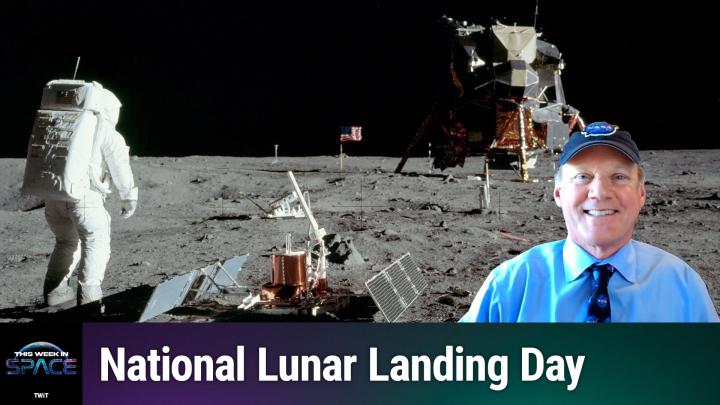
Loading summary
Transcript142 lines
- [00:00]
Rod Pyle
Coming up on this Week in Space, there's a launch date for SpaceX's Flight 9 Starship. A general is now in charge of Trump's golden dome. Blue Origin's launching a rocket on a rocket and we're going to get to the bottom of what Lunar Landing Day could be as a national holiday. And it's all thanks to one man. So tune in.
- [00:19]
Tarek Malik
Podcasts you love from people you trust. This is Turret. This is this Week in Space, episode number 162, recorded on May 23 25. Lunar Landing Day. Hello and welcome to another episode of this Week in Space, the national Lunar Landing Day edition. I'm Rod Pyle, editor chief, Madaster magazine, and I'm joined by my fellow space lunatic, Tarek Malik, editor in chief at the one, the only, the amazingspace.com. hello, partner.
- [00:54]
Rod Pyle
Hey, I see what you did there with the moon. And now we're all lunatics. Hahaha. Funny joke.
- [01:00]
Tarek Malik
I was born so clever. And yeah, my mom told me I had the cleverest cleverness of an eight year old. In a few minutes, however, speaking of clever, we'll be joined by Dr. Robert Slater, MD, who is the prime force behind the Lunar Landing Day initiative. And this is a cool one. This is something that's inspirational. It's a feel good thing. It's good for everybody. It's good for education, it's good for stem, it's good for the country. It makes us stop or remember what we've accomplished and probably scratch our heads and wonder why it's taking us so long to accomplish it a second time. We did it the first time in nine years and we've been working on it for longer than that now. But that's another story. So before we start, please don't forget to do us a solid to make sure to like and subscribe and the other podcast things to tell the world how wonderful we are. Speaking of which, we are. We are wonderful. I never actually stopped to look at this Week in Space reviews before. Yeah, no, thought I'd look it up. And on LinkedIn, we got a number one space podcast.
- [02:08]
Rod Pyle
All right.
- [02:10]
Tarek Malik
And most other surveys I saw, we were down between, you know, 8 and 12. But. But we got a number one.
- [02:16]
Rod Pyle
No.
- [02:19]
Tarek Malik
Yeah, sounds like I could retire.
- [02:22]
Rod Pyle
I'm gonna retire early podcast. Everybody. Everybody heard here.
- [02:25]
Tarek Malik
Yeah. On that big fat pension you're gonna get. And now a space joke from Jamie Marsh, Jamie Hopper for quite a while. Hey, Tarik.
- [02:35]
Rod Pyle
Yes, right.
- [02:36]
Tarek Malik
A friend said she wanted to become a star. I told her to be serious.
- [02:43]
Rod Pyle
I Love it.
- [02:44]
Tarek Malik
I love it. Yeah, it's a little chuckle. I've heard that some people want to seriously send us in a deep time of this show, but you can help send us your best, worst or most different space joke at twistwit tv. Now it's time for.
- [03:05]
Rod Pyle
Headline News. Headline News. I got that down.
- [03:11]
Tarek Malik
This is kind of like the, the Craig, Craig, Craig Newmart thing on Leo's show.
- [03:16]
Dr. Robert Slater
I know.
- [03:16]
Tarek Malik
I think I'm not as tired of this one yet, so. I can't believe you put this first, but. Golden Dome. Go for it, brother.
- [03:26]
Rod Pyle
I didn't put this first. You put it first.
- [03:28]
Tarek Malik
I didn't put this in. Oh, yeah, you did.
- [03:32]
Rod Pyle
Okay, so. But. Oh yeah, you know, actually, you know what, can we, can we skip one and go to the next one? Let's go to line. I want to skip because it just happened today. Let's go to line 20.
- [03:42]
Tarek Malik
You're going to get us in trouble with the administration, but go ahead.
- [03:45]
Rod Pyle
No, let's go to, let's go to 23 really quick because. Because hours before we started recording today's podcast, SpaceX made it official and they have picked the launch date for the next starship mission, Starship Flight 9. The the launch is set for no earlier than Tuesday, so that's May20. What is that? 27th? Yes, Tuesday, May 27th. And it's going to be at, I guess about gonna be at night, 7:30pm Eastern Time, 6:30pm Central Time. And this is interesting in, in two different ways. And there's another story on online 24 too, if you want to grab that one there too, John, because. So this will be SpaceX's third Starship launch of the year, and they're hoping it's going to be their first successful launch of the year because as you might remember, in January and then again in February or March, the Flight 6 or Flight 7 and Flight 8 failed to deliver the starship to their vehicle because the upper stage had some kind of wicked shimmy or something like that. And they both broke apart and blew up. They weren't able to accomplish the mission. So they're hoping that this third time of a new and improved version of the flight would actually work. And so the faa, a day prior, so earlier this week gave them the approval for this Flight 9 with a bunch of caveats, number one of which was that the SpaceX completed their assessment of what failed on Flight 8. They did that, and they posted all of the results of that today as well, which I still haven't sunk my teeth into but if you want you can head to SpaceX.com launches and see it there under the Flight 8 update. And then the other approach is that the FAA kind of wanted them to change their trajectory. So you may see a little bit of a different path on this flight than in the past because they want to make sure that the airplanes are staying pretty far away from it so they don't get grounded if there's an anomaly. And then also they want to make sure that there isn't any kind of debris over flight or fall as we've seen in the last two flights over Turks and Caicos, which was at the request of the UK government over the Bahamas, etc. Which we've talked about in the past too, because it's the world's largest rocket. You don't want it falling on your country. And so they've made some tweaks in that regard for this flight and we'll see if they finally make a successful trip with this Flight 9 this new larger and modified version of Starship, their second version of it to date. And then if they can take the next steps, of which there are many for the other test flights, et cetera.
- [06:40]
Tarek Malik
Is this intended to be an orbital flight.
- [06:45]
Rod Pyle
As I've read it? Like the goal is to recreate the earlier trajectories to get to the Indian Ocean and do that soft landing in the ocean. And this is going to be however, the first full reflight of the booster, of the super heavy booster. I think they've only replaced a few engines. I think the 33. Yeah, hardly any. And they've test fired it.
- [07:09]
Tarek Malik
That brings them into the bring the rocket down and hose it off and clean the ashtrays mode.
- [07:15]
Rod Pyle
Very close. Yeah.
- [07:16]
Tarek Malik
Okay, so for the next one we have China in a sky near you. Now this story calls for enforcement by the space thugs. Here's my Martin Lawler provided space thugs mug. We're going to go out there and tell those people stop flying over six American states and dumping fuel up in the air because it scares people. And I have to say this is experimental fuel dump. At least that's how I read it. This reminds me a little bit of plans in the night late 1950s that both Russia and the US had Soviet Union in those days to nuke the moon because it was a sign of technological superiority and was supposed to scare the other guys. Hey, we'll do this big nuclear explosion on the moon. It'll set up a big plume and a flash and everybody will go. They're powerful people. This is a smaller thing. But one has to wonder, was it necessary? Was it accidental? Was it deliberate? Because it was quite a show, apparently.
- [08:13]
Rod Pyle
Yeah, I don't know. I know we've got this story from, from live science, but Space.com also also had it and it's, it's unmistakable. You see this brilliant white streak in the night sky and it's going to spark some questions. And so this actually came from a. I'm sure I'm going to pronounce this right. I know I'm pronouncing it right. 2e Rocket that, that a Chinese commercial company called Landscape launched. It's a methane fueled rocket and it launched from the Jiquan Satellite launch Center. It carried six satellites into orbit, including a radar spacecraft and a space science payload. And its upper stage reached about an altitude of 155 miles when it carried out this experimental fuel dump, which spacecraft watchers like Jonathan McDowell have, have chronicled. And that fuel then froze into this brilliant ribbon of crystals that then reflected all of the light back, back at the Earth. So it was a, a bit of a surprise for everyone to see. And, and that's what created that. Now, as you say, they must have expected it to be visible from somewhere you don't like. You don't dump fuel that high and then expect it to go unnoticed. Or perhaps they thought it might get, you know, was that called where it goes straight from liquid to gas? Yeah, maybe they thought it would sublime a lot faster. But you know, they showed everyone that they have methane fuel to burn to spare. Apparently they can do this dump. And now we know what this is.
- [09:46]
Tarek Malik
Going to look like and there is nothing sublime about that. So I have to say I went out during COVID If you extend the COVID years, there were two comets that were supposed to be visible and fairly interesting. One was green and I don't remember the name of either of them. But I drove out, you know, I.
- [10:07]
Rod Pyle
Saw the green comment that was, well.
- [10:08]
Tarek Malik
Good for you, Los Angeles. I drove hours. At about the time you get away from the LA Light bloom, you're either driving into the one from Phoenix or Las Vegas or San Luis Obispo. So there's really nowhere to get full dark around here unless I take the boat out into the mid Pacific. But I did go out where it's pretty dark and I saw one of them which looked like a tiny, greenish, barely visible Q tip held at arm's length. You know, it was really nothing. Where was this? When?
- [10:38]
Rod Pyle
I know, right?
- [10:39]
Tarek Malik
Because this looks very, very cool. Okay, we are going to surprise. Go to a break and we'll be right back with the rest of our headlines. Don't go anywhere.
- [10:50]
Advertiser
Your financial future depends on what you uncover today. Like one on one guidance from a trained financial coach. Easy to use online and mobile tools to help you manage your money or 4% APY earnings on balances up to $10,000. Why not enjoy all of these smart benefits in one complete checking account from Truwest Credit Union. Learn more@truwest.org checking APY's annual percentage yield. Terms and conditions apply. Accounts subject to approval. $5 membership deposit is required. Insured by NCUA.
- [11:19]
Does it ever feel like you're a marketing professional just speaking into the void? Well, with LinkedIn ads, you can know you're reaching the right decision makers. You can even target buyers by job title industry, company seniority, skills. Wait, did I say job title yet? Get started today and see how you can avoid the void and reach the right buyers with LinkedIn ads. We'll even give you a $100 credit on your next campaign. Get started at LinkedIn.com results, terms and conditions apply.
- [11:52]
Tarek Malik
So we got rocket on a rocket.
- [11:53]
Rod Pyle
Well, do you want to do that or do you want to do Golden Dome? Now, we skipped over Golden Dome, but we should go back to it.
- [11:59]
Tarek Malik
Oh, if you must.
- [12:00]
Rod Pyle
Well, let's go back.
- [12:01]
Tarek Malik
Let's take it. So they selected a space force general to lead the ambitious and likely grossly underestimated in terms of budgetary terms and likely delay prone Golden Dome program. It's an ambitious idea. For those of us old enough. It kind of strikes, strikes back of a Strategic defense Initiative, otherwise known as Star Wars. But of course, we're much advanced since those times Israel's done something like this, maybe we can do it. But this one's a little more ambitious than Israel's because it is supposed to include catching things coming out of orbital trajectories. Right?
- [12:37]
Rod Pyle
Yeah. Yeah. This is a, this is the, a pet project that the Trump administration announced, I think during his administration. His what is that, that State of the Union thing or his, you know, when he took office, he said we're gonna, we're gonna create a golden dome around the country. It's a missile defense shield, very much like you said, Israel's Iron Dome. And it's gonna cost $175 billion. We didn't hear, Yeah, I know. We didn't hear too much about, about how it was gonna work until an event, the Oval Office this week where Trump and Secretary of Defense Pete, he build the overall plans, which basically means that they're going to spend this 175 billion is what they're setting aside for it. It's going to take three years to develop, even though like as you said earlier, Rod, it might take a lot longer. And he named Space Force General Michael Gutlin the Vice Chief of Space operations to be the one to go ahead and oversee it. And he said it is time that we change the equation and start doubling down on the protection of the homeland is what Gutslen said during the actual press conference. Its but they've got their work cut out for them because this is something that, that dates Back to the 80s with Ronald Reagan's Star wars missile defense plan. In fact, Trump name dropped Reagan during his, his kind of opening comments about why he wanted to do this, make the country safer, etc. But I don't think he said Star wars by name. And of course we didn't get orbital lasers or any of that kind of thing from Star wars or did we Rod? Do you know anything?
- [14:14]
Tarek Malik
Well, I mean all kidding aside though, they did do a lot of research on high energy chemical lasers and stuff, which is pretty impressive. I guess the question that occurs to me here is has anybody said the words fixed price, contract or cost plus contracts? Because that is going to be, and because I guess this will probably be a somewhat dark budget, it could get really expensive really fast. If they do cost plus, which Air.
- [14:39]
Rod Pyle
Force loves to do, there's, there's 25 billion earmarked to help start the funding for this program.
- [14:46]
Tarek Malik
Oh, you mean like more than NASA's whole budget this year?
- [14:49]
Rod Pyle
Yeah, pretty, pretty much, yeah. In the one big beautiful bill legislation that the House I guess signed off on to go forward. So that's the, that's the initial big conglomerate bill that has a lot of Trump's agenda stuff in it. And then of course they're going to need to, you know, develop a bunch of space based interceptors, a bunch of, you know, monitoring satellites, etc. That all could be part of this. The Congressional Budget Office has outlined in a report that the lower estimates are on the 161 billion cost front, but it could even go all the way up to 542 billion or that's more than half a trillion dollars if things don't go as planned. And as you just alluded to, it could cost a lot more than that depending on what type of contracts they set, what the success rate is for that stuff and what defines success as.
- [15:43]
Tarek Malik
Well now just so it said, you Know, I'm not trying to beat up on this particular administration for this idea because as you point out it's, it's been tried before and you know, there's some wisdom probably to having this kind of defense system. I think what sort of bugs me is how much is going to be thrown at this when we're struggling to get this return to the moon. Now, is returning to the moon as important as defending the country? Probably not. But we've been diddling around with this since 2004 in one form or another with a break for asteroid redirect which didn't happen either. And you know, we've got this surviving.
- [16:20]
Rod Pyle
Don'T get me started on aim, the.
- [16:23]
Tarek Malik
Surviving hardware, which works. We got a moon rocket that costs a bunch of money, but it works. We've got a capsule, the Orion, which costs a bunch of money, but it works. We have a launch system that's still I think trudging towards completion. The, the big overblown. What am I thinking of? There's a specific name for it, you know, the, the contract that's gone way out of control for the, for the gantries launch platform.
- [16:50]
Rod Pyle
Oh, the mobile launch.
- [16:52]
Tarek Malik
Mobile launch platform. Give me a break. But you know, we're really close, so can you guys just, you know, maybe give NASA a little bit extra money now, get them over the finish line. If you hadn't said we're going to beat China back to the moon, I wouldn't really care so much. But you said it and now it's going to be embarrassing if you don't. And just saying, yeah, we'll just go to Mars instead doesn't make that any easier to do. And we're going to have somebody on the show I hope in a few weeks is going to talk about the difficulties of extended spaceflight. Okay, stepping off the soapbox, I'm going to skip down to a story that I found very interesting that's only vaguely space related that I like to call AI doom. So OpenAI has announced a new AI processing center to be built in Abu Dhabi that would be larger than the country of Monaco. Now admittedly Monaco's about as large as my neighborhood, but still we're talking a processing center that's a square mile that would suck up 5 gigawatts of power or roughly equivalent to that generated according to the press, by five nuclear plants. I'm presuming that's an average measure. Measure that's still a lot of power. And if you're not building nuclear plants to power it, that's a lot of fossil fuels burning so that people can, you know, query Claude or open AI and get the result. Yes. You ought to eat rocks in your salad to get minerals. And you know, it's like there's an awful lot of stuff happening, AI that probably doesn't need to be. Yeah, they're burning up resources.
- [18:30]
Rod Pyle
I asked, I asked Gemini, the AI on my phone last night if it was actually on the phone or in a bunch of servers somewhere. And it said it was in a bunch of servers somewhere. And I asked it very cleanly, plainly, does this mean that this conversation is burning down the planet? And it said, you know, it's good you're thinking about that because. Yes, yes, it takes a lot of power. So something to think about for sure. You know, although it is a desert question.
- [18:57]
Tarek Malik
And I went on to Claude yesterday and it rejected my request. Not because it didn't like it it, but it said we don't have the resources to handle this now because somebody was probably asking for fart jokes or something. Let's pick one more. Your pick of the Oscars here. We're going to go to our new segment.
- [19:15]
Rod Pyle
Oh, all right. All right. Let's do Rocket on a rocket.
- [19:18]
Tarek Malik
Okay. Rocket on a rocket.
- [19:20]
Rod Pyle
Yeah.
- [19:21]
Tarek Malik
This is kind of weird.
- [19:22]
Rod Pyle
Did you want to do it or did you want me to do it?
- [19:24]
Tarek Malik
No, I want you to do it.
- [19:25]
Rod Pyle
All right, all right, all right. So. So this week we also got the announcement for Blue Origin's next private space flight, the NS32 mission. No, Katy Perry is not going back to space. However, they are launching a rocket on a rocket and it's not the rocket that you think. It's actually investor Mark Rocket, who is one of six different people who are going to be launching on the New Shepard suborbital mission. They don't really have a date that I'm aware of yet, so they are waiting to set that one out. But if that name sounds familiar, Mark Rocket is an entrepreneur from New Zealand who is the CEO of a couple company called Kia. I'm not sure if I'm pronouncing that right. Aerospace president of Aerospace New Zealand and he was a seed investor in Rocket Lab and we all know how well that turned out because they are just launching rockets like there's no tomorrow. And I think he might have been a director on their board for a while, until 2011 if memory serves. But. But he will be aboard this crew that will include a few other people. Jamie Aleman, Gretchen Green, Paul. I think Ayers is how you're Jarris. Pardon me. And I met Medina Jorge George. Jorge probably and Jesse Williams and those other folks. Alaman is a Panamanian businessman, you know, an attorney who has been an ambassador to the United States. So probably just going as part of a joyride. Green is a radiologist, life coach, explorer and Space camp alumni. Hey, like me who bicycled. Yeah. Who bicycled across the US at age when she was 16 to help fight hunger. And Jarris is an entrepreneur and real estate developer who has been passionate. So a lot of kind of space tourists there. And I believe that Medina Jorge is an award winning. Yeah. She's a middle school and high school STEM teacher who has led more than 60 space and zero G flights. So she's been on some experiments, you know, like those, those zero gravity flights that do the simulated. Now she'll experience the full on microgravity again. Weightlessness for like four minutes or so, unbroken instead of the 30 second snippets that she got on those education flights. So. And her seat was sponsored by the Pharmacist Similarities, a Mexican company committed to social impact and accessible health care. So. And then finally Williams is a Canadian entrepreneur and adventurer. So a bunch of. He's visited the seven highest peaks including Mount Everest. A bunch of adventures paying for their joyride to space. A couple of STEM and deep space investors on board too. It's gonna be an interesting crew, but not as say PR open, you know, as the, as the Katy Perry flight might have been.
- [22:13]
Tarek Malik
So this is interesting. While you're finishing your story, I was seeing John doing calisthenics to try and stay awake over on the board. All right, all right.
- [22:23]
Rod Pyle
Well then don't pick rocket on a rocket. You picked that one too. All right.
- [22:27]
Tarek Malik
I thought it was cute, but still is our new segment that we like to call the Weekly World News. So the Weekly World News is back. It was a publication that was widely available in a supermarket near you for decades with ridiculous things like Bat Boy and vampires on the moon and World's.
- [22:53]
Rod Pyle
Fattest Cat Saves Christmas. I have it framed.
- [22:55]
Tarek Malik
Yeah, and aliens on the White House lawn and more. My favorite was a picture which I had framed of a B17, found a lunar crater and I think it was Clavius. So they had a 17 or 170 mile wide B17 filling the crater. Anyway, is that one where a Mars.
- [23:12]
Rod Pyle
Rover found a bunch of mummified. Like a mummified family of Asians.
- [23:16]
Tarek Malik
And the nice thing was at least back then, you know, it was really clear that they took pictures and just cut them out with scissors and slapped them together. The angles are wrong, the lighting, lighting was wrong. It's all, all just kind of in good fun. But maybe, maybe there's more than a little truth here. So in an explosive interview, it was revealed that US Senators are aliens. Some of them. So let me explain.
- [23:41]
Rod Pyle
Eight. Eight US Senators are aliens.
- [23:45]
Tarek Malik
You've given it away.
- [23:46]
Rod Pyle
Sorry, sorry.
- [23:47]
Tarek Malik
Who is an alien stunned the world by revealing that five U.S. senators are extraterrestrial. Were extraterrestrials in 2019. And Pilad just dropped another bombshell. He spoke to reporters after he met with President Trump in the White House just days ago. And I wonder. It didn't say here, but I wonder if Trump has sympathies for the people that are ruling Venus because we're working to kind of make our planet similar. Okay, so Pilaud named eight senators who hail from planet Guten. Pilad is from planet Z Ban. That's some kind of a. A restorative ointment.
- [24:25]
Rod Pyle
I don't know, man, but he can.
- [24:27]
Tarek Malik
He says he can recognize a Goodanian when he sees one. And among them, unsurprisingly to most of us, is Mitch McConnell contacted at his office in Washington D.C. the Weekly World News tells us that Senator McConnell took the high road, making a full and immediate disclosure, saying it's all true. We are aliens. And I'm amazed it's taken so long for the public to find out. Or so we heard. Be my stock disclaimer every week. Listeners, if you enjoyed this segment, tell us. If you want us to never speak of it again, tell us. Because we, we do listen. And we're still waiting. Now we have gotten some feedback on should we do a movie versus science segment. It's exactly 50, 50 now. One pro, one con. So we're waiting for those cards and letters because we know there's, you know, 10, 15, 20,000 of you out there who listen to this show with great anticipation every week. And we near to hear from you. And by the way, we need your space jokes. Okay, that's enough of that. Stand by. And we'll be right back in a few minutes with Bob Slater of National Lunar Landing Day. Stand by.
- [25:40]
Advertiser
This country was built on a distinctly American work ethic, but today work is in trouble. We've outsourced most of our manufacturing to other countries. And with that, we sent away good jobs and diminished our capability to make things. American Giant is a clothing company that's pushing back against this tide. They make a variety of high quality clothing and activewear like sweatshirts Jeans, dresses, jackets, and so much more, all made right here in the usa. From growing the cotton to adding the final touches. So when you buy American Giant, you create jobs for seamsters, cutters, and factory workers in towns and cities across the United States. And it's about more than an income. Jobs bring pride, purpose. They stitch people together. If all that sounds good to you, visit american-giant.com and get 20% off your first order. When you use code STAPLETENTY at checkout, that's 20% off your first order at american-giant.com with promo code STAPLE20.
- [26:42]
Tarek Malik
And we are back with Bob Slater, Dr. Bob Slater, MD, I should say, who is an orthopedic surgeon in solo practice in Sacramento, California. Hello, Bob. Thanks for joining us.
- [26:54]
Dr. Robert Slater
Hello, guys. Nice to be here. Thanks for hosting me.
- [26:58]
Tarek Malik
So before we get into the topic du jour, what's the idea of being a surgeon? I find absolutely terrifying. It's like. It's like flying a plane. I don't know, with a pamphlet, you know, I mean, is how long does it take before you settle into a career like that and think, okay, no, they at work.
- [27:18]
Dr. Robert Slater
Yeah. I decided in sixth grade I was going to be an orthopedic surgeon because really, e race and I broke my tibia. And I thought, that's pretty cool. You can put people back together again. That's what I want to do. And then in high school, I blew up my knee ACL rupture, like, a lot of people experience with it. So that got me interested. And so I knew from the beginning where I was going. So how do you get into it? You do four years of college and four years of med school, and then six years of residency training and a year of fellowship, and then you're ready to start practicing. And then eventually you keep practicing and you get a little better at it.
- [27:55]
Tarek Malik
Which is why they call it practicing, I guess. Tariq, I just want to point out, over Dr. Slater's left shoulder is a prominent book. No, the other. The other left shoulder is a prominent book that sold over 50,000 copies.
- [28:11]
Rod Pyle
Yeah, I have that book. So.
- [28:14]
Tarek Malik
Bought me a boat and everything. Okay, enough of that promotional stuff.
- [28:18]
Rod Pyle
Wait, wait, wait, wait, wait. Do you mean that I should have, like, a rod pile honorary, like, display over over here?
- [28:25]
Tarek Malik
Of course.
- [28:26]
Rod Pyle
Right, right, right where your.
- [28:28]
Tarek Malik
Your bathrobe or negligee or whatever that is in the corner?
- [28:31]
Rod Pyle
It's a curtain. And I just haven't replaced it. I have the other one.
- [28:35]
Dr. Robert Slater
Yeah, I'll put the book there instead.
- [28:37]
Tarek Malik
It'll be better yeah, it's only been two and a half years, partner. Okay, let's. So let's get on to it. So Tarek has his. His trademark patented trademark question that he wants to ask, and then we're going to move on to.
- [28:48]
Rod Pyle
Yeah, it's not every day, Bob, that we get an orthopedic surgeon on the podcast to talk about, like, this week in space. So I'm very curious about what your path to what I assume is a passion for space exploration. Like what that path? Like, you know, was it something that, that you did find when you were young? Is it something that came up later? You know, where you got bit by a space bug as an adult? You know, I'm just curious what your first encounters with that space kind was like.
- [29:18]
Dr. Robert Slater
Well, thanks for the question. Thanks for having me here, guys. I was six years old, living in Illinois, when Neil and Buzz first stepped on the moon. It was a hot July night. We were living outside of Chicago and on the back porch watching, and we being my parents and my two siblings. And they kept telling me at 10 o' clock at night is when the first steps happen in central time. And they kept telling me, bobby, Bobby, you got to watch this. You got to wake up. This is important. This is history. And I'm so glad that they did, because I actually have an independent recollection of that whole event and those first images. So I've been excited about space exploration my whole life. But as we just talked about, my career path was otherwise. I was never smart enough to be an astronaut, and I'm not sure I could grant myself into one of those rockets. So I applaud those that can do it. But I have a deep, passionate, and a lot of enthusiasm for space exploration. And I've been a big fan of your podcast, and Space.com is amazing. It's great source of daily updates on what's happening in the universe and in space. So thank you guys for what you do.
- [30:29]
Tarek Malik
And I'll bet he likes Ad Astra magazine, too. So let's, let's move into the important thing here. Not that your career path isn't important, but this is why you're here. The Lunar Landing Day initiative. What is it? How did it come about? Tell us the story.
- [30:46]
Dr. Robert Slater
Even though they're my employees, and even though they know I'm so passionate about space, I walked into my office on July 20, 2023, and I said, hey, team, what happened on this day in history? And there was silence. Nobody knew. Like, no, no, it's me asking you really July 20, 1969. Nobody knew. And since then I've asked lots of people, and nobody really remembers that. Now, some people do remember once I remind them that that was the day that humans landed on the moon for the first time. They say, oh, now I remember that. I thought that was sad. I thought that was tragic. We all ought to know that. We all ought to celebrate that every year. One of the greatest accomplishments in human history, certainly one of the great unifying moments in American history. The decade that we made that happen. We ought to celebrate that. We need more things that are positive news these days especially. So that prompted me to start thinking about how we could do that. And I launched the campaign and we've been going strong every day for two years since.
- [31:50]
Rod Pyle
Yeah, and I guess you mentioned it's been going on for two years, Bob, I'm just curious, you know, what, what's your, what's your, like, end goal? Do you want it to be a national holiday? Is that what we should do, right, is have a NASA, like an Apollo 11 holiday? I'm all for extra holidays in July, by the way.
- [32:10]
Dr. Robert Slater
Absolutely right. This is the drive. Lunar Landing Day will be a new federal holiday. There are 11 currently on the calendar that are recognized as official holidays, meaning a federal holiday. And this will be a new federal holiday. We all ought to celebrate that. And so that is the charge. That is what our now ever growing national coalition is working hard towards. We made great progress and we work on this every day.
- [32:40]
Tarek Malik
That's pretty cool. Now, can you tell me, I mean, you talked about what happened at the office, but was it really just that or was it a larger sense of, of just understanding, you know, what this meant to US History? Because I, I was watching too, a little older than, you know, it was such a remarkable moment. And I think, surprise, I was, I think 11 or something. But even then I realized what a big turning point this was matched only by watching Viking 1, the first images of Viking 1. But Apollo 11 is such a special place in our memories.
- [33:14]
Dr. Robert Slater
Right. So I was a history major in college. So, yes, I absolutely appreciate the historical context. This was, of course, the height of the Cold War. This had major implications in that regard. This was a triumph of technology, developing all the technology that we even have. When JFK gave his initial address, joint session of Congress in 61, just three weeks after their first suborbital flight of Al Shepard. And to pull this off was really amazing. So, yeah, this is very important. This was the first time that humans stepped on another celestial body. This was 410,000 people in all 50 states working to make it happen. This was so important, and we really ought to honor it and cherish it and promote it. So we need to celebrate that. And we also need to promote interest in STEM education for the next generation, which we can talk a little bit more about as one facet of this whole campaign.
- [34:16]
Tarek Malik
Yeah, I do want to talk more about that. Just kind of touching on what you said, though. I learned about you from Jerry Griffin, because I'm working on a project with him, but interviewing him and a number of other people, both astronauts and folks who are working mission control and elsewhere through the space age. And during that period, you know, between 1968 and 1972, the one thing I found that. That I was impressed with and felt and that most of them kind of agreed with, was the further away I get from those events of the space race, the more astonished I am that it worked. Because you think about this technology, you know, it was baselined in the mid-60s, which means that most of it was kind of growing out of the 1950s. We were just getting integrated circuits. We were just getting transistors. We were just getting many things that would make this work. And then some of it was not all that up to date. I'm sure you've seen the inertial guidance. Was it the IUS, the computer on the Saturn 5, and that upper adapter ring, right, where instead of looking like a briefcase like it does on the command and lunar modules, it looks like you could park a compact car inside of it. So you look at this technology and you think, they went all the way to the moon, supported these guys on the way down there, all the way back, managed to rescue Apollo 13. It just boggles my mind by today's standards.
- [35:48]
Dr. Robert Slater
That's really astonishing, isn't it, to think. I mean, we've all heard many people tell us this, but, you know, the amount of computing powder we have in our wristwatches, you know, is an order of magnitude more than they had in the entire Apollo spacecraft. It's really astonishing. We didn't even have the technologies built when we started the campaign to make it happen. So we had to develop the technology, orbital mechanics, and everything else that went into that design, the spacesuits. It is astonishing.
- [36:16]
Tarek Malik
It is. And actually, that's interesting. Quote, you said, you know, the watch or the iPhone having more computing power than. Than the Apollo or NASA. I actually was corrected. I was doing a talk with Alan Stern, and I used that quote, and he turned to me and said, actually, that phone you just held up has more computing power than the planet Earth did. That was pretty remarkable. So before I let Tarek jump in, because he's got some things to say, let's go to a quick break and we'll be right back with Bob Slater. Stand by.
- [36:48]
Advertiser
This country was built on a distinctly American work ethic, but today, work is in trouble. We've outsourced most of our manufacturing to other countries, and with that, we sent away good jobs and diminished our capability to make things. American Giant is a clothing company that's pushing back against this tide. They make a variety of high quality clothing and activewear like sweatshirts, jeans, dresses, jackets, and so much more, all made right here in the usa, from growing the cotton to adding the final touches. So when you buy American Giant, you create jobs for seamsters, cutters and factory workers in towns and cities across the United States. And it's about more than an income. Jobs bring pride, purpose. They stitch people together. If all that sounds good to you, visit american-giant.com and get 20% off your first order. When you use code STAPLE20 at checkout, that's 20% off your first order at american-giant.com with promo code STAPLE20.
- [37:49]
Rod Pyle
You know, one thing that it really, it really reminds me of too is how harrowing that, that, that those flights were the first flight, of course, right. I think, but Neil Armstrong was like on, like almost out of fuel, you know, when they, when they had to make the landing. And there was that, there was that the big, the epic story that Buzz Aldrin talks about with the pen to hit the, replace the toggle switch so they get off the moon and come back to the Earth. Because there was that whole other alternate reality speech that Richard Nixon had put together, you know, in case, in case things didn't go as well as they did. Which I think we have a copy of that speech on space.com if anyone wants to read it. You know, but I'm curious, Bob, about, about your, your, the supporters that you found so far over, over the last two years. You know, if, if you've gotten a lot of buy in or, or, or support from, from, you know, astronauts or, or the folks there, you know, what, what traction have you seen so far? And are you worried about the crazies coming out, out and saying that we never landed on the moon and.
- [38:55]
Dr. Robert Slater
We'Re not doing that. I'll have Buzz talk to them directly. And he cannot.
- [39:00]
Tarek Malik
There you go. All he has to do is growl.
- [39:03]
Dr. Robert Slater
Yeah, right. So thank you for the question. We've made a lot of progress. It's been. It'll be two years in July that we've been working on this. And in that time, yes, we've got several moonwalkers who are definitely on board and have said, yes, use my name publicly. We have Buzz Aldrin himself who said, yes, I support this endeavor. We should make this a new federal holiday. We have Charlie Duke, who everybody on this podcast knows was a Capcom at the time and later walked on the moon and drove the dune buggy with John Young on 16. Charlie supports us. We have Fred Hayes infamous Apollo 13 mission. We have the last living moonwalker, Jack Schmidt, subsequent New Mexico US Senator, who said publicly, yes, this ought to be not just a national holiday. Jack says, this should be an international holiday. This was something where all of humanity was finally united, just briefly. So we have the NASA flight directors, Gene Krantz and Jerry Griffin, who just mentioned publicly saying, yes, we're on board. So we also have a really wide coalition. And that's what I'm doing. Particularly excited about. We get literally every week more people going online to Lunar Landing Day.net and signing the petition saying, yes, I support this. Add my name to the list, please. We have people from all walks of life that support this. It's really exciting. And then we can also talk a little bit about the legislative aspect, if you'd like.
- [40:37]
Tarek Malik
Yeah, I'd like to know more about that and the specific goals besides just celebrating. I know you have some other goals regard to stem, education, so forth. Now, when you look up your proposal, one also comes across National Moon Day and International Moon Day. What makes this different than those two things?
- [40:57]
Dr. Robert Slater
Yeah, so those are basically resolutions, and it's not a holiday. This is going to be a federal holiday. This will be a paid day off for federal employees. And with a federal holiday, then each individual state can decide whether or not they will honor that or have a day off. And individual companies can do that as well. That's how it works when you have a federal holiday, whether it's Juneteenth Day, the most recent federal holiday, or any of the others, 11 that are currently on the books. So that's how it works. And the United nations did pass a resolution honoring Moon Day, as they call it, it, which is great, but it's in my mind a little bit like the polite golf clap. And, yeah, we went to the moon. And this is going to be a whole lot more than that. This will be an actual day, like the Fourth of July, one of the greatest days in American history. Everybody knows July 4, 1776. I don't have to ask people what happened on that day. Everybody knows. This is going to be like that.
- [41:58]
Tarek Malik
At the end of the episode, I'll bring this up again. But we really have to encourage our hundreds of thousands of listeners. Our dozens of thousands of listeners.
- [42:09]
Rod Pyle
Millions. Hundreds of millions. You gotta. You gotta.
- [42:12]
Tarek Malik
And Space.com has to suggest the same thing because this is a really good idea. Plus, who doesn't love an extra holiday, right?
- [42:18]
Rod Pyle
Yeah. Well, it won't be a holiday for Space.com because it's a space holiday. Right? So we'll have to work it. But that's all right. That's all right.
- [42:24]
Tarek Malik
I'll take for you. All right, go ahead, Go ahead.
- [42:28]
Rod Pyle
No, you know, you know, I'm curious, like, how you see that being a teachable moment. So it would be this fun festival I can think about, like, parades and, you know, when we have our 4th of July, there's the town closes down, there's fireworks, obviously, and food and whatnot. But you do want this to be a bit of a learning experience. And I'm curious if that kind of programming would dovetail with the types of STEM and outreach that, that NASA has been doing or. Or would you see it as more of an opportunity to get people perhaps, acquainted with just the realities of space exploration overall, not just the moon landings themselves. So as a springboard to. To the wider realm of science, technology.
- [43:15]
Dr. Robert Slater
Et cetera, one of our mottos is celebrate the past, promote the future. This is a major facet of our national campaign. We need to promote STEM education more than we already do. The national literacy rates are rather astonishing. We are actually losing track against our world competitors, both allies and competitors. For example, I mean, literacy rate in this country is 75%. And of that 56% read at the sixth grade, lower or lower level. You look at China and Russia, they're at 97 and 98% literacy, respectively. This needs to be a push for STEM education. If we start having fireworks and parades and everything that's exciting on that day, but it also will be a stimulus for the next generation of kids to say, wow, we did that. We went to the moon. I want to be part of the mission to go to Mars and beyond and develop satellites that go out and study Jupiter's moons more, that's a really important part of what we're doing. The educational outreach component is essential.
- [44:21]
Rod Pyle
I can imagine like a national moonwalk on, on, on. On that day, you know, where it's like a marathon but then also maybe like, there's like.
- [44:29]
Tarek Malik
So everybody does their Michael Jackson best.
- [44:31]
Rod Pyle
Yeah, well, that's, you know, on, on the anniversary, on the, the. Let's see. In, in, in, in. Was it 99? In 99, yeah. I was an intern at the, at the, at the LA Times. That was when they, they put Buzz's bootprints at the Yorba Linda Presidential Library for Nixon. Right. Because they walk of fame. And I could see like a national.
- [44:54]
Tarek Malik
Because Nixon pretend it was his accomplishment. He came in at the 11th hour. Yeah.
- [45:00]
Rod Pyle
Like on the first official federal holiday, the government opens a national moonwalk walk of fame. Right. So it's a moonwalk of fame, not just like a spacewalk of fame, which I know, I think exists in, in Florida, but it would be all the people that have walked on the moon. And as Bob has mentioned, the people to come, because we are going back to the moon, there will be more moonwalkers, and some of them may not even be professional astronauts, but they'll be professional explorers or scientists or something like that. And, and that is a legacy to come that we should be prepared to, I suppose, celebrate in one way or another. So it's not just, you know, I guess that was. That's what we're doing now in this kind of digital age where if it's not on TikTok, it's not happening.
- [45:43]
Tarek Malik
So I think one thing that's important to comment on here, at least to me, is I think this is a real opportunity and you've kind of already hit on this, but it's kind of an opportunity to remind people, why would this, this date is important, what happened, why it matters now? Because we're in a culture, as you probably have seen. There was a post a poll recently, it was ipsos, and there was another one, two polls that were looking at denier rates in our country. And you know, when you have a generation or two going to people like Steph Curry and Joe Rogan for not just news, but the truth, quote, unquote, I think you're in trouble. And you know, Joe Rogan, if you're watching this, we'd love to have 5% of your success, but. But stop supporting the moon deniers because it's junk. Can you comment on, on how this might be used to sort of pull up the page?
- [46:37]
Dr. Robert Slater
Well, one of the quotes that I love, and I've heard Charlie Duke say it at occasions more than once, is for those that say we faked it. Why would we fake it nine times? Ridiculous. So, and Buzz will just Knock you out cold if you tell him you.
- [46:55]
Tarek Malik
Nailed Charlie man, silly.
- [46:58]
Dr. Robert Slater
And we ought to stay away from that. But this is all about education. So let's educate those that think it didn't happen and, and get them excited about it. I think if they really knew what happened, they would get excited about it. Their kids would get excited about it. They'd say, like, I want to be the engineer that makes that happen and develop the next great technological breakthrough. I want to be part of the medical team that makes sure the physiologic aspects of these missions are studied and optimize the health of the astronauts. There are so many ways to spin this. It's really. And that's really the key. 410,000 people in every one of the States made this happen. It wasn't just a few people. It wasn't just three white guys walking on the surface of two guys in one orbit and on the mission. That's not what this is about. This is about everybody. The seamstresses that sewed the suits, the bus drivers that got everybody to work on time. This is a team effort, bar none. And we need to reinvigorate that enthusiasm in this country.
- [47:55]
Rod Pyle
What's that legendary story real quick, Rod, about that was it. Kennedy was touring the pad and asked someone that was working by just like a janitor or whatever, what they were doing there. And he was helping us go to the moon. It's like that thing, everyone plays a role.
- [48:12]
Tarek Malik
The one you're thinking about was it John Young, one of the then future moonwalkers, was up on the gantry and saw a worker inside a panel on the S4B, I think it was. And the guy looked at him, at the astronaut who was not wearing his usual regalia, and said, who the hell are you and what are you doing up here? And the astronaut said, I'm flying in that thing in a few days. And he said, I just want you to know nothing on this rocket will fail because of me. Wave the flag, it's a different story.
- [48:49]
Rod Pyle
But both are good. Both are good.
- [48:50]
Tarek Malik
Well, mine's better. Let's put a break and we'll let you come back and you can try your next one. Hold on.
- [48:57]
Advertiser
These days, work is in trouble. We've outsourced most of our manufacturing to other countries. And with that, we sent away good jobs and our capability to make things. American Giant is a clothing company that's pushing back against this tide. They make all kinds of high quality clothing and activewear like sweatshirts, jeans, dresses, jackets, and so much more. Right here in the usa. So when you buy American Giant, you create jobs in towns and cities across the country. And jobs bring pride, purpose. They stitch people together. If all that sounds good to you, visit american-giant.com and get 20% off your first order. When you use code STAPLE20 at checkout, that's 20% off your first order at american-giant.com with promo code STAPLE20.
- [49:45]
Rod Pyle
Well, yeah, you know, I think we're at the point in our talk, Bob, where I want to know what we can do. Like what can the people listening do to either get involved in this project, celebrate Apollo 11 as like their, or just the moon landing themselves? You know, what would you advise? Should they be calling their, their representatives in the House and Senate to say, hey, let's make this happen? Obviously signing the petition is, is a, it's, you know, maybe up there as well. Like what, what's the next steps there?
- [50:20]
Dr. Robert Slater
Right. So several things that can be done. First is yes, please lend your Support, go online lunarlanedyday.net Sign the petition. The more supporters we have, the more it convinces everybody how much support there is for this. Secondly, the bill has been drafted and is being circulated in Washington D.C. on Capitol Hill to make this happen. There's a House version and a Senate version which are the same but circulating in both chambers of Congress. Now our coalition has made two in person travels to Washington D.C. one in last November and one in this March. So we're trying to get the word out so everybody listening can contact their members of Congress and say this is a great idea, please support it. We've contacted every one of the 100 US senators, every one of the 50 governors, and five US territory governors. We've tried to make it known at the local level as well. And people can do that as well, whether it's the County Board of Supervisors, the State assembly members, state senators, all of that helps. So the more people we have talking to their representatives, the more momentum we are going to generate for interest and support for this very important.
- [51:37]
Tarek Malik
So when you and I spoke while we were booking the podcast, you also mentioned I think you were looking for some hands on help for what you're trying to do. Can you tell us.
- [51:47]
Dr. Robert Slater
Love to have that. We've recently worked out a deal with a publicist, Theresa McFarland, who is going to help us with making our admittedly rudimentary website now much better. But I wanted to grab that domain name while it was still available last November. So anybody that wants to please contact me. We'd love to get you involved. We need in particular help with that sort of PR work and website design, that type of thing.
- [52:17]
Tarek Malik
Well, I want to thank you very much and everybody listening for joining us today for episode 162 that we like, like to call Lunar Landing Day. Hey, exclamation point. Because this is very important. Remind us one more, remind us, Bob, one more time where we can find information and contact you on this initiative.
- [52:37]
Dr. Robert Slater
Please contact me atlunar landing day.net and we look forward to any and all support. We're really building a great coalition and we look forward to success in celebrating this with a Lunar Landing day barbecue every July 20th going forward.
- [52:54]
Tarek Malik
That's fantastic. I can kind of see the back the business end of a Saturn 5 being used to, to roast weenies somewhere.
- [53:01]
Rod Pyle
Let's light this candle. Right.
- [53:03]
Tarek Malik
Where can we find you entertaining the masses these days?
- [53:05]
Rod Pyle
Well, you can find me@space.com as always on the Twitter and the blue sky at tarikj malik this weekend is, it's Memorial Day weekend. So as we're recording this. So hopefully relaxing and enjoying the holiday and watching that clock tick down to the next Star Starship launch that's coming up and that'll be great to see. I think we'll have more on that next week, next episode.
- [53:28]
Tarek Malik
Fingers crossed on that. And of course you can always find me at pilebooks.com or@astramagazine.com where I like to hang out. And in June you can find Tarik and myself and Bob, it'd be great if you showed up at the National Space Society's International Space Development Conference in warm, embracing Orlando, Florida. Like stepping into a wet mattress interest. But that's okay. You'll be in a very nice resort hotel with fantastic air conditioning. So if you're interested in joining us there where I'm going to be handing Tarek his very nice, very expensive award. Go to isdc.nss.org and remember, you can always drop us a line at twistwit tv. We welcome your comments, suggestions and ideas and answer each and every email. New Episodes this podcast publish every Friday on your favorite podcatcher. So make sure to subscribe, tell your friends and give us reviews. We live or die by your reviews. We also live or die by you joining Club Twit. And we're counting on you to sign up this year. And if you do it soon, you can get grandfathered into the current rate, which is going to go up in a couple of months. And they are once again offering annual plans. So there's all kinds of good reasons for you to jump into Club Twit, but the main good reason is me and Tarek. That's right.
- [54:46]
Rod Pyle
Well, mostly me, of course.
- [54:48]
Tarek Malik
That's what your mom would say. So thanks everyone. We'll see you next time. Take care.
- [54:56]
Advertiser
Stay on top of tech trends without the time sink Twitter TV's short form podcasts are built for busy leaders like you, delivering essential insights in minutes. Hands On Mac and Hands On Windows provide quick tips for Mac and PC, while Hands On Tech quickly addresses common tech challenges to keep your operations running smooth smoothly. If your conference room needs an upgrade, Home Theater Geeks explores the best screen and sound systems. And if you like watching the shows, join Club Twit to get full video access, ad free versions and more. Get technology that matters on your schedule. Download our short format shows now at TWiT TV or your favorite podcast player.
- [55:48]
American Giant makes great clothing sweatshirts, jeans and more right here in the US. Visit american-giant.com and get 20% off your first order with code STAPLE20. That's 20% off your first order at american-giant.com, code STAPLE20.