← All TWiT.tv Shows (Audio)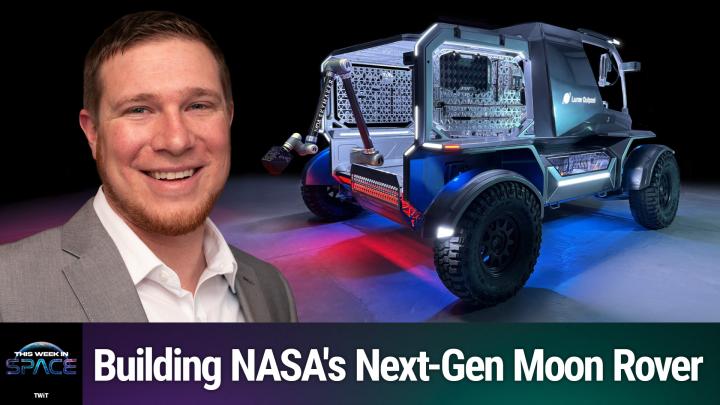
All TWiT.tv Shows (Audio)
This Week in Space 167: An Outpost on the Moon
00:51:25
Lunar Outpost's Bold Vision For Lunar Mobility With AJ Gemer
Loading summary
Transcript226 lines
- [00:00]
Rod Pyle
Hey space fans. On this Week in Space, we got human remains launched into space and lost at sea. Axiom 4 finally gets to the space station. And we're gonna find out exactly what lunar Outpost wants to build for a rover on the moon.
- [00:12]
Tarek Malik
Tune in this episode brought to you by Red Canary when cybersecurity threats hit fast, you need an MDR partner that moves faster. Red Canary delivers 24.7expert MDR support, total visibility and actionable insights. Plus it helps you detect four times more threats so you can stay ahead with without burning out. Red Canary clears the noise and has your back every hour, every incident. Get the backup you deserve. Visit redcanary.com difference to learn more. This episode is brought to you by the Electronic Frontier Foundation. I love hearing those words. For 35 years the electronic frontier foundation has been fighting to make sure when you go online, your rights go with you. I'm a proud member. You should too. I also listen to their great podcast how to Fix the Internet. I don't know how I would sum up what the EFF does. It does so much Their lawyers protect security researchers from companies that don't want them to do the research efforts develop open source software to combat surveillance. If you use privacy badger, you oughta and their activists push companies to build tools that work for you, not against you. The EFF's podcast How to Fix the Internet has some of the best guests ever. People from like minded groups including the Digital Defense Fund, the Tor Project, the Freedom of Press foundation, leading thinkers in post quantum crypto, AI neurotechnology and with every guest they ask the question, what does the world look like if we get this right? Visit eff.org podcast and listen to how to Fix the Internet. And by the way, join the eff. I'm a member. You should be too. Thank you eff. Today's show is brought to you by Progressive Insurance. Do you ever think about switching insurance companies to see if you could save some cash? Progressive makes it easy to see if you could save when you bundled your home and auto policies. Try it@progressive.com Progressive Casualty Insurance Company and affiliates. Potential savings will vary. Not available in all states.
- [02:15]
Zoe Saldana
Podcasts you love from people you Trust.
- [02:19]
AJ Gamer
This is TWiT. This is this Week in Space, episode number 167 recorded on June 27, 202025 an outpost on the Moon hello and welcome to another episode of this Week in Space, the Outpost on the Moon edition. I'm Rod Pyle, the ailing editor in chief, VAT Aster magazine and I'm joined By my fellow lunatic, Tarek Malik, editor in chief of space.com. hello, partner.
- [02:46]
Rod Pyle
I miss you, Rod. I miss you. You know, it's worth, like, 3,000 miles apart. What am I going to do? You know, you guys get to go to your boat, so.
- [02:55]
AJ Gamer
Yeah, well, I'm on my boat because I'm quarantining because my lovely partner is taking her mother to China on July 2. She said, I love you, but don't come home.
- [03:05]
Rod Pyle
Oh, that's right.
- [03:07]
AJ Gamer
Because, you know, her mother's 86. I think her aunt is 95. So we thought, yeah, let's just take the safer out.
- [03:15]
Rod Pyle
Do we have to tell everyone why you're quarantining?
- [03:18]
AJ Gamer
Oh, Covid.
- [03:19]
Rod Pyle
Yeah.
- [03:20]
AJ Gamer
So got Covid at the conference. Tarek didn't, because he's young and healthy. Enhance.
- [03:26]
Rod Pyle
My dad did. But what are you gonna do?
- [03:28]
AJ Gamer
Yeah. Well, I hope he's okay.
- [03:29]
Rod Pyle
Like a bajillion people at that conference and three other conferences and a national volleyball championship, like.
- [03:36]
AJ Gamer
Yeah. So I think we had. We finally tallied up about 1080, which, for this kind of space conference, is remarkable. It's a lot, and people seem to have a good time. So if you didn't come, dear listener, next year we will be in Tysons, Virginia, for the International Space development conference, number 44. And hopefully Tarek will be there. And our plan, after doing our Live from isdc, or no, I called it Live from the Swamps, didn't I? That's Right Edition last Friday, is that we'll do the same next year, but we'll do it in a proper setup. So I just have to say up front, apologies. We had some people that traveled down, including the lovely Tanya, and I suspect in hindsight that they may have been expecting to walk into something kind of studio, like. Like what they do at TWiT headquarters. But instead they walked into our operations room, which had people running around stuffing bags and filling envelopes and talking on their radios. Because to get an Internet drop at that hotel costs. Are you ready? $1,000. $1,000 for an ethernet wire for the afternoon. You don't even get to take it home. So we were forced into that space. But next time, everybody from the NSS leadership who saw what we were doing thought it was fabulous, which we appreciate. So next year, we're going to set it up as a regular session.
- [05:00]
Rod Pyle
Yeah. Which means like an actual room. And not in the corner with the.
- [05:03]
AJ Gamer
Mannequin seats and lighting. That's right. And everything. Yeah, the mannequin.
- [05:06]
Rod Pyle
Tanya was there. I saw Tanya right Yeah, and I.
- [05:10]
AJ Gamer
Think at least one or two others, but my memory is fading along with my fever. So, Josh, right.
- [05:17]
Rod Pyle
Who heard about ISDC from us on the show and then decided to come on out. So that was great.
- [05:24]
AJ Gamer
So we love it. We have fans we can count on two hands. It's easier to keep track. All right, in a few minutes, we'll join by be joined by AJ Gamer, who's the chief technology officer, co founder of Lunar Outpost, which is working on some really exciting stuff, but we'll let him tell you about that. And as always, before we start, please don't forget to do us a solid. Make sure to, like, subscribe and all the other podcast things. Push that button. Well, on your screen, but push that button and make sure to send us your. Your. Your love. And now a space joke from Bob Dueling.
- [05:59]
Rod Pyle
I'm ready.
- [06:05]
AJ Gamer
That music's particularly appropriate for this one.
- [06:07]
Rod Pyle
Is that new? Is that new that I. Yeah, I like it.
- [06:10]
AJ Gamer
We do new things every now and then. Hey, Tarik.
- [06:12]
Rod Pyle
Yes, Rod?
- [06:13]
AJ Gamer
Why was the alien such a bad musician?
- [06:16]
Rod Pyle
I don't know. Why?
- [06:18]
AJ Gamer
Because it was an in Neptuner.
- [06:21]
Rod Pyle
In. Oh, I got it.
- [06:24]
AJ Gamer
It took me a while myself. An in Neptuner. Inept tuner.
- [06:29]
Rod Pyle
I know.
- [06:30]
AJ Gamer
But, you know, Bob. Bob did put a hyphen in the right place. So if there's any problem, the delivery is on me. Now, I've heard that some people may want to hit us with a tuning fork when it's joke time on this show, but you can help. You can help by sending us your worst, best, most indifferent space joke at TwistWit TV. And now, if we're ready, some headlines, headline news.
- [06:59]
Rod Pyle
So into my ear. I nailed that. But that sounded synced up to me, I tell you.
- [07:04]
AJ Gamer
But it may be that you're gonna have to shift yourself a couple of nanoseconds the other way. I don't know.
- [07:08]
Rod Pyle
That's right. That's right.
- [07:10]
AJ Gamer
So we have a burial at sea, but launched from space. It's kind of backwards. What happened here?
- [07:17]
Rod Pyle
That's right. Well, a lot. A lot of great stuff happened this week, but. But this one stood out. And there was a. Actually, there were like three or four rocket launches while we were in Florida. Did you see one, by the way, Rod?
- [07:27]
AJ Gamer
Did you see any of them? Because they were all two in the morning.
- [07:30]
Rod Pyle
Yeah, yeah, there was. There was one at, like, at dawn, which was the. It was the Starlink launch that we were able to see, and that worked great. But this was one of the other ones. It was the Transporter 14 launch that SpaceX put out on June 23, it had like 70 different payloads on it. And one of them was a prototype capsule by the exploration company, which I don't think we've actually had on the show yet. But they're building their own kind of Dragon esque or inspired space capsules for reentry and eventually they want to do human exploration. I was on a panel with them with the economists at Space Summit a few years ago and it's very exciting.
- [08:09]
AJ Gamer
Excuse me, was this a full time, a full size simulator?
- [08:12]
Rod Pyle
It was like a, it was a full size prototype for their like experiment payload. So it's not one that can hold people in it.
- [08:21]
AJ Gamer
Oh, okay, okay.
- [08:22]
Rod Pyle
So if you could imagine like an upside down mini Apollo capsule or mini Orion, that's what this looks like for folks that are listening online. And they mounted it backwards, right with the top of the cone on like a little hat on the payload adapter for SpaceX's transporter vehicle. But their primary payload was a bunch of human remains, like cremated human remains brokered by the company Celestis, known for many, many years as the go to folks if you want to launch your, your ashes into space. James Doohan from Star Trek fame, Gene Roddenberry, they've all done this. So this was their first orbital mission. They launched this. You know, all of the previous ones have been suborbital for the, for the most part. But this was the first orbital flight for, for the exploration company to carry these remains. And it all seemed to go well. Like, you know, they launched into space, they separated, they did all their maneuvers to get into orbit, everything worked fine and in fact it reentered the Earth's atmosphere, got through that fiery kind of, you know, that plasma environment. And then it came out of the blackout, the communications blackout and something went wrong. They don't know what happened. So they were supposed to land this capsule in the Pacific Ocean, go out, recover it with a boat, and then you can give the remains to the families and they would be able to, you know, I guess have their own memorial for folks that had flown in space. Instead, something happened. The parachute didn't open on the way down and the capsule just crashed right into the Pacific. I think it broke up on, on, on impact and of course now all the, the remains are at the bottom of the sea. So you have kind of like a burial at space and then at sea scenario here. This is if you're watching online. That's, that's their next capsule, eventual plan for it. But it did survive that part, which is pretty cool.
- [10:25]
AJ Gamer
So, so is the idea that they're going to use a production version of this to launch remains and bring them back.
- [10:32]
Rod Pyle
Yeah. In fact, if you, by the way, if you scroll down further on the page, you'll see that the capsule itself, how large it is, and then of course, there it is, there's. You can see the capsule in the background. For folks that are watching, I thought.
- [10:43]
AJ Gamer
You mean he was holding in his hand. I was going to say.
- [10:45]
Rod Pyle
No, in the hand is like.
- [10:47]
AJ Gamer
Oh, it is large one.
- [10:48]
Rod Pyle
Yeah, it's a large capsule. And, and in the hands that these folks are holding are one of the Celeste's payloads. There were, there were a good number of them on the capsule itself. So. So the plan for the exploration company is to build the spacecraft, this next vehicle into a sort of, you know, secondary access vehicle for human spaceflight, for cargo missions, for experiments, for like on orbit loitering, etc. It looks very similar to Dragon eventually. And then they'll be able to use that for, for other, other missions themselves. So it is very interesting though, I mean they almost got there. You do need your parachutes to deploy.
- [11:26]
AJ Gamer
You know, it'll ruin your day if they don't.
- [11:28]
Rod Pyle
Exactly.
- [11:29]
AJ Gamer
I've thought about trying to have my remains orbited at some point, although they probably charge me extra because of my size, but because I'm living on a magazine editor's income, I think I'll probably just have them orbit my heart. But the problem is you'll have to tell them where to find it.
- [11:48]
Rod Pyle
Oh no.
- [11:50]
AJ Gamer
Okay, but I'm saying.
- [11:51]
Rod Pyle
So you're not, you're not talking about, about you're your whole body, right? Like if that.
- [11:56]
AJ Gamer
Well, why. 90% of it at my age is useless anyway. So hey, let's move on. We had a, a rare dark daytime fireball bright enough to be seen from orbit, may have punched a hole in a house in Georgia. This is the country of Georgia, right? No, the state of Georgia.
- [12:14]
Rod Pyle
The state of Georgia.
- [12:15]
AJ Gamer
Oh, so this is a domestic terrorism.
- [12:17]
Rod Pyle
Incident from space, I guess you'd like.
- [12:20]
AJ Gamer
So yeah, that's a 50s sci fi title.
- [12:22]
Rod Pyle
Yeah, there was, so there was a meteor, as folks might know, by the way, today, today recording is, is the peak of the booted meteor shower in June. And there was a daytime fireball that was witnessed by a lot of people across, across South Carolina, across Georgia, across a lot of the Southeast. And so we got reports from all over. But, but the key takeaway is that not only was there this super bright fireball. So, you know, it's again, it's rare to have a daytime one, but that it appears that a meteorite, a piece of it like punch through the roof of a house in Georgia. Like, like you mentioned they have a photo of super grainy photos online of like the house. Yeah. Here's video for folks watching of the actual, the actual fireball that some dash cams caught. But there's some imagery of like a hole. It's like, it's like your regular kind of asphalt tile roof, but with just a little hole through it. And then there's some, some rocks on the ground in the living room, you know, so, you know, no one was, was hurt. Here we go. Yeah, we got some, some, some images of them there. No one was hurt. I did see in the Twitter post a lot of, of responses saying, hey, where are you guys located? I would love to make an offer on those meteorites. So I don't know if the person sold them or not, but, you know, when it comes to your house, I guess you have to figure out what you want to do with it. So, you know, luckily no, no injuries from this one, but maybe dust off your steel umbrellas, everybody.
- [13:53]
AJ Gamer
So, so if it crashes at your house, you have ownership, I assume, Correct?
- [13:56]
Rod Pyle
Well, it's your land, right? I mean, you can, you can, you can, you can do what, what you want with it. This, this actually they first saw the meteor over Oxford, Georgia. That's kind of where, where it was first detected 48 miles above. So already already in, in space. It, it was careening through the Earth's atmosphere at like 30, 30,000 miles an hour, according to Bill Cook. Yeah, Very, very fast.
- [14:18]
AJ Gamer
Very fast to repeat everything. Yeah.
- [14:21]
Rod Pyle
Now NASA thinks that it might, or one of the scientists that we spoke to thinks that it might have been with the daylight beta torrid meteor shower, which peaks as well. So not the booted, but that was the peak of the booted.
- [14:33]
AJ Gamer
Yeah, because I used to, I used to go out and do a lot of these things.
- [14:36]
Rod Pyle
There's like a million when there was.
- [14:37]
AJ Gamer
Still darkness around us. Okay, last story. Axiom 4. Let's, let's hear the applause. Axiom 4 finally reaches the space station after three to lose 28 hours.
- [14:50]
Rod Pyle
28 hours, very long.
- [14:51]
AJ Gamer
But three, or was it three or four launch delays. They had numbers.
- [14:55]
Rod Pyle
Well, they were supposed to launch, I think actually as ISDC began on June 19th was an initial target, and I think it had already been pushed back for additional checks on the, the rocket. And then they detected the Leak on the International Space Station in the Russian segment that really delayed everything. It caused, I think at least two, if not more announced delays for this flight as they worked to figure out what they were going to do. But the Indians, Space Research Organization's first astronaut on the International Space Station, Poland's first astronaut on the, on the iss, Hungary's first astronaut on the, on the iss, all welcomed aboard this, this, this week along with Peggy Whitson, like the consummate ISS astronaut, the first female commander of the space station, Commander Peggy, as the cosmonauts called her when she was, when she was on her, on her first flight. So very great, very great to see her back in space again.
- [15:55]
AJ Gamer
Well, that's, that's great. It's good to see Axiom starting to pick up some steam because, yeah, private.
- [16:00]
Rod Pyle
Space station in the works, right?
- [16:01]
AJ Gamer
So, yeah, for that one of three or four, maybe they'll cross.
- [16:05]
Rod Pyle
Maybe Axiom will fly one of us there, right? Give us a tour.
- [16:09]
AJ Gamer
You know, I appreciate that you keep asking, but oddly we haven't gotten any email or phone calls or anything else pursuant to that. Just can't understand it.
- [16:18]
Rod Pyle
You just gotta, you gotta keep asking. You miss 100 of the shots you don't take Rod, you know, maybe, I guess so. If not, if not Axiom, then vast. If not vast, then orbital reef. If not them, then I don't know. We'll find something else after the, you.
- [16:31]
AJ Gamer
Know, given that hundreds of people showed up for our inaugural live podcast. Anybody?
- [16:36]
Rod Pyle
I heard it was like thousands. I heard it was like, like we maxed capacity at like 20,000, I think.
- [16:42]
AJ Gamer
Lined up around the building. We should have invited the volleyball teams. They would have. It would have made it quite colorful. All right, we are going to be right back with AJ Gamer, so stay with us.
- [16:52]
Bob Dueling
25 years ago, a small group of business and government leaders met in Washington D.C. they envisioned the creation of an independent nonprofit organization with a mission to help people, businesses and government mitigate the growing threat of cyber attacks. Today, the center for Internet Security embodies that vision. The for 25 years it's worked with a global community of IT and cybersecurity experts to develop the CIS benchmarks and CIS critical security controls. These proven security best practices defend against common cyber threats and streamline compliance with industry frameworks, regulations and standards. Today, CIS provides cybersecurity services, threat intelligence and critical resources to help public and private sector organizations alike state strengthen their Cyber defenses. Visit cisecurity.org today. That's the letters cisecurity.org to find out how CIS can help your organization as we create confidence in the connected world.
- [17:53]
Zoe Saldana
Hi, Zoe Saldana. Welcome to T Mobile. Here's your new iPhone 16 Pro on us.
- [17:57]
Unknown
Thanks. And here's my old phone to trade in.
- [17:59]
Zoe Saldana
You don't need a trade in. When you switch to T mobile, we'll give you a new iPhone 16 Pro. Plus we'll help you pay off your old up to 800 bucks and you still get to keep it.
- [18:08]
Unknown
There's always a trade end.
- [18:09]
Zoe Saldana
Not right now. At T mobile.
- [18:11]
Unknown
I feel like I have to give you something in return for karma.
- [18:13]
Zoe Saldana
That's okay.
- [18:14]
Unknown
I don't really have much in my purse. Oh, let's see. Hand sanitizer. It's lavender.
- [18:18]
Zoe Saldana
I'm good. Seriously.
- [18:20]
Unknown
Let me check this pocket. Oh, mints.
- [18:23]
Zoe Saldana
Really, I'm fine.
- [18:24]
Unknown
Oh, I have raisins. I'm a mom. Wait, wait one sec. I've got cupcakes in the car.
- [18:28]
It's our best iPhone offer ever. Switch to T Mobile. Get a new iPhone 16 Pro with Apple intelligence on us, no trade in needed. We'll even pay off your phone up.
- [18:37]
To 800 bucks with 24 monthly bill credits. New line 100 plus a month on experience beyond Finance Agreement 999.99 and qualifying ported for well qualified plus tax and $10 connection charge. Payout via virtual prepaid card. Allow 15 days credits and balance due if you pay off early or cancel.
- [18:52]
AJ Gamer
CT mobile.com and we are back with AJ Gamer, who is the co founder of LunarOutpost.com so AJ before we get into about you, can you give us kind of the broad look at what Lunar Outpost is and what you do?
- [19:07]
Unknown
Absolutely. So Lunar Outpost is an advanced space technology and robotics company headquartered in Golden, Colorado. And we are the leaders in planetary surface mobility. So we build commercial lunar rovers of all sizes to help meet the needs of our commercial science and NASA customers.
- [19:29]
AJ Gamer
Okay, that's a pretty comprehensive thumbnail. Tarek, you have a question?
- [19:33]
Rod Pyle
I always have the same question. Always likes to ride me on it, AJ but thank you so much for joining us today. We always get excited about new moon rovers and driving off the planet. And my main question, just usually for all of our guests, is kind of your path to space. How did you end up at Lunar Outpost? Was space something that captivated you, like when you were a kid? Or was it something you found later on, you know, after university or. Or professional life? Like, what was that path like for. For you?
- [20:03]
Unknown
Oh, definitely since I was a kid. Yeah. You know, I think spaces and Space exploration is one of those things that brings people together across, you know, all age groups and, you know, different cultures and societies. I think we all, you know, wonder, look about the stars and ask, you know, well, what's out there and where do we fit into that? And I know that was definitely true for me, so. And you know, I was always interested in machines and cutting edge technology and wanted to be a part of that. So I went to the University of Colorado, CU Boulder and studied aerospace engineering, got involved with the Laboratory for Atmospheric and Space Physics there, and got to work on some really fascinating space science projects, particularly focused on what we can learn from dust in space. And so that led to my interest in the moon, which of course is a very dusty environment. What sort of resources might be there and what we can do with them to advance mankind's future in space. And then, you know, kind of the practical question of, okay, well, you know, how do we make this happen and make it happen soon? And mobility was the answer to that. We knew that folks would need things moved around on the lunar surface infrastructure set up and, you know, just general exploration, driving around and seeing what we could find. So that's what, what led to the co founding of Lunar Outpost. Great.
- [21:25]
Rod Pyle
And you don't just, you didn't just study aerospace engineering. I mean, like I was looking at your CV and it's, you've got degrees in aerospace engineering, mechanical engineering, another master's of science in aerospace engineering. I mean, that's like some commitment to like solve an engineering question that it seems like you've got there. By the way, congratulations on passing differential equations again.
- [21:47]
AJ Gamer
So that's an ongoing sore spot for what? That's why both of us ended up doing journalism instead. Yeah, we were both defeated by the same class.
- [21:55]
Rod Pyle
My sister is a mechanical engineer, so I know that you've done it.
- [21:59]
Unknown
Oh, yeah, yeah. Well, you know, and I'll say it didn't start off that way. When I first arrived at cu, my plan was you know, just sort of generally to get my bachelor's and then get to work in the industry. But along the way I met, you know, so many awesome people at CU and at lasp, and, you know, it inspired me to just kind of stick around and keep exploring. And I just kept finding these great opportunities, you know, even things in economics. I worked really closely with the economics department at cu and we were, we were doing a project specifically on the economics of cislunar space. And so, you know, my path kind of took me all over, you know, always kind of A space and technology thread, but, you know, seeing the big picture and you know, I think that's what allowed me to kind of, you know, be a part of the vision for what the next couple of decades or maybe century looks like in cislunar space.
- [22:52]
AJ Gamer
Yeah, well, as the person who I think probably barely made it through my master's program, my hat's off to you for doing it more than once. That's quite an achievement. So could you give us kind of just a thumbnail? I mean, a lot of people start space companies, you know, as part of the, the conference that Tarek and I were just at, the International Space Development Conference. We see a lot of people that do small startups, you know, quote garage startups or what have you. A lot of them are online startups. A lot of them have great looking websites with really fabulous pictures and all that. And then you start clicking through and it's like, oh, this is like a virtual company. Okay. And I'm being polite here, you know what I'm saying? It's the old vaporware argument. But you guys are the real deal. So how did you get started? How did you finance that?
- [23:38]
Unknown
Yeah, I can say that myself and my co founders are very hands on people. Right? Like we like to build, we like to test, we like to see things come to life in the real space. And so as you say, back in 2017 we saw that there was this opportunity and a customer need for commercial lunar mobility as a service. And there were some other companies at the same time who had some great animations, renderings, things like that. And we said, let's do it a little differently. We developed our very first MAP mobile autonomous prospecting platform rover, completely in stealth mode. And when we first debuted it, it was with a video of it driving around in a lunar testbed facility. And so the time a lot of people had seen what we were doing was by seeing, you know, an actual flight quality rover driving in an accurate lunar environment. And I think that really resonated with our customers early on. That, that certainly helped them understand who we were, what we were capable of and, you know, where they fit in, what they could do with us. So, you know, that was certainly the springboard to our success. After that got our, you know, some of our first spaceflight customers on board and things have taken off from there.
- [24:54]
Rod Pyle
Just like, like, like Nike, right? You just do it and then, and then you come out. So that's, that's, that's really exciting. Now I, I'm familiar with map. I know that that you had, I guess, a version right on, on Lunar Voyage 1, which I think is, is like our, our next question is that right, Rod? We're going to go there next. Yeah. I mean, because, you know, here, here you are with this rover and now you've made it, you know, to the moon just recently at least you know, for, for that first flight there. And I'm curious how that, that plan came together. Now. I think you were, you know, hoping obviously that the, the lander would stick its landing a bit better to get out, but you had a lot of, I guess, deals with Nokia, with like Castrol, I think, others to get things together. Yeah. By the way, I, I should tell you, A.J. i did see the model for the lunar outpost I saw. I can't tell anyone anything about it or talk. I don't even know if I'm allowed to talk about that.
- [25:53]
Unknown
Oh, it's on their website, so.
- [25:54]
Rod Pyle
Okay, good.
- [25:55]
Unknown
Good.
- [25:56]
Rod Pyle
Yeah, because I saw that. I saw it.
- [25:57]
AJ Gamer
A little late to worry.
- [25:58]
Rod Pyle
I know, right? Because we're alive. No one, everyone could forget it. No, they didn't let us take pictures or write anything down. They took my notepad away when they said so. I only had like a memory of what it might have looked like and I couldn't tell anybody. So I'm glad it's on the website now. So that's great.
- [26:17]
Unknown
Yeah.
- [26:19]
Rod Pyle
But, but I'm, I'm curious how that process was for you and, and, and what, what you had hoped MAP would be able to do. And for folks who didn't know, I believe it was on the Intuitive Machines lander. Is that right? And, and you know, they didn't really stick to landing, but they got a great shot of the moon and the Earth, which is spectacular still. And, and so, so you know what, in terms of the differences between that first, you know, prototype that you unveiled and what you were able to get to the moon, how did that evolve and the process of getting those partnerships in place for, with Nokia, with the other folks there to, to make it happen.
- [26:55]
Unknown
Yeah, it is. It has certainly been an adventure, you know, building up to all of this. So, you know, our early map, the one that we debuted was our first generation prototype. The one that flew was our third generation. And so we tested, you know, all of the intervening versions of it exhaustively and built upon those learnings to come up with, you know, the absolute best suited map rover for that Lunar Voyage 1 mission. And at the same time, we're working with our commercial customers to make sure that we were tuning it to meet their exact needs. So you mentioned Nokia. They were testing their 4G LTE COM system on the moon. And of course they needed two nodes, they needed, you know, one aboard the lander, but they needed another one to be transported far away from the lander so that they could characterize their communication system between the two. So this is a, this is a case where we had detected that there would be the need for lunar mobility as a service available to commercial providers, not, not necessarily NASA, to test out something that they wanted to do in space. And so that was just a fantastic partnership with Nokia. You know, became very close with that team and, and worked closely through all the testing campaigns and mission operations and mission planning. You know, because their, their Nokia comp system was primary communication system for MAP as it drove across the lunar surface. So very important to us as well. And yeah, I think all the preparations for the mission, all the testing, you know, we felt very confident in the MAP rover. Our team, you know, had done a wide variety of mock missions including, you know, round the clock, 247 operations with four shifts of operators switching in and out and, you know, perfecting those handoffs. And yeah, it, like you said, the, the IM2 lander landed in an off nominal configuration, but map even survived that landing and survived for another 2.7 hours on the lunar surface and returned just a wealth of valuable data in the process. So we have all that great material to build on and look towards the future, towards our next missions.
- [29:06]
Rod Pyle
Can I, can I ask, I mean, obviously there was disappointment on the team, but I mean, were there any silver linings? Because I heard like a heartbreaking that what you just said is that the rover was alive, but it was still in its pen, you know, trying to get out. And you know, even though they were tipped over for folks who don't remember, I am too, it just, it tipped over on the moon. So it had two of its legs sprawled up and I think it was lying on, it was lying on the deployer bed. Is that right? Yeah, so they couldn't actuate it out. So it sounds like the fact that it returned some data was a bit of a silver lining. But I mean, what do you tell the team just to get them ready for, I guess, hopefully the next try?
- [29:51]
Unknown
Yeah, it was, you know, I think, you know, the, the eventual status of the mission was tempered by our pride that, you know, MAP performed flawlessly. I mean, it survived launch, turned on right when and how it was supposed to returned all of its telemetry, which looked really good, all the Way through, you know, transit out to the moon, low lunar orbit and through the descent, and then again, you know, even for another couple of hours, even being pinned underneath the lander in a cold, dark crater on the Moon. So, you know, I think, I think we were all very proud of how well MAP did. And the team, you know, they understand how that data will be used to improve our future missions. It showed excellent validation. And, you know, we reached out technology readiness level TRL9 on all of our key subsystems. So those are now proven out and ready to go.
- [30:44]
AJ Gamer
All right, we're going to tip ourselves into a break. See what I did there? Wasn't that clever. And we'll be right back, so stand by. So, AJ at the beginning of our discussion, you talked a little bit, or you use the word infrastructure, which is, you know, we could do a whole series of five episodes just on lunar infrastructure. But from what I'm understanding, the primary target here is the lunar south pole, which at this juncture is still kind of an object of faith that it's going to work the way we want there. So with regard to setting up a company and all these contracts you've got and so forth, and I guess kind of linked into Tara's question about motivation. How do you keep the team really focused and going in one direction and the public and, or your investors, I'm not sure how you have that structured in terms of this lunar South Pole agenda. And there's a bigger question there about Artemis, but let's just talk about this for now.
- [31:38]
Unknown
Well, you know, and as you say, there are many unknowns about the Lunar South Pole, but the way that we close those unknowns and get ready for bigger and better things in the future is to go there and to explore and do that as quickly as possible, as cost effectively as possible and as frequently as we can. So, you know, compared to more traditional rover missions of the past, where there might be one very high value rover launched every, you know, call it six to eight years, you know, we envision launching several rovers a year or even multiple rovers on a single lander. And that gives us a much greater pace of increasing mankind's understanding of what the environment's like at the lunar South Pole and, and sets us up for success and allows us to adapt that new data and those new learnings into our designs for bigger and better operations in the future, like NASA's Artemis campaign and returning humans to the moon. So, you know, the deployment of multiple MAP rovers early on was always a key part of the vision. You Know, like, let's, let's, I mean, we test as well as we can here in the Earth environment, but there will always be limitations. I sat around many tables debating, you know, how to make our test beds even more representative. And you know, eventually you get to the point where it's like, let's just go there and do it. You know, there's, there's no substitute for that real world experience. So that's what we're getting with, with the MAP rover programs.
- [33:00]
Rod Pyle
Well, you, you mentioned Artemis there, AJ And I have to, I have to say my, my colleague Brett Tingley was extremely excited at Space Symposium this year when, when you unveiled the, the ltv, you know, like the, the, the, the mock up there for the, for the Eagle rover itself. And that's like a truck, like you're building a truck to drive on the moon. And not like, not like, like a, how am I going to say this? It's not a lame truck, right? It's not, it's not like, like a bunch of, it's not like a box on wheels. It looks very sci fi, very kind of sleek and whatnot. And, and a little bit beyond just being what we, what Rod was talking about earlier, like the vaporware or whatnot, because you've got the hardware in place, you've got, I believe, like an agreement with, with or an understanding with SpaceX for a Starship delivery method for this truck. And I'm curious if you can let our listeners know like, like where this, this lunar terrain vehicle, this LTV Eagle came from because it really looks like a souped up, like just a souped up rover for, for Artemis astronauts there.
- [34:15]
Unknown
Yeah, absolutely. Well, you know, I'll say. As NASA performed their planning for the Artemis missions, they saw how the Apollo era lunar roving vehicle just dramatically increased the crew's capabilities to explore. And I mean, really led to many of the key discoveries that were made during the Apollo missions. So they knew they were going to need mobility for the Artemis astronauts as well. And so they asked for proposals to develop the lunar train vehicle services, which is an important distinction. It's a nod to that shift towards a more commercially supported, you know, program for NASA. And, and we responded to that. And I'll say, you know, for myself, my inspiration comes a lot of, a lot from classic science fiction. I'm glad you mentioned that. Growing up, my dad had this, you know, excellent sci fi bookshelf full of all the, all the classics, all the greats. And what was really interesting to me that I, that I see now is, you know, a lot of that classic science fiction was written, you know, before space flight and rockets was even a thing. Right. And so they were imagining the future of space completely unencumbered by the realities of what it's like to operate out there.
- [35:27]
AJ Gamer
For sure.
- [35:28]
Unknown
Yeah. And, and so for me, I have always wanted to bring kind of that imaginative beauty of those early sci fi craft. You know, they're very sleek and aerodynamic, which of course doesn't matter at all when you're in a vacuum. But you know, I said, well I, I would like our spaceflight hardware to be as beautiful as it is functional. And, and I think that's what we've achieved with the Eagle ltv. It is, you know, everything you see there, like every other piece of spaceflight hardware has a purpose. It's there for a reason, you know, but it doesn't have to be just blocky black and white. It can be, you know, beautiful as well.
- [36:06]
AJ Gamer
Well, it's way better looking than Amazon's slate truck. So I gotta give it kudos for that. So I was looking at your website spec specific to this vehicle and see that you very smartly aligned yourselves with a couple of partners who worked on the original lunar roving vehicle. So I assume there's a lot of, I mean this is obviously a whole different animal, but there are certainly lessons to be learned about tires, quote unquote, traction and operation and baby batteries, certainly. Navigation, guidance.
- [36:35]
Unknown
Yeah, oh absolutely. You know, we've put together just a world class team with, you know, Lunar Outpost as the prime and then General Motors, Motors, Goodyear Tire and Rubber, MDA Space and Leidos Dynetics. And each of those team members bring something unique and critical to the development of the Eagle LTV. With Goodyear you have, you know, 100 plus years of terrestrial vehicles, off road capabilities and their latest in, you know, battery technology and vehicle dynamics. Goodyear, of course you have the spring mesh tires which are ideally suited to operations on the lunar surface. MDA Space, you know, they developed the Canada, Canada arm, the robotic arm aboard the space Shutt. So, you know, very high reliability robotics and very safe around the crew. And then Lidos, Dynetics also bringing that crew human safety aspect to the team. So altogether, you know, I think we've developed the safest, most functional and most advanced answer to NASA's needs for the lunar terrain vehicle. And I mentioned the commercial side of it as well. You know, the lunar terrain vehicle is also designed to serve a wide range of commercial customers. They can put their payloads on There we can swap them out, we can collect samples, deliver them to wherever the customer might want it to go. And so our interactions with our commercial customers and our really unique business model that we, that we built up through the map and Lunar Voyage 1 programs puts us in that position to make sure that we're really meeting commercial customer needs and providing great value to NASA at the same time.
- [38:10]
Rod Pyle
You know, Rod mentioned infrastructure earlier and your note about AJ3, the kind of commercial customer world versus, like the government contract world, I think is really interesting because it kind of brings to light like a use for a rover such as this one that goes beyond like, well, the astronauts are there and they need a way to drive around, to go farther. Right. You have a robotic arm on there. And I'm curious what you're hoping your users will be able to do. Like, let's say it's between Artemis missions, but your rover, the ltv, is already there. I mean, is it, is it autonomous in that kind of a way where someone could book some time on it and drive it over to go look at this thing or that thing or, or that they contract with you to, you know, they've got a cargo that just landed, but they need someone to go get it and you can, you know, drive the rover that way. Is that kind of another use for the rover that you hope it'll serve?
- [39:08]
Unknown
Yes, exactly. So the crew will actually only be there for a short period of the LTV's overall lifespan. The rest of the time it will be tele operated or autonomously operated from here on Earth. And that time is split between NASA science expeditions and, as you said, all manner of commercial activities. And it's worth mentioning too, that there's not just one ltv. Our vision is that this is truly the work truck for the Moon. And so, you know, we will have tens or hundreds of them deployed in the coming decades able to meet those customer visions and, you know, build that, that infrastructure that's required for humans to maintain a permanent presence on the moon.
- [39:46]
Rod Pyle
So how much for this week in Space to book, like an hour of an ltv? Can. Can it do donuts? Great. How does it handle?
- [39:53]
Unknown
So it handles fantastic. Yeah. I'm sure we have some, some footage we can share with you of our testing that we do in, you know, lunar test facilities.
- [40:02]
Rod Pyle
Is it testing, AJ or is it testing? Right.
- [40:07]
AJ Gamer
More helpful questions from Tarek Malika, ladies and gentlemen.
- [40:10]
Rod Pyle
I just want to know. I want to know.
- [40:12]
AJ Gamer
We're going to run to a quick break and we'll be right back. So stand by.
- [40:15]
Bob Dueling
25 years ago, a small group of business and government leaders met in Washington, D.C. they envisioned the creation of an independent non profit organization with a mission to help people, businesses and government mitigate the growing threat of cyber attack. Today, the center for Internet Security embodies that vision. For 25 years, it's worked with a global community of IT and cybersecurity experts to develop the CIS benchmarks and CIS critical security controls. These proven security best practices defend against common cyber threats and streamline compliance with industry frameworks, regulations and standards. Today, CIS provides cybersecurity services, threat intelligence and critical resources to help public and private sector organizations alike strengthen their Cyber defenses. Visit cisecurity.org today. That's the letters cisecurity.org to find out how CIS can help your organization as we create confidence in the connected world.
- [41:16]
Zoe Saldana
Hi Zoe Saldana. Welcome to T Mobile. Here's your new iPhone 16 Pro on us.
- [41:20]
Unknown
Thanks. And here's my old phone to trade.
- [41:22]
Zoe Saldana
You don't need a trade in when you switch to T Mobile. We'll give you a new iPhone 16 Pro plus we'll help you pay off your old Phone up to 800 bucks and you still get to keep it.
- [41:31]
Unknown
There's always a trade in.
- [41:32]
Zoe Saldana
Not right now. @ T Mobile.
- [41:34]
Unknown
I feel like I have to give you something in return for karma.
- [41:36]
Zoe Saldana
That's okay.
- [41:37]
Unknown
I don't really have much in my purse. Oh, let's see. Hand sanitizer. It's lavender.
- [41:42]
Zoe Saldana
I'm good.
- [41:42]
Unknown
Seriously.
- [41:43]
Let me check this pocket. Oh, mints.
- [41:46]
Zoe Saldana
Really, I'm fine.
- [41:47]
Unknown
Oh, I have raisins. Reasons I'm a mom. Wait, wait one sec. I've got cupcakes in the car.
- [41:51]
It's our best iPhone offer ever. Switch to T Mobile. Get a new iPhone 16 Pro with Apple intelligence on us, no trade in needed. We'll even pay off your phone up.
- [42:00]
To 800 bucks with 24 monthly bill credits. New line 100 plus a month on experience beyond Finance Agreement 999.99 and qualifying forwarded for well qualified plus tax and 10 connection charge. Payout via virtual prepaid for below 15 days. Credits ended up balance due if you pay off earlier.
- [42:14]
Rod Pyle
Cancel CT mobile.com well, well I. I haven't been able to do donuts and say since I was like a kid in high school and I tipped the ATV over so I'm not gonna not gonna do anything else.
- [42:27]
AJ Gamer
Did you get arrested when you did it? I have a question if I may. With all the confusion over Mars sample return and the oh, we'll take bids and, oh, maybe we won't and all that, but did you consider at any moment putting your name in the hat for the Fetch rover?
- [42:46]
Unknown
Well, we absolutely see pathways to Mars for all of our rover technologies. In many ways, the Mars environment is somewhat less harsh and challenging for a rover than the lunar environment. I mean, the moon has those long day night cycles, very cold, dark nights that are challenging to survive. So yes, doing operations on Mars is absolutely something that we're interested in.
- [43:09]
AJ Gamer
Well, I guess there are lessons to be learned even as far back as Lunokhod. If you have a battery powered rover, just stick a bunch of highly unshielded, very energetic nuclear fissile material in there. It'll keep your rover warm overnight. Just don't let people get near it. This is a little tangential what we're talking about, but I spotted you had some involvement with Moxie and we had Mike Hecht on here almost two years ago, I think. What did you do with the Moxie experiment on Mars?
- [43:37]
Unknown
Oh, absolutely. So one of my co founders and our Chief strategy officer, Dr. Forrest Mayan, worked very closely on the Moxie project, you know, all the way through development and operations on the lunar surface. So while he was with us here at Lunar Outpost, he got to lead those payload operations making oxygen on Mars from the carbon dioxide atmosphere. So, you know, kind of a fun fact that makes us, with the landing of Map on the moon, one of the only companies to be operating on three planetary bodies.
- [44:05]
AJ Gamer
Wow.
- [44:06]
Rod Pyle
Wow, that's so cool. And, and I, I read, I read too that you guys worked on Europa Clipper as well, right? Or that you did, right?
- [44:13]
Unknown
So that's right.
- [44:14]
Rod Pyle
All over the place.
- [44:15]
AJ Gamer
What a resume, huh?
- [44:17]
Rod Pyle
As one does, Rod. As one does. Oh, yeah, happens when you pass differential equations. You get to do all the fun stuff.
- [44:23]
AJ Gamer
Well, exactly. Okay, so let him answer the question.
- [44:25]
Unknown
Yeah, well, you know, it's, it's like I said, it's one of those things. I got sucked into all of the cool, cool explorations and activities that were going on. And so, yeah, while I was at lasp, I was working on an instrument at the time was called Hyper Dust, which later became the Surface Dust Analyzer, which as you said, is a Board Europa Clipper. So it'll take a while to get there, but once it's there, I can't wait to see the data and publications that come back from that.
- [44:51]
Rod Pyle
Great.
- [44:52]
AJ Gamer
Well, I wonder if you could talk about some of the other. I mean, there's quite an array of stuff going on in your website. And I kept scrolling and scrolling and thinking, geez, these guys are really on it. Can you talk about some of the other programs you have?
- [45:04]
Unknown
Yeah, absolutely. So we've mentioned the, the MAP rovers, the Exploration class robotic rovers, which, you know, we have five of those missions fully funded, ranging from the commercial payloads of mission of Lunar Voyage 1. Lunar Voyage 2 is on the other end of the spectrum. That is a fully NASA funded science mission where we're carrying science instruments that were provided by Johns Hopkins University Applied Physics Laboratory. So that one's going to be really interesting because that one's going to the equator of the moon. So we had to develop very robust thermal control technologies to make MAP able to survive the entire range of lunar latitudes. And as we look into the future and landers have higher and higher landed mass, we also have, you know, a full range of larger and more capable robotic rovers in the works as well. So again, that serves both, you know, government or NASA customers and commercial customers who have larger payloads, more complex payloads that need more power and need to get to some more challenging areas, maybe down into a permanently shadowed crater or something like that. So we're ready to address those needs as well, all the way up to LTV and beyond. You know, we're very interested in the in situ resource utilization area as well. And you know, to do that at scale requires significant infrastructure, a lot of power, a lot of high throughput communications. So we can deploy and set those up with our larger robotics solutions as well as the processing of the regolith itself to extract those resources.
- [46:35]
Rod Pyle
You know, one of the larger payloads that I saw, that or larger rover, you know, plans that, that your comment brought to mind on your website. You have the, the Hippo rover, which of course whenever I see hippo, I get excited because I love hippos. Right, you can see right over here.
- [46:52]
Unknown
Oh yeah.
- [46:53]
AJ Gamer
Okay. Okay, move on.
- [46:55]
Rod Pyle
So. No, well, I want to know, like, I want to know what the Hippo rover is. There's an, it's like, it looks like a beefy boy, right, that, that you've got on, on the moon. And, and I'm just curious why you would call it a hippo because.
- [47:08]
Unknown
Yeah, well, you know, it kind of looks like a hippo, I think, but it's an entire mobile ISRU processing plant. So over a thousand kilograms.
- [47:19]
AJ Gamer
Yep.
- [47:19]
Unknown
Can deploy from a lander like the video shows here. And as we drive and characterize the lunar surface to our prospecting activities, once we find a site that looks Particularly good for extracting, say, volatiles from the lunar surface. Hippo has an entire onboard processing set of technologies that can extract those resources, refine them and compress them, make them, you know, ready for storage, transport, and utilization.
- [47:46]
Rod Pyle
Wow, that is cool. That is very much like the Moon, right? The sci fi movie. That's so cool.
- [47:51]
AJ Gamer
Oh, you loved that movie. So I'm always interested in testing of these things, and as anybody who listens to the show regularly knows, whenever I get a chance to mention that I went to the Arctic for a month with the project that did some of that, I get quite excited. So that was up on Devon island, where a gentleman who we've had on the show a number of times named Pascal Lee has a small base. They've done various kinds of rover testing up there. What Earth analogs do you use for extended testing on these things outside of a, you know, a chamber?
- [48:23]
Unknown
Sure. Oh, man. And that's a, that's a question I could spend a lot of time on because like I said, you know, early in the podcast, besides, you know, build early and build often, we want to test early and test often. So we never miss an opportunity to test our rovers and in as dynamic and unpredictable environments as possible. So with my background on the dust side, I'm a stickler for always using very accurate lunar simulants, making sure, you know, that the dust properties are properly stressing our systems, testing out our ceiling technologies, all of that sort of thing. On the other side, we also have a thousand acre Southern Colorado autonomous test Facility. That's where we saw the LTV driving around, where we've built, you know, a range of craters, rocks and berms, obstacles like that that are statistically representative of the lunar terrain that will actually be driving that vehicle in. And I really like doing that testing outdoors as opposed to a laboratory, because you get exposed to, you know, that unpredictable nature of operating in the real world. Right. It is not a controlled environment. And so you have to deal with blowing dust and weather, all sorts of things, varying lighting conditions as you test in those environments. So I find that that's really important for testing the technology side. And then, of course, there's the human side. You know, we train heavily, train as we fly to prepare for these missions. So running full mock missions with an engineering model of the rover in a lunar test facility out of our actual mission operations center here in Arvada, Colorado, and with the actual teams and roles who will be performing on mission. So all of that testing together, I, I believe is really critical to Having a successful mission, that's.
- [50:05]
Rod Pyle
Oh, do we need to go to another ad Rod? Right.
- [50:08]
AJ Gamer
Oh, is it time?
- [50:09]
Rod Pyle
Yes.
- [50:09]
AJ Gamer
Well, we could. Okay, we'll go a little early so you can ask your next big question. All right, we'll be right back.
- [50:14]
Rod Pyle
You know, I'm curious, AJ about, like, the immediate future because you, you touched on plans for, for Lunar Voyage 2, which is exciting because it's out of Johns Hopkins, because I can drive down there if you've. If you've got work going on it in the future. So if that's ever a chance to see it, we'd love to. To do it. But. But what, what are the, the, the plans? Like, when are you hoping to see that get to the moon? Or, you know, is there a set schedule for that? Right now there is.
- [50:43]
Unknown
And in fact, that rover has already been delivered and tested, so that one's ready to go and is scheduled to launch early next year, so. Oh, I missed it. So we're actually looking, you know, well past that into the future. Our Lunar Voyage 3 is another fully commercial mission. Then, of course, we were selected to provide Australia's first moon rover as well, which they're. They're calling. Which I just love. And, and, yeah, so that's, That's a flagship rover for the Australian Space Agency, and we'll be doing some more excellent exploration on the lunar surface. And then, you know, past that, when we're getting in the late 2000s, that's when we expect to be landing our first of many LTVs.
- [51:25]
Rod Pyle
And does the uncertainty of, like the Artemis program right now because of, obviously there's some budget talk going on in dc, does that kind of affect your development of LTV right now, or are you doing your own thing? And then, like, when the ride, when the, when the program is ready for it, at least you'll have it ready to go. Is that kind of like, what the goal is there?
- [51:43]
Unknown
Yes, very much so. And, you know, I think uncertainty has always been a part of space exploration, whether it's on the funding side or on, you know, the unknowns that you'll run into out there in space. So that's a big part of why the commercialization aspect of what we do is so important. You know, we believe that there is sufficient customer demand to keep a company like Lunar Outpost growing and, and operating in space. And so when NASA needs our capabilities, they'll be fully developed, deployed, and ready for them.
- [52:12]
AJ Gamer
Well, that's all pretty exciting. Now, did we miss anything? Did we cover all the hot topics here? I'M asking you.
- [52:23]
Unknown
Oh, I'm sure I could talk for hours. But yeah, I think that's what we're up to here at Lunar Outpost. We've got just a really bright future ahead. Looking forward to the next phases of LTV and of course, expanded commercial operations and exploration.
- [52:39]
Rod Pyle
I had one last one real, real fast for, for ltv because obviously the, the big announcement at symposium was, was of, you know, the Eagle ltv, you know, you know, design and, and how awesome that is. But are you going to name each individual rover? So will it be like a Falcon or a millennium? I don't know. What, what's another one? An Enterprise ltv, Right. Or, or is it. Or, or, you know, or are they going to be very much one off and your customer will help design them or name them?
- [53:12]
Unknown
Well, we, we can certainly offer naming rights as a commercial product, but because.
- [53:16]
Rod Pyle
Rod and Tarik is pretty catchy is all I'm saying.
- [53:18]
AJ Gamer
You heard it at first. Yeah.
- [53:22]
Unknown
But in general, yeah, we, we do give everything a unique name here in house. And I think it helps kind of of, you know, give them personalities and bring them to life.
- [53:30]
Rod Pyle
Great.
- [53:31]
AJ Gamer
So I guess my closing question is what's a major next looming milestone that keeps you up at night, if any?
- [53:38]
Unknown
Well, keeps me up at night. I'd say I'm, I'm kept up at night with excitement for our lunar voyage two, that opportunity to, to drive around. I'm really hoping to be in the room when we find something new and, and unusual, unexplained that, that science has an previously identified. So very much looking forward to that and then just, you know, realizing the vision. I think now is the time for this expanded commercial operation in cislunar space and on the moon. And I'm just really happy and excited to be a part of it.
- [54:08]
AJ Gamer
Well, I, I hope you're in the room when you, when you roll past the first trilobite or possibly an abandoned Coke bottle. I want to thank everybody for joining us today for episode 167 that we like to call call an outpost on the moon. AJ is there any place besides lunaroutpost.com where we can follow your ongoing adventures?
- [54:26]
Unknown
We also have all the socials, Instagram, etc, so whatever your preferred platform is, check us out.
- [54:33]
AJ Gamer
All right, Tarek, where can we see you polishing your brand new space Pioneer award these days?
- [54:37]
Rod Pyle
It's right here. It's right here. Can you see it? It's right, right here.
- [54:42]
AJ Gamer
You got to lift it up so the world can know.
- [54:44]
Rod Pyle
There it is.
- [54:46]
AJ Gamer
Sorry AJ we're having a moment here. We just last Friday, we. We. We gave him that award at our conference.
- [54:53]
Rod Pyle
Thank you. And the Society, the National Space Society. I really appreciate it. No, you can find me@space.com as always, on the socials at tarikj malik and if you like video games on YouTube at spacetronplace. It'll be very exciting. I got to get caught up after a busy conference and a busy vacation in Florida. Got to get back to it.
- [55:15]
AJ Gamer
So AJ builds different varieties of spacecraft to go to other worlds. You play video games. It's good. No judging here. No judgment.
- [55:23]
Rod Pyle
As one does.
- [55:24]
AJ Gamer
As one does. Of course. You can find me at pilebooks.com or@astromagazine.com as always, remember, you can also drop us a line at TwistWit TV. See if we can do that again properly. You can drop us a line at Twiswit tv. We welcome your comments, suggestions, ideas, critiques, or insults for Tarek. Any of those will work. New Episodes this podcast publish every Friday on your favorite podcaster. So please make sure to subscribe, tell your friends, and give us reviews. We'll take the bad ones, but we really love the good ones because we like being as popular as we can. You can also head to our website at TWIT TV Twists. Don't forget we're counting on you to join Club TWIT 2025, not 2026. 2025. Help keep the love coming from us and keeping the network on the air and operating properly. The club has been great for TWIT so far and we're just looking forward to having having more members. And it's the best $10 a month you can spend anywhere and you'll get.
- [56:26]
Rod Pyle
To talk to us.
- [56:26]
AJ Gamer
Yeah, except maybe buying naming rights on Lunar Outpost Lex Mission. All right. You can follow the Twitt Tech Podcast network at Twit on Twitter and on Facebook @Twit TV and Instagram. AJ, thank you so much for joining us today. We'd love to have you back.
- [56:40]
Rod Pyle
Thank you.
- [56:40]
AJ Gamer
Thanks everybody for listening and we'll see you next week. Bye. Bye.
- [56:45]
Tarek Malik
No matter how much spare time you have, TWiT TV has the perfect tech news format for your schedule. Stay up to date with everything happening in tech and get tech news your way with TWiT TV. Start your week with this Week in Tech. For an in depth, comprehensive dive into the top stories every week. And for a midweek tech boost, Tech News Weekly brings you concise quick updates with the journalists breaking the news. Whether you need just the nuts and bolts or want the full analysis? Stay informed with TWiT TV's perfect pairing of tech news programs.
- [57:27]
Zoe Saldana
Hi, Zoe Saldana. Welcome to T Mobile. Here's your new iPhone 16 Pro on us.
- [57:32]
Unknown
Thanks. And here's my old phone to trade in.
- [57:34]
Zoe Saldana
You don't need to trade in. When you switch to T mobile, we'll give you a new iPhone 16 Pro. Plus we'll help you pay off your old phone. Up to 800 bucks and you still get to keep it.
- [57:43]
Unknown
There's always a trade in.
- [57:44]
Zoe Saldana
Not right now. At T Mobile.
- [57:46]
Unknown
I feel like I have to give you something in return for karma.
- [57:48]
Zoe Saldana
That's okay.
- [57:49]
Unknown
I don't really have much in my purse. Oh, let's see. Hand sanitizer. It's lavender.
- [57:53]
Zoe Saldana
I'm good. Seriously.
- [57:55]
Unknown
Let me check this pocket. Oh, mints.
- [57:57]
Zoe Saldana
Really, I'm fine.
- [57:59]
Unknown
Oh, I have raisins. I'm a mom. Wait, wait one sec. I've got cupcakes in the car.
- [58:03]
It's our best iPhone offer ever. Switch to T Mobile. Get a new iPhone 16 Pro with Apple intelligence on us. No trade in needed. We'll even pay off your Phone up.
- [58:12]
To 800 bucks with 24 monthly bill credits. New line, $100 plus of online experience beyond Finance Agreement. $999.99 and qualifying hoarded for well qualified plus tax and $10 connection charge payout via virtual prepaid card. Allow 15 days credits end in balance due if you pay off early or cancel. See T mobile dot com.