← All TWiT.tv Shows (Audio)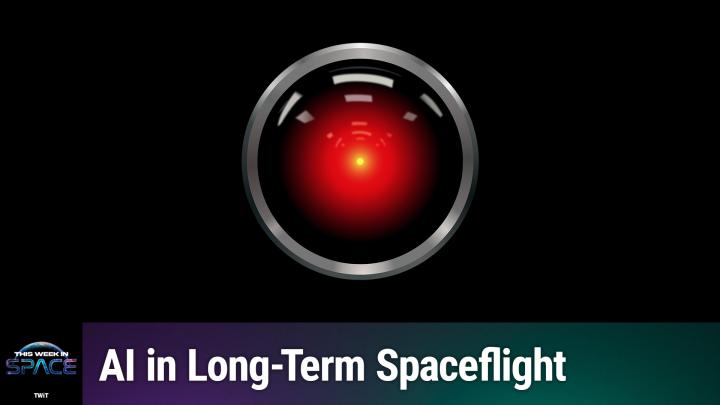
All TWiT.tv Shows (Audio)
This Week in Space 175: More AI in Space
00:58:15
Crews and AI with Dr. Daniel Selva
Loading summary
Transcript175 lines
- [00:00]
A
Coming up on this week in space, SpaceX nails their Starship Flight 10 test flight. Do we finally know where that wow signal from space came from way back when? And when are we going to get AI helpers to help diagnose emergencies in space? Dr. Danny Selva of Texas A and M is going to explain it all to us. So tune in and find out.
- [00:21]
B
Podcasts.
- [00:22]
A
You love from people you trust.
- [00:25]
C
This is Twit.
- [00:28]
B
This is this Week in space, episode number 175, recorded on August 29, 2025. More AI in space. Hello, and welcome to another episode of this Week in Space, the More AI in Space edition. Robots Pyle. Yes. Editor in chief, Van Aston magazine. And I'm with that master of analog intelligence himself, Tarek Malik. How are you, buddy?
- [00:54]
A
Analog.
- [00:55]
B
Okay, well, you're not digital, are you?
- [00:57]
A
Hello? Hello.
- [00:58]
B
Checked if I poke you still? It's kind of soft and squishy.
- [01:03]
A
You said you weren't going to say anything in just a few minutes.
- [01:07]
B
Fortunately, you won't be stuck with us. John's got his head on his desk.
- [01:11]
A
He can't stand it.
- [01:12]
B
In just a few minutes, we'll be joined by Dr. Daniel Selva, an associate professor at Texas A and M University, to talk about a very interesting experiment that he and his colleagues did on utilizing AI in spaceflight. Extended spaceflight. But before we let you get there, we need you to do us a solid and make sure to, like, subscribe and the other cool podcast things to show us your love and keep us on the air. We're counting on you. Now, another space joke from Mark Turner.
- [01:43]
A
Mark.
- [01:44]
B
Hey, Turek. Tarik.
- [01:46]
A
Turek.
- [01:49]
B
I'm making you a science fiction insect from the planet Zantar.
- [01:52]
A
Hey, Tariq. Yes, right.
- [01:54]
B
Why can't you trust the moon?
- [01:56]
A
Why? Why can't you trust the moon?
- [01:58]
B
Because it has a dark side.
- [02:00]
A
Oh.
- [02:03]
B
Okay, good. We got some laughs. Okay, Mark, you can send us more jokes.
- [02:06]
A
There's no dark side on the moon. It's the far side of the moon. The sun hits every part of the moon because it. Oh, my God. Oh.
- [02:17]
B
Are you done?
- [02:17]
A
Okay. No, I could. I could go on a little bit more.
- [02:20]
B
You're done.
- [02:21]
A
I get the joke now.
- [02:22]
B
I've heard some people want to banish us to the dark side of the moon when it's joke time in the show. Or wor. But you can help. Send your best, worst or most indifferent space joke to us at Twistwit TV and we'll make you famous or infamous. Now it's time to go on to Headline news.
- [02:44]
C
Headline news, headline news.
- [02:50]
A
A lot of good stuff happened this week. A lot of good stuff.
- [02:52]
B
This is getting to. What's that? That tag that you guys always play on on twit.
- [02:59]
A
Which tag are we talking?
- [03:01]
B
Craig Newmark. This has got to be like Craig Newmark.
- [03:05]
A
You sure about that?
- [03:06]
B
Not quite. Starship flight test number 10.
- [03:11]
A
Number 10.
- [03:12]
B
We still had kabooms, but they were planned this time mostly successful and in my estimation, just in time given how people were starting to feel about starship, at least in the public eye. Yeah, so we had the whole vehicle launch properly. We had the booster come back successfully. There wasn't a catch, but that was planned that way because they wanted to do some reentry tests on that and then ship the upper stage and it's. Man, when you're writing about this, I don't know about you, but I find it very hard. You're saying starship, then you're saying the super heavy. Oh wait, no, we just call that booster with a capital B and starship itself. Oh wait, we call that the upper stage. Oh wait, we call that ship with a capital S. It's very disconcerting to write about this stuff. But anyway, way ship came back more successfully than it has in the past. Although we did see what looked like some kind of a blowout near the engine bay as it was starting its re entry, I think. And then we saw some very significant burn through of one of. I think it was one of the rear fins or canards as they were reentering. So still some trouble.
- [04:17]
A
Yeah, yeah.
- [04:18]
B
You know, we're still counting down to orbital refueling, but. But fingers crossed.
- [04:23]
A
But I'm going to see if John can pull something up real quick because I forgot to add this. It just came out really late yesterday. John, I just sent you the thing because this is really fun to look at, if we can share it. But this was an unqualified success for SpaceX's Starship system. It was the success that they needed. Three flights in a row, a failure. January, March, May. Each time they, they achieved less than what they achieved on their final flight in 2024.
- [04:56]
B
And then a very embarrassing ground explosion during a static test, which was really the low point, I think.
- [05:01]
A
Exactly. It really felt like they were going backward with this, with this program after being able to basically send a starship to the Indian Ocean pinpoint and catch it with the buoy cam. So what they did on this flight was what they wanted to do in January. And we've got this video showing for folks on the stream. This is the ship itself coming down in the Indian Ocean within 10ft of its planned position. Exactly that. This is a camera on a buoy that they just leave out there like to make it. And it, and it nails that landing, it slows down, it does its big flip over this other video. Is it like literally falling from it? And you can see in the images that we're showing now at the bottom, that's, this is the side that had the blowout. So if something happened on the, on its reentry, they had some kind of weird explosive event in the afskirt did not deter the vehicle. But there was burn through on the fin on this still same side. So we're waiting to see like what exactly happened. And one weird thing is that the, the ship turned orange either from the heat shielding.
- [06:10]
B
That looks like external tank, doesn't it?
- [06:13]
A
It does, yeah. And SpaceX tried a lot of things. They actually sabotaged the heat shield in different spots because they want to test the extreme heating on the way in. And they also tested different types of tiles and they tested passive or active cooling. Active cooling, yeah. And so if you look at these images at first glance, there's a lot of white on the nose. It looks like some of the black tiles ablated because it's white on the inside. This is weird orange discoloration. Maybe some other kind of off gassing from the active cooling system or something vented stuff that then coated the exterior tiles. But very, just a very distinct and interesting look, you know, across the board. Meanwhile, the, the start, the super heavy survived all the way down and did its own kind of soft landing and splashdown in the Gulf of Mexico. They pushed where? Gulf of Mexico? Yes. So, and so, so you know, they, they relit the, one of the engines in space on the ship vehicle to show that they would be able to leave orbit. That was another key thing. And, and we don't have a video of this, But I think SpaceX does later on there on their YouTube on their, on their X account, they deployed eight satellites. Rod Eight satellite simulators. Satellite simulators. One of them kind of being, you know, pinged off the, the, the, the external bay thing. It's, they have like a, a PEZ dispenser slot that opens on Starship's belly and then it spits out a satellite because they're flat.
- [07:44]
B
Excuse me, Wasn't it interesting to see. I had never seen how that worked before obviously because the, the bay door hadn't worked in the past. And to see those things, you Know, they're stacked up vertically on rails, and they come down one at a time, and these little chain drives eject them up inside. Yeah, that was really cool.
- [08:02]
A
Yeah. So I suspect that they might want to make sure that they have more guide, like, room in the future, because watching one ping off the end could be a bad day if it's a real satellite. But maybe that's fine. Maybe they're hardy enough that it's okay if that happens. But every single milestone that they wanted to perform in January, they finally performed on this test, and they're getting ready for Flight 11, which could probably happen sooner than you expect because of the fact that this one went so well. So. So congratulations. Congrats to the team. Very demoralizing year. Failure after failure after failure after explosion. And they. They came back and they just knocked it out of the park, so.
- [08:44]
B
Well, let's hope they keep doing that, because there's a very loud ticking sound in the background called Artemis 3.
- [08:49]
A
Yep, that's right. That's right.
- [08:51]
B
What I have held up. All right, next story. Wow. SETI lives on with the wow. Signal. A new investigation of the origins of the infamous wow. Signal, which came into the Ohio State University SETI Project 1977. This was a huge spike in the radio spectrum that was observed by an astronomer, I think, late at night. And we've never really figured out what it was. There's been every thought from it was aliens to it was a microwave somewhere. And a University of Puerto Rico team got together and looked at the data, and these are people that I guess used to be involved with their SIBO and looked at the data and came up with some potentially new conclusions.
- [09:37]
A
Yeah, this is interesting, and I have to admit that I didn't, like, I didn't see this study when it came out. My team did, and it seems like they have, like, a. Like a. Like a natural, like, origin in space for it.
- [09:51]
B
But, yeah, they had this weird diagram of. And we've got the. The article up on screen now. Had this weird diagram of some very large object emitting a whole bunch of energy that hit another object and then that was obliquely reflected back to the dish, if they're correct.
- [10:09]
A
Yeah, it's like they're saying that it could be like, a magnetar flare or this is something I've never heard before. A soft gamma repeater. So that's like the. The radiation source that then, I guess, you know, hits some interstellar dust clouds and then makes them super bright. And then. And that's the. That that makes A signal that then we, we hear, however. And I'm going to put my tinfoil hat on, Rod. This is a very complicated explanation. Isn't it easier just to say that it was aliens? That's, that's all I got to say. Right.
- [10:44]
B
Well, or just, just gamma rays right at Earth and hulk smash.
- [10:48]
A
Right there you go there.
- [10:51]
C
Right.
- [10:51]
A
It is nice though, that this is like a great example of how we can use today's technology to look back at some mysteries or even some other discoveries that, where we thought something happened and, but, you know, dusted off with what we have now, new forensic types of analytical tools that we didn't have back then to uncover basically something new. It's how they're finding all these other new discoveries and hidden planets in old archival observations. Now they can look back with this, this type of tool to maybe clear up some of these other things. So maybe they can use it to actually find signals we missed.
- [11:28]
B
I think it was communists, but that's just me because I come from that era. All right, finally, China and the moon. China is making great strides towards their anticipated moon landing in 2030, parentheses, I think 2029. They recently had a successful test, the lunar lander that was cabled up to simulate 16 landing GR. And to keep it from going off axis, they recently tested their capsule abort system for the crew module and did a static fire of the long March 10, which is their intended moon rocket. And of course, this particular program, the way they're doing it, they inherited a lot of stuff in the Apollo program, which makes sense. You know, if other people have done heavy lifting, go ahead and use it to your advantage. Except that in their case, the long March 10, which is nowhere near Saturn 5 strength, has to launch twice, wants to put the lunar module into orbit, and then wants to take the crew out there and have the two rendezvous and do their landing and then come back.
- [12:29]
A
Yeah, yeah. No, this is just another example of China, you know, basically. What is the word being consistent? Well, I was going to say putting its, its space hardware where its mouth is. Right. They said that they're going to do this here, they are doing it, and that you can't disregard that. So you might. Dear, dear listener and viewer, a lot of saber rattling from US politicians as well as some other folks about, you know, China, China, China. We have to beat them to the moon. If they get there, they're going to take it over and we have to be a part of that. In fact, Sean Duffy used that reasoning as a, as like a motivation to put a nuclear reactor on the moon for, for, for a future moon base, you know, that kind of a thing. But it does stand to be said that they are actively pursuing this and they've got all of their ducks in a row because of course they've got a lot more direct control over the space program and who's doing what and finance and financing it and financing. The finance part is the important part. So they are making these strides. In fact, Ars Technica and I did add this link in too has a story by Eric Berger, dear friend of the show, that based on these tests, the same tests that we're talking about, that China looks like they're going to beat the United States back to the moon. The race is done right because they are making the progress, they are spending the money, they are showing that vision of commitment, whereas we don't even have anywhere near close to having the lander yet. We just talked about Starship 10 and how great that flight was. But that was one flight. They're going to have to launch how many Rod starships to get one to the moon.
- [14:14]
B
Teen and 24 refueling flights was the last estimate.
- [14:17]
A
And they don't have that many launch sites. They don't have the refueling yet. Elon Musk even said during flight tens first count or second countdown because they tried to launch it three times and they launched it on the third time that, that the refueling is one of the thousand things. That's what he said. Thousand things that they have to do next in order to get this up to a fully operational system and ramp.
- [14:42]
B
Up a whole lot of choreography to do rapid refueling because rapid refueling for so long now. It is worth saying though that the Chinese mission, you know, this is Apollo 11, this is a land and grab. They're going to land. They've only got about six hours on either on the lunar surface or of activities on the lunar surface. It's not clear what that number was. That came from your, your Leonard David article that you ran recently. So you know, is it the same as Artemis? No, Artemis is intended to be a long duration repeatable, blah, blah, blah, blah. But the question does arise, and I've heard it asked by a couple of people in the trade, if they land before we do, is Congress going to continue funding a runner up mission? Now that's not what it is. It's our program's different, our programs long term, our program sustainable, we're going to build a base and so forth.
- [15:36]
A
You don't think that if China lands people on the moon in the 21st century before NASA is able to do it again, that lawmakers are going to say, oh, no, you didn't. And then like throw it in and say we're going to do it. But now we're going to land this like 200 foot thing instead. How about that? You know.
- [15:56]
B
Although certain people might just say, hey, that's fake news. They didn't land, so we don't have to either. So I don't know.
- [16:01]
A
You know, it's a real, that is a, is a much more compelling and I think a bit, you know, fearsome risk is that if they do it then that they're going to just try to disregard it. Because, you know, I think the one thing that, that we've shown is that you can't underestimate like this, this, that country, China, when they say they're going to do something, they brought samples back from the far side. Right? They're going to do that. So the dark side from the. Oh, my God.
- [16:30]
B
Okay. All right. We will be back after this Short break with Dr. Daniel Salba of Texas A and M to talk about more AI in space. Stay with us. Today's show is brought to you by Progressive Insurance. Fiscally responsible financial geniuses, monetary magicians. These are things people say about drivers who switch their car insurance to progress and save hundreds. Visit progressive.com to see if you could save Progressive Casualty Insurance Company and affiliates. Potential savings will vary. Not available in all states or situations. 25 years ago, a small group of business and government leaders met in Washington, D.C. they envisioned the creation of an independent nonprofit organization with a mission to help people, businesses and government mitigate the growing threat of cyber attacks. Today, the center for Internet Security embodies that vision. For 25 years, it's worked with a global community of IT and cybersecurity experts to develop the CIS benchmarks and CIS critical security controls. These proven security best practices defend against common cyber threats and streamline compliance with industry frameworks, regulations and standards. Today, CIS provides cybersecurity services, threat intelligence and critical resources to help public and private sector organizations alike strengthen their Cyber defenses. Visit cisecurity.org today. That's the letters cisecurity.org to find out how CIS can help your organization as we create confidence in the connected world. And now, a next level moment from AT&T business. Say you've sent out a gigantic shipment of pillows and they need to be there in time for International Sleep day. You've got AT and T5G so you're fully confident, but the vendor isn't responding and International Sleep Day is tomorrow. Luckily, AT&T 5G lets you deal with any issues with ease. So the pillows will get delivered and everyone can sleep soundly, especially you. AT&T 5G requires a compatible plan and device coverage not available everywhere. Learn more@att.com 5G Network and we are back with Dr. Daniel Selva of Texas A and M University. Thanks for joining us today.
- [18:45]
C
Thank you. Happy to be here.
- [18:47]
B
Great. Can you tell us a little bit? Just give us a little background about how you got to Texas A and M and what your position there is and the work you're doing.
- [18:57]
C
That could be a very long story, actually. So how long a story do you want?
- [19:01]
B
Well, Tarek's going to ask you later about how you got interested in space, so you can give us the short version now.
- [19:05]
A
Spoilers. Spoilers.
- [19:06]
C
Yeah, yeah, yeah. So the short version is that I'm originally from Spain, but studied also in France. And I was hired by this company, Ariane Space, that operates the Ariane 5 rockets and now also Vega. And I was doing operations there with Ariane 5, got a little bit bored, decided to do something a little bit more, I guess, intellectually challenging and wanted to do a PhD. So I did my PhD at MIT in space systems. And then after that I was hired by Cornell University to be an assistant professor there. Spent four years there, and then we moved to Texas A and M where I'm now an associate professor. So that's kind of the short version.
- [19:51]
A
He got bored working on rockets, so just got a PhD at MIT. As one does, right?
- [19:56]
C
Yeah, right.
- [19:58]
A
As one.
- [19:59]
C
Other than you and I, I can expand on that. I mean, on my defense, you know, it's great, very exciting to do rocket operations, but it's also very repetitive. Right. So I kind of wanted to do something a little bit more diverse, I guess.
- [20:12]
B
You know, that's an interesting thing. I've never heard anybody say that, but that's true.
- [20:16]
A
Is that because the industry has its ups and downs? Is that what it is?
- [20:19]
C
It's mostly that. It's, you know, this also depends maybe on the launch service provider you're working with. But for Ariane 5 at the time, it was literally, you know, Geocom satellite after Geocom Satellite, Right. So there was, you know, very little difference, you know, from customer to customer. So, you know, and it's very procedural, Right. Because for high risk stuff, it has to be very procedural. We all understand that. Yeah. So you just basically follow procedures. Right. I mean, there's nothing wrong with that. It was Extremely exciting. It's just like I wanted to try something else. Right.
- [20:52]
A
No, I get it, I get it. I was, I was actually trying to make a joke about ups and downs because rockets go up and down. But. No, that's.
- [20:58]
B
I thought you might there, but we.
- [21:00]
A
Got, we got a much better answer out of it.
- [21:01]
B
I was dignified enough to overlook your joke.
- [21:04]
A
Well, that kind of goes Danny to my. By the way, he said that we could call him Danny. Everyone out there, we're not being disrespected to kind of. My next question, which is about how you got interested in engineering in space to begin with. Is it something that you always had been interested in since you were young or is it something that you found through your professional entry into the industry or your professional life, your scientific life, that kind of thing?
- [21:36]
C
Yeah, that could also be a very long answer. But I was involved with space related association since college and even before that I actually wanted to do aerospace engineering, but we couldn't really do that. So college is very different in Spain. So most people go to college in the city where you live because, you know, there's not a lot of, I guess substantial differences between universities. So you go to where you live pretty much. And yeah, so aerospace engineering was not really offered in Barcelona, where I was at the time. So I studied telecommunications engineering, but that was really the second best in terms of being close to space stuff because I actually started working on space communications and space based remote sensing and astronomy related stuff, space robotics. So we actually had a chapter there of AES, which is an organization from IEEE Aerospace and Electronic System Society. And we started organizing conferences and robotics competitions and things like that over there. So yeah, it goes back.
- [22:45]
A
That's cool. That's so cool.
- [22:46]
B
That has got to be one of the coolest parts of space right now, as is AI. So what got you interested in AI and putting together the study that you did.
- [22:56]
A
Artificial intelligence for the new folks.
- [22:59]
C
Yeah, so I've always had a fascination with artificial intelligence and really just real human intelligence to the point where not a lot of people know this. But when I was deciding what to do a PhD on, I actually very seriously consider doing a PhD in neuroscience instead of space systems because I was really interested in it, but I just honestly thought I didn't have a chance. You know, my degrees were all in engineering and. But I've always been fascinated by how intelligence emerges from, you know, bio stuff and, you know, non intelligent stuff. So to me it was a kind of like a natural fit. You know, when I did my PhD, I started incorporating AI into some decision support systems that I was building. And then I kind of expanded a little bit what I do in AI into planning and scheduling and AI assistance and those kinds of things.
- [23:53]
B
So yeah, we got a smart one here, Tarek.
- [23:57]
A
I know, I know. So we're all trying to reckon with AI and our jobs right now, but I think that in the industry, it can be a really big helpful part of it. And I think that's what, what we're going to talk about today. Right, Rod?
- [24:13]
B
Yeah. So the name of the study that caught my attention was Virtual Assistant for Anomaly Resolution and Long Duration Exploration Missions. It also caught my eye that among your various PIs on the paper was Bonnie Dunbar.
- [24:28]
C
That's right. Former astronaut and currently a professor at Texas A and M in our department.
- [24:34]
B
Very handy. So maybe we'll get into the broader topic of AI in space. But what was the point of this, of the, of the experiment?
- [24:43]
C
Yeah, so we were really interested in understanding how we could use this new technology that is now widely available. AI agents, AI assistants to help astronauts when they're far away from mission control. There might be long communication delays. You know, if you're thinking about Mars mission, for instance, there could be a mission delay up to 45 minutes round trip. Right. So if there's something going wrong in the spacecraft, say, I don't know, CO2 concentration in the cabin starts to go up, there may not be enough time for mission control to intervene and put the spacecraft back in a safe configuration. The crew may need to be more autonomous for these long duration missions. AI agents just seem like a good solution, at least to help during those long communication delays to at least make the crew safer and hopefully help, if not totally resolve the families, you know, at least partially resolve them or at least start the work of identifying what, what might be going on.
- [25:47]
B
Well, speaking of long communication gaps, see what I did there, Tarek.
- [25:51]
A
I see we're about to go to.
- [25:53]
B
Break, so stand by. We'll be back in just a moment.
- [25:56]
A
Send summer out with a sizzle during the Omaha Steaks Labor Day sale. Save 50 site wide on legendary steaks, Juicy air chilled chicken, beefy burgers, deli style franks and more. Plus get an extra $35 off with code fall flavor@omahasteaks.com today. Don't wait. Save 50% site wide on steaks and more during the Labor Day sale@omaha steaks.com plus get an extra $35 off with code Fall flavor Minimum purchase may apply. See site for details. Well, you Know for our listeners, Danny, I'm curious if, if you can kind of equate what one of these systems, these agents could be like, Are we talking about an agent like data on the bridge of the Enterprise, or is it more like the computer that you talk to? Or is it some kind of hybrid where you've got robots flying around your ship fixing stuff or keeping an eye on stuff and just calling the astronauts if they have to wake them up from a nap, that kind of a thing?
- [27:00]
C
Yeah. So, I mean, I guess it could be any and all of those things, but for now we have focused on just AI agents, essentially software. Right. So talking to your computer is really what we're talking about here. So there's other versions of that that could have robotic embodiment and some aspects of, I guess, effective computing and those kinds of things. Those actually have been demonstrated with, with things like Simon on the iss, if you guys are familiar with that experiment like a few years ago. But yeah, here we're talking mostly about a computer agent that is analyzing the data and trying to help the crew members diagnose what is going on and then hopefully resolve it also.
- [27:45]
B
So you had two setups, as I understand it. You had a lab where you had students performing exercises, and then you went over to hera, which is a simulator, I think. Johnson Space center, correct?
- [27:59]
C
That's right, yeah. Human exploration research Analog.
- [28:02]
B
And then you had a, a group there that was mixed students and professionals.
- [28:08]
C
At hera, it was, it was all professionals, kind of like varied, you know, engineers, pilots, nurses. I mean, it's really a wide range of disciplines represented there.
- [28:24]
A
Should we say what HERA is? Real quick for folks who don't know, Rod and Danny? Yeah. The HERA is a habitat. What is it? Exploration research, something. Another. Right. Hera at NASA's Johnson Space center that they built there for mock missions to study, you know, the stresses for astronauts or systems like this about what can make things easier.
- [28:45]
C
That's right.
- [28:46]
B
Here's where we're looking for the long answer. So explain the study to us, what you did, and then we'll talk later about how it all came out.
- [28:54]
C
Sure, yeah. So the idea was very simple. So we want to build this computer agent that can help astronauts resolve spacecraft anomalies. But we don't want to just build an agent and say, this is really cool. Look at all the cool things that it can do. We want to make sure that it actually improves performance and hopefully reduces workload and improve situational awareness and those kinds of things. We did a study Actually, two sets of two studies, two in the lab and two at this HERA analog, where we recruited some subjects, some participants, and we had them resolve, obviously, fake spacecraft anomalies that we introduced into their telemetry feed and had them basically try to figure out what is going on and resolve them. They actually followed a procedure either in the real HERA environment or in a virtual environment that we built Unreal Engine for, if you're familiar with that, kind of like software to VR a computer.
- [29:52]
A
VR, huh? That's cool.
- [29:53]
C
Yeah, essentially. And then we just measured a bunch of things, right? Obviously, we measured how many anomalies they can resolve and how much time it takes to resolve the anomalies. But also they did some surveys, the subjects, to measure things like the situational awareness and workload and also trust in automation. And then we compared with Daphne versus without Daphne. So Daphne is the name of the assistant that built, by the way.
- [30:20]
A
Is it an acronym? Is it an acronym? Or is it just the name?
- [30:23]
C
It's like, Jarvis, I feel bad saying this, but I just. I just wanted to name my first daughter Daphne, but my wife wouldn't let me know.
- [30:34]
A
I know. I know the pain, Danny. I wanted to name my daughter Scheherazade, but then I couldn't spell it, and so that was the end of that. So I said, said. She said, you can name her that if you can spell it right now. And that was it. That was the one shot I had. But Daphne would have been so much.
- [30:50]
B
Easier if I had been designing this experiment, being who I am. And I admit my grad school experience was at Stanford. And so, of course, we heard endlessly about the Stanford prison experiment, which didn't go particularly well. But you'd think, you know, especially on the HERA side, if you could actually start reducing the oxygen supply while they're trying to do these. I'm sorry, that's probably not the right way to approach things. So was there a big surprise in the results you got?
- [31:18]
C
There were a few surprises. You know, one of the main ones being that the results between the lab and HERA were widely different. So we saw a very significant positive impact of using Daphne versus not using Daphne in the lab. But we did not see that at HERA with the more experienced subjects and the longer exposure. Just for reference, HERA studies go for 45 days. They put four people there for 45 days and do a bunch of studies on them all things like sleep deprivation studies and exercise protocols and stuff like that. They did our experiment over this very long duration of 45 days compared to just two hours in the lab. Right. But yeah.
- [32:09]
A
Is it that they just didn't trust Daphne or are they distracted, or did your lab test with the students there that they were just a little bit more open to it? I mean, is it clear yet, like what's.
- [32:26]
C
Still trying to figure out exactly what it is. Right, but we have some hypotheses of what could be happening. I think there were some significant differences both in the level of experience of the subjects. Obviously most of the subjects in our lab studies were students just younger, definitely younger and less experienced than the HERA subjects. The HERA subjects had more training. Also they had more time to play around with a tool, 45 days instead of just a couple hours. So they were trained more both in the tool and the habitat equipment itself. Then the other thing is that in the HERA habitat, the no Daphne condition, I guess, was very different compared to the lab. In the lab, we basically just gave them basically like a user manual that explained it was still pretty short, about 10 pages, but that explained how the different pieces of equipment work, what are the typical anomalies and how to resolve them. Whereas in HERA they have these things that they call the emergency chart that they took from actual operations in the ISS and such, which is basically like a one pager, a big table that has different anomalies that can happen, say like a failure of the carbon dioxide removal assembly or something like that. It has the signature, as we call it, of that failure. If you see high CO2 concentration, low oxygen concentration, high humidity, that could be one of these seizure failures, for instance. It also has the procedure. It's a very direct mapping between anomaly signatures and actually root causes and procedures and how to solve them. Basically my particular hypothesis right now is that if you have very simple anomalies or recurrent anomalies, you probably don't need something like Daphne. Something like an emergency chart is probably okay and perhaps even faster. And really where DAPHNE can help or similar AI assistants is with more complex, perhaps unknown anomalies where you really don't know what's going on and you need to figure it out. Right, that's, that's currently what I'm thinking might be happening.
- [34:50]
A
Yeah, see, I was wondering if it was like a trust issue, like, you know, like, like there's a, there's, there's a difference between, you know, university students who maybe have grown up their entire lives with some kind of electronic assistant in their pocket and, and, you know, folks of a generation that, that maybe, you know, we all had cable, had to switch the, the A and B or whatever if you wanted to get three more channels or something. Or you, you know, there were no tablets. So, you know, it was a, okay, Boomer moment, you know, on the, on Hera or something, where it's like, I don't need to listen to this machine. I can go and do this myself. That's really interesting though, what you say about. Because that's like NASA's experience, right? The astronauts on the ISS right now have that cheat sheet that says this goes wrong. Go look at this right now. Which might feel faster than having a conversation with an AI analog really quickly for it. But, but that, that, that situation where you don't know what it is seems very, very much an appropriate evolution of that.
- [35:54]
C
Right? And you know, just to be clear, we did see some significant differences, individual differences in terms of levels of trust. So obviously some people, depending on their level of familiarity and such, they just tend to trust AI more than others, but nothing really. At the co, we didn't really see significantly higher trust in the lab versus Hera, which was kind of interesting.
- [36:16]
A
Oh, that's interesting.
- [36:18]
B
Well, I have to admit, when I was looking at the slide deck you sent me about your presentation to the NASA group, I was kind of hoping somewhere that I'd see some kind of an indication that at some point the computer said in a very HAL 9000 voice, I suggest you replace the AE35 unit and allow it to fail. But it wasn't there. It wasn't there. But surely, surely if you had any people of my generation locked up in the can, they must have made some HAL jokes at some point.
- [36:47]
C
Yes, they have. Especially the sorry, I could not do that, Dave.
- [36:52]
B
You heard that about 40 times. Right. All right, we're going to run to one more break and then we'll be right back for Tarek's next burning question. Standby.
- [37:01]
A
No, just kind of evolving from the systems there about the types of, the types of either anomalies that Daphne is designed to look at versus what you, you kind of see in an end user, you know, instance, you know, like on the International Space Station, because I'm, you know, obviously on the ground, you might have a finite level of anomalies to work from, whereas in space it could be a bit more unpredictable. Can you kind of give an, an example, Danny, of what sorts of anomalies? I think that you, you really targeted Daphne to look for. And, and you know, how either, like how. I don't know if easy is the right word but how, how accessible it was to simulate that in either the software or in the, in the HERA lab itself or if there were differences there, there.
- [38:00]
C
Yeah, so actually we were a little constrained there because we were using a software developed by the HERA team at NASA jsc, it's called HSS Habitat Simulation System that already had some anomaly scenarios kind of built in. So we reused those because they have more of the expertise in life support systems, especially those in the hare habitat. Right, right. So just to give you an idea of some of those, they are basically failures of equipment related to life support for the most part. That's a big one. Yeah. So these carbon dioxide removal assembly, so the basically piece of equipment that removes the CO2 from the air and is used later to basically revitalize the atmosphere so that astronauts can keep breathing. There's failures related to fuel cells, electrolysis systems, TCCs, so that was the trace contaminant filters to remove various contaminants from the atmosphere. Basically anything to keep astronauts alive for the most part. And then some power related power distribution unit failures that are a little bit more systemic and a little bit more scary because everything goes red.
- [39:25]
A
Yeah, well, I guess that was my next question is how important that interface was in, in either scenario, you know, the lab or, or in hera. Because when, when, when folks think about anomalies in space, they think of that, that grid right, from Apollo 13 where it's all the lights and they're all flickering and there's the alarm is going off. But it seems like if, if you're having an assistant then you know, you can either, you might, you might still have that alarm. But then you would go to a screen to talk to Daphne to say, hey, so what's, what's the problem? Like how, how did you engineer that interface? Or what were you testing to see, like what would work the best way.
- [40:02]
C
Yeah, so I think, you know, we started with, with these anomalies that we had. Right. So we, we did try to develop a few more complex anomalies that are a little bit more realistic and representative of what could happen, say in an actual mission. Because in an actual mission, like we said, you know, you probably would not always know what's going on. Right. Every day, maybe not every day, but every week something happens in the ISS where they don't know exactly what's happening and they need to figure it out. So we started doing things like adding cascading failures and there's a failure of this subsystem that creates a failure of Another subsystem or simultaneous failures, those kinds of things to make it a little bit more complex. But. But yeah, I think the reality is that it's hard to reproduce exactly what would happen up there. And if nothing else, it's hard to reproduce the high stakes kind of situation because like Rod said, we're not really allowed to actually increase CO2 or reduce O2 concentration. So everybody knows that it's not a life or death situation. Everybody knows that it's not a real emergency. And whether you wonder not, that changes things a little bit. Right. But yeah, in terms of what we did for testing, there was definitely a lot of iterative testing to see what kinds of. And we still keep doing that. Right. What kinds of displays work better, what kind of information should be displayed. Because there's a fine balance between too much and too little information, providing some level of explanations, but not up to information overload kind of thing. So, yeah, there's a lot of testing.
- [41:50]
B
This is interesting because I'm working on a project with a former Apollo flight director and we've talked quite a bit about the simulations. You're probably aware of the term simsoop, the simulation supervisors at NASA during those years and the horrible exercises they would put mission control and the crews through. Speaking of cascading failures and the kind of stuff where the astronauts would come climbing out of the Apollo simulator and say, that can't happen. And then of course, Apollo 13 came and it did happen. Did you. How did you. So you had. In the lab you had students, and then in Hera you had professionals. How did you adjust in the study for the fact that they were going to behave very differently and have different kinds of responses?
- [42:33]
C
Well, we actually did not want to adjust things too much other than the fact that lab experiment had a much shorter duration. So, you know, there's only so much that we could do in terms of training and number of a number of these scenarios. But we kind of wanted to see, you know, the same exact tool. Does that give, you know, very different results in. In those two. In those two cases. Right. And. And of course, you know, it did maybe for reasons that we didn't necessarily anticipate, but. But yeah.
- [43:08]
A
Is it. It's. When people think about using AI systems on Earth, we hear a lot of, about the risk of like the bias of the training of the AI, you know, in terms of the, the answers that you get. But is. Is Daphne that kind of a system or is having a spacecraft that has very specific optimal performance parameters, you know, something a limiting factor that allows that, that interaction to be a bit more targeted, more robust and maybe less open to any kind of, you know, either bias, risk or concern on the, on the human user part that say these large language models that answer whatever ChatGPT question I have for it, you know, that kind of thing.
- [44:00]
C
Yeah, I know that. That's a great question. So actually AI is used for different functions in the system. So. So Daphne has to do anomaly detection, anomaly diagnosis, recommending procedures for anomalies. And then there's the question answering system is what we call it, which is basically the natural language interface. Right. Which is right now it's an LLM. We used to have our own language models. We started working on Dabney in 2018, way before ChatGPT and so forth. So we had our own pipelines then and they worked great. Extremely robust, very accurate. But of course they could only help with the questions that they had pre programmed because that's how old language systems work. They were template based. So yeah, I think the question depends really on which function you're talking about. But for the most part we're talking about an AI system that is extremely constrained. It's provided very constrained information space. It has something called a knowledge graph. You can think about it as a large database that contains information about different pieces of equipment that we have, the different parameters, what are the normal values of those parameters, what are the different anomalies that we can see and what are the procedures to fix those different anomalies, among other things. A lot of the data crunching and question answering boils down to queer that knowledge graph too. So you know, that's a much more reduced domain than open ended question answering with ChatGPT, right?
- [45:41]
A
Yeah.
- [45:42]
C
So it helps a lot with controlling say hallucinations and those kinds of things. Right.
- [45:48]
A
Just really quickly, Rod Daphne then would have to know what the optimal performance for all of those systems to keep its crew alive. That's, that's the level that we're looking at. Right. When she would look at the system performances and look for anomalies to detect. I'm just trying to understand, wrap my head around it.
- [46:12]
C
So Daphne knows what are the nominal operating points for each of the parameters for each of the subsystems. And it also knows of typical, again, go back to known anomalies versus unknown anomalies for all of the known anomalies, it knows the typical signatures of those anomalies. CO2 will go, go up, O2 will go down. Oh, it's a Sidra failure kind of thing, right? Yeah.
- [46:38]
B
All Right. Well, we're gonna go to one more break, so don't open your pod bay doors until you get back. Standby.
- [46:44]
A
High interest debt is one of the toughest opponents you'll face unless you power up with a SOFI personal loan. A SOFI personal loan could repackage your bad debt into one low fixed rate monthly payment. It's even got super speed since you could get the funds as soon as the same day you sign. Visit sofi.compower to learn more. That's sofi.com p o w E R Loans originated by SOFI bank and a member FDIC. Terms and conditions apply. NMLS 696891 this is one of the.
- [47:15]
B
Most spectacular venues with all kinds of character and hospitality scenery. These people in this Gitas Valley and they love when you come to see.
- [47:25]
A
What they have to offer.
- [47:26]
B
I'm JJ Harris, Ellensburg Rodeo Clown, and I want to invite you to the rodeo. Come hang out with us in Ellensburg.
- [47:33]
A
Great rodeo, great time.
- [47:34]
C
Two performances on Saturday.
- [47:36]
B
One is the extreme Bulls of the year event. Do not miss The Ellensburg Rodeo, August 29th through September 1st. We'll see you there. So I, I'm assuming, and correct me if I'm wrong here, because I very well might be, I'm assuming that that the question that you're asking in the experiment didn't include how AI would do the job because that's a matter of programming and testing. It was more about how do humans interact with the AI. Say you have a cascading failure and the AI says, okay, allow me to do A, B, C, D, E. And then you go change the CO2 canister in F and we're all good. Is that primarily what you're measuring here?
- [48:19]
C
Yeah. So I would definitely say that the way that we designed Daphne was not necessarily to be the most advanced AI out there. It's really more of a test bed to help us understand the human system integration aspects.
- [48:33]
A
Right.
- [48:35]
B
So was the trust pretty consistent with both groups or did it evolve over time?
- [48:41]
C
It definitely evolved over time. So we definitely saw that trust started at a different point for different people, but it tended to grow relatively fast, slightly faster for some people than for others. It was affected sometimes if there was some problem with the system. In these experiments that we're talking about, actually we did not manipulate the accuracy. So AFNI pretty much always provide the right answer. It was easy for subjects to grow their trust relatively quickly. We've done other studies later on where we actually manipulated the accuracy and we could see, you know, Thrust going up and down, depending on whether Daphne got it right or not right.
- [49:26]
B
Tarek, I do have one more follow up. So if this was a movie, there would be one curmudgeonly astronaut, probably the oldest, probably a guy, you know, he flew in Project Mercury and now he's flying off to Mars or Jupiter or something. Who would be the one that would say, I'm not going to let AI take my job. I don't trust this damn computer, blah, blah, blah. Without naming names, was there anybody. Was there a person in the group, group that tended to be less trustful, or was it pretty evenly distributed?
- [49:54]
C
Yeah, you know, I would say again, without naming names, but mostly just in terms of maybe professional position. So we had a couple of pilots, just commercial aircraft pilots, and those tended to be, you know, more reticent to use automation or the AI. You know, they. They really felt responsible. I think, at least in one case, it was also the comm. So in HERA missions, they have mission roles, so they felt more responsible and kind of wanted to retain control, which is totally the point of these AI agents is not really to fully automate things, at least in our case. We're really more interested in a collaborative approach that tries to make the most of the strength of both the human and the AI. But, yeah, that was interesting to see.
- [50:45]
B
That is an interesting and probably somewhat predictable result. I guess the way to get a pilot's attention is to have the computer say, tarantula, terrain, terrain, terrain. Okay, sorry, Tarek.
- [50:56]
A
I had kind of like an evolution of that question. And, you know, Rod and I were like, trying to look over what to ask about. And one of the points that Rod brought up was, you know, will AI replace, like, the mission control? You know, we talked about the time delays when you get farther from Earth and how that you're not going to have that constant communication to check in and say, hey, everything's fine. And. And is this system like Daphne, one that you can evolve, that would run it? Because not this year, not next year, not even when the first astronauts go to Mars can I envision the lack of a mission control. But when I drive to the supermarket, I don't have a fleet of backroom teams ready to advise me how fast I should be pressing the accelerator. And I think about. About a time in the future where there is that level of space exploration, space flight, where it's super commercial, people are taking little jetties off to, I don't know, you know, Alpha Centauri or that kind of thing, where maybe there isn't going to be a back room for every single flight. And, and like, is AI at that point where it can fit that bill depending on the system complication of a vehicle, or does it have like a generation to evolve that you see it right now based on what you saw with Daphne?
- [52:24]
C
Yeah, definitely. I don't think it's quite there yet. I think the recent advances in generative AI have almost solved what I would call the interface problem. So the language communication between humans and machines is now incredibly improved. Right. And that makes a huge difference. And it really helps with, you know, enabling these kinds of AI agents to, to really shine and to really help. But in terms of internally, you know, how these agents are reasoning and thinking and planning and solving problems, I don't think we're quite there yet. I think there's another generation of AI that needs to come.
- [53:08]
B
So if, if there were two or three profound results or lessons that came from this, what would they be?
- [53:17]
C
Oh, wow, that's hard. Well, something that I think is, you know, for me the major takeaway is that maybe this sounds a little bit naive, right? But one goes into these projects thinking that things are going to be simple and that we're going to find that, you know, either these technologies can help or not help in these particular situations. But the reality is so much more nuanced, right, because, because of very significant individual differences and also differences at the level of specific tasks, specific anomalies. So is the anomaly simple or complicated? Is it known or unknown? Is the user experience or not experienced? Does the user have previous experience with this kind of AI agents or not? All of those things really are critically driving not only if these agents can be useful, but also how we can make them most useful. So I think there's still a lot of research to be done, but definitely this context specificity, I guess, for lack of a better word, I think is one of the main takeaways.
- [54:26]
A
Danny, can I ask, do you have a favorite sci fi AI assistant that you've seen in movies or tv? You know, I think about like Gertie, the robot from Moon that helped the astronaut Sam Bell there, or like Rod mentioned earlier that you got HAL 9000, which might have been a little bit.
- [54:46]
B
Didn't Gertie lie to him through the whole thing?
- [54:49]
A
No, but then Gertie helped helped him escape and then asked to have his memory wiped because he liked the astronauts so much? No. You know, but that's the kind of thing, I'm just curious, like if, you know, you're in this business if there's one that really captures your heart. Heart.
- [55:05]
C
I don't know that there's a specific one. You know, recently I watched a movie with, with my girls that was this robot that lives in a jungle and starts like basically parenting a bird or something like that.
- [55:18]
A
Oh, the wild robot, yeah, the wild robot, yeah.
- [55:21]
C
And I thought that was like a really, you know, really good vision for what an AI agent should be. Right. In terms of the empathy and in terms of, you know, the general problem solving ability. Of course it's, you know, we're nowhere near that kind of ability. Right. But I thought that was kind of cool. You know, everybody always talks about highland thousand things like that. I also recently watched that movie again, but I don't know, I thought that was more impressive.
- [55:52]
B
I think my favorite would have to be I recently for a radio shot I was doing, I had to rewatch the movie Wall E because the host wanted to talk about Wall E. And I thought I really enjoyed Eva, but she reminded me so much of a couple of relationships from my past past. Not, not all in bad ways anyway. That's probably more than we need to know. So I guess my wrap up question here is do you have any final points you'd like to share and any thoughts on future research you might be doing in this direction?
- [56:22]
C
No, I mean, I think that it's really important to continue to do research in this area. I think that we are going to see AI not only helping astronauts, but also helping mission control, helping the people that design the spacecraft, the people that operate the spacecraft. I do think the technology is ripe for at least partially automating a lot of these tasks, a lot of these operations. And I mean, I don't know about you guys, but I can't wait really to see what that's going to look like. Right. I mean, I think we're at a point where things are going to change very fast and it's very exciting and I'm just so happy to be in the world at this time and to get to see what's going to happen in the next 20 years. Right.
- [57:06]
A
I mean, I can only imagine how the system can be evolved so that it can not only detect the anomaly, but if it's a simple fix, fix it so that the alarm doesn't go off and wake up the astronauts on the ISS in the middle of the night and they get a good night's sleep or an extra three hours for science because they don't have to, to do all of the maintenance work that they have to normally do to, to. To switch things out. That'll be very interesting to see. See like how performance will be improved just by having extra time.
- [57:39]
B
Well, hopefully it won't be like what was it we saw in Artemis 2? Was that it was an Alexa clone, right. With just local on Artemis 1.
- [57:47]
A
You mean Artemis 2 has not flown yet?
- [57:49]
B
Sorry, Artemis 1, my favorite. I don't know Danny, if you remember, but Lockheed Martin had a screen that you could see in the camera as they were slinging past the moon and people could send up various messages. And my favorite was your car warranty is expired. Click here to renew or something. And I thought oh that's perfect. Well, I want to thank you Danny and everyone for joining us today for episode 175 that we like to call more AI in space. Danny, where's the best place for us to keep up with your research and what you're up to?
- [58:22]
C
Yeah, I guess just Texas A and M has a website where we have a lot of news stories there. Otherwise I, I guess just, you know, Google Scholar I guess.
- [58:33]
B
Very good. Well that's a dignified place to be. Tarek, where can we find your brain orbiting these days?
- [58:38]
A
Well you can find me@space.com as always got a new story there about Rocket Lab's brand new launch pad. I got to go see it this week. Very exciting and and then you can find me on the Twitter, on the X and social media, bluesky etc Arikj Malik and this weekend it's the US holiday as we're recording this for Labor Day. So you're going to find me me probably doing laundry and relaxing for once.
- [59:03]
B
An exciting life you do lead. And of course you can follow my exciting life not@pilebooks.com or at astermagazine.com or nss.org which is the mothership for pretty much everything I do remember you can always drop us a line at TwistWit TV TwisWit TV. We do answer each and every email, usually in a very friendly manner, especially if I'm doing the answer answering and we do enjoy getting your comments and suggestions. New episodes of this podcast publish every Friday on your favorite podcaster. So make sure to subscribe, tell your friends and give us reviews. We'll take a five thumbs up or whatever, whatever they offer and you can head to our website at Twitt tv Twit TV TWIS finally got it right. And don't forget we want you all everybody to join Club twit. It's only $10 a month. The smartest. $10 a month you can spend at least. We like to think so. And that will keep us and our horrid space jokes on the air. And what kind of week would you have? You didn't have space jokes. In fact, we did get email a while back, which I shared with Tarek about the fact that our podcast is date night material for at least one couple, which I found very heartwarming, and a couple of others for kids that were listening to it. And there's a group of kids in Africa that actually listen to it regularly but date hello especially nice. So, you know, if it's worth 10 bucks for you to have a good date night, please do that for us. And we'll be very happy if you did. You can also follow the Twittech Podcast network at Twit on Twitter and on Facebook and Twitter TV on Instagram. Danny, thank you very much. It's been a real pleasure having you.
- [60:43]
A
Thank you.
- [60:44]
C
Thank you for having me.
- [60:45]
B
After your next one. And we'll see everybody next time. Take care. Get tech news at your pace with TwitTV's perfect pair of shows for quick, focused insights. Tech News Weekly brings you essential interviews with a journalist breaking today's biggest stories.
- [61:01]
A
But maybe you need more.
- [61:03]
B
That's why I'm here. Dive deep with me on this Week in Tech, your first podcast of the week and the last word. In tech industry, insiders dissect everything from AI to privacy to cybersecurity in tech's most influential and longest running roundtable discussion. Short or long, streamlined or comprehensive, Twit TV keeps you well informed. Subscribe to both shows wherever you get your podcasts and head over to our website TWiT TV for even more independent tech journalism.