← All TWiT.tv Shows (Audio)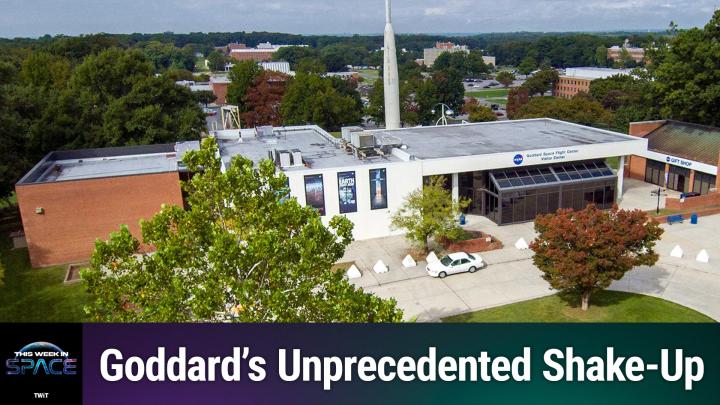
Loading summary
Transcript251 lines
- [00:01]
Tarek Malik
Resilience isn't just about bouncing back. It's about being ready. It's how you show up every single day. Because every name in your system is a person who trusts you and every password is a door you're responsible for locking. And when the threat comes, and it always comes, you hold back the chaos. Learn more at cohesity.com/resilience Introducing Family Freedom from T Mobile. We'll pay off four phones up to 3, 200 and give you four free phones, all on America's largest 5G network. Visit T mobile.com familyfreedom.
- [00:43]
Rod Pyle
Up to 800 per line via virtual prepaid card typically takes 15 days. Free phone via 24 monthly bill credits with finance agreement. Example Apple iPhone 16128 gigs $829.99 Eligible.
- [00:53]
Tarek Malik
Trade in example iPhone 11 Pro for well qualified credits end in balance due if you pay off early or cancel.
- [00:58]
Rod Pyle
Contact Us.
- [01:00]
Micah Sargent
AI agents are everywhere, automating tasks and making decisions at machine speed. But agents make mistakes. Just one rogue agent can do big damage before you even notice. Rubrik Agent Cloud is the only platform that helps you monitor agents, set guardrails and rewind mistakes so you can unleash agents, not risk. Accelerate your AI transformation at rubrik.com that's.
- [01:28]
Tarek Malik
R U-V-R-I-K.com coming up on this Week in Space. Jared Isaacman is back as NASA chief as Trump renominates him for the spot. We've got our 25th anniversary of astronauts always on the International Space Station. And we've got Josh dinner from Space.com to walk through the Goddard investigation of a lifetime about what NASA's doing there and why some lawmakers think it might be illegal. Listen up.
- [01:57]
Rod Pyle
Podcasts you love from people you Trust. This is Tur. This is this Week in Space. Episode number 185 recorded on November 7th, 2025. Gutting Goddard. Hello, everyone, and welcome to another episode of this Week in Space, the Gutting Goddard edition. I'm Rod Pyle, editor in chief of Bad Astor magazine. I'm here with my very own little rocket man, Tarek Malik, editor in chief for Space.com. how are you, my friend?
- [02:27]
Tarek Malik
Who are you calling little rocket man, my friend?
- [02:31]
Rod Pyle
At least I called you a rocket man. Got a rocket in your po rocket and a hound in your brain or something. That's.
- [02:37]
Tarek Malik
That's mega rocket. Mega rocket.
- [02:39]
Our Skin Podcast Host
That.
- [02:39]
Tarek Malik
That's what we say in the 21st century. Mega rocket.
- [02:41]
Rod Pyle
There's a regular bottle rocket. Okay. And we're joined once again by Friend of the family and the show. Josh, dinner writer@space.com, who just completed a major investigative story on the slow but steady shuttering of NASA's Goddard Field Center. So we're going to talk about that after we get through the headlines. But first, before we start, please don't forget to do us a solid. Make sure to, like, subscribe and the other things you do for podcasts and especially for ours, because we're here for you, and we live and die by your. By your thumbs up or whatever the case may be. And now a space joke from Anonymous.
- [03:17]
Tarek Malik
Are you ready, Anonymous? Come on, own it.
- [03:20]
Micah Sargent
Own it.
- [03:20]
Tarek Malik
Next time, guys. All right. Yeah, go ahead, Rod.
- [03:22]
Rod Pyle
How do you have. Hey, Tarik.
- [03:25]
Tarek Malik
Yes, Rod?
- [03:25]
Rod Pyle
How do you have communion in space?
- [03:28]
Tarek Malik
How do you have communion in space? I don't know.
- [03:31]
Rod Pyle
You can't, because in space you have no mass.
- [03:36]
Tarek Malik
I love it. I love it. I love it.
- [03:38]
Rod Pyle
Which is actually not true.
- [03:39]
Tarek Malik
That's not true.
- [03:41]
Rod Pyle
I know, but it doesn't work with. Because of space, you don't have any weight. So I guess you could say, how long does it take to. Because you have to wait. Anyway, I've heard that some people want us to transubstantiate when it's joke time in this show, but you can help set us your best worst or mostly different space jokes at Twist Twit tv, and we'll put it on the air and blame you for it. So let's go now to.
- [04:08]
Tarek Malik
Oh, wait, Headline News. Did I get it?
- [04:16]
Rod Pyle
I think you got it. I heard the offset here, but I know that, you know, it comes out when it comes out later. It's going to be perfect. Okay. Speaking of perfection.
- [04:25]
Tarek Malik
Yes.
- [04:25]
Rod Pyle
Our president, Mr. Trump, renominated after un. After nominating and unnominating, he has now renominated Jared Isaacman for NASA chief.
- [04:35]
Tarek Malik
Guess who's back.
- [04:36]
Rod Pyle
Back again.
- [04:37]
Tarek Malik
Jared's back.
- [04:40]
Josh Dinner
Roller coaster.
- [04:41]
Tarek Malik
I know.
- [04:42]
Rod Pyle
Somebody explain this to me, please.
- [04:44]
Tarek Malik
It's like the will. They won't. Hey, actually. Hey, Josh, you want to take a crack at it since you're here?
- [04:49]
Josh Dinner
I mean, I sure can. You know, Isaac been. Was on. On. He was. He was nominated. He was pretty much on the precipice of being appointed and at the last.
- [05:01]
Tarek Malik
Minute, back in like, May or June, right?
- [05:04]
Josh Dinner
Was it May? It was. It was many months ago and they pulled the nomination. And we have just been in limbo since they handed the acting administrator job over to the Department of Department of Transportation Secretary Sean Duffy, who does not have a NASA background by any means.
- [05:24]
Rod Pyle
And now you're so polite.
- [05:28]
Josh Dinner
To my knowledge, it's not on his resume until now.
- [05:30]
Progressive Insurance Announcer
Yeah.
- [05:31]
Josh Dinner
And it looks like Jared's back on the table.
- [05:34]
Tarek Malik
He posted a 2000 word Twitter post like this week like basically going point by point through all of like the, There was so much drama last week about like a leaked document and this is what Jared will do if he's air administrator.
- [05:49]
Rod Pyle
Is this the Athena.
- [05:51]
Tarek Malik
Yeah.
- [05:51]
Rod Pyle
Protocol or whatever.
- [05:53]
Tarek Malik
Yeah. And, and, but, but you know, this, the whole roller coaster like, like Josh mentioned started in, in over the summer because Jared was kind of the leading front runner to be NASA administrator, you know, obviously very highly recommended by Elon Musk who was really super buddy buddy with, with the Trump administration and Donald Trump at the start of the administration through Doge. Then they had a big nasty kind of breakup at the end of his, his term at Doge. And that's, you know, very coincidentally when Trump apparently finally realized for the first time that Jared had donated to Democrats, which Jared Isaacman had put in all of his statements and made it really clear about.
- [06:34]
Rod Pyle
My God.
- [06:35]
Tarek Malik
I know, right. And said that's, that, that's, we're just going to pull the plug at that point in time now, now it's, it's back again and he's, he's, you know, nominated there. I hear they're going to try to push it through. I don't know if they have to wait till the government reopens or not with the Senate because I know the Senate's meeting. So they could have meetings if they want to.
- [06:54]
Rod Pyle
Well, apparently you can cook. You can start dismantling field centers when the government's closed. So maybe you can actually approve an administrator.
- [07:02]
Tarek Malik
Yeah, well, you're spoilers, spoilers for our discussion today. But. Yeah, but so, so, so it's just a bit of like a man. We could have already been here and we could have actually been spared a lot of what we're going to be talking about possibly if we had someone in charge, really in charge. Not a yes person, if you would. And not that I'm saying Sean Duffy is that. But it's a much easier rubber stamp for whatever the administration wants when you have a handpicked person already in place that hasn't gone through that process.
- [07:31]
Rod Pyle
So. Right. We'll see.
- [07:33]
Tarek Malik
Watch this space. We'll see if he gets all the way through again. But he has to go through the whole process again. More confirmation hearings, et cetera. He has been meeting with people. I saw a tweet he was meeting with some, some folks in the government on A plane to talk about his, his stances and that kind of thing. I guess we're going to get through, through it all.
- [07:53]
Rod Pyle
All right, well, let's try and get one more in before the break here.
- [07:56]
Tarek Malik
Yeah.
- [07:57]
Rod Pyle
China reached out to NASA to avoid a potential satellite collision. Yeah, this is rare thing.
- [08:02]
Tarek Malik
This is new, first of its kind.
- [08:04]
Rod Pyle
This could be a new era of international cooperation with somebody we haven't cooperated with at all.
- [08:09]
Tarek Malik
Yeah, yeah. And this was something that came out of the IEC meeting earlier this year. Our, our writer, Andrew Jones found it and it was very cool because Alvin Drew, the director for NASA Space Sustainability, I think. Also an astronaut. Yeah, he was, yeah. You know, basically give a whole, whole spiel about how they had a, a conjunction. And, you know, NASA would say, hey, you know, we're gonna, we're going to have, you know, we're going to get really close. We're going to do a maneuver so that way we can move, you know, just, just stay still. And, and then just like prior to him speaking, China had reached out and said, hey, we see a conjunction coming among our satellites, you know, and we are telling you to hold still. We're, we're the ones that are going to move now.
- [08:53]
Rod Pyle
Just, just so for the audience, conjunction means they could slam into each other.
- [08:57]
Tarek Malik
It means that they're going to be. You have two satellites on different orbital class and their paint, their planes come very close. They cross basically where they could come. Station has a pizza box of 25 miles on the, the, the horizontal edges all the way at the front and the back and on the sides. And I think it's 15 miles top and bottom, where that's like their safety zone. And if they're going to get anywhere close to a satellite in that zone, they think that that's a possible conjunction. And if it's planned, then they do a maneuver so that they can avoid it. If it's not planned and they know it's going to happen, they sometimes send the astronauts into their, their capsules as a safety measure, which has happened a few times.
- [09:35]
Rod Pyle
So this was an US Thing coming close to Tiangong, I believe.
- [09:40]
Tarek Malik
So they said it was a satellite is what I hear him see that they've got one of their satellites that's coming up and they're saying that they're going to do the maneuver for the satellite and that with the space station could stay, stay put. So very interesting to see, but I think it's a really good step in terms of that kind of orbital cooperation with China, because we haven't had a lot of it. And you see them embracing other countries. They're going to fly the first Pakistani astronaut to Tiangong as their first international astronaut. And this could be as they ramp up their own big constellations because they're launching a lot of satellites right now. And then also, you know, there's a lot of other satellites going on and there's going to be more private space stations in the future, too. So. Very good, very good. Space diplomacy moment.
- [10:26]
Rod Pyle
Very good. Why don't we go to a break and we'll be right back to continue with headlines. In a rare move, are you ready.
- [10:35]
Micah Sargent
To grow in 2026? Let me tell you why advertising on Twitter is the way to make that happen. I'm Micah Sargent. I'm the host of Tech News Weekly and several other shows on the network. And if you've ever listened to our shows, then you know what makes what we do different? It's trust. When we introduce a new partner on the show, the audience knows we believe in what they offer because we're only taking on partners that will actually benefit our audience. And they know that when I'm waxing ecstatic about your product or service, I'm doing so with authenticity. Some other reasons why you should join the network? It's all about the numbers. 88%. That's the number of listeners who've made a purchase based on a twit ad. 90%. Those are the people who are involved in their company's tech and IT decisions. Oh, and by the way, 99% is the number of people who listen to most or all of the episode. Every host read ad we offer is authentic. It's unique, it's embedded permanently. So that means that your brand is going to get exposure even after your campaign concludes. Because, yes, our nerds, our listeners, our viewers, they go back and check out the stuff we've done in the past. Every ad is simulcast across our social platforms. It's always available in both audio and video formats. So if you want your brand woven into conversations with tech experts and the world's most tech savvy audience, I mean, where else are you going to turn except right here at TWIT? So let's make 2026 your most substantial reach yet. Get in touch with us. Email partnerwit TV or visit Twit tv advertise.
- [12:13]
Martine Hackett
So when I ask, what is Odoo, what comes to mind? Well, Odoo is a bit of everything. Odoo is a suite of business management software that some people say is like fertilizer because of the way it promotes growth. But you know, some people also say Odoo is like a magic beanstalk because it grows with your company and is also magically affordable. But then again, you could look at Odoo in terms of how its individual software programs are a lot like building blocks. I mean, whatever your business needs, manufacturing, accounting, HR programs, you can build a custom software suite that's perfect for your company. So what does Odoo? Well, I guess Odoo is a bit of everything. Odoo is a fertilizer, magic beanstalk building blocks for business. Yeah, that's it. Which means that Odoo is exactly what every business needs. Learn more and sign up now@odoo.com that's o d o o.com on our skin.
- [13:14]
Our Skin Podcast Host
A Personal Discovery Podcast Skin tells a story Our guests get real about living with psoriasis. The winding road to finding long lasting relief and what gives them the strength.
- [13:26]
Rod Pyle
To thrive for a very long time. I felt so self conscious about it because I didn't know what it was and I didn't see a lot of.
- [13:34]
Tarek Malik
Other people with it.
- [13:36]
Our Skin Podcast Host
But our stories don't end with us. How we treat and live in our skin has a backstory and each episode we take a step back with our guests into the weird, wild, hopefully baffling history. There is a document called the Regemin Sanitatis Salernitanum that was an 11th to 12th century medical poem and it actually instructs people that they should do daily washing and bathing as part of maintaining well being. So this was not a mystery to anybody in the middle Ages because understanding where we've been can change how we care for ourselves and each other. Listen to season two of our spin in on the iHeartRadio app, Apple Podcasts or wherever you get your podcasts brought.
- [14:20]
Progressive Insurance Announcer
To you by Progressive Insurance. Do you ever think about switching insurance companies to see if you could save some cash? Progressive makes it easy. Just drop in some details about yourself and see if you're eligible to save money when you bundle your home and auto policies. The process only takes minutes and it could mean hundreds more in your pocket. Visit progressive.com after this episode to see if you could save Progressive Casualty Insurance Company and affiliates. Potential savings will vary. Not available in all states.
- [14:48]
Rod Pyle
Great.
- [14:48]
Tarek Malik
Yeah. So the next story that I wanted to call out, it's like a Space.com sweep. I apologize for everybody. Very proud of my team. But but this next story, and this isn't like a like a news news story, but it's A big feature that my colleague Brett Tingley pulled out. And it's about this Apollo era radio telescope in North Carolina that used to spy on Soviet satellites. And now it's up for sale. And this is just really cool. It's a little bit. Well, I don't know.
- [15:16]
Rod Pyle
I want it.
- [15:17]
Tarek Malik
Oh, you want it? Okay.
- [15:18]
Rod Pyle
Yeah, I think Space.com should buy it. And we'll, you know, we'll make a clubhouse there. You and me and Josh and John can hang out.
- [15:27]
Josh Dinner
I'm sure that's in the space somewhere, this thing.
- [15:30]
Tarek Malik
I mean. So some background this is in, according to Brett, in the Pisgah National Forest. I apologize to anyone if I got that, like the pronunciation of that wrong. And it's near Roseman or Rossman. Man, I really don't know how to pronounce these words. And it's home to two 26 meter radio telescopes. And they were listening. They were built in 1962 under the NASA Space Tracking and Data Acquisition program to, you know, to be a satellite tracking station. And then of course, you know, to spy on the Russians in the, in the space race. And they. I think it cost 5 million at the time. And it did that for a while, but it's been, it's, you know, it was decommissioned by NASA. They don't use it anymore. And since the late 90s, 1998, it's been under private ownership by the Pisgah Astronomical Research Institute, or pari. And they would use it for star parties for, you know, like educational stuff. But now they're putting it up for sale for commercial real estate. For $30 million. You too, Rod, can own a piece of NASA history. Wait a minute.
- [16:35]
Rod Pyle
What did they pay for it? Because they probably got it surplused out, right?
- [16:39]
Tarek Malik
Yeah, I would hope that they didn't pay $30 million.
- [16:42]
Rod Pyle
It was probably the price of the scrap metal. Wow, that's pricey.
- [16:45]
Tarek Malik
But it's really neat. It's, it's like a. It's, it's like a mini. Mini. Yeah, mini Goldstone or what's the other one? And the one that's in Appalachia in West Virginia.
- [17:00]
Rod Pyle
Oh, Green Bank.
- [17:01]
Tarek Malik
Green. Green Bank. Yeah, it's like a mini Green Bank. And they have two of these big dishes and, and it's just really kind of interesting that you can go out there. It hasn't been abandoned because Pari has been there, you know, for the last 30 years or so. 20 years, but. But, you know, this is the kind of another bit of history that depending on what it goes with the Commercial stale sale. You know, someone could buy it and be hey, we love the kitsch of having these dishes here. We're gonna find a use for them, maybe do some private work or whatever or they're going to be like, you know, we're going to get rid of it, raise it to the ground and build a bunch of, build a bunch.
- [17:36]
Rod Pyle
Of condos or something.
- [17:38]
Tarek Malik
We've seen that in New Jersey at the Bell Labs, you know, with the, the home of the, of the horn antenna which is what they discovered the, the big bang cosmic radiation background from. And there was a whole big thing in Holmdel about how you want to make sure that you save that. And there was a whole big fight so to preserve it as a historical artifact. And I'm curious how this is going to evolve if they do find someone that wants to buy it and raise it down. But it was really awesome that Brett was able to, to get down there and check it out and see those dishes up close because you know, we appreciate that history and sometimes we don't think that we did all of this in the evolution of the space age.
- [18:16]
Rod Pyle
All right, well after that very abbreviated story, I have a news flash.
- [18:22]
Tarek Malik
I'm so sorry.
- [18:23]
Rod Pyle
I've tried at the mention of a clubhouse for the four of us. John types in God no. So I guess, I guess he's not going to be a member of the club. So John, five on you. It's only because you being involved, Rod. It's because I'm there. Let's be realistic, you know, somebody's got to be the bill handle in the room. All right, ISS 20 years, 25 years. So we've had a number of guests on the show and I won't attempt to recap everything they said about the ISS, but 25 years of continuous occupation. There are people not much younger than my 30 year old son who have since the time they've been born there has always been a person in space which is pretty cool.
- [19:08]
Tarek Malik
My daughter. That'll be the case a whole generation.
- [19:11]
Rod Pyle
At least until 2030 when we'll have Chinese people in space and maybe have Americans, maybe not. We don't know. I just came off as I was talking before we came on the air, I just came off these two space conferences here in Florida and when one talked about continuing gapless presence in space for the west, there was a lot of, well and you know the CLD commercial Low Earth Orbit Destinations program is well, we don't know what's going on and actually I asked a fair number of people I said, you know, what about this new, you know, rejiggering of the contract we're reopening or to reconsider it or scratching our heads or something? Is that to advantage companies like Vast or what? Well, you know, it's kind of open, I don't know. So, yeah, there was a lot of head scratching here.
- [20:05]
Tarek Malik
We, we did do our diligence, dear listeners. We reached out both to Axiom Space and to Vast to try to get, you know, some of the representatives there and some of the lead astronauts there, but they, they're all these, they're busy, you know, so they weren't available. But hopefully we, we hope to wait.
- [20:19]
Rod Pyle
Were they busy or were they busy with air quotes like, oh gosh, look at the time, I have to go.
- [20:26]
Tarek Malik
No, the Axiom folks have been like, you just said, you were talking to Mike La. Like they've been all over this week kind of discussing their plans for, for their new station. And, and Vast, they did just launch their first prototype, you know, like, for like the service module stuff for their, their mission. And I called my sister and I'm like, what gives? Because my sister works for Vast. Like we talked about this on the show.
- [20:49]
Martine Hackett
Yeah.
- [20:50]
Tarek Malik
I'm like, how come I didn't know that the prototype was launching on the transporter mission on SpaceX? She's like, I can't tell you, man. I can't tell you this stuff.
- [20:58]
Rod Pyle
And I'm like, is she in Long Beach?
- [20:59]
Josh Dinner
Tarek? We wrote about it. I wrote about that mission.
- [21:02]
Tarek Malik
Yes, but my sister has known that it was launching for much longer than when they announced that it was actually on the ship. So that's what I'm talking about with what's the point? She's going to hear this and I'm going to get a phone call as soon as this episode goes live, I guarantee you.
- [21:17]
Rod Pyle
But anyway, is she in Long Beach Targ?
- [21:19]
Tarek Malik
Yeah, she's based out of their, their offices there. So.
- [21:22]
Rod Pyle
Well, you want to get, get your buns back out to the boat and we'll hang out and go see it. Because they invited us to come over.
- [21:29]
Tarek Malik
Oh, that's right. Oh, they did, yeah. We'll get that started. We'll get that sorted. So.
- [21:33]
Rod Pyle
Well, I mean, we got invited on the show. I got invited again when I was that very exclusive event out at the air show. But I'm sure they'll let me bring you.
- [21:42]
Tarek Malik
Yeah. By. But Max invited us.
- [21:44]
Rod Pyle
You'll be my little assistant.
- [21:45]
Tarek Malik
We'll name drop Max and we'll say that and then It'll be up and up. We, we have to be very careful and I think folks would appreciate this because, you know, obviously I run a news organization or like the editor of it, and my sister works very closely in like the company. So we have to be very careful in a separation to make sure that, that everything is ethical and above board. I don't make decisions about vast stories@space.com I just say you guys make the decision on that if you're going to do it. And, and I stay out of it. And what is that? Abstain. I abstain.
- [22:15]
Rod Pyle
Disclaimer. Disclaimer. Disclaimer. Okay, moving on to our last don't.
- [22:18]
Tarek Malik
Come at me bros. Yeah.
- [22:19]
Rod Pyle
The Mars mission twin probe Escapade launches on Sunday. This is another what happened to the atmosphere Mission, but this time with two orbiters that will eventually separate and fly in formation, allowing them to build, as I understand it, a 3D model of the upper atmosphere, its interaction with solar wind, and why Mars is a really crummy place to live. Right?
- [22:42]
Tarek Malik
Yeah. Yeah. This is really exciting. Actually. Josh has been writing about this. If you want to weigh in here, Josh, go for it. It's been exciting for me for the last 24 hours because I found out that I've been going to this launch in the last 24 hours. So I will be there covering it for space dot com.
- [22:57]
Rod Pyle
Let's let Josh tell us all about it.
- [22:59]
Tarek Malik
Let me do my segue, Josh. Yeah, Josh, go ahead and give us the load up.
- [23:05]
Josh Dinner
So Escapade is twin orbiters built by Rocket Lab. It's being operated by University Californ, I believe, and they're going to 3D map the environment around Mars to study how the solar wind is basically stripping away the atmosphere. And you know that that is one of the reasons the planet is so inhospitable. And understanding how solar winds affect or understanding how the planet is affected by solar winds rather, can offer us a lot of data about how our own planet and our own atmosphere can be affected by similar space weather. And it's a pretty cool pair of spacecraft. They're two twins. If you're familiar with the Magnetic Multi Sphere mission or Magnetic Multi scale mission, they using magnetometers to measure all the incoming, I guess, solar and charged particles. It's really interesting stuff.
- [24:01]
Tarek Malik
Where did the water go? Yeah, you missed the best part for the rocket fans on this podcast. But and that's the. It's launching on New Glenn.
- [24:14]
Rod Pyle
I did miss that.
- [24:15]
Tarek Malik
Yeah.
- [24:15]
Rod Pyle
Yeah.
- [24:16]
Josh Dinner
And on a novel trajectory to a novel trajectory for a Mars launch. We're launching into a Lagrange point where the spacecraft are just going to hang out for a whole year and then they're going to go to Mars.
- [24:26]
Tarek Malik
Yeah. And, and this is the second launch of New Glenn and it's their big, you know, interplanetary launch. Was their first interplanetary launch for Blue Origin, which is great. It's their first, like what their operational payload for New Glenn because it was just like a simulator, if memory serves, on the last one. And they're hoping to land it on the barge and so maybe, just maybe, we'll be able to see that come back to terrorism.
- [24:49]
Rod Pyle
So that's Sunday night, correct?
- [24:51]
Tarek Malik
Sunday afternoon, I think.
- [24:52]
Josh Dinner
Sunday afternoon at 2:45.
- [24:54]
Tarek Malik
Yeah.
- [24:55]
Rod Pyle
The window at 4:00'. Clock. I'm gonna miss it.
- [24:58]
Tarek Malik
Well, maybe you'll see it lift off the gun.
- [25:01]
Josh Dinner
I don't want to ruffle any feathers, but I have a question. Or maybe it is that I'm questioning that interplanetary launch label because unless, unless the New Glenn second stage is hanging on to that payload in the, in the Lagrange point for the next year. Is it launching it into an interplanetary.
- [25:20]
Rod Pyle
Trajectory or is it interplanetary intentions?
- [25:25]
Tarek Malik
It is an interplanetary mission, is it not? Okay, sure, there you go. I take the point. I take the point.
- [25:31]
Josh Dinner
And I could be convinced that I'm wrong. But you know, it's a question that I have. Is it an interplanetary trajectory? Is the rocket launching an interplanetary, you know, mission? I think we can mission, yes.
- [25:42]
Rod Pyle
How about we convince ourselves to go listen to a commercial for a minute?
- [25:45]
Tarek Malik
All right, let's do that.
- [25:47]
Rod Pyle
Let's do that.
- [25:48]
Micah Sargent
Are you curious about Club Twit? I can't blame you. It's our premium membership that transforms your twit experience. Every show ad free and uninterrupted exclusive podcasts you won't find anywhere else. Behind the scenes content and VIP access to our private Discord community where you can connect directly with hosts and fellow tech enthusiasts. Sound good and ready to Upgrade? Visit TWiT TV Clubtwit on our skin.
- [26:14]
Our Skin Podcast Host
A personal discovery Podcast Skin tells a story our guests get real about living with psoriasis. The winding road to finding long lasting relief and and what gives them the.
- [26:26]
Rod Pyle
Strength to thrive for a very long time. I felt so self conscious about it.
- [26:30]
Tarek Malik
Because I didn't know what it was.
- [26:32]
Rod Pyle
And I didn't see a lot of.
- [26:34]
Tarek Malik
Other people with it.
- [26:35]
Our Skin Podcast Host
But our stories don't end with us. How we treat and live in our skin has a backstory, and each episode we take a step back with our guests into the weird, wild, hopeful, baffling history. There is a document called the Regemin Sanitatis Salernitanum that was an 11th to 12th century medical poem and it actually instructs people that they should do daily washing and bathing as part of maintaining well being. So this was not a mystery to anybody in the Middle Ages because understanding where we've been can change how we care for ourselves and each other. Listen to season two of Our Skin on the iHeartRadio app, Apple Podcasts, or wherever you get your podcast.
- [27:19]
Martine Hackett
Hi, I'm Martine Hackett, host of Untold Life with a Severe Autoimmune Condition, a production from Ruby Studio in partnership with Argenics. This season we're sharing powerful stories of resilience from people living with MG and cidp. Our hope is to inspire, educate, and remind each other that even in the toughest moments, we're not alone. We'll hear from people like Corbin Whittington. After being diagnosed with both CIDP and dilated cardiomyopathy, he found incredible strength through community.
- [27:52]
Tarek Malik
So when we talk community, we're talking about an entire ecosystem surrounding this condition, including, of course, the patients at the center that are all trying to live life in the moment, live life for the future, but then also create a new future.
- [28:11]
Martine Hackett
Listen to untold life with a severe autoimmune condition on the iHeartRadio app, Apple Podcasts, or wherever you get your podcasts.
- [28:19]
Progressive Insurance Announcer
Brought to you by Progressive Insurance. Do you ever think about switching insurance companies to see if you could save some cash? Progressive makes it easy. Just drop in some details about yourself and see if you're eligible to save money. When you bundle your home and auto policies, the process only takes minutes and it could mean hundreds more in your pocket. Visit progressive.com after this episode to see if you could save Progressive Casualty Insurance Company and affiliates. Potential savings will vary. Not available in all states.
- [28:48]
Tarek Malik
All right, so headlines are in the can. Headlines aside, we're here to the meat of today's podcast, which is this story that recently came out on Space.com by you, by our guest, Josh Dinner, friend of the show. And it is, I quote, oh, I just had it up. How did I not put it up? NASA. Let me pull it up. Let me pull it up. It is. NASA is sinking its flagship science center during the government shutdown and maybe breaking the law in the process. Critics say, Josh, what center? How's it sinking? What's the skinny on this thing? What's going on.
- [29:24]
Josh Dinner
So it's Goddard Space Flight Center, NASA's really hub for science and science activity in Maryland. It's in Greenbelt, Maryland. And it has been possibly hit the hardest of all the NASA centers since the new administration came. Since the new administration began, their focus on climate science has had a really big effect on the funding. Both their funding, as it's laid out in the president's budget request, which is not signed into law. But. And part of the accusations in the story are that that budget request is being enacted throughout Goddard by Goddard's leadership to make these cuts, make these changes, really eviscerate some of its science programs before Congress really has a chance to weigh in, vote on an appropriations bill and set a true budget for the center and the rest of the agency.
- [30:20]
Tarek Malik
But who. Who is making. Oh, go ahead.
- [30:22]
Josh Dinner
I don't know what I was gonna say.
- [30:24]
Tarek Malik
Who's. So you mentioned, like, the accusations. Who's making those accusations? Is it just people in Congress? Is it the workers that are there? Is it, like, scientists at all?
- [30:34]
Josh Dinner
It's employees at Goddard. It's scientists, it's engineers, it's lawmakers. Senator Cantwell and her staff came out with a report on the.
- [30:44]
Tarek Malik
Senator Maria Cantwell, right?
- [30:45]
Josh Dinner
Yes. From the Commerce Committee, came out with a report saying, titled the destruction of NASA's mission that outlines how center leadership are enacting these cuts, enacting this budget framework, and they say illegally, before Congress has a chance to weigh in.
- [31:05]
Rod Pyle
Well, I know. I, I think this is a response to that report which came from, I think, the associate Administrator. The intentionally timed release of this inflammatory, false report is nothing more than a distraction tactic from Senate Democrats. I'm adding, a little, little inflammatory myself here. As Democrats push to shut our government down, they're attempting to divert attention. Oh, it was. She told Space.com in a statement.
- [31:34]
Josh Dinner
Oh, yeah, no, that's from NASA press secretary Bethany Stevens.
- [31:37]
Rod Pyle
That is a press secretary. Yeah. So now our favorite apolitical space agency is politically charged. And this has been, correct me if I'm wrong, one of the, I don't want to say charges level against NASA, but an accusation by the broader press of, you know, from Janet Petro down. Look, you guys are just kind of falling right into the administration's desires, which I understand why they're doing it. But as you say, there may be laws being broken and it feels like a sneak attack on Goddard, possibly because the word climate science is affiliated with what they do. Do we think maybe.
- [32:16]
Josh Dinner
Well, not. Not officially. In most of. In Most of the cases. One of the sources I interviewed who works at the Goddard Institute for Space Studies, which is giss, which they formerly had a building in New York on University or sorry, Columbia University's campus, they don't have that building anymore. They're still sort of scraping by with the work they do have left available. They say they are a research, physical scientist. That's, that's their title. Really what they do is climate science. And they called climate the C word.
- [32:52]
Rod Pyle
Right.
- [32:53]
Josh Dinner
Which, you know, when you're, when you're not allowed to say the type of science you work on in your workplace without fear of repercussion, I think that's a pretty serious matter.
- [33:01]
Tarek Malik
Yeah.
- [33:02]
Josh Dinner
And Goddard as a whole is responsible for not only a lot of the climate science that we are currently doing in the science community, but it's, it's responsible for the foundation of how we do our climate science. It is the shepherd of the climate data that set things like the world Temperature records database and you know, ocean temperatures and ocean levels and everything else. And it's, you know, the, the analyzation of that data just because of the losses that have already occurred. Whether or not Congress passes an accommodating appropriations bill, those losses, employees are saying are irreparable. Whether or not the budget is there. They're saying a lot of these missions, a lot of this, the capabilities of the center are, you know, damage beyond repair.
- [33:58]
Tarek Malik
Yeah.
- [33:58]
Rod Pyle
And I just want to make a point here. You know, normally when we go look at a Space.com story, Space.com one of the few space news outlets that still isn't paywalled, incidentally, we expect a story that's between 900, maybe 1400 words. And I think yours is just short of 900,000 words. Have I got that right? It's a big.
- [34:20]
Josh Dinner
I don't know if it's 900,000. It's, it is very, very lengthy, which I do feel a little sympathy for in terms of the reader. I promise it's worth getting through. I do think it comes in just under 10, 000 words.
- [34:34]
Tarek Malik
You're welcome, Josh.
- [34:36]
Rod Pyle
But this, this may be a record because I remember editor, I remember trying to twist TARX arm for some story at one point that I think I blathered on way, way longer than I needed to. Probably 2400 words. And he's like, Ryan, you're killing me. You're killing me. What's going on? So I, I do feel for you, but this story is a must read. It's broken into chapters, really well formatted. You guys broken into chapters on the left, so you can pick and skip around if you want, but it's definitely worth an entire read. And this really is an investigative piece, which is kind of a big deal.
- [35:07]
Tarek Malik
Yeah, that's actually a really good point. You know, Josh, how long did it, sometimes, how long did it take to put this together? Because you, you've got a lot of people, it seems, a lot of workers at NASA speaking on background, speaking anonymously. You have NASA's official position and a response to all of the points, by the way. NASA has vigorously denied, like, a lot of the claims that the Senate and that the workers are making about, about their actions being illegal. They say that it's all part of the process to prepare for the eventual passage of a budget. And, and they, they really, really pushed back against those claims from the workers. We should do our diligence. But, but Josh, like, walk me through, like, or walk our listeners through kind of how long it really took to, to get into this and why you felt it was important to really push into that story there.
- [35:56]
Josh Dinner
You know, this, this was a story that has been effectively the entire year in developing. More seriously, maybe the past six months or so. In investigating, I will say NASA does vehemently deny most of the points made in the story, especially the political nature of Goddard being part of a Democratic state and therefore the culture of the center leaning a little more Democrat. There is a common consensus amongst a lot of NASA employees that the political leaning of your state has a lot of effect on the culture of your center. And, you know, NASA pushed back on the cuts being made, that they're illegal or. But what NASA did not push back on or have any denial about is that these building closures are happening.
- [36:44]
Tarek Malik
Yeah.
- [36:45]
Rod Pyle
So excuse me, but just to be clear, so we have a government shutdown. During that shutdown, people were either furloughed or sent to work at home. And while they're gone, during the shutdown, before anything is legally passed, they closed up these offices and emptied a lot of them out. Right.
- [37:06]
Josh Dinner
More or less. So leading up to the shutdown, when everyone saw it coming, a lot of things happened all at once. The Senate report, the destruction of NASA, came out a few days before the shutdown. NASA updated its shutdown guidance. A few, like, I think the day before the shutdown to include exempt work for presidential priorities, which was open to a lot of different interpretations. And an email from, I believe it was the Associate center director for Goddard went out to Goddard employees extending the building cuts that had already been taking place like the cafeteria, the rec facilities, the motor pool, a lot of these buildings and services that Goddard had, they had began cutting back on. And as an extension of that, they announced the, the acceleration of Goddard's 20 year plan in 2017. They came out with this 20 year plan for demolishing buildings, refurbishing buildings, building new buildings, really sprucing up the campus and trimming the fat. And this was supposed to take place between now and 2037. And what they announced was that that timeline for about half the campus is now being accelerated to March of next year, March 2026. So they are talking, I think the current list is at about 13 buildings that are marked for closure. And the email announcing all of this came out just a few days before the shutdown. And then once the shutdown began, employees have received instructions that they are temporarily accepted employees. So accepted is sort of like exempt. During the, during the government shutdown where you were no longer furloughed, you come in, usually those jobs are reserved for roles that are responsible for maintaining safety sort of protocols. These individuals were being brought in to clear their offices, sometimes without offices to move their things to, sometimes with the instruction to just pack things up and that movers would come in at some point once space was available to move things like giant lab equipment or personal belongings. And in a lot of cases, different labs with different type of unique capabilities which are either currently in use or plan to be in use for future missions are just being abandoned or left in place. And the administration at Goddard is effectively just emptying half the campus. And it's happening during a time when it's very difficult for employees who are not directly involved with the closing of those buildings to even realize it's happening unless they're talking to other co workers who are affected. Because no one's at the center, everyone is furloughed. So it's happening very rapidly. It's happening what feels like to employees and other lawmakers and other people who have observed the activities that it's happening sort of behind closed doors. They don't, it feels like they don't want people to know about it.
- [40:19]
Rod Pyle
Well, and as you point out in the article, I don't remember if it was a quote or not, but some of the folks were actually having to get to the lab in their last moments and load up equipment in their cars to move elsewhere to save the world being destroyed and the efforts of.
- [40:34]
Josh Dinner
Being shut down right when they closed giss. Granted, GISS closed the announcement for GISS closing happened at the end of April and they were given a month to move out of the building, which so happens to be the building above the diner in the show Seinfeld, which I think is a very fun fact. And in that, in that closure, they did have to rush a lot of equipment out of the building. I did hear one story where the principal investigator for the PACE mission, which I believe measures the health of our oceans, had to rent a car, pack that car with a lot of, you know, equipment for managing the data downlinks, analyzing the data and just managing that mission and ship and, and drive it himself overnight to a different NASA center.
- [41:22]
Rod Pyle
All right, let's run. Let's drive ourselves to a quick break and we'll be right back with my next burning question.
- [41:29]
Our Skin Podcast Host
On Our Skin, a personal discovery podcast, Skin tells a story. Our guests get real about living with psoriasis, the winding road to finding long lasting relief and what gives them the strength to thrive.
- [41:43]
Rod Pyle
For a very long time. I felt so self conscious about it because I didn't know what it was and I didn't see a lot of.
- [41:50]
Tarek Malik
Other people with it.
- [41:51]
Our Skin Podcast Host
But our stories don't end with us. How we treat and live in our skin has a backstory and each episode we take a step back with our guests into the weird, wild, hopeful, baffling history. There is a document called the Regeman Sanitatis Salernitanum that was an 11th to 12th century medical poem and it actually instructs people that they should do daily washing and bathing as part of maintaining well being. So this was not a mystery to anybody in the Middle Ages because understanding where we've been can change how we care for ourselves and each other. Listen to season two of Our Skin on the iHeartRadio app, Apple Podcasts, or wherever you get your podcasts.
- [42:35]
Martine Hackett
Hi, I'm Martine Hackett, host of Untold Life with a Severe Autoimmune Condition, a production from Ruby Studio in partnership with Argenics. This season we're sharing powerful stories of resilience from people living with MG and cidp. Our hope is to inspire, educate and remind each other that even in the toughest moments, we're not alone. We'll hear from people like the Corbin Whittington. After being diagnosed with both CIDP and dilated cardiomyopathy, he found incredible strength through community.
- [43:08]
Tarek Malik
So when we talk community, we're talking about an entire ecosystem surrounding this condition, including, of course, the patients at the center that are all trying to live life in the moment, live life for the future. But then Also create a new future.
- [43:27]
Martine Hackett
Listen to untold stories life with a severe autoimmune condition on the iHeartRadio app, Apple Podcasts or wherever you get your.
- [43:33]
Progressive Insurance Announcer
Podcasts Brought to you by Progressive Insurance do you ever think about switching insurance companies to see if you could save some cash? Progressive makes it easy. Just drop in some details about yourself and see if you're eligible to save money when you bundle your home and auto policies. The process only takes minutes and it could mean hundreds more in your pocket. Visit progressive.com after this episode to see if you could save Progressive Casualty Insurance Company and affiliates. Potential savings will vary. Not available in all states so Goddard.
- [44:05]
Rod Pyle
Has has run a number of missions over the years. Besides just pure research, they also are responsible for for all or most of operations of certain missions. Amongst them in the short list I have are the Hubble Space Telescope, the Nancy Roman Space Telescope upcoming and the upcoming, we hope maybe fingers crossed da Vinci to Venus probe. There are others. Are these programs going to be impacted by what's going on with Goddard now?
- [44:33]
Josh Dinner
Well, so what I'm being told is that the programs, these programs are already being impacted. You know, programs that are on, on the docket have been approved. Missions that are supposed to be moving forward. Some missions that are canceled out on the President's budget request through the deferred resignation program and just the encouragement of the government for employees to jump over the past year. Whether or not Congress passes an appropriations bill that gives these missions the funding they need, people on those teams are saying they've already lost a lot of the expertise they they will need to keep going in the long run. Missions, missions that are zeroed out on the President's budget request have been instructed. For instance, there is the LISA mission which is sort of an extension of ligo. We're going to measure gravity waves in space. I think it's set to launch in about 10 years. And you know, a 10 year launch window from now means there's a lot of development to do on that mission, a lot of science that needs to take place and a lot of science and construction that has already taken place. Leases zeroed out in the President's budget. Some of the contract workers on that mission who work at NASA for contractors were told early on when the budget came out, your job can't be guaranteed past October 30th. Or, sorry, past September past September because as soon as the government runs out of funding your job, you know the, your job is zeroed out in the budget. We don't know if you're going to be here or not.
- [46:07]
Tarek Malik
Can you remind people what Lisa was again?
- [46:10]
Josh Dinner
Lisa is. I can't remember what it stands for, unfortunately.
- [46:13]
Tarek Malik
Infrared something array, right?
- [46:16]
Rod Pyle
Yeah.
- [46:16]
Josh Dinner
It's going to study interferometer. So yes, it's going to study gravitational waves or measure gravitational waves.
- [46:23]
Tarek Malik
Yeah.
- [46:24]
Josh Dinner
And so, you know, if you're met early on with an email from your employer saying we can't guarantee you a job past September, do you stick around? Do you hope that your job gets extended or do you very quickly try to find another one not knowing what's going to happen with the president's budget or with the Congress. Or with Congress's budget?
- [46:45]
Tarek Malik
You know, you mentioned, Josh, NASA's response to the story, which is, you know, a lot of the denials, but also like the clarification about the closures for the building. I'm curious if you've heard from either the folks that you spoke with about the story or, you know, we haven't talked, you know, at this point about the union at Goddard, which was, you know, because NASA was on that list of, I guess, federal agencies that I guess they can't do collective bargaining anymore under that executive order by the Trump administration like this, this union at Goddard is affected by all of that. What are their responses to kind of what would what you wrote about and maybe what's going forward?
- [47:27]
Josh Dinner
Well, so the Goddard engineers, Goddard engineers, scientists and technicians, guests, what a guest association. GESTA is the union for Goddard employees. And when President Trump issued the executive order a few months ago classifying NASA, NASA as a national security Agency, it barred gesta's ability to continue negotiating on employees behalf. They were actively negotiating with Goddard leadership about these building closures. And as soon as the executive order went out, negotiations stopped. So GESTA has a lot to say about the building closures and everything that's going on right now. A couple days after my article came out, they issued their own email to guest members. They're still an employee organization. You know, you can still be a member. They're just not recognized by NASA any longer. An email went out to its employees basically surmising that, hey, these buildings, these building closures are happening, we need to be concerned. And just basically confirming the report, unfortunately, and more unfortunately is there's not much they can do about it. Without the right to collective bargaining, their hands are very much tied. They're not. The employees involved in the organization are not permitted to organize or meet during work hours on Goddard's campus. I will say Goddard's parent organization has issued a lawsuit on their behalf and a broader lawsuit for unions against that executive order. But that litigation and the process for to bring it up is going to far outlast, I'm sure, a lot of the employees whose futures are on the line with all this going on.
- [49:22]
Rod Pyle
So call me Pollyanna, but was this reclassification by, by the administration, possibly a union busting move?
- [49:31]
Josh Dinner
I, I can't say that definitively, but it did come at a time when GESTA was negotiating against these initial building closures. A lot of the employees of Goddard do feel like the center is being targeted because of, of politics, because it's climate focused, because they're science focused, because they're in a democratic state. And the ability to, to close half the campus to do these building closures is much, much easier when you don't have this employee organization negotiating with you, debating every step of the way trying to make it not happen.
- [50:09]
Tarek Malik
Yeah. Also layoffs are easier. I think Noah was also on that list. There weren't very many agencies and departments on that list, but NASA and Noah for, you know, for our interest in, in points of view were the ones that really stuck out. And this, that was during the DOGE cuts too. So they were really pushing to try to cut well and everything.
- [50:29]
Rod Pyle
DOGE was what put the bullet in the NASA overall, NASA Chief Scientist. Right. By killing that position.
- [50:38]
Josh Dinner
I don't know that it was DOGE necessarily did that did that. But the, the office of the Chief Scientist was one of the first offices at NASA to close with the new administration.
- [50:47]
Tarek Malik
Yeah.
- [50:48]
Rod Pyle
Is there direct connective tissue between that and what we're seeing here?
- [50:51]
Josh Dinner
Do we think so? I, I spoke with former NASA Chief Scientist Jim Green and it's actually not as clear cut in this, in this particular instance as it might sound in terms of, oh, they cut the office of the Chief scientist. Every administration, every NASA administrator chooses whether or not to have a structure that includes the office of the Chief Scientist. And there have been administrations that have included it, and there have been administrations that have not included it. Now, whether or not those decisions within themselves are apolitical or not is open to interpretation. But it's not incredibly unusual for there not to be a NASA chief scientist. It is certainly on brand, I think, for this administration and it's attitude toward science.
- [51:41]
Tarek Malik
Yeah. We should point out that the, the chief scientist at the time was Catherine Calvin, who was appointed by former President Joe Biden, according to Science the journal, to spearhead NASA's efforts for climate change. And she had been prevented from going to the UN's Intergovernmental Panel on Climate Change in China, even though she co leads their their assessment when this was all happening. So that was that's another nod because of course we we've talked today about how climate change has been a large presence that is now being eroded from Goddard in terms of the study and the understanding of the impacts and and potential mitigations of it all so.
- [52:20]
Rod Pyle
Well, we have seen in this article that there are many there that consider climate to be the new C word. But we have our own C word. It stands for commercial. So let's go to our last commercial break and we'll be right back.
- [52:33]
Our Skin Podcast Host
Standby on Our Skin A Personal Discovery Podcast Skin tells a story Our guests get real about living with psoriasis, the winding road to finding long lasting relief and what gives them the strength to thrive.
- [52:49]
Rod Pyle
For a very long time. I felt so self conscious about it because I didn't know what it was and I didn't see a lot of.
- [52:55]
Tarek Malik
Other people with it.
- [52:56]
Our Skin Podcast Host
But our stories don't end with us. How we treat and live in our skin has a backstory and each episode we take a step back with our guests into the weird, wild, hopeful, baffling history. There is a document called the Regemin Sanitatis Salernitanum that was an 11th to 12th century medical poem and it actually instructs people that they should do daily washing and bathing as part of maintaining well being. So this was not a mystery to anybody in the Middle Ages because understanding where we've been can change how we care for ourselves and each other. Listen to season two of Our Skin on the iHeartRadio app, Apple Podcasts, or wherever you get your podcasts.
- [53:40]
Martine Hackett
Hi, I'm Martine Hackett, host of Untold Life with a Severe Autoimmune Condition, a production from Ruby Studio in partnership with argenics. This season we're sharing powerful, powerful stories of resilience from people living with MG and cidp. Our hope is to inspire, educate and remind each other that even in the toughest moments, we're not alone. We'll hear from people like Corbin Whittington. After being diagnosed with both CIDP and dilated cardiomyopathy, he found incredible strength through community.
- [54:13]
Tarek Malik
So when we talk community, we're talking about an entire ecosystem surrounding this condition, including, of course, the patients at the center that are all trying to live life in the moment, live life for the future, but then also create a new future.
- [54:32]
Martine Hackett
Listen to Untold Life with a Severe Autoimmune condition on the iHeartRadio app, Apple Podcasts or wherever you get your podcasts.
- [54:40]
Progressive Insurance Announcer
Brought to you by Progressive Insurance. Do you ever think about switching insurance companies to see if you could save some cash? Progressive makes it easy. Just drop in some details about yourself and see if you're eligible to save money. When you bundle your home and auto policies. The process only takes minutes and it could mean hundreds more in your pocket. Visit progressive.com after this episode to see if you could save Progressive Casualty Insurance Company and affiliates. Potential savings will vary. Not available in all states.
- [55:09]
Tarek Malik
Well, I think that this is a good time to start asking what people can do, you know, like what the, what the workers can do at this point. You kind of laid that out that they don't have a lot of options now. But you were present at a lot of protests, many of them by Goddard, Goddard employees themselves, to, to try to kind of make their voices known. But I'm curious what, what they're telling you that they need people to do to either raise awareness about what's going on or, or what the union has been trying to do for the future. I mean, obviously for the public. We elected these three folks in charge and it's within everyone's rights to let those people know what they think. But what are the, are you hearing that folks are able to do at this point in time?
- [55:56]
Josh Dinner
Well, I mean, that actually covers a lot of it. Goddard employees and their supporters three different times this summer took to the streets outside NASA headquarters, outside the Air and Space Smithsonian to protest these budget cuts, trying to raise awareness both for the public and for lawmakers. And their plea, their request is, you know, get in touch with your lawmakers. And people have largely done that. Organizations are backing this effort. Non profits like the Planetary Society. They have been lobbying Congress and Congress for the most part has, you know, there are some disparity, disparities on either side of the aisle. But they have voiced support for NASA. They've restored the budget.
- [56:40]
Tarek Malik
We haven't talked about that.
- [56:41]
Josh Dinner
Yeah, yeah, Congress is on board. They have restored the budget in, in every version of the appropriations bill that is coming forward. The issue is that employees are concerned that the Office of Management and Budget, OMB is going to impound the funds anyway. They're are some different legal avenues and legalese hurdles that allow in some instances, OMB and the administration, the President administration, to impound funds and to further allocate them how they wish not to.
- [57:19]
Rod Pyle
So excuse me, that's after Congress decides, yes, it's okay to backfill the budget to where we think it should be.
- [57:26]
Progressive Insurance Announcer
Yeah.
- [57:27]
Rod Pyle
Then as we understand it, the administration, OMB can say nah.
- [57:31]
Josh Dinner
And, and part of the, part of the evidence used in the destruction of NASA's mission report from Senator Cantwell's office shows an email that talks about, you know, we can use this act to impound the funds regardless of what Congress says. Not, and that's not a quote, but it's the sentiment of, of what the message says. And you know, employees are afraid that regardless of what Congress does, that the, the budget is going to be the budget proposal from the President and that the missions that are zeroed out are still going to be zeroed out. And even if it's not, even if Congress passes a budget, even if OMB stays out of it and NASA is restored or at least continued to its funding from, from the last fiscal year, employees at Goddard are saying a lot of these missions, a lot of these programs and projects have already lost too many people to, to be able to function properly regardless of if they're funded or not.
- [58:28]
Tarek Malik
And expertise is gone.
- [58:30]
Josh Dinner
Yeah, the expertise is gone.
- [58:31]
Tarek Malik
Timing knowledge is leaving.
- [58:33]
Josh Dinner
And they're saying it's, it's, it's a, it's a risk to safety. A lot of these people who have been on since the days of the shuttle and, and the Columbia accident, the Challenger accident, who have brought this institutional knowledge with them throughout the decades, they are now leaving and there aren't people to replace them, and there aren't a lot of people to replace the people who are leaving just because they might be losing their jobs, because they want job security. You know, there are a lot of other rocket companies, science organizations out there who would love some NASA scientists and engineers, including ones abroad. We have, so we have emails and instances of science institutions in Europe trying to reach out to NASA employees to say, hey, we know how bad it is over there for scientists. Come on over here. And former Goddard director Mackenzie Lystrup even suggested as much to her employees during a town hall when she was asked, you know, what, what do we do? Where do we go if our programs get cut? She very suggestively said, well, you know, go abroad. They're looking well.
- [59:42]
Rod Pyle
And I'd like to add something here. So, and this is just from the context of me spending time at JPL and Johnson, but, you know, it's engineers, it's scientists, it's administrators, it's managers. These people go on to places like Google and Apple and Amazon and other big mega corporations. And once you've made, you know, if you've spent years or Decades working in government service or say as a contractor at one of these places like I did. And then you get this big money offer and you move your family and your kids and you set up new schooling and all that. You're probably not coming back. And the problem is, and this may sound painfully obvious, so I apologize, everybody, the audience who thinks, oh geez, tell me something I didn't know. But what these people do isn't always formally memorialized in some way. There's a lot of single operators on certain programs or even if they're operating with a team, not everything is documented. And some of these are soft skills that don't transfer well to paper or some kind of paper record or software. So you can't just assume, well, we'll just get somebody new to come in, they'll upload everything they need from the person that just left and everything's fine. It doesn't work that way. And we see that again and again and again. In the past especially, we've seen it with some of the major aerospace contractors where their contract was over. Say it's the shuttle, they move on, they just toss the paperwork. NASA doesn't have budget for knowledge retention in a lot of cases. So literally truckloads of documents get taken away and shredded and you may or may not get that stuff back. And that's, by the way, one of the arguments for keeping Discovery in one piece over at the Smithsonian, because it's the last living representation of all the details that go into an exquisite maintain space shuttle. But we'll see who wants that. Sorry, that was a bit of an aside. Tarek, I'm going to give you the last word here.
- [61:37]
Tarek Malik
No, no, I guess the, the, the big takeaway that I got from the article in editing and working with Josh on it is that it's pretty clear that no matter what happens now, Goddard is a fundamentally changed space center at what is going to be a fundamentally changed space agency. And as we talked at the top of the show, they still don't have a full time leader. You know, and the, the big question. Yeah, and the big question that I think that we will never know is would all of this have happened at Goddard in particular, like over the last three months only, like since May, if Isaacman had been confirmed, like would, would that, would all of this stuff have gone through still? Or would there have been different decisions made? It seems like there might have been. And you know, there was a lot of talk in recent weeks about the issues that are going on with the human landing system. For Artemis 3 and how past administrators are complaining that the decision to select it was made when there wasn't a full time administrator. There's only an acting administrator here. And I was really struck by that argument because we're seeing a lot of that, but on a different, in a different vein, you know, on, on the Earth and, and Goddard. We, you know, we looked at Goddard, remember, Josh and I, in the formation of the article was just, what's going on at Goddard? Go find out what's happening at Goddard. Because it looks like it's really bad. And Josh, you've shown it's really bad.
- [63:14]
Josh Dinner
But it's not good.
- [63:15]
Tarek Malik
There's, there's things that are happening at other centers too, that people should be looking for, right?
- [63:21]
Rod Pyle
Yeah.
- [63:21]
Tarek Malik
I mean, there's j, there's layoffs at jpl. I think I just read, I just.
- [63:24]
Rod Pyle
Saw the JPL director last night and I said, how are you faring? And he went, yeah. So, you know, careful not to editorialize too much there.
- [63:33]
Tarek Malik
But I apologize, I apologize for getting on a soapbox, but no, it's a good soapbox.
- [63:37]
Rod Pyle
I mean, this is not a happy agency and these are not happy field centers. And, and I'll editorialize. We're watching, and this was a former, very highly placed NASA administrator I talked to some time ago. We're watching something beautiful that was built up over decades by the country that led in the efforts to explore space. The only space agency that shared the results of everything it did with the entire world. Sponsored more education. The Department of Education is a leader in every way. One of the three most beloved brands in history, blah, blah, blah, blah, blah. Being destroyed at the whim of one administration for reasons, you know, if they tell us why, yeah, maybe we could put this in context, but there's no why. It's just being destroyed. And it's heartbreaking.
- [64:27]
Tarek Malik
Where. What should people be watching next, Josh? What are you looking for next? Like, what's the next big, like, story that, that we will, we should expect or to get out of NASA? Is it, is it when they get a new chief in charge, how they're going to change anything? Is it the budget and how that's going to affect things?
- [64:45]
Josh Dinner
I think it's. Right now, I think it's very difficult to tell with the government shutdown. Everything is sort of at a standstill. Even while moving behind the scenes a little bit. It will be very interesting to see if a culture shift across the agency, across different centers. What will change if Jared Isaacman is appointed as NASA administrator? Yeah, I have a feeling he's going to come in strong. I think he's going to have a lot of things he wants to take care of. There are a lot of things at NASA that need attention. And right now, you know, it's, it's sort of been not running around like a chicken with his head cut off, but it's at least a very confused chicken right now.
- [65:33]
Tarek Malik
Yeah.
- [65:36]
Josh Dinner
And, and I, I think, I think some leadership would be, would be very useful and helpful, especially to people who are working at places like Goddard where they feel that the administration directly is, is not only ignoring them, but abandoning them.
- [65:55]
Tarek Malik
Yeah, yeah, that's a good point. Good point. And we should let people know that just because if Isaac Min is confirmed that there's there's a, you know, a new leader in charge, it doesn't mean that there won't be big changes. You know, he laid out in his 2000 word Twitter post that, that, you know, he is looking to consolidate things, which could mean, you know, budget changes and, and workforce changes, but at least someone will be in charge and, you know, full time and not splitting their time between different agencies and whatnot. So. So I guess, I guess we'll have to see first. First step is the government needs to reopen and we'll have to see what happens after that.
- [66:36]
Rod Pyle
Yes. Tick tock. All right, well, I want to thank everybody for joining us today for episode number 185 that we sadly and depressingly called Gutting Goddard. Josh, I want to thank you and compliment you on your restraint as I went off the rails once or twice. Where can we keep up with your journalistic exploits?
- [66:54]
Josh Dinner
Sir, I am across the social media channels at Josh Dinner, which is my name and that. That's it. That's where I'm at.
- [67:04]
Rod Pyle
All right, Tarek, same question for you.
- [67:07]
Tarek Malik
Well, you can find me@space.com as always, on the social media channels @tarikj Malik. The J is silent in my byline if anyone was ever wondering. And this weekend you will find me at the, the Kennedy Space center and Cape Canaveral for the launch of Escapade. And Rod, hopefully will be in the same room.
- [67:27]
Rod Pyle
Yeah, well, I better. I better find you in a restaurant in Orlando Saturday night. That's what I say.
- [67:33]
Tarek Malik
Well, we'll see how that all turns out.
- [67:36]
Josh Dinner
Y' all should meet at Le and Sito and Titusville. Best burrito you'll ever have.
- [67:40]
Tarek Malik
I can't eat compliant with my diet.
- [67:43]
Josh Dinner
So it's not all they have.
- [67:46]
Rod Pyle
You and your diet, you boring little man. All right. And of course, you can find me at pilebooks.com or at astromagazine.com or national spacesociety.org if you care to. Always remember, you could drop us a line at Twist Twit tv. We welcome your comments, suggestions, ideas, criticisms, especially insults aimed at Tarek.
- [68:05]
Tarek Malik
Hey.
- [68:05]
Rod Pyle
And we answer each and every. Oh, excuse me, I answer each and every email he he gets around to maybe 1 out of 5 no new episodes of the podcast publish every Friday on your favorite podcaster. And that means all of them. And video streams on YouTube, LinkedIn, Twitch, and so on and so forth. I don't remember all of them, so be sure to tell your friends and give us reviews. As a matter of fact, here's my assignment for you, dear listeners. Review us everywhere. Go to all the platforms, sign up. Give us anyway. Just say something nice about us.
- [68:38]
Tarek Malik
We'd appreciate it.
- [68:40]
Rod Pyle
You can also follow the Twittech podcast networks at large at Twit, on Twitter and on Facebook, at Twitter tv, on Instagram. And until next time, goodbye and good night from balmy Palmy, Florida.