← All TWiT.tv Shows (Audio)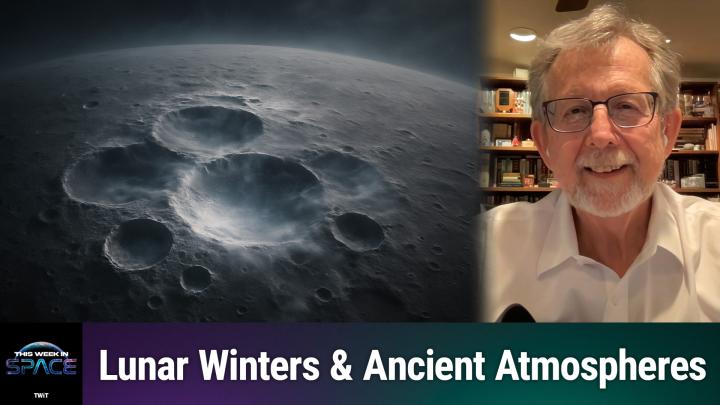
All TWiT.tv Shows (Audio)
This Week in Space 186: Snow on the Moon?
01:13:48
With Dr. Jim Green, Former NASA Chief Scientist
Loading summary
Transcript220 lines
- [00:00]
Leo Laporte
Today's show is brought to you by Progressive Insurance. Do you ever find yourself playing the budgeting game? Well, with a name your price tool from Progressive you can find options that fit your budget and potentially lower your bills. Try it@progressive.com Progressive Casualty Insurance Company and affiliates Price and coverage match limited by state law not available in all states.
- [00:25]
Rubrik Ad Voice
AI agents are everywhere. All automating tasks and making decisions at machine speed. But agents make mistakes. Just one rogue agent can do big damage before you even notice. Rubrik Agent Cloud is the only platform that helps you monitor agents, set guardrails and rewind mistakes so you can unleash agents, not risk. Accelerate your AI transformation@rubrik.com that's R U B R-I K.com.
- [00:57]
Lowe's Ad Voice
On the job, every minute counts. That's why Lowe's now has ProBloc Quick Dry Primer expertly manufactured by Sherwin Williams. Engineered for pros to dry fast and go on smooth for virtually flawless results that keep your job moving. It's available in oil and water based and getting it is easy. Order online by 2pm and get free same day delivery right to your job site Lowes we help you save. Orders placed after 2pm will be delivered next day. Valid in select zip codes subject to driver availability. More terms apply.
- [01:25]
Tarek Malik
Coming up on this Week in Space. China's Shenzhou astronauts just returned to earth but on a spacecraft they didn't launch on. Blue Origin's New Glenn makes some history because it launches to Mars and lands. And we're going to talk to that grand poobah of moon volatility. Jim Green, former NASA chief scientist, is going to tell us all about volatiles on the moon and what it might mean. Check it out.
- [01:49]
LifeLock Ad Voice
Podcasts you love from people you trust.
- [01:53]
Dr. Jim Green
This is Turret.
- [01:57]
Rod Pyle
This is this Week in space. Episode number 186 recorded on November 14, 2025. Snow on the Moon. Hello and welcome to another episode of this Week in Space, the Snow on the Moon Edition. I'm Rod Pyle, editor chief at Aster magazine and I'm with my very own rocket man, Tarek Malik, editor in chief for the one, the only, the all conquering space Dot com. How are you today?
- [02:21]
Tarek Malik
Hey. Hey Rod. I'm doing all right. How are you doing today? You're on a boat it looks.
- [02:25]
Rod Pyle
I am. Yeah, down here to enjoy the inclement weather. And I will enjoy it more when we are joined by our guest today who's going to be Dr. Jim Green, who's the former NASA chief scientist. Among many other positions. He Held at the agency. Founder of the new educational website Virtual service Metavisionaries, which he'll explain. It's very cool and a friend of the show. We've had him on a number of times. We're going to have him on again because he's really a great speaker and he gets that Tarek and I need to sort of be carefully pulled through this stuff to the level before we get there. Don't forget to do us a solid. Make sure to, like, subscribe and all the other things you can do to tell the world and us how much you love this podcast, because we're counting on you. And now a space joke from Martin Lawler also. Hey, Tarek.
- [03:19]
Tarek Malik
Yes, Rod?
- [03:20]
Rod Pyle
Did you hear about the time the astronauts had to fix the lunar rover after the wheels fell off?
- [03:25]
Tarek Malik
No, I didn't. What happened?
- [03:26]
Rod Pyle
They worked tirelessly.
- [03:30]
Tarek Malik
I love it.
- [03:31]
Rod Pyle
I think that's an original.
- [03:33]
Tarek Malik
That's a good.
- [03:33]
Rod Pyle
Thank you, Martin.
- [03:34]
Tarek Malik
Thanks, Martin. I love it.
- [03:36]
Rod Pyle
Now, I've heard that some people want us to become retreads when it's joke time in this show, but you can help by sending your best, worst or most different space jokes to us at twistwit tv, just like Martin did. So thank you again to Martin. And now onward to headline News.
- [03:55]
Tarek Malik
Headline News. I think I nailed that one. It's going to be great.
- [04:00]
Rod Pyle
I think you were early that time, but we'll see. So they are not marooned, but the Chinese, they're.
- [04:09]
Tarek Malik
No, they're marooned. Yeah. We're going to talk about this.
- [04:12]
Rod Pyle
Well, the. It's interesting. So. So the crew of Tiangong 20, which up until recently, Shenzhou 20. Sorry, which until recently was the only spacecraft docked with the Chinese Tiangong Space Station, was marooned for a while because something struck their spacecraft, causing cracks, and the Chinese space agency said, okay, don't come home. Wait there. We're setting up another crew. So Xinzhou 21 shows up with, I believe, three more crew members.
- [04:42]
Tarek Malik
Yep.
- [04:43]
Rod Pyle
And now the Shenzhou 20 crew is coming home in Shenzhou 21, which means that for a certain period of time, the Shenzhou 21 crew will be, quote, marooned, unquote, meaning that if they had an emergency, they'd have to, I guess, take their chances in the Shenzhou 20 spacecraft until the Chinese can. What they're talking about doing is flying up what would then be Shenzhou22 robotically to have the room to bring home a crew. Do I have that right?
- [05:11]
Tarek Malik
Yeah, yeah. But it's not a thought experiment. It's actually happening. Because the Shenzhou 20 crew is back on Earth, they took their replacements spaceship home. And so the Shenzhou 21 crew does not have like a fully vetted capsule available to use at the Tiangong Space Station right now. They have this other one that has problems and it's not just any problems because they had quote, unquote damage that they suspected was from space debris. And we found, found out late last night when they announced this switch of spacecraft to bring them back to Earth. It's cracks in the window. There are tiny cracks in the portal window, the forward portal window of the Shenzhou capsule.
- [05:55]
Rod Pyle
Of the descent module.
- [05:56]
Tarek Malik
Of the descent module. That's why they took the other one back. And so it is not clear like even if in an emergency, you know, these, these, these Chinese astronauts would be able to use that, that capsule to come back to Earth, you know, that they'd want to put them in there when they know there are cracks in the window.
- [06:14]
Rod Pyle
Because it's interesting. I wonder if they came home with the capsule evacuated if they'd be able to survive more cracking or a blowout in the window during the scent. That's scary.
- [06:26]
Tarek Malik
That window blows out, it blows in and the plasma comes in and it doesn't matter right about atmosphere. If you've got your, your, your so called knockoff, or I forget what they call their, they're so called variants, but if you've got, if you've got your spacesuit, they call them. Yeah, well, yeah, I didn't mean to say knock off. That's really pedantic.
- [06:46]
Rod Pyle
No, it's that, that's a little judgy.
- [06:49]
Tarek Malik
Yeah, it is, it is. Because I got to tell you, the Chinese versions of all the Russian stuff is so much better.
- [06:55]
Rod Pyle
I was going to say it's not a knockoff. It's really not a knockoff. It was licensed quote unquote, although I don't know that you use that term. And then improved. And the Shenzhou is better in every way than the Soyuz.
- [07:07]
Tarek Malik
You are correct. Yeah, I take my words back, my friend. But, but it's really not clear they'd be able to survive that because of the environment. It's a harsh environment. You know, I think the only experience we've seen with that is what that, that Soyuz flight where they had the depress event when they didn't have suits on at all.
- [07:25]
Rod Pyle
Soyuz 11, I think.
- [07:26]
Tarek Malik
Yeah. And that's totally different, different situation.
- [07:29]
Rod Pyle
So you don't want, knock on wood.
- [07:32]
Tarek Malik
Anything like that to happen. But the question that you ask is a really Good one for this one is like how soon could they have Shenzhou 22 ready to go? Is it, you know, built already? Because they've been launching these and developing them on a six month cadence. What's the status of all of that? And I think we're going to wait and see. Tiangong is in a different inclination. If you've seen gravity, it's wrong. They moved the inclination so that it would be in the same orbital plane as the ISS for story purposes. So they can't do that kind of a safe haven type of a thing. And you've been seeing the calls on social media saying that Elon should go save them because it works so well for Starliner.
- [08:10]
Rod Pyle
Well, and supposedly that the crew Dragon could dock, which is surprising to me. They'd have an internationally compatible docking adapter. But I suppose if all else failed, they could rendezvous and the guys could just tether across.
- [08:27]
Tarek Malik
I don't, I don't think that you need to worry about docking at all because you could just, like you said, you could just, you know, evacuate the, the Dragon and then go over through the outer hatch. And they, they've done that already with their, their spacewalk. So they can show that they can do that.
- [08:44]
Rod Pyle
So, and possibly more exciting in some ways is we finally saw not just a launch of, but a recovery of the new Glenn rocket.
- [08:54]
Tarek Malik
That's right.
- [08:54]
Rod Pyle
Which we've been waiting a long time.
- [08:56]
Tarek Malik
For, which you and I were in Florida for. And then it didn't get off the ground.
- [09:01]
Rod Pyle
Well, I, I wasn't going to see it unless it was from the airplane. A good man. And waited around so that you could miss it on Monday.
- [09:08]
Tarek Malik
That's right, on Sunday. Yeah, that's right.
- [09:10]
Rod Pyle
But this is two orbital probes going to Mars, first to be built by a purely commercial vendor. And as I said, as a bonus, the first stage booster flew itself back to the recovery barge. Jacqueline. Perfectly. So well done, Mr. Bezos. Huh?
- [09:25]
Tarek Malik
Yeah. Yeah. So this is Escapade NASA's, by the way, John. We have, I put it in the chat. We have a photo of Rod and I together from our time over the weekend. I don't know if you can show that or not, but, but this is escap. It's NASA's Escape and Plasma Acceleration and Dynamics Explorers mission.
- [09:41]
Rod Pyle
Oh, well done.
- [09:42]
Tarek Malik
Yeah, I know, right? It's as if I was reading it off of a screen almost. But, but as you mentioned, this was a first of its kind mission. It's the first time we've sent two tandem orbiters to basically Study the same thing from different points of Mars's orbit. It was built by Rocket Lab, the first privately built one of these, although you could say that every spacecraft to a point has commercial contracts involved. This one was, was, you know, built by Rocket Lab and is their first big test for interplanetary missions because they want to build more Mars things, they want to go to Venus. Big test for them. They launched in 2025, one year late because they were supposed to launch during the actual transfer window when it's really easy to get to Mars when the planets are aligned. And they missed that window. And so in order to try to still get the mission up off the ground sooner, they just launched it this year, knowing that it'll go to Mars in 2026 next year, and it's going to go hang out at the Lagrange point for a year and when those lines come up again, that alignment, it'll head off to Mars then. It's a really weird way to do it. But you could see like if, if waiting every two years to launch can cause all sorts of angst and pressure windows. Now if you can just launch something to the Lagrange point, let it hang out there for a while, then you can launch whenever, and then it'll just go to Mars when, when the time comes, it's like, it's like making your, your connection.
- [11:12]
Rod Pyle
And I have no evidence for this, but one wonders if maybe the urgency to launch before they get canceled. Right?
- [11:18]
Tarek Malik
Well, how are they going to get, how are you going to get canceled? It's already paid for. It's already paid for on the rocket, Right, Viper.
- [11:24]
Rod Pyle
Viper.
- [11:25]
Tarek Malik
Well, well, yes, yes, Touche. And a bit foreshadowing for later today. We're going to talk.
- [11:30]
Rod Pyle
Yeah, okay. And we have yet another interstellar interloper.
- [11:35]
Tarek Malik
We talk about the landing, by the way. By the way, the landing.
- [11:37]
Rod Pyle
Oh, yeah, yeah.
- [11:38]
Tarek Malik
Everyone should look at the video of this landing. That blue origin share.
- [11:41]
Rod Pyle
It's beautiful.
- [11:42]
Tarek Malik
Yeah, it's absolutely gorgeous. But new Glenn is larger than SpaceX's Falcon 9 and it hit the leading like right on the pinpoint of the barge. The, they have this like feather their logo on the barge and it, it was really strange because it comes in way off to the side. They were worried it was going to hit the barge. Uh, so they, they had it come in right way off to the side so that the barge would be safe. And then it slews over like it kind of hovers over and then sets down and, and it's so much bigger and Then they have a robot that goes out and safes it. It was just spot on as this only their second try to do it. I think it took SpaceX three times or four times, three times to do it because they tried twice at sea and then they did it on the land first. Then they nailed the sea ones and Blue Origin went straight to the ocean. And this means that SpaceX is not the only game in town anymore when it comes to vertical landings or their rockets, full stop. Right? And Blue Origin now has their foot in that door. They plan to ramp up flight production at scale because they're going to launch Kuiper satellites, they're going to launch commercial satellites that they've signed up for European and other countries and. And they're going to launch their own things like Blue Moon to Mars next year and hopefully Mars or some of the Mars Blue Moon to the moon next year and hopefully astronauts to land, astronauts on the moon with that bigger lander as well in the future. So they got plans for this rocket with people and everything. So keep an eye on. It's gonna be good.
- [13:10]
Rod Pyle
All right, New comet Atlas.
- [13:12]
Tarek Malik
You, you comment real fast. If you're worried about another inner planet interstellar traveler, don't worry. This is a different comet called Comet C 2025 K1 Atlas and astronomers discovered it relatively recently because of its name, 2025, but rap, because it flew by the sun in October and now it has broken up into three different parts. The images are spectacular, though. We've got these new images from astronomers that have been tracking it. Actually we, we saw it in amateur astronomer images too, from Gianluca Massey at the Virtual Telescope Project. And just if you're getting confused where you're hearing about the interstellar comet, which may be in the Galilean spacecraft, blah, blah, blah, it's not. It's just a comet breaking apart. It's not. It's this one K. One different comet somewhere.
- [14:02]
Rod Pyle
Avi Loeb just got a little crick in the back of his neck when you said that.
- [14:06]
Tarek Malik
Oh, no.
- [14:08]
Rod Pyle
And SpaceX late again. And we're used to this.
- [14:12]
Tarek Malik
This is your story, right? I didn't see this. What is this?
- [14:14]
Rod Pyle
So apparently there was an internal document uncovered that said that the company was planning to tell NASA that it needed to postpone the first crude landing for the Artemis program until 2028, which is no surprise to SpaceX watchers, but increasingly bad news for the Artemis program. And in the last couple of weeks, I've spoken to a number of people that thought the 2028 landing date was being opt. So, you know, unless, unless Blue Origin can really step up what's going on with its blue moon lander. It looks like our chance for winning the new space race is probably slipping away.
- [14:52]
Tarek Malik
So interesting that, that they're fixated on that 2028 date. Rod, why, why ever are they so focused on 2028, like as a. To get astronauts on the moon by 2028. I wonder what could be ending in 2028.
- [15:07]
Rod Pyle
Are you getting political here?
- [15:10]
Tarek Malik
I'm just saying that there's. The reason that there's a lot of push to land people on the moon by 2028 is because that's during the current administration. I mean, obviously we want to get there faster, but the demand in the current administration is because the President would like to see people back on the moon before the end of his term. And that was the case during his first term, and it's the case now. But it is very frustrating to see all, all of these slips. I think that we already thought that it was going to be 2028, I don't think.
- [15:38]
Rod Pyle
And to be fair, you know, when you think back, the Apollo program, it started under Kennedy, but was really shepherded into maturity and protected by Lyndon Johnson, who just pushed and pushed and pushed. He was a big, physically intimidating guy. He knew where the skeletons were buried. He knew how to bully people in Congress and the Senate and, and he did so and kept it going, only to see Richard Nixon, who succeeded him, end up sucking up all the glory for the Apollo 11 landing, including burning up millions of dollars of time of the astronauts standing on the lunar surface and their very short stay there for that mission while he talked to them on the phone. Oh, Neil and Buzz, I'm calling you from the Oval Office. And I remember even as a kid, I was 11 or something, thinking, get off the phone and let him go collect rocks.
- [16:27]
Leo Laporte
What's wrong with you?
- [16:28]
Rod Pyle
But Nixon had to have his moment. And honest to God, you know. Yeah. So I, I, this one I can kind of sympathize with. It's not a reason to abandon everything else or close half of NASA just to see your moon program succeed. But I can, I can kind of see the, the initiative from on the part of the executive office. But what are you going to do, you know?
- [16:50]
Tarek Malik
Yeah. By the way, everyone should take a look. Eric Berger, friend of the show, has a piece this week at Ars Technica where, where he tries to parse out what a simplified starship timeline for Artemis 3 would be for NASA. And, and he it's really good because he has, oh, SpaceX using a Starship Dragon combo instead of waiting for Orion or, or NASA using Orion SLS or using some kind of hybrid system in between where instead of.
- [17:20]
Rod Pyle
Wait a minute, I'm confused because the problem is with Starship, not with Orion sls. So why are they interested in replacing that?
- [17:28]
Tarek Malik
Well, about, about being able to, so that they don't have to develop anything new because SpaceX already knows all the docking systems and so it's using, using launching the astronauts on Dragon. Dragon goes over to Starship, they get on Starship and they leave Dragon behind and then they take Starship to, to the moon. It's, it's a, it's a whole, it's a whole big thing. There's like a, there's two lunar depots, there's one at the moon, there's one there in Earth orbit and, and then there's another one where they just throw away the starships when they do the refueling instead of landing every single one. So it takes maybe half the amount of launches that, that, that they've been saying because of that need to bring the ships back. And, and that would be a different kind of approach where you can still use Orion but get rid of the refueling at the moon, which is really, really risky because then they don't have any fuel to get back if something goes wrong if they're at the moon. And, and then there's a wild one that I saw on YouTube where someone says why can't they just put Dragon in the payload bay of the starship and then fuel it up and then go from there. But I don't think they're going to do that.
- [18:29]
Dr. Jim Green
So.
- [18:32]
Rod Pyle
Plus they don't have a, an extra propulsive stage behind Dragon to bring it home. Although that's right, if anybody can build one quickly, it would be SpaceX. All right, we are going to be back in just a few moments with Dr. Jim Green, former chief scientist at NASA to talk about weather on the moon. Stay with us.
- [18:49]
Leo Laporte
Hey there, it's Leo laporte, host of so many shows on the Twit Network, thinking about advertising. In 2026 we host a network of the most trusted shows in tech, each featuring authentic post read ads delivered by Micah Sargent, my co host and of course me. Our listeners don't just hear our ads. They really believe in them because we've established a relationship with them. They trust us. According to Twit fans, they've purchased several items advertised on the Twit Network because they trust Our team's expertise in the latest technology. If Twit supports it, they know they can trust it. In fact, 88% of our audience has made a purchase because of a twit ad. Over 90% help make it and tech buying decisions at their companies. These are the people you want to talk to? Ask David Coover. He's the senior senior strategist at ThreatLocker. David said twits hosts are some of the most respected voices in technology and cybersecurity and their audience reflects that same level of expertise and engagement. It's the engagement that really makes a difference to us. With every campaign, you're going to get measurable results. You get presence on our show episode pages. In fact, we even have links right there in the RSS feed descriptions. Plus, our team will support you every step of the way. So if you're ready to reach the most influential audience in tech, email us PartnerWIT TV or head to TWiT TV Advertise. I'm looking forward to telling our qualified audience about your great product.
- [20:19]
Odoo Ad Voice
So when I ask, what is Odoo, what comes to mind? Well, Odoo is a bit of everything. Odoo is a suite of business management software that some people say is like fertilizer because of the way it promotes growth. But you know, some people also say Odoo is like a magic beanstalk because it grows with your company and is also magically affordable. But then again, you could look at Odoo in terms of how its individual software programs are a lot like building blocks. I mean, whatever your business needs, manufacturing, accounting, HR programs, you can build a custom software suite that's perfect for your company. So what does Odoo? Well, I guess Odoo is a bit of everything. Odoo is a fertilizer. Magic beanstalk. Building blocks for business. Yeah, that's it. Which means that Odoo is exactly what every business needs. Learn more and sign up now@odoo.com that's.
- [21:17]
LifeLock Ad Voice
O-O-O.com tis the season for identity theft. This time of year most of us are checking off our holiday gift lists. But guess what? Identity thieves have lists too. And your personal information might be on them. Protect your identity with Lifelock. Lifelock monitors hundreds of millions of data points every second and alerts you to threats you could miss by yourself. Even if you keep an eye on your bank and credit card statements. If your identity is stolen, your own US based restoration specialist will fix it, guaranteed. Or your money back. And all plans are backed by the million dollar protection package. The last thing you want to do this holiday season is face drained accounts, fraudulent loans or other financial losses from identity theft all alone. Make this season about joy, not Identity theft. With LifeLock, save up to 40% your first year. Call 1-800-LIFELOCK and use promo code IHEART or go to lifelock.com iheart for 40% off. Terms apply.
- [22:19]
AT&T Ad Voice
And now a next level moment from AT&T business. Say you've sent out a gigantic shipment of pillows and they need to be there in time for International Sleep day. You've got AT and T5G so you're fully confident, but the vendor isn't responding and International Sleep Day is tomorrow. Luckily, AT&T 5G lets you deal with any issues with ease. So the pillows will get delivered and everyone can sleep soundly, especially you. AT&T 5G requires a compatible plan and device. Coverage not available everywhere. Learn more@att.com 5G Network.
- [22:49]
Rod Pyle
And we are back with Dr. Jim Green, former chief scientist of NASA who wrote some very interesting works on the evolution of the moon. Hi Jim, thanks for joining us today.
- [23:01]
Dr. Jim Green
Oh my very great pleasure.
- [23:04]
Rod Pyle
And you sent me this fascinating paper about. Well, actually it was the article, it was shorter about the formation evolution of the moon and how it actually had sort of primordial atmosphere. So I guess we'll will take it from the steps of the very beginning. And I think one of the things you mentioned is that there was some head scratching over the decades about the initial formation of the Moon, specifically because it was so large compared to the Earth. When you look at the moons of other terrestrial planets, Mars is the only other one. But that it's such a large percentage of the mass of the Earth that it had people kind of confused. So can you kind of walk us through what the earlier theories were and what we think now?
- [23:49]
Dr. Jim Green
Well, while into the 60s, even during the initial Apollo program, many planetary scientists thought that the moon might have come from some sort of eruption on the sun, some solar like material that then in its early formation of planets going on. And so that was one major theory that was from actually Urey, Harold Urey, who was very well known planetary scientist. However, once the lunar material got back to Earth, this is why samples are so important, we began looking at it, age, dating it, and more importantly getting the composition and those things that are called isotopes, which are in the nucleus of atoms, some extra neutrons that kind of pop in there somehow and then those provide different properties of various elements that are very important, but they're very unique signature. And that unique signature kept ringing true that the Moon and the Earth had similar origins. And so soon after these major analyses were going on, some really good theories were now coming out that the Earth and the Moon had to have a common origin. The Earth and the moon were 4.5 billion years old. I mean, the Earth, the oldest rocks on Earth were 3.8 billion. We couldn't get any further back. But now the Moon was telling us those two are older. And so this then ends up with this new concept called the giant impact hypothesis, for which the idea is, as planets are beginning to form, or what I would call protoplanets, those things that have cores and mantles and crusts, and they're getting bigger and bigger with more impacts going on. A couple of them were in or near our orbit today, and the Earth started gobbling them up. And a really big one was what we now terminated, Theia. Theia hit the Moon, sorry, hit the Earth, the proto Earth, and just absolutely exploded. The Earth absorbed most of Theia. Thea was huge, though, about the size of Mars, we think. And when that happened, Earth absorbed a significant part of Theia, creating a ring of material which eventually falls on the planet, but further away from the ring where you could actually begin to accrete a new object. That's where the Moon came out. The end result is after the giant impact occurred, within a handful of months to years, an object that was forming called the Moon, that we call the Moon today, would be just about four Earth radii away. You know, not very, not very far away. 16 times bigger in the sky than it is today. I mean, it would just dominate the view from Earth. And then over time, as those two objects cooled and more material was coming out, volatiles we call them, like water from inside the Earth, creating oceans, more impacts bringing more water to the Earth and the Moon. We then find the ability to dissipate tidal forces that were occurring between the Moon and the Earth, allowing the Moon then to move away from the Earth. So when the Apollo program came back and, you know, from Earth, and we started using the instruments that are on the Moon, like the laser reflectors system, we'd shoot lasers from Goddard Space Flight center every year, hitting that and timing what it takes to go to there and come back, and then we can calculate the distance to the Moon. We did that every year. Now, I mean, why would we do that every year? Didn't we get it right the first time? Well, we finding out that the Moon is moving away from the Earth, so all these things then Factor in to an idea of how the Moon was created through this giant impact, leaving a remnant object that was close to Earth. And that object, over time moves away from Earth until we have the moon today at 60 Earth radii away from us. Okay, so it went from 4 Earth radii to 60 Earth radii, and it's still moving away about an inch and a half a year.
- [28:55]
Tarek Malik
Should we be worried about that, by the way, Jim? Right.
- [29:01]
Dr. Jim Green
Let me mention some of the side effects. Okay, One, is it indeed, as it moves further away, conservation of angular momentum says that the Earth's day should get longer. It's just like a spinning ballerina. As she pulls her arms out, she slows down. Same concept. And indeed the Earth is slowing down. In fact, when, when that giant impact happened one day on earth, when was five hours. Okay, wow. Okay, so we've changed from five hour days to 24 hour days, but it's going to be billions of years before we really have any significant changes in our day. And the sun will go a red giant. Before we lose the Moon, we'll always have, we think, the Moon holding on to us. So the only downside is the change of the length of day and therefore the change in a certain circadian rhythms that we know. But very long term, no big deal. However, the Moon has made the Earth uncommonly habitable, all right? Because every object, every planet that comes together isn't evenly. The mass isn't evenly distributed all over the place. It has mass concentrations, even if it's just a few percent on one side of the body versus the other. These mass concentrations, of course, are attracted to other gravitational objects like the sun, and therefore the sun pulls on them. And so if you look at planets like Mars, the Sun is constantly pulling on Mars. And although its axis is 23 degrees, it has changed significantly over time. It has gone from 15 degrees to 45 degrees. Okay. So it's literally laid over in about 125,000 year time periods. Okay. For the Earth, very different. We go from 24 and a half degrees to 22 degrees. That's it. So the Moon has just allowed us to just have this little bitty Wagner now that does produce large climate changes. All right, but it would be much worse if indeed we were at like 45 degrees that, that we see on, on Mars.
- [31:41]
Tarek Malik
So this, this always makes me think about Game of Thrones. I don't know, Jim, have you ever read, you've ever read or watched the books or anything? Because they have like crazy seasons all the time. Yeah, yeah.
- [31:51]
Dr. Jim Green
Yes, yes, they do. Yes, they do.
- [31:54]
Tarek Malik
And reading the book, they never talk about the moon. And it always was my private theory that because they don't have a moon, that's why, like, the winter lasts for like 20 years on that planet.
- [32:03]
Dr. Jim Green
So you're, you're, you're really onto something, because if we didn't have the moon, some of the calculations seem to indicate that we would become more tidally locked with the sun. Now, that's due to the fact that we have big mass concentrations, a big bulge where, gravity wise, we look like a pear. You know, the southern hemisphere's got far more mass, relatively speaking, than the northern hemisphere. And so the sun's going to keep pulling on that over time. And so consequently, that also slows down the planet. One day on Earth might be more than 200 days that we have today. Now, that would, that would just spell doom for life. Like we know it. We'd really have to be migrating species. We'd have to be, you know, following, you know, these temperate zones that crop up and then are destroyed because of that slow rotation. And we have to consider that very important concept to exoplanets and whether they'd be habitable or not if they don't have large moons. So there's some, quite a bit of thinking that's going on in that particular area too now, how important the moon is.
- [33:26]
Rod Pyle
Well, as long as we're doing all this deep thinking, let's give ourselves a few moments and we'll take a break and be right back with our next question. Standby.
- [33:33]
Tarek Malik
Hey, everybody.
- [33:34]
Leo Laporte
Leo laporte here and I'm going to bug you one more time to join Club Twit. If you're not already a member, I want to encourage you to, to support what we do here at twit. You know, 25% of our operating costs comes from membership in the club. That's a huge portion and it's growing all the time. That means we can do more, we can have more fun. You get a lot of benefits ad free versions of all the shows. You get access to the Club Twit discord and special programming like the keynotes from Apple and Google and Microsoft and others that we don't stream otherwise in public. Please join the club. If you haven't done it yet, we'd love to have you find out more at TWIT tv Club Twit and thank you so much.
- [34:20]
T-Mobile Ad Voice
Introducing Family freedom from T Mobile. We'll pay off four phones up to 3, 200 and give you four free phones all on America's largest 5G network. Visit t mobile.com familyfreedom up to 800 per line via virtual prepaid card to it only takes 15 days. Free phone via 24 monthly bill credits with finance agreement example Apple iPhone 16128 gigs $829.99 Eligible trade in example iPhone 11 Pro for well qualified credits end and balance due if you pay off.
- [34:47]
Rubrik Ad Voice
Early or cancel Contact us AI agents are everywhere, automating tasks and making decisions at machine speed. But agents make mistakes. Just one rogue agent can do big damage before you even notice. Rubrik Agent Cloud is the only platform that helps you monitor agents, set guardrails and rewind mistakes so you can unleash agents, not risk. Accelerate your AI transformation@rubrik.com that's R u.
- [35:19]
LifeLock Ad Voice
B r-I k.com tis the season for identity theft. This time of year most of us are checking off our holiday gift lists. But guess what? Identity thieves have lists too, and your personal information might be on them. Protect your identity with Lifelock. Lifelock monitors hundreds of millions of data points every second and alerts you to threats you could miss by yourself even if you keep an eye on your bank and credit card statements. If your identity is stolen, your own US based restoration specialist will fix it, guaranteed or your money back. And all plans are backed by the million dollar protection package. The last thing you want to do this holiday season is face drained accounts, fraudulent loans or other financial losses from identity theft all alone. Make this season about joy, not identity theft. With Lifelock, save up to 40% your first year. Call 1-800-LIFELOCK and use promo code iheart or go to lifelock.com iheart for 40% off. Terms apply.
- [36:21]
Rod Pyle
So if my dumbbell math was correct and the reason Tarek and I have to think about these things so much harder than you do is because our math scores weren't particularly high once we got to Higher Mathematic University. But everybody who listens to the show knows that already. The moon, way back when, when it was much closer for Earth, radii would have been like 20,000 miles or so above, which would make it very large in the sky. That'd be a whole different experience.
- [36:48]
Dr. Jim Green
Yeah. Yeah, it would be. If, if you could stand the heat of the surface, if you were on the surface, the moon would just be enormous, 16 times what it is today in size. And it already looks kind of big, but I mean, it would really be huge. I think we'd be fearful that, you know, it looks like an object's gonna come and hit us, but over time it moves away. The other fascinating thing about these samples that we have from the Apollo is we're continually analyzing them, and one of the things that we have found is that they have what's called a remnant magnetic field in them. And so for more than 40 years, the controversy is, well, where did it get the field? Did it get it from impacts that occur? Does it get it. Does the Moon actually generate its own magnetic field? And we now have pretty well solved that, which to me was really exciting because.
- [37:53]
Tarek Malik
Yeah, that was something I really wanted to ask you because by the way, I think we forgot to mention specifically that the article that, that Rod was talking about, you've got this article all about volatiles on the Moon and the Moon's history and its birth in. It's in Ad Astra. Is that right, Rod?
- [38:10]
Rod Pyle
No, actually, Jim said it to me.
- [38:12]
Lowe's Ad Voice
It's in room.
- [38:13]
Dr. Jim Green
Yeah, it's in room. Yeah, yeah, yeah.
- [38:16]
Rod Pyle
So that other cool space magazine.
- [38:19]
Dr. Jim Green
That is a cool space magazine.
- [38:21]
Tarek Malik
Yeah.
- [38:22]
Dr. Jim Green
At Astra. I'll have to publish something in that.
- [38:24]
Rod Pyle
Next anytime, my friend.
- [38:27]
Dr. Jim Green
Okay, I'm waiting. All right.
- [38:28]
Tarek Malik
Okay.
- [38:29]
Dr. Jim Green
Okay. I got some ideas.
- [38:30]
Tarek Malik
I mean, I always love me a giant impact hypothesis when it comes to, like, the Moon's formation and how it looks so similar to the Earth. I was really struck in your piece about looking for how certain types of volatiles that I never thought about, nitrogen, for example. I think because we're talking about magnetic fields actually end up in the, in the regolith of, of the Moon. Because you, you describe that in that early phase when it's, you know, the, the Moon is its solitary body, a separate body, but it's still kind of not, not very far away that, that it had this magnetic field. I would assume because it's still also got a molten core or, or what. Correct, correct. That it's also mixing with the Earth's magnetic field, which, yes, much bigger than that, allowed material to keep on transporting to the Moon despite the fact that the impact was over with. That just boggles my mind. And I don't understand how that works. And I was wondering if you could explain to my brain how that would work.
- [39:32]
Rod Pyle
Sure.
- [39:33]
Dr. Jim Green
So magnetic fields are really wonderful highways for charged particles. And the lower the energy, the more closely they are connected to the, the magnetic field and follow them very closely. And so indeed, the Earth had a magnetic field. We still do today, thank goodness. That stretched all the way back to its early formation. The rock record on the Moon indicates indeed that The Moon had a magnetic field, which makes it a magnetosphere. And because the Moon is so close, the Moon's magnetosphere is inside the Earth's magnetosphere for several hundred million years, perhaps. And so what's happening is those two fields get interconnected, and when they do, then material from the Earth will run down that magnetic field and precipitate into the lunar environment. That's where that field line tells them it's going to go. Now, this configuration early on is exactly the kind of configuration we see with Europa in Jupiter's magnetic magnetosphere. Okay. So the more we know and study what happens between Europa and Jupiter and how their magnetic fields are interconnected, the more we'll understand what the early Earth and Moon's magnetosphere was like. But what happens is, early on, the sun was very active coronal mass ejections all the time, far more than we have today, huge sunspots. And it produced a lot of energy in the ultraviolet and X rays. And as it does that, what happens is that heats the atmosphere, which expands and also ionizes the upper part of the atmosphere, creating the layer we call the ionosphere. Well, that is going to move out. It's like, here's another math thing. You got a lot of pressure here, low pressure there, and therefore, that material is going to move to the high. From high pressure to low pressure. It's got something to do with thermodynamics. All right, well, the ionized ionosphere material is just going to run down that field line. And if that field line runs all the way to the poles of the Moon, which it does in this case, then the regolith on the Moon is going to be hammered with material from the upper atmosphere of the Earth. Now, that means all the nitrogen and some of the things that we also found in the lunar rocks, and we couldn't figure out where the nitrogen is coming from. It's not coming from the solar wind. You know, far more nitrogen was there than. Than we would expect from the solar wind. Had to come from somewhere. Well, it's coming from the Earth.
- [42:40]
Tarek Malik
Yeah.
- [42:41]
Dr. Jim Green
And it came probably during the time the Moon had a magnetosphere.
- [42:48]
Tarek Malik
By the way, I forgot to ask you, why is nitrogen so weird? Like, how do you rule out solar wind? Is it because it needs earthly processes to be found naturally or.
- [42:57]
Dr. Jim Green
Yeah, well, nitrogen is in the solar wind, but in a extremely low amount.
- [43:04]
Tarek Malik
Oh, I see more of it.
- [43:06]
Rod Pyle
Yeah.
- [43:06]
Dr. Jim Green
So it's about its ionization state. It's also about the quantity. And so those add up to mean that additional nitrogen Is there well beyond what would be in the normal solar wind, impacting the moon and absorbing that solar wind.
- [43:31]
Tarek Malik
But really. Oh, go ahead.
- [43:33]
Dr. Jim Green
Well, the magnetosphere, just like we are protected from the solar wind now the moon is protected by the solar wind. And so processes that we're familiar with on the moon or here on Earth are now happening on the moon. So now that means if the moon is outgassing, which it does, and it still does today, like all, all our planets are still out gassing, they're still cooling off from when they were made, we're not dead, you know, inside, we're still very active. And that's true on the moon. Then the magnetosphere of the moon is going to hold that material in. It's going to hang on to an atmosphere that's being created as the moon out gases or even as the moon becomes more volcanically active.
- [44:24]
Rod Pyle
Okay, well, ladies and gentlemen, we're going to outgast ourselves to a break. So stand by, we'll be right back.
- [44:30]
Leo Laporte
Hi there, Leo Laporte here. I just wanted to let you know about some of the other shows we do on this network you probably already know about. This week on Tech. Every Sunday, I bring together some of the top journalists in the tech field to talk about the tech stories. It's a wonderful chance for you to keep up on what's going on with tech, plus be entertained by some very bright and fun minds. I hope you'll tune in every Sunday for this week in Tech. Just go to your favorite podcast client and subscribe. This week in tech from the TWiT network. Thank you.
- [45:03]
LifeLock Ad Voice
Tis the season for identity theft. This time of year, most of us are checking off our holiday gift lists. But guess what? Identity thieves have lists too, and your personal information might be on them. Protect your identity with Lifelock. Lifelock monitors hundreds of millions of data points every second and alerts you to threats you could miss by yourself. Even if you keep an eye on your bank and credit card statements, if your identity is stolen, your own US based restoration specialist will fix it, guaranteed or your money back. And all plans are backed by the million dollar protection package. The last thing you want to do this holiday season is face drained accounts, fraudulent loans or other financial losses from identity theft all alone. Make this season about joy, not identity theft. With Lifelock, save up to 40% your first year. Call 1-800-LIFELOCK and use promo code iheart or go to lifelock.com iheart for 40% off terms apply.
- [46:02]
Rod Pyle
So, Jim, you just spoke about outgassing and another Part of your paper was talking about how other planet test planetesimals hitting the Moon back in the 3.8 to 4 billion years ago range caused a lot of magma upwelling and degassing?
- [46:18]
Dr. Jim Green
It did.
- [46:19]
Rod Pyle
Which I guess. So is, is it correct that both that and the magnetosphere coupling is what built sort of a primordial atmosphere around the Moon?
- [46:29]
Dr. Jim Green
Yeah. Yes. Now, we wouldn't call it primordial because primordial means the original gases from the solar nebula. So that'd be dominated by hydrogen and helium. However, we would call the atmosphere of the Moon much more like that of the Earth because of the volcanic activities bringing volatiles up. Now, the period you're talking about when the Moon had a magnetosphere is called the Late Heavy Bombardment. Now, the Late Heavy Bombardment has these huge objects that are hitting the Moon. I mean, they're just enormous. And what they do is they blow away the upper crust. And so you have the lower crust or upper mantle, and it's all molten rock pouring into these huge craters, the remnants of that we see today, and we call those mare. So all the dark areas on the Moon you see today because they have a different composition, more iron, for instance, more of the heavier materials that have come up from inside the Moon and filled in these heavy. With this heavy material into these craters. Okay. Now, the neat thing about that is just like volcanic activity on the Earth, the volcanic activity on the Moon would spew out what we call volatiles. Well, those volatiles are going to be all kinds of stuff. You know, they're going to be Water and CO2 and. Which is carbon dioxide, carbon monoxide. There'll be sulfur compounds also that will come out. Now, once that begins to blend in the rest of the Moon, the solar wind, which doesn't get to the surface anymore and would carve that sun stuff away because of the protection of the magnetosphere, that atmosphere grows. Now, planetary scientists believe that the lunar atmosphere was probably up to what we call 12 millibar. Now, Mars atmosphere is 6 millibar. Even though the Earth's atmosphere is 1,000 millibars, it's still very low pressure. But it is significant because those volatiles will also go to colder areas, just like we have cold areas in our polar caps. You know, water snows out at high latitudes. Some of those processes must have happened on the Moon. And so now we know what's in these permanently shadowed areas must be ancient Earth atmosphere. All right, this is the early atmosphere of the Earth, ancient lunar atmosphere. In addition to the comets and asteroid volatiles, that are brought in all these kind of impacts that are occurring. So when we go to a permanently shadowed region, we're going to want to scientifically core that area. We're going to want to see that core, we're going to lay it out, and we're going to want to study the evolution of these two bodies. I think we'll, we'll, we'll see some really startling examples of what may have happened in the past.
- [49:59]
Tarek Malik
You know, it strikes me that if this whole push for a commercial economy at the moon pans out in the way that, that maybe some, some folks have, you would have your scientists on the moon. You know, or maybe, Jim, it's you, right, that you get up there to make the core yourself, and then you're gonna have to be fighting off the, what is it, the niveas or whatever of the world that are gonna make moon water and then want to sell that ancient moon water to people on Earth. So you're gonna have to fight for those cores.
- [50:35]
Dr. Jim Green
It sounds like, well, you know, we need to tell everybody water is water. Its chemical composition is H2O. Whether you find it on the Moon or you find it on the Earth, it's still water. All right, now what we want to prevent scientifically is even though we can remotely sense that water is there, that's the thing that we can remotely sense. But when we get into that and we prospect it and we core it and we bring it out and start studying it, now we're going to find all these other volatiles which don't have a signature in our ability to remotely sense. And so that's going to be really exciting. What we want to prevent is we want to prevent the industries from going in there first with their, you know, bulldozers and bringing out a set of material just to get the water out. Because I think with CO CO2, there's going to be far more oxygen than just what we think is there with water. Sulfur is important. There's going to be another number of things that's, that we might be able to use in farming on the moon. All right, in addition to the nitrogen that we just talked about too, Nitrogen is a great fertilizer. So we need to core it. We need to see, and that will tell us a lot. Now, there is a problem, and the problem is micrometeors. Micrometeors could mix up some of these layers, but, but we don't really know, I think a lot about the micrometeor FL flux over the poles. You know, we know what it is at the equator. Well, that stuff hits the equator, you know, like crazy. But in, as a function of latitude, it may be maybe very different. And particularly over the poles, it may not be as extensive as it is at the equator. That's all we had to.
- [52:31]
Tarek Malik
Yeah, we had two impacts just recently that an amateur astronomer saw.
- [52:36]
Dr. Jim Green
Right. Well, that happens all the time. All the time. It's called gardening. That's what generates. Yeah, that's what generates the regolith gardening, not as we know it here on Earth, but we're gardening rock, we're taking rock and we're busting it up into little pieces.
- [52:54]
Tarek Malik
This might seem like a silly follow up about volatiles being locked in that, that, you know, like a valuable record, I guess I should say, of those volatiles being locked in the moon's ice for, for future scientists, you know, to go explore. But you know, in terms of like the timeline, as like a layperson reading through the paper, I was, I was struck by, you know, how similar it sounded because it was an impact that created two bodies at around the same time that, that thea. Or not the, that the, the, the Earth and like the satellite were at that point in time. And I know that they're probably all super molten and hot and liquid, but like the, the, the wondering part of me is, you know, if it had all of this stuff in more quantities, you know, the thicker atmosphere, magnet, magnetosphere, all of it, could there be any of those kind of life ingredient type things that could have had progress similar to like whatever we saw on the Earth? I, I'm wondering, I guess.
- [53:54]
Dr. Jim Green
Okay.
- [53:55]
Tarek Malik
Are there, are there little microbes locked in the ice from ancient proto Earth on the Moon? I think, Jim.
- [54:02]
Dr. Jim Green
Yeah, that's a good question. Sure. And it comes up naturally. I think the general consensus throughout the astrobiology community is that there's no life on the moon.
- [54:11]
Rod Pyle
Okay.
- [54:11]
Dr. Jim Green
If there is, we're going to be bringing it. All right. So it just didn't happen. Didn't have the time. You know, you can have a wonderful environment of all the energy and water and organic matter material to do metabolism and all that stuff that microbes, et cetera, early life needs. But the unknown thing is how long does it take before life starts? What's that spark? What changes it from just chemicals into active life? As we know, we haven't figured that out yet, but we do require time for that to occur.
- [54:54]
Tarek Malik
Yeah.
- [54:55]
Dr. Jim Green
And the moon just didn't have the time with the environment that it had.
- [54:59]
Tarek Malik
That's so cool.
- [55:00]
Rod Pyle
All right, well, we're going to take some time to go to our next break and we'll be back shortly, so stand by.
- [55:06]
T-Mobile Ad Voice
Introducing Family Freedom from T Mobile. We'll pay off four phones up to $3200 and give you four free phones all on America's largest 5G network. Visit t mobile.com family freedom come on. Up to $800 per line via virtual prepaid card typically takes 15 days. Free phone via 24 monthly bill credits with finance agreement. Example Apple iPhone 16128 gigs $829.99 eligible trade in example iPhone 11 Pro for well qualified credits end and balance due if you pay off early or cancel.
- [55:34]
Rod Pyle
Contact Us.
- [55:37]
LifeLock Ad Voice
Tis the season for identity theft. This time of year most of us are checking off our holiday gift lists. But guess what? Identity thieves have lists too and your personal information might be on them. Protect your identity with LifeLock. LifeLock monitors hundreds of millions of data points every second and alerts you to threats you could miss by yourself. Even if you keep an eye on your bank and credit card statements. If your identity is stolen, your own US based restoration specialist will fix it, guaranteed or your money back. And all plans are backed by the million dollar protection package. The last thing you want to do this holiday season is face drained accounts, fraudulent loans or other financial losses from identity theft all alone. Make this season about joy, not identity theft. With Lifelock, save up to 40% your first year. Call 1-800-LIFELOCK and use promo code iheart or go to lifelock.com iheart for 40% off. Terms apply.
- [56:37]
Rod Pyle
So Jim, I have kind of a double header here. My first question is you mentioned that it's possible that more micrometeorites hit the equatorial regions in the north and south pole the moon, and I assume that would have been the same for the Late Heavy Bombardment or other items. Is that because that's the part of any rocky body that faces the ecliptic and it's coming in basically from that same disk that actually formed the solar system, Correct?
- [57:05]
Dr. Jim Green
Correct. So where are these micrometeors coming from? Well, they're coming from shedding of material by asteroids that orbit the sun, shedding of material that are from comets that orbit the sun. And indeed the cometary material has much more of a latitudinal distribution. That's why we have to say there's going to be micrometeors hitting the moon in the polar cap. That's for sure. But it's more about the frequency. It's more about the fact that we see far more Material in the ecliptic plane. This would be the plane, orbit plane of the planets. And so that's where that material is going to reside.
- [57:54]
Rod Pyle
Okay, so in effect, it's the solar system's equator.
- [57:57]
Dr. Jim Green
Yeah, it's a solar system's equator.
- [57:59]
Rod Pyle
Okay.
- [58:01]
Tarek Malik
If my college roommate Brian Seymour is listening. I got in such a bad argument freshman year arguing this exact point because he said what Jim was saying, that it's the solar system's equator. And I was totally full of it back then.
- [58:13]
Rod Pyle
So that hasn't changed. Tarek. So you were talking about, you know, exploring the distribution and volume of these volatiles on the lunar surface. Which brings me to the celebratory note that Viper is back online. It's had a very weird, twisted history. I'm sure you were a part of that for years. And those of us in the peanut gallery saw it come, we saw it go. Yes, we're going to fly it. No, we're going to take it apart and give bits of it to other places. And it was finished, which was just driving us crazy because we could not figure out what the logic was. But finally, somehow, at least last we heard, it's back on track. Anything to say about that?
- [58:56]
Dr. Jim Green
Oh, yeah. Viper is a fabulous rover. We got to have it. When I left NASA, it was on track as all new things. You know, it has a schedule, and a schedule means material is being built at the. At an appropriate pace. It ran over budget a little bit here and there. Not every mission is on track, on time, etc. Those puts and takes are always, you know, hard to take. But we understand that that happens. When I left NASA, this thing was going to be launched. And so, like you guys and other scientists in the field, I was totally shocked when I heard that VIPER1 was going to be canceled. And then I was even more shocked to learn that they were going to take it apart, which also didn't make any sense. It really would. And this is during the time I'm writing this paper that you. For which I wrote this popular article. In room there's a peer reviewed paper that goes behind what we've been talking about. So now I'm delighted to hear that NASA's back on track. And indeed we need Viper. And it's because we need to know what's in these permanently shadowed regions. Our first opportunity to roll in, get a little taste of it. And I think we're going to see these volatiles. We're going to see, hey, this is far more complicated. And I'm hoping that maybe My paper, the science paper, which illustrated that these are complicated. It's not just water, and we're going to learn a lot, really helped the concept of putting Viper back. Back on track to getting it done.
- [60:54]
Tarek Malik
You know, I was really struck, too, about the value, because Viper will go to the moon, south pole, where you found, or, you know, you've. You've kind of laid out as a great target to find these cores. I think the Viper's got a drill to dig down. Yeah, it does. So do that kind of thing.
- [61:08]
Dr. Jim Green
Yeah, it's going to take the initial taste.
- [61:10]
Tarek Malik
And one of the things that I'm not sure we touched on in this interview, but that you talk about in the article is the fact, you know, you mentioned earlier, you know, how valuable that early lunar magnetosphere was to kind of keep some stuff on the surface. But now, of course, the Moon's a lot farther out than it was then, and I don't think we see that magnetic field there now as correct. Right. And so it's been stripped over time.
- [61:38]
Dr. Jim Green
It died. It died, yeah. And then it died. Although we still think that there's somewhat of a liquid aspect to the core. The core has to support. The outer part of the core that's liquid has to support a current. And if it doesn't generate a current, then you're not going to generate the field that will then go through the rest of the Moon and out through the surface and out into space. So it is now cooled enough that the current is no longer viable. Now, that may have happened, you know, 500 million years, in other words, a half a billion years after it started. So that's a very quick dipole, actually. We know the orientation. We know all kinds of things about that. That's why we could model it. And it was very dipole, like, meaning it was very. The field was very much like that of the Earth.
- [62:36]
Tarek Malik
So.
- [62:38]
Dr. Jim Green
And that there was symmetry axis aligned really pretty well with the rotational axis. So that enabled us to easily model the Earth and the Moon and really see these kind of new effects clearly. And then we can predict, well, we're going to see some complicated stuff in these permanently shadowed regions. That's my prediction. I already labeled what I think would happen, how deep you have to go to get this stuff and what that means going back in time. That's a prediction, you know, laid it on the table. Now, scientists, when we go there and go do it, will match that prediction, and I can pretty well guarantee that parts of it will be right and parts of it will be wrong. And we'll learn an enormous amount about the early Earth and Moon history.
- [63:28]
Tarek Malik
See, that's just crazy. It's like archaeology. The Indiana Jones of the Moon's main field right here. Right.
- [63:35]
Rod Pyle
Yeah.
- [63:36]
Dr. Jim Green
Get my, I'll get my fedora on.
- [63:38]
Tarek Malik
Now, if you can solve that mass can problem on the Moon, that'd be great too, you know, so. Oh my gosh.
- [63:43]
Dr. Jim Green
Sure.
- [63:45]
Rod Pyle
So you mentioned water on the moon, and we like finding water on the moon because it's heavy and it's very expensive to launch from Earth. But there are a lot of other things there, including metals, obviously a lot of glass. What are some of the other products that you might be able to derive from in situ resource utilization?
- [64:03]
Dr. Jim Green
Well, you know, we talk a lot about going out into the asteroid belt and mining them for material. There isn't, in my opinion, there isn't an asteroid type that hasn't impacted the moon. So if you're going to go find material, I'd go to the Moon. So we know there's iron. We see large areas which have been hit by asteroids which are big enough where iron has accreted into the core, has differentiated what we call in the body heated it up and that heavier material sank to a core. And then that proto planet, if you will, that seed hits the moon and sprays that iron all over the place. Well, with the iron comes platinum group metals. So we're talking about palladium, you know, platinum, iridium. You know, there's six or seven of these and they're very expensive here on Earth. And we're mining them out of the crust like crazy. And we have them everywhere from catalytic converters to our phones. We love them for many reasons. In the phones they conduct electricity really great and they don't rust, which makes platinum group metals really great to use. So consequently, you know, in anywhere from 50 to 200 years, we'll start working off that list of the platinum group metals and say, okay, we can't get this one any longer. Okay, we can't get that one any longer. Longer. And in about 250 years, we'll be out of platinum group metals. So that means since we don't have what I would call today a recycle program of any significance to retrieve these platinum group metals. We're really, we're really behind the curve on that. You know, we may have to, you know, mine them on the moon and use them in a variety of locations, including bringing them back to Earth.
- [66:18]
Tarek Malik
You know, speaking about bringing things back to Earth there, Jim, that's A segue that people are going to get in a minute, you know.
- [66:24]
Rod Pyle
Yeah.
- [66:26]
Tarek Malik
You know, we've been talking a lot about a lot like getting the samples to study, you know, to understand this story from the Moon in the future. But like, just recently, I guess, like, relatively speaking, we've had some pristine samples from the moon that scientists have just barely opened these Apollo 17 samples. And, you know, it's been decades upon decades since the Apollo 17 mission, you know, in 72. Right, right. And I'm wondering why you think it's valuable to have waited so long to tap into that cache with the, the equipment that we have now that perhaps we didn't have in 72. Yeah. What we can learn from that.
- [67:10]
Dr. Jim Green
Yeah. So the ability in the laboratory to make really detailed and small measurements all the way from imaging, all the way to looking at atoms in the lattice of the rock, all the way to seeing the isotopes and understanding the different chemical compositions and resulting in different mineralogies, is now done in the laboratory in such a superior way to what we were doing in the 70s. We're really reaping the benefits of this new technologies that have come out to enable us to do that kind of analysis. You have to realize going into this, we knew the technology was going to do nothing but improve, particularly in the laboratory. And so half the samples that came back from the Moon were stored, didn't touch them all right? They were cataloged, they were available. You could propose to analyze some of these samples, etc. But there's a significant part, and I mean, we brought back three hundred and eighty kilograms of samples for which half of it we didn't touch. We stored them away in a really nice way such that they were pristine. Now we have the opportunity to bring them out and really look at them. Now. The samples you're talking about are cores. We made five cores total. And the reason why this Apollo 17 core is really important is that it's on the, the flank, sloping outward part of a crater, of a big crater. So that means material that was on the inside of the, of the crater now is flopped on the outside and it's laying, you know, on the edge of the crater. So if you walked up that staircase slope and you corded, you're really looking at material that was deep in the Moon's surface, now exposed. And that's far better to look at because we can pick up surface material like crazy anyway, which we did. So the cores are really important. And this one was really waiting till today, or, you know, meaning within the Last several years where instruments were great to be able to open that core and really tease it apart. And we did.
- [69:55]
Tarek Malik
That's awesome.
- [69:57]
Rod Pyle
Well, gosh, it almost makes it sound like it would be a cool idea to bring back some samples from Mars. Oh, wait, that's another episode, isn't it?
- [70:03]
Dr. Jim Green
Yeah, yeah.
- [70:04]
Tarek Malik
Don't get it started.
- [70:06]
Dr. Jim Green
Don't get me started. You know, that's one of my favorite topics. You know, as head of planetary, the decadal, two decadals were saying, you know, planetary science, get it going. And I was the one that got it going. You know, John Grunsfeld and I made perseverance happen from a budgetary standpoint. We sold it in the building at headquarters. We got Charlie Bolden support behind it. We went over to OMB and ostp. We sold it as the next big mission. I didn't have the money for it. Then I. And then I got the approval to go to Congress to go get it, and Congress was generous and gave us money, and voila, we now had a strategic large flagship mission, which the public name Perseverance, thanks to all those kids that submitted names for it. And now it's on Mars making spectacular discoveries. Oh, my God. I mean, it is begging us to bring these samples back.
- [71:12]
Rod Pyle
All right, well, so we've arrived at the $64,000 question, which is what got me interested in this topic in the first place, because I like simple things. Because we were at a conference and you had mentioned that in the past, given this early atmosphere on the Moon, that we might have actually seen something coming from the sky there. So can you kind of give us an idea of what a day might have been like on the Moon billions of years ago?
- [71:37]
Dr. Jim Green
Well, billions of years ago, you know, the Earth would look enormous too, you know, because we're so much closer. Early on, the spinning of the Moon, it would spin during the time it had its magnetic field. But now, with the Late Heavy Bombardment and the Moon moving away and all the interactions, tidal interactions between the Earth and the Moon, it's going to lose its ability to have a rapid day and become tidally locked. Okay. And so then this also brings up what happens in the atmosphere. You know, as more of the volcanic material goes, and as I mentioned earlier, those volatiles are going to naturally go. And thermodynamics tells us this. From the hotter areas to the colder areas, and the colder areas are in the poles. Now, the rotational axis of the Moon is just within a degree and a half of the ecliptic. And we believe it's been that way the whole time. And so this is a perfect area, and it's not going to move around. It's not going to change wildly like it does on Mars. And so that material is going to migrate to that polar area and then probably snow out. All right.
- [73:08]
Tarek Malik
He said snow rod.
- [73:10]
Rod Pyle
That's what I was waiting for.
- [73:11]
Dr. Jim Green
Yeah. So I think indeed, some of my colleagues don't like me to say that. They just want me to say, oh, the atmosphere collapsed. What does that mean? It just falls down like a brick. Now it's going to snow out. So you're going to see carbon dioxide snow. You're going to see H2O snow. You know, these volatiles are going to accumulate in and. And drop out. And that's what we see on Pluto. It's snowing Tholens on the equator of Pluto right now. All right, well, that's got to happen on the, you know, on the Moon at one time. And we believe that happened right after the late Heavy Bombardment and the growth of that atmosphere.
- [74:00]
Rod Pyle
Wow.
- [74:00]
Dr. Jim Green
Yeah, wow.
- [74:02]
Tarek Malik
For a minute, though, I was confused because when you said it was snowing Tholens on Pluto, I thought about the Star Trek aliens, but clearly that's not what we're talking about.
- [74:09]
Dr. Jim Green
No, that was. That's a Tholian.
- [74:12]
Tarek Malik
Oh, I got. Oh, my gosh. I feel so like I'm a fraud. I'm a fraud. I had a real fast one because, you know, Thea, whatever that protoplanet was hit the Earth.
- [74:22]
Dr. Jim Green
Yeah, Thea.
- [74:23]
Tarek Malik
To make the Moon.
- [74:25]
Dr. Jim Green
Yeah.
- [74:25]
Tarek Malik
And we've talked about a lot of really interesting science about the Moon and what we could learn from it, what we have learned from it. But the Moon is just a word and not like a name. And I'm just wondering if you could pick a name for what the actual name of the Moon would be.
- [74:41]
Dr. Jim Green
What would it be?
- [74:42]
Tarek Malik
What would it be?
- [74:43]
Rod Pyle
Yeah.
- [74:44]
Dr. Jim Green
Luna.
- [74:45]
Tarek Malik
Luna.
- [74:45]
Dr. Jim Green
There you go.
- [74:46]
Tarek Malik
Yeah, that's good, too.
- [74:48]
Rod Pyle
You know, this is an interesting argument I've had because certain organization that I work with, with has insisted that we should capitalize the Moon, among other reasons, because it's a desired destination. But, Mike, my thoughts on that, and these are in contravention of the NASA style guide, by the way.
- [75:09]
Tarek Malik
Well, NASA changed it. They changed it in 2017 to capitalize sun and Moon.
- [75:13]
Rod Pyle
Yeah. But that Luna is the proper name, not Moon, and Saul is the proper name for the sun, not Sun. You know, solar system is negotiable. But those two really bugged me. So I guess I'll write I'll write AP about that sometime.
- [75:30]
Dr. Jim Green
Luna is always capitalized.
- [75:32]
Rod Pyle
Exactly. But not moon.
- [75:34]
Dr. Jim Green
Right, but not moon, because it is a moon. Just like the moons of Mars are Phobos and Deimos. Those two are capitalized.
- [75:42]
Rod Pyle
Right, but you would capitalize them as Moon 1 or Moon 2. Or Thing 1 or Thing 2. Okay, so before we close, I. I wanted you to talk a little bit about your. Your new venture, Metavisionaries, and your educational efforts, please.
- [75:54]
Dr. Jim Green
Oh, all right. Okay. Well, indeed, I teach space science in the metaverse now. Now, what does that mean? Well, just a sec.
- [76:05]
Rod Pyle
He's got it right here, ladies and gentlemen.
- [76:09]
Dr. Jim Green
So here is a quest system. I put this on, and I walk into my classroom, which I had created. And that classroom is a spacecraft orbiting the Earth. It's a clear dome classroom. And we indeed show PowerPoint slides in that get everybody acclimated as to what they're seeing. And then we bring in objects. And the objects that we bring in are satellites. You know, you create your avatar, and all the objects are relative to the size of your avatar. So, you see, Kepler is huge. You see how big JWST is? I can't stick it in the dome. It's so big, it just pops out of the dome. You know, we also, from the dome, can beam down to the moon. We can beam down to the Apollo 11 site. Okay, and now you're walking around just like Buzz and Neil did. This is what they saw when they walked around. All right, you can also. We also beam down to where Curiosity landed or near there. We've stitched together the 17 camera images from Curiosity, and we create this fabulous view of Mount Sharp and the crater wall, the polygonal patterns down below. And then we bring Curiosity in, and we can walk around it. And the students all go, wow, I didn't know it was this big. You know, and you can talk about radioisotope power, you can talk about the laser, you can talk about what instruments we're measuring. And we have well over 2,000 objects. Now, many of these objects turned out to be easily rendered because of what happened in about 2015. I asked Kristen Erickson, who was in my organization at that time, it might even been 2014, to run around and start collecting 3D printed stuff like spacecraft all. You know, the big. The big rage at that time period was, oh, you know, print out Voyager on. On your 3D printer. You know, here, you know, create the object itself. Well, that format.
- [78:35]
Tarek Malik
We.
- [78:36]
Dr. Jim Green
I got several of the programmers to take that format and cast it into the virtual reality format that we Use and, and I can bring it in. So I have. Oh, I have, you know, a couple thousand objects from. I mean, even Gateway. I even got Gateway, you know, on the International Space Station. I mean, anything that was 3D printed, you know, we have rendered it and can bring it into a classroom environment. And this really is important because instead of just seeing an image on a website, you actually can walk around it and get a feel for how complicated the system is. And then you're talking to, you know, scientists. I've got teachers in many locations. In fact, I just taught yesterday in the Dome and we talked about astrobiology. And so consequently, we've got all kinds of opportunity to teach worldwide. I mean, all a student needs in India or South Africa or England is a code and their 3D system, and they can walk into a classroom, be totally odd, and talk to the former NASA chief scientist. Now, where. Where in the heck can you do that?
- [80:05]
Rod Pyle
So, Tarek, he's. He's too shy to ask, but I think we're going to have to send him three 3D models of ourselves. I'm not sure if they'll. I'm not sure if they'll fit in the Dome, but we'll try. Hey, Jim, I want to thank you and everybody who's listening for joining us today for episode number 186 that we like to call Snow on the Moon. Thanks for giving me that big payoff. Where can we find more information on meta visionaries?
- [80:27]
Dr. Jim Green
Ah, so the meta visionaries. Right now our website is down because we're getting ready for the summer activity, but it's typically Metavisionaries IO is the website. And for those that are interested in joining us in the Dome, you know, stay tuned. And you can. You can do that.
- [80:51]
Rod Pyle
All right, Tarik, where are you hanging out these days? Online?
- [80:54]
Tarek Malik
Well, you can find me@space.com, as always, on the Twitter and the blue skies and all of that, all the social medias at tarikj. Malik, you can find me on YouTube @spacetronplays, where this weekend I will be playing the new Marvel Rivals season. Looking for any space stuff there. And of course, the Simpsons in Fortnite, which is a lot of fun right.
- [81:13]
Rod Pyle
Now, so good Lord. Okay. And of course, you can always find me at pilebooks.com or@astermagazine.com where I like to hang out. And remember, you can always drop us a line at Twist Twit tv. We do welcome your comments, suggestions and ideas. And we answer each and every email with. With great affection and compassion. New episodes of this podcast publish every Friday on your favorite podcaster. So make sure to subscribe, tell your friends, and give us reviews. We'll take whatever you got. Five stars, thumbs up, you name it. You can also head to our website at Twit TV Twists. And you can follow the Twittech Podcast network at Twit on Twitter and on Facebook and Twitter TV on Instagram. Gentlemen, thank you. It's been a pleasure. And Jim, we need to have you back to talk more about Mars Sample Return.
- [82:00]
Dr. Jim Green
Yeah, let's do that.
- [82:01]
Tarek Malik
We gotta do it.
- [82:02]
Rod Pyle
Thanks, everybody. We'll see you next time.
- [82:05]
Tarek Malik
Sam.