← All TWiT.tv Shows (Audio)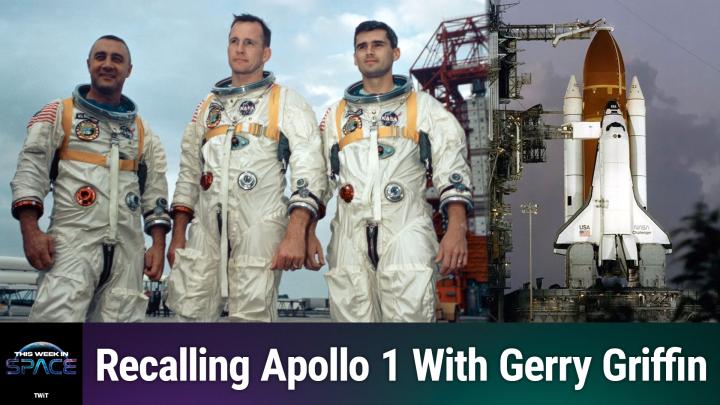
All TWiT.tv Shows (Audio)
This Week in Space 195: Remembering Apollo 1, Challenger, and Columbia
01:14:37
NASA's Week of Remembrance with Gerry Griffin
Loading summary
Transcript105 lines
- [00:01]
A
This episode is brought to you by State Farm. Listening to this podcast. Smart move. Being financially savvy. Smart move. Another smart move. Having State Farm help you create a competitive price when you choose to bundle home and auto bundling. Just another way to save with a personal price plan like a good neighbor, State Farm is there. Prices are based on rating plans that vary by state. Coverage options are selected by the customer. Availability, amount of discounts and savings and eligibility vary by state.
- [00:31]
B
Oh, such a clutch off season pickup, Dave. I was worried we'd bring back the same team. I meant Those blackout motorized shades lines.com made it crazy affordable to replace our old blinds.
- [00:40]
C
Hard to install?
- [00:41]
B
No, it's easy. I installed these and then got some from my mom. She talked to a design consultant for free and scheduled a professional measure and install hall of Fame son. They're the number one online retailer of custom window coverings in the world.
- [00:52]
C
Blinds.com is the goat shop up to 40% off site wide, plus an extra 10% off every order and a free professional measure happening right now@blinds.com Coming up on this Week in SpaceNew, NASA's Artemis 2 mission is closer than ever to reaching the moon. But there's been a delay and this is a somber time at NASA to remember some of their tragic accidents. And Jerry Griffin, legendary flight director, is here to explain how the agency's resolve and dedication carried them through it. Tune in.
- [01:21]
D
Podcasts you love from people you trust.
- [01:25]
B
This is truth. This is this Week in space, episode number 195, recorded on January 30, 2020 2026. Remembering Apollo 1, Challenger and Columbia. Hello everyone, and welcome to another episode of this Week in Space, the remembrance edition for this month of January 2026. I'm Rod Pyle, editor in chief at Aster magazine. I'm here with my most excellent pal, Tarik Malika. Space.com hello partner.
- [01:55]
C
Hello. Happy pod session day, Rod. How are you doing?
- [01:59]
B
I'm good. We're going to have a slightly somber discussion today, but we'll keep it as flowing as possible because we're going to be talking about Apollo 1 and the Challenger accident.
- [02:11]
C
40 years. 40 years now since the Challenger accident. Yeah.
- [02:14]
B
And it's a real treat for me, certainly. We'll be speaking with Jerry Griffin. He's a former Apollo flight director, deputy director of both Dryden and Kennedy Space center, and director of the Johnson Space center, among many other things, which I'll rattle off later, but you should definitely stick around. This is going to be one for the books. But first don't forget to do us a solid. Make sure to like, subscribe and so forth to keep our podcast on the air. And our boss is happy. Since we're doing what is essentially a memorial show, remembrance this week. I'm going to skip this bass joke out of respect for the subject matter, but you can still write us at Twistswit TV and cast your jokes into the hopper for future episodes. Now let's go on to just one headline because we had a lot to cover this week.
- [03:05]
C
It's a big headline.
- [03:06]
B
Do our solo headline.
- [03:10]
D
Headline news.
- [03:11]
C
Did I say headline news? Oh, I missed it. I missed it for sure that time.
- [03:15]
B
Boy, you stepped in at that time.
- [03:17]
C
I did, I did, yeah.
- [03:19]
B
Artemis 2 Countdown.
- [03:21]
C
Yeah, this is the big update. This is, I'm sure, what everyone has been waiting for. I know, I was waiting for it. But as we're speaking, NASA has delayed the, the, the, both the fueling test as well as the planned launch, like the earliest launch window for Artemis. The last time Rod, that you and I spoke here, for all of our dear listeners, we were all very much excited for a January 31st fueling test. That's where they tank up the mighty SLS rocket with the bajillions of liquid oxygen.
- [03:56]
B
And don't get technical with me, buster.
- [03:59]
C
I know, right? I think it's 736,000 gallons, but that if memory serves so and make sure that everything is working fine, that there are no leaks, you know, like we had the hydrogen leaks for Artemis 1, etc. And if it looked like it was going to be okay, then they could go ahead for a February 6 launch attempt in, you know, for Artemis 2. Now what we've got this morning is that they've delayed that fueling test to no earlier than February 2, which is Monday as I'm recording this, which means that the February 6th and 7th days are off the table because they can't turn the flight around in time for that. And due to weather issues, there's like sub freezing temperatures right now forecast for this weekend at Florida's Kennedy Space Center, NASA's spaceport, where they're going to do this test. And because of that, they, they can't do the test. It has to be much warmer for them to be able to feel better about, you know, ensuring that their, everything will go as they expect, not just for this test, but also on launch day as well. So they're going to hold off on all that until the weather warms up. And that has a ripple effect. That means that they can no Longer launch at the start of the window. Now they're go at the middle on the 8th. They have attempts on the 8th, 10th and 11th right now as I read the chart. And, and then we'll see if they get off this mission. Plus, on the heels of it, NASA's getting ready to launch Crew 12 to the International Space Station as the relief for the recently medically evacuated Crew 11 that's supposed to launch on February 11th as well from SpaceX's crew pad and at the Space Force Station at Cape Canaveral. So a lot of, lot of, a lot of things kind of in motion, but it does seem at least that they're still aiming for this window rod.
- [05:52]
B
If they missed this window, they roll into what, a 14 day window in February?
- [05:59]
C
No, in March. In March. The next one is around early March, about another, another four days or so. Then there's two windows in April as I recall, in early April and then again around mid to late month. And then NASA has said that there's on launch opportunities about every month for at least a couple of days, but there, they may not be consecutive and they, they may, they may kind of pop around there. It's, it has to do with where the moon is and where NASA needs to get to to make the trajectory in order to get that free return around the moon that Artemis 2 is supposed to do. And then also they want to make sure that they have mult attempts because they can pretty much only do maybe, maybe two, two tries in a given window to launch right now. So they're trying to maximize that.
- [06:46]
B
Are there any limits on how much time they have to have between detanking and retanking that thing?
- [06:53]
C
Well, that's one of the limits they're trying to preserve for these windows. This is what they said actually before rollout, that they're trying to preserve at least two opportunities to launch within a given month's window, which would allow them time, depending on what the nature of a scrub is. If it's just we, to be able to, to detank and then to refuel. So they're trying to have those supplies on hand for two attempts in order to, to do it. And if they can't get off with those two attempts, then they would have to wait for the next try.
- [07:21]
B
All right, well, thank you for that. And everybody stand by. We'll be right back with former Apollo Flight Director and Johnson Space Center Director Jerry Griffin. Stay with us. Hey everybody, it's Leo laporte. It's the last week to take our annual Survey. This is so important for us to get to know you better. We thank everybody who's already taken the survey, and if you're one of the few who has not, you have a few days left. Visit our website Twitt TV Survey 26, and fill it out before January 31st. And thank you so much. We appreciate it. And we are back with my dear friend and man of many roles, Jerry Griffin. Thank you for joining us today.
- [08:01]
D
Jerry, glad to be with you.
- [08:05]
B
So, Jerry. Oh, boy. Here's the resume. And if there was a NASA award given for most varied career, I think you'd have to have it. So you started in the Air Force, then you got to NASA as a flight controller on the Gemini program, relevant to flight director for all the Apollo flights. You're the deputy director at Dryden and Kennedy Space center, as director of the Johnson Space center, chief of the Houston Area Chamber of Commerce, managing director at Korn Ferry, a banker at one point. And now you're directing recovery operations in Texas for the. The horrible flooding that happened about a year and a half ago.
- [08:48]
D
Yeah, that sounds. That sounds busy. And I am.
- [08:52]
B
It does. And just so it said, everybody, if you're watching and you need a little bit of inspiration, Jerry turned 91 this year on Christmas Eve. Oh, wait, no, Actually, they put it 1201. So it would be Christmas Day, right?
- [09:08]
D
Yeah, it was Christmas Day.
- [09:10]
B
Yeah. Last year. Right?
- [09:11]
D
Yeah.
- [09:12]
B
So that's a challenge to all of you to stay engaged and. And watch your jeans. So, again, thanks for coming. We're here today to talk about some distressing memories, but I think it's important to acknowledge them. This is the month where we acknowledge the Challenger disaster, which happened in 1986, before that, the Apollo 1 fire, which happened in 1967. And I couldn't think of a better person than somebody who was. Who was around for both those things.
- [09:44]
C
Also, Columbia, don't forget intimate.
- [09:46]
B
Yes. Has an intimate knowledge of both events. We'll touch on Columbia. We'll see how much time we have. But we definitely got to start with Apollo 1. But before we do that, Tarek has a burning question.
- [09:59]
C
Yeah, I feel like we should have asked the question before we had the intro. But, Jerry, we usually ask folks how they first encountered space in their life. If it's something that caught you early and then you decided to pursue that in education, in life, or is it something that you found as a surprise opportunity, either through school or through, like, the initial days at work? I'm just curious how. How you found your way to space.
- [10:32]
D
Well, it was somewhere in between those two. I had graduated from, from college and had a military commitment. I was in the, in a fighter squadron in California, as a matter of fact, in Marin County.
- [10:51]
C
Oh yeah.
- [10:52]
D
And during that was 19. I got there in 1958 after flight training. And while I was there, NASA was formed. I was, I got there in 58 and NASA was formed. I was 23 and I thought that kind of interesting. I wonder what they're gonna. Wonder what they're gonna do. And turned out that of course the plan was to go to the moon. I said, boy, that sounds like something I'd like to do, is be a part of that somehow. I wasn't a test pilot, so I knew I wasn't going to be an astronaut because that was strictly test pilot days in those days. And so I started thinking about it. I got up, I finished my military commitment in four years. And that was, that was actually 1960. And I was banging on the door trying to get into NASA. And they were trying to get started with what they call the Space Task Group back in Langley, Virginia, later became the Manned Spacecraft center, which later became the Johnson Space Center. So I tried to get in as quickly as I could. They kind of put me on hold. They said, we're just too busy right now. We've got the people we need for Mercury, the first program, first man program. So I went to work for Lockheed Missiles and Space Company down in the South Bay of San Francisco and down in Sunnyvale, California. And guess what they were flying. They were flying the very early spy satellites from Vandenberg Air Force Base was out near Santa Barbara. So long story short, from there, that's where I really kind of started to learn the space business. But I kept knocking on NASA's door and finally got in in 1964. And that's when I joined to. So I was. By that time I was about 25, 26. So I was that while I was banging and I got in, I was almost 29, so I was a little late comer. I don't know.
- [13:30]
C
When I was 25, I still had no idea what I was going to do. I don't even think I had a full time job. So.
- [13:36]
B
Well, and as I recall, Jerry, in your early negotiations with NASA with another flight director we all know and love, you got lowballed.
- [13:45]
D
Yeah, Gene Kranz was the, he was the head of the flight. It was called the Flight Control Division. And Gene is the fellow that, you know that later on when he was a flight director, had a vest and kind of stood out from the rest of us. But Gene, I went down, met with he and a guy named Jim Tomberland and I never will forget it was kind of a, oh yeah, we could use you and you'll be at a GS something. I've forgotten what it was. It was a big pay cut from what I was making in, in the private sector. So I said well, I'll wait a while and see if I can. And so happened a guy named Mel Brooks, no kin to the, to the Hollywood version, needed some help in a section that was going to take control of the Agena, which was to be a docking vehicle. It happened to be a stage of a launch vehicle that I had become familiar when I was at Lockheed. So he reached out to me and made me an offer. It was still a small pay cut, but it wasn't drastic like crayons. So. And I always tell him, you know, thank goodness for Mel Brooks. So that's how I got in and I actually took a bit of a pay cut and went to Houston. Best decision I ever made.
- [15:20]
B
Oh, that's fantastic. Let's go to a quick break. We're gonna jump a little early and we'll be right back with my next question. Standby.
- [15:29]
E
Taxact knows filing taxes can be confusing. So we have live experts on hand who can help answer any questions you may have. Questions like can I claim my SUV is my home office? If I answer work emails in my car, If I adopted 12 dogs this year, can I list them as dependents and am I doing this right or am I doing this very, very. Our experts have the answers to those questions and many others. Taxact, let's get them over with.
- [15:59]
B
So you got in during the Gemini program. Which console were you on again?
- [16:03]
D
I was on the guidance, navigation and control, so called GNC systems. I was looking at the health and monitoring that, reporting to the flight director which at that time when we started Gemini was, was only. Chris Kraft was the only flight director. Later on he brought, he brought in a fellow named John Hodge and, and Kranz and there was a red, white and blue team. That's why the colors got started because those first three picked red, white and blue. So. And then later on in Germany he brought in Glenn Lunney and Cliff Charlesworth because he finally, Kraft finally realized I don't think I can stay up for several days in a row to be the flight director. So he knew he needed help and, and then I came in to be it and I, I was always considered myself kind of Mentored by, by craft. I could tell he and I synchronized well on, on during the Gemini era. And in those days, as soon as we finished Gemini, we went straight into Apollo. And with Apollo 1 was I was the GNC and I was on duty when the fire occurred in Houston.
- [17:45]
C
Yeah.
- [17:45]
D
So I was in. I was in Houston.
- [17:48]
B
So let me jump in with a question there because. Because we're going to recap the fire for people who may not know all the facts and the ins and outs, although I'm sure most of our listeners do. But the gemini program was 1965. In 1966. Right. And you guys were ripping along, launching about every eight weeks, I think six to eight weeks. Yeah. And it was going well and there had been problems. You know, missed rendezvous, were docking because the Agena wasn't working or something. But all in all, it was a real hot rod and the program was really crackling along. And by the time you got the Gemini 12, you had really achieved all the objectives that you had in mind, the major ones anyway, for moving on to the Apollo program. So I guess from what I've read and from you and I talking, I don't want to call it go Fever, because I think that's unfair. But, you know, things were crackling right along, and now you have this new machine, the Apollo command module and service module and the lunar modules coming eventually, and it's time to move into Apollo 1. So can you kind of describe that moving out of the Gemini period and into the early Apollo program?
- [19:00]
D
It was a. I caught it at an interesting time because I could tell, and I understood it, that people were kind of attached to the Mercury Gemini kind of structure, very robust, tough, Strong, built by McDonnell Aircraft. And now we were going to a new kind of spacecraft built by North American, North American Rockwell later. And it was, you know, it was different. Let me say it that way. It was different. It. And it also carried three people instead of two like Gemini, with almost no room to move around, actually. And as you know, with the command module, there was some room. You could maneuver some. So it was, I think everybody, I hate to use the word wary, but I think people were not comfortable yet. We became very comfortable with it later with this new piece of hardware built by different contractor. I never felt like, and I don't think many others did, that we were rushing. It's more like you said, we were rolling along and it was. Things seemed to be working well as designed. And then when we got to Apollo, we assumed, I guess erroneously, that everything was going to be just fine because we learned so much and we knew what we wanted to try to do at the moon now because we learned how to rendezvous and learn how to dock, we learned how to do EVAs in Gemini. So I never did feel like I was overly rushed, but it was a different spacecraft and we all had to shift gears pretty fast between 1966 and 1967, which came up right after that. So. And I know things that I heard later, that I learned later was that there was some spacecraft was kind of out of configuration with temporary lines run into it for one purpose of another. And that maybe there was a rush feeling, maybe particularly at the Cape, I don't know. But it was an interesting time.
- [21:49]
C
This is probably a good time just to remind our listeners about what happened, I guess, during the fire quest. Apollo 1, a very sad tragedy. You had astronauts Gus Grissom, you know, Mercury astronaut Ed White, the first American spacewalker, and Roger Chaffee conducting a test inside the capsule on the pad. And then a fire broke out and sadly the crew was lost. And by a coincidence, and Rod mentioned this at the beginning, this is just, it's like a week of remembrance that NASA has because that was on in 1967. And then of course on January 28th in 86, we had the space shuttle Challenger accident where several astronauts lost their lives, including teacher Christa McAuliffe. And on February 1st in 2003 was the loss of the space shuttle Columbia and another astronaut crew during reentry on that mission. So it's a very sad time there. But you know, for Apollo 1 in particular, you know, as you and Jerry and Rod were talking about earlier, it seems like there wasn't an expectation of the accident, despite how risky it was, until the country had to face the actual reality of how dangerous spaceflight could be, even on the ground there. I mean, it sounds from what you're saying that it didn't seem as if this was a, even possible to have an accident before actually getting into space.
- [23:35]
D
There's no doubt about it. I, you're right on. Space flight has an inherent risk in it all the time because you got, you got high explosives essentially in the propellant and the oxidizer in the big rockets. And you would expect that. That to me anyway, I expected if we ever had a problem, it would be after we lift the engines and we're going for liftoff. This was a test. It wasn't a launch attempt at all. It was a full up test and it was surprising. But let me, let me flash back just A second to my military time because this, all three accidents you mentioned, every one of them I felt the same emotion. And the first part is sadness and the second part is the shock that goes with that. But then the third piece is a resolve. When you're involved in these things and the kind of people that are involved in it, they know there are hazards. And eventually what you have to say is, by golly, you resolve to make it right and make it work. That happened to me in the Air Force several times with airplanes going have breakfast with a guy and that afternoon he was dead in a crash or one guy drowned in San Pablo Bay in San Francisco and he was perfectly okay. But a tragic set of circumstances. And, and so my point is that it's, you've got to, if you're going to be in this business, you're going to have lost it. It's a little bit like the aviation business. You fly enough, you're going to have an accident. You fly enough, you're going to have fatalities. That doesn't make you stop. You've got to figure out why, how it happened, what made it happen. One of the worrisome things about the fire is that we never FL for sure pinned it down where that spark came from and that. And of course, here we are in 100% oxygen environment, which we had done since time immemorial in high altitude airplanes, pre breathed on the ground to get rid of all the nitrogen in your joints so you didn't get the bends when you came down. And then we flew in 100 oxygen in those high flying airplanes above the stratosphere. So we had kind of been led into a false sense of, well, that's the way you do it. Well, there's a better way. You could do it with an air mixture that not quite like we're breathing right now, the ones on this call. But there's a better way to do it and that is to make it more like air so that the fire potential is not so bad. Because once you get a fire started at 100% oxygen, you're in trouble.
- [27:12]
B
Yeah, well, and it was, to be fair, you know, when you flew with 100 oxygen, you're at about 5 psi, but because you're on the ground and because, you know, capsules are more delicate than they look. Right. So if you have that at 5 psi at ground level, sealed at ground level at 14 point something psi, you're gonna have problems. Right. So you have to pump up the pressure in the capsule. So pumping up that oxygen environment was One of the big keys to the, to the entire problem. We're going to run to a quick break and we'll be right back. Let's go nowhere. Jerry, can you walk us through that day of the fire and the immediate aftermath? Because I'm sure that was a really, really challenging time for you and everybody.
- [27:59]
D
There it was. I was on the GNC console. I had not yet. It was after the fire that I was made a flight director. Chris was the. Chris Kraft was the flight director. And if you recall from the trans. The transcript, we were having big problem with communications. We were having trouble with the Cape talking to the crew and with the capcom and mission control in Houston talking to the crew. Finally, you could tell Gus got. Got a little bit in pain. He said, for God's sake, how are we going to ever go to the moon if we can't talk between two buildings here at Space Center? And shortly thereafter they called a hold in the countdown. And we always supported that plugs out test, by the way. That test was routine for us to be written like it was a launch preparation. So everybody said, okay, let's have a hold work on the comm system. This came from the Cape, but we said okay. And so everybody stood up to go take a break, get a cup of coffee, whatever. For some reason I left my headset on because I was writing something down I wanted to. To do and I heard something. I heard static first and then I heard kind of a. A yell or something that was. And I stood up and I told the guy. They were kind of walking towards the door and I. The ones that were still in the room, I said, hey, sit down, there's something going on at the cape. And other people had heard it too in the room. So they were. We were all saying those of us still had on a headset. Hold on, something's going on. So then it went quiet and we were pretty well out of it. And we couldn't, couldn't hear them at all. And it took a while for somebody came on the loop and told us from the Cape that we think there's been a fire at the pit and we'll get you some data as soon as we got it, as soon as we can. And so we waited and then we finally got the announcement that there had been a fire and that the crew didn't make it. We didn't have any videos or anything like that to look at. They just told us. And so that's when the shock and the oh crap set in kind of feeling and, and Then in a little bit. We weren't very good at cleaning up audio in those days. Not like they can clean it up today. But I was asked to go down and why, I don't know. But I went down to the room downstairs in the building where they had tried to clean it up. And all we could get out of that, what I thought was a yell, was the word fire that was later cleaned up. I think you said, we got a fire. Get us out of here. And so I took that message back to the control center and said, yeah, all we got out of the crew was, was fire. And that's all we could understand at the time. So there was a lot of just, I think, a period of sitting, thinking about it again. I was a little older when I got there, and I'd been in the Air Force. I'd seen chaos like that and. But we had a room full of people, some of them very young, college fresh outs that may be 22, 23, 24. And I think probably hit them harder than it did Some of us that were a little more. Had a little more scar tissue that had built up over the years. And so it was a. It was a tough time. But, you know, one of the advantages of what we had in Apollo, you talk about a team. We had a solid team that. And even those young guys stepped up and took that same resolve as kind of a. Kind of a, I think a natural feeling that we've got to find out what happened, fix it, and get on about our business. And luckily, we, you know, we had Congress that was behind us, the public was behind us. The White House, in both cases, in that case was. Was always with us. We had to answer. And as you'll recall, there was quite a. A hearing. And all after that, I didn't, I was. My pay grade didn't require me to get involved in that, but we had to fess up that we had screwed up and that we were going to do it better. And to the. There were always naysayers that said we ought to kill the program and that kind of thing that happened every time we had an incident of any kind. But in this case, there were people that said, you know, why are you doing this? You're throwing money down the drain. We never. We didn't hear much of that. We were more involved in. I was. We cleaned up some system matters that we would have done had we had time anyway, and I was involved heavily in that. And that was, in a way, was kind of a great distraction from the, from the immediate Grief.
- [34:34]
C
Well, yeah, I wanted to ask about that resolve that you had mentioned earlier because I imagine that that can, that can carry the team through in like different ways in maintaining just the regular morale of everyone coming to work and then also in fortifying that drive to identify what went wrong in a tragedy like, like this and the others that we've, that we remember around this time and then finding that solution to go on to, you know, then I guess, I guess execute the end mission, which is the, you know, leading up to the lunar landings and such. Were there any kind of really key standouts either, you know, like to really kind of get people on track so that everyone was still keeping that focus and, and that, that safety approach, but also, you know, just keeping the mission going forward that you can share up, you know, out of, out of mission control there.
- [35:30]
D
Yeah, there was, there was, there was a kind of a dead period in there that made what you're talking about difficult because we. People were scattered around the United States in some cases. I spent forever in California, it seemed like, with the command module and its redesign and rebuild and that kind of thing. And so we were kind of parted and then after maybe took almost two years before we flew again. Apollo 7, 21, 22 months. And probably after about a year it started coming together again and I think there was. And we started running what I'd call kind of basic simulations. You know, not exactly aimed too much anything but getting the team together and back in the control center and back into the use of, of interfacing with the crew and mission rules and flight plan preparations and all that, I think started to pull the team back together. You may recall too that Kranz, after the fire had a. All hands meeting that where he delivered. He was still the head of the flight directors, the flight control division. And he got all hands together and he. That's when he. It was a moving speech, if you will, or message that he delivered. And out of that came the tough, incompetent slogan that he said. I want everybody to write that on the top of their blackboards and leave it there. And we did. Everybody did. And he defined. I won't go into all that, it's fairly long, but he find what tough meant competent, that we'd never do anything that would put people at harm, knowing it knowingly. And it was a good message because. And I think it particularly worked on the, on the younger people to give them a kind of a rallying cry. And you know, some people, I suspect, lost a little confidence. I don't Think there were many that, that you could do this and, and do it safely. But, but I think, I think some did not, not many. And some gained it back and some moved on to do different things. So the challenge is what motivated the people in Mission Control. I can tell you that they love that challenge. They didn't mind making decisions like being out on the end of a diving board and deciding whether to jump and nobody to tell you whether you should or not. You had to make a decision on your own. And they all got that feeling that I could. You could feel the mojo coming back, that we were back in business. And by the time we launched Apollo 7, we were super, super ready, let me say it that way, to handle that mission. I think the Cape was in the same position.
- [39:25]
B
That's great. We're going to jump to a break and we'll be right back. So stay with us.
- [39:31]
F
This episode is brought to you by Credit Karma. When it comes to your money, Credit Karma keeps you ahead of the game. You can count on Credit Karma to keep up with your financial needs as they evolve, helping you monitor your progress and giving you personalized recommendations so you can make strides towards your goals. Make sure you're on the right track no matter where you are on your financial journey. Intuit Credit Karma, Karma you can count on download today.
- [39:59]
B
So I want to get on to Challenger here in a second, but just to kind of wrap up Apollo 1 and I mean, we could do hours just on Apollo 1, but we could. You learned a lot from that. I mean, you learned about the atmosphere which was fixed in the command module to a mixed more Earth, like less flammable atmosphere up until they got closer to orbit. You learned about the hatch, which I forgot to mention had been an open inward plug design that of course, once the pressure built up from the fire, that couldn't get open. So they did a very extensive and I think pretty expensive redesign on that hatch. So it swung outward, but it was a brilliant design. So, you know, these, just a few things. Changing the wiring, getting the Velcro out of there because it was flammable. And it, from what we've talked about when we've been working together on the book, you learned an awful lot from that experience. I mean, it did slow things down, but that gave time to really re evaluate an awful lot of what you were doing and make not just the Apollo spacecraft safer, but probably everything that's flown since then safer. Do you think that's a fair statement?
- [41:09]
D
Yeah, I think you're exactly right. One of the Things that we did in that fix it up period and redesign it every all, you know, the hundreds of switches and circuit breakers and all that that were in those panels in the command module had wiring on the backside that connected it to whatever it was controlling. They went in and sealed at the switches or circuit breakers. They actually put a sealant on every connection. Guess what? That probably saved us in Apollo 13 when it got so cold when we shut it down, and it got condensation all over the place. In fact, it was dripping when they went in to power it up. So what we got done in those almost two years to the command module, I think was probably saved the program. Chris Kraft says that in his book that it was a terrible price to pay, but that it probably enabled us to land on the moon eventually. And I get back to that word you just mentioned, learning. We learned every mission we flew. We learned something that we hadn't thought of or hadn't delved deep enough into to understand. We learned something from every mission. And that was a overload of learning and trying to get ready to fly the same spaceship again with people in it and do it successfully. And Apollo 7 proved we could do.
- [43:17]
C
Just feels so sad to know that 20 years later, you know, you would have that. Another accident that time. It wasn't even the first, I guess, at that point in time. Because, you know, in 1986, in January of 86, we have the Challenger accident, which is the next big. I guess we would call these flight accidents because there were training accidents, too, where astronauts, you know, had lost their lives. I think of some plane crashes that come to mind and tests on the ground. But in 1986, you had that. The launch of what was, I guess, you know, ostensibly, supposedly like. Like an operational vehicle with the space shuttle challenger. After five years of flight, 1981, of course, the first. The first space shuttle flight with Columbia. And then that, you know, sadly, the spacecraft broke apart after. After liftoff. There was a big explosion that a lot of folks. I was fairly young at that point in time, but it was one of those cultural moments that people remember because of the fact that you've had a civilian military crew with Dick Scobee and Ron McNair, Mike Smith, Judy Resnick, Greg Jarvis and Krista McAuliffe. We talked about her earlier, first teacher in space, civilian, you know, all part of, like, a new normalizing space. So a lot of eyes of the public, students were watching and whatnot. And I guess the initial question there is. And I understand, Jerry, I think you had just left NASA in 86. Right. But you were part of the shuttle program in the years leading up to it.
- [45:00]
D
Sure.
- [45:02]
C
You know, I'm curious how that moment resonated and if it was in a different way than that first Apollo fire because of the sheer routineness that the shuttle missions may have garnered in the, in the public's view by that point rather than during the earlier days of the space race in 1967.
- [45:28]
D
Well a number of reactions to that. The the shuttle was the first time we'd ever used solid rockets in manned spaceflight. And it did help us thrust wise at liftoff. And we got clear of the tower and into space a little faster, quite a bit faster. And that early acceleration is also going to be used in Artemis has been on Artemis 1. The military had flown those solids for a long time and we had used them in unmanned space launches. Titan probably the biggest example of that. But when it happened here's what I remember. I was, I was the director at the Johnson Space center and we started flying shuttles by the time I got there was STS 4 and 5 which we declared as quote operational which really wasn't. It was just the fact that we had flown four times and, and it worked just fine. The solid rocket joints had been mentioned already as a, a critical piece of the puzzle because the last part of the mating of it came in four segments in the last they both each weighed about quarter of a million pounds. And so as they mated these things at Kennedy after transporting them from Utah and when they started stacking them that last little bit of mating of those halves these quarter ton pieces was pretty blind. And you've probably done it with your plumbing in your house had occasion where when you put a O ring in it didn't seat right and you leaked water as soon as you put pressure on it.
- [47:52]
B
We.
- [47:54]
D
That those joints were not easy to make and it was our understanding my understanding and that there was a redesign already in, in work it was coming later flights just to improve the margin of, of how the joint was held together and so but I felt comfortable. After several missions we got up to about. I think it was the 20th flight. Things had worked like a charm then. I think if I'm correct Challenger was about the 25th flight I left in actually I left in in January but I actually had taken early retirement and my end date was actually back in December because I had some leave coming. So I had already gone to work downtown Houston and and I knew there was a launch that day but I was trying to figure out what the heck I was doing in that job at that point. And I was in a meeting and I got a call from my daughter who was working for Raytheon at Titusville at the time. She just gotten out of college. And they called me out of the meeting at the chamber to say your daughter's on the phone, needs to talk to you. And I said okay. So I talked to her. She said it blew up. And I said what blew up? She said the shuttle. I just watched it from Titus to cross the river Titusville. And so I immediately canceled the meeting, went down to the Space Center. I was still badged so I could get in. I walked into the viewing room of the Mocker the mcc and I caught the eye when I did of. Of the flight director fella named Jay Green. And he looked at me and I was looking staring at him and he just shook his head and they were gone. They knew they had not made was a little bit like the fire, you know, kind of a. An abrupt. I figured that the crew had probably perished and those were all good friends, particularly two or three of them very close. Dick Scoby was really close friend. Judy Resnick, Ellison Onazuka, the others to a lesser degree. But I got to know them all because they were training when I was still director and I saw him on the center and talked to him and so it was. That was a huge loss and I didn't think it could ever happen, frankly.
- [50:52]
C
Yeah.
- [50:53]
D
And we had, didn't have an escape system. There was just no way to do it on that machine for that kind of blow up.
- [51:04]
C
Yeah.
- [51:06]
D
So that was the way the day went for me. And then, then I just kind of followed it. I did get questioned by the accident investigation, what I knew and so forth, which I wasn't too helpful with because that was Marshall Space Flight Center's bailiwick. But we were all communicating all the time and. And so I. I can't say I was not aware that the joint they wanted to increase the margin and how they did it.
- [51:39]
C
Yeah. And those the. The joints for folks listening if you're not aware. The space shuttle like the Challenger accident was traced to there was a burn through at the joint between the. It has the two side solid rocket boosters are made up of different segments and then they've got that O ring seal and it was super cold in Florida. Abnormally cold.
- [52:04]
B
28 degrees.
- [52:04]
C
Yeah, it was 28 degrees so below freezing temperatures. And, and that caused the, like the, the O rings you know to, to freeze. They get brittle and, and Then there was a burn through during the ascent and it burned through the, the side of the seal and and you know, ruptured the the external tank. And then you have the, the massive explosion that we had that we've all seen with the iconic images there. And the crew was unable to survive. As Jerry mentioned, there isn't like a, a launch escape tower or anything on or. There wasn't I guess because the space Shuttle retired in 2011, there wasn't that kind of emergency escape shift. But you know, I know that in the wake of the accident there were at least scenarios and systems that were made to try to address at least some of that there. But did, did, did you see or did you expect a similar pause for reflection and, and that resolve that you mentioned, do you recall? Yeah, that same kind of atmosphere or was there a different sense? Because like there was in the investigation that followed there was a lot of criticism, you know placed that and NASA had Thiol which made the boosters, you know about, about the concerns and who knew what when. And I think at that time the 51L mission had been delayed quite a bit and there was a lot of concern about that too. With such a public eye with the fact that they had the first teacher in space on that flight.
- [53:44]
D
You know, let me give you a personal opinion then I'll dig went a little bit deeper.
- [53:50]
C
Sure.
- [53:51]
D
It was cold 28 degrees. I don't know how you guys call that. I call it a light freeze and we haven't. That's kind of what we have here in Texas normally till this till this year. And so it could be that the O rings were affected by the temperature. My personal opinion and I'm an aeronautical engineer that learned space because there was no space curriculum when I was in college. That tells you how old I am and I, I'm not sure that's the was the answer. It may have been a participating piece. I think the joint was bad and we likely would have lost it on a mid summer launch. When I think back about how that joint was put together and there were tool rings actually and they, and, and then when it was mated you just had to kind of trust and that's probably overstepping the word a little bit but you just kind of had to trust that that last bit you couldn't see was okay. So I'm not sure we ever got at the root cause we probably got it. You know, every accident there's participating things that happened that could have made it all when put all together made it fail and Temperature may have been part of what I saw after and now was looking at it from afar. I was looking from the private sector and I was looking back and with the commission that was formed and, and the report that was given, there was, you know, shortcomings that showed up in the system and it showed how, how difficult it is to build one of these things and hold it together. To me, the, the entry into the atmosphere, frankly is a piece of cake compared to getting out of the atmosphere with the loads and the amount of hardware and you've got to hold it to get in its high explosives, essentially that you're riding on. That's a tough, tough order. And I, I, and I loved it when those solids burned out. And same way on Artemis 1 when those things burned out and got peeled off. Well, at least now we're down to liquid engines and we don't have any joints and, and moving parts to deal with. The thing that, that I recognized that came out of it though was it was kind of the beginning of something that we had in Apollo. And I think with age every organization goes through it. There was a rise of decision making to higher levels, including inside the Beltway, as if there were better decisions made inside the Beltway than there were at the field centers, which I'll never believe. I think the field centers are where our excellence is in this country on the civilian space side. And we had the luck of leadership that pushed those decisions down to us. And we knew that it was a very big responsibility. And I can't, I don't know whether there was a rushed feeling or not. I don't think, I don't think I felt that we were had rushed into 51L or to Challenger, but that's the way it kind of came out in the woodwork. The other thing that was a fallout of that is that the paperwork required to get a flight ready to go increased orders of magnitude. You know, we flew Apollo 7 and think of this difference. We flew Apollo 7 in October of 68. We went to the moon with Apollo 8 two months later. And in between there had been some problems with the Saturn 5 that in unmanned tests that we did. And in fact one of them, the S IVB didn't restart like it was supposed to. And that was the propulsion that sent you to the moon. And this was to see if how it worked. And that was the Marshall people went to the leadership. Did we know what caused that? There was one other problem with pogo, which is a pulsing resonant frequency and caused an engine to Shut off on the second state. We know how to fix them both and we can do it and we're solid that it'll work. And he. They went through it with program people and George Lowe and others. And you talk about a gussy call. I said, okay, let's go. So the first time that a Saturn V was ever launched with a crew on top of it, we went to the moon. That was Apollo 8.
- [59:43]
C
Yeah.
- [59:44]
D
And so I think our leadership understood the risk and they also understood the gain. But they also knew you have to trust yourself eventually to call it. And they did. And it worked. And it probably, for all intents and purposes, the so called space race with Soviet Union was over at Apollo 8.
- [60:14]
B
And of course they had the good taste to have it at the moon during your birthday, which I thought was very classy.
- [60:20]
D
Yeah, so.
- [60:22]
B
So after Challenger is, I think you mentioned there was a redesign of the SRB joints in particular, I think they added a third O ring, but they definitely added. I forget what it's called, but it's like a capture flange around the thing so that when the burning fuel pressure, instead of pushing the joints out and apart, would actually cause them to tighten. Which is pretty brilliant.
- [60:47]
D
You're right. That's exactly the fix.
- [60:50]
B
Which we should have been there originally, but at that point I'm assuming there was kind of a sense of, okay, we've got the shuttle thing under control. I mean, from what I understand, there is always kind of a lingering concern about the main engines which ended up working perfectly. But I mean, the stresses and the RPMs and those things are massive. But then Columbia happens in 2003 in which a piece, you know, of all the things to occur, a piece of foam, it's a little ramp shape next to the, the external tank mount. A piece of what's basically Styrofoam breaks off. But because of the speeds and the pressure involved and everything actually punches a hole in the leading edge of the carbon, carbon fiber heat shielding on the front of the wing, which, which ended up dooming the Columbia. I mean, it was there, to quote Frank Borman from Apollo 1. Was there a failure of imagination there? Is that just one of those things that you really can't catch up front?
- [61:57]
D
Yeah, maybe. Maybe the audience would just a brief piece. The foam was all over the external tank. It was that orange looking stuff and it was sprayed on. The tank rotated and they sprayed it on and it was to make it like a thermos bottle because you had liquid oxygen, liquid hydrogen, both very, very cold to Keep them in a liquid state and you didn't want it boiling off due to heat leak coming in. So that's why the insulation was there. Every mission we had pieces of Styrofoam, smaller chunks, by the way, though, that came off during launch and never did any damage because it's a little heavier than Styrofoam. It. But it's like a dense. A denser maybe is a word. Styrofoam covering. What happened on. On Columbia is that. And they noticed this in the film or the camera that they have looking at that area. It's on the vehicle, on the launch vehicle. They could see Styrofoam come off as usual. But there was one bigger chunk in there, which they finally decided by analysis of size and shape. With still photography, they estimated the weight and then they went back and. And figured out the velocity that that would be going. When it hit the leading edge of the wing and it was something like 800ft a second it was moving. I was in. Happen to be in Washington and somehow I got. Somebody tracked me down. And I went on ABC with a couple of other NASA guys, former NASA guy. And all three of us didn't believe. And we told the ABC news guy, Gibson, we told him we didn't think that that foam could poke a hole in that reinforced carbon. Carbon, which was thick and like steel that on the leading edges. Well, they proved us wrong because they took a piece of that foam approximately the size that they finally determined that bigger chunk was, and they took it down here to San Antonio to the Southwest Research Institute and set up a test where they fired at 800ft a second. I think that was the number, don't quote me on that. But into a piece of reinforced carbon. Carbon. They blew a hole in it.
- [64:58]
C
Yeah.
- [65:00]
D
So there was another. Oh, we learned something that that foam can be really, really dangerous. Now, I don't know all the fixes they did. They probably looked at the procedure and the temperatures and the mixture of that foam to make. Make it stick better. But after that flight and we returned to flight, we flew the rest of the program without any problem. We did do an inspection as soon as. When we had to. When we had the arm, we could put a camera on it and they could go outside and look at the leading edge. Can't see it from the cockpit. Can't see the leading edge or too far back.
- [65:48]
B
Right.
- [65:49]
D
And so we learned some things in the space station and we'd actually kind of fly around the space station, let them take a look and make sure that their leading edges were all in good shape and all of that. So I don't think that's going to raise its ugly head again until we go to a spaceship like the shuttle, which is an amazing machine. But it, I thought one of the astronauts said it right. He said it was like a butterfly riding on a bullet. It was, you know, it's all aluminum. There was no, there's not enough titanium in it to talk about. It was mostly an aluminum structure, light, big with big empty spaces like the cargo bay in it sometimes. And so it kind of. I think a butterfly flying on a bullet is pretty accurate. And the vehicle was our first reusable space stuff that we flew again. And the orb with the orbiter and we revolved refill the solid rocket casings and flew them again. So the shuttle told us a lot and a lot we didn't know.
- [67:21]
C
Yeah, I should point out by the way that we didn't mention the crew for Columbia on that flight. STS 107, that was Commander Rick Husband Pilot William McCool. I'd actually spoken with him a month or two before that flight. And then you had a mission specialist Mike Anderson, David Brown, Laurel Clark and, and Kapana Chawa who had a huge following because of her Indian descent at that point in time and I think still, still to this day too, as well as Israel's Ilan Ramon and there's actually old centers and, and whatnot. Dedicated that to uh, as well. So to, to, to what you, you pointed out there, Jerry, I can attest because I think every one of the space shuttle missions I covered came after Columbia in terms of. That's when I became the space reporter@space.com and you saw each one get cleaner and cleaner with the boom inspections that they had put out to the point where SCS135 was one of the smoothest I think not just launches, but the entire mission from soup to nuts was, was very issue issue free and, and that, that really kind of brings us a bit full circle to now where we're like maybe just over a week away as, as we're speaking right now from going back to the moon with astronauts and, and Artemis too. And I'm very, very curious from one flight director, you know, to I guess the ones that are, that are, that are listening now and the, I guess the kids that might be the flight directors in the future if there's like any kind of message or words that you'd like to share, you know, for both that mission coming up and all of the missions to come about, what people should be keeping in mind going forward and keeping that resolve that you've spoken of throughout this hour.
- [69:29]
D
I, I, that's an excellent topic to kind of close out this thing, I think, because the people at NASA and I've dealt with them at the Cape, I deal with them more often at Johnson today. They're every bit as good as we were. There's no reason that they can't make decisions that will get us to the moon successfully. There comes a time when you have to say it's time to fly. It's easy for anybody to hold their hand up and say, well, I don't think we're ready because this, that or the other. Find out what the people that are in the trench now think. They've gone through just a whole bunch of planning, testing, simulating. By the way, simulations are what made us in flight control. Now, launch control is a similar deal, but they're, they're dealing with real life physical hardware. You know, the mission control is dealing with the crew and, and telemetry and, and that kind of thing. It's, it's a different task. So I'm not trying to say that one is like the other, but I really do think that it's time to fly. If the people in the program and the people in the ops phases, both the launch and flight ops say it's ready, we ought to believe them and trust them. And there's always really, somebody is going to hold up their hand not in the control center, because if they do, they'll call a hold. But there will always be former employees, there'll be former reporters, whatever, that think that they know something that nobody else knows. I can tell you those people at NASA today know everything that those people know and more so I would trust them. If they're ready to fly. Let's go. It's time.
- [71:52]
B
So I guess what you're saying is there are a handful of armchair flight directors. Well, certainly on the Internet, maybe in Washington, but.
- [72:03]
D
Oh, you see them on TV too.
- [72:05]
B
Yeah, let's, let's leave it to the experts. And I wanted to mention there's a display at Kennedy Space center behind the shuttle display there of a piece, a recovered piece of Challenger and a recovered piece of Columbia. And it's, it's very well done. It's very tough. It is, it's down at the end of little hallway and I, I can certainly never go there without shedding a tear or two. And I want to thank everybody for joining us today for this episode of remembrance number 195. And especially you, Jerry, for coming on today. I really appreciate it and this has been a special treat and let's all offer our best wishes to the crew of Artemis 2. Have a safe flight and bon voyage.
- [72:50]
D
Yeah, let's just hope they pull it off without a hitch. That's what I'm. And it's time.
- [73:00]
B
It is. And Jerry, speaking of, of its time, I know you have appearances around the globe about every, about every three hours. Anything coming up we should know about?
- [73:11]
D
Well, I'm, I'm gonna go to. I've got a three o' clock meeting on flood recovery if that would interest you. And so that's only about an hour away, I guess. And yeah, I, I'm still doing a lot of traveling I. Domestically and overseas. I'll probably be back in London in March. Supposed to be in Australia and June. That is if we get Artemis out of the way. Artemis too. And yeah, I've never stopped. You know, it's. It's interesting. As you pointed out, I passed my 91st birthday on Christmas Day and I've, I'm still convinced that the thing that has kept me going is mental. It's more mental than it is physical. I think you've got to keep your brain engaged. I'm going to be at the mcc. I won't be on the floor, but I'll be at the mcc for Artemis 2 whenever it happens. It's about a five hour drive so I can get there pretty fast. And so I've never gotten too far away from this crazy business that is, I think, one of the most important technological endeavors we'll ever undertake, I think.
- [74:41]
B
Very well said. And hopefully Tarek and I, if I do eventually get my credentials, will. We'll see you in the catalog, see.
- [74:49]
C
You there or somewhere.
- [74:50]
D
You'll get you. You're going to get your credentials.
- [74:54]
B
We're buying the first year.
- [74:55]
C
Jerry will fix it.
- [74:56]
B
That's right. So Tarek, same question. Where should we look for you?
- [75:01]
C
Well, you can look for me@space.com as always, where we're watching like a hawk for the upcoming fueling test for Artemis 2. You can find me on all the socials at Tarek J. Malik, from X to Blue sky to the Instagrams and all of that. If you like video games. I'm on YouTube at spacet and hopefully in Florida next week actually as we're recording this for the Artemis 2 launch itself. And then I'll see Rod in Houston and it'll be just like the old shuttle days going back and forth between them all.
- [75:33]
B
That's right. And hopefully if we're lucky we might be able to do an episode together from Houston. And of course you can find me at pylebooks.com or@astermagazine.com and I think both space.com and to a lesser degree my magazine ad Aster will have plenty of content on Artemis 2 coming up this quarter. Remember, you can always drop us a line at twistwit tv. We welcome your comments, suggestions, ideas and we answer every email. You can also follow the twittech podcast network at Twit on Twitter and a Facebook and Twit TV on Instagram. Everybody, thanks for listening. Jerry, thanks again so much for joining us today. Don't, don't, don't let them drag you into too long a meeting at 3 o', clock, okay? Because you're a nice guy. I don't want people taking advantage of you. That's for us to do and everybody will see you next time. Thanks again.