← All TWiT.tv Shows (Audio)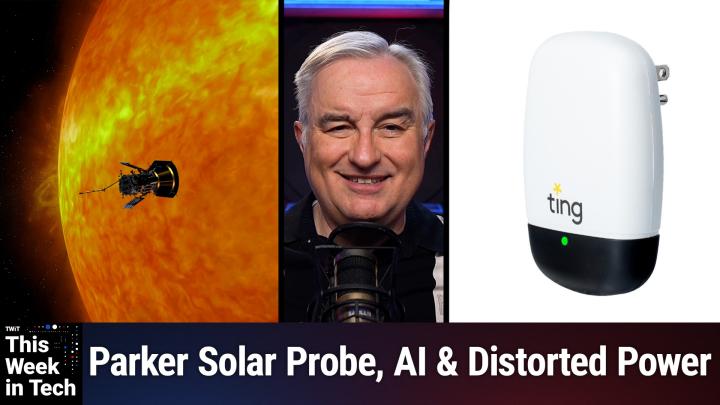
All TWiT.tv Shows (Audio)
This Week in Tech 1013: Calamari in Crisis
02:35:02
Touching the Sun, Fake Spotify Artists, Banished Words
Loading summary
Transcript1,047 lines
- [00:00]
Leo Laporte
It's time for Twit this Week in Tech. We have a great panel for you. Stacey Higginbotham is here, Richard Campbell is here. And from TechCrunch, Anthony Ha. Of course, we're gonna talk about what to expect at CES this year. Of course, Stacy is all about IoT. We'll talk about matter, we'll talk about AI, and then the banned words of 2025, words we never want to hear again. All that more coming up next on Twitter.
- [00:29]
Stacey Higginbotham
Podcasts you love from people you Trust.
- [00:34]
Leo Laporte
This is TWiT. This is TWiT this Week in Tech. Episode 1013, recorded Sunday, January 5, 2025. Calamari in crisis. It's time for TWiT this Week in Tech, the show. We cover the week's tech news. Brand new year, brand new news, and a lovely panel assembled for your delectation. Stacey Higelbotham is here, longtime host this Week in Google. She still does Stacey's book club in our club. And she's now a policy fellow at Consumer Reports, where she just wrote a lovely piece on why all IoT devices should have updatable firmware. They should have an expiration date. Yeah, yeah, that was huge.
- [01:31]
Stacey Higginbotham
2025, like, big thing. That's all I'm going to talk about next year.
- [01:36]
Leo Laporte
Well, actually brought you here to talk about matter because you're also a home. Or at least I'll talk about that, too. Do you still do Iot stuff you don't do? Stacy on Iot? You don't do the website? Do you pay attention to it?
- [01:48]
Stacey Higginbotham
Oh, yeah, I totally pay attention to it. It's like, still my job to pay attention to it.
- [01:52]
Leo Laporte
Oh, good.
- [01:53]
Stacey Higginbotham
Most of my time is like CyberSecurity and then IoT devices. I know, it's weird.
- [01:59]
Leo Laporte
There's plenty to talk about in that area, goodness knows. Wonderful to see you again. We had a fun book club a couple of weeks ago and we are now voting on the next book. But I gave everybody plenty of time to vote. So if you're in Club Twit, go to the Stacy's Book Club section and you can look at the four books.
- [02:19]
Stacey Higginbotham
Yeah. Who's winning?
- [02:20]
Leo Laporte
Oh, I haven't checked. I should check.
- [02:23]
Stacey Higginbotham
Well, I'll check.
- [02:25]
Leo Laporte
I always save a credit on Audible so that I can get the book. If I haven't read it yet, I can never find where the poll gets so hum by. These are the various Hum by Helen Phillips, those Beyond the Wall by Micaiah Johnson, the Practice, the Horizon, and the Chain, which sounds a Little bit like the Cook, the Thief and Her Lover by Sophia Samatar and Orbital by Samantha Harvey. 13 days left to vote.
- [03:00]
Richard Campbell
I have Orbital in my stack to go to Mexico.
- [03:03]
Leo Laporte
Oh, yeah, you're gonna read it?
- [03:04]
Richard Campbell
Yeah. Yeah. On paper, too. Just because she who Must Be Obeyed suggested I read something on paper. That's.
- [03:09]
Stacey Higginbotham
Richard, you should read it on paper. I listened to it and I felt it was so literary and possibly beautiful. And I missed a lot of that beauty because I was.
- [03:19]
Richard Campbell
I normally read on a Kindle, but actually read on paper.
- [03:22]
Leo Laporte
Papers, paper, papers.
- [03:24]
Stacey Higginbotham
Really?
- [03:24]
Leo Laporte
That's Richard Campbell. You may remember him from Windows Weekly Run his radio and from the last episode of Twit. That's great to see.
- [03:32]
Richard Campbell
Feeling a little fixturish here, Leo.
- [03:34]
Leo Laporte
We liked you so much. We brought you back. Great to see you. Actually, we had Paris as inked in, but she's not feeling well, so thank you, Richard, for filling in at the last moment. We appreciate it. Also here from TechCrunch, she's their weekend editor, Anthony. Ha. Good to see you, Anthony.
- [03:48]
Anthony Ha
Thanks for having me back.
- [03:50]
Leo Laporte
Are you in the. Are you in San Francisco? Where are you located?
- [03:53]
Anthony Ha
No, I'm in New York.
- [03:54]
Richard Campbell
New York.
- [03:54]
Anthony Ha
I'm filming in my beautiful Harlem apartment.
- [03:58]
Leo Laporte
It is beautiful. That's why I asked, because San Francisco is famous for what they call the railroad apartments, where it's just. It's narrow but long. Right. And it looks like you're in a railroad room. Narrow but long.
- [04:10]
Anthony Ha
Yeah. My apartment is like that too. And there was definitely a period in 2020 where we would experiment with different zoom setups, and it would either look like I was in the longest apartment, like the apartment where there was all depth or no depth. And ultimately I just gave up on having a good setup. And I just. I like this spot. And, you know, that's. That's how it is.
- [04:30]
Leo Laporte
I think every. Every zoom backdrop should have a conver. What do they call that? Convergence point in perspective. It should have that. I can't remember what the name.
- [04:44]
Benito
The vanishing point.
- [04:45]
Leo Laporte
Vanishing point.
- [04:46]
Anthony Ha
There we go.
- [04:47]
Leo Laporte
Yeah, that's even better. Every. Every room should have a vanishing point. I like that.
- [04:53]
Stacey Higginbotham
Is that where the gravity well sits?
- [04:56]
Leo Laporte
Yeah, that's the black hole. Did you see? Now, because they've been looking at black holes, they think there is no dark matter, that time is variable, and that explains the lumpiness in the universe.
- [05:09]
Stacey Higginbotham
Wait, when did this happen?
- [05:11]
Leo Laporte
Just the other day.
- [05:13]
Richard Campbell
I literally just read the paper, like, this weekend, actually.
- [05:17]
Leo Laporte
They had us. There was a study a few years ago that indicated maybe this was the case, and they've done some more work, and now they're pretty convinced that it's.
- [05:27]
Richard Campbell
A very good theory and it's an old one. It's been around for 20 years. This idea that applying general relativity, including mass in your time calculations, when you get to extreme numbers, means that between the galaxies and then in the void, expansion is much faster than where gravity is present and slows expansion. And that actually, when you start adding up those numbers, gets awfully close to the dark energy offset.
- [05:51]
Leo Laporte
It matches what we. Yeah, but the dark energy was just something made up, just.
- [05:55]
Richard Campbell
Just like all fabrications to solve for problems.
- [05:59]
Leo Laporte
Right.
- [05:59]
Richard Campbell
In the case of dark matter, it's like. And 70% of everything is something we don't know.
- [06:03]
Leo Laporte
And they're saying, new. New model fits a little bit better than the dark matter model, which is very good. And you know what? I'm surprised they didn't come up with this sooner, because that makes sense. We know that mass slows time, right?
- [06:15]
Richard Campbell
Yeah.
- [06:15]
Stacey Higginbotham
It's always there science. It just once you figure it out, it makes sense.
- [06:19]
Leo Laporte
You're like, oh, that's right.
- [06:21]
Richard Campbell
Until the James Webb Space Telescope, you couldn't measure it well enough to prove it. And so this is a fallout of the third wave of the JWST measurements that started to be precise enough to say, hey, this might be correct.
- [06:37]
Leo Laporte
Some science projects are really good. Yeah, that's a good science project.
- [06:42]
Richard Campbell
We create new senses for our civilization.
- [06:45]
Leo Laporte
Isn't that amazing? Measure things back to the somewhat less interesting ces. It starts tonight with CES unveiled, the Consumer Electronics Show's official kind of mini show. And then tomorrow's pepcom and Showstoppers, and then the doors open Tuesday or Wednesday. Stacy, you were looking up the schedule. None of us are there. That's the key point. And, Anthony, you kind of succinctly put it succinctly. I'm now senior enough. I don't have to go.
- [07:20]
Anthony Ha
I don't know if I used those exact words. Okay, I don't have to go anymore, which is nice. We have a huge. TechCrunch has a huge team there.
- [07:30]
Stacey Higginbotham
Sure.
- [07:30]
Anthony Ha
You know, it's always a little bit miserable, but, you know, it's also a great. Usually. I mean, it's always a mixed bag. It gets exciting because there's always, like, new stuff. And it's always, like, such a grind because there's so much trash there, you know?
- [07:44]
Leo Laporte
So Lisa and I have a kind of ongoing debate. It's expensive for us to go because we have to bring Stuff and, you know, it's tens of thousands of dollars, so we haven't gone through since before COVID The last CES I went to was January 2020. And I'm kind of of the opinion you don't really see a lot of important stuff there is. Am I wrong on that?
- [08:05]
Stacey Higginbotham
I think, okay, look, it is a grind. And I will say last year I went and I didn't have to cover anything and that was like the best CES I ever had. Because, like, you just get to walk around and be like, oh my God, that looks so cool. So I think there are two. Like, it's easy to be like, oh, it's a grind. It's not a lot of cool stuff. You can probably cover it better from far away. And that is true. But hidden inside some of the techier booths, if you go to like Qualcomm's booth or even Intel's booth, you go to like these weird Eureka park booths, you can actually see the future of technology. And I'm not paid by Gary Shapiro.
- [08:45]
Leo Laporte
At all, but head of the Consumer Electronics Association.
- [08:49]
Stacey Higginbotham
Yeah, you can. You can see trends, trends and things emerging very early on. And it's a great time as a reporter to talk to people in ways that they normally won't talk to you. So, you know, you can casually have conversations and learn more in like 10 minutes than you could in like a 30 minute interview with a PR person involved. Right. You may not be able to quote it. I mean, you actually totally could. Like, I loved it. I mean, I hated it, but I also loved it.
- [09:21]
Leo Laporte
Well, and certainly if you're covering IoT and home automation, even if you're covering, I mean, I feel like TVs for sure. Yeah. But what else? I mean, the last time I was there in 2020, there were a lot of things to make food, like bread makers, but then there was don't look.
- [09:42]
Stacey Higginbotham
At the finished technology, look at the building blocks.
- [09:44]
Leo Laporte
That was my.
- [09:45]
Stacey Higginbotham
Yeah, go to the chip guys, go to the satellite guys, go to anybody. Like, you see what they're pitching to their customers that will be at your devices in three to five years, maybe.
- [09:57]
Leo Laporte
Yeah, because there will be, there always is at ces, kind of a trend. There will be this year a lot of stuff with unnecessary AI glued into it. Right. That'll be the thing.
- [10:07]
Stacey Higginbotham
CES this year, like, I'm not going to say, okay, ignore it if it has AI. But yes, everything's going to have a thin wash of AI the same way it used to have a thin wash of like Madam A. And blockchain, you know, or blockchain or whatever. You can just safely, you know, you can't ignore it as a journalist, but as someone who cares about technology, you can totally ignore all that. And you can say, okay, if everybody's doing AI, let's talk about energy savings, because that's a big, huge problem in Cost Center. So let's go talk to the chip guys about how they're. How people are tweaking silicon to make that run more efficiently. Are there cool cooling technologies that you can find? That's where you go.
- [10:49]
Leo Laporte
Yeah, yeah, I agree. That would be. That would be of more interest. But you see, you are an actual reporter and capable of digging deeper. I am a superficial guy, and I go there and I see the robot that delivers toilet paper rolls and think, I never want to come back here again. I don't. And all the local news, by the way, they go to the events on Monday, Sunday, Monday and Tuesday with their camera crews. They do an interview with the first thing they see in the door, which one year was the haptic fork. Remember that? The buzzing fork. And then the last time was used. What?
- [11:25]
Stacey Higginbotham
That's a real tool, that.
- [11:26]
Leo Laporte
Oh, no, that's for people who have stability issues. Yeah, yeah. But no, this wasn't for that. This was a haptic feedback fork.
- [11:35]
Anthony Ha
It was like something to do with diet, right?
- [11:37]
Leo Laporte
Yeah, it was dopey. And then the last time I was there, Kohler had a robot that would bring you a roll of toilet paper if you ran out, which was never intended as a product. It was a. It was really about getting the local TV crews to do a bit on it, and then you get some publicity. So that's why I kind of have a nervous negative reaction to it. But you're. You're. Of course, as always, Stacy, I feel chastened. You're right. We should celebrate.
- [12:05]
Stacey Higginbotham
Sorry, I just.
- [12:07]
Leo Laporte
I feel like the worst excesses of the tech industry are shown there. But then, of course, there are people who are doing important work. You're right.
- [12:16]
Stacey Higginbotham
And you're totally. You are also right, Leo. The worst excesses of the tech industry are there.
- [12:23]
Leo Laporte
How did. Can I ask you a question, though? On a technical thing, how did you get the CR and Consumer Reports to flip around? That's amazing. It was backwards the last time.
- [12:34]
Stacey Higginbotham
It was. But I manually flipped it.
- [12:36]
Leo Laporte
Oh, you did? Really?
- [12:38]
Stacey Higginbotham
I have a Kohler robot back there.
- [12:41]
Leo Laporte
Did it bring you a roll of toilet paper?
- [12:43]
Stacey Higginbotham
Well, exactly. It's like toilet paper.
- [12:45]
Leo Laporte
And actually, that would be one of the things that you would go, and I'm sure so would Anthony and Richard, and say, hey, all this AI is nice, but who's going to pay for the power? There was a story this week in Bloomberg that said AI is using so much power, it's degrading the grid. The headline AI needs so much power, it's making yours worse. What, what people don't realize is that, you know, am I showing the wrong screen or is that.
- [13:17]
Benito
No, that was my fault. My bad.
- [13:18]
Leo Laporte
Okay, The AI data centers are distorting. Now, Richard, you're going to have to explain this because you're the autodidact. They're distorting the normal flow of electricity. And so there's a map that says that shows you where there is brownouts in effect from these AIs, which cause damage to home appliances, especially in areas like Chicago and Data Center Alley and Nova North Virginia, where distorted power readings are way above normal.
- [13:52]
Richard Campbell
The problem here, and it'll get resolved, is that the data centers aren't reporting their consumption dynamically back to the power system because their consumption levels are hard to measure. They're not like regular humans.
- [14:03]
Leo Laporte
Well, and also we have a dumb grid, right? They've talked for years about making a smart grid.
- [14:07]
Richard Campbell
The grid's getting smarter. But major power consumers, like an aluminum smelter is a great example of this massive consumer of electricity. And they actually converse with the power company before they crank up the inductors for exactly that reason. It's hundreds of megawatts, and you'll knock the grid over. Here you've got these data centers in neighborhoods, and their consumption behavior is unusual. It's. It's kind of symmetrical, but it does has its own peaks. It was the same all the time, it wouldn't be a problem, but it's not. And it doesn't follow the normal shape of humans, which is, you know, more power consumed during the day, less at night. And so the impact on the grid is that it sags the cycle rate. Normally we're running at 60 hertz. So when you overload the grid before it actually trips, it'll drop down to 59. You know, 59 is actually a disaster. 50, you know, 59.6 is bad enough. And that can damage certain coils and certain.
- [14:59]
Leo Laporte
It also gives you a good excuse for being late for work if you have an older electric clock, because the older electric clocks used the 60 hertz per second for their timing. And if it's off, the clocks get off. I think modern clocks are a little bit more sophisticated than that.
- [15:15]
Stacey Higginbotham
But I have an Iot device that can help for protecting your. Your home appliances and could report your fluctuations back if you would like.
- [15:25]
Leo Laporte
This comes from a company called Whisker Labs. They have sensors.
- [15:28]
Stacey Higginbotham
That's it. Yeah, it's the thing.
- [15:30]
Leo Laporte
Yeah. So they have.
- [15:32]
Anthony Ha
You were a data source in this, Stacy? Probably.
- [15:35]
Stacey Higginbotham
I was a hundred. Well, my power doesn't go out for.
- [15:38]
Leo Laporte
This, but yeah, it doesn't have to go out. That's the thing. We're used to brownouts or blackouts, but bad harmonics may not be visible to you until your refrigerator fries.
- [15:49]
Stacey Higginbotham
It is visible to me because I have a ting. They alert me.
- [15:52]
Leo Laporte
Aha. So you have one of these whisker devices on your. Uh huh.
- [15:56]
Stacey Higginbotham
It's a ting. Your. We've talked about it on prior shows. It's. It's called ting. You plug it in, it's $50 a year. Or if you have certain insurance companies, they actually pay for it because it's designed to detect.
- [16:10]
Leo Laporte
Oh, they say it's for electrical fires.
- [16:15]
Stacey Higginbotham
But they also can detect problems with your power coming into your house, not just with. It detects issues with your power throughout your house and coming into your house. And since I do my own wiring.
- [16:25]
Leo Laporte
I. Oh, God, that sounds bad.
- [16:30]
Stacey Higginbotham
Not that kind of wiring. I have an electrician. If I'm going to like, oh, okay, you know, swap out my electrical panel.
- [16:35]
Leo Laporte
But like I have this vision of me walking around in rubber boots.
- [16:39]
Stacey Higginbotham
No, just like when I'm replacing like light switches and.
- [16:43]
Leo Laporte
Yeah, yeah, no, you're always doing that. Yeah, yeah, yeah. So the ting does the ting. So I'm looking for something central. Is there something you could put centrally on your. A system that would then monitor the whole system, or does this have to go in each outlet?
- [16:58]
Stacey Higginbotham
No, no, ting just goes. It just sits on one outlet in your home.
- [17:01]
Leo Laporte
Oh, okay, that's cool.
- [17:03]
Stacey Higginbotham
It's just tracking it though. It will let you know if there's an issue, but it doesn't stop anything. It's not like a breaker.
- [17:12]
Leo Laporte
Yeah, but it'll let you know. That's the point.
- [17:13]
Stacey Higginbotham
It lets you know. It's like, hey, by the way, your power is really yucky.
- [17:17]
Leo Laporte
It's a hundred bucks.
- [17:19]
Stacey Higginbotham
That's $100 now.
- [17:20]
Leo Laporte
Yeah, well, it comes with something called a fire prevention service. I don't know what that is.
- [17:25]
Stacey Higginbotham
Oh, it's. If they detect problems, they actually pay for you to. They call you and pay for an electrician to come out.
- [17:31]
Leo Laporte
Oh, nice. All right, I'm gonna buy 100 bucks not to Have a fire. Sounds good.
- [17:37]
Stacey Higginbotham
It's one kind of fire.
- [17:40]
Richard Campbell
There's other fires.
- [17:41]
Stacey Higginbotham
Yeah, I was like, just so you know, like, don't.
- [17:44]
Anthony Ha
Like you may still have a fire.
- [17:45]
Leo Laporte
You mean I shouldn't have candles on my Christmas tree? Is that what you're saying?
- [17:48]
Stacey Higginbotham
Yeah, I was like, your Christmas tree, if it's still there, probably will go.
- [17:52]
Leo Laporte
Up, get rid of it.
- [17:54]
Stacey Higginbotham
Cooking with grease. Clean your grease traps.
- [17:57]
Leo Laporte
Yeah, I, that was one of my Instagram purchases during the break. I bought a blanket that you throw over your grease fire. Fireman Dan recommended it. So I thought, well, I can't. That's got to be good.
- [18:09]
Stacey Higginbotham
Do you clean your grease traps?
- [18:11]
Leo Laporte
Because that's a, What's a grease trap?
- [18:14]
Stacey Higginbotham
I mean we don't have those things that are, you know, those. Okay, you do know. Never mind.
- [18:19]
Leo Laporte
I'm teasing anyway, so. Yeah, so. But you think, Richard, that this is a short term problem, that we're going to fix this?
- [18:27]
Richard Campbell
Yeah, I think what you're going to see is a mandate now for these data centers to start reporting their intended consumption in real time back to the power grid.
- [18:36]
Leo Laporte
And lots of real issue, lots of new data centers going online.
- [18:42]
Richard Campbell
It's about to only get weird early because now this is where you get. Why is Microsoft leasing Three Mile Island Reactor 1 and Amazon is talking to new scale. And like what's really happening is the tech giants just are going to put their own power on and very likely going to make excess. They're going to sell back to the grid.
- [18:59]
Leo Laporte
Ah, well they've already spent in between January And August of 2024, Microsoft Meta Google and Amazon spent $125 billion on AI data centers, according to JP Morgan. And that's probably just the tip of the iceberg, right? That's just those four. And I'm sure there'll be lots more to come. And let's hope they're building them with appropriate harmonic controls. Something reporting that with fire blankets, I don't know, something. They need something. Maybe they should have a ting in every one of them.
- [19:38]
Richard Campbell
Well, I'm sure they do. Quality of their power is very important, which is one of the reasons they're stressing the harmonics of the rest of the grid.
- [19:44]
Leo Laporte
Right, so it's a reporting issue or is it a filtering issue?
- [19:48]
Richard Campbell
No, I suspect this is an. If you can warn the grid that you're about to increase consumption and you know what your real time consumption is, the grid can, can respond.
- [19:56]
Leo Laporte
Right, but like I said, it's.
- [19:57]
Richard Campbell
No, this is a normal industrial problem. Major Power consumers normally report into the grid when they're going to increase their demand meaningfully. And the idea that we now have enough data centers that run in the megawatt class like they should qualify, should be getting into that reporting mechanism. So that will come. But again, the relationship between the tech giants and the power industry is about to get really convoluted if they start producing their own power as well.
- [20:22]
Leo Laporte
Yeah, I know our local power company, which is not government run, it's a private business. Government regulated private business. Pacific Gas and Electric doesn't like us. They, they forbade us from putting too many solar panels. They didn't want us to compete with them. You can only put enough solar panels on your roof to, to accommodate your own projected needs. You couldn't, you couldn't put more power back into the grid.
- [20:46]
Richard Campbell
This is an issue that's even bigger in Australia and it's got more to do with destabilizing the grid, right?
- [20:52]
Leo Laporte
Oh really? It's not about money. No.
- [20:54]
Richard Campbell
The power, power doesn't flow symmetrically. It can't go back up the transformer the same way it came down. And so what does happen when there's so much residential solar and in places like Sydney, they're close to 25% they'll actually blow transformers off the poles because.
- [21:09]
Leo Laporte
They'Re putting too much power back in.
- [21:11]
Stacey Higginbotham
Is that the jump down from voltage? Yeah.
- [21:15]
Richard Campbell
And so now the requirement in New South Wales, which is where this region has the largest problems, is that you can only put solar on if the power company has the option to disconnect you on demand. So if they're having grid destabilization, they just pop you off the feedback loop.
- [21:31]
Leo Laporte
Right.
- [21:31]
Richard Campbell
They stop that problem.
- [21:33]
Leo Laporte
Oh, see, and I thought it was just a greedy corporation trying to keep us from competing with them.
- [21:39]
Stacey Higginbotham
Well, there are ways to, aren't there? I mean, there's technologies that we're not investing in that can allow for that two way flow if we decide we want it. That requires upgrading the distribution grid all the way down to like transformers all the way back to like the big. I don't know what they're called in the power world.
- [21:59]
Leo Laporte
I think of them as I bet Richard does.
- [22:04]
Stacey Higginbotham
Your transformer is like a D slam. What is the big station that you see that would be like a sea leg.
- [22:11]
Richard Campbell
It's basically along the same line. There's this idea of doing community electricity. So natively those panels aren't putting out good house power anyway, they have to step down. And so if you could feed them into a community Management tool. So they could be pushed onto the grid and can be pushed to any of the houses and then are stepped down. At point of use, you get a lot more flexibility. So community power source is a really interesting idea because now you can build a re. You can build a reasonable size wind turbine in that mix as well. Or two.
- [22:40]
Leo Laporte
And you would have batteries and power conditioning.
- [22:43]
Richard Campbell
Yeah, primarily for conditioning, but just for stability's sake. But it's just, you know that solar on the roof was. Is a real easy solve. Especially a place of California to get you off. Not a good way to support the bread.
- [22:55]
Leo Laporte
Okay, that's good to know. I didn't even know that you were an expert on this, Richard, but I knew that you would. I knew that you would know. Richard's the guy you go to. Whatever the question is, he's barred local AI. Basically, this is just a set of.
- [23:09]
Richard Campbell
Talks that I've done on energy.
- [23:11]
Leo Laporte
I know years now. Yeah.
- [23:12]
Richard Campbell
And so I specifically did a study for New South Wales and we went over all the power production in New South Wales and that's why I was completely up to speed on how they're compensating for the solar utilization.
- [23:22]
Leo Laporte
Interesting.
- [23:24]
Richard Campbell
They've now asked to do Victoria as well. So now I'm going to do the state of Victoria next this spring.
- [23:30]
Leo Laporte
It's nice to have a smart person on the show, isn't it, Stacy?
- [23:34]
Stacey Higginbotham
Like fellow smart person.
- [23:36]
Richard Campbell
Yes. Get a lot of smart people on the show.
- [23:39]
Leo Laporte
It's good to have three smart people on the show. I'm the one.
- [23:41]
Stacey Higginbotham
I'm pretty sure Anthony is smart too.
- [23:43]
Leo Laporte
I. I know you are. That's why you're on. That's why I always say this is the week's tech news covered by the smartest people.
- [23:50]
Anthony Ha
I always feel awkward when there's someone who actually knows things on the show.
- [23:53]
Leo Laporte
Yeah, it's always good. It's always good to be cool.
- [23:55]
Anthony Ha
Oh, no, I feel bad because I'm like, what am I doing here?
- [23:58]
Leo Laporte
No, no, no, no, no, no, no, no. You know something. Tell us what you're an expert in, Anthony.
- [24:03]
Anthony Ha
Oh, nothing. I mean, I guess I'm really good at trivia at, like naming the years that movies came out. And I can always tell you a year a movie came out.
- [24:11]
Leo Laporte
So, you know, I have a little Rolodex of people and their expertise. So I'm gonna. Richard's got eight cards in there, but I'm going to add to your card.
- [24:22]
Anthony Ha
That's the one line in my card.
- [24:24]
Leo Laporte
On Windows Weekly are Richard's Co host on Windows Weekly Paul Thurat's only expertise is Call of Duty. So it's perfect. One thing is good. That's all you really need.
- [24:35]
Anthony Ha
That's my one thing.
- [24:36]
Leo Laporte
What else are we excited about in ces? Is there anything else we're expecting you.
- [24:40]
Stacey Higginbotham
Were excited about Matter?
- [24:43]
Leo Laporte
Well, I think. Should this not be a coming out party for Matter? I know. So the idea was Google, Apple, a bunch of others was the zigbee alliance involved. A few of the big players in home automation realized that having a Tower of Babel with each of them speaking a different language, Samsung with its smart things was, was not a good idea that they should. There should be some unified standards so that a homeowner can, instead of having 15 hubs to control all the different devices, have something like Apple's Home Kit or Google's Home Control it. Right. And Matter was a consortium of these companies to try to solve this problem. But in their first specification they didn't seem to solve much, did they, Stacy?
- [25:34]
Stacey Higginbotham
No, they. Well, I mean it was the first thing and what they were. What they promised was like a lot. But yeah, no, it was terrible. It's.
- [25:44]
Leo Laporte
So is Matter 2.0 coming out at CES? I believe it is. Right.
- [25:47]
Stacey Higginbotham
I believe maybe. I don't know about that. I. I truly don't. Sorry. I'm like, is Matter too? Is the official matter 2.0?
- [25:56]
Leo Laporte
It's 3.0. I don't know. I. I got the impression that Matter was going to matter a little more this year and they are doing.
- [26:04]
Stacey Higginbotham
Yes, they are doing more stuff. It is two years. They planned a six month kind of cycle for updates.
- [26:13]
Leo Laporte
Right.
- [26:13]
Stacey Higginbotham
I just don't know if we're at 2.0 or 2.1 or.
- [26:16]
Richard Campbell
Yeah, that.
- [26:17]
Stacey Higginbotham
That's the media. I'm not Matter. It's uses WI FI and Thread. And so what's happened is a lot of the really terrible things that Matter was bad at was because Thread didn't. Wasn't really good at them.
- [26:31]
Leo Laporte
And that was a Google Radio technology. Right. Thread.
- [26:35]
Stacey Higginbotham
Yes, Thread was. Yes, Thread was. Tony Fadell pushed that way back. Yeah. But they, they all added to like the, the Thread consortium has not just Google, it's an open consortium with lots of people in IT or lots of companies. So they're fixing Thread, which will then in turn fix Matter. And presumably the biggest complaints that we've had about Thread have been fixed in Thread. Good.
- [27:05]
Leo Laporte
And Thread is in a lot of devices, including a number of Apple devices and Amazon's been putting them. I Believe in their Amazon Echo thread is just.
- [27:15]
Stacey Higginbotham
It runs on top of the zigbee protocol. So if you have a zigbee radio. Well, it runs across. Sorry, not the zippy. It runs across 802.15.4. I always. Always mess that one up. But which is the. At the Mac and Phi layer. That's what Sigbee.
- [27:33]
Leo Laporte
Is that a WI FI standard or. No, no.
- [27:37]
Stacey Higginbotham
802.15. 802.11 is Wi Fi.
- [27:39]
Leo Laporte
Oh, okay. Right.
- [27:43]
Stacey Higginbotham
Anyway, so. Yeah. But it is an IEEE standard.
- [27:46]
Leo Laporte
Right.
- [27:46]
Stacey Higginbotham
Well, the underlying Mac and file layer are those. Those radio layers, the silicon layers.
- [27:51]
Leo Laporte
Generally speaking. I always think that CES is best at home theater stuff. There's always. When you go in the main hall at the beginning and they open the doors and everybody flows in. There's always a giant. I think it's Panasonic. Does it. Right, Anthony, with the giant TVs. Yeah, the arch of TVs.
- [28:12]
Anthony Ha
I know what you're talking about. I don't know who does it.
- [28:14]
Leo Laporte
Yeah, maybe it's lg.
- [28:17]
Richard Campbell
Didn't they do the transparent one last year? So, yeah. Huge wall.
- [28:20]
Leo Laporte
It's a. And then. And then. And then they're. All the TV guys are in one kind of. Sony is. Sony's in the back. But there's LG and Panasonic. They're all there. And usually you go there to see what's new in TVs, but we haven't seen since QD OLED a couple of years ago. A lot of progress in new TV standards. We're still waiting for micro OLED to kind of.
- [28:42]
Stacey Higginbotham
I don't think you go to CES for TVs. I feel like TVs are such an all sort of. Oh, okay. I'm like, you go to CES for TV?
- [28:50]
Leo Laporte
Well, I haven't been since 2020. You know why? Because Scott Wilkinson, who does our home theater geek show, is famous for bringing a pedometer and walking miles and miles at CES to see all the. All the TVs in 2020. We walked along with him. It was very fun. You can go back on YouTube and see it. But. But there hasn't been a lot of new stuff since then.
- [29:11]
Richard Campbell
Discord's reminding us that HDMI 2.2 comes out at CEF.
- [29:14]
Leo Laporte
Oh, thank God. I've been. 2.1 has been such a dis. How many. How many different standards for one kind of cable can there be? 1.4 a, 1.4 b, 2.1.
- [29:30]
Richard Campbell
That's DisplayPort. That's a Different thing. Entire.
- [29:33]
Leo Laporte
Oh, okay.
- [29:34]
Benito
But it probably gets you.
- [29:35]
Stacey Higginbotham
Okay at one point.
- [29:36]
Benito
120 or 144 though, is what that.
- [29:38]
Leo Laporte
I think that was the key. Right. Is more bandwidth across these HDMI cables. And now they could do 8k. So 2.1. A Keith512 is saying 80 gigabytes a second, which is all the gigabytes. That's a lot of gigabytes. I guess enough for 8k.
- [29:59]
Anthony Ha
One of my first cess was the one of the years of 3D TV and just, you know, this is going to be it.
- [30:06]
Leo Laporte
3D TV, that was a revolution. Yeah. And remember, I mean, for a while everybody thought mixed reality VR was going to be the big thing. That was a couple of years ago. That's why I don't get too excited about new technologies emerging at ces. But I will be just for you. I will be excited about HDMI 2.2 just for you. There's one thing producing an 8k, nobody wants an 8k. 8k at this point is really for, I think for VR more than anything else. Because unless you're sitting that close to the screen, you're not going to see the pixels on a 4K.
- [30:44]
Richard Campbell
Well. And more saintly, who's recording anything in 8K?
- [30:47]
Stacey Higginbotham
Well, that's what I'm saying. Yeah. I'm like, who's.
- [30:49]
Leo Laporte
Well, in Japan, you know, all of these standards emerged in Japan at first. Right?
- [30:54]
Richard Campbell
Yeah. But I'll tell you, you know, when they get accepted, when the NFL implements them.
- [30:57]
Leo Laporte
That's right. And NFL is, I'm sorry to say, barely HD.
- [31:01]
Richard Campbell
Yeah. So they're still fighting for 4K because bandwidth problems.
- [31:05]
Leo Laporte
Right.
- [31:06]
Richard Campbell
It's just a lot of data to haul around.
- [31:08]
Leo Laporte
I have to say though, occasionally I'll get a 4K game on my YouTube TV. I paid extra for that. And it really does look Fantastic to see 4k. Not great for motion yet.
- [31:23]
Stacey Higginbotham
Is that why all of our TVs come with motion smoothing turned on?
- [31:26]
Leo Laporte
Yeah, that's right.
- [31:27]
Stacey Higginbotham
Because that is I staying in hotels over the holidays.
- [31:31]
Leo Laporte
I was like, oh, isn't it awful? It's like it's made of plastic inside a hotel room.
- [31:37]
Stacey Higginbotham
You can't. Their TVs have. Are running their special proprietary software, so you can't access the individual TV channel.
- [31:42]
Leo Laporte
Or I can't turn it off. Yeah.
- [31:44]
Stacey Higginbotham
I was like, oh my God, just give me your settings.
- [31:49]
Leo Laporte
I remember when the Hobbit was came out and. And as you know, he's very much. Peter Jackson's very much into high frame rate. High resolution, high frame rate. He was pushing the 4k120 and even higher. And somebody said, yeah, I saw it in 4K120. And it looked like Gandalf got his staff at Wizards R Us. It looked like it was made out of resin, which it probably was. Right. That's the problem. You know, you got to. All the props have to be upgraded, all the makeup has to be upgraded.
- [32:23]
Richard Campbell
And that was a problem with the original 1080p.
- [32:26]
Leo Laporte
Right.
- [32:26]
Richard Campbell
Nobody looked good enough for 1080p.
- [32:27]
Leo Laporte
That's right. I remember doing Live with Regis and Kelly back in the day and Kelly had just started doing a sitcom in 4K and so they brought in her makeup artist and they were airbrushing the makeup on you. They just said, sit back. Go like this. And they go with the airbrush. That only lasted once. They didn't keep doing that. ASUS is going to showcase a 6K 216 pixels per inch television, the ProArt 32 QCV. But again, yeah, where's the content? But that's always the problem, isn't it? Maybe this is. Maybe this is more for computers. That might be. That might be actually what we're looking at. This looks like a computer monitor.
- [33:14]
Richard Campbell
Yeah. Icons smaller than your fingernail.
- [33:17]
Leo Laporte
Yeah. Would you. Yeah, yeah. That's why we have to double the pixels.
- [33:20]
Richard Campbell
Yeah. I got 216 PPI, but I got to run it 200% to see it.
- [33:24]
Leo Laporte
Everything's exactly. So what's. What have you gained?
- [33:27]
Richard Campbell
What have I gained?
- [33:28]
Leo Laporte
What have you gained?
- [33:29]
Anthony Ha
Although I will say that I felt the Same way about 4k where I was like, this is ridiculous. And then now, like if I try to watch a 1080p on my TV, I'm like, oh, yeah, this, this looks so, you know, old fashioned and dinky and, you know, everything should be 4k now. So maybe that's how we're going to feel about 8k next or 6 or whatever.
- [33:49]
Leo Laporte
You do get the habit, don't you, of. And everything is just super crisp and it feels like you're looking through a window.
- [33:56]
Stacey Higginbotham
Not my windows, my windows are.
- [34:01]
Anthony Ha
But I think that also, that also underlines that for me. I like that Stacey has like a serious purpose at ces. For me, it's actually fun because it is this sort of becomes this graveyard of abandoned technologies, of futures that never pan out. And I think that's just as interesting as the futures that do pan out.
- [34:17]
Richard Campbell
I'm with you, Anzi Anthony. I walk around CES looking at all the stuff that's going to amount to nothing.
- [34:22]
Leo Laporte
Yeah, because I mean, and I always try to warn people about that. We'll probably do a C. I should warn everybody. We'll do a CES show next week. And I'm sure Father Robert will bring a bunch of crap back, as he always does from CES. And he gets so excited, you know, about the 6 speaker system and that kind of thing. But almost always these are things that aren't even necessarily going to be in production unless enough dealers order it in January so that they could sell it in December. So you're looking at stuff that, even if it's a success, won't be out till the end of the year and in many cases never gets made because there wasn't enough interest. So it's a very speculative show. But if you know that it's kind of fun to. Fun to go see it.
- [35:05]
Richard Campbell
Yeah. I wonder how many companies are showing up at CES with like six months worth of ramp left right there. Like it either if we don't make it here, but we're done.
- [35:15]
Leo Laporte
Yeah, right.
- [35:16]
Richard Campbell
We've seen it. I've seen it. What was it? Remember the. The speaker system that was able to do 3D modeling to shape the sound to your ears and it was. Won all the awards of CES a few years ago was huge. Six months later they're out of business.
- [35:28]
Leo Laporte
Yeah, I think you're right. I think they probably had a very limited Runway.
- [35:31]
Richard Campbell
They had burned everything to get to that point. They spent a huge amount of money on ces. They won. They obviously had the right PR teams. They run all the awards. They did all the things. They just didn't get the sales they were going to need or they just didn't. Maybe they did and they couldn't build it. They couldn't get the credit.
- [35:46]
Stacey Higginbotham
I was going to say they probably had the interest, but then they couldn't get. I mean, it costs money to fulfill those big sales. Like if Best Buy is like, I would love to have you in the store.
- [35:55]
Leo Laporte
All right, let me give you from last.
- [35:57]
Richard Campbell
Now we need 50,000 units.
- [35:59]
Stacey Higginbotham
Exactly.
- [35:59]
Richard Campbell
And we need them in three months. Get going. And yeah, this loans for that.
- [36:03]
Leo Laporte
This is going to arrest my case here. This is last year's Wired Magazine's Best of CES 2024. The Vivo at Home UTI diagnostic kit. There you go. The Eureka Dual washing bot and the Adobe Edge camera.
- [36:25]
Stacey Higginbotham
Okay, so the UTI tracking kit. Those are available now and their costs have gone down considerably.
- [36:33]
Leo Laporte
Okay.
- [36:34]
Stacey Higginbotham
Good years.
- [36:35]
Leo Laporte
So there is, I don't know if that.
- [36:37]
Stacey Higginbotham
That.
- [36:38]
Leo Laporte
Yeah.
- [36:39]
Richard Campbell
Yes.
- [36:39]
Stacey Higginbotham
There's a huge market.
- [36:41]
Leo Laporte
Okay, so maybe that wasn't so bad. Maybe that wasn't so bad. Did you buy the Eureka dual washing bot?
- [36:48]
Stacey Higginbotham
I don't know what that is.
- [36:49]
Leo Laporte
It's the same whore. She said it is a robot vacuum in the pedestal. There it is. Of your washing machine.
- [37:00]
Richard Campbell
Oh.
- [37:00]
Stacey Higginbotham
So it pulls the water from the washing machine so you don't have to plumb it. So then you've got basically the Roomba plus washing capabilities. That.
- [37:08]
Leo Laporte
That's right. The robot mops dirty water tank drains into the same pipe as a washing machine.
- [37:13]
Stacey Higginbotham
So that's. You won't see something like that for like five more years because that's something they're showing as a concept that then gets picked up. And like, think how often people replace their washing machines. But that's not a terrible concept.
- [37:26]
Leo Laporte
It's an interesting idea. Here's the Adobe Edge camera. Maybe they shipped that.
- [37:31]
Richard Campbell
That's the abode.
- [37:33]
Leo Laporte
Oh.
- [37:33]
Stacey Higginbotham
Oh, that's the abode.
- [37:35]
Leo Laporte
Never mind.
- [37:35]
Stacey Higginbotham
Yeah, that they do.
- [37:36]
Leo Laporte
I have a little dyslexia here. Sorry.
- [37:39]
Richard Campbell
Intentional. I think that was an intentional confusion. They did there.
- [37:43]
Leo Laporte
Maybe. So is the abode out there? Is it good? It's got a crazy WI fi range that wired says.
- [37:50]
Stacey Higginbotham
Did they do WI Fi Halo? Is that. Was that.
- [37:52]
Leo Laporte
Yes.
- [37:53]
Stacey Higginbotham
Like, nifty thing.
- [37:53]
Leo Laporte
Yes.
- [37:54]
Stacey Higginbotham
Oh, Wi Fi Halo is never going to happen.
- [37:55]
Leo Laporte
It has a mile of wireless range.
- [37:58]
Stacey Higginbotham
Yeah. I don't know. They may have produced it, but I don't know if people are seeing.
- [38:02]
Leo Laporte
Well, this is 2024. This is last year.
- [38:04]
Richard Campbell
They are still for sale.
- [38:06]
Stacey Higginbotham
Oh, there you go.
- [38:08]
Leo Laporte
With their security system transportation. And I'm sure we'll see it again in CES this year is the Helic Personal Drone VTOLs first vertical takeoff landing.
- [38:21]
Richard Campbell
Most it is. Which are now bankrupt.
- [38:23]
Leo Laporte
Supernal Evtol SA2 and they're bankrupt. It was from Hyundai.
- [38:29]
Richard Campbell
I don't know if this one's bankrupt.
- [38:30]
Leo Laporte
You see every year at ces. You see these.
- [38:33]
Richard Campbell
Yeah.
- [38:35]
Leo Laporte
Not in the sky.
- [38:36]
Richard Campbell
But it was Hyundai's concept vehicle, so it was never meant to be produced.
- [38:39]
Leo Laporte
How about the Milo Action communicator? This is all from last year. I'm just pointing out that.
- [38:44]
Stacey Higginbotham
Oh, those are real.
- [38:46]
Leo Laporte
Those are real.
- [38:46]
Stacey Higginbotham
Okay, well, Milo is real again.
- [38:49]
Leo Laporte
Oh, I remember this. It was a walkie talkie, but it doesn't.
- [38:52]
Stacey Higginbotham
Walkie talkie.
- [38:53]
Leo Laporte
It's like a really stupid, simple. Like you can only call one person.
- [38:58]
Stacey Higginbotham
Yeah. I think it's designed to just. It's like a walkie talkie that does. I think he uses like a hands.
- [39:04]
Richard Campbell
Free still for sale, $225.
- [39:07]
Leo Laporte
Yeah, there you go. But they're selling like hotcakes.
- [39:10]
Stacey Higginbotham
They might be. That's actually a pretty good niche if you.
- [39:13]
Richard Campbell
The Milo Berry Red is out of stock. In fact, all of them are out of stock.
- [39:17]
Leo Laporte
Yeah.
- [39:17]
Stacey Higginbotham
Because that's the end. That's the end right there.
- [39:22]
Richard Campbell
Somebody has digging the website down. That's.
- [39:24]
Leo Laporte
Anyway, I don't want to, I don't want to belabor this, but, but I.
- [39:28]
Richard Campbell
I appreciate your thinking there, Stacy, that it's the concepts.
- [39:33]
Leo Laporte
They're not for the look for breakthrough concepts, not breakthrough products. I think that's smart.
- [39:38]
Richard Campbell
Yeah.
- [39:39]
Leo Laporte
Someday your robot vacuum will be living under your washing machine.
- [39:43]
Stacey Higginbotham
That's not, I mean, that may not be the way it goes, but it's valuable to have people thinking and offering things.
- [39:50]
Leo Laporte
It's quite sensible. Yeah.
- [39:52]
Stacey Higginbotham
And that's, that's why I like the show. Because you can like see that and be like, you can test that concept out and be like, okay, if that's going to work, what needs to come into place?
- [39:59]
Leo Laporte
So why didn't you go this year, Stacy?
- [40:02]
Stacey Higginbotham
Because technically I'm not a reporter anymore.
- [40:04]
Leo Laporte
Oh, yeah. This isn't. But doesn't Consumer Reports have a presence of some kind?
- [40:09]
Stacey Higginbotham
I would imagine they do. And I could have gone and justified it, but I, you know what, I went to Istanbul, I went to Philadelphia. I did all this DC travel. I'm.
- [40:20]
Leo Laporte
And on the whole, you'd rather be in Philadelphia, wouldn't you? All right.
- [40:25]
Stacey Higginbotham
Right.
- [40:26]
Richard Campbell
We're going to take a little.
- [40:28]
Leo Laporte
I like Istanbul. We're going to take a little break. You're watching this week in Tech, first show of a brand new year. And some interesting topics still to come, I promise you, including the closest to the sun we've ever gotten. Richard Campbell is here from Windows Weekly and run his radio. Our official polymath of the Twit network. Anthony Ha, weekend editor for TechCrunch. Great to see you as always, Anthony. And Stacey Higginbotham from Consumer Reports where she is a policy fellow and longtime friend of the network. Our show today brought to you by zip recruiter, another longtime friend of the network, longtime sponsor. It's a brand new year, 2025. As a business owner, I know there's, you know, always a few roles you might want to hire for. Let's plan for growth. If you need to hire for your business, I want to recommend the easiest way to do it to find qualified candidates. The one we use ZipRecruiter right now. You could try it absolutely free. Ziprecruiter.com Twitter According to G2, ZipRecruiter is the hiring site employers most preferred. And I think I can say why we prefer it. It's fast. So the problem of course is when somebody resigns, gives you their two week notice, you got an opening. Whether it's the fry cook or somebody in our continuity department, that opening has to be filled. And often in a small business like ours, it's us who we have to fill it. So there's an urgency to fill that position. But you also. So it's really important to find the right person because you know, a bad employee can bring the whole company down. A good employee can make everything sing. So you want to do it fast, but you also want to do it right. And that's what SipRecruiter is so great. They're smart technology. As you post, we often post in the morning, right at breakfast. Lisa posted the opening and the couple of things happen. First, the minute you post, it goes to more than a hundred job boards, including social media sites. But then almost immediately, ZipRecruiter starts looking at your what you need and then all the resumes. They have more than a million current resumes on hand and they go through those and then they will, their matching technology will find you the top talent and, and then send you a note saying, hey, here are 10 people who fit your needs. You take a look at them, you can scale them, you can rate them, you can rank them and you can invite the top candidates to apply for your job. And I have to say, when you invite somebody to apply, you go right to the top of the stack. Remember, you're competing against a lot of other employers who are also looking, but you go right to the cause you wanted them, right? That makes that job so much more desirable. It really works. Here's to a new year of hiring made easier with ZipRecruiter. Four out of five employers who post on ZipRecruiter get a quality candidate within the first day. For us, it's often within an hour. To see for yourself, go to this exclusive web address to try ZipRecruiter for free. When you go to this address, you're telling them you saw it here, which is important to us. Ziprecruiter.com TWIT ziprecruiter.com TWITZER CRUTER the smartest way to hire. We're so glad to have them and partner with them in 2025 ziprecruiter.com TWIT the Parker Pro. You suggested this as a story, Richard. I think you're right. This was, this is kind of the big thing. It happened on, what was it? Christmas Day?
- [44:06]
Richard Campbell
Christmas Eve. Yeah.
- [44:07]
Leo Laporte
Closest approach, the Parker solar probe. Now when I say it got within 3.86 million miles of the sun's surface, you might say, well that's not that close. It's really close, isn't it?
- [44:23]
Richard Campbell
Well, yeah, considering, you know. How far are we from the sun? We're 150 million kilometers from the sun.
- [44:29]
Leo Laporte
Right.
- [44:30]
Richard Campbell
It got awfully close. It's the closest we'd gotten anything. And it survived it too. Which is interesting.
- [44:35]
Leo Laporte
Yeah.
- [44:35]
Richard Campbell
Although. And we're now a week after that event. So we're finally getting telemetry back from it. Because while it was doing that it was too close to actually send any data tests. It was on the wrong side. Now it's come swung back around.
- [44:46]
Leo Laporte
So it was heavily armored I guess to survive the heat yielded.
- [44:50]
Richard Campbell
But you know, you know you don't need a lot of solar panels. Just a little bit is enough.
- [44:54]
Leo Laporte
Yeah. It got really 6.1 million kilometers. Got really close. This was the 22nd time it actually made a close approach.
- [45:04]
Richard Campbell
But this is 190km a second.
- [45:08]
Leo Laporte
Which that makes it the fastest human made object ever.
- [45:14]
Richard Campbell
Yeah. That's moving. It's weird to think in terms of getting closer to some means going really, really fast. But that's what happens.
- [45:20]
Leo Laporte
Well, but if you've ever put your hand in a flame, you realize speed is of the essence, isn't it?
- [45:26]
Richard Campbell
Yeah.
- [45:27]
Leo Laporte
You don't want to spend a lot of time there in that hot environment.
- [45:30]
Richard Campbell
Yeah. Well and it's not, it's not just that. It's just that the gravitational effects are so easy to make. It accelerates it excessively.
- [45:37]
Leo Laporte
So. Yeah. So they have to. I would imagine they're kind of glancing off of.
- [45:43]
Richard Campbell
Yeah. They're skimming through the corona.
- [45:45]
Leo Laporte
Yeah.
- [45:45]
Richard Campbell
Of the sun to take.
- [45:46]
Leo Laporte
And hoping they have enough speed not to get trapped.
- [45:49]
Richard Campbell
Well, they definitely do. It's actually really hard to be able to slow down enough to actually impact the sun. Then that whole trope of just throw it into the sun turns out really difficult thing to do.
- [45:57]
Leo Laporte
You can't.
- [45:58]
Richard Campbell
Yeah, you couldn't. You couldn't get your speed right enough to actually get in there. You'll just get slingshot around and thrown back out.
- [46:04]
Leo Laporte
Even if you aim right at the middle.
- [46:05]
Richard Campbell
Yeah, it's not that easy to aim at the middle. You've got to really.
- [46:08]
Leo Laporte
Okay.
- [46:09]
Richard Campbell
Burn a lot of Delta V to do that. So.
- [46:13]
Leo Laporte
So this is, this is a pretty big deal, I guess they said it's.
- [46:17]
Richard Campbell
A remarkable machine and it's doing its job. Brilliant. Yeah. Like, you know, not every one of them works out as well as this one did, but did a fantastic job.
- [46:24]
Leo Laporte
In what NASA calls a hyper close regime. Parker cut through plumes of plasma still connected to the sun and close enough to pass inside a solar eruption. NASA said it's like a surfer diving under a crashing ocean wave. 500 times the hottest summer day we can witness on Earth. What are we looking for?
- [46:48]
Richard Campbell
We're trying to understand why the corona is much harder than the interior of the sun. We're trying to understand the plasma regime. The behavior of the, of the protons at this energy level is weird. We don't really understand all the magnetic effects, so we're just trying to measure that.
- [47:04]
Leo Laporte
And what kind of instruments does Parker have?
- [47:07]
Richard Campbell
Do you know, most of the electromagnetic. Because that's the main thing that they're dealing with there. It's, it's just a huge level of field.
- [47:13]
Leo Laporte
They're not like they don't have a little scoop to capture some plasma. No.
- [47:17]
Richard Campbell
You could scoop once, but you're not gonna have a scoop for very long after that. And we're not bringing anything back. Right. This is not coming back to the Earth again. So they're just taking measurements and sending it back.
- [47:25]
Leo Laporte
They're sending telemetry. Telemetry back.
- [47:27]
Richard Campbell
That's exactly right.
- [47:28]
Leo Laporte
Very amazing.
- [47:30]
Richard Campbell
Yeah. It's a great, great mission.
- [47:31]
Leo Laporte
Yeah. Also related to that, we're going to have a new director of NASA come a couple of weeks from now.
- [47:43]
Richard Campbell
Presumably it's confirmed, right?
- [47:45]
Leo Laporte
Yeah, I have a feeling he will because he, first of all, he's an astronaut, right?
- [47:50]
Richard Campbell
Well, Jared Eisenman is a kind of astronaut. He has paid to go into space a couple of times.
- [47:57]
Leo Laporte
That's more than I've done.
- [47:59]
Richard Campbell
Well, you know, one way to spend your money.
- [48:02]
Leo Laporte
He is probably. He rode of course on a SpaceX vehicle. So he's twice. Twice only.
- [48:08]
Richard Campbell
And has done a spacewalk, which that puts him in very rarefied atmosphere. A few hundred people have ever done that.
- [48:13]
Leo Laporte
Right. Jared Isaac's. Isaacman, He's a tech billionaire.
- [48:17]
Richard Campbell
Yeah. But with four is his company. What is, what is ship four do transaction processing.
- [48:25]
Leo Laporte
Okay. So not nothing associated with space.
- [48:27]
Richard Campbell
Nope. No. But then he's, he's got a side business providing adversarial flying for air forces. So he owns his own air Force because things.
- [48:37]
Leo Laporte
Oh, that's right.
- [48:39]
Richard Campbell
MIGs and A4s and a bunch of other aircraft. So he provides services for.
- [48:43]
Leo Laporte
I forgot about that. I imagine this is. Of the various Trump nominees, probably the least controversial.
- [48:52]
Stacey Higginbotham
He has his own Air Force.
- [48:54]
Leo Laporte
Yes.
- [48:54]
Stacey Higginbotham
This implies that it's for defense or for something. As opposed to like he has a collection of planes.
- [48:59]
Richard Campbell
He's gotten past a collection of planes, has a crew of pilots and flies adversarial flight services for Air Forces.
- [49:06]
Leo Laporte
They do training. Air Force training.
- [49:08]
Stacey Higginbotham
Okay, so he's like a mercenary with his own.
- [49:10]
Richard Campbell
So far he hasn't taken any missions. So far he flies unarmed against other countries. Air forces, nominally probably beats them too, but that's part of their training process. So.
- [49:20]
Stacey Higginbotham
Okay, that's actually, I just wanted. I wanted the distinction. I was like, air Force versus just own a lot of cool places.
- [49:27]
Richard Campbell
I always keep a matrix of which tech billionaire is closest to being Dr. No. And like owning your own Air Force.
- [49:33]
Leo Laporte
He doesn't. He's not in a mountain, but he's close.
- [49:35]
Richard Campbell
Yeah.
- [49:36]
Leo Laporte
He would only be.
- [49:37]
Richard Campbell
Volcano is a good one too.
- [49:38]
Leo Laporte
He would only be the fourth NASA administrator of 15 who has actually been in space. I think the only question would be if he would. And this might be a question for Jeff Bezos, who was competing with Elon Musk with his blue origin, is if he would favor SpaceX because both of those trips to space and the spacewalk were in SpaceX's Starship.
- [50:00]
Stacey Higginbotham
I don't think that's the only question, but that's a question.
- [50:03]
Leo Laporte
Yeah.
- [50:04]
Richard Campbell
In the end, a NASA administrator's job primarily is to manage the bureaucracy of.
- [50:08]
Leo Laporte
NASA and to go to Congress and say, give us money. Right. I mean. Yeah. Is it getting funding?
- [50:14]
Richard Campbell
Billionaire, used to running a startup from the top of the stack. Well equipped for the negotiations that are required. Bureaucracies. I would say not.
- [50:22]
Leo Laporte
No.
- [50:22]
Richard Campbell
Okay. You're kind of used to saying this is what we're going to do when people do it. And. Right. There's not the environment you're in anymore.
- [50:30]
Stacey Higginbotham
Yeah. There is definitely a sense in a lot of these appointments where people are like, oh, well, this person has actual experience doing xyz. And I'm kind of like, yeah, but. But when you're.
- [50:42]
Leo Laporte
Administrators are different.
- [50:43]
Stacey Higginbotham
Yeah.
- [50:44]
Leo Laporte
Yeah.
- [50:45]
Richard Campbell
Well. And the current Bill Nelson, the current administrator did fly in space also. He flew on. On the shuttle, but he also spent most of his time at NASA as an administrator.
- [50:55]
Leo Laporte
Right.
- [50:56]
Richard Campbell
So, you know, he makes kind of makes sense as the NASA administrator because he's most of his Experience has been dealing with bureaucracy.
- [51:05]
Leo Laporte
Bezos did not have anything to say about Isaacsman's nomination, according to cnn.
- [51:12]
Anthony Ha
I mean, if he's going to become the NAS administrator, you're Jeff Bezos, you probably don't want to piss him off. So anything to say?
- [51:20]
Leo Laporte
That's a good point. Interestingly and not unrelatedly, Elon Musk has said let's not go to the moon. NASA of course, has been working to go to the moon. He says let's go straight to Mars.
- [51:37]
Richard Campbell
Now he also has the current contract for the lunar lander. So I don't know what he.
- [51:41]
Leo Laporte
It's a strange thing to say. Yeah. NASA's planning to go to the moon with the Artemis mission and the lunar lander is made by SpaceX. It's actually the lunar mission is kind of a beast of many backs. Right? I mean they've got. Boeing is involved. I mean a bunch of companies are involved in this.
- [51:58]
Richard Campbell
The backup lunar lander, the alternative besides the SpaceX one is blue origin.
- [52:05]
Leo Laporte
Okay. So the human landing system is from SpaceX. They also supply food, cargo and other logistics services to a lunar gateway in orbit around the moon. Why would Elon privately, according to Wired, Elon has been critical of NASA's plans suggesting the Artemis program has been moving too slowly. I don't think a lot of people would disagree with him on that. And is too reliant on contractors who seek cost plus government contracts and are less interested in delivering results. That's actually a consensus opinion, I think. Right.
- [52:37]
Richard Campbell
Well, and NASA has for many years tried to push these non cost plus contracts, these performance contracts. That's how cots, the resupply of the space station is done. That's how Crew Dragon and Starliner were supposed to be done. But you do, you do have these institutions that are built around cost plus contracting, especially when you're doing truly innovative stuff. The James Webb Space Telescope was a cost plus deal. Why? They were only going to make one. Nobody really knew how much it was going to cost.
- [53:04]
Leo Laporte
Right.
- [53:04]
Richard Campbell
Now admittedly there were folks who knew it wasn't going to be a billion dollars when they originally said a billion dollars. But it turns out if you spend a billion dollars, it's hard to cancel it after that.
- [53:11]
Leo Laporte
Yeah, you kind of in for a penny in for a billion.
- [53:14]
Richard Campbell
Yeah. Or eight as the case. Eight.
- [53:19]
Leo Laporte
Christmas worked. Elon posted on X the Artemis architecture is extremely inefficient as it is a jobs maximizing program. And that by the way, is probably the case. That's what Congress does, right? Not A results maximizing program. Something entirely new is needed. Then the following Thursday, the next day, he said, no, we're going straight to Mars. The moon is a distraction. Now, admittedly, these are just tweets, so they don't necessarily have the power of policy.
- [53:58]
Anthony Ha
Although I think it takes on a lot more weight now than maybe it would have taken a year ago. And I think one of the things the Wired piece that you guys linked to in the show prep pointed out was that part of the context here is this is kind of the first time. I mean, I haven't followed this closely, but it seems like this is the first time that Elon has really been so open in criticizing a NASA program. And so before, like, oh, he wants to stay on NASA's good side. And now he feels confident that, you know, the person running NASA and that person's boss are both going to be buddies of his and so he can say whatever he wants.
- [54:33]
Leo Laporte
Wired says although Musk is not directing US space policy, he certainly has a meaningful say in what happens.
- [54:42]
Anthony Ha
That's a cool thing.
- [54:44]
Leo Laporte
I can't imagine, though, that Artemis would just be canceled. As you said, in for a couple of billion, it's kind of hard to withdraw, especially since Congress has to do authorize 10 billions, tens of billions.
- [54:58]
Richard Campbell
And arguably NASA has attempted to drop Artemis, going all the way back to the Constellation program. And the Congress keeps putting it back into the budget because they set the budget.
- [55:12]
Leo Laporte
Trump created the Artemis program at his last presidency, although he was probably never happy. He was calling for, Wired says, a major course correction at NASA. Mike Pence said in 2019, I call on NASA to adopt new policies and embrace a new mindset. If our current contractors can't meet this objective, then we will find, find ones that will. So this has been something that's been going on at least since 2019.
- [55:40]
Stacey Higginbotham
Are we not concerned about having the geopolitical factors at play with India and China? Landing on the dark side of the moon, access to water, access to mineral rights, things like that on the moon.
- [55:54]
Leo Laporte
Well, don't you, I think you said this before the show, Richard. Don't you need the moon to go to Mars?
- [55:59]
Richard Campbell
Well, there's a few cases. The silly part about going to Mars is what we already know from the International Space Station. The fastest we can get to humans to Mars, about six months. And we routinely put humans on the space station for six months at a time. They exercise two and a half hours a day, every day to main to slow the rate of bone loss. And when they return to the Earth, they can't walk, they can't stand. In fact, it takes almost a year of rehabilitation to get your balance back and your eyes to recover for your whole body to recover to be functional. So you're going to fly a group of folks to the Mars in free fall for six months, then they're going to arrive on Mars. There's nobody there to help them. We need artificial gravity. Now that means creating a spinning structure which we've can do but have never done.
- [56:47]
Leo Laporte
It's so funny because every single sci fi show ever has a centrifugal thing that creates gravity. We've never done it. It. Do we know how to do it or is it, is that sci fi?
- [57:03]
Stacey Higginbotham
That's sci fi. But did you read the book A City on Mars, Richard? I'm sure you did.
- [57:07]
Richard Campbell
Yes.
- [57:07]
Stacey Higginbotham
Yes. So not only are there the technical issues that they just like demolish pretty utterly, then they go into the exciting psychological issues and the reproductive issues and all of the other like. It is an amazing book for it. I just like giving it to people when they're like, we should go to Mars. And I'm like, read this.
- [57:28]
Leo Laporte
Mars is not the kind of place you want to raise a kid. Is that what you're saying?
- [57:33]
Stacey Higginbotham
Like Mars is not the place you want it. I mean, as a woman I think about all the drama that happens in Antarctica and I'm like, there's no way you would send people up there that aren't. Yeah.
- [57:46]
Richard Campbell
And you can get people out of Antarctica in a few days. Right.
- [57:50]
Leo Laporte
If you had to, you can.
- [57:52]
Richard Campbell
Well, and it's the thing is the route back from Mars is measured in a year plus. So no, wait a minute.
- [57:58]
Leo Laporte
It takes six months to get there, but it takes a year plus to get back.
- [58:01]
Richard Campbell
Well, you either wait a year and a half to get a six month window to come back.
- [58:04]
Leo Laporte
Oh.
- [58:05]
Richard Campbell
Or you take a Mars cycle orbit and then it takes a year and a half to get back.
- [58:10]
Anthony Ha
This is the crux of the Martian.
- [58:12]
Stacey Higginbotham
Yeah.
- [58:13]
Leo Laporte
So it's really, it's a. That's right, I did read that. Yeah. So it's really a one way trip is in all likelihood. Yeah.
- [58:22]
Richard Campbell
Then we could talk about. We've never built a life support system that lasts more than a few weeks without external inputs. You know, we don't, we're not ready.
- [58:31]
Leo Laporte
I remember Daniel Suarez told me also that the mar, or maybe it was Andy Weir actually that the, the Martian soil is deadly to humans. Yeah.
- [58:43]
Richard Campbell
It's got perchlorates in it. They can be removed. When Andy wrote That book, they didn't know there were perchlorates in it. They know now it's treatable. But yes, it's very dangerous. And it also means no spacesuits inside the hab. Like that's not a thing.
- [58:56]
Stacey Higginbotham
Are those the perks that are around every dry cleaners in the United States as well?
- [59:02]
Leo Laporte
Your suit will be clean, but you'll be dead.
- [59:05]
Richard Campbell
Yeah.
- [59:05]
Leo Laporte
Is what you're saying.
- [59:06]
Richard Campbell
Don't, don't ingest that stuff.
- [59:07]
Stacey Higginbotham
The ones that the EPA just literally like two weeks ago was finally like, oh yeah, those are real bad.
- [59:13]
Leo Laporte
So. Well, so that's interesting. When he wrote the Martian, we didn't even know there were perchlorides in the regolith.
- [59:19]
Richard Campbell
Gotten that report back.
- [59:20]
Leo Laporte
But we now know there's perchlorides in the regolith. So the regolith, he told me, was so fine that you inhale it, you would die instantly anyway. Yeah, but now there's also the issue.
- [59:29]
Stacey Higginbotham
There's nothing to inhale.
- [59:30]
Leo Laporte
There's also the issue with the poison.
- [59:33]
Richard Campbell
Yeah. The issue here is that you go out in your spacesuit, then you go into an airlock and take the suit off. And it's on the outside of the suit.
- [59:39]
Leo Laporte
It's on the suit. That's right. You can't get rid of it. It.
- [59:41]
Richard Campbell
Yeah. So it's, there's a huge set of problems here. And the Moon is an excellent place to practice a lot of this. And as well as just learning how well do we function in 16 of G. And you know, is that more sustainable? Because it's a lot easier to build a rotating structure if we don't have to put it out.
- [59:57]
Leo Laporte
Whole G is Elon's notion of being an extra planetary species. Pie in the sky, as it were. As it were. I mean that's really what he wants. Right? That's what he's saying. We need to be. We need to get off the Earth. We need to be a multi planetary species.
- [60:16]
Stacey Higginbotham
It's pie in the sky in the sense that it's not something that we can do. The way we're like, it's not a short term solution to what is a very real problem that we should be solving. Right. It feels like a cop out. And I think this like, just like going into space initially launched a bunch of new technologies. I don't think it's crazy to like test this and like put research dollars towards this sort of thing. But I do think it's crazy thinking that Elon Musk is going to have him or his children be On Mars.
- [60:48]
Richard Campbell
The timeline's pretty impractical. But when have we ever expected Elon to have good time?
- [60:54]
Anthony Ha
I mean, although, I mean, you know, if it means, if, if he's one of the first, then I assume he's probably not coming back. So, you know, make him that.
- [61:01]
Leo Laporte
I mean, he wants to live, he.
- [61:02]
Stacey Higginbotham
Wants him to Mars.
- [61:03]
Anthony Ha
Yeah.
- [61:04]
Leo Laporte
Also has a timeline. That's insane. Like it's five years off or something. I mean, well, I think to Stacey's.
- [61:10]
Anthony Ha
Point also, like, I think that it's, these are worthwhile goals, but I think part of the implication sometimes is like, anyway, that'll solve our problems. And like, you know, I think I forget exactly when this was, but I think around the same time Elon was also, you know, posting stuff on X about how we didn't have to worry about climate change anymore and that was just going to get taken care of by technology. And so like, you know, if, yeah, like that's bad and not.
- [61:37]
Leo Laporte
And his, his whole cadre of test Creal believers like Mark Andreessen also believe AI is going to solve all of this. That, you know, we're. Technology is going to work us out of all these problems and somehow we'll magically solve everything.
- [61:52]
Stacey Higginbotham
Really think they think that you don't.
- [61:55]
Leo Laporte
Think they believe it, they're just saying it.
- [61:58]
Stacey Higginbotham
I mean, if they do, they're absolutely not self aware in. I feel like they're, they are, they have smarts. So I feel like they must be aware that like, you cannot burn down everything in the pursuit of something that you hope may save you. Right. Like, which is kind of where we are right now. I feel like they're just like, well, we're gonna burn down everything because it's going to be great for us right now. And do you think it's.
- [62:25]
Leo Laporte
Yeah, it's a cynical point of view that really we just want to maximize our current wealth and so we're telling everybody a fairy tale that will be good for us.
- [62:35]
Benito
Yeah. Hi, this is Benito. Like, the thing is that we actually know how to solve this. We just don't want to.
- [62:41]
Leo Laporte
Yeah, we have the means.
- [62:43]
Stacey Higginbotham
I mean, is it sucky to. Yes, it is completely sucky, but we kind of have to. I mean, you've read Kim Stanley Robinson's really incredibly boring climate change novel where he discusses all the crazy things.
- [62:55]
Anthony Ha
Yes, amazing first chapter and then the rest of it is a policy proposal.
- [62:59]
Leo Laporte
Yeah, exactly.
- [63:00]
Stacey Higginbotham
I mean, I, I, as a policy. I like, I was like, this is cool, but this is not really the novel. I thought it was going to be.
- [63:09]
Leo Laporte
I should mention Molly White had a really good piece a couple of days ago about Elon Musk's war on Wikipedia. Maybe you saw his, his tweets. I'm gonna call them tweets cause I think that's what people think of them as his ex posts on Christmas Eve. Stop donating to Wikipedia, he said. Over the following week, the world's richest man unleashed a barrage of attacks aimed at convincing his 200 million Twitter followers to boycott the Wikimedia foundation, the nonprofit supporting the volunteer maintained Wikipedia project. I mean, my opinion, Wikipedia is the greatest thing that the Internet has produced.
- [63:53]
Richard Campbell
I mean, we'd also point out that by saying that Wikipedia raised a record amount of money.
- [63:58]
Leo Laporte
Good. Good job. Maybe that was.
- [64:00]
Richard Campbell
That seems to be people's response was Elon doesn't like it. I should probably support it.
- [64:05]
Leo Laporte
Yeah, I think one of the things Elon's really been pushing is you shouldn't get your news from anybody else other than X. He also said he retweeted somebody who said Wikimedia blows $50 million on wokeness.
- [64:24]
Richard Campbell
Turned out to be completely false, which.
- [64:26]
Leo Laporte
Is also a misunderstanding of what's going on.
- [64:29]
Richard Campbell
So.
- [64:32]
Leo Laporte
That, that hurts my feelings and it definitely hurts Molly White's feelings because she is a longtime Wikipedia editor. Besides being one of the coolest people alive, the creator of Web3 is going just great, which is a wonderful website. She was, she was upset by this. Demonstrated that what the information they were quoting was wrong. Musk's recent. She writes, musk's recent Twitter rampage reveals a man with a grudge against Wikipedia looking for anything to support his position, regardless of accuracy. What's interesting is back in 2017, Elon tweeted, I love Wikipedia. Just gets better over time. And Happy birthday, Wikipedia in 2021. So glad you exist. So something happened.
- [65:20]
Stacey Higginbotham
There's like this arc that these people go through. Starts with a case, basically like, yeah.
- [65:26]
Leo Laporte
K. Special K. Is that it?
- [65:29]
Stacey Higginbotham
Okay. We can't, we can't.
- [65:31]
Leo Laporte
No, I think, I think it's a. I think it's a pill. He took a red pill. Yeah, whatever. The red pill. Whatever's in the red pill, he got it.
- [65:39]
Stacey Higginbotham
He. I mean, like, look, all of these. I mean, Trump is the same way. Something happened.
- [65:45]
Leo Laporte
Yeah.
- [65:46]
Stacey Higginbotham
The fact that we, I mean, we kind of. I don't know what to do. We cover it and draw attention to it and validate it or do we ignore it and just like the way.
- [65:54]
Leo Laporte
Yeah, maybe I shouldn't even mention the tweets because what does it mean right.
- [65:58]
Stacey Higginbotham
I mean, everyone should donate to Wikipedia.
- [66:01]
Leo Laporte
Yeah, I do. Because I think, as I said, it is one of the greatest creations of the Internet, you know, and I may.
- [66:10]
Richard Campbell
Have donated just recently when a certain billionaire sent out a message.
- [66:15]
Leo Laporte
That is kind of ironic. It's kind of ironic. All right, let's take a little break. We have more to talk about, in fact, the TikTok ban. This is a story that just keeps on giving. We've got the latest on that and I think we will probably cover it in more detail in a week because the Supreme Court is going to be hearing oral arguments in five days. But we'll get to that in just a little bit. Great panel for you smart people. Anthony Ha is here from TechCrunch, the wonderful Richard Campbell from Dotnet Rocks and Runners Radio and of course, Windows Weekly. And our our dear friend Stacey Higginbotham, now policy fellow at Consumer Reports. Great to have all three of you for our first show of the year. Nice to kick off. There's usually not a lot of news this time of year. Actually, I'm surprised there's so much to talk about. But it's nice to kick off the year with some smart people and a good conversation. So thanks for being here. Our show today brought to you by Delete Me. This is a service we have used. If you've ever searched for your name online and I don't recommend this, you probably will be aghast at the amount and detail of the personal information that is right there available to the public. It makes you think what? Whatever happened to privacy? Well, Delete Me is all about getting that stuff off the Internet. Turns out it's coming from data brokers. There is unfortunately no law against people collecting every bit of information they can about you and then making it available for sale to the highest bidder. There are literally hundreds of data brokers in the United States doing justice. I just found out, I think somebody proposed we should make it illegal for data brokers to sell your Social Security number. I said, what? It's not? No, it's completely legal. In fact, when Steve Gibson was talking about the national was it national public data breach, big data broker that included literally hundreds of millions of Social Security numbers. I searched, Steve searched. Our socials were on their in their database and they were selling them. Now it's more than just a personal concern. It's a family affair. If you've got a family members, DeleteMe has a family plan. They have corporate plans as well. We did it because we were Starting to get phishing attacks that used information about our employees that was publicly available that made those attacks more credible. If you are a business, you absolutely need to look at protecting your business by making sure at least your management has Delete Me going. That's what we did for Lisa, our CEO. Delete me reduces risk from identity theft, from those kind of cybersecurity threats, from harassment, and more. And as long as this stuff is legal, you need somebody on your side. Delete Me's experts are on your side. They'll find and remove your information from hundreds of data brokers. If you get the family plan, you can assign a unique data sheet to each family member that's tailored to them. So you can say you know what the privacy settings are because it varies from person to person. But here's the most important thing. Once they remove that data, they don't stop. There's always new data brokers coming online, and the old ones somehow managed to get your dossier start to build up again. And so Delete me will continue to scan and remove your information regularly. I mean, everything, like addresses, photos, emails, relatives, phone numbers, social media, your, your net worth, your property value, and on and on and on and on. By the way, when Steve and I searched the national public data breach for our Social Security numbers, I then searched for Lisa's. Ours were in there. Lisa's weren't. Her data was not in there because she's been using Delete me. We've used it.
- [70:11]
Richard Campbell
It works.
- [70:12]
Leo Laporte
I can vouch for it. Protect yourself, reclaim your privacy. Visit joindeleteme.com TWiT Use the offer code TWiT. You'll get 20% off. Joindeleteme.com TWIT the offer code TWiT. 20% off. DeleteMe. I can tell you it works. Delete me joined DeleteMe.com TWiT we thank him so much for supporting this week in tech. Richard, you were funny. He said, I hope we're not going to talk about TikTok today. I don't blame you. It's kind of an endless story. January 19th, two weeks from today. TikTok Congress has said should either be sold to a US entity or we will shut it down. TikTok, of course, has gone back and forth. They've, they've appealed and so forth. And finally, just before we broke for the holidays, the Supreme Court agreed to review the case. Oral arguments are on the 10th, and presumably they're doing this in a rushed manner so that they can weigh in by the 19th. President Trump has asked they actually his incoming administration filed a Mikas brief asking the Supreme Court to pause the TikTok ban. He says he wants to see a negotiated resolution. We've talked about this for it feels like years on the show and at different. It's interesting everybody has some seems to have a different opinion. You know, I admit a conflict of interest because my son's got his, you know, business started on TikTok. It was really valuable to him. But So I like TikTok for that reason as a creator. Kathy Gellis, who's our expert on on law, she's a lawyer and also is admitted to the Supreme Court and files briefs regularly on. On subjects like this. Says it's a First Amendment issue. The government cannot ban TikTok. But there is a history of this. I mean Cepheus, the committee on Foreign Investment in the US Just told Nippon Steel they could not buy US Steel. So there is a tradition in this country for our own national security. We can prevent foreign entities from owning companies in the US I don't know what the Supreme Court will do. We will have Kathy on. She might be on next week. She might be on the week after, but she will be. Or maybe she's gonna be on Twig to discuss the oral arguments because you can't always tell from oral arguments.
- [72:44]
Benito
Yeah, she's gonna be on the twig the week after the.
- [72:47]
Leo Laporte
The week after. So a week from Wednesday, she'll be on this week in Google to talk about the oral arguments. I imagine that President Trump asking the Supreme Court, give me some time, will carry some weight. He has said he has a. He was the one, by the way, who said we've got to ban TikTok. There a national security problem in the last. In last time he was president. He now says he has a warm spot in his heart, which may have something to do with the fact that Andy Yass, a giant donor to his campaign and the Republican Party in general, has something like a 15% stake in TikTok that May. And Yass met with President elect Trump shortly before Trump said, I have a warm spot in my heart, but Andy.
- [73:31]
Richard Campbell
Yass also stands to make a lot of money if they sell it to an American.
- [73:34]
Leo Laporte
I would think so. Right. Yeah.
- [73:36]
Anthony Ha
It's Jeff Yass.
- [73:36]
Leo Laporte
Right, Jeff, Not Andy. Sorry, I was thinking of Andy Yassi Jassy, the CEO. I confused them. Yes, you're right. Thank you, Jeff Yass. Anthony, where do you come down this? Does TikTok pose the grave national security threat that the Biden Justice Department says It does.
- [73:56]
Anthony Ha
I mean, I feel like I could imagine that there maybe is some, you know, evidence that I'm. That hasn't been released to the public that paints TikTok as a bigger threat than we've seen. I think from like what is available publicly, I feel like it definitely feels a little bit overblown and feels like TikTok has become sort of like the receptacle for all this kind of general panic about social media and propaganda. And so, yeah, it's weird because I feel like the TikTok thing, like you were saying, is people fall differently and it's not along sort of traditional political lines. And so I think Trump's reasons for opposing the TikTok ban are probably really self serving, but I also am opposed to the TikTok ban.
- [74:45]
Leo Laporte
Yeah. For other reasons.
- [74:47]
Anthony Ha
For other reasons.
- [74:48]
Leo Laporte
Yeah. I, you know, if there is evidence that it's a problem, I don't think there's a problem with banning it. I mean, Kathy Gallis argued very strongly a couple of twits ago that there is a very strong constitutional argument against banning it. It's a First Amendment argument. The people who are on TikTok, American citizens speech would be, you know, hampered. Although my son has moved to Instagram like everybody else.
- [75:16]
Richard Campbell
The goal is not to ban it, the goal is to get it US owned.
- [75:20]
Leo Laporte
Right, right.
- [75:21]
Richard Campbell
Ban is just the threat to try and persuade them.
- [75:25]
Anthony Ha
But I think that part of it has been that there was this. And that's fair. Right. The law is not a ban, it's sort of a sell or ban law. But I think then that's also a way to sort of make it go down easier because I think a lot of the politicians supporting it were like, oh no, this isn't a ban. TikTok will continue to be available. It's just going to be under U.S. ownership. But then it's not a lot of discussion of scenario of ByteDance, whether or not from pressure from the Chinese government was like, yeah, we're not interested, bye.
- [75:56]
Leo Laporte
The government. Yeah, the Chinese government says we won't sell and furthermore will forbid TikTok from selling the algorithm. Which, I mean, if you, if you don't sell the algorithm, what have you bought? I don't know.
- [76:06]
Stacey Higginbotham
And if we just make like US own it, like a US owner owns it, but you don't deal with like the back end infrastructure and code and I know they're going to host it there, but if you're using, you know, the code that they use to build the mobile app, are you going to redo, basically recreate TikTok from a US perspective. And I. And I bring this up because I've been somewhat radicalized about the Chinese and the cyber security threats and efforts that they have been making to infiltrate, like, the treasury really deep into, like, crazy. Like. Like, the more I'm like, oh, man, that is, like, super nefarious. We don't have anything.
- [76:47]
Leo Laporte
Like, they're in our phone system. Yeah. They just exfiltrated, what was it, 300 documents from the Treasury Department.
- [76:53]
Stacey Higginbotham
Yeah, The Beyond Trust. Yeah. So this is a problem. Yeah. So there is. There is possibly a national security threat here that is valid. We don't have proof of it. It. We may never get proof of it. I don't really think we got great proof around Huawei, for example, but we.
- [77:11]
Leo Laporte
It's generally accepted that Huawei's networking gear is a threat. I mean, every country in the west is removing it now.
- [77:20]
Stacey Higginbotham
But as a people, we have not seen proof. Now, there could be actual proof. And like China, we're actually looking right now at. Or the US Government is looking at TP Link routers, for example.
- [77:33]
Leo Laporte
Yeah, they just banned those or thinking about banning those. Right.
- [77:36]
Stacey Higginbotham
They're. They've subpoenaed them. And that's an interesting case because actually TP Link switched their ownership structure. And they have U. S. Owners there. There are brothers who created the company, and they. They created a US Entity to sell gear in the US that is owned by one of the brothers.
- [77:53]
Leo Laporte
Oh, that's interesting.
- [77:54]
Stacey Higginbotham
Still in China.
- [77:55]
Leo Laporte
They make them in China, but then everything's made in China. That's interesting because TP Link is the number one router brand in the United States by far.
- [78:05]
Stacey Higginbotham
Yeah.
- [78:06]
Leo Laporte
It's the one wirecutter has been recommending for years.
- [78:09]
Stacey Higginbotham
Yes. Our number one pick is that. So I said it. I was like, guys, guess what my next big project for 2025 is, y'all. Router security.
- [78:18]
Leo Laporte
Oh, good, good. Is there a way to make TP Link router safe?
- [78:26]
Stacey Higginbotham
Well, we don't know if it's unsafe.
- [78:28]
Richard Campbell
That's.
- [78:29]
Stacey Higginbotham
That's the hard part. Like, yes, there is. You can disconnect it from the Internet.
- [78:33]
Richard Campbell
Yeah.
- [78:34]
Leo Laporte
But then it has. Not much of a router, is it? I have a beautiful router that does nothing.
- [78:40]
Anthony Ha
I have a great paperweight.
- [78:42]
Richard Campbell
I read the security analysis paper from the UK Group that studied the Huawei gear, and their point was the software was so. Apparently intentionally convoluted, so intentionally complex that they could not be certain that there wasn't telemetry being sent back to China that there wasn't kill switches in it and so forth. Like they couldn't find them, but they couldn't prove they weren't there either.
- [79:08]
Leo Laporte
Well, there's also the threat that a firmware update could suddenly introduce those kinds of.
- [79:15]
Stacey Higginbotham
Yeah, we don't know if there are backdoors. And the other thing is China was caught trying to build backdoor like participating in three GPP standards group to build a back door into.
- [79:24]
Leo Laporte
Great.
- [79:26]
Stacey Higginbotham
I, I think it was five at least.
- [79:27]
Leo Laporte
They went through a standards body. I'm just happy to hear that.
- [79:31]
Stacey Higginbotham
I mean so like there is, there is definitely. And like China is also doing its darndest to like they have. Oh, is it Blue Star? Is that what it's called? It's Star Field. They've got their own version of Bluetooth that they're pushing, for example. So if you think about what's happening there in like the, the separation of the tech stacks between what's it called?
- [79:58]
Richard Campbell
Star Flash.
- [79:59]
Stacey Higginbotham
Star Flash. Sorry, I was like that's, that's a very spooky thing to, I mean in spooky in the traditional like quantum sense. Like you just don't know. Is it, isn't it like, but by the time we know we're probably going to be hosed. So I, I, yeah, that's how I feel.
- [80:16]
Richard Campbell
So you got this problem here where we have plenty of evidence that they've tried this in a lot of other folks, other places and now we're looking at the position of a bunch of other, their other products and going, hmm, what are the consequences that this is happening here?
- [80:29]
Stacey Higginbotham
And the consequences are bad.
- [80:31]
Richard Campbell
Significant. Yeah.
- [80:33]
Leo Laporte
Now and interestingly, the way the Chinese state sponsored hackers breached the Treasury Department was they went through a security tool the Treasury Department used for its own security. So they didn't, they didn't actually breach this, the Treasury Department? Well, they did, but they did it using something called Beyond Trust.
- [80:56]
Richard Campbell
Yeah, it's effectively a supply chain hack. Go after one of the vendors that really should have been more robust than this.
- [81:04]
Leo Laporte
And then they had a remote support product and Beyond Trust said a limited number of customers were involved. Just happens one of them was the United States Treasury Department. That's, that's so that's the point though is it doesn't have to be a first party attack. It could be a supply chain attack.
- [81:25]
Stacey Higginbotham
Well, in TikTok's interesting because you have so many people using it. So if you know that like the daughter of the US President, I mean, is on tik tok Ella. What's her name? Like you can start determining things about like where people are in space, where do they go just by having this app on their phone.
- [81:48]
Leo Laporte
But then the reasonable thing would be, and the government has to some degree done this ban these apps on phones of government officials and military and so forth. Right.
- [81:59]
Stacey Higginbotham
I mean, everybody's running their own servers and has their own own phones because they don't think. I mean, like, are you going to tell your teenage kid not to have a phone running?
- [82:07]
Leo Laporte
Yeah. If you're the Vice President of the United States. Yeah.
- [82:10]
Stacey Higginbotham
That's gonna go over.
- [82:12]
Leo Laporte
Sorry, kid.
- [82:13]
Richard Campbell
Canadian government mobile devices are not allowed to run. Tick tock. So they've.
- [82:17]
Leo Laporte
Right. Most. I would think that that's a reasonable precaution and legal. No. No issue of challenging there.
- [82:25]
Stacey Higginbotham
Do you do it to all the staff? Do you do it? I mean, like.
- [82:29]
Richard Campbell
Yeah. How far do you go down?
- [82:30]
Stacey Higginbotham
How far do you go down this chain? Because like.
- [82:32]
Leo Laporte
Well, isn't this a. Generally a problem with business in general? Is byod right. Is you can't you start to be a problem because you can't control.
- [82:40]
Richard Campbell
Yeah.
- [82:41]
Leo Laporte
Your employees bringing in their laptops and phones.
- [82:43]
Richard Campbell
Yeah. BYD is sort of fallen by the wayside for exactly that problem. It's like it was so difficult to make BYD mobile devices work with business safely and appropriately that it became cheaper to just give them a phone.
- [82:55]
Stacey Higginbotham
The iPhone was the original sin. The apple, it was the apple in the garden.
- [83:00]
Leo Laporte
Oh my God. But who was the serpent president?
- [83:06]
Richard Campbell
Yeah.
- [83:06]
Leo Laporte
Oh, no, I'm sorry. He's Winnie the Pooh. Oh, now we just got banned in China. I'm sorry.
- [83:11]
Richard Campbell
Well done.
- [83:12]
Leo Laporte
Oh, Lisa, I apologize. Anyway, you know, this is a hard one, isn't it? Because we don't have the information and unfortunately the level of trust people have now with their government has kind of gone close to zero. So, you know, if a senator comes out and says, well, I've seen The paperwork and TikTok is a nightmare, nobody credits it.
- [83:39]
Stacey Higginbotham
And it's also hard because we haven't divorced the legitimate security concerns from just straight up racism. So it's very hard to talk about racist or xenophobia. Yeah, yeah, yeah. Without like appealing to the basis jingoistic impulses of people. And that's. That's awful. Like.
- [84:00]
Benito
Right.
- [84:00]
Anthony Ha
My feeling is that I think there's a lot of legitimate concerns and also a lot of the people who are most enthusiastic about the ban are doing it in bad faith reasons. Whether that's because they're racist or because they Think it'll be good for their business or some combination of the two.
- [84:15]
Leo Laporte
It sure benefits. It's Mark Zuckerberg's business. If TikTok gets banned, Instagram gets it. All right.
- [84:22]
Anthony Ha
Which is one of the things that Trump brings up.
- [84:25]
Leo Laporte
And he doesn't like, by the way. He doesn't like Mark Zuckerberg currently, although.
- [84:29]
Anthony Ha
Mark Zuckerberg is doing everything he can to convince Trump that he likes him.
- [84:33]
Leo Laporte
He's giving him money. He's changing money. He's not been replaced. Is the.
- [84:38]
Richard Campbell
He'll have a warm spot in a minute. It'll be easy.
- [84:41]
Leo Laporte
It is pretty easy.
- [84:43]
Stacey Higginbotham
We need just may pay a little bit more than the other people.
- [84:46]
Leo Laporte
I need to put a chart up of techie executives who's in and who's out. We need a. We need a whole.
- [84:52]
Richard Campbell
I think there's only in and unknown.
- [84:56]
Anthony Ha
Yeah.
- [84:59]
Leo Laporte
State of California has or a judge in the state of California has blocked the law that protects kids from social media. It was supposed to take effect on Wednesday. Federal judge Tuesday said you cannot enforce the Protecting our Kids from Social Media Addiction act or poxma, finding it infringes what First Amendment rights for tech companies. However, it wasn't a complete win for the tech companies. One of the things that was in there was a requirement that kids not be able to use social media between, what was it, 8 midnight and 6am and during school hours between 8am and 3pm that actually violated First Amendment. So he said you cannot prohibit companies from sending push notifications to miners phones during those hours. No. However. Oh, and you can't say how many minors are on the platforms. You can't demand that. However, he did request reject the request for an injunction of provisions for parental controls and restrictions on personalized fees. Actually, I think that's. I agree with him. Right. It's. I think it's appropriate to say to Instagram, for instance, you have to provide parental controls and I'm not sure about restrictions on personalized feeds. That's a little.
- [86:41]
Stacey Higginbotham
Parental controls come into play as being a problem for kids who are in households where their parents don't like if you're like lgbtqia.
- [86:49]
Leo Laporte
Right.
- [86:49]
Stacey Higginbotham
And your parents are not.
- [86:51]
Leo Laporte
Yeah, but what are you going to do? I mean we have a long history of parents getting to choose what happens to their kids. Admittedly that's problematic.
- [86:59]
Richard Campbell
But.
- [87:00]
Leo Laporte
But.
- [87:03]
Stacey Higginbotham
What are are you saying Our laws in efforts to do this sort of thing are maybe inconsistent.
- [87:12]
Leo Laporte
The judge recognized the need to protect children from the effects of social media, which I'm not Sure, I agree with. But he found that the law was not properly tailored because it wasn't inclusive enough of different notification types. So it really is kind of a technicality. So we'll watch.
- [87:30]
Richard Campbell
It almost feels like a punt. Just sort of kicked it back on that some more and we'll try again.
- [87:34]
Leo Laporte
Yeah, yeah, I think so.
- [87:36]
Anthony Ha
Well, it seemed like. And you mentioned the algorithmic thing, and that seems to be like the one thing that is sort of sliding through and that it seems like people are focusing on that. Well, you can try to, you know, stop that from happening. And on some level, maybe that. I mean, not a lawyer that's like. It seems like the judge was okay with that. But is that just sort of a proxy for, like, is that really going to fix anything? I think was sort of the subtext of the way you said it, Leo, which I do think, you know, a lot of the algorithmic stuff is pretty harmful, but obviously is not going to solve all these problems in as much as they need to be solved.
- [88:14]
Leo Laporte
I think I've changed my tune on this. I was one of the people who said, oh, the problem is algorithms, whether it's YouTube's recommendations, algorithm or the algorithmic feed on, you know, Instagram, that the algorithm is the problem. But the problem really is you have to have some algorithms. A purely chronological feed or no recommendations at all is not. Nobody wants that. When people are given a choice between an algorithmic feed and a chronological feed, they almost always choose the algorithmic feed in the long run. Run.
- [88:48]
Anthony Ha
Yeah, I mean, I think. I mean, Blue sky is sort of testing out whether or not, you know, you can. How big you can get and. And to what extent. People will stick to chronological if you emphasize that.
- [88:58]
Leo Laporte
But there's. Jeff Jarvis's contention is there's always an algorithm. So it's kind of hard. It's. You're. You're slicing it.
- [89:06]
Stacey Higginbotham
I mean, there's always an editor, right?
- [89:09]
Leo Laporte
There's an algorithm in the New York Times. Are you saying the New York Times should just put all the stories on the front page?
- [89:16]
Stacey Higginbotham
No, I think there is. And we haven't figured out how to do this or even how to talk about it because we hate nuance. But understanding. I have a pretty good sense of how the New York Times picks its stories and, for example, their editing. I have a pretty good sense of it.
- [89:35]
Leo Laporte
Well, and they're a publication, so they're publishing their own stories so well, and.
- [89:39]
Stacey Higginbotham
They'Re publishing it for everybody. Right. We all. So, like, it is harmful to you.
- [89:43]
Leo Laporte
Don'T see something different than your kid. That's a good point. Yeah.
- [89:47]
Stacey Higginbotham
A very private, heavily focused algorithm that is designed to maximize, to. To benefit a company. Right. So maybe it's maximizing engagement. Maybe it's designed to make you want to buy the. You know, like they're. You can think about. So those are probably the factors. One that it's. It's highly personalized and no one else can test and see what's happening. Right. So you don't know that someone's behaving poorly. Right. You don't know if the algorithm is grooming someone. Right, whatever. And that it's designed like the New York Times. Yes, they want to make money, but they still have this, like, goal to inform people. They have this, like, weird journalistic ethos they're still living with.
- [90:27]
Richard Campbell
Well, don't.
- [90:28]
Leo Laporte
Yeah, let's. Maybe I made a mistake. I shouldn't have said the New York Times. Let's say Taboola or.
- [90:35]
Stacey Higginbotham
I mean. But I think it's a. It's a nice example in the sense that like, that is.
- [90:41]
Leo Laporte
We don't. We don't hate algorithms. I think is what I'm kind of saying. We don't want curation. We want some curation.
- [90:48]
Benito
I think we'd like human curation though, too. Like, that's something that we've lost a.
- [90:52]
Leo Laporte
Lot a human programs, the algorithms. It's all human curation.
- [90:57]
Benito
Yeah, but human programs, the algorithm for a purpose.
- [91:01]
Stacey Higginbotham
Yeah, the perfect. Like, think about reinforcement learning for learning how to play go, for example. If you're. Instead of learning how to play go, you're designing for engagement or profits. Right. If that's your reinforcement mechanism, then you don't care what you're sending the kids or adults.
- [91:17]
Richard Campbell
Well, you do care. It's just you're sending what they need to. To make the most money.
- [91:21]
Stacey Higginbotham
Right.
- [91:21]
Richard Campbell
You're not cared about the consequences of the. What actually happens to those people.
- [91:26]
Leo Laporte
Capitalism, we are a capitalist society. Isn't.
- [91:29]
Stacey Higginbotham
Yeah.
- [91:29]
Leo Laporte
I mean, the algorithm for capitalism is make the most money.
- [91:32]
Richard Campbell
We also don't allow you to put formaldehyde in milk. Just preserves it.
- [91:37]
Anthony Ha
And there's lots of laws about how we advertise to children.
- [91:39]
Leo Laporte
Right, that's true too.
- [91:41]
Stacey Higginbotham
They're much less effective. But yes, they are. They are being gutted. And, And I, I do think there is definitely a problem. Like, kids see some really upsetting stuff and you see these stories, and I'm like, I would like there not to be dead kids as a result of, like.
- [91:58]
Leo Laporte
Oh, of course.
- [91:59]
Stacey Higginbotham
Shown certain types of Content.
- [92:01]
Leo Laporte
Right.
- [92:01]
Stacey Higginbotham
Like, I, like. I don't care what. How much money Facebook makes off. So this is.
- [92:07]
Leo Laporte
This is hard. I agree. Yeah.
- [92:11]
Stacey Higginbotham
Yeah. But I don't even think we're talking about it in the right way yet. That's what's challenging. We're. We're not figuring out how to think about it yet.
- [92:20]
Leo Laporte
Well, and experts in child development like Candice Audgers have said we're focusing on the wrong thing. And by doing so, we're going to ignore the things that can make a difference. You know, it's often the case, Right. With legislatures that they pick something that's easy and popular, that doesn't fix it, but everybody's happy, and by doing so, they. They really make the problem worse because they funnel all the attention and money into the wrong thing.
- [92:50]
Stacey Higginbotham
I think a lot of them try to do. I become a little less cynical about that. I think there's a lot of effort to do the right thing. I think there's a lot of money going towards scare tactics like stifling innovation and things like that. Even the basic populace thinks again, I don't think we're talking. And I don't think the media is serving people correctly anyway. If I were writing a book, I would spend my next 10 years thinking about and writing this book because I think it's a real. I mean, what would you.
- [93:24]
Leo Laporte
What would it be? What would, like, what the media should be doing or what do you want to.
- [93:28]
Stacey Higginbotham
It's not just the media. It's like how. How we understand what technology is doing to our society, what we want as a society. Right. And then how to frame that issue so we can actually effectively regulate around it. And right now there's so much money going into stopping that from happening. That.
- [93:52]
Leo Laporte
Yeah, money from. Money from big tech that doesn't want to be regulated at all.
- [93:58]
Stacey Higginbotham
They don't want to be regulated. But it's not just big tech. It's also like private equity firms. There's a lot of money in keeping things right the way they are.
- [94:07]
Benito
The firearms industry, you know.
- [94:10]
Leo Laporte
Yeah, yeah. Well, oil and gas industry. Right. I mean, we made this business where.
- [94:15]
Richard Campbell
People didn't have to pay for Internet services by collecting their information. It turned out we could make a ton of money from collecting and using that.
- [94:22]
Leo Laporte
Yeah. We kind of blew it, didn't we? I wish.
- [94:25]
Anthony Ha
Honestly, who's the we making all the ton of money?
- [94:29]
Leo Laporte
Not us.
- [94:30]
Richard Campbell
Yeah. Just tech giants.
- [94:31]
Leo Laporte
Yeah. You know, it's probably the case that if we really thought about it, we might have designed the Internet Differently. I asked Tim Berners Lee once. Once. Oh, no, I'm sorry. It was Vint Cerf once. What he would have done differently when he created tcpip. Said I would have built encryption in, but we didn't know.
- [94:48]
Richard Campbell
Yeah, didn't need it. Was it.
- [94:50]
Leo Laporte
Didn't need it then. Just universities, bunch of scientists talking to each other. That's the problem. And, you know, it's a little hard to. After the fact, as we've learned with encryption, to add it.
- [95:03]
Richard Campbell
Yeah. The counter argument been if you had put it in in the beginning, you probably wouldn't have succeeded because it would have been too complicated to use and it wouldn't have gotten the wide adoption because it was simple to use. It got the wide adoption. And now you have the problem.
- [95:14]
Leo Laporte
If everybody who used email was forced to use pgp, there would be no email.
- [95:18]
Richard Campbell
Yeah. You know, you don't get to that critical mass part. Yeah.
- [95:22]
Leo Laporte
All right, let's take a little break. More to come. You're watching the first show of the new year. We're so glad you're here, and I hope you had a good holiday and a good break, I have to say. Two weeks without doing shows. At first I thought, this is great, and then I kind of missed it. So I'm glad to be back. I hope you're glad to have us back here. Our show today, we have a great panel, and I'm really thrilled to have Anthony Ha from TechCrunch, from Consumer Reports, Stacy Higginbotham, and our very own Mr. Know It All, Richard Campbell. I just watched the 39 Steps, Richard, and that the plot of it is there's a guy who memorizes 50 facts every day, and you can ask him any question, and he will answer the question. And so the spies used him to memorize the secret plans. You don't know any secret plans? Probably.
- [96:20]
Richard Campbell
So if I did, would I tell you?
- [96:23]
Leo Laporte
Only if I asked the right question. Our show today, brought to you by Thinkst Canary, we talk about security a lot. And the focus often with security is perimeter defense. Right. If you can keep the bad guys out of your network, everything's gonna be fine. Unfortunately, just ask the Treasury Department. It's hard to keep the bad guys out of your network. And there's a real problem because if you assume that your permanent offenses are perfect, you never check, check to see if there are bad guys in the network. On average, companies don't know they've had a breach for 91 days. And those 91 days are critical. That's three months that hackers can wander your system, look at things, exfiltrate data. They can do anything they want. The things Canary is the solution to this problem. It's a honey pot, but it's not. It's not a complicated honey pot. It's an easy. It's a honeypot you can deploy in minutes. You can make it be anything you want, whether it's a Windows server, a Linux box, mine's a Synology, nas, an SSH server. But here's the thing. If somebody is inside your network, whether it's a malicious insider or a hacker, and they see these, they. They don't look vulnerable, they look valuable. They go, oh, I want to get into that. You can also, with your things to Canary. Not just the hardware honeypot itself, which is about the size of a usb, external USB drive plugs into the wall and into the Ethernet, and that's it. And then you use your console to choose hundreds of different profiles. You can also use it to create files that look like PDFs or Excel spreadsheets or text files or whatever you want. And you can give them provocative names like Employee Information Xl. But the minute somebody tries to open those Lore files or tries to brute force your fake internal SSH server, your Thinks Canary is going to send you a notification. They will tell you immediately you have a problem. No false alerts, just the alerts that matter. And you can get it any way you want. Email, text, syslog, they support web hooks, they have an API. You know, any way you want to get those notifications, any or all. But when you get a notification, you know, in fact, we've had this thing scenario for years and only once did we get a notification. And it was somebody had put a USB drive on the network that was going out and probing all of the devices in the network.
- [98:55]
Richard Campbell
Who?
- [98:56]
Leo Laporte
I mean, I got the notification that said somebody at 10 dot, whatever is probing your network. We, we tracked it down pretty darn quick and took it all off. That's awesome. Choose a profile for your Thinks Canary device, register it with the hosted console for monitoring and notifications, and then just sit back and relax. Attackers who breach your network, or malicious insiders, other adversaries. They'll make themselves known the minute they access your Thinks Canary or the Lore files. It's a great product and a must have to defend you. Again, you know, perimeter is not enough. You need to have something inside that's keeping an eye. And it's well named, right? It's like the canary in the coal mine. Visit Canary Tools slash Twit. Let's say you want five things to Canaries $7,500 a year. That's all you get your own hosted console, all the upgrades, the support, the maintenance, and in fact, I'm going to get you an even better deal. If you use the code TWIT in the how did you hear about us box, 10% off the price forever for as long as you use things canaries 10% off. And if you're at all like, well, I don't know, get it, do it. Because they have an amazing two months money back guarantee for a full refund. So order the thinks Canary, install it and you still have 60 days to think it over. Right. I have to tell you though, during all the years, more than seven years now, we've partnered with think scenary. This is our eighth year with think Scenary. Their refund guarantee has not yet ever been claimed. I ask them every month, they say, anybody want a refund? Nope, not yet. Because it works. And once you get one, you realize, oh, that we've needed this all this time. Visit Canary Tools Twit. Enter the code TWIT in the how did you hear about us box. You get 10% off for life. The Thinkst Canary love this thing. Canary Tools slash Twit. The offer code is TWiT. Thank them for their support when you talk to them. Harun company are great people on we go with the show. The the Russian Shadow fleet oil tanker. This is another case of undersea cables being cut. This time Finland seized this Shadow Fleet oil tanker. It was like, like previously it was dragging its anchor and it cut the S Link 2 subsea electricity cable. So it wasn't Internet, it was electricity. In the Gulf of Finland, tankers registered in the Cook Islands, but carries oil from Russia to Egypt. Finland said they believe the vessel's anchor, which they did not find on the ship, was, was cutting the cables. This is not the first time this has happened.
- [101:44]
Richard Campbell
Not even the first time in that area.
- [101:46]
Leo Laporte
That's right. Were two undersea cables cut by a Chinese container ship connecting Finland and Estonia.
- [101:54]
Richard Campbell
Right. The Swedes boarded that one and then the Chinese showed up and pretty quickly after that they were on back on their way again.
- [101:59]
Leo Laporte
Yeah, yeah. Last year a Chinese container ship cut a gas pipeline between Finland and Estonia. This is a new form of warfare in a way, isn't it? Infrastructure warfare. So you made a good point. This, this tanker is full of oil.
- [102:19]
Richard Campbell
It is. And it's a poorly maintained ship. Right. These are ships that are not running in the public register. They don't have AIs indicators or they turn them off there. There's been four of them have broken up and sunk in the Black Sea recently.
- [102:33]
Leo Laporte
Oh, dear.
- [102:34]
Richard Campbell
So there's a bunch of oil spills going on in the Black Sea. This is all a side effect of the war and Russia being outside of normal trade chains, so they have to keep their stuff secret. And so these ships are not good ships. And yeah, you don't lose an anchor. That's weird. That's a lot of money. It's an expensive thing to lose. So it's.
- [102:52]
Stacey Higginbotham
It definitely seems, seeing it with gps, like the fact that they're jamming gps.
- [102:57]
Leo Laporte
Yeah.
- [102:58]
Stacey Higginbotham
Trackers.
- [102:58]
Richard Campbell
Yeah.
- [102:59]
Stacey Higginbotham
For. I mean, it's making. And jamming them. Yes. It's making global trade just dangerous, these.
- [103:08]
Leo Laporte
Yeah, that's right. Because if you're a ship and you're using GPS and suddenly you don't know where the hell you are, that's problematic.
- [103:15]
Stacey Higginbotham
It's a nice reminder that we depend a lot on laws. It's kind of like every time I drive on our streets, I'm like, I'm really just relying on the people around me to behave the way I expect them to behave. And for a long time we have, but we're kind of.
- [103:30]
Leo Laporte
Of.
- [103:31]
Stacey Higginbotham
It feels like that is less true perhaps now.
- [103:36]
Leo Laporte
And, and we talked about this on Twig, and I'm sorry, you're not on Twig anymore. We loved having you, but we talk about this a lot. It's not just laws, it's norms. Because not everything is regulated by a law, but there are norms of behavior that we just expect as civil society that we're going to, you know, behave.
- [103:55]
Richard Campbell
And there's an awful lot of support.
- [103:56]
Stacey Higginbotham
No one still puts on their headphones when they're in public.
- [103:58]
Richard Campbell
Yeah. There are a lot of ports that won't allow these ships in. Right.
- [104:05]
Leo Laporte
Yeah.
- [104:05]
Richard Campbell
They. The, the reason that you get a place like Egypt where they're getting a bargain on that oil and so they'll, they'll tolerate these, these Shadow ships. If they couldn't land anywhere, they wouldn't be around. But the Shadow fleet's grown immensely since the Ukraine war started.
- [104:21]
Stacey Higginbotham
Well, it. Isn't there a Chinese. The Chinese Shadow fleet just, just isn't just destroying, like, Internet and electricity cables. It's also like, delivering, like, the majority of, like, calamari to the US Isn't it?
- [104:33]
Richard Campbell
Yeah, the, the, the, the dark fishing fleet.
- [104:36]
Stacey Higginbotham
Yeah.
- [104:36]
Leo Laporte
Wait a minute, slow down. Hold on. What? Calamari? You mean squid?
- [104:41]
Richard Campbell
Yeah.
- [104:41]
Anthony Ha
Yep.
- [104:42]
Richard Campbell
There's unregulated fishing being done extensively. It's not even just the Chinese. You know, the, the Canadians were up in arms about ships in the, in the restricted cod zones like they, they.
- [104:52]
Leo Laporte
The.
- [104:53]
Richard Campbell
There's a lot of malfeasance going on in, in marine these days because there's far less enforcement than there used to be. There used to be a time where if you didn't have a registered ship, like you would be boarded by a coast Guard.
- [105:05]
Leo Laporte
Right.
- [105:06]
Richard Campbell
And you know, thing. Bad things would happen. Like the Finns are doing the right thing. They're holding the ship, which means it's not going to deliver oil. And you know, time is money in these scenarios.
- [105:18]
Leo Laporte
Yeah. And of course, the other side effect of this is Estonia has to make up for the electricity it's not getting from Finland now by buying it from Russia.
- [105:28]
Richard Campbell
Well, probably Belarus, but yes, that's close enough.
- [105:32]
Leo Laporte
Close enough. But I want to know more about calamari. Should I not be eating calamari? Stacey? Is this unregulated calamari or is this black market calamari? What are we talking here?
- [105:45]
Stacey Higginbotham
Oh, it's, it's calamari from all. I mean, it's calamari that you find in legit places.
- [105:52]
Leo Laporte
So I love fried calamari. Should I stop eating this? I stopped eating octopus because I found out they're smart.
- [106:00]
Stacey Higginbotham
Oh, yeah. I had to stop eating octopus. Yeah.
- [106:02]
Leo Laporte
I felt bad after my octopus friend thought, I'm not gonna eat that.
- [106:07]
Stacey Higginbotham
Let me find, let me find you a definitive article that will help you because.
- [106:14]
Richard Campbell
Piece on it a couple years ago.
- [106:16]
Leo Laporte
So it's, it's, it's calamari. It's harvesting calamari in areas that are protected or over harvesting it.
- [106:22]
Stacey Higginbotham
They're over harvesting or doing it in. Yeah, but, and you're right. I mean other countries do this too. It. They were shining a light on Chinese ships.
- [106:32]
Leo Laporte
Okay.
- [106:33]
Richard Campbell
Well, they have by far the biggest fleet. It's like 500 ships. It's massive.
- [106:37]
Stacey Higginbotham
Yeah.
- [106:37]
Leo Laporte
And they're working fishing fleet.
- [106:38]
Richard Campbell
Fishing fleet, yeah. And factory ships. Like, they, they're, they're not just catching the calamari, they're cleaning and processing and flash freezing them into packages that look like any other package and then mixing them with the regular supply.
- [106:51]
Stacey Higginbotham
Oh, the New Yorker had an article, the Squid. Squid fleet. Wow. This is, this is a focus on. It's a film. Oh, that's an article about a film.
- [107:02]
Leo Laporte
Here's an article. Calamari in Crisis. I. Wow. Calamari. Apparently the, the, the, the calamari fishery in Rhode island is in deep trouble. I know. We don't get Dungeness crab anymore at Christmas time in California because it's been overfished and they're trying to build.
- [107:31]
Stacey Higginbotham
Well, that's a climate change thing.
- [107:32]
Leo Laporte
Thing. Is it like. Yeah, because you can get plenty of it in Oregon. It's just. You can't get it down here.
- [107:36]
Richard Campbell
As well as overfishing, too.
- [107:38]
Stacey Higginbotham
Yeah, there's overfishing, but we also like the. I can't. Yeah, the water got real warm with all the heat waves up here, and it makes it hard for them to breathe. We're about to lose all of our apples, too.
- [107:52]
Leo Laporte
Now that I could live without calamari, but I can't live without your cosmic crisps.
- [107:56]
Stacey Higginbotham
They're in danger, man.
- [107:58]
Leo Laporte
Man, I. I gotta have apple pie. You may remember that there's been a battle over the last couple of administrations over net neutrality. Under Trump, I believe the FCC decided that Internet service providers could not be regulated.
- [108:20]
Stacey Higginbotham
It was a law passed by Congress.
- [108:22]
Leo Laporte
Congress.
- [108:23]
Stacey Higginbotham
So Congress actually, in one of their budget acts, did the. I think it was the Restoring Internet Freedom act, or.
- [108:31]
Leo Laporte
The idea is that an Internet service provider should be agnostic about the kind of traffic it's carrying and shouldn't favor Netflix, let's say, because Netflix gives it money over Amazon Prime. Because Amazon doesn't give it money. And so that Net content and Comcast.
- [108:49]
Stacey Higginbotham
Shouldn'T favor nbcu, which it still owns.
- [108:52]
Leo Laporte
It's right.
- [108:53]
Stacey Higginbotham
Yeah.
- [108:54]
Leo Laporte
Right. So it's been kind of back and forth. The Biden administration made restoring Internet neutrality a priority. In 2021, he signed an executive order encouraging the FCC to reinstate the rules. They did. But the U.S. circuit Court of Appeals, the 6th Circuit, has said the FCC doesn't have the authority to do so. Obama implemented it in 2015, Trump repealed it in 2017. Biden brought it back, but the court says that it's got. It's up to Congress to decide this.
- [109:38]
Stacey Higginbotham
Yeah. And it was. It was the Lopez Loper Bright. That's. I was like, not Lopez. Sorry. Loper Bright is what they cited.
- [109:47]
Leo Laporte
This is the deference to government agencies, right? Yeah.
- [109:51]
Stacey Higginbotham
This is the reversing of the Chevron.
- [109:53]
Leo Laporte
Chevron deference. Yeah.
- [109:55]
Stacey Higginbotham
Is what people tend to know it as.
- [109:57]
Leo Laporte
Yeah.
- [109:58]
Stacey Higginbotham
Yeah. It was a pretty brutal opinion.
- [110:04]
Richard Campbell
Well, and. And Loper Bright's going to come down like. Like Citizens United. This is one of the underminings of the mechanisms that have allowed experts to help protect us.
- [110:16]
Stacey Higginbotham
Yeah.
- [110:17]
Leo Laporte
Yeah. I mean, I understand that there are people who think that government bureaucracies over regulate or overreach. But as we've learned, first of all, Congress doesn't have the bandwidth to regulate everything that needs to be regulated. And secondly, they often don't have the expertise and, and they're. And the courts are even worse, frankly. And so, yeah, this is bad news. Go ahead. I'm sorry, I didn't mean to interrupt you.
- [110:51]
Stacey Higginbotham
No, I was just gonna say Congress can't do anything because they're so stuck with all of their donors.
- [110:57]
Leo Laporte
But let me ask this question because I remember under the Obama fcc, they introduced this concept of net neutrality by defining, I think by defining Internet service providers as telecommunications providers.
- [111:12]
Stacey Higginbotham
So they were essentially, it goes all the way back to 1995. And not Michael. Michael Powell, who? It's not Colin Powell. He was the general.
- [111:21]
Leo Laporte
Colin Powell. Michael Powell, no, no.
- [111:24]
Stacey Higginbotham
Michael Powell, Yeah. So this was actually Bush's original fcc. They were like, hey, we should, we should. He created the first principles of net neutrality. This was actually done under a Republican.
- [111:37]
Leo Laporte
Well, and it wasn't an issue until 1995. I mean, but as soon as you started seeing, for instance, zero rating where your phone company says we're not going to charge you for AD, well, it.
- [111:47]
Stacey Higginbotham
Became an issue in like 1996, 97. And that was a big deal because we saw the telecoms suddenly realize that the services running over their pipes were going to make a lot of money. So you had Ed Whitaker, who at the Time was the CEO of AT&T. SBC, I think it was SBC, as he was the CEO before it merged. And he was like, look, we're not gonna have dumb pipes. Everybody's gonna pay us. You're gonna pay us. And the content company, they want to.
- [112:14]
Leo Laporte
Get it both ways. That's right. They want Netflix to give them money and us to get.
- [112:18]
Stacey Higginbotham
Because they, they were like, we're the gatekeeper, this infrastructure. I mean, he knew he was a monopoly, right? Basically. And so then it started becoming an issue especially. And it became an issue with Skype originally. And it was because tiny little, like a tiny little ISP in like Madison, Wisconsin was like, we're blocking Skype. We offer telephone service.
- [112:43]
Leo Laporte
That's right, yes.
- [112:46]
Stacey Higginbotham
And so suddenly the FCC was like, what? No, no, you can't block all these cool money making Internet services like Skype. And then it became a thing. And it became a thing. It just became more and more of a thing as more and more services started competing with like over the top television was the. When it became like a real Big thing. And that was back in like 2010. 2010, yeah. Sorry. I've covered this for 15 years.
- [113:20]
Leo Laporte
I know this is an ongoing. But here's my question. And you know, I'm a big supporter of net neutrality. I have been, I mean, really outspoken. I think this is obviously, at least abstractly, the right thing. But at the same time, once those were repealed in 2017, did we see suddenly all sorts of negative impacts of not having those rules? It's been seven years without net neutrality. Has it been a problem? Problem?
- [113:52]
Stacey Higginbotham
I don't know. One, there have been states that have repealed it. Two, I think a lot of companies have been on the better behavior. Also, there are consent decrees in place there. There were consent decrees in place governing.
- [114:07]
Leo Laporte
So maybe we don't need the Comcast to. To regulate this.
- [114:13]
Stacey Higginbotham
I would argue that now that it is definitively up to Congress. We probably will soon see things and we're probably going to see it first at zero rating. So what you're going to see is like what Timo tried to do with Spotify.
- [114:30]
Leo Laporte
Right.
- [114:30]
Stacey Higginbotham
And people love zero rating because it gives them stuff for free.
- [114:33]
Leo Laporte
Right. Consumers think it's great. They don't understand that. What it does is it means Spotify is the winner because they're.
- [114:40]
Stacey Higginbotham
Nothing new will come up.
- [114:42]
Leo Laporte
Nothing new will ever come up.
- [114:42]
Stacey Higginbotham
They can pay attention.
- [114:44]
Richard Campbell
Right.
- [114:47]
Stacey Higginbotham
Well, it's a hard argument, but that's what I would look for.
- [114:51]
Leo Laporte
It is conceivable. Here's. This is the story from Reuters. The Trump administration is unlikely to appeal the decision. But net neutrality advocates, which by the way include Amazon, Apple, Alphabet and Meta, could seek review by the Supreme Court court. The problem is this is the same Supreme Court that threw out Chevron deference. So I mean, it seems pretty clear. In fact, the 6th Circuit said this is because of the Loper Bright decision. The FCC doesn't have that authority. Only Congress has that authority. The Supreme Court said so. So I can't imagine a Supreme Court appeal will have any. Well and positive impact on this.
- [115:36]
Stacey Higginbotham
This. Yeah, yeah.
- [115:40]
Anthony Ha
But Stacy, you were saying that there are specific states that do have net neutrality protections in place. Is that right?
- [115:46]
Stacey Higginbotham
Yes. Washington state allows for net has a.
- [115:50]
Richard Campbell
Where you live.
- [115:51]
Stacey Higginbotham
Yeah. Let me see what I want to say.
- [115:53]
Richard Campbell
They're like 10 pretty sure California does.
- [115:56]
Anthony Ha
Yeah, that's what I was wondering.
- [115:57]
Stacey Higginbotham
Yeah.
- [115:57]
Richard Campbell
Yeah.
- [115:58]
Leo Laporte
So if big states like California and Washington have those rules that in some ways way protects us. Because even if you live in New Jersey at and T is not going to do something to New Jersey that it can't do in California or.
- [116:10]
Stacey Higginbotham
No, California, Oregon, Washington, Colorado, New York, Maine, all have enacted net neutrality legislation. Montana's governor did issue a net neutrality executive order, as did. I don't know if that's Vermont or New Hampshire. It's Vermont. Sorry. I was like, I'm looking at an.
- [116:29]
Leo Laporte
Unlabeled map of like, it's the one on the left. Left. Okay, good.
- [116:33]
Richard Campbell
Yeah.
- [116:34]
Stacey Higginbotham
So what next to New York and Rhode Island.
- [116:38]
Leo Laporte
I'm impressed you were able to do that without labels on the states. You did very well.
- [116:43]
Richard Campbell
It still comes down to enforcement. Right. Like the, the upside to a federal law is then you have federal enforcement that covers the whole area. Yeah, it's very difficult state by state.
- [116:54]
Leo Laporte
Yeah.
- [116:54]
Richard Campbell
And. And violations of net neutrality are different. Difficult to detect. It's easy if they're marketing a 0 rate. But there's lots of. Of more insidious things that are harder to measure.
- [117:05]
Leo Laporte
Right.
- [117:06]
Stacey Higginbotham
Yeah. I mean, look at peering. I have to, like if I want to. When I was writing those stories about, like, peering issues.
- [117:11]
Leo Laporte
Hard to explain, isn't it?
- [117:13]
Stacey Higginbotham
Yeah, it's hard to explain. And that's only sort of tangentially. It's like their way around net neutrality was what peering was, but I had to run like trace routes on all of my. Yeah, I mean, that's. That's a lot of work.
- [117:26]
Leo Laporte
Fortunately, they're the big tech companies are the ones who want net neutrality because they want of a pipeline to you as a customer and you want gatekeepers to get in the way. Oh, maybe not in the long term.
- [117:37]
Benito
I think they just don't want to fight in another region. They just don't want another fight with each other in another place. You know, like they're already fighting each other in so many places, they don't want another one.
- [117:48]
Leo Laporte
Benito, you've talked about net neutrality before because you grew up in the Philippines where there were no net neutrality rules.
- [117:53]
Benito
Yes, there's no net neutrality there. So, you know, when you get your phone plan, it comes with like unlimited access to Facebook because, you know, you're. It doesn't count against your data. Stuff like that, you know.
- [118:03]
Leo Laporte
Yeah, does. What is the impact of that?
- [118:07]
Benito
Well, every, for one thing is like the Internet in the Philippines to a lot of people is just Facebook.
- [118:13]
Leo Laporte
It's Facebook.
- [118:13]
Stacey Higginbotham
That's.
- [118:14]
Benito
Yeah, that's one of them.
- [118:15]
Leo Laporte
I'm sure WhatsApp has as a leg up on any other messaging. That's not true.
- [118:19]
Benito
Actually. Actually, in this, in the Philippines, it's Viber. For some weird reason, Vibert. Yeah, it's a raccoon.
- [118:24]
Leo Laporte
I didn't know they were still around. Wow. Wow. Maybe Viber has some deals.
- [118:29]
Benito
Possibly, yeah.
- [118:30]
Leo Laporte
How many? There are a lot of carriers in the Philippines, I think.
- [118:33]
Benito
Yes, there's two majors and then some smaller ones.
- [118:38]
Leo Laporte
Okay, let's take a little break. A few more stories, including the words that Lake Superior State University say should never be uttered in 2025. But first, a word from Zscaler. Zscaler is the leader in cloud security. You know, enterprises spend a lot of money on firewalls, on VPNs, and that's really done nothing. Breaches continue to rise by 18% year over year in ransomware attacks. A $75 million record payout last year in ransomware attacks. So I think we maybe need something a little bit better. The problem with the perimeter defenses and VPNs, the traditional security tools, in a way, they expand your attack service with public facing IPs that can be exploited by bad actors more easily than ever now with AI tools. And they struggle to inspect the encrypted traffic at scale, allowing compromise. VPNs and firewalls also enable lateral movement. This is what we were talking about earlier. Once somebody's in the network, once you connect users to the network, they can go all over. And that allows data loss via encrypted traffic you can't see and other leakage paths. Hackers exploit traditional security infrastructure using AI to outpace your defense. Look, I think it's pretty clear this is now's the time to rethink your security and not let the bad guys win. They're innovating, they're exploiting your defenses. What can you do? Zscaler Zero Trust +AI stops attackers by hiding your attack surface, making your apps, your IP addresses invisible. They don't even know where to start. It also eliminates lateral movement because. Because even if a user's in the network, they can only connect to the apps you say, not the entire network. Continuously verifying every request based on identity and context. Simplifying security management with AI powered automation and detecting threats using AI to analyze over 500 billion daily transactions. Look, it's very simple. Hackers can't attack what they can't see. Protect your organization with Zscaler zero trust plus AI. Learn more@Zscaler.com Security that Z S C A L E R Z Scaler I do the ZED for the our Canadian friends Zscaler or Zscaler.com security protect against AI cyber attacks. Zero Trust is such a good Way to do this, Zscaler. Very interesting study in Harper's Magazine. It's, I think, an excerpt from a book Liz Pelly is about to publish about Spotify. And I don't use Spotify. So you tell me if this matches. If you ask your experience, if you ask for a type of music, not I want to hear music from the Rolling Stones, but you say, I want to hear some focus music or relaxing music. Much of the stuff you'll get in the playlist is phony musicians, cheap, fake artists. Pelly writes, offerings created by Spotify. Now, Spotify told the music press the reports were, quote, categorically untrue. Full stop. The company is not creating its own fake artist tracks, but it did stop short of saying it's adding these to the playlists and you can see it for yourself. Articles about this from NPR and the Guardian started to stir up some interests. Journalists scrutinized the music of some of the artists they suspected to be fake. Before the year was out, a music writer named David Turner used analytics data to illustrate how Spotify ambient chill playlist had largely been wiped of known artists like Brian Emo and Bibio and John Hopkins music, replaced by tracks from something called Epidemic Sound, a Swedish company that offers production music, subscription based production music, the stock music you'd hear in the backgrounds of advertisements or TV shows and so forth. Of course, why would Spotify do this? So they don't have to pay royalties to the record companies like Brian Eno's record company. This is a story that's been kind of brewing for some time and is now really becoming more and more of a story. I don't use Spotify. Anthony, are you a Spotify? You seem like you look like a Spotify user.
- [123:41]
Anthony Ha
I don't know what that means, but I don't know. I am a Spotify user.
- [123:44]
Leo Laporte
I know it.
- [123:44]
Anthony Ha
See, it's every year I sort of like feel more grudging about the fact that I still use Spotify.
- [123:51]
Leo Laporte
Have you noticed that these kind of, you know, ambient sound playlists are filled with weird stuff?
- [123:59]
Anthony Ha
I remember reading about this when there were some other reports. You know, I don't know exactly when it was, but, you know, there have been other reports in the last few years and I think I first I was like, who even uses Spotify in this way? But then I did notice, like over Christmas, like, I don't have, like Christmas albums saved into Spotify. So you just type in Christmas music and then try to find. In that case you're not looking for like, Totally generic, you know, chomp. But you do like, you know, probably which cover of Winter Wonderland you're listening to. You don't necessarily care.
- [124:29]
Leo Laporte
You don't care about. This is. Pelly writes, according to a source close to the company. This is in Harper's Magazine. Spotify's own internal research showed many users don't come to the platform to listen to specific artists or albums. They're looking for a soundtrack. They're looking for a wallpaper, a study playlist, a dinner, vibes. Right. And. And as a result, the thinking seemed to be, she writes, why pay full price royalties if users are only half listening?
- [124:56]
Richard Campbell
Not even half. It's background music.
- [124:58]
Leo Laporte
Yeah. It's wallpaper.
- [125:00]
Anthony Ha
I mean, it's not like Spot paying.
- [125:02]
Leo Laporte
Artists that much money as, hey, anything, you know, they're very, very profitable. Yeah.
- [125:09]
Stacey Higginbotham
You know, they called the Perfect Time profitable. Like this year, weren't they?
- [125:15]
Benito
The CEO of Spotify has made more money than any musician ever think about.
- [125:21]
Stacey Higginbotham
Well, yeah, Daniel E Has, definitely. But that's not cash money. That's the value of the stock. And like, it could.
- [125:29]
Leo Laporte
Well, that's the problem for Spotify is they're always hanging by a thread because the music industry could cut that thread. So they've always looked at ways to get beyond the big three record companies, right. And this is one of the ways. They call it the Perfect Fit content program. They started this in 2017, according to Liz Pelly, as one of the company's new bets to achieve profitability. She talked to former employees who said, yeah, this is what we did. Editors are soon encouraged by higher ups with increasing persistence to add PFC content to certain playlists. So there was, in fact, according to this story in Harper's, an increasing pressure to start putting this stuff in there. Spotify denies the staffers were encouraged to add PFC to playlists and that playlist editors were discontented with the program. By 2023, several hundred playlists were being monitored by the team responsible for PFC. 150 of those, including ambient relaxation, deep focus, 100% lounge, bossa nova, Dinner Cocktail Jazz, Deep Sleep, Morning Stretch and Detox were nearly entirely made up of pfc. These phony.
- [126:51]
Benito
Yeah, it's the jazz that really pisses me off about this because there's so much good jazz out there. There's already so much of that.
- [126:57]
Leo Laporte
Right.
- [126:57]
Benito
Like, you don't need the slop. You don't need the AI slop.
- [126:59]
Leo Laporte
Ask for it by name, though. I think not genre. Right. That's probably one way to avoid.
- [127:04]
Stacey Higginbotham
Yeah, you get. When you search for, like, if I search for the blues, for example, the first row I get is like actual blues music. It's like playlists that are blue standards, blues classics, and they're real. And then there's a modern blues. And if you look in there, those are actual blues artists.
- [127:22]
Leo Laporte
Right.
- [127:22]
Stacey Higginbotham
But then you get moods and moments.
- [127:25]
Leo Laporte
Yeah, there you go.
- [127:28]
Stacey Higginbotham
Those are like. Like I look through some of those and I'm like, no, some of these people may be actual artists that I don't recognize. So I would have to go through and scan them individually. But. But there are some that look suspicious. But.
- [127:45]
Leo Laporte
If nobody complains, they're going to keep doing it.
- [127:49]
Stacey Higginbotham
Yeah. And I don't think. I mean, I think people like, my favorite. My child's favorite genre of music is like lo fi hip hop beats. And all of that is. Is just.
- [128:01]
Leo Laporte
And they don't care who made them. Right.
- [128:03]
Stacey Higginbotham
It's slop.
- [128:04]
Leo Laporte
It's wallpaper.
- [128:06]
Stacey Higginbotham
That in Tchaikovsky. So there is a large.
- [128:09]
Leo Laporte
Well, that's not wallpaper. That's good stuff.
- [128:11]
Stacey Higginbotham
Well, I mean, but what I'm saying is for my child, those are equivalent because they're just background noise.
- [128:19]
Leo Laporte
Right.
- [128:21]
Stacey Higginbotham
And I kind of. I think they should probably be transparent maybe. I mean, I don't. Should we be transparent about it?
- [128:31]
Leo Laporte
It they. Daniel ek, in a 2023 conference call, noted the boom in AI generated content could be, quote, great culturally and allow Spotify to, quote, grow engagement and revenue.
- [128:44]
Anthony Ha
Well, yeah, and I think it's worth underlining that it's not just these artists. Right. Is that there's AI content is sort of like spreading throughout Spotify. I mean, beyond Spotify too, but certainly within Spotify. Like all. Like, one thing I have noticed is all these like genre and time period period playlists that I used to listen to and they used to be sort of just the standard Spotify playlist. Now they like really are touting, oh, this is like personalized for you. And then, you know, the whole, like, year in review, Spotify wrapped last year.
- [129:12]
Leo Laporte
Had a lot of like, I think that's cool, everybody.
- [129:15]
Anthony Ha
It's a cool idea. Right? But then what happened, I guess was they. I didn't even bother listening to it because it just sounded so horrible. Like they did an AI generated podcast of people discussing your favorite it. That's terrible songs. And people were just like, this sucks.
- [129:32]
Leo Laporte
That's probably that Notebook LM stuff.
- [129:36]
Richard Campbell
Yeah. And it sounds just like me, which doesn't make me have any happier either.
- [129:39]
Leo Laporte
Yeah. I got an email that somebody said it Sounds just like me. It's just generic podcaster sounds.
- [129:46]
Richard Campbell
You know, Anthony's hinting at the future. The future is you will have a mood bot that simply plays music of whatever mood you want by generating it on the fly from a generative AI data.
- [129:58]
Leo Laporte
I mean, really, the only people who are harmed by this are actual performing artists.
- [130:03]
Benito
No, I think every human who doesn't get to listen to actually human generated music.
- [130:07]
Stacey Higginbotham
Yeah. Like, I mean, if I. I used to hate Brian Eno, right. But I don't some. I flipped a switch when I turned like 35 or something, and all of a sudden I was like, music for Airports is my jam.
- [130:20]
Leo Laporte
That's a great. Isn't that a great album? I love it.
- [130:24]
Stacey Higginbotham
Yeah. So. Oh, oh, sorry.
- [130:27]
Leo Laporte
Brian's calling, right?
- [130:29]
Stacey Higginbotham
Yeah. He's like, thanks, Stacy. But like, I otherwise would have never have gotten that. And if I got like some sort of AI generated slop, it's unreal.
- [130:38]
Leo Laporte
You can't love that artist because it doesn't exist. So it's just.
- [130:43]
Anthony Ha
Right. And if you don't have a, you know, and if you just have more and more AI slob making the music industry more and more. More unsustainable, then the quality is just going to get worse for everyone.
- [130:53]
Richard Campbell
But this happened before. This is Muzak from the 70s, it isn't it?
- [130:58]
Stacey Higginbotham
People hate music.
- [130:59]
Richard Campbell
Exactly. And I think it's going to happen again. Right. Like, I. I think you're going to have exactly that period of this is new ways to lower the cost of music. It makes perfect sense to me that there will be an opportunity to create a brand around human music only.
- [131:13]
Anthony Ha
Right. For sure. And other kinds of content too.
- [131:16]
Leo Laporte
Too.
- [131:17]
Anthony Ha
You'll have sort of like.
- [131:18]
Richard Campbell
Yeah, I think you're already seeing a wave of human created things only.
- [131:22]
Leo Laporte
Yeah. I think a lot of podcasts are going to be created that way too.
- [131:28]
Anthony Ha
I think part of the. I think you're right that like this kind of. It's. Well, part of what it speaks to is that music serves a lot of different functions. And sometimes it is about this, like, incredible creativity, human connection. Sometimes it is just like, I want noise while I'm writing a blog post. But. And, but it also. Yeah, like the other. There has been other, like, sort of filler music before. I guess part of the anger here is because there's this sense of a shrinking pot and then Spotify is taking more of the pot itself through this mechanism that makes, I suspect, musicians particularly.
- [132:02]
Leo Laporte
Leave Kenny G alone.
- [132:04]
Stacey Higginbotham
Would you pay?
- [132:06]
Anthony Ha
How dare you, sir.
- [132:07]
Stacey Higginbotham
An extra two or three dollars a month for only human people in your Spotify playlist.
- [132:12]
Leo Laporte
Spotify might agree to that. So this is an excerpt from the book which comes out this month. Liz Pelly, P E L L Y the author of Mood the Rise of Spotify and the Costs of the Perfect Playlist. This excerpts from Harper's Magazine. It will be published in January by One Signal Publishers. It's funny, it's been. It's sort of a scandal. But also most of the time people go, yeah, I thought that was probably what was going on. I thought that was what was happening.
- [132:46]
Richard Campbell
The Amazon alkaline battery of music, right?
- [132:49]
Leo Laporte
Yeah, exactly, exactly. Are Amazon batteries no good?
- [132:56]
Richard Campbell
No, they're the same.
- [132:57]
Leo Laporte
Basically, they're the same.
- [132:58]
Richard Campbell
They're probably manufactured in the same plant in China, for crying out loud. It's just a different cover on them. But it's.
- [133:02]
Leo Laporte
I think that's what we're starting.
- [133:03]
Richard Campbell
Recognizing that you just wanted a battery.
- [133:06]
Leo Laporte
I just need a battery.
- [133:07]
Richard Campbell
So we can keep that 25 cents a battery.
- [133:10]
Leo Laporte
Yeah. If you own a VW, you may be VW Audi or a skoda or a seat. If you own an EV from those companies, 800,000 EV owners, data was leaked, including their movements. Car scoops right from home to brothels. An unprotected misconfigured cloud storage. How many times have we heard about misconfigured S3 buckets?
- [133:41]
Richard Campbell
It's. Unfortunately they cited EVs on this because. Well, this is a problem with any data set.
- [133:47]
Leo Laporte
I do think EVs collect more data though, don't they? About the driver?
- [133:50]
Stacey Higginbotham
They collect sensitive data. If you think of location data.
- [133:53]
Richard Campbell
Sensitive.
- [133:54]
Leo Laporte
Well, for instance, when that cybertruck truck blew up in front of the Trump Hotel, Tesla knew everything about its movements, you know, but we already do.
- [134:05]
Stacey Higginbotham
Tesla had that.
- [134:06]
Leo Laporte
And actually, yeah, it's not a surprise. Yeah, and I hope Tesla detects it better than Audi VW does, let's put it that way.
- [134:13]
Stacey Higginbotham
Tesla got in trouble several years ago for not sharing it with the customer. And the customer wanted it to prove that they, they didn't like speed and like either red light cam or it was parking tickets or something. And Tesla was like, nobody gets that data.
- [134:30]
Leo Laporte
Yeah, but we do have a little God mode here in the company where we can watch you.
- [134:36]
Stacey Higginbotham
I just bought a Mini. This is related to this sort of an ev. Mini Countryman.
- [134:45]
Leo Laporte
Oh, the new Countryman. Yeah, Minnie Cooper, she loves it, but it doesn't have any range. Yours probably has some decent range.
- [134:52]
Stacey Higginbotham
It has okay range, but I had to go through at the dealership. Six screens of privacy settings. Yeah, and what was really interesting to me is most of them I couldn't turn off because I wanted the navigation functions, which totally makes sense, but is also like, you know, hopefully mini BMW MINI is not storing these in an unsecured AWS server.
- [135:22]
Leo Laporte
It's a nice car. I like that. Countryman. Did you replace your Tesla with it?
- [135:27]
Stacey Higginbotham
I did.
- [135:27]
Leo Laporte
Oh, nice. Good. It's kind of embarrassing to be driving a Tesla these days.
- [135:33]
Stacey Higginbotham
It was a 2014 Tesla.
- [135:35]
Leo Laporte
That's okay. It was time.
- [135:37]
Richard Campbell
It was vintage.
- [135:39]
Leo Laporte
Vintage.
- [135:39]
Anthony Ha
Not as embarrassing as driving a cybertruck.
- [135:42]
Leo Laporte
That.
- [135:43]
Stacey Higginbotham
Yeah, I wish I would never.
- [135:45]
Leo Laporte
There's somebody in Petaluma who owns one. Every time I see it, I go AT T mobile.
- [135:51]
Richard Campbell
We'll give you four free 5G phones and four lines for only 25 per line per month with eligible trade ins. And no, it's not a contest.
- [135:57]
Leo Laporte
It's every day for a limited time.
- [135:59]
Richard Campbell
Everyone's a winner on America's largest 5G network.
- [136:03]
Leo Laporte
Minimum of 4 lines for 25 per line per month with auto paid discount using debit or bank account. $5 more. Perfect line without autopay. Up to $830 off each phone via 24 monthly bill credits plus taxes, fees and $10 device connection charge for well qualified customers. Contact us before canceling entire account to continue build credits or credit stop and balance on required finance agreement to bill credits and if you pay UP devices early ct mobile.com Lake Superior State University has been doing this since 1976, publishing a list of words that should no longer, ever, ever be used. This is their 2025 Banished Words List. Are you ready? Cringe. Game changer era. That might have to do with Taylor Swift more than anything else. Dropped. Dropped. Why can't we use dropped? Oh, like a book dropped or my album dropped or Beyonce's latest drop. Yeah, let's not do that. I Y k. Y k if you know, you know. They don't like that acronym in Sorry, not sorry. That should have been dropped three years ago. Drop it. No more Skibidi. What the hell does skibidi mean? No one knows. This viral word may have resonated with a younger crowd, but for many it's just noise. Agatha from Denmark explains By the way, they get international people on this. Nobody cares about a Skibidi toilet. Skibidi fizz or Skibidi Ohio phantom tax. At this point, nobody even knows what it means and it just annoys people.
- [137:37]
Benito
Skibidi is exactly.
- [137:38]
Stacey Higginbotham
Call up grandmas and ask Them what they think about the language.
- [137:42]
Leo Laporte
All right, Benito, young person.
- [137:46]
Benito
It's nothing. It's actually the thing that kids use to piss off old people. That's all it really is. Oh, it's the word.
- [137:50]
Richard Campbell
That's why they.
- [137:54]
Leo Laporte
It's working. Agatha hates it. 100%. Is it possible to be over enthusiastic about retiring the phrase 100%? Absolutely. It's overuse has left no room for nuance or doubt rights.
- [138:11]
Richard Campbell
Nobody says 100% now. It's like 100,000%.
- [138:14]
Leo Laporte
Yeah, right. You can't even say it anymore. You have to say 101%. 110. 10%. 2000%. Oh, by the way, pretty fly for a sai guy or cis guy has. Has filled us in on the origination of skibidi in our club. Twit Discord. This is why you join the club for valuable information. Like this. Skibidi originated as a dance song by the Russian rave band Little Big great, released in 2018.
- [138:47]
Benito
Yeah, it's a part of. It's a remix culture thing. It's like this song. Then they put it on this video and then it became this viral thing.
- [138:51]
Leo Laporte
And then There was a YouTube series, Skibidi Toilet.
- [138:55]
Richard Campbell
Yeah, this is. This is all your base belong to us 20 years later.
- [138:58]
Leo Laporte
Oh, okay. Well, I like all your bas. Don't ban that. That's a good one. Finally, in the top 10 utilize. I agree. Just use, use, do not utilize, utilize. And period. As in, I have had enough of this list, period. The top 10 banished words.
- [139:23]
Stacey Higginbotham
I can't believe they've actually gotten people to write about this for this many years. This is the dumbest thing I have seen. I'm so sorry. I'm like, why don't I just talk to, I don't know, my grandpa?
- [139:35]
Leo Laporte
What should we ban, grandpa? Well, you see, you gotta understand, I'm that age, so that's why I like this.
- [139:42]
Stacey Higginbotham
Don't be that guy, man.
- [139:44]
Leo Laporte
You young people make up words.
- [139:46]
Stacey Higginbotham
I'm not that young, my brother.
- [139:49]
Leo Laporte
In my day, it was 23 skidoo. Public domain day, January 1, 2025. A bunch of works from 1929 are open to all sound recordings from 1924 because it's a hundred years. A lot of. Lot of great novels, music, books, plays. Let's see some of the. Some of the sound recordings. I can play these now. I can play George Gershwin playing the clarinet and Rhapsody for in Blue. It's a little scratchy because it's from 1924. Go ahead, take me down YouTube. That's one of My favorite pieces movies. The Marx Brothers coconuts is now in. That was their first feature film. Is now in the public domain. The Skeleton Dance. Walt Disney, very famous. Yeah, I love the Skeleton Dance. There is some Mickey Mouse stuff. In fact, the first spoken Mickey Mouse animations. 12 animations are now public domain, including the Carnival Kid, which was Mickey's first talking appearance. Are you excited?
- [141:07]
Anthony Ha
Somebody on social media pointed out that it's worth emphasizing that this is public domain in the United States. So, you know, don't necessarily try to crap. Make money off of Mickey Mouse cartoons in. In Europe. You may get into trouble.
- [141:19]
Leo Laporte
We're going to get taken down in Estonia. Damn it. I knew it. Bitcoin is now old enough to drink. The very first bitcoin block was mined January 3, 2009 by of course, Satoshi Nakamoto. The Genesis block. Happy birthday. Bitcoin.
- [141:41]
Richard Campbell
Old enough to drive. It's only 16 years.
- [141:44]
Leo Laporte
Oh, yeah. Well, it drinks in some countries. What's the drinking age in Canada?
- [141:48]
Richard Campbell
It depends on the province, but 18. 18 or 19.
- [141:50]
Leo Laporte
Okay, you're at drive. Sorry.
- [141:52]
Richard Campbell
Yeah.
- [141:54]
Leo Laporte
Don't drink bitcoin. Go home Bitcoin. You're drunk. And finally, the end of the QR code. I mean, the end of the barcode. Apparently, QR codes are preferable and barcodes will be gradually, over the next couple of years, replaced by QR codes.
- [142:15]
Richard Campbell
They contain more data.
- [142:16]
Leo Laporte
They do, in fact, a lot more data. You can put in a QR code. Things you know, like where it was manufactured, the data manufacturer, the best Buy date, all of that stuff.
- [142:27]
Richard Campbell
But I also. QR codes are always. I'm stealing your thunder, Stacey. You're going the same place you go. You're the professional here.
- [142:33]
Leo Laporte
What's wrong with QR codes?
- [142:35]
Richard Campbell
What they go. They automatically go to the cloud. It means we now have telemetry every time we scan a code.
- [142:40]
Leo Laporte
You mean I can't. Wait a minute.
- [142:41]
Richard Campbell
It.
- [142:42]
Leo Laporte
If I scan a QR code, that has to go to the cloud. Does.
- [142:46]
Benito
Yeah. Check what the QR code is?
- [142:48]
Richard Campbell
Dude, yeah.
- [142:49]
Stacey Higginbotham
Yeah, it checks. It goes. It says, hey, this means what? And then that data like.
- [142:54]
Leo Laporte
Okay.
- [142:54]
Stacey Higginbotham
And what I was actually going to.
- [142:55]
Leo Laporte
Say is on device.
- [142:57]
Stacey Higginbotham
No. How could it be on device? Your device doesn't have access to the data that the QR code is indicative of.
- [143:02]
Leo Laporte
Oh, I thought QR code had the data. It's just a URL.
- [143:08]
Stacey Higginbotham
And I thought. This is what I was going to say. People can easily hack them by placing stickers over QR codes. Barcodes are replaced by QR Or QR codes, if they're not printed on the package, that is dodgy.
- [143:24]
Leo Laporte
Couldn't you do that with a barcode?
- [143:29]
Stacey Higginbotham
A barcode doesn't take you to a website though.
- [143:31]
Richard Campbell
Well, I mean QR code is just data, but usually that data, the normal scanning device is your phone and if it sees a URL, it's a URL.
- [143:40]
Leo Laporte
Yeah. So it could. So okay, so I thought it would be like a barcode where there would be data encoded.
- [143:49]
Richard Campbell
And that is true. It's just think about the normal mechanism for QR code.
- [143:53]
Leo Laporte
Normally it's a URL.
- [143:54]
Richard Campbell
It ends up being a URL, so it definitely has more data into it. But yeah, all of these things have problems. The barcodes have these problems too. People hack barcodes all the time.
- [144:06]
Leo Laporte
GS1, which is the international nonprofit that maintains the global standard for barcodes. Who are they when they're at home? Who is this cabal of barcode people?
- [144:20]
Stacey Higginbotham
So they did this a couple years ago. They. They started this process several years. I actually met with someone at CES like in the one right after Covid, talking about this very issue. And this was always their goal. So here it is. CES tech Covid full sweep by the.
- [144:36]
Leo Laporte
End of 2027, says Renaud de Barbois, the president in chief of GS1. By the end of 2027, we have defined an ambition. I don't even know what that means. That all retailers concepts of a plan. We have the concepts of a plan.
- [144:54]
Anthony Ha
I love defining ambitions that all retail we.
- [144:57]
Leo Laporte
It's not even ambition. We have to find an ambition that by the end of 2027, all retailers in the world will be able to read those next generation barcodes. We think it's doable.
- [145:09]
Richard Campbell
Anything that can read a QR code can read a barcode. So there's not really any incentive to phase anything out just to push folks to put. Get the buy the new scanners and can read QR codes.
- [145:18]
Leo Laporte
What is your objection to QR codes, Stacy, besides the fact that they go to the cloud?
- [145:23]
Stacey Higginbotham
Well, that they can be that people replace what is right, the actual one with something that will lead you someplace malicious.
- [145:31]
Leo Laporte
But that's because QR codes are everywhere.
- [145:33]
Stacey Higginbotham
Processed on your phone.
- [145:34]
Leo Laporte
Right.
- [145:36]
Stacey Higginbotham
There was actually just a brand new hack that bypassed protections that were. I can't remember the details of that because there have been like 50 brand new hacks in the last two weeks. But there, there was one that was like pretty terrible and I can't remember what it bypassed.
- [145:56]
Leo Laporte
A hack of the QR code.
- [145:58]
Stacey Higginbotham
Hold On.
- [146:00]
Richard Campbell
There's so many.
- [146:02]
Leo Laporte
There's so many. I know.
- [146:04]
Stacey Higginbotham
Here's an article on medium generate malicious browser isolation. That's a good one, which is important.
- [146:14]
Leo Laporte
And here's an article from 2011. Why the QR code is failing. I think. Think that did not age well.
- [146:21]
Stacey Higginbotham
That was like that guy who said Bluetooth was not going to do anything.
- [146:24]
Leo Laporte
Yeah, yeah, yeah.
- [146:25]
Stacey Higginbotham
Obviously we just had to find the.
- [146:27]
Leo Laporte
Use case, which was Covid and restaurants from 2011.
- [146:31]
Richard Campbell
Menus.
- [146:32]
Leo Laporte
Yeah, yeah. So the stickers would be the number one way of. Of doing that. But you could do that with a barcode, but it wouldn't. Okay. But it would just have different information. Okay.
- [146:42]
Stacey Higginbotham
Right. It doesn't actually.
- [146:43]
Leo Laporte
Yeah.
- [146:44]
Richard Campbell
And there'll just be an escalation of encryption games here. So the barcodes that. The, that. That the. That the sh. The grocery store are putting on their things will have a code so that when they. If somebody tries to replace it, when they scan them, it's like, that's not our uqr.
- [146:58]
Leo Laporte
Yeah, right. They must do that already.
- [147:00]
Stacey Higginbotham
Well, it. You could also. I mean, like, if a bar. If it's printed on the package, that is more likely to be secure than like, what happens today is people will. I mean, you actually see it. This happens in Seattle quite often, actually, is you will scan. If you scan a QR code on like a poster, on a telephone pole, it's even odds that you'll get like some, if not malicious than just a teasing website that's like, you do this, you'll get Rickrolled. Yeah.
- [147:29]
Leo Laporte
But Joe says no more QR code menus because Covid's over and it's time to bring back actual menus. Do you agree?
- [147:38]
Benito
I love QR code menus in Japan, because in Japan.
- [147:41]
Leo Laporte
Really?
- [147:41]
Stacey Higginbotham
Yeah.
- [147:42]
Benito
Because you scan it to give you the English menu.
- [147:44]
Leo Laporte
Ah, yeah, that's a good idea.
- [147:46]
Richard Campbell
I've also seen QR menus where you could say, hey, just show me the vegan options, or just show me no gluten. Like, as soon as you have a digital menu, you can do cool things.
- [147:54]
Leo Laporte
Okay.
- [147:55]
Richard Campbell
They've had ingredient lists and cooking methodologies. Just most. Most QR menus lead to a PDF file, and that is. Hell yeah.
- [148:04]
Leo Laporte
Ladies and gentlemen, this has been a lovely time. Thank you for kicking off the year in Style Richard Campbell. We'll see you right back here on Wednesday for Windows Weekly. And of course, every week, two podcasts a week with Carl Franklin. He does Net Rocks and he does run his radio. They're all@runasradio.com and he is officially Canadian. And at some point I want you to tell us about the. The Canadian Denmark Whiskey war.
- [148:35]
Richard Campbell
The hands island battles.
- [148:36]
Leo Laporte
Yes, it's a great story. I don't know where I read about that. Just the other day I thought I gotta ask.
- [148:42]
Richard Campbell
Richard went on for many years.
- [148:44]
Leo Laporte
Bless you, Rich. It's great to see you. Thank you. For two weeks in a row now that's a new record. Thank you. I appreciate it. Great to see you. Thank you, Stacy Higginbotham. Especially thank you for the work you do at Consumer Reports to make the world better for all of us. You're going to be all about router security this year, huh? This is the year of router security.
- [149:05]
Stacey Higginbotham
Router security and end of life Support for your IoT devices. Or rather telling you about it.
- [149:11]
Leo Laporte
So you'll have a sell by date on all your IoT devices.
- [149:15]
Stacey Higginbotham
Basically, yeah.
- [149:17]
Leo Laporte
This is not going to work in.
- [149:18]
Stacey Higginbotham
Seven years expiration date. Well, it was. Not yet. It's called a minimum guaranteed support time frame.
- [149:23]
Leo Laporte
It's the worst naming minimum guaranteed support time frame.
- [149:29]
Stacey Higginbotham
Dates were just banned in California because they don't actually mean anything.
- [149:32]
Leo Laporte
Really.
- [149:33]
Stacey Higginbotham
Oh, they confuse the heck out of people.
- [149:35]
Leo Laporte
Oh, they do. We're gonna do another coffee segment and one thing I learned from Mark Prince, the coffee geek, is it's the roast date that you want to look at. Not the sell by date, the roasted date. Of course, if you're eating calamari, all bets are off. Thank you, Stacy. It's great to see you. We'll do the book club in about a month. If you're a member of the club, go vote. There are four excellent books and it's neck and neck between Orbit and another one. So it's really you guys, you don't want to. What do you want to do? Skew the vote. What do you want to. What do you want to read?
- [150:15]
Stacey Higginbotham
I just, I thought that Orbital would be a hard sell for people and I.
- [150:19]
Leo Laporte
Apparently not. It's. It's leading right now. Okay, go. If you're a club member, go vote. And if you're not a club member, join the club. It's only seven bucks a month. Makes a big difference for us in the our bottom line. But it also gives you great benefits like Stacy's book club and ad free versions of all the shows. You can find out more at Twitter, TV Club Twit. Anthony, ha. Weekend editor, you took the. The. Is the weekend over for you now? Officially?
- [150:48]
Anthony Ha
I think that if something crazy happened, it would still be My responsibility. I think I would have an excuse that I was on the show.
- [150:57]
Leo Laporte
Talking about the news plug into that crunch.
- [151:01]
Anthony Ha
We've got a bunch of CES reporters on the ground right now. Means off the hook.
- [151:06]
Richard Campbell
Yeah.
- [151:06]
Leo Laporte
Nothing's going to happen today. It's CES Day. It's great to have you on. Thank you, Anthony. Really appreciate it. Original content is his podcast. What's that all about?
- [151:18]
Anthony Ha
I think actually I realized adoriginalcontent was the handle on Twitter, but then we made them. We're now on mostly on Instagram, So we're @originalcontentpod on Instagram and it's reviewing all the new streaming shows. Gonna do the new season of Squid Game next.
- [151:34]
Leo Laporte
We've never needed you. You more. There are. There's so much content and I, and I. And I can't watch it all. I need to know what I should watch.
- [151:43]
Anthony Ha
That's. That's the idea behind the podcast.
- [151:46]
Leo Laporte
Squid Game. Really?
- [151:48]
Anthony Ha
Squid Game.
- [151:49]
Leo Laporte
Yeah.
- [151:49]
Anthony Ha
It's back. I mean, yeah. Squid theme on this episode. But.
- [151:51]
Leo Laporte
But it's.
- [151:52]
Stacey Higginbotham
It's back.
- [151:53]
Anthony Ha
Second season, not as good. But that's. That's okay. I mean the first season was so incredible.
- [151:58]
Leo Laporte
Yes. All right. I'm looking forward to severance coming back in a world week. That's.
- [152:03]
Anthony Ha
Yes.
- [152:04]
Leo Laporte
I gotta know what happens. They better. They better say because I'll be mad if they like lost. They just keep stringing us on. That'd be mad. Originalcontentpodcast.com if you're. If you're. This is the audio program you're looking for. Thank you, Anthony. Thank you, Richard. Thank you, Stacy. Thanks to all of you for joining us. It's good to have you back for a brand new year. I think this is going to be. I didn't ask you all this. I should have asked you this. This what the big story of 2025 will be. I think we'd all agree it's going to be AI, right?
- [152:38]
Anthony Ha
Yes.
- [152:40]
Leo Laporte
Right.
- [152:40]
Anthony Ha
Certainly the investment into it. Whether or not.
- [152:43]
Leo Laporte
Says he hopes not.
- [152:44]
Richard Campbell
How many years in a row.
- [152:46]
Leo Laporte
Sorry. Yeah. But this is the year AI gets smart.
- [152:50]
Stacey Higginbotham
Sure.
- [152:50]
Richard Campbell
It was last year.
- [152:53]
Stacey Higginbotham
I think we're going to. The big story this year will be a massive infrastructure failure in the United States.
- [152:59]
Leo Laporte
Oh, that's good. In bridges coming down and stuff like that. Oh man.
- [153:03]
Stacey Higginbotham
I'm not sure if it's climate change, if it's cybersecurity, if it's corruption that just totally destroys the whole agencies that. But like the above infrastructure failure. That's my vote. I hope I'm wrong.
- [153:15]
Leo Laporte
I hope I'm right and you're wrong. Thank you, Stacy. On that up note, we do Little Sunshine. We do a Twig, by the way, on Wednesday, a week from Wednesday, we're going to talk about the Supreme Court and TikTok. But all the shows begin up again. This is the first show of a brand new year. We do TWIT every Sunday afternoon, 2pm Pacific, 5pm Eastern, 2200 UTC. You can watch us live on eight different platforms. If you're a club member, you get exclusive behind the velvet rope access in our club, Twit Discord. But you can also watch us on YouTube, YouTube.com twit live, Twitch TV twit. We're on Twitch as well. We're on X.com easy to find us because we're usually the number one show on X because there's not a whole lot of other stuff going on. So just go to your front page. You'll probably see us there. What else, Kik, LinkedIn, Facebook, and TikTok. At least for two more weeks. So watch us live if you want to, but you don't have to because of course, course it's a podcast so you can download the shows from our website. There's audio or video at TWiT TV. You can watch a YouTube channel dedicated to this Week in Tech. YouTube.com TWiT has links to all of our shows. Each of them has their own YouTube channel, which is good for sharing. Like if there's a little clip about calamari you want to share, you could just take that and send that off to your calamari loving friend. Or you can subscribe in your favorite podcast client. That's the pro tip. That way you'll get it automatically the minute we're done. Every, every week, just in time for your Monday morning commute. Thank you, Stacy, Anthony, Richard, thanks to all of you for joining us. We will see you next week. This is, by the way, this is a big year for twit. This is our, this is completing our 20th year, beginning our 21st year. 20 years in podcasting. That's, that's the equivalent of I don't know what in dog years. It's 140, but it's got to be more than that in podcast podcast years. Thank you all for being here. We'll see you next time. And as I have said for the last 20 years, another twit is in the can.
- [155:21]
Stacey Higginbotham
Popeye Amazing.
- [155:33]
Leo Laporte
At T Mobile.
- [155:34]
Richard Campbell
We'll give you four free 5G phones and four lines for only $25 per.
- [155:37]
Leo Laporte
Line per month with eligible trade ins. And no, it's not a contest, it's every day for a limited time.
- [155:42]
Richard Campbell
Everyone's a winner on America's largest 5G network.
- [155:45]
Leo Laporte
Minimum of 4 lines for $25 per line per month with autopilot discount using debit or bank account $5 more per line without autopay. Up to $830 off each phone via 24 monthly bill credit plus taxes, fees and $10 device connection charge for well qualified customers. Contact us before canceling entire account to continue bill credits or credit stop and balance on required finance agreement to bill credits end if you pay off devices early. CT mobile dot com.