← All TWiT.tv Shows (Audio)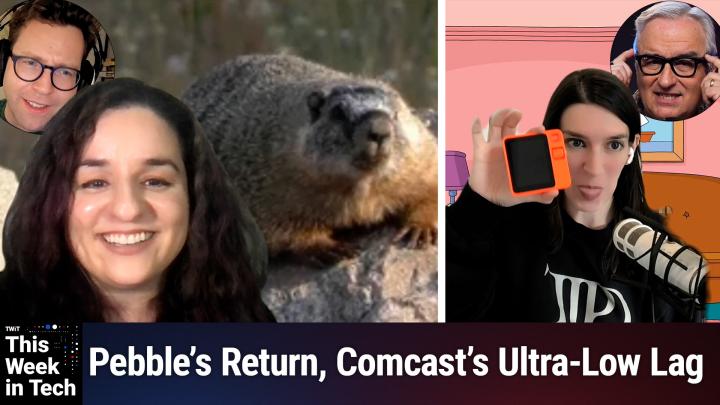
All TWiT.tv Shows (Audio)
This Week in Tech 1017: Yellow-Bellied Marmots
03:16:25
Return of Pebble, O3-Mini, Apple AI
Loading summary
Transcript834 lines
- [00:00]
Leo Laporte
It's time for TWiT this Week in Tech. Great panel for you. Christina Warren is here. She's got a new job. Maybe we can find out what she's up to. Shoshana Weissman from R Street. She just wrote a piece on age verification and why it's a terrible idea. And Dan Patterson, whose company specializes in disinforming. Disinformation. Does that make sense? We will talk about an amazing week in AI. Not just deep seek, but new models from OpenAI. The breakdown of government websites. 8,000 websites and counting disappearing from the Internet. And 23andMe is about to sell your spit. It's all coming up next on Twit podcasts you love from people you Trust. This is TWiT. This is TWiT this Week in Tech. Episode 1017, recorded Sunday, February 2, 2025. Yellow bellied marmots. It's time for TWiT this Week in Tech, the show. We cover the week's tech news, which is mostly AI this week. But that's all right because we got a panel that can handle the tough stuff. Shoshana Weissman is here from R Street. Great to see the chairman of the sloth committee in person. That's not a sloth, that's a marmot.
- [01:29]
Shoshana Weissman
Yeah, yeah, yeah. Thank you for having me and my marmot.
- [01:32]
Leo Laporte
Oh, are you now the chairman of the marmot committee?
- [01:35]
Shoshana Weissman
No, but I've taken them up as an interest. Look how fun it is. I love it.
- [01:38]
Leo Laporte
Aw. Marmots are wonderful. They move faster than sloths, but not much.
- [01:43]
Shoshana Weissman
I mean, not when they're this chonky, but they can move fast. Other times they're all chonky.
- [01:49]
Leo Laporte
You know, they have iron butts. Did you know that?
- [01:51]
Shoshana Weissman
They have iron butts?
- [01:53]
Leo Laporte
They're a problem in Australia because they roll up when they're scared and they roll up on the highway and you hit them and it's really like hitting iron because. Yeah, they dive into their holes and they leave their butt. This is not a nature show, but thank you. I have some interest in marmots as well. Apparently, Dan Patterson is also here. He's director of content of Blackbird. AI, a regular writer at ZDNet. It's great to see you, Dr. YouTube.
- [02:24]
Dan Patterson
We keep going about the marmots. I mean, this is like the best start of a show ever.
- [02:29]
Leo Laporte
I don't really know if that's. I thought we'd be talking AI. I didn't expect marmots.
- [02:33]
Dan Patterson
I'm not being sarcastic.
- [02:34]
Leo Laporte
Yeah, no, they're amazing animals. Yeah. But that's. That's for another time.
- [02:40]
Dan Patterson
I do the same thing when I'm scared.
- [02:42]
Leo Laporte
Yeah. Roll up and stick your head in your hole and stick your butt out. And that way you'll never get hurt. I guess. Don't we all? Yeah. Christina Warren's here with no job. Hi, Christina. But she is living in the Simpsons house, so that's okay.
- [02:58]
Christina Warren
I am. I'm in Springfield.
- [03:01]
Leo Laporte
And you know, almost every state has a Springfield.
- [03:04]
Christina Warren
I know, I know. I think that's one of like the brilliant things about them, like choosing that as like the name of the. Of the town. Because for so long, you know, people are like, well, where is this? Where does this take place? Because, like, well, it could be anywhere.
- [03:18]
Leo Laporte
It could be anywhere. There is. By. There is also. I mean, this is incidental. But there's also a Laporte in most states. Did you know that?
- [03:29]
Christina Warren
No.
- [03:30]
Leo Laporte
I think it's because Mr. Laporte got around many, many years ago. My ancestors. I think he was a trapper, a fur trapper. But he really. Yeah, he got around.
- [03:47]
Shoshana Weissman
Did he trap marmots?
- [03:49]
Leo Laporte
I certainly hope not. I don't think the marmot fur really makes for much of a coat.
- [03:54]
Shoshana Weissman
Yeah, I wouldn't think so.
- [03:55]
Leo Laporte
Yeah. I have a picture of a marmot that I took. I was. I know. What are we doing here? Why are we here? What is going on? I was in Tasmania on a photo shoot expedition with some really good photographers. And for some reason I decided to lie in the grass and a marmot came trundling toward me and I. I didn't really know if they were dangerous or not. So I said, help. And they just laughed. I don't know if I could find it. It's bear. Oh, I love that it's buried somewhere in my pictures. But yeah, before the show's over, I will share my. This is a little tease to keep you all watching. I will share my marmot photo with you. Okay, enough. Let's talk AI. Much more interesting. Six takeaways from a monumental week for AI from the Wall Street Journal. Guess what all six of them were about. Deep seeking the Chinese AI which has really kind of rocked the stock market. Rocked Nvidia Deep seek claims we don't know. Actually, I'd be curious what, you know, Dan covering AI and all this. They claim that they trained their model for a mere $6 million with an M. And it's very efficient. And they, because of the export restrictions, weren't using the latest Nvidia cards. Didn't need to. And this of course tanked Nvidia's stock. It was the world's most valuable company the week before, went down 17% Monday and has been going down all week. $1 trillion worth of stock market value gone. It did start to recover towards the end of the week, but we don't really know what Deepseek cost. I mean, we just know what they say. What do you think, Dan?
- [06:06]
Dan Patterson
Well, I think, you know, as a reporter and as somebody who works in AI, I don't know anything more than anyone else.
- [06:11]
Leo Laporte
Yeah, we don't.
- [06:12]
Dan Patterson
I do think opacity is the story here. Right. Like this. This launched onto the market so quickly, it was so disruptive and we know so little about it, but it had such a great, so many great knock on effects that it's almost impossible to look away.
- [06:33]
Leo Laporte
Yeah. Then of course, OpenAI, in the funniest reaction ever, said, they stole our stuff from our model. They copied us. Which of course is funny because OpenAI basically copied everybody else. They copied the Internet. In order to train their model, Deepseek apparently used a technique called distillation, which is training your AI model by asking another AI model questions and learning from its answers. And of course you could do that at great speed if you're both AIs. And Deepseek said it distilled from an open source model from Meta Llama 2 and from one of its own. But OpenAI said we're looking at indications Deepseek used us for distillation as well. So what is my reaction like? Well, that's fine. That's how it works.
- [07:28]
Dan Patterson
I think it's, it's so interesting that we didn't know anything. I mean, we didn't really anticipate this product happening when. But we could have certainly anticipated this event happening and the AI bubble taking a hit like this. But there are so many fantastic questions that this opens. I mean, was it trained for so little? If that is the case, then what are the implications for all of these models and companies seeking billions, if not trillions of dollars? Yeah.
- [07:56]
Leo Laporte
I'm also not sure it hurts us. In fact, Sam Altman had an interesting tweet. He kind of said OpenAI has been on the wrong side of technology. It was an odd thing to say. I think he says, I personally think we need to figure out a different open source strategy. OpenAI has been on the wrong side of history when it comes to open sourcing its technologies. It's hysterical. Well, not hysterical, but it's interest. Interesting to note that OpenAI was founded specifically to be Open, hence the name.
- [08:33]
Christina Warren
Hence the name.
- [08:35]
Leo Laporte
And that eventually I think they realized it was going to cost a lot more to train these models and they created a kind of a for profit and they hid the weights which, so it was basically became a proprietary closed development. He said, not everybody at OpenAI shares my view, but it's also, and it's also not our current highest priority being open. We will produce better models going forward, but we will maintain less of a lead than we did in previous years. I guess it's funny because there really isn't much to say, is there?
- [09:14]
Dan Patterson
It's like, okay, it's interesting messaging. I mean they could have been defensive and they could have been opaque themselves, they could have been aggressive. But instead it seemed to be a fairly conciliatory and yeah, I mean I would call it a smart comms response.
- [09:30]
Christina Warren
Yeah, I mean I think it's a good consequence response.
- [09:32]
Dan Patterson
You're not, but it's a smart response.
- [09:36]
Christina Warren
Yeah, I would agree with that. I do wonder though, it does seem to go a little bit against the other reporting, which is that they think that, you know, they stole their, their, their, their research, their data. Right? So it's like, so which is it? Right? Like I think that it's, it's a, it's a conciliatory response. It's a good response. I think that being defensive about this wouldn't be good. But at the same know you say this right after, you know, their reports going, oh well, we're going to look into how do they do this? Because this, this was clearly using, you know, our inference or you know, data or whatever the case may be, which, how anyone's ever going to prove this and, and how you would, even if you could prove it, how that would change anything at this point I think is a very open question. So, but, but it's not a bad response. I think that it would look a lot worse if you came out and you said you either try to diminish what the technology actually was and what the breakthroughs have been. And, and we don't know how much this costs. We only know what they say it cost. And, and that could absolutely be false. But we do know that this is something that seemed to come out of nowhere that, you know, even compared with what we saw with R1 versus what we saw at Christmas, you know, a massive improvement. And, and definitely, you know, from a cost perspective is already making the other, you know, companies, you know, alter some other strategies. Which is, which is fine. Which is fine. Right?
- [10:58]
Leo Laporte
You want competition, you want back and forth. You don't want to operate on disinformation. And of course the Chinese government might indeed have incentive to destabilize our stock market and Nvidia's stock price given the sanctions against it.
- [11:14]
Christina Warren
Sure, sure. I mean to that point. That's why my one kind of question about this and a lot of the most important kind of data we got from this was from scale's kind of benchmarks which just kind of showed how good it was in addition to just anybody using it themselves and seeing, hey, wow, we're getting really results and we can do these things incredibly cheaply on, on local hardware even. But one of my questions is okay, you know, they claim that we were and this, this is a very common Chinese government tactic and from Chinese companies to say, oh, we did all this ourselves and we didn't use any of of your stuff and we know they did use some Nvidia chips. We don't know how many. I have no basis of knowledge for this at all. I want to make that clear. This is just strictly speculation, but I have a feeling that that number is higher than what they are they are letting on. But you know, we saw this with, with ZTE and especially with Huawei, where in the Chinese government want to tout what types of chips and breakthroughs that they have themselves to create without TSMC and others. And it turns out, you know, the reality once, once you get past those things isn't quite there. And so I have a feeling that that's probably also the case in terms of, you know, how much, how many GPUs they were using and how much this cost and how much time this took. Some of those things might not be exactly as they appear to be, but even if that is the case, this is still incredibly impressive and shouldn't be something I think that people should be angry about. You know, it's like this is progress regardless of who came up with it.
- [12:43]
Leo Laporte
Of course, David Sacks politicized it. He's this the AI and Bitcoin czar in the new administration. And his contention is that he said, well, he was on Fox on Tuesday. It's clear there's substantial evidence that deep seek used OpenAI's models. Yes. And.
- [13:01]
Christina Warren
Right.
- [13:03]
Leo Laporte
And what are you going to do? You're going to sanction.
- [13:05]
Christina Warren
Right. And what can you do about it? You know, you're already putting those things into place. It's like this is, this is not, they are not beholden to you. Like, hate to break it to you.
- [13:13]
Leo Laporte
David Sacks, but I Want to, by the way, just parenthetically apologize to our friends from Australia that it was not a marmot. It was a wombat. Right. Is that a wombat, Shoshana?
- [13:27]
Shoshana Weissman
I think it was muted. Yeah, it's a wombat.
- [13:30]
Leo Laporte
Was that a wombat on your. This is my wombat picture, but that's not what you're talking about. You're talking about things. Yeah, I confused the wombat and the marmot. The wombat started coming for me. This is. It's walking closer and closer, and I. This is where I was a little afraid. I said, do they eat humans? But no, they don't. They don't.
- [13:53]
Shoshana Weissman
They are really cute. I didn't remember Australia having marmots, but I was excited that maybe they do.
- [13:59]
Leo Laporte
So are you in marmots or are you in wombats? I'm sorry, what is your investment?
- [14:03]
Shoshana Weissman
Marmots.
- [14:04]
Leo Laporte
Okay. I'm a wombat guy myself. Huh.
- [14:09]
Dan Patterson
Shoshana, is that your photo?
- [14:11]
Shoshana Weissman
No, that's not mine. I have a lot of really good marmot photos, but none were really suited for a background.
- [14:15]
Leo Laporte
I can see why I'm confused. Doesn't that look just like a wombat?
- [14:18]
Christina Warren
They look very similar. They look very similar.
- [14:21]
Shoshana Weissman
They're fat little babies, and I love them.
- [14:24]
Christina Warren
Like, they're so cute.
- [14:25]
Leo Laporte
It is the wombat that has the hard butt, though, not the marmot. So please don't run over marmots.
- [14:31]
Shoshana Weissman
I was gonna be surprised if they had a hard butt. I feel like I would have known that, you know, they're squishy.
- [14:35]
Leo Laporte
I think they're.
- [14:36]
Shoshana Weissman
Yeah. A little squishy.
- [14:37]
Leo Laporte
Yeah. Oh. So just. Just to show you.
- [14:43]
Christina Warren
I was just gonna say there's a TikTok of a guy in Australia who has, like, a pet wombat with his. With his daughter. And it's the cutest thing. It's like. It's like they go around and like. Like the little girl, she's probably 2 years old, 3 years old, and she and the wombat have basically grown up together. And it's the sweetest thing you will ever see in your life. It is. It is great. It is, like, the best, most pure content.
- [15:05]
Leo Laporte
I love wombats, but marmots look pretty good, too. Anyway, I just wanted to show you that humans are capable of hallucinating as well. You know, they. They. They get mad at AI. It's like, if AI made this mistake, people would go, you see? You see? But if a human makes it, it's just like, well, he's just an old man and he's Dotty.
- [15:25]
Shoshana Weissman
Well, you know what's kind of funny with, with, with everything too. Like I saw a lot of people trying to trick the model to saying anti China St. Just make China.
- [15:34]
Leo Laporte
Oh, you can't get Tiananmen Square out of it, that's for sure.
- [15:37]
Shoshana Weissman
But I actually thought it raised a really good point that like OpenAI has its like legal limits, but our legal stuff is different than their legal stuff and people kind of, overall they kind of get it. But when it comes to China's legal stuff, it just makes it less useful for people. It's like it can actually infringe on just the usability of the platform and I think that kind of sets it up for failure. Like, I know people have issues with TikTok and I do too. I have some issues with TikTok, but they don't censor stuff the way that Deep Seek is. It's a very, very different kind of thing. And I think when you have that state censorship at that level, it actually sets it behind and makes it less usable overall, which is kind of an interesting, almost like diplomacy problem within the AI world.
- [16:23]
Leo Laporte
There is an issue with safety in Deep Seq. I have mixed feelings about this whole AI safety thing. I feel like you're telling the AI, you know, don't talk about say Tiananmen Square or how to make atomic weapons or whatever it is is really artificial. But anyway, Deep Seek researchers at Wiz, which is I guess a security, an AI security firm, found a major security lapse in the Chinese AI Deep Seq. Actually it's a pretty bad one, but it's happened to many companies all over the world. They left a database, exposed a clickhouse database with a million log entries containing chat histories, secret keys, back end details. This happens, you know, you forget that you have an S3 bucket that has no controls on it. The database allowed full administrative control without authentication.
- [17:25]
Dan Patterson
Such a comforting breach.
- [17:27]
Leo Laporte
I mean.
- [17:30]
Dan Patterson
I don't mean, I mean.
- [17:32]
Leo Laporte
I'm more worried about breaches frankly, than safety, than AI safety. I think that's more of a concern.
- [17:37]
Dan Patterson
Oh, for sure. And it's like, oh, if all of these fancy, super intelligent, very forward leaning systems. It's like you had a barimeter breach of a database.
- [17:47]
Leo Laporte
Yeah. Usually what happens is the poor programmer makes a git commitment. A git commit that has, you know, the secret keys in it. This one, they didn't have any secret keys.
- [18:00]
Dan Patterson
One way you save on cost is if you just don't have an it.
- [18:04]
Christina Warren
If you just don't do it. Yeah, I was going to say right? It's like I have the, Remember the, from a year ago, the abbot, the rabbit R1. The. The other R1.
- [18:13]
Leo Laporte
Yeah, the other R1.
- [18:14]
Christina Warren
R1. Did you buy one of those?
- [18:16]
Dan Patterson
I did.
- [18:17]
Christina Warren
Yes, of course I did. Thousand percent.
- [18:19]
Leo Laporte
She's got it right here. It's the cutest thing ever for.
- [18:23]
Christina Warren
But it's so cute.
- [18:25]
Dan Patterson
But I'm there with you.
- [18:26]
Leo Laporte
Yes.
- [18:27]
Christina Warren
Heck yeah. Heck yeah.
- [18:28]
Dan Patterson
But no teenage engineering. I mean like as did I.
- [18:33]
Christina Warren
That's exactly how I, I, I justified it. I was like this is the dumbest thing and this is fine. And, and then it turned out to not live up at all to its hype. And then the, the thing was is that we realized the security non existent and that they were asking you to like log in with your, your Uber credentials and stuff and so that it could you know, have their, their like what they called Asians, but really it was just macros do stuff for you. But the security was like so bad and, and I, I saw how the, the login works that it was just like a VM thing like in the browser and some other people who are smarter than me were able to even go deeper about how they were able to get Doom running on like the vms and it was just.
- [19:09]
Leo Laporte
There's a good use for that though. That's a good thing. You know, if you can get your R1 to run Doom. I buy every stupid AI product out there. These are the brilliant glasses which don't do anything. I also just bought. This was shown at ces. This is the bee AI device. It's recording everything all the time.
- [19:28]
Christina Warren
Oh yeah, I got one of those in June. Not the final form factor. I got one when it was still like a pendant that would go over your neck and I didn't immediately turn it off.
- [19:37]
Leo Laporte
Yeah, no, I'm loving it because it says it's kind of silly, but we're going to get the creators of it on our new show about AI. But let me just read you some of the daily memories. This is from yesterday. Piano melodies, leaky decks and Sinatra's Palm Springs filled the day. But actually that's all true. It sounds weird. Leo had a productive and enjoyable day. He made significant progress on a new piano piece. True mastering the challenge of playing chords with one hand and melody with the other. He shared a laugh with Lisa over funny video and received encouragement to record his piano playing. Later, when Leah went grocery shopping, he and Lisa discussed dinner plans. I mean this thing is listening to everything. And I gave him access to my Gmail and my calendar and my contacts. What could possibly go wrong? I mean, why are you laughing at me? Shoshana. Shoshana's laughing.
- [20:34]
Shoshana Weissman
That's so. That's so stressful to me. Like, that's so stressful. It's funny, Christina, what you're saying about the Uber credential for the login. So I'm not sure if you caught this, but it's just funny because it's like another layer of the same problem. Last year, it turned out that the age and identity verifier for, like, Uber, for every, like, big Twitter, like, bumble, was breached for a year and a half. And I've been into this stuff. I know, I know, I know from the age verification stuff, because they're like, it's secure. You don't have to worry about anything. You're being silly. So, like, when I saw that, I'm like, oh, my gosh. So it's so funny when you mentioned it, that, like, that it was happening through, like, your Uber credential. And I'm like, guess what? You have to, like, be careful of that stuff already because everyone knows it, because nothing's secure.
- [21:23]
Leo Laporte
So, I mean, I have. My attitudes towards privacy are probably not typical of most people. I don't really care because I'm. I'm on the air all the time, so it's nothing really private. They give you this thing, generates facts, and then says, are these true? So this is one of the facts it just generated. Leo has issues with ankle socks not staying up. That's true. Leo's concerned about the freshness of grapes. That's true. Leo considers fish a light meal option. That's true. Leo has meatball mix in the freezer from Whole Foods. That's true. Leo has a task related to getting breweries tickets. It adds this task to my to do list, by the way, which is great. And then is also true. Let's see. I'm showing you these. Leo's comfortable using voice commands to interact with technology. That's true. So it now knows so many facts about me.
- [22:14]
Shoshana Weissman
What's your issue with the scripts?
- [22:17]
Leo Laporte
They fall down.
- [22:18]
Shoshana Weissman
So, like, they keep slipping under. Right?
- [22:21]
Leo Laporte
Yeah.
- [22:22]
Shoshana Weissman
So you want the ones with a little tab on the back that, like, changes. It changes life. Like, I'm, like, loyal to little Tab. Ankle soft.
- [22:30]
Leo Laporte
You see, already AI is changing my life. It's making it better. I'll get the tabs. Thank you.
- [22:37]
Shoshana Weissman
You're welcome. Yeah.
- [22:38]
Leo Laporte
I always thought ankle socks were dopey. I used to wear socks all the way Up. But my. So long.
- [22:43]
Shoshana Weissman
That's stylish. Now higher socks, I was going to say.
- [22:45]
Christina Warren
I was going to say stylish style socks are now in vogue. And in fact, like, if you have like. Because I used to always wear no show and then no show last year became like passe. And so I don't want to see men's ankles.
- [22:56]
Leo Laporte
Women, it's okay. But men's ankles, I don't want to see those. But you shouldn't wear those with sandals. Am I right?
- [23:02]
Shoshana Weissman
The high socks.
- [23:03]
Leo Laporte
Correct.
- [23:04]
Shoshana Weissman
Well, actually if you wear them with the sandals that go across, not the toe sandals, that's like sporty and stylish, you know.
- [23:14]
Leo Laporte
They'Re saying it's not the AI that has changed my life, it's Shoshana. That's true. That's a good point. That's a good point. AI systems with unacceptable risk are now banned as of today in the eu. Don't know what an unacceptable risk is. Apparently the EU isn't really clear either. It's designed to cover use cases where AI might appear to interact with individuals. Okay. Minimal risk is. For instance, spam filters will face no regulatory oversight. Okay. Limited risk includes customer service, chatbots. They'll have a light touch. Regulatory oversight, high risk AI for healthcare. That's a good example. Yeah. Will face heavy regulatory oversight. And then the unacceptable risk applications, which is what these new laws or new regulations cover, will be prohibited entirely. AI used for individual social scoring, like in Black Mirror. Building risk profiles based on a person's behavior. AI that manipulates a person's decisions subliminally or deceptively, like convincing me to put tabs on my ankle socks. AI that exploits vulnerabilities like age, disability or social economic status. Now, I know you are not a fan and our street in general is not a fan of overregulation. Shoshana, does this seem over regulation or appropriate?
- [24:43]
Shoshana Weissman
So they don't know what they're doing? I mean like Europe's just been trying to like kill technology for years now and it's absurd. And it's why they don't have a lot of tech companies. I think like, like with mental health and health services in general, I think it's worth having oversight of AI. But there's, I mean, the way they're going to go about it is just fine, everyone and like, like be really thick over carrot. I've been talking with Utah actually, and they're doing some really cool stuff and how they're trying to regulate AI. They're just trying to Figure out like, what's the framework that's going to work best in each situation because they want AI to be something that can help people for health services, but obviously they see the risk. So they're working like really cooperatively with a bunch of different companies to figure out, okay, what's going to work best here. What's, you know, they're taking a really collaborative approach and I think it makes sense to do, especially with emerging tech that's happening fast, that like, you don't want to stop this from, you know, from growing, but you also want to make sure that it's safe, especially in certain circumstances. But Europe has just tried to crush everything and like get lots of positive attention for crushing things. So even here, like I'm not. And I don't think even we're against regulating a little bit more here if it makes sense. It's just about figuring, do regulations already cover this? Like, discrimination is already, you know, regulated in a lot of cases. Providing crappy health services is already regulated in a lot of cases. But if there's additional layers, that's, you know, it's something we're open to. But Europe is a terrible model for that.
- [26:12]
Leo Laporte
You know, you know, I feel like their GDPR is giving us in the States some degree of privacy, whereas our Congress seems unwilling to do that. So there's some things that they're doing that are good. Right. You think GDPR goes too far?
- [26:28]
Dan Patterson
I think from a cybersecurity perspective, at least when it comes to AI and regulation, we've found, or I shouldn't say we, but I like, I have found and seen that Europe has been pretty amenable to a lot of types of innovation. But that is at least in that limited experience and, and from a cyber perspective. But it, I mean, right now it kind of seems like a very good place to look at cyber security.
- [26:52]
Leo Laporte
Yeah. AI that uses biometrics to infer a person's characteristics, like their sexual orientation is banned. AI that attempts to. This is interesting. This is something we are doing, I think, in the United States. Attempts to predict crime based on people's appearances. Oh no, that's just what the cops do. AI that collects real time biometric data in public places for the purposes of law enforcement.
- [27:18]
Christina Warren
Terrible.
- [27:19]
Dan Patterson
Have you guys read the book AI 2041 by Kai Fu Lee?
- [27:23]
Leo Laporte
No. Kai Fu Lee is great.
- [27:25]
Dan Patterson
Yeah, yeah, he is. It is, It's Leo. As you're reading this, it kind of feels like almost a chapter by chapter breakdown of this. It's really a book of short Stories, but they're all thematically connected. But it is, you know, we talk a lot about the future and we love science fiction because it kind of helps us imagine the future, if not predict it directly. But this is a very down to earth because of Kai Fu Lee's background. This is a very, not down to earth but a very practical forecast of where we could be with AI in by, by mid century. And again, as you're reading that list, Leo, it really feels like this book come to life.
- [28:08]
Leo Laporte
Yeah. And he's warning us against this, I presume.
- [28:13]
Dan Patterson
I, I don't know that it's. There are certainly some warning warnings in the book, but there are also, it's, there's more nuance. It's, it is from a Chinese perspective, but there's. Especially when it comes to the relationships we will form with artificial intelligence and the way it could augment our life and become a type of relationship. You know, right now we look at like, well, maybe there are human like avatars. That's kind of short term thinking. But as we, as we progress, we might find these agents are part of our life and express themselves because they have such access to data in really, really unique ways.
- [28:54]
Leo Laporte
Yeah. We in California had a similar anti AI or I'm sorry, not anti AI but regulating AI law that the governor declined to sign. He vetoed. That required, among other things, that companies of a certain size would have to have a kill switch for their AI, unlike Robocop, I guess. I don't know where I come down on this. I feel like just as in the early days of the Internet, you could make a mistake by rushing to regulate it too quickly, that it can. And we didn't, and we didn't do that with the Internet. Congress was very careful to kind of have a light touch on the Internet because we didn't know what it was going to be. In hindsight, maybe you could say, well, they should have done something more to protect us. I don't know. But I worry that by, and maybe the EU is doing this by over regulating AI, we're preventing it from growing in a way that might be very useful. Agreed. Or disagreed. Am I wrong on this?
- [29:58]
Shoshana Weissman
Yeah, that's where I come down basically. And our street worries about too. We're always down to figure out in certain use cases, in certain, if there seems to be more of a risk in one area than another. There can be like regulations that attack this that we're not, you know, opposed to. But so much of this just seems to be broad and tons of of requirements that don't really have a real focused end. It's just like, oh, you know, these systems should have to tell the government everything. Which I don't think is great either, because people, you know, you want to be careful from the privacy angle when it comes to the government itself. We're also for a national privacy law, but that's a whole, you know, other debate. And we're also really interested in the cybersecurity side of stuff. So, like, one thing on that side we're doing is trying to get the federal government to align its cyber standards and reporting standards across agencies so that companies know what they have to do, and it's a little easier to hold them accountable as well. But when it comes to AI, it's just. It's so unfocused, and it's so. I mean, so. So much of government is, I think, afraid of experimentation here. But then you even see, like, other parts of government really embracing it. Like, a couple of states have used AI to try to review the regulatory code and make it in human language and simpler and something that they would pass through. Yeah, there's so many good uses of it to make government better. Another one that I found out about is using it for permitting applications in, I think, California, actually, and that it got through permitting requests a lot faster. And I think you can use that for occupational licenses and other stuff as well. But it's always a little bit frustrating because, you know, government is so focused on stopping things just in case, rather than focusing on fostering the good potential and figuring out where the problems are and how to narrowly address them. And I just. I worry about that because they're. It's sexy to. To be against tech. I think that's starting to go away a little bit.
- [31:51]
Leo Laporte
I hope.
- [31:51]
Shoshana Weissman
We're definitely in a. In an era where it's just sexy if you're a regulator cracking down on evil big tech, you know?
- [31:58]
Leo Laporte
Yep.
- [32:00]
Dan Patterson
You agree, Dan, that it's sexy to be against.
- [32:04]
Leo Laporte
No, no. The earlier premise that we shouldn overregulate AI until we understand better what it's doing and what it. What it is.
- [32:15]
Dan Patterson
Yeah, for sure. I. I mean, I. I'm of. I. I'm not a policy person, and I think Shoshana is a million times smarter than I am about this. But I do think that. That we need an environment that safely fosters innovation. I. I have some trepidation. If we look back at how social media played out, I think that perhaps we could have introduced regulation that encouraged innovation but slowed things down. A bit. So I mean, I have some trepidations.
- [32:42]
Leo Laporte
But that's in hindsight, right?
- [32:43]
Dan Patterson
I mean, it's in hindsight, right? We didn't know like.
- [32:46]
Leo Laporte
Right.
- [32:46]
Dan Patterson
We didn't know. And maybe the benefits have seen the cost. I don't know right now. I'm not a big social media person, but it could the same. Anyway, I think I agree with Shoshana mostly, but I, I opt for safety over speed.
- [33:02]
Leo Laporte
Okay, safety over speed. Christina, your vote?
- [33:07]
Christina Warren
Yeah, I mean, I would, I would definitely say safety over speed and I would go further to say this. I think that I would feel differently about how some of the regulation frameworks have come into place if I felt more confident that any of the people regulating this industry actually knew what they were talking about.
- [33:22]
Dan Patterson
Yeah, yeah, for sure.
- [33:23]
Christina Warren
And, and, and so this is an area which is difficult, right? Especially when we're talking about emerging technologies where your, your experts are going to be your researchers or your people in industry and, and not the people ne policy. But there has been, and I think I do agree with Shoshana, it has become popular and sexy to be against big tech and that is for some good reasons. I think big tech has, has made a lot of decisions and made a lot of moves that have pushed the pendulum was in one very positive direction for a very long time. And then because of things frankly around privacy, around, you know, user protections, around things that now regulations, I think understandably want to curtail people's perception and the attitude from, from people has shifted into the other direction. And, and so, but because of that there is, and hopefully this, this gets better. There is now this friction between the people doing the research and creating the products and the people setting policy and, and friction isn't a bad thing. But I think where it is a bad thing is when you have the people who are setting policy who genuinely do not understand tech. And this has been a problem for, for decades, but, but it's only getting worse. And, and I do sometimes, I think especially in the eu, they almost in the United States to be clear, but in the EU it almost seems to be a point of pride. Right? Like we don't understand this and we don't care because we.
- [34:42]
Leo Laporte
Do you think that they, I mean, some of the mistral, for instance, comes out of France, some of the best AI models are European. Do you think though that this is kind of as we feel about, we're xenophobic about Chinese AI, they're xenophobic about American AI maybe.
- [34:59]
Christina Warren
Or maybe just their perceptions about how tech works are Different. Right. I mean, like they have been much less risk averse and they have much stronger labor standards. And different things are. The way that the EU operates, the way the United States operated are just different. And I think that having caution and having skepticism is good. I think sometimes setting policy before you even understand whatever things is doing can be both a bad thing because it prevents positive use cases from taking place, and it can also be bad because you might be, you know, setting in motion, you know, policies that prevent you from preventing the really bad stuff that could happen. Right. Like it's so. I don't know, I feel like I would feel better about this if I actually had any confidence that the people setting policy knew anything and weren't just, you know, either listening to the experts that are saying what they want to hear, which oftentimes is that the sky is falling prognosis or had any amount of digital sensibilities at all. And at least in the United States, I can't speak for the eu, but in Congress, the number of our people, both in the House and the Senate who have any sort of digital literacy is almost nonexistent. And that's very scary to me when we look at what's going to take place from a policy perspective.
- [36:19]
Leo Laporte
Yeah, I am, I have, I'll cop to this. I am an AI accelerationist. I've kind of come to the point of view. My attitude is I'm so blown away when I. And I have a folder of AI tools that I pay for on my phone, literally, you know, probably 100, 200 bucks a month on all of these things. And I'm blown away by what it can do, by the, by coding, by just answering questions. I talked to ChatGPT. I have my action button on my phone opens up ChatGPT01. Actually, it's the, I think it's the new one.
- [36:57]
Christina Warren
O3 mini.
- [36:58]
Leo Laporte
Yeah, O3 mini. Exactly. And I ask it questions all. It's my research assistant. I am blown away. I think maybe we've gotten complacent about what's happening, but we are in the middle of a revolution. It seems to me now this is just my attitude and you can tell me I'm full of it. And many have. I feel like, so what if it's smarter than us or, you know, we hate the singularity, let's see what happens. This is amazing. And I think being cautious is going to be put a damper on something that could be truly revolutionary. And it already is. It blows me away. What we can do in a Year.
- [37:46]
Christina Warren
I, I agree with that with, with a couple of caveats. One area that I do actually I'm in favor of more regulation for and, and, and that I'm, that bothers me very much is when we see these systems being used in cases like trying to identify, you know, people who might have committed a crime. But. All right, but to be used to, to, to judge, you know, sentencing guidelines or to be used when you went.
- [38:10]
Leo Laporte
To see the ERA face recognition as you went in, because Taylor Swift has had stalker problems and it was looking for her harassers to stop them. Right, that's okay.
- [38:21]
Christina Warren
And, and, and look, that's fine. And if you have those systems that are fed with, with data that can maybe show things. Fine. What I'm talking about is like there are startups that are basically saying we want to basically ride along with, with police officers and take their, you know, body cam footage and I guess, you know, transcribe things and write their report reports for them. Now if you want to help with, with transcribing what is on the body cam, that's fine, but I'm not at all comfortable from like so many, you know, like basic, like, like, you know, like constitutional amendment perspectives. I am not okay at all. Fourth Amendment, Fifth Amendment, like both of them. I'm not confident with saying that the cops should just be able to have AI generating those police reports. So many problems will happen there. Right. And, and to say, oh, we're going to describe what happened in the video and we're going to, to write these things out on a better method. No, I'm not okay with that at all. And so I feel like there's some, because we've seen, as good as these tools are, we've seen how they're not perfect, how they can hallucinate things that aren't there. And frankly, because it is your job, that is your job as a police officer, if you want to help go through a transcript and make sure that you didn't miss something, fine. But your job is to actually fill out the police paperwork and to do that. And that if I'm being charged with a crime, you better have actually done the work and not just trusted a computer to generate a report based on, you know, what was on the body cam footage and what it picked up, you know, based on what voices it heard. Like, I'm not okay with that.
- [39:49]
Leo Laporte
One of the things the EU law prohibits is, I guess, profiling people pre crime, trying to say, well, that person looks like they're about to commit a crime and we know that face recognition often makes mistakes when it comes to people of color does false positives. People have been arrested, they've been jailed, they've actually been convicted from speciously from false reports by AI face recognition. So that's a problem. I agree, I think we should work on that. But I don't want to prohibit face recognition because there's some real valuable. And honestly, I don't. If you can use an AI to generate your report, I think you should have to check it and you should have to sign it and say I verified this. But I think that, I mean, we're using AI to generate show notes. I understand that's not exactly a mission.
- [40:42]
Christina Warren
No, I, but I feel like those are completely different things, right? Like show notes for your show. If you get something wrong, it's not.
- [40:51]
Leo Laporte
The end of the world. Nobody goes to jail for that.
- [40:53]
Christina Warren
If it's part of a police report where that is going to be used as the basis to charge them with the crime and then take them to due process process, I think that's completely different. At the very least, there should be massive red flags so that lawyers know this was, was aided with the assistance of AI. But you know, they won't do that. You know they won't. And I just feel like this opens up lots and lots of, you know, like, I just see lots of false convictions happening because of the basis of these tools. And that does scare me. And so on the one hand, like, I think we should experiment. On the other hand, like, I very, very nervous about how this could be used in law enforcement just because I don't have a lot of trust in a lot of law enforcement any anyway and, and these sorts of systems could make that even more complicated. That's just me.
- [41:34]
Shoshana Weissman
I think a good example here is like the, from the bias that they found in AI system, just like how police bias can get into anything, just like any other bias can get into something. So if they're like working with a police force that just for whatever reason there tends to be a lot of biased members. And like, they could have, they could have data that shows like more aggressive reports about black people, just for example. And like, and if that, that goes into the data, then that could be dangerous. I'm open to testing it, but I definitely wouldn't want that to be like the final thing, at least for a long time. Like there should be a lot of work to make sure that like bias doesn't get in there, which is a hard thing in general to do.
- [42:10]
Leo Laporte
But bias gets in from humans. Yeah, Very rarely.
- [42:15]
Dan Patterson
There's a differentiation here between what we. When we talk about safety and AI, and. And they're both important, but they're two different things. What Christina's talking about is maybe the. The expression of. Or the. The potential dangers to society, which could happen in a lot of different ways. And then there's the AI training and the AI acceleration safety conversations, which are more. A little more technical and about how quickly we should develop the actual capabilities of these models. Two very different, very valid conversations, but different and distinct.
- [42:51]
Leo Laporte
Yeah, I want to take a little break. We have lots more to talk about. And of course, mention somebody was saying in the chat, you guys should have an AI show. We do have an AI show. It starts Wednesday. We're rebranding this week in Google to Intelligent Machines. The guy who coined the term intelligent machines, Ray Kurzweil, will join us next month on the show. And we're going to bring in AI experts because I freely admit I. I don't understand it well enough to have a strong opinion. I just. I'm excited about what it's doing and what it can do, and I think we need to make. We need to talk about it. I think it's an important part of our mission. So tune in Wednesday for the first episode of intelligent machines, 2pm Pacific, 5pm Eastern, 2200 UTC on TWIT. Great panel. So nice to have Christina Warren. You're going to tell us what your new job will be sometime tomorrow, maybe.
- [43:41]
Christina Warren
Yes. Yeah, yeah, it should be sometime tomorrow or sometime next week. Starting next week.
- [43:48]
Leo Laporte
When do you start?
- [43:49]
Christina Warren
I start tomorrow, technically. I don't know when I will have access to all of my work systems and whatnot. But, yeah, I probably will make the announcement tomorrow.
- [43:57]
Leo Laporte
Are you going to move?
- [43:59]
Christina Warren
No, no. At least not right now. No plans moving. I mean, that could always change. But. But the.
- [44:05]
Leo Laporte
I'm sure GitHub was sad to lose you, that's all.
- [44:07]
Christina Warren
And I was sad to leave them there. The most amazing place, most amazing team. I'm huge fan, always, forever of GitHub and. And GitHub Copilot, I think, is one of the best, you know, tools.
- [44:18]
Leo Laporte
There's an example. Yeah. Of something pretty amazing that AI can do.
- [44:22]
Christina Warren
Fully agree.
- [44:23]
Leo Laporte
Yeah. Well, good luck with the new career.
- [44:26]
Christina Warren
Thank you.
- [44:27]
Leo Laporte
And we will stay in touch.
- [44:29]
Christina Warren
Of course we will.
- [44:30]
Leo Laporte
Yes. Unless they say. And no more of that podcasting thing.
- [44:35]
Christina Warren
You know what? I'm very hopeful that that will not be the case.
- [44:39]
Leo Laporte
But it could happen. It could happen. It happened once with Dan Patterson when he left cbs. But we're glad to have you back. Director of content@blackbird AI danpatterson.com still writes about technology for ZDNet. Always a pleasure. Yeah, it must be hard when the company says, yeah, we don't want you talking on podcasts anymore is what it is. It was sad we lost your input. We're glad to get you back. Appreciate it.
- [45:06]
Dan Patterson
It's great to be here.
- [45:07]
Leo Laporte
Yeah. And Shoshana Weissman, R Street is enlightened and says talk as much as you want. Head of digital media at R Street. I guess when you're the head of digital media and you're hanging with marmots, you know. Not a wombat.
- [45:23]
Shoshana Weissman
No, no, not a wombat.
- [45:25]
Leo Laporte
Wombat heads are bigger, I've been told. So that's how you can tell.
- [45:28]
Shoshana Weissman
Yeah, that's a really good point. Also, they're, they're gray. There's a variety of colorings in marmots. This is the yellow bellied marmot. That's like common to the, the west of America. There's, there's a bunch of variations though. I, there's got to be at least 7. So subtypes. Like there's a Himalayan marmot. Totally different.
- [45:46]
Leo Laporte
I now have a new insult. You yellow bellied marmot, you. Great to have you, Shoshana. Thank you all for being here. Our show today brought to you this week by US Cloud, the number one Microsoft Unified support replacement. Why would you want to replace Microsoft? We've been talking for a few months now about US Cloud, the global leader in third party Microsoft support for enterprises. I can give you three reasons. Number one, you're going to save. Switching to US Cloud can save your business 30 to 50% over Microsoft Unified and Premier support. Maybe that explains why 50 of the Fortune 500 now use US Cloud for their Microsoft support. But it wouldn't be any good if it was just less expensive. It's also got to be as good, right? It's better than Microsoft support. Faster, twice as fast, average time to resolution. Twice as fast, average time to resolution versus Microsoft. We're talking minutes. But now US Cloud is excited to tell you about a new offering. They do a lot to help you save money, not just by cutting the cost of your Microsoft Premier support. For instance, their Azure cost optimization service. This is very cool. When was the last time you evaluated your Azure usage? There's a little bit of Azure creep in there, right? If it's been a while, you probably have some Azure sprawl little spend creep going on. Good news. It's now easier than ever to Save on Azure. US Cloud offers an eight week Azure engagement powered by VBox that identifies key opportunities to reduce costs across your entire Azure environment. Really be honest. Do you know exactly where all your Azure dollars are going? With their expert guidance, you'll get access to U.S. cloud senior engineers. By the way, this is the third reason. They're better. They're lower cost, they're faster and they're smarter. Their senior engineers have an average of over 16 years. 16 years with Microsoft products. They are the experts. I talked to the folks at US Cloud, I said, how do you attract these people? They said, well, they're all US based. We offer them great salary, great benefits, we make it a great job for them and that's how we attract the best engineering. So anyway, back to this Azure engagement. At the end of the eight week engagement, your interactive dashboard will identify, rebuild and downscale opportunities and unused resources. It will actually surface where you're spending that you don't have to, allowing you to reallocate those precious IT dollars towards needed resources. And may I make a suggestion? Invest your azure savings in USCloud's Microsoft support. Actually, that's what a few of USCloud's other customers have done. Completely eliminate your Unified spend. I'll give you an example. Sam, he's the Technical Operations Manager at Bead Gaming. He rated US Cloud five stars out of five, saying, quote, we found some things that had been running. This is the Azure engagement thing. We'd found some things have been running for three years which no one was checking. These VMs were, I don't know, 10 grand a month. Not a massive chunk in the grand scheme of how much we spent on Azure. But once you get to 40 or 50,000amonth, it really starts to add up. Yeah, no kidding. It's simple. Stop overpaying for Azure, identify and eliminate Azure creep and boost your performance all in eight weeks with US Cloud. Just one of many reasons people are switching to US Cloud for their Microsoft Unified and Premier support. Visit uscloud.com book a call today, find out how much your team can save. I think you'll be impressed with how good these guys are. Uscloud.com Go there right now, book a call, get faster Microsoft support, better Microsoft support for less. And by the way, if they ask you, make sure you tell them, oh yeah, we saw it on Twitter. That helps. Uscloud.com they're there to help you. All right, we're not quite done with AI. We'll Move on. But you know, that was most of the news this week was Deep Seek and AI and OpenAI. They said that they are going to partner with the US national laboratories on scientific research and nuclear weapons security. Maybe this is the kind of thing that might have made you nervous. They're going to work. They're going to deploy an open AI AI model on Vanado. That's the supercomputer at Los Alamos National Labs. Los Alamos is where, of course, our nuclear program, our nuclear weapons get developed. 15,000 scientists working at the national labs will be able to access O1, the New Reasoning series. OpenAI will also work with Microsoft to deploy one of its models on Vanado. Vanado's powered by Nvidia and hpe, working on nuclear weapons, quote, focused on reducing the risk of nuclear war. Shall we play a game? And securing nuclear material and weapons worldwide. It's. I think if they work on security, that's probably a good thing. Yeah, yeah, go ahead.
- [51:09]
Shoshana Weissman
My, my strong informed opinion is just securing nuclear weapons as opposed to making them unsecured is. Yeah, I'm for it in general.
- [51:17]
Leo Laporte
Yeah, yeah.
- [51:19]
Dan Patterson
But if we give the Engineers access to 4.0, doesn't 4.0 have access to the engineers?
- [51:28]
Leo Laporte
That's a good question. No, because I guess it's running on the computer inside the labs. Right. So in theory it wouldn't exfiltrate stuff out of the labs. That's always a concern. Like my little AI friend here who's recording this entire conversation. They don't even. I don't even know where it's going. It could be going to China. I don't know. I don't care. Listen all you want. If it wants to hear me play the Saints Come Marching in over and over and over again on the piano. Go ahead, listen in.
- [52:03]
Christina Warren
Okay, so let me ask you a question though. How would you feel if everything that you said to this thing was released somewhere and then emailed to like your top 10 like most contacted people in your address book?
- [52:18]
Leo Laporte
Well, it's not gonna do that. But even if it did, so what.
- [52:21]
Christina Warren
I'm just saying, because I think that that's, that that's the real kind of worry that a lot of people have about this stuff isn't so much like, oh, these things have my system, but like this could get out there and people.
- [52:29]
Leo Laporte
I am not knocking anybody's desire for privacy. That. That is absolutely your choice. I think I gain an advantage. I think, by the way, this is what. So one of the things people are talking about is Apple intelligence and how stupid it is.
- [52:45]
Christina Warren
It's bad.
- [52:46]
Leo Laporte
It's bad because it's private, it's on device, it's limited in the size of the model, but also it's limited in what it knows. And honestly I think if you're willing to give the AI everything, even if it emails it to my 10 top contacts, you're going to get more from the AI, right? I think that's what Apple's finding out.
- [53:12]
Dan Patterson
Maybe. I think there's like a broad spectrum between the two though of uses.
- [53:17]
Leo Laporte
I wear this to my doc. Somebody's saying, what if your doctor was wearing it? My doctor does record our conversation. He has a sign that says I'm going to use AI to transcribe this and we're going to delete it it. But I also am recording him and that way I, you know, when I, when I, I get notes back, I don't remember everything I get. I think it's just, it isn't obviously a complete trade off between privacy and intelligence, but I do think that the more willing you are to give up on privacy, the more valuable the AI will be.
- [53:54]
Dan Patterson
They said the same thing about social media.
- [53:56]
Leo Laporte
Yeah, and I fell for that too. But I've deleted all my tweets since.
- [54:01]
Dan Patterson
Me too.
- [54:04]
Leo Laporte
I still, by the way, I still check X, but that's kind of part of my job, right? I mean I have to see what's going on out there. It's interesting. The national was it. The NTSB National Transportation Safety Board has announced that it is not going to update the press in the way it used to with emails, press releases. It's all going to be on x dot com. This to me seems like a bad idea. It seems like it's really kind of a little, well, baksh to Elon Musk, right?
- [54:42]
Christina Warren
Yes, clearly. And like putting aside who controls X because that or Twitter or whatever we're going to call it because that, that to me is the least most bothersome part about this. It's like these are, these are third party services and you're talking about like official communications that you're relying on a platform that might change. Its, its, its, you know, mail. Who might change, like what it wants to do. Like what if they decide that they don't want to, you know, display things the same way. It's like if there's, gosh, what if.
- [55:10]
Leo Laporte
The entire US government decided to use X or worse Truth Social for all of its public announcements? It seems like that would be a misuse of our taxpayers dollars. National Transportation Safety Board will only update the press about plane crashes on X, not over email. They announced on Saturday they will use the tsbnewsroom account to share news conferences or other investigative information. They said this is to help them better manage their incoming emails. NTSB later said reporters should email media relationstsb.gov for all other inquiries. Oh, it's specifically about those two incidents, the two plane crashes. Okay, well I'm not, I'm not against using X in addition to the normal, but if you stop having press conferences and media briefings, you just use X. That's not good.
- [56:12]
Shoshana Weissman
Yeah, also like, I mean the government was kind of slow to adopt social media in helpful ways and I'm all for having stuff in more places like hook up, the automations, have everything go everywhere and I'm all for that. But yeah, it doesn't, doesn't make sense to do it this way. Even if they only want to open up inboxes in certain places. Like if you can only inbox them via like, like the regular email plus Twitter DMs. Like I get it because most people, people use their Twitter DMS as like a secondary inbox if they're tweeting a lot. So I get that. But yeah, this is, I mean like that's bizarre even. I mean even if they wanted to do this for these two incidents, just host it, like make it a page on the site where like follow these threads, you know, like make it easy to find for.
- [56:56]
Leo Laporte
Yeah, no, I have nothing against them announcing stuff on X. Yeah. Just not exclusively X.
- [57:01]
Christina Warren
That's what's weird.
- [57:02]
Dan Patterson
And requiring a login.
- [57:04]
Christina Warren
Well, right, well.
- [57:05]
Leo Laporte
Oh, oh, that's right. You have to have a login, don't you? You can't just look at a tweet.
- [57:10]
Christina Warren
I mean, and look, not that this would matter with this administration, but I think that that login thing that you bring up, Dan, which fantastic point, that might violate some sort of either accessibility or some sort of other like actual like government guidelines that exist in terms of getting people access to these sorts of things. So.
- [57:28]
Leo Laporte
One of the replies on X is NTSB is breaking the law. Government agency is not permitted to restrict, restrict its obligation to inform the public by making it available only on a privately run platform. Precisely.
- [57:42]
Christina Warren
Right. Like, I think, I think have it on X is great. Like that's actually a great use case. And to Shoshana's point, I think government was slow to adopt some of those things and, and, and you know, maybe too slow, but like have an RSS feed, have like A a separate page that's up where you can put your updates that are cross posted across those things set up the automations, you know.
- [58:04]
Dan Patterson
Even their own a government mastodon instance. Sorry to cut you off, Christina.
- [58:08]
Christina Warren
Oh yeah, no, exactly.
- [58:10]
Leo Laporte
As somebody on X said, a new level of transparency. I don't think so. I mean you said not.
- [58:18]
Christina Warren
Let me redefine transparency.
- [58:26]
Leo Laporte
Okay, well, just, just curious. By the way, that's the same platform that the naked video of the current new Secretary of Transportation. A video of him dancing naked on the Big Brother. But that's another story.
- [58:44]
Christina Warren
The Real World.
- [58:45]
Leo Laporte
The real World.
- [58:46]
Christina Warren
I mean, yeah, yeah, yeah, yeah.
- [58:48]
Leo Laporte
It's nice to know that he's got. He can let his hair down, have a good time. There are no videos of me dancing naked on Real World. I just want to say, even if.
- [58:59]
Dan Patterson
Me neither.
- [59:00]
Leo Laporte
Even if this records everything. All right, let's talk about O3 mini. This was released. It's interesting. OpenAI responded to deep Seek and this is why competition is a good thing. Responded to Deep Seek by saying oh, oh, oh, let me. Let's release O3 mini, its latest version of O3, the reasoning model. I like these reasoning models. Deepseek is a reasoning model too. You can. They take a longer time, but you can watch them as they kind of come up with the answer. I think it's kind of an interesting thing. Sometimes it takes 15, 20 seconds a minute, but often they say the answers are better. OpenAI is saying the new model is both powerful and affordable because it is mini, which means it's smaller. Reasoning models fact check their answers before giving out results. O3 mini fine tuned for STEM programming, math and science. I immediately gave it a I cut and pasted from the advent of code day seven problem that has been stymieing me since December. And literally in 30 seconds it came up with the correct answer. All the code in common. Lisp no less. An ancient language.
- [60:16]
Dan Patterson
When Apple Intelligence. I'm just looking at my phone right now. When Apple Intelligence opts to use GPT plus, do we know if. If we are able to choose the model?
- [60:29]
Leo Laporte
Yes, you can.
- [60:30]
Dan Patterson
You can.
- [60:31]
Leo Laporte
Well, I pay for it so. But if you. Yeah, me too.
- [60:33]
Dan Patterson
I'm just.
- [60:34]
Christina Warren
Yeah.
- [60:34]
Leo Laporte
If you have a paid account, you go to your chat GPT app, there's a drop down and you can choose. And. And so yeah, so if under model I can choose GPT 4.040 with scheduled tasks 01.03 mini and 03 mini high.
- [60:50]
Dan Patterson
And this is, this is what it responds to. This would correlate then to using the Siri button on your iPhone. Right, Like.
- [60:57]
Leo Laporte
Oh, I see what you're saying. You're asking if I use Apple Intelligence.
- [61:01]
Dan Patterson
Yeah, right, right.
- [61:02]
Leo Laporte
Can I choose? No, I don't think so. I think Apple made a deal with the OpenAI to use GPT4. Period.
- [61:08]
Dan Patterson
It's just for four. That's kind of what I thought, but. So I, I do almost.
- [61:12]
Leo Laporte
Sorry, I thought you meant in the, in the chat GPT client.
- [61:15]
Dan Patterson
But no, I mean, that's, that's a good tip too, because I, I didn't look to change that. I do something very similar with the Action button, but I put it on Perplexity.
- [61:23]
Leo Laporte
Same thing.
- [61:24]
Dan Patterson
The same thing. Right, but I. But it's a little easier to choose the model and I. That's why I do it, because it's in the interface. It's just fast and easy to choose the model that I'm interacting with.
- [61:33]
Shoshana Weissman
With.
- [61:33]
Leo Laporte
I had perplexity until O3 mini came out. Then I changed it. I go back and forth. Every once in a while I change it to Claude as well. You know, they're all same, same, they're, they're all different, but they're all kind of. I feel like, remarkable. Am I, am I just being suckered?
- [61:50]
Dan Patterson
No, I. I'm there with you.
- [61:52]
Christina Warren
I am too.
- [61:53]
Leo Laporte
Yeah. It's very easy for us to kind of take it for granted, but two, look at what we were seeing two years ago compared to what we're seeing today. We're making amazing progress.
- [62:05]
Dan Patterson
Look, everything on our site at Blackbird, not to log roll for us, but everything. We partnered with this great firm, Punch, and every design on the site is AI generated. And my role is I work with AI engineers on one hand and on the other hand I work with intelligence analysts. And often they both send me this incredibly intelligent buckets of notes. But I use AI every day to synthesize that. Otherwise it would take me forever to do my job. And using a combination of the Claude API with GPT4O and perplexity, that really. Chaining those things together. Well, chaining those things together, I can also see the power and potential of agents. But that is. My day is throwing, throwing things between different AI systems.
- [62:59]
Leo Laporte
Agentic AI does stuff for you, right? It books an Uber or it writes a little script to get you to automatically download every article mentioning Blackbird AI. That kind of thing.
- [63:09]
Dan Patterson
Yeah, right. I think you might hear a lot of jargon. I mean, I know you're going to hear a lot of jargon about this and A lot of often I really dislike jargon because it's off putting and it doesn't bring people in. Kind of creates a shield and a wall. So really agentic AI is autom, automated tasks. And that is one certain capability, that's a consumer capability. But if we look at agents at large scale, especially running in the enterprise, there's a lot of potential because you could chain very complex tasks together and run them automatically. But what we. We're also seeing this, you know, one of the really disruptive and very interesting knock on effects of. I keep saying knock, knock on effects. Sorry for that cliche, but one of the knock on effects of Deep Seek is, well, if this really did cost just $5 million to train, then maybe we could see a crazy democratization of agents and of different types of AIs. What really might happen? The potential future that I'm excited about with artificial intelligence is if the cost to produce it and the energy cost to produce it and to produce high quality generative results has sunk dramatically. I mean that's from an environmental perspective, that's really incredible. It also makes these things far more accessible to broad numbers of people, far more than it does now.
- [64:38]
Leo Laporte
Christina, with Copilot, of course you used to work for GitHub, but I'm sure you only want to say good things about your former employers. But in general, the people that you talked to, you were in developer relations. Were they using Copilot as an assistant or to actually write code?
- [64:59]
Christina Warren
It was sort of very right. So I think primarily assistant, but the models have gotten better a lot faster. So you know, Claude, 3.5 sonnet for code especially is really, really good. In my opinion, it's the best one of them. And, and, and Copilot right now offers, I think, I think they just added O3 mini into copilot chat and 01 preview and 01 mini was available at the end of last year. Gemini 1.5 is available for some users and that has obviously a really big context window, which is awesome. And of course the original GPT 4.0. But in my experience, Claude has been really fantastic at code. And so the primary way to use it right now is to be kind of autocomplete and in some cases maybe generate big blocks of code or functions depending on what you want to do. But what's starting to shift, and we've seen this especially with less technical people who maybe don't have maybe the fear about how to interact with these systems and hear me out, because that sounds antithetical but kind of makes sense where they will go into ChatGPT and be helped me write a program for this and get fairly far along. Whereas people who might have a little bit of experience might be more hesitant to chat with the assistance the same way. But what we've seen, especially with some of the newer models and with reasoning, you can start to actually get some really good solutions with this, with things like O1 and I'm sure with O3 and R1 and things like that would be to solve and kind of debug more difficult problems. And in that case, I do think that we've started to see, and you can see more, you know, code generated from, you know, end to end. That's AI. Now, how much stuff is going to be committed to production that is AI generated? I think that that's going to be more minimal. Right. But in terms of running tests. Sure. And maybe in doing certain sorts of reviews or helping do debugging, that's already happening. And then you have tools like Spark, which the GitHub Next team is working on, which will kind of allow people to kind of enter in plain text. Well, I want to do this and help kind of create smaller, you know, mini apps to do those things completely in natural language. GitHub workspace, which is similar, but also can bring, you know, give the user a lot a higher level of control involved with those systems too can do that. And so I think that the primary thing right now, to answer your question in a very long winded way, is still kind of completion, but it's even in the last three months, the amount of code that can be generated and generated, well, has exponentially increased.
- [67:42]
Leo Laporte
Yeah. Mark Zuckerberg said that he thought this year they would be able to replace senior engineers with an AI.
- [67:48]
Christina Warren
Yeah, I don't know about that. I mean, I think that maybe with the right instruction and the right kind of babysitting, you might be able to have things that says, okay, you know, create these things. I don't know. Right. And he obviously has access to way more research than I do. And that's certainly.
- [68:05]
Leo Laporte
Well, he also, and this is something we have to remember about Sam and Mark and the whole gang is they have a vested interest in.
- [68:12]
Christina Warren
I was going to say they do.
- [68:13]
Leo Laporte
They're marketers.
- [68:14]
Christina Warren
Yeah, exactly. And that's why I'm saying, I'm trying to put some realism there. I think that some types of code you could generate. Yeah. And in some ways I even know just from using systems like Copilot, Chat or even like Claude to say, help me Write, you know, a regex that might be like a really difficult one. Like I. I did want.
- [68:34]
Leo Laporte
Oh, God, yes.
- [68:35]
Christina Warren
Yeah, there was. I. I stumped it, actually. And it took me a few back and forths to go with it. But the reasoning models were really interesting because they would run tests against it. And then we say, well, that didn't quite work. Let me try this again. Well, that.
- [68:45]
Leo Laporte
Isn't that fun to watch. Yeah, amazing.
- [68:49]
Christina Warren
It is kind of amazing. And. But, you know, but that was the sort of thing where I had to kind of go back and forth with a few prompts to get. Get the correct regex. Now, to be clear, it still took me a fraction of the time it would have if I had to write that manually. But these models are getting better and better. And so I think that with the right prompts and the right kinds of instructions, you might be able to get solutions that would match whatever engineering level they're wanting to claim might do. But in terms of how much handholding will be involved in that, I think that the idea that you could just let these systems loose and just, you know, give them a very simple prompt and they would give everything back exactly as it needed to be, I think that is not going to be accurate. I think that what is more likely is that these might just be more assistants that could work alongside, you know, senior engineers who know what they're doing and they could go back through and kind of code review and go, okay, this was correct. Now I can move on to another task. But that's not the same thing as just being able to take anybody off the street and say, oh, well, you can be, you know, the person who just writes the instructions now. And we have this senior AI engineer who can write it all, and we don't need to worry about you being able to check if it's good or not.
- [70:01]
Leo Laporte
Because you don't think that's just around the world.
- [70:04]
Christina Warren
I don't know how far that is. I mean, I don't know if it's in a year, five years, I wouldn't say, I wouldn't bet against that. But in a year, I don't know. I still feel like I think it's going to happen this year.
- [70:15]
Leo Laporte
I think it's going to happen this year. I'm with Zuck. I know that that could well be hyped, but I actually think we're very, very close. Remember instructing a computer what to do? See, I think AI creating art, writing music, pictures, that's one thing. That's a human skill that Requires humanity. Coding is very much the opposite. It's telling a computer what to do. What better agent to do that than another computer?
- [70:46]
Christina Warren
You're not wrong. But I guess what I'm pushing back on is.
- [70:48]
Leo Laporte
And I don't mind. I mean, it's not like. I mean, as much as I like to cope. Code. And is it. It is an art form for me. There isn't much future for artisanal coding in the world.
- [71:00]
Christina Warren
I guess what I'm pushing back on is, is how much someone who doesn't already have an understanding of what. What is being generated is correct or not. Like, if you're still going to need someone who can, who can help do the review and make sure that things are being done the most efficient way that you don't have lapses, insecurity and whatnot.
- [71:17]
Leo Laporte
Because I guess you could write tests, you could write test harnesses.
- [71:20]
Christina Warren
Of course you can. Of course. And you can run those tests. But I'm saying you still need someone who's going to know what a test is, is just another.
- [71:26]
Leo Laporte
Just get the. Get Claude to write the code and then O3 mini to write the tests and if they agree, everything's fine.
- [71:36]
Christina Warren
Yeah, that won't. That won't lead to any.
- [71:38]
Leo Laporte
Humans are notoriously bad at writing code, I should point out.
- [71:41]
Christina Warren
Yeah, right, we are, we are. But, but, but I feel like because.
- [71:44]
Leo Laporte
Of that, like we're the paragons of perfection.
- [71:47]
Christina Warren
No, I just feel like, you know, that's why you try to have like, like actual as many eyes on something, reviewing it as possible before things go out. And obviously we could always have more of that. And I think that these systems, especially in automated natures, if they can look over stuff and go, hey, we saw this string and this seems malformed. And this could be a security issue, alerting things in advance. I think that's an awesome opportunity and a use case we've already seen with some AI systems. I'm just saying, I think that this idea that we can just have these things running autonomously without having to have any human interaction or checks at all, at least in the next year. I don't think that that is going to be the case.
- [72:26]
Leo Laporte
Why did you buy your R1? I want to ask both you and Shoshana what you thought that little orange thing was going to do for you. Was it just a curiosity? Shoshana?
- [72:36]
Shoshana Weissman
Oh, I didn't buy one. I don't have that.
- [72:38]
Leo Laporte
Oh, you have one. I'm sorry. Shoshana and I are the only ones who didn't I tried, by the way, but my credit card was refused, so I did not get one. But I did try right when it was first announced. So. All right, Dan, why did you buy the R1? Was it just an experiment? Was it like me buying my little B computer?
- [72:56]
Dan Patterson
It was. I mean, first of all, just fun. Like, it was. Like, it wasn't a crap ton of money. I like teenage 200 engineering.
- [73:04]
Leo Laporte
Yeah, it was cheap, right? I mean, still overpriced, as it turned out, but we seemed cheap at the time, right?
- [73:09]
Dan Patterson
We just had a conversation about, like, how we. We put chatgpt into her phone and talk to it, and, you know, I can take a picture of stuff, and, I mean, that's really what this represented in a fun design. And it. I mean, really, the selling point was it came with a year of perplexity. So it was like, yeah, well, I'm. If I'm going to pay for a year of perplexity anyway, then that's a good point.
- [73:29]
Leo Laporte
I didn't get it, but I did pay for the year of perplexity.
- [73:32]
Dan Patterson
So did I know how fun this story of rabbit would turn out to be? No, Leo, I didn't anticipate how incredibly entertaining the story would be. However, I. I mean, like, I. Maybe it does feel a little obnoxious to my broke punk rock youth that I would have an extra 200 and some bucks to, like, blow on a thing that I don't care about. But, like, beyond that, whatever.
- [73:55]
Leo Laporte
Well, these meta glasses cost me that much, and they're equally.
- [73:58]
Christina Warren
They're fantastic.
- [73:59]
Dan Patterson
But those are awesome.
- [74:00]
Christina Warren
Those are awesome. Are you kidding me? Those are the greatest things. I think the meta. I think the meta glasses are great.
- [74:06]
Leo Laporte
What do you use your meta glasses.
- [74:07]
Dan Patterson
For in a million years?
- [74:08]
Leo Laporte
Just listen to this.
- [74:09]
Dan Patterson
Is going to win the AI Race.
- [74:11]
Leo Laporte
Well, Apple, we're going to take a break, but when we come back, Apple has decided not to compete. And we'll talk about that in just a little bit. They look good. Do you think they look good? I look a little nerdy in these. No, but I am listening to rap music while we're talking right now.
- [74:27]
Christina Warren
Amazing.
- [74:28]
Leo Laporte
Yeah, you can't hear it, but I.
- [74:29]
Dan Patterson
Can'T listen to the boys of summer with your way.
- [74:33]
Christina Warren
Yeah, there you go. You got wayfarers on.
- [74:34]
Leo Laporte
Yeah, yeah. Got your. Oh, hey. Good. Yeah, good. Good catch. Let me see if I can get that to play Boys of Summer. Anyway, Christina, I'll find out why you bought that little orange doohickey in just a minute. You're watching it's playing. I don't know what it's playing.
- [74:55]
Dan Patterson
Is it doing it?
- [74:56]
Leo Laporte
It's playing something.
- [74:58]
Dan Patterson
Can you hear it even if you have a monitor in? Yeah, yeah.
- [75:02]
Leo Laporte
Can you hear it? Sounds like Miles Davis. It's actually quite nice. Anyway, that's rude of me to listen to music while I'm talking. We'll have more with Shoshana Weissman, rstreet.org, dan Patterson, Blackbird AI and Christina Warren, an employer to be named named later.
- [75:25]
Christina Warren
As we continue unemployed for one more day.
- [75:27]
Leo Laporte
One more day. I'm glad you took a cruise. That's a good use of your time. Yeah, I'm a little nervous about leaving the country. I'm afraid that might put a tariff on me when I come back. I don't know. I'm just nervous about leaving the country right now. I don't know if we're, we'd be very welcome as we travel around, but the Bahamas, that's nice. Everybody loves you in the Bahamas, right?
- [75:48]
Christina Warren
I mean I, I mean I went to the, I went to the, the cruise lines private island.
- [75:53]
Leo Laporte
Yeah.
- [75:53]
Christina Warren
And that was it. No furnace there. Yeah. I didn't got off of NASA. I've seen Nassau before. I was fine with that. I was like, I just want to be in a hot tub. I'm good.
- [76:03]
Leo Laporte
The best time on a cruise ship is when everybody's gotten off NASA and then you have the ship to yourself.
- [76:08]
Christina Warren
Exactly.
- [76:09]
Leo Laporte
Very nice. Very pleasant. Our show today brought to you by a great sponsor. We've been with them for I think seven or eight years now. Thinkst Canary. It's a little, it looks about like a. A external USB drive plugs into the power and has an ethernet jack and plugs into your network and what is it? It's a honey pot. Oh my, my. This thinks Canary is amazing. It's a honey pot that can be almost anything. And it is functionally. It looks ex to a bad guy, looks exactly like the real deal. Mine's a Synology NAS and it's even the Mac address is a Synology Mac address address and the user interface is DSM 7. You wouldn't know. It's not real easy to deploy. I can in seconds make that be an IIS server or I could make it be a Linux box. I could make it a SCADA device. Seriously, you can make it almost be anything and it will always look like the real deal. It doesn't look vulnerable. It looks valuable to a bad person. So if someone is accessing your network, if they've gotten in through your perimeter defenses, or it's a malicious insider, you know, snooping around. You're going to get the things Canary will immediately alert you and by the way, let you know in whatever fashion you like. Text message, email, syslog, it's got. It supports webhooks, Slack, you can use an API. I mean, it's just any way you want. But the thing is, when you get an alert from your things Canary, pay attention. These are only the alerts that matter. I mean, they really. They also can make files lures that you spread around that look like PDF files, Excel spreadsheets, whatever you call them. And I minor name things like employee information, something subtle that would make a bad guy sit up and take notice. But the minute they try to open it, same thing your Thinks Canary will let you know. So you choose a profile for your ThinksCanary device, sprinkle some ThinksCanary lure files around, register that with a hosted console for monitoring and notifications, and then you sit back and wait. An attacker who breaches your network or malicious insiders cannot help but make themselves known. They see this and they go, yeah, bingo. They tell their hacker buddies we're in, right? It's not what they think it is. It's a honeypot. And it's drawn them and now you got them. I think these are the best things. Look, everybody's got the perimeter defenses. I do, too, and all of that stuff going. But you also need something inside your network to let you know if you've been breached. Because honestly, companies on average do not figure out they've been breached for 91 days. Three months. And that means three months. A bad guy can be wandering around exfiltrating data, looking for hiding places, doing anything they want to your network. You need to know when they're inside. Visit Canary Tools Twit. I'll give you a pricing example. You know how many you need, really depends on the size of your operation. Big banks might have hundreds of things Canary spread all around a small operation, just a handful, like us. I'll give you an example. Five things. Canaries. Okay, that's. That's a pretty good number for your network. 7,500 bucks a year. You get your own hosted console, you get upgrades, you get support, you get maintenance. Actually, if you use the offer code twit in the how did you hear about us? Box, you're going to get 10% off the price forever. If you're at all nervous, though, and I understand, maybe you, you know, you've been thinking about it, but you You've heard the ads, but you're not sure. You should know There is a 60 day, two month money back guarantee for a full refund, so there's really no risk. I should tell you that in the eight years that Thinks Canary has been advertising on this show, no one has ever asked for a refund. Nothing but happy customers. You can actually go to their website, Canary Tools Love and see all the love for Thinks canaries. Some of the. Some of the smartest top names in security. The just love this thing. It's hard to do a honey pot on your own is non trivial. I know because I've talked to the guys who wrote the first Honey pot. Steve Bennelvin. And we had Bruce Cheswick on and he wrote the first Honey Pot. It was hard. No, it's trivial. It's easy. Canary Tools Twit. Don't forget the offer code. Twit in the how did you hear about us Box. We just think the world of these things and we're really glad to. To be able to tell you about them. If you have a network, if you want to protect it, you need a thinks Canary. Canary tools/twit. What did you buy your R1 for? Christina Warren.
- [80:58]
Christina Warren
It's very similar to Dan. I mean, the main thing was I didn't even know about the free Perplexity subscription when I bought it. I don't think that that had been announced yet. So for me it was just like they had announced it at CES and I was like, this looks dumb, but it's teenage engineering. And they designed the box.
- [81:15]
Leo Laporte
They didn't. Yeah, they weren't the company. Right.
- [81:17]
Christina Warren
Oh, and I knew that. I knew that, but I was just like, hey, it'll look cute next to my playdate, which is also, you know, teenage engineering and a much more useful little device, honestly. But yeah, the plate is fantastic. But I just.
- [81:30]
Leo Laporte
Are they still selling it?
- [81:32]
Christina Warren
Yeah, the playdate.
- [81:33]
Leo Laporte
No, no, I know the play date. I have a play.
- [81:36]
Christina Warren
I have no idea.
- [81:37]
Leo Laporte
I guess they are. Look, look. Yeah, buy now. You can ask it questions. Really? Can you?
- [81:44]
Christina Warren
You can. But. But I mean, you know, it, it works fine. It's just I think they got a little ahead of themselves in terms of how automated the stuff would be. But I was just like, okay, whatever, we'll do it. And then they were like, oh, and you'll get a free year. Perplexity. I was like, well, that would cost as much as the device did. And then it became to Dan's point, like, like, funny. Also, as you know, Leo, I like to collect like effed company or, or, or, or, or potentially f company things.
- [82:10]
Leo Laporte
Defunct, Defunct.
- [82:12]
Christina Warren
And I was like, look, this is going to be great. This is going to come in here.
- [82:15]
Leo Laporte
Someday and look, what other defunct tech have you acquired lately?
- [82:19]
Christina Warren
Well, lately not much. But you know what was interesting is that I, I found, and I have it around here somewhere. I don't know if I'll be able to find it or not, but I had a, I had a Pebble. I have a number of pebbles.
- [82:30]
Dan Patterson
Awesome.
- [82:31]
Leo Laporte
They're back, baby.
- [82:32]
Christina Warren
That's what I was gonna say. That's what I was gonna say. And so I was so excited about that because I was like, oh, I have like a brand new in box pebble steel that I got at a conference, like a monogrammed one. I have a bunch of pebbles because, because I, I interviewed Eric a lot back in the day and I was a big, I was an early backer of theirs. I was a big fan of what they've done and I was so excited when I saw the news this week when I was on my cruise that that pebble is coming back and that Google open source the old OS and it's like, that's fantastic. I'm going to be.
- [83:01]
Leo Laporte
Yeah. Actually Micah interviewed Eric for Tech News Weekly this week.
- [83:08]
Christina Warren
Awesome.
- [83:08]
Leo Laporte
And they're talking about the fact that he opens. I think this is so great. I don't know why more companies don't do this. Open sourced the pebble software and Eric Migovsky who founded it said we're going to even make, make Pebbles again because Google, I guess Google, which bought pebble and incorporated it, some of it I guess, into the Google Watch.
- [83:29]
Christina Warren
Well, Fitbit bought Pebble, but most of.
- [83:32]
Leo Laporte
The time Google then bought Fitbit.
- [83:33]
Christina Warren
Google bought Fitbit.
- [83:34]
Dan Patterson
Okay, you're right.
- [83:35]
Leo Laporte
I left that a stage.
- [83:36]
Christina Warren
Okay, so it took from, I mean, and Micah interviewed him so he would know more than me. But from, based on the things I read, like it took maybe finding the right people at Google and asking, would you be willing to open source this? And they did, which I think is amazing. And now I think they're all working to see, okay, can we get these things to build? Can we get the firmware to build? Because you know, a lot of these systems might be, you know, 8 or 9 years old, but then they can like go from there. And yeah, Eric's talking about making hardware.
- [84:04]
Leo Laporte
Again and he told Micah, he said, I decided to start making new Pebble Watch hardware. Hardware that will run the pebble os, by the way. I wish more companies did what Google did, which was, okay, we're not going to use it, let's open source it, let's let it free. I think that's exactly what you should do. I wish we saw that more often instead of just killing products. Migovsky said, we're going to do this a little bit differently this time. The name of the game is sustainability. I'm not sure what that means.
- [84:32]
Christina Warren
I think that means not trying to go immediately from, like, you have your Kickstarter kind of backers and people who are interested in it to being in Best Buy stores to try to take on Apple Watch. Right. I think that it. I think that what he's written before about kind of like why pebble failed was, you know, it was this perfect kind of moment when it launched and it was a very good product. I thought the design was very good and I thought, especially for the price point, like, it was a very good smartwatch. But then you immediately had competition from like the Android stuff and especially the Apple Watch. And they tried to take on that on.
- [85:08]
Leo Laporte
Yeah. Google just didn't. I don't know, they bought Fitbit and then they incorporated bits of it, but they didn't really continue on with a mission. I guess that happens. Big companies buy little companies. Well, I'm glad that Eric was able to get the code back and me too, thrilled. You know. It was an E Ink, wasn't it? An E Ink display.
- [85:31]
Christina Warren
Yes, E Ink display. And so it had great battery life and a very, very robust developer community from the beginning who were building things around it. And they even hired some of the people who, who kind of worked on the community side to work for pebble, the company when they were starting up. Because I remember the early days when the first version came out, it was just on Kickstarter and then it broke a lot of records and the number of people who would just create their own little Watch faces and little apps and even really robust iOS apps. It always worked a little bit better on Android, but you had Some really good iOS apps and integrations too. And the community of, you know, hackers around the community was just fantastic. And I, I'm excited to see that ethos kind of return because I feel like there is a place for it. It doesn't have to be something that sells millions and millions of units. It can have kind of a small community of users who likes it and hopefully sustains it, which apparently a lot.
- [86:30]
Leo Laporte
Of people in our community who have one. Dominic says, I just took my pebble time out of the drawer. After hearing the news, it still works great. He's in our YouTube chat that in our Discord Grammageous is still managing to keep a Pebble Steel alive. Only smartwatch I've ever liked.
- [86:46]
Christina Warren
Yeah, great. And what was funny, what's interesting is that the original idea for it started as a companion for a BlackBerry, because. Oh, my God, it is retro.
- [86:58]
Leo Laporte
Yeah.
- [86:58]
Christina Warren
Because Eric. Well, Eric is from the universe. He's Canadian. He went to the University of Waterloo, and he had kind of an idea of having it be a BlackBerry companion sort of thing and kind of hacked up a kind of proof of concept, I think, with like a BlackBerry Bold. And then a few years later, they came up with the concept, put it on Kickstarter, and then it. It. It went from there.
- [87:17]
Leo Laporte
I'm trying to remember if I had a Pebble watch. It's long gone. It feels kind of like a retro. It's like a Zippo lighter or something. It kind of.
- [87:23]
Christina Warren
Yeah, kind of. What was cool is the original one, like. Like, the steel looked a little more professional and the round had a good look, but, like, the original one kind of looked like a Swatch watch. It was just kind of plastic, but you could get them in different colors, and people would even make little wraps for them and whatnot. And Eric was kind enough to give me a pink one once. I backed one on Kickstarter, and then I received a number of others over the years, and he gave me a pink one once, which was very kind of him. I hope I have that somewhere.
- [87:51]
Leo Laporte
Have you been schlepping all this stuff all over the country?
- [87:54]
Christina Warren
Yeah, I'm a hoarder. What can I say?
- [87:58]
Leo Laporte
See, I give it all away, and now I'm kind of regretting it. I used to remember in the old studio, I had a museum.
- [88:03]
Christina Warren
Yeah, you had all the stuff. Yeah.
- [88:05]
Leo Laporte
And I gave it all away. This is all that's left. A PDP 11.
- [88:10]
Christina Warren
I was gonna say that's an Altair.
- [88:11]
Leo Laporte
But that's an Altair Mitz Altair. Yeah. It's a fake one, but it's a. It's still pretty good recreation. That's a real Mac. Original Mac 128K Mac, though.
- [88:20]
Christina Warren
Oh, my gosh. I was gonna say. Is that the Berkeley systems After Dark or whatever?
- [88:25]
Leo Laporte
After Dark still works. Still got the flying toasters.
- [88:29]
Christina Warren
Amazing.
- [88:30]
Leo Laporte
I am not going to throw these glasses away. Although Apple, according to Bloomberg. According to Mark Gurman on Bloomberg, has decided to can its AR glasses project, which surprises me. Yeah, me too. Is it? I mean, clearly, they don't think the Vision Pro is the future. Or do they?
- [88:56]
Christina Warren
They can't come on.
- [88:57]
Leo Laporte
They can't come on, guys. So it seems to me that Apple's. By killing their. Remember these were going to be glasses, like the Orion glasses that Meta is developing that look like regular glasses but have heads up display and so forth. The one that they were working on tied to a Mac, which is a little bit of a disadvantage. You're not walking down the street with it. But it's a front first step. It seems to be that if they give that up, that must be kind of tacit admission that there's not much future with Vrar either, right? With mixed reality at all.
- [89:34]
Dan Patterson
Oh, it could also be directly tied into or very related to their position in the AI race. I mean, those Meta Ray bans are only. It is only AI that makes them do the cool stuff that they do. And I mean, Meta is a leader with Llama, it's undeniable that Llama is one of the best models. And Meta has a ton of exclusive data, exclusive data that nobody else has between all of their social apps. So, I mean, if I'm Apple, I maybe sit here and I think, well, the Vision Pro is a boondoggle and we don't have enough data to at least. I mean, everything. Like you said, Leo's from Apple Intelligence is running on device. That's great. But on device, on your glasses, hard.
- [90:26]
Leo Laporte
Yeah, well, these, I mean, the Meta glasses do tie to an app on the phone.
- [90:30]
Dan Patterson
Yeah, well, that's what I'm saying.
- [90:31]
Leo Laporte
Like Apple and your phone is a lot of computing power and a lot of storage and a lot of ram. I mean, these things are really mini computers, super computers. It's just in some ways in your pocket and they're always connected. I mean, it seems to be. This is a perfect match. Apple is going to announce new. Well, it's not. It's not. It's Apple, but it's the. It's the. What do you call them? Headphones. Not the. They're not AirPods. Sorry, no, the other ones. God, I've forgotten the name. Dr. Dre's Beats. Thank you.
- [91:05]
Christina Warren
Beats.
- [91:06]
Leo Laporte
They're gonna. This week they're gonna announce an update to the Beats that we'll do heart rate monitoring, which the AirPods do not do yet. So that's interesting. It sounds like maybe Apple's thinking that the future is not in vision, but in. In the ears or wearables in general. Well, but that's the thing. They're killing the, the Glass is wearable.
- [91:28]
Dan Patterson
Yeah.
- [91:29]
Leo Laporte
Which surprises me frankly.
- [91:31]
Christina Warren
I mean, it's also possible that there could be two things, right. It's possible that they could be killing maybe that particular version, but there might still be dedicated to doing some sort of glasses or some sort of AR VR thing. But maybe that particular implementation they just project, they just aren't committed to. But they might be having something else. Right. The fact that it was tethered to the Mac might be a deal breaker. And maybe they are looking at like ultimately having something that can either, you know, sync with a phone or do something else wirelessly where you don't have to have that kind of accessory component. I don't know.
- [92:05]
Leo Laporte
I mean, you start by connecting it to a Mac. That's obviously not the long term future, but it makes sense to develop it from that point forward. There's basically a little Mac in your Vision Pro. That's why they're $3,500.
- [92:21]
Christina Warren
Right.
- [92:21]
Leo Laporte
You have to have a battery pack.
- [92:23]
Christina Warren
I was gonna say you have to have the attachment. So I don't know, I'm just saying I could see them maybe and they could always revisit that idea later on too. So I don't know. They, they've invested a lot in Vision Pro and in this AR VR thing. It would be odd for them to give up so quickly. I wouldn't necessarily say it would be a bad thing because I don't think Vision Pro is it, but it would be odd for them to give up that quickly. But at the same time I think that it's undoubtable, like AirPods are one of the best things that have happened and I think they're one of the best products that Apple's introduced, period. And the AirPod Pro 2s. My mom and my dad are both using the hearing aid mode.
- [93:06]
Leo Laporte
Really? Do they like it?
- [93:07]
Christina Warren
Yeah, yeah. I mean, honestly, my mom really enjoys it. My dad, I'm still having a hard time getting him to use the in ear thing.
- [93:16]
Leo Laporte
Did they have regular hearing aids ever or was this in lieu of a hearing aid?
- [93:21]
Christina Warren
This was in lieu of. I've been trying to get my dad to get hearing aids for a long time and I've been, I've faced a lot of pushback on it.
- [93:26]
Leo Laporte
Yep.
- [93:27]
Christina Warren
My, my mom isn't quite at the point where she would need them, but even having a fairly decent, you know, hearing test built in just to kind of show what sort of loss there is was helpful. And she loves her AirPods and she wears them all the time anyway because she's always listening to podcasts around the house. And so having that mode on has been really great. But for my dad, we were even noticing, you know, I got him for him for Christmas, like, it's like the third time I bought him AirPods, and he finally has tried them for more than, like, 30 minutes.
- [93:56]
Leo Laporte
Just do not give up, do you?
- [93:57]
Christina Warren
I mean, at this point, I was just like, this could really help you, dad. And I really wanted him to get hearing aids for a long time.
- [94:03]
Leo Laporte
How deaf is he? Is he. Is it pretty clearly.
- [94:05]
Christina Warren
I mean, I mean, it's not at the point where I think it's like. It's not like the point where they are basically like, we will be of no help to you. But it's. It's, you know, I guess whatever the level higher than. Than moderate is. So it's definitely, you know, could be. Could be useful.
- [94:24]
Leo Laporte
So how about your mom? She. She does she have.
- [94:27]
Christina Warren
She's like. She's like. She's like moderate or white, I think, in some.
- [94:31]
Leo Laporte
And she thinks the AirPods are good. Are good enough to.
- [94:34]
Christina Warren
Yeah.
- [94:35]
Leo Laporte
Hearing aids for. Yeah.
- [94:36]
Christina Warren
Yeah. For her. I think so. I mean, I think what's great about it, I mean, honestly, is that there are a lot of people who will never take a hearing test. It might not even be aware of, like, I agree 100%, how things can be improved. And it could be a boon. Right. And they're over the counter. Could you get better ones? Of course you could. But for a lot of people, it might be better than nothing. And if anything, they're not bad.
- [94:56]
Leo Laporte
I wear $7,000 Oticon hearing aids, and that's a lot of money for people to pay. And I tried the AirPods Pro, and they do pretty much the same thing that there's really one difference, which is is normal hearing aids don't block your hearing. They don't seal your ears. They just sit little speaker in ears to amplify voices. The rest of the stuff still comes in. When you're wearing the AirPods Pro, you're kind of sealed out, even with transparency mode, you know, you're relying on them for all the audio. And that's kind of a different. And I don't like it quite as much, but it does the job. And it's for 250 bucks instead of 7,000 bucks.
- [95:34]
Christina Warren
Well, that's the thing. Right? And it already has the Bluetooth tooth built in. I'm sure yours have your.
- [95:39]
Leo Laporte
Oh, yeah. I can use them as all of that stuff. Yeah, yeah.
- [95:42]
Christina Warren
But sometimes you have to get like the, you know, attachments to your tv, the, you know, the voice coil and all that stuff. Yeah, right, exactly. And so I feel like for a lot of people, especially since, you know, Medicaid or whatever doesn't often cover, you know, hearing aids, and so you have to pay out of pocket. And I think, yeah, very, very little insurance coverage.
- [96:02]
Leo Laporte
You'd have to have really spectacular coverage. Medicare does not cover.
- [96:06]
Christina Warren
Exactly. Yeah, yeah, Medicare. Excuse me. I always get them confused. But yeah, I mean, I think it's great to bring more of these sensors to things. What's interesting is, I guess they don't have the same, I guess, patent issue with doing the heart rate and monitoring and whatnot.
- [96:25]
Leo Laporte
Oh, yeah, Massimo. Well, that was blood oxygen. These are the beats. These will come out February 11th, these new Powerbeats Pro 2. And they have the same chip that's in the AirPods, but they do something the AirPods do not do. They have the W2 chip or H2 chip. Sorry. But they do also have heart rate monitoring, which Apple has yet to do in the AirPods. So I'm thinking of buying a pair just to see how they. And I like having the over the ear thing.
- [96:52]
Christina Warren
I was gonna say the powerbeats have always been really, really good for, you know, anybody who wants to work out a little bit more. Right. Because you wouldn't like. I've got AirPods in right now. I would not want to. I mean, like, if I were on the. The treadmill, like Shoshana, I would probably be okay with them, but, like, I would not want to be, like, going.
- [97:09]
Leo Laporte
You'Re on a treadmill right now.
- [97:11]
Christina Warren
No, she's not.
- [97:15]
Shoshana Weissman
You know, I wanted to get a little bit of cool down. I thought I could get another thousand.
- [97:20]
Christina Warren
You know, but, you know, that would probably be okay, but, like, I would be. Be concerned if I were going for.
- [97:26]
Leo Laporte
Something that would fall out.
- [97:27]
Christina Warren
Yeah, right. Whereas the Power Beats are great. And I guess that's why they're introducing that.
- [97:32]
Leo Laporte
It's interesting. 250 bucks. So they're the same price as the Pros, basically. Right. February 11th. Cool new colors, including orange. In case you want everyone to know, Impressive Orange. That's what Mark called it. And I don't know if that's the name. Impressive Orange. Although that's a Samsung name. Impressive Orange. Yeah, I just. We are almost exactly one year in on the Vision Pro, and I'm just wondering if Apple's killing the AR glasses. But, you know, what Mark says is that executives didn't want to have them attached to a Mac because that's not portable, but they found it drained the iPhone battery if you have it attached to the iPhone. So they needed the Mac for the processing and the power. But that's. I mean, look, the Vision Pro wasn't exactly a consumer product either. You have to start somewhere. If they're killing the AR glasses, I wonder what their commitment to the Vision Pro is a year in.
- [98:33]
Shoshana Weissman
Yeah, I just think also, like, the glasses didn't have a great, like, regular person appeal. I think I might be wrong on this, but I. I think it was meta that did a commercial where you have some model just, like, swirling around with her glasses on to show, look at me, I have glasses. And she's like, very, like, high end, wearing clothes that look terrible, but, like, in the way that it's, like, high end. And, like, she, like, translates some Spanish that says there's a party and, like, she goes to a freaking party. But, like, none of that is, like, relatable to a person. Like, they're not gonna be going to parties in other countries that often. Like, that's not a regular through your day thing. And I feel like there's other ways to get people interested, but I just think all of them have done pretty crappy jobs at marketing because it's. And you're not a model, you're not wearing crappy clothes, and you're not going to parties in other countries. Like, when I'm watching that, I'm like, why the hell do I need this? I don't get it.
- [99:29]
Dan Patterson
I'm sorry to interrupt you, Shoshana. That was exactly. You reminded me of that early ipod commercial. That was relatability. Human. Like, making the ipod look human and relatable.
- [99:43]
Leo Laporte
More than human. Cool, right? Right. Cool.
- [99:45]
Dan Patterson
It was like the. Could you see it? Like the ipod commercial for the Vision Pro.
- [99:49]
Leo Laporte
You don't look cool wearing a nerd helmet. I'm sorry.
- [99:53]
Christina Warren
No, you don't. Well, not only that, but, like, it's heavy on your face. Like, my biggest concern, I didn't buy one for a lot of reasons, and almost none of them were the price. I mean, the price was part of it, but it was mostly because I couldn't live with myself looking at it not being used and knowing how much I spent on it. It really didn't have anything to do with, like, oh, and I. Because. Because I'll. I'll spend 200 and never use it again. Fine, but, like, 4,000, that's a little much. But, like, I didn't want it on my face because I'm like, this is gonna leave marks. This is gonna leave marks. This is gonna, like, be bad for, like, you know, my. My circulation. Like, this is gonna be a problem for wrinkles, for all kinds of things.
- [100:29]
Shoshana Weissman
Your pastor, if it's like that heavy on your head, like, oh, my God.
- [100:35]
Leo Laporte
Well, I mean, somebody, Scooter X in our discord is saying, well, they just killed that one product. I don't know. I mean, that product is a stepping stone to continued AR glasses development. It's hard to tell. It's Mark Gurman. It's a rumor. It's not. Apple's not announced it, so it's hard to tell, but it. It's. He says, literally. This is a quote in from the Mark Bloomberg Power on newsletter. The company just canceled plans for a pair of AR glasses that would pair with a Mac. The ultimate goal of making standalone spectacles with augmented reality is probably at least three to five years away. So he implies that they're still working on it. It's hard to tell this is a leak. It's not. It's not an announcement from Apple. And Apple never talks about unreleased products. So we will never. We will never know.
- [101:22]
Shoshana Weissman
Thank goodness they didn't hire a swirling model that they'll have to fire now. Like, I feel really bad for her if she had to go, like, find another job where she could wear bad clothes and swirl, you know.
- [101:33]
Leo Laporte
He raises a larger issue, which is that Apple is really failing at AI and that Apple is not impressing people with Apple Intelligence, their advertising capabilities that aren't even in the phone yet, that are coming. He says the AI and Machine Learning Division, which acronym is aiml, is mocked by employees as aimless. The group, Gurman writes, has missed several deadlines, and its large language models are less powerful than those of rivals. And it is true, if you play with Apple Intelligence as it stands today, it is unimpressive to say the least.
- [102:14]
Shoshana Weissman
You know what? It's actually really interesting to me that I don't think Apple Intelligence. I don't have an iPhone, but I don't think Apple Intelligence does this. I don't. And I don't think Google phones are doing this either. It's something super obvious for AI to help with scam texts. Why isn't it help identifying a scam text and other scam interactions on your phone?
- [102:34]
Christina Warren
You're right, they're not.
- [102:35]
Shoshana Weissman
Yeah, that's like such a perfect use of AI. Something like everyone would love, I think, you know, and even say, you know, this is experimental. Take it with a Grain of salt. But, like, we want. And you can turn this off. Whatever.
- [102:46]
Christina Warren
We think this is spam. We think this is. This is an incorrect. This. Yeah, and you're exactly right, because they already have signals of who's in your contact list. And, you know, people you frequently communicate with, even if they're not in your address book, they should know, presumably, the language when you report you know that this is incorrect, that they could train their model based on those types of things.
- [103:06]
Leo Laporte
Instead, they're doing. They're doing notification summaries that are basically useless. Here's the one from my ring. There was a person at your front door multiple times.
- [103:18]
Shoshana Weissman
Oh, my gosh. You know what's wild? I saw a commercial for Ring where they're like, oh, what? It was like the cami. I don't know, pop culture, but it was the two famous, like, Amy Poehler and someone else and Tina Fey.
- [103:30]
Christina Warren
Yeah.
- [103:30]
Shoshana Weissman
And they're like, oh, what was the tacos we got the other night? And they're like, we can search ring. I'm like, that's creepy. I don't want a full record of.
- [103:38]
Leo Laporte
Like, everyone the doorbell knows.
- [103:41]
Christina Warren
Oh, I can zoom in. I remember I saw that commercial. I had the same response because I saw that commercial too. And they're like, oh, I'm gonna zoom in on what. What type of bag it was. I'm like, just go through your door dash history.
- [103:52]
Shoshana Weissman
Oh, my gosh.
- [103:53]
Christina Warren
Yeah.
- [103:53]
Shoshana Weissman
Like, this isn't. Do you really want your doorbell solving.
- [103:57]
Leo Laporte
To know all this? Yeah.
- [103:59]
Christina Warren
No. No, I don't. I'm already bothered that my neighbors have Ring, and so that means that they can give my stuff to the cops anyway. Like, that already bothers me. Right? Like that. I'm already very bothered by that, and I can't do anything to stop it. It. But, like, now Ring is, like, just fully leaning into it. Oh, yeah. We are absolutely a surveillance device. Zoom in and see what brand of tacos again. Just open up your doordash history. It's easy.
- [104:23]
Shoshana Weissman
Their other commercials were bad. Like, where they're like, oh, it's. It's what happens in your life. See, when you guys got excited over your daughter getting into college, like, that was creepy enough. But I'm like, this isn't. This isn't. You have this elsewhere. Like, you have a checking account. You have a credit card. You can go online, worst case, and check out where you paid for tacos. Like, this isn't, like, ring not helping you. It's just surveilling.
- [104:48]
Christina Warren
No. If anything, I would be like that would be a much better use case for like the, the B thing that, that Leo is wearing. Right. Where I would be like, well, I opted into this and I knew that this is what this is doing. So if I could be like where did I order tacos from before? Right.
- [105:01]
Leo Laporte
Like you see to me that's one of the advantages of this.
- [105:05]
Christina Warren
That's what I'm saying is I can see that's good.
- [105:07]
Leo Laporte
Hey, Lisa and I were talking about something the other day. What was the name of that or yeah, that's valuable, I think that is.
- [105:14]
Christina Warren
But again I think the difference is it's like you go into it with that expectation and you go into it.
- [105:19]
Leo Laporte
I gave it for me.
- [105:19]
Christina Warren
You're conscious doing this.
- [105:20]
Leo Laporte
That's right.
- [105:20]
Christina Warren
Right. Whereas this is my doorbell.
- [105:27]
Leo Laporte
I have a ring doorbell, I have to say. But actually I've like two cameras on my front door. I also have someone else too.
- [105:35]
Christina Warren
Ubiquity.
- [105:36]
Leo Laporte
Yeah. So I have lots of information. In fact I just saw Amazon drop off a package. So I'll be right back and no, I'm going to stay here. Just have to think about what it might be. How exciting. Apple did have a quarterly results that looked pretty good on the surface. They made a ridiculous amount of money.
- [105:55]
Christina Warren
Most money ever.
- [105:57]
Leo Laporte
Yeah, most. There always is. Every quarter is the most money ever. They made what was it was the equivalent of something like $8 billion a month. They were making 2 billion a week. Well, that's revenue, profit. I'm sorry, profit was only a billion dollars a week. Only that's kind of mind boggling. So it's not like they're hurting, but there were signs of trouble in paradise. China iPhone sales down 11% which is probably going to get worse I would imagine with tariffs and so forth. Actually Apple's gotta be a little bit worried. The last time in the last Trump administration he did announce tariffs on Chinese goods and Tim Cook went to him and said if you tariff the iPhone, people are just gonna buy Samsung phones. You're punishing an American company and rewarding a South Korean company. Do you want to do that? Trump backed down, but he's talking again about tariffs for everything coming out of China. He's also talking about apparently tariffs against Taiwanese chip makers, which is specifically I think targeted at tsmc, which makes the chips in all in the iPhone and the Mac and the iPad. The primary processing system on a chip in those devices could raise the cost of iPhones significantly. There's some headwinds for Apple, I guess. Look, I'm not making Stock recommendations. I neither buy nor sell tech stocks and I certainly don't recommend you listen to me when it comes to stock, the stock market, but just as a business. I think Apple is. They're feeling like they're getting a little behind now. They've been there before and come back. Is Apple in trouble?
- [107:54]
Dan Patterson
And defined trouble?
- [107:56]
Leo Laporte
Yeah. They are a three and a half trillion dollar company, so they can afford a little trouble.
- [108:02]
Christina Warren
I mean, I mean, I don't think they're in trouble. I think, I don't think that anyone would argue that they are leading the conversation when it comes to AI or.
- [108:10]
Leo Laporte
Virtual reality or any of the generation of, of technology. Right, sure.
- [108:15]
Christina Warren
No, right, but I don't think anyone would argue that. But they are still the most valuable company in the world and they still make, like you said, a billion dollars in profit every week and $8 billion in revenue. I think that it was interesting to see based on conversations with people that I know, I think that a lot of the push for Apple intelligence was relatively quick and that's one of the reasons why it's taken a long time for some of the things to show up and things weren't maybe finalized. And I think that they were kind of, you know, reacting almost defensively. So I think that. But Apple has been there before, as you mentioned. You know, they've definitely been seen as being, you know, behind in certain scenarios and come out okay. I don't know if their own models and what they're doing with AI is. I don't know if it is going to be able to be competitive. But that doesn't mean that it couldn't be. It might not be right now, but we're at the beginning of this era. I don't think that any, anybody is finalized yet. I mean, we people were, the whole market freaked out because of, you know, R1. Apple was, was relatively insulated from that. Which is, that's true. A good thing.
- [109:30]
Leo Laporte
That's a good point. It hurt. It hurt Nvidia, it hurt Microsoft, it hurt all of the AI companies. But Apple, because they're not a player, didn't hurt them.
- [109:39]
Christina Warren
They're kind of like not part of it. But also they're building their own hardware, which I think is important. Right. So they also have a little bit of insulation. Whereas, you know, they kind of have this cold war with Nvidia, although they have made some conversations about working together, I guess in some small context. But Nvidia hardware is never going to be in Apple machines. Right. And so I think that like I Said I don't think they're leading, but I don't know if I would say that they're.
- [110:04]
Leo Laporte
It doesn't necessarily matter. They, you know, they're famous. Not for not being the first to market with anything.
- [110:09]
Christina Warren
No, absolutely. I, I would be more bothered if. Let me put it this way. I, I want to wait until we can see what they're going to kind of show off at WWDC and what statements they say in the future if there aren't looking like they are, you know, kind of making investments in, in some ways, at the very least for some of these other models to interact on their systems, you know, if the user chooses to allow them to, then I would be bothered by some of those directions. But I think it's too early to be about them.
- [110:41]
Leo Laporte
Let me correct the numbers I gave out. Apple revenue, $124 billion for the year. Wait a minute. No, for the quarter. So that is a billion dollars a week, but that's revenue, profit, I'm sorry, was only $36 billion. So that's a billion a week. So it's still a lot of money. 46% margin is a pretty good margin on your business.
- [111:09]
Dan Patterson
What was so interesting then versus now with Apple is they were always late to market, but they came to market with a great product that fit what consumers wanted, was simple, and did something that was useful and easy to, to understand. Let's go back to that ipod example. Think of those dancing commercials. The ipod was iconic because it was simple, it was easy to understand. The same with the iPhone. Even the iPad people mocked. But it was pretty easy to understand. When we get into VR and AR territory. We've said this a million times, but who's the market? What is this? Why, who cares, right? I don't mean that in a flippant way, but I mean, right. Who cares if I were.
- [111:58]
Shoshana Weissman
No, I'm with you.
- [111:58]
Dan Patterson
I would say like, who cares? Who is the market for this and what is the plan? What is the goal?
- [112:03]
Leo Laporte
And it's not like you can't run all of the AI models on an iPhone. I mean, I have Chat, GPT, I have Claude, I have everything on here.
- [112:12]
Dan Patterson
I mean, that's why they're saying the M4 is so great, because local processing, right?
- [112:17]
Christina Warren
Yep.
- [112:18]
Leo Laporte
Yeah, but I'm not running it locally. When I run, it's going to China. It's going straight to China.
- [112:24]
Christina Warren
Right, but you could do some of those things. No, but I think that's a great point, Dan. Like who are these things for and how Is it being positioned? And I don't think they nailed that. Whereas the other things, they had a very clear target with AI, I feel like, because the first what's come out has just hasn't been very polished and hasn't had a great experience. People have kind of a negative, you know, line through it. And Siri already has a bad reputation, deservedly so.
- [112:48]
Leo Laporte
Oh, she's just gotten stupid.
- [112:50]
Dan Patterson
How did they let that happen? I mean.
- [112:52]
Leo Laporte
Well, I'm. My, it's my attitude that it's because Apple's decided that they want to be the privacy company and that as long as you are unwilling to, you know, release that information in the world, you're never going to have AIs. That's as smart. So they've hobbled themselves by deciding to protect the privacy of their users. Now users will get to decide which they want do they want. You know, are they on the one hand gonna be put in a device that listens to everything and sends it to China? Or on the other hand, are they gonna keep it all on their phone and keep it private and have less intelligence? That's where. That's a choice.
- [113:31]
Dan Patterson
Right? And I think that's exactly where Apple is positioned, positioning themselves right now, which is really interesting. In the middle, you can make that choice and you will continue to make that choice. They're pushing the M4 and you can process locally or. But they, they integrate with OpenAI. Anyway, I'm just, just saying it's an interesting position for them. It's new.
- [113:52]
Leo Laporte
It is. And I don't think it's. I mean, it certainly hasn't hurt him yet. We'll see.
- [113:58]
Shoshana Weissman
I think it's kind of like in, in the do everything social media era where Snapchat is like, hey, politicians come onto our platform and reach kids. And it's like, what? No, no one is on Snapchat to like check on Hillary Clinton, make sure she's chill. Like, that wasn't a thing. And I think you're getting that with like some AI stuff that it's like, like there was a meme of a place and I think it was a real place called. What, what. What was it like, like Coffee GPT or Cafe GPT or something like that. It was like ridiculous, but it. We're kind of, we're gonna be in that era for a little bit of like AI, for like your hair or like just the treasure. Yeah, it's just really stupid stuff. And I think, like, I think some companies are flailing because this is a understandably, like A bigger buy in because it's like social media has wide applications, but AI is even far wider applications for all kinds of things. So, like, they want to be in it it, but like, they don't know why. It's like a. It's like a. Like how Pokemon was so popular and like, parents didn't understand it or like, it's like a trend that they can't get their hands around for the trend part. But they're forgetting, like, the trend's not why you sell your stuff, that the purpose of how it's used for people is why you sell yourself.
- [115:16]
Dan Patterson
IPod was a thousand songs in your pocket, and this is like AI Assistant in your pocket. Like, yeah, one is cool. The other is like, AI.
- [115:25]
Leo Laporte
Yeah.
- [115:26]
Christina Warren
But if you said all of human knowledge in your pocket.
- [115:29]
Dan Patterson
Yeah, yeah.
- [115:30]
Leo Laporte
Okay.
- [115:30]
Dan Patterson
There you go.
- [115:31]
Christina Warren
Right.
- [115:31]
Leo Laporte
All right.
- [115:32]
Dan Patterson
Much better, Much better.
- [115:33]
Leo Laporte
You win and find Kristina. You win an expert in your pocket. Ask them anything and they know and they can answer.
- [115:39]
Dan Patterson
I wait, no, a thousand songs is still cooler, less useful, but cool.
- [115:45]
Leo Laporte
It was.
- [115:46]
Christina Warren
Well, it was cool, but. Yeah, but I really do think if you. If you sold it as like, you know, everything, all of human knowledge in your pocket or, you know, get. Get, you know, information, what you want, I think that that would be cool. I still think music is cooler, but, like, but you could. But. But I think. I think that's how you'd have to position it. And instead it's kind of like this weird thing like, oh, we're going to help you with your writing, but it doesn't really. And we're going to summarize stuff, but in kind of an annoying way. And the summaries take up more space than just the. The, you know, subject line would on the emails. And I'm like, how do I turn this off? But I don't want to turn it off because I need to know how all this stuff works. And yeah, yeah, I want to.
- [116:23]
Leo Laporte
I have to, unfortunately, I. Take a break. I don't want to interrupt because it's a great conversation. Hold that thought. Put a pin in your head. And we will continue in just a moment. You're watching this Week in Tech, our weekly tech news roundtable. You're going to hear a lot of AI in all of our shows, of course, but we have now an AI show starting Wednesday. This week at Google mutates into intelligent machines. Jeff Jarvis, Paris Martineau and I will talk about AI with AI experts. And it's going to be a lot of fun. So I hope we'll see you On Wednesday. This week's twit is brought to you by ZipRecruiter. According to research, a major challenge many employers face is the pressure to hire quickly. It's so funny because when you put it that way, you know, it's very sterile. But I can tell you as, as an owner of a small business, when somebody leaves your company and, and it's a small company, that's a crisis because you have now two weeks to find somebody to replace them or you're gonna have to do their job. It is. And, and while you're trying to do their job, you're scrambling to hire. It's very difficult result. It's a tough hurdle to overcome because it's so time consuming to search for great candidates, to search through applications. That's why when people leave our employee, and it doesn't happen very often, but, you know, sometimes somebody says, well, I got a job closer to home, or whatever. We go to ZipRecruiter. If you're an employer, have you ever tried ZipRecruiter? It is incredible. They have figured out how to solve that crisis where you've got to fill that position. In fact, four out of five employers who post on ZipRecruiter get a quality candidate within the first day. It's been our experience that it's within just a few hours. We'll post, you know, Lisa will post the job at breakfast. Now, what happens immediately? A couple of things that make ZipRecruiter great. First of all, that post goes everywhere. More than 100 job boards automatically, social everywhere. So you're casting the widest net, which means you're gonna get a lot of applicants. And by the way, they don't call you and they don't go to your inbox. They go to the ZipRecruiter interface where they actually reformat resumes so you can scan them quickly. They have screening questions, have a lot of tools to make it very quick and easy to rank. But then something else happens. It's really cool. ZipRecruiter people come looking for work to ZipRecruiter. So they have more than a million current resumes on file. They use AI then to look at those resumes, look at your requirements and make matches. And they will actually, within an hour or two, give you a list of people who are looking for work who fit your requirements. You can then rank them, rate them, and invite the best ones to apply. Now, that does a couple of things. First of all, and you probably know this, if you've ever looked For a job. If a company comes to you and says, hey, we like you, we would like you to come to work for us, you go right to the top of the pile, right? I'm gonna apply to that company. Cause everybody wants to be liked. So in a competitive environment, and it is very competitive now to hire the best people, you're gonna go right to the top. You're also gonna get great candidates fast. By lunch, Lisa's going, oh, hey, here's a great. I mean, we're worried, right? How are we gonna fill this position? Oh, here's a great one. Oh, here's another great one. We would literally by noon have two or three really excellent candidates. Thanks to ZipRecruiter right now. You could try it for free too. So give it a shot. Ziprecruiter.com TWIT G2 says ZipRecruiter is the hiring site employers prefer the most. And I would agree, that's what we use. How fast does ZipRecruiter smart technology. Start showing your job to qualified candidates right away to the largest pool as possible. That way you're most likely to reach the person, the one perfect person, and fill that job fast. So take it easy, relax employers. Let ZipRecruiter take a load off. Speed up your hiring. See for yourself. Go to ZipRecruiter.com Twitter it for free. That's the same price as a genuine smile from a stranger or a picture perfect sunset or a cute dog running up to you and licking your hand. Ziprecruiter.com ZipRecruiter is the smartest way to hire. And I know from personal experience. Ziprecruiter.com TWIT we thank him so much for supporting this week in tech. Survey's over, right, Benito? This is it. They stopped it on Friday. I think so. Thank you for everybody who submitted surveys. We appreciate it. There's still a way you can help us, and that's by joining the club. We have advertisers. We have great advertisers, but they don't cover the full cost of what we do. For that we need your support. And I am very pleased to say we have 12,000 club members. It really is great. We keep it affordable. 7 bucks a month you get ad free versions of the shows. You don't have to listen to ads. Even this pitch you don't have to hear if you don't want to. Although I know a lot of people still listen to the ads, the ad supported versions for some reason. You also get special events that we do. You get access to our club Twit Discord, with really smart, fun, interesting people talking about all the nerd topics. I think it's a great club to be part of and it really helps us keep the lights on, pay our staff. It is not cheap to do what we do. And I feel pretty strongly. I mean, I'm ready to retire. I've saved up. I could retire, but I feel like, like more than ever. The next few years are going to see some remarkable developments in tech. And I think it's really important that we as consumers, as users, as people impacted by tech, understand it. And that's what I think our job is. And I want to do that job as best we possibly can. So please join the club and help us do that. Twit TV Club Twit. And I thank you in advance and I thank all of our fantastic club members. Is Taylor Swift gonna win a Grammy tonight, by the way?
- [122:32]
Christina Warren
I don't think so, no.
- [122:34]
Leo Laporte
She doesn't have a new album?
- [122:35]
Christina Warren
Well, no, she did have a new album, the torture pose department. It was a good album, but the problem is she won last year for a not great album, in my opinion, but she won it for the ERAS tour and the album she did release. She. There's a lot of competition and she already.
- [122:50]
Leo Laporte
Who's got record of the year and, and album of the year. Who's got to win? Who's going to. Who are the big winners? I don't know any of these people's names.
- [122:59]
Christina Warren
I mean, there's a big push for Beyonce to win one of the big ones, but I don't know if that's going to happen. I, I think Chapel Roan had a really good year. I.
- [123:11]
Leo Laporte
She had a great year.
- [123:12]
Christina Warren
She had a great year. That would be kind of my, my, my, my pick for some of the, for some of the stuff. But.
- [123:18]
Leo Laporte
Well, we're going to get this show over before the Grammys start, so you can watch. We are missing, though, apparently right now OpenAI is doing a stream of some kind that they announced at the last minute. I don't know what they're announcing, but if anybody's watching that at the same time as you're watching the show, you can fill us in. They're not streaming on X. We are. We got 400 people watching us on X. Hey, hey, everybody. We streamed. Did I mention. I didn't mention this. We stream in eight different venues now as we do the show live. The show's never been really. It's not a TV show. We don't expect you to watch live, but if you want to, you can. 2pm Pacific on Sundays on YouTube, Twitch, X.com kick, LinkedIn, Facebook, TikTok. We're on TikTok and I'm missing one. There's eight of them. What else am I missing? Twitch, YouTube. Anyway, you can watch us live. We are alive. As I said, 400 people watching us on Twitt, but I don't see the OpenAI thing. So I don't know where they're doing that stream. Let me see if it's on their website. They've been. Yeah, there it is. They've been really active in the last. Oh, Deep Research is introducing Deep Research. Okay, so isn't that what Deep Seek is, is Deep Research? That kind of reasoning? Yeah. All right, well, we'll keep you filled in and we'll talk about it on Wednesday, won't we, kids? Oh, what was I. I had something for you that I was going to ask you about, but now I've knocked. Oh, here it is. We were talking about X. Elon's done a deal with Visa. They're gonna have X Money. Elon's always said he wanted to turn X into the Everything app, right? And the first thing would be financial services. He said on this week, on Tuesday that he struck a deal with Visa to be the first partner for what they're calling the X Money account. Visa will let X users move funds between traditional bank accounts and their digital wallet, make instant peer to peer payments, kind of like Venmo or Zelle. Do you trust Elon and X to make your financial worries go away?
- [125:49]
Shoshana Weissman
I kind of trust Visa. I trust Visa.
- [125:52]
Leo Laporte
I was surprised that Visa said yes.
- [125:54]
Shoshana Weissman
But remember, they're gonna mess it up.
- [125:56]
Leo Laporte
The world has changed.
- [125:57]
Shoshana Weissman
No, it's true. I just feel like Visa is probably gonna keep stuff like in some sort. I don't. I'm not that good at this kind of coding at all. I can, like HTML it a little bit, but I'm sure they're gonna keep some stuff in a container away from like, where it can be harmed because they know that that would really mess with their brand reputation. Plus, like, I forgot which freaking agency was going after them and it was for something totally stupid. But they still.
- [126:22]
Leo Laporte
He's suing all the other advertisers for boycotting him. I don't know if you can sue.
- [126:28]
Christina Warren
Sue for not advertising.
- [126:29]
Leo Laporte
I don't think I could sue people who don't advertise on Twitch.
- [126:32]
Christina Warren
It could I. I mean, maybe you just aren't trying hard enough, Leo.
- [126:38]
Leo Laporte
I mean, I don't even understand the rationale. How do you sue people for not buying ads?
- [126:44]
Christina Warren
I. I guess. I guess the argument is that they have been pushing others not to advertise with them. Right? So it might not be enough that, like Nestle and Lego and whoever being like, we don't want to give you money, but by being part of some consortium, they're encouraging others not to advertise. I still feel like that's a speech issue. Yeah, I don't know. I still feel like.
- [127:03]
Leo Laporte
I still feel like, can you believe he's suing? I can understand suing Nestle, but suing Lego, that's like. I don't know. That's like suing mom or apple pie. Of course they are Danish. Maybe it's part of the overall anti Danish movement in the United States.
- [127:21]
Shoshana Weissman
That makes sense.
- [127:23]
Leo Laporte
The suit targeted the world famous Federation of Advertisers, which immediately dissolved, by the way.
- [127:29]
Shoshana Weissman
I respect that.
- [127:31]
Christina Warren
I just do, like, find us.
- [127:33]
Shoshana Weissman
I've actually seen that in other cases, in residential cases where, like there's like an entity like an HOA or whatever that's like, bye.
- [127:42]
Leo Laporte
Like, okay, we don't exist. Sue us. He started this in federal court last year. Cvs. He sued. He sued Twitch early on Saturday. They amended the complaint last yesterday to include Lego, Nestle, Tyson Foods, the chicken maker. Well, they don't make chickens. God makes chickens. But Tyson slaughters them and brings them to your door. Abbott Laboratories, Colgate, Palmolive, Pinterest and Shell.
- [128:10]
Christina Warren
They'Re going after everybody. I mean, like, like Pinterest is such a weird one. Like Shell. Okay. Want to really get into the war with the oil companies. All right.
- [128:19]
Leo Laporte
I think Elon's feeling a little empowered right now. It's become apparently clear that Elon has moved in to the Office of Personnel Management. That the letter, the email that was sent out to government employees saying, you could quit in September, we'll pay you through then you don't have to do anything. Was actually Elon. It was almost identical to the letter that he sent to ex employees, that it was from Elon's people. I feel. I think he feels empowered at this point. Not sure that that's.
- [128:51]
Christina Warren
I think he's empowered. I think he is empowered. I. I don't. I. Yeah, I. I think he's got some.
- [128:56]
Leo Laporte
He's got the president on his side.
- [128:58]
Christina Warren
He does. He does. Now, how long this bromance will last before the egos.
- [129:03]
Leo Laporte
I thought they would have broken up by now, but I Have, we did have a pool and I went back and checked and my, I said by June. So I have a few more months.
- [129:13]
Christina Warren
You have a few more months. You have six more months. You've got some time. But like, I don't think he feels empowered. I mean, I think that we should just call a spade a spade. I think he is empowered.
- [129:21]
Leo Laporte
He is, yeah, he is. He's the first, first friend or something. I just want to point out that Goldman Sachs claimed is trying to get desperately out of the Apple card deal. They made a deal, of course, to. They're the bank behind the Apple card and they say they've lost a billion dollars. I don't know how you lose a billion dollars on a credit card company. Yeah, I know that's unique ability.
- [129:48]
Shoshana Weissman
Did they have a credit limit? Like, were they just like spending on that card? Because that's the only way.
- [129:53]
Leo Laporte
Like I don't understand how you lose a billion dollars with a credit card. But they did in fact. Well, Goldman had never done consumer banking.
- [130:00]
Christina Warren
That was the problem. That was the problem. And then from what I understand, like American Express, I mean, this is from reporting that the Wall Street Journal and others have done over the past few years. The terms that Apple wanted were very advantageous for Apple, not necessarily advantageous for Goldman Sachs and Goldman Sachs, who had never done consumer before and has now exited consumer entirely except for the Apple car deal, which they desperately want to get out of. The problem is, is that like if you go to Chase or if you go to, you know, Citi or you go to American Express, which is the obvious partner for Apple, they are not going to give Apple the same terms that Goldman.
- [130:36]
Leo Laporte
That's right. Yeah. I'd like to point out the layers.
- [130:38]
Dan Patterson
Of irony in that, that they didn't understand the disfavorable terms of doing a deal with a larger powerful entity.
- [130:48]
Leo Laporte
Shocking. I wonder what the deal is with Visa and X. You know, you got to think X really wanted this. But on the other hand, maybe because of the political climate it would was Visa said, you know, probably wouldn't be a bad.
- [131:01]
Christina Warren
I think they've been working on that for like over a year. So there have been reports about that. So I don't know. I mean, and who knows like, what the terms are there? I mean, I, I, and I don't know how demonstrably different it is than like when Jack Dorsey owned Twitter and you know, like there was kind of a square integration and then square, obviously, you know, has some ways.
- [131:21]
Leo Laporte
Well, now the good news is, Elon can debank people. He has some more power. If you really debanked, Are you really.
- [131:31]
Christina Warren
Debanked if you just have like a Visa pass through?
- [131:34]
Leo Laporte
Yeah. Really? I mean, oh, I can't use X to send my buddy money. Oh, well. Oh, well. Linda Yaccarino, the CEO of Twitter Xing, what is she posting? She's zeeting. Another milestone for the Everything app. Visa is our first partner for the X Money account, which will debut later this year. First of many big announcements about X Money this year. Lfg, which is code for let's freaking get it. X Money does have an account, has 192,000 followers for all your money moves powered by X.
- [132:18]
Shoshana Weissman
I'm so tired.
- [132:23]
Leo Laporte
All right. I don't want to get into politics. And yet Elon is a tech mogul, and he's certainly embedded in the government at this point. Doge, the Department of Governmental Efficiency. We had the story last week that was really just taking over for USDs, which is the United States Digital Service, which was started by Silicon Valley people, including our friend Matt Cutts, who ran it for a while. He was the director to help the government after the failure of the ACA website to help the government modernize its technology. Goodness knows that's a good thing. But now I'm thinking he's more than just a doge. Thousands of U.S. government web pages have been taken down since Friday. Eight thousand, according to the New York Times. Across more than a dozen US government websites have gone down. Disappeared. In fact, you can go to GitHub and watch them disappear in some cases.
- [133:28]
Shoshana Weissman
I think it's just confusing for people here, too. It's just like. Even if you don't like the stuff said on it, it's confusing. It just in general. Yeah. And I think one. One thing too, though, is I was surprised that Vivek lasted less long than Elon at Doge. I have bet money on that at all. That, like this whole.
- [133:51]
Dan Patterson
This is. This is. You could see this 10 miles away. He had no power.
- [133:56]
Leo Laporte
Yeah. I think Elon, in the long run.
- [133:58]
Shoshana Weissman
Yeah.
- [133:58]
Leo Laporte
Because he's the richest man in the world. Friends. Yeah.
- [134:00]
Dan Patterson
They wanted him out. Like they never wanted it. Look, I mean, just like the inside baseball of D.C. that they didn't want him for two seconds.
- [134:08]
Leo Laporte
Yeah.
- [134:09]
Shoshana Weissman
I don't get how he.
- [134:10]
Dan Patterson
I know you're in dc. I don't mean to talk down to you.
- [134:12]
Shoshana Weissman
No, no. It was a weird one because I didn't get how he got there in the first place. And then I'm like, all right, I Guess he's there. So. And then when he went away, I'm.
- [134:20]
Leo Laporte
Like, all right, it's cronyism. Yeah, but cronyism only goes so far, right? So somebody's saying, oh, all the pages that were removed were DEI pages. Well, more than 3,000 pages from the Centers for Disease Control, including a thousand research articles filed under Preventing Chronic Disease, STD treatment guidelines about Alzheimer's, warning signs, Overdose prevention training, vaccine guidelines for pregnant people. The Times hypothesizes that perhaps the words pregnant people could have contributed to its removal.
- [134:54]
Shoshana Weissman
Oh, that bad?
- [134:55]
Leo Laporte
Really? Really.
- [134:57]
Christina Warren
I mean, maybe they just did like a find and delete and then just. It went broader. Like, that's kind of like what. This is striking me.
- [135:02]
Leo Laporte
It feels a little over. Broad, perhaps.
- [135:05]
Christina Warren
Yeah, yeah. I know. It is not uncommon when new administrations take over that, like, the old website will go down and that you might have 404s and whatnot. I think it's just the breadth of the number of pages, like, because typically what happens. I mean, I think what the Biden administration did was that they would create, like, old.whitehouse.gov and then that would live on for government transparency reasons, which. Which is a good thing. And instead it seems like you were now just left with a bunch of 404s and no real idea if any of these pages will return. You know, whether pregnant people has been replaced with. With the language that they prefer or not. I don't know.
- [135:46]
Leo Laporte
I mean, I can go on and on. It's read the New York times article. It's 8,000 pages. Maybe it's an accident. I don't know. The Muscades have locked workers out of the Office of Personnel Management computer systems. Musk's aides, some of whom are as young as 19 years old, have access to the database which contains personal information for millions of federal employees, including Social Security numbers, dates of birth, home addresses, pay grades, length of service. This is a quote from Reuters, who talked to one of the OPM officials. They talked to two OPM officials who spoke to Reuters on condition of anonymity, said some career employees at OPM have had their access removed. We have no visibility into what they're doing with the computer and data systems. That's creating great concern. There's no oversight. It creates real cybersecurity and hacking implications. Remember, OPM was hacked.
- [136:51]
Christina Warren
Yes.
- [136:52]
Leo Laporte
And millions of government records were released some time ago, some years ago, and.
- [136:58]
Shoshana Weissman
The government's just hacked all the time. When I did my age verification thing, I'm like, hey, guys, like, careful.
- [137:05]
Leo Laporte
Do you really want to give your personal information to the government? Yeah.
- [137:08]
Shoshana Weissman
Yeah. Because, like, it can't manage it.
- [137:10]
Dan Patterson
Well, it is hacked all the time.
- [137:13]
Shoshana Weissman
So much.
- [137:14]
Christina Warren
Yeah.
- [137:14]
Leo Laporte
So, I mean, in that regard, I would love it if DOGE came in with some smart, smart technology people and helped them lock the systems down and so forth. I have learned that better cyber is good, that CISA employees are exempt from the request to resign. So that's good news.
- [137:37]
Shoshana Weissman
Oh, interesting.
- [137:38]
Leo Laporte
Yeah.
- [137:38]
Shoshana Weissman
I wouldn't have expected that because he's had a lot of issues with CISA and the stuff they've been doing. That actually really surprises me.
- [137:45]
Leo Laporte
Yeah, well, it's hard to get any information about any of this stuff. By the way, this comes to me from a friend who is in the works for the DoD who said, yeah, CISA was exempt. Many government officials are locked out of the Office of Personnel Management, while meanwhile, DOGE employees who were, you know, basically not elected, just. Just chosen by Musk, have full access. This is from Yahoo. From Mashable. I guess it's in Yahoo Tech that Musk employees have embedded themselves deep within the agency. Since January 20, Doge has morphed from a non government advisory panel to the rebranded tech unit inside the White House. According to the report, the team set up sofa beds in the OPM Director's office to work around the clock, securing access to the Enterprise Human Resources Integration Database. That's got every.
- [138:53]
Shoshana Weissman
I don't know why he likes sleeping in the office so much. Like, I just don't. He loves that it's a thing he likes. I just don't get it. I'm like, it sucks.
- [139:01]
Leo Laporte
Musk's jet has not left D.C. since inauguration. He's. He's there. He's embedded. The highest ranking career official at Treasury Department on Friday resigned after refusing to grant Musk's operatives access to the government's entire payment System, responsible for $6 trillion in payroll annually. So, you know, behind the scenes, there is this move into government. With access to these systems, Mashable rights, Musk could bypass legal hurdles and potentially shut off funding for social programs opposed by him and Trump, further expanding his grip on federal operations. So I guess, you know, this is how you cut $2 billion from the federal budget. More than, I mean, the pages, the number of pages, the variety of pages. They even pulled down a video entitled here's how to avoid IRS penalties and interest, and the form private schools have to submit to certify they've not engaged in all racially discriminating behavior. There you go. Two Dozen research notifications from the Nuclear Regulatory Commission, but they were all just from the year 2000. So it seems kind of random. I guess there's nothing more to say. It's just happening, right? We're watching it happen in real time. Google has decided to rename the Gulf of Mexico to the Gulf of America. It's also going to rename Denali to Mount McKinley, its old name. These are two things the president requested in an executive order. And of course the executive order changes this with the. What is it? It's called the Commission on Geography. Let me find the name. But there is a official United States Geographic Commission and they name the names. But Google says it's only going to change the name for people in the United States. Looking at the maps, if you're in Mexico, it'll still say the Gulf of Mexico. Google says we have a long standing practice of applying name changes when they've been updated in official government sources. So the geographic Names information system or genus has changed it to the Gulf of America. So Google says, okay, okay, that's fine then. Then we'll change our maps. Apple has not yet changed its map.
- [141:48]
Christina Warren
Good for them.
- [141:49]
Leo Laporte
Yeah, I mean, you can name it whatever you want, I guess. I mean, I'm used to the Gulf of Mexico. I don't think it's an insult to the United States much.
- [142:04]
Christina Warren
As long as you put in parentheses. Right. So we all know like what people searching for.
- [142:08]
Dan Patterson
Yeah, it shows how inter. How, how interrelated our chains of information and services are and whether Google wants to or. Or doesn't want to make this chain. If they're saying it is because of a policy change that they rely on, it just demonstrates that one policy chain change upstream can have some pretty significant effects.
- [142:36]
Leo Laporte
By the way, somebody in our YouTube says, I love the guy in the attic critiquing the wealthiest man in the world. Yeah, I should. I got nothing to say. He's the wealthiest man. He must be the best man in the world if he's the wealthiest, right?
- [142:52]
Shoshana Weissman
Yeah, I think that's how it works.
- [142:54]
Leo Laporte
That's how it works. Of course we reward him for being the best.
- [142:58]
Christina Warren
Right?
- [142:58]
Leo Laporte
Right. It wasn't a Nazi. Some. I so I for years have of course gotten hate mail from people on the right saying you're just a libtard and stuff like that. Which is fine. I understand that I am now getting hate mail from people on the left.
- [143:14]
Shoshana Weissman
Saying, oh, that's funny.
- [143:15]
Leo Laporte
Why didn't you call out Elon's Nazi salute? You can't. I don't know. I know it's not. I don't.
- [143:22]
Shoshana Weissman
You know, it's always been the same for me for, for years, maybe, at least for the last 10 years. People always say I'm a right wing nut job or liberal. I get both. And I'm just like, you get both?
- [143:34]
Christina Warren
Yeah, yeah.
- [143:34]
Shoshana Weissman
I'm like, whoever is being stupid, I'll say they're being stupid. We might disagree on what stupid is, but like, I know some stuff.
- [143:42]
Leo Laporte
Our street is typically thought of as a conservative thing. Not a right wing, but conservative think tank.
- [143:48]
Shoshana Weissman
Yeah. More center right than anything.
- [143:49]
Leo Laporte
Center right.
- [143:50]
Shoshana Weissman
Yeah, yeah. We do right stuff. We do center stuff. Whatever makes sense. But we're about being free market. So markets guide our thinking, like wherever. You know, when government does stuff where it doesn't create the right incentives, we just remind people like, hey, markets are good incentives. And when you can create markets for something and encourage competition, it usually works out better. Stuff like that.
- [144:10]
Leo Laporte
You, you write about age verification. You actually wrote the article a couple of years ago about why age verification systems are inevitably a bad idea. Any update on that? Because we're starting to see it. Certainly the UK now requires it.
- [144:23]
Shoshana Weissman
Oh my gosh. There's a, there's a new model for app store age verification that the porn companies are like cool with because they don't have to do it. There's no porn in app stores. And I'm like, all these companies are like, oh, you know what? If you want to stop kids from watching porn, verify in app stores, there is no pornhub app. Like, it's ridiculous. Ridiculous.
- [144:42]
Leo Laporte
They just want to pass the buck. Right. They say, well, you know, it's the app store's job. They do make the point the app store might have a better idea of what your age is. Yeah.
- [144:51]
Shoshana Weissman
But it all comes down to the same problems because when you say, you know, you have to. These bills all say you have to have parental consent to download any app. Well, Social Security numbers don't even tie you together that way. Like, you would probably need like a birth certificate to prove the parents, the parent and the child's the child. You know, parents, parents don't always have the same last name as their kids. There's all different issues. And like, if, if it's to mean anything, it probably would have to be a birth certificate, birth certificates. Otherwise your 19 year old sister could say, oh, I'm the parent. And like you at 16 get to do whatever you want and have that verified. And the worst part is these bills, like, don't serve A purpose. You can already do this with your phones if you want. Say if you're getting. Come here and like, like, connect your phones and then verify and then say without putting in the. Your most sensitive information. And then say, okay, I have to approve everything you do. But instead of doing that, we're forcing the government to force, like, privacy violation and First Amendment issues to do that. And I'm like, hey, guys, still not winning it. Still some issues here. You're gonna end up back in court. And, like, they just don't want to hear it.
- [145:58]
Leo Laporte
Yeah, I'm in favor of giving parents control. The parent knows not the age of the kid, but the emotional age, the capabilities of the kid. Who better than a parent to decide what a kid should and should not see?
- [146:16]
Shoshana Weissman
Oh, yeah, they should.
- [146:17]
Leo Laporte
So put parental controls in. That's appropriate.
- [146:20]
Shoshana Weissman
They already have them, though. They just don't know how to use them and haven't. And I get that some of it gets a little bit confusing, but what these bills are requiring is already there, and parents just are sometimes using them and sometimes not. And then these bills just reinvent the wheel with security and First Amendment issues. But it's the do something. And, like, Utah has one of these bills. And I'm like, hey, buddy. Like, I love. I love the sponsor. He's a really great guy. But I'm like, dude, come on, talk to me. For sometimes, like, let me walk you.
- [146:50]
Leo Laporte
Through all talking about Mike Lee.
- [146:52]
Shoshana Weissman
No, different one. I. I've. I also made clear to other offices, but with Todd Wyler in Utah, he's fun. He's a bit of a firebrand, but he really does try to solve problems. And he keeps doing porn age verification bills over social media ones. But, like, I don't think he understands, like, the problems he's running into with the way he's doing it. And I just wish he would talk to me.
- [147:15]
Leo Laporte
You. I mean, I imagine you get to brief members of Congress. Yes. Oh, yeah.
- [147:20]
Shoshana Weissman
Sometimes their staff, too. Some members.
- [147:23]
Leo Laporte
Oh, talk to the staff. Yeah, you talk. The staff is kind of who talks to the member. Right. And you talk to the staff.
- [147:29]
Shoshana Weissman
Yeah, sometimes the members, too, depending on, like, if they vibe. There are some members who vibe really well with me, but then other members are like, staff, you know.
- [147:39]
Leo Laporte
Right. I hope they listen. I mean, you know, Christina was earlier complaining about the lack of, you know, technical sophistication in members of Congress. They're smart people. They didn't get there by being morons. Well, except for Lauren Boebert, but they. I had to Say I had to do that, but sorry. Generally, I think they're intelligent and they just, they need staff to explain stuff and need to listen and understand the technical issues. Sometimes it's easier politically just to say, well, I know there are technical issues, but we're not. Oh, yeah, we're not gonna address. I think that's mostly what's happening, isn't it?
- [148:19]
Shoshana Weissman
It's like, it's that and it's also, I'll give staff this. Like, they have to cover so many issues. Like, no matter where you are, you just have to cover so many kinds of things and it's impossible to know them all well, which is part of the reason overall, I want government to do less so it can focus on the things it needs to do. There's other problems with like, and this isn't to, like, get on a soapbox about it, but it's interesting. I've been running into this a lot lately. One of the problems with having government do a lot of things is it never budgets enough for enforcement because it's impossible to enforce everything. And we need to pick and choose what we want to enforce wisely to make sure the right stuff's enforced. And, like, laws against hair braiding are, like, not a priority, you know, for government that they can selectively enforce. But in Congress, it's a lot of showboating. It's a lot of like trying to do something even if it's not the exact right thing. Just hating tech companies was and still is a thing a bit, but there's just a lot of bad incentives here. And including the, like, staff not having, you know, all the time. They need to really dive into these issues. Well, yeah.
- [149:20]
Leo Laporte
Rstreet.org no, conscripting the app stores doesn't solve the problems with aging. Verification. Josh Withrow and our own Shoshana Weissman. Thank you, Shoshana. Thank you. Let's take a little break. More to come. We're gonna wrap this up pretty quick. We're getting to a Grammy. Grammy Award time. How soon before the Grammys start?
- [149:45]
Christina Warren
15 minutes.
- [149:46]
Leo Laporte
Oh, my God. Last time you were on, I let you go early so you could go see Tay Tay's last show. Was it amazing?
- [149:53]
Christina Warren
It was amazing. It was so fun. I had the best time.
- [149:56]
Leo Laporte
I'm so glad you got to see that. The last show in the ERAS tour. Wow. Was it tearful at the end?
- [150:03]
Christina Warren
I mean, it was. It was kind of like I was still so jet lagged from being in South Korea like 20 hours earlier that I. It was all Blur. But no, it was really amazing. It was. And it was so cool to be there with. With so many, you know, real fans.
- [150:18]
Leo Laporte
I mean, anybody who's there is a serious fan, right? That's a. Yeah. That's a very special ticket.
- [150:24]
Christina Warren
Yeah, it was really cool.
- [150:25]
Leo Laporte
I'm glad that we could do that. You don't mind missing the opening act?
- [150:29]
Christina Warren
Not at all. Not at all. Not at all. No, we're good.
- [150:31]
Leo Laporte
Taylor won't be on for the first hour. You know that.
- [150:34]
Christina Warren
No, no, no, no. She just. Her red carpet look just debuted. She is in a short red dress. Looks really good.
- [150:39]
Leo Laporte
Is this sparkly?
- [150:41]
Christina Warren
A little bit, but it's very different from what she usually wears. It looks good. It looks good.
- [150:46]
Leo Laporte
All right, I'm going to give everybody a moment to go search your socials for Taylor Swift's red carpet dress while I tell you about our sponsor for this segment of Twit. Delete me. Now, this is something you might want to know about. Absent a comprehensive privacy law in the U.S. government, we're going to need to rely on ourselves to protect yourself from getting your stuff online. If you've ever. Have you ever searched for your name online? Please don't. It's really kind of shocking the amount of personal data that is easily available to anybody who searches online. And then for a few bucks, they can get even more personal. But here's the good news. The law does require data brokers to delete your record. If you ask them, you know where all thousand data brokers live, and you know about the new ones that spring up every day. No, but delete, believe me, does what I love about it and browse around because they have personal plans, they have family plans, which is really cool. And they also have corporate plans. And I would submit that this is a must for any business. We learned that lesson the hard way. Our CEO was impersonated in text messages to her direct reports saying, I'm in a meeting right now. Could you buy 20Amazon gift cards and email them off to this address? Now, fortunately, our employees are smart, but it opened my eyes because this was a very targeted spear phishing attack. They knew Lisa's name, they knew her phone number. They were able to impersonate it. They knew her direct reports, they knew their phone numbers, they knew their name. They had so much information. Where'd they get it? Online. We immediately signed up for DeleteMe to protect Lisa. You might want to do it for your family. With the delete me family plan, you can ensure everyone in the family feels safe. Online. Delete Me works not just to delete that stuff, but to protect you from identity theft, from cybersecurity threats, from harassment, spear phishing, attacking, and more. It really works. In fact, when the national public data broker breach happened, Steve Gibson and I both searched and found our Social Security numbers, along with hundreds of millions of other people in the database. We searched for Lisa's information. It wasn't there. And I realized, oh, it was deleted. DeleteMe's experts will find and remove your information from hundreds of data brokers. You can assign. If you're doing the family plan or corporate plan, you can assign a unique data sheet to each family member, tailored to them. Easy to use. Controls mean account owners can manage privacy settings for the whole family, the whole company. Now, here's the best part. DeleteMe will, yes, delete it initially, but then they will continue to scan and remove your information regularly, even from new data brokers to spring up. And they spring up all the time because this is an insanely profitable business. Delete Me will remove addresses, photos, emails, relatives, phone numbers, social media, property value and more. They'll scrub it, they'll clean it, and they'll keep it clean. And it really works. I know it does because we do it. Protect yourself. Reclaim your privacy by visiting joindeleteme.com twit the offer code is TWIT. That's joindeleteme.com TWIT and do use the offer code TWIT. You'll get 20% off all privacy plans at checkout. That's a Good deal. Join deleteme.com TWIT it does work. I know for a fact. It was kind of a shocker when I found my social and Steve's social on online. And Lisa. Lisa who? We don't know. We don't know that person. Wow. On we go with a stunning, exciting, thrilling, gripping edition of this week in Tech. Let's see. Comcast is embracing a new technology from the IETF, the Internet Engineering Task Force, the L4S standard. It's a little geeky, but this is good news. Comcast is the biggest ISP in the United States and it's expected that Comcast adopting it will encourage other ISPs to adopt it. It's ultra low lag, particularly useful for what we're doing right now. Zoom calls gaming and gadget describes it this way. If a packet traveling between your device and the server experiences congestion, it will report that on arrival, which can improve future packets, journeys. Sounds very cooperative. Products from Apple, Meta, Nvidia, And Valve are the first to support the technology. They were initial partners for testing the low latency connectivity. You can see why gaming companies would do this.
- [155:41]
Christina Warren
Yeah, makes a lot of sense.
- [155:43]
Leo Laporte
Yeah. Comcast. Other developers can choose to take advantage of the open standard once Comcast has fully rolled it out. It will be available to all of Xfinity customers at that point. Right now, it's a pilot program in Atlanta, Chicago, Colorado Springs, Philadelphia, Rockville, Maryland and San Francisco. I hope I counted San Francisco. We're about an hour north.
- [156:06]
Christina Warren
Is Comcast your ISP or are you with someone else?
- [156:09]
Leo Laporte
They are, they are. I have a Comcast business account. That's what I'm talking to you now. And I have a fallback with Starlink, so. So there's a. Because Comcast comes and goes. Sometimes, yeah.
- [156:19]
Christina Warren
Sometimes, yeah.
- [156:20]
Leo Laporte
And when it does, in 10 seconds, the Ubiquiti stuff will go, oh, there's no Internet. And it'll go up to the satellite and I'll come back. And that's worked pretty well. We've used that a couple of times. Comcast is also rolling out DOCSIS 4 in the next, probably this year, at least in our area, which will greatly improve upstream bandwidth as well. So while I am not a fan of Comcast, I wouldn't qualify as a fan.
- [156:48]
Christina Warren
I mean, I don't think anyone would qualify as a fan.
- [156:51]
Leo Laporte
It's nice to hear that they're adopting the new technology. That's great.
- [156:55]
Christina Warren
No, that is cool. It's good to see that they're pushing things forward and it's probably because they face competition from various fiber providers increasingly. But of course, that's the thing about the United States that it's hard, I think, for people who don't live here to understand. Very few of us get to choose who our Internet service provider is, so.
- [157:17]
Leo Laporte
Wow, that's cool. That's. I'm sorry, I was looking at Taylor Swift's red dress.
- [157:22]
Christina Warren
Yes. It's good, right? It's good.
- [157:25]
Leo Laporte
Wow. And she's got a little T on her. Whatever. What do you call jewelry that suspends from the bottom of your dress? Well, I know that's a tough one.
- [157:34]
Christina Warren
I have no idea what you would call that, but it's. It's.
- [157:37]
Leo Laporte
It's thigh jewelry.
- [157:38]
Christina Warren
Yeah, I guess so.
- [157:40]
Leo Laporte
So the T is for thigh, not Taylor or Travis?
- [157:43]
Christina Warren
I guess it's. Oh, I. I think that's the thought that it's Travis because it's Travis.
- [157:49]
Leo Laporte
It's not Tay Tay.
- [157:51]
Christina Warren
It's chief's red.
- [157:53]
Leo Laporte
Wow. Oh, it is Chiefs Red.
- [157:56]
Shoshana Weissman
Is she Christian? I don't know.
- [157:58]
Leo Laporte
It looks like a cross.
- [158:00]
Shoshana Weissman
Yeah, I was gonna say she's worn crosses before.
- [158:03]
Leo Laporte
Yeah, I think she's.
- [158:04]
Shoshana Weissman
Is it a. Maybe it's all three. It's like all.
- [158:07]
Leo Laporte
It's all three. Holy Trinity, Travis Taylor and the Big J. Yeah, yeah. See right there, it says Page Six. Says Taylor Swift wears Chiefs red on the Grammy carpet. All right. Ahead of the Super Bowl. Yeah, her boy's going to be in the Super Bowl. It's so funny because I follow the NFL on Reddit and they post how much airtime Taylor gets compared to Travis. It's been going down, though. I think that the broadcasters have kind of gotten over that. They're kind of.
- [158:44]
Christina Warren
No, I think. I think like last year, I think it was a much bigger deal. And I think this year they're like, okay, yeah, she's. She's another wag. But.
- [158:50]
Leo Laporte
But yeah, it's good for the NFL, I gotta say. It's good for the NFL. Yeah.
- [158:54]
Christina Warren
Well. And look, I have to say, usually her clothing choices, I'm not a fan of. And I can't blame the stylists. I think at a certain point we have to go. It's not the stylist's fault.
- [159:08]
Leo Laporte
Taylor's fault. You think she has bad taste.
- [159:11]
Christina Warren
I mean, look, no one is perfect. But I will say that her street style looks at his games have been so good.
- [159:19]
Leo Laporte
I thought so.
- [159:20]
Christina Warren
I'm like, God, why can't you dress like this when you go to award shows? Sometimes. And I haven't been able to look.
- [159:26]
Leo Laporte
I like the little top hat, that circus ringmaster outfit. That's cute. Does she wear that? That's really old.
- [159:34]
Shoshana Weissman
I like. No, no, it's like old style circus. I'm here for that. I like 30s, 40s influences. I'm the only one.
- [159:42]
Christina Warren
Oh, I like that too. No, no, I think sometimes it can look good. But sometimes, like when I look at her Grammy look from last year, which was not good.
- [159:48]
Leo Laporte
That was a weird look.
- [159:49]
Christina Warren
Yeah, she had like this, this, like, you know, black arms and the stuff.
- [159:53]
Leo Laporte
She wears to the VMAs.
- [159:55]
Christina Warren
Hair looks terrible. Yeah, she's mixed. But the street style has been very good, especially with a football game. So I have a.
- [160:01]
Leo Laporte
Here. Here is helping. Thanks to Vogue. Every Taylor Swift. I searched for Taylor Swift NFL fits and found this article. All of the stuff. That's cute. Love that.
- [160:13]
Christina Warren
That's very cute. Yeah, that's good.
- [160:15]
Leo Laporte
By the way, that's her mom. That's so cute.
- [160:19]
Christina Warren
That's Travis's mom.
- [160:20]
Leo Laporte
That's Travis's mom.
- [160:21]
Christina Warren
That's Travis's mom.
- [160:22]
Leo Laporte
Looks just like Taylor's mom. Okay.
- [160:23]
Christina Warren
They look similar. Yeah.
- [160:24]
Leo Laporte
Yeah. And who's that? I don't know. We don't know.
- [160:27]
Christina Warren
But some bodyguard.
- [160:29]
Leo Laporte
Some bodyguard. Okay. That's interesting. Plaid sundress, interesting combo, the big T shirt. Always. Always a good look at an NFL game. Yep. Does she ever paint herself red and white and. No. I don't know. I got distracted. How many of you have given your spit to 23andMe?
- [160:53]
Shoshana Weissman
No, different company. But I've. Yeah, I've spread.
- [160:57]
Leo Laporte
You've donated your spit?
- [160:58]
Shoshana Weissman
Yeah, I've spread my spit around. I have a lot of medical tests, so any bodily fluid I have has gone somewhere.
- [161:04]
Leo Laporte
See, but you have a legitimate reason.
- [161:06]
Shoshana Weissman
That's.
- [161:07]
Leo Laporte
That's, you know, for your health. I. I just thought it'd be fun to know if I have any Irish in me, so. But now, apparently, your spit is for sale.
- [161:17]
Christina Warren
Yeah. See, this was my fear with all of this. This. This is why I've never did 23andMe or Ancestry or those. And I'm very. And I'm very curious. Well, it doesn't really matter because my relatives did, so, you know, they can create genomes based on me. Anyway, thanks, Uncle George. Really appreciate it, but. Yeah, 23andMe is about to go bankrupt. Right. Isn't that thing, or.
- [161:40]
Leo Laporte
Yeah, they're in trouble, and they are seeking perhaps a buyer. And, of course, what would you be buying? Not the failing genetic testing company you'd.
- [161:51]
Christina Warren
Be buying, just buying that data.
- [161:52]
Leo Laporte
The data. The vials of spit. I don't know why they're struggling so much. Maybe people are more privacy concerned than I thought. 23andMe's stock, which fell 82% last year, dropped another 10% and was briefly halted this week. Founded. That's not good. Founded in 2006 by one of the Wojcickis, Ann Wojcicki. Yeah, this is kind of a story.
- [162:21]
Dan Patterson
Of a more optimistic age of the Internet. It doesn't seem that long ago, but, you know, the inception of this company and their peers was. It was really just. We thought about things much differently, including social media, and it's just kind of the sad outcome of what could have been a really transformative company.
- [162:45]
Leo Laporte
I know. Well. And I actually have donated my spit to other genetic companies. Not Ancestry.com, but I interviewed George Church, who was like the father of genomics a couple of years ago on triangulation. Fascinating guy. And he has a company that, unlike 23andMe, which does a statistical analysis of part of your genome. He has a company that does the whole genome. In fact, you can download. I did my genome. It's many gigabytes worth of data. The value of that is you now have your genome, which you could send to other places for analysis. You could say, well, am I likely to have breast cancer? Or what's my likelihood of being an addict? Or something like that. So while I did 23andMe, I was lesson, I was underwhelmed. Maybe this is the problem. They also had a breach last or 2023, more than a year ago, of 7 million customers. They had to pay a $30 million settlement on that. In September, the entire board quit.
- [163:49]
Christina Warren
The entire board quit, right. Yeah, I remember that. That was wild.
- [163:52]
Leo Laporte
Yeah, that's usually a bad sign. That and getting delisted, those are kind of bad signs. The company said this week it's exploring strategic alternatives, including perhaps a sale.
- [164:06]
Shoshana Weissman
I'm just like, surprised they can't use AI to. To like, do stuff with, because I would think that AI would be good at discovering what gen, what genetic factors and what, you know, things in your genetics can cause different diseases. Yeah, I thought that's when I signed up. I forgot if it was that or another company. That's what I thought I was getting like, oh, do I have markers for these. This disease or that disease or whatever? And like now in the age of AI, we can, like do that. And I don't know why they're not.
- [164:35]
Christina Warren
I don't know.
- [164:35]
Leo Laporte
Well, that's why I did the nebula genomics thing, because that was a full genome which you can download. And whether they eventually know you know that stuff or somebody else does, you have your genome. So now you can send it out and, you know, that's not going to change. So it's whole genome sequencing. It wasn't cheap, but it's not, you know, originally it was tens of thousands of dollars. I think it's gotten much more affordable as the technology has improved. But it wasn't. It wasn't completely cheap. Let me just see. And it's still spit, I believe. Oh, yeah. Not awful. The Elite package is a thousand bucks that does your whole thing. And then I think that's the one I did. I don't know what it was. $1,000 poorly spent since I don't really know what I got. But I have my genome. Anybody wants it, you know, I should just send it to the AI in the cloud and see what they say. I agree with you. I think AI Could. Because here's the thing. We don't really know a lot about what it says. Right. There's some markers, like the BRCA marker for breast cancer that you could look for.
- [165:51]
Christina Warren
Right.
- [165:52]
Leo Laporte
But they're not. We don't know a whole lot. Guess more all the time.
- [165:57]
Dan Patterson
When you say $1,000, it sounds like a lot of money, except when you think about all of those things that maybe we want AI to do with. With our.
- [166:04]
Leo Laporte
Right.
- [166:05]
Dan Patterson
Our DNA. And so then I think, well, maybe. I mean, if. I don't know what the business application is, if there's a B2B. But, like, if they're targeting consumers, a thousand bucks is a lot of money. Is there a market of people who are going to pay 20 or 40 or 100 bucks? Like, maybe. But does that make a business that scales? Probably at least this business, Maybe not. I think there's a lot of overhead. So, yeah, maybe their model is just targeting consumers with something consumers can't afford or don't want to pay that much money for.
- [166:36]
Leo Laporte
I noticed that I just logged in and they want me to change my password and they want me to add two FA here at the nebula. So I'm wondering. It's good they're focused on security. Right. But I'm wondering why after they got hacked. Yeah, it always makes me nervous. Hey, you want to change your password? Just, you know, just for no, no reason.
- [167:03]
Christina Warren
Just for no reason. No reason.
- [167:06]
Dan Patterson
Just sand and poned dot com.
- [167:08]
Leo Laporte
Just.
- [167:08]
Christina Warren
Exactly. We just think this is a good idea. So we're just going to require that you change it because we've deleted everything because we can't save anything.
- [167:17]
Shoshana Weissman
And.
- [167:18]
Christina Warren
Yeah, better.
- [167:19]
Leo Laporte
Well, that's the thing. I mean, when you give somebody. I mean, they have my full gene now. Somebody said, okay. By the way, when George had done this originally, he did it as a project. I remember it was very expensive. I applied. He was doing it, I think, at Harvard. It was called the Personal Genome Project. And a number of. I remember Esther Dyson did it and she said, I'm going to do it because I'm at an age and stage in my life where I don't care if it gets out. Because one of the things the Personal Genome Project said is we are not going to protect this. The whole point of this is we could take these genomes and give them to researchers so they can use them to learn and find out more stuff. So you do this whole big questionnaire and you do the genome. And I applied. I really wanted to do it. They didn't. They didn't accept me. But I remember it was 10, $15,000. It was very expensive, so a thousand seemed reasonable. But now I'm going to quickly change my password, if you don't mind. Streaming prices. Wow, Netflix just raised their price.
- [168:18]
Christina Warren
Yep.
- [168:20]
Leo Laporte
Streaming prices climb in 2025. They already surpass inflation rates. Five services increased their prices this month. Well, last month, I guess. Now in January, do you notice that, that the prices are going up of the stuff you want to watch on TV?
- [168:42]
Christina Warren
Yeah, I mean Netflix just went up to 25amonth if you want to have 4K.
- [168:46]
Leo Laporte
Yeah.
- [168:46]
Christina Warren
Which is annoying to me because I do want to have 4k. I don't really care about the number of devices I have active, but. And the thing is, is that like their ads from what I understand, are fairly, you know, not. Yeah, I don't want to, I mean, I don't either. But if you gave me the option where you were like, okay, if you Pay, you know, $10 a month and you get 4K with ads, I might consider it because I don't watch a ton of Netflix. But no, I mean they've gone up and, and I have, I have some sort of grandfathered in Disney bundle deal that Verizon still pays for most of and American Express pays for the remainder. What's interesting though, and, and, and I, it'll be, I don't think this will ever work with the big services but with the smaller ones. So Stars had announced, I guess back in like October or November, they announced their quarterly results and they show that they shed users and I guess that was a problem for, for Lions Gate or whoever owns them. And I was paying, I don't know, maybe 60, 70 a year. And I, I don't watch Stars that much, although I, there are a couple of shows on there that I like. And I went in just out of curiosity to like see like what my plan was, was. And first I was offered a deal where they gave me like a really good deal where they're like, oh, we'll give you like a six month thing. Or whatever. And I, and I was like, cool, I'll do that. And then I, I did that and I got another deal to get it even cheaper for like a year. So they were actively trying to, I guess, prevent me from, from canceling or whatnot. And it'll be interesting to see if, if other streamers will do that sort of thing where, you know, if you either threaten to cancel your counter, change your subscription, they'll be like, oh no.
- [170:21]
Leo Laporte
Please don't leave you know, somebody pointed out, Knox Harrington in our discord that it really looks like the plan for these companies is to just get rid of ad free streaming to not only increase the cost, but to force you to watch ads. Hulu just did that to me. I paid 99 bucks for a year. I thought, oh, I won't have any ads now I can't get rid of them. It's becoming more expensive to avoid ads on streaming services. The prices are going up for ad supported. Are they double dipping or is it really that expensive? I don't know.
- [170:55]
Christina Warren
I mean I think that it's, it's the realization that their business model that they predicated on never worked out. Yeah.
- [171:02]
Leo Laporte
And now charges $19 for an ad. So for the cheapest ad free video streaming plan. That's why my $99 didn't go very far.
- [171:11]
Christina Warren
That's ridiculous. $20 a month for Hulu is, is too much.
- [171:15]
Leo Laporte
Well, that's the next question is at what point do people start canceling Ars Technica quotes a digital media trends report from Deloitte that said Almost half of U.S. consumers said they'd cancel their favorite streaming video service if the price went up by five bucks. Well, guess what? It is. Let's see if they really do.
- [171:38]
Christina Warren
And I think a lot of them will. What we've seen happen is it's churn. Right. So you might not stay subscribe the whole year. Right. Maybe, maybe you'll forego that that year long bundle if you're like, no, you know what? I only need to watch the shows these months out of the year. And as live becomes increasingly less important, you know, like we have events like the Grammys and, and the super bowl, but other than that, you're like, okay, you know what, I can dip in and out and I can catch up on what I missed before.
- [172:05]
Leo Laporte
Yeah.
- [172:05]
Dan Patterson
I think all the streamers kind of realize that it's a zero sum game and it's a race to the bottom. There will be some winners and there will be losers and mostly there will be losers because the cost is exceptionally high. This was a bad bet by most of the video companies. At least that's the kind of conventional wisdom right now. I don't watch much. I, I don't subscribe to anything other than YouTube TV. But occasionally, which has also gone up like severance or what I know I pay almost.
- [172:33]
Leo Laporte
It's cable car. It's almost 100 bucks. It's like 80, 83 bucks a month.
- [172:38]
Christina Warren
It is. Which is still cheaper than cable. I was paying a Ridiculous amount of money when I finally canceled cable. And I also have YouTube TV, but still there. I think that they all made a mistake when they shifted to do ad free the way they did ad free. I think that if they had maybe, you know, tempered into things then, then they would.
- [172:58]
Leo Laporte
YouTube TV started at 35 bucks a month.
- [173:01]
Christina Warren
Yep. And now it's like 85.
- [173:03]
Leo Laporte
It's 85. I mean, is that because the local channels are gouging YouTube over the top streamers like YouTube, Fubo's raised its price. Everybody's raised its prices.
- [173:16]
Christina Warren
Some of it is probably that Sling, Sling, Sling has gone up. Well, Sling has had some more limited offerings to Hulu Live TV has gone up. DirecTV now or whatever it's called. Yeah. So, I mean, part of it is.
- [173:29]
Leo Laporte
Probably that it seems self defeating because in the long run, what's going to happen? People are just going to watch YouTube. Not YouTube TV, but YouTube.
- [173:36]
Dan Patterson
Yeah, that's what I mean. I, I don't pay for YouTube TV. I don't watch things like I will watch a specific thing, but I pay to not have ads on YouTube. But I, there is almost no circumstance. I'm going to sit down and say, what am I going to watch? Let me browse for something and then watch it. No, no, no. I'm going to read a book or I'm going to get away from a screen of pop. Possible. But I was at a streamer. I was at CBS for a very long time when it went from CBS All Access and we were there during the Paramount plus transition. And I was at CBSN for a very long time. I, I mean the network too. But I, CBSN was like the first streaming news platform and I saw all of the economics at least when it came to the news business. And that was a losing game for news too. I, I mean I love it. I love, love cbsn. I love NBC News now. But those are not winners and I like it. I mean like the consumers have voted and they don't want streaming as it is right now.
- [174:29]
Leo Laporte
At least it's too expensive and too little value for that, right?
- [174:33]
Dan Patterson
Yeah, exactly that.
- [174:34]
Christina Warren
Yep.
- [174:34]
Leo Laporte
Yeah. Let's take a little one last break. I gotta get this one last ad in and then we'll wrap things up with a fabulous panel. Dan Patterson, it's always great to see you. Blackbird do too. AI, you're the director of content. What does Blackbird AI do? What is it? What are you talking, what are you doing?
- [174:51]
Dan Patterson
So I, I think visit Compass Blackbird AI, I mean like really, this Is I. I don't want to call this.
- [174:59]
Leo Laporte
Go ahead.
- [175:00]
Dan Patterson
We're not.
- [175:00]
Leo Laporte
Go ahead.
- [175:01]
Dan Patterson
A fact checker. It is a context checker. Oh, I mean, like, I'm happy to plug. Yeah, plug, plug. But I mean, like, I don't want to call this a fact checker, but sign up at Compass. Blackbird AI. This will check claims. When you see nonsense on the web, when you see a ridiculous claim, whether it's on a social media site, you can paste in a link. If you can see something on Reddit, if. If your neighbor tells you that the sky is purple, put a claim into Compass. If you see an image and you think it's a deep fake, put the image in there. It will give you not just like yes or no, up or down. It will give you a ton of context, a really interesting context that is useful and important and almost always accurate.
- [175:40]
Leo Laporte
So is Taylor Swift breaking up with Travis Kelsey?
- [175:47]
Dan Patterson
Yes, exactly. And in fact, we tracked many of the, what we call narrative attacks because we see them as analogous to cyber attacks and the narrative attacks targeting Taylor Swift and Travis Kelce last year. If you look at the Blackbird AI blog, which is where I spend a lot of my time, time with our analysts and our AI engineers. We published a ton of results about Taylor all through last year, and much of the conversation was manipulated media. And anytime you now have a question about if something is manipulated or authentic on the web, use Compass to check.
- [176:23]
Leo Laporte
This is great.
- [176:24]
Dan Patterson
Authentic.
- [176:25]
Leo Laporte
I signed up for this last time you were on and I forgot to use it. I got to use this more. That's. That's great.
- [176:30]
Dan Patterson
I really don't want the log roll, but this is AI that is in the public good. And I mean, I don't want to say fact check because, you know, it's an LLM. Sometimes maybe a fact won't happen, but it's really accurate. I keep it bookmarked and when I have questions about what I see on the web, I use Compass.
- [176:48]
Leo Laporte
Verify the authenticity of an image. This is great. And there is an API, so you could in theory add this to your existing stack. That's great.
- [176:59]
Dan Patterson
Yeah, we have it. I think maybe we're working on Discord integration. We have it in our company, Slack, and like, if you. I mean, it's just rolling all day long, people posting what claims that they see.
- [177:10]
Leo Laporte
So, Slack integration, what models are you using?
- [177:13]
Dan Patterson
It's our model.
- [177:14]
Leo Laporte
It's your own?
- [177:15]
Dan Patterson
Yeah.
- [177:16]
Leo Laporte
It's not an existing LLM.
- [177:17]
Dan Patterson
We used existing LLMs last year, but I think we're on our Own models.
- [177:22]
Leo Laporte
Nice. Very cool. Let me see if I can find an image from our discord and see if it's real.
- [177:31]
Dan Patterson
Yeah, definitely do that. So this, you know, as me coming from, like, being a journalist for two decades and then like, pivoting into tech, like, this is a very natural place to be because, I mean, we care about journalism, we care about information integrity.
- [177:46]
Leo Laporte
Yeah, really good. It's great to have you, Dan. Thank you so much. Tomorrow, Christina Warren will have a new job. Do you get. Do you, like, go to the desk and there's like a new MacBook Pro sitting there and a little beanie with a propeller on it or anything like that? What do you get as a new employee?
- [178:06]
Christina Warren
I mean, I think it'll depend. I haven't received my new stuff yet. So that's going to be the interesting part is I don't have my corporate laptop yet, so I don't know.
- [178:13]
Leo Laporte
What did Microsoft give you? What did GitHub give you? Did you have a nice.
- [178:17]
Christina Warren
I did, yeah. Microsoft. I don't really remember. I think I got. Well, they. It was in person, which was now a throwback. And, and GitHub. Yeah, I got a hoodie with my handle on it and I got a bunch of other stuff. I have. I got like a stuffed octocat. Oh, that's gonna hook me up.
- [178:34]
Leo Laporte
That's really cool.
- [178:35]
Christina Warren
And as far as, you know, the, the new place. Tbd. We will see. But yeah, I'm pretty sure I'll get some new merch.
- [178:42]
Leo Laporte
Oh, I can't wait to see. Yeah, I'll be excited. Good luck. That's wonderful. You deserve the best. We always, we're always thrilled to have you on and I hope that you can continue to be a regular on our shows. I would, yeah.
- [178:57]
Christina Warren
Likewise.
- [178:59]
Leo Laporte
Also, Shoshana Weissman, rstreet.org where she's head of Digital Media. And are you going to. Are you going to end. End your association with the sloth committee and start up with the Marmot Committee, or is it just a joint venture?
- [179:14]
Shoshana Weissman
I think it's a joint venture. They're both like. I mean, they're actually very different animals.
- [179:18]
Leo Laporte
They're both rodents, aren't they? Or.
- [179:19]
Shoshana Weissman
No, no, no, no, sloths aren't rodents, but they do both have faces of babies. And I think that's the thing. Yeah, yeah. That's like my feminine, nurturing side being attracted to sloth.
- [179:30]
Leo Laporte
So you'd prefer alpaca, for instance, to launch llamas because they're cuter?
- [179:34]
Shoshana Weissman
Yeah, yeah, yeah.
- [179:36]
Leo Laporte
They're very Cute.
- [179:37]
Shoshana Weissman
Yeah, I like them. But marmots, you just want to hold them, you want to like nurture them.
- [179:42]
Leo Laporte
Especially the yellow bellied marmot.
- [179:44]
Shoshana Weissman
They're so cute.
- [179:46]
Leo Laporte
Rstreet.org reader writings always good stuff. Our show today, brought to you by Zscaler. I love these guys because I love the idea of zero trust. That's the way to protect yourselves. They are the leader in cloud security. You know, over the years, enterprises spent billions of dollars on perimeter defenses, firewalls, and then of course you gotta have a VPN to let people in. But breaches, they're not going down. It's not working. 18% year over year increase in ransomware attacks in 2024, a record $75 million payout. And I think that's just the tip of the iceberg. That's just the amount people reported. It's got to be more, right? The fact is, traditional security tools just aren't working. They expand your attack surface, they've got public facing IPs that are just like candy to bad actors. And bad actors are now using AI tools to work better, smarter, come up with new attacks. And of course, if you're using a vpn, you're letting bad guys into your network, but you're not making sure that they are good guys in your network. So they're getting everything and then they exfiltrate it out through the firewall. Because firewalls are struggling to inspect the encrypted traffic, they can't really see it. So everything's getting exfiltrated. And the firewalls and VPNs allow lateral movement. I mean, once you're connected to the network, you can wander anywhere, find everything you want, encrypt it, send it out. People are really unable to stop this stuff. Hackers exploit traditional security infrastructure and they're using AI to outpace your defenses. You gotta rethink your security. We can't let these guys win. They're innovating faster than we are. They're exploiting your defenses. That's why you need Zscaler. Zero trust plus AI. It stops attackers, for one thing. It hides your attack surface. Your apps and your IPs are invisible, so there's no candy there hanging to be attacked. Plus it eliminates lateral movement because once a user's in your network, they can only connect to specific apps, not the entire network. And every connection, every user is continuously verified, every request based on identity and context. It simplifies security management using AI powered automation. And man, you need it because. Because with half A trillion daily transactions monitored by Zscaler. You need AI to find those needles in the haystack, the actual threats, so that you can protect yourself. Hackers can't attack what they can't see. Protect your organization with Zscaler Zero Trust and AI. Learn more@Zscaler.com Security that's Zscaler.com Security. We thank them so much for their support of the show. And you support, of course, the show by using that address. That way, they know you. You saw it here. Zscaler.com Security all right. Burke has submitted an image for me to test. Burke, you think this is a phony image? Let me go to Blackbird AI and see if I can. I can verify. Validate that image.
- [183:08]
Dan Patterson
Go to Compass, Blackbird AI and click Vision at the top.
- [183:11]
Leo Laporte
Yeah, I'm at the vision page. Oh, I can't paste it, though. I have to save it and then paste it. Well, I'll do it later. We don't know. We don't know. Oh, you can even do batch. That's cool.
- [183:22]
Christina Warren
That's cool.
- [183:23]
Leo Laporte
Really cool. All right, we got to get going because, you know, you got to watch the Grammys. How are you going to watch it? YouTube TV. Fubo.
- [183:32]
Christina Warren
YouTube. YouTube. YouTube.
- [183:34]
Leo Laporte
Yeah.
- [183:34]
Christina Warren
YouTube TV. Yeah.
- [183:36]
Leo Laporte
I'm recording it. So, you know, I can watch it anytime. Those things. I like to record those because I don't want to watch eight minutes of commercials after every break. So I record half an hour or an hour ahead of time, and then I skip the commercials.
- [183:47]
Christina Warren
And then you get through, which is nice. Well, and then what's great, too, I'm still not used to being on the west coast for award shows, even though it's been like seven years now.
- [183:55]
Leo Laporte
Yeah.
- [183:56]
Christina Warren
I will never be used to it. But the nice thing is, is that, like, they rerun them.
- [183:59]
Leo Laporte
Them. That's. Yeah, the Grammys, they show it twice, don't they?
- [184:02]
Christina Warren
Yeah, the same thing now. And the. And the. And the. The Golden Globes or whatever, they'll just ref.
- [184:09]
Leo Laporte
Do they. Do they run it again? Oh, I didn't know that.
- [184:12]
Christina Warren
At least. At least on the. The. The last few years. At least. I don't know if the Oscars, if they rerun it, but at least the other things, like, they'll. You know, because what else are they going to do? Like, they used to always. I think what it used to be is they used to start them late, so west coast would always get it delayed. But in the last five or six years, they've been like, oh, no, we'll Just broadcast them live everywhere. But that means that if you are on the west coast, what are you going to fill your primetime feed for?
- [184:37]
Leo Laporte
So, Benito, are we. Because next week's the Super Bowl. Are we going to shift the time on Twitter because of the super bowl next week?
- [184:45]
Dan Patterson
That's the plan, right?
- [184:46]
Leo Laporte
Yeah. Noon, right?
- [184:48]
Christina Warren
Yep.
- [184:48]
Leo Laporte
So we're going to launch two hours earlier so that we can get everybody in and out before the beginning of the Super bowl at 3:00pm so we'll do it at noon Pacific, 3:00pm Eastern. If you watch live Super bowl ads, $8 million this year for a 30 second commercial. Wow. And they're already. I've already seen a few previews. My son, who is a TikTok chef, he's kind of a budging budget, budging celebrity chef, was invited to Kat's Deli, a New York City, to watch the making of the Hellman's mayonnaise Super bowl commercial.
- [185:27]
Dan Patterson
It's a good deli.
- [185:29]
Leo Laporte
It's a great deli. He's friends with the owner now and.
- [185:32]
Christina Warren
Awesome.
- [185:33]
Leo Laporte
I'm not gonna. No, no, I'm not gonna tell you, but just watch it because it recreates a classic film moment that was filmed at the cats's deli some years ago.
- [185:43]
Christina Warren
Oh, oh, is this the one that already got. Okay. Yeah, yeah, yeah. Okay, got it, Got it.
- [185:48]
Leo Laporte
They're a little older now, but they're just as frisky, I guess would be the. Would be the word. I. There will be a lot of AI ads. A lot. All the AI companies. This is. This is what happens. I remember in 2000, all the dot com.
- [186:05]
Christina Warren
Not the dot com.
- [186:06]
Leo Laporte
The first dot com ad, which was it? Pets dot com. I can't remember. Yeah.
- [186:09]
Christina Warren
The puppet.
- [186:10]
Leo Laporte
Yeah. The dog. Yeah. Whatever happened to them? You know, it's funny. The conventional wisdom was petstech went out of business because there. It made no financial sense to ship kitty litter at great expense to people. So they went out of business and now we buy our kitty lighter online and it's just Amazon.
- [186:35]
Christina Warren
Well, no, they were just too early. I think the problem then back then was they were too early. It was a lot of things. Like I remember there was web fan. Remember them? They were like the grocery store kind of thing. And it's just.
- [186:45]
Leo Laporte
And now everybody's doing it.
- [186:46]
Christina Warren
Yeah, yeah, they were just too early. And I think the bigger thing too was that rather than charging what it actually cost to do things, which everyone would have paid, they were like, oh, no, we're going to be cheaper because it's the Internet and we have free money. And it was like, no scale first, expectation, profit later.
- [187:04]
Leo Laporte
Yeah.
- [187:05]
Christina Warren
Or no skill first, and then like cut your prices if you're trying to do that. They were. What was the company cheaper?
- [187:12]
Leo Laporte
You were in Manhattan when this was around. They would deliver cigarettes and ice cream by bicycle.
- [187:17]
Dan Patterson
Cosmos, every company, all the time.
- [187:21]
Leo Laporte
Was it cosmo?
- [187:23]
Christina Warren
It was cosmo.com, i think is when you're thinking of. I was. Yeah, they were early. They were like. It was basically Postmates, but like 15 years before Postmates.
- [187:32]
Leo Laporte
They were just ahead of it because it was a great idea.
- [187:34]
Christina Warren
It was. I used to have them delivered to. So I was actually in Atlanta, I was in high school, and I used to have Cosmos go deliver stuff to my school. I'm not even joking. I used to get like, deliveries, like.
- [187:43]
Leo Laporte
DVD pizza for Spicoli Pizza.
- [187:47]
Christina Warren
I mean, I had pizza delivered. I had pizza delivered too, but. But Cosmo was the one where I would get yelled at by the, by the administrators. They'd be like, christina, you have to stop ordering DVDs to the front office.
- [187:57]
Leo Laporte
And I'm like, oh, my God.
- [187:59]
Christina Warren
I'm like, but I can.
- [188:04]
Leo Laporte
O z m o cosmo.com free one hour delivery of videos, games, DVDs, music, mags, books, food basics and more.
- [188:13]
Dan Patterson
I got a number for that. I live in Brooklyn.
- [188:17]
Leo Laporte
Cosmo, they're gone. They're gone. They were bought by yummy.com who said, oh, we're going to relaunch soon. And then. No, eventually they were relaunched as a warehouse club.
- [188:30]
Christina Warren
There's a documentary that is out of print that I don't know how to find it. It's been uploaded to YouTube a few times, but it's not available. Last time I checked it, it's called Dreams. And it came out, I want to say, in like 2002 or 2003. And it's about the rise and fall of Cosmo. And it's really interesting.
- [188:44]
Leo Laporte
One mistake they made, they agreed to pay Starbucks in February $2150 million to promote Cosmo in the coffee shops. They were guaranteed to go out of business.
- [188:57]
Christina Warren
Oh, yeah, absolutely. Again, the prices that I would pay as like a 16 year old, I would, like, order. I'm not joking. I would like, order from them and like, you know, the year 2000, whatever. I would, like, be ordering DVDs and, you know, candy and whatever. And it would be cheaper than going to Best Buy or, you know, the Mini Mart. And then it would be delivered to my, to my high school. And I'm like, okay, you're gonna charge me a fraction, a fraction of the price? Why would I not?
- [189:24]
Leo Laporte
Why not?
- [189:25]
Christina Warren
You know, again, the only trouble I got in was like, like the, the, you know, nice ladies in the front office were like, annoyed. They were like, we can't keep calling you to the office to get your packages. It's like, you know, noon. I was like, well, but, you know, take it to the classroom.
- [189:41]
Leo Laporte
The former co founder and CEO of Cosmo now is president of BibleGateway.com okay. They sell Bibles. No comment. Super Bowl Sundays are very noisy. Apple Watch, as you know, will tell you if you are in a noisy environment. I leave that on. I think that's very useful.
- [190:03]
Christina Warren
I do too. It's great.
- [190:04]
Leo Laporte
Yeah, I have mine set at 90 decibels. Anything, you know, any long exposure above 90 decibels, you're going to have hearing loss. So they did a study. Apple Watch study found that noise levels across America are significantly higher than normal for about nine hours on Super Bowl Sunday. Next Sunday, if you were in the stadium, of course. But I guess people have parties and they shout and they scream and there'll be some Eagles fans and, and Kansas City fans making a lot of noise. Average noise levels 1.5 to 3 decibel louder during the past four Super bowl games compared to levels on the Sunday following the game. It's a lot quieter now than it will be next week. A reminder, we'll be starting a little early next week. Join us for Twit early or do what most people do and subscribe. That way you can listen whenever you want. We stream, as I mentioned, on eight different platforms, normally 2pm Pacific, 5pm Eastern, 2200 UTC of a Sunday. Again, we're gonna start two hours earlier next week. You can always download a copy of the show from our website, TWiT TV or subscribe in your favorite podcast player or watch us on YouTube TV. There's audio and video of the show and of course, if you're a club member, special access behind the velvet rope. My deepest thanks to our panelists, Shoshana Weissman. Thank you for being here.
- [191:32]
Shoshana Weissman
Thank you for having me. It's always so much fun.
- [191:35]
Leo Laporte
I always want to play. Climb every mountain when you're on.
- [191:39]
Shoshana Weissman
Working on it.
- [191:40]
Leo Laporte
You're a mountain climber. That's so awesome. What's your next peek?
- [191:45]
Shoshana Weissman
Thank you. So I have, the next trip I have is coming up in May and it's to do the high point of New Mexico, maybe a 14er and then whatever else I can fit in.
- [191:53]
Leo Laporte
Wow. So cool. Do you huff it up? You go fast or you kind of.
- [191:58]
Shoshana Weissman
Oh, I'm extremely slow. I mean, like, I've had lead poisoning the most of my life. So now I'm like. I'm hoping, like, I get faster and stuff, but I'm slow. I train.
- [192:08]
Leo Laporte
But you do it.
- [192:09]
Shoshana Weissman
It's on a treadmill.
- [192:09]
Christina Warren
Oh, yeah, you do it.
- [192:10]
Leo Laporte
That's what matters.
- [192:11]
Shoshana Weissman
And I'm getting faster. I'm getting a lot faster than I used to be. Like, I pass, like, three years ago, me, easily. So it's getting better.
- [192:19]
Leo Laporte
I'm a slow walker. I stroll. I think it's good to stroll. Life is happening fast enough. Stroll. That's my motto. I like it.
- [192:30]
Shoshana Weissman
Your motto is stroll?
- [192:31]
Leo Laporte
I'm stroll. I'm the. Yes, stroll. You know what? You gotta stop and smell the wombats is what I'm saying.
- [192:38]
Shoshana Weissman
Yeah.
- [192:39]
Leo Laporte
Did you know they poop? Square poop.
- [192:41]
Shoshana Weissman
Oh, yeah. That's their thing. That's their big thing.
- [192:43]
Leo Laporte
That's their thing. That's great. Everybody ought to have a thing. Thank you, Shashan. Thank you. Dan Patterson. So great to see you as always. Director Content. Blackbird AI. Do that blackbird thing. That is compass. Blackbird AI. That is so cool. And that's free. Yeah. So cool. Thank you for doing your bit to make sure that this information gets destroyed.
- [193:10]
Dan Patterson
Well, we like to call it a narrative attack.
- [193:12]
Leo Laporte
No more narrative attacks. Thank you so much, Dan. And of course, Christina Warren. Congratulations on the new gig. I love the new house. It's very attractive, very beautiful.
- [193:24]
Christina Warren
It is. It's a good look for me. I like the pink walls. I think that it has kind of a retro aesthetic at this point. Kind of 60s, kind of 80s.
- [193:34]
Leo Laporte
It's really cool. Yeah, I like it. And the carrot curtains in the kitchen. That's great. Great.
- [193:39]
Christina Warren
Yeah. The corn. It's great.
- [193:41]
Leo Laporte
Is that corn? Okay, Corn, carrots. Yeah, whatever. It's a vegetable of some sort. Thank you, Christina. I can't wait to find out where you all will land next, if is the best thing to do. Follow you film @filmgirl.
- [193:55]
Christina Warren
Or you can find me on Twitter Mastodon. I have to still be on Twitter. Mastodon. Blue sky, all those things. Yeah. Film girl. And it's usually film underscore girl, but some of the networks don't like underscore. So it's just film girl. One word, but, yep, still is.
- [194:08]
Leo Laporte
Blue sky. You're preferred these days, like everybody else.
- [194:11]
Christina Warren
Oh, I don't know. I mean, I'm. I'm kind of trying to post across them. I Probably use threads the least. But yeah, Blue sky is, is definitely has the most vibes, but I still really love Mastodon. You know, I have a lot of people there, so it kind of varies.
- [194:24]
Leo Laporte
Yeah, I, I prefer hanging with geeks. Blue sky is too much like old Twitter, which is why people love it.
- [194:32]
Christina Warren
You know, it's a good, it's a double edged sword. It's a good and a bad thing. But yeah, so, yep, yep. Still, still trying to figure them all out. I, I, I, I, I still resent the fact that we have to have five when we used to have one, but it is what it is.
- [194:44]
Leo Laporte
Well, I just posted my blog and let that post everywhere and that seems to me the best way to do that. Thank you to our esteemed producer and technical director, Benito Gonzalez. Appreciate the work you do. Benito's working on our theme song for Wednesday, the launch of Intelligent Machines. It's going to be a lot of fun. I look forward to seeing you on Tuesday. Or Wednesday, I should say. Well, Tuesday too, because I'll be here for Mac Break Weekly and Security now. And then Wednesday is Windows Weekly and Intelligent Machines. Every Sunday it's Twit. Thanks to our club members for making this possible. Thanks to all of you for being here. We will see you next time. You know, this is our. I say this every time now. This is our 20th anniversary year. April will be the 20th anniversary of the first twit. Can you believe 20 years?
- [195:29]
Christina Warren
That makes me feel so old.
- [195:31]
Leo Laporte
I've never done anything for that long.
- [195:34]
Christina Warren
Because I remember, I remember when you launched it and, and I think that's bizarre. That's amazing. Congratulations. Seriously.
- [195:42]
Leo Laporte
Yeah, I don't, Well, I don't know if it's congratulations or. Oh, it is. Initially it's just inertia.
- [195:46]
Christina Warren
It is. No, no, it's congratulations. Like this is like, like you help pioneer a new medium and then see it go into all these other things and you're still doing it.
- [195:53]
Leo Laporte
And I've been doing it long enough that it is not only no longer the new medium, it's kind of old school, kind kind of going downhill now. I jumped from radio to podcasting. I don't know what. I'm gonna have to, I'm gonna have to do something. Maybe AI is the next thing. I don't know.
- [196:07]
Christina Warren
There you go.
- [196:07]
Leo Laporte
Thank you, everybody. Great to see you. As I've been saying for 20 years, thanks for being here. We'll see you next time. Another twit is in the can.
- [196:14]
Dan Patterson
Bye.
- [196:14]
Leo Laporte
Bye, guys.
- [196:15]
Dan Patterson
He's amazing.
- [196:20]
Leo Laporte
Doing the twit, all right. Doing the twit, baby. Doing the twit, all right.