← All TWiT.tv Shows (Audio)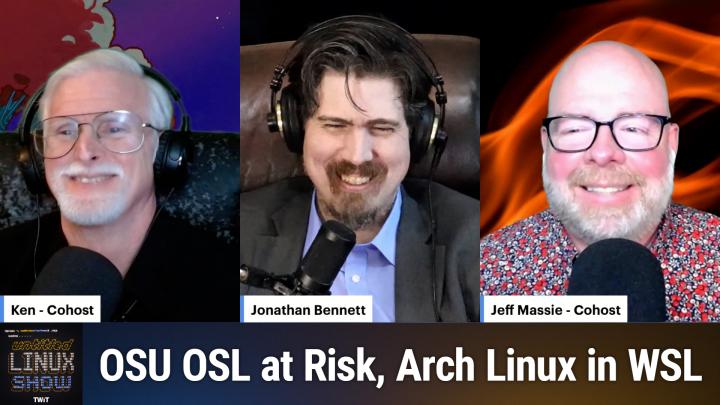
All TWiT.tv Shows (Audio)
Untitled Linux Show 201: That'll Bake Your Noodle
01:18:23
PewDiePIE, KDE Drops LTS, and the Open Source Lab
Loading summary
Transcript171 lines
- [00:00]
Leo Laporte
This week we have a review of the Orange PI RV 2. There is a PewDiePie video to talk about. There's some news with Nvidia and Cuda on older cards and the OSU Open Source Lab is having a bit of funding trouble. It's a great show, you don't want to miss it, so stay tuned.
- [00:18]
Ryan Seacrest
Missions to Mars, Driverless cars, AI chatbots Feels like we're already living in the future. Well, Robinhood is built for the future of trading Robinhood's intuitive design makes trading seamless, spot opportunities and take control of your trades with tools like screeners, simulated returns and strategy builder. On Robinhood, traders have access to hundreds of popular stocks and ETFs 24 hours a day, five days a week so you can keep up with today's fast paced markets. You can now even trade stocks and crypto all in one place with the new desktop platform Robinhood Legend. The future of trading is fast, powerful and precise. Experience it now on Robinhood Investing is risky. Robinhood Financial LLC Member SIPC is a registered broker dealer. Trading during extended hours involves additional risks. Cryptocurrency services are offered through an account with Robinhood Crypto LLC. NMLS ID 1702840 Robinhood Crypto is licensed to engage in virtual currency business activity by the New York State Department of Financial Services.
- [01:17]
Ken
Imagine you're a business owner relying on a dozen different software programs, each one disconnected. More expensive and more complicated than the last, it can be incredibly stressful right now. Picture Odoo Odoo brings all the tools your business needs into one simple CRM accounting, inventory, manufacturing, marketing, HR and more. All seamlessly connected. Everything works together, giving you the peace of mind that your business is running smoothly from every angle. Odoo's open source applications are user friendly and designed to scale with your business, saving you time and money. Say goodbye to juggling multiple platforms and hello to efficient integrated management. Stop wasting resources on complicated systems and make the switch to odoo today. Visit odoo.com o d o o.com and discover how Odoo can simplify and streamline your business operations. Odoo Modern Management Made simple hey, it's.
- [02:18]
Jeff
Ryan Seacrest for Albertsons and Safeway this spring. Take care of your entire home, including the air you breathe, and save $5 when you buy $25 worth of participating products in store or online. Shop for items like Glade Plugins, Airwick Plug Ins, Glade Auto Sprays, Airwick Diffusers and Glade refills and save $5 when you spend $25 on participating products. Offer ends May 20. Restrictions apply. Promotions may vary. Visit albertsons or safeway.com for more details. Podcasts you love from people you trust.
- [02:53]
Leo Laporte
This is. This is the Untitled Linux Show. Episode 201, recorded Saturday, May 3. That'll bake your noodle. Hey, folks, it is Saturday, and you know what that means. It's time to geek out with Linux and open source. All kinds of fun stuff. We're gonna have fun today. It's not just me here on the Untitled Linux Show. We've got Ken, we've got Jeff, and Rob's not here today. He took off. But that's all right. We'll have fun without him. Welcome, guys.
- [03:25]
Rob
Good to be here.
- [03:26]
Adam
Looking forward to today's show. Had some fun with the grandkids last weekend. Sorry, Leo, they were more important.
- [03:37]
Leo Laporte
That's fine.
- [03:38]
Adam
So we're starting with a review.
- [03:40]
Leo Laporte
We have a review to start with. And so I, I kind of felt bad because this is my. This is my orange pie RV2. And so this is the. This is the reviewing the stuff that Rob talked me into buying so segment. And Rob's not here. And he bought one too. And I felt bad about that at first until I realized that Rob's RV2 is inevitably still in the box. He's not pulled it out yet, so I don't feel bad anymore. He may or may not ever actually do anything with this, but he's got one, too. There's good and there's bad about the RV2. The good is, well, of course, it's ridiculously inexpensive. You can get, well, you can pick one of these up for, I think, $49. There's other good about it. It's got an NVME slot. In fact, it's got a couple of NVME slots. The one on the bottom, you can fit a full size NVME drive in and it will actually boot off of that. So this thing will boot as it is with no SD card. That's important to me because I've seen so many SD cards die on little devices like this. So being able to get a true NVME on it, it's just, it's a good thing. This thing will. It has up to 8, even up to a 16 gigabyte option for system memory. And so that actually gives you enough room to do things on it like run GitHub runners or do compilation or both. You know, the things that you would want to do, you can actually do with it. This is just about the fastest RISC V board. It's definitely the fastest sub$100 RISC V board. I think it's probably the fastest under $200 as well. If not, it's right in there. It's not as fast as a Raspberry PI 4. Definitely not as fast as the PI 5, but it is RISC V. So like, if you want to be able to compile RISC V stuff, if you want to do development for RISC V stuff, if you want to do testing with RISC V stuff, this is the one to go with and it seems to be reasonably good. I will say a couple of things that are weird about it. One is the power supply. So it is. It is USB C and it is a 5 volt. It is a 5 volt 5amp which that's their recommended. And you say, oh, that sounds familiar. That's what the Raspberry PI has. Except this does not do pd. It's not power delivery. So it's not a smart power supply. And so there's like only one power supply. I didn't realize this when I bought it, so I bought it without the power supply. I've got plenty of USB C power supplies. No, no, you want the, the Geek worm. The Geek Worm 27 watt power supply. Because this thing will actually push out 5amps at 5 volts even without PD negotiation. So that's kind of important to be able to make this thing work at its at its full capacity and not have to worry about power brownouts. There is an official Ubuntu image, although I really feel like we gotta get some quotation marks in there when we say it's an official Ubuntu image. There are some things missing. From what I can tell, it's not actually doing any video acceleration. Everything there is software. And so I did a APT update and APT upgrade on it. The good news is that did not brick the board. You get some of these little boards and you do an upgrade and it pulls a new kernel and it's not a compatible kernel and you soft brick your board and you get to go reinstall it. Did not do that. I did notice something really weird and that is when I did the updates. All of them got pulled in from huawei cloud.com which made me feel a little weird just for reasons. And I. I don't know this for sure but like, so if someone is employed by the US DoD, you might want to stay away from that, if you know what I mean. It's probably fine, but it's just. It was just weird. It was a little weird that that's where all of them came from and were hosted. Now I don't know, Huawei may have just a hosting service and so it's not actually affiliated with them, but again, it was just something I noticed and it. It was strange. So other. Other than that though, it's, it's great. And you know, it does have. One of the other really neat things is it has the dual gigabit ethernet ports on it and there is already an official. And this one I think is actually official. There's an official OpenWRT image that you can go and grab so you can load OpenWRT on this, which is going to be. Which is going to be really great. One of the other things that I would love to see are some cases, like 3D printable cases for the RV2. I don't know if they're out there yet. Hopefully there are some. I've already got some ideas kicking around about what to do with this one and put it in a case and I think we're going to do some GitHub runners on it, be able to do native RISC V builds. I think that would be really cool to do. But that's it. It's great. It's a neat little board and so long as the kernel support comes along and all of that, it's going to be a pretty interesting development board. So I'm excited to have it and we're going to put it to use.
- [08:51]
Rob
So if it's got OpenWRT that can run on it in the two gigabit ethernet ports, is it actually fast enough to route at gigabit speeds?
- [09:02]
Leo Laporte
I don't know for sure, but I suspect it is. Okay. Your. Your old time routers were just like little tiny MIPS cores. This has so much more horsepower than that does. I. I would suspect that you can get it to route at a gigabit. Now if you go to turn on like the full on cake or some of those other packet inspection and packet routing, not packet route traffic shaping like some of the more detailed traffic shaping things, you may run into problems. But just for doing NAT routing, I don't anticipate there being a problem with it. I bet it could do full gigabit.
- [09:41]
Rob
No. Okay, well for somebody like me that's probably what I would. You know, I'm not going to be doing heavy inspection and.
- [09:48]
Leo Laporte
Right, right. It does have WI FI built in. So you've got the. You got the little dangly antenna. I've not actually done anything with that yet, but it is there. And it does actually have a power button too. Some of the old Raspberry PIs, they were kind of annoying because they didn't have any power circuitry in them. They were just on. And this one apparently actually has a power on and off circuit. So that's kind of cool too.
- [10:10]
Rob
Nice.
- [10:10]
Adam
I bet I can think of one thing Rob might do with his.
- [10:15]
Leo Laporte
What's that?
- [10:16]
Adam
Sell it.
- [10:18]
Leo Laporte
No, see, that's not what Rob does. Rob buys these things and they're cool little things and he gets the box and the box makes him feel good and he puts it on the side of his desk and he forgets about it and he never opens it up. Never actually boots Linux on it. That's what Rob does, but he doesn't sell them, he just keeps them to make himself feel good that he's got.
- [10:33]
Adam
The shiny case, he got a display case he puts him in.
- [10:36]
Leo Laporte
I wouldn't doubt it. That sounds like Rob, the shrine of Linux tech in the corner of the office.
- [10:44]
Rob
I do agree.
- [10:45]
Adam
Posted on his website.
- [10:46]
Rob
Like, I do agree, the booting from NVME is really good because, yeah, those SD cards are kind of, I think, in general, viewed as a little more disposable than, oh, definitely disposable. So that, okay, you throw it in a camera, you do whatever, you load it up, oh, it goes bad, throw it away, grab another one.
- [11:08]
Leo Laporte
You can get it for so cheap.
- [11:09]
Adam
Hopefully you've downloaded the pictures before it goes bad.
- [11:11]
Leo Laporte
Hopefully. Yeah. Yes. Yeah, there was. There was a little bit of setup. There's documentation on how to do it. I think the documentation was missing a step, if I remember correctly, about actually getting the. Get it. Getting the partitions set up properly. I had to at least reboot in there to get it to see the new partitions. A couple little weird things, but I got it done. It wasn't too terrible.
- [11:36]
Adam
And did you have to reboot two or three times?
- [11:40]
Leo Laporte
I think I ended up rebooting it three times to make that happen.
- [11:47]
Adam
Story I've got about Liam proven rebooting three times.
- [11:51]
Leo Laporte
Jeff, go first.
- [11:53]
Rob
Well, I was going to say if you can run something like Plex on it and you have the NVMe, you could actually hook a U2 drive on there. So you could have like a 64 terabyte SSD connected to that as a Plex server and you could put your entire media collection on there and serve it from just a little, tiny, little, tiny form factor.
- [12:15]
Leo Laporte
Yeah, yeah. Pretty cool. Pretty cool.
- [12:18]
Jeff
Hey, it's Ryan Seacrest for Albertsons and Safeway this spring. Take care of your entire home, including the air you breathe, and save $5 when you buy $25 worth of participating products in store or online. Shop for items like Glade Plugins, Airwick Plugins, Glade Auto Sprays, Airwick Diffusers and glade refills. And save 5 DOL. You spend $25 on participating products. Offer ends May 20th. Restrictions apply. Promotions may vary. Visit albertsons or safeway.com for more details.
- [12:47]
Leo Laporte
All right, Ken, all right.
- [12:51]
Adam
And as I was mentioning, we're going to talk about articles that were written by Liam Proven and Jack Wallen, and according to them, you now have another distribution for your wsl. I'll let y'all figure out what that stands for. The distributions available to run in WSL have always been Ubuntu, Penguin, OpenSUSE, Kali, Linux, Fedora Remix, and Debian. But new to the list is Arch Linux now the normandy Arch Linux developer Robin I do apologize if I mispronounce this. Kandel recently revealed that Arch Linux now has an official WSL image. Kandel has been developing the project's WSL2 image for some time, but now it appears on the list of available distros for WSL2. Microsoft has moved quickly since the initial request back in February. According to Liam, after a mere half hour or so of updates and no more than two or three reboots, he could see Arch Linux in the list of valid distributions that can be installed on Windows 11. Arch Linux is the basis of multiple downstream distros including Valve's Steam OS for the Steam Deck handheld game console and Arch downstream distros such as Endeavor OS and Manjaro. For folks who have graduated from the entry level distros and now have preferences as well as knowledge, what a wonderful power that is and want to construct their own OS installation. Arch is a great next step according to Jack Kandel is building and releasing new versions monthly via GitLab's CI and CD or continuous integration continuous development cycle and the goal is to provide a complete system that offers the usual Arch Linux appearance. I recommend reading both articles for more details since I did just quickly gloss over everything.
- [15:18]
Leo Laporte
Yeah, very cool and quippy.
- [15:20]
Adam
It was the second one now.
- [15:24]
Leo Laporte
Interesting to know you talked about rebooting. He was talking about rebooting Windows multiple times, updating rebooting Windows multiple times to be able to get Arch in the list of possible distros. Didn't have to reboot Arch that many times. In case anybody wondered with wsl do.
- [15:39]
Adam
You end up having to do any reboots?
- [15:42]
Leo Laporte
I mean, are the guests are all virtual reboots?
- [15:46]
Rob
Well, I've, I've. When I installed it now some of that would be probably corporate overhead because I was using it for work and there was like a reboot in there just to make sure you're starting everything at a good place before you, once you installed it, reboot it and then load on other stuff.
- [16:05]
Adam
Sometimes the reboot's necessary to get rid of that robot voice even.
- [16:09]
Leo Laporte
Yeah. All right, well, what about rebooting video cards? Nvidia is trying to reboot their line of cuda. What's new here, Jeff?
- [16:20]
Rob
Well, Nvidia released some news this week saying that they have CUDA version 12.9 released. Now. CUDA stands for COMPUTE Unified Device Architecture and it's basically a high level language that allows a developer to write code on which both the, excuse me, CPU and GPU can run computational tasks. The CPU works best in places where there are highly complex operations which are not very parallel, and the GPU works great for highly parallel operations which are lower down in the, on the complexity scale. That's just kind of rule of thumb. Don't take it as set in stone. The overarching idea is to have faster computations no matter what the problem looks like. Without using CUDA or ROCM for amd, that's their version, there's a lot of computational power in the GPU which doesn't get utilized. Now going back to the story, 12.9 brings some features such as compiler support for SM, which is streaming multiprocessor 10.3 and 12.1 compiler support for family specific architectures, meaning better support for more hardware. And there's some minor upgrades which have been added. But one major note though is a notification that support is going to be frozen for some older hardware. In the release notes in the 12 series this statement can be found. Well, it's actually this latest one. They've had a statement in all the 12 series saying that the older cards are feature complete and don't plan any future enhancements. But now in this 12.9 they came out and said Maxwell, Pascal and Volta architectures are now feature complete with no further enhancement planned. While CUDA Toolkit 12 point X series will continue to support building applications for these architectures, offline compilation and compilation and library support will will be removed. In the next major CUDA toolkit version release. Users should plan to migration to newer architectures as future toolkits will be unable to target Maxwell Pascal and Volta GPUs now Maxwell GPUs that includes the GTX750 and the GTX900 series. Pascal is the GTX1000 series and the Volta cards are the Titan, Titan V or Titan 5 and the Quadro GV10 cards. Just to give listeners a general idea of age, the Maxwell cards released around 11 years ago Pascal are around 9 years of age and the Volta cards are all also about 12 years old. Now there are going to be legacy branches that can be used if you really want to keep the hardware going, but just know that there's not going to be any new features released. So you know, some of this is while Nvidia would love you to purchase new hardware, the reality is these old cards are missing features and chips which are in in more modern cards and are needed for future releases. I will say I agree with the article as well. Linked in the Show Notes wherein they talk about, you know, if you're really into computational computing, it's probably really time to move to a faster and more efficient hardware.
- [19:38]
Leo Laporte
If you're really, if you're really into computational computing, you weren't running anything that old anyways.
- [19:44]
Rob
Probably true, probably true. But and they do make note that you know these, these can still be used for general computing and you know, some games now they're not going to support some of the modern stuff, but you know, some games at lower resolutions but specifically for compute, there's a lot better options. So take a look at the article linked in the Show Notes which also has a link to the original release, wherein the when I say original release, the release notes from Nvidia where they also show different CUDA versions and the required drivers for both minimum compatibility and the toolkit versions and they go through every added and deprecated feature. So happy crunching.
- [20:32]
Leo Laporte
Yep, fun stuff. And I'm still here over in AMD land doing their hip and all of that stuff did finally make it work. It is possible but man, everything is just revolves. Seems like I guess it's changing a little bit, but everything seems like it's revolving around CUDA for doing that sort of thing.
- [20:50]
Rob
Well, I mean they're AMD is dumping a lot of effort into making Rock M kind of the new standard, which is an open standard and CUDA is not. CUDA is proprietary.
- [21:00]
Leo Laporte
Yeah.
- [21:01]
Rob
So we expect to see it probably theoretically later this year. I think that was one of my predictions is that by next year we'd have Rock M working for average users. Now some older cards do have Rock M Working like some of the 7000 series, it works on better. The 9000 is not yet implemented and it's really particular about which cards you can run it on, so. But it's coming. AMD is really trying to make that the new standard and intel is kind of behind it too because it's open so they can easily jump on the bandwagon versus Cuda.
- [21:46]
Leo Laporte
Yeah, I'm now going down the rabbit hole of I wonder if RX9070s are available again. I'm like a dog chasing a squirrel. Goodness gracious. Well, the reason that I might be interested in that is because of course we now have Proton 10 and a new Proton experimental branch. And oh by the way, also wine 10.6 just did a release, so it's time for a little wine corner here. No, not that kind of wine. Windows is not an emulator, that kind of wine. So I've got a couple of stories here. Off to first off with the Proton 10 is got a beta release. It's not fully out, but it's easy enough now to go into Steam and say, give me that, give me that beta goodness. And there are a bunch of games here that work that weren't working before. Now some of these were working with Proton experimental and of course because the beta is based on the old experimental, it just kind of comes over. But some fun stuff here like one of the Batman, Arkham Asylum, the Windows version of Factorio. Factorio has had a Linux version for a long time, but if you for some reason really want to run Factorio Windows Edition on your Linux machine, you can do it. Now some other stuff like no Man's Sky VR mode and then they talk about improved video playback. And this is something I've been watching for quite a while. It's because one thing you've got proprietary codecs. Two you've got. Some of these codecs were built into Windows, the Windows Media Player libraries. It's been, it's actually, it's been a problem on Linux gaming for a long time trying to get like cutscene videos and in game videos to play. And that's, that's something that actually the guys at Valve and at Wine as well have been working on for a long time. And so there's a nice list of games here where you have fixed or improved video playback. Of course there's a whole bunch of other fixes and things that work now, things that work better. Just a bunch of them in this new beta. One of the very interesting things when this hit, when 10 hits beta, that Means that Proton Experimental kind of jumps over Beta and now you get even more new stuff there because they essentially they've branched it. Now they can go off and break it trying to fix things. And so there are a bunch of changes there. This is what the second link is. Those are the things that got fixed in the experimental branch that are not in Beta and they will, they'll eventually land there, but just some neat things. For example, one of the ones that stuck out to me was in VRChat, when you try to play H264 video in one of the virtual worlds that would crash on some setups. And so they've gone in and they fixed that. That's something that's in Proton Experimental. That'll land in the Proton 10, probably the next Beta or the next release. So all kinds of interesting stuff there. And then it's also. It happens to be time for wine 10.6, which wine is kind of the. Kind of the source program for all of this. It is the upstream in many ways. And there's some interesting things here like adding the PBKDF2 algorithm and that apparently has fixed some things with the article here makes it sound like that's with graphics intensive software. I don't think so. I think those were just two notes that happened to be in the same paragraph. But 10.6 has fixes for games like Alan Wake and Eve Online and just all of the little advances that you would expect in a dot release of Wine. I don't know that there's anything here that's really earth shattering, but it intrigued me that we had all of these coming at the same time. So if you've had a problem with a game on Proton on Steam, go try the Proton 10 beta, go try Proton Experimental again. I've actually got a couple of games that I've had issues with that I'm in all of my copious spare time. I'm going to load back up and try this way and see and see if that works. And then of course, you know, you expect things like Glorious Egg Roll is going to bump up and have a version based on Proton 10. It's going to pull those patches in. All of those normal things are going to happen. So just sort of another, another. How should we say it, another landmark to go by, I guess.
- [26:14]
Rob
Very true. And something for everybody to keep in mind, even if you don't see your favorite game, maybe have a fix, is sometimes, you know, oh, we fixed Game A. Oh, that also wound up affecting, you know, giving C and D yes, very much so. Very much so.
- [26:36]
Adam
I was checking out Pinball FX and I was able to get that to run on Linux the other day by just going in and selecting to the option to automatically apply whatever works. And I just picked the first one and it worked with it.
- [26:57]
Leo Laporte
I was not familiar with this game, Pinball fx. Yeah, pretty cool.
- [27:05]
Rob
I think that's the one I have now.
- [27:07]
Leo Laporte
Do you play it with a. Do you play it with a VR headset?
- [27:11]
Rob
No.
- [27:12]
Leo Laporte
It kind of looks like you can.
- [27:14]
Adam
Do you run it in a real pinball machine?
- [27:19]
Rob
Oh, I would love to have. Okay, here's a, here's a Jeff trivia snippet. You know, for in case, you know, it comes up in some game or nightly conversation. My favorite pinball game was Bally's Fish Tales and I used to play the heck out of it when I was in college.
- [27:45]
Adam
And with tomorrow being a holiday for all of us Star wars aficionados, there's even discount on some of the Star wars games.
- [27:59]
Leo Laporte
Oh, interesting.
- [28:00]
Adam
As well as through the Pinball FX for some of the Star wars based pinball games.
- [28:08]
Leo Laporte
Here you go, Jeff. You can buy the Fishtails pinball machine table by Williams re refurbished for Williams only $8,999.
- [28:19]
Rob
Holy cow, what a bargain.
- [28:21]
Leo Laporte
What a bargain.
- [28:24]
Rob
Think of how many orange pies I could get for that.
- [28:27]
Leo Laporte
Yeah, a bunch.
- [28:29]
Rob
The only thing is with those, with those pinballs is not only do you, okay, I bought it, now you have to service it and take care of it.
- [28:36]
Leo Laporte
You got to tinker with it. I mean, that's kind of, let's be honest though, that's half the point, right?
- [28:41]
Rob
Well, yeah, yeah, yeah.
- [28:44]
Leo Laporte
All right. Talking about things that are that old, what's up with FreeBSD? What's FreeBSD been up to in the past quarter century?
- [28:56]
Adam
Well, I'm going to share with you Liam Proven's interview with Meta Software engineer Justin T. Gibbs. He was the founder of the FreeBSD Foundation. From Justin's answers, we learned that FreeBSD traces its roots to the Computer Systems Research Group, commonly called csrg, which was located at the University of California, Berkeley. This is where the Berkeley software distribution was developed as a collaborative project at the university in the 1970s. So yes, we're going back to my teen years, helping shape the Open Source movement. In fact, in the early 1990s, BSD faced legal challenges, which Ling Linus Torvalds later cited as a key reason for creating our favorite operating system, Linux, or favorite kernel, at least during this time. 386BSD emerged to bring BSD to Intel's 8386 processors, and FreeBSD was officially founded on June 19, 1993 as an evolution of 386BSD prioritizing performance, stability and an open development model. From its Berkeley origins to today, FreeBSD has always been about creating software that anyone can use and learn from. As Dark Dr. Marshall Kirk McKusick, one of the earliest FreeBSD developers, puts it, freebsd is Copy center, not Copy Lift. You can go down to the Copy center and make as many copies as you like for whatever purpose you like. That philosophy remains just as true over 30 years later. FreeBSD continues to have a major impact both as a complete operating system and through its widely used components. Its success is built on three key pillars a permissive license, a self renewing project structure, and highly reliable technically advanced software. Because of this, FreeBSD is embedded in countless technologies powering phones, game consoles I didn't realize the Nintendo Switch was even based off of even. Have you even have routers that handle most of the words Internet traffic as well as industrial control systems? Chances are you're using Free SD without even realizing it. For example, Netflix relies on FreeBSD to optimize streaming performance, delivering high quality video to millions with minimal latency, reaching speeds of up to 800 gigabytes per second from a single server. If you want to read the full interview, just follow the first link in the show notes. The second link is to Christine Hall's article about the FreeBSD Core Team and the FreeBSD foundation wanting to ask FreeBSD users a few questions. I think after that first article we can consider all of ourselves to some extent to be a FreeBSD user. So another way to phrase this is just like we heard in January, it's survey time this time at FreeBSD. Now we're going to be saying again from now on. According to Christine, 2024's user survey turns out not to have been the one off we thought it was, and the FreeBSD Community Survey is looking like it's going to become an annual event. The Survey runs through May 7th of this month or the 7th of this month, May, and should only take 15 minutes. Hopefully the information gleaned from the results will be key for keeping the project on track. So if you've got 15 minutes in your day to spare, go ahead and take the survey everybody.
- [33:28]
Leo Laporte
Yeah, FreeBSD is cool. I don't know that I've ever actually run it on One of my devices intentionally. Right. So like I've got a VOIP phone over there that maybe running FreeBSD under the hood. I don't know, you know, it's sort of like Linux and then it's a bunch of, it's in a bunch of things.
- [33:46]
Rob
Well, and it actually came from Unix and it forked before System five was out. But BSD and UNIX and Linux and they're all post it POSIX compatible.
- [34:07]
Leo Laporte
Yeah.
- [34:07]
Rob
And so they're all actually pretty close. I mean it's, there's not as big a difference as you might think between them except for the flags.
- [34:18]
Leo Laporte
So. Yeah, well, the flags are different.
- [34:20]
Rob
Well, I mean there's.
- [34:20]
Leo Laporte
There. So something that'll really, really bake your noodle is I forget where it was at some point along the, the line of Windows development. Apparently modern Windows is 99% POSIX compliant itself. It's just the fork system call works differently but everything else is just about there.
- [34:43]
Rob
I do remember, I remember hearing that. I think we've heard it a few.
- [34:48]
Adam
Times on this show in fact, probably.
- [34:52]
Leo Laporte
I've actually done some work on porting Linux programs over to Windows and it's not as, it's not as bad as you would think, particularly if you use one of the like msys2 or there's. There's a couple of different frameworks for doing it that will let you port it over fairly, fairly easily. But yeah, it, it's, it's not as crazy as you would think it is to make Linux software run on Windows. All right, let's see what is up next. Oh yeah, Je, there is a big thing.
- [35:29]
Rob
Yeah, we've had some chat already in the discord and on other platforms talking about this. So some major news in the Linux community happened this last week when PewDiePie released a video on installing Linux and he said that you should too. Now, for those who don't know, PewDiePie is a YouTube video maker who has 110 million subscribers as of this time. Right now I know at one time he was the largest YouTuber though I think that's changed, but I don't know. I don't keep up on my influencers, so I'm sure somebody in the chat will correct me. But now the title of the first YouTube video is PewDiePie made a Linux Rising Video. So the next term to define is ricing rice actually comes from the car world where it stands for race inspired cosmetic enhancement. Basically you're trying to make your car look like a race car, but it doesn't run like a race car. You know, maybe you add a large tail fin and a hood scoop, both of which are non functional, so the scoops not allowing cold air into the engine like it would on a race car. And the large rear tail fin isn't adjustable to supply the proper amount of downforce like you would have on a race car. In the context of this video, rising means you know, you're putting a unique look on your Linux os. You're really going all out to customize it and do all sorts of things that you think are cool. Now this video has caused a huge reaction because unlike someone such as, you know, Linus Sebastian or of Linux linus tech tips, PewDiePie is more mainstream and not in the tech world. So we expect the Linux videos from the normal techie sphere of creators. It's just that him being outside of that sphere, it really causes ripples and the fact he has such a large following. The video has been out for six days as of today, Saturday, May 3, and it currently has 4.7 million views, which is his best performing video in the last five months. So bottom line, this, this gets a lot of eyes on Linux who are not and a lot of people who aren't in the tech world are going to see this. Now the first link in the show notes is to Brody Robertson doing a reaction video and the second link is the PewDiePie original video. Now Brody's video is how I first found out about this. Now I'd have heard of PewDiePie at the time, but I've not watched any of his videos. And since they're since this came out, there's been a ton of YouTubers and others talking about the video and making reaction content. The original video starts out with PewDiePie talking about how Windows is getting so cluttered and it's basically driving him to try Linux or to try Linux. He first installed Mint on his desktop because that's what he tried years ago and on a laptop he installed Arch. Now he does go through the bonuses of Linux and how much he loves it and but he also does talk about some of the downsides. So for example, he mentions that he had to give up Photoshop, which he does go off on a rant on Adobe on that. So it was. It's rather entertaining. It's an entertaining video. There's a decent part of the video he goes into how he made changes to his Arch laptop to make it look different and make some good interface changes. For example, his Neo Fetch has an animated ascii Art graphic. It's like this spinning kind of ring around a central thing. It looks kind of like a spinning Saturn almost, only it was ASCII art.
- [39:16]
Leo Laporte
That was pretty cool. And I kind of want to know how he did that.
- [39:19]
Rob
Yeah, so it's again, this is nothing that's going to really be the make or break application type stuff. It's going to be like whoa, this is cool. This is what you show off at your, at your local Linux party or to your geek friends, you know, you like check this out. You know his wallpaper is of a nuclear reactor plant and a lot of his theme in the laptop is based around that. So he makes performance monitors look like nuclear interfaces and he's got some nuclear terminology. He even goes into how he used System D analyze to see where his boot up times were, why his boot up long boot up times were taking. You know, why. Why was he taking so much time to boot up? Well, he used System De analyze to look at that. For those curious about that, you can see Untitled Linux Show Episode 130 Where Rob Goes over that command. He did the same with Firefox so it opens faster because 2 seconds opening time wasn't quick enough for him. So they talk about that. The Brody video has some comments where he fills in some gaps in information and corrects some small things. Like PewDiePie says that gaming on Linux works just fine. And Brody comments that well, you know, he says most games work fine. It's the ones with low level anti cheat software that are probably not going to work but otherwise most everything does. You know, take a look at the two videos linked in the show notes let us know that in the discord what you think the PewDiePie video has generated a lot of buzz, some good and some bad because there's a backlash as well. And you know, it kind of goes into a little political politics. I'm not going to go into that here but take a look, make up your own mind. And personally I think it's great for getting Linux out into the minds of people who don't normally think about Linux and probably don't even know about it. I'm sure my co hosts have some thoughts.
- [41:16]
Leo Laporte
I'm actually going to touch on the political thing and not the political thing itself but like the response to it. So apparently and I don't know all the details about this, right, Like I don't watch PewDiePie, I don't know what his, what his background is. I know that there are some people that don't like either his politics or what they believe to be his politics. I also know that for a lot of these YouTubers, you're not actually getting their real politics. You're getting whatever, you know, image they want to put on for whatever reason. Because if you're. Yes. If you say something outlandish, more people will click on your video.
- [41:53]
Adam
You mean it's like Spin City?
- [41:55]
Leo Laporte
Well, not even that. It's just you say crazy things because it'll get more views on your video. And anyway, that's beside the point. What you've had, though, is you've had a few corners of the Linux world where people are saying it's a bad thing for Linux for PewDiePie to have talked about it, because all of PewDiePie's toxic listeners are going to come and invade our Linux spaces. And I just have to say, if you feel that way, you need to step away from your keyboard and really think about your life for a little while. I mean, that's ridiculous.
- [42:29]
Rob
The modern phrase is go touch grass.
- [42:31]
Leo Laporte
Yes. Go take your shoes off and walk around barefoot in the grass for a while. Ground yourself. Get those terrible negative vibes out of you.
- [42:39]
Adam
Come over the yard.
- [42:42]
Leo Laporte
So we don't really don't want Linux to be a place that is gatekept. Right. Like, that's just kind of silly, especially for political reasons. Yes, there will be a challenge in that we will have a bunch of noobs potentially. Like, I don't know how many people are going to switch to Linux because of this. The video has over 4 million views on it, so there will be some. So like, yes, there may be more noobs asking dumb questions, but at the same time, try to remember, we were all noobs asking dumb questions once upon a time. Yeah, I saw some, I saw some comments in a few places and it's just like, guys, just chill out. Be glad that the dude talked about Linux and just chill out. That's what I wanted to say.
- [43:26]
Rob
And to reply to Adam or Ant Pruitt in the discord. His question was wonder if he had dabbled previously but. But decided to just take the jump after dealing with stupid Windows performance. He does talk about that. And he used Mint. Yeah, the reason he used Mint on his desktop is because that was what he. He loaded up many years ago and so he knew it existed, he was familiar with it. So he jumped into that at first to start learning Linux. And that's why.
- [43:59]
Leo Laporte
Yep.
- [44:00]
Ryan Seacrest
Missions to Mars, driverless cars, AI chatbots. Feels like we're already living in the future. Well. Robinhood is built for the future of trading. Robinhood's intuitive design makes trading seamless spot opportunities and take control of your trades with tools like screeners, simulated returns and strategy Builder. On Robinhood, traders have access to hundreds of popular stocks and ETFs 24 hours a day, five days a week so you can keep up with today's fast paced markets. You can now even trade stocks and crypto all in one place with the new desktop platform Robinhood Legend. The future of trading is fast, powerful and precise experience it now on Robinhood Investing is risky. Robinhood Financial LLC member SIPC is a registered broker dealer. Trading during extended hours involves additional risks. Cryptocurrency services are offered through an account with Robinhood Crypto LLC, 170-2840 Robinhood Crypto is licensed to engage in virtual currency business activity by the New York State Department of Financial Services.
- [45:00]
Jeff
Hey, it's Ryan Seacrest for Albertsons and Safeway this spring. Take care of your entire home, including the air you breathe, and save $5 when you buy $25 worth of participating products in store or online. Shop for items like Glade Plugins, Airwick Plugins, Glade Auto Sprays, Airwick Diffusers and Glade refills, and save $5 when you spend $25 on participating products. Offer end May 20th. Restrictions apply. Promotions may vary. Visit albertsons or safeway.com for more details.
- [45:29]
Leo Laporte
All right, let's talk about KDE for just a minute. There's some interesting stuff going on here, and it's the weekly update from Nate Graham over at Pointy Stick and they had a code Sprint and some interesting things came out of it. One of the ones that really caught my eye is that Plasma LTS is going away and that's the Plasma long term support release. And as Nate says, it really kind of didn't exist already. And by that I mean they weren't really keeping up with it. And so they've just said, you know what, we're not going to name an lts. If your distro wants to do that, they can. We're going to try to keep patches available, but like we're not going to maintain an lts. I think that's probably the right move, especially as much things are on the move with kde. If they ever get to the point to where like development slows down and they get into more of a sort of stable period, maybe it'll make sense to bring it back. Although if they get to that, maybe they won't have to bring it back regardless. Lts for KDE is going away and essentially it's just up to a distro. So if, if Red Hat wants to officially ship KDE and they want to keep it, they want to keep it supported for a while, they get to do that. And then he also talks. Something else that really fascinated me was activities. And this is something that is in, it's in kde, but I've never used it, I've never really found a use for it. But it's the idea that you switch between your different activities to do different things, different times. Right. And so he has this idea of a home activity versus a work activity. And Nate comes up with this really intriguing idea. He goes, what about your email client? What if when you're in your home activity, your email client only shows you one email address, but when you're in your work activity it shows you all of your email addresses and it's like that's, that's actually really a fascinating idea. I could be down for that. I could find that very interesting. So I've never used activities, but the way he's talking, what they're talking about, trying to add to them, I find really fascinating. So once that comes along, I may have to give it another try because that's, that's really cool. And then they talked about telemetry inside of kde. And you know, every time you talk about telemetry, us Linux users, we kind of get a little nervous, we get our hackles up. But of course kde, they want to do it the right way and they are, they were essentially going to change the way they do telemetry from a one time opt in to very similar to what the STEAM hardware survey does. And that is every once in a while you'll get a notice and it says, hey, it's time to send your survey in. Would you like to send it to us and have a couple of options there for you know, I'm okay with sending this, I'm not okay with it. No, don't send anything at all. And it'll just give you a pop up, it'll ask you, it sends it off and you're good to go. Which is really, really interesting for a couple of different reasons. One being that you can, once you've opted into it, you're not like accidentally opted into it forever. You don't have to go looking for it to opt out of it, it'll just ask you again. And also it gives you an idea of how often they're collecting that data. So I think that's pretty interesting. I would not mind seeing more projects doing that sort of thing. And then there is one other blog post. This is from Xaver, and this is about HDR on KDE, which is changed quite a bit in 6.3. He goes through some of the really technical things about how to do standard definition, how to map it onto high definition, why how Windows does it is sort of broken. And how Windows on laptops is better, how it's handled in, in Wayland on KDE and how it works in Windows games and how it works on Linux playing Windows games. And there's a lot that goes into it. I'm not going to go into the details on this. I will say I've tried HDR on KD6.3 and I rolled back to 6.2 because there's one feature that's missing. And I talked to Xaver about this and he actually disagrees with me. I'm going to have to go talk to him about it again. But the problem is you can't change, at least that I've found. You can't change the way that your SDR content is tone mapped onto your HDR display. And so for me to get my HDR content as bright as I want it, unfortunately the white background on the rest of my SDR content is like looking into the sun. It's way too bright. It's no fun. Anyway, that's something that kind of drives me crazy. Hopefully. Hopefully that'll get fixed. Or maybe I can write a little plugin to fix it at some point. Well, I just. I need to update 6.3 KDE 6.3 again on my big desktop behind me, see if it's still as broken feeling as it was and then, you know, go from there, whether I go complain to him again or, you know, what have you. But anyway, that, that's, that's where that's at. And yeah, KDE is coming along. Fun stuff.
- [50:57]
Adam
It sure sounds like it.
- [50:59]
Leo Laporte
Yep.
- [51:00]
Adam
One less thing to worry about with them dropping the LTS support.
- [51:05]
Leo Laporte
Yeah, I kind of have the feeling that it's sort of like the kernel, where not a whole lot of people were using it and therefore it wasn't done very well. So, yeah, I think it makes sense.
- [51:15]
Rob
Well, I was going to say it just matches the kernel where people weren't using it. You know, their, their LTS doesn't sync up with everybody else's lts and so it's like, okay, take care of it yourself.
- [51:28]
Leo Laporte
Yep, yep, makes sense.
- [51:30]
Adam
And I want to Apologize there for a bit, John, if I was fading.
- [51:34]
Leo Laporte
Back into that oh, your doorbell rang and you went to go answer the door and you forgot to mute yourself. So we heard you clunking around. It's fine. You want to talk about the LibreOffice though?
- [51:46]
Adam
Ken Yes, I love talking about LibreOffice, especially since this week Marius Nestor wrote about the Document foundation announcing the great General availability of LibreOffice 3.2.25 as the third maintenance update to the latest LibreOffice 22.5 Office Suite Series to fix various bugs and other issues reported by users in an attempt to improve the overall stability and reliability of this popular open source, free and cross platform office suite. Now here's the numbers. This maintenance update addresses a total of 68 bugs with the details found in the RC1 and RC2 change logs which you can find linked through Marius article that I have linked in the show Notes. Now I've also got a second link going to one for Michael Larabelle, who also wrote about the recent progress towards Z standard integration with LibreOffice. Now open source developer I know I'm gonna mess this up, so I'm gonna just rush right through it. Akshay Kumar, Dubai refactored the inflator code within LibreOffice Git for better extensibility and then finally merged, adding actual ZTD build support and decompression handling to LibreOffice. The patch should be included in the daily builds for the adventurous, otherwise it should be available in LibreOffice 25 according to the Document Foundation Bug Report thread that Michael links to in his article. So it looks like we should see that available in August.
- [53:50]
Leo Laporte
Very cool. Yeah, I find it fascinating the first article, it has a reminder at the end that this is the LibreOffice Community Edition. If you're in business, if you're an enterprise, there's LibreOffice Enterprise that you can pay for, of course, which honestly, if you're in business, having the ability to call and ask questions to get support for something like that makes sense. So there you go.
- [54:19]
Rob
Exactly. Well, that kind of transitioned to our next story.
- [54:26]
Leo Laporte
Take it, take it away.
- [54:28]
Rob
So there could be trouble on the horizon for osl, the Open Source Lab, which is run out of Oregon State University. Now they've been providing mirrors for a lot of the open source projects that we that we use and they have virtual machines for many architectures to support testing open software on a lot of different hardware. They've been doing this for 22 years now, but for the past several years they've been operating at A loss because of a decline in donations from corporations. This gap has been covered by the university's College of Engineering. But there's been a change in how the university funding is working and that means the College of Engineering is no longer going to be able to cover this gap. The OSL help and it helps and mirrors projects such as Fedora, Debian, FFmpeg, Inkscape, Firefox, Gnome, Gentoo and many others. I say that's just the tip of the iceberg as stated one of the articles in in the show notes. So this, this is a quote from one of the articles in the show notes. If you have downloaded Linux you have a good chance of having software which was either compiled or downloaded or both from the OSL Lab. They're looking to get $250,000 in funds to keep it operating. They do have one large corporate sponsor trying to increase their support but they would like to have more companies help cover the support. There's also the OSU foundation which it is possible to make a donation and it is an IRS 501C3. That's a US term which means it's a non profit corporate corporation and I believe is that is also a tax deductible. Yes, donation.
- [56:20]
Leo Laporte
Yep.
- [56:20]
Rob
Being. Being having that classification. Oh, Jonathan just confirmed. So there, there have been a lot of software projects which have been putting out the calls for donations. An accountant for Rocky Linux said the beacons are lit OSL calls for aid for you token fans. That's a reference there. Yeah, take a look at the link, take a look at the articles linked in the show notes and if you're a company which can donate, you know please, please start donating and helping this out because you probably are using some software that they, they support or helping support. There's a link to the donation page and if you're just a regular person and want to donate you can. The one thing is if you go to the, the donation link on that page they say once you go to the foundation donation page be sure to type Open Source Lab fund in the I want to give field. So that'll make sure your donation reaches the osl. It's not on the normal dropdowns because there's like you can give to the athletics department and there's like a presidential or president of the university fund for something and some other other funds in there. So you have to actually write Open Source Lab fund in there or else they won't res. They might not receive the money they do. Like I said, they host a Lot of free open source projects. So please do help out if you can. I want to say the article I think they have, I think it was like 12 terabytes they of data they mirror and there's a whole bunch of other stuff they do. I mean they do a lot and they actually have a lot of undergraduates and graduate students there that they help. They use that as training. So they have a lot of people supporting it that aren't really getting paid or they're paid very little because it's part of the education to learn about how to handle large infrastructure of networking and servers and whatnot. So definitely come to the aid.
- [58:31]
Leo Laporte
Something I really like in the actual blog post is that they say they're asking for $250,000 per year. I believe. Yes. They tell you exactly what that's going for. Right? Okay, so they have one staff member that's making 150k which for the level of work that they're doing, that's not an unreasonable salary. It's a good salary, but it's not terribly unreasonable. They've got eight students and they are paying them a total of 65k for you know, their part time work. And then they're asking in addition to that there's about $35,000 for the year for other expenses and that's it, that's what that $250,000 would go for. Right. So they're, they're not taking, they're not taking paid, you know, paid trips to, you know, wherever, halfway around the world. Right? Like to the Suz Con. Well, not even, that, that's not, that's not even what I mean. You know, like they're not, they're not.
- [59:22]
Rob
Going to conferences in, in Hawaii or going fancy, whatever. They're just here's the day to day operations, what it costs.
- [59:31]
Leo Laporte
There is at least one company that we've covered that is in financial trouble, but yet they're paying for like week long retreats to halfway around the world, not for a conference but like spiritual and mental health retreat for all employees to some place.
- [59:46]
Rob
And it's just like, well, C suite employees.
- [59:50]
Leo Laporte
No, it wasn't just C suite employees. It was. Anyway, anyway, I'm just saying that they're transparent. They have here what the money is actually going to go towards and it is a reasonable breakdown of what they're going to spend $250,000 on.
- [60:05]
Adam
And if you use Alpine, Linux, Busybox, Cinnos, fedora, Debian, Deluge, FFmpeg, there's my reason for donating well, there's Market OS, Inkscape, Firefox, so much Gnome, Mac ports, Haiku, Lineage OS, Gentoo, Tor or Qem. Qemu.
- [60:32]
Rob
Well, they have a hundred major projects and they have over a thousand sub projects in that that they're taking care of now.
- [60:40]
Leo Laporte
I just get confused every time I read OSU because I'm in Oklahoma and OSU around here means Oklahoma State University. And I thought for the longest time that. Oh, that's really cool that Oklahoma State has this place. No, no, it's Oregon State.
- [60:52]
Adam
Oregon State University.
- [60:54]
Leo Laporte
Yes.
- [60:56]
Adam
Just like there's USF and uf. Yeah, ufs, which is University of State of Florida and then there's ufs, which is the University of Florida State. One has the Seminoles, the others has the Gators.
- [61:14]
Leo Laporte
Yeah, yeah, it's fun. All right, let's talk Redis for just a minute. And it's tri licensed now. So this is sort of an update on the licensing limbo licensing dance that multiple companies have been doing for a couple of years now. Redis was one of the ones that made a move away from an OSI approved license from an actual open source license over to the REDIS source available license v2, and then they also dual licensed it to the server side Public License v1, neither of which are actual open source licenses. Because of the way the restrictions are written, they do not meet the threshold of being considered open source. And every time we cover one of these, I always make the statement, guys, this is a solved problem. Go look at the agple, the Afero gpl, it solves basically all the problems that you're trying to solve. That the a GPL A contributor license agreement fixes this in a way that's more friendly to open Source. Well, apparently someone at Redis got the message because about a year after they made these changes, they have finally added the OSI approved AGPL license for the Redis 8.0 release. And so there is finally an open source license. Now the way the AGPL works is I guess we have to talk about the loophole, the GPL loophole when it comes to cloud computing. So the whole idea of Open Source and the GPL is when you run code on your computer, there are certain rights that you should have. Some of the Free Software foundation very much believes you should have the right to be able to look at the code, you should have the right to be able to share the code, the right to recompile the code, decompile the code, the right to change it. Like there, these are the Software freedoms that the Software Freedom Conservancy and Free Software foundation talk about, those are the freedoms they put into the gpl. It's, it's basically the freedom to run the code and see the code and do whatever you want to with the code. Well, when you get into business, there's this feeling of, well, we want to make this open source so that people can look at it and people can make changes like consent as fixes. But, but we really don't want another big company like Amazon. Amazon is really the one that's caused a lot of this. We don't want Amazon to take our product and turn it into their product. Right. So, like, if, if the guys at Redis host Redis as one of their products is one of the ways they make money, and then Amazon turns around and starts hosting Redis for cheaper, well, then it undercuts and it really, it, it hurts one of the ways that they make money. So one of the solutions for this has been. No, I'm sorry, we were talking about the loophole. I jumped tracks there for a second. So the loophole, the Free Software foundation, it's all about running the code. When that code runs on your machine. And the way the GPL and all those things are written, is it specifically about your machine? Well, then there's this question about what if the code is running on a server? It's not on your machine, it's on someone's server. And this is where the GPL sort of doesn't apply. If the code is running on someone else's server, it's not on your machine, and therefore the GPL license doesn't kick in. So Google or Amazon or any of these companies, they take the source code, they run it on their server, they can make whatever changes they want to, but the binary stays on their server. Therefore, there's no obligation under the GPL to redistribute the changed code. That's what the GPL is all about. You get the binary, you should be able to get the code that goes with it. But if the binary is running on a server somewhere, not on your machine, you don't have any right to get the changed code. And so that's kind of the GPL loophole. Well, there was a license created exactly to deal with that loophole. That was the agpl, which essentially says any code that you interact with, even if it's through a web browser, you have the right to look at the source code. It extends the, it makes the GPL more viral, to put it in Those terms. Well, because of that, places like Google and Amazon, they just won't touch any projects that are licensed under the agpl. They just like there's a corporate policy at Google, do not do anything with AGPL code. We do not want it. Right. So I've said for the longest time that a company like Redis, where they're getting undercut by someone like Google or Amazon for doing what they're trying to do. License it agpl and basically all of your problems go away. Dual license it to yourself if you want to, but put it out there under agpl. Redis finally got the message and they are finally doing it. And I am hopeful that more companies will do the same thing because it is an OSI approved license and it does not have some of the really problematic and really weird language that the other like source available license, the business source license and all of those. It just, it gets rid of all of that mess and comes back to a, you know, a sane, if intentionally much more viral license, the AGP agpl. So I actually like this. I'm glad to see it. I'm glad to see Red is coming back away from sort of the dark side and back to the more open, open source side. Hopefully it'll be a trend. We'll see.
- [66:48]
Rob
I hope so.
- [66:50]
Leo Laporte
Yeah, this is what I did, by the way. I've got a. It's not taken off, it's not gone anywhere. But I've got a little tiny open source project that I was thinking about. If it took off, what I was going to do is have a Patreon and people that subscribe to the Patreon get to log into my hosted version of it. But everybody gets the source code. And yeah, I licensed it AGPL and then gave myself the permission to relicense it without the Agple. And that way, you know, nobody else could come along and start hosting it out from under me. And it's, it's an open source friendly way to do it to solve that particular problem.
- [67:27]
Jeff
So, hey, it's Ryan Seacrest for Albertsons and Safeway this spring. Take care of your entire home, including the air you breathe. And save $5 when you buy $25 worth of participating products in store or online. Shop for items like Glade Plugins, Airwick Plugins, Glade Auto Sprays, Airwick Diffusers and Glade refill. And save $5 when you spend $25 on participating products. Offer ends May 20th. Restrictions apply. Promotions may vary. Visit albertsons or safeway.com for more details.
- [67:57]
Leo Laporte
Anyway, all right, so we get into some command line tips. Ken, are you ready? Are you ready to melt your. Your sound system again?
- [68:08]
Adam
Thanks.
- [68:08]
Leo Laporte
So what's funny is it was way worse than that before we started the show. Way worse than that.
- [68:18]
Adam
Yes, it was. But today I am going to go over the last command or I'm going to do part of that last command that I'm going to cover in my pipewire series. Today is the part one where I introduce it. The command I am covering is one of the most powerful pipewire commands available. It's called PW CLI and I'm going to go ahead and bring up my commit my terminal here so y'all can see it. For y'all listening, I have my terminal up and I am just going to type in pwcli space dash dash CL help to start off with. That brings up all the options. The first, the tool I'm going to cover today is how to get into the interactive mode. And that's just to type PW CLI without anything behind it. But you can put dash dash version, which will show you that I've got version 1.2.4 still. That's what's on the Ubuntu 24.10. The other options you have is dash H, of course, as well as help D or dash dash daemon if you want to start pwcli as a daemon, dash R or dash dash Remote if you want to provide a remote daemon's name that you want to connect to, or Dash M or dash dash monitor, which is basically the same thing as the command PW mon. Now, if you just type PW CLI all by itself, it takes you into a command line. And here you'll see for those of you all listening that I've gone in and my command prompts change to pipewire dash zero. That's the default pipewire that I've got running now from here. I'm going to go over two commands today. The first is help. It's just like the dash H that we did from the command from your terminals command line. And what it also lists is a whole bunch of commands that I'm going to go over in later episodes so that I don't take a full hour of this episode going over everything. Now, the most important one that I'm going to show today is the very last one on that list. It's quit. And it just quits out and takes you back down to. Back to your bash prompt.
- [71:21]
Leo Laporte
How to get out. Yes.
- [71:24]
Adam
That way I don't mess anything up Today.
- [71:27]
Leo Laporte
Control D works as well. Control D works to get you out of a lot of programs. By the way, that's the end of input symbol, I think.
- [71:36]
Adam
Yes, it is.
- [71:37]
Leo Laporte
Yeah. Yeah, that one's useful. That one's useful. All right. Very cool. Yeah. I look forward to learning more about pwcli.
- [71:45]
Rob
How to quit. As important as anybody who's ever been stuck in VI knows.
- [71:50]
Leo Laporte
Does Control D get you out of vi? I don't know if it does or not. It might. Let's find out.
- [71:55]
Adam
Sure. You want to try it right now?
- [71:57]
Leo Laporte
I. Yeah, I don't know. I might. I might be in here forever.
- [72:00]
Rob
Just a console. We can cut the power if we have to.
- [72:06]
Leo Laporte
Nope, it does not get you out. I'm stuck. I'm out. It's all good. All right, Jeff, speaking of ricing our machines, you've got an interesting little ricer application here. Set of applications, isn't it?
- [72:21]
Rob
Well, kind of one application. Well, I guess. I don't know. Maybe. Maybe a sweet. So this comes from the PewDiePie video, and it's EW. EWW, which stands for ELCO Wars Wacky Widgets. I mean, say that one real fast, huh? So it's a standalone widget system made in Rust that allows you to implement your own custom widgets in any window manager. So now this is going to be for anybody that sees the video and thinks, wow, I want to do this, I want to do that. This is one of the ways that PewDiePie was doing it. Now, Brody does mention it in there, but in case somebody just goes only to that video, this is a program that really helps. The link in the show notes is to the GitHub page, and they have a lot of pictures on what you can use this software to do. Some examples are a custom vertical bar which can be used to have basically almost all your programs on display at once. They also have a very clean KDE style of bar, which you can customize how the controls work so things can be adjusted so they stay in the bar. For example, like, you have a vertical volume control, and along along with that, you can expand and contract icons based on what you want to get into. Like, you can have almost like sub menus in there, or tree style where you can click something, open it up, and you have more icons. Close it, and it shrinks it back down. They have examples of large dashboards that can be placed on the screen to control your system along with giving you system information. Or, you know, pretty much the limit to what you can do is going to be Your own imagination. Now, I, you know, I'm not going to go through and try to describe how to use a widgeting system, but the examples they have on the GitHub page have the code behind them. So when you see something you like, you can easily go in and see the code behind it. You can copy it, play with it on your own system, do all sorts of fun stuff. So. So the examples not only show you what you can do, it's how you get there as well. I say, you know, just get the program and play and let's see. Let's see people going nuts, you know, with your desktop, you know, throw it on the discord. Let's see some images and just see. See what? See what everybody's imagination shows them.
- [74:40]
Leo Laporte
Yeah, very cool. I always used to think, and I admit this was from seeing it on classmates back in college that had Mac computers. I always thought it was a neat thing to have like a widgets layer that you would hit a keyboard shortcut and you'd have your widgets layer to be able to do stuff and then you hit it again and it would go away. It looks like eww can let you do something like that too. I may have to play around with that.
- [75:01]
Rob
Oh, it. Yeah, it. Like I said, it's pretty much your imagination. It.
- [75:06]
Leo Laporte
Yep.
- [75:06]
Rob
Like there was like, for example in the, in the PewDiePie video, one of the things he had was he set different performance modes on his laptop. You know, he had the low power standard and high power, of course he renamed them, but things like the fan speed, it would show increasing, but it also had spinning ASCII character, you know, your forward, backward, vertical bar. And they would change speed based on what mode you were in. So there's a lot of stuff you could do that, from little subtle things to major, just go nuts.
- [75:40]
Leo Laporte
Yep, very cool, Very cool. All right.
- [75:43]
Adam
Like it works with any Windows Manager.
- [75:46]
Leo Laporte
Yeah, it's got X11 and Wayland. So yeah, it should be pretty much everything. Joe's Window Manager, probably it's based on Rust, so cool stuff. All right. I've got a couple of command line tips. So I was this past week, my accountant send me a document and I found out later that he did this on purpose, but he wrote a document, he printed it, and then he scanned it to PDF and he sent me that PDF and I looked at that and I went, first off, why did he do that? Secondly, I would really like to be able to copy and paste out of this thing and I can't do that. And that sort of irritates me. I found out later that he did that absolutely on purpose because he wanted to make sure that if any changes happened to the document, they happened with him, so that there weren't multiple versions of this document floating around. Once he told me that, it's like, oh, okay, that makes sense. But anyway, still I wanted to have the text out of this document that he sent me and not just the PDF images, right? And so I thought to myself, I bet there's tools to do this. And there are, of course, and I'm going to tell you about two of them and they do something a little different. They are both extremely useful. They were, in my case, both available right in the Fedora repos, so fairly easy to get. The first one is ocrmypdf, all one word spelled out ocrmypdf. And it just does optical character recognition of a PDF, particularly one that's just images. And then what it will do is it will put the text back over the image so that you can select the text, copy it, and then get like the actual words and not just the image to paste it out. It just, it does an OCR scan of it. And it works rather well, at least on the, on the PDF that I was working with, it worked really well. And so, you know, you generate a second PDF and when you open the second one, it doesn't look any different, but just suddenly all the words have selectable text and you could just copy and paste the text out. So that was really cool. But then I thought, oh, it would be nice also to put this into a Word document, you know, open it up in LibreOffice to be able to edit it if I need to. Well, so that's where the next command comes to, and that is PDF to text. And this does something very, very similar. It's part of Poplar Utils, by the way, does something very similar. And you feed it a PDF, it'll go through and it'll do OCR optical character recognition on it, and it'll just spit out the raw text that it finds. I believe you can give it a dash and it'll spit it out directly to standard out, or you can give it a text file name and it will put it into that text file. So both extremely useful little tools for working with, for that those times when someone sends you a PDF and you, you want to be able to copy the text out of it, or when you scan something to PDF and you want to be able to turn it into text that you can work with but a couple of really nifty little tools. And having it on your desktop like that, it prevents you from having to go to some shady website to do it for you. When the shady website is just going to run one of these tools on the back end and charge you for it. Well, they're not going to charge you. They're going to show you.
- [79:00]
Rob
Not directly, but you're going to pay for it in the end.
- [79:03]
Leo Laporte
Yeah, they're going to show you advertisement for it and who knows what they do with what you scanned. Right. It goes probably feed some AI learning thing.
- [79:12]
Adam
Well, I found out I didn't even have to install PDF to text. It was already installed on my system.
- [79:17]
Leo Laporte
There you go. Yeah, they work great too. Now, trying to recognize handwriting that might be different, but something typed out, printed out like that, it worked great.
- [79:27]
Adam
It didn't have ocr. My PDF I found is available either at install through app or as a snap.
- [79:37]
Leo Laporte
There you go.
- [79:38]
Adam
I'll probably do the snap since it's the most recent version.
- [79:41]
Leo Laporte
Got it. All right. Yeah, those are fun. So that's our show and I'm going to let each of the guys get in the last word if they want to about anything. We'll let Ken go first and looks like he's got something.
- [79:54]
Adam
Yes, I just wanted to talk about the latest issue of PC Linux OS magazine. I know Jeff had talked about the magazine earlier last month, but now we've got the May 2025 edition and I've got to try their recipe. They've got for some bacon chicken balls.
- [80:18]
Leo Laporte
That sounds dangerously tasty. All right, Jeff.
- [80:23]
Rob
Not much here other than I will be gone next week because I'm going to be going to my daughter's college graduation. So cool. Yay.
- [80:33]
Leo Laporte
Yeah, that's great.
- [80:35]
Rob
Other than that, Poetry corner email rings a bell. Urgent spam. I must know now. Pavlov's dog lives on. Have a great week, everybody. That's great.
- [80:52]
Adam
And Jeff's daughter, just because you've graduated college, it doesn't mean you know everything yet.
- [80:59]
Rob
Yeah, well, she's going to go on. She's in the doctorate program, so.
- [81:03]
Adam
Oh, so she already knows. She doesn't know everything.
- [81:06]
Leo Laporte
Yes, it's one step of many fun. All right, well, appreciate the guys being here. If you want to find my stuff, more of me there is of course, hackaday. That's probably the best place to look because you got the security column that goes live there every Friday morning. And that's also where Floss weekly shows up on Wednesdays. Have a lot of fun with both of those. Make sure and check those out. Other than that, just want to say thank you to everyone that's here and ask you have you checked out Club Twit yet? Don't forget that is the best place to support the Twit network and it's all for about the price of a cup of coffee per month. You get ad free shows you get to support. It's a great deal. You really should check it out. Other than that, just want to say thank you. Thank you for being here, for whether you watch or listen. Whether you get us live on the download, we sure appreciate it. And we will be back next week for another episode of the Untitled Linux Show.
- [81:59]
G
Hey buddy, are you a geek? Are you a tech enthusiast? Then I would love to invite you to join a tech community like no other. You can gain exclusive access to our incomparable quality tech content with Club Twit as a member. You'll Enjoy all Twitt TV shows ad free plus access private video feeds for insider shows like iOS today, home theater geeks and so much more. Dive into the members only Twit plus bonus feed for behind the scenes content club discussions and special events. But here's the best Join our incredible Discord community to watch live show productions, chat with hosts and participate in exclusive members only activities. It's your backstage pass to the world of twit. Whether you're a tech enthusiast or a lifelong learner, Club Twit elevates your knowledge while entertaining your interests. Get two weeks free when you sign up now and unlock unparalleled access at TWIT TV Club Twit. That's Twit TV Club Twit. And from the bottom of my heart, thank you and welcome to the.
- [83:09]
Adam
IT.