← All TWiT.tv Shows (Audio)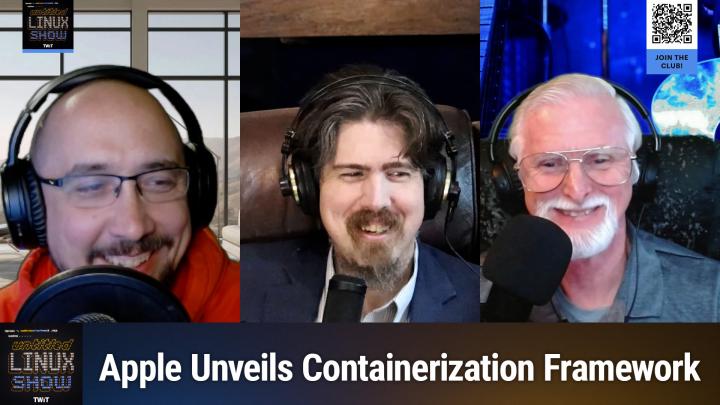
All TWiT.tv Shows (Audio)
Untitled Linux Show 207: Distro-Hopping Distro
01:27:14
Phones, Governments, and Xlibre
Loading summary
Transcript272 lines
- [00:00]
Jonathan
This week we're talking Apple and some of the things announced at wwdc. There's a new Linux phone on the market, sort of another government is going with Linux. There's updates, there's more to the ex Libre stuff. The kernel is getting a stable API, but that doesn't mean what you think it does and a whole lot more. You don't want to miss it. So stay tuned. Podcasts you love from people you trust. This is TWiT. This is the Untitled Linux show, episode 260, recorded Saturday, June 14th. The distro hopping distro. Hey folks, it is Saturday and you know what that means. It is time for the Untitled Linux Show. We're gonna get geeky with Linux and Open source. A little bit of hardware stuff, lots of software stuff, new releases. It's gonna be a lot of fun. Hope you stick with us. It's not just me. We've got 2/3 of the regular crew or 3/4 of the regular crew if you count me. We've got Mr. Rob Campbell and Mr. Mr. Ken.
- [01:00]
Rob Campbell
Ken.
- [01:03]
Jonathan
Ken, co host.
- [01:04]
Rob Campbell
That's it.
- [01:05]
Jonathan
Okay, Mr. Ken the co host. Ken the co host.
- [01:08]
Ken McDonald
We do know his last name, right? I mean, not the way Rob's like I don't remember it either either.
- [01:14]
Rob Campbell
It brings up visions of golden arches.
- [01:19]
Jonathan
That's right.
- [01:19]
Ken McDonald
Oh yeah.
- [01:24]
Jonathan
Mr. Ken McDonald. Well, that's an interesting start to the show. Rob. We're going to talk about something interesting that happened this week, particularly for our Apple fans and why we care about it. What happened at wwdc, the Worldwide Developer Conference.
- [01:41]
Ken McDonald
All right, so let's talk about something we can remember. This week Apple was busy with their big annual WWDC conference and it looks like Apple users must have been a little jealous of those developers over on Windows. So, you know, for several years now Windows developers have had the ability, ability to run Linux and essentially a well integrated virtual machine called WSL or Windows subsystem for Linux. While those poor Apple developers, you know, they did get to use macOS's ZSH or ZSH command line was built right in or they could even switch to Bash if they wanted. And you know, although it was very close to Linux, Linux like it wasn't exactly Linux, you know, try developing a Linux app or running an actual Linux app on Mac OS command line and well, maybe it'll work, maybe it won't, who knows? But the tool. Well, this week Apple released an initial build of its new Open Source Container tool for creating and running Linux containers on Kos. The tool is called, wait for it Container. Creative. Creative like always, Apple. Good job, good job with that one. And is written in Apple's beloved Swift language. But even though it is called Container, this tool actually creates an isolated lightweight Linux virtual machine with some strictly enforced security around it. And even though Linux is ran in an isolated vm, the containers within that are still OCI or Open Container Initiative Compliant. Compliant, meaning you should be able to push and pull containers from other systems such as Doc. You know, run a Docker container in this or, or create a container in this and run it over in Docker should be able to use them interchangeably if. If they do continue to follow that standard appropriately. One other Difference in these VMs they used a Streamline Swift based init system called Vminet. Unlike a standard Linux init system, VM in it includes no core utilities, dynamic libraries, libc, but does do the usual stuff like environment setup, IP assigning, file system mounting, etc. I don't know if that's a good thing or a bad thing. It's. It's a different thing but. And so, you know, although some of the technology used is a bit different than what Mike or Windows Microsoft is using, the use case and functionality seems pretty similar to me. You know, it's a developers conference, it's for developers, kind of like Windows was thinking with their WSL. So I think it's safe to call this MSL or macOS subsystem for Linux. So once again I would like to thank Apple for inventing something new for us for the developers out there in the world.
- [04:54]
Jonathan
Bravery and courage and all of that. Yeah, I think we should call it WSL for Mac os. It's even better. What I immediately thought of when I saw that they did this, it's like, oh, they did the Windows thing.
- [05:08]
Rob Campbell
What are they getting out of it?
- [05:13]
Jonathan
Less annoyance by all the developers that have to do stuff with Linux. Docker containers is one of the big things.
- [05:20]
Ken McDonald
I mean, same thing Microsoft got running Linux.
- [05:25]
Rob Campbell
I put a second link in the show notes as well as posting it into the Discord chat. It's got a table that compares the features between Docker's desktop and the Apple container. Now, you realize with the Apple container you're going to need a dedicated Linux.
- [05:42]
Jonathan
Kernel per container for its virtual machine. Yeah.
- [05:47]
Rob Campbell
Whereas with the Docker you can have use a single single Linux kernel for all your containers.
- [05:53]
Ken McDonald
Yeah. Quite often containers are using the kernel from the host, where the host here is Apple.
- [05:59]
Jonathan
So yeah, they're doing it a little differently.
- [06:02]
Rob Campbell
So if you're do you take advantage of Apple's container, it's going to be deeply macOS native and swift centric, whereas if you use the Docker system it's going to be cross platform and container focused.
- [06:17]
Jonathan
Yeah, I think the idea is that any of your Linux based Docker containers are going to work there. Just some of the tooling around it. I'm sure it'll be different. I want to see somebody take the Sickcos Docker OS X container and run it, run, run Mac OS inside of Mac os. That'd be fun.
- [06:37]
Rob Campbell
Now I'm going to looking at Bobby Borisov's article. He feels that Docker still offers way more flexibility and capabilities in Apple's new product.
- [06:49]
Jonathan
Yeah, I'm sure there's actually a laundry list and people will discover this as they start fiddling with it. But I'm sure there is quite the list of stuff that just won't work for one reason or another. Passing through networks, passing through USB devices, all kinds of stuff.
- [07:03]
Ken McDonald
I would say it does right now. But think about, you know, if they kind of go the same path that Windows went with wsl, you know, if they tie that into the system, get the integrations there so it could be more seamless with the macOS system.
- [07:21]
Jonathan
But maybe then do we call it WSL2 for macOS or do we call it WSL for Mac OS2?
- [07:28]
Ken McDonald
MSL2.
- [07:29]
Jonathan
MSL2. Yeah, there you go.
- [07:31]
Rob Campbell
And I've got a, I've got the same question Bobby Borisov has. Why is Apple putting all this effort into creating this?
- [07:40]
Jonathan
They've, they've gotten complaints from developers or the internally their developers wanted it. Well, it's got to be one or the other.
- [07:46]
Ken McDonald
Same reason Microsoft did it. You know, they, they want develop, you know, the old whatever his name was. Developers. Developer. Developers. You know if.
- [07:55]
Jonathan
Bulmer.
- [07:55]
Ken McDonald
Yeah, Bomber. There we go. You know, every if, if all the developers like developers all over the world are using Linux one way or another, Windows doesn't want those developers to just leave and just say well you know, if you're not going to help me, I'm just going to go full time. Linux, Mac, Mac, Apple. Apple doesn't want their developers to transition away to full time Linux, away from their stuff either. So if they give them these tools and options so they can use Linux within their ecosystem without leaving it, you know, it helps them keep those developers with them.
- [08:31]
Rob Campbell
For those developers that can afford to buy them. Apple, Macintosh.
- [08:36]
Jonathan
Yes.
- [08:37]
Ken McDonald
I mean yeah, they're already, it's going to be targeting Mac users already.
- [08:42]
Jonathan
Obviously there were some other interesting things at wwdc. There is of course the Glassy os. I forget what they call it now, but the, you know, the accessibility nightmare. The one where, you know, in some of the slides they showed on the platform you couldn't read the words because it was like white text and clear bubbles on a white bright background. It's like what is, I can't read it. What does it say? One of the other interesting things is like on the iPad they are making it a little bit more of a Mac OS sort of experience with Windows and you know, being able to do multiple things at the same time. Now what I've not seen is whether you can actually run like full on Xcode or VS code on your, on your iPad yet. You know, I don't think they've unlocked it to the point of where you're going to be able to put Asahi on it. So it's not there yet. They need to turn down the obsessive control knobs some more on the iOS stuff.
- [09:44]
Ken McDonald
But you know, if Apple wants to get a little more Linux friendly here, you know, since they don't, at least they say they don't have all the telemetry that the other, you know, oss have out there, then really they're making the money on their hardware and, and they should not care a whole lot about the, what OS you're running on there except for the ecosystem tie in. Okay, that's there but you know, why not throw a bone to the, the types of like Asahi and help them out a little too.
- [10:16]
Jonathan
Yeah, I would really love to see official Asahi support for the iPad. I think it would make a lot of sense there. The problem is though that you say Apple makes their money on hardware. I doubt that that's true. I bet you Apple makes the majority of their money on the App Store.
- [10:33]
Ken McDonald
I mean when it comes to the Mac os. Cause I have a Mac, I never use the Mac, the App Store on my iPad, I do my iPhone, I do.
- [10:45]
Jonathan
Yeah, they make a lot of money from their App Store.
- [10:47]
Ken McDonald
You got the ecosystem pattern there too.
- [10:49]
Rob Campbell
And I think I know why they open sourced it.
- [10:54]
Jonathan
Why is that?
- [10:55]
Rob Campbell
Because that way they can get somebody else to create the GUI it needs.
- [11:02]
Jonathan
Yeah, but you know, the way Mac works, somebody else is going to come along and make that GUI and they're going to look at it and go that's not the way we would have done it. And they would, they'll have this obsessive need to remake it in a beautiful but terrible way like they've done with everything else inside of macOS after somebody.
- [11:18]
Rob Campbell
Else has already done the legwork.
- [11:20]
Jonathan
Yeah, yeah. All right, well, let's talk about something. I don't know if Audacity runs on any of the Mac machines, but Audacity has a new release. Ken. It does. All right, there you go. Is it on the App Store? Can you get it on the iOS devices? I don't know.
- [11:37]
Ken McDonald
But Ken, a while since I used it, I don't remember.
- [11:39]
Jonathan
What's new?
- [11:41]
Rob Campbell
Well, this week Bobby Borisov and Marius Nestor wrote about the popular open source audio editing software that we call audacity, releasing version 3.7.4 to squash bugs and smooth out the user experience. Now, they both wrote about it fixing a crash that could occur when closing large unsaved projects, as well as another that popped up when using real time effects with delay compensation. This release also improves the effect preview to work when the track is muted. Now, according to Marius, Audacity 3.7.4 also addressed an issue where the Studio fade out feature would create a new clip when it was applied at the end of a video clip. According to Bobby, Mac users on older systems will be happy to hear the update resolves compilation issues on legacy macOS versions. That's not going to make Apple much money there. Now, I've only covered some of the various technical fixes mentioned in both Bobby and Marius's articles. If you do want more details, just follow the links in the show notes.
- [13:00]
Jonathan
Yeah, I have been happy to see Audacity continue there for a while. It got forked and there was quite a bit of drama around it and it seems to be stable and sort of boring now, which is nice in an open source project.
- [13:14]
Rob Campbell
I was looking at what version comes with Ubuntu Studio 2504. It's the previous one.
- [13:22]
Jonathan
Yeah, it's not surprising. It'll take a little bit to get updated.
- [13:25]
Rob Campbell
It may get updated out sometime before 2510 comes out. Have to wait and see.
- [13:32]
Ken McDonald
I'll install the Flatpak.
- [13:34]
Jonathan
Yeah, we could.
- [13:35]
Ken McDonald
Might as well get the newer version that way.
- [13:38]
Jonathan
That's usually how it works.
- [13:40]
Rob Campbell
No, we're not going to go with that show title.
- [13:44]
Jonathan
So one of the things they added was the OpenVINO AI plugins. Do we know what all these are? I see their list of effects. Music separation. You can separate a mono or stereo track into individual instruments. You can do noise suppression. Noise suppression is actually quite handy. Music generation and continuation. AI based music. Oh wow, that's interesting.
- [14:08]
Ken McDonald
Where's Jonathan at You're a little too interested in AI to be, to be the normal Jonathan. I'm used to seeing, you know, there.
- [14:15]
Jonathan
Are some things that it does well and noise suppression is one of them. The music generation is just wild like so Another one that they've added here is Whisper Transcription. Doing audio to text with OpenAI. That is a good use of AI. That makes a lot of sense. I have no problem with AI being when it's being used in ways that make sense. It's when people are like, hey, I'm gonna vibe code of 10,000 line code base. I have no idea what any of it does, but here, run the code. Trust me, bro, that I don't like. But this, this I like.
- [14:49]
Rob Campbell
What I felt interesting was that there was a problem with possible incorrect calculations in the hamming window derivatives that was fixed in this release.
- [15:00]
Jonathan
I'm trying to remember what a hamming window is. It's been too long since I think.
- [15:05]
Rob Campbell
It has to do with some of the. It's an algorithm use was the audio with one of the effects that was.
- [15:15]
Jonathan
Part of fast Furio transfer. Fast furrier transform form. Oh my goodness, that is a hard thing to say.
- [15:21]
Ken McDonald
What word are you saying?
- [15:23]
Jonathan
Fft.
- [15:23]
Rob Campbell
Furrier? Yeah. Fft.
- [15:26]
Jonathan
Yeah. That's where you take music, you take audio and you break it apart and it gives you the, you know, the graph of your different frequencies in it. It's the window function. Anyway, let's move on to something a little more interesting or less interesting depending upon who you are and what you care about. But. So last week we ended the show by Talking about the X11X Libre stuff and more has happened and I'm going to kind of come back and take the opposite viewpoint as I did last week. I'm going to kind of give you the opposite side of the story about what's happening because more things are happening and it's interesting and I get a little bit of behind the scenes look from some of the chat rooms I hang out in with some people like the Fedora devs and I get to see what's going on there. So, quick recap. What happened is, well, over the last few years, all of the people that were doing development on X11 moved over and started doing started and then began doing development on Wayland. Wayland is finally getting to the point. Now it's good enough that people could start using it and it doesn't drive them bonkers, doesn't make us crazy to use it. So lots of desktops are starting to move to it, including and this is important. Rhel, Red Hat, Enterprise Linux and all of Red Hat stuff, including Fedora by the way, is moving over to wayland rather than x11. Well, one of the things that that means is the engineers on payroll at Red Hat are no longer fixing things on the old X11 code base, which means that X11 is basically unmaintained. And so there's been a move to make that official because all of the people that really understand the code base are off working on Wayland. And so there's been a move to make it officially unmaintained. When that happened, there was a developer that came along and said, oh, I'll maintain x11. And so he started working in the free desktop GitLab and basically, you know, started opening issues and writing patches, all kinds of stuff. Like, let's see, his name is Enrico, Enrico Weigelt. Like he's been working on X11 for a while now as basically the sole developer. He got banned from the free desktop GitLab and they've gone through and they've closed all of his like patches and pull requests and issues that he made. And people have kind of been up in arms over that. And I was, I partially still am. But I got to thinking about something and so here's the counter thought to all of this. It's ridiculous to think that the free desktop GitLab should, that they have any responsibility to host the code and issues of their somewhat hostile fork. And that's what XLIBRE is. It is a reasonably hostile fork. It is hostile to the idea that X11 is dead and it needs to be gone. One of the reasons that this is such a pain is because, well, there's several things, but one, you have a bunch of distros, Fedora, Ubuntu, other distros that are trying to finally get rid of x11, like not support it at all. And the reason for doing that is that it's unmaintained, like officially unmaintained. If you suddenly have Ex Libre that is claimed to be maintained. Talk about that just in a second. But you know, if there's a claim that it is maintained, well then your users can ask for it. But something you see in places like Fedora, where it's a very sort of democratic way of doing things, you can have just any of your maintainers come along and package it. And so this has been a problem in Fedora before in trying to go from X11 to Wayland, like with the KDE stuff. This was a problem where the people doing the work on KDE said, we're going to drop the X11 back in. We're going to go only to Wayland. And you had this kind of rogue maintainer come along and say, I don't care, I'm a maintainer, I get to do this. I'm going to start packaging the KDE X11 stuff again. Well, so the answer to that was it doesn't matter here. In a couple of years. This has been a couple of years ago, the thought was, well, it doesn't matter here. In a couple of years x11 is going to be unmaintained and therefore we're going to drop it from Fedora for that reason. Well, suddenly you have Ex Libre, which is claimed to be a maintained thing, and you then have this, this kind of leadership problem. Really like, you know, what, what is, what is a distro going to do with some of these decisions to make? And who gets to make that decision? And can one maintainer come along and kind of overthrow the will of what everybody else wants to do with the distro? It gets into those questions and then one of the other things to really keep in mind is X11. Now, Xlibre is a lot of code and it's very old code and in some cases it is very broken code, particularly from a security perspective. And I am not convinced that one maintainer is enough to be able to say that it is maintained code. And I think there are some things in there that are so badly broken there's no fixing it. So I, I do not want to see it in my distros. Now the other side of that is, yes, it is absolutely free software, it's gpl. And so if somebody wants to fork it and take it and keep working on it, they can absolutely do so. But there's no guarantee that that lands in anybody's distros. You can't force a distro. I have a problem with the idea of one maintainer being able to force a distro to include software when the rest of the maintainers don't. So that is kind of the more nuanced and the other side of the argument for me at least. I'm curious if you guys have been following this as well and if you have thoughts.
- [21:29]
Rob Campbell
Well, I posted a link to article by the Register that touches on a valid point, accessibility. I haven't seen much about providing accessibility under Wayland, but The Xorg or X11 has had that in there for a while.
- [21:57]
Jonathan
Yeah, I'm not super familiar with that because obviously I don't need any of those accessibility technologies. I know some of them work like you can get a magnifier in Wayland and that's not a problem. What is it? Screen readers that sometimes have a problem. But there's been things, there's been a lot of things done to Wayland to fix those kind of problems here recently. So I don't know if that's still the same level of, you know, not working as it has been.
- [22:25]
Ken McDonald
Yeah, I thought we were in a much better state than we used to be, but I don't know either.
- [22:30]
Jonathan
Yeah, you know, with Wayland, there were, there were problems. And somewhere around a year ago we saw the Frog protocols pop up. And that apparently was Valve laying down the law with Wayland and saying, look, if you guys aren't going to play, here's what we can do. We can just fork it and we can go fix it, which is pretty interesting. But things are a lot better and things have been landing. So there's a story I didn't cover, I didn't pick it up, but the mouse pointer warping has now landed in Wayland and it's going to be in KDE 6.5. And so that's the deal. Like when you're in a first person shooter game, you want mouse look to work so you can look around with your mouse. Well, like as far as the desktop is concerned, you want the mouse to stay in the center because you wind up with weird things. Like if your mouse is actually moving around, then you can only spin so far to the right and then you're stuck. You just hit this invisible wall because your mouse is going to the edge of the screen. You can't turn around any further. Those of us that ran Wayland, we've seen that it's a thing. And so they've finally implemented that standard in Wayland. There's a lot of those that are finally getting done because again, there was some pressure put on the knuckleheads at Wayland from Valve.
- [23:45]
Ken McDonald
Yeah. Or try playing a game over like a remote desktop tool or protocol. And it does that too.
- [23:51]
Jonathan
Indeed.
- [23:52]
Rob Campbell
Or try playing a game where you've got your system set up with local workspaces and you are going all the way to one side and go into the next workspace.
- [24:05]
Jonathan
Yep, yep, yep.
- [24:07]
Ken McDonald
With this specific, you know, topic though, I don't, I don't have any strong opinions. I haven't really been following this specifically. In general, I love to see X just go away. I mean, that's what I always say all the time. On here. But if there are some accessibility needs then that may be a fair point. I would just have to look into that. More.
- [24:35]
Jonathan
Complaint Whenever we talk about this, I hear some complaints that there are accessibility problems. What I've not ever seen is proposals over on the Wayland GitLab to fix them. And that's one of the points that I hear made by the actual developers and the actual maintainers over in Fedora and other places. It's like I wish these people that have problems with Wayland would actually open issues and write some code and try to get things fixed rather than just clinging to the old X11 as kind of their favorite thing to not let go of. So again, I am a little. I'm conflicted on this one. I do think that maybe the admins at the free desktop GitLab are a little band happy and they did a little too much here. That's probably a fair point. Probably true.
- [25:31]
Rob Campbell
Which band are they happy for?
- [25:33]
Jonathan
No, the band Hammer in this case anyway.
- [25:39]
Ken McDonald
I haven't heard of that band, but.
- [25:41]
Jonathan
Sure, it's not great when you get hit with it. Anyway, let's move on.
- [25:47]
Rob Campbell
Sledgehammer Indeed.
- [25:50]
Jonathan
Let's move on.
- [25:51]
Ken McDonald
Gabriel.
- [25:52]
Jonathan
I think it is. Yes. And let's talk about a Linux phone. I bet it runs Wayland.
- [26:01]
Rob Campbell
I bet you can't get it with a sledgehammer either.
- [26:04]
Jonathan
Why? Because it doesn't exist yet.
- [26:07]
Ken McDonald
That's the only reason I could think of. So you know, it's it. But right now it's starting to feel like about once a year there is a new, possibly exciting announcement for a new Linux phone. And well, 2025 is no different. Besides concerns of Linux being ready for the phone market yet, you know, is it yet? I don't know. Another thing we often see with these announcements is a relatively expensive phone for the specs the phone provides, you get a premium price for a not so premium phone. And I get it. These are, you know, smaller runs, you know, production runs, not mass produced, which. Which brings up the cost. Which, you know, makes you wonder how is Librix? That's L I B E R U X Librux. How are they going to accomplish this? So Librex is a Linux phone manufacturer based in Madrid. Their phones run on a mostly open source operating system built from scratch, completely independent of Android and iOS called Librex OS. Yet somewhere else in there I read that it's also a Debian based Linux operating system. So I don't know if it's built from scratch or based on Debian a little Confused. It said, it said both things in there. So built from scratch, Debian based, I don't know. So anyway they have a line of phones called nex, that's nexx that run Linux out of the box. And as mentioned above, I believe one of the things has been, you know, cost versus spec has been a limiting factor for other Linux phones as it can be tough to spend a fortune on a niche and some to some just a hobby device. So Librex recently announced that it was working on a more affordable version to make the NEX accessible to a broader audience. So let's look at their, their original NEX phone. It had a RockChip RK3588S processor. It's a, it's a 4 Cortex A76 plus 4 Cortex A55 up to 2.4 GHz, had 32 gigabits gigabytes of LPDDR4 RAM and a 6.34-inch 2K OLED display. And for the price of almost 1500, that's, that's, that's premium price phone range. I, I don't know how many of they sold of those but you know they're still around and they're going to make another one. So now what they have announced is a more affordable one. You know we've talked about some other phones on here like the Pine Phone which is like 150, the Pine Phone Pro which is closer to $500. So they're going to make a more affordable one is what they've announced. More affordable. The Librax Next called the Librax Next Community Edition with the following specs. 6.34 inch OLED display, quite similar. Also the, the same Rock trip chip processor, 32 megapixel pixel rear and 13 megapixel front camera, dual USB C ports, a 3.5 millimeter headphone jack. The initial had some of these too, but I didn't mention that. 5300 milliamp battery. A lot of the similar specs, very similar but, but cheaper because you get all of that now for right around 900 on Indiegogo, which compared to the other phones I have shot shared on the show. That's still kind of too expensive. I think so. But the plan, the plan is to have. It's probably more quality I think. I mean I think it's definitely more quality than the regular Pine phone. Well, I say definitely. I have not had my hands on any of these. The specs sound more quality but, but if you compare, if you compare this if you're, if you're making a phone that's comparable to say like the higher end Android iOS phones out there today, you know, if you're able to make a quality phone that's comparable, you know, where Librex is actually comparable OS that you can use as a daily driver, you know, the cost, the cost in and of itself might be okay, but for most people, you know, we're still looking at a niche product that is likely to still be something mostly hobbyists will use, you know, unless they really, you know, get a product out there that, that anyone could use. Because you know, one of the other problems is, you know, at least for in the US I'm not, I've heard it's, I hear it's different in other countries but the U.S. cell phone user here in the U.S. of course, you know, if they are, you know, if they're looking for something that could actually replace their current daily driver for a standard user, it needs to be available from, sold from U.S. cellular providers to, to really get a spread. You know, even the, the Pixel at the beginning when it wasn't sold had a hard time getting off the ground really. And that's from like a big well known provider. You know, with the crazy prices we pay for cell phones, a lot of people, most people I know of, they're financing their cell phones through the provider. You know, the, the, so the price just kind of blends right in with, with their monthly bill and they don't even know and you know, then they buy those thousand multi thousand dollar phones. I'm not going to be, that's about the only way I do it. I'd be sticker shocked if I put that all down at once. So you know, how are we going to finance this one? So, so the cost disappears. You know, if it's not, you know, I hope they're able to be successful in this and, and I hope that this could seriously replace my daily driver. But you know, I feel their, their user of the use of the word affordable is different than mine personally. Personally I haven't paid for a cell phone in years. I don't know if I've actually ever paid for one. You know, last time I, for a few years my, I had a company phone, I use that for personal. And then they said well no more personal use. You know, you can do a BYOD or you could have a personal phone and a cell phone. So, so then I went and you know, because I was a new phone on my account I was able to get a free phone at that time and in the past like every phone used to be free when they were cheaper. So I don't think I've ever really paid for one.
- [33:15]
Rob Campbell
Yeah, you've paid for one.
- [33:17]
Jonathan
Yeah that's true. You do one way or the other. You're not getting it for free, that's for sure.
- [33:21]
Ken McDonald
Well, I haven't had to finance like either. Like I haven't financed my bill. My bill was the same if I would have bought the phone outright than if I didn't.
- [33:30]
Jonathan
So you just paid for it?
- [33:31]
Rob Campbell
Paying for it without getting it?
- [33:33]
Jonathan
Yeah, yeah that's, that's, yeah, that's probably what I'm doing too. Yeah. So they need to. You're right. For one of these Linux phones to really succeed they're going to have to get listed in the T Mobile store. It's gonna have to be an option to get for free and it's just hard at that cost. It's a challenge. It's down to break it up.
- [33:54]
Ken McDonald
Similar, similar problem with Linux in general. You know we always say they need OEM deals and there are some out there and there's, there's plenty out there but it's not. Most of them aren't like where the general consumer are, are buying. You know I think there had been some in Walmart years ago but those were junk netbooks.
- [34:14]
Jonathan
Yeah, yeah. This is something I've been, I've been thinking about here recently. Are we about to see another, another era similar to the netbook era where people move away from Windows 10 and they don't like the alternatives so you start seeing some Linux hardware.
- [34:30]
Ken McDonald
In a future store. I'm going to tell you, I'm going to talk about some other people that are moving away that maybe for some of these same reasons here.
- [34:39]
Jonathan
Yeah, it's very interesting. Yeah I remember the Nokia N900 I think was the first Linux phone that I ever saw and really got excited about. I was too poor to buy it at the time. It was that same deal. I couldn't get it. I was really poor at the time. College student or just out of college and my carrier wouldn't offer it as one of the options and so I wanted it. Never could get a hold of it. And you know, now of course it's, it's completely hopelessly out of date. But yeah, we'll see, we'll see if any of these ever really take off.
- [35:12]
Ken McDonald
I didn't know Nokia made a Linux phone ever.
- [35:15]
Jonathan
Long time ago. Long time ago. Back when, Back when. No. Did Nokia own Troll Tech there for a while. The guys behind kde, I think they did well, not, not KDE specifically but the, the libraries behind them. Yeah, it was, that was a whole thing. I imagine we're going to see one of these at some point work and the price is going to make sense. I've seen, I've seen so many gadgets out of Chinese factories that the price are just getting lower and lower and you can get impressive things for really reasonable prices. And so like the, there's a lot of them right now that are microcontroller based but the specs on those keep bumping up and up. And you know, at some point there's going to be, I think like this intersection between what these companies can do for reasonable amounts of money. It's finally going to intersect with what you can, you know, get away with in a Linux phone. And then suddenly you're, you know, maybe overnight it's going to get really, there's going to be some phone that somebody's going to realize you can run. It's going to get really popular. You see things like that happen sometimes.
- [36:22]
Ken McDonald
You know, a point that Quippy makes in the chat is, you know, the truth of, of the matter is that most people don't need all the capacity that their phones have and would be fine with a 250 to $600 low to mid range phone, which you know, eventually here phones are going to be, I don't know, you know, tanks and you know what, the bottom end is going to be just fine for everybody.
- [36:44]
Jonathan
Well but the other thing you've seen is that as the hardware has gotten better, the software has gotten less and less optimized. Yeah, worse. Really, it's gotten worse. And so now you've got liquid glass on everything. Well, that means that every time you draw something to the display you've got to do a full GPU pass on it.
- [37:03]
Ken McDonald
And so my current phone is getting laggy and it's not that old. I've had time to reset it. I've had older phones in the past that never had this kind of problem. Same, I mean, same brand of phones and stuff like that. Just older models like.
- [37:21]
Jonathan
Yeah, and sometimes what's going on there where they get laggy is the battery is getting weaker and the firmware detects it and turns the, the mega, the speed down on the CPU so that you get the same battery life but it makes it laggy instead. I think it was Apple that got caught doing that and got in quite some trouble for it.
- [37:40]
Ken McDonald
Yeah, I'd Rather get the speed I'm. I'm usually close it maybe it could just detect if I'm on my home WI fi or something. Give me the power.
- [37:49]
Rob Campbell
What's your charging habit with your phone?
- [37:53]
Ken McDonald
Every night mostly every night or in the car when I'm traveling.
- [37:59]
Jonathan
Yep, yep. Yeah. You know I every once in a while I look like the cell phone and large phone and small tablet market and I get a little sad because there's some devices that I would really love to see and just either nobody makes them or nobody has made a refresh of them. Like a decent Android 7 inch tablet. I would love to have it. You know how long it's been since they've made a 7 inch tablet? Since like 2013 was the last time somebody made a good one. It's ridiculous.
- [38:25]
Rob Campbell
I would love to see another Palm OS based tablet and or phone come.
- [38:32]
Ken McDonald
Back because it'd make you feel young again.
- [38:34]
Jonathan
Yes, I don't think that's going to happen. Somebody might make a Linux phone with a Palm OS style skin on it but that's going to be about it. But you know, so I mean you think back through history though and things have changed so quickly. Like BlackBerry used to be such a big deal and BlackBerry just disappeared almost overnight. It seems like Nokia used to be such a big deal in the Microsoft bottom and the curse of the Microsoft phone stuck to Nokia. But you know some of this stuff changes so fast and it would not surprise me again it would not surprise me to see some, some company probably out of China because that's where so much cutting edge manufacturing is happening right now. One of these guys make a phone, you know, do something like what OnePlus has done but not use Android. It's interesting you talk about Android. So Google has made some changes with the way Android gets distributed. Not the full on aosp, the Android open source project, but the device tree bindings for like the Pixel phones. They have stopped publishing those. That was kind of a big deal in the Android hacker circles in this week too. I don't have a link for that at the moment but I know there was at least one place where the headline was Google kills aosp. And it's like that's not quite what's going on but we're certainly not excited about what Google is doing. Interesting stuff going on.
- [39:56]
Ken McDonald
You know the easy way a big manufacturer could make a feasible a well priced Linux phone is to you know, make their regular phone but when they'd make it, make sure that it is designed in a way that you know, they can install Android and it's Linux compatible at the same time. So they can do their regular normal run of Android devices, take a few out of that run and put, just put Linux on it as it is.
- [40:27]
Jonathan
Well, so that was the thing with some of the OnePlus phones actually. Um, I, I saw several people that were taking OnePlus phones and because of the CPU that was in them and the way that it was not locked down you could run the like vanilla Linux kernel on it. And so that was actually a thing from.
- [40:43]
Ken McDonald
Well, I know there are a few that, that, that you can install on there, but if, you know, if the manufacturer made sure it was that way they could set, install it themselves, you know, with one extra step and sell them.
- [41:00]
Jonathan
Yep, yep. All right. We've talked a lot about little Linux on cell phones. What about the other end of the spectrum? Ken has a story about Big Linux.
- [41:10]
Rob Campbell
And I'm going to start off by asking is anyone in search of a perfect system?
- [41:16]
Jonathan
A perfect system? That'd be nice. I'm not sure what that looks like though.
- [41:21]
Rob Campbell
Then you may want to try Big Linux yourself instead of just hearing Larry and I know I'm going to mess this up. Caffeiro's description of a Brazilian developed Linux distribution that is packed with programs you don't usually see in the Linux universe. Now According to Larry, BigLinux has an average footprint as far as how it sits on the system. The minimum requirements are 64 bit Intel AMD or compatible processor, 2 gigabytes of RAM and 8 gigabytes of storage. That's pretty minimal though. I think you will experience better performance on a system with 4 gigabytes of RAM and 40 gigabytes of storage. The list of included software is more comprehensive than any distro that Lurie has tested so far. Music lovers will jump right into Deezer and Spotify gamers. You'll get Lutris and Steam ready to go. You also get Rob. You're going to like this one. The Microsoft Office 365 web app set up by default as a shortcut. Chatters aren't left out either with Telegram and Jitsi Meet included. No mention of Discord though. Now other programs include the KDE family of software to include Dolphin File Manager, K Patient card games, Gwen View what I've been defaulting to for my photo viewer at the moment as well as Kate Text Editor, LibreOffice Suite, Brave Browser and a document scanner, just to name a few. Now I'm going to recommend reading Larry's article if you want to find out what Big Linux's history or how Larry passed the time while he was installing it. Larry even talks about the big store that you can use for adding even more software.
- [43:27]
Jonathan
Yeah, so this is interesting, the kind of the history of Big Linux. So it was originally built on top of Kubuntu and then it switched to Deepin and now it is based on Manjaro with KDE Plasma as the back end. Very, very fascinating. So when they say they're in search of the perfect Linux system, maybe they're talking about their own system. They're trying to find the right back end for it one of these days.
- [43:56]
Rob Campbell
Well, that's called just. That's distro hopping at the.
- [44:01]
Ken McDonald
At the core.
- [44:02]
Jonathan
Distro hopping. Distro.
- [44:03]
Ken McDonald
Distro hopping at the core.
- [44:05]
Jonathan
Yep, yep. Fun stuff. Yeah. So this is again, this is another one of these kind of niche distros I wouldn't recommend to somebody's first time, but it could be fun to go and play around with and you know, for, for Brazilian users, for Portuguese, native Portuguese speakers, it might be interesting because it might have really good internationalization in their language.
- [44:27]
Rob Campbell
Did you read down that, see how Larry was passing the time while it was installing?
- [44:32]
Jonathan
No. How did he pass the time time while installing?
- [44:35]
Rob Campbell
Playing a Pong game.
- [44:36]
Ken McDonald
Ah.
- [44:37]
Jonathan
Oh, it's got the Pong game built into the installer. Okay. Stuff like that is fun. I wish more distros and more software did fun stuff like that.
- [44:46]
Rob Campbell
And the interesting thing is Larry says he beat the computer with a score of 42 to 32.
- [44:52]
Ken McDonald
Nice.
- [44:53]
Jonathan
Bravo. All right, so there is something else brewing in Linux world and that is a kernel API. Well, but it's not the kind of kernel API that you would immediately think of. So there is, this is a story. So you may remember that Torvalds has this sort of ongoing beef. His forever slogan is don't break user space. And so the idea behind that is the API that the kernel exposes to user space, all of the system calls and ioctls and all of those things never change them in a way that's going to break things in user space. You're basically always. The kernel itself should always strive to be compatible. In juxtaposition to that. People have long asked for a in kernel API so that manufacturers can come along and write their own kernel modules and that the kernel modules don't break from kernel install to kernel install. And the kernel team and Torvalds have been, let's say, religiously antagonistic towards that idea. The reason being of course, because if you make that too easy, then lots and lots of software is going to exist outside the kernel and they want that software to get added to the kernel as drivers. Makes sense. So when I first saw this, this Pharonix article about a developer saying, hey, we should do a formal kernel API, I first went, ahaha, that's not going to go anywhere. But it's not what I thought it was. It is not the internal API. It is actually taking that API that is exposed to user space and formalizing on that, which might actually happen. And it does sound fairly interesting. It is a series of patches. Last time I checked earlier today there weren't any comments on it yet. But which that may or may not be a good thing. Nobody's called it garbage yet, but it does some interesting things like being able to go in and automatically generate the API bindings and documentations, which is a very neat thing. As I said, it just kind of makes some of this more formal, more structured theoretically, without breaking any of it, because that's sort of important. Very, very interesting though, to see that kind of a direction the kernel might go to be a little bit more structured in the future as far as how we talk to it. Very fascinating. But it's not the end kernel API, so I thought it was at first.
- [47:35]
Ken McDonald
I like APIs.
- [47:37]
Jonathan
APIs are nice.
- [47:39]
Rob Campbell
It makes programming a little bit easier, makes integrations easier. Yes, a lot easier.
- [47:47]
Jonathan
It can help you avoid spaghetti code too. Having good APIs though.
- [47:51]
Rob Campbell
I do like spaghetti.
- [47:53]
Jonathan
Yeah, but not in my code.
- [47:55]
Ken McDonald
Yeah, I mean the alternative to an API is, I don't know, kind of hacking it and just finding ways to scrape and.
- [48:07]
Jonathan
Pack it in and hope it works.
- [48:10]
Rob Campbell
Hope you don't find any crumbs in it from the garlic bread.
- [48:14]
Ken McDonald
Yeah, scrape the results and try to do standard input into it and have a mess.
- [48:23]
Jonathan
Yeah. So there is a government that believes it has a mess on its hands and they are turning to one of our favorite things to try to solve it. Rob.
- [48:33]
Ken McDonald
So individuals are switching to Linux all the time, all over the world, but that isn't newsworthy. But when an entire government starts looking at switching, that's big news. So we've had a couple stories of some governments switching to Linux and Open Source in the past. Well, here's another one, at least part of another one. So up, up to half of the employees at Denmark's Ministry of Digital affairs will be switching to Linux in place of Windows and move from Office365 to the leading open source productivity suite LibreOffice. And if all goes well, the plan is to move the rest of the Ministry of Ministry of Digital affairs to follow. The Danish government's digitization strategy is making digital sovereignty a priority for all government departments. You know, like many countries, they just want greater control over their own digital infrastructure, data, cloud services and you know, open source is kind of about the only way to really achieve that, that effectively. So score one for open source there. You know, if it doesn't go well, they do admit they could fall back to Microsoft as some others have done in the past. You know, I think there's some, some German governments that have gone back and forth here and there and, but, but it is 2025 now and it should be a lot easier, easier to switch than you know, a decade or so ago was. Also two of Denmark's biggest municipalities, Aarhus and Copenhagen have reportedly switched from Microsoft Office product products already citing concerns over the use of US based tech under their current, under the current new US government. So that's kind of their reasons they cited. Now I'm not going to get too political but, but, but it's no secret that, you know, many countries right now aren't, aren't too happy with the current state of the U.S. government. You know, be that as it, you know, as it looks like just, just one more thing, you know, be that as it is, it's just one more thing that could help out Linux and Open Source. So my conspiracy theory, all the upset, it's just to help out open Source. No, I'm skin but you know, so you know, it's just one more thing in the long list, you know, one of that list, some of those things are, you know, going for us is subscriber fatigue. You know, subscribe to another thing, another thing, another thing and you have to subscribe to everything to get it. Now with Open Source, Windows 10 End of life and stricter hardware requirements for, to go to Windows 11 is hopefully another thing that will help us out this year. And now I guess, you know, the, the US government being that a lot of the big companies like Microsoft and, and Apple are US companies if, if you don't like the US in general or the government, you know, I guess, I guess that's, you know, another reason you move. And then all there's all the improvements to Linux, you know, like, like Valve and Linux gaming and all the improvements we've seen lately that really make it a very feasible way to go for almost anybody. So 2025 is looking like it could Be a good year for Linux and Open Source all around.
- [52:17]
Jonathan
Yeah. So I remember one of the. In the past there was a big government that was using Linux and several years ago they've famously switched back to, to Microsoft. And I remember you dug into that story and I think it was in, was it in Germany? It was someplace you dug into that story and they were running their own homebrew Linux distro with their own homebrew file editors and Office. No wonder they hated it. And it kind of makes me nervous when this article says an unspecified version of Linux like, oh no, just, just put Ubuntu or Fedora or open something about OpenSUSE on there and call it a day.
- [52:59]
Ken McDonald
They very well may.
- [53:01]
Jonathan
I hope so.
- [53:02]
Rob Campbell
Slack.
- [53:04]
Jonathan
Slack. I mean you can use Slack if you want to, but anyway. No, I mean, so put one of the standard Linux distros on there, one that actually gets updates. You can even find one that you can pay some money to to be able to get support. They're out there. There's decent ones out there. Um, yeah, Ubuntu would be great, honestly for this. Ubuntu would be great.
- [53:26]
Rob Campbell
Um, why not Debian?
- [53:29]
Jonathan
Yeah, yeah, I think. Does, Does Debian have a paid support program? I don't think they do.
- [53:35]
Ken McDonald
I think that's one thing that makes Ubuntu.
- [53:37]
Jonathan
That's. That's one of the things. Yes, that's one of the things that Ubuntu brings that not all of the other distros distros do. And that is that if you actually want to use it in a business and you want paid support, if you want to be able to pick up the phone and call somebody and get help, you can do that with Ubuntu.
- [53:51]
Ken McDonald
Yeah, the big corporate solutions there is pretty much Red Hat and Ubuntu as far as I know. And I'd rather push for Ubuntu Open.
- [54:00]
Jonathan
Open Suse as well.
- [54:01]
Ken McDonald
Oh yeah, yeah.
- [54:02]
Rob Campbell
And you've also got Rocky and Alma out there.
- [54:05]
Jonathan
Yeah. Yep. You can get support with those.
- [54:07]
Rob Campbell
I think you're going to talk about those later, aren't you?
- [54:09]
Jonathan
We might, we might. All right. Yeah, we'll see what happens with this. What about Nano? What's your favorite text editor?
- [54:19]
Rob Campbell
Do you use Nano on the command line? Yes.
- [54:23]
Jonathan
There you go.
- [54:24]
Ken McDonald
Where else do you need a text editor?
- [54:27]
Rob Campbell
Well, if you're on a GUI based system, then I use whatever the default is at the moment. But Jonathan, would you like the ability to pick up right where you left off after editing text file in Nano?
- [54:42]
Jonathan
That could be useful. It could be annoying at times, but it could also be useful.
- [54:47]
Rob Campbell
Well then, according to Bobby Barsoff, you may want to upgrade to GNU Nano 8.5 and use the option position log. This will save anchor positions upon closing a file and restoring that position when you reopen the file. Now, Bobby wrote about the latest version of our beloved lightweight text editor, and As I said, GNU Nano version 8.5, codenamed Sigourney. And it arrived with several practical improvements that streamlight workflow and polish existing features. Now, you're familiar with the Control Q Control Q and the Control X Control Q sequences, John Jonathan, I'm not.
- [55:35]
Jonathan
That is not how I exit nano.
- [55:37]
Rob Campbell
Okay, well now this. These commands or sequences will cause nano to exit with an error status, a minor but deliberate tweak that could help scriptures and power users detect unintended exit. And then the Control L will now send to the cursor while the meta percent cycles it. Bob even talks about an undocumented option in his article that you can read about. Have you read ahead to see what that undocumented option is, Jonathan?
- [56:13]
Jonathan
Nope, not yet. What is it?
- [56:18]
Rob Campbell
Oh, you want me to just tell you?
- [56:21]
Jonathan
I mean, he doesn't give it away. He tells you what it is. It's the whitespace option, but he doesn't tell you what it does.
- [56:31]
Rob Campbell
I don't think he took the time to dig through the source code. I haven't done that yet either.
- [56:37]
Jonathan
Hmm, curious. Probably shows or doesn't show white spaces as a special.
- [56:46]
Rob Campbell
Possibly.
- [56:48]
Jonathan
I know I've seen some other editors that do that. Like they show a symbol for a tab and a different symbol for a space. It could be fairly useful to see what's going on. Get.
- [56:57]
Rob Campbell
It has that as an option that you can toggle on and off.
- [57:01]
Jonathan
I would assume that it's not documented yet because it's unfinished. It's probably like a test preview. The dash dash whitespace is the equivalent of the Konami code. Type this in to get the quick 8.6 or 9.
- [57:17]
Rob Campbell
What's that now it'll be an 8.6 or 9.
- [57:20]
Jonathan
Oh yeah, and then one of the next releases. Yep, makes sense. I still enjoy Nano. It is my. On the command line it is still my text editor of choice.
- [57:31]
Rob Campbell
Yeah. What's your current version? Do you know?
- [57:36]
Jonathan
Let's see. On this one it's 6.2, but on my main machine get logged into it. No version.
- [57:52]
Rob Campbell
On my ubuntu studio it's 8.181.
- [57:56]
Jonathan
On the Fedora machine behind me The POP OS machine is old and out of date. I may need to install Fedora on this little laptop.
- [58:02]
Ken McDonald
You know, even if I am not on the command line, if I'm on the gui, I open up a terminal and I go to Nano.
- [58:12]
Jonathan
Yeah, I kind of like K right and nope, what's the other one called? No, K right is what I use most of the time for just a quick scratch pad. I also like VS code a lot for doing coding stuff.
- [58:26]
Rob Campbell
It's really nice with using KDE as a desktop. At the moment I'm finding a default to get Kate for the GUI based one. Still Nano at the command line if I need to actually edit. If I don't, I use less because all I got to do is add ES to my LS command to find the file.
- [58:50]
Jonathan
Yup, yup. I find myself chaining lots of commands, grep and find and Sort and all of those fun ones. All right, so there is a bit of news in the RHEL world, the Enterprise Linux world, and that is we have rocky Linux 10 is now officially out and Alma Linux 10 has been and is officially out for a while and RHEL10 is out with an interesting feature that I had not heard about. So we're going to talk about that too. You might remember Rocky Linux is the bug for bug compatible version. It's a rebuild of Red Hat Enterprise Linux using the exact same sources. Red Hat has become a bit antagonistic towards that, but Rocky has continued to find ways to get those sources and doing that rebuild very much in the vein of the old CentOS. And so rocky Linux 10 is red quartz is what they're calling it and it is now generally available. It has hit ga, as they say. It has some interesting things like support for RISC V, but they're also dropping the Raspberry PI from before the PI 4, which I believe that means that they're only running on the 64 bit versions. I can't remember if the PI 3 was a 32 or a 64 bit board, but anyway they're only running the two newest Raspberry PI versions. And then Alma Linux is doing some interesting things. They are compiling a version that runs on x8664v2, which famously you cannot run RHEL on anymore. So that's your older server hardware that is otherwise still quite serviceable will just refuse to run because it's not been compiled for it. So that's something that Almalinux has done. Almalinux is also based on CentOS stream as opposed to Red hat Enterprise Linux itself, which means that it gets some fixes a little bit faster. And then because it's no longer bug for bug compatible Almalinux, they have in some cases pushed fixes before even CentOS stream get it, which has been pretty interesting to see and in some cases have been really nice to get. And then RHEL10 has Lightspeed now built into it by default. And LightSpeed is an AI, it is an LLM on the command line and you can ask it questions, it's an LLM bot and you can ask it questions like hey, how do I see how much free disk space I've got? And it will think about it and it will give you an answer about how to do a thing. And as we have oftentimes said here for a replacement for a search engine, LLMs are kind of decent. And so this is not terrible. I would not necessarily trust the things that it tells you to do because there are trolls on the Internet and they will tell you to do things like RM dash RF and the LLM is just matching the content it finds on the Internet. So if you ask the wrong question, it'll probably tell you to RM RF your drive. And it's not a good day. It is fun that to run Lightspeed it is just C the command C by itself and that is a physics joke because C is the speed of light and the constant C is the speed of light. So lightspeed is C, which is a fun joke and I approve of that. Interesting stuff in the enterprise Linux world as the tension are. They're out. They're out among us. You can go run them if you really want to. If you really want to. I don't know, I'm almost tempted to go get one of the free RHEL installs and play with Lightspeed just to see.
- [62:44]
Rob Campbell
You're not going to get it on a DVD anymore.
- [62:47]
Jonathan
No, no. It's getting pretty big.
- [62:49]
Rob Campbell
Eight and a half gigabytes.
- [62:51]
Jonathan
You can put that on a double. Double layer, like a dual density.
- [62:55]
Rob Campbell
Yeah, if you can find a double letter.
- [62:59]
Jonathan
They're not that bad. They're not that hard to find.
- [63:02]
Ken McDonald
I don't know where to go anymore to find DVDs.
- [63:06]
Jonathan
Yeah.
- [63:08]
Rob Campbell
What's interesting is your article that you've linked to by Liam Proven says that the Lightspeed tool depends on an online service provided by Red Hat itself.
- [63:19]
Jonathan
Yes. You are not running that LLM locally, so do not give it your files that you don't want to send to the Internet. Beware the LLM. It will share your stuff Fun times. All right, that is our stories. Let's get into some command line tips. I'm gonna let Rob go first because he wrote the show notes and he decided what order he wanted to put things in and he's got uptime. Kuma, what in the world is this my friend?
- [63:51]
Ken McDonald
Well, it is not a command line tip but you know, as a open source Linux user, you know one of the things we like to do is projects and home labs and, and servers and monitoring things. So one of the things I do, you know I have a lot of various servers running at home. I have some web servers running out on the web and various services. So I've been wanting to monitor. I've used various tools over the years. I have some cloud ones. I've used some things like cacti. Yeah, things like that. And this is, I haven't used cacti. I've seen it. I haven't really used it extensively. At least I know some I believe some I believe we have that on our network but I'm not in that area. But so anyway this is a tool that can monitor so I'm going to show you mine. For those watching, nothing too confidential, you might see a little a few websites behind my head but that's fine. I mean they're on the Internet so it's fine. So here is uptime Kuma. So you know I had this installed on my Proxmox at home and it's monitoring all kinds of things. You know on here you can see I have 17 up 0 down. You can't see it but there's 0 in main and 0 non 0 paused on the left here. I'm going to keep this bottom one not expanded because that's going to list a lot of my clients websites. And even though you can kind of see some of them behind my head that have some statuses that had popped up over time, I'm not going to list them there but anyway here you can see a bunch of the things I'm monitoring some of my own personal websites. This graph is 24 hours but you can also view up further. This is a Maria database server. So it's specifically checking that the MariaDB is still up watching your servers. You can do it over all the group. You can go in and, and click and take a look specifically on, on one of them. So let me scooch that over so you can see it a little better. You can see I can see the uptime for the last 30 days of my database server and, and paying and A graph, all kinds of stuff there I can add it. So if I want to say add a new monitor and this I'll show this because this will show you all the kinds of monitors you can add add. So if I add a new monitor, I can do HTTP or HTTPs, I could do which. Which is the default. And you can have it on there. You can you set up friendly name. These are all friendly names. The URL to monitor how often to do 60 seconds is a. Is the heartbeat interval. Default retries, you know, if you want to retry once if it fails or multiple times retry intervals, request timeouts, various things like that. You can have a monitor SSL certificate for expiration. So you can make sure that, you know, if you're, you know, for those who use a certbot or let's encrypt if you've got emails that say, you know, they're not going to send you emails anymore saying that, that your certs are expiring which, you know, sometimes something fails and gets goofy somewhere and all of a sudden it stops renewing your cert for you. That email could be handy and tell you. So you can monitor that here and, and it could send you notifications. You know, it could tell you the different status codes to accept, put in groups descriptions and the notifications. There are different kinds of notifications. You can have all kinds almost, I don't know, anything Slack teams, pushy, onebot, whatever, all kinds of things. I have it going to email and I have it going to Home Assistant. So there's Home Assistant. So I have that sending alerts to Home Assistant. That way it actually sends out the Home Assistant app. It just pops on my phone if there's an outage.
- [68:19]
Jonathan
Need to have red lights that flash whenever something goes really wrong.
- [68:22]
Ken McDonald
I could, I thought about that because like I have water sensors in my basement and I have to turn all my lights red if it detects water. All my lights red in the house and, and my, and my speakers say water detected in the basement. So I've thought about adding that too. I don't know if the rest of the family needs to be alarmed.
- [68:41]
Jonathan
You need the, you. You need the old Star Trek red alert sound.
- [68:46]
Ken McDonald
I could. So I'm never an alert.
- [68:48]
Jonathan
Number one.
- [68:49]
Ken McDonald
I'm not done yet though.
- [68:50]
Jonathan
Okay. Okay. Okay.
- [68:52]
Ken McDonald
But yeah, I was gonna go through all, all the things you can. So HTTP TCP port. You can monitor. You can do a ping, just a simple ping monitor for pretty much anything that accepts ping. You can do a keyword so I do a lot of this on a lot of my sites. You'll check the website and you have a look for words or phrases on your site. Then if maybe the site responds but it's not actually loading your page or what's expected, it will call it down. You also can authenticate too if you have to. You can look for JSON query, a keyword. You can monitor DNS, Docker containers. Not quite sure this browser engine is. But it's beta. You can do a push. So you could set up say a cron job and have it push to this. So basically this expects a get request on whatever occurrence you do and if it doesn't receive, that counts as down. You can monitor Steam game servers, Game Day, MQTT, Kafka Producer, SQL Server, Postgres, MySQL, MariaDB, Radius, MongoDB, Redis. So you can do all those things, monitor all the things, get alerts when it's down and. Yeah, so. Oh, and, and also if you are providing services to people and you want a status page, you can have a publicly facing status page that people don't have to log into. Which. So here's, here's mine. I'm logged into it. So it shows the edit and go to dashboard button. Let me get to this one. I guess, whatever. So it shows the edit and go to dashboard button. But since they wouldn't be logged in because they're not me, they wouldn't see this in here. Like if you have like maintenance planned, like you're going to upgrade your web servers, you know, if you're doing website hosting, you're going to do maintenance. You can put a banner up here, you know, scheduled maintenance Friday, blah blah blah, 1:00am to 3:00am or you know, whatever. Or if there's like some kind of major problem, you can put something up there that notifies you. Yeah, we know it's down. There's a fiber cut or whatever somewhere working on splicing that and you. So you could put stuff up there that, that the, your clients can view and see. So there we go. Uptime, Kuma, monitor all things.
- [71:36]
Jonathan
I'm curious, do you know, can it talk to like md, RAID and, and keep an eye on your hard drives, let you know when one of your drives dies that I'm not actually seeing. I'm not seeing that in the, in the description.
- [71:49]
Ken McDonald
No, but you probably could make something work either with the push. You can maybe have something, you can have something that monitors it and then sends a push notification to this that you probably do that or something else.
- [72:10]
Jonathan
Yeah, I see. I see a feature request here from earlier this year. They got. They get closed because the developer says, I don't have time to work on this. This is going to be a big lift. It's not for me to do.
- [72:23]
Ken McDonald
Oh, looking for that specific thing, monitoring raids.
- [72:26]
Jonathan
Yeah.
- [72:28]
Ken McDonald
Yeah. You could probably make something, probably not too difficult, and plug it into it.
- [72:33]
Jonathan
It's interesting that you bring this today. I've got something similar kind of on the other side of the fence, but yeah. All right. Ken, you have another pipewire?
- [72:43]
Rob Campbell
Yes. I'm going to show you how you can manage object parameters. Now. Let me go ahead and give you a definition here. Parameters of an object are data with a specific, well defined meaning which can be modified and read out in a controlled fashion through the pipewire API. They are used to configure the object at runtime. Parameters are the key that allow wire plumber to negotiate data formats and port configurations with nodes by providing information such as multiple supported sample rates, channel count, as I demonstrated when I created that. My, that note I was using out the other week, as well as positions, sample format and available monitor ports. PWC allows you to view parameters with the Enum dash params or just by typing E. So I'm going to switch to my. Let's go ahead and transition over so you can see this and I'm going to demonstrate using the Enum params. I've already got it typed out here, so I can just copy and paste it. And as you saw, it gives you a lot of information. I'm looking at the object ID for my VLC media player that I've got running in the background. And this week I went ahead and disconnected my VMS audio out so I'm not having to listen to it while I'm talking. But you can see here, these are all the information you have or parameters that you can set up. And one in particular I want to look at is. Okay.
- [75:14]
Jonathan
Which one are we looking for?
- [75:16]
Rob Campbell
Actually, let me go back and pull it up with the info. And up here, let's look at it for the ALSA output. I know it's there.
- [75:57]
Jonathan
Let's say this is the time where you could pipe it through grep and grep for just what you're looking for is your VM hung.
- [76:20]
Rob Campbell
No, I was. No, not. Not enough light on my keyboard.
- [76:33]
Jonathan
That was the best of us.
- [76:36]
Rob Campbell
But as I scroll back here, that's all the information about the. My ALSA output in the VM and what I'm looking for. Is the mute parameter. You'll see here it's false. So the other command that you can use is siparam or S. And in this case, I'm going to try to change that to true. In other words, mute. There it is. It acts like it did, doesn't it? Yeah, but unfortunately, when I pull this up and scroll back up to.
- [77:31]
Jonathan
The.
- [77:31]
Rob Campbell
Beginning where it's got that. Let's do this. Makes it easier to scroll back.
- [77:44]
Jonathan
Yeah.
- [77:47]
Rob Campbell
For those of you listening. Cleared. And now I'm scrolling back and we're looking at the props mute. And it still says it's false, but yet I can come over here and.
- [78:05]
Jonathan
Mute it here with the GUI tool.
- [78:14]
Rob Campbell
And now we scroll back. Get that? And now we see that the mute is showing true. But if I go here and change that to false, and let me go ahead and move myself out of the way so y' all can see right down here that is showing that the audio is muted. And now it's acting like it took that. Right.
- [79:14]
Jonathan
But it's still muted.
- [79:16]
Rob Campbell
Yep. So I think this is one of those things that they're still working on with pipewire. You can read it, but apparently you have. You've got API, so you can program it through program with the. That you've written in C to change that, but not necessarily doing it from the command line.
- [79:45]
Jonathan
Huh. That's kind of surprising. Is there a bug for this yet?
- [79:50]
Rob Campbell
I have not taken the time to put anything in about it because I wanted to double check and see if there was one already submitted for it.
- [79:59]
Jonathan
Yeah, you would think you should be able to do that from the command line. That is interesting that you can. Well, so, Ken, next week you can. You can tell us how to submit a good bug report to be able to get something fixed in your favorite library.
- [80:13]
Rob Campbell
Yep.
- [80:16]
Jonathan
All right, I've got a tip. It's not a command line tip. It's actually very similar to what Rob talked about. I'm going to tell you about a service that has been very useful for me over the past couple of days, and that's datadog. It's very, very similar to Rob's uptime Kuma. It is unfortunately not open source. You don't host it yourself. But datadog is intended for either a bunch of servers or a server that has a lot of data output. We've got. We've got a part of the meshtastic project. We've got a log that spits out a lot of data, and we just dump it into datadog. And so for the last Couple of days we've been doing things, you know, going in and writing filters for that. And you know, I want a unique count of this and I want it based on this other thing and then I want the top 10 and then I want you to do this and it'll give you data outputs and visualization. You can, you can check things very, very quickly. It is extremely good at crunching large amounts of log lines. You have millions of logs. Datadog can probably take care of it for you. I've been very impressed with it. There is a free tier and so if you only have one or two servers and you only need to be able to see the last 24 hours of logging and information, you can do the free tier. If you have a small number of servers, the datadog cost is not very much per month and it is manageable. If you have a bunch of servers, it appears to get very expensive very fast. So do keep that in mind. You pay per server that you're monitoring. And so for some of us that are home labbers or very small things, Datadog might be something to take a look at, particularly the free tier. Again, like I said, it's unfortunate it's not open source source, but I have found it an extremely useful tool, particularly starting to do things on the medium business kind of scale. Yeah, I thought it, I thought it was worth pointing out. I've enjoyed it. All right, I'm gonna let the guys get in the last word. Ken is still just a command line, but I imagine he'll get that taken care of here. There, he's back. We let the guys get the last word in. We're let Rob stick start and yeah, plug, Plug what you want to plug, man.
- [82:34]
Ken McDonald
All right, if you want to see more of me, send me, send me email on something. This is a place. Robert P. Campbell.com and that said, this week I did receive an email from, from a listener, Arthur. Oh yes, he sent, sent me a picture of a license plate that essentially said Ubuntu on it. I figured maybe I shouldn't actually share the full license plate online, but yeah, probably not. It was basically a forum too with some numbers and various things in there from a specific location obviously, so anyway. But yeah, it was, it was a fun license plate they shared with me. And he asked us a question which we didn't get around to answering, but we'll have to see if we can provide help on that. So anyway, if you want to be in touch with me, you can go to robertp Campbell.com on there there are links to LinkedIn, Twitter, Blue Sky, Mastodon, a place to donate five dollar increments or a cup of coffee. And I think my email must be on there somewhere. I don't remember. He got it somewhere and emailed me but so it's out there I guess. Come and connect.
- [84:00]
Jonathan
Another way to connect is you can go to help.stardesign.com and open the ticket and say hi Rob.
- [84:07]
Ken McDonald
Yes, that, that is true.
- [84:10]
Jonathan
That was. That was part of your. Your dashboard. Like oh, that's an interesting URL. Let's go see what's there. All right Ken, Anything to plug?
- [84:22]
Rob Campbell
I just wanted to share an article I came across on the lwn.net that was contributed by Lee Phillips about the importance of free software to science. I found it an interesting read. Asked basically how places that the free or open source software can actually make it easier to for scientists who want to share their work than having to depend on proprietary sources.
- [84:54]
Jonathan
Yeah, kind of surprised that the word CERN is not in there anywhere. They are one of the big science organizations that does a lot with open source. Yeah, I need to see if I can get a hold of somebody from CERN and have them on one of the shows. That'd be fun. Anyway, appreciate you guys being here. If you want to find more of me, you can find some stuff over at Hackaday. That's where Floss Weekly is at. It's where the security column goes live every Friday morning as well. Have a lot of fun with both of those. And yeah, we appreciate everybody being here on the Untitled Linux Show. If you are a fan and you're not part of Club Twit, you should really think about it and take a look at it. It's not much more than the price of a cup of coffee per month, maybe every couple of weeks and get you ad free access to all the shows, access to the discord. All kinds of good stuff. You should check out Club Twit. We appreciate everybody that does and those that watch and listen. Whether you get us live on the download, we do say thank you and we will be back next week on the Untitled Linux Show. Hey buddy, are you a geek?
- [85:59]
Ken McDonald
Are you a tech enthusiast? Then I would love to to invite you to join a tech community like no other. You can gain exclusive access to our incomparable quality tech content with Club Twit as a member. You'll Enjoy all Twitt TV shows ad free.
- [86:15]
Jonathan
Plus access private video feeds for insider.
- [86:18]
Ken McDonald
Shows like iOS Today, home theater geeks and so much more. Dive into the members Only Twit. Plus bonus feed for behind the scenes content, club discussions and special events.
- [86:29]
Jonathan
But here's the best perk.
- [86:30]
Ken McDonald
Join our incredible Discord community to watch live show productions, chat with hosts and participate in exclusive members only activities. It's your backstage pass to the world of twit. Whether you're a tech enthusiast or a lifelong learner, Club Twit elevates your knowledge while entertaining your interests. Get two weeks free when you sign up now and unlock unparalleled, unparalleled access at TWiT TV. Club TWiT. That's TWiT TV Club TWiT. And from the bottom of my heart, thank you and welcome to the club.
- [87:14]
Jonathan
Hi Zoe Saldana.
- [87:15]
Ken McDonald
Welcome to T Mobile.
- [87:16]
Jonathan
Here's your new iPhone 16 Pro on us. Thanks.
- [87:19]
Rob Campbell
And here's my old phone to trade in.
- [87:21]
Ken McDonald
You don't need a trade in. When you switch to T Mobile, we'll.
- [87:23]
Jonathan
Give you a new iPhone 16 Pro plus we'll help you pay off your old Phone up to 800 bucks and you still get to keep it.
- [87:30]
Ken McDonald
There's always a trade in.
- [87:31]
Rob Campbell
Not right now. At T Mobile. I feel like I have to give you something in return for karma.
- [87:34]
Ken McDonald
That's okay.
- [87:35]
Jonathan
I don't really have much in my purse.
- [87:37]
Rob Campbell
Oh, let's see.
- [87:38]
Jonathan
Hand sanitizer.
- [87:39]
Rob Campbell
It's lavender.
- [87:40]
Jonathan
I'm good. Seriously.
- [87:42]
Ken McDonald
Let me check this pocket.
- [87:43]
Rob Campbell
Oh, mints.
- [87:44]
Ken McDonald
Really, I'm fine. Oh, I have raisins. I'm a mom.
- [87:47]
Rob Campbell
Wait, wait one sec. I've got cupcakes in the car. It's our best iPhone offer ever.
- [87:51]
Ken McDonald
Switch to T Mobile.
- [87:53]
Jonathan
Get a new iPhone 16 Pro with Apple intelligence on us. No trade in needed.
- [87:57]
Ken McDonald
We'll even pay off your phone up.
- [87:59]
Jonathan
To 800 bucks with 24 monthly bill credits. New line $100 plus a month on experience beyond Finance Agreement 999.99 and qualifying forwarded for well qualified plus tax and $10 connection charge. Payout via virtual prepaid card. Allow 15 days credits end in balance.
- [88:12]
Ken McDonald
Due if you pay off early or cancel.
- [88:13]
Jonathan
See T mobile dot com.