← All TWiT.tv Shows (Audio)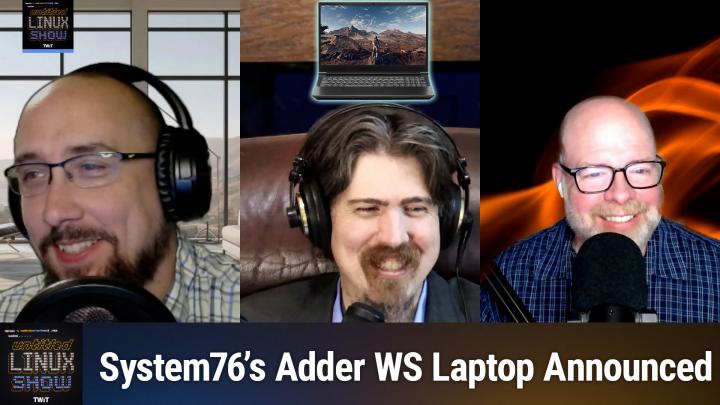
All TWiT.tv Shows (Audio)
Untitled Linux Show 211: Spicy Pillow Talk
01:36:26
Laptops, Bottles, and Business
Loading summary
Transcript232 lines
- [00:00]
Rob
Hey folks, this week we're talking about the Raspberry PI, both booting more reliably and coming to a laptop near you that looks really interesting. There's Wayland news, there's news about bottles, there's ray tracing news, and lots more, including business and a big merger that we talk about for a while. It's really great stuff and you don't want to miss it, so stay tuned.
- [00:20]
Sponsor
This episode brought to you by Red Canary when cybersecurity threats hit fast, you need an MDR partner that moves faster. Red Canary delivers 24.7expert MD support, total visibility and actionable insights. Plus it helps you detect four times more threats so you can stay ahead without burning out. Red Canary clears the noise and has your back every hour, every incident. Get the backup you deserve. Visit redcanary.com difference to learn more. Today's show is brought to you by Progressive Insurance. Do you ever think about switching insurance companies to see if you could save some cash? Progressive makes it easy to see if you could save when you bundle your home and auto policies. Try it@progressive.com Progressive Casualty Insurance Company and affiliates. Potential savings will vary. Not available in all states.
- [01:14]
Mirko
So when I ask, what is Odoo, what comes to mind? Well, Odoo is a bit of everything. Odoo is a suite of business management software that some people say is like fertilizer because of the way it promotes growth. But you know, some people also say Odoo is like a magic beanstalk because it grows with your company and is also magically affordable. But then again, you could look at Odoo in terms of how its individual software programs are a lot like building blocks. I mean, whatever your business needs, manufacturing, accounting, HR programs, you can build a custom software suite that's perfect for your company. So what does Odoo? Well, I guess Odoo is a bit of everything. Odoo is a fertilizer. Magic beanstalk Building blocks for business. Yeah, that's it. Which means that Odoo is exactly what every business needs. Learn more and sign up now@odoo.com that's O-O-O.com.
- [02:16]
Jeff
Podcasts you love from people you trust. This is TWIT.
- [02:25]
Rob
This is the Untouched Untitled Linux show, episode 211, recorded Saturday, July 12th. Spicy pillow talk hey folks, it is Saturday and you know what that means. It's time to get geeky with Linux and Open Source. Some hardware reviews and news. All kinds of good stuff. It is the Untitled Linux show. And it's not just me Today We've got Jeff and Rob with us. It's me and the bald guys and we are gonna have fun. Oh, not quite freshly shaven one's freshly shaven, the other's falling down on it.
- [02:57]
Jeff
Yes. I haven't shaved for like a week or something.
- [02:59]
Rob
Oh my goodness.
- [03:00]
Ryan
And I was the one on vacation. What the heck, Rob?
- [03:03]
Jeff
I was busy working.
- [03:06]
Rob
I've been busy working. We've got some fun stuff to talk about though, and the first is we're going to let Rob talk about I'm guessing this is Raspberry PI adjacent because it says it's the PI boot improvement.
- [03:19]
Jeff
Yes. So this time something that sounds like a Raspberry PI related story really is a Raspberry PI related story. So have you ever found your Raspberry PI not booting after an update? Be it due to a power loss, interruption during an installation, or just just a dodgy update? Canonical software engineer Dave Jones believes the current approach to booting as is far from optimal. Quote far from optimal optimal. And he calls it, in his words, bad with a capital B. So today, if the system fails to boot there there isn't much of a fallback. Apparently backup files exist, but they're hard to find without arcane commands and often difficult to get get to work as as apparently I I don't know myself when when mine breaks I just start over and reflash, but the car just reimagined. But apparently you know, they're difficult to get because often they're those files are broken apparently. So as as Jody Snedden says in the article that I was reading about this quote, the only thing worse than no backup is something pretending to be a backup. So, you know, being under that false sense of security thinking, yeah, I'm all backed up and when you go to utilize it. That's why in the backup world you always test your backups. But you know, this is a different story kind of kind of backup thing. I don't know how you test this, but this is why. This is why they Canonical or Dave Jones has laid out plans for a new approach to booting and aiming to improve system recovery and reliability using quote tribe 1 word t r y B O T Triboot to be released in upcoming Ubuntu 25.10 so Dave Jones explains that we'll be moving to a system that will test new boot and assets and automatically fall back to a quote known good configuration in the event the test fails. You can start testing this today if you want by installing the latest Ubuntu 25.10 Daily Pre installed image for Raspberry PI. And then you add a PPA which is listed in the article and then it's a simple apt install Flash kernel-PI boot. And you know, they also say if you're testing the ask that you file bugs against the Flash Dash kernel package tagged with raspy das dash image I suppose to, you know, isolate those bugs and not get confused with the any other stuff going on. And then also apparently there's, there's one downside to this new feature in that each time Flash dash kernel is run, the next boot will be a double boot. And for some, that might catch some off guard. You know, seeing it boot up twice boots up also and you get the rainbow again and it boots again, you know, just because, you know, it's something that might look like something failed to boot right the first time and you're like whoa, what's wrong with my computer? Unless you know what's going on. But, and, and additionally this double boot also means that during, you know, this boot, when it, when it does that that kernel, Flash kernel, this means that the boot will take roughly twice as long because it's booting up twice. So you know, Dave does, and also Dave says, you know, he doesn't see any way around this, but there's a new command. I'm not exactly sure what it does, how it, how it, how it does it, why it can't just be part of the system, but I'm sure it does something. The new command that has been added to avoid this double booting. You can do a sudo space PI boot that's P I B O t dash try space dash dash reboot and then apparently it only boot once. I'm not sure what it's skipping there but. And they also go on to say that this new command will have other options to manage the PI boot process, kernel boot process. So I, I guess those are yet to be determined what kinds of things those are. But I guess that's sounds like that's maybe how things are going to be managed. So all in all I, you know, I, I think, I think I'll take the slower, more reliable boot ups, especially considering how, you know, finicky some, you know, sometimes Raspberry PIs can be and you know, I guess sometimes why I've I move things just Proxmox VM servers myself. But you know, I think I'll take the double boot compared to a fast boot that is more susceptible to breaking if I had to pick the two. You know, reliability is always good.
- [08:41]
Rob
Yeah. You know, the thing about this is I've. I've had Raspberry PIs fail to boot multiple times. It's usually not a kernel issue. It's usually the SD card getting corrupted and you have to run an FSCK on it to get it to boot again. I got that problem repeatedly. In fact, I lost a customer over that problem. By the way, I built a little tiny asterisk phone system on a Raspberry PI. And like every other week, I had to go out and rerun FSCK on the SD card. It was not good. And they finally got tired of it. Like, we don't. We don't actually need a phone system at this location.
- [09:13]
Jeff
Yeah. Okay.
- [09:14]
Rob
So.
- [09:14]
Jeff
So, you know, I've been in your career field before, and one suggestion. I. I don't think I'd have a business critical infrastructure running on a pie. So that's just a tip for you.
- [09:24]
Rob
Yeah, that was. That was kind of my introduction to that concept that maybe that wasn't a good. So that's when I figured out that maybe that wasn't a good idea.
- [09:31]
Jeff
I mean, it's great.
- [09:32]
Ryan
Cards are.
- [09:33]
Jeff
I was gonna say it's great if you have, like, just a display on the wall that's like flashing some advertisements or some simple thing that if it goes down, it's like, yeah, oh, well, the phones aren't good for a business.
- [09:45]
Rob
Yeah, it was less than great.
- [09:47]
Ryan
Well, SD cards aren't known for being robust.
- [09:50]
Rob
No. This is why two things. This is why I was so excited when there's finally a way to run your Raspberry PI off of NVMe or, you know, Pixee boot, for that matter. It's also why I'm so annoyed by the PI 500 not having the NVME slot. You know, I didn't have this in the notes until until now, but I'm gonna. I'm gonna add something to the notes that we're gonna talk about that's Raspberry PI related. And. Yeah, we're gonna. In fact, I wonder if I could find this real quick. There is a device that is very interesting to Raspberry PI users. I'm logged in. Okay. We are going to let Jeff go to his story about amd, and I am going to go log into X and am going to talk about X11 or x.orgx.orgx.com? he got me. He got me.
- [10:50]
Jeff
So confusing. All these.
- [10:52]
Rob
I know. Who in the world thought it was a Good idea to rename their perfectly usable app to X. When we have so many other things named X.
- [11:00]
Jeff
All these X's, it's like Jeff's past.
- [11:06]
Rob
All right, Jeff, let's talk AMD first and then we'll come back and talk Raspberry PI again.
- [11:11]
Ryan
Oh, sounds good. Okay, so we've talked in the past about how the drivers for AMD graphics cards have been improving over time. There have been performance improvements as AMD keeps going back and refining and polishing the code. This week's story from Pharonix is about how ray tracing has been improved, this time with the MESA driver and its evolution. And they're putting benchmark numbers on it so we can quantify the improvements. The specific driver being tested is the Mesa 25.2, which is on feature freeze currently and expected to branch off next week and start the release cycle. It's expected. Grain of salt here. It's expected to be flagged as stable in August. Now, while there's going to be improvements all through the driver, we're just going to be focusing on the Vulcan ray tracing improvements. These tests were done on AMD Radeon RX9070. Now it's not an XT, just a plain 9070. Now these are running from a bone stock Ubuntu 25.04 install, with the only difference being is adding in the 25.2 Mesa development version, replacing the Ubuntu standard 25.1 version. So otherwise everything was identical. The first part of the benchmarking is just running on a couple of games and benchmarks to make sure the non ray tracing situations didn't have a regression. Good news. There is, there isn't anything, which Michael found performance was pretty flat between the two versions, so the ray tracing improvements didn't break anything. So now moving on to the ray tracing part of the benchmarks, there's a difference and they are for the better. Michael calls out that the Gravity Mark benchmark is running 16% faster. And I'll say all the benchmarks had roughly the same kind of performance increase. But the downside is there are not any games run now. He doesn't say in the article why. I mean, maybe it's coming in the future. Maybe this is early enough that it's not really handling games. I don't know why, so I can't say what kind of performance increase it'll be in the real world. In a real world situation, you know, benchmarks, they can be a good analog to the real world performance. And they can also be wrong. It depends on how the benchmark is constructed and it can also depend on if the company or groups involved tune the code for the benchmark and it doesn't show improvement in the real world. We have seen companies do this in the past. Intel was one that did that so that they're synthetic data looked awesome. Real world it didn't show the same increase. But they're not the only one. If we keep the idea though that there's about a 16% improvement then there's going to be a few more frames per second on games. Now this isn't going to be earth shattering. You know, you got to keep in mind this is how drivers mature though. You know there's almost never a night and day difference but we get a few frames better here and there and over time it amounts to quite a good improvement. The general rule of thumb is about a 10% performance increase is the bottom line of where you'll see a difference less than 10%. The average person won't tell a difference. Not that some people you know who are sensitive wouldn't. We're just talking averages here. So this should give a noticeable improvement. Take a look at the article in the show notes for more details to see all the data and you can make up your own mind and hopefully the future has even better gaming performance on AMD.
- [14:50]
Rob
Yeah, you know it's two things. One, it's interesting to see AMD's performance continue to improve. There was another article this week about a Nvidia bug fix or something that got brought online for the Nvidia Nouveau drivers and it was like a 250% performance increase and I was going to cover that until I saw that it's like these cards from 10 years ago. I was like oh well nobody cares anymore. At least it's the current gen AMD cards that are getting, getting fixed on on Team Team Red.
- [15:23]
Ryan
I mean there was, there was questions.
- [15:25]
Jeff
Well frequently used 10 year old cards but I, I've moved a little bit slightly more modern and four or five year old maybe.
- [15:36]
Ryan
And there was questions whether or not it, it affected the last gen and couldn't answer that. So I definitely the rdna 4 is getting improvement but nobody knows about the rdna 3. That wasn't in the benchmarks either.
- [15:52]
Rob
Yeah, I'm still on the hunt for a reasonably priced AMD rDNA 4. They're still sort of Unobtain. Yeah, Unobtainium for the MSRP trying to find somebody actually selling it at such a reasonable price. I will.
- [16:12]
Ryan
You know, there might be a little bit of something, hope on our ending notes.
- [16:17]
Rob
Hope is on the horizon. All right, we'll see what we're. We'll see what's coming. Jeff and Rob trying to get me to spend money. Well, I'm going to get Jeff and Rob to spend money. Now it is my turn. It is my turn to convince these guys to spend some money because there's something really cool I saw this week. I thought for a bit that I might actually be responsible for it. And not directly I am told, but. So Jeff Geerling tweeted X whatever you want to say, sent out a post about a laptop that he was testing out and it is a reasonably decent, not like a super high end, but a reasonably decent looking laptop. And it's got something odd going on with it and it is. Let's see. I may be able to full screen this thing and actually show you. I'm going to attempt to share Chrome tab. This guy, this guy. There it is. That's the thing.
- [17:14]
Ryan
Look at that.
- [17:15]
Rob
Look at that laptop doing some SDR stuff. Well, you may notice that that laptop has a funny little sidecar sitting out at the side. This guy here. Funny little sidecar. You know what that looks like? That looks like the 40 pin hitter from a Raspberry PI. Well, that is the 40 pin header from a Raspberry PI. This is a laptop that takes a Raspberry PI CM5 up underneath it. You punch the compute module into the bottom of the laptop. It plugs into a kind of a motherboard thing. I'm not sure. Does that make it a motherboard or a daughter board? Which one's the mother and which one's the daughter in this scenario? I don't know.
- [17:57]
Ryan
But anyway, where's the processor?
- [17:59]
Rob
The processor.
- [17:59]
Ryan
Is it the Raspberry PI?
- [18:00]
Rob
Yeah, yeah.
- [18:02]
Ryan
Then it would be the motherboard, I would think.
- [18:04]
Rob
I'm not sure what that makes the board that makes up the laptop. Then the grandmother board, I don't know.
- [18:11]
Ryan
Anyway, daughter card maybe.
- [18:14]
Rob
Anyway, so it's a laptop, comes with a battery. It has, you know, USB ports on it, HDMI ports on, has an NVME port on it too. And you just punch a Raspberry PI CM5 up into it and it will go. And that is super interesting to me. It is being made by argon40 and they are calling it the one up and I've got a link in the show notes to where they're going to kickstart it. It's on Kickstarter. They don't have a price announced yet. And so that's what's really going to make this either an instant buy or, or, oh, that's a cool idea, but I'm not gonna spend that much money on it. Right. So either this thing is gonna be just the hottest thing ever or it's gonna be way too expensive. But it's a cool idea.
- [19:07]
Jeff
So it's not a laptop by itself. Right. It needs the Raspberry PI to function. Right.
- [19:13]
Rob
It's a laptop without a CPU essentially. And then you take the CM5, the compute module 5, and you snap it up in there and then it is a Raspberry PI powered laptop, which, the PI 5 is powerful enough. You can totally use it as a, as a, you know, you're not gonna, it's not gonna be a compiling machine, although you can compile on it, but it's not gonna be a great experience to compile. It's gonna be a limited, good experience for gaming. You're not gonna be able to play like modern aaa. There's a lot that you can do with the emulators.
- [19:47]
Jeff
Does it, does it hang off the side or does it.
- [19:51]
Rob
No, it goes underneath. So that's. That was the thing. Okay. And so this is why I said I thought I might be responsible for this. You remember the Ella Crow Crow view with the Raspberry PI that had the sidecar. The whole pie was the sidecar. And apparently Geerling and I both, we had conversations with Ellacro and it's like, this is cool guys, but it's terrible that it hangs off the side. Put it underneath. So we basically described this thing. Elachro hasn't done it, but Argon 1 or excuse me, Argon 40 has. With the Argon 1 up and it is coming soon. Ish.
- [20:23]
Jeff
Yeah, I thought the other one was pretty cool, but hanging off the side, it just seemed like, okay, I'm going to like snap that off or something or I don't know.
- [20:32]
Rob
Yeah. And so this one, this one has an option to. Here we go. I can share this screen as well. So. Right, that's where it goes. That's where the CM4, the CM5, excuse me, goes. And you've also got the slot there for the nvme. Right. And so they both pop in there. But there's also the.
- [20:57]
Ryan
So the PI is just only replacing the CPU and everything else is still laptop motherboard. Right. So I would say, yeah, that's probably a daughter card.
- [21:10]
Rob
And this thing to the side that is literally just the 40 pin header, like, I'm sure you don't have to have that there, but if you want to play around with a hat, Raspberry PI hat, you've got this you can hang off the side to be able to get to it.
- [21:26]
Ryan
Cool.
- [21:26]
Rob
It is. It's super cool.
- [21:28]
Jeff
No price yet.
- [21:29]
Ryan
Bit of a teaser. I already spent money though. We'll hear about that later.
- [21:34]
Rob
Yeah, I'm sure.
- [21:36]
Jeff
No price yet though, huh?
- [21:38]
Rob
I've spent some money too. We'll talk about that too in a minute. No, no price. And so that's what I say. Like, is this going to be at $150 or less? It's like an instant buy, but if it's up like 3 or $400, it's like that's almost as much as buying a whole new laptop. Yeah. So I don't know where it's going to end up at. Hopefully they can do it at a reasonable price.
- [21:58]
Jeff
Well, they got some interesting products on their site anyway, so Argon 40 has.
- [22:02]
Rob
Done some cool stuff. They've done like the beefiest Raspberry PI box that you can buy.
- [22:11]
Jeff
Yeah, I haven't heard of them before, but. Well, at least they got some advertisement from me. And now I, now I, now I'm interested in them even if this doesn't come to fruition.
- [22:20]
Rob
Yep. Yeah, no, it's, it's a, it's a cool little. It's a cool little product. I would like to see it. I'd like to see it happen.
- [22:25]
Leo
Hey, it's Ryan Seacrest for Albertsons and safeway. Now through July 15th. Stock up on all your favorite personal care brands and earn four times points to use on later purchases. For discounts on groceries or gas, shop in store or online for items like Pantene Shampoo, Old Spice, Total Body Deodorant, Tampax Pearl, Venus Razors, Head and Shoulder Shampoo, Olay Body Wash and Pantene conditioner. And earn 4 times points. Hurry before these deals are gone. Offer ends July 15th. Restrictions apply. Offers may vary. Visit albertsons or safeway.com for more details.
- [22:56]
Rob
Yeah, so let's talk about Weyland. That's what we do on this show. This is the Untitled Wayland Show. Some days.
- [23:07]
Jeff
Most weeks it is.
- [23:08]
Rob
Yeah.
- [23:09]
Jeff
This week it's not. I'm calling this the Wayland Roundup as I discuss how more and more distros desktop environments and, you know, bits of software are continuing to push us away from RX's. I mean, X and forward with Way on. So first up is Suse said That right? Right. Suse?
- [23:33]
Rob
Yeah, pretty much.
- [23:34]
Jeff
Okay, I just, I, I want to call it Sue. It's so bad, but. Okay. First up is Suse. Finally they're deciding to move their Agama 16 OS installer from X.org to Wayland. More work is still being done on this installer, but anyone that installs the upcoming open SUSE Leap 16 or SUSE Linux Enterprise 16 operating system will be greeted with the graphical UI installer running on wayland rather than axe.org so sure, this is just an installer, so it doesn't make much of a difference for the installer itself. You know, it's not like the installer's using HDR or anything fancy like that that needs whaling, but it gets us one step closer to just cutting the cord on X. And you know, maybe, maybe it makes it a little bit more secure, you know, if it's not going to run some buggy thing. But you know, you're at the install phase, so it's, it's more of a, of a way to not have so much requirement on X anymore, I think. Next on my list is gnome, which I should say I found somewhere. I looked it up once and I never brought on the show. It is pronounced good GNOME because it's GNU something something something something. But this is what it stands for, so it's gnome. Don't correct me on that and don't say gnome anymore. Gnome 49. Anyway, next on my list is gnome 49. Alpha has been released with X11 support completely disabled by default and they still plan to be wayland only by gnome 15. So breakdown of the x11 disablements include gdm, has changed the x11 support default value to false and now disables the x.org session by default. Gnome control center now builds without x11 support by default. Gnome session now disables x11 session by default. And you know, look forward for that final I look forward to the final Gnome 49 release to hit shelves, or you can look forward to it to hit shelves in September. And check out the article if you're interested, to know what else is new in gnome 49 or coming that will be new. And I'm not going to go any further than that because these other GNOME deniers on the panel here don't want me to talk too much about gnome, so I'll move on. Finally, finally I wanted to provide, provide a little update to Wayback. So last week Ken brought up how Wayback is an experimental X11 compatibility layer for non wayland desktop environments. To leverage Wayland components. So although it is still in its early, early stages with hopes to be production ready in 2026, it has already taken off from just being a personal project on GitHub to now being hosted on free desktop.org alongside other projects such as Wayland and the X.org server and some other projects, prominent software like Mason, stuff like that too. So it's found a new home right up there with the other prominent display servers and all that. So it's, it's, it's already, you know, looking to have a promising future and just another step forward as we all leave RX behind.
- [27:37]
Rob
That was a very dad pun on the way out there. Yeah. So it is super fascinating to see particularly Wayback. I'm very fascinated by Wayback. I want to see some of these different desktop environments get running under Wayback.
- [27:52]
Jeff
Yeah, it's really a come up fast.
- [27:54]
Rob
He's coming very fast. Yeah, it's particularly interesting to me like I have not done this yet, but I would like to like go and compare the line counts for Wayback with the full X11 and see just what the difference is. Right. Like how much less complicated is wayback versus running full X11?
- [28:17]
Jeff
I mean there's no way that they've developed as many lines of code in such a short amount of time, is there? I don't know.
- [28:26]
Ryan
Yeah, well there's a lot of old cruft that, you know, for hardware that existed 20 years ago, I'm sure that's still probably an X somewhere because it supports some weird archaic feature they got to leave in for somebody.
- [28:42]
Rob
The first commit on the way back GitHub was two weeks ago. I didn't realize that this is a way back is a very new project. My goodness. I wonder how usable it is right now. I honestly don't know.
- [28:56]
Jeff
And they already project or expect to be production ready next year sometime, which I mean really leaves anywhere from a month as a 6 to 18 months time range there. But still that's pretty quick.
- [29:09]
Rob
I mean something that big, that's still not bad. That's, that's very interesting. Yeah, I, I kind of, I kind of think this has to be way back is a, a pretty direct response to the Ex Libre thing. I think it has to be, right? The timing. The timing and the fact that Man X Libre takes so many people off. It really did. And some of it for good reason too. I, I am convinced some of it for bad reason. I think some of the things that went on were just dumb by everybody. But the whole we, the people that have worked on X for 20 years, finally getting rid of it and you know, being done with it and then someone coming, nope, it's good. Back alive again. I understand why that was frustrating, I get that. But yeah, I think, I think Wayback was, was a pretty direct response to that of, okay, fine, you want to run your X11 desktops, fine. Here's the right way to do it.
- [30:16]
Ryan
I think five years from now we'll be going, hey, remember, remember that month.
- [30:22]
Rob
When everybody was fighting over X? Wasn't that great?
- [30:24]
Ryan
Yeah, or it's going to be relegated to like people that didn't like, don't like System D. And well, we've got this distribution that still uses it. It's like, yeah, but 95, 98% of everybody just use System D and we're going to have everybody basically on Wayland except for that old system in the corner that running that weird distro that six people run.
- [30:54]
Rob
I see lots of parallels between the Wayland fight and the systemd fight and I think you're right. I think that it's the direction it's going to go. All right, let's talk about Intel. Jeff, is it time to talk about Intel?
- [31:08]
Jeff
You got some intelligence?
- [31:09]
Ryan
It is intel and technology advancements at Intel. So like my last story about driver improvements, this one's similar but it's a little more future looking. So the article linked in the show notes is from Phoronix and talks about future Intel XE kernel graphics driver improvements. This should be seen in 6.17 kernel and a lot of you are probably on the 6.15 kernel and 6.17 might seem far away, but keep in mind that 6.16 is probably going to be released in the next few weeks and the expected pull request window for 6.17 is expected to be late July, early August. It always depends on how the current release schedule goes. The driver for the new intel driver is going to include support for new hardware such as the mobile upcoming Wildcat hardware, which is expected to be the successor to the twinlake architecture. They're also working on their multi device support, so they're making preparations for multi GT hardware instances, meaning there's going to be several GPUs together in one system working as one. Now this wouldn't be for gaming. Think AI workloads. Now I know a lot of you mentioned that the, you know, you're probably thinking in your head, the head of intel came out and said they can't catch Nvidia for AI, but they've also called out there's some other workloads they think they can get ahead of and they're going to try to find their niche in the AI to build off of. So while they, while they said yeah, there's a lot of stuff they can't catch Nvidia on, they also called out some things that they're going to try to work on that's still in the AI realm. So that's where this driver comes in. So there's also a lot of work being done on the SR IOV single root input output virtualization. So now this is a PCI standard which lets a single card be used by several virtual machines, so it allows all those different instances to share the hardware. We've talked about GPU segregation in the past, or bifurcation where you could set up a virtual machine and you and somebody else could use one video card to both play games because it's treated as two video cards virtually. Side note, that feature is not really available on consumer graphics cards. That's. That's the big iron cards. But I digress. So this now this driver will be or the SR IOB and improvements is going to be for the BattleMage GPUs. And while the poll is in 6.17, it's not expected to be fully implemented until probably 6.18. But this request is laying a lot of the groundwork that future code can build off of. Now there's going to be normal changes as well, such as work to make boot up flicker free fan control and voltage information exposed, and new driver code for accessing non volatile memory device on the intel discrete GPUs now Michael Erlebel commented that this is the largest Intel XE driver poll he has seen in months or even years because intel is pushing hard to get into the GPU space and they know while the hardware is pretty solid, the driver stack needs some love, which they have been giving over the past, you know, couple years. They're also prepping for future industrial loads and that's where a lot of this is headed with this driver. Now there is consumer stuff in there as well, but we're just kind of hitting the more enterprise workloads in here. But have a link to the have a have a look at the link in the article in the Show Notes for more details as it has links to other articles where they go into deeper details on different specifics of some of the major components being updated by this pull request. So they go into much more detail. There's several articles that are chained off of the article linked in the show notes that you can dig into. And I'll be honest and we'll talk a little bit about it at the ending notes. But you know, personally I'm really rooting for intel in the GPU segment.
- [35:36]
Rob
Yeah, you know what's really interesting that I've heard a lot of people talk about with the Intel GPUs is that they are really good at vlog video encoding and decoding. That's like one of the niches where they really make sense because you can get the same performance out of like an AMD or an Nvidia card. But some of these Intels are way cheaper and more available. I've several people doing it both, you know, kind of the hobbyist level like streaming but also or industrial level. Let's run a whole ecosystem off of this. So very fascinating for that.
- [36:10]
Ryan
Oh yeah, you can get a cheap intel card that'll outperform a high end Nvidia or AMD card for coding decoding.
- [36:17]
Rob
Yep, absolutely. And you know the drivers are going to work on Linux. They're in great shape. All right, well, I've got a couple of things I'm going to mash two of my stories up at the same time because they're both business related. So we're going to talk about a couple of business things. First off is that Red Hat is tired of losing out to Almalinux and Rocky Linux, I think. And so Red Hat Hat has rolled out yet another way for people to be able to get Red Hat Enterprise Linux for free if only they had an official distribution that was just like Red Hat that they were giving away for free. Wouldn't that be nice? Anyway, so Red Hat has rolled out an announcement that they are doing Red Hat Enterprise Linux for business developers, which this is similar to their developer copies where, you know, if you're working on maintaining things, you can get free copies of Red Hat. Well now if you are evaluating enterprise Linux for inside of a business, you can get I think up to 40 free copies of Red Hat Enterprise Linux. And now this is for evaluation purposes only. But still it really interested me that they're doing this. Literally this is what CentOS was for. Like I do not understand why they killed centos and then went back with this. It's befuddling Anyway, hindsight is 2020 on this one, I guess. But if you are doing evaluations for enterprise Linux for a business, you can sign up and get these free licenses. Very few strings attached from what I can tell. Excuse me, 25 entitlements, not 40. Misremembered the number there, but yeah, it's. It is for development or testing use only. It is RHEL software set but no satellite. So not everything but support all the supported RHEL architectures and yeah, some interesting stuff there. So if you're at a business and you want to go play with rhel, sign up for it and you've got it. You can get a hold of the full fat Red Hat Enterprise Linux. And then the other bit of business news that really caught my eye, I really find this fascinating, is that GlobalFoundries have entered into an agreement to acquire MIPS. So let's talk about what these two companies are. First off, GlobalFoundries, it is one of the biggest processor fabs and I'm sure Jeff will have some interesting thoughts on this. But it is the one that AMD spun out Windows. So way back in the day AMD Advanced Micro Devices was kind of of the opinion that, you know, real processor companies make their own processors in their own fabs. They ran that way for a while and they discovered that that was not a great idea for their business and so they spun out Global Foundries. You have AMD who makes the designs and then Global Foundries that actually runs the fabs, physically makes the chips. MIPS was or still is a CPU design company and they came up with the MIPS design which runs in a whole bunch of routers and some other places. And apparently here in more recent years the MIPS company have been doing RISC V stuff. Okay, so now this week we get the news that MIPS is being bought. Now it's going to continue to run from what I understand as a standalone business, but it is going to be purchased now by GlobalFoundries and we're assuming that all new MIPS hardware is going to be made on GlobalFoundries fabs, probably for a cheaper price and blah blah, blah, you know, all kinds, all the business agreements that normally come with this sort of thing. But it's, it's really, it's really interesting that one, Global Foundries thought this was worth it to maybe break into the RISC V game. But also it's fascinating to see MIPS still hanging around and doing things other than the MIPS architecture. So a couple of really interesting business things that have happened this week and I'm sure you guys have thoughts on these.
- [40:33]
Jeff
So yeah, with the Red Hat Developer Edition or whatever, does that not make it easier for Rocky again? Because you could get in for free without like having to buy it. Because I imagine now they tried to buy it, shut them down, buy it, shut them down and cat and mouse. But with this, I mean, sure, they could get a developer shut it down, but once you're a developer that because of the licensing then they do have to be able to provide the source to them.
- [41:06]
Rob
I'm just imagining the next thing you know, there's a new LLC set up. So first off, There's Rocky Linux, P.O. box 2202. Wherever, wherever. And oh no, it's a new LLC, AKI LLC at P.O. box 2203 and Akri LLC, P.O. box 2204. No, no, Red Hat. We're completely different businesses. Please give us our licenses.
- [41:31]
Jeff
Yeah, and it's not exactly like Sentos either. Just because obviously there's. Even though if there's not many limitations, there are stipulations and limitations. Whereas sent us is like just go and download it. Yeah, but yeah, still, it's still, they should have just kept it.
- [41:50]
Rob
It's hilarious to me that, yeah, they burned so much community goodwill to get rid of CentOS and now they've almost entirely given it, but given it back to people where it was. Yeah, it's. It's ridiculous.
- [42:07]
Leo
Hey, it's Ryan Seacrest for Albertsons and safeway now through July 15th. Stock up on all your favorite personal care brands and earn four times points to use on later purchases. For discounts on groceries or gas, Shop in store or online for items like Pantene Shampoo, Old Spice, Total Body Deodorant, Tampax Pearl, Venus Razors, Head and Shoulder Shampoo, Olay Body Wash and Pantene Conditioner and earn four times points. Hurry before these deals are gone. Offer ends July 15th. Restrictions apply. Offers may vary. Visit albertsons or safeway.com for more details.
- [42:37]
Rob
Jeff, what do you think about the GlobalFoundries move?
- [42:40]
Ryan
That's rather interesting. So little history Keys 512 said MIPS. Sounds like some kind of a cold for a PC. But it was originally the processor for Silicon Graphics SGI. Oh, that was, that was their big claim to fame. And that's. Or at least that's where I best know them from. And I took in college an advanced processor design class and we went through the MIPS architecture because it's pretty straightforward and fairly simple. So I could, I could totally see them getting into the RISC V. I mean, I'm honestly, I'm a little surprised that MIPS was even still around. I thought they went belly up. The big Thing is, I think AMD is probably getting them or because it's not AMD. Well, okay. GlobalFoundries is getting them because one, it gets them into the risk market. So it broadens what they can do. And I bet you there's some patent or trademark stuff in there. And a lot of times, rather than licensing, sometimes it's just easier if there's a portfolio just to grab it all and then they have access to the entire catalog. That's why a lot of these little companies get ate up.
- [44:00]
Rob
It's.
- [44:00]
Ryan
They're not necessarily interested so much in the company, but in their intellectual property.
- [44:05]
Rob
Yeah. That's interesting.
- [44:07]
Jeff
Yeah. When you first started talking about mips, I have no idea about MIPS and all this stuff you're talking about. I thought I was thinking about MIBs S&M P stuff. I'm like, what are we.
- [44:18]
Rob
What.
- [44:20]
Ryan
It was an early RISC processor and it was kind of a good case study for college CPU design classes because it's, you know, reduced instruction set. It's fairly simple, fairly straightforward, where you take something like the X86 hardware. Now it's basically a RISC processor with a bunch of decoder translators around it. So you can get those cores sped way up. Because the x86 catalog instructions is rather large now. So if you can translate that to some faster instructions that your core can do. And it's like anything in computer history, what's faster, the CISC complex instruction set or the risc, it goes back and forth. They kind of leapfrog each other based on the technology and how well your designs are going. You can make the risk a lot faster. But is your slower complex instruction going to get overall more work done? And it always goes back and forth. So we'll see where this goes. It'll be interesting. I think part of it too is, like I said, market share. They can tie in. They can get in with their RISC V because they know either the X86 is probably going to go away one of these days or it's going to have to have some major changes and they're going to have to cut out a lot of. And I mentioned this before, maybe cut out all the 32 bit and lower instructions and just go strictly x64 so that they can streamline the silicon and make it more efficient and not support so much legacy stuff.
- [46:05]
Rob
Yeah. So interestingly, Rob, you were talking about you'd never run MIPS before. I bet you have.
- [46:11]
Jeff
No, I didn't say I never ran. I just didn't know what?
- [46:13]
Rob
It was the linksys, the old WRT54G. You remember those things? Those were MIPS processors. Yeah, there was a MIPS processor and that a lot of the routers that OpenWRT supports over the years have been MIPS. A lot of embedded stuff was MIPS kind of from that era. And we have an interesting question here from Middle Pickup. That's a guitar pun sort of reference to. At least I thought RISC V didn't require a license though. Why would they need to buy MIPS to be able to build RISC V? You want to answer that, Jeff? Do you have a thought?
- [46:47]
Ryan
It's probably more in the actual. There's probably some secret sauce in design or the fabrication part of it. So there's always little tricks and stuff in there that it's open source.
- [47:04]
Rob
Yeah, but the RISC V specification itself is open, but not necessarily any of the implementations, not necessarily any of the add ons to it. Because that's one of the things that RISC V is all about is you can add your own extensions to it. And there is very possibly very likely in fact going to be patents that exist on top of those implementations of RISC V. And so I think the sort of thing Jeff is talking about is like those patents and the intellectual property for those, you know, those enhancements that they've made to it.
- [47:42]
Jeff
So an analogy for that might be the Microsoft Edge browser. While the Chromium engine underneath is open source. They have their own wrapper sauce on top of it.
- [47:55]
Rob
That's wrapper sauce. Yeah, Wrapper sauce. I like that actually. I don't know if I've ever heard anybody say that.
- [48:02]
Ryan
That might be a show title right there. Wrapper sauce.
- [48:05]
Rob
Wrapper sauce. Yeah.
- [48:08]
Ryan
And I would comment too. Wizardlings says RISC and CISC doesn't mean much anymore. And that's pretty true. We're kind of using it in the higher level abstract for the non hardware people.
- [48:23]
Rob
Yeah, well I mean you kind of have to understand that x86 processors don't actually run x86 code anymore. They emulate it. You mentioned this, but like there aren't, there aren't any x86 machines made anymore. It's just they're all really fancy chips that emulate the old X86 to keep everybody on the same page. It is, it is a ridiculous point that we have come to in computing.
- [48:47]
Ryan
And that actually we could have a whole segment on the. And we've seen it across multiple platforms and hardware devices. Of how much legacy do you hold on to versus the weight that you have to support that legacy where it's just so much overhead and extra work and complexity that. And especially the early days where sometimes stuff is kind of kludged together or just not implemented very well and it's a lot of spaghetti code to make it run. And it wasn't until later on that things really got streamlined. And at what point do you go, we just have to, we just have to cut it and say, okay, from this point on, I mean you could argue that's what they tried to do. Intel tried to do with Optane, but that had its own set of problems and many argue wasn't implemented very well. But I think you could do it if you got AMD on board as well. And they both agreed to say, okay, here are the instruction sets we are going to drop and you know, we're going to guarantee this support and this stuff is going away. And if you had a concerted effort between both companies to transition, I think you could do it.
- [50:03]
Rob
Yeah, good luck with that though, getting the two of them to cooperate on something like that, so.
- [50:07]
Ryan
Well, you know, but they do though, because there's a lot of standards that they're both involved in. Yes, they're part of a lot of the.
- [50:15]
Rob
Yes. But there's also a lot of knife fighting that people don't get to see. There's a lot of that that has happened. Some of it we know about, a lot of it we don't.
- [50:26]
Ryan
But you know, I will not comment on any kind of interactions I may or may not have been involved with between certain major corporations.
- [50:37]
Rob
Yeah, yeah, there is knife fighting that happens in the background. Oh yeah, we're totally, we're going to implement this as well. And then, you know, they bring the chip out and it's either a broken implementation or a really good implementation that has extra stuff. Stuff or you know, it's not implemented on this version for the consumer level chips. And just, it's just always something and some of it is done on purpose and some of it is done out of who knows why.
- [51:05]
Jeff
But at some point you're saying, you're saying the X86, 64, the X86 could get dropped and removed at some point and just be 64.
- [51:18]
Rob
Oh, they've already talked about.
- [51:19]
Ryan
Well, no, yeah, well it would be, it would be more of. Because they've talked about to be competitive and have lower power requirements if they could get rid of a lot of legacy instructions and they could thin it up and better compete with like the RISC type chips, the risk 5 and stuff, where they can simplify those cores more and more, reduce your silicon count. It makes things cheaper to manufacture, more efficient, smaller. It's got a lot of benefits other than, okay, there's some really old stuff you just can't support anymore. Now you could maybe even just say, well, you know what, we'll have a hardware emulator for that really old stuff and newer chips are going to be fast enough. Is it really going to matter? You know.
- [52:10]
Rob
Intel back a couple of years ago was talking about. Yeah, talking about by the end of 2025. I don't know if this is still the case or not, but they said a couple years ago by the end of 2025 they would transition to 64 bit CPUs only and just yank out all of the other 32 bit support.
- [52:33]
Ryan
Yeah, I don't think we're there yet, but they do want to go that way and I'm sure there's discussions going on between them and amd. And what they have to do though is they have to just have a standard, something like a JDEX type of standard that they go in and say, okay, here's how we're going to do it. We're going to agree on this. And otherwise I think it'll be like Optane. People are gonna say, yeah, I'm, I'm, you know, why change when I can still get somebody else with that isn't changed? I think you have to have everybody do it. And wizarding brings up something too. Intel says a lot of things. They said that a few years ago before they had some financial issues. So a lot of stuff in the news for those that don't know, you know, there's a lot of layoffs going on. You know, heart, heart goes out to all those people that are going through hard times because of this. You know, they've had some major restructuring, so you can't, you know, anything that was done well. And if you look the past couple years or past year, they're on their, what, third CEO now? Yeah, well, kind of. I mean, they had, they had, they had one, they got rid of them, which I think they didn't let him have enough time. But that's just my personal opinion. They had some interim people that were never going to be the permanent CEOs. Now we've got our current person in and they're making a lot of changes and they want the CPU division to be similar to the GPU division because the GPU division has a very good reputation right now for being Lean and mean and flexible and fast on their, their designs, their changes, how they react to the market. The CPU division is not seen that way in the outside world.
- [54:40]
Jeff
So, so, so you said that you think they both would need to drop it in order to make it feasible to go forward. Because otherwise if one dropped it, people would just go to the other. So they could still have it. But what about the scenario? I mean, is it a scenario? Maybe I don't understand as well enough, but as somebody who doesn't know, what about the scenario where if we get to a point where, and maybe we're even already there, we don't need that because the software we use doesn't use that. Somebody goes ahead and drops it and that just makes that processor that much more efficient, better one way or another. What would the point of going to the other, the other alternative be that hasn't dropped yet?
- [55:27]
Ryan
Well, some of it's going to just be perception because there's going to be that, oh, you can't run this certain thing on your cp, it doesn't support all the instructions. It does. And so the fear would be something like kind of almost a major marketing issue that would stop people because they're like, well, just in case I might want to run this thing, which I don't know what it would be, but just in case I'm going to get the full instruction set.
- [55:53]
Jeff
So I think the benchmarks and everything, you know, people like Pharonix running benchmarks and saying how much better this is and everybody else, I think I feel like the word would get out, you know, kind of like when Apple went to their, you know, new M1s, nobody. There may have been some people at first who were worried about it, but then when the word got out kind of how much better in every way it was than, you know, what they had before. I don't think anybody's looking back.
- [56:23]
Rob
But.
- [56:23]
Ryan
There again see when you're dealing with Apple and yeah, a lot of people like that chip, but it's a kind of a closed. You want an Apple? Here's the chip you're getting versus you could. You're not having several competing, couple of competing standards and I think just to make it smoother and how everything's done, if they could just both agree it would be better. And there's many standards, they both. And as Jonathan said, there's knife fights. I mean it can get knocked down, drag out, but they do come to agreements and you know, you have like JDEC standards, memory standards, you know, PCIe standards, there, there's a lot of different standards that they're involved with. They're sitting on a lot of boards, you know, both intel and AMD and they have to agree on things and both of them I think would have a vested interest to go, you know what, we could streamline our designs, we could make it faster, faster turns on our silicon because there's less to test, simpler designs, smaller designs. So it's going to be cheaper to manufacture, easier to manufacture. I think both would have a vested interest to try to make that change. It's just that now with Intel's upheaval and possible there's talk are they going to split, are they not going to split? A whole lot of speculation there that I won't go into. It might be a couple years before we see 32 bit dropped from the.
- [57:56]
Jeff
Optimistic part of me thinks it would sell itself but I think maybe then again it's probably analogous to Wayland or a lot of things like that where all comes back. Why wouldn't we go to Wayland? Wayland is way better. You don't need X anymore and all these things and you got or so or any of that.
- [58:15]
Rob
I will say trying to make, trying to make these changes in a way that's completely backwards compatible would be extremely difficult. Right. And so the thing you would run into is your different vendors would have to make, probably would have to make the decision of okay, which of these two, if it's going to fork, which of the two forks do we fully support? And people are going to make the decision based upon, you know, whatever Microsoft said the requirement was. By the way, what I was thinking of was x86s. That was what intel was talking about was supposed to happen by the end of 2025. Well, December 2024 intel put out a statement and said we're not doing that anymore. Instead what they have done is they have joined the advisory group the x86 ecosystem, which I don't know if they've announced anything yet but that is the group that has intel and AMD and Mediatek and apparently Linus Torvalds is on the board. A lot of different people are there and they are the ones that are looking now into what is the next version of x86 going at to look look like. Because like I said, the X86 V4 thing has just been a mess. Not everything supports it. Some of the new chips do, some of the new chips don't. It's been terrible. So maybe, maybe everybody can get their heads together and we can figure out what X86V5 is going to look like and everything can support it. We can drop the 32 bit stuff.
- [59:41]
Ryan
Well and Linus Torvalds has said that he wants to get rid of a bunch of the 32 bit stuff because he talks about it's kind of kludgy in there and it would clean up a lot of things. I'll guarantee you Microsoft is in there. You know there's a, there's going to be a whole list of. There's probably 30, I don't know but I wouldn't surprise me if there's like 30 companies in there. And usually the way this goes, at least what I've seen like say there's 100 instructions, they're on the chopping block. 95 everybody agrees on. Yeah, it's going to be like five of them that are, oh my gosh, if we get rid of this, that's going to mess up our stuff. And other people like yeah, but this totally cleans up our thing and it, it's just the last few bits that usually are the ones that they really have discussions on and what does this mean and all that kind of stuff.
- [60:38]
Rob
Yeah. Okay, so here's the group of people when they formed this, this was back October 2024. It's not that terribly long ago. It's a weird group. Right. So there's intel and there's amd. Those are the two like headliners. And then you've got Broadcom and Lenovo and Dell and Meta, Google and Microsoft, Tulip Packard, Oracle, HP and Red Hat. And then there are two luminaries. So like the two people on the board just because these people are so cool, they made it. Linus Torvalds and Tim Sweeney.
- [61:16]
Jeff
That's quite the group.
- [61:18]
Rob
That's quite the group. That's quite the group. We'll see if they ever come up with anything. Yeah, there's a picture of Pat Gelsinger and Lisa Su together. That's fun. Back when he was still at Intel. Anyway, we'll see if these guys come up with anything interesting.
- [61:35]
Ryan
But if you think about it, if you have a lot of the kind of end users along with the designers of the chips, I mean that ideally you should cover most use cases or a major majority and mm and it wouldn't surprise me, there's going to be some kind of little hardware, you know, kind of a proton type thing, a little wine style program that. Okay, you got this program from 20 years ago that requires this and nobody's ever updated it but it's important. Okay, here's your little emulator that just, it just handles it in software instead of hardware.
- [62:12]
Rob
Yeah, absolutely, absolutely. Well, that thinking about it, that really is a who's who list. I was thinking the only person, the only group that's really a big company in this space that's not, that's not here is IBM. It's like, oh, wait a second, no, Red Hat's in there. It's IBM now.
- [62:28]
Jeff
Did you mention Amazon?
- [62:31]
Rob
I don't, you know, I don't think Amazon was in there. That's true. Amazon is another big player when it was formed.
- [62:37]
Ryan
They could be part of it now.
- [62:39]
Rob
They might be part of it now.
- [62:40]
Ryan
Yeah, I don't know. I'm not saying one way or the other, but wouldn't surprise. A lot of times those kind of groups pick up people along the way because somebody internally say at Amazon goes, hey, with our cloud services, we got to know how this is going to affect our software.
- [62:58]
Rob
Well, Amazon is interesting. They're big enough now. Amazon and Google and Meta Facebook, they're big enough that if this goes wrong and something is, they're big enough to make their own hardware. That's true of a lot of the people in that group. They either have been or are currently big enough that they can just, they can do their own run of, you know, whatever kind of chip they want from a fab and build their own hardware from the ground up. Several of these companies are doing it. Google is doing it. Google makes a lot of custom hardware. So it's, it's very fascinating to see who all is in that group.
- [63:33]
Ryan
Yeah, but if you just said, okay, Google says, oh my gosh, we got to make our own x86 to handle this, it would take them, I bet, five years to do it. Because even though if they're designing to go to that standard clean slate now, if they licensed, maybe not, you know, it would speed it up. But there is a lot involved in designing a chip until you get it out the door.
- [63:58]
Rob
I'm thinking Google has already done it though.
- [64:02]
Ryan
An X86 chip.
- [64:04]
Rob
I don't know if it's X86 or not, but I know they have made very bespoke custom hard hardware.
- [64:11]
Ryan
Well, I'm not x86, I'm just talking like if they try to do an X86 and they've already got hardware experience. If they don't have, if you have no, I mean, I don't care how big you are, if you have no experience, I would say it would take you at least seven years.
- [64:30]
Jeff
I saw a YouTuber that made him in his garage.
- [64:35]
Rob
I know who you're talking about. And that is very cool.
- [64:39]
Ryan
And it was a very major. It was.
- [64:42]
Rob
Well, it was a very major problem. Yes. He was struggling to be able to make something like. He was still several steps away from being able to make an 8088 or the old. What was it that ran the Commodore 64 and all those.
- [64:59]
Jeff
Oh.
- [65:02]
Rob
I don't remember the name of the chip.
- [65:04]
Jeff
All right, well, next week it was.
- [65:06]
Rob
In the NES on the snes. Yeah, let's see, what was it? No, Wikipedia. That's not the article I want. Anyway, let's move on to the next story.
- [65:24]
Ryan
Yeah, my sole point was it's hard to make hardware. It's hard to. It takes a lot of. To design it, to fab it, to test it, to package it. It's hard.
- [65:35]
Jeff
All right, we got it, Jeff. Let's move on.
- [65:41]
Rob
Rob, I think, is up next. Well, you know, Rob is up next talking about bottles, begging bottles.
- [65:48]
Ryan
That sounds like Rob's got to hit the bottle.
- [65:52]
Rob
We might need an intervention for Rob.
- [65:55]
Jeff
Begging bottles. So the struggle to juggle open source as a passion project and paying the bills continues on as the Bottles project writes a blog post begging for donations. So, you know, I mean, we're all limited by time, and those working on bottles are no different. Every moment spent working on a passion project, you know, that doesn't receive much funding is time spent not working on a job that pays the bills, you know, making money or spending time with family. So. So it's understandable when, you know, a project gets abandoned. I'm not saying bottles is abandoned yet, but in a post made by Mirko, blog posts, he notes that they have. First, he starts. Well, he says they have fantastic sponsors. I mean, he doesn't start there, but he does say they have fantastic sponsors like Hyperbit, Linode and Jetbrains and others. Yet still, even with these great, fantastic sponsors, the average monthly donations only totals around a hundred euros, which he also notes isn't even enough to cover the cost of the resources they use, presumably, I suppose the server cost and stuff like that. So, you know, it's. Developing bottles is costing them money, not. Not making them anything. Apparently. Mirko says he just can't dedicate as much time to bottles as he used to because, you know, he has family and a new home and a company to run, and the strategic projects like vanilla OS that require an enormous amount of time. Also so implied in this statement is that more funding for bottles could allow him to focus more time on bottles or pay others to work on it. You know, although focus on, you know, although focus on bottles has been slowed, Mirko states that he is continuing to work on it and continuing to work on bottles. Next, a quote from the blog about bottles. Next. Next is the feature of Bottles. We're talking about a backend rewrite from scratch with a clear and modern vision. We're talking about new reusable libraries designed to be modular and flexible. We're talk. He sure says we're talking about a lot anyway. We're talking about a modern communication protocol between back end and fronted, more solid and easier to extend. But all of this needs one fundamental thing, Time. And time today needs to be funded. So time is money, or money is time in this case, all the way around. So, you know, we bring a bottle software from time to time and you know, I keep saying I need to try it again. It looks like an interesting project, you know, to make what, you know, what it does for those who haven't seen, haven't heard of it, you know, running to make running software with wine basically easier. It's essentially front end, front end to make it work better, more simpler, you know, like Lutris and that stuff. But it has been quite a few years since, since I last tested. You know, I keep saying I need to, but I still need to. And, but at that time, when I tried it last for me, it was a previous computer too. It wasn't a great computer, but it didn't work very well at all for me. I could not get anything to run because as soon as I started up, it would like lock up my system, slow it down, slow it all down to the point where to get my computer run, I pretty much had to reboot it. But many others out there, you know, it must have been something wonky with my computer, I don't know, or, or the distro I was using, I don't, I don't know. I don't remember what it was at the time. Maybe arch, but many others talk about how great Bottles is and so it must have been me. But to date, Marco says that Bottles has over 3 million downloads on flat pack alone. So if even a small percentage donate just a little bit, it would go a long way. You know, I'm going to have to give another shot one of these days. But knowing, you know, when there might be a Bottles next, maybe someday, that kind of intrigues me too, you know, since it works so well for me, it'd Be kind of cool maybe to see a rewrite of it, but if you want to donate, you can go to usebottles.com funding and, you know, if you like it, support them.
- [71:11]
Rob
So, about bottles. Next, I went to their GitHub and the last commit was six months ago.
- [71:19]
Jeff
He did say in his blog post that it's been going slow because he's busy with family and work and this and that, and he needs money.
- [71:28]
Rob
I mean, I, I totally understand that that is a real thing and I, I get that.
- [71:33]
Jeff
I've abandoned projects myself. I mean, not that they were great enough to get significant donations, but let's just say I would have got significant donations. I, you know, I, maybe I would quit my job and worked on that instead.
- [71:46]
Rob
Yeah, I've had to give up some projects, too. It's true. Multiple times. Yeah, multiples. One of them was fairly, fairly popular, too, back several years ago, but just couldn't make it work.
- [71:57]
Jeff
I actually did have one that was fairly popular. Sold it. Eventually I started selling it for, I don't know, 999, 95, I don't know. And I made like $1,000 a year on it.
- [72:07]
Rob
No, that's not bad. That's not bad at all.
- [72:09]
Ryan
That's pretty good.
- [72:10]
Rob
That's. That's about the just under €100amonth that he's making on it.
- [72:14]
Jeff
Yeah. Well, and then at that point, then was. It was actually a front end to another project just like this, and the main project kind of started dying, declining, and sales disappeared. Well, I guess I'm done with that.
- [72:28]
Rob
It was a nice run. Yep. All right, well, let's talk about something that hopefully is not on the decline. There's some system 76 news. One of our favorite laptop manufacturers, one of. Not our only. Jeff, I have a feeling that there's a reason that you're talking about system 76.
- [72:49]
Ryan
Yeah. I have a confession to make.
- [72:52]
Rob
I do, too, but you go first.
- [72:54]
Ryan
This is the laptop I wish I could have bought. I said could have. So I've been on vacation the past couple weeks and I had a birthday party the week before, so I've not been on the show for the past few weeks. Right before leaving for vacation, the laptop I was going to take died on me. The screen went out and I needed a laptop. Long story short, at the 11th hour, needing one, I had to purchase from a local store because I didn't have time for the laptop to come in. Needing, you know, needing it now. And I was limited on what I could get. But why I do bring this up is because the laptop is near to these specs on the laptop I bought. It's pretty comparable to the System 76 system and I would have loved to have purchased from system 76. I have in the past. They've great machines, just loved them. So my experience with system 76 has been great. Now I have two articles linked in the show notes, one link from Linux Sack and the other from 9 to 5 Linux, both talking about the new system which System 76 has added to their lineup. It comes with an intel Core Ultra i9 275hx which has 24 cores. That's 8 performance cores and 16 efficiency cores. It can clock up to 5.4 GHz but has a base clock of 2.7 GHz for the performance cores and 2.1 GHz for the efficiency cores. It does come with an internal GPU, but it also includes an external GPU, an Nvidia RTX 5050, 60 or 5070 option. You can also specify the memory from 16 gigabytes up to 96 gigabytes and several choices in size for OS drive and a second or third drive of various sizes if you so desire. The screen size ranges from 15.6 inches to 17 inches, but the screen size is also based on the GPU you want to use. The 5050 only comes in the 15.6 and the 5070 only comes in the 17 inch, while the 5060 can be had in either size. Of course it comes with the standard connections like ethernet, HDMI display ports, USB connections, ethernet, all the standard stuff you'd expect. Starting price at the time of the podcast is just under 2k. It was like 199.99 and there's current because it's currently $100 off and it comes with a stainless steel water bottle and a notebook. Now that's for a limited time. So you know, check the website depending on when you hear this, whether that's still running or not. Take a look at the article linked in the show notes for a deeper dive into the details of the system and I would, you know, I wish I could have had time to purchase this system. I really would have liked to.
- [75:51]
Rob
Yeah so I at about the same time as you went to Best Buy and bought yours or whatever big box store you went to Best Buy. Yeah, I figured this is place that's really the place to go if you need to buy one. I ordered a framework framework 13 and got that. Oh nice yeah, did not get one of the super high end models just because we didn't need it. But it was one of the new ones, one of the amd. Let's see which one was it? Hit the button here and find out. It was one of the AMD AI 900, whatever they call it, whatever their terrible naming scheme for the new AMD chips.
- [76:33]
Ryan
Oh, the 300 AI.
- [76:36]
Rob
Yes, yes. So I think we got the AI 5340 is what's in it with like 16 gigs of RAM. Nice little laptop. It's small. It surprised us. Obviously it's a 13 inch laptop, but it surprised us with how much smaller it was than our previous Dell that we had out there. But it is now the kitchen slash living room laptop that my wife uses just about as much as I. Probably more than I do, honestly. The old laptop that we had out there was in such bad shape. Like the battery was turned into a spicy pillow and multiple keys did not work on it. And it was. Yes, Rob.
- [77:13]
Jeff
A spicy pillow.
- [77:15]
Rob
Have you, have you not ever heard that term?
- [77:22]
Jeff
No, it's.
- [77:23]
Rob
It's when a lithium ion battery expands.
- [77:26]
Jeff
I mean, I think it's bloated plenty of times. I just called it a bulging battery.
- [77:31]
Rob
Or it's a spicy pillow. It's.
- [77:34]
Ryan
Yeah, I've never heard that either.
- [77:36]
Rob
Oh, yeah, it's a thing.
- [77:38]
Ryan
I knew what you meant when you uttered it, but I. Yeah, so did.
- [77:41]
Jeff
I. I got the gist of it.
- [77:43]
Rob
No, it's. It's a fun term. It's not fun when it happens though. And it's even less fun if they actually get pierced to blow up on you. That's not good at all. So that was one of the reasons why we wanted to get that thing out of service. And yeah, I've enjoyed the process. We put Fedora 41 on it and that was a seamless install. Got everything going there and you know, it's been a great little machine so far. I've enjoyed it. You might be able to get my wife to tell you a few things that she doesn't like about it.
- [78:11]
Jeff
But so if we talk about it on the show, we call that spicy pillow talk.
- [78:20]
Ryan
I'm not even touching that one.
- [78:22]
Jeff
Thanks, Mo.
- [78:25]
Ryan
But yeah, see the one I did get, it has the same 275Hx CPU. I've got 32 gigs of RAM. Mine's an 18 inch screen, but it also has an Nvidia GPU in it. It's very similar to this one. The GPU though is a 5080 instead of like a 5070.
- [78:50]
Rob
Yeah, I remember the laptops like the. When they first started making the like the full on Ryzen desktop cores inside of a laptop. You guys remember those from a few years ago. Those were very tempting. Like talk about desktop replacement. Those were nuts. Did not go with that. Just don't need it anymore.
- [79:09]
Ryan
And they had very limited selection of AMD CPUs. But it seems like from what I was seeing, The intel mobile CPUs are pretty good.
- [79:21]
Rob
They seem to be, yeah, I can believe that.
- [79:23]
Ryan
Pretty solid.
- [79:24]
Rob
The AMD mobiles are really good right now though too. Like everybody's making decent laptop processor CPUs.
- [79:32]
Ryan
It just seems like the AMD though is harder to find. I don't know if they just haven't hit the manufacturing stream yet or it was very limited.
- [79:42]
Rob
Well there for a while like two out of the three major console manufacturers were putting AMD processors and the mobile AMD processors in their consoles. So like it was getting used for a lot of different places.
- [79:55]
Ryan
Right. But I mean if you went shopping for a laptop, they didn't have the newer processors yet. Very slim pickings.
- [80:04]
Rob
Yeah, it's because they were getting bought up by Microsoft for the Xboxes and Sony for the PlayStations and Valve for the Steam decks. I mean everybody was going amd. It's a good time to be amd. Goodness. All right, let's see here. I've got one final story. This should be a reasonably quick one. I've not tested this out yet, but I hear that OBS has 31.1 out and it's got some really interesting things in there. One in particular kind of excites me a couple of them. I suppose there's, you know, your normal bug fixes and updates but one of the big things that they've added is MultiTrack video from macOS and Linux. The ability to record multitrack, which is pretty, pretty cool. I definitely look forward to looking into that. That's where you can have a, you know, your normal, your normal camera and then have like an overhead view and be able to record both of them at once. Some very interesting things there. There is AV1B frame support, there is better color conversion in GPU, there's better network optimizations. All of that good stuff you get down though. And a couple of their really interesting things is the V4L2 virtual camera is now supported on non Linux environments. That's BSD to be particular which that is particularly interesting. But the one that really caught my eye is support for the hardware accelerated browser source in Linux. And this feature is disabled on Nvidia GPUs because Nvidia GPUs are. They put it nicely and say due to feature support inconsistencies across model series and driver series. But if you're on amd, then you get access to the hardware accelerator browser, which. That'll be super useful for where I use OBS and we use Video Ninja for. For actually plugging in guests and such. So some. Some neat stuff in a 31.1. There was also a. There was a. There was something that was pipewire specific. Let's see, what was that? Oh, explicit sync for pipewire screen capture. Right, right, right. And so that's pulling things in from like your Wayland compositor over pipewire. Still not doing the pipewire video output. I know there are people working on that. It's not ready yet. One of these days we'll be there and we'll be able to have our pipewire fun, but just gotta wait, I suppose. But yeah, some cool stuff in Obs 31.1. And I don't know, maybe. Maybe it'll fix some of the weird issues you guys having. Or maybe not.
- [82:54]
Jeff
Is that 31.1 or 31?
- [82:58]
Rob
1.1, 31.1.0. Let's see. There is a 31 1.1, which is a hotfix. And they fixed a crash and issues causing things to fail. So. And they fixed an issue.
- [83:16]
Ryan
I have to get a try.
- [83:17]
Rob
They fixed an issue causing browser source hardware acceleration to fail on Linux.
- [83:20]
Jeff
I'll need to get another webcam. Yeah, but if I get another angle, I'm gonna need some more green screen.
- [83:27]
Rob
It's just how it goes.
- [83:28]
Jeff
Yeah, it barely covers it.
- [83:33]
Rob
Yeah, it's fun.
- [83:35]
Ryan
Yeah, well, but it's. The sad part for me is coming back from vacation and running the back ports. So I'm running a lot of the beta software from 25.10 or some of it up to now they still haven't had a feature free, so it's still coming in. I think I had like about 400 updates. So I do that and then if I install obs, it's like, well, what fixed it? I don't know. Something happened somewhere in that huge update mess.
- [84:04]
Rob
It's working somewhere in the mess.
- [84:07]
Jeff
All right, so that's a donation of like somewhere between 20 and 30 copies, I guess for another camera.
- [84:15]
Rob
There you go.
- [84:16]
Jeff
She had to point that out. I mean, not the specific number, but get another camera for coffee.
- [84:21]
Rob
Cammy says coffee Cam There you go. That'd be fun. Yeah.
- [84:26]
Leo
Hey, it's Ryan Seacrest for Albertsons and safeway. Now through July 15th. Stock up on all your favorite personal care brands and earn four times points to use on later purchases for discounts on groceries or gas. Shop in store or online for items like Pantene Shampoo, Old Spice, Total Body Deodorant, Tampax Pearl, Venus Razors, Head and Shoulder Shampoo, Olay Body Wash, and Pantene conditioner. And earn 4 times points. Hurry before these deals are gone. Offer ends July 15th. Restrictions apply. Offers may vary. Visit albertsons or safeway.com for more details.
- [84:56]
Rob
All right, well, that's our news. Let's get into some command line tips. We're going to let Rob go first and talk about Proxmox some more.
- [85:03]
Jeff
Yeah, so I'm going to continue a Proxmox series. This isn't a command line tip, it's a website tip, I guess because, you know, in my proxmox journeys I'm, I'm always looking for more projects and things to run on proxmox itself. And so I came along this website and I mean, it's also done more than that. It's, it's helped me convert some virtual machines into Alexes because they have the scripts there. So what this is, what I'm talking about here is it's a community scripts for Proxmox website. So you can either go to Google and just search for Proxmox helper scripts and you'll, you'll probably find the GitHub it, it came up first for me. Otherwise check out the show notes. It's community dash scripts, GitHub, IO, Proxmox ve and the p and the ver capital and that should get you there. But for those watching, you know, if you go there, they have all kinds of scripts to make it really easy, you know. Now like anything public, I guess, be cautious of what you're doing because, you know, often we say not to just bash curl a script. You can, you know, scrutinize the scripts if you want, but they do tell you a simple one liner command that's basically a bash curl that sets the whole container. I think maybe they're all containers, maybe some of them are virtual machines, I don't know. But on this site it has all kinds of, all kinds of different scripts to set up different containers. Has, you know, Proxmox virtualization, has operating system Docker stuff, network firewalls, you know, Netbox, all different, you know, a unified Network server, all kinds of things, you know backup, recovery, Duplicati and stuff like that. Some of the things you know media streaming if you want a quick setup Jellyfin or Plex you can do that simply with set up an Alexe container just copy that and run that in your proxmox and it will install for you stuff to do the configuration but it'll have it all set up and so there's all kinds of stuff monitoring there's only office docs all kinds of stuff here. So it's one just a great place to try to find some new projects to run some things I've I've been finding some new things. You know like I use this to change my uptime kuma from a VM to a LXC container. I also used it this is where I got Pulse from where I even discovered Pulse that I demonstrated last week. Pulse right here is just as simple as copy paste that in and then is all set up. I configured it so yeah great place to find projects things to run if you want to find some new things to run on your prox mocks and you know, if you don't want to use the scripts, you don't trust them. At least it's going to give you some ideas for projects. Otherwise you can if you if you want to trust the scripts you know, use at your own risk and you know do that bash curl generally don't recommend that unless it's from a trusted source.
- [88:40]
Rob
Indeed. All right. And Jeff.
- [88:46]
Ryan
Mine'S going to be Proton Plus. So in episode 166 I talked about ProtonUp QT. Now that's a great little program to install things like the glorious eggroll version of Proton in Steam. No need to go looking through directories or anything to place it. You don't even have to download it. Just click on the version you want or don't want. You can remove them too and it'll just put it right into your Steam account. Today's program tip is Proton Plus. So while it does the same things as ProtonUp Qt does, it does some things that that program doesn't, such as supporting Lutris Heroic Games Launcher and Bottles. Then yes, like I said, it still does support Steam. It does what ProtonUP QT does, but it also supports the use of other tools to help your gaming adventures, such as lexapedia, Boxtron and Steam Tinker Launch. So these are tools applications that help get your games running. Another thing it can do is it can support options for each game. So if for Example, game A requires normal Proton, but game B needs a specific version of the Glorious Eggroll or a specific version of normal Proton. It's easy to set up through Proton plus, so you have like a grid you can go through and just set them all right there and get your games all squared away without having to go individually in Steam to each individual preference file. Take a look at the article linked in the Show Notes from the Gaming on Linux website. So you can fine tune your gaming experience. And they have links to the GitHub page and the article linked also has another link in there where they have an article that talks about various versions of Proton and what they are. So plenty of stuff to get you on your gaming adventures. So happy gaming.
- [90:45]
Rob
Yeah, very cool. I have a two part tip and hopefully I remember to do the other half of it next week. So we're going to talk a little bit about libraries and how this week works in Linux. So when you go to run an application, you have various system libraries that get loaded dynamically. And you might ask yourself, I wonder what libraries this application loads and where does it get them from? What are the actual files on the disk? There is a tool that'll let you find that out. It's LDD and it's the list dynamic something or other. I don't know exactly what it stands for. And you might think that you could just run LDD and then the name of the command, say in this case I might be interested in the meshtasticd program that I kind of help maintain. No, it doesn't work that way. LDD looks for what is in the current directory. So another command that we've talked about over the years is which, and so you can use which to find where that application is at. And now you can do one of two things here. You can either retype that whole the entire path with the binary at the end, or you can use backticks. And of course, if we use backticks, what actually will happen is Bash runs the command inside the backticks and then replaces it with the output of that command and runs the entire thing. And then you get the library list. And so now what we're looking at here is the list of all of the individual so files, the libraries that are going to get loaded when you run this command. And you might think, well, why would I ever need to know that? Well, when you get into the weeds of trying to troubleshoot why something doesn't work, being able to look at the libraries is useful sometimes. And I think next week If I remember, we're going to come back and we're going to talk about a hack, a trick, something that is done on purpose but is very useful to change the way that those libraries load and how exactly they are processed. So look forward to that LDD to list out the dynamic libraries that a program is going to run on. Stuff.
- [93:11]
Ryan
I like it. Yeah. It's not often, but it is one of those. I've had to go digging through libraries sometimes to yes, what exactly is this doing? Or what is, you know, why is.
- [93:21]
Rob
This failing to run?
- [93:22]
Ryan
Or.
- [93:22]
Rob
Yeah, absolutely. All right, I'm going to let each of the guys plug whatever they want to and I think each of them have something in the end notes. Rob, what you got?
- [93:32]
Jeff
I have so because I've been talking so much about people moving away from Microsoft, going to LibreOffice and Linux from Microsoft stuff, I did not want to have another full story about it this week, but because that's just going to be redundant. So I'm just going to throw out there. I found another story about the mention the German State Holstein moved 30,000 pieces from office to labor office and I guess the Danish Ministry of Digitalization is also doing the same. And then I also found another article about an unprecedented, unprecedented Linux growth in Europe and they attributed us to the Windows 10 end of life. Maybe it's that, maybe it's the other. There's just a combination of things all going on that does really help Linux out. And they even had a link which it wasn't working for me, but the stack counter. I wonder if that worked right now. Yeah, the GS.StackCounter.com for some reason to me it's. It looks like the CSS or something's not loading, but it's. It had a link to that stat counter on there and showing that the growth is up there at like. I don't know, I think. I think it's in Europe getting, getting close to 5%.
- [94:57]
Ryan
So.
- [94:59]
Jeff
Yeah, lots of good news. I'm not going to go any deeper than that. I did put the links in the show notes if you want to check that out. Otherwise normally I'm gonna do my normal bit here if you want to check out more of me, which who wouldn't? Because it's me. I'm awesome. Everybody loves me. I'm the greatest you can find and modest. I am the greatest and most modest person on here. Everybody knows it. Come find me Robert P. Campbell.com and on that page you'll find links to my LinkedIn, my Twitter my Blue sky mastodon and a place to donate coffees. And as I said earlier, something like 2030 coffee somewhere around there depending on how good of a camera you want. If you donate that many coffees, I'll be able to get myself a new camera so I could try out the obs and have some different views and look even awesomer for you.
- [95:55]
Rob
Yeah, cool. All right, couple of things. First off, Harold Finch points out that the DD stands for dynamic dependency. So LDD is list Dynamic dependencies checks out. Sounds good to me. Talking about the end of Windows 10 in Europe, I've got to let you know that I interviewed Joseph PDV in Guys of the End of 10 and KDE's Eco Initiative just this last week on Floss Weekly. And that is exactly what we were talking about. Really, really fast, really fascinating conversation. So that's my plug. We'll let Jeff get in whatever he wants to plug. I know he's got stuff too.
- [96:35]
Ryan
I do. So this week I included a show on YouTube. It's from gamers Nexus and it's help us intel, you're our only hope. And basically they go into. Well, they say that intel is basically selling all the silicon they can. They can't make it fast enough. But they also go into the dynamics of manufacturing the cards and how sometimes intel gets pushed to the back of the line during these for these contract manufacturers. And they go into a little bit of some of the pricing and how controlling some companies are and how not controlling other companies are. And they even talk a little bit about rebates and how things work. And I thought it would be kind of interesting for our audience who doesn't get to dabble in the hardware probably that much. Just kind of get a little bit behind the scenes, look at kind of how things work and just in general how the industry runs. Other than that. I should be back for a while. If you want to find me on LinkedIn, you can find me through Rob's LinkedIn. That's and several of you have. So other than that, have a great week, everybody.
- [97:48]
Rob
Yeah, absolutely. Appreciate you guys being here. It's been a fun show. I do want to let folks know we mentioned, we mentioned Floss Weekly. There's also my security column is on Pack a Day on every Friday morning, unless of course, that Friday morning happens to be the Fourth of July. Then it gets bumped to Monday for some reason. Anyway, it still ran just a couple of days later than expected. But other than that, I really want to let you know. And this is going to change when I see all three guys again. That's all right. I want to let you know about Club Twit and if you're not a part of Club Twitt, you should really think about it. You've got the QR code over there. Past, past Rob that one. Scan it with your camera and yeah, you should, you should think about joining the club. It's not, not much more than the price of cup of coffee per month and it is the best way to support the network and the shows that you come to know and love. And we sure appreciate it. We appreciate everybody that watches and that listens, those that get us live and on the download. And we'll be back next week. We'll see you then on the next episode of the Untitled Lennox Show.
- [98:53]
Sponsor
Get your tech news exactly how you want it with TWiT TV. Tech News Weekly with Micah Sargent delivers quick hit coverage and exclusive journalist interviews, giving you the inside scoop on breaking tech stories in under an hour. Now for Deeper Dive, I hope you'll join me, Leo Laporte and a great panel of tech industry experts. That's every Sunday with this Week in Tech. We'll break down everything from AI breakthroughs to privacy concerns to cybersecurity alerts in the tech world's longest running and most trusted tech news roundtable. So efficient or in depth, the choice is yours. Subscribe to both shows wherever you get your podcasts and head on over to our website, Twit TV for even more independent tech journalism.