← All TWiT.tv Shows (Audio)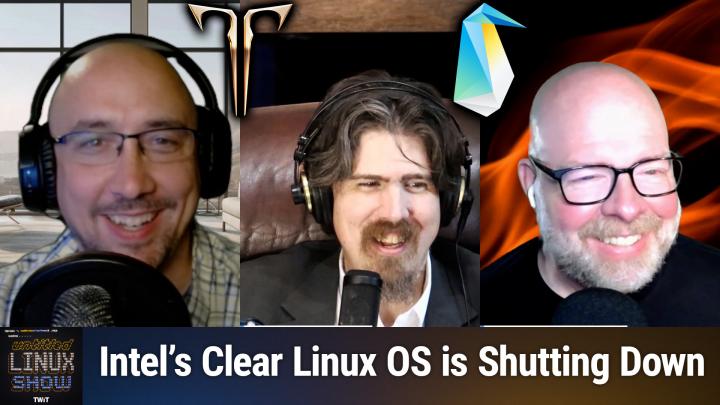
All TWiT.tv Shows (Audio)
Untitled Linux Show 212: Hipification
01:15:03
Encryption Bypass, Chrome Catch-up, and Distro Churn
Loading summary
Transcript247 lines
- [00:00]
Rob
This week we're talking about a sneaky encryption bypass in Linux, Init, ramfs, and then Debian is about to release a big update. AMD has announced more things with ROCM. We're celebrating Slackware's 32nd anniversary and morning the passage of Clear Linux. It's a lot going on and you don't want to miss it, so stay tuned.
- [00:21]
Jeff
This episode brought to you by Red Canary when cybersecurity threats hit fast, you need an MDR partner that moves faster. Red Canary delivers 24.7expert MDR support, total visibility and actionable insights. Plus it helps you detect four times more threats so you can stay ahead without burning out. Red Canary clears the noise and has your back every hour, every incident. Get the backup you deserve. Visit redcanary.com difference to learn more.
- [00:51]
Ryan Seacrest
Hey, it's Ryan Seacrest for Albertsons and Safeway. Now through August 12th. Get big savings on your favorite products for the little ones in the family and earn four times points to use for discounts on groceries or on gas. Shop in store or online for items like Earth's Best Yogurt Smoothie, Gerber Pouches, Happy Baby Pouches, Huggies, Natural Baby Wipes, pediasure Bottles, Earth's Best Crunchy Sticks, and Gerber Yogurt Melts, snacks and earn 4 times points. Offer ends August 12th. Restrictions apply. Offers may vary. Visit albertsons or safeway.com for more details.
- [01:22]
Host
And now a next level moment from.
- [01:23]
Ryan Seacrest
AT and T Business. Say you've sent out a gigantic shipment of pillows and they need to be there in time for International Sleep Day.
- [01:29]
Jeff
You've got at and T5G so you're fully confident, but the vendor isn't responding.
- [01:33]
Host
And International Sleep Day is tomorrow.
- [01:36]
Ryan Seacrest
Luckily, AT&T5G lets you deal with any.
- [01:38]
Jeff
Issues with ease, so the pillows will get delivered and everyone can sleep soundly.
- [01:42]
Ryan Seacrest
Especially you.
- [01:43]
Jeff
AT&T5G requires a compatible plan and device coverage not available everywhere. Learn more@att.com 5G Network.
- [01:54]
Rob
Podcasts you love from people you Trust.
- [01:58]
Jeff
This is TWiT.
- [02:03]
Rob
This is the Untitled Linux show, episode 212, recorded Saturday, July 19th. Hipification hey folks, it is Saturday and you all know what that means. It is time for the Untitled Linux Show. We're going to geek out over software and hardware. Probably some gaming thrown in there for good measure. Linux News the Linux Desktop stuff. All the Linux desktop stuff. Because 2025 is the year of something related to the Linux desktop. Maybe the desktop itself. We'll keep our fingers crossed. It is not just me though. We've got a couple of wonderful co hosts today. We've got Rob and Jeff and welcome guys to the show. We've got some fun stuff to cover.
- [02:43]
Guest
Appreciate the kind introduction.
- [02:45]
Host
Yeah, looking forward to a great show indeed.
- [02:48]
Rob
Now the first thing is an encryption bypass. Rob, what is up with this?
- [02:56]
Guest
Yeah, let's get the dirty stuff out of the way. So a new security vulnerability has been found this month. I say this month because it actually has. It was like July 3rd or something when this was posted by a security researcher he and it was published on insinuator.com by Alexander Moke Mock and we'll see H ad in them. The vulnerability affects many current Linux distros, but not all of them. For example, it affects Ubuntu 25.04. So that's you Jeff, Fedora42 that's you Jonathan, but does not affect OpenSUSE Tumbleweed. So if Ken were here, he'd be okay. So attackers with physical access to a Linux system can access a debug shell simply by entering the wrong decryption password several times in a row and gain access to debug shell, for example Ubuntu. They can hit escape and in the and at the password prompt, punch in a few keys, key combos and bam. Debug shell appears. So once in this low level debug shell, attackers are able to compromise even encrypted systems by mod in it RAM fs. So the initial RAM file system, which is a temporary file system run during boot to prepare the operating system. And you know, once they get in there, you know, the next time someone boots up, the system enters the correct password, whatever malicious code that the, the attacker wanted to put in there, you know, it's going to run with. I mean, if they set it up to run, it'll run with, you know, full elevated privileges and everything. And you know, and from there, you know, can do pretty much, pretty much anything and attack an attacker's program, programs the code to do, you know, steal passwords, put in some remote code, access really whatever, whatever they dream of. All they need to do is get this access. So that's the hard part because this, this can't be compromised remotely. Um, so it isn't the most catastrophic vulnerability in the world. And you know, as we often say, at least I often say, once, once someone physically has your system, it's, it's pretty much just a matter of time anyway. It's, it's owned. You know, once someone has physical access, they're, they're going to get in. You know, these, these things just make it harder for them to get in. So, you know, really the key thing here to think about, remember is physical security is, is very important in some ways just as important as like cyber security. I mean, maybe not just as. Because you got a whole world of people attacking you remotely when you're kind of limited locally, but it's important. So for those of you, if you want to protect your system, all you need to do is just, just tweak your system kernel parameters to ensure that the computer will reboot after a failed password attempt instead of, you know, providing that debug shell. So, you know, there's. It's not even really a bug, you know, from what, what I read, it's just more of an oversight, I guess is kind of how they put it. So. But it is a vulnerability. It's something someone could take advantage of. So if you're worried about that.
- [06:39]
Rob
Yeah, so it looks like I'm going through the article itself and it looks like one of the things that they suggest that you can do and I wonder how many distros do this by default is to consider encrypting the boot partition itself with the luks the Linux user. I forget what LUKS stands for. It's the Linux encryption stuff. But yeah, this is really clever to find that INIT RAMFS itself is not signed and then if you can get to it, you can do some nasty stuff with it. I have had to use I think the same debug shell that it is talking about. And so, yeah, I know, I want.
- [07:21]
Guest
To shut it off.
- [07:22]
Rob
Yeah, you want to be careful about shutting it off. If this is talking about the debug shell that I'm thinking of. One of the other things is you can't do anything with it if you don't have a root password. So maybe it's not the. Maybe this is. Maybe this is before the shell that I've interacted with. I've got a couple of encrypted laptops. I need to actually try this. You know, I've not installed the updates for this. I need to try this and see if I can get into some debug shell and figure out exactly where they're talking about. I would do it with this laptop, but it's kind of important right now. Just take a break and so go do security research.
- [07:55]
Guest
Yeah, or like Wizardling says, another way to protect your device is set traps around your PC.
- [08:02]
Rob
Human sized flypaper.
- [08:06]
Guest
Or human sized flypaper.
- [08:08]
Rob
That's great. Yep. Okay. Yeah, no Interesting stuff. This is something that I've done. One aspect of this, like I said, I've got the encrypted laptops. Something that really fascinates me that I've never gone through and set up and I'm curious if this also has the same weakness is the idea of doing encrypted servers. And when someone first asked me about that I was like, there's really no way to do an encrypted server. Well, there is. What you do is you have the tpm, give the OS the decryption key during boot and there are some distros that support doing that. I've never set it up, probably need to for a couple of different people, but it's not something I've done. Yeah, I'm very interested in this and watching what they do, what the Linux community and devs do to try to fix it. There is something else that another community is doing and that is AMD is doing some interesting stuff with rocm. And Jeff, I saw this story this week and I have no idea what it's talking about, so I'm glad that you picked it up. So take it away and inform us, educate us on what is going on with AMD and rocm.
- [09:17]
Host
Yeah, a little geekier story here, but it's been a few months since we last talked about AMD's software to rival Nvidia's CUDA. Now these are programs languages which are for science and engineering computation. CUDA is Nvidia's offering and it's been the front runner for a long time because of Nvidia's market share. But because it's proprietary, a person's also locked into the language and thusly locked into the hardware. You know, they have a tight ecosystem. You know, if you want to change the amd. That was hard. Well, this is where ROCM comes in, which is an open source toolkit to allow easy computational transitions and with the knowledge someone isn't locked into a single hardware vendor. So in you could go to intel for example and you know Nvidia is still in their wall. You have more freedom with rocm. And as an update to the AMD ROCM toolkit, they're releasing ROCKM ls. Now this is in the early stages so the developers can get feedback on errors and things they need to change. But you might be one what is ls? So the developer said the early access release release of ROCM LS enables you to experiment with accelerating your life science. There's LS workloads such as Digital pathology, automated medical image analysis, feature extractions and enhancements in large tiff files on AMD indistinct GPUs. So they said join us for exploring this tantalizing glimpse into the future capabilities of ROCM LS setting the stage for the next evolution in a life science computing. Now, not only did ROCM LS come out where at least evaluation they also introduced HIP cim. HIP CIM is an open source GPU accelerated software library which enables computer vision and image processing operations for multi dimensional image data sets. So it can enhance tasks such as color conversion, feature extractions, filters, morphology, segmentation transformations for n dimensional images. HIP CIM maintains AI API compatibility with Nvidia's CUCIM library. So it's kind of its Nvidia counterpart and they have a lot of compatibility so you aren't locked into a certain green walled garden and it enable thus enabling integration and transition of existing workloads to AMD GPUs without the need for and I love this word AMD uses in their documentation hipification, Meaning you don't have to just decide you're going AMD and rewrite everything to hip. It's API compatible, so what you're running now will. Will transfer. So that's, that's where that word comes from, meaning you don't have to go through and rewrite it to him. I do want to note that, you know, when you're looking in data science and engineering, the data isn't always linear. It can have several dimensions depending on the complexity of what you're looking at. So meaning there are special tools needed for this advanced analysis. So when, when you hear more than like three dimensions, you're thinking why is. How is this don't think spatial three dimensions. Think of like complex analysis type mathematics. So it's, it's more they say dimensions but it's more abstract than the, you know, height, width, depth that we think of. Take a look at the article linked in the show notes and see if this is something you would want to get early access of and try it out on the workloads that you deal with. So any life science people out there, this could help you. The article also has a link to the AMD blog inside that which goes into even more detail and gives more information on the documentation, the specifics on how to get into the early access, you know, programming it. There's a ton of information if you want to get in there, it's all there. So take a look at the article and if anybody's in Life science and is going to try this. I would love to hear a real.
- [13:58]
Ryan Seacrest
World.
- [14:01]
Host
Evaluation of how they're doing.
- [14:04]
Rob
Yeah. This is interesting that AMD is trying to push into all of these different places where Nvidia sort of reigned supreme for so long and this into the research area here. On one hand there's an obvious business case for this but I kind of wonder the life science realm, how big can it be? I immediately think of this as being just sort of the academic world and is it really worth it? I guess you would have. Pharmaceutical companies might be making use of this sort of thing. So a little bit more than just.
- [14:43]
Host
Academics, microbiology type things. There's a. There's a lot. The field is pretty wide. I. I didn't know how wide till my daughter is getting her PhD in.
- [14:58]
Rob
That's right.
- [14:59]
Host
In biology. Yeah, yeah. Molecular biology. And it. There's a lot to it. So there's. There's many, many facets and the modeling for each science pathway I guess I mean if you're doing fluid modeling it's different than a biological modeling or meteorology or you know there's specific things based on your workload. So that's why they have these specialized.
- [15:32]
Rob
I wonder, I wonder if this will make it possible to do things like folding at home using AMD hardware in the future.
- [15:43]
Host
Very, very possibly. Actually one of the developers is. So I, I think I. If you're newer, I do folding at home and that's one of the reasons I have Nvidia on cards because Nvidia does so much more. But they actually have one of the developers on the forums I'm on and it's. They're making strides and they're actually working to have a ROCM implementation of folding at home that is on par with the CUDA interesting implementation.
- [16:18]
Guest
I did not know that was a requirement of those folding at home and I suppose the SETI stuff.
- [16:26]
Rob
Well, I mean a lot of them are built on top of cuda so.
- [16:28]
Guest
Yeah, I didn't know that. I didn't know much about. I knew, I knew, I knew it was a thing and it's helped crunch the data and well said he find stars and folding at home hopefully, hopefully finds cures.
- [16:42]
Rob
Yeah see idea. Yeah right. Yes sir.
- [16:47]
Host
Well, I was gonna say and it just keeps making strides all the time. So keep, keep. We'll keep checking back and once they hit somewhat parody I'll let everybody know here it'll probably be a story we'll do and just because it's kind of one of my sort of hobbies to get into folding at home.
- [17:05]
Guest
That'll be the story of when you switch to amd, huh?
- [17:09]
Host
Possibly.
- [17:10]
Guest
I look forward to it.
- [17:12]
Host
Well, kind of site. Quick side note here. There's rumors that the next AMD hardware coming out could be pretty powerful, the next gen stuff. But. But you know, you hear a lot of that all the time too.
- [17:25]
Rob
And I was going to say, I think we hear that rumor about every three months.
- [17:29]
Host
Yeah, we'll see.
- [17:30]
Rob
But the last generation was not terrible. It was actually pretty decent. All right.
- [17:35]
Host
I just watched a Jay's 2 cents video that he was talking to Micro center people and hands down, the AMD cards are going out the door faster than the Nvidia stuff.
- [17:46]
Rob
I can believe it. I can definitely believe it.
- [17:49]
Ryan Seacrest
Hey prime members, Are you tired of ads interfering with your favorite podcasts?
- [17:54]
Host
Good news.
- [17:55]
Ryan Seacrest
With Amazon Music you have access to the largest catalog of ad free top podcasts included with your prime membership. To start listening, download the Amazon Music app for free or go to Amazon.com adfreepodcasts that's Amazon.com adfreepodcast to catch up on the latest episodes without the ads. Hey, it's Ryan Seacrest for Albertsons and safeway now through August 12th. Get big savings on your favorite products for the little ones in the family and earn four times points to use for discounts on groceries or on gas. Shop in store or online for items like Earth's Best Yogurt Smoothie, Gerber Pouches, Happy Baby Pouches, Huggies, Natural Baby Wipes, Pedia Shore Bottles, Earth's Best Crunchy Sticks and Gerber Yogurt Melts, snacks and earn 4 times points. Offer ends August 12th. Restrictions apply. Offers may vary. Visit albertsons or safeway.com for more details.
- [18:46]
Rob
Okay, well let's talk about something else that is going out the door that unfortunately is not one of our co hosts. No, for the intel fans among us that is unfortunately Clear Linux. We got a couple of links in the show notes. One is the first one, the top one. The top link is to the Clear Linux community forums and this is Arjan Arjan, one of the Clear Linux devs. Apparently someone with admin there making the statement that after years of innovation and community collaboration they are ending support for Clear Linux os. So for those that used it, it's a sad day. Now there is a surprising detail here and that is effective immediately, intel will no longer provide security patches, updates or maintenance For Clear Linux OS and the Clear Linux OS GitHub repository will be archived in read only mode it goes on to say, so if you're currently using Clear os, we strongly recommend planning your migration to another actively maintained Linux distro as soon as possible. I thought Red Hat was bad when they pulled this with CentOS. So it's not terribly surprising for those that have been paying attention to intel and the problems there. And in fact the second link that I have attached to this is the Pharonix article. Michael Larabel over at Pharonix sort of has his finger on the pulse of some of this. He gets some insider information, I do believe, and he has, he has been documenting where a couple of prominent Linux engineers have left. Intel are no longer there. And so this is sort of not surprising that as intel is restructuring and trying to trim down to be able to become profitable again, they're having to look for some of these places to be able to cut down on what they're doing. And it is unfortunate though that they are. It was a surprise, surprise. It was a surprise announcement and they are immediately ending support. So if you've got a server deployment that was running Intel's Clear Linux, your hair is kind of on fire right now. I mean, this is the bad deal. You have no more security updates coming. So yeah, it's not great. It's not terribly surprising, but it's not great. One of the real interesting things to watch is going to be where are people going to go? The ones that were actually running on Clear Linux, where are they going to jump to? OpenSUSE, Tumbleweed, Red Hat, one of the Red Hat derivatives. We'll see. Maybe we'll get some stats on that.
- [21:31]
Host
I'm thinking Cashe os.
- [21:34]
Rob
Yeah, but to be fair, those who.
- [21:36]
Host
Don'T know, Clear Linux was always kind of an experimental distribution. It was kind of a, it wasn't a general purpose, it was tuned for more enterprise work. And I don't know if it was widely adopted for server use outside of kind of niche.
- [21:55]
Rob
Yeah, it was sort of Intel's playground to try out new things and see what it would do. But I know that it was one of the distros that would always have interesting results in benchmarks and a lot of times they were interesting because they were faster results. Not always, but yeah, it was sort of that, that playground for Intel.
- [22:16]
Guest
It's always very niche, but it's, it's kind of nice to be there because it often outperformed. Even on amd, it would outperform. I wonder how hard it would be. I don't know. I mean, obviously it's open source But I wonder how readily available the source is for someone if they wanted to fork it now forking it, they probably, you know, no one, no one's been able to match their performance at least in the places where, where they had the great performance. So if somebody forked it it would probably be only for the sake of keeping security updates and keeping it going for people because I'd imagine if someone else took it on, they may not achieve the same performance results in the future on their own.
- [23:04]
Rob
Yeah, it would be two things would happen, right? So like as time goes by you would, the performance delta would change because you wouldn't have the intel engineers there continuing to push the envelope. I think it would also be a challenge to keep up with it on like the security and updates front if it was not a pretty large group of people working on it. I almost think you would have to have another. Okay, hear me out, hear me out. AMD should fork it.
- [23:39]
Guest
That would be awesome.
- [23:41]
Rob
Opaque Linux, if you're listening Lisa Su AMD should fork Clear Linux and carry.
- [23:50]
Host
On the banner Crystal Clear Linux.
- [23:53]
Rob
There you go. Crystal Linux, which call it Crystal Clear.
- [23:57]
Host
Well, my understanding too there wasn't. That wasn't necessarily a ton of software that they'd written for it. It was more like compile time switches. It was, you know, optimizations, tuning, that kind of stuff for.
- [24:11]
Rob
Yeah, I think, I think probably some experimental patches were landing there because one of the articles I saw about it, it talked about those things eventually making it upstream and over into other, other distros. But yeah, I think you're right. I think a lot of it was.
- [24:24]
Host
Just tuning well, I mean and they would, they would adopt patches early but it was, it was stuff that was kind of already out there in the community. Like it wasn't a ton of secret sauce. It was if, if you so desired you could, you could do it yourself. And that's where you know, Fedora and Ubuntu this last year have been. Hey, we should, you know, raise the level of our compiler optimizations. Let's do a bunch of this. You know, they were kind of looking at tuning like that because Clear Linux always would win the benchmarks but it was not user, you needed to be more of an advanced user kind of know what you're doing to was was.
- [25:02]
Guest
Clear based on anything. I mean I read the performance reports but never, I never tried it out myself. I'm assuming Red Hat based I'm going to guess, but maybe not. I.
- [25:15]
Rob
The AI says that it is not a fork of another Linux. It is an independent Linux distro. I don't know if that's true or not.
- [25:25]
Guest
Yeah, I mean it could be a warning issue there. I mean fork.
- [25:30]
Rob
Okay, from the clearlinux.org FAQ the robot got it right. Is it a derivative of another Linux distribution? No, Clear Linux OS is a new Linux distribution. It is not a fork and does not have a parent Linux distro.
- [25:46]
Guest
But does it have like, does it use package management from another one and does it have like a file directory structure that's matches another one where I. What I'm really getting to is I wonder how hard it would be for somebody to find a comparable Linux and have a migration path where maybe just change the sources over update and so.
- [26:12]
Rob
As of 2020 it used SWUP D SWUFD.
- [26:17]
Guest
Oh wow, so that is unique.
- [26:19]
Rob
Yes.
- [26:20]
Guest
Yeah. Time to break out the ISOs and do a fresh install.
- [26:25]
Rob
Yes. I don't know, maybe give it a week or so and see if somebody comes along, somebody reputable comes along and forks it.
- [26:32]
Guest
I mean I. Yeah, no one forks. I suppose somebody could, you know, grab a package manager and you know, compile it for and say all right, install this, change the sources and that'll be close enough. And now you're running whatever.
- [26:47]
Rob
Yeah, yeah, not quite the same.
- [26:50]
Guest
Probably time to wipe and reload.
- [26:52]
Rob
Yes. All right, so that was in. Yes, Jeff.
- [26:56]
Host
Well, I was going to say I just put a posted in the show notes the distrowatch page to clear Linux so it'll tell you all the program versions, what it was based on, all, everything.
- [27:09]
Guest
So can we not download it anymore then? I can't quick try it to find out at the end.
- [27:15]
Rob
I mean, so they did not yank their GitHub page, they just are putting it in stasis as it were.
- [27:23]
Guest
I better get that ISO real quick here.
- [27:25]
Rob
Yeah, start downloading now.
- [27:27]
Guest
I am.
- [27:28]
Rob
If Rob starts sounding robotic, it's because he's downloading Clear Linux. Yeah, it looks like on clearlinux.org it's still there. They've not pulled, they've not yanked it and completely. They've not scrubbed it off the Internet.
- [27:42]
Guest
It looks like they still have their downloads page open. Yeah, a lot of different ones to choose from. I don't know what to choose now. I need to get them all over.
- [27:50]
Rob
Overwhelmed. Overwhelmed by choice.
- [27:52]
Host
Well, and the if anybody. The distro watch page that I put in there, it's got like the user forums, mailing lists, the mirrors, all the information you'd ever want.
- [28:05]
Rob
Oh indeed, absolutely. All right. So that is clear Linux that is obviously tuned for intel and to a lesser extent amd on x86 64. Rob is going to tear himself away from looking at clear Linux and he's going to tell us about Linux distros for another architecture.
- [28:28]
Guest
I'm busy here. I'm trying to get an ISO. Come on. Can't let me.
- [28:34]
Rob
No, we can't. We had a show to do.
- [28:36]
Guest
All right, I'll get this part done so I can get back to my. This is important stuff. So some good news and some bad news about Linux on RISC V specifically with Ubuntu, but they're kind of the leaders when it comes to Linux on risc. Voice kind of been pushing the way. So if you are running Ubuntu on one of the older RV20 RISC V boards, and I say older, you'll find out if you run one of them, you're going to be stuck on Ubuntu 24.04 forever. Which according to Marius Nestor is 90% of the RISC V devices out there. Because Ubuntu 25.10 will only support the RVA 23 profile or newer. This even includes many recent boards. So I did cross reference this between a few articles. But you know, this may sound bad and sure kind of sucks for those of us with the RVA 20 boards. You know, I got one I haven't even touched yet and I know Jonathan has at least one. But you know, like, like, like is kind of point out some of these were really primarily intended for use in development and embedded systems and you know, with specific task scenarios. It's, you know, it's not going to work well as a general purpose desktop PC. You know, the RV20 boards though, it can obviously with limitations, but it's not, it wasn't never really quite there for consumers. So you know, stepping back a little bit. In October 2024, RISC V International announced the ratification of the RV23 board. So that's not even a year old yet. So the, the profile standard which promises to further accelerate RISC V software ecosystem by providing a platform target that ensures compatibility across RISC V implementations. So yet today, even though it's been almost a year, according to Joyce Netton, RVA 23 capable devices aren't even on sale yet. So I'm not quite sure where Marius nestor got the 90% number from. Seems like 100 to me. But I don't know most of them, pretty much most of us. But you know, anyway, once they're available, this is going to surpass even the fastest, most priciest RVA20 boards on the market today. So raising that profile requirement, it's going to raise the bar on what users can expect. And Ubuntu wants to meet this bar and provide a fully functional desktop session on RISC v. So the RVA 23 profile standard includes a hypervisor extension to enable virtualization for enterprise workloads, a vector extension that will accelerate math intensive workloads. It's going to include AI, you know, machine language, cryptography and compression and decompression. With this change, Ubuntu will be able to provide a full desktop experience supporting applications like Firefox and Thunderbird. Apparently I don't think they're supported as my understanding is, which are. And these are still being used in the default web browser and then email client for the upcoming Ubuntu release. So they're going to be able to have them on RISC V, a full, a full desktop experience like, like the rest of their Ubuntu distros or Ubuntu releases. So Ubuntu 25.10 will. It's also going to have the ability to detect if you are running RVA 23 or 20 or 23 architecture and block those devices that aren't supported from upgrading. I'm sure someone's going to find a way around that and keep their systems updated. I know, probably. But you're still not going to be able to run those things that aren't supported on there, like Firefox. Maybe you should compile yourself. I don't know. But most of these RISC V devices are still just, you know, using them for toys anyway. So maybe soon it'll be time to really get serious about RISC V on, you know, our desktop or our laptop or in the Framework laptops or wherever. Maybe pretty soon it's going to be a serious device for us and not just little embedded systems or fun development tools.
- [33:28]
Rob
Yeah, so I have a, I have a couple of thoughts here. One, the question about whether it's 90% of these don't support it or if the thing's not out at all yet. What makes RISC V interesting is that it is sort of intentionally a small group of instructions and then they sort of encourage vendors to add instructions to the architecture. And I suspect what has happened is you've got vendors have added sort of a common, bit of a common of instructions that then has gone on to be the RVA 23. And so some of these Boards, I'm sure already have the vector extensions and maybe not data run hypervisors.
- [34:07]
Guest
Yeah, they're not officially RVA. Not officially RVA 23, RVA 20s that have more features that basically make them.
- [34:14]
Rob
They've got enough of it to be able to run. Yeah, but this has been, this has been a problem with RISC V. This has been. One of the things that has held it back as an architecture is that it's been so flexible that the distro makers have not been able to really turn. Turn the knobs on the. The compilation and, you know, do better tuning and all of that, because they've been supporting all of the boards that are out there they can support. So, you know, it's, it's coming. Give it another couple of years and it sounds like we'll have a bunch of way better, way more useful RISC V boards. Not to say, not to say that you can't do interesting stuff with the boards that are out there, but as like desktop or laptop boards. It's coming, Jeff.
- [34:59]
Host
I wonder if that has something to do with Global Foundries wanting to purchase RISC V we talked about last week.
- [35:08]
Rob
That's true.
- [35:09]
Host
I mean, they might be this oomph behind it. Just to say, hey, now we're going to have an operating system. Hey, these are going to be more useful. We're, you know, they're planning their roadmap ahead.
- [35:21]
Guest
Sure. It was ratified almost a year ago. I mean, like nine months or something.
- [35:26]
Rob
Yeah. It's interesting timing, though.
- [35:30]
Host
That when you said the statistics, I thought of the old Joe Isuzu commercial where he's like, you know, 30 of statistics are wrong. And somebody said, really? He goes, yeah, half the time.
- [35:42]
Guest
Yeah, I. There's one that I've like. It's. I've heard like, I mean, you could make whatever number you want, but, you know, 75% of stuff statistics are made up.
- [35:50]
Rob
Made up on the spot. Yes, I like that one. Use that one quite a bit. All right, Jeff. Somebody's got a birthday.
- [35:57]
Jeff
Whether you're into comedians roasting each other's life choices or turning yesterday's bad decisions into today's funny stories, Amazon Music's got the most ad free top podcasts included with Prime. Download the Amazon music app and get in on the joke or go to Amazon.com ad freecomedy that's Amazon.com ad free comedy to catch up on the latest episodes without the ads.
- [36:24]
Ryan Seacrest
Hey, it's Ryan Seacrest for Albertsons and safeway now through August 12th. Get big savings on your favorite products for the little ones in the family and earn four times points to use for discounts on groceries or on gas. Shop in store or online for items like Earth's Best Yogurt Smoothie, Gerber Pouches, Happy Baby Pouches, Huggies, Natural Baby Wipes, Pediasure Bottles, Earth's Best Crunchy Sticks and Gerber Yogurt Melts, snacks and earn 4 times points. Offer ends August 12th. Restrictions apply. Offers may vary. Visit albertsons or safeway.com for more details.
- [36:54]
Guest
Today we'll attempt a feat once thought.
- [36:57]
Ryan Seacrest
Impossible, overcoming high interest credit card debt.
- [37:01]
Guest
It requires merely one thing, a SoFi personal loan.
- [37:05]
Ryan Seacrest
With it, you could save big on interest charges by consolidating into one low fixed rate monthly payment.
- [37:11]
Guest
Defy high interest debt with a SOFI personal loan.
- [37:15]
Ryan Seacrest
Visit sofi.com stunt to learn more.
- [37:18]
Rob
Loans originated by SoFi Bank NA member.
- [37:20]
Ryan Seacrest
FDIC terms and conditions apply.
- [37:22]
Host
NMLS 696891 yeah, let's have a little happy news. You know, something pretty, pretty joyous. So July 16th this year was the 32nd birthday of Slackware Linux. It's one of the oldies but goodies in the Linux world. It started back in 92 with Patrick Volkerding. Hope I said that right when he became the BDFL or benevolent Dictator for life. Like a lot of Linux world, it came about because of a need where custom software had to be written. In this case, Patrick was a student getting his Bachelor of Science in Computer Science and needed an interpreter. Linux is where he could find that requirement. But when using sls, which was Linux from soft landing systems, he found a lot of bugs and kept having to write code to fix those issues. Like any good developer, he took all those fixes, merged them together and gave them to his friends so they could enjoy a less buggy experience as well and they didn't have to write their own bug fixes. Well, these bundled bug fixes quickly gained in popularity and soon became Slackware, where it was then available to the general public. Officially, Slackware 1.0 came out in July 16, 1993 and you know, Slackware is the oldest Linux. Is Slackware the oldest Linux distribution? No, but it is the oldest one that's still maintained, so anything older is not fully maintained anymore. Slackware is the longest surviving that we have. A lot of what we take for granted today started with Slackware, such as making a user friendly install by having a menuing system. Package management also started, you know, basically to make things easier for the users. Now it was, it was Been refined a lot over the years, but this is kind of where some of this stuff started. So while a lot of Linux distributions have a philosophy they're based on, Slackware started with theirs being simple, solid. The saying for the distribution still is still simple, still solid, still Slackware. Now something that sets Slackware apart from others is the release cycle. There's no target date. When it's ready, then the next version is released. There's no artificial deadlines, nothing, you know, schedule they've got to hit. When it's done, it is done. The article in the show notes does go on to say that Slackware might not be for everyone because they, they try and keep it Unix like and not Windows like. So they've never tried to be like Windows to attract Windows users. They wanted to stay more like the old Unix like think more aix, you know, the, the heavy Irix, the, the more heavy duty Solaris, the heavy duty Unix distributions. Not to say it's not very approachable, but this is not the distribution probably for mom, but if you've played around with Linux a little bit, oh yeah, give Slackware a try. It does have a high user satisfaction rate and you know, it must still, it must be because if it's still growing raw strong after over three decades, you know, there's something there. People, people love this and are dedicated to this now there are a lot of details I left out for the sake of brevity, which they're in the article in the show notes. So take a look for a much deeper dive into, into Slackware. There's a lot more backgrounds and stories and yeah, it's, it was just we'd, we'd have a three hour show here. So take a look at the article and Happy birthday Slackware. And here's to many more to come.
- [41:17]
Rob
So I have a question for you. You've kind of done a dive into this, prepping for this. Is Slackware still alive? And I made sort of an offhanded comment in one of the shows I did because you go to the Slackware page and the last blog post is from 2022. You go and you look up Slackware 15 and it was released back in February of 2022.
- [41:41]
Guest
The next version is released when it's ready.
- [41:44]
Host
Yeah, I thought when I looked this.
- [41:47]
Rob
Up.
- [41:50]
Host
It was much earlier than that.
- [41:54]
Guest
Yeah. So I, I really think the only reason you brought this up is you want more coffees donated. Since the last time we did get coffees donated for mentioning Slackware.
- [42:04]
Host
Yeah, it's got an active status and the current release is 7 19, 20, 25, at least by Distrowatch.
- [42:17]
Rob
Yeah, so they're still on 15.0, but they are updating packages and that one is apparently 5 that was running the kernel 5.15.187. So they picked one of the long term support kernels and then they do also have their development branch, the Slackware current, and it's running a 6.12.25 kernel. So yes, it is actually still alive.
- [42:42]
Host
And it shows a lot of the most recent packages. But if you're a QT user, you know, you like kde, they are behind on kde. XFDE is more up to date. It's. It's the cutting edge.
- [42:58]
Rob
That may be the first time someone has ever called XFCE cutting edge.
- [43:04]
Host
Well, cutting edge for XFCE because they're still very X11 based.
- [43:09]
Rob
Indeed.
- [43:10]
Guest
So Slackware was my first distro that I ever used like 26 years ago about. So also, I really, I wanted to bring this up even though people who listen regularly already know this, because I, I said this last time, but you, you totally skimmed over some of the important stuff here. This was a Minnesota project. You said he went to college. You did not mention that he went to Minnesota State University, Moorhead, which is my state where I am.
- [43:44]
Rob
So, yeah, doing a little pride.
- [43:47]
Host
Well, I wanted to have an open, active discussion. So I thought, well, yeah, Rob's gonna jump in here. So I just did it for the show.
- [43:56]
Guest
F is Minnesota.
- [44:04]
Rob
Yeah, he's from Minnesota.
- [44:06]
Guest
Well, I don't know if he's. I can't remember now if he's from Minnesota, but he went to college here.
- [44:11]
Rob
So it's enough to claim him.
- [44:13]
Guest
Huh. And which is right at the same time he developed this. So essentially he developed Slackware in Minnesota.
- [44:19]
Rob
In Minnesota. Well, there you go.
- [44:20]
Guest
It's a Minnesota project.
- [44:22]
Rob
All right. Well, if you folks are looking for something on the other side of the coin, you don't want a Release from Twitter 2022 and you want something that's running Wayland a little bit more up to date. Well, there are plenty of distros to try, but there's a new toy coming for us and that is in the form of Google Chrome and all of the other chromiums finally catching up to Firefox and going to start serving HDR under Wayland. So I've got a link here to the Pharonics coverage and then there's a link there to the Chromium code review. And I have not spent a whole lot of time looking at Chromium code, so I don't necessarily know how to read all of this, but there is a patch set out there now for doing HDR in Chromium, and the note says that it does work. The author says, I verified HDR video playback is working on KDE Plasma 6.4.2, and a Wayland Color Manager V1 feature flag is added and enabled by default. Interestingly so, for those of us that are sort of on the HDR bandwagon in Linux, Chrome is finally catching up. And I say that because I have myself finally updated to a more modern version of kde. And HDR inside of Firefox actually works really well these days. I find it very sort of amusing and interesting that Firefox beat Chrome to the punch on this, and it's been neat. But it will also be a good thing for Google Chrome and Chromium, all the Chromiums, to finally catch up and have HDR support on Linux, on kde, KDE in particular. I think GNOME is also right there with it as far as supporting this. I have now this crazy idea and that you guys may know. Can you run Edge in Linux? Has somebody made that work?
- [46:30]
Host
Yes.
- [46:30]
Guest
Yeah, you can.
- [46:31]
Rob
Yeah, that's right. You use it.
- [46:34]
Guest
Yes.
- [46:34]
Rob
I knew there was something wrong with you. That's right. I remember that now. You said that before. You use it. So it'll work in Edge. We'll have HDR in Edge on Linux before you know it. What a day that'll be. That's something amazing. Yeah. What's the world coming to?
- [46:54]
Host
I don't know how to use Firefox. I'll be last to know.
- [46:57]
Guest
You don't know how to use Firefox? What?
- [46:59]
Rob
I mean, if you have an hdr.
- [47:00]
Host
That'S what I use. I don't use Chrome.
- [47:01]
Rob
Firefox works right now.
- [47:03]
Host
Oh, it's got HDR now.
- [47:05]
Rob
Oh, yeah. Were you not listening I said that?
- [47:08]
Host
Oh, I missed that one.
- [47:10]
Guest
Do you have an HDR monitor, Jeff?
- [47:14]
Host
I don't. So I. I haven't been paying a ton of attention to HDR stuff just because I don't have a monitor to.
- [47:21]
Guest
Yeah, I do. I finally bought one earlier, well, sometime this spring. So I do have HDR monitor.
- [47:27]
Rob
Have you actually made it work with Linux?
- [47:29]
Guest
I haven't really tried. I didn't really buy it for the HDR stuff. I bought it because it's big and.
- [47:36]
Host
Yeah, I got a nice ultra wide right now and I, you know, I. It's. Yeah. It's a few years old, but it still looks great. I really hate to, I don't want to.
- [47:46]
Rob
I would tell you, you're trying to get like HDR and some of the other things that you would want on an Ultra wide. It's going to be expensive. Yeah, the sweet spot for, for not paying, you know, multiple thousands of dollars right now is to just get an OLED tv because if it's a monitor and it's got, you know, Good HDR and FreeSync and all of that, because it's a computer monitor, they double the price for it.
- [48:12]
Guest
I thought I saw ultra wide HDRs under a thousand still like double what mine cost. But when I, when I was looking.
- [48:21]
Rob
When I went looking, I could not find the, the combination of specs I was looking for, I could not find.
- [48:26]
Guest
Oh wait, no, I was, I don't know. Actually, I don't know about Ultra wide. Now that I think about it, it wasn't ultra what I was looking at. I was debating on curved or flat. That's what it was. I think.
- [48:37]
Rob
Yep.
- [48:37]
Guest
Maybe I saw Ultron.
- [48:38]
Rob
I can't remember now.
- [48:39]
Guest
That was, that was like four months ago.
- [48:41]
Host
I like my curb monitor, but to me, I like curve monitors. I don't like curved TVs because a monitor is just a single user. So you can base that arc where you're.
- [48:53]
Rob
Yeah, you're sitting closer to it. It doesn't make nearly as much sense for TVs.
- [48:56]
Guest
Well, when you have no friends, lots of times TV is also a single user experience.
- [49:02]
Host
We have a community here. We're all friends here.
- [49:08]
Guest
With me though, I'm sitting here trying.
- [49:10]
Host
To come over once in a while.
- [49:11]
Rob
Sitting here trying to think when was the last time someone actually came into my house that was not my family? That's been a long. Oh no, I remember we didn't watch any TV together though it wasn't that long ago.
- [49:22]
Guest
Besides my kids, friends.
- [49:25]
Host
And a side note, if you're thinking, oh, tv, I don't know, someone, a tv. The difference between a monitor and TV these days is a little analog box that lets you plug in old analog NTSC signals.
- [49:37]
Rob
There's potentially one other difference and people need to be aware of this. HDMI input versus DisplayPort.
- [49:44]
Guest
A lot of TVs have DisplayPort though.
- [49:46]
Rob
That's true, but you want to check because particularly if you're running amd, the HDMI consortium are boogers and have refused to allow AMD with the open source driver to send the. What is it? HDMI 1.3 2.1. I forget that. I forget the actual, the actual specification, but so you can't run for example, 120Hz FreeSync, HDMR, HDR4K all at the same time. Something has to give and yeah, it's not great. This is one of the few things that I really dislike about my TV monitor behind me. So to be able to get all of it to work at the same time, and I'm not sure I even have all of it, but to be able to get it to work, I'm actually running a DisplayPort to HDMI dongle, which would be okay except about 30% of the time when the computer wakes up, the TV does not. And so I have to go in and like twiddle a setting, set my refresh rate from 120Hz to 100Hz, wait for the TV to wake up and then set it back and then it'll work. And it's because that little dongle gets confused.
- [51:05]
Host
It drives me nuts.
- [51:06]
Guest
Yeah, I've seen dongles mess up things like that.
- [51:09]
Rob
So if you're going to get a TV to use with your Linux desktop, especially if you have AMD DisplayPorts, look for the DisplayPort. All right. Rob has an idea for something else that we should be looking for or making sure to not look for. 4 what's going on?
- [51:27]
Guest
So it's a good thing that only Office is starting to get really good because I think it's finally time to ditch LibreOffice as they have gone completely bitcoin bro on us. Bitcoin, cryptocurrency, NFTs all dumb. You know what, what form of productivity are we creating with crypto? All the hard work computers did to mine crypto and nothing for but an algorithm.
- [51:59]
Rob
It's.
- [51:59]
Guest
It's like the weirdest form of gambling to me. But anyway, that's just my opinion and let's move on to the facts of what is actually going on here. So. And okay, it's not maybe as bad as Rob.
- [52:15]
Rob
I've gotta, I've gotta break in Rob and tell you some good news just real quick. The world has moved on. We're not wasting cycles on cryptocurrency anymore. Now we're wasting on LLMs so you can feel a little bit better about the world, I guess as a result still make money. Continue.
- [52:34]
Guest
Yeah, anyway, it's not as bad as I made it sound. So LibreOffice has Bitcoin BTC as a currency now within their program, so. So now you can label your currencies and your spreadsheets as Bitcoin. You know, I guess if you're, you know, doing some bitcoin trading and you can track all that transactions in your, in your labor office spreadsheet now because you can, you know, put that on there or something anyway, whatever, but, but that brings up the question, what about all the other currencies like Dogecoin, Is that in there? Honestly, I don't know. I don't know what else there's besides Dogecoin and Bitcoin, but I think there's more out there. I, I just don't really care. But it's not my thing.
- [53:23]
Host
But.
- [53:25]
Guest
But you know what? Maybe it may be a better feature to cover kind of all those things or whatever comes in the futures is, you know, whatever made up currency you want. Just, just have the currency kind of openly configurable. So you can put anything you want. You could say, well this makes the currency. Now you just configure it. Boom, you're done. It's whatever you want in there. But anyway, so there you have it. Bitcoin Bros. You can now label your, your numbers currency as, as being Bitcoin and LibreOffice. One less thing. One less thing because Microsoft Office already has one. Now there's one less thing keeping you from moving away from Microsoft Office. Oh, and I don't know, you think maybe the European mass migration away from Microsoft had anything to do with this? Maybe it's to get, I don't know, some other currency is there?
- [54:19]
Host
I don't know.
- [54:21]
Rob
Very doubtful, very doubtful that that has anything to do with it. I got to say, Rob, you wound us up there at the beginning for what basically amounts to adding the Bitcoin Unicode character to the program.
- [54:35]
Guest
Yes.
- [54:37]
Rob
If you go and you look at the patch, it's like five lines and that's basically what it does. It adds Bitcoin Unicode.
- [54:43]
Guest
Yes, I know there's a lot of people out there. I have some friends who will be really excited about this. And now they'll be able to use a new spreadsheet program.
- [54:53]
Host
Versus having it just unitless before.
- [54:57]
Guest
Yeah, we can't do that. Ever notice how ads always pop up at the worst moments? When the killer's identity is about to be revealed during that perfect meditation flow On Amazon Music, we believe in keeping you in the moment. That's why we've got millions of ad free podcast episodes. So you can stay completely immersed in every story, every reveal, every, every breath. Download the Amazon Music app and start listening to your favorite podcasts. Ad free included with Prime.
- [55:34]
Ryan Seacrest
Hey, it's Ryan Seacrest for Albertsons and safeway now through August 12th. Get big savings on your favorite products for the little ones in the family and earn four times points to use for discounts on groceries or on gas. Shop in store or online for items like Earth's Best Yogurt Smoothie, Gerber Pouches, Happy Baby Pouches, Huggies, Natural Baby Wipes, Pediature Bottles, Earth's Best Crunchy Sticks, and Gerber Yogurt melts snack. Earn four times points. Offer ends August 12th. Restrictions apply. Offers may vary. Visit albertsons or safeway.com for more details.
- [56:05]
Rob
All right, so let's go from Bitcoin to yet another way to waste our CPU cycles. Jeff it's not wasting.
- [56:16]
Host
It's not wasting. Entertainment is good for your health, so this is valuable health information. So the story I have today is a kind of a two parter now I was looking through my Linux feed and I noticed a story which is linked in the show. Notes Lost Ark from Amazon is able to run on Linux and Steam OS because they have the anti cheat setup now for Linux. This game's been around since 2022 and for the longest time it was not able to run on Linux because of the anti cheat software or it would, you know, historically it would run for a little bit and then Amazon seemed to turn it off and you know, kill the Linux support. And so it had run before but it was kind of sporadic. Well the Gaming on Linux website talks about running it on Proton 9.04 and it ran great. No special setups, just fire up the game and play. Which is always nice when they just work, which a lot of games do. But anti cheat ones are little hit and miss and you know, special setups can be a little more fragile when there's future updates both on the Linux side, Proton side, the game side, you can have some issues. You got to go in and tweak some settings. But here the reason I did this story though is not because of the game itself. I've not played it so I can't comment on how good or bad it is. I I don't know. But what it did do is got me thinking of anti cheat software in Linux and how some of it works and some of it doesn't. You know, it's hard to know which games are supported and which ones aren't. Well in the bottom of their story they say their anti cheat database page has been updated. This is what really caught my attention. Someone's already been cataloging which games work and don't with Anti Cheat. Well clicking on the link took me to a new page with a a kind of a donut chart greeting me right in the read right in the top there saying 99. They have 99 games which work, 59 which are broken and there's three which only work on the Steam deck. Now below that the information there is a list of which games have had their latest updates. For example, you know what we just talked about Lost Ark. It wasn't the first one. Now looks like there's a unmasumi pretty derby. I have no idea what that is but it was updated just two days ago as the time of the story and it was updated saying it now works. So there's a link to the game on gaming on Linux with a lot of information like the platform, the release date, the publisher, the anti cheat program used and much more. The database though doesn't just give the name, it gives what works or doesn't work the icon and then it goes on to even tell you whether it works on Regular Proton or only on Steam deck. Now below that recent changes is the next section which is the heart of the whole article I'm talking about here is where they give an alphabetized list of all the games they've had tested and keep up to date. Now what I find disheartening though is for example Apex Legends. It's broken and it's very popular game. It uses easy anti cheat but on the exact same page there's a toddler ton of other games which are using the same anti cheat which all work great on Linux. Now I'm going to be transparent. I don't. I can't comment on if there are different is it different versions? Are they using different objects? You know, I cannot specifically say why Apex doesn't work or if Electronic Arts hates us. My personal opinion is EA doesn't like Linux as they've historically had negative views of Linux. But you know, I won't go in deeper into my thoughts on the current Electronics Arts company as they're outside of what this show is and we're family friendly. So I'll just say that that's all I'm going to say about that specific topic.
- [60:28]
Rob
Now take a look at the article.
- [60:29]
Host
In the show notes and you know and see if you like Lost Ark. Give us feedback on the game on our discord along with following the link to the Anti cheat database to see which anti cheat games you're able to play rather than just assuming that most won't work with Linux. I mean they're well over half are working just fine. So I didn't know that myself. So go check it out. And happy gaming.
- [60:53]
Rob
Yeah, that is, that is good to see that there are that many of them that do work.
- [60:59]
Guest
Did I, did I hear you say that there are some games that work on the Steam deck only, but not like.
- [61:05]
Rob
Yes.
- [61:06]
Host
What, there was only three in their database.
- [61:09]
Guest
Yeah, only three. But I, I don't, I don't understand why that would be.
- [61:14]
Host
It's how they turned it on, I believe.
- [61:17]
Guest
You think they just, you think they just enable it to only work there?
- [61:23]
Host
That's what I've seen in other places. It's sometimes it's almost just more of a switch to say okay, it will or won't work. I mean wizarding in the discord to say it's all down to the developers. They have to want to support the anti cheat and enable it.
- [61:37]
Guest
I would think if it works on the Steam deck that on the desktop you could spoof whatever that is and get to work on there too, if you really wanted.
- [61:48]
Rob
Maybe. I mean you got to remember though that the anti cheat tech, it's all about preventing people from doing exactly that. So it might be that it looks for. I don't know. I'm still, I'm reading, I'm trying to figure it out but you know, it may go and grab like the kernel version or the hardware. It may like, who knows? There are some obscure things that you can look for to determine what hardware you're actually running on. You know, the, the exact combination of extensions your video card supports. You know, there are, there are ways that these could reasonably well determine that. Oh, this is, we're pretty, pretty sure this is Steam deck.
- [62:29]
Guest
Yeah, I guess I was just thinking that it was like looking at the OS name or something. But no, they're.
- [62:36]
Host
The whole problem with the anti cheat is just. It's very low level to try to find out what, what's going on, where things are happening, where.
- [62:45]
Guest
Well, it'd be interesting tested to install Steam OS on a desktop and see what happens.
- [62:52]
Rob
I believe that works based on what the. What the article says. I think that.
- [62:55]
Guest
Okay, so then it's not hardware, but.
- [62:58]
Rob
Yeah, I suppose that's true. If it works with the Steam os, that is. That is true.
- [63:05]
Guest
And there's probably some kind of work around whether it's way more than it's worth doing like compiling the kernel the same or just pulling the SteamOS kernel over.
- [63:15]
Rob
But yeah, I've seen both. So the article, I was just skimming, it explicitly calls out the hardware and in that one they were saying what's going to happen with things like the Legion Go that's coming with steamos? I don't know. This is not something that I cover a lot, so I don't have the details of it. Interesting stuff. Maybe we will have a revisit of this topic in another week or two as we go and learn some more about it. All right, so there is one more thing. One more thing. Call me Steve Jobs. One more thing to cover. And that is Trixie. Trixie is coming. That is Debian. The next version of Debian is expected to come out somewhere around August. What was it? Oh, I had it. What was it? August 9th. That's it. They are hoping Trixie, Debian on August 9th, full feature freeze coming July 27th. And so they're hoping that just a couple of weeks of fine tuning will get it ready to release. And that will be pretty cool to have a new version of Debian out there. And based on some of the changes we've seen with Debian, this might be a fairly compelling OS to actually run. Rob, are you going to go and give the OG, the original Debian a try with Trixie?
- [64:52]
Guest
I don't know. I had no plans to, but maybe I will.
- [64:59]
Rob
Maybe you will. We'll see. We'll see. How many coffees do you need to get donated?
- [65:05]
Guest
I don't know. I think Jeff needs one though, to fall asleep there before.
- [65:11]
Host
No, I just got to move my comments up so I'm not looking down so much to read.
- [65:16]
Rob
Yeah, yeah, true that. All right, shall we get into some command line tips?
- [65:24]
Host
Why not?
- [65:25]
Rob
All right, let's do Rob first. And Rob is going to talk about Packet.
- [65:33]
Guest
Yes, I am going to talk about Packet. So Packet. It's like Airdrop, but between Linux and Android devices. Packet allows you to transfer files between your Linux and Android devices over your local WI fi network via MDNs without needing any cables or cloud servers. So it's all done locally, just like Airdrop. At least my understanding of Airdrop. The program is open source, but it uses a partial implementation of Google's proprietary Quick Share protocol. It supports device discovery via Bluetooth, making it easy to find nearby devices without manual setup. It can integrate with GNOME's Nautilus File Manager files, allowing you to send files directly from your desktop with a simple right click. It is available as a flat pack, and once installed, you can use it by, you know, first simply starting a packet, you know, making sure it's launched. Enable Bluetooth on your laptop computer and then on the big blue Add Files button and. Or click on the big blue Add Files button and select the files you want to send. You can also drag and drop files directly into packet. Transferring from your Android devices to Linux is just as easy. On the Android device, you select the files you want to share, tap the Share button and choose Quick Share. And your Linux computer should appear in the list if packet is running and your device is discoverable. And if you want to use GNOME files, there's an optional plugin that adds a quote Send with packet option to the right click menu. So there's a airdrop for the rest of us.
- [67:27]
Rob
Yeah, that's cool. I need that every once in a while and I tend to use Google Drive. Just upload it to Drive, go to the desktop, download it from Drive. I like this. This is a little better.
- [67:38]
Guest
Yeah, you gotta use cloud stuff for them. Yeah, trust Google.
- [67:42]
Rob
You gotta trust Google. All right, Jeff, you've got a command line tip for us.
- [67:49]
Host
My command line tip for today is Fast Fetch. Now, we've talked about high fetch and the old NEO fetch, which is no longer supported. And the, you know, the developers have installed candidates for pretty much all operating systems. I mean, when you look at their GitHub page, which is linked in the show notes, I'm not sure if there's really too many operating systems that don't support this. I mean, just out, even outside of Linux is about everything now. What is it? Well, when, when you would type in NEO Fetch, which was popular for quite a while, it just gives you, you know, basic system information. You know, it give you details of, you know, oh, what's how much ram, what's my processor, what's my kernel version? What's, you know, some bait, just some basic stuff, and it's still out there. And you might be thinking, why should I change? Well, in the developer's words, Fast Fetch is actively maintained, which NEO Fetch is not. It's faster, as the name suggests, it has a greater number of features, but though by default it only has a few modules enabled. You know, if you want to see what it can do, use Fast Fetch space dash C and you, you'll discover everything it can do. And Fast Fetch is more configurable and then they give a link to the wiki and it's, it's more polished. I mean, it's NEO Fetch to be a little, little. But fast Fetch, boy, it's, it's on the wall. And they also support, say that it calls, they call out that it fully supports the Wayland protocol. So Neo Fetch did not. Fast Fetch does. Now I played around with it some and I think it has a ton more information than Neo Fetch just, just how it comes stock without, without tweaking and adding it. It's got a lot of stuff in there and you know, it gives you just like Neo Fetch, it gives the images off to the side it. They have almost 500 different built in images for the OS you're running. That's why I said I, I don't know of any os, almost any OS that this doesn't support. And you know, if, with all the custom customizations, if you decide you wanted a custom image, you can have it, you can include it or you can exclude any information. You can, you know, whatever you want this thing to do, fonts, colors, whatever formatting you want, this thing will support it. If you take a look at the link in the show notes you'll see the GitHub page which you know, not only tells you about the program and how you install it and shows what's where it's supported, but below that they have a nice question and answer format so that when you're like well can I do this? Or why isn't this and they give you all the details and if there's like configuration they link to documents, they really, really well done. So bottom line or the too long didn't read is you can make it look like anything you want with any information you want and they'll tell you how to do it or link to the document that tells you how to do it. So for me Fast Fetch has totally replaced all my other fetch programs. So give it a, give it a try and let me know what you think. If you like it, don't like it. Let me hear you.
- [71:08]
Rob
Very cool, very cool. All right, we've got a quick question from the chat room that before I get into my command line tip, let's copy this one real quick. And it's from Rec Room Gaming says can you guys answer a question for me? What's up with systemd Timers versus Cron? Well, both scheduled tasks, understanding the differences in their functionality, especially when dealing with system level tasks and user sessions can be tricky. What are the differences? So I will say first off that this is deeper than what we're going to get into right now. Off the top of her head, I will say that obviously systemd Timers is the systemd scheduler, whereas Cron is the one from before that generally like the sysv init style. You can run Cron jobs under systemd. I actually think that they actually run as System D timers underneath. I don't think there's an actual Cron daemon running on most systems anymore. And then as far as the actual differences, that is something that maybe we can cover in future. Tips to talk about how to set up System D timers. There's a brief blurb on it. You guys have any further insights on the difference between the two?
- [72:27]
Guest
I've always just used Cron.
- [72:30]
Host
Yeah, I just voice used Cron. It's outside of my wheelhouse.
- [72:33]
Rob
Yeah, Cron is easy, grown and simple. Once you, once you figure out the, the, the, the repeating date codes, how to get those written. And there's, you know, a million websites where you can go say, I want this to be run every Tuesday except on the 13th. And here's how you know, here's your string. Copy and paste. Yeah, so now that is actually a really good unintentional segue to the command line tip that I have for you. Because my command line tip is how to not int install Homebrew on a Macintosh and what not to do with Linux. So the link here is off to my hackaday column security column and it's the fake Homebrew entry. And this is all about a guy at an enterprise that needed homebrew on his Mac laptop at work. And so he googled for it. And the top hit was a sponsored advertisement of how to install homebrew. Brew explains what it will do. So this is the, this is what he saw. GitHub.com Home Brew macOS Brew explains what it will do and then pauses before it does it. Check mark business identity verified. And he clicked on that and it took him to a GitHub repo. A GitHub repo that only included a single file readme md and that file says in it homebrew setup fast clean one line install for macOS. Below that, skip the manual steps. Install Homebrew, the all purpose macOS package manager instantly. And then the line to copy and paste is bin bash C open quotation marks, dollar sign, open parentheses, curl and then some flags on curl and then a URL off of the Internet. And so we've told you guys this before and I wanted to point this out to make it clear. Be extremely careful about copying and pasting commands off of the Internet because there is malware out there. There's malware on places like GitHub. So this one in particular, what it's doing is it's using curl to grab a script, and then it's immediately throwing it into bash to run it. And it installed malware on the guy's machine, and the antivirus at the company actually caught it, but they had to go out and do the cleanup and everything. So don't copy and paste these scripts from the Internet into your terminal. And the other thing to be aware of is web browsers. There's a JavaScript hook for when you copy and paste. And so the text that you have highlighted is not necessarily the text that gets moved into your copy buffer. So don't just paste it straight into the. Into the command line, and then look at it. Paste in a notepad, take a look at it, make sure it makes sense. Then you can paste it into your terminal. But be careful out there. There really are bad actors, and they really want to put malware on your machine.
- [75:42]
Guest
Yeah, I don't blame them.
- [75:44]
Rob
You want to put malware on our machines too, Rob?
- [75:49]
Host
No, they want to put it on Rob's machine now that he's got all that bitcoin going.
- [75:53]
Guest
I was saying I don't blame them for wanting to put them in my machine because those malware creators are kind of the same people who are the bitcoin bros. I think they're all kind of together. So now that I said all those bad things about them, they want to put malware on my machine.
- [76:12]
Host
Goodness.
- [76:12]
Rob
The bitcoin bros are coming for me. We'll buy Rob a tinfoil hat for next week. Take care of all of that. My goodness. All righty. So that is the show. It's been a lot of fun, a lot of laughs. Today. We're going to let each of the guys get in whatever they want to plug or cover. Rob, you get to go first. What do you have for us here at the end of the show?
- [76:36]
Guest
So for those who want to come and connect with me out on the Internet, learn more about me, chat me up and one of the things, or check on my resume and offer me a nice job that's, you know, pays lots of money, you can come find me@robertp Campbell.com and that's my website on there, you can find lots of things, but at the top, there's links to my LinkedIn, my Twitter, my blue sky mast on a place to donate coffees to me in five dollar increments. You can scroll down, kind of see my work history, my resume, which I actually think I need to update on there, but I'm not. Things about me, which of Course, you can find all that in my LinkedIn too, so comma connect.
- [77:20]
Rob
Yeah. All right. And we've also got Jeff, you have anything you want to plug for us? Any poetry for the week?
- [77:28]
Host
Yeah, go Coffee from Rob's link. So. And since Rob's going to be traveling soon, this poet poetry corner is a little bit apartment gps. Broken deep introspection needed. I lost my. Lost myself again.
- [77:47]
Rob
I lost myself again.
- [77:50]
Host
Sorry, almost put in one too many syllables. But have a great week, everybody. Thanks for listening. We appreciate you.
- [77:56]
Rob
Yeah, it's great. I like it. All right. I too appreciate everyone that's here. If you want to follow more of my stuff, check out Hackaday. That's where the security column goes live on Friday mornings. That is also where Floss Weekly lives these days. So would love to have you all over there. But we sure appreciate those who listen to us, who catch us live and on the download here. If you have not checked out Club Twit, you owe it to yourself to go and take a look. It's about the price of one or two cups of coffee a month and it's the way to support the network and the shows that you love. And we appreciate everybody that supports us over on Club Twit. Thank you everyone that gets us. Whether you watch or listen, we sure appreciate it. And we will see you guys next time on the Untitled Linux Show.
- [78:39]
Jeff
From Silicon Valley boardrooms to tomorrow's AI breakthroughs, if you need to keep up to date with tech, you need TWiT TV. At TWiT, we are tech experts who understand what's happening and can keep you in the loop. And we do it in a thoughtful, informed and fun way. Start your Sundays with this Week in Tech, a roundtable of tech journalists and people in the know with a rundown of the week's most important tech news. But that's not all. All week long, you can stay ahead of Security Threats with Steve Gibson and Security now. Keep up on all things Apple with MacBreak Weekly. Listen to the most informed Microsoft experts in the world with Paul Thurat and Richard Campbell on Windows Weekly. Our flagship shows feature tech's most respected voices, giving you the insight you need to understand and benefit from the the changing world of technology. We give you analysis you won't find anywhere else so you can make smarter business decisions and take advantage of the technologies transforming your world. Whether you're a CEO, IT professional, or simply passionate about technology, TWiT's network of shows gives you the edge you need in today's digital landscape. Don't miss a minute. Subscribe to TWiT TV today.
- [79:52]
Rob
Sam.