← All TWiT.tv Shows (Audio)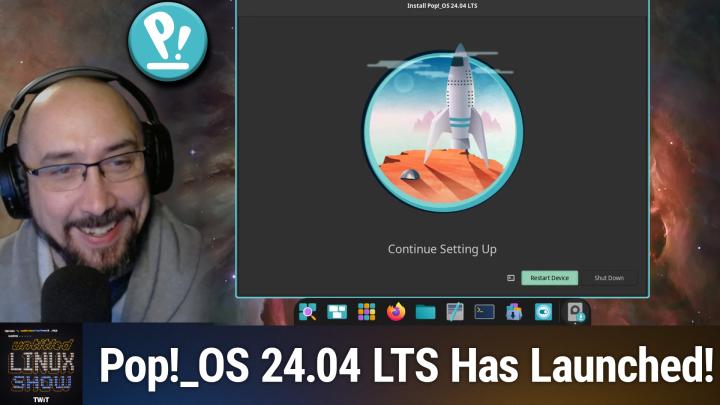
All TWiT.tv Shows (Audio)
Untitled Linux Show 233: Tiny Tater Tots
01:33:32
COSMIC is Here, the Rust Experiment is over, & Gnome Says No More AI
Loading summary
Transcript270 lines
- [00:01]
Commercial Narrator
Resilience isn't just about bouncing back, it's about being ready. It's how you show up every single day. Because every name in your system is a person who trusts you, and every password is a door you're responsible for locking. And when the threat comes, and it always comes, you hold back the chaos. Learn more at cohesity.com/resilience AI agents are.
- [00:32]
Jeff
Everywhere, automating tasks and making decisions at machine speed. But agents make mistakes. Just one rogue agent can do big damage before you even notice. Rubrik Agent Cloud is the only platform that helps you monitor agents, set guardrails, and rewind mistakes so you can unleash agents, not risk. Accelerate your AI transformation@rubrik.com that's R U B R I K.com what's up everyone?
- [01:01]
Jonathan
This is Angel, Diego and Jason and we're at gusto About Podcast Siemporciento Musicana.
- [01:07]
Rob
Proves holiday season's here and the studio is feeling festive. We got the tracks, the exclusives. Yes, it's bright Winter Spice Cranberry Bien Frio.
- [01:18]
Jonathan
That refreshing cranberry flavor hits just right. A seasonal favorite but limited time only.
- [01:23]
Jeff
So don't sleep on it to keep your fiestas fed.
- [01:26]
Rob
Festive Adarle Flo Frio con sprite Winter Spice Cranberry Obey your thirst.
- [01:32]
Jonathan
Hey folks, this week Cosmic is finally here and we also talk about Pair OS and Ubuntu. If you're interested, there is a Palm sized Mini NAS and a palm sized really impressive ARM computer. Both we take a look at. We don't have on our desks yet, but there's also interesting stuff about Kashi, about Rust in Linux, and GNOME's take on AI. You don't want to miss it, so stay tuned.
- [02:01]
Rob
Podcasts you love from people you Trust.
- [02:06]
Jonathan
This is TWiT. This is the Untitled Linux show episode 233 recorded Saturday, December 13th. Tiny Tater Tots hey folks, it is Saturday and you know what that means. It is time for the Untitled Linux Show. We're going to geek out over some software and some hardware, the kernel stuff, desktop environments, all kinds of fun things coming. It is not just me, of course. We've got Rob and Jeff. Our friendly neighborhood Ken is still off on, shall we say, Christmas and holiday related activities. He should be back sometime after the first of the year, but welcome guys. Good to have you both. Hello.
- [02:51]
Jeff
Good to be here.
- [02:53]
Jonathan
Jeff. Your office is really coming together. You got some lighting going on and it looks really nice.
- [03:01]
Jeff
Yeah, I'm not all washed out today. I'VE got things a little more sorted. It's going to be a couple months before I have a bookcase back here. It's on order, but there's still more little things coming. So it's not complete yet. There might still be a little even echoey, but we're getting there.
- [03:20]
Jonathan
Yeah, no, it's great. It looks really good. Yeah. So let's dive into some news. We've got something that we're going to talk about that we've talked a lot about over the past few months. I think some of us have even done some trial runs of this. We're going to let Rob take it away and tell us all about that. But first, this.
- [03:45]
Commercial Narrator
Resilience isn't just about bouncing back. It's about being ready. It's how you show up every single day. Because every name in your system is a person who trusts you and every password is a door you're responsible for locking. And when the threat comes, and it always comes, you hold back the chaos. Learn more@cohesity.com Resilience okay, only 10 more presents to wrap.
- [04:18]
Coca-Cola Announcer
You're almost at the finish line. But first, There, the last one. Enjoy a Coca Cola for a pause that refreshes.
- [04:44]
Ryan Seacrest
Hey, it's Ryan Seacrest for Albertsons and Safeway. The holiday season can be exhausting with all the parties and the end of year celebrations. But don't forget to take care of yourself by stocking up on your favorite nutritional products. Now through December 30, shop in store and online and save on items like Cliff Snack Bars, Luna Bars, Boost Nutritional Energy Drinks, Premier Protein Shakes, Z Bar Variety Packs, Open Nature Powder and Body Fortress Protein powder offers end December 30th. Restrictions apply. Offers may vary. Visit albertsons or safeway.com for more details.
- [05:16]
Jonathan
Hello everybody.
- [05:17]
Leo Laporte
Leo Laporte here. You know what a great gift would be, whether for the holidays or at just any time, a birthday, a membership in Club Twit. If you have a Twit listener in your family, somebody who enjoys our programming and you want to give them a nice gift and support what we do, visit TWiT TV club TWiT. They'll really appreciate it and so will we. Thank you. Twit TV Club Twit.
- [05:44]
Rob
So one of my big predictions for 2025 has finally come to pass.
- [05:49]
Jonathan
You really squeaked this one in there just in time.
- [05:54]
Rob
I told you it was coming and here it is. Popos 24.04 LTS. I didn't specifically say that, but with the first stable release of the new Cosmic Desktop is now available and the Cosmic Desktop specifically being in a first stable release is what I predicted. So yeah, we've been talking about Cosmic for over a year now, even even demoing the Alpha and I think a beta release on the show but you know, always with the warning that it wasn't ready for production use. Well now it is. At least they say it is. Cosmic is built from the ground up with rust and from my test it's, it's a very snappy desktop environment. Default in the, in the just released Popos 24.04lts, you know cosmic is default, but it's also available in many other distros like Arch Fedora, Obitsus, Tumbleweed, Nixos and more and even even stretching into BSD and Redox OS. So PopOS 24.04 LTS ships with a newer Linux 6.17 kernel series Mesa 25.1.x and an Nvidia 580 driver option and pops Hybrid Graphics is story is getting even better. Apps that request discrete GPU can now use it automatically and you can still force a GPU choice per app. So I know 24.04 seems a little old with 26.04ubuntu just around the corner but you know the, the they are in production mode with this and I expect they will be keeping up a lot better now in the future since the first release of Cosmic is out of the way so I haven't had a chance to give it a full bare metal run yet. But I do have it in a VM right now and those watch you can see it behind me. But according to other reviewers it isn't quite perfect yet. And you know though my recollection of the alpha was is really good even with this in the vm. One problem I had today is I had this running already and I don't know if it has a problem with going into standby in a VM or what it was but when I came back as a black screen I couldn't wake it up. I had to reboot it. So next time I rebooted it I turned all the power settings to you know, never suspend, never shut off the monitor and all that stuff. So really what do you got to turn that off for in a VM anyway? I suppose suspend could be handy maybe.
- [08:51]
Jonathan
But I've, I've always, I've always turned suspend and hibernate off on my Linux machines and they just, they it always has been buggy. It's been. It's buggy on Windows too.
- [09:01]
Rob
I agree.
- [09:02]
Jonathan
Yeah, yeah.
- [09:03]
Rob
And any Windows, anything. I've always, I've always turned off, hibernate, suspend, hit and miss. Sometimes I do, sometimes I don't. Usually I do. I never use it. If I want it turned off, I'll turn it off. Okay.
- [09:14]
Jonathan
Turn my computer off my own self.
- [09:17]
Rob
But anyway, from the other reviews, from the other reviews, you know, they are, they are saying there's rough edges, you know, as like some audio routing weirdness occasionally dock icon glitches for new pinned apps and obs screen recording still being finicky for some people. But you know, none of those sound like stop the world unless, unless you're streaming. Then obs could be an issue, but you know, more like, you know, these are things that hopefully we're going to see polish now that they have a release, things will tighten up quickly and the 2604 should be just amazing. And if you want to try it now, There are multiple ISOs, you know, there's a standard image, an Nvidia focused image, even an ARM image, including ARM with Nvidia for the Thelio Astra. And if you're on POPOs, 2204, upgrade prompts are expected to start showing up in January of 2026 for those watching in some other year, you know what I'm talking about. But anyway, so if you're the type that doesn't want to wait, you know, to do just, you know, wipe, reload, back up all that good stuff and install it and give it a shot.
- [10:38]
Jonathan
Yeah, so I've kind of got a bit of a race going on here as to, on this POP OS machine, whether I'm going to get the prompt to do the update or if my new Framework laptop is going to come in first. So I'm, I'm in one of the December batches. It's supposed to ship sometime in December and we'll see if that actually happens.
- [11:01]
Jeff
Yeah. And you know, and like you, like you said, Rob, I mean this is, this is, you know, 1.0, this is brand new versus, you know, wow, KDE is so much smoother. Well, it's on, you know, it's got a, what, 20 year head start. It's on 5 or 6.5.4 or something, you know, so it's, they've had a long time to polish and massage and this is brand new.
- [11:25]
Jonathan
People have had years to yell at the devs over these things.
- [11:29]
Rob
Yes. Yeah, a little bit. I actually used it. You know, besides that suspend or whatever the issue was, I was Seeing things still seem to work pretty, pretty smoothly. Pretty snappy.
- [11:41]
Jonathan
Yeah. I am real curious what it would be like on one of the new popos machines.
- [11:49]
Rob
But I'd like to see the ARM one on the Thalio.
- [11:52]
Jonathan
That's true. Yeah. It would probably do very well there too. Probably would. All right, you know, hold on.
- [12:01]
Rob
Maybe that's my premium ARM laptop that I really didn't think came out this year, but maybe that is it and we just didn't touch on it enough.
- [12:14]
Jonathan
Didn't talk about it enough.
- [12:16]
Jeff
Yeah, you're reaching.
- [12:17]
Rob
Oh, come on. With the whole ARM, you're calling a System 76 laptop ARM laptop. Not a premium one. All they make is premium stuff.
- [12:28]
Jonathan
Is it even a laptop isn't the dealio.
- [12:31]
Rob
You know what it is A desktop. You're right.
- [12:35]
Jonathan
Yeah.
- [12:35]
Rob
I forgot.
- [12:36]
Jeff
Rob's got a really big lap.
- [12:40]
Jonathan
Just super glue a monitor onto it and then, you know, jam a power supply UPS in there and anything. Look, Ma, it's a laptop.
- [12:48]
Jeff
Yeah, well, they have those CPU coolers with LCD screens. You just pop the side panel off and use this.
- [12:55]
Rob
It should be a laptop. They should have a laptop.
- [12:59]
Jonathan
They may. They may eventually. All right, Jeff, you've got, you've got something interesting here.
- [13:09]
Jeff
Yeah, I, I have something I think.
- [13:12]
Jonathan
What is this? Do you actually have one of these?
- [13:14]
Jeff
No, but I'm like, I think I need to get one of these.
- [13:17]
Jonathan
Oh, well.
- [13:18]
Jeff
And I think Rob and Jonathan need one of these. I got something that they might want to spend their money on. So what we're talking about, it's. It's a small NAS and small meaning 5 and 3 quarter inches by 3.8 inches and just 1 and a quarter inches thick. Sorry, I didn't convert to metric. You know, I'm sure several of you already guessed that this is a small form factor. So it uses NVMe drives, four of them to be exact. And I have a couple links in the show notes about this item, but I do want to point out an error in the how to Geek link. It says it only supports 1 TB NVMe drives, and that is not correct. It supports up to 4 terabyte NVMe drives, so there's a possibility for 16 terabytes of storage. Now, the drives will only communicate at PCIe 3.0 speeds, but really that's going to be plenty fast. For a NAS drives running at 3.0, hit roughly 3,000 to 3,500 megabytes a second with an interface limit of 4 gigabytes a second. When using four PCIe lanes. You know, if that isn't enough, then you probably need an enterprise solution. The rest of the specifications for the Nest Disk. Nest disk include an Intel N150 quad core CPU and it runs at 3.6 GHz. But it's designed to be a low power option, though you know it's standard speed, you know, when it's not, boosting is 1.6 gigahertz and it will only pull about 6 watts even when it's under load. So you can keep this thing on the network all the time without making a big dent in your power bill. The CPU has 12 gigabytes of LPDDR5, but if you so desire, there is an option to get a 16 gigabyte version. Something that's pretty cool is that also that it comes with two 2.5 gigabyte ethernet ports. So they're, they're not, you know, they're, they're not able to keep up with the PCIe 3.0 drives. So that's why, you know, even if you're thinking, Well, I need PCIe 5, well, you're limited by your ethernet port, but 2.5 gig ethernet, that's pretty good. It can transfer about 18 gigabytes per minute. So even if you have an enormous amount of data to back up, like say you had a phone with 300 gigabytes of pictures, you're looking at less than 30 minutes. So it's not bad for moving quite a bit of data. It does have integrated intel graphics, a USB C port for power, a second USB C port for video, audio or data, and an HDMI port. It's got a standard 3.5 millimeter aux port, you know, like for audio, Bluetooth 5.2 and Wi Fi 6. Now it does come loaded with Open Media Vault, you know, standard, which is a Debian based load. But it's designed to be NAS specific because it, because it's Debian, you can use tools like Rsync, Cron and so on to schedule backups and do all sorts of things. It supports many raid levels such as 01, 5 and 6 and all the others. So if you want to get fancy, you can do the 10 and 01, but realistically, you know, set it on 5 or 6 and just be happy. You can use this as a router or you can even use it as a low end PC if you have light tasks which you want to do with it. You know, it's, it's four cores and it's, it's not super powerful but you know, some light browsing and things like that. You can use this like a mini PC to see what you're doing it. It has the HDMI ports and the Type C output as I said and it can Support up to three 4K displays. The system is built by UE2. It's Y O U Y E E T O O all one word. And it could be found in places like Amazon for purchase. I look today and the price is $219 US on Amazon. There's other local retailers for other countries as well or you can purchase it directly from UE2 website as well. Take a look at the article linked in the Show Notes for more details. And they have direct links to the UE2 website for the Nest Disk, Mini PC, NAS and Jonathan. Think this is going to wind up under your tree?
- [18:07]
Jonathan
Probably not. I've got a full size server already that is sort of my data storage place. It is really interesting for 215 bucks, particularly if someone needed a little server and yeah, I could see why this would be very interesting. I find it fascinating. I was thinking about this the other day that we're starting to use USB C for power. USB C with power delivery for so many.
- [18:42]
Rob
Everything.
- [18:43]
Jonathan
Yeah, for so many different things that used to. You would either have a dedicated power adapter or you would run AC power into. I remember at one point people were talking about this like man, we need some sort of DC power standard. And it's. It just occurred to me the other day like USBC with power delivery has become that standard.
- [19:07]
Jeff
It'd be nice when USB C just takes over everything.
- [19:10]
Jonathan
I mean it kind of already has. Kind of.
- [19:14]
Jeff
Well, I mean they already has get rid of HDMI and other things.
- [19:21]
Jonathan
Yeah, well, I mean you can, you can already do DisplayPort over USB C with DisplayPort alt mode.
- [19:28]
Jeff
Yeah, we just need audio through DisplayPort.
- [19:31]
Jonathan
That's true. That's one of the things that doesn't work yet, isn't it?
- [19:34]
Rob
Yeah.
- [19:37]
Jonathan
Well, yeah. This is a really interesting little box though. If you get one, make sure and let us know how it goes. It'd be fun to do sort of a review of it.
- [19:46]
Rob
Oh yeah, I'm not looking for anything now but you know, maybe if mine dies ever. It's been around for probably a decade now. So if that ever dies maybe. Maybe this be next on my list. Hopefully it doesn't die now we've cursed it.
- [20:05]
Jonathan
All right, so I actually found something sort of similar this week. I came across the orange pi6 plus and no I don't actually physically have one of these, but I found a review with benchmarks over at Linux Links and it's really interesting. So it is a ARM v9 processor on a board. It's a 12 core CPU and it comes with either 16 gigs, 32 gigs or a whopping 64 gigs of memory. It's got HDMI out. This one also has dual Ethernet. I think they run at 2.5, I'm not 100% sure. Also USB or. Yeah, USB Type C power supply. This one. What really fascinated me about it, the two things. One was the benchmarks and if you actually go to the link and you click through to the benchmarks of the fellow that did this, Steve Ems, of all of the things that he benchmarked it was like basically twice as fast as so closer to three times faster than the Raspberry PI 5 in a lot of these benchmarks. In fact it did so well that he went and grabbed a couple of intel i5 based boards. And so he's also got on here the i5 10400 and the 12400 that's 10th, 10th generation and 12th generation. And in this particular benchmark it's really pretty close to the performance of that I5 10,400 which is really impressive for an ARM board. And then there's one other sort of really odd element to this and that is its cores. So it's got 12 CPU cores but they're not all the same. In fact they're quite different. So it has, it's a quad core cortex A720, a quad core cortex A520 and a quad core looks like also a cortex A720 large. So it's broken up into three different banks of cores. And some of these are. Their performance is really, really bad. But one of the things that that's intended for is to be able to turn off the other cores if you're looking for memory efficiency and run on those small cores. Really, really interesting little device here. And I had fun sort of poking through and reading about it on this article. Now it doesn't come case. It looks like a bare board but really fascinating to see. Sort of the, the, the newest thing and really kind of makes me think about, you know, Certainly the Raspberry PI 6 is being worked on. I wonder what it's going to look like.
- [23:21]
Jeff
That's amazing with these little boards can do now and what they come with.
- [23:25]
Rob
And man, I know the orange pie itself isn't new, but this must be a new version yeah, Orange PI is.
- [23:34]
Jonathan
Basically the brand name at this point. That's like. I don't know if it's a company named Orange Pie or if that's just the branding they use but you know it's, they make pretty good products. It's one of the more popular alternatives to the Raspberry PI. Really. Apparently it's got a, it's got a GPU in it that supports, actually supports some ray tracing. I don't know what the ARM Immortals G270MC10 GPU is, but it's apparently fairly impressive the whole thing.
- [24:11]
Rob
What's the price on this compared to a PI, a raspberry?
- [24:14]
Jonathan
I mean, you know, I was looking for that and I don't know that they've got the price on it yet because I wanted to mention that at the time of writing the Orange PI 6 Plus with the cooler fan handseek is available on AliExpress for 247 pounds. I don't know, I don't know what that is in real money, but that's a joke. That's a joke. Guys. Don't, don't at me, don't cancel me on Twitter.
- [24:45]
Jeff
I think the conversion rate's pretty close. It roughly one.
- [24:52]
Jonathan
Oh it is on, it is on Amazon already. The 16 gig version for 245.
- [24:58]
Rob
According to Google, 247 pounds is like 330 US dollars.
- [25:02]
Jonathan
So and here's this on Amazon, the 32 gig version for 299 dollars.
- [25:08]
Rob
So definitely, definitely more expensive than a raspberry.
- [25:11]
Jonathan
Definitely more expensive than a Raspberry PI.
- [25:13]
Rob
So you're getting what you're, you're paying what you're getting. Paying for what you're getting.
- [25:16]
Jonathan
Yeah, yeah. One of the other cool things about this is it's got looks like three. Well they're not all NVMe. Two of them are NVME and one is for WI fi. It's got the, it's got three slots on the bottom. You know the NVME style slots. I never, I never can remember exactly because you know the key is in a different spot. That'll tell you what the thing is actually intended for. I never can remember what that, which keying means. What. But yeah, it's a fun, it's a fun looking little board.
- [25:50]
Rob
Yeah, I just try to shove stuff in there and see if it fits.
- [25:54]
Jonathan
Yeah, yeah, that's. Honestly that's what I do too.
- [25:58]
Jeff
Biggest problem with those boards is just having, having the projects to run with them.
- [26:04]
Jonathan
What am I gonna do?
- [26:04]
Jeff
With board.
- [26:06]
Jonathan
Well, it looks like it's actually five gig Ethernet. That's really impressive, too.
- [26:11]
Rob
I used to have great projects, but most of them have been replaced now with my home server in a VM and Proxmox or. One of my other projects was a little gaming machine. I gutted a Nintendo years ago and put a Raspberry PI in there and wired everything up so it looked native almost. But now we got the Steam deck and I don't know, I don't need any of that.
- [26:37]
Jeff
That's my thing is the server kind of took over a lot of stuff.
- [26:41]
Rob
Yeah, I got a handful of pies, Raspberry PI sitting around doing nothing.
- [26:47]
Jonathan
Unfortunately, I do, too. I have some of them still doing things, but some of them are pretty idle at the moment. This thing's got some. It's got some real horsepower, though. You 3D print a case for that and you can make a really nice router out of it.
- [27:05]
Rob
Oh, did you say two network ports?
- [27:07]
Jonathan
It's got two NICs. It's got two five gig NICs on it.
- [27:10]
Rob
Oh, nice.
- [27:11]
Jonathan
Yeah, yeah. Pretty impressive.
- [27:14]
Jeff
Time to get. The. Time to get the LAN up to five gig.
- [27:17]
Jonathan
Yeah. Yeah. Time to upgrade. All right. Rob has a. I don't know, is it a review? A story about a different os? And we're going to talk about that right after this.
- [27:31]
Commercial Narrator
Resilience isn't just about bouncing back. It's about being ready. It's how you show up every single day. Because every name in your system is a person who trusts you and every password is a door you're responsible for locking. And when the threat comes, and it always comes, you hold back the chaos. Learn more@cohesity.com Resilience hey, it's Ryan Seacrest.
- [28:01]
Ryan Seacrest
For Albertsons and Safeway. The holiday season can be exhausting with all the parties and the end of year celebrations. But don't forget to take care of yourself by stocking up on your favorite nutritional products. Now through December 30, shop in store and online and save on items like Cliff Snack Bars, Luna Bars, Boost Nutritional Energy Drinks, Premier Protein Shakes, Z Bar Variety Packs, Open Nature Powder and Body Fortress Protein powder offers end December 30th. Restrictions apply. Offers may vary. Visit albertsons or safeway.com for more details.
- [28:31]
Coca-Cola Announcer
Okay, only 10 more presents to wrap. You're almost at the finish line, but first, There, the last one.
- [28:52]
Rob
1.
- [28:54]
Coca-Cola Announcer
Enjoy a Coca Cola for a pause that refreshes.
- [29:02]
Leo Laporte
Hey, everybody, Leo Laporte here, and I'm going to bug you one more Time to join Club Twit. If you're not already a member, I want to encourage you to support what we do here at Twit. You know, 25% of our operating costs comes from membership in the club. That's a huge portion and it's growing all the time. That means we can do more, we can have more fun. You get a lot of benefits ad free versions of all the shows. You get access to the Club Twit discord and special programming like the keynotes from Apple and Google and Microsoft and others that we don't stream otherwise in public. Please join the club. If you haven't done it yet, we'd love to have you find out more at TWIT TV Club Twit. And thank you so much.
- [29:50]
Rob
So I don't think we've ever talked about pair OS in the past on the show, but I have checked it out myself. I'm pretty sure I've installed in a VM before. Years ago, I may have even installed a bare metal. I never really ran with it for very long, but probably one of those times when I was just trying different things. But it also makes a lot of sense that we haven't talked about it on the show, as it's kind of been somewhat of a dead project for a while. Well, it's back. Pair OS is back. But before I get into that, let's go into the backstory. So, the original spark of Peros began back in the year 2011, when French developer David Tarvars built Peros on top of Ubuntu using Gnome, and a very intentional goal of making Linux feel more familiar to people who loved the Mac OS desktop. Then it got complicated. There was a Debian edition renamed to commas comis os, then back again. And in 2014, Tarvis sold the distro to an undisclosed company. I didn't know you could sell these low distros. I need to. I need to get into that business anyway. And around that time, public downloads effectively disappeared. But Pear never really completely stayed gone. The idea resurfaced later as pair OS capital P, lowercase ear, capital O, capital S. And now it's been re energized again, this time by Romanian developer Alexandru Balin. Balin under pair os, and that is spelled lowercase pair uppercase o and s. So it's a lowercase p this time. But again, the guts of the distro have gone. Also gone a different direction. Strangely, it seems like a lot of distros lately have been rebasing on this Core distro lately. Well, now Pair OS Nice. Core 25.12 is built on Arch Linux and it uses a heavily customize. You guys are going to love this KDE plasma desktop to chase that modern Mac OS look and feel, right down to the glossy animated design language that the project calls Liquid Gel. And because it's based on art, you know the pitch is the classic rolling release promise. Install once, keep it updated forever, which is not very macOS like, but no big version jumps, no reinstalls, just continuous updates from the Arch ecosystem with pair OS styling layered on top. Another odd change is the installer so nice. Core is the first Peros release shipping a brand new installer built with Electron and Node JS wouldn't be my choice in 2025, but it's also clearly a work in progress. The project describes it as a beta and warns it may still be unstable while development continues. Per OS isn't just another theme packed pretending to be a distro. It's a full attempt to answer a real question being what if Linux felt premium and familiar right out of the box for macOS refugees without giving up the freedom and flexibility underneath? Sure, you can customize most desktop environments to look like macOS, but just like Linux Mint is often recommended to Windows users for the Windows like style out of the box from Windows converts Pair OS could be that for macOS converts. What I think would be interesting is to see pair OS team up with the Asahi Linux guys so you can like change your Mac, you know, your MacBook or whatever into a Linux machine with very little interface change. You know, you have a MacBook one day your MacBook doesn't change much, but underneath you have the power of Linux. Anyway. I would say go download it now, try it out yourself. I mean, I guess you still can, but you may be waiting a while to actually try it out. I've been downloading it all day at a stupid slow speed measured in kilobytes. Last I looked I think it was like 200 some kilobytes. I killed my download, tried downloading somewhere else. Everything else works fine, but their download says it's going to take close to 24 hours. So I don't know if if this news story just went boom and everybody's trying to get their hands on the new Pair OS and he's on a a slow DSL upload or what, but which is why I have not been able to show you what it looks like. But it looks like Mac os. That's what it Looks like. Looks like Mac os. In fact, the screenshots I've seen, the little icon in the bottom left of the tray. Mac calls finder. I think it looks almost too much like their icon. It's a little different, but it looks too much like their icon to stick around there long, in my opinion. But yeah, it's pretty slow right now. So if you want to try it next week and start downloading it.
- [35:49]
Jonathan
Did they not. Did that. Is there not a torrent option?
- [35:52]
Rob
No, not that I saw.
- [35:55]
Jonathan
Man followed it. This. This is why distros distribute their ISOs with torrents. This is the very problem.
- [36:02]
Rob
Well, maybe they figured out this is just a little distro. You know, it's just a little hobby thing. I'm going to have one person seating it. It's not going to speed anything up. My fast server will do better.
- [36:12]
Jonathan
Yeah, it is. It's blow. It's blown up a little beyond that.
- [36:16]
Rob
Yeah, apparently.
- [36:18]
Jeff
Yeah, it's still.
- [36:20]
Jonathan
It. It's interesting. You know, I. I am always a little dubious of these niche distros. Not that they, you know, not. Not that they don't have great intentions and in many cases they have really. They do really interesting things. But, like, probably don't start with this. At least. At least not until it's got a few more miles under it. Go use. Go use Asahi if you're coming from Mac or Go Fedora or Ubuntu.
- [36:48]
Rob
Well, you're not. You're not going to be installing this on an M1 Mac on M2 today. They don't have that with the SAI anyway, so.
- [36:58]
Jeff
Yeah, well, and we did a story, I think about six months ago about the number of distributions that kind of people, like, this is great. We're going to do this. And then the amount of work involved to keep a distribution going. There's a lot of it that kind of like, oh, this is. You know, they like the making of it, but the maintenance drags people down or they just get burnt out because if it doesn't hit that critical mass where you have a whole bunch of people helping you, stuff starts falling behind.
- [37:26]
Rob
And.
- [37:28]
Jonathan
Some of the stuff is just not very fun, like dealing with CVEs, that sort of thing. It's just no fun. The fun, sexy stuff is making it shiny and pushing that first ISO out there and then everything else after that is. It's kind of boring and turns into work. Turns into work. All right, Jeff. There is a thing that is getting boring and it's.
- [37:56]
Rob
Jeff.
- [37:57]
Jonathan
No, it's something. Jeff Wants to talk about. I think something in the kernel is beginning to get boring and maybe that means it's working.
- [38:06]
Rob
Yes.
- [38:08]
Jeff
So there's a new patch out for Rust from Linux lead developer Miguel Ohella. Ohella, sorry. And it's to conclude the experiment of Rust being in the kernel, it's over. The experiment's done. Now. This was discussed in Japan where there was a Linux Plumbers conference just this week. Kind of like it sounds, a conference is where Linux developers get together to talk about the plumbing layer of the kernel. The plumbing layer is the glue layers which make the kernel and the interface to the user land work together. It's kind of the core infrastructure. When we talk about KDE and we mention Framework, it's kind of the same thing. It's the pipes that connect them. More importantly though, what has come out of the conference and one of the items was Rust is going to be in the kernel and is no longer experimental. Miguel had this to say in the Kernel Linux mailing list. The Rust support was merged into 6.1 into the mainline in order to help determine whether Rust as a language was suitable for the kernel. That is worth the trade offs technically, procedurally and socially. Now that socially comes because there's been some existing maintainers that didn't like certain things about Rust and there's been some heated discussions in the kernel mailing list about Rust. But I digress. At the 2025 Linux kernel maintainer Summit, the experiment has just been deemed concluded, thus remove the section now. He doesn't specifically say it, but he's. He's referring to the Rust experiment part of the documentation in the. In the code. It's not fully true already anyway, meaning it's kind of past experimental. Since there are several uses of Rust in production out there. Some well known Linux distributions enable it and it's already in millions of devices via Android. Obviously this does not mean that everything works for every kernel, configuration, architecture, tool chain, etc. Or that there won't be new issues. There's still a ton of work to do in all areas from the kernel to upstream Rust, GCC and other projects. And in fact certain combinations such as the mixed GCC plus LLVM builds and the upcoming GCC support are still quite experimental, but getting there. But the experiment is done. Rust is here to stay. I hope this signals commitment from the kernel to companies and other entities to invest more into it, I. E. Into giving time into their kernel, giving more time into their kernel developers to train themselves in Rust thanks to the many kernel maintainers who that gave the project their support and patience throughout those years and to the many other developers, whether in the kernel or in other projects that have made this possible. I had a long list of 173 names in the credits of the original poll that merged the support into the kernel and now such a list would be way longer. So I will not even try to compose one. But again, thanks a lot everybody. So the article is linked in the show notes and does go on to say that the Rust code in the kernel isn't built by default, but that should change in the near future. Things like the Nvidia Nova driver are written in Rust and will soon be included in the kernel for everyone. We talked about this before, but Nova's still in the. That's Nvidia's open source driver is still currently in an experimental stage. Take a look at the article in the show notes for the full details and a link to the Colonel mailing list. And as the band Megadeth said, rust in peace.
- [41:56]
Jonathan
Oh my. Yeah, it's been, it's been interesting to see how controversial that has been. You know, it's, it's something that should be so boring and people have had some weird opinions about it, but. Well, it has, it has been fascinating. It has been fascinating to see the security problems that have shown up in Rust based programs and some Go based programs and sort of, you know, there is the reminder that writing it in Rust or in Go or whatever is not a, is not a panacea. It does not fix every security problem, it just fixes one of them. But anyway.
- [42:42]
Jeff
Yeah, and some of it I think is people get used to how, you know, some of the maintainers were used to how things worked and now I got to learn another language because I don't understand this. So to maintain it, you're adding more work.
- [42:55]
Jonathan
And.
- [42:58]
Jeff
The comments in the, in the article just quickly turned political and just kind of went nowhere. So there wasn't really any valuable commentary in the comments or anything that.
- [43:11]
Jonathan
Yeah, I don't. And we don't have to talk about this for long, but I don't understand how Rust became. Well, I guess I do. How it became a political thing. Actually, I do because what it is, there's some personalities that have strong opinions about it, both on the pro side and the against side. And so the, the, the. Unfortunately some of that, that some of the politics of those personalities have, have stuck and made things stink from both sides. I think there are some stinky personalities on both sides from what I've Seen.
- [43:46]
Jeff
But anyway, yeah, it just kind of became into a, a manure slinging fest and it was like there wasn't really anything talking about.
- [43:59]
Jonathan
The technical.
- [44:01]
Jeff
Yeah, yeah. The only, the only thing that maybe had merit is some people said that, you know, this, this will close up some of the security holes and some of the, some people are saying governments aren't super happy about this, but as you said, it's not the panacea. So it's not like, oh, it's now in rust, everything's great and you know.
- [44:23]
Jonathan
Yeah, yep, absolutely.
- [44:26]
Rob
I think there's some valid points to having to maintain another language for people who don't know it, but it reminds me of a question I saw somewhere. It might have been Reddit, I don't remember where it was. The question was, what is going to happen to Linux when all the old C developers are gone?
- [44:50]
Jonathan
That's a challenging question. That is actually a question that keeps the Linux guys, they think about that a lot. That's one of the reasons why they have some of the outreach things and they try to get new people into the kernel.
- [45:03]
Rob
My answer to it was the new C guys will take care of it.
- [45:09]
Jonathan
Yeah, that's true. You have to make sure that that pipeline is working the way that it's supposed to. All right.
- [45:19]
Jeff
I think they made, they've made some steps to try to ease the entryway because it used to be, it was kind of almost elite and it was, I mean, I mean it still is, but I mean was kind of people put up artificial walls to try to.
- [45:34]
Jonathan
You know, oh, you, you're not a.
- [45:36]
Jeff
Developer, you gotta, you know, and the problem is then they get high enough and nobody can make it and oh, maybe we better put some steps in here because we're killing our youth. New person, feeder.
- [45:54]
Jonathan
That's actually a real tricky thing to get the balance right because you do want some walls. You don't want just everybody, particularly as maintainers, but you don't want to have to look at everybody's code. We've got a story about that here in just a second.
- [46:11]
Jeff
Yeah, you don't want me throwing code in the kernel. Right?
- [46:15]
Rob
Not good.
- [46:15]
Jonathan
Yeah, I mean, same like I am not at the level yet of writing code for the kernel that would take some time to get there. Yeah, it's a delicate balance to strike, to make it the right amount of difficult to start adding code to something like the kernel. Okay, so that's actually an interesting segue. I did not even plan this one, but, but that's a real interesting Segue to this news about gnome. GNOME says no more AI. No more AI. Specifically, in GNOME shell extensions, there's a new rule in the guidelines that says extensions must not be AI generated. And he goes on to say that it's not prohibited to use AI as a learning aid or as a development tool like code completion Extension developers should be able to justify and explain the code they submit. Within reason. Submissions with large amounts of unnecessary code, inconsistent code style, imaginary API usage, comments serving as LLM prompts or other indications of AI generated output will be rejected. And I read this at first and I went, that's interesting. I wonder why they're taking that stance. You know, is it a. Is it kind of a moral stance? Is it a legal stance? And then I went and looked and no, no. GNOME actually reviews the code of all of those extensions before they accept them into the extension core in the extension store. And the poor guy that does it is sick and tired of looking at everybody's bad Vibe Coded extensions. And so he's just now saying, nope, no more. If I can tell it's Vibe coded, it just gets rejected right away. That's pretty, that's pretty fair. Yeah, if you could tell it's Vibe Coded, you probably just need to, you need to kill it then. This is part of also the this week in gnome and I've got a link to this to that as well. There are a couple of other interesting things in there, some third party projects that they talk about and then they cover that review. Some other stuff going on in GNOME, like adaptive brightness, working in GNOME 49 with the brightness stuff there. They've got some internships going on and an event coming, some fun stuff there in GNOME World. And then for completeness, I've also got the link to the this weekend plasma talking about KDE and there's a couple of interesting things there. One of the big ones, let's see if I can find it. Two big ones here. There's now better support for screen mirroring under Wayland in kde. That's one of those things that people have complained about with the move to Wayland that certain things don't work well. One of these things is now marked off the list and screen mirroring works again. And the other one that's really interesting is that K Screen doctor that's sort of the under the hood tool that KTE has for doing stuff with your screen. It now will let you add custom screen modes, which this has been a pain to do for a long time. You, you used to be able to, I think you still can like boot your kernel and give it custom EDID stuff, but now you can just turn on a different screen mode and KDE will instruct the video card to output that screen mode whether the device on the other end thinks it can support it or not. Which does let you do some really interesting things like potentially overclocking a 60Hz monitor to 70Hz running at weird resolutions and or weird clock speeds like say 48 hertz which you go, why would you want to display at 48Hz? Well if you're playing 24Hz video then you might want to display it at 48Hz. Some other, some other really interesting things like that that you know, you wouldn't necessarily think about all that you might need it, but there are places and times where some of these oddball behaviors really is what you want it to do. And so have support now for that inside of kde. So all kinds of fun stuff going on in the desktop environment.
- [50:52]
Rob
I'd be curious to see how bad some of these Vibe codes are that it's, that it's that big of a problem.
- [50:59]
Jonathan
But so I've seen we've gotten over in meshtastic, we've gotten some Vibe coded. Vibe coded pull requests. And yeah, some of them are, some of them are okay. Some of them are real special though. Like I'm trying to remember one of them in particular, the Vibe coded commit. One of the things that it wanted to do was change the name of the project. The guy was like why won't you pull my commit? Oh boy. Another one it was here's a new data structure and it was just the most over complicated data structure to save a certain type of data. And it's like it's going to be so much more efficient and it's like you've got the same amount of data and the same amount of ram. It's not going to be a thousand times more efficient like you think it will. This is just not how computers work. I don't care what your AI agent tells you. So yes, there's some weird Vibe coded pull requests out there. And the problem is a couple of problems. They tend to generate lots and lots of code because you can just tell.
- [52:17]
Rob
The like old front page websites.
- [52:21]
Jonathan
Well yeah, every time you tell the AI agent work on this problem, it generates more code and it may eventually work, but you're going to have thousands and thousands of lines of code changes. And then also it does some of these weird ridiculous things that the, the Type of human that you actually want working in your project would never think about doing. The, the, the AI agent has no shame.
- [52:51]
Rob
Yeah, I, I, I mean I'd have no problems with AI helping, but I guess if it's so obvious that you could tell that AI wrote it, that makes sense. And, and you know, I threw in the, the front page thing. You know, I, I've been, I don't do a whole lot these days, but I, I've been doing since the late 90s, you know, pure HTML writing in, you know, pico, pico back then and Notepad and I, I, I remember hating seeing somebody's front page, you know, design in Microsoft front page or any of those WYSIWYGs at the time. They were horrible. Like, like to, to do a little page that maybe just said hello world on it. It would have had just pages and pages of junk in them. And I guess that's kind of what this reminds me of when you say that.
- [53:47]
Jonathan
I remember a place where I went to school for a while. Their website, this was in the early 2000s. Their website was a Macromedia Flash thing and the entire website was one Macromedia Flash application. It was, it was not pretty. Very similar to that, just worse.
- [54:10]
Jeff
I was gonna say, I know the professional coders that vibe code that I know use it for, you know, like writing smaller functions and it just spits it, you know, like, oh, I need to read a file into this kind of data structure. And they go, okay. And then you look it over real quick and it, it's not a, well.
- [54:27]
Jonathan
That'S, that's the difference. Somebody that really knows what they're doing, looks at what the AI agent spits out and understands what the code does. It can fit the guy, then can fix it or go back and you know, put another prompt in and say, you did dumb here, go fix your code.
- [54:43]
Jeff
Yeah, and they're, they're using it for more bite size chunks. They're not just saying, oh, program this to do this and this big thing and a complete package. It's very much a, I want you to do this one or two step part. Go and you know, something manageable. So it's speeding up the coding process without trying to shove too much complexity into the AI.
- [55:10]
Jonathan
Yeah, Part of it also is people ask the AI to work miracles for them. They don't understand why what they're asking it to do is either not possible or not practical. And the AI does its best to do what it's asked to do because that's the way we've programmed these things and sometimes, sometimes hilarity ensues.
- [55:30]
Rob
We.
- [55:30]
Jeff
We haven't properly defined the question. That's part of the problem. Another Douglas Adam reference.
- [55:38]
Jonathan
Yeah. Yeah. All right. Rob has got yet another. Are you only doing distro reviews today, Rob? That's all you bringing to the table. Rob's only good for distro reviews. That's the only reason we have him on the show.
- [55:53]
Jeff
So Rob's table.
- [55:55]
Jonathan
Yeah.
- [55:56]
Rob
As we wrap up the year, there's just so much we need to discuss with the distros as. All right, distros are coming out and new ones are getting ready to come in and.
- [56:08]
Jonathan
All right, we're gonna let Rob talk more about distros right after this.
- [56:12]
Commercial Narrator
Resilience isn't just about bouncing back. It's about being ready. It's how you show up every single day. Because every name in your system is a person who trusts you, and every password is a door you're responsible for locking. And when the threat comes, and it always comes, you hold back the chaos. Learn more@cohesity.com Resilience okay, only 10 more presents to wrap.
- [56:45]
Coca-Cola Announcer
You're almost at the finish line. But first. There, the last one. Enjoy a Coca Cola for a pause that refreshes.
- [57:11]
Ryan Seacrest
Hey, it's Ryan Seacrest for Albertsons and Safeway. The holiday season can be exhausting with all the parties and the end of year celebrations. But don't forget to take care of yourself by stocking up on your favorite nutritional products. Now through December 30, shop in store and online and save on items like Cliff Snack Bars, Luna Bars, Boost Nutritional Energy Drinks, Premier Protein Shakes, Z Bar Variety Packs, Open Nature Powder and Body Fortress Protein powder. Offers end December 30th. Restrictions apply. Offers may vary. Visit albertsons or safeway.com for more details.
- [57:43]
Rob
Hey, everybody, it's Leo Laporte.
- [57:45]
Leo Laporte
Are you trying to keep up with the world of Microsoft? It's moving fast, but we have two of the best experts in the world, Paul Thurat and Richard Campbell. They join me every Wednesday to talk about the latest from Microsoft on Windows Weekly. It's not a lot more than just Windows. I hope you'll listen to the show every Wednesday.
- [58:02]
Jonathan
Easy enough.
- [58:02]
Leo Laporte
Just subscribe in your favorite podcast client to Windows Weekly or visit our website at TWIT tv. WW Microsoft's moving fast, but there's a way to stay ahead. That's Windows Weekly every Wednesday on Twitter.
- [58:18]
Jonathan
All right, Mr. Distro man, take it away.
- [58:21]
Rob
All right, so Ubuntu 2604 LTS okay, it's still a few months out. Like April 2026 is when we'd be expecting it. But some changes are coming and they're already making some waves. First up, I know Jonathan's already talking about Gnome. Well, let's talk about Gnome again. And this in this case it's with Ubuntu. So it's going to be Gnome, but more Gnome like. So Canonical's Yarrow team is refactoring the Gnome shell theme so Ubuntu stops maintaining a structurally custom style sheet and instead leans on upstream Gnome's default styling layering Ubuntu specific overrides on top of that. And you know, I personally always appreciate a more vanilla experience. In most cases at least sometimes some tweaks are nice but you know, I, I like, I like vanilla. Lots of things. So anyway, with the, with the UVA 2 specifically, the branding stays, the typography stays, the iconic orange stays, which I've never been a big fan of that but because downstream theming drift, you know, which is a thing that kind of happens out there, causes problems, you know, when you're constantly patching around upstream changes, you know, to fix little visual mismatches, they're creeping in and you end up spending community energy fixing little things like spacing and popover quirks instead of improving the overall experience, you're maybe wasting your time somewhere you shouldn't be. So going more vanilla should mean fewer weird inconsistencies and a cleaner ride and can into GNOME 50 for Ubuntu 26.04 now, the part that is going to make the Linux community, you know, make their eyes twitch and spaces turn red and get all worked up about is telemetry. Canonical is moving toward UBA2 insights becoming the default telemetry tool and 26.04 replacing the older UBA2 report path. It's store, it's still opt in, you know, it's still just system specific focus, but with a big behavioral change, Insights can send a report monthly instead of the old, you know, one time and you're done before they go right after you installed it. Now it could do it every single month as it, you know, sends what your system is every single month. I guess but you know, but, but you can inspect the JSON locally and there's even work towards more transparency including open sourcing the server backend that processes the data. So you know, I guess that'll make it easier for us to set up our own telemetry servers which could be fun anyway, even if, even if it's voluntary, anonymized and boring hardware stats. A Phone Home Monthly isn't quite the headline Canonical wants, you know, because it's, it's, you know, it's not just about what's collected now, it's, it's about trust optics, how fast opt in telemetry turns into what else are they doing.
- [62:00]
Jonathan
So you know, I just find it ironic that we all get excited when we get the Steam survey pop up.
- [62:07]
Rob
Well, you know, you're counted something different in the Steam survey pop up. You're counting Linux users, which you are when you get it, versus Windows users here. You're just, you're, you're voting your hardware, I guess because they want to know what hardware you have. But you know, in, you know, you know, like I said, it turns out, you know what else they do, you know, Canonical, Canonical does a lot of great work but sometimes, you know, sometimes it just feels like they don't quite read the room and understand the Linux community as a whole. You know, as these little, little things become PR mishaps kind of way too often with them, you know, really individually my opinion, most of them really aren't that big. But there's always some optics to them that like they're just not thinking about ahead of time before they, they do something. Or maybe they do and they just don't care. But anyway, that's not the end of the Ubuntu news. There's one other, you know, final, final thing I'm going to touch on here and, and, and it could be a bummer or maybe it's Nothing. So the UBA two technical boards, current LTS approvals for 2604, well, they're missing a couple flavors. Ubuntu Mate and Ubuntu Unity are missing from that list. Meaning as of now they're not slated to be LTS releases in 2604. Now that doesn't mean they're dead. They can still release non LTS builds, but it does mean fewer guarantees, fewer hands, a lot more fragility for smaller desktop communities. And quite possibly it really just might be a sign of things to come for these flavors of Ubatu. It's kind of tough when, when a distro or a piece of software, you know, a flavor relies on such a small group of people. And you know, we just talked about the, the Unity remix version recently. How, how Rudra Saraswat, I think his name is, you know, he's busy doing other things with school now and isn't maintaining it. And the other guy, I don't remember his name, is looking to keep it going but needed some help. So that's kind of the thing that can happen when you, when you have a, a real small team and yeah, I don't think it looks good. I believe if I remember Mate, I think that's Popey, I think or I could be wrong, but yeah, I don't know. I, if maybe there's a. Future predictions around. Around these distros to be had or flavors.
- [65:05]
Jonathan
Yeah, you know, some of these desktop environments are quite niche and they almost exist, I don't know be me, but they almost exist as toys. You one could ask, do they, do they really deserve to have a flagship level release inside of Ubuntu?
- [65:26]
Rob
I mean Unity just got its flagship status a year or two ago. I don't know, it wasn't very long ago.
- [65:32]
Jeff
Pretty recent. Yeah.
- [65:35]
Jonathan
Makes me wonder if that was the right call.
- [65:37]
Jeff
Well, there's talk in a discord where people are saying, you know, I'm not the fan of Ubuntu I used to be. And you know, some of this is they, they swim upstream too much. You know, when they, when they made Mate and they got Unity and just stick with Gnome. Well, we don't like what Gnome's doing. Just go behind kde. Just stop trying to do all these offshoot things on your own and just innovate in real places, not just, well, these kind of half hearted things and then abandon them.
- [66:13]
Rob
To be fair, it's not Ubuntu, it's not canonical themselves creating these flavors. It's. It's individuals out there like Rudra Saraswave or like I said, Popey I think is mate. And then they get pulled in so they can use their resources.
- [66:29]
Jonathan
Right.
- [66:29]
Jeff
But the desktop wouldn't have even existed without Canonical, really. These spins wouldn't exist without Canonical going, yeah, we gotta, we're going our own way. Kind of seem all over the place lately. It's like they've lost their way and don't have a, a clear direction.
- [66:49]
Jonathan
Yeah, yeah.
- [66:51]
Jeff
I mean now I, I would still recommend them as one of the distributions for somebody new just because there's so much stuff out there, it's so easy to find stuff that them and Fedora, that's the ones I say if anything's built, anything's directions out there, it's going to have those two distros. It's a good place to start. And then after you get your legs under you, okay, take off Whatever direction you want.
- [67:15]
Rob
Even you're not using Ubuntu anymore right now. But I do want to clarify.
- [67:19]
Jeff
I have one server.
- [67:20]
Rob
Okay, yeah, I still have it on my servers. But it is Alan Popey and Martin Wimperis who, who are the maintainers. I think Popey, maybe both of them used to actually be official Ubuntu employees, Canonical employees at one time. But I'm pretty sure neither of them are anymore.
- [67:41]
Jonathan
You talked Rob, about the sort of death by a thousand cuts of their missteps in PR and such. And I kind of think that a couple of things. One, Canonical is a company and so they've got to think about some of those decisions a little differently than just a open source project would. But also they're so popular and so well known that basically any decision that they make, somebody is going to be, is going to not like it in one way or another. And so there does. When you, when you get to that point trying to do like open source as a business, you have to get to the point to where you sort of, not that you stop caring, but you grow a little bit of thick skin about somebody is going to not like this. Because if you spend all of your time trying to make sure that you're not going to tick off anybody in your, in your user base, you're not going to do. You're not going to be able to make any decisions at all.
- [68:38]
Rob
But you also need to make sure you're somewhat catering to your core.
- [68:44]
Jonathan
That's true, but I think the people that are actually core to Ubuntu really don't care about the opt in. The ability to opt into a monthly telemetry check.
- [68:56]
Rob
It's probably more the people that are paying for a Ubuntu services don't care.
- [69:03]
Jonathan
Well, even normal users like I don't, I don't care. Now I may go in and turn off the telemetry, but I don't care that there's an option to check in monthly as opposed to only once after install. Like, I just, I have so many other things that matter. That is just, it's, it's such a, it's such a non issue to me.
- [69:26]
Jeff
I don't care a lot of times because to me, no, I do. I, I opt in because I'm helping the open source project a little bit and it's just, you can see what it is and it's just like, okay, it's some hardware stuff. It's not snooping my emails or something.
- [69:44]
Rob
I agree with you. I'm Usually one to be like I'm, I'm really, I'm, I'm an odd Linux person as I don't really care about too much about privacy. Like some, some people I know like I, I game with them online and they're like, you're just out there everywhere you're wet. You could, you're easy to find your websites there. Anybody could just dock. Yeah. And find you and it's like yeah, whatever. So I, so I don't think I, as far as privacy goes, I don't think I am your typical Linux user but, and I like my voice to be heard on those surveys but I just, at least traditionally these are lots of things that have been a big concern to your typical Linux user, at least the stereotypical Linux user.
- [70:31]
Jeff
There you go. Well, and some of that being out there is like realistically we're not as famous as a side character in a B tier cable show. It's like nobody cares. We're below small potatoes. Yeah, we're tiny tater tots.
- [70:51]
Jonathan
We're just tater tots. All right Jeff, speaking of food, Cashios is eating Arch's lunch. What's going on there?
- [71:03]
Jeff
Yeah. Now, okay, this one's going to have a lot of caveats in it. So I need to preface the story about these Linux numbers. Now this is coming from the Proton database and it's totally gaming focused. So that's why you're not going to hear about enterprise focused distros such as rhel, Red Hat Enterprise Linux. It could be in the data but it's so low it's down in the noise. So the data isn't taking into account. This is not enterprise, it's not normal home users or if you game on non Steam platforms this is not going to include you. If you look at the article in the show notes and you know, you'll even see that one of the distributions is Flatpak and you might wonder what's going on. Well, when Steam is running in Flatpak it reports that the distribution is Flatback and because the platform, it's platform independent, it's not like there's a single distribution that that percentage can be attributed to. So it's left in there as Flatpak. So okay, with all those caveats out of the way, let's get on with the story. Over at Boiling Steam they have an article which shows different distributions over time and their share of the gaming segment. It starts in about 2019 and continues to present day. Now Arch is the biggest percentage share but Cashios is in second place with 18.2% versus 15.1% respectively. If you look at the graph over time, a couple of years ago Casheos was almost non existent and now it's number two. Not only is it cutting into arch, as the arch percentage is dropping over time, it's, you know, Cashios is growing at a very fast rate. The other big distribution growth case is Bazzite not growing now, it's not growing at the rate of Cashios, but it still has a nice growth and currently sitting at 7.9%. Now if you look at the past at the time scale, say for just even the past three years, Mint has had a small growth, but it almost looks flat if you look at the percentages. I mean, basically you have to look at the percentages to see the growth. Because on the, on the scale it's like it's pretty flat. It's number three at 12.1, so it's just kind of hanging in there. Fedora had a slow growth and it's at 9.8% while Ubuntu is losing market share at 8.3%. There's several others with small growth or staying flat or, you know, very small decline. You know, it's just very minor shifts. But in the decline, the big shift is Manjaro. It has lost a lot of gamers and it's sitting at 2.3%. You know, like a couple years ago, three years ago it had a pretty, pretty sizable chunk, but it's dropping like a rock. Popos was on a major decline for the past couple years, but the numbers now show a small growth, which I think we can explain that because they were putting a lot of time into the Cosmic desktop for a while they were, and because of that they were stuck on Ubuntu 22.04 LTS based version of their operating system. So that's all there was. Now we've had to release Cosmic. They updated to Ubuntu 20, 24.04 based OS. So they tweak it. It's not Ubuntu 24.04, but they throw in their own spin on that and we can, you can kind of just this last time chunk, I think it's the last quarter, maybe it's a month. They don't really say what it is. It's got a little gross. So I think Cosmic or the POP OS is now coming into its own and going to start increasing again. Now I do want to point out that the article does say that, you know, People will mention Steam OS and oh, it's our. That's part of Arch. No, the Steam OS is not included in Arch because the Steam OS reports itself is Holoiso H O L O I S O. Now, I didn't see the numbers listed for that in the charts, but there's several bars which are smaller and don't have numbers or names to them, so I can't tell you what they were. All I can say is it was under 2.3% based on the chart. That's the lowest they had things labeled. Take a look at the article in the show notes so you can see the full graphic and make your own conclusions for everything over time. And you know, keep in mind though, there's a lot of caveats on this data and it only represents Steam Linux gamers.
- [75:55]
Jonathan
Yeah, interesting though. It's fun to see the. What is. Is that called a waterfall chart? What exactly is that kind of chart called? Do you know, Jeff?
- [76:02]
Jeff
Stacked chart.
- [76:03]
Jonathan
Stacked chart. There you go.
- [76:05]
Jeff
Stacked bar.
- [76:06]
Jonathan
It is interesting to see kind of that visualization how things grow and shrink. The most striking thing there was that how dominant Ubuntu was just five years ago and how dominant they are now.
- [76:22]
Rob
I wonder if those PR mishaps are actually causing some real issues in that.
- [76:29]
Jeff
You know what? I think it was, honestly, for a long time Ubuntu was running really old kernels, really old library. They were. They were trying to be enterprise and so they. Everybody was like, oh, the new driver's out. Oh, I can't get it on Ubuntu, I can't. So everybody was jumping to more. That's why, I think that's why Cashy's rolling so good, is because it's polished Arch and it's optimized for your hardware and I'm already on the latest kernel and it was released what, two days, three days ago?
- [77:02]
Jonathan
Yeah, yeah.
- [77:03]
Jeff
So, yeah, you have the latest, greatest all the time.
- [77:06]
Jonathan
Yeah, I mean that's. That's essentially what Bazzite is, but just with a Fedora base, it's in fact Bazite. It's quite close to Fedora. It just has like the Nvidia drivers installed by default and it gives you the option to run a. Is it the Licorice kernel? They have. They have a custom kernel that you can run on Bazzite too.
- [77:29]
Jeff
And it was the second biggest growth.
- [77:30]
Jonathan
Yeah, it's done real well.
- [77:34]
Rob
Yeah. With the popularity of Cashy and now with popos having their cosmic out, I'm a little torn which one to get. But now I just thought about, I know what I'm gonna get. I'm gonna get cashy with a cosmic desktop.
- [77:50]
Jonathan
Oh yeah. If they offer that combination. Yeah, cool.
- [77:54]
Rob
They do.
- [77:55]
Jonathan
There you go. That's the way to do it.
- [77:57]
Jeff
We also have wizardling saying here, I'm here using Debbie Debian. Happily living in the past. Debian has started increasing their versioning a little faster as well. And they're better for gaming now because you can get the Nvidia drivers. They've kind of softened their stance on the only open source drivers. Yeah. So I honestly, when it's time to update my server, I might just go straight Debian and not go Kubuntu anymore.
- [78:31]
Jonathan
Yeah, might as well. All right, so I've got a bit of security roundup. Just some stuff that I saw through the week that was interesting to me. And one of the things is Hornet. This is originally a Pharonix article based out of the Linux kernel kernel mailing list that Blaise Basaki of Microsoft and Microsoft's Linux team have published patches adding the Hornet Linux security module, which essentially it tightens down the signing and authorization of EBPF extended Berkeley packet filter programs. Those are, those are runtime programs that get loaded from user space into kernel space and they run in that EBPF virtual machine in the kernel. It's super useful. You see some really interesting code run there. That's where some of the Linux security vendors run their code. It's also, you started seeing some malware running there. So the folks at Microsoft are interested in trying to ratchet that down a little bit. And then one of the other. This is just about the worst story I literally face palmed when I understood what was going on here. Gogs, which, that is the Go get service. It is an alternative to GitHub, GitLab written in Go. And there is a vulnerability that is currently actively under exploitation. There are 1400 of these. If you use a tool like Shodan, you can find about 1400 of these gogs instances exposed to the Internet. And it looks like about half of those, about 700 servers have gotten popped as a result of a CVE. Well, the thing is that the company that discovered that this bug was being actively exploited discovered it back in July and reported it to the gogs project at that time. And it has still not been fixed and these servers are still getting, getting compromised. And I, you know, I wrote this, I wrote it up for Hackaday on my security column and I sat there, I did the, I did the math it's like July, August, September, October, November. That's been around for like six months. And so, you know, I. The GOGS project claims to be maintained. It claims it has a maintainer. At this point I think you just have to conclude that it is effectively not a maintained project and nobody should be using it. There are a couple of active forks that have fixed this specifically for Joe and Gitia are the name of the two forks. And so if you are on gogs, go run over and use one of those and get rid of your gogs, get rid of your GOGS install because it's not a maintained project. Effectively it is not a maintained project at this point. And then the other bit of big news from this week in the last couple of weeks is the REACT to shell exploit. And this is a problem in the REACT server, which is used for a bunch of things, but it had a problem where essentially you could send data to it and get it to execute code. And so any place where that was, was out there exposed to the Internet. It potentially was compromised. This one was interesting because the folks at React to shelf, I think they found it. They made the announcement that there was this big RCE remote code execution vulnerability that they were going to fix. But they didn't, you know, obviously they didn't put the details out there right away. And so you had a whole bunch of people that were trying to figure it out. And there were some vibe coded attempts. Kind of funny, there was one, one in particular was a distro where someone like tried to vibe code their, their way into the exploit and news, news places covered it. Like there's a known exploit available in the wild. It's like, this doesn't work. This is just AI slot. Guys, come on. So there are now exploits in the wild. People are. It is under active exploitation. So you know, if you're, if you run something with REACT in IT one, you should know better than exposing it to the Internet. But to go get that fixed. So that's what's going on in that world this week. Lots of fun, lots of fun stuff.
- [83:13]
Jeff
Update and stay aware. That's all you can do.
- [83:16]
Jonathan
And don't put stuff on the Internet that don't need to be there.
- [83:19]
Rob
Sometimes it's use a fork, I guess.
- [83:23]
Jonathan
Yeah, don't. Don't run abandoned wear. That's, that's the. Yep. All right, well we are, we're about to hit some command line tips. We're gonna let Rob go first right after this.
- [83:37]
Commercial Narrator
Resilience isn't just about bouncing back it's about being ready. It's how you show up every single day. Because every name in your system is a person who trusts you and every password is a door you're responsible for locking. And when the threat comes, and it always comes, you hold back the chaos. Learn more@cohesity.com Resilience hey, it's Ryan Seacrest.
- [84:07]
Ryan Seacrest
For Albertsons and Safeway. The holiday season can be exhausting with all the parties and the end of year celebrations. But don't forget to take care of yourself by stocking up on your favorite nutritional products. Now through December 3rd 30th, shop in store and online and save on items like Cliff Snack Bars, Luna Bars, Boost Nutritional Energy Drinks, Premier Protein Shakes, Z Bar Variety Packs, Open Nature Powder and Body Fortress Protein powder. Offers end December 30th. Restrictions apply. Offers may vary. Visit albertsons or safeway.com for more details.
- [84:37]
Coca-Cola Announcer
Okay, only 10 more presents to wrap. You're almost at the finish line. But first, There, the last one. Enjoy a Coca Cola for a pause that refreshes.
- [85:08]
Rob
Hey, everybody, it's Leo Laporte.
- [85:10]
Leo Laporte
You know about MacBreak weekly, right? You don't? Oh, if you're a Macintosh fan or you just want to keep up what's going on with Apple, this is the show for you. Every Tuesday, Andy Inocco, Alex Lindsay, Jason Snell and I get together and talk about the week's Apple news.
- [85:25]
Jonathan
It's an easy subscription.
- [85:26]
Leo Laporte
Just go to your favorite podcast client and search for Mac Break Weekly or visit our website, Twit TV mbw. You don't want to miss a week of Mac Break Weekly.
- [85:37]
Rob
All right, so this week I have a really simple command line tip. But it's, it's very fitting because like I was telling Jonathan before the show, it's very cold here. Looking at, well, you know what? I'm just going to show you the tip for those watching and I'll tell you afterwards how cold it is. So my tip is Starlet S T A R L I T. And this is a Python program. You can saw these at the Pipex. And it's real simple. All it's going to do is. So I've already configured it and it's going to show my temperature. And as you can see here, it's well, about zero degrees Fahrenheit or which for those in the metric world, that's about negative 18 degrees Celsius. And you got the sunrise when humidity, precipitation and other things. Well, a few other things. So it's a real simple way. And this Uses uses Open Weather Map which also I was interested to learn about because so I did have to get an API key. I was going to show you how to edit this but I guess my API key is in there. But if you do dash dash edit Starlet space dash dash edit when you first do you have to do dash dash setup. But anytime you want to change attribute to dash dash edit, all you gotta do is put your location in there which I put one in there. And your API key which you have to get from Open Weather Map which is free for a thousand API requests a month. I guess I didn't see it said a thousand free but which is plenty for this. But I also found it interesting because I feel like I could have some other uses for this API now that I know that exists. And again I'm not going to show you that because my API keys in there and I guess I could just delete and start over but heck, I'll just do it. So it's a simple API key which I'm going to delete after the show a location units you can have disable animations and have the date time show. Can't the ASCII show or not? There's that message. If you saw that there emoji and I'm zoomed in too much. But there's also a couple. Couple of colors you could set and label color that's below the stitcher. That's all. That's all you're missing. Just a couple color settings that you could set things in. So really that's it. Just Starlet simple way to see the current weather in wherever you have it configured and Open Weather Map if you want to use a weather API for some other purposes. Can anyone else hear Jonathan?
- [89:00]
Jeff
I cannot hear Jonathan.
- [89:02]
Jonathan
Hey, I'll unmute myself.
- [89:05]
Rob
We're both just staring there like.
- [89:06]
Jeff
I'm like, is my audio out?
- [89:09]
Jonathan
This is. This is also why. This is also why you were not responding when I was poking at you and reading your key while you were going through that, I was sitting here mumbling like E54567ed Like I said, I'm.
- [89:25]
Rob
Gonna be like, yeah, nobody heard you. And then all of a sudden your lips are moving. And I think both of us were thinking, it's like, oh, it must be my ideo. Jeff's not saying anything. And Jeff's like, oh, it must be my idea. Let him talk.
- [89:37]
Jonathan
Oh yeah, yeah.
- [89:38]
Jeff
I'm just thinking, oh man, I'm up on the next command line tip. I don't know when I'm gonna go. Hopefully he zooms the screen and I just.
- [89:49]
Jonathan
Oh well, yeah. Anyway Jeff, why don't you go ahead and take it away and give us that command line tip here. I'll zoom your screen so you know, this time.
- [89:57]
Jeff
Okay, there we go.
- [89:59]
Jonathan
Everything's okay.
- [90:01]
Jeff
Now this isn't so much of a command line tip but rather a best practice for system admins. So you know, while a lot of admins monitor uptime, CPU load, memory use. But the article in the show notes that I have linked in there says there's a lot of failures that can be attributed to disk usage. And one of the directories which might not normally get monitored but should is the VAR directory. Now the VAR directory is where a lot of logs, database caches, spool files and run states are kept. Now log files can grow faster than a person realizes and just say it does then. Well, what happens if you fill up var? Well, logging stops working, you might have database failures. Some applications can become unstable and while things like SSH still works, there's no logging or access logs. So you don't know who's coming in or out of your system. And it can also affect remote access. And there are cases when VAR fills up, you know, if you have the right circumstances, it can crash the system. So what should you do? Well, one of the first things is to use the DU command to find the biggest space hogs and figure out what needs to be removed, moved or archived to make room. You want to check the overall file system usage to make sure your drive is not overflowing. So you're not only looking for big files, but do you have too many little files. Monitor system D journal size and limit, you know, check, check those and make sure that the log rotation is working correctly. So that's where after so so long the log file, it append, it closes, it appends a number to it and it starts a new one. The article does go on to mention that you know and check, checking for deleted files which you still taking up space you think what deleted files taking up space? Well because if a process has the file open when it was trying to get deleted, it's not fully deleted. So then you also want to check the size of your databases service files. Well to make sure things are appropriately sized and behaving and something else is clean. The package manager manager caches to remove things you don't need anymore. You could have a. Depending on the age of your system, you might have a of lot, lot of stuff in there that's Just basically collecting dust at this point that you don't need. Finally, add simple alerts to the directory and put it on a cron job to keep things all green. Now the article in the show notes has examples of the commands used to do all the things I said, you know, like DU and DF or a lot of them. But you know, we've, we've covered all that before and so it's nothing too wild and crazy. Everybody's, everybody's heard this before. So take a look at the article and just get, get your VAR under control and make sure that you're nice and stable.
- [92:56]
Jonathan
Yeah, good, good stuff. I always like ncdu the, the. I forget what it stands for. Something something Disk usage, but really, really useful interface for checking that out.
- [93:10]
Rob
Quick follow up on my command I was talking about. 1. I've deleted that key already, so you're all too late. 2. It is a thousand API calls per day are free. So it's per day. That's, that's a lot of weather calls.
- [93:24]
Jonathan
Yeah.
- [93:25]
Rob
And if you go over that, it's 0.0015 USDs. So less than a cent, less than a, almost a tenth of a percent of for an API call out for that. So you'd have to be a pretty heavy user. I would think so.
- [93:41]
Jeff
So for everybody, senior key is the concern that somebody would write a script to ping that like a million times in a day.
- [93:48]
Rob
And really, I mean I don't have, they don't have my information. So I guess the only concern would be that it would stop working.
- [94:01]
Jonathan
Yep, that's about it.
- [94:03]
Rob
Yeah. I just don't want people to ring up my API calls in my name and tarnish my good name.
- [94:11]
Jonathan
I mean it's, it's good security hygiene. It's good, it's really good security hygiene to not let those API keys escape out into the wild. This one just happens to be one where there's not a whole lot of actual risk involved.
- [94:25]
Rob
You know, maybe I could have like started using that commercially for some thing in the future. I don't know what. Maybe I do. And all of a sudden other people are, yeah, you know.
- [94:41]
Jonathan
All right, I have got a quick command line tip. This one will be super useful for folks doing some scripting stuff. I needed to know the computer that my script or program is running on does it actually have a good time source is NTP running and working. And I came up with a nice little one liner. Part of system D is time datectl and if you run that time date CTL status. It gives you a nice little status, your local time, the universal time, the RTC time. It tells you what time zone you're in. It tells you whether your system clock is synchronized, whether the NTP service is active, and whether the local real time clock is running with the local time zone. For what I was looking for there, the important line is the one that has synchronized in it. And different versions of TimeDatectl will. That line is slightly different. Which is why in what we're doing here, we just pipe that into grep for the word synchronized. Because both versions of it that I've found out in the wild, they both have that word synchronized in there. Then we pipe again. So that cuts it down to the one line. Then we pipe that again looking for the word yes. Because if it's not synchronized, it will say no. We do a yes. And then dash C with grep is a count. And so this script will give you either a output of 1, which is yes, your time clock is synchronized over NTP, or an output of 0, which means that no, it is not. So a really nifty little one liner to find out am I running decent time with NTP or is my computer hallucinating and thinks it's back in the 1970s, 70s or the 2000 150s? I've seen it go both ways.
- [96:35]
Rob
So I, I just ran that command and there's also a line NTP service, and mine says inactive. So it's a synchronized, yes, NTP service inactive. Wouldn't that have to be active?
- [96:47]
Jonathan
Also, does your computer have good time?
- [96:50]
Rob
Well, this is a. Yeah, it does, but I don't know why, I don't know how either.
- [96:58]
Jonathan
But apparently what it's telling you is accurate. Your time is indeed synchronized.
- [97:03]
Jeff
Yeah, at first I thought I did something wrong because I cut and paste that line and it said one. I'm like, that's it. Did I do something wrong?
- [97:10]
Jonathan
That's what it's supposed to do.
- [97:12]
Rob
And then you're like, yeah.
- [97:15]
Jeff
Then you described it and I'm like, oh, okay.
- [97:17]
Jonathan
So I will say that one of the things that this looks at is actually a kernel call. There is a kernel time call that has some information about whether it's been synchronized and you know what kind of a clock drift it thinks that you're looking at because you're running it in a virtual machine is very possible that the kernel knows that it has a good time that's getting pushed in from the hypervisor. So that might be why it does not. Is not actually running ntp, but a is actually synchronized doing what it's supposed to. And now you know. All right, well, it has been. It has been a blast. It has been a lot of fun, guys. I'm gonna let each of the guys here plug whatever they want to get the last word in on something. We'll let Rob go first.
- [98:11]
Rob
Just usual.
- [98:16]
Jeff
Don't get too excited, Rob.
- [98:18]
Rob
Yeah, blah, blah. No. If you want to connect with more of me, ring that bell, hit that thumb. I don't know what they say. I don't really watch all YouTube. Just go to Robert P. Campbell dot com. There's links to my LinkedIn, Twitter, Blue Sky, Maston, and a place to donate a copy to me. Or if you want to donate to one of the other guys, you can do that there with a little comment, and I'll make sure to get it to them. I still. I've paid up, Jeff, already in advance for a couple, and nobody's donated, so. I guess they don't like you, Jeff. And I still. I still. Oh, Ken.
- [98:53]
Jonathan
Yep. You need to come down to Oklahoma and buy some coffee, man.
- [98:56]
Rob
I will sometime.
- [98:57]
Jonathan
All right, Jeff.
- [99:00]
Jeff
Nothing too much to cover. So it's Poetry Corner. My computer won't turn on, said the user. I replied. Did you do anything to abuse her? I don't know what happened. Oh, wait, I lied. I knocked it over. It fell on its side. You killed the hard drive? You date a loser. Have a great week, everybody.
- [99:23]
Jonathan
Oh, I have memories being at college and somebody brought to me a laptop. Like, it's broken. I don't know what happened. My laptop is broken. Can you fix it for me? And we get to look and open it up, and it's like, you know, it's. It's in pieces and. Did you. Did you drop it? Yes. More than once? Yes. That's why it's broken.
- [99:47]
Jeff
At some points, you know, you. You knock the rust off the disks, it's just. It's game over.
- [99:52]
Jonathan
Yeah.
- [99:52]
Rob
Yeah.
- [99:53]
Jonathan
Normally you won't knock the rust. Not with hard drives.
- [99:56]
Rob
All right, rust is a good thing now, Jeff. Keep up.
- [100:00]
Jonathan
Yeah, well, it is.
- [100:03]
Jeff
It's on the platters. You got to have rust in the right place, in the proper place.
- [100:10]
Jonathan
I saw a video of a guy trying to make from scratch a floppy drive, and that was one of the things that he was doing, was trying to reapply the iron oxide to the drive, to the. To the surface. It was very. It was very fascinating. I'm just see if I can find that video. So. Super cool. Anyway, that is it for the show. Appreciate Rob and Jeff being here. If anyone wants to find more of me, there is also Hackaday. That's where Floss weekly lives these days and you are all more than welcome to come and check that out as well. That's hackaday.com floss. It will get you there. Other than that, just want to say thank you thank you to everybody that watches and listens those that get us live and on the download. And we'll be back next week for another adventure with the Untitled Linux Show.
- [101:09]
Rob
Today we'll attempt a feat once thought impossible, overcoming high interest credit card debt. It requires merely one thing, a SOFI personal loan. With it you could save big on interest charges by consolidating into one low.
- [101:24]
Commercial Narrator
Fixed rate monthly payment.
- [101:26]
Rob
Defy high interest debt with a SOFI personal loan. Visit sofi.com stunt to learn more. Loans originated by Sofi Bank NA member FDIC terms and conditions apply. NMLS 696891.